





Mental health disorders, particularly depression and anxiety, have been widely associated with migration-related stressors across diverse populations. Reference Hasan, Yee, Rinaldi, Azham, Mohd Hairi and Amer Nordin1–Reference Sá, Waikamp, Freitas and Baeza4 Among international labour migrants, psychological vulnerability is often driven by a combination of occupational and structural factors, including job insecurity, long working hours, restricted mobility under sponsorship systems, separation from family, limited social support networks and linguistic and cultural barriers to healthcare access. Reference Wadoo, Latoo, Iqbal, Naeem and Alabdulla5 These stressors may be further compounded in the presence of chronic conditions such as diabetes, which itself is associated with an increased risk of depression and anxiety. Despite growing recognition of these interconnected challenges, existing evidence remains uneven with much of the literature focusing on either forced migrant populations or higher-skilled expatriate groups, whereas lower-skilled labour migrants – particularly in the Gulf context – remain underrepresented in mental health research.
Diabetes mellitus, a chronic metabolic disorder characterised by persistent hyperglycaemia, remains a major global public health concern, particularly in countries with large populations of international labour migrants such as Qatar. Migration is a complex and heterogeneous phenomenon encompassing distinct population groups, including refugees, asylum seekers, internally displaced people and international labour migrants. These groups differ substantially in their drivers of mobility, legal status and associated health risks. Whereas forced migrants such as refugees and asylum seekers often experience elevated psychological morbidity due to exposure to conflict, persecution and displacement, labour migrants represent a structurally different population whose health outcomes are more closely shaped by occupational conditions, socioeconomic constraints and access to healthcare in host countries. 6–8
The association between diabetes mellitus and mental health disorders is well established, with individuals with diabetes having approximately twice the risk of depression compared with the general population. Reference Latoo, Khan, Latoo, Alabdulla, Jan and Masoodi9–Reference Roy and Lloyd10 This relationship is bidirectional: psychological distress can negatively affect self-management behaviours and glycaemic control, while the burden of chronic disease management and complications can exacerbate depressive and anxiety symptoms. Reference Holt, de Groot and Golden11–Reference Fisher, Skaff, Mullan, Arean, Glasgow and Masharani12 In populations already exposed to occupational and social stressors, such as labour migrants, this interaction may be further intensified, with potential implications for both metabolic outcomes and healthcare utilisation.
In Qatar, the migrant workforce constitutes the majority of the population and is predominantly composed of international labour migrants, primarily originating from South Asia, the Middle East and Africa, employed under temporary contract-based arrangements. Reference Latoo, Wadoo, Iqbal, Chandrappa, Tulley and Alabdulla13 These individuals play a central role in the country’s economic and infrastructural development but often occupy lower-wage and higher-stress occupations. Despite the high prevalence of diabetes in Qatar and the substantial representation of labour migrants within the healthcare system, there remains a paucity of research examining the prevalence and determinants of depression and anxiety among migrant workers with diabetes. Reference Magliano and Boyko14 Existing studies in the region have largely focused on general diabetic populations or have not disaggregated findings by migrant status or occupational category, limiting their applicability to this specific high-risk group. Reference Mendenhall, Norris, Shidhaye and Prabhakaran15–Reference Bener, Al-Hamaq and Dafeeah18
This study aims to address this gap by investigating the prevalence of depression and anxiety among labour migrants with diabetes attending out-patient clinics in Qatar. It also seeks to explore associated sociodemographic and clinical factors contributing to mental health outcomes in this population. Understanding the burden and correlates of mental health symptoms in this context is essential for informing integrated care models that address both physical and psychological aspects of diabetes management, as well as for guiding culturally appropriate and occupation-sensitive health interventions in migrant populations.
Method
Study design
We conducted a clinic-based, cross-sectional study to estimate the prevalence of anxiety and depressive symptoms among lower-skilled labour migrants with diabetes attending endocrinology out-patient services. The primary outcome was the prevalence of anxiety and depressive symptoms, classified according to established Patient Health Questionnaire Anxiety–Depression Scale (PHQ-ADS) scoring thresholds. Secondary analyses explored associations between symptom severity and clinical or sociodemographic variables. The study is reported in accordance with the Strengthening the Reporting of Observational Studies in Epidemiology guidelines for cross-sectional studies. Reference von Elm, Altman, Egger, Pocock, Gøtzsche and Vandenbroucke19
Setting
The study was conducted in endocrinology out-patient clinics at Hazm Mebaireek General Hospital (HMGH), a facility within Hamad Medical Corporation, Qatar. These clinics primarily serve lower-skilled male migrant workers. Hamad Medical Corporation is the principal public provider of secondary care mental health services in the country. Reference Wadoo, Ahmed, Reagu, Al Abdulla and Al Abdulla20–Reference Saeed, Wadoo, Haque, Gilstrap and Ghuloum22
Participants
The source population consisted of approximately 3400 individuals with a confirmed diagnosis of diabetes and who were registered for follow-up care at HMGH. Eligible participants were:
-
(a) aged 18 years or older;
-
(b) identified as lower-skilled migrant workers;
-
(c) diagnosed with diabetes and attending the endocrinology out-patient clinic.
Participants were excluded if they were unable to provide informed consent due to mental or physical incapacity, or if they were unable to complete a written questionnaire due to cognitive or learning difficulties. Participants were recruited during routine out-patient visits. All participants provided written informed consent and were supported in completing the questionnaire.
Sample size
Literature specific to the prevalence of psychiatric morbidity in lower-skilled migrant workers with diabetes mellitus is emerging; one recent systematic review and meta-analysis reported an overall prevalence of depression and anxiety among migrant workers of 38.99 and 27.31%, respectively. Reference Hasan, Yee, Rinaldi, Azham, Mohd Hairi and Amer Nordin1 For the present cross-sectional study, using a 30% expected prevalence, 4.5% margin of error and 95% confidence level, the required sample size is 335 participants. The statistical formula (n = [Z 2 1−α/2 p (1-p)/d 2]) was used to compute sample size, Reference Mendenhall, Norris, Shidhaye and Prabhakaran15 where n is sample size, Z is the Z statistic for a level of confidence, p is the expected prevalence or proportion and d is the margin of error or precision of the estimates.
Data collection and variables
Participants were recruited consecutively during routine endocrinology out-patient clinic visits at HMGH. Eligible participants were identified by clinic staff and invited to participate by trained research personnel. Written informed consent was obtained prior to enrolment. Data were collected using a structured, paper-based questionnaire available in English, Arabic, Urdu and Hindi according to participant language preference. Assistance was provided when necessary to ensure comprehension and completion of questionnaires. Data collection continued until the target sample size was achieved. The questionnaire had two components:
-
(a) Demographic and clinical characteristics: age, gender, duration of diabetes, psychiatric history, current and past psychiatric medication use, diabetes medications and other physical health treatments, smoking status, substance use, social stressors and measures of diabetes control. Selected variables (e.g. prescribed medications and glycaemic control measures) were cross-checked against electronic medical records for accuracy.
-
(b) Mental health assessment: symptoms of depression and anxiety were assessed using PHQ-ADS, a composite measure that combines the nine-item Patient Health Questionnaire 9 (PHQ-9) and the seven-item Generalized Anxiety Disorder 7 scale (GAD-7). PHQ-9 comprises nine items reflecting DSM-based depressive symptoms over the preceding 2 weeks, each scored from 0 to 3 and yielding a total score range of 0–27, with established severity thresholds (minimal, 0–4; mild, 5–9; moderate, 10–14; moderately severe, 15–19; severe, 20–27). GAD-7 includes seven items assessing core anxiety symptoms over the same timeframe, scored similarly from 0 to 3, with total scores ranging from 0–21 and the following severity categories: minimal, 0–4; mild, 5–9; moderate, 10–14; severe, 15–21. PHQ-ADS is calculated by summing PHQ-9 and GAD-7 scores (range 0–48), providing an overall index of combined depression and anxiety symptom burden. All instruments have demonstrated strong internal consistency, construct validity and reliability across clinical and general populations. Standardised scoring and interpretation guidelines were applied. Reference Kroenke, Wu, Yu, Bair, Kean, Stump and Monahan23–Reference Spitzer, Kroenke, Williams and Löwe25
Statistical analysis
Descriptive statistics were used to summarise and determine participants’ characteristics and data distribution. Categorical data values are presented using frequencies and percentages. Associations between two or more qualitative variables were assessed using either the chi-square (χ 2) test or Fisher’s exact test, as appropriate. Uni- and multivariate logistic regression methods were used to evaluate and assess the predictive values of various potential predictors or risk factors associated with each dichotomous outcome variable for more than minimal depression and anxiety levels. Predictor variables were selected for inclusion in the multivariable logistic regression models using forward stepwise variable selection based on Akaike’s information criterion, and statistically significant (at the p < 0.10 level) predictors were identified via univariate analysis or whether they were determined to be clinically meaningful. The results of logistic regression analyses are reported as odds ratios along with associated 95% confidence intervals. The goodness of fit of the developed logistic regression models was evaluated using the Hosmer and Lemeshow test (good fit if p > 0.05) and the omnibus test (p ≤ 0.05). The explained variance of the model was estimated using Cox and Snell’s R 2 and Nagelkerke’s R 2. Furthermore, the predictive ability of the developed logistic regression models was estimated using area under the curve analysis. A two-sided p-value <0.05 indicated statistical significance, and actual p-values are provided. All statistical analyses were performed using the statistical packages SPSS version 29.0 (Armonk, New York, USA: IBM Corp), STATA version 16.
Ethical standards
Ethical approval was obtained from the Institutional Review Board of Hamad Medical Corporation (no. MRC-01-23-092). The study was conducted in accordance with ethical standards for research involving human participants.
Results
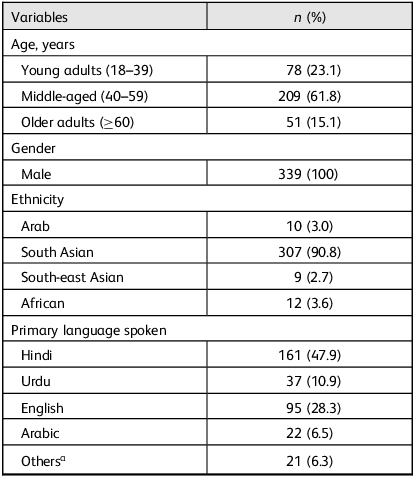
A total of 339 male participants were included in the study, predominantly of South Asian origin (90.8%), with smaller proportions of Arab, South-east Asian and African backgrounds. The majority were middle-aged (61.8%), with young adults (23.1%) and older adults (15.1%) making up the remainder. Hindi was the language most spoken (47.9%), followed by English (28.3%), Urdu (10.9%), Arabic (6.5%) and others (6.3%). See Table 1 for demographics of the study sample.
Demographic characteristics of the study sample (N = 339)

a. Others: Tamil, Pashto, Malayalam, Nepali, Bengali, Punjabi.
For some parameters, incomplete data resulted from missing information in patient records; consequently, the frequencies may not be sum to the total sample size of N = 339. All percentages were calculated based on available, non-missing data.
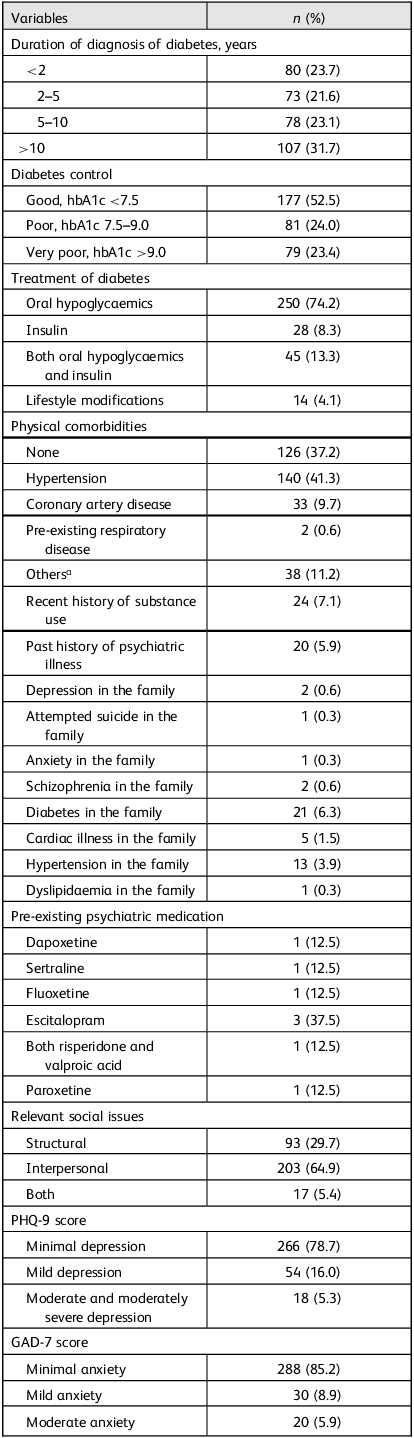
Clinical characteristics indicated that 31.7% of participants had a duration of diabetes exceeding 10 years, with 23.7% having a diagnosis of <2 years. Good glycaemic control (haemoglobin A1c (HbA1c) <7.5) was present in 52.5% of the cohort. Most participants were managed with oral hypoglycaemics (74.2%), with smaller groups receiving either insulin alone (8.3%), both oral agents and insulin (13.3%) or lifestyle modification alone (4.1%). Hypertension was the most common comorbidity (41.3%), with 37.2% reporting no physical comorbidities. Recent history of substance use was identified in 7.1% of the sample, and 5.9% reported a past psychiatric illness. Family history of psychiatric disorders was uncommon. See Table 2 for clinical variables of the study sample.
Clinical and other related characteristics of the study sample (N = 339)

HbA1c, haemoglobin A1c; PHQ-9, Patient Health Questionnaire 9; GAD-7, Generalized Anxiety Disorder 7.
a. Others: e.g. thyroid disease, dyslipidaemia, chronic kidney disease.
For some parameters, incomplete data resulted from missing information in patient records; consequently, the frequencies may not be sum to the total sample size of N = 339. All percentages were calculated based on available data.
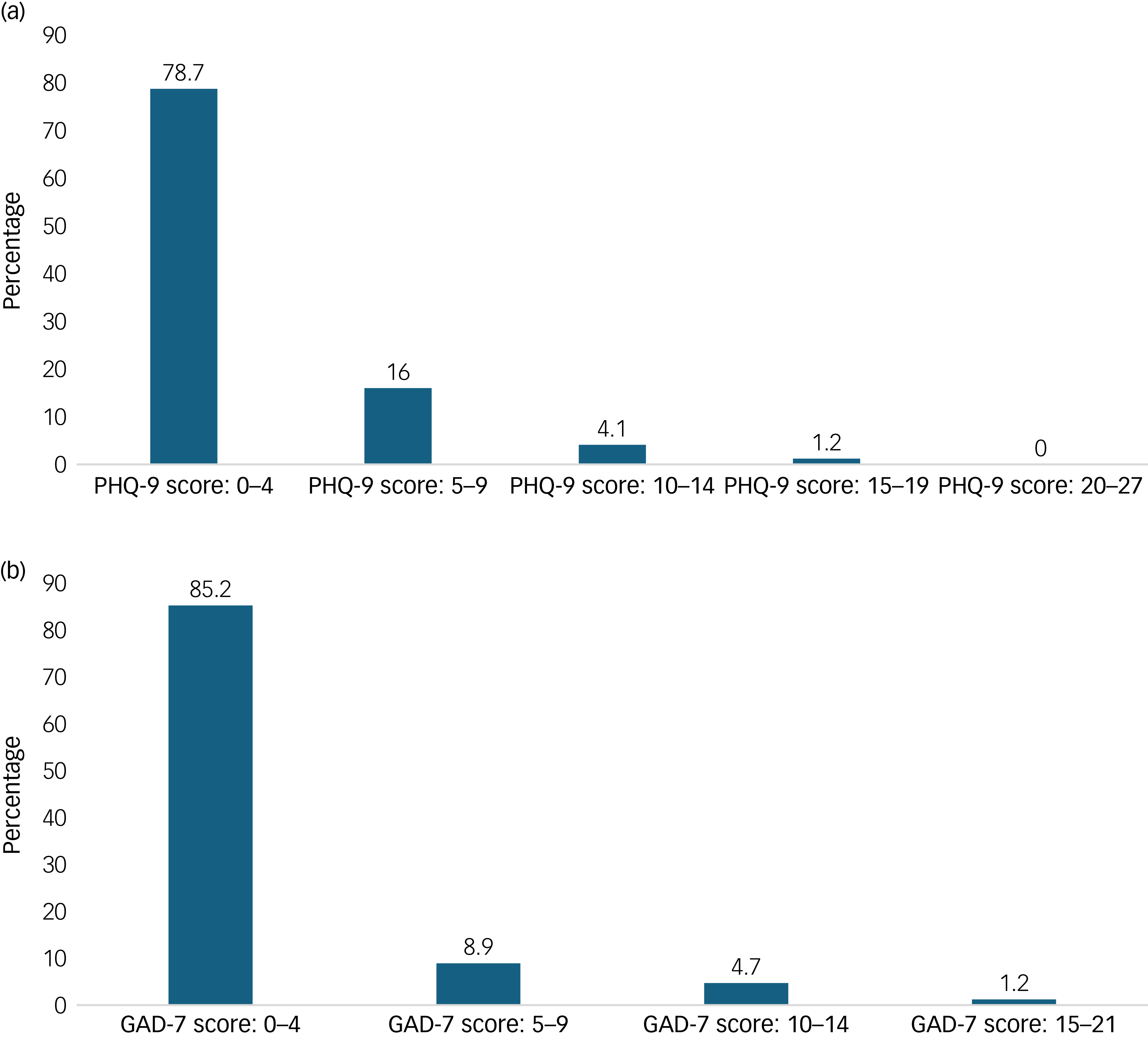
Assessment of depressive symptoms according to PHQ-9 indicated that 78.7% of participants had minimal depression and 21.3% had mild–severe depression (16.0% had mild depression and 5.3% had moderate–severe depression). In regard to anxiety, as measured by GAD-7, 85.2% had minimal anxiety and 14.8% had mild–severe anxiety (8.9% had mild anxiety and 5.9% had moderate anxiety). See Fig. 1(a) for prevalence of depression and 1(b) for prevalence of anxiety.
(a) Prevalence of depression, based on Patient Health Questionnaire 9 (PHQ-9) scores. (b) Prevalence of anxiety, based on Generalized Anxiety Disorder 7 (GAD-7) scores.

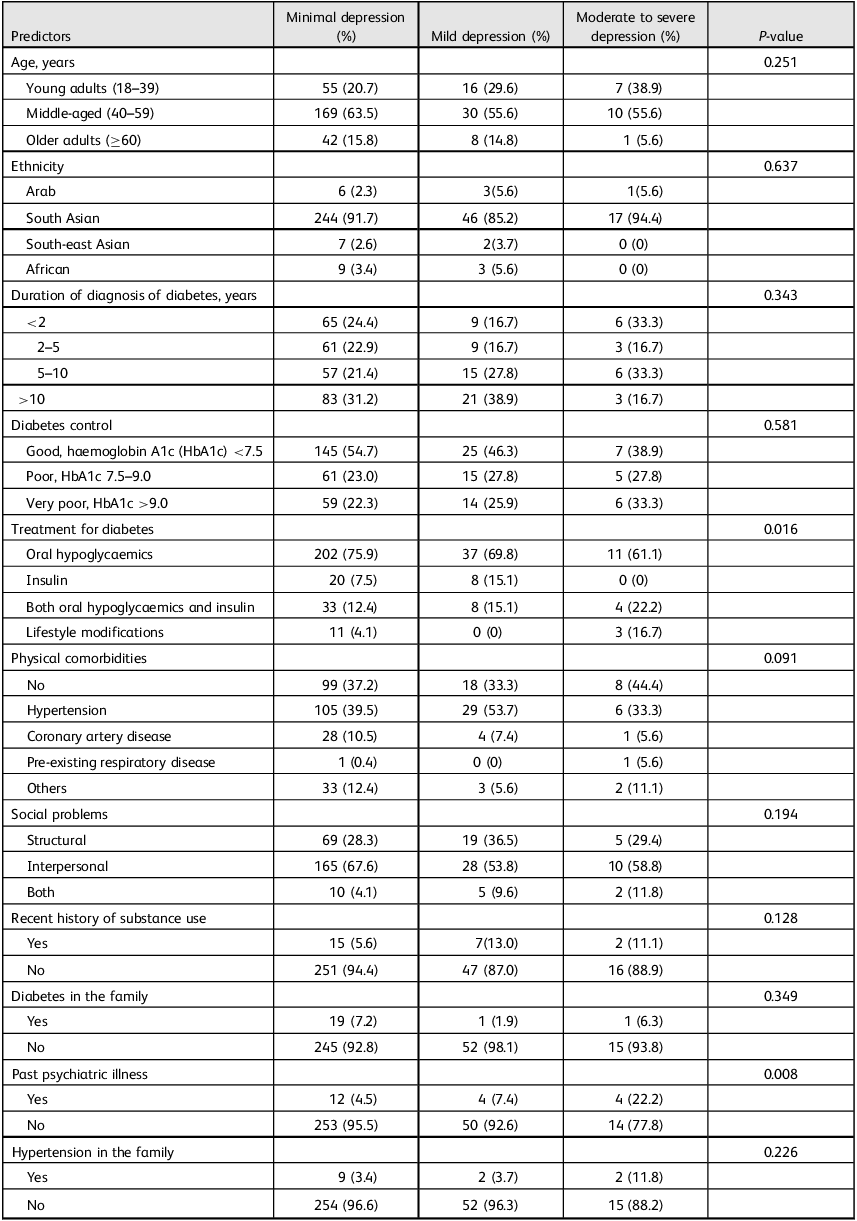
Analysis of the association between clinical and sociodemographic variables and depression severity (PHQ-9 score) showed a statistically significant association with both treatment modality for diabetes (p = 0.016) and past psychiatric history (p = 0.008). Other variables, including age, ethnicity, duration of diabetes, glycaemic control, physical comorbidities, social problems, substance use history and family history, were not significantly associated with depression severity (all p > 0.05). See Table 3 for the association between predictors and depression severity (PHQ-9 score).
Association between predictors and depression severity (Patient Health Questionnaire 9 score)

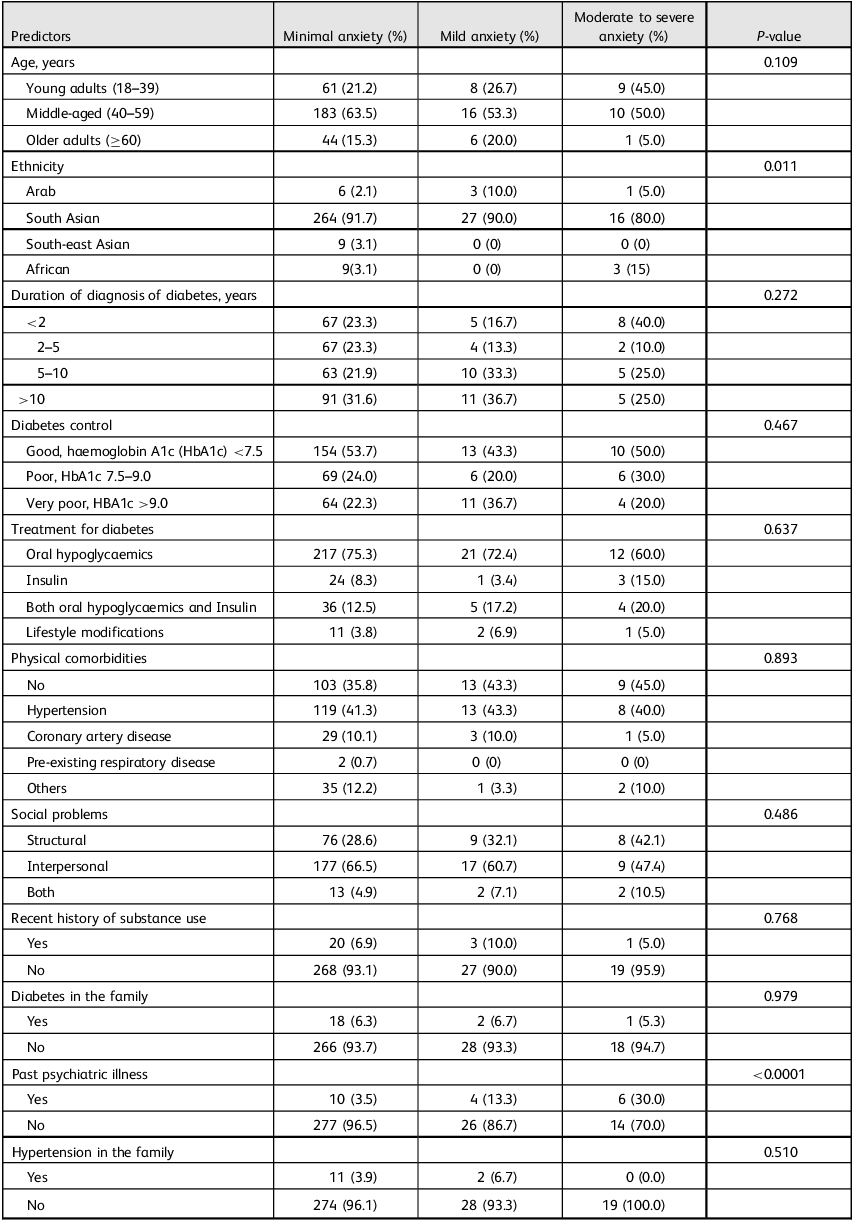
Similarly, analysis of predictors for anxiety severity (GAD-7 score) revealed a statistically significant association with ethnicity (p = 0.011) and past psychiatric history (p < 0.0001). Statistically insignificant associations were observed between anxiety severity and predictor variables age, duration of diabetes, glycaemic control, treatment modality, comorbidities, social problems, substance use and family history (all p > 0.05). See Table 4 for the association between predictors and anxiety severity (GAD-7 score).
Association between predictors and anxiety severity (Generalized Anxiety Disorder 7 score)

Table 4 Long description
The table presents data on the association between different predictors and anxiety severity levels, categorized into minimal anxiety, mild anxiety, and moderate to severe anxiety. The predictors include age, ethnicity, duration of diabetes diagnosis, diabetes control, treatment for diabetes, lifestyle modifications, physical comorbidities, social problems, recent history of substance use, diabetes in the family, past psychiatric illness, and hypertension in the family. The table has 17 rows and 5 columns, including the columns for minimal anxiety, mild anxiety, moderate to severe anxiety, and P-value. Each row lists a predictor and the corresponding percentages of individuals in each anxiety severity category. Notable trends include higher percentages of South Asians and individuals with past psychiatric illness in the moderate to severe anxiety category.
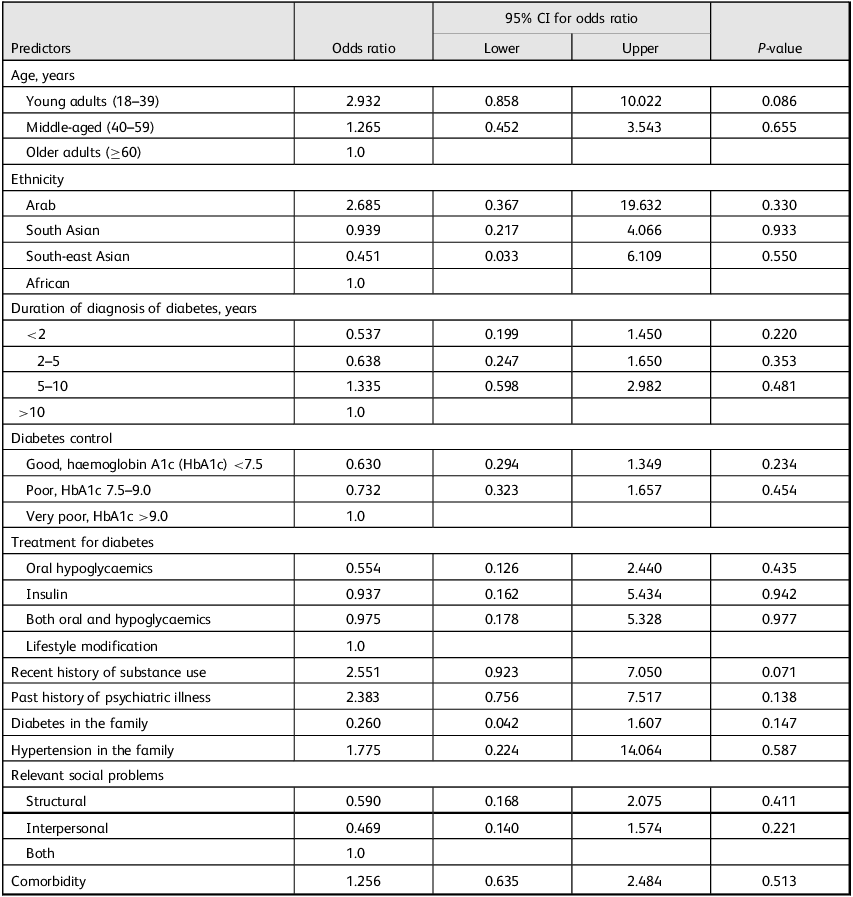
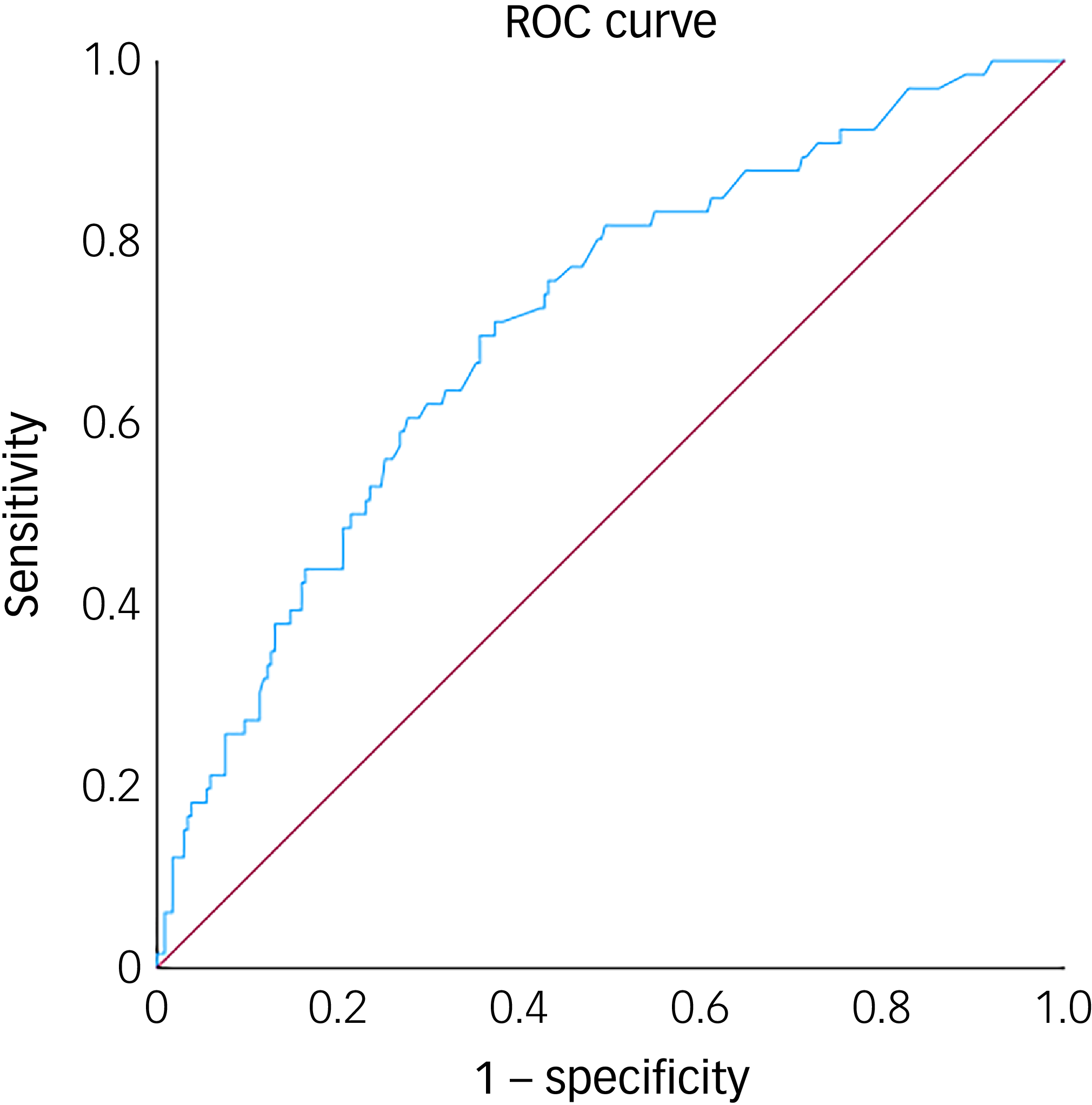
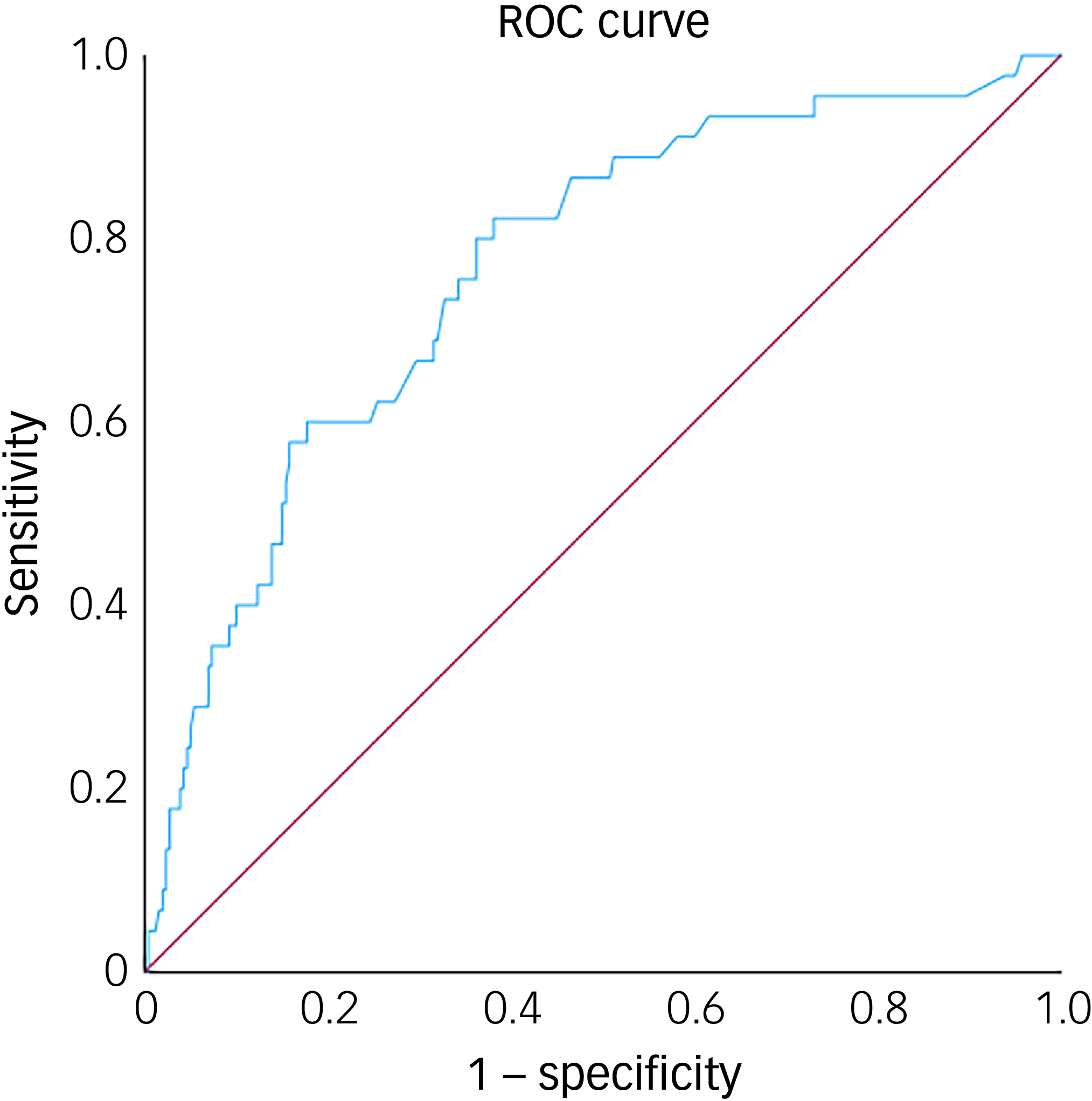
Logistic regression analysis identified that none of the predictors examined in this regression model reached statistical significance (all p-values > 0.05), although the odds ratio for recent substance use (2.55, 95% CI: 0.92–7.05, p = 0.071) approached borderline significance. The multivariate logistic regression model showed adequate fit (Hosmer–Lemeshow test, p = 0.859) and had good predictive ability (area under the receiver operating characteristic curve (AUROC) 0.711, 95% CI: 0.64–0.78; see Tables 3 and 5 and Fig. 2).
Logistic regression analysis evaluating the predictors associated with more than minimal depression levels (Patient Health Questionnaire 9 score >4)

Area under the curve from receiver operating characteristic (ROC) analysis: 0.711 (95% CI 0.64–0.78), using predictive probabilities from developed multivariate logistic regression model presented in Table 5.

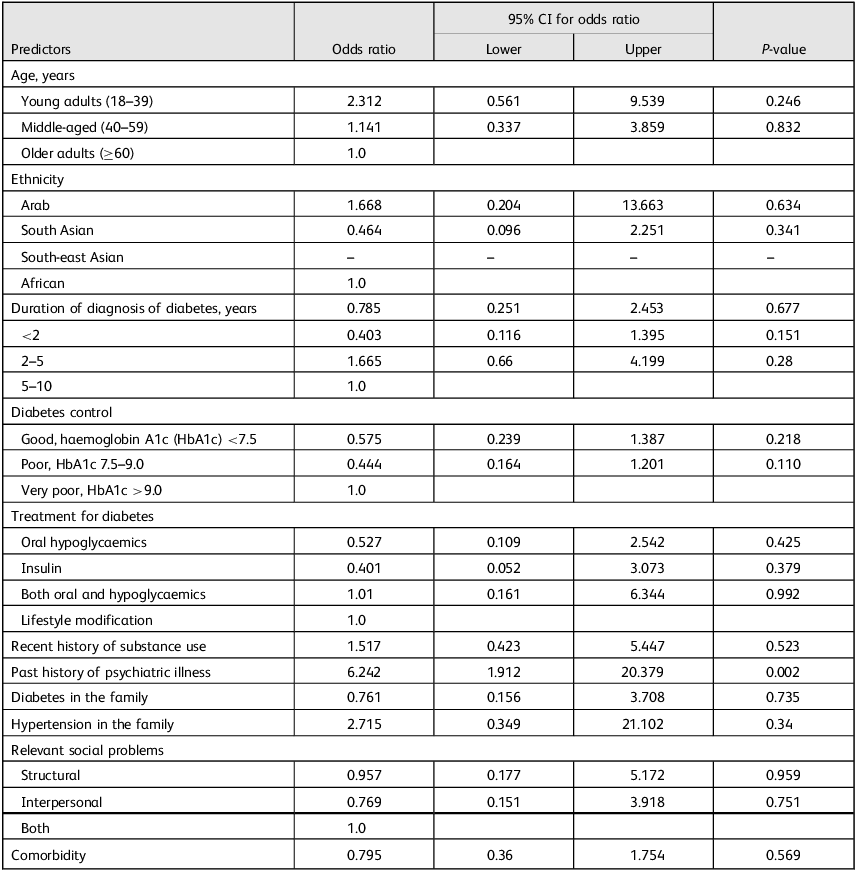
For anxiety (GAD-7 >4), logistic regression demonstrated that past psychiatric illness was a significant independent predictor (odds ratio 6.24, 95% CI: 1.91–20.38, p = 0.002), with participants in this group being much more likely to experience greater than minimal anxiety levels than those without such a history. Other predictor variables, including age, ethnicity, duration of diabetes, glycaemic control, treatment, substance use, comorbidities, social problems and family history, were observed to be insignificant predictors (all p > 0.05). The multivariate logistic regression model developed showed a good fit (Hosmer–Lemeshow test, p = 0.598) and had good predictive validity (AUROC = 0.766, 95% CI: 0.69 – 0.84; see Tables 4 and 6 and Fig. 3).
Logistic regression analysis evaluating the predictors associated with greater than minimal anxiety levels (Generalized Anxiety Disorder 7 score >4)

Table 6 Long description
The table presents a logistic regression analysis evaluating predictors associated with greater than minimal anxiety levels, measured by a Generalized Anxiety Disorder 7 score greater than 4. The table has 18 rows and 5 columns. The columns are labeled Predictors, Odds ratio, 95% CI for odds ratio Lower, 95% CI for odds ratio Upper, and P-value. The predictors are categorized into Age, Ethnicity, Duration of diagnosis of diabetes, Diabetes control, Treatment for diabetes, Recent history of substance use, Past history of psychiatric illness, Diabetes in the family, Hypertension in the family, and Relevant social problems. Each category has specific subcategories with corresponding odds ratios, confidence intervals, and p-values. Notable predictors include a high odds ratio for past history of psychiatric illness and a low odds ratio for insulin treatment.
Area under the curve from receiver operating characteristic (ROC) analysis: 0.766 (95% CI 0.69–0.84), using predictive probabilities from developed multivariate logistic regression model presented in Table 6.

Discussion
This study examined depressive and anxiety symptoms among male migrant workers with type 2 diabetes attending out-patient services. Although most participants reported minimal symptoms, clinically significant depression was identified in 21.3% and anxiety in 14.8%. This represents a meaningful mental health burden in a group with limited representation in research. The prevalence of depression aligns with global estimates for people with diabetes (15–31%). Reference Anderson, Freedland, Clouse and Lustman26,27 This is lower than in some reports from South Asia and the Gulf, such as 33.8% in Saudi Arabia Reference Alzahrani, Alghamdi, Alqarni, Alshareef and Alzahrani28 and around 40% in urban India, Reference Raval, Dhanaraj, Bhansali, Grover and Tiwari29 which may partly reflect a ‘healthy worker effect’ where individuals with more severe illness are less likely to migrate or remain employed. It also closely mirrors findings from Qatar’s general diabetic population, where Ismail et al Reference Ismail, Seif, Metwally, Neshnash, Joudeh, Alsaadi, Al-Abdulla and Selim17 reported a 20.1% depression rate among patients with type 2 diabetes attending family medicine clinics. Interestingly, in that study, males were at higher risk for depression whereas being Qatari was associated with lower risk compared with non-Qatari participants, underscoring the importance of sociocultural and migratory factors in shaping mental health outcomes.
Our anxiety prevalence (14.8%) is in line with pooled international estimates (∼14% Reference Grigsby, Anderson, Freedland, Clouse and Lustman30 ) and comparable to primary care figures (∼18% Reference Lin, Katon, Von Korff, Rutter, Simon and Oliver31 ), although lower than some South Asian rates (∼31% Reference Daniel, Patil and Rangoli32 ). Previous regional research has shown variable findings. Bener et al Reference Bener, Al-Hamaq and Dafeeah18 found significantly higher depression, anxiety and stress scores in Qatar among diabetic patients compared with healthy controls, with anxiety emerging as the most common symptom. Our finding that individuals on insulin or combination therapy reported higher depressive symptoms supports previous evidence linking more complex regimens with greater psychological burden. Reference Peyrot, Rubin, Lauritzen, Snoek, Matthews and Skovlund33 However, Ismail et al Reference Ismail, Seif, Metwally, Neshnash, Joudeh, Alsaadi, Al-Abdulla and Selim17 found the opposite association, with insulin treatment linked to a lower risk of depression, possibly reflecting differences in health system context, disease stage or sample composition. Sulaiman et al Reference Sulaiman, Hamdan, Tamim, Mahmood and Young34 reported strong associations in the United Arab Emirates between depression, anxiety and diabetic complications, noting that poorer mental health was linked with reduced self-care and adherence, suggesting that improving mental health could positively influence long-term diabetes outcomes. The association between past psychiatric illness and both depression and anxiety, with the former being the only independent predictor of anxiety, aligns with evidence showing that previous mental illness increases vulnerability to recurrence. Reference Katon, Russo, Lin, Heckbert, Ciechanowski, Ludman and Von Korff35 Ethnicity was also associated with anxiety, consistent with studies in other migrant groups demonstrating that cultural norms, stigma and health-seeking behaviour influence symptom expression and recognition. Reference Bhugra and Becker36
The relatively low mean symptom scores in our sample may reflect cultural differences in emotional expression. Among South Asian and other migrant men, distress is often communicated through somatic complaints rather than verbalised as emotional symptoms. Stigma, limited privacy and fear of job insecurity may further discourage open reporting of psychological distress. Conversely, regular clinical follow-up, structured access to care and stable employment may provide protective effects that are not available to other migrant or informal workers. The association between depressive symptoms and more complex diabetes treatment may reflect perceptions of illness severity or treatment fatigue, whereas the strong link with past psychiatric illness is consistent with expected clinical trajectories of chronic mood vulnerability.
International studies among migrant and ethnic minority populations reinforce these observations. Mohsin et al, Reference Mohsin, Wyatt, Belli, Ali, Onakomaiya and Misra37 studying South Asian immigrants in New York, found high levels of diabetes distress related to migration stressors and cultural barriers to care. Ali et al Reference Ali, Davies, Taub, Stone and Khunti38 in the UK reported that South Asians with diabetes had lower recorded rates of depression compared with White Europeans, suggesting possible under-recognition or differences in help-seeking behaviour. Similarly, Farid et al, Reference Farid, Li, Da Costa, Afif, Szabo, Dasgupta and Rahme39 using Canadian longitudinal data, found that immigrant status moderated the relationship between diabetes and depression, again pointing to structural and contextual determinants. Montesi et al Reference Montesi, Caletti and Marchesini40 emphasised that migration-related challenges, acculturation and health system barriers continue to shape diabetes outcomes in ethnic minority populations globally.
Strengths and limitations
This study provides one of the first structured assessments of depression and anxiety in lower-skilled male migrant workers with diabetes in Qatar. While most reported minimal symptoms, over one in five had clinically significant depression and nearly one in six had anxiety. Past psychiatric illness, ethnicity and more complex treatment regimens were associated with increased risk. Integrating mental health assessment into diabetes care and ensuring culturally responsive support are important steps toward improving outcomes in this vulnerable group. A key strength of this study is its focus on a unique, understudied population – male migrant workers with diabetes in a Middle Eastern context – where socioeconomic, cultural and occupational factors intersect to shape health outcomes. The use of validated screening instruments and standardised data collection supports reliability; however, Cronbach’s alpha values were not calculated in the present study. The cross-sectional design limits causal inference, and symptom-based screening may have underestimated or misclassified psychological distress in this group, particularly if current tools are not culturally attuned. The study population consisted of a mix of South Asian, Middle Eastern and African male labour migrants, limiting the generalisability of findings to other migrant populations in Qatar, including women and highly skilled expatriates. Duration of residence in Qatar was not collected, and therefore the study could not evaluate the potential relationship between length of migration exposure and mental health outcomes. Psychiatric history was based on recorded diagnoses rather than on structured clinical interviews.
Implications for practice
The findings have several implications. First, they highlight the need to integrate mental health screening and support within diabetes care for migrant workers. Second, they raise concerns that standard tools for detecting depression and anxiety may not fully capture the emotional distress experienced by this population. Cultural adaptation and validation of screening instruments are necessary to ensure accurate assessment. Third, interventions addressing stigma, enhancing awareness and improving culturally sensitive psychosocial support could strengthen both mental health and diabetes outcomes. Finally, future research should employ longitudinal designs and mixed-method approaches to explore causal pathways and inform policy responses that address both clinical and structural determinants of health.
Data availability
The data-sets used and/or analysed during the current study are available from the corresponding author on reasonable request.
Author contributions
J.L., O.W: conception, methodology and writing of first draft. F.K., A.W.S., M.Z.-U.H., Y.I., K.A., I.M, S.R., M.F.H.M.: data collection and coding, and editing of final draft. P.C., M.A.: data analysis and interpretation, and editing of final draft. Y.S.K., Y.I.: tables and figures, and editing of final draft.
Funding
Open access funding by Qatar National Library.
Declaration of interest
J.L. and O.W. have received honoraria from Janssen GCC, Viatris, Lundbeck and Newbridge. All other authors have no conflict of interest to declare.

 Open access


eLetters
No eLetters have been published for this article.