

Introduction
The concept of multivocality emerged to counter the narratives in archaeological research methodology and practices that were considerably centred towards Western conceptions, as archaeological interpretations were plagued with Eurocentric narratives. These narratives usually expressed past cultures, as well as indigenous cultures, as being ‘lesser’ than their European counterparts (Atalay Reference Atalay2006; Habu et al. Reference Habu, Fawcett and Matsunaga2008). The major works that acted as the pillars for this paradigm shift in archaeological interpretations and practices include Bruce Trigger’s (Reference Trigger1984) paper ‘Alternative archaeologies: nationalist, colonialist and imperialist’, where he describes how the three perspectives must be incorporated in archaeological interpretive narratives to understand the past of a particular region better, and Ian Hodder’s (Reference Hodder1999) book The Archaeological Process: An introduction, where he discusses the practice of archaeology in the context of globalization. The concept of multivocality essentially comprises the use of multiple narratives and incorporates those narratives in archaeological interpretation and practice. The past of a particular region, culture, or community may be laden with political, economic, or social reforms and interventions that may alter the history of the minorities, or even their cultures as a whole. This may result in oppression or suppression of cultural expressions, leading to loss of cultural traits, including traditions and narratives of the past of such oppressed peoples. This will incontrovertibly alter the past of the larger whole and requires the narratives of these minorities in order to reconstruct the past of the larger region, culture, or community of which they are a part. In this vein, the seminal work by Scham (Reference Scham2001) further elucidates this theme, where those who have been historically suppressed—as a product of colonization, or majoritarian or foreign suppression—have had their pasts altered and are thus isolated from mainstream narratives of the regional past and are termed disenfranchised peoples. Being a foundational pillar for the present study, it is argued that such disenfranchisement is applicable for material cultures as well, where structures that have been amidst and are watched over by neighbouring communities from time immemorial, thus being a part of their cultural continuity, have been divested from them as a result of the introduction of authoritative administration of such heritage sites. This debate regarding multivocality also highlights a broader societal significance, as affirmed by Hodder (Reference Hodder1999), where underrepresented groups should be given the opportunity to be involved in the archaeological process and provide their understandings and interpretations regarding a particular site. This empowers them and widens the scope for various groups and individuals, both academic and non-academic, to be involved, thus generating a multifaceted awareness of the importance of archaeological heritage.
Yet there remains a dearth of literature on such archaeologies that encompass and incorporate local and indigenous narratives of archaeological and heritage sites in the Indian context. Archaeological protection and conservation methods in India have embraced the opinions of the public in a very limited space in the field and are considerably minuscule in mainstream academia (Basak Reference Basak2018). For instance, a preliminary literature search on Jain archaeology of West Bengal results in a plethora of academic papers and books on Jain antiquities unearthed from various districts in West Bengal (Biswas & Majumdar Reference Biswas and Majumder2019; Ghosh Reference Ghosh2016; Imam Reference Imam2008; Majumdar Reference Majumdar2012; Reference Majumdar2017; Mondal Reference Mondal2012; among others). However, these articles do not comprise the perspectives of the only community that has been ascribed as the author of these ancient Jain structures—the Sarak community (Ball Reference Ball1869; Coupland Reference Coupland1911; Dalton Reference Dalton1866; O’Malley Reference O’Malley1908; Risley Reference Risley1892; Tickell Reference Tickell1840). The exclusion of Sarak and local community narratives from the Jain archaeological discourse has led to a number of ill-informed developmental initiatives that have led to the destruction and eventual obliteration of numerous heritage sites—the most notable being the ancient temple complex of Telkupi—and, furthermore, the misappropriation and misrepresentation of locally excavated Jain archaeological remains (Imam Reference Imam2008). This paper, thus, aims to theorize the importance of an ethnographic archaeology in India, while utilizing ethnographic methods to understand the disenfranchisement of a few Jain heritage sites in West Bengal. The heritage sites were visited, and neighbouring locals were interviewed with proper consent regarding these perspectives of the heritage that they have been inhabiting. This paper also argues and depicts the disenfranchisement of material culture and heritage, unlike Scham’s (Reference Scham2001) disenfranchisement of peoples, due to negligence and ignorance of tradition and heritage, and developmental projects or other politically driven initiatives of the ruling power.
Multivocal archaeology: theorizing from an Indian perspective
The main goal of the emergence of multivocality in archaeology has been to attenuate the effects of Eurocentric and Western biases in archaeological interpretation. From the perspective of Indian archaeology, studies that incorporate such multivocal narrations into the past of disenfranchised groups have been lacking. India has been a country of diverse cultures and traditions, and the sheer number of tribes and ethnic groups in the subcontinent are incomparable to any other country in the world; the presence of such tribes and ethnic communities in the vicinity of numerous heritage sites has resulted in the integration of myths, stories and legends about the historic structures into the cultural rubric of these communities, making them an inalienable facet of the their cultural identity. Considering the known past of the country, the marginalization of certain groups and communities is undebatable. A number of theories and methodologies have emerged in social sciences as well as archaeology to help vocalize the narrations of such marginalized peoples.
Multiculturalism is one such theory that aims at revaluing and recognizing identities that have been oppressed and/or neglected, and explicates the changing patterns of continued domination that misrepresent and oppress communication, thus marginalizing certain groups (Gutmann Reference Gutmann2003; Taylor Reference Taylor and Taylor1992; Young Reference Young1990). Multiculturalism recognizes that dominant groups can create barriers that do not allow minorities to pursue their social practices, and historical injustices towards such minorities are apparent, and listening to their perspectives is of paramount importance to understanding the history of the country. According to the Statistical Profile of Scheduled Tribes in India 2013, the number of individual ethnic groups, etc., notified as Scheduled Tribes is 705, and the tribal population constitutes 8.6 per cent of the total population (Statistics Division: Ministry of Tribal Affairs 2013, 1–2). Looking at the dominant religion in India, Hinduism, which constitutes 79.8 per cent of the total population according to the 2011 census, leaves religious groups such as Islam, Christianity, Sikhism, Buddhism, Jainism, Zoroastrianism and Judaism as minorities. Vocalizing the past of these minorities, who, as is apparent from anthropological studies (Borgohain & Dodum Reference Borgohain and Dodum2023; Chakraborty Reference Chakraborty2025; Dutta Reference Dutta2019), are in the process of shedding their cultural heritage to blend better into the dominant culture to survive, would be the primary aim of a multicultural approach in Indian archaeological discourse.
Furthermore, archaeological studies have been underlined with nationalistic thoughts, where the study of the past of the nation has been done mostly to show off, in a sense, the heritage of a nation. Trigger explains how archaeological activity was directed towards ‘strengthening patriotic sentiments and … often received substantial government patronage’ (Trigger Reference Trigger1984, 358). But there lies a significant amount of debate regarding the description of India as a ‘nation’, as the country does not conform to the traditional definition of a ‘Nation’ (Garner Reference Garner2014; James Reference James1996). India is far from being a ‘Nation’; rather it is a conglomeration of ‘micro-nationalities’ with one official national identity and rather than being called ‘nation-state’ it has been argued that a ‘multinational democracy’, such as India, be called a ‘state-nation’ (Stepan et al. Reference Stepan, Linz and Yadav2011) and also a ‘civilisation-state’ (Kumar Reference Kumar2002). India is a nation with multiple ethnic groups, and each ethnic group owns a unique set of cultural traits that stand in high contrast to each other. Therefore, an archaeological study of the marginalized must be tackled not simply from a nationalistic perspective but, rather, a much more pluralistic nationalism. The past of a group that has been neglected and ignored in mainstream discourse must be revived, as it is an inextricable part of the heritage of the country.
The inalienable effect of 200 years of colonialism on the people of India, resulting in the marginalization of various communities and silencing of their narratives, is of utmost importance from an archaeological purview. Trigger (Reference Trigger1984) describes colonialist archaeology as that which developed in countries that were economically and politically dominated by Europeans for a considerable period. The colonizers glorified their own past at the expense of neglecting or even denigrating the colonized. Examples of such oppression during colonial times are still present today, which is apparent in the way marginalized minorities are officially viewed in our country, with no hope of some kind of re-orientation. The presence of pejoratives such as ‘criminal’ and denotified tribes and communities have led to even more marginalization and discrimination, which is leading such communities to shed their cultural traits, resulting in the loss of their past. The emergence of post-colonial discourses in the 1990s aimed at critiquing the colonial discourses of ‘otherness’, challenging the discourses that (un)intentionally viewed these ‘others’ as inferior and in need of control, education and moral and material progress (or, in more recent accounts, progress through economic ‘development’) (Hingley Reference Hingley, Gardner, Lake and Sommer2014). Post-colonial discourses in archaeology have led to realization of the importance of involving multiple communities in the archaeological interpretation of a region, thus allowing a broad-based, inclusive understanding in archaeological discourse. In India, while anthropology as a discipline has taken a significant step in ‘voicing the voiceless’, archaeological studies still lack such initiatives to listen and understand the narratives of marginalized groups and use such narratives to reconstruct their past heritage.
With contemporary archaeology aiming at ‘decolonising’ (Atalay Reference Atalay, Habu, Fawcett and Matsunaga2008), a recent and emerging approach is the concept of ‘Indigenous archaeologies’. This approach aims at an archaeology with and for Indigenous peoples, rather than about them. Archaeology thus embraces non-material studies, incorporating aspects such as folklore, oral history, music and dance, among others. It is an emerging approach where there is no one coherent theory or methodology in use. Instead, it reflects the ‘different experiences and approaches that have manifested themselves in a range of different practices’ (Atalay Reference Atalay, Habu, Fawcett and Matsunaga2008, 29). Work from the Americas advocates an engaged, activist and intercultural archaeology that aligns archaeological practice with Indigenous rights and community priorities, countering colonial legacies in heritage interpretation and management (Nacuzzi & Lucaioli Reference Nacuzzi, Lucaioli and Smith2022; Smith et al. Reference Smith and Smith2025). Likewise, global perspectives highlight how Indigenous worldviews, ethical relationality and community leadership are reshaping archaeological theory toward more just partnerships, recognizing Indigenous knowledge systems as central rather than peripheral to interpretation (Aguilar Reference Aguilar2024; Wright Reference Wright2025). In Australia and related hemispheric contexts, recent volumes by Indigenous archaeologists themselves demonstrate how Indigenous practitioners bridge past and present, modelling ways archaeology can be practised with and by Indigenous communities through shared authority over interpretation, stewardship and meaningful engagement with place (Mialanes et al. Reference Mialanes, David, Stephenson and Smith2023; Poelina-Hunter et al. Reference Poelina-Hunter, Rika-Heke, Willika and Smith2024; Roberts Reference Roberts and Smith2023). Such an approach can be an invaluable addition to Indian archaeology with its widened theoretical and methodological approaches and its non-reliance on material culture. Approaches such as these may usher in a multivocal archaeology in the Indian subcontinent.
Disenfranchised heritage: the case of Jain archaeological heritage in West Bengal
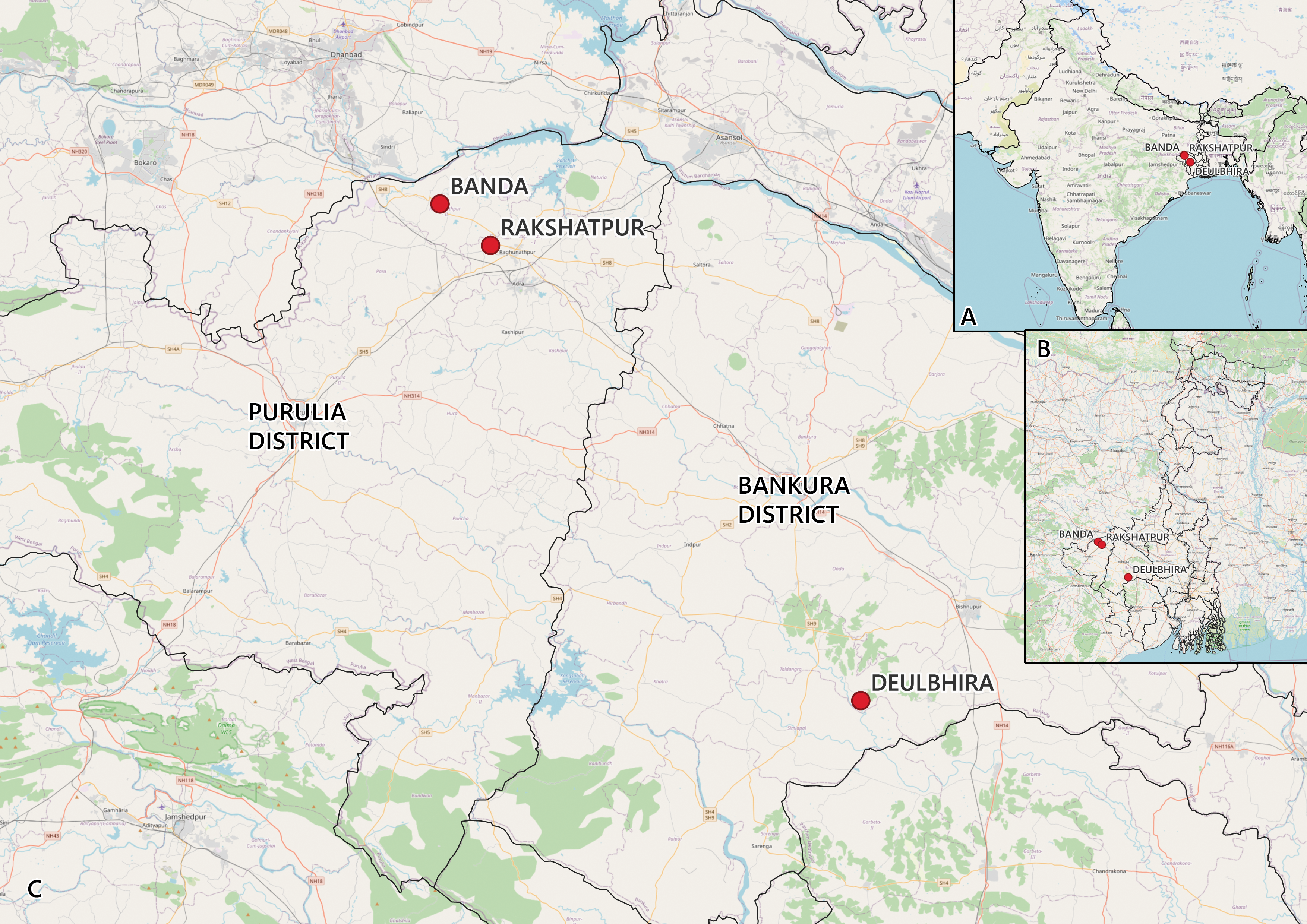
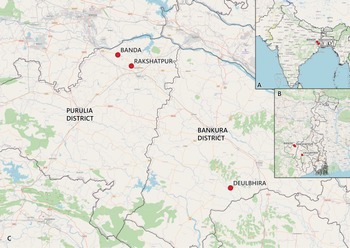
In India, the pursuit of an objective historical narrative of a site has limited archaeological interpretive authority with researchers and academicians, sidelining local and Indigenous perspectives. The effects of such marginalization extend further into the realm of heritage preservation, conservation and management. Ill-informed and politically motivated developmental strategies, devoid of such local narratives, have led to the disenfranchisement of several heritage sites, particularly those belonging to the ancient Jain heritage of West Bengal. Multivocality, as a methodological praxis, employs ethnographic strategies to uncover the narratives of the communities associated with heritage sites (Atalay Reference Atalay, Habu, Fawcett and Matsunaga2008). Here, ethnographic strategies are concerned with lived relationships with material remains—how heritage structures are used, reinterpreted, sacralized, neglected, or incorporated into daily lives—rather than treating them solely as sources of information regarding the past. Beyond merely enriching archaeological interpretation, ethnography has the power to recover forgotten or marginalized voices and give voice to alternative and emancipatory histories. The inclusion of other voices has potent epistemological and practical implications for making archaeology a more inclusive and socially responsible endeavour. Three Jain heritage sites of West Bengal were selected as part of the study—Deulbhira in Bankura, and Banda Deul and Raksatpur in Purulia (Fig. 1). The local community members neighbouring these heritage sites were interviewed using an unstructured schedule over a period of 10 days in January 2025. A total of 54 individuals were interviewed from the three sites. The interviews were transcribed and analysed. An explorative tour coupled with interviews with the local communities also shed some light on the effects of non-reliance on local narratives in the preservation of heritage sites in West Bengal.
Location of the studied sites in (A) India; (B) West Bengal; (C) Purulia and Bankura Districts.
Deulbhira, Bankura, West Bengal
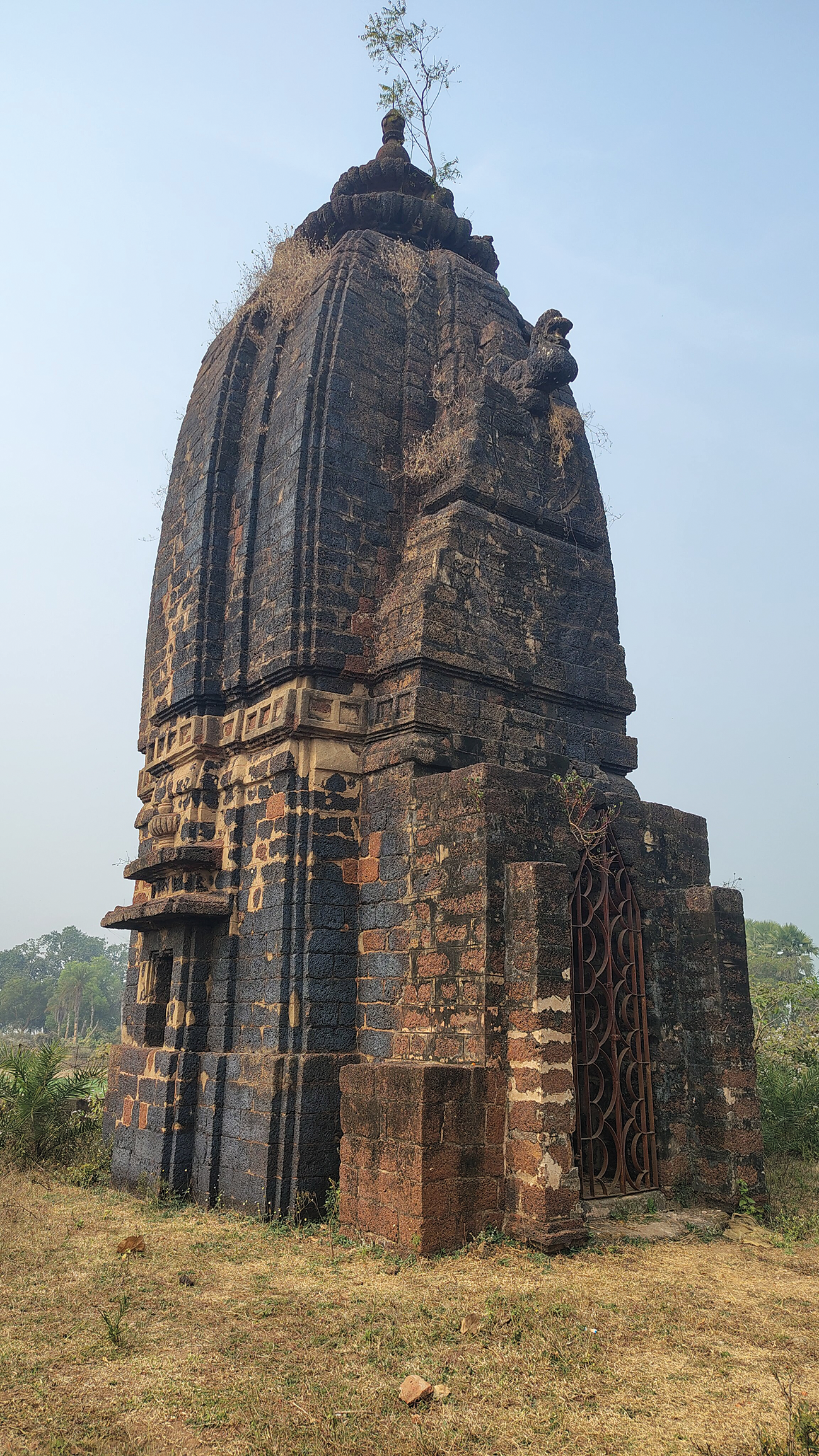
Situated about 19 km from Bishnupur and about 1.5 km from Panchmura—the famous terracotta village of West Bengal—Deulbhira is home to an ‘abandoned’ thirteenth-century Jain temple dedicated to the Jain tirthankara ‘Parsvanatha’ (Fig. 2). The structure, built with laterite bricks, lies at the southwestern end of the Deulbhira village, surrounded by agricultural fields, and has been under the protection of the Archaeological Survey of India (ASI). It was formally discovered in 1979–80 by B. Bandyopadhyaya of the Eastern Circle of the ASI, and the premises of the structure were renovated, according to the locals, in 2006 (Mitra Reference Mitra1983). According to the ASI, the structure is a Triratha Rekha Deul, which housed an idol of Parsvanatha, which was then moved to the Indian Museum in Calcutta, where it currently resides. The finial of the structure, also called the amalaka, was reconstructed by the ASI, and a portion of the vestibule is apparently remodelled at the entrance of the temple.
Deulbhira Temple.
The structure is currently in a state of disrepair, with the premises strewn with clothes left to dry by the locals and overgrown with weeds and shrubs. The walls that demarcate the extent of the structure are also in shambles, requiring urgent repairs. Interestingly, archaeological sites and temples in Bishnupur received an exorbitant renovation in 2021, whereas sites such as these, which are considered to be some of the most important Jain heritage sites of West Bengal, remain sidelined. When asked regarding the deteriorating situation, the locals opined that the lack of a deity in the form of a tangible idol restricts the people from worshipping in the structure:
‘A house holds importance only if its residents are present. If there was an idol that we could worship, the structure and its premises would have been instantly looked after. Look at our small local temple, it has a small idol which is worshipped daily, and no one dares leave anything unwanted anywhere near the premises.’ A.M., Neighbouring local, Deulbhira (15 January 2025)
Others stated that the ASI and the other authorities had indeed marginalized these structures;
‘I think since this is not a Hindu temple, the govt [ASI] has ignored this temple. It is clearly written that it is a Jain temple. But since most tourists would not be interested in visiting this site, the authorities would not be profitable from renovating this structure. Again, its politics using religion. It is quite disheartening.’ R.M., Resident, Deulbhira (17 January 2025)
Although the opinions of the locals were unfavourable regarding the deplorable condition of the structure, yet they held the site with utmost pride. They considered the temple as their own Bishnupur temple, where they could proudly state the history of their village to the outsiders and distinguish their village from others:
‘This temple is our pride. People from far and wide come to our village to visit this temple. Although it not well maintained, but it has promoted the name of our village even outside Bankura.’ L.D., Resident, Deulbhira (16 January 2025)
Rakshatpur Jain Tirthankar image, Purulia, West Bengal
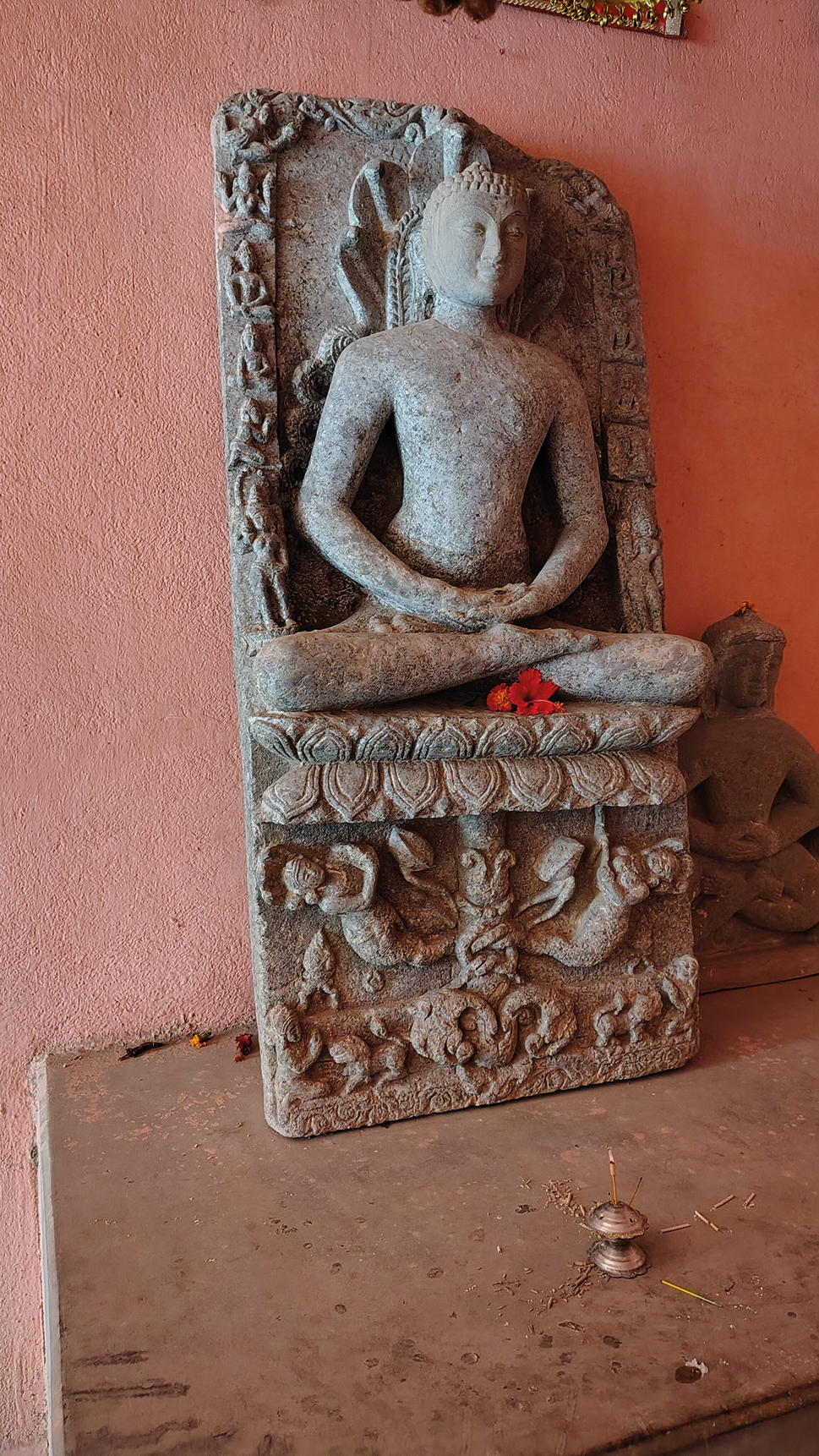
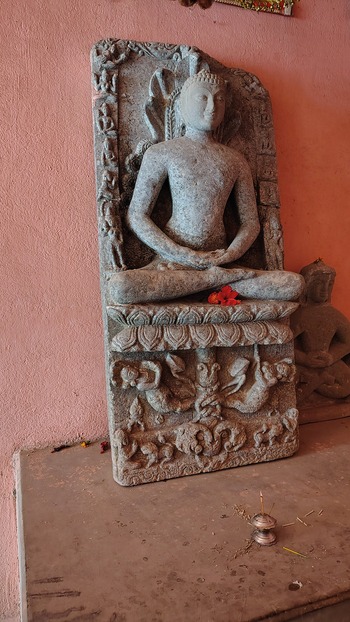
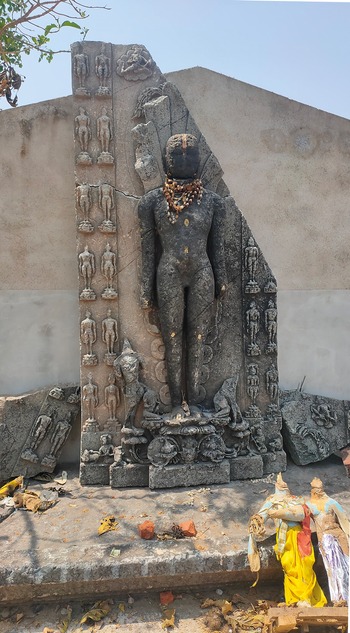
The village of Rakshatpur is located about 7 km east of Joychandi Hill Youth Hostel, with the major religious demographic being Hindu. About a five-minute walk from the entrance of the village, we asked a villager regarding an ancient Jain idol that may be in or about the village. The person seemed stumped by the question, and this attracted a few other locals who tried to understand what we were looking for. The word murti (roughly translated as ‘idol’) was stressed, rather than Jain murti, as ‘Jain’ might not be how they identified the idol. Suddenly, one person exclaimed, ‘Buddha murti?’ We immediately affirmed to the incorrect, yet noteworthy exclamation—since a Jain tirthankara may be misinterpreted as Buddha due to superficial iconographic parallels—and they escorted me towards a Kali temple. The main gate of the temple led to a room with floors that were tiled in white. A couple of raised platforms in the room designated the spot where the deity lay. The platform at the centre of the room was for the goddess Kali, whereas another platform towards the interior of the room was for the goddess Laxmi. Tiles with the images of Kali and Laxmi were also affixed on the distant wall of the room. To the left of the main gate inside the temple was another doorway that led to a smaller room. In this room lay a four-foot stone sculpture of what the locals termed Buddha murti (Fig. 3). The room was primarily used for storing articles used during festivals and other occasions, along with a few madols (indigenous percussive instrument). This room, interestingly, did not have tiled flooring, but the sculpture was placed on a three-foot-high platform. The sculpture was an interesting one. The deity was depicted in the seated position, cross-legged over a lotus, with its right palm placed over the left (dhyana-mudra). The face was perceptibly reconstructed, and behind the head were five hooded snakes. It was indeed a tirthankara—which the locals had mistook for Buddha—but which one? At first glance, the idol shares resemblances with Parsvanatha, with the serpent hood above the head. Incidentally, yet rarely, the seventh tirthankara, Suparshvanatha, also depicts three to five serpent hoods above the head. A deeper analysis was required, and consequently, the figure of the yakshi couple below the lotus solved the problem. Below the lotus, a vine with a flower (which also seems to be a smaller lotus) was either intertwined around the stalk of the lotus or the two yakshis, with distinctly serpent-like scaled lower bodies and snake hoods above their heads, had coiled around the main stalk of the lotus on which the tirthankara sat. This yakshi was indeed Padmavati, who is associated with Parsvanatha, the 23rd tirthankara, which the idol depicted.
Rakshatpur Jain Tirthankar Image, Purulia, West Bengal.
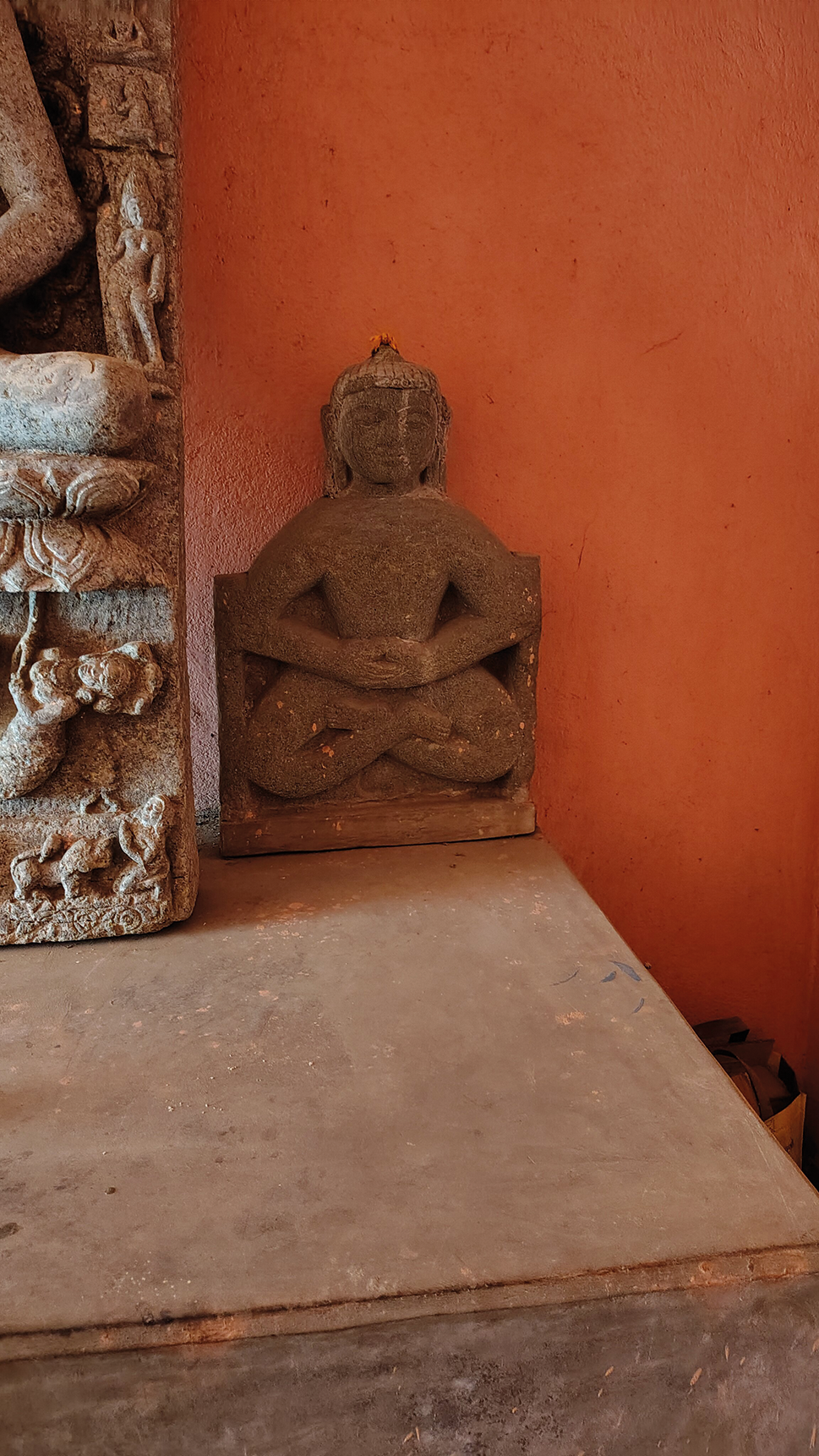
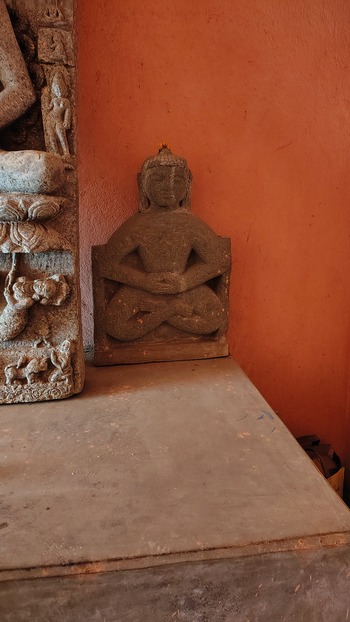
Beside the main idol was a smaller idol with a much simpler structure (Fig. 4). The figure depicted was in a similar seated dhyana-mudra posture, yet devoid of any other ornamentation. It may have been part of a larger structure of which only the two figurines remain. The main idol was apparently protruding from the ground in the same location prior to the construction of the temple. The priest of the temple, with whom we had a brief chat, reminisced about the time when he took the initiative of worshipping the ancient sculpture where it lay, and it was not until interventive actions from the Raghunathpur Jain Sanstha had uncovered the structure and built the temple premises in 2015. Following the establishment of the temple, the Jain idol is only worshipped and maintained by the followers of Jainism during their rare visits to the temple and is left unattended by the locals, who only worship Kali and Laxmi in the main temple room.
‘I used to think that this idol is that of Bhairava or Shiva, but later I came to know that this is from another faith altogether … every faith has their own devotees and disciples, since this idol is of another faith, I cannot worship this idol because I do not know its rules … our community has agreed to give the idol a shelter, but all religious aspects of this idol are protected by its devotees.’ T.M., Local priest, Raksatpur (20 January 2025)
Smaller sculpture beside the Rakshatpur idol.
Banda Deul, Purulia, West Bengal
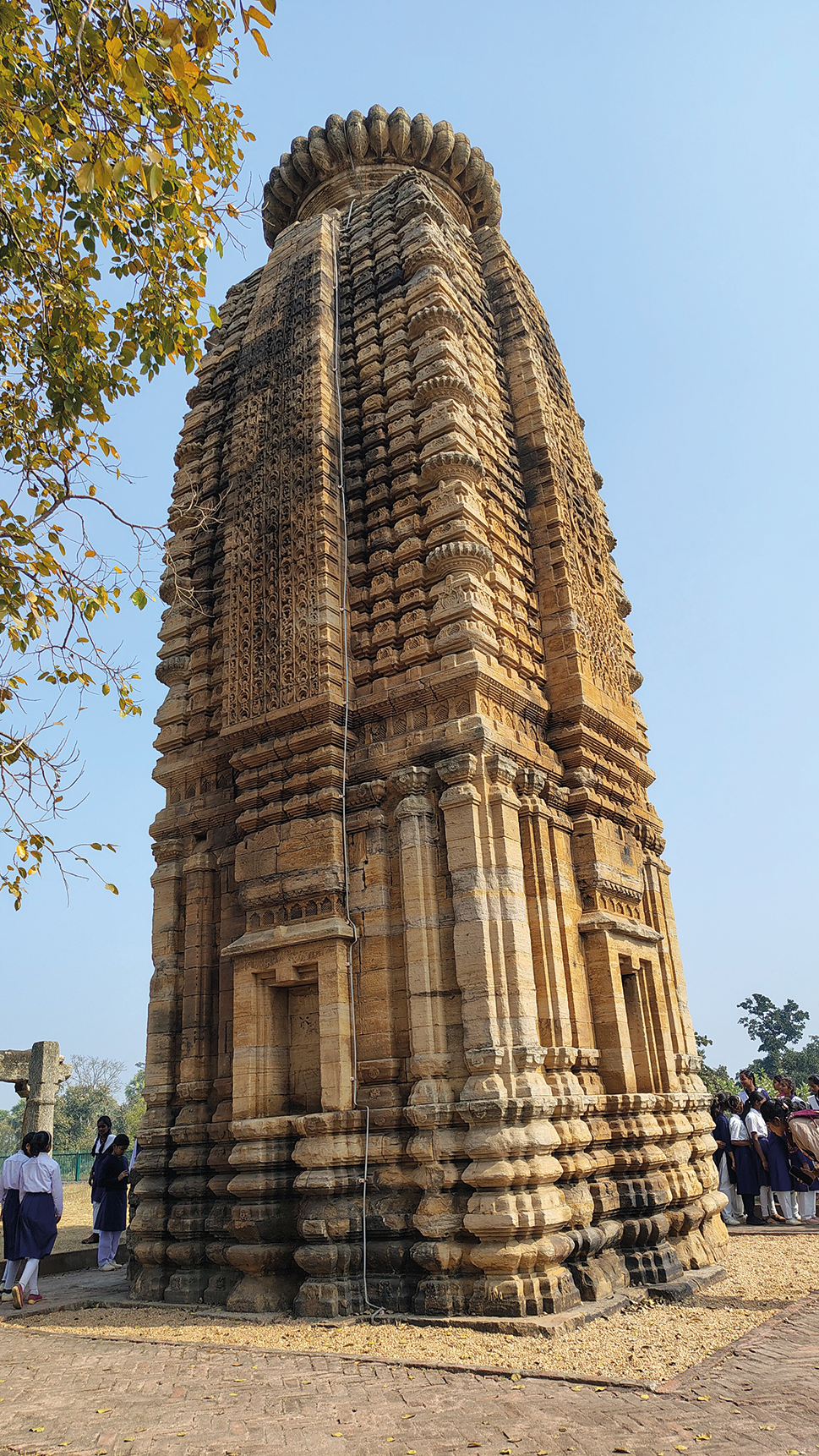
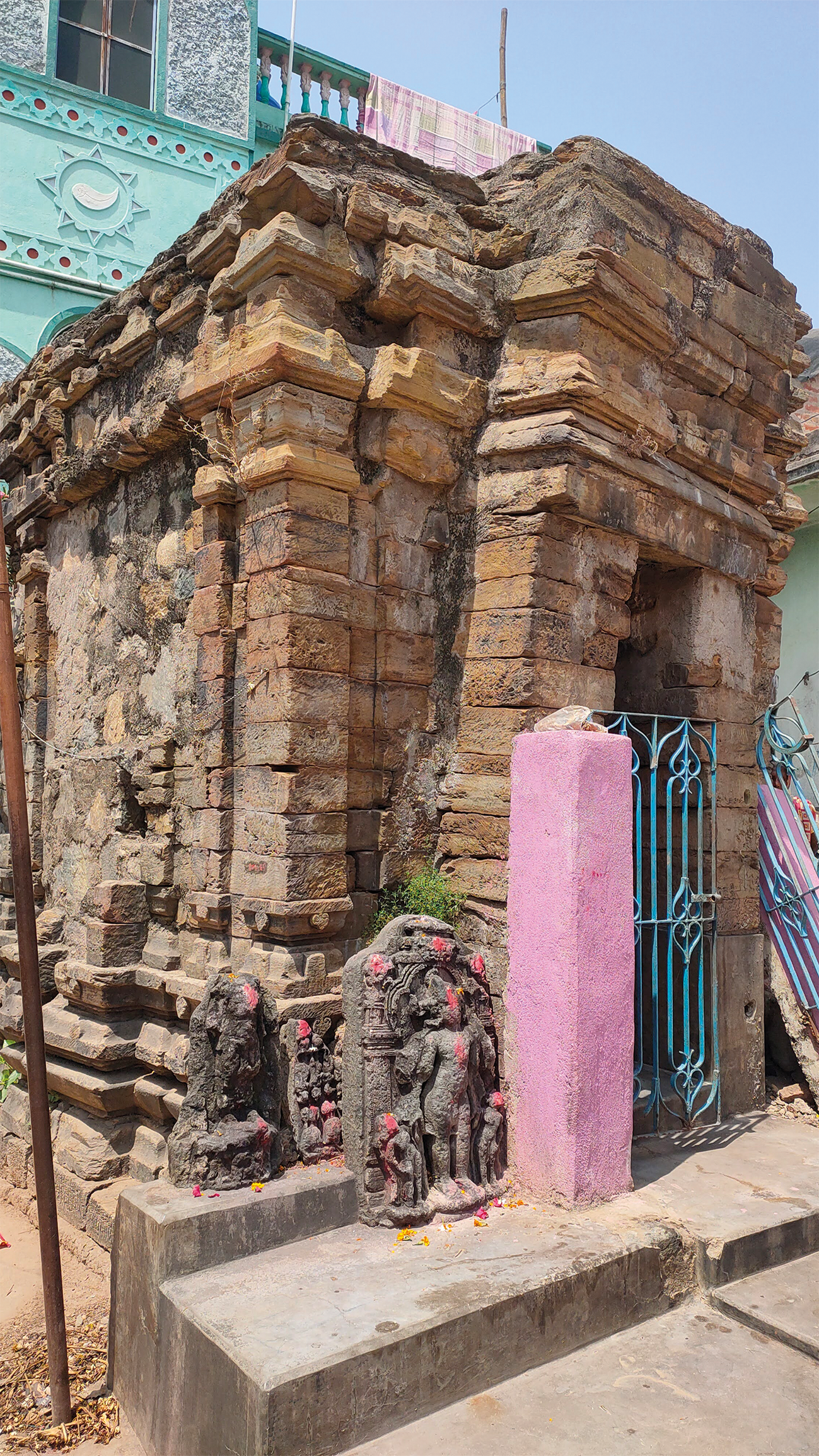
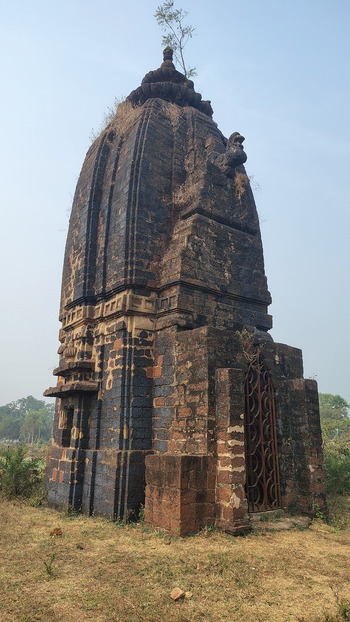
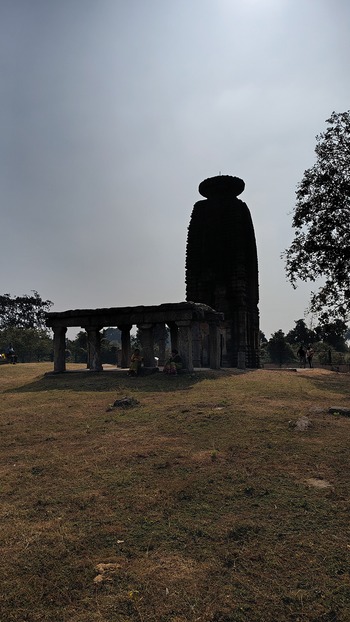
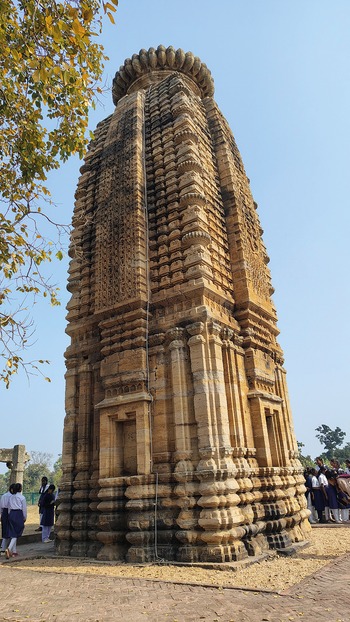
Known to be one of the best preserved of the Jain structures of Purulia, Banda Deul lies about 17 km away from Joychandi Hill Youth Hostel in a desolate area near Banda village (Figs. 5 & 6). The Pancharatha temple, although designated by the ASI an ‘Old Temple’, shares parallels with the temples at Telkupi and Deulbhira, and is without a doubt a Jain structure. The idols in the sanctum sanctorum are missing and are apparently present in a Kali temple in the nearby Cheliyama village. The decision not to denote the structure as Jain leaves many questions unanswered. During my visit to the temple, there were school students present in the temple premises as part of a school excursion. Despite the presence of a guard, the children touched the intricate decorations on the walls of the temple without any restriction from the guard or teachers. Later, some tourists also visited the complex and were seen smoking inside the premises, which garnered only a comment from the guard, ‘It is okay that you are smoking, just be wary of lighting any dried leaves around you’. It is worth wondering if this behaviour would have been acceptable in a Hindu temple.
Banda Deul (southwest corner view).
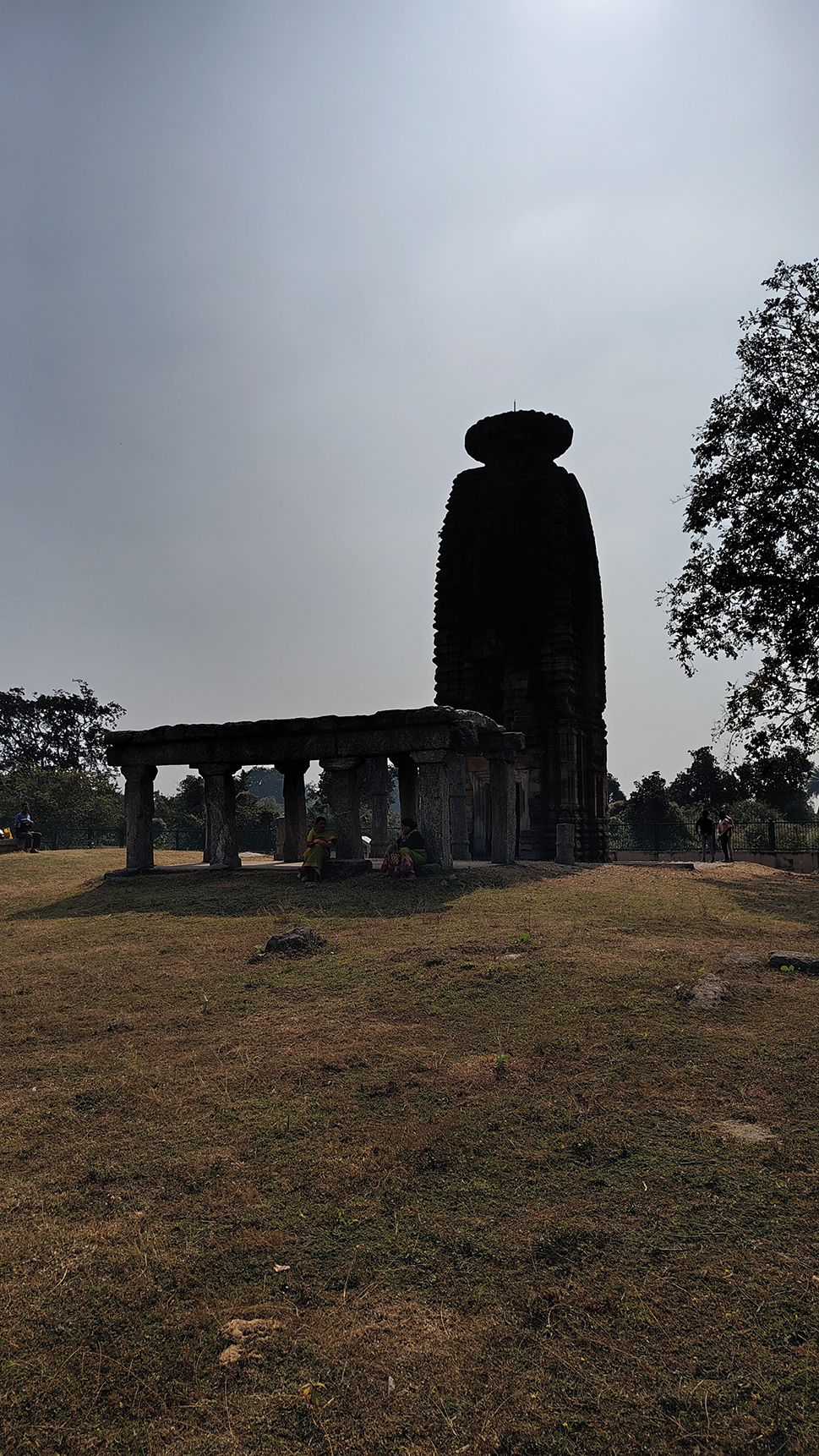
Banda Deul temple structure (north face).
A brief discussion with the locals at Banda village revealed quite an indifferent attitude towards the importance of the site. The site, being quite isolated from nearby villages, was apparently home to addicts during the night and was thus avoided by the larger populace.
‘We avoid going nearby the temple at night. Since it is quite isolated, some deviant individuals practice intoxication near the temple. We feel bad for the temple. It must have been a place of purity in its heyday.’ B.D., Resident, Banda village (13 January 2025)
Discussion
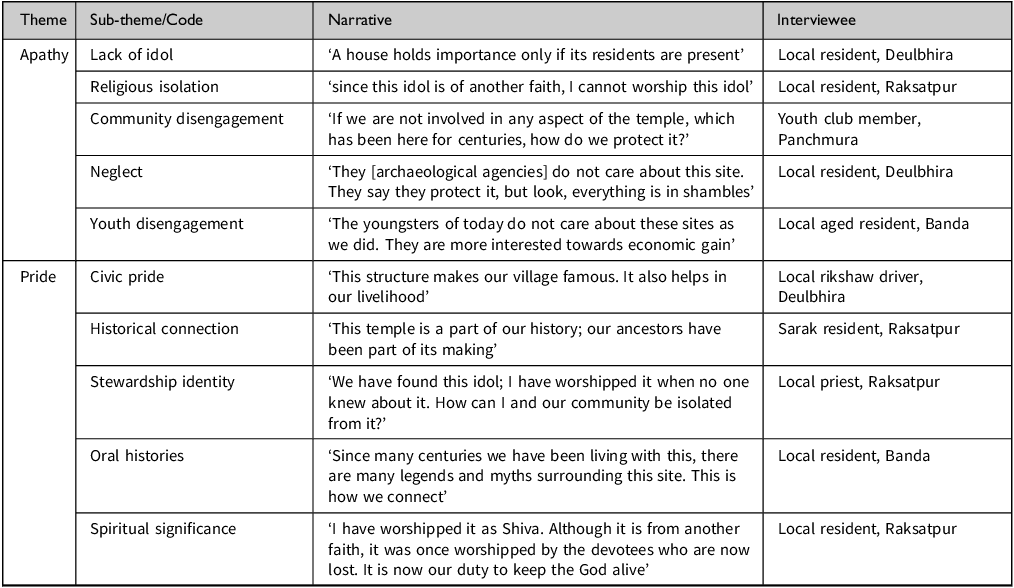
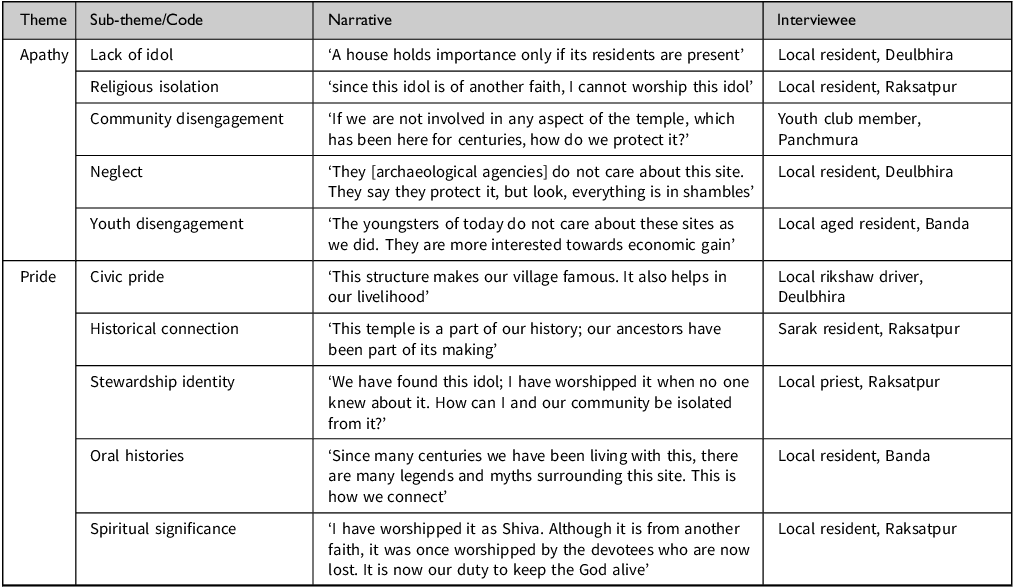
The interviews reveal a twofold relationship between the local populace and archaeology (see Table 1). First, apathetic attitudes which emerge from the restrictive practices of the archaeological agencies of India and the religious disassociation with Jain idols and monuments. Considering the nationalistic and political ideologies embedded in formal archaeological practice in India, such disenchanted attitudes eventually lead to the disenfranchisement of heritage sites—neglect towards the preservation and conservation of the sites, and suppression of the ideologies that the structure intends to project. In this regard, the efficacy of an applied archaeological multivocality has been apparent in acknowledging the plurality of archaeological interpretation with the implementation of the Native American Graves Protection and Repatriation Act (NAGPRA) of 1990, which further emphasizes the role multivocality may play in the inclusion of disenfranchised narratives in a legislative purview (Stutz Reference Stutz and Olofsson2005). Second, the sense of pride in heritage, which affirms the possible success of the involvement of locals in preserving heritage. This may involve the proper education of the communities in scientifically informed conservation and preservation strategies and using indigenous Jain (Sarak) narratives of ritual worship, which may be conducted by non-Sarak individuals as well. Furthermore, the installation of proper idols in the temple’s sanctum will invite the local communities to maintain such structures, as mentioned by certain interviewees.
Qualitative analysis of narratives.
Apart from premier archaeological agencies and government authorities, the protection and sustained maintenance of various heritage structures and sites of archaeological significance are left in the hands of the local communities inhabiting alongside these monuments. It is apparent that various structures, protected by the ASI and other agencies, have been subject to conservation strategies that seemed biased. The Deulbhira temple, for example, as mentioned earlier, was not fortunate enough to receive a major makeover, as opposed to the not-so-distant temples in Bishnupur. It may be argued that, owing to the larger footfall and revenue generation in Bishnupur as a major tourist site, the conservation efforts seem well deserved. Yet critiques addressing ASI’s persistent inclination towards a more vernacular/Hindutva-oriented heritage may better explicate such prejudiced conservation and beautification practices. For example, the Babri Mosque case of Ayodhya has drawn much criticism towards the ASI regarding politicization and nationalism in its interpretive praxis of artefacts (Avikunthak Reference Avikunthak2025; Johnson-Roehr Reference Johnson-Roehr2008; Menon & Verma Reference Menon and Verma2010). Correspondingly, the recent events circulating the Keezhadi excavation have brought much attention towards the epistemological bias inherent in the ASI which is apparent from the changes that the agency required the lead investigator to make in his excavation report—better stratigraphic evidence, updated maps and illustrations, updated nomenclature for the three identified cultural periods, and further scientific evidence for the eighth-century bce dating—and the transfer of said investigator upon his insistence on not making any changes (Janardhanan Reference Janardhanan2025; Kolappan Reference Kolappan2025; Kumar Reference Kumar2025). This bias, if fervent, may trickle down into the influential masses and local communities, which may result in the prejudicial maintenance of heritage sites and associated artefacts which may seem non-majoritarian in nature.
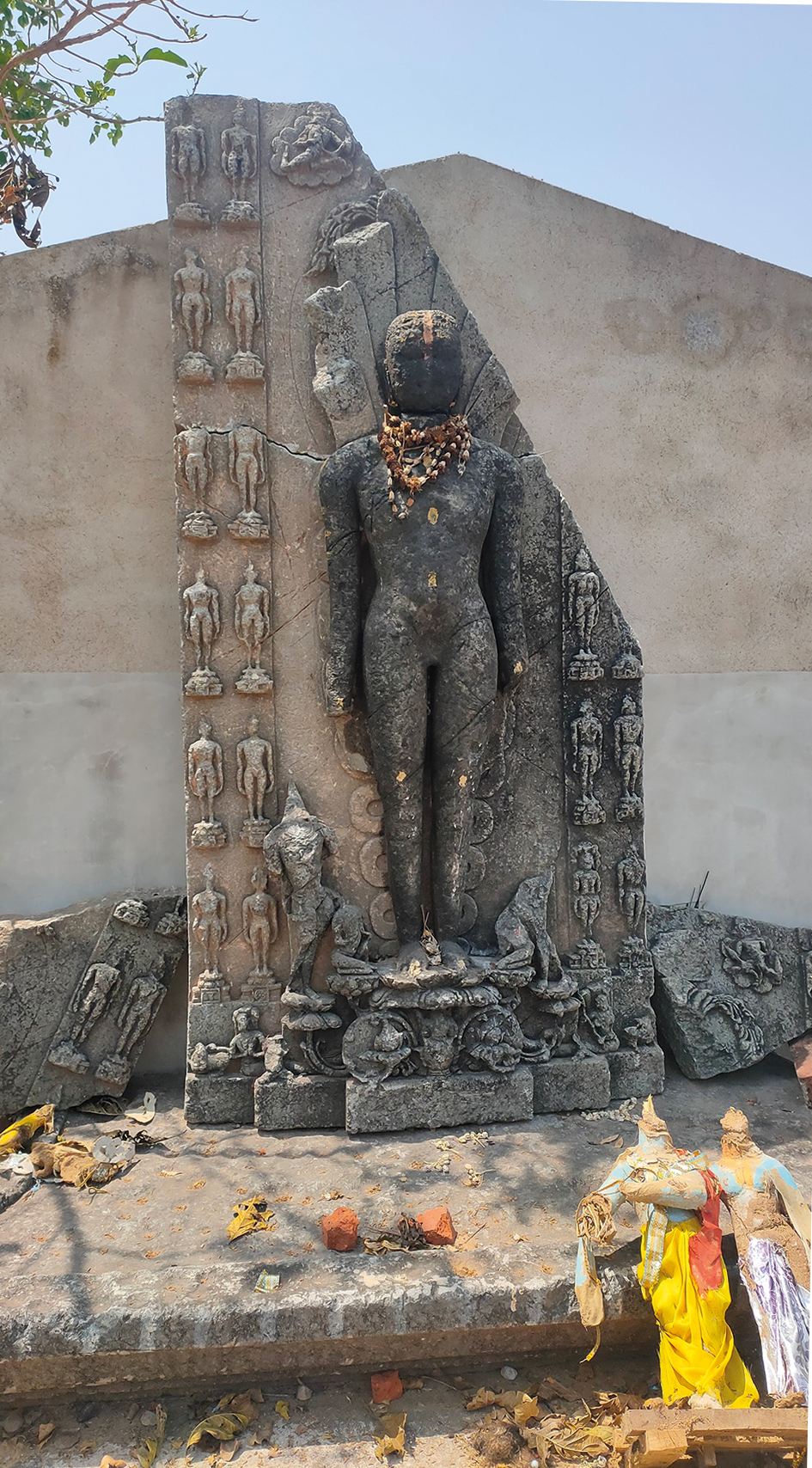
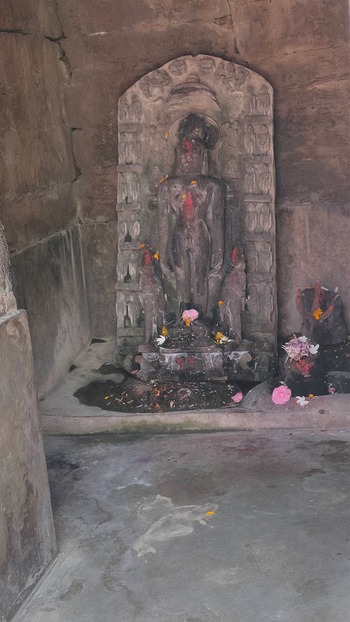
A concurrent pattern may be seen at the Parasnath Shiv Mandir adjacent to the Mukutmanipur dam in Bankura district of West Bengal on the banks of the Kangsabati river, where there exists an open-air temple site that houses stone idols that were unearthed during the construction of the dam. Yet an idol of the Jain tirthankara Parsvanatha lies isolated from the rest and is not as revered, compared to the stone idols that belong to the Hindu pantheon (Fig. 7).
‘These are Shiva lingas and idols of the Surya deva … that [pointing at the distance] is Pareshnath. Some Jains come and worship that. I do not know how to worship that God. It is not of the Hindus.’ Priest, Parasnath Shiv Temple, Mukutmanipur, Bankura
Parsvanatha idol near Mukutmanipur dam.
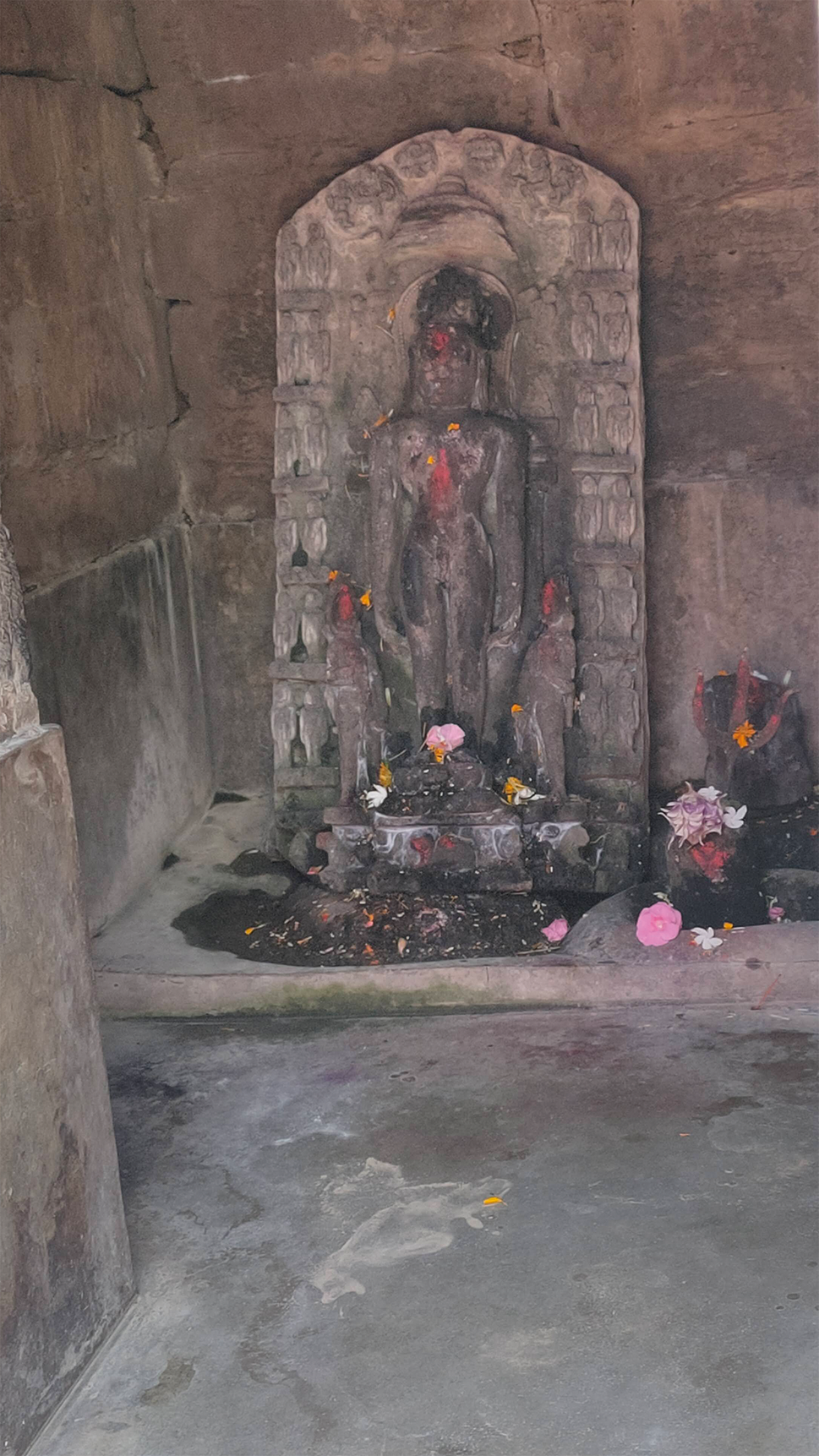
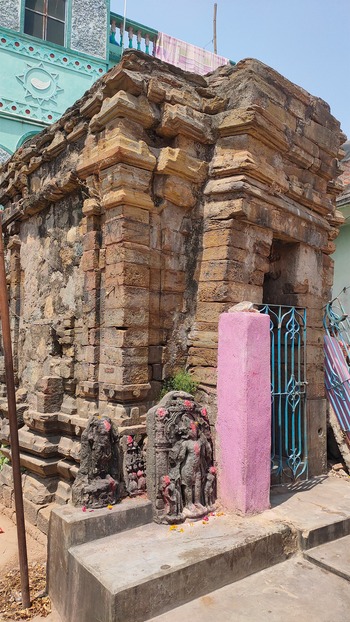
In parallel, adjacent to the Ambika temple in Mukutmanipur, there exists a stone structure that houses a few stone idols, of which an idol of the Jain tirthankara Ajitanatha stands prominently (Figs 8 & 9). When the locals were asked regarding the idol, most replied with indifference and ignorance regarding the nature of the idol. The structure is evidently not protected by any formal archaeological agencies and has thus been left in the hands of the locals who, despite their dedication, have maintained the idols and the temple without access to scientifically informed conservation strategies.
Temple structure behind Ambika Temple, Mukutmanipur.
Jain idol inside temple structure.
The lack of proper communication channels between the authorities that govern archaeological sites and the local communities has been contentious, which is apparent from the Ancient Monuments and Archaeological Sites and Remains (Amendment and Validation) Act of 2010, which shifts village ownership of heritage sites to the national ruling government or centre (Jamir Reference Jamir2024). The newly proposed amendment of the same act — AMASR (Amendment) Bill, 2017 — allows the centre to have complete discretion on the construction of ‘public works’ in protected sites. The resultant effect of such policy making is the indifference of local communities towards the heritage sites, which is also apparent from the case studies presented. Concurrently, the pre-excavation strategies upheld by the ASI, which involve sending eviction notices to communities that live upon probable archaeological sites, have led to strained relationships and attitudes of these local communities towards archaeological agencies.
The inadvertent effects are witnessed in the conversations presented in the case studies. A concurrent theme that remains throughout is the sense of isolation that the local communities feel towards protected sites in general. The prohibitive rubrics instilled by the institutional agencies distance the local communities from the heritage sites, thus necessitating a hegemonic structure between the two, with the local communities and their centuries-old legends and folklores behind the monuments being sidelined. This hegemony is also enforced by the religious distinction that the authorities imply during the dissemination of the details of the structure. The attribution of the structures being of Jain origin creates a cultural and historical detachment between the local (non-Jain) community members, contributing towards a disengagement from the preservation and maintenance of the heritage sites. On the contrary, Hindu temples in Bishnupur present a different picture, where the Hindu locals conduct elaborate rituals at protected sites. This raises the question of whether historico-religiously connected communities are at liberty to practise their traditional rituals at protected monuments. Although this question remains unanswered in this paper—ASI authorities not being a part of this study—the Sarak community, considering their historical and religious continuity with Jain heritage sites, may be the ones who inherit the right to practise their traditions at these monuments.
Using multivocality as a methodology, with its focus towards ethnographic strategies, narratives from the community perspective regarding heritage sites were collected, which affirmed the tense relationship with the archaeological authorities, but uncovered a sense of empathy with the state of the material. Such emotional personification of the material heritage derives parallels with Gell’s (Reference Gell1998) ‘art and agency’ theory and Hodder’s (Reference Hodder1986) ‘object agency’, thus humanizing the material, capable of exerting its own agency. Heritage structures—in this case Jain temple structures—possess an innate characteristic of being alive, where they are kept in continuous use by the community members surrounding the site through religious proclivity. This, in turn, in a way protects and preserves the structure from long-term deterioration and keeps its religious sanctity—although in some cases misinformed—intact. However, such use is sustained when community members are included in the administrative aspects of the site. Exclusion of community stakeholders disconnects the heritage from the people, thus leading to its isolation and eventual marginalization of the material and the loss of valuable oral traditions revolving around the site. Living temples—such as those that have been converted into Hindu temples with sustained religious activity—possess multiple oral narratives, myths and legends that may be drawn from ethnographic techniques. The temples under study have the potential of being living, which may reinvigorate religious activity and in turn oral traditions of the surrounding and relevant community members. Drawing from Scham’s (Reference Scham2001) work on the culture-historical disenfranchisement of communities, it may be argued that a material—embodying the ideologies of its author(s)—may also be subject to disenfranchisement, that involves the isolation and suppression of relevant local community and religious stakeholder’s narratives, distancing indigenous knowledge systems from the mainstream archaeological elucidations of sites, and the preclusion of relevant local and indigenous communities from heritage conservation and preservation strategies coupled with the neglect of archaeological authorities in the conservation of low-footfall heritage sites. Such disenfranchisement is also a result of the strategies adopted after the discovery of an archaeological site awaiting imminent excavation that leads to eviction notices, and thus the displacement of communities living on or near those archaeological sites. Furthermore, it also leads to isolation of local communities from sites which may have been part of their daily life, due to protective measures, which inadvertently leads to a certain cynicism towards artefacts and heritage in general leading to the imminent death of the once living heritage structure.
Conclusion
Striving towards alleviating the Eurocentric imprint in archaeological discourse and practice has led to the inherent need for decolonization, which resulted in the development of multivocal and indigenous archaeologies that dismantle the hegemonic ownership of Western archaeology on heritage sites and return its stewardship to the local and indigenous communities (Atalay Reference Atalay2006; Reference Atalay, Habu, Fawcett and Matsunaga2008). This trajectory also entails the incorporation of ethnographic methodologies into archaeological practice, which has long been ignored in Indian archaeological discourse. This study, using ethnographic methods, has shed light on the apathetic attitudes that local communities living with heritage sites hold towards archaeological agencies and authorities. Such apathy stems from the disengagement of local communities from the conservation and protection of heritage sites. This may be alleviated by changes in policies, which may allow the incorporation of local and indigenous knowledge systems in the conservation and protection of sites and the proper education of local stakeholders in scientifically informed conservation strategies. The possible success of the involvement of local communities is affirmed by the pride that these communities hold towards the sites, which makes their community and locale stand out from among others. The site forms a part of their identity, and subsequent isolation from the sites induces a sense of loss and empathy towards the archaeological sites, thus disenfranchising them. Such disenfranchised heritage risks losing its original ideologies and marginalizes centuries-old oral traditions that may have been passed down through generations by the locals prior to the separation of the community and their heritage. This paper, thus, explicates the importance of multivocality and ethnography, which reveal the complex relations and attitudes that local and indigenous communities instil towards archaeological materials and institutions. Furthermore, ethnographic narratives explicated the broader patterns of engagement and disengagement: temples become spaces of pride and civic identity, yet also sites of ignorance, neglect, or religious disconnection. The reluctance of priests to worship idols belonging to ‘another faith’, misidentification of Jain images as ‘Buddha murti’, and use of protected sites for drying clothes or storing objects reveal how communities materially and symbolically re-situate archaeological remains within local ontologies. The trajectory that the paper suggests—to include the relevant local and minority stakeholders in the administration of the sites—is not a novel strategy. The ‘handback’ of the Uluru-Kata Tjuta National Park to its original owners who belong to the Anagu community is one such successful example, where a site which was once taken by colonizers was then returned to its rightful owners and is now being administered jointly by the government and community members (National Museum Australia 2022). The syncretic initiatives implemented by the Jewish community in Morocco, in order to preserve and sustain their community, its heritage and religious identity, selectively included the majority Muslim members into varied activities in their synagogue, thus ensuring a balanced relationship with the dominant majority while preserving the synagogues’ religious character (Levy Reference Levy2024). Considering these examples among others, the inclusion of the Sarak community into the religious character of now-defunct Jain heritage sites seems potentially successful, notwithstanding informed strategies undertaken by all relevant stakeholders.
In this vein, a multivocal and ethnographic archaeology may facilitate a shared administrative and religious ownership rather than exclusionary protection. First, collaborative heritage committees may be formed by the ASI that would encompass both local residents and minority/cultural owners of heritage sites, which would allow shared participation in decision-making regarding relevant heritage sites. Secondly, information published by the authorities on signage, museums and official reports and documentations must include local narratives which would stress the importance the local communities assign to heritage sites. Third, training local youth and community members in basic conservation awareness may foster sustainable everyday care. Finally, relevant laws and policies should be amended to allow culturally connected communities to have greater custodial and ritual engagement. Such measures may provide a practical pathway for decolonizing archaeological praxis and mitigating the disenfranchisement of minority heritage.
Thus, the subsequent marginalization of local and indigenous narratives has necessitated the urgent need for a multivocal approach in Indian archaeology. The presence of marginalized communities in India is far more numerous, and such narratives are yet to be properly documented and revitalized. An archaeology encompassing ethnographic theory and methods, incorporating public and indigenous archaeological approaches, aimed at involving and evaluating multiple narratives of the past, will be imperative in India in the face of majoritarian attempts at appropriation and/or marginalization of minority narratives.
Ethical considerations
This study involved minimal-risk qualitative interviews with adult participants, all of whom provided informed verbal consent after being apprised of the study’s aims, their rights, and the use of their responses. In accordance with the ICMR Ethical Guidelines (ICMR 2017; Medappa Reference Medappa2000) and the ICSSR Research Ethics Guidelines (General Guidelines for Research Projects n. d.), verbal consent is acceptable in low-risk, non-invasive social science research, and formal ethics review is not mandatory in such cases. The UGC Research and Publication Ethics Guidelines (Patwardhan et al. Reference Patwardhan, Desai and Chourasia2020) and INSA Guidelines (Ghosh et al. Reference Ghosh, Sarkar and Dikshit2020) further support ethical flexibility in the humanities and social sciences, emphasizing integrity, transparency and context-specific ethical judgement. Hence, formal institutional ethical approval was not required for this research.
Consent to participate
Informed consent was obtained verbally before participation. The consent was audio-recorded in the presence of an independent witness. The participants were informed regarding the purpose, duration, and procedure of the research, their right to decline to participate and withdraw at any time during the interview, and the total confidentiality of their identity.

 Open access

