





Introduction
Health care professionals, particularly nurses and physicians, represent an essential role in guiding cancer patients and their related families through their cancer pathway. As highlighted from literature, nurses, and physicians dealt with all the continuum journey of care, beginning from health promotion to cancer prevention, to handle care, to cure until to palliative care (Vitale et al. Reference Vitale, Conte and Dell’Aglio2021a; Nahm et al. Reference Nahm, Archibald and Mills2023). Due to the continuity of contact that nurses and physicians have with their patients and families, they were in an optimal position to adopt essential role in health care delivery pathways (Hajizadeh et al. Reference Hajizadeh, Zamanzadeh and Kakemam2021). Cancer patients and their families reported high levels in psychological stress requiring emotional and social help (Lupo et al. Reference Lupo, Lezzi and Conte2021; Vitale Reference Vitale2022). Thus, an effective communication seemed to be crucial in all the cancer care phases, like diagnosis, prognosis, and treatment options (Wang et al. Reference Wang, Qiu and Yang2024).
Positive effects for an effective communication among cancer patients and their families appeared to be multitask and covered the global wellness, both for patients and their families, and health care professionals, compliance to treatment prescriptions, psychological issues, and amelioration in quality of life (Banerjee et al. Reference Banerjee, Manna and Coyle2016; Vitale et al. Reference Vitale, Conte and Dell’Aglio2021a, Reference Vitale, Lupo and Marra2022). On the other hand, ineffective communication could ward off patients, recording higher levels in anxiety, depression, stress, job dissatisfaction, burnout (Donovan-Kicken and Caughlin Reference Donovan-Kicken and Caughlin2011) uncertainty and dissatisfaction with care (Emold et al. Reference Emold, Schneider and Meller2011; Hagerty et al. Reference Hagerty, Butow and Ellis2005), increased lack of compliance with recommended treatment regimens, and elevated rates of depression and anxiety (Jin et al. Reference Jin, Sklar and Min Sen Oh2008; Martin et al. Reference Martin, Williams and Haskard2005; Vitale et al. Reference Vitale, Conte and Dell’Aglio2021a). Despite several advantages on effective communication among cancer patients and nurses and physicians, very few evidence are available reporting important obstacles and difficulties in communication benefits in their clinical settings. Recently, a clinical study has suggested two principal areas of communication like dealing with patients with bad news and their related emotional management (Pilsworth et al. Reference Pilsworth, Blankley and Faull2014). Recent literature suggests new models to process questionnaires to highlight what participants say on their clinical practice (Nandwani and Verma Reference Nandwani and Verma2021). Processing questionnaire items with predefined numeric answers or multiple-choice options is relatively simple, but extracting meaningful insights from open-ended responses remains a significant challenge due to the lack of standardized methods. While Natural Language Processing (NLP) techniques, such as sentiment and emotion analysis (Nandwani and Verma Reference Nandwani and Verma2021), can offer some insights into the emotions of respondents, they often fail to capture the subtleties and nuances present in written language. Traditional NLP approaches typically identify basic sentiments like positive, negative, or neutral, and can detect emotions such as joy, anger, or sadness. However, these methods tend to oversimplify more intricate expressions of mood and intent, missing the richness of language found in open-ended responses.
The development of AI-driven Large Language Models (LLMs) (Wahlster Reference Wahlster2023), such as OpenAI’s GPT and ChatGPT, has transformed the field of NLP, allowing for a deeper understanding of human expression. These models, trained on extensive datasets from a variety of sources, have the capability to grasp context, discern subtle shifts in tone, and produce coherent, contextually relevant outputs. LLMs offer significant advancements in sentiment analysis, enabling a more refined interpretation of written text. In addition to improving the quality of analysis, LLMs greatly enhance the efficiency of processing open-ended questionnaire data. By automating the extraction of insights, LLMs can handle large volumes of qualitative responses, reducing the need for labor-intensive manual analysis. This not only saves time and effort but also mitigates the risk of human bias and error, resulting in a more objective interpretation of the data.
In this study, we propose a hybrid approach that integrates traditional statistical analysis with the capabilities of LLMs to analyze and interpret structured and open-ended questionnaire responses, focusing on the communication of bad news in onco-hematology: health care professionals’ attitudes, communication methods, and perceived stress levels.
Materials and methods
Study design
An observational study was carried out from October 2023 to April 2024.
Inclusion and exclusion criteria
All Italian physicians and nurses employed in an onco-hematology setting were considered as potential participants of our study. More specifically, physicians and nurses belonged to the “Italian Group for Bone Marrow Transplantation, Hemopoietic Stem Cells and Cell Therapy” (GITMO) and to “Noi delle Cure Palliative” social page were included, since the active link of the questionnaire was addressed.
The questionnaire
The questionnaire was the same administered in our past research (Vitale et al. Reference Vitale, Lupo and Marra2022). In this case, we administered the questionnaire only to physicians and nurses employed in onco-hematological settings, specifically to hematology and oncology both unit and day hospital settings, marrow transplant centers, pediatric and adult onco-hematology units, palliative care units and stem cell transplantation ones throughout the Italian territory.
The first part of the questionnaire collected sampling characteristics, such as sex, civil status, religious belief, work experience in oncology field, educational level, oncology setting, and job role.
The second part of the questionnaire contained items investigating self-perceptions on the interviewers’ attitudes on adoption of the SPIKE method in the bad news communication and related workplaces available to communicate bad news to cancer patients. Specifically, a total of 8 open-ended questions were proposed. Participants were invited to write brief and concise answers related to the following questions:
1. What do you feel emotionally when communicating bad news?
2. How prepared do you feel when facing difficult communication situations?
3. How much do you think your empathy influences your ability to communicate bad news?
4. How much do you think your team’s support influences your emotional state during the communication of difficult news?
5. What aspects of the bad news communication process cause you the most stress?
6. What strategies do you use to relieve emotional stress after communicating bad news?
7. How do you evaluate your ability to manage your emotions during these conversations?
8. How do you perceive the effect of your communication on the emotional well-being of patients or families?
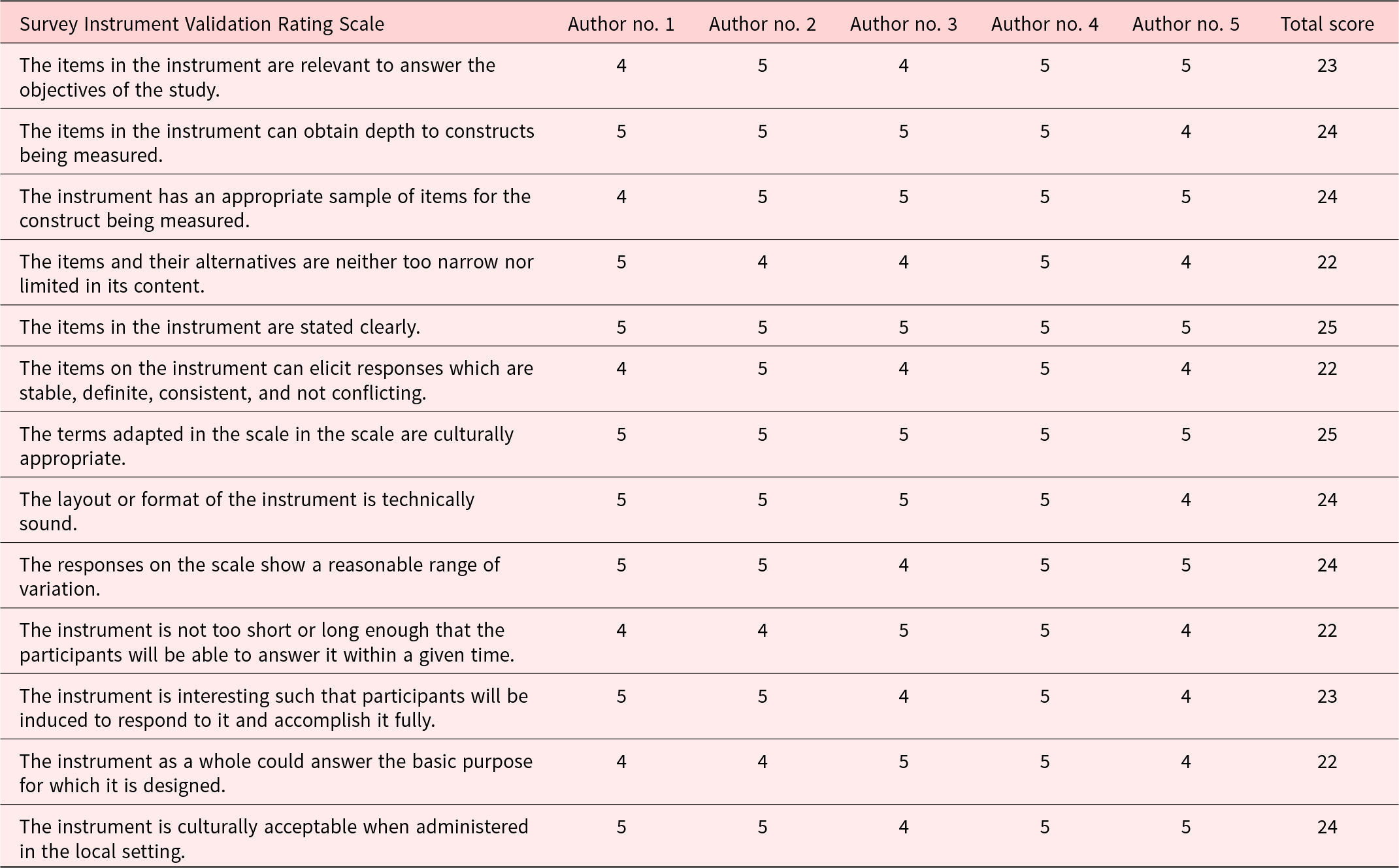
Since this part of the questionnaire was created “ad hoc,” we firstly shared these items among Authors (O.P., E.V., R.L., L.C., and S.B.) to assess their comprehension thanks to the “Survey Instrument Validation Rating Scale,” which aimed to validate survey questionnaires [Oducado RM. Survey instrument validation rating scale, 2020. Available at SSRN 3789575]. A total of 13 items were proposed and each Author gave a preference associated to a Likert scale, as 1 for “Strongly Disagree,” 2 for “Disagree,” 3 for “Undecided,” 4 for “Agree,” and 5 for “Strongly Agree.” The items included in this validation survey were reported in Table 1.
Validation rating scale by authors

Simple size
Considering Italian physicians, the National Federation of Boards of Surgeons and Dentists (into Italian: FNOMCeO) encountered 439,957 physicians (FNOMCEO. Osservatorio 2024). On the other hand, the National Federation of Associations of Nursing Professions (into Italian: FNOPI) in February 2024 encountered 279,837 nurses belonged to the Italian National Health Service, who were assigned in all medical wards (Ministero della Salute Direzione Generale della Digitalizzazione, del Sistema Informativo Sanitario e delle Statistica Ufficio di Statistica 2021). By Miller et al. (Reference Muller Miller and Brewer2003) formula, the representative sample encountered both 384 for physicians and nurses employed in all the medical specialties. The Italian Ministry of Health declared nearly 51 medical specializations (Direzione generale degli ordinamenti della formazione superiore e del diritto allo studio 2023). Thus, we aimed to reach nearly 50 nurses and 50 physicians employed in oncology and hematology facilities to reach a representative sample for our study.
Data analysis
Data were collected in an Excel data sheet. Sampling characteristics were presented as frequencies and percentages. Considering open questions, the LLM was used.
Open-ended questions analysis through Large Language Model
The qualitative data collected from the open-ended survey responses were processed and analyzed using LLMs to identify key themes and insights. This process followed the methodology outlined in a previous study (Lupo et al. Reference Lupo, Vitale and Panzanaro2024). Briefly, the analysis involved two main phases: first, vector embedding was applied to all textual responses, and then these vectors were clustered using the k-means algorithm, with the goal of detecting patterns within the data. In the second phase, the items in each cluster were summarized to provide a more detailed and synthesized overview of the emotions expressed.
We employed a freely available embedding model (Chia et al. Reference Chia, Hong and Bing2023) to generate the embedding vectors, which were subsequently clustered into two groups, following an arbitrarily imposed partitioning scheme. The responses were categorized based on their thematic content. For example, answers to the question, “What do you feel emotionally when communicating bad news?” were grouped into two major categories: positive emotional responses and negative emotional responses. Responses that conveyed emotions such as empathy, calmness, and professional composure were classified as positive, while those expressing sadness, frustration, or powerlessness were assigned to the negative cluster. This approach was applied across all eight survey questions, allowing responses with similar emotional tones or themes to be grouped together.
After clustering, each group was analyzed to identify key emotions and reactions. To achieve this, important keywords representing central emotions or experiences were identified within each cluster. The frequency of these keywords was then calculated to determine the most common emotional reactions among the nurses. For instance, in the negative emotional responses to the first question, terms like “sad,” “powerless,” and “anxious” were frequently mentioned, whereas positive responses included words like “serene” and “empathetic.” This analysis helped us highlight the dominant emotional themes in each cluster.
Finally, each cluster was summarized to capture its main themes and insights. In the positive emotional response cluster, nurses typically expressed feelings of calmness, empathy, and professional awareness, suggesting a sense of control during difficult conversations. Conversely, the negative cluster revealed emotional strain, anxiety, and helplessness, indicating that delivering bad news can be a more emotionally taxing experience.
Ethical considerations
The present study was approved by the GITMO trial office on January 15, 2024 that provided to disseminate the questionnaire through e-mails to all Italian nurses and physicians belonged to the GITMO organization. Additionally, we asked and then, obtained permission from “Noi delle Cure Palliative” social page who provided to spread the questionnaire throughout their subscribers.
The questionnaire respected both all the principles of the Declaration of Helsinki and the Italian data protection authority (DPA). It was emphasized that participation was voluntary, and that the participant could withdraw from the study at any time. Participant, who gave the informed consent, could complete the questionnaire. No data or alpha-numerical code were posted to guarantee the anonymity of the participant.
Results
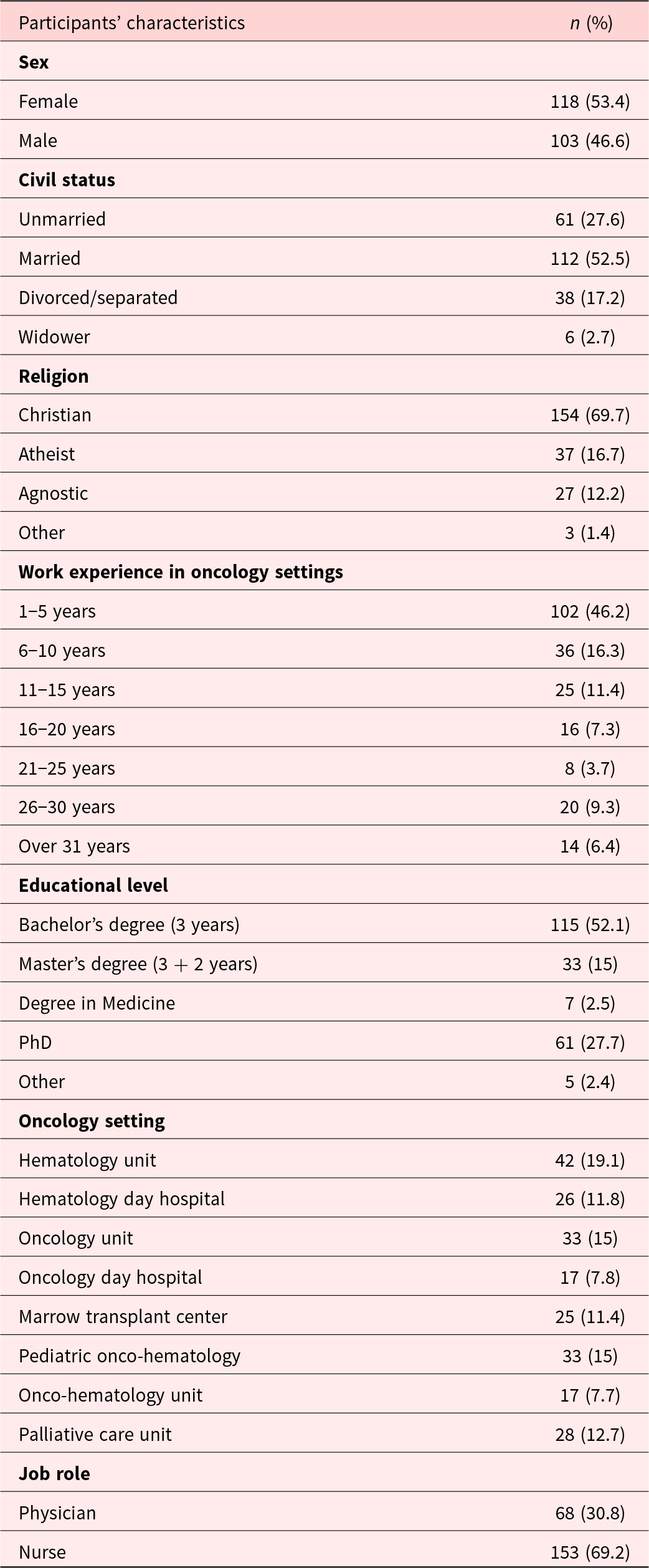
A total of 221 between Italian physicians and nurses employed in oncology and hematology settings were enrolled in the present study (Table 2).
Participants’ characteristics (n = 221)

Most of recruited participants were nurses (69.2%) and 30.8% were physicians. One hundred and eighteen participants were female and 103 males and most of participants (52.5%) were married; 69.7% of them declared to be Christian and the 46.2% of them worked in oncology settings less than 5 years.
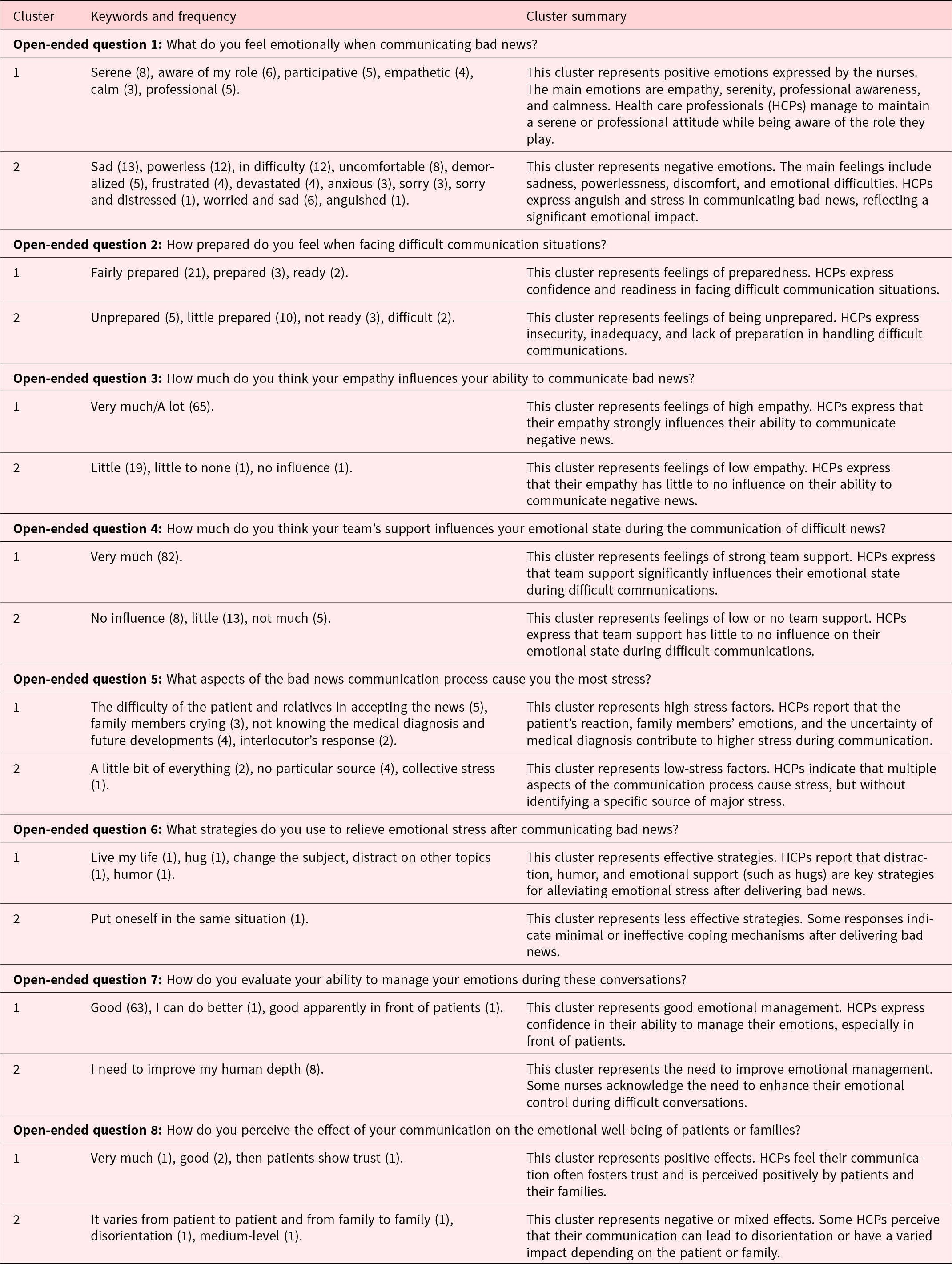
The use of LLMs to analyze the open-ended responses provided valuable insights into the perspectives and emotional states of the respondents. We processed the responses to the eight open-ended questions from the questionnaire by applying vector embedding and clustering techniques. The results have been detailed in Table 3, presenting the keywords and their frequencies within the two identified clusters for each question, along with a concise summary of the main findings.
Semi-automated analysis of responses to the eight open-ended questions. For each question, the table displays the keywords and their frequency in the two clusters, along with a summary of the corresponding results

Discussion
The application of LLMs to analyze open-ended responses provided valuable insights into the emotional experiences, preparedness, and coping strategies of nurses when communicating bad news. The results revealed a complex emotional landscape where positive and negative emotions coexist, with many HCPs expressing both confidence and distress depending on the context of the communication.
A significant number of respondents described feelings of empathy, serenity, and professional composure, which helped them maintain control during these difficult conversations. These professionals demonstrated resilience, often managing to balance their emotional involvement with the demands of their role. However, a substantial portion of HCPs reported experiencing emotional strain, with feelings such as sadness, powerlessness, and anxiety being prevalent. This emotional burden was frequently tied to the difficulty of patients and families in accepting bad news, as well as the uncertainty surrounding medical diagnoses. These findings are consistent with previous studies indicating that HCPs face emotional exhaustion and high levels of stress when tasked with delivering difficult news (Mitchell Reference Mitchell2022; Moura et al. Reference Moura, Ramos and Sá2024).
In terms of preparedness, most nurses felt confident and well-equipped to handle difficult conversations. However, a notable group expressed feelings of inadequacy and a lack of readiness, pointing to a gap in training and emotional preparedness. This divide suggests the need for more structured support and education to help professionals develop the skills necessary to navigate these high-pressure scenarios, especially for those who feel unprepared or insecure. Previous research highlights similar gaps in training, particularly regarding how to manage the emotional and communicative challenges of breaking bad news (Nnate and Nashwan Reference Nnate and Nashwan2023).
One of the most critical factors influencing the emotional well-being of nurses during these interactions was the support they received from their team. HCPs who felt a strong sense of team support reported a more positive emotional state, which helped them manage the stress of delivering bad news. On the other hand, those who lacked such support often struggled with feelings of isolation and increased emotional strain. This underscores the importance of fostering a supportive work environment, where collaboration and emotional backing from colleagues can significantly mitigate the emotional toll of these difficult conversations (Biazar et al. Reference Biazar, Pourramzani and Fayazi2022; Krieger et al. Reference Krieger, Salm and Dresen2023).
Another key finding was the impact of empathy on communication. The majority of respondents indicated that their empathy greatly influenced how they communicated bad news, allowing them to connect more deeply with patients and families. Empathy was seen as a tool that enabled them to convey difficult information in a compassionate and sensitive manner. This supports the growing body of literature that emphasizes the importance of empathy in health care communication (Nnate and Nashwan Reference Nnate and Nashwan2023). However, some HCPs noted that empathy had little or no influence on their approach, suggesting that more procedural or task-focused methods were sometimes used instead. This diversity in communicative strategies points to the need for personalized training that respects individual styles while encouraging the integration of emotional intelligence into professional practice (Mitchell Reference Mitchell2022).
When it came to coping with stress, HCPs employed various strategies to manage their emotional responses after delivering bad news. Effective techniques included distraction, humor, and emotional support from colleagues or loved ones, which were helpful in alleviating stress. However, some respondents indicated the use of less effective coping mechanisms, such as internalizing their stress by identifying too closely with the patient’s situation. These responses highlight the necessity of providing nurses with better tools and training in stress management to ensure they have healthy and effective ways to cope with the emotional demands of their role (Mitchell Reference Mitchell2022; Moura et al. Reference Moura, Ramos and Sá2024).
Finally, HCPs’ perceptions of how their communication affected the emotional well-being of patients and families varied. While many believed their communication fostered trust and understanding, a few reported instances where patients or families experienced disorientation or reacted unpredictably. This variability suggests that while HCPs strive to provide compassionate and clear communication, the emotional impact of delivering bad news can differ widely based on individual circumstances, making it crucial to tailor communication strategies to each patient and family’s unique needs (Biazar et al. Reference Biazar, Pourramzani and Fayazi2022; Krieger et al. Reference Krieger, Salm and Dresen2023; Vitale et al. Reference Vitale, Giammarinaro and Lupo2021b).
Strengths and limitations
Surely, this study represented the first study investigating the bad news communication in oncology settings thanks the help of AI which allowed participants to introduce their thoughts and feelings without any close answer, but thanks to open answers they felt free to express their opinion.
However, the present study had several limitations. First of all, the questionnaire was administered into Italian. Answers and results were translated into English only to spread findings worldwide, not to validate the questionnaire. Then, the on-line nature of the questionnaire might limit the accessibility to participants to the questionnaire. Future studies will achieve to validate a tool in this field to better quantify strengths and limitations associated to the bad news communication.
Conclusion
This study highlights the duality of emotions experienced by HCPs when delivering bad news – balancing professional composure with emotional distress. It underscores the critical role of empathy, team support, and adequate preparation in helping nurses navigate these challenging conversations. However, the findings also reveal gaps in training and support systems, pointing to the need for more robust interventions to help nurses develop both the emotional and communicative skills required to manage these high-pressure situations effectively, as also reporting in previous studies (Katz Reference Katz2019; Wittenberg-Lyles et al. Reference Wittenberg-Lyles, Goldsmith and Ferrell2013).
Data availability statement
Data sharing is not applicable to our article.
Acknowledgments
Authors thank the GITMO Organization and “Noi delle Cure Palliative” social page who provided to spread the questionnaire throughout their subscribers.
Author contributions
Conceptualization: E.V. and R.L.; Methodology: E.V., L.C., and G.DN.; Investigation: R.L., S.B., O.P., M.C., P.C., A.C., L.P., M.S., C.V., S.E., A.P., and G.S.; Resources: E.V. and R.M.; Data curation: E.V., S.B., L.C., and G.D.N.; Writing – original draft preparation: E.V.; Writing – review and editing: E.V. and S.B.; Visualization and Supervision: E.V., R.L., C.L., and S.B. All authors have read and agreed to the published version of the manuscript.
Funding
Ricerca Corrente 2025.
Competing interests
The authors declare no conflict of interest.
Ethics approval and consent to participate
The present study was approved by the GITMO trial office on 15 January 2024 that provided to disseminate the questionnaire through e-mails to all Italian nurses and physicians belonged to the GITMO organization. “Noi delle Cure Palliative” social page provided the permission to spread the questionnaire throughout their subscribers.
The questionnaire respected both all the Declaration of Helsinki and the Italian data protection authority (DPA). It was emphasized that participation was voluntary, and that the participant could withdraw from the study at any time.
Consent for publication
Participant, who gave the informed consent, could complete the questionnaire. No data or alpha-numerical code were posted to guarantee the anonymity of the participant.
Authors’ information (optional): Additional declaration
The authors affiliated to the IRCCS Istituto Tumori “Giovanni Paolo II,” Bari are responsible for the views expressed in this article, which do not necessarily represent the Institute.

 Open access

