

Introduction
Prison was already terrible; now it is almost a death sentence for anyone who enters a prison in Ecuador.
— Nadia Ribadeneira, Mujeres de Frente, pers. comm. November 6, 2023.
This article presents one of the first accounts of how anticarceral feminists engage with international human rights (IHRs).Footnote 1 The latter have been associated, in critical legal work, with the expansion of penality.Footnote 2 The focus is on Ecuador, a country affected by extreme prison violence and endemic violence against women (VAW). Broadly, participants are sceptical towards human rights and legal mobilisation, whilst experiencing penal violence in their everyday lives. Building on the participants’ knowledge and existing critiques of “human rights penality,Footnote 3 ” the article develops an original anticolonial and feminist theorisation of penal violence against women (PVW), understood as a systemic and gendered harm inflicted through the penal system, with a distinctive impact on women’s survival strategies and reproductive labor. PVW can unfold through the activation of various legal mechanisms that default to the penal apparatus, including mainstream human rights. This theorisation challenges the imagined universality of imprisonment as justice in the realm of women’s human rights violations, and the concomitant devaluation of nonpenal approaches to countering violence. Consequently, the article calls for a fundamental interrogation of scholarly, advocacy, and policy commitments to penality within IHRs.
Current IHRs responses to serious human rights violations, including VAW, prioritise criminalisation, prosecution, and punishment as central state obligations (Tapia Tapia Reference Tapia Tapia2023). In IHRs instruments as well as global and regional guidance documents, penal prosecution is typically articulated as a core due diligence state obligation, which contributes to solidifying penality as a default mode of compliance with human rights commitments (Lavrysen and Mavronicola Reference Lavrysen and Mavronicola2020; Goldscheid and Liebowitz Reference Goldscheid and Liebowitz2015; Pinto Reference Pinto2018; Tapia Tapia Reference Tapia Tapia2023). In parallel, liberal legal scholarship has invoked human rights principles and constitutional guarantees to (formally) moderate coercive power and rationalise coercion (Tapia Tapia Reference Tapia Tapia2018, Reference Tapia Tapia2022a, Ch. 4; Ferrajoli Reference Ferrajoli2009). In view of this, the terms “rights-based penality” (Tapia Tapia Reference Tapia Tapia2022a) and “human rights penality” (Mavronicola Reference Mavronicola2024; Tapia Tapia Reference Tapia Tapia2023) are critically used to describe a juridical assemblage whereby rights-based interventions normalise the activation of the criminal legal system as a state response to VAW, presenting it as rational, constitutional, and protective. However, this assemblage may also legitimise penal expansion and potentially displace nonpenal approaches to justice, such as mutual aid and community-based practices (Spade Reference Spade2020; Cradle Community Reference Community2021; Abolitionist Futures 2024; Mavronicola Reference Mavronicola, Lavrysen and Mavronicola2020).
Human rights penality has also been challenged due to its limitations in addressing the structural roots of VAW (True Reference True2012; Mavronicola Reference Mavronicola, Lavrysen and Mavronicola2020), its ineffectiveness in delivering meaningful protection and redress for victim-survivors (Neumann Reference Neumann2023; Tapia Tapia Reference Tapia Tapia2021) and its potential contribution to the selective criminalisation of stigmatised and marginalised people (Pérez and Radi Reference Pérez and Radi2020; Lamble Reference Lamble2013; Olufemi Reference Olufemi2017; Day and McBean Reference Day and Octavia McBean2017; De Lissovoy Reference De Lissovoy2013; Aguirre Salas, Léon, and Ribadeneira González Reference Salas, Andrea and Soledad Ribadeneira González2020; Sudbury Reference Sudbury2005; Davis et al. Reference Davis, Dent, Meiners and Richie2022). Moreover, human rights penality may delegitimise anticarceral emancipatory agendas, whilst undermining foundational counter carceral principles embedded in IHRs (Mavronicola Reference Mavronicola2024).
With this backdrop, the question arises as to how anticarceral movements respond to IHRs and human rights penality. Although research on anticarceral feminist engagements with law is growing, scholars have not explored how human rights are specifically understood, utilised, negotiated, and interrogated by social movements that aim to counter both VAW and the institutional responses that bolster the penal system. Given that human rights discourse is largely used to frame gender-based violence as a punishable crime, anticarceral feminist views on IHRs can illuminate the limits of human rights penality. This article thus offers a pioneering empirical account and a grounded theorisation of anticarceral feminists’ (dis)engagements with human rights, as well as their nonpenal practices of justice.
Many of this project’s research participants have adopted an anticarceral stance due to their own experiences within, or in the vicinity of prisons: some have been incarcerated, some are at risk of detention, and many are supporting incarcerated relatives and friends. This article draws on their situated knowledge to develop insights that scrutinise human rights penality. The emerging theory stresses that the penal system exerts violence against many women who interact with it, especially if they are marginalised, and even when they are not incarcerated or formally involved in a criminal process. This violence distinctively affects women’s survival strategies and reproductive labor, given that it is exerted through the hyper-surveillance of impoverished and racialised women and the exploitation of the care work they provide to incarcerated people. Therefore, the dominance of human rights penality and the prevalence of penal violence against women severely limit the emancipatory potential of human rights, as the latter may be complicit in the expansion of a penal system that produces transversal gendered harms. As a response, the participants are developing practices of justice that prioritise life-sustaining collective strategies to mitigate and overcome VAW.
Background and context
Ecuador’s legal landscape in the domain of VAW is largely shaped by its embrace of international human rights (IHRs), with a notable influence of the Inter-American Human Rights SystemFootnote 4 and the UN’s conventions and soft law. For instance, the Inter-American Belém do Pará Convention on VAW, which elevates prosecution and punishment as markers of state due diligence (Tapia Tapia Reference Tapia Tapia2026), is frequently invoked in relevant legislation and judicial decisions in the country. Ecuador’s 1998 Constitution formally tied the human right to personal integrity to the state’s duty to prevent, investigate, and sanction VAW, explicitly embedding penal responses into a human rights frame. This assemblage was reiterated in the “post‑neoliberal” Constitution of 2008, which, despite recognising indigenous justice principles that are potentially incompatible with penal expansion, preserves a rights‑based penality that sustains criminal law as central to addressing VAW (Tapia Tapia Reference Tapia Tapia2016, Reference Tapia Tapia2018, Reference Tapia Tapia2022a, Ch. 4).
At the same time, VAW is endemic. Sixty-five out of every hundred women in Ecuador have experienced at least one incident of gender-based violence throughout their lives (INEC 2019). 349 femicides were perpetrated between January and November of 2025 alone (Fundación Aldea 2025). As a response, various women’s and feminist movements have utilised human rights discourse to promote law reform and advocate for the criminalisation of VAW, especially since the 1990s (Tapia Tapia Reference Tapia Tapia2022a, Ch. 3). Largely due to these mobilisations, Ecuador, as most Latin American countries, has established a specialised legal framework that includes constitutional, procedural and substantive criminal law provisions that reflect IHRs mandates. For example, “violence against women and the nuclear family” and “femicide” are categorised as specific criminal offences in the Ecuadorian Penal Code (Asamblea Nacional del Ecuador 2014). The underlying rationale is that protection will occur through the criminalisation, prosecution, and punishment of these offences, which are themselves often committed by penal agents of the state (Rosero Reference Rosero2023; FitzGerald Reference FitzGerald2022). Although such dynamics have been depicted as a “justice cascade” that brings international obligations into domestic settings (Sikkink Reference Sikkink2011), this approach is arguably ineffective. There has been a sustained increase in documented femicides since the introduction of the offence in 2014 (Fundación Aldea 2024). This is certainly due in part to the ability to produce more targeted statistics that creating a specific offence enables, but it also highlights the limitations of penal provisions in preventing fatal violence. Notably, the penal system is widely considered unreliable by victim-survivors (Tapia Tapia Reference Tapia Tapia2021; Tapia Tapia and Bedford Reference Tapia Tapia and Bedford2021).
Ecuador’s women’s movements span NGO‑based professionals, human‑rights advocates and practitioners, public officers, autonomous feminists,Footnote 5 and grassroots collectives such as this project’s collaborators. In that context, while various actors demand prosecution and harsher punishment for VAW, there are also sectors that are reluctant to adopt this model: indeed, the anticarceral organisations at the heart of this study frontally contest penal expansion, including through responses to VAW. This varied feminist ecosystem illustrates the ambivalent role of IHRs: they are regarded as an empowering tool by some but also interrogated and resisted by groups that identify its links to the violence of the penal system.
Indeed, the destruction, pain, and dispossession caused by penal expansion, mass incarceration, and coercive overreach have long been documented globally. Researchers and critics have shown that the penal system functions as a mechanism that reproduces capitalist, patriarchal, and colonial violence (Coba Mejía Reference Coba Mejía2015; B.E. Richie Reference Richie2012; Scott Reference Scott and Scott2013; Gottschalk Reference Gottschalk2006; A. Smith and Murray Reference Smith and Murray2023; Ariza and Tamayo Arboleda Reference Ariza and León Tamayo Arboleda2020). Today, although carceral punishment prevails as a signifier of justice, social movements advocating for police and prison abolition have been reinvigorated in the face of racially aggravated police and prison violence (Day and McBean Reference Day and Octavia McBean2017; Ricordeau Reference Ricordeau2023; Davis et al. Reference Davis, Dent, Meiners and Richie2022; Cradle Community Reference Community2021; Mujeres de Frente 2022). Anticarceral and abolitionist feminist work on gender-based violence is also expanding (Palacios Reference Palacios2016; Kim Reference Kim2024; Whalley and Hackett Reference Whalley and Hackett2017; Abolitionist Futures 2024). However, compared to accounts centered in the Global North, the forms of resistance that have emerged in the Global Majority, including in settings where police, military, and carceral violence are significant, are still underexplored.
Ecuador is a striking example. Since 2021, successive prison riots attributable to the articulated operations of transnational mafias, local armed groups, and corrupt government officials have resulted in the murder of over six hundred people (CDH 2024; EFE 2025).Footnote 6 In a country with a long postcolonial history, where Europeanness is idealised and Indigenous and African ancestry are stigmatising (Fernández-Rasines Reference Fernández-Rasines2001; Radcliffe and Westwood Reference Radcliffe and Westwood1996), it is not coincidental that the prison population is composed mostly of impoverished and racialised young men with scarce access to healthcare, education, recreation, and employment (Kaleidos 2021). Moreover, carceral massacres are occurring in a context of unprecedented social unrest and insecurity. Ecuador‘s homicide rate has risen from 13.7 per hundred thousand inhabitants in 2021 to forty-three homicides per hundred thousand inhabitants in 2023, placing the country among the most violent in the region, with one of the highest murder rates in the world (World Population Review 2025; Hassan Reference Hassan2024; Amnesty International 2024). The impact has been disproportionate on historically marginalised sectors residing in state-abandoned areas (Korol Reference Korol2024; Noroña Reference Noroña2025). This landscape suggests that mapping grounded responses to human rights penality is necessary to understand how the rawest side of coercive power coexists with demands that require the use of that very power to protect women, and the voices that resist it.
In January of 2024, a state of emergency executive decree—the thirtieth since 2021—declared an “internal armed conflict” and identified several “transnational organised crime groups” as “terrorist organisations and belligerent nonstate actors” (Presidente Constitucional de la República 2024, secs. 1, 4). This led to the militarisation of prisons and marginalised urban neighbourhoods, especially in the coastal region of Ecuador. Reports of inhuman and degrading treatment in prisons, including starvation, uncontrolled epidemics, beatings, and torture, have been recurrent ever since (Bargent and Noroña Reference Bargent and Noroña2024; Amnesty International 2024; CDH 2024; Noroña Reference Noroña2026). In the streets, forced disappearances and extrajudicial executions linked to military operations have also been documented and reported by journalists, feminist collectives, relatives and friendsFootnote 7 of incarcerated people, and human rights advocates (CDH 2025; INREDH 2024). However, rights-based constitutional actions (CDH 2023) have been insufficient to obtain redress for the claimants, who include the families of those killed during the prison riots, as well as the women who still provide care to incarcerated individuals (Ponce Reference Ponce2024).
Yet, research on the “vernacularisation” of human rights (Merry Reference Merry2003, Reference Merry2006; Friederic Reference Friederic2023) and their use by social movements (O’Connell Reference O’Connell2018) suggests that these are non monolithic and malleable constructs that may be appropriated “from below” (Bottici Reference Bottici2010; Merry Reference Merry2006). Furthermore, some scholars have observed that human rights comprise foundational countercarceral principles and may even have an abolitionist “core” (Scott Reference Scott, Weber, Fishwick and Marmo2016; Simon Reference Simon2019; Renzulli Reference Renzulli2021; Mavronicola Reference Mavronicola2024; Pinto Reference Pinto2023) whose erosion would compromise key commitments within human rights (Lazarus Reference Lazarus, Lavrysen and Mavronicola2020; Abdelkarim Reference Abdelkarim2023; Mavronicola Reference Mavronicola2024). From that perspective, a crucial concern is that the emancipatory potential of human rights may be undermined by an expanding penality. Furthermore, as Mavronicola suggests, human rights penality could undermine the legitimacy of anticarceral social movements and sideline nonpenal approaches to justice, resulting in a “tunnel vision” that leaves structural violence unaddressed (Mavronicola Reference Mavronicola, Lavrysen and Mavronicola2020, Reference Mavronicola2024).
Key contributions and article structure
Against this backdrop, this article offers one of the first empirical accounts of how anticarceral feminists understand, negotiate, and resist international human rights (IHRs). In doing so, it foregrounds a perspective that has been largely absent from existing scholarship: that of movements confronting violence against women (VAW) while experiencing the penal system as a source of harm. Second, the article advances an anticolonial feminist critique of IHRs through the concept of human rights penality, showing how a discourse that promises protection simultaneously legitimises a coercive power that results in gendered and racialised violence. Third, it offers a theorisation of penal violence against women as a structural and systemic harm that extends beyond incarceration and criminal processes into everyday spaces of social reproduction.
In that regard, a key finding concerns the impact of penal violence on women’s survival strategies and reproductive labor. The article shows that the penal apparatus surveils women’s labor and relies on, extracts from, and profits through the productive and reproductive work women perform to sustain life inside and around prisons. This includes obtaining income to cover the costs of prison visits, navigating bureaucracy, and providing the food, medicine, and hygiene products the state does not deliver, even though it is legally obliged to do so. Women are also subject to extortion by corrupt state agents and the armed groups that control prisons. All this while continuing to provide care at their own home. By foregrounding these phenomena, the article identifies a penal gendered harm that impacts social reproduction and is not often recognised in human rights and criminological scholarship.
In turn, participants’ scepticism toward IHRs is largely grounded in their lived encounters with penal violence and in the material limits that economic and social exclusion impose on legal mobilisation. The article demonstrates, empirically, that the violence of the penal apparatus shapes anticarceral feminists’ legal consciousness, political strategies, and selective forms of engagement with human rights. In this respect, the article advances the field by connecting critical human rights theory to situated grassroots knowledge generated in a context marked by prison violence, racialisation, precarity, organised crime penetration, and state abandonment.
The article also contributes a grounded account of justice practices that emerge outside the penal paradigm as a response to VAW. Grassroots collectives do not often resort to rights-based litigation but instead develop strategies to strengthen their communities and facilitate resource redistribution, shared childcare, food provision, hospitality for violence survivors, and other life-sustaining practices. At the same time, the desire for a social state persists even where trust in penal and legal institutions has eroded. These nonpenal justice practices and aspirations, however, remain marginal in mainstream human rights.
In view of all this, the article supports a reconceptualisation of violence against women (VAW) that incorporates penal violence to inform our social and legal responses to this harm. It also invites a rethinking of what counts as protection, justice, and accountability within human rights scholarship and practice.
The article is structured as follows: Section 2 below outlines the methodology and my own positionality; Section 3 presents the main empirical findings obtained through participatory research; Section 4 develops an anticolonial and feminist theorisation of penal violence against women; and Section 5 synthesises the conclusions and their implications for scholarship, advocacy, and policymaking.
Methodology and positionality
This article is part of a broader research project that examined anticarceral responses to IHRs in Ecuador and the UK. The focus here is on Ecuador only, due to the density of the information and the complexity of the context.
Preparatory groundwork comprised discourse analysis of IHRs instruments, case law, and dissemination materials on VAW developed by the Inter-American Human Rights System and the European Court of Human Rights. These analyses have been published elsewhere (Tapia Tapia Reference Tapia Tapia2023; Tapia Tapia, Espinoza Álvarez, and Tapia Tapia Reference Tapia Tapia, Álvarez and Tapia Tapia2024). In preparation for fieldwork, I also closely read books, blogs, leaflets, zines, and social media content published by prospective participants. Based on these materials and my existing networks, an initial convenience sample was invited to take part in the pilot interview phase. This sample was later expanded through Alianza Contra las Prisiones (Alliance Against Prisons), a coordinating hub for anticarceral collectives in Ecuador. Snowballing was used until no additional anticarceral feminist actors could be identified, and data saturation was achieved (Guest, Bunce, and Johnson Reference Guest, Bunce and Johnson2006).
Following the pilot, participants were offered the option to use their real names or that of their organisations within the informed consent process, given that anonymity produced a sense of disempowerment for many activists and militants, as it obscured individual and collective authorship (Godfrey-Faussett Reference Godfrey-Faussett2022). Risks were duly assessed and discussed with those who chose to be identified. Consent was iterative, and a trauma-informed approach was adopted throughout. Ethical clearance was provided by the University of Birmingham.
Fieldwork activities included participant observation (documented through photos, fieldnotes, and video), semi-structured interviews and focus groups, as well as sustained and ongoing exchanges through text messages and audio notes (encrypted and securely stored). The interviews and focus groups explored the participants’ criticisms of the penal system; the extent to which they utilise IHRs; how they respond to VAW; and the opportunities they identify to foreground anticarceral agendas within IHRs. I also observed two hearings within constitutional proceedings brought by relatives of the people killed in the carceral massacres. Fieldwork was completed between 2022 and 2024. Altogether, forty individuals were involved in this phase. The majority are (cis and trans) women between the ages of twenty-five and fifty, who identify as mestizas.Footnote 8
The spectrum of participants includes self-identified feminists who are highly critical of the penal system and/or consider that prisons should be abolished. I use the term “anticarceral feminists” to encompass all. Participants are independent and nongovernmental organisation (NGO)-based activists, researchers, legal practitioners, and/or grassroots organisers. Several have experienced incarceration or provided support to incarcerated people. Table 1 lists all the participating collectives.
List of participating collectives (in alphabetical order)
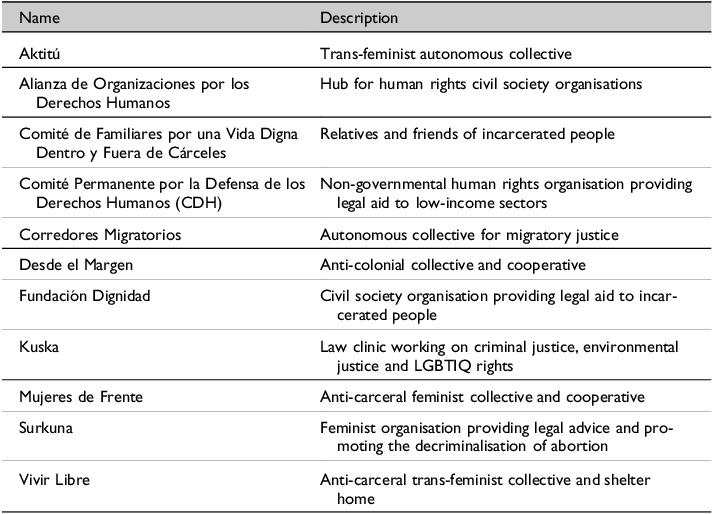
Table 1. Long description
A table with two columns and ten rows. The first column is labeled Name and the second column is labeled Description. The table lists the following: Row 1: Name, Aktitu; Description, Trans-feminist autonomous collective. Row 2: Name, Alianza de Organizaciones por los Derechos Humanos; Description, Hub for human rights civil society organizations. Row 3: Name, Comite de Familiares por una Vida Digna Dentro y Fuera de Carceles; Description, Relatives and friends of incarcerated people. Row 4: Name, Comite Permanente por la Defensa de los Derechos Humanos (CDH); Description, Non-governmental human rights organization providing legal aid to low-income sectors. Row 5: Name, Corredores Migratorios; Description, Autonomous collective for migratory justice. Row 6: Name, Desde el Margen; Description, Anti-colonial collective and cooperative. Row 7: Name, Fundacion Dignidad; Description, Civil society organization providing legal aid to incarcerated people. Row 8: Name, Kuska; Description, Law clinic working on criminal justice, environmental justice and LGBTIQ rights. Row 9: Name, Mujeres de Frente; Description, Anti-carceral feminist collective and cooperative. Row 10: Name, Surkuna; Description, Feminist organization providing legal advice and promoting the decriminalization of abortion. Row 11: Name, Vivir Libre; Description, Anti-carceral trans-feminist collective and shelter home.
The participants’ political militancy draws on sources that include indigenous, anticolonial, Marxist, queer, and autonomous feminisms, as well as other Latin American traditions such as Paulo Freire‘s Pedagogy of the Oppressed. One collective reported on collaborations with women‘s movements in Kurdistan. There are ongoing collaborative processes bringing some of these collectives together.
I employed thematic qualitative content analysis (Schreier et al. Reference Schreier, Stamann, Janssen, Dahl and Whittal2019; Brown Reference Brown2021), using an inductive approach, to code transcribed audio, field notes, documents, and other primary sources. All texts in Spanish were translated by me with the occasional support of the software Deepl. Computer-assisted filters and functions (Atlas.ti), such as code co-occurrence analysis, were employed to assist the identification of patterns. Two coding cycles were used to arrive at a sound frame, which then fed into theorisation. I used Artificial Intelligence (AI) tools for copyediting (format checks and reference list consistency). No AI systems were used for data collection, coding, theorisation, or interpretation. Those tasks were conducted by the participants and me, with the support of two research assistants.
Regarding my positionality, I am a mestiza, Ecuadorian, and Latin American cis woman residing in the UK, in safer circumstances than most women in Ecuador. While reflecting on positionality does not erase these imbalances or eliminate inequality in knowledge production (Cruz and Luke Reference Cruz and Luke2020; Ullrich Reference Ullrich2024), the project included redistributive and compensatory mechanisms that, alongside my long-standing collaboration with the collectives, mitigated some of the extractivism inherent in academic research. These long-term commitments have not compromised my rigor: I employed a multi-method design precisely to facilitate triangulation. Moreover, ongoing collaborative work with the participants has strengthened my ability to contextualise the findings. I am a note-taker, a record-keeper, and a bridge-builder, learning about imagined futures.
Main findings
This section presents the key patterns that fieldwork unveiled. A crucial insight is that anticarceral feminist responses to IHRs are characterised by scepticism and reluctance. The criminalisation, surveillance and punishment of many subalternised women, as well as the negative impact of incarceration on their survival strategies, reproductive labor and social life, dovetail with their perceptions of IHRs as elitist and non transformative. Therefore, instead of pursuing rights-based legal pathways, many collectives strive to acquire and circulate vital resources, which in turn serve to mitigate VAW. For instance, some groups have established community houses, small businesses, savings schemes, soup kitchens, shelter homes, and other cooperative projects that offer safe spaces and provide them with a degree of financial autonomy. Many participants also stressed the importance of redistributing reproductive labor, for example, through community-provided childcare, as Ecuador lacks sufficient publicly funded options. These initiatives free some of the women’s time and allow them to engage in political, educational, and economic activities through which they acquire relative independence. Another essential practice consists of providing acompañamiento (material, emotional, and logistical support) to victim-survivors of VAW. Overall, materially sustaining life is regarded as a priority and a precondition for dealing with and overcoming VAW.
Penal violence against women
In close relationship with their attitudes toward human rights, participants pointed to a pattern of penal violence systematically inflicted on women whose lives are connected to the penal system due to their activities or relationships. To illustrate the concept of penal violence against women, I foreground two phenomena frequently brought forward by the participants: the exploitation of the care work provided by those who support incarcerated relatives and friends, and the hyper-policing of marginalised women’s survival strategies. The evidence indicates that women in the vicinity of prisons are disproportionately exposed to police and prison violence, gang extortion, bureaucratic hurdles, and public officer corruption. In this context, many women are co-responsible for the support and protection of their incarcerated loved ones (Kaleidos 2021; RIMUF 2022). Penal violence here consists of the extraction of the (low)paid and unpaid labor that women conduct to cover the material and emotional needs of their incarcerated loved ones. While international standards and domestic laws require the state to provide prisoners’ necessities and access to rehabilitation, in practice, families shoulder many routine and ancillary costs, with an extractive economy quickly growing around incarceration (Bargent Reference Bargent2024; Noroña Reference Noroña2026).
In Ecuador, as in the broader region, entering a prison entails exploitation by armed groups and corrupt state officials. Women play a key, albeit overlooked, role in these economies. According to the Red Internacional de Mujeres Familiares de Personas Privadas de la Libertad (International Network of Women Relatives of Persons Deprived of their Liberty, RIMUF):
No one who has passed through the door of the prison can fail to notice that it is almost exclusively women who queue up, do the paperwork, carry parcels and news from outside. This is evident inside the home: they are the ones who take care of the children, the housework and the family economy; they are the ones who make daily activities compatible with the demands of prison (RIMUF 2022, 2).
Today, a significant increase in the workload of women who support incarcerated relatives and friends has become evident. According to a survey conducted in some Latin American countries, thirty-three percent of women had to start working outside the home due to their family member’s incarceration, nineteen percent had to take additional work to increase the family’s income, and twelve percent kept their original job but increased the number of working hours (RIMUF 2022). This occurs largely because food, hygiene items, and other goods are highly overpriced in prisons to generate revenue for corrupt state agents and gangs (Kaleidos 2021; CDH 2024; Bargent Reference Bargent2024). In addition, participants mentioned “prison taxes,” that is, certain fees that need to be paid to state officials and/or controlling gangs to access food, communications, and even rehabilitation (Noroña Reference Noroña2026). According to a spokesperson for a family committee:
[In prison] everything is about money. If you want to access an activity, you have to pay. If you want to enrol in a workshop, you have to pay; I have done it. My son used to tell me: “Mom, there is a workshop for such and such, you have to pay ten dollars”. You never end up paying ten, you end up paying thirteen, because three goes to the owner of the bank account and ten goes to another person (pers. comm., June 19, 2023).
Many women are also extorted:
They called me from inside the prison to extort me, to tell me that my son had an outstanding debt inside. [I said that my] son is already dead [and they said] “I know your son is dead, but your son left a debt of six hundred dollars, and I need you to pay it to me” (member of a family committee, pers. comm., June 19, 2023).
These economic burdens can translate not only into a heavier load of (under)paid work required to increase income, but also into debt (RIMUF 2022; Kaleidos 2021; Cavallero and Gago Reference Cavallero and Gago2021). A community psychologist working pro bono with incarcerated people said:
The state does not provide [impoverished people] with a lawyer, so they may not have legal advice unless there is an NGO or a collective that decides to take their case. […] Legal advice [generates] a series of problems in their lives, like having to look for resources to sustain very insipid procedures. […] I am not talking about complex legal processes [but something like] handing in a piece of paper and […] that costs eight hundred dollars, right? Legal processes that are not really going to change [the incarcerated person’s] reality, but they are going to be incorporated into the bureaucratic needs of the justice system. So, they get into debt, they have to sell things, they have to take loans…. Their families become poorer (pers. comm., October 21, 2022).
The above aligns with what Cavallero and Gago’s observation that “debt is a connecting device between the inside and the outside of the prison, and the prison itself is evidenced as a system of debt” (2021, 19).
Also, managing legal processes and litigating on behalf of the incarcerated is time-consuming and resource-intensive (Armstrong Reference Armstrong2020; Coba Mejía Reference Coba Mejía2015). Fernando Bastias, a pro bono legal practitioner sponsoring families of incarcerated people, recounted:
[…] I heard a grandmother telling her testimony, and she is aware that her grandson committed the crime and that he is paying for it … but to hear her say that every month she has to travel seventeen hours from Lago Agrio to the regional prison [in Guayaquil], being a senior citizen with all its complexities. … She is in a context of poverty, and she had to raise money, she had to pay lawyers, she had to sell everything. It was the first time that I was broken, that I was broken inside (pers. comm., November 18, 2022).
In addition to covering costs, women perform the affective labor (Oksala Reference Oksala2016; Whitney Reference Whitney2018) required to manage the psychosocial impacts of incarceration (Haney Reference Haney2001; Comfort Reference Comfort2003; McDonald et al. Reference McDonald, Berardi, Haggerty and Bucerius2025). Complications when people are released from prison may include trauma, aggressiveness, and difficulties reintegrating into the family and community:
[…] There is also a kind of culture inside the prison, which is extremely macho, very, very misogynist, and it is worrying because these thoughts that at some point were perhaps macho thoughts become radicalised in prison and can become violent afterwards (Vianca Gavilanez, Fundación Dignidad, pers. comm., December 13, 2022).
Moreover, in a country where only a minority can secure formal employment (Angulo Reference Angulo2023), many women resort to the underground economy to survive and support the incarcerated. Marginalised women’s economic activities include street-vending, sex work, and micro drug-trafficking, which are hyper-policed activities that continuously risk coercion and detention. Resisting this violence is an everyday reality for many. According to the collective Mujeres de Frente:
[…] The metropolitan police persecution of fellow female comrades working as autonomous vendors [means that] according to the authorities, they are to a greater or lesser extent always violating the law—we may thus understand that there is a relation between the struggle for social reproduction and the struggle against punitivism, which is likewise a struggle against the state that punishes these forms of making a living (Mujeres de Frente 2022, para. 11).
As a result, women’s survival strategies are stigmatised, outlawed, and sometimes suppressed. The possibility of a dignified livelihood, even when women adopt certain market-aligned initiatives, is often denied to them:
The very state that prevents us from accessing dignified jobs and dignified lives is also the state that pushes us in one way or another to resort to subsistence economies through autonomous work, which is often not enough to provide for our families. It is the kind of work that is always being targeted and criminalized and also leads to job insecurity, preventing us from reproducing life with dignity and pushing us to the limits between what is legal and illegal (Mujeres de Frente 2022, para. 5).
Importantly, IHR frameworks can expose women who interact with the penal system to bureaucratic abuses that affect social reproduction. For instance, Nancy Delgado, of Mujeres de Frente, recounted her efforts to secure the release of her daughter, who was detained in a juvenile facility. The authority’s refusal was based on the “best interests of the child”—a principle from the UN Convention on the Rights of the Child, incorporated into Ecuadorian legislation. Nancy was thereby considered an “unfit” parent, unable to allocate enough time for her daughter’s upbringing. In reality, Nancy was working full-time as a street vendor to support her family. That is, the rights-based child protection system punished Nancy and her daughter for not belonging to the middle class.
Similarly, Elizabeth Pino, of Mujeres de Frente, who has experienced incarceration, spoke about the ordeals women go through when they are released from prison to regain custody of their children:
To get your child back, you must have a flat. I mean, normally, if you don‘t have money, you sleep in the same bed with your children. [You thrive] even if it‘s by eating just rice and eggs. But then the nuns [in charge of the hospice] come and say: “Well, we‘re going to give you your children, but show me where the boy‘s room is. And the other boy‘s room?” You must have internet service, computer, kitchen, refrigerator, a dining room … I mean, […] how are you going to give your children [all that]? (focus group, November 6, 2023).
Another form of penal violence brought forward by participants was the brutal and often fatal beatings of trans sex workers who are routinely targeted, hurt, and murdered by law enforcement and gangs (Montoya Reference Montoya2025). Odalys Cayambe Bustamante, who leads Vivir Libre (Living Free), a transfeminist anticarceral organisation, shelter and community centre, said:
Everybody in Ecuador knows that we, as trans women, as citizens, don‘t have opportunities. […] One of the few opportunities we have is sex work, which is criminalised, and because these are the only options, our life condition is not respected, and the only thing [the state] does is criminalise the girls, minimise them, subtract them as citizens, make them invisible and literally use them (pers. comm., November 28, 2022).
Across all these instances, participants noted the racialised nature of penal violence:
[…] Since always, we have seen the prisons, as well as the neighborhoods, the streets, the universities, the schools, etc., as places of perfect normalisation of violence, almost placing women in a situation of being served on a silver platter. And of course, this has to do with the issue of what we call racialisation, when women who come from impoverished sectors or are defined as nonwhite… they are much more exposed to violence […]. It is clear to us that prisons of all kinds, from childhood onwards, favour violence against us. So, we know that [a prison-based justice] is not an option (Andrea Aguirre Salas, Mujeres de Frente, focus group, December 5, 2022).
As a result, participants are vocal regarding their stance against prisons. Figure 1 shows members of Mujeres de Frente in a public protest, holding a banner with a message reading ‘Mujeres de Frente. For a world without prisons for women, girls and boys.’
As we see, the penal system surveils and imposes economic, emotional, and social burdens on women who are already affected by poverty, racialisation, and discrimination. Consequently, they do not engage with the penal system as a primary pathway to justice and redress. As shown next, penal violence also distances anticarceral feminists from IHRs, which they regard as exclusionary and elitist. Participants’ scepticism is inseparable from their experiences in a legal landscape where the state is simultaneously the addressee of rights-based claims and the administrator of penal violence.
Mujeres de Frente taking part in a public demonstration in Quito. The banner reads: ‘for a world without prisons for women and children’ (Credit: Mujeres de Frente).

Figure 1. Long description
A group of people marching in a street holding a banner that reads for a world without prisons for women and children. The banner is white with green and purple accents and the text is in Spanish. The people are wearing masks and some are holding signs. The street is lined with buildings and there are other people in the background.
Scepticism toward human rights
The language, principles, and provisions embedded in the United Nations and the Inter-American human rights systems have been highly influential in Ecuadorian legislation and human rights advocacy, constituting the main framework of reference for the use of the term “international human rights (IHRs).” The prevailing finding of this project is that participants hold a high degree of scepticism toward IHRs. Most view them as inaccessible constructs that favor the elites and are not beneficial for impoverished and marginalised women. This perception resonates with the notion of “legal estrangement” (Bell Reference Bell2017), whereby marginalised communities experience the law’s chronic neglect and symbolic exclusion, resulting in their pragmatic disengagement from rights discourse and formal legal remedies.
Indeed, for most participants, access to human rights is determined by the varying levels of ‘humanity’ afforded to them, as well as their economic, cultural, and social capital. For example, the dehumanisation of criminalised people can result in the denial of human rights as both a prerogative and as a framework to demand protection and redress:
I, as Elizabeth, cannot demand those [human] rights because they have laughed at me many times when I say that I have rights: “Shut up, you have no right to anything, you are a delinquent, a scumbag” (Elizabeth Pino, Mujeres de Frente, focus group, November 6, 2023).
I was part of a group of, quote unquote, defenders of rights, and what they did was throw me out because they said that prisoners had nothing to do with rights issues. And they threw me out because, for them, I was not an activist, because for them, I did not promote rights. What I was doing was promoting criminals. [Now] they say that I promote sex work, but what I seek is the protection of sex workers (Odalys Cayambe Bustamante, Vivir Libre, pers. comm., November 28, 2022).
Along these lines, other participants associated human rights with white, privileged feminism and the implied social and economic capital:
I think that, for example, very white feminist sectors do talk a lot about rights because they are in NGOs, in places of power, and it is a more everyday language. [For grassroots collectives] it is only if we talk to power that it is useful to talk about rights (“Rata,” Aktitú, pers. comm., November 24, 2022).
The excerpt above depicts IHRs as tools that may have to be used pragmatically (and with little prospects of success) when in dialogue with the state and other institutions, such as international organisations, is needed. However, IHRs do not meaningfully respond to the realities of criminalised and subalternised women. Discriminatory violence from the state and other right-granting agencies feeds into the generalised scepticism toward IHRs:
When you think that you can go to justice … that you are going to get justice … what you get is the bureaucratisation of your life. So, [for example], to ask for a right, to demand something, you must have a national identity document. To have a right, there are people who ask [immigrants]: “Are you legal?” They don‘t even tell you that you have to be “regular”. So, it is as if they treat you as a person who has less value. (Cristina Burneo Salazar, Corredores Migratorios, focus group, November 8, 2023)
[The state] nullifies my rights because I am poor. […] My friend was raped, and her rights were annulled because she was of African descent, because she was black, because she did not have money, because she dressed differently, because she did not… I mean, everything just stopped there and there was not even a follow-up of her [legal] case, nothing (“Amelie,” Corredores Migratorios, pers. comm., November 8, 2023).
The testimony above maps onto well‑documented credibility discounts applied to women reporting sexual violence (Tuerkheimer Reference Tuerkheimer2017; Maier Reference Maier2008; Williams Reference Williams1981), which here are amplified by race and class-based discrimination and are also a form of penal violence. In Ecuador, intersecting stigmas of Blackness, poverty, migratory status, and gender non‑conformity compound disbelief and procedural stalling. As a result, access to rights is regarded as contingent on a social and economic capital that remains unreachable to many:
[…] human rights are violated everywhere, because they are not for a prisoner or for the people who are out here. Human rights don‘t really exist. I tell you with the experience of my son who was detained. I had to do thousands of things to be able to get him out, to get him free. Even the lawyer that I hired stole my money; he stole five-thousand dollars from me at that time […]. Human rights, as I say, are just a made-up word (Mariana Collaguazo, Mujeres de Frente, focus group, November 6, 2023).
The laws are not fair, the laws are not there, as I said, to protect us, to look after the people who really need it. […] I believe that, if there is no money, there is no justice, there is no law. For poor people, there are no rights (Nancy Delgado, Mujeres de Frente, focus group, December 5, 2022).
It follows that, since claiming rights involves judicial and bureaucratic processes, it is only those who can access legal advice and support that are able to engage in litigation and advocacy. For instance, some relatives of the prison massacres’ victims have formed committees and secured the pro bono sponsorship of Comité Permanente por la Defensa de los Derechos Humanos (Permanent Committee for the Defense of Human Rights, CDH), a Guayaquil-based organisation that has historically advocated for incarcerated people and marginalised sectors (Tapia Tapia Reference Tapia Tapia2022b, 2022c). Together, they have demanded state reparations through constitutional legal actions (CDH 2023).Footnote 9 Figure 2 shows one of the hearings within these rights-based processes.
Members of the Comité de Familiares por Justicia en Cárceles, during a court hearing within a constitutional protection action. The hashtag on the t-shirts reads: “the state is accountable” (Credit: Comité Permanente por la Defensa de los Derechos Humanos).
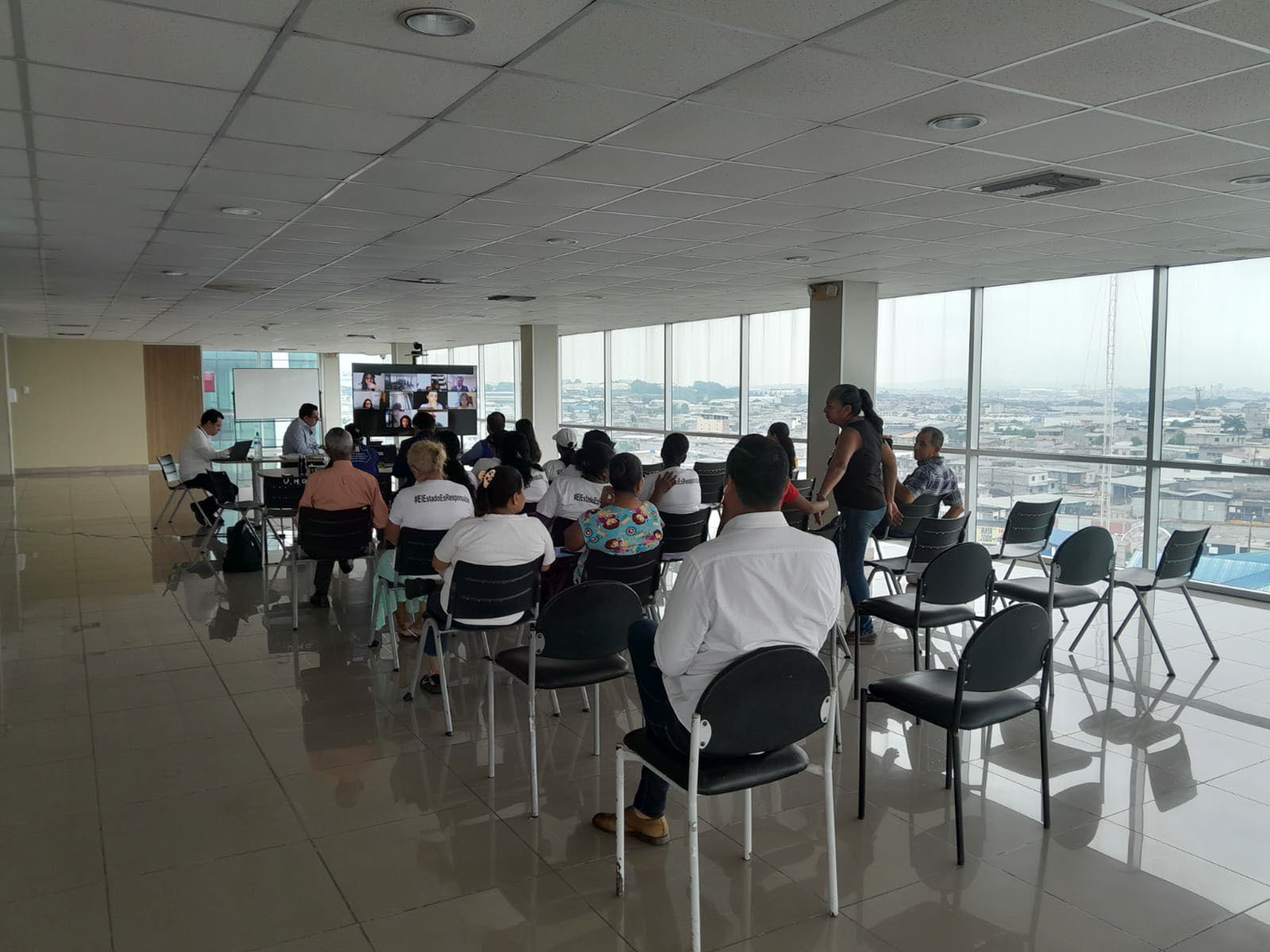
While these lawsuits incorporated IHRs provisions to denounce inhumane and degrading treatments under state custody, they have yet to produce tangible results. In a focus group, members of Mujeres de Frente commented on the legal actions sponsored by the CDH and the Comité de Familiares por Justicia en Cárceles (Committee of Relatives for Justice in Prisons). Mujeres de Frente collaborated with both groups and considered that their use of IHRs primarily seeks to affirm the humanity of people whose pain is regarded as deserved by society at large. However, they also acknowledged that meaningful results were yet to be seen:
[…] the mothers of the Committee… [they are saying] “our children are human too, we‘re going to fight for their humanity”. And that‘s where I see that [human rights language] is useful. I don‘t believe much in human rights, but when I see, for example, that CDH is working on lawsuits against the state that never come to any result… they never come to anything, but they are saying publicly that these people are also human (Andrea Aguirre Salas, Mujeres de Frente, focus group, November 6, 2023).
For their part, anticarceral human rights practitioners are aware of the status and capital required to benefit from (typically lengthy) rights-based processes. According to Vivian Idrovo, a human rights practitioner working with the Alianza de Organizaciones por los Derechos Humanos (Alliance of Human Rights Organisations):
[Human rights] also serve power very well, because [they are] crumbs that are thrown to us along the way… to tell us: “Very well, there you have human rights; here it is so that you can have justice”. And we have twenty years … twenty years of struggle in the Inter-American Court of Human Rights for one case, right? So, it is a lie, it’s a lie (pers. comm., April 19, 2024).
Concomitantly, rights-based processes at the national and international level were framed by practitioners as both ineffective and violent:
It seems to us that some [international human rights] mechanisms are completely ineffective, and we don‘t even waste time trying to apply these mechanisms. Amongst these are many mechanisms of international law, which are currently very, very ineffective because they take a very long time, and reparation never really arrives. […] The whole process is extremely violent, also for the victims, and ultimately it ends with a brief acknowledgement by the state that does not materialise in reparations of any kind (Vianca Gavilanez, Fundación Dignidad, pers. comm., December 13, 2022).
As a corollary, the following insight from Mujeres de Frente illustrates the gap between declared rights and women’s material living conditions, which feeds into their scepticism:
[…] if you are an impoverished person, from a lower class, without resources, talking about rights is much more complicated […]. I went to the Health Centre fifteen days ago to get an appointment for my daughter who was ill. The doctor wasn‘t there, and they just said, “there are no doctors”. I mean, if the baby dies, she dies. And her right to life, to health? I mean, that never existed (Geomara Cofre, focus group, November 6, 2023).
The discrepancies, contradictions, and discrimination described above when it comes to engaging with human rights lead to a generalised scepticism, meaning that anticarceral feminists rarely utilise the language of IHRs in their mobilisations and militancy:
When we listen to each other in the school and in our processes, we do not talk about human rights […]. It is as if the scepticism toward human rights is already so great… But I hear us sometimes talking about justice, for example, but we do not talk about human rights (Cristina Burneo Salazar, Corredores Migratorios, focus group, November 8, 2023).
No, we don‘t make a lot of references to this language of human rights […]. Obviously, we know that rights are important in the world that we inhabit, a world that is mediated by a nation-state. But from this political position, we think ourselves outside of this construction. And what we talk about and believe and bet on is a dignified life. […] We can also see the limits within the nation-state, which is patriarchal, capitalist and colonial (Desde el Margen, pers. comm., November 17, 2023).
We do not use the language of human rights that much, although, of course, it is the basic language of equality, of recognition, of being of the same species… which is obviously not common sense, because according to the racist common sense we [women of colour] are biologically unequal, hierarchically different and so on. […] We have many doubts about homogenisation, as in the erasure of differences and inequalities that is implied in [human rights] language. Because […] it clouds the possibility of seeing the fact that we are in a hierarchical world (Andrea Aguirre Salas, Mujeres de Frente, focus group, December 5, 2022).
What we observe above is an analytical separation between legal rights and justice, and between legal rights and dignity, which broadly characterises the collectives’ counter-hegemonic stances, mediated by their framing of the state as a coercive, racist, classist, and patriarchal apparatus that does not respond to their needs. The resulting distance between anticarceral feminism and IHRs is synthesised in the following fragment, in which grassroots organising is contrasted with institutional human rights:
We do have some criticisms related to the institutional management of human rights; at the level of history, how it has been managed year after year. And well, I don‘t know if we are really an organisation that can call ourselves a human rights organisation. So, we would like to move closer to the language of a grassroots organisation, a people’s organisation that really tries to work every day for a world that doesn‘t violate us, a classless world (Vianca Gavilanez, Fundación Dignidad, pers. comm., December 13, 2022).
Mapping marginalised women’s experiences of rights as elitist, non transformative, and disconnected from meaningful justice, together with the pattern of penal violence against women, shows that penality diminishes the emancipatory potential of human rights for counterhegemonic movements; in this case, anticarceral feminists. Consequently, participants imagine and practise justice moving away from the penal paradigm, as shown next.
Nonpenal practices of justice and the materiality of life
This section considers how anticarceral feminists conceive justice, the practices they adopt to mitigate the effects of VAW and state abandonment, and the countercarceral potential of these praxes. Broadly, participants establish a connection between the material sustenance of life and the realisation of justice. Justice thus requires access to housing, healthcare, education, childcare, decent employment, etc., which are not facilitated by the state. Material well-being, in addition, is regarded as an indispensable precondition to preventing and overcoming violence.
Moreover, in the face of state abandonment and penal violence against women, many participants highlighted the central role of reproductive labor for survival and protection. While they recognise that reproductive labor has been a conduit for the exploitation of women within capitalism (Federici Reference Federici2020; Mezzadri, Newman, and Stevano Reference Mezzadri, Newman and Stevano2022), some collectives propose to reimagine and redistribute reproductive labor as a means of sustaining life, freeing women’s time and mitigating economic precarity. This can, in turn, contribute to the mitigation of violence by affording women more independence and security. According to Heidy Mieles, of Mujeres de Frente:
We put care [work] and the redistribution of care at the centre. We believe that women have historically been obliged to perform care work, but we do not think that it is wrong to care; on the contrary, we believe that it is the centre of life and that is the most important thing: to realise that caring is what allows the engine of the world to continue to exist (¡YA NADA! el podcast 2024).
Among the mechanisms through which Mujeres de Frente redistributes care work are their shared childcare space and community kitchen, which function in their countercultural feminist center in Quito, called Casa de las Mujeres (The Women’s House):
The Casa de las Mujeres is our common territory in the fragmented city. It houses all our activities: the sewing workshop, the educational and co-research spaces for women, the community food bank, [and] our regular assemblies. It is also a safe place for the wawas [children] and adolescents, where they can come to play, study and share (Mujeres de Frente 2020, para. 2).
In addition, Mujeres de Frente have established small businesses consisting of a catering service and a textile workshop, which yield some economic gains: cash income, debt avoidance, food security, and other benefits such as freeing time for education, political organising, and feminist co-research projects, which in turn reduce exposure to violence and coercion. These initiatives also facilitate the formation of dependable support networks, whilst promoting materially meaningful forms of justice, all led by women.
Crucially, these community processes are contributing to mitigating and transforming the everyday violence present in women’s domestic spaces. The following focus group excerpt illustrates this:
In our families there are aggressors, and we encounter some problems daily. One is that there are husbands who don‘t want to give women permission [to come to the collective’s meetings] because they see that they are already becoming very empowered. In other cases, the woman arrives literally beaten up. And in those cases, we have made the decision to be very loving and respectful […], not telling her what she has to do but not pretending that it is not happening either. [In the community house, men] are constantly given tasks, so the men are always doing carpentry or especially kitchen chores, which changes the relationships in a very strange way, because it is the women who are in charge there. That is indisputable. Nobody doubts that in Casa de las Mujeres, women are in charge; and suddenly you find the aggressor peeling potatoes, and he is a twenty-two-year-old man experiencing women‘s leadership. […] And it would seem positive because ours is a space of female power; then maybe it‘s better for her to be there and for him to be there peeling potatoes, than for her to leave the organisation because we‘re purists, right? (Andrea Aguirre Salas, Mujeres de Frente, focus group, December 5, 2022).
This fascinating account reflects how day-to-day community work led by women can disrupt rigid gender roles, contributing to transforming violent relationships at the same time. In the experience of Mujeres de Frente, participation by men in women‑led community labor reduced tensions for some families, lowering the immediate risk of retaliatory violence by normalising shared caregiving and community accountability within the collective. That is, through a space where women‘s leadership is undisputed, power imbalances shift. Furthermore, creating and sustaining networks and community spaces is a way of resisting and repoliticising penal and gender-based violence in the face of a state that is present as a coercive force but is absent when it comes to mitigating social inequality.
Another collective that has resourced a community space where people get together for cooperation is Desde el Margen, who run a community house called La Marginal:
[Our sense of justice] is reflected in the spaces that we have in the [community] house: the soup kitchen, because we believe that food is an act of justice, it is an act of dignity. Health, building our own health is also an act of dignity. Our own education as well (pers. comm., November 17, 2023).
Figure 3 shows a social media post used by Desde el Margen to invite their community to a critical history discussion event, where traditional food was served.
Image used in social networks by Desde el Margen to promote a cultural event in their community house, where food was shared (Credit: Desde El Margen).

Vivir Libre, a transfeminist anticarceral organisation, also maintains a shelter for trans women who have suffered gender-based violence, which is primarily funded through their own small businesses, including a hair salon (see Figure 4). Their community center has also recently started to provide mental health support for victim-survivors in collaboration with healthcare professionals. This project, named “Ksa Trans,” is situated in one of the most deprived areas of Guayaquil:
[…] We have a project called “shelter-home,” which is a project of the trans community network Vivir Libre in Ecuador. […] When you have had a migration process, enduring hardship, you come here experiencing needs, you come here feeling humiliated… And then when you arrive, you need affection; to be able to say that you are fine, that you are at home, to calm down and to relax. We are not going to change the world because the world is [violent], it is hate, but we are going to look for peace for ourselves. […] From there comes the health issue, the food issue… we are used to eating from the rubbish. And even if we eat once a day, it is necessary and important for us, and we are happy (Odalys Cayambe, pers. comm., November 28, 2022).
Odalys Cayambe Bustamante and other members of Vivir Libre are working at a hairdressing salon they run to fund their shelter-home (Credit: Vivir Libre).

Because they link justice to support networks and life-sustaining resources, which require work and effort, anticarceral feminists do not prioritise rights-based demands or pursuing trials to imprison aggressors. Instead, given the importance afforded to community building, some collectives focus on actioning redes de acompañamiento, that is, networks of support and hospitality for victim-survivors of violence:
[…] What has worked for us [to mitigate VAW] is the daily acompañamiento and the weaving of a community […] A daily practice of coexistence. In diversity, inequality… which at the same time makes it possible to circulate, not only economic resources, which are also within our humble possibilities, but also discursive resources… Like being able to participate in group deliberations (Andrea Aguirre Salas, Mujeres de Frente, focus group discussion, December 5, 2022).
I experienced gender-based violence, and I still consider it to be the worst thing that has ever happened to me in my life. And I got out of that because of the community that was with me, in this case, the community of feminist women who until now—and I say this and I believe that it will not change, because it has been a few years since this happened—saved my life, because it was the community that took care of me, that taught me and strengthened me (Magaly Carpio, Fundación Dignidad, focus group discussion, November 10, 2023).
The referred support networks offer not only emotional but also logistical support. Cristina Burneo Salazar, of Corredores Migratorios, said:
We are all working together, and we care very little about the [legal] documents we have [as migrants]. And the management of life is material, it‘s an everyday issue, and it‘s challenging the state a lot at that moment, it‘s challenging xenophobia. And what is closest to my heart now is how in such a small community, managing hospitality every day and materially, you can see that it is possible to think of other possible lives (pers. comm., November 28, 2022).
Although some anticarceral feminisms have been interrogated for overlooking the economic nature of the structural inequalities that underlie VAW (Masson Reference Masson2020; Stybnarova Reference Stybnarova2023), these findings show that community building and solidarity in Ecuadorian anticarceral feminism do not exclude, but often imply, a critique of economic precarity and state abandonment as violence. Cinthya Carrazco, a feminist lawyer, said:
[It is key] to talk about a notion of justice built on femininity. What do we understand by justice? Not from the standpoint of law, but from our vital experience, from sustaining the conditions for the reproduction of life, which is not only a reproductive role, but literally to survive when the State is not there (pers. comm., November 14, 2023).
Evidently, here the desired state is not the enforcer of criminal law, which is already present in many participants’ lives, but rather a redistributor that provides dignifying services. Whilst committed to strengthening their communities’ capacities, the collectives recognise that they cannot compensate for a lack of quality public services:
[…] There are things that the collectives cannot solve. In the case of a hospital, I mean, there isn‘t a hospital dedicated to women survivors of sexual violence or male violence. […] And of course, then we say that if there was a kind of profound social justice based on public health, public education, etc., [judicial] state [penal] justice would not even be necessary; that is, if there were different and public ways of building a fairer society (“Rata,” Aktitú, pers. comm., November 22, 2024).
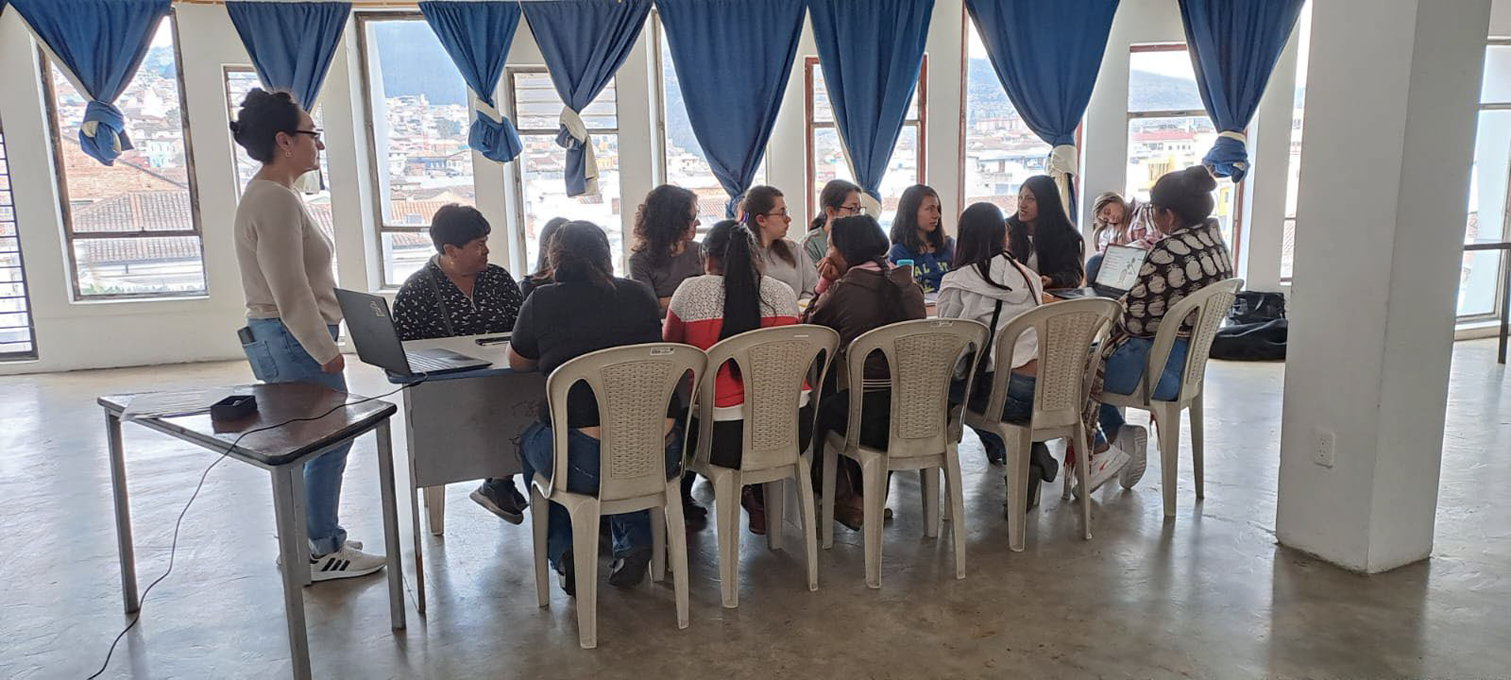
During the last stages of the focus groups (see Figure 5), participants were invited to share their views on accountability beyond the penal realm and whether they devise nonpenal strategies to address the wrongness of VAW. For instance, when asked about “fighting impunity” (a key element in both human rights and mainstream feminist agendas), participants distanced themselves from the state’s penal apparatus and explained how their understanding of accountability differs from dominant ones. The excerpt below summarises a process of collective thinking that occurred during a focus group with Mujeres de Frente:
The words that amalgamate all that we want [are] that there should be no indifference. […] What happens to us should be talked about, it should not be treated as if it did not exist, because that is when the issue of blame arises, of who is to blame. These are questions we are asked when these issues of violence happen: What if nothing happens [legally]? Does that mean that I‘m to blame or I deserved it? […] What we don‘t want is for people to be indifferent, to offer no space, no response, no support (Mayra Vera, November 6, 2023).
A focus group with Mujeres de Frente at their community space, Casa de las Mujeres (Credit: Genaro Tapia Tapia).
Such resignifications of “impunity” as indifference and abandonment are a pending task for projects that seek to move past the “tunnel vision” of penality.
All the insights in this section have informed the development of the conceptual and theoretical contributions elaborated in the next section, where I synthesise an analysis based on existing critical literature and the knowledge of the project’s participants.
Toward an anticolonial theory of penal violence against women
The theorisation that follows is based mostly on fieldwork information, which includes the participants’ and my own situated knowledge and political, social and cultural backgrounds. It also builds on existing literature, especially critiques of penality and human rights. Participants had opportunities, at various stages of the project, to provide feedback on these interpretations. The framework is open to refinement through comparative work and further co‑production with affected communities.
As mentioned in the methods section, following the analysis of documentary and empirical data, the qualitative analysis codes were clustered into broad themes. Comparison across existing literature, interviews, focus groups, fieldnotes, and primary documents revealed the phenomenon of “penal violence against women” (PVW), a transversal, structural, and gendered harm that extends beyond prison walls into spaces of social reproduction. Participants frequently referred to being policed and revictimized through the penal apparatus and narrated the penalisation and exploitation of women’s unpaid and underpaid labor in the vicinity of prisons. These are all forms of penal violence.
As described in Section 3.1, women travel for visits, deal with abusive bureaucracies, pay “prison taxes” and extortion, and cover overpriced goods and “services.” This suggests that the penal system is an extractive apparatus that relocates the costs of punishment onto women, which in turn establishes a link between penality and the capitalist (and colonial) exploitation of social reproduction (Mezzadri, Newman, and Stevano Reference Mezzadri, Newman and Stevano2022; Rai Reference Rai2023; Federici Reference Federici2020; LeBaron and Roberts Reference LeBaron and Roberts2010).
Reproductive labor, which is essential for maintaining and replenishing the workforce, is integral to the accumulation of capital by “core” states and large corporations, which often extract this work from “peripheral” sectors (Federici Reference Federici2020; Cavallero and Gago Reference Cavallero and Gago2021; True Reference True2012; Mezzadri, Newman, and Stevano Reference Mezzadri, Newman and Stevano2022). Here, the penal system plays an often-unseen role: it criminalises and polices precarious economies, including informalised and “illegal” labor, reaching into women’s everyday survival strategies. PVW is, therefore, a structural harm produced where penality intersects with the capitalist organisation of social reproduction.
The observed extractive and gendered impacts of the penal apparatus add to the participants’ accounts of racialised violence. Latin American work on the coloniality of power and gender (Quijano Reference Quijano2000; Mendoza Reference Mendoza, Disch and Hawkesworth2016; Lugones Reference Lugones2007), as well as research on the role of colonial and imperial domination in the reproduction of capitalism (Hickel, Hanbury Lemos, and Barbour Reference Hickel, Lemos and Barbour2024), allows us to associate capitalism with the racialised appropriation of labor and resources from subalternised peoples. Capitalism is, at its root, colonial. Women’s labor, especially that of racialised women in the peripheries, is systematically exploited, undervalued, underpaid, and often unwaged. In connection, as Ruth Wilson Gilmore (Reference Gilmore2015) notes, the capitalist state systematically abandons subalternised communities, leading to their marginalisation and increased incarceration rates. We can thus characterise the penal apparatus as a vehicle for colonial capitalist oppression. These considerations provide stepping stones to build an anti colonial and feminist critique of penality that centers the colonial and imperial foundations of capitalism.
Against this backdrop, the penal apparatus on paper operates within the limits of law, including criminal law, constitutional law, and international human rights (IHRs). At the same time, research and critique have shown that, in practice, law can serve the interests of capitalism, rationalising and justifying the imbalances and maldistribution that underpin it (Ullrich Reference Ullrich2024; Pahuja Reference Pahuja2011). Critics have also pointed at the colonial, patriarchal, and (neo)liberal foundations of IHRs, as well as their role in sustaining imperialist and capitalist dynamics, while failing to deliver on their promises of liberation (Kennedy Reference Kennedy2004; Douzinas Reference Douzinas2007; Rivera Cusicanqui Reference Rivera Cusicanqui2010; Golder Reference Golder2014; Kapur Reference Kapur2018; Whyte Reference Whyte2019; Sattar Reference Sattar2019; Tzouvala Reference Tzouvala2020). Moreover, anticolonial analyses have shown that legal frameworks uphold racial, gendered, and economic hierarchies while presenting themselves as neutral and universal. As a result, the abstract legal order and its claims of universality obscure real-world power imbalances, embodied experience, and situated knowledge (Tapia Tapia Reference Tapia Tapia2023; Rivera Cusicanqui Reference Rivera Cusicanqui2010; Hunter Reference Hunter, Davies and Munro2013; Smart Reference Smart1989; D. E. Smith Reference Smith1974). In this way, according to indigenous researcher Kinti Orellana Matute:
All these sequential [legal] processes [supposedly] play an objective and neutral role for those involved [in the legal proceedings], but we don‘t realise that, of course, there is the context, the situated context of each person. […] Rather than dealing with a clear, neutral setting, where your rights were violated according to the law, you [may not] have the financial means to be able to afford those processes (pers. comm., May 5, 2024).
Along the same lines, Mujeres de Frente argued:
[…] a false idea of equality is generated in the trials, and what this does is to progressively build the silence of the victims. And this seems undeniable, indisputable to us. So, this universal, white, squeaky-clean idea that we start from an absolutely neutral place, what it does is cover up the hierarchies. As if a girl from an indigenous community, for example, were on an equal footing with a white aggressor (Andrea Aguirre Salas, focus group, December 5, 2022).
The colonial legal order can thus conceal that access to justice is restricted for subalternised subjects who have limited social, economic, and cultural capital (Bourdieu Reference Bourdieu and John1986, Reference Bourdieu1987; Goldstein Reference Goldstein2012, Reference Goldstein2016; Sieder Reference Sieder, Foblets, Goodale, Sapignoli and Zenker2020). As Lisset Coba’s (2015) ethnographic research in Ecuadorian criminal courts and women’s prisons demonstrates, criminal trials exert a masculinist and racist violence that aggravates oppression whilst maintaining the appearance of equality through abstract concepts like democracy and due process. Given that the legal order not only allows but often enables colonial (racialised, gendered, classed, etc.) forms of violence, the sectors most affected by state abandonment and limited resources are likely to distrust legal processes and frameworks, as evidenced by the participants’ scepticism toward IHRs.
This scepticism dovetails with the violence exerted by the penal system, which is entrenched with the dehumanisation of colonised subjects. Dehumanisation authorises both state abandonment and penal violence, while the market dictates that the conditions of the prison must be deeply precarious to attain the desired deterrence (Howe Reference Howe1994). The colonial legal order represents carceral punishment as a means to restrain “unruly,” “less-than-human” subjects and maintain the “civil order” required to enable capital accumulation. Through the penal system, the legal order inflicts pain on and restricts the movement of colonised subjects, while their suffering is considered deserved and necessary (De Lissovoy Reference De Lissovoy2013; Gómez Vélez and Gómez Gómez Reference Gómez Vélez, Gómez Gómez, Quevedo and Delgado2018; Chamberlen and Carvalho Reference Chamberlen and Carvalho2022; Roberts Reference Roberts2019). Indeed, many people experience incarceration as a violence that marks their status as “defective humans.” (Odysseos Reference Odysseos2023)
Carceral punishment, therefore, is not merely a legal mechanism; it is also an economic, moral, emotional, and cultural imperative (Chamberlen and Carvalho Reference Chamberlen and Carvalho2022) rooted in a colonial manner of ordering and describing reality. Consequently, the “carceral common sense” (Scott and Codd Reference Scott and Codd2010; Burneo Salazar Reference Burneo Salazar and Sarzosa2022), which equates criminalisation, prosecution, and incarceration to justice, is hegemonic; that is, culturally dominant (Litowitz Reference Litowitz2000; Gramsci Reference Gramsci2024). Within the colonial legal order, penality is a commonsensical signifier of justice through which race, gender, class, and other hierarchies are pushed to the extreme.
The above is possible because the colonial legal order negates the conceptions of reality (ontologies) and the knowing practices (epistemologies) that colonised subjects develop in relation to justice (Spivak Reference Spivak, Nelson and Grossberg1988; Fricker Reference Fricker2007; Grosfoguel Reference Grosfoguel2007; Maldonado-Torres Reference Maldonado-Torres, Mignolo and Escobar2013; Kapur Reference Kapur2018; Collins Reference Collins2008). That is, coloniality determines how knowledge is validated, defining who appears as a “full” epistemic subject and what interpretive frameworks are readable as “rational.” The denial of colonised subjects’ interpretive authority has been understood as epistemic violence (Spivak Reference Spivak, Nelson and Grossberg1988), epistemic injustice (Fricker Reference Fricker2007) and epistemic oppression (Dotson Reference Dotson2014). Epistemic violence consists of producing knowledge about (and without) the sublaternised person, in such a way that their possibilities of speaking and being understood are nullified. Dominant legal imaginaries constitute knowledge hierarchies that delegitimise grassroots (nonpenal) understandings of justice and impose hegemonic legalities that often violate them. As the anticarceral, anticolonial feminist collective Desde el Margen put it:
We are colonised territories. So, with this colonisation also came this patriarchal mentality, making us believe that white, European men, especially Western men, are the ones who know, are the ones who, therefore, should manage politics, the world and so on (pers. comm., November 17, 2023).
The penal state often mediates this epistemic violence. For example, in Ecuador, although the Constitution endorses certain decolonial concepts (plurinationality; Sumak Kawsay or Living Well, the rights of Pachamama or Mother Nature) that hold a countercarceral potential (Tapia Tapia Reference Tapia Tapia2016), the legal apparatus operationalises a liberal, universalist proceduralism that centers adversarial litigation and penal enforcement as the “proper” routes to justice (Tapia Tapia and López Hidalgo Reference Tapia Tapia and Hidalgo2022; Tapia Tapia Reference Tapia Tapia2023). That is, the state deploys the colonial legal order by upholding a rights-based rhetoric while reinforcing penal governance. By contrast, various “non-Western” cosmovisions prioritise relationality, communal living, and collective transformation rather than focusing on coercion and isolation (Tapia Tapia Reference Tapia Tapia2023; Trownsell Reference Trownsell2021; Escobar Reference Escobar2016). Indigenous researcher, Kinti Orellana Matute, said:
[Andean indigenous justice] is another way of approaching justice, linked to questions of energy, of balance. […] In the community, when there is a crime or something like that, for the Runas [members of the indigenous community] it is a symptom that something at a political level within the community is wrong. So, it is from that perspective that indigenous justice cases are brought precisely to restore harmony [and] balance within the community. […] In the West, you go to prison and they isolate you, but this notion of punishment, of a penalty for someone who is going to be isolated, has no place in an [indigenous] community, where everyone is connected. To lock someone up would be a living death (pers. comm., May 5, 2024).
The collectives’ emphasis on childcare, community kitchens (see Figure 6), shared savings schemes and hospitality suggests that justice is instead pursued through building the material conditions for safety and dignity, rather than a punitive individualisation of accountability. In that sense, community networks function as nonpenal mechanisms of collective accountability and harm reduction.
The community kitchen and catering service run by Mujeres de Frente for their own provision and to generate income (Credit: Silvana Tapia Tapia).

Figure 6. Long description
A woman stands at a stove cooking in a kitchen. On the counter in front of her, there are several dishes and ingredients. There are plates with food items like beans, cabbage, and other vegetables. A large pot sits on the stove, and another pot is on the counter. A bowl of orange juice and a glass are also visible on the counter.
With these considerations, nonpenal human rights strategies may be conceivable where rights claims are mobilised to dismantle penal power whilst facilitating the redistribution of resources and labor. In practical terms, nonpenal human rights would more explicitly mandate states to provide public services and employ redistributive mechanisms that ensure dignified survival and well-being. This insight invites researchers and practitioners to distinguish when human rights discourse constrains coercion and when it reinforces it—and with what potential consequences for marginalised sectors. At the same time, human rights may be reimagined to center redistributive, community‑oriented responses that address the materiality of life as primary rather than residual avenues for justice.
Penal violence and human rights
As noted, critical literature has shown that IHRs can legitimise coercive and corporate power (Golder Reference Golder2014; Hamilton and Lippert Reference Hamilton and Lippert2020), driving penal expansion, even within “progressive” agendas (Aviram Reference Aviram2020; Tapia Tapia Reference Tapia Tapia2018; Abdelkarim Reference Abdelkarim2023; Pinto Reference Pinto2020). In addition, vast feminist research has shown that women, including those who are incarcerated and those who are victim-survivors of VAW, frequently feel violated when they interact with the penal system, especially if they come from subalternised sectors (Gilmore Reference Gilmore2007; B.E. Richie Reference Richie2012; Hernández Castillo Reference Hernández Castillo2017; Goodmark Reference Goodmark2021; Tapia Tapia Reference Tapia Tapia2021; Bracco Bruce Reference Bracco Bruce2022). In this way, the penal system has been characterised as structurally racist, classist, and revictimising. In the domain of VAW, it has been shown to diminish women’s credibility, blaming them for their own abuse, depriving them of time and resources, undermining their personal relationships, and subjecting them to invasive forensic procedures required as legal evidence (Orenstein Reference Orenstein, Betty, Rush and Munro1998; Ricordeau Reference Ricordeau2023; Neumann Reference Neumann2023; Corrigan Reference Corrigan2013). That is, the penal system systematically inflicts gendered harms. This starting point is a cornerstone for the conceptualisation of penal violence against women. It follows that many women distrust the penal system and consider it unreliable, violent, and non-protective (Tapia Tapia Reference Tapia Tapia2021; Tapia Tapia and Bedford Reference Tapia Tapia and Bedford2021). Cinthya Carrazco, an Ecuadorian feminist lawyer, commented:
[…] The disappointment in dealing with violence against women [includes] how women drop out of the [criminal] process, how women end up having restraining orders in their hands and still are killed, how women who report violence are then persecuted by the criminal justice system itself and by their own aggressors (pers. comm., November 11, 2023).
Adding to these forms of what we could call “procedural penal violence,” fieldwork revealed another aspect that has been much less explored in criminological and socio-legal research: the violence impacting women “outside and around” prisons; that is, women who are not incarcerated or involved in a penal process but inhabit what I call the “carceral periphery” due to their survival labor, care work, and family roles. As shown in the previous sections, women who support incarcerated loved ones often cover irregular and inflated prison fees whilst enduring the violence inflicted by bureaucrats, lawyers, penitentiary agents, the police, the military, and the irregular armed groups that are involved in prison governance. These burdens can benefit the state through avoided public expenditure (in food, hygiene items, medicines, etc.), as well as the armed groups, which in turn channel cash flows derived from extortion and other irregular payments to operate illicit profit circuits that may flow into transnational markets (Bargent Reference Bargent2024; UNODC 2023, 2025). In other words, women’s labor is exploited by a penal system embedded in a global capitalism in which prisons are profitable.
Similarly, many women who struggle to survive in the underground economy through illegalised and informalised economic activities (street-vending, street sex work, micro-drug-trafficking) are hypersurveilled and at continuous risk of detention and incarceration (Ricordeau Reference Ricordeau2023; B. Richie Reference Richie1996; Fleetwood Reference Fleetwood2014; Rodríguez Torres and Alves dos Santos Reference Rodríguez Torres and dos Santos2022; Ponce Reference Ponce2024). The dynamics of survival labor (Butler Reference Butler2024) again reveal how penality converts women’s productive and reproductive work and income‑generating strategies into sites of extraction, abuse, and control.
In addition, a “domestic” human rights penality is present in the operations of an administrative system that punishes poverty, such as when incarcerated women are deprived of child custody due to lacking the material resources that the state considers necessary to ensure a child’s human rights, but does not provide or facilitate. The bureaucratic conditioning of custody and welfare on middle‑class standards illustrates how the “social” arm of the state can also become punitive, producing what Bridges (Reference Bridges2017) has been termed “poverty of privacy rights”; that is, the deprivation of the right to privacy for impoverished mothers. The participants’ experiences illustrate how this deprivation dovetails with penal governance.
These forms of penal violence have been repeatedly denounced by anticarceral collectives in Ecuador. Notably, the state‘s treatment of women who are related to the victims of the carceral massacres has been considered to amount to torture (Mujeres de Frente [@MujeresdFrente] Reference de Frente2024; Burneo Salazar Reference Burneo Salazar and Sarzosa2022). In sum, human rights penality can fuel, often in the name of protection, the deployment of a colonial legal order that exerts penal violence against women, disproportionately affecting those who are subalternised.
Conclusions and future directions
This article offered an original account of how anticarceral feminist movements understand, negotiate, and resist human rights discourse. In doing so, it foregrounded a perspective that remains marginal in mainstream feminist, socio-legal, and human rights scholarship: that of women for whom the penal apparatus is mostly a producer of harm. This harm shapes their sceptical stance regarding IHRs, which are in turn associated with penal violence. In practice, the same state that would be the addressee of rights‑based claims operates as an agent of penal violence via policing, prison governance, and the criminalisation of women’s survival strategies. As a result, IHRs are perceived as an elitist discourse, permeated by patriarchal racism and classism, and accessible only to those with sufficient economic and social capital to successfully litigate. The article thus deepens accounts of rights-based mobilisation by showing how economic precarity, state abandonment, and penal violence limit what human rights can do for women at the margins. Human rights penality is interrogated as a juridical configuration that, in legitimising penal expansion, can obscure structural remedies for social violence. In line with Mavronicola‘s (2024) contentions, the article showed that human rights penality can undermine the relevance of IHRs for countercarceral movements. At the same time, the findings offer a framework for analysing how coloniality, capitalism, social reproduction, and penality intersect in the production of VAW.
In that regard, the key theoretical contribution is the notion of penal violence against women (PVW), understood as a structural, systemic, and gendered harm that extends beyond prisons and criminal procedure into everyday spaces of social reproduction. PVW serves to name the violence inflicted on women whose lives are organised, burdened, extracted from, and disciplined through the penal system. This system surveils women’s means of subsistence and depends on exploiting the productive and reproductive labor they perform to reproduce the prison. Consequently, the article advances a reconceptualisation of VAW that incorporates penal violence and traces its connections to social reproduction in the context of colonial capitalism. This reframing in turn shifts the debate towards the material conditions required for women’s safety, dignity, and survival.
While fieldwork suggested that rights-based litigation may secure some relief (e.g., reparations mandated within constitutional legal actions) or symbolically affirm the humanity of incarcerated people and their families, it is not generally regarded by participants as a pathway for transforming the conditions that produce dispossession and destitution. The legal mobilisation that is sometimes undertaken by the participants and their allies aims to counter carceral harm but is insufficient to reconfigure the political economy of everyday life in the vicinity of prisons. As a result, participants engage the state and other institutions only tactically, as apparatuses that are mostly present in their lives as systems of abandonment, selective coercion, and abuse.
The article has also contributed a grounded account of nonpenal justice practices that remain peripheral in mainstream human rights. Anticarceral feminists reframe justice as material life sustenance; they center resource and labor redistribution, dependable support networks, food security, shelter, childcare, and cooperative projects that reduce exposure to violence and debt. These insights reveal that the desire for what could be called a social state (or another redistributive system) persists; what is rejected is not the need for public accountability, but the state’s penal violence and its failure to provide the material infrastructures necessary for protection and survival.
Moreover, participants are redefining notions like “impunity” and “accountability.” For instance, Mujeres de Frente understands impunity as a social and institutional attitude of non-responsiveness to women’s claims and needs, rather than the absence of a criminal prosecution. In turn, public accountability entails material support and social commitments to prevent and repair harm. This reframing communicates the wrongness of VAW beyond the penal register.
In the realm of advocacy, the findings suggest that human rights actors should reconsider their commitments to penality, interrogate the coloniality of justice, and center the transformation of women’s material living conditions in responses to VAW. In this way, advocacy and policy could foreground socioeconomic guarantees (for example, income security, living wages, housing, universal access to services) as state obligations, and explore uses of human rights that constrain penal power rather than bolster it. Such reorientation is essential if human rights are to function as tools for emancipation.
The article also opens several avenues for future research. The concept of PVW could be tested and refined comparatively across sites marked by penal expansion, criminalised survival economies, and racialised state and corporate violence. Further work could also explore how PVW operates in relation to migration control, child protection systems, welfare bureaucracies, and the policing of women’s reproductive lives.
Overall, the article calls for a radical reframing of justice that moves beyond rights‑based proceduralism and confronts the extractive operations that corporate profit circuits, armed groups, and the state perform through the penal system. A justice that distances itself from and resists this exploitation is more aligned with hospitality, acompañamiento, and the building of (re)distributable commons. Material, affective, and political labor is central as a mechanism to transform gendered imbalances, while the redistribution of work and resources is cast as a form of transformative justice. In this way, the participants’ practices prefigure abolitionist and anticolonial horizons.
Guided by the women and collectives who coproduced this research, I have learned that justice begins where life is sustained. Any future for human rights worth claiming must answer to these everyday builders of community, redistribution, and accountability. To the women who contest organised abandonment with organised care: this article is accountable to you, and to the worlds you are already making.

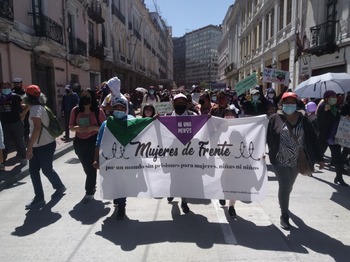
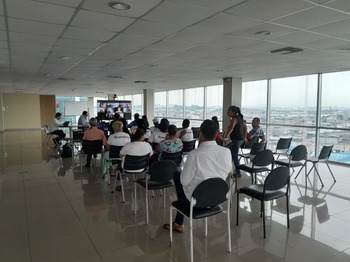


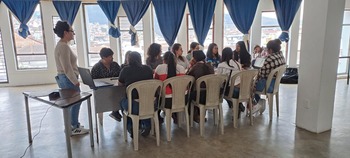
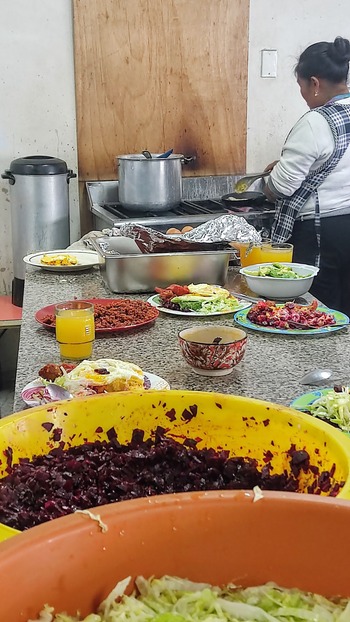

 Open access

