

Introduction
Moderate to severe traumatic brain injuries (TBI) cause multi-focal and diffuse neuropathology throughout the cerebrum with volume loss concentrated in the frontal and ventral cortices, with attendant white matter shearing (Bigler, Reference Bigler2001). Damage to these regions often leads to impairments in social cognitive functioning. Social cognition is a relatively new construct which refers to the ability to identify and interpret social cues (such as facial expressions) in order to make sense of the behaviour of others and to respond appropriately (McDonald, Reference McDonald2013). The first empirical reports of impaired social cognition after TBI were published in the 1980s (e.g., Jackson & Moffat, Reference Jackson and Moffat1987) and did not gain much traction until after the year 2000. However, there is now substantial evidence to suggest that people with severe TBI have a range of social cognitive difficulties including reduced empathy (de Sousa, McDonald, & Rushby, Reference de Sousa, McDonald and Rushby2012), alexithymia (Williams et al., Reference Williams, Galas, Light, Pepper, Ryan, Kleinmann, Burright and Donovick2001), changes in the ability to detect emotions from others’ faces (Milders, Ietswaart, Crawford, & Currie, Reference Milders, Ietswaart, Crawford and Currie2008) and tone of voice (Schmidt, Hanten, Li, Orsten, & Levin, Reference Schmidt, Hanten, Li, Orsten and Levin2010); and reductions in the ability to infer the thoughts and intentions of others (theory of mind) (Milders et al., Reference Milders, Ietswaart, Crawford and Currie2008). Problems with apathy (Starkstein & Pahissa, Reference Starkstein and Pahissa2014), disinhibition (Osborne-Crowley, McDonald, & Rushby, Reference Osborne-Crowley, McDonald and Rushby2016) and emotion regulation are also directly related to social cognition (McDonald, Reference McDonald2013).
Impairments such as these have a profound impact upon the ability of the person with TBI to successfully reintegrate into their community. Even 5 years post injury, social changes are seen to be the most debilitating for the person and their family (Brooks, Campsie, Symington, Beattie, & McKinlay, Reference Brooks, Campsie, Symington, Beattie and McKinlay1986; Brooks & McKinlay, Reference Brooks and McKinlay1983; McKinlay, Brooks, Bond, Martinage, & Marshall, Reference McKinlay, Brooks, Bond, Martinage and Marshall1981; Tate & Broe, Reference Tate and Broe1999). Indeed, these changes in social functioning likely lead to subsequent social withdrawal and social isolation for the person with brain injury (e.g., see Corrigan et al., Reference Corrigan, Cuthbert, Harrison-Felix, Whiteneck, Bell, Miller and Pretz2014; Tate, Lulham, Broe, Strettles, & Pfaff, Reference Tate, Lulham, Broe, Strettles and Pfaff1989; Temkin, Corrigan, Dikmen, & Machamer, Reference Temkin, Corrigan, Dikmen and Machamer2009). Social cognitive impairments are, consequently, a critical target for remediation.
Reflecting the complex mix of impairments experienced as a result of severe TBI, hospitalisation and rehabilitation involves multiple assessments of injury sequelae by medical and allied health staff with the aim of identifying impairments and developing an effective rehabilitation plan (Jackson & Davies, Reference Jackson and Davies1995). Clinicians comprising the rehabilitation team include rehabilitation doctors, nurses, occupational therapists, speech and language therapists, psychologists, physiotherapists, social workers, return to work specialists and dieticians (Embling, Reference Embling1995; Jackson & Davies, Reference Jackson and Davies1995; National Institute of Health, 1999). All of these clinicians engage in a specific role for meeting the person's rehabilitation goals, however, this can vary from team to team and is unique to the individual patient and their stage of recovery (New Zealand Guidelines Group, 2006). While many rehabilitation goals (e.g., return to work, independent living) are likely to be multidisciplinary, assessments of the individual's strengths and weaknesses are typically undertaken by one or more clinicians using the tools with which they are trained and familiar with. These tools vary from discipline to discipline and as such, assess skills and abilities that can be specific to the practice of that discipline, but that may also overlap with that of other disciplines. This raises questions as to who takes responsibility for assessing social cognition following TBI and how this is achieved.
An international survey of approximately 420 clinicians was conducted to determine their view of the incidence of social cognition impairments following TBI and who was responsible for its assessment (Kelly, McDonald, & Frith, Reference Kelly, McDonald and Frith2016). The vast majority of clinicians reported a high incidence (50% or more) of social cognitive problems in their clients as reported by the client him/herself, or their family. Despite this, routine assessment of social cognition was not the norm. While insight, anger and disinhibition were routinely assessed by 31–42% of respondents, other facets such as recognition of face identity and expression, prosody and theory of mind were assessed by 12% or less. Clinicians from the various disciplines also commented on who they felt were responsible for such assessments. While clinical psychologists, neuropsychologists, speech and language pathologists and occupational therapists were identified as the relevant clinicians, these same professions referred to each other rather than themselves as the person most responsible. Thus, there is a clear lack of consensus with respect to who should conduct social cognitive assessments. Partly, this may reflect the possibility that social cognition is not seen as a unitary construct with various strands being relevant to different disciplines, yet with no clear demarcation. Thus, certain professions may claim facets of social cognition but not others as falling within their domain of expertise. Determining this was one of the aims of the current study.
In addition, it is unclear how social cognition assessments are being undertaken. Tools used for the assessment of social cognition impairment are many and varied, and often are borrowed from work done in other clinical populations such as those with Autism Spectrum Disorder (ASD: e.g., Autism Diagnostic Interview-Revised: Lord, Rutter, & Le Couteur, Reference Lord, Rutter and Le Couteur1994) or Schizophrenia (e.g., Assessment of Interpersonal Problem Solving Skills: Donahoe et al., Reference Donahoe, Carter, Bloem, Hirsch, Laasi and Walace1990). Tools for assessing social cognition also vary in objectivity from skills-based assessments of function, to observation schedules, and self- and informant-reports. In a literature search, 60 different tools were identified that assessed various aspects of social function. Of these, 19 were behavioural assessments (e.g., ‘name the emotion the person is displaying’), six were observational (clinician observes behaviour and rates) and 35 were self-/informant-report surveys or questionnaires. The evidence for the reliability and validity of these tools varied greatly as did their origin and purpose. Many were predominately used in research rather than clinical settings, and many were for the assessment of developmental disorders such as ASD rather than acquired impairments. What we do not know, is the pattern of use for such assessments in examining social cognition clinically in the TBI population and whether there is an evidence-base for this practice. By examining a cohort of clinicians from Australia, this study aimed to elucidate the pattern of usage of social cognition assessments and remediation practices by clinicians within a single country.
The scarcity of suitable assessment tools of social cognition also presents a major challenge for the remediation of social cognition impairments as this relies on demonstration of pre–post intervention changes in function. Remediation programs that target multiple facets of social cognition are scant. There are a few published programs targeting emotion perception from facial expressions (Guercio, Podolska-Schroeder, & Rehfeldt, Reference Guercio, Podolska-Schroeder and Rehfeldt2004; McDonald, Bornhofen, & Hunt, Reference McDonald, Bornhofen and Hunt2009; Neumann, Babbage, Zupan, & Willer, Reference Neumann, Babbage, Zupan and Willer2014; Radice-Neumann, Zupan, Tomita, & Willer, Reference Radice-Neumann, Zupan, Tomita and Willer2009) and tone of voice (McDonald et al., Reference McDonald, Togher, Tate, Randall, English and Gowland2013). Additionally, there are conference proceedings reporting on targeting theory of mind in combination with emotion perception, emotion regulation and attribution bias (Spikman, Reference Spikman2016; Winegardner, Prince, & Keohane, Reference Winegardner, Prince and Keohane2015). A recent review of this literature highlighted the need for comprehensive, evidence-based social cognition remediation programs (Cassel, McDonald, Kelly, & Togher, Reference Cassel, McDonald, Kelly and Togher2016). This paucity of evidence-based programs leaves clinicians ill equipped for managing social problems, and no doubt lack of consensus on what service provision should look like for people with TBI and social cognition impairment.
In order to provide insight into how social cognition is typically being assessed in TBI rehabilitation and by whom, the following study reported on the findings of a survey of clinicians working in brain injury rehabilitation in Australia. These clinicians represented a subset of the international survey reported elsewhere (Kelly et al., Reference Kelly, McDonald and Frith2016). While the international study provided information about the domains of social cognition being assessed and the barriers to this type of assessment, the aim of the current study was to provide an in-depth examination of clinicians within Australia, in order to identify the frequency that various domains of social cognition were assessed by the various disciplines working in brain injury assessment and rehabilitation, the tools and procedures that are commonly used to assess and rehabilitate social cognition and the factors that may influence this.
Methods
Survey Development
Survey items were developed using the following strategies: (1) A review of the literature pertaining to the assessment and rehabilitation of social and emotional behaviour following TBI in both clinical and research settings, (2) Identification of tools available for purchase through commercial publishing companies, (3) Compilation of list of tools identified from (1) and (2), (4) Consultation with a multidisciplinary brain-injury rehabilitation team to identify any other discipline specific tools that had been missed, (5) Consultation with a research group with expertise in social cognition impairment following TBI. Table 1 presents social cognition assessment tools identified during this process.
List of Measures Identified in the Literature as used to Measure Social Cognition

The survey was then constructed, together with the addition of questions targeting demographic data, with input from the co-investigators (MF: Speech and language pathologist, SM: Clinical Neuropsychologist) and piloted with clinicians to ensure item clarity and appropriateness of survey length. The majority of survey questions were designed as fixed-responses with an ‘other’ response option to allow for a text response. This style of question was chosen to decrease time demands on survey respondents. Demographic information collected included location of practice, role employed, level of qualification, employment setting (private/public/inpatient/community), years of experience in TBI rehabilitation, hours per week spent working in TBI rehabilitation and via what source they received the survey. Other descriptive information included the population (child/adult/older adult) that the clinician predominately worked with and the severity level of the population (multiple response option available).
Questions thereafter focused on assessment and rehabilitation practises. The majority of these questions were also fixed-anchor points, for example, clinicians were asked to indicate the frequency with which they utilised a number of different clinical tools for the assessment of social cognition impairment on a scale; infrequently (1–15% of clients), somewhat frequently (16–25% of clients), frequently (26–50% of clients), very frequently (51–75% of clients) and routinely (>75% of clients). Other questions covered opinions regarding the most useful method of assessment and targets of assessment for goal setting for social cognition rehabilitation. To reduce the requirement of the clinician to respond against every tool listed (n = 60), they were instructed to leave the option blank if they never used that tool. Participants were also afforded the option of listing any other tools or resources they used for assessment and rehabilitation. The survey can be accessed in the supplementary materials of (Kelly et al., Reference Kelly, McDonald and Frith2016).
Survey Dissemination
A number of professional networks as well as brain-injury services were contacted directly to disseminate the survey through their networks (see Table 2 for source of clinicians).
Source of Clinicians
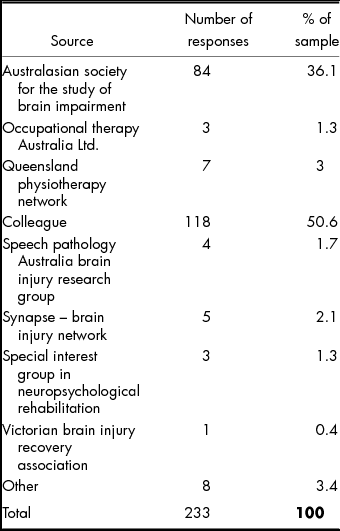
*90% of participants responded to this question.
Identified clinicians were requested to complete an on-line survey via the Survey Monkey (www.surveymonkey.com) platform. An e-mail included the invitation as well as a link to the survey. This link was not specific to any one participant resulting in the survey being further disseminated. Following the initial mail out, the survey remained available for 1 month, during which time one reminder e-mail was sent to all original recipients via the same avenues. Given the survey link was not personalised, it was not possible to deduce response rate.
Sample
The inclusion criteria were as follows: ‘Clinicians who are currently working, or have worked in the past 12 months in a clinical role providing assessment or rehabilitation to people with a traumatic brain injury’. To ensure there were no duplications, IP addresses were tracked. Where duplications were detected, data was examined to determine if it were the same user or if a number of clinicians had responded on a shared computer. Any surveys that had been abandoned without responses were also removed. Additionally, those respondents who had not continued with the survey following completion of the demographic information (i.e., stopped at question 12) were removed from the final sample.
The Information Statement was included at the beginning of the survey and consent was implied through completion and submission of the survey. This study was approved by the Hunter New England Local Health District Human Research Ethics Committee (LNR/13/HNE/497; LNRSSA/13/HNE/498).
Definitions
Participating clinicians were provided with a definition of social cognition to ensure validity of responses with regards to this construct. This definition was adapted by the researchers to try to encapsulate the full gamut of domains of function that fall under social cognition. The definition was provided immediately before the questions pertaining to social cognition.
‘Social cognition is defined as: the capacity to understand and interact with others in contextually appropriate ways, that is, the storage and processing of social information, along with the ability to produce appropriate responses with social partners’.
Analyses
Survey Monkey responses were imported into IBM Statistical Package for the Social Sciences Version 24 (SPSS-24). Descriptive statistics are presented. Pearson's Chi-squared analyses were conducted on categorical and ordinal data (Howell, Reference Howell2007) to determine which responses were driving group differences (Agresti, Reference Agresti2013). Standardised adjusted residuals of >=2.5/‒2.5 were chosen due to the larger number of cells in each comparison (Sharpe, Reference Sharpe2015). In order to examine clinician characteristics in regards to tool use, ‘frequency of use’ ordinal variables were treated as continuous variables and means were compared using t-tests according to years of experience and level of education/qualification. Level of qualification was divided into two categories: under-graduate (Honours, Diploma or still completing) and postgraduate (Masters level and higher). Years of experience were divided into those with 10 years or less, and those with greater than 10 years. For some analyses, discipline groups who are arguably more likely to be responsible for the assessment of social and emotional behaviour and communication in brain-injury services in Australia were targeted. It is indicated within the results section where this has occurred.
Results
Participants
Table 3 presents demographic information provided by respondents. There were a total of 535 respondents internationally before removal of 92 duplicates/incompletes. Of the 443 valid responses, 260 clinicians were from Australia and were included in the current data. The majority of these 260 respondents were from New South Wales followed by Victoria. Psychologists, followed by occupational therapists and speech and language pathologists formed the majority of the respondents. Clinicians with various levels of experience in brain-injury rehabilitation were included, with the majority having greater than 4-years’ experience, and most having completed a Bachelor degree at minimum. On average, clinicians were working 25.71 hours (SD = 12.59) per week in brain-injury rehabilitation, with approximately one-third working full-time equivalent.
Clinician Demographic Characteristics

Characteristics Client Population and Service Setting
The client population descriptors and setting that respondents worked in are presented in Table 4. Almost half (49%) of clinicians reported working in outpatient or community settings. Just over half (53%) work in the public sector with 37% reporting that they split their time between public and private work. Most respondents (80%) reported that they worked mostly with adult TBI clients and the majority worked across groups with all levels of severity.
Characteristics of Service Setting and TBI Clientele

*Note. Respondents were asked to mark all that apply.
Assessment of Social Cognition Domains by Discipline
Clinicians were asked to report the frequency with which they assessed various aspects of social cognition. Table 5 highlights the percentage of the various discipline groups who routinely assessed each domain of social cognition. Only those disciplines who were likely to be involved in social cognition assessment were included, that is, medical doctors, nurses, physiotherapists and dieticians were removed from these analyses. Collapsed across discipline, insight (45%) and disinhibition (41%) were the two most frequently assessed domains. The two areas that were assessed with highest frequency for each discipline are highlighted. Data for all disciplines combined is also presented within Table 5.
Percentage of Each Discipline who Routinely Assess each Area of Social Cognition

Note. Not all respondents responded to each of these questions. At least 95% responded to all questions.
* who might reasonably be expected to partake in this type of assessment.
To examine differences between the various disciplines with regards to the assessment of social cognition, Pearson's Chi-Square analyses were conducted. To meet conditions required to conduct Pearson's Chi-Square on frequency data, responses were combined for never and infrequently, and very frequently and routinely. This reduced groupings to three, and reduced the likelihood that more than 20% of the expected cell counts were less than 5, and that all individual expected counts were greater than 1 (Yates, Moore, & McCabe, Reference Yates, Moore and McCabe1999). This meant that the final classifications were infrequently (<25% of clinical time), frequently (25–50% of clinical time) and routinely (>50% of clinical time). Due to small cell sizes in some discipline areas, analyses targeted clinical/psychologists, clinical neuropsychologists, speech and language pathologists and occupational therapists only. The clinical/psychologist cell size was only 21 but it was felt that their contribution was distinct to others and should be represented separately. An adjusted standardised residual of > = 2.5/‒2.5 (conservative) was regarded statistically significant (Sharpe, Reference Sharpe2015) due to the large number of cells.
Chi-Square revealed that the frequency that clinicians examined ‘theory of mind’ were dependent on discipline [χ (6) = 14.63, p = .023]. An adjusted standardized residual (asd) of 2.9 indicated that clinical/psychologists were significantly more likely to frequently assess ‘theory of mind’ than were other disciplines. Clinical/psychologists were also more likely to routinely assess alexithymia [adjusted standardised residual (asd) = 3.8] compared with other disciplines [χ (6) = 22.2, p = .001].
Speech and language pathologists were more likely to: routinely (asd = 6.5) assess prosody when compared with other disciplines [χ (6) = 53.28, p < .001]; routinely (asd = 3.1) assess knowledge of social norms [χ (6) = 20.49, p = .002]; routinely (asd = 4) assess sarcasm [χ (6) = 31.74, p < .001]; routinely (asd = 8.2) assess pragmatic language [χ (6) = 75.95, p < .001]; routinely (asd = 3.9) assess body language [χ (6) = 21.37, p = .002] and, routinely (asd = 3.1) assess social problem solving, than other disciplines [χ (6) = 36.97, p < .001].
Clinical neuropsychologists were more likely than other disciplines to report that they never or infrequently assessed knowledge of social norms [asd = 3.2, χ (6) = 20.49, p = .002], sarcasm [asd = 3.3, χ (6) = 31.74, p < .001], social problem solving [asd = 5.3, χ (6) = 36.97, p < .001], social faux pas [asd = 2.7, χ (6) = 14.62, p = .023] or body language [asd = 2.9, χ (6) = 21.37, p = .002].
Speech and language pathologists were significantly less likely to routinely assess anger (asd = ‒3.3) than other disciplines while clinical/psychologists (asd = 3) were more likely to [χ (6) = 20.37, p = .002]. Clinical/psychologists (asd = 2.8) and occupational therapists (asd = 3.8) were less likely than other disciplines to assess pragmatic language [χ (6) = 75.95, p < .001]. No other significant differences between disciplines were observed for all other social cognition domains.
Social Cognition Assessment Tools used in Clinical Practice
Clinicians were provided with a list of 60 different behavioural assessments, observation scales and questionnaires that may be used to assess various aspects of social cognition in children and adults. A list of the tools has been provided in Table 6. Between 9% and 36% of clinicians reported using at least some of the 60 tools listed. On average, 85% of the tools listed were never used by clinicians working in brain-injury rehabilitation. The top five tools that were used by clinicians (at any frequency) are highlighted in Table 6 and included the Behavioural Assessment of the Dysexecutive Syndrome (BADS: Wilson, Alderman, Burgess, Emslie, & Evans, Reference Wilson, Alderman, Burgess, Emslie and Evans1996), The Awareness of Social Inference Test (TASIT-R: McDonald, Flanagan, & Rollins, Reference McDonald, Flanagan and Rollins2011), Vineland Adaptive Behaviour Scale (VABS: Sparrow, Cicchetti, & Balla, Reference Sparrow, Cicchetti and Balla2005b), La Trobe Communication Questionnaire (LCQ: Douglas, Bracy, & Snow, Reference Douglas, Bracy and Snow2000) and the Social Skills Rating System (SSRS: Elliott & Gresham, Reference Elliott and Gresham2008). Of these five, only two specifically assessed social cognition. In terms of a behavioural assessment focused purely on social cognition, TASIT is utilised to some extent by 29% of clinicians. The SSRS, a questionnaire, was also used by 23.5% of clinicians. Table 7 presents the percentage of each of the four disciplines who use each of these tools.
Report of use of Various Tests that may Assess Domains of Social Function – Disciplines Combined

Note. Please see Table 1 for complete details of each assessment tool.
Percentage of each Discipline who Report using each of the Top Five Tools
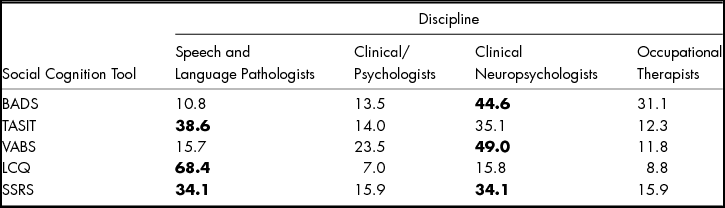
Note. BADS = Behavioural Assessment of the Dysexecutive Syndrome; TASIT = The Awareness of Social Inference Test; VABS = Vineyard Adaptive Behaviour Scale; LCQ = La Trobe Communication Questionnaire; SSRS = Social Skills Rating System.
Other Assessment Tools Identified by Clinicians
A further 34 open-ended responses (13%) indicated that clinicians utilised a number of other tools that were not listed in Table 6. The most obvious oversight was the Advanced Clinical Solutions (ACS: Wechsler, Reference Wechsler2009) social perception subtests. Ten respondents (5%) reported using the ACS (nine infrequently, one frequently), eight of which were clinical neuropsychologists and two were clinical psychologists. Four respondents (2%) reported using the Awareness Questionnaire (Sherer, Reference Sherer2004). The Overt Behaviour Scale (Kelly, Reference Kelly2010) (n = 3), Behaviour Rating Inventory of Executive Function (BRIEF: Gioa, Isquith, Guy, & Kenworthy, Reference Gioa, Isquith, Guy and Kenworthy2000) (n = 2), Mind in the Eyes Test (Baron-Cohen, Baldwin, & Crowson, Reference Baron-Cohen, Baldwin and Crowson1997) (n = 2) and Spence Social Skills Questionnaire (Spence, Reference Spence1995) (n = 2) were also used. The remaining 10 responses were suggested by one respondent only.
Tool Most Likely to Identify Social Cognition Impairment
Only 21 of the 260 clinicians provided a response when asked their opinion of test most likely to identify social cognition deficits in children and adults with TBI. The Awareness of Social Inference Test (TASIT: McDonald et al., Reference McDonald, Flanagan and Rollins2011) was most cited (n = 10), followed by the La Trobe Communication Questionnaire (n = 4) (LCQ: Douglas et al., Reference Douglas, Bracy and Snow2000). All other tests were identified by only one respondent.
Opinions Regarding Types of Assessment
Ninety percent (235/260) of clinicians responded to questions regarding the most appropriate assessment method and target. As can be seen in Figure 1, clinicians favoured informal assessment methods such as interview with the client/family over standardised assessment for identifying social cognition rehabilitation goals.
Clinicians reports regarding the most useful method of assessment for goal setting around social cognition rehabilitation needs. Ninety percent (235/260) of participants responded to this question. Percentage of respondents is indicated adjacent to each column.

When clinicians were asked about the importance of assessing basic cognition (e.g., memory, attention) in favour of social cognition for developing goals for rehabilitation, 45% of the whole sample disagreed that assessment of basic cognition was more important. However, Pearson's Chi-Square analyses revealed that clinical neuropsychologists were significantly more likely than other disciplines to report that cognitive assessment were more important (asd = 3.4) than social cognition assessment for developing goals for TBI rehabilitation [χ (8) = 17.87, p = .022]. It was worth noting, however, that clinical neuropsychologists were almost evenly split across the response options. Data for each discipline are presented in Figure 2.
Response to the statement ‘assessing basic cognition (e.g., memory, attention) is more important than social cognition in developing goals for TBI rehabilitation by discipline’. Ninety percent (235/260) of participants responded to this question.

Effects of Qualification Level and Years of Experience
Overall, those with post-graduate level qualifications assessed social cognition using one of the tools listed (Table 1) significantly more frequently than those with under-graduate training only, t (202.88) = 2.36, p = .019, d = 0.33. There were no significant differences between groups based on years of experience, t (258) = 0.72, p > .05, d = 0.08. Level of qualification was also found to affect attitudes regarding the most useful types of assessment. Those with post-graduate level training were more likely to agree to the statement ‘standardised assessments provide the most useful information for goal setting around social cognition rehabilitation needs’, t (233) = 2.47, p = .014, d = 0.32, whereas those with under-graduate level training were more likely to agree that ‘informal assessment (e.g., interview with family/client) provided the most useful information for goal setting around social cognition rehabilitation needs’, t (233) = 2.02, p = .04, d = 0.26.
TBI Rehabilitation Programs
Only 29 of the 260 clinicians provided a response when asked what training or social cognition rehabilitation program they used for clients with TBI. The programs that were identified were TBI Express (Togher, Power, McDonald, Tate, & Rietdijk, Reference Togher, Power, McDonald, Tate and Rietdijk2010) (n = 8); Improving First Impressions (McDonald et al., Reference McDonald, Bornhofen, Togher, Flanagan, Gertler and Bowen2008) (n = 4); Communicate with Confidence (Sloane, Mackey, & Chamberlain, Reference Sloane, Mackey and Chamberlain2002) (n = 3); TalkAbout Series (Kelly, Reference Kelly2016) (n = 2); Reading a Smile (Bornhofen & McDonald, Reference Bornhofen and McDonald2009) (n = 2); and, other individual responses included the Spence Social Skills program (Spence, Reference Spence1995); Mind Reading DVDs (Golan & Baron-Cohen, Reference Golan and Baron-Cohen2006); Communication Activities of Daily Living-2 (CADL-2) (Holland, Frattali, & Fromm, Reference Holland, Frattali and Fromm1999); and the, Perceive, Recall, Plan, and Perform system (Nott & Chapparo, Reference Nott and Chapparo2008). A further four clinicians reported that they used an ‘individualised’ approach, whereas another two reported that the service provider had developed their ‘own processes’.
Discussion
The aim of the current study was to examine the current state of play in regards to how relevant clinical professions assessed disorders of social cognition. This study followed up a prior international survey by focusing on the largest pool of respondents, Australian clinicians, in order to provide a snapshot of how social cognition was assessed and treated within a single country. It also aimed to identify which tools and procedures were most commonly used, and by who. Overall, the results revealed a diversity of approaches across professions, with particular professions (e.g., clinical psychologists vs. speech pathologists) claiming different facets of social cognitive assessment and remediation and with the nature of assessment (e.g., formal measures vs. informal observation) varying likewise.
As with the international sample (Kelly et al., Reference Kelly, McDonald and Frith2016), the four areas that were most routinely assessed across the disciplines were insight, disinhibition, anger and social adjustment. Those four domains are arguably considered more psychological domains than social cognition per se. On the other hand, the two domains that clinician's routinely assessed the least were theory of mind and alexithymia. This was a significant concern given the frequency in which these two impairments are seen in the TBI population (Martin-Rodriguez & Leon-Carrion, Reference Martin-Rodriguez and Leon-Carrion2010). Whilst the estimates of prevalence are unknown for theory of mind, up to 60% of those with TBI are thought to be alexithymic (Wood & Williams, Reference Wood and Williams2007). Of interest, there were differences between disciplines with regards to the domains of social cognition reported by that discipline to be routinely assessed. Speech and language pathologists were more likely than other disciplines to report that they routinely assessed prosody, sarcasm and pragmatic language, all arguably related to communication, however, they also reported more routine assessment of knowledge of social norms, body language and social problem solving. Although frequency was relatively low, clinical psychologists were more likely than other disciplines to assess theory of mind and alexithymia routinely. The other noteworthy difference observed were for clinical neuropsychologists, who reported significantly less assessment of sarcasm, faux pas, body language and knowledge of social norms when compared with other disciplines.
It is possible that the differences observed between disciplines with regards to domains of social cognition assessed could be accounted for by the collective opinion of that discipline regarding what an ‘assessment’ entails. For example, it is possible that when answering these questions clinical neuropsychologists were considering only those domains that they formally assessed using a standardised assessment instrument, whilst for other disciplines simply asking the person with TBI about their ability in this area could constitute an assessment. It is also possible that clinical neuropsychologists who use a hypothesis-driven approach to assessment were considering all clients they see rather than only those they hypothesize may need social cognition assessment. Future examinations of clinical practice should include items that would allow the respondent to specify which domains they use a standardised versus non-standardised assessment modality.
An additional consideration regarding disciplines and the domains of assessment, is the likelihood of the roles and responsibilities of the various disciplines overlapping in rehabilitation settings (Pagan et al., Reference Pagan, Ownsworth, McDonald, Fleming, Honan and Togher2015; Sander, Raymer, Wertheimer, & Paul, Reference Sander, Raymer, Wertheimer and Paul2009; Wertheimer et al., Reference Wertheimer, Roebuck-Spencer, Constantinidou, Turkstra, Pavol and Paul2008). Overlap has benefits in that it leads to a more cohesive and comprehensive intervention. It does, however, raise the question as to how information from multiple perspectives becomes integrated into a collaborative rehabilitation plan. Such overlap also runs the risk that clinicians may assume that if they do not cover a particular area of assessment and rehabilitation, that a colleague will. Clearly in the area of social cognition there is evidence (albeit little), that this could lead to gaps in service delivery (Kelly et al., Reference Kelly, McDonald and Frith2016) rather than collaborative intervention.
Assessment tools designed to examine areas of social cognition were generally under-utilised. At best, 35% of clinicians reported using the Behavioural Assessment of Dysexecutive Syndrome (BADS) at least infrequently, however, on average, only 16% of clinicians reported that the tools were used at all. Of the top five tools that are used by clinicians (at any frequency), one predominately assessed executive functions (BADS), one focused on adaptive functioning which included one domain of socialization (VABS), one focused more on general communication skills (LCQ), whereas only two focused specifically on social cognition (TASIT, SRSS). Of the two tools that did focus on social cognition, only one of these was a behavioural assessment (TASIT), while the other was a questionnaire (SRSS). The ACS, a behavioural assessment of social perception was posited by only 5%, i.e., 10 clinicians as a useful assessment measure.
The list of assessment tools provided in the study highlighted the plethora of potential assessment tools available to the clinician. However, when clinicians were given the opportunity to state their opinion regarding the most useful tool for assessment and remediation of social cognition impairment there was a generally low response rate. The TASIT and the LCQ were both posited as useful assessment tools, though only 8% of the group responded. The finding that the LCQ was popular amongst speech and languages pathologists was consistent with a discipline specific survey of this group (Frith, Togher, Ferguson, Levick, & Docking, Reference Frith, Togher, Ferguson, Levick and Docking2014). The finding that clinicians were under-utilising tools for the assessment of social cognition along with the underwhelming response rate when clinicians were given the opportunity to list additional tools or resources suggested that there are barriers to the provision of rehabilitation services in this domain. This was supported by data from the international survey that highlighted the importance of the need for availability of well-validated standardised tools and training in the use of such (Kelly et al., Reference Kelly, McDonald and Frith2016). How we might go about the provision of training is in need of further examination, however, a recent survey highlighted that clinicians preferred workshop style education that focused on new interventions and therapies (Pagan et al., Reference Pagan, Ownsworth, McDonald, Fleming, Honan and Togher2015). Now that the research into social cognition assessment and remediation in the TBI population is mounting (Cassel et al., in press; McDonald, Honan, Kelly, Byom, & Rushby, Reference McDonald, Honan, Kelly, Byom, Rushby, Mcdonald, Togher and Code2013), it is also time to determine how much this domain is being addressed in tertiary education settings, especially given the differences observed between disciplines and qualification levels.
Differences were noted between clinician assessment practices as a result of level of qualification. Those with higher levels of training (post-graduate qualifications) were more likely to use more of the tools listed. Furthermore, clinicians with higher qualifications were more likely to state that standardised assessments provided the most useful information for goal setting around social cognition rehabilitation needs. This potentially reflected the focus on evidence-based training within the tertiary setting. It may also depict a bias in the data whereby psychologists are arguably more likely to have post-graduate level training, as alternate pathways to becoming a psychologist have dwindled, and it is clinical neuropsychologists who specifically reported a preference for standardised assessments. Whilst all disciplines taught within university contexts are seen to teach only evidence-based interventions, there are definitely different levels of uptake and scientific rigor applied across the various disciplines and the uptake of evidence-based practice (EBP) is viewed differently as a result (see Coelho, Ylvisaker, & Turkstra, Reference Coelho, Ylvisaker and Turkstra2005; Ratner, Reference Ratner2006; Ylvisaker, Turkstra, & Coelho, Reference Ylvisaker, Turkstra and Coelho2005 for discussion). The argument for the need for standardised tools is not a new one. Given many clinicians still prefer using informal means of assessment, as a large professional group, we need to determine how to move forward in reliable assessment of social cognition, especially with the problems associated with the reliability of self- and informant-report (Green, Rohling, Lees-Haley, & Allen, Reference Green, Rohling, Lees-Haley and Allen2001; McKinlay et al., Reference McKinlay, Brooks, Bond, Martinage and Marshall1981; Newman, Garmoe, Beatty, & Ziccardi, Reference Newman, Garmoe, Beatty and Ziccardi2000). Across many of the discipline groups in Australia there are governing professional bodies (e.g., Psychology Board of Australia, Occupational Therapy Board of Australia) that mandate the requirement of clinicians to EBP, which include both assessment and intervention. Despite this, it is not unusual to find deviation from these principles. This has been evident particularly for those clinicians working in mental illness (United States Surgeon General, 1999). Clearly, there are some obstacles to EBP in this field, however, understanding how to best disseminate EBP is paramount to reducing the gap between research and practice (for example, see Addis, Reference Addis2002; Beidas & Kendall, Reference Beidas and Kendall2010).
For rehabilitation, the tools which received the greatest support were TBI Express: Social Communication Training for People with TBI, their families and friends (http://www.assbi.com.au/tbi%20express.html), and, Improving First Impressions: A Step-By-Step Social Skills Program (http://www.assbi.com.au/improving%20first%20impressions.html). Encouragingly, these tools do have an evidence-base with promising outcomes for improving the conversational skills of communication partners of people with TBI, and to provide conversational skills training for people with TBI (Sim, Power, & Togher, Reference Sim, Power and Togher2013; Togher, McDonald, Tate, Power, & Rietdijk, Reference Togher, McDonald, Tate, Power and Rietdijk2013); and for addressing basic areas of social skills, respectively (McDonald et al., Reference McDonald, Tate, Togher, Bornhofen, Long, Gertler and Bowen2008). Again given the very small percentage of clinicians who responded to this open-ended question, it must be assumed that informal approaches rather than structured standardised resources are used. As a profession we may not be meeting the needs of the population with regards to interventions targeting social cognition impairments.
Some limitations of the study highlighted that disciplines were not equally or proportionally represented. There were greater numbers of psychologists, occupational therapists and speech and language pathologists than those from other disciplines, and that these did not reflect the staff ratios in rehabilitation (Australasian Faculty of Rehabiliation Medicine, 2011). Another limitation was that there were a few notable social cognition assessment tools missing from the list provided. These were the Mind in the Eyes Test (Baron-Cohen, Jolliffe, Mortimore, & Robertson, Reference Baron-Cohen, Jolliffe, Mortimore and Robertson1997) and the ACS subset of social perception tests. The data for these has been presented based on the open-response items, however, it was possible that this led to clinicians failing to be prompted or reminded that they utilised these tools. An additional concern was the conceptual overlap between the various social cognition domains. For example, assessment of sarcasm could fall within the assessment of ‘theory of mind’ as a higher order category (Martin-Rodriguez & Leon-Carrion, Reference Martin-Rodriguez and Leon-Carrion2010). This could lead to over-inclusiveness or under-inclusiveness of reporting when thinking about these areas of social functioning. On the flip-side, one unforeseen benefit of circulating this survey was that it introduced many clinicians to tools that they reported they had not previously been aware of. This alone may have prompted clinicians to think more about this aspect of assessment when working with clients in the future.
The focus of this investigation was to examine the practices of clinicians in TBI rehabilitation with regards to social cognition. More specifically, it aimed to examine the various disciplines and their perceived role in assessment and rehabilitation of social cognition. This examination has highlighted a distinct difference between estimated prevalence of social cognition impairment in this population and the frequency in which it was assessed and treated. Additionally, it has highlighted under-utilisation of the tools designed for the assessment of social behaviour and a preference for informal modes of assessment in those with lower levels of qualification. This has highlighted the need for the field to examine the curriculum of tertiary professional programs that train the future TBI clinicians. Overcoming these issues cannot be solely the responsibility of the clinicians but, rather strong collaboration between educators, clinicians, researchers and professional bodies. Clinicians desire further training through participation in professional development activities (Pagan et al., Reference Pagan, Ownsworth, McDonald, Fleming, Honan and Togher2015). The research community needs to rise to the challenge of providing them with valid and reliable tools along with opportunities to learn how to administer these tools to undertake this form of assessment.
Acknowledgements
The authors would like to acknowledge the busy clinicians who took time to complete this survey.
Financial Support
This research was funded by Lifetime Care and Support Authority.
Conflict of Interest
None.
Ethical Standards
The authors assert that all procedures contributing to this work comply with the ethical standards of the relevant national and institutional committees on human experimentation and with the Helsinki Declaration of 1975, as revised in 2008.



