




Over the past four decades, China’s social landscape has been profoundly reshaped by marketization, large-scale migration and institutional restructuring.Footnote 1 Yet beneath these dramatic institutional changes, everyday social life continues to rely heavily on trust-based networks that connect individuals to kin, familiar others (including classmates, former colleagues, neighbours and intermediaries) and even strangers.Footnote 2 Such networks remain consequential because they shape access to employment, housing, credit, childcare and protection against risk, often in ways that formal institutions cannot fully replace.
While a growing body of scholarship has documented the persistent significance of these relational networks, far less attention has been paid to how they are gendered in contemporary China. The social lives of men and women, as suggested by the general literature on social networks and social capital, differ in many aspects.Footnote 3 For example, women are noted to be often less advantaged than men in leveraging interpersonal ties for instrumental purposes,Footnote 4 yet more likely to receive emotional support from peers.Footnote 5 In addition, women tend to have larger networks,Footnote 6 more diverse confidant relationshipsFootnote 7 and greater gender-based homophily.Footnote 8 However, they also have a lower likelihood of occupying advantaged network positions, such as brokerage.Footnote 9 All of these gender differences in social life imply contrasting ways of configuring and segregating social networks, By this, we mean the division of social contacts into relatively cohesive communities,Footnote 10 with members within the same community being tightly interconnected while links between communities are relatively sparse.Footnote 11 The gendered social network partitioning in China cannot be reduced to individual preferences. Rather, it reflects broader social processes that have unfolded unevenly between genders during China’s compressed and rapid transformation.Footnote 12 Depicting the gendered patterns of trust-based network segregation and explaining why these patterns have emerged and persisted are therefore central to understanding contemporary Chinese society.
This report draws on a uniquely designed online survey to describe the gender differences in the organization of trust-based social networks in China and further examines two substantive explanations. The first explanation highlights the asymmetric cultural updating between men and women during rapid structural change. In the reform era, traditional cultural norms governing social relatedness have been unsettled but not eliminated.Footnote 13 Men and women, while confronting similar institutional transformations, have different incentives when retaining or revising the cultural norms. Traditional relational principles, such as patrilineal, hierarchical and role-differentiated, continue to confer authority and instrumental values on men, particularly in intergenerational and family-based relations. In contrast, women’s relational obligations, especially those related to care and emotional labour, have expanded but without the equivalent gains in authority or control over resources.Footnote 14 These uneven payoffs differentiate the cultural attitudes and dispositions between men and women, producing distinct patterns of network segmentation across social roles.
The second explanation centres on gendered access to life chances.Footnote 15 Despite substantial gains in education and labour force participation, Chinese women remain disadvantaged in income, occupational authority and career mobility.Footnote 16 These structural inequalities shape not only the resources individuals deploy but also the kinds of social relations they are able to establish and sustain. For example, socioeconomic status could be a key determinant of social autonomy and the ability to curate one’s network.Footnote 17 The socioeconomic advantages afforded to men enable them to organize networks more around personal interests and preferences, leading to more fragmented and fine-grained network partitioning. In addition, men’s greater access to power and economic resources enhances their centrality within trust networks, allowing them to facilitate ties that bridge social domains. Women, who face more constrained life chances, are more likely to rely on networks oriented towards security, care and emotional reliability, thereby reinforcing segregation by social role and relational type. In this sense, gendered network patterns are a response to structural inequalities in resource access.
By analysing the patterns and formative mechanisms of gender differences in trust-based social network segregation, this study speaks directly to long-standing debates concerning continuity and change in social relations in transitioning China.Footnote 18 Rather than asking whether guanxi 关系 is declining or persisting, we examine how men and women have come to use trust differently in organizing their social worlds.Footnote 19 In doing so, the article sheds light on what has happened to Chinese men and women amid rapid social transformation, and why gendered networking remains a defining feature of everyday life in contemporary China. Moreover, understanding these gendered trust structures also carries implications beyond interpersonal relations. On an individual level, gendered patterns of trust segregation influence who is relied upon for support, who performs the relational labour necessary to sustain family and community ties, and how care responsibilities are distributed.Footnote 20 On a broader level, these patterns bear on the functioning of family-based social governance. As the Chinese state continues to rely on the kin-state culture for legitimacy and on informal networks as pillars of welfare provision and social stability, the different ways of arranging trusting networks between genders shape both the resilience and internal tensions of the governance system.
Materials and Methods
Sample
Data for this study are drawn from the Traditional Culture and Cognitive Pattern Survey (TCCPS), which was administered online by a professional survey firm between late November 2022 and early February 2023. Participants were recruited via multiple digital platforms, including WeChat, email and Tencent QQ. Respondents were invited to complete the main questionnaire after submitting a demographic screening form. The median completion time for the survey was 19.2 minutes. Each participant received a monetary incentive of 10 yuan.
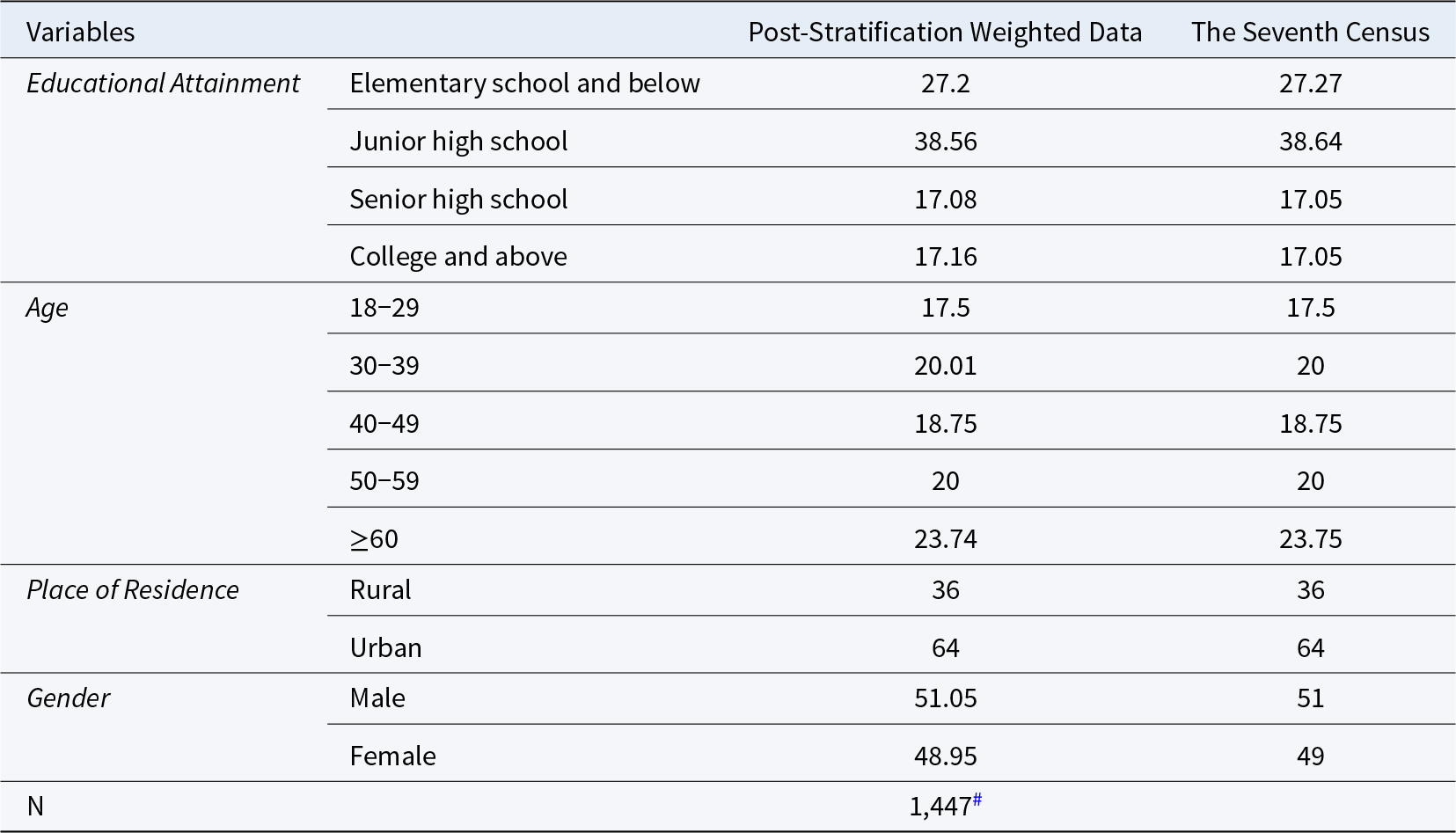
To ensure demographic representativeness, sampling quotas are based on age, gender, educational attainment and geographic region, as specified in China’s Seventh National Census. The survey achieved a response rate of 58.5 per cent, defined as the proportion of eligible and invited respondents who completed the questionnaire. The final analytic sample comprises 2,050 individuals, with no missing data. We also applied post-stratification weighting to further enhance sample representativeness, aligning sample distributions with the national population benchmark (also from the Seventh National Census). After weighting, the sample size is reduced to 1,447 but closely approximates the demographic composition of China’s adult population, as shown in Table 1. Unless otherwise noted, all analyses use post-stratification weights.
Descriptive Statistics (%)
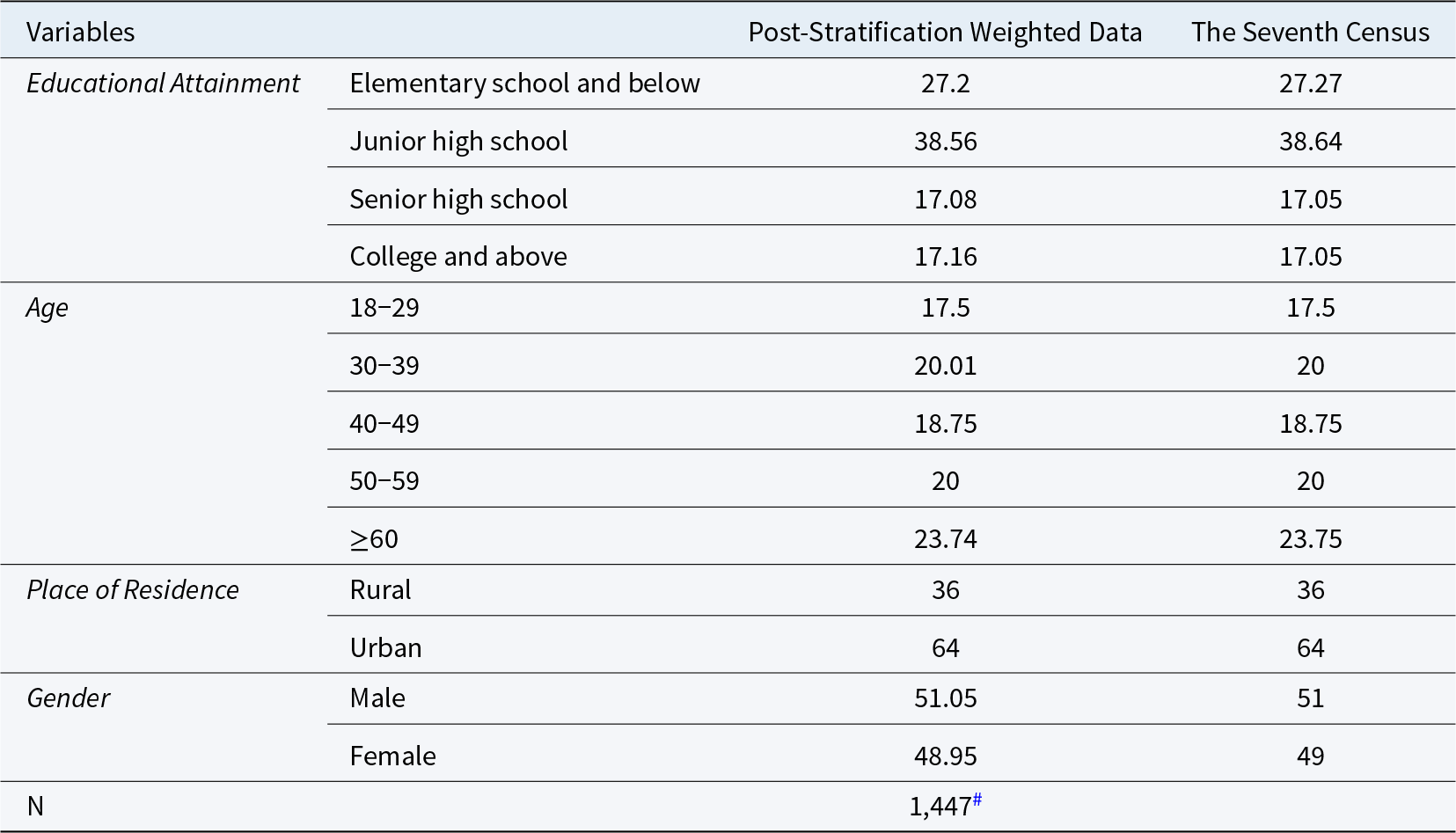
Table 1 Long description
After weighting, the sample distributions of educational attainment, age groups, place of residence, and gender closely approximate those reported in the 7th Census, lending support to the representativeness of the survey data used in this study.
Notes: # The unweighted original sample size =2,025.
Measures
To fix the social network referents between male and female respondents, we adopt a referee-list method rather than the conventional name generator approach that typically captures close personal contacts.Footnote 21 Specifically, each respondent is presented with a list of 24 predefined social roles and asked to rate the trustworthiness of each one on a continuous scale from 0 (no trust at all) to 100 (complete trust). This approach resembles the network generation method of position generator, where referees reflect structurally distinct roles in a respondent’s potential social network.Footnote 22 Trustworthiness, as discussed earlier, functions as a summary measure of affective, normative and exchange-based bonds underlying guanxi practices.Footnote 23 Due to the forced-response protocol, respondents rate all 24 social roles. A robustness check is performed in the following analyses.
Two features of this measurement strategy warrant emphasis. First, the continuous 0–100 trust scale offers greater room for checking response variation than the standard Likert-type items, enabling finer distinctions across social referees and supporting downstream network analysis. Second, the list of 24 categories is broader than that used in many large-scale surveys in China (for example, CGSS). It includes father, mother, paternal grandfather, paternal grandmother, maternal grandfather, maternal grandmother, father-in-law, mother-in-law, spouse, brother, sister, son, daughter, male cousin, female cousin, close friend, casual friend, classmate, hometown peer, colleague, neighbour, acquaintance with whom to co-participate in a social activity for more than three hours, acquaintance with whom to co-participate in a social activity for less than three hours, and complete stranger. These categories serve as structural anchors in respondents’ social networks. We chose three hours as the cut-off point because this is usually the duration of a typical half-day social activity (i.e. from 8 a.m. to 11 a.m., or from 2 p.m. to 5 p.m.). Those who spend at least half a day together should be more familiar with each other than those who spend less time together. Using the trust ratings, we construct inter-referee correlation matrices separately for male and female respondents. These matrices serve as the basis for deriving network adjacency structures, which are subsequently subjected to community detection algorithms (detailed below).
Gender is coded as binary (1 = female, 0 = male).
To examine both dispositions and life chance access mechanisms of gendered social network partitioning, we consider the following covariates:
Confucianism. A latent measure derived via principal component analysis (PCA) from responses to seven items reflecting ideological support for Confucian values: 1. “Many Confucian ideas are still applicable to China today”; 2. “Chinese people should understand Confucian classics such as the Analects”; 3. “Chinese people should adhere to Confucian ethics in daily life”; 4. “The teachings of Confucius and Mencius are very important for the current government administration”; 5. “The concept of benevolent government is suitable for Chinese society”; 6. “Confucianism helps China become a world power”; and 7. “If China wants to become a world power, it should hold the banner of Confucianism high.” Items are measured on a 6-point scale (1 = strongly disagree to 6 = strongly agree). The first principal component accounts for 63 per cent of variance, with Cronbach’s alpha = 0.90.
Traditionalism. Constructed as the summed score of three 6-point Likert items assessing support for traditional Chinese culture: 1. “The traditional culture of China is the best”; 2. “Chinese people should live according to the way passed down by their ancestors”; and 3. “The government should try its best to protect the Chinese people’s way of life and avoid external influence.” Since only three items are used, we do not apply PCA.
Annual income. This variable is measured on a continuous scale and log-transformed to reduce skewness.
Educational attainment. This is measured by three binary indicators for, respectively, junior high school, senior high school, and college and above. The reference educational level for these three indicator variables is the nine-year compulsory education.
Occupation. This is measured by a series of binary variables, with respondents offered the choice of one of the following: State and social administrators; Enterprise/business managers; Professional and technical personnel; Clerical/administrative staff; Self-employed business owners/individual industrial and commercial households; Commercial and service workers; Industrial working class; Agricultural labourers/farming class; Urban unemployed population; Students (currently enrolled).
Analytic strategy
We begin our analyses by generating gender-specific correlation matrices from the trust ratings across the 24 social referees. These matrices are weighted by the sampling weights and serve as the adjacency matrices in undirected and weighted (the edge is not 0/1 but is weighted by the strength of correlation) social networks.
The networks are then partitioned into discernible communities using a suite of modularity-based clustering algorithms.Footnote 24 To save space, they are listed in the empirical section. Community detection performance is assessed using the modularity index, which is equal to 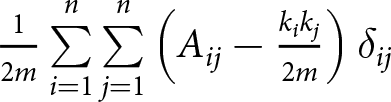 $\frac{1}{{2m}}\mathop \sum \limits_{i = 1}^n \mathop \sum \limits_{j = 1}^n \left( {{A_{ij}} - \frac{{{k_i}{k_j}}}{{2m}}} \right){\delta _{ij}}$, where n is the number of nodes in the network, m is the total number of edges, A is the adjacency matrix, ki is the degree of node i (the total number of connections for node i), and ${\delta _{ij}}$=1 if nodes i and j are clustered together, and =0 otherwise. Higher modularity values indicate greater cohesion within communities and stronger separation between them.
We gauge the extent of the similarity of the partitioning schemes between men and women using the similarity indexes for clustering. In practice, such indexes are numerous, so we consider a batch of them. To save space, they also listed below.
Finally, we isolate the effect of each covariate by first balancing the covariate between men and women via calliper matching using the propensity score distance (the calliper is 0.2 times the propensity score, that is, the predicted probability of being female rather than male, based on the covariate using the logistic regression model) (MatchIt package in R).Footnote 25 For example, to check the potential impact of income, we construct the matched sample where the income difference between men and women is balanced out, and then we can check the variations in the similarity indexes of network clustering schemes (generated based on the matched sample) between men and women. The significance of such variations is determined based on the permutation test, which provides the familiar p value.
Several robustness checks are performed. First, to control for the general propensity of trusting others, we conduct the analyses based on the mean-centred trust score. The analytical results are identical, so we do not present the detailed results. Second, some people might not actually have the listed ties. For example, unmarried cases have no spouse or in-laws. Thus, another robustness check would see how the substantive conclusions would change if cases were restricted to married people only. Note that although we also ask about people’s trust in siblings and cousins, we unfortunately have no information about whether or not respondents actually have such ties, so no robustness check can be performed for them. Third, in addition to variables related to cultural dispositions and life chance access, we also match on the variable of age to see whether substantive changes of conclusions are introduced when a respondent’s life course stage is fixed.
Results
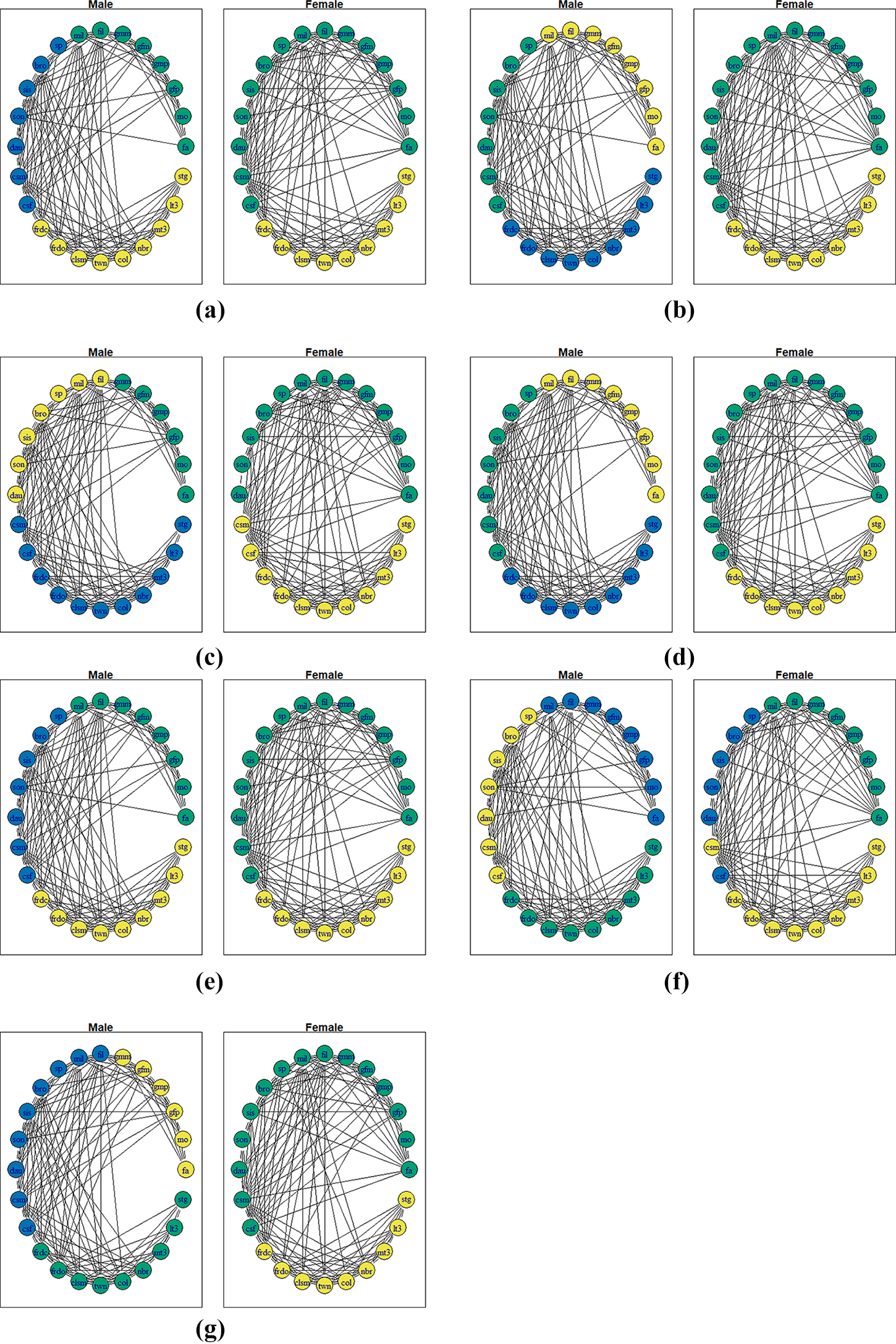
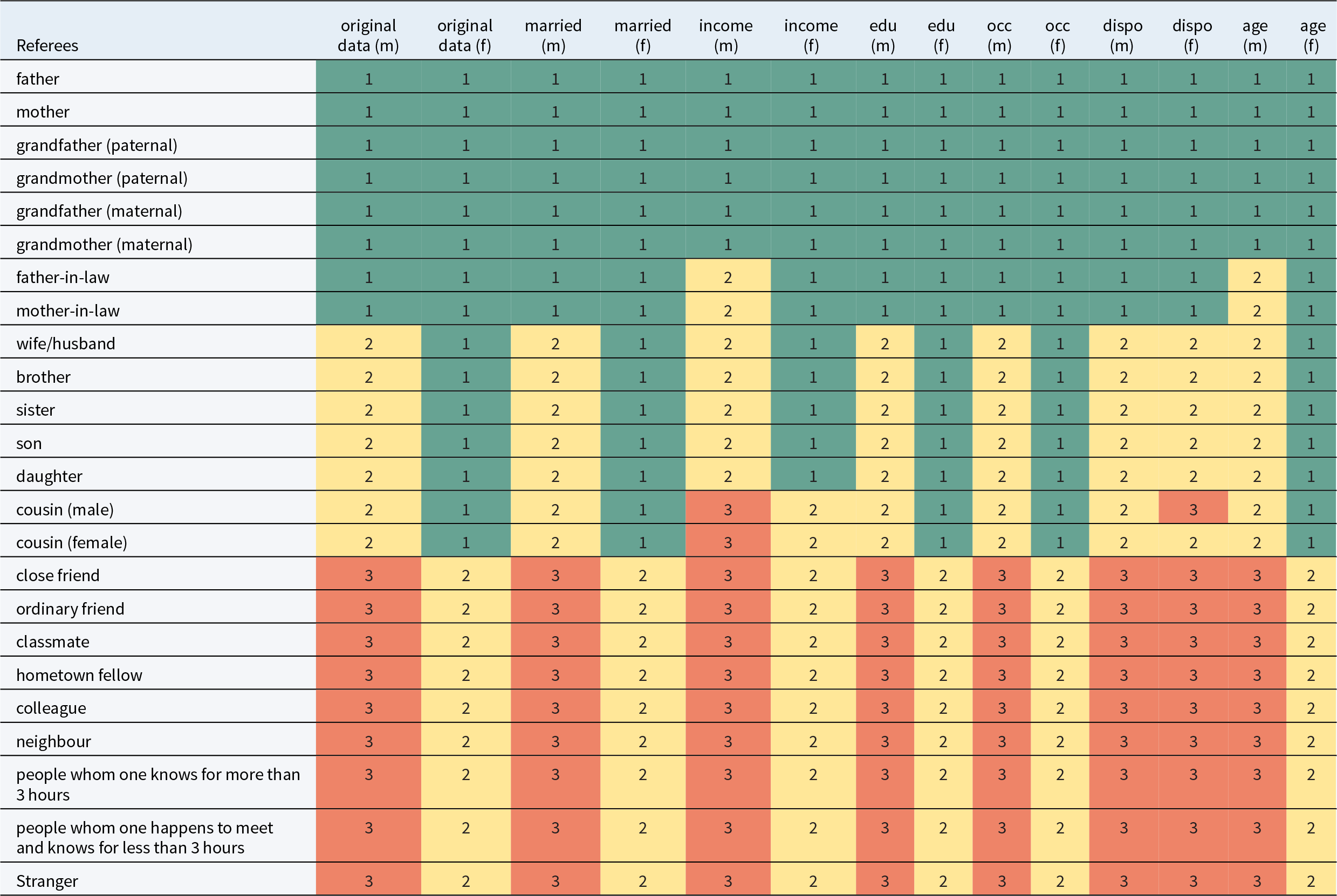
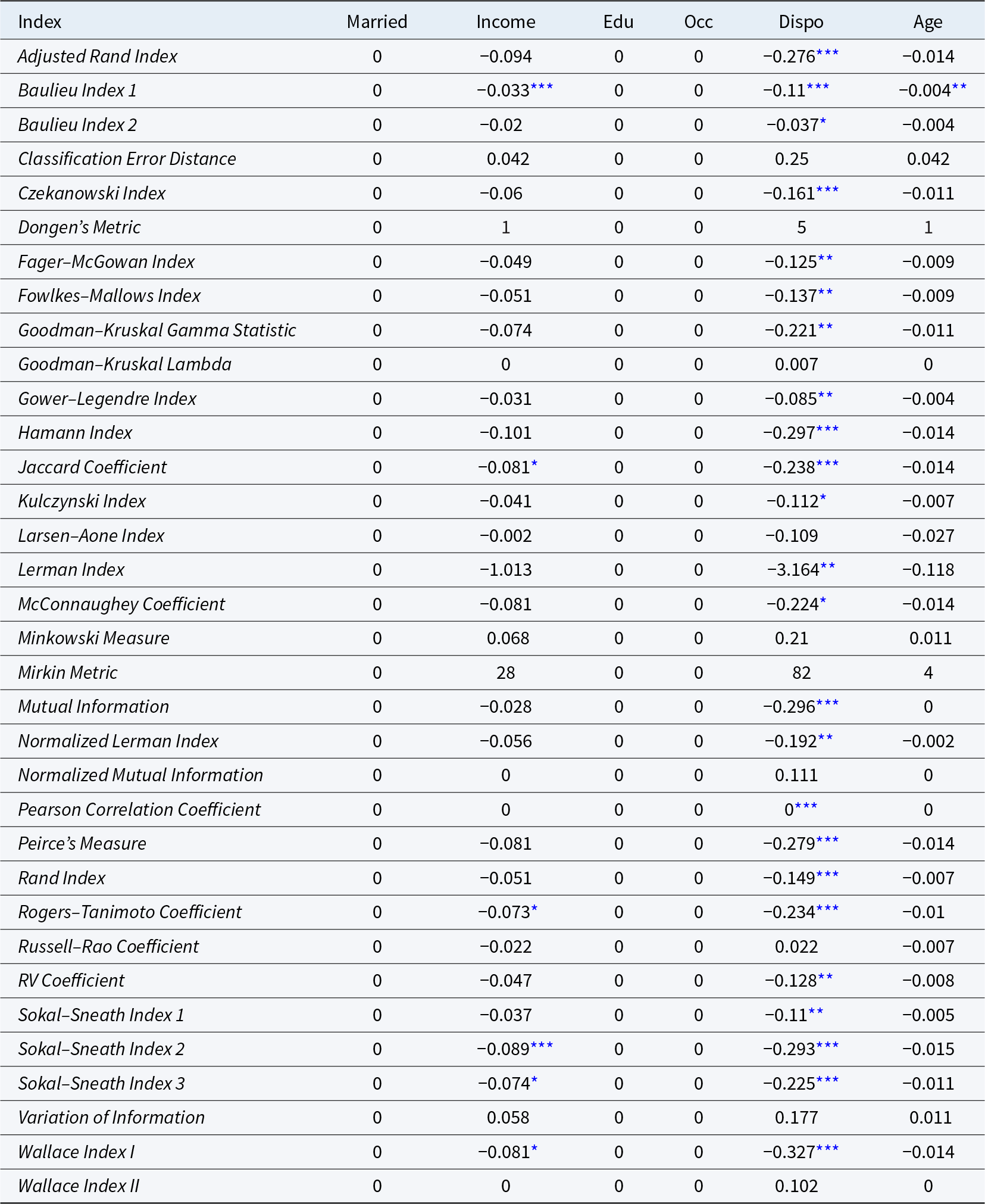
Figure 1 graphically presents the social network partitioning schemes, which are also summarized in Table 2. Table 3 reports the statistical testing of the significance of variations in similarity indexes before and after matching on the covariates. Detailed analytical results are shown in the appendix (online supplementary material).
Gendered Networked Segregation (a) Original Data, (b) Married Cases, (c) Matching Income, d) Matching Educational Attainment, (e) Matching Occupations, (f) Matching Cultural Disposition, (g) Matching Age

Figure 1 Long description
Seven network diagrams illustrate gendered social connections. Each diagram is divided into male and female sections, with nodes representing individuals and lines indicating connections. (a) Original Data shows the initial network. (b) Married Cases displays connections among married individuals. (c) Matching Income uses samples when incomes of males and females are matched. (d) Matching Educational Attainment guarantees educational similarities. (e) Matching Occupations matches the occupations between men and women. (f) Matching Cultural Disposition matches the cultural dispositions of men with those of women. (g) Matching Age uses age-based matching sample. Each diagram visually represents the partitioning of social networks based on different criteria, with nodes and connections varying in distribution across the male and female sections.
Partitioning Schemes of Referees
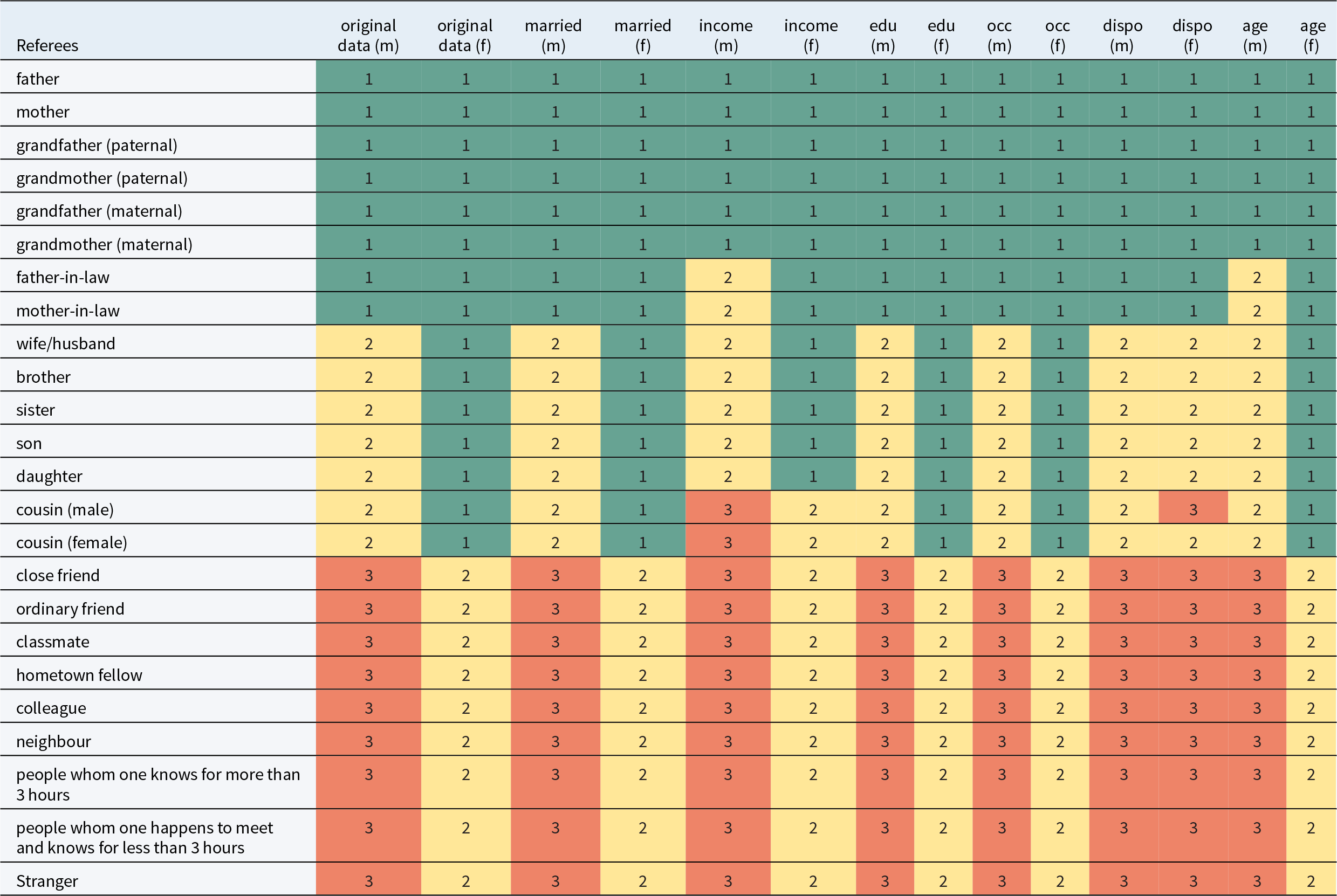
Table 2 Long description
This table reports the partitioning schemes for different subsamples, including the full sample, married respondents, and samples matched on income, educational attainment, occupational status, occupation, cultural dispositions, and age. For each subsample, clusters are identified using different colors and numerical labels, corresponding to the graphical presentation in Figure 1. However, readers should note that comparisons across subsamples are not appropriate, as the cluster labels and color assignments are sample-specific and do not necessarily represent equivalent group structures across different partitioning schemes.
Difference from the Network Partitioning Pattern of the Original Data
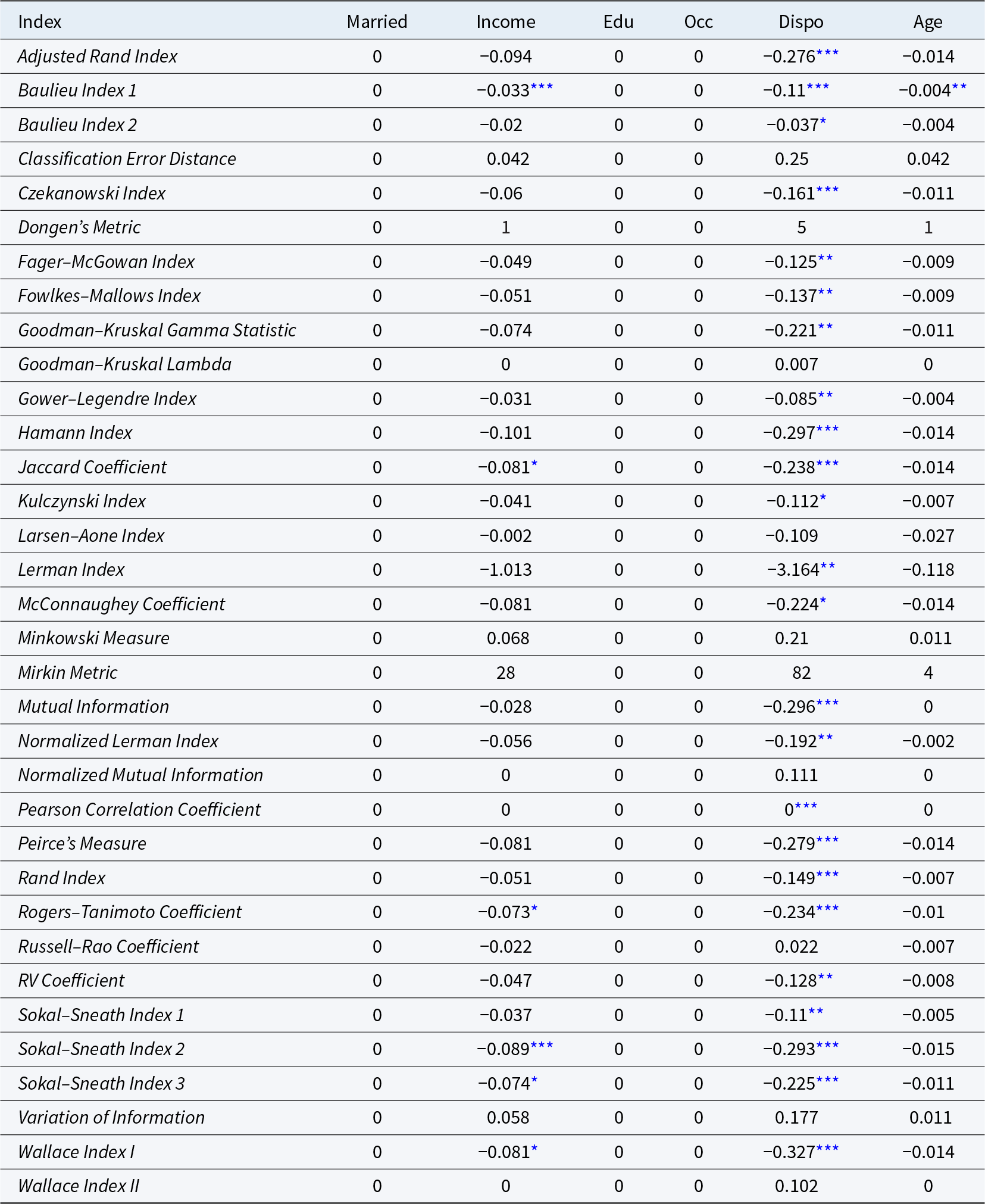
Table 3 Long description
The table measures differences in network partitioning patterns across various indices, focusing on attributes like marital status, income, education, occupation, disposition, and age. Disposition consistently shows significant negative differences, particularly in the Hamann Index (-0.297) and Wallace Index I (-0.327), indicating strong deviations from the original data. Income also shows notable negative differences, with the Baulieu Index 1 at -0.033 and the Sokal–Sneath Index 2 at -0.089, both marked as significant. Age generally shows minor negative differences, with the largest being -0.027 in the Larsen–Aone Index. The table suggests that disposition matters in network partitioning differences, with several indices showing statistical significance.
Notes: *p<0.05 **p<0.01 *** p<0.001 (permutation test).
For the original data (Figure 1 [a]), the 24 referees for male respondents are grouped into three distinct communities: older-generation kin, same-generation kin and non-kin. In contrast, women exhibit a simpler, binary partitioning, primarily distinguishing between blood relatives and non-relatives. This pattern suggests the continued salience of generational hierarchy in structuring social relations for men, rather than for women, in contemporary China. For married cases, the social network partitioning schemes are identical to the one based on the original data (Figure 1 [b]). It is, therefore, no surprise that no similarity index reveals significant variation (Table 3). In this regard, we decide to use the original data partitioning scheme as the reference for the subsequent matching analyses.
To investigate the mechanisms underlying the gender differences in social network partitioning, we perform the matching analysis. Variables related to life chance access are not quite relevant. If we match income between men and women (Figure 1 [c]), only a limited number of similarity indexes reveal statistically significant variations; matching either educational attainment or occupation has no impact at all (Figure 1 [d] and Figure 1 [e]). In contrast, after matching on the degree to which a respondent embraces Confucianism and traditionalism, the partitioning schemes of men and women become more similar to each other than those of the original data (as shown in Figure 1 [f]). The significance of this variation, as suggested by Table 3, is supported by most of the similarity indexes. Hence, we conclude that the gendered pattern of social network partitioning is at least partly driven by cultural orientation rather than social resource disparities. Finally, life course stage accounts for little in the gendered mode of social network clustering, since matching on age fails to introduce significant changes (Figure 1 [g]).
To further probe the role of cultural dispositions, we compare the patterns of network segregation when the scores for traditionalism and Confucianism of both men and women fall below the average with those observed when both scores exceed the average. The results can be found in Figure 2. When neither gender is traditional, the partitioning schemes of men and women resemble each other; they also resemble the partitioning scheme of women in the original data. In other words, women’s network segregation scheme in the original data is partly driven by their lower likelihood of endorsing traditional culture. If we restrict the sample cases to those whose traditionalism and Confucianism scores are both above the average, the situation is reversed, in the sense that the network schemes of men and women resemble each other and also mimic the schemes of men in the original data. That is to say, the network segregation scheme of men shown in the original data reflects their stronger traditional dispositions.
Social Network Partitioning and Acceptance of Traditional Values (a) Less Traditional, (b) More Traditional
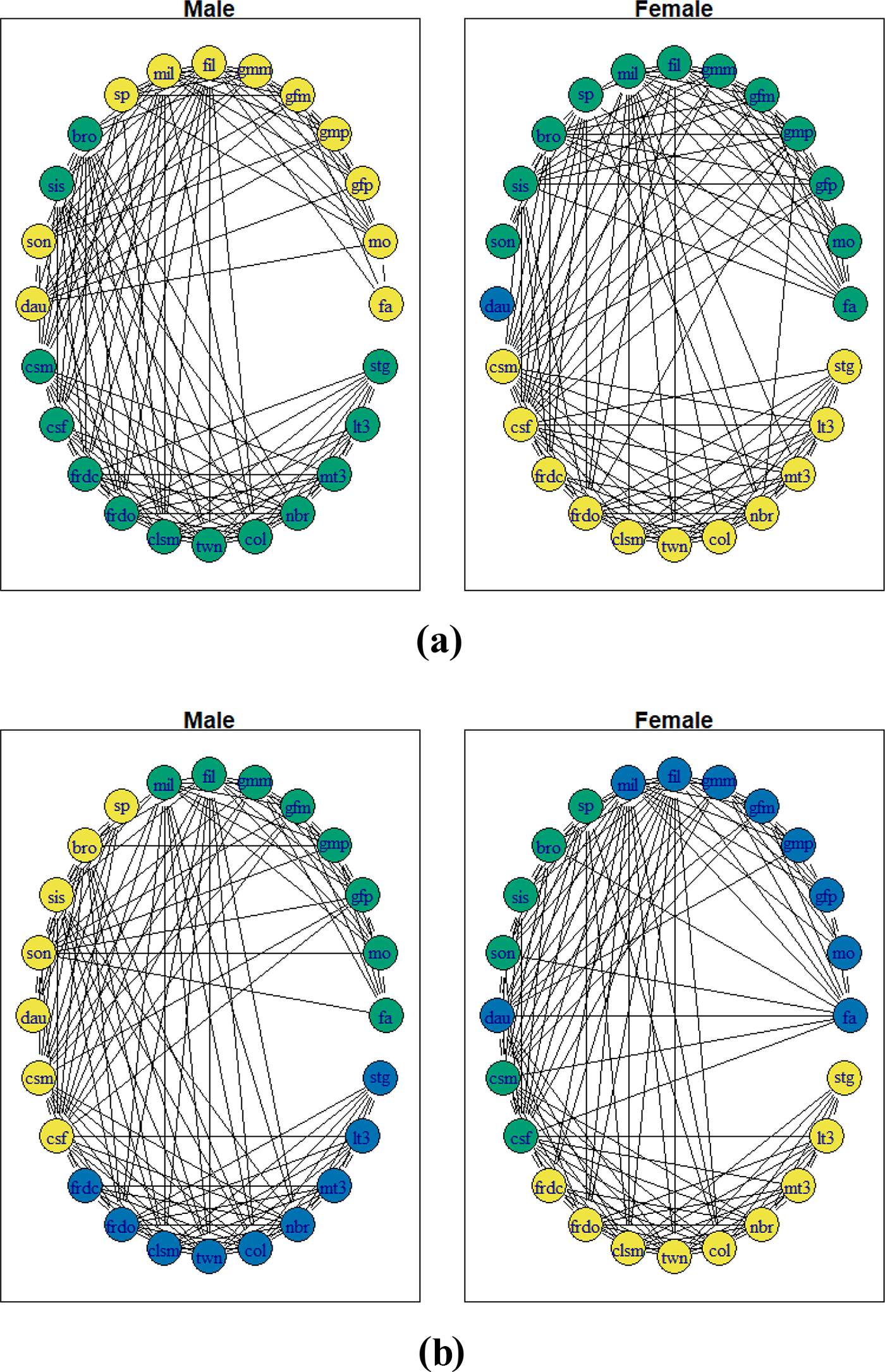
Figure 2 Long description
The image consists of two diagrams labeled (a) Less Traditional and (b) More Traditional. Each diagram is divided into two sections: Male and Female. In the Less Traditional diagram, both sections display nodes connected by lines, representing social networks. When neither men nor women exhibit strong traditional orientations, their network partitioning schemes become highly similar, and both closely resemble the partitioning pattern observed among women in the original data. By contrast, when the analysis is restricted to respondents whose traditionalism and Confucianism scores are both above the sample average, the pattern reverses: the partitioning schemes of men and women again converge, but now both resemble the scheme originally observed among men. The network segregation pattern found among men in the original data thus reflects their relatively stronger traditional dispositions.
Taken together, the gender difference in social network segregation can be understood by men’s stronger endorsement of traditional cultural values. This pattern suggests that cultural change in China is unfolding unevenly between the two genders: traditional kinship norms continue to shape how men evaluate and organize their social life, while women increasingly adopt a flatter and less hierarchical orientation towards familial relationships. In this sense, the contrast between men’s and women’s trust networks captures a gendered manifestation of the tension between tradition and modernity in contemporary China.
Concluding Remarks
Drawing on original online survey data from China, this study examines the gender difference in social network segregation. Empirical analyses suggest that, on average, women tend to organize their networks along a dichotomous kin-versus-non-kin line, while men adopt a tripartite structure that further differentiates among kin. This gender gap is primarily driven by a gender gap in the extent of endorsing traditional values. Men’s social network segregation largely reflects their more traditional orientation, while women’s segregation is partly influenced by their less traditional dispositions.
These findings have implications for the cultural transitions in contemporary China. As shown, cultural change does not proceed uniformly but overlaps with gender in systematic ways, producing a distinctive pattern in which “tradition” and “modernity” are unevenly distributed between men and women. Traditional family norms resonate largely with men, who are often positioned as both beneficiaries and carriers of traditional principles of relatedness. At the same time, expanded education, labour market participation and social mobility have created greater scope for women to move beyond traditional role expectations, fostering more modern and less hierarchical orientations. The result is a gendered cultural configuration in which men appear relatively more “traditional” and women more “modern” in contemporary China.
The gendered organization of social networks also has implications for the state–society relationship in contemporary China. On the one hand, the Chinese state continues to draw cultural legitimacy from a tradition that emphasizes the integration of the hierarchical order of family and state (jiaguo yiti 家国一体).Footnote 26 In this respect, men’s more finely stratified trust networks, particularly their sensitivity to generational and role-based distinctions within the family, align more closely with the cultural logic that underpins state authority. By contrast, women’s flatter and less differentiated treatment of family members sits less comfortably with this hierarchical vision of family–state order. This distinction implies the gendered aspect of the cultural foundation of governance in China. On the other hand, the state’s limited capacity to provide comprehensive social welfare makes families a crucial provider of care and support. In this regard, women’s less segmented networks are more functional, as they facilitate more even and flexible caregiving across boundaries of family members. Men’s highly differentiated approach to family relations, while culturally resonant, may hinder such role-neutral care. This gender difference, while reinforcing the traditional gender divisions of labour within the household, depicts a different picture where women’s social network segregation pattern implies pragmatic values for social governance. Taken together, the tension between cultural legitimacy and pragmatic welfare provision for the political regime is played out by the gendered forms of social networking.
This study has several limitations. First, the list of social roles cannot reflect the actual social composition for all respondents, rendering trust ratings partially hypothetical. This concern is mitigated by our robustness check, but the current data do not provide a measure for the number of siblings or cousins, so the robustness check is not fully comprehensive. Second, although trust serves as a comprehensive measure of tie strength, it does not capture specific interaction types, such as material exchange or emotional intimacy. Future work could benefit from a multidimensional typology of interpersonal ties. Third, the findings documented in this study are specific to the Chinese context, and it remains an open question whether or not we can generalize our conclusions cross-nationally; comparative studies are thus needed to explore the influence of macro-level sociocultural and sociopolitical environments. Fourth, the cross-sectional design of this study determines that it is inappropriate to interpret our findings in a strictly causal way. A more sophisticated design is required to ascertain causality. Finally, the use of online survey data likely introduces sampling biases. Although post-stratification weighting is deployed, it cannot entirely eliminate the potential survey bias.
Supplementary material
The online appendix is available as supplementary material at https://doi.org/10.1017/S0305741026102367.
Data availability
The data that support the findings of this study are available from the author upon reasonable request.
Acknowledgements
The author sincerely thanks the anonymous reviewers and the editors for their constructive comments and insightful suggestions, which have significantly improved the quality and clarity of this manuscript.
Funding statement
This study was supported by the National Social Science Foundation (Grant No. 22VRC140).
Competing interests
None.
Anning Hu is distinguished professor of sociology and dean of the School of Social Development and Public Policy at Fudan University. His research focuses on social inequality, education, culture and quantitative research methods. He has published more than 140 peer-reviewed journal articles and six monographs. His work has appeared in leading international journals, including The China Quarterly, The China Review, Sociology, The British Journal of Sociology, British Journal of Sociology of Education, Chinese Sociological Review, Social Science Research, Journal of Marriage and Family and Poetics, among others.


 Open access

