


INTRODUCTION
Recent estimates indicate that about 3·5 billion people, ~55% of the world's population live in countries at risk for dengue [Reference Beatty1]. Dengue ranks among the most important infectious diseases with a major impact on public health in Vietnam and many other countries in the tropics and subtropics. Dengue virus (DENV) transmission primarily takes place through bites by the mosquito vectors, Aedes aegypti and Aedes albopictus, which feed preferentially on human blood, and are often found in and around human dwellings [Reference Harrington2, Reference Scott3]. Infection with DENV results in either (almost) asymptomatic infection, undifferentiated febrile illness, dengue fever (DF) or even life-threatening manifestations such as dengue haemorrhagic fever (DHF) and dengue shock syndrome (DSS) [Reference Rigau-Perez4].
Currently, no vaccine or chemotherapy is yet available. Prevention and control of dengue transmission therefore depend on vector control (larvicide treatment, insecticide sprays and elimination of breeding sites) and avoidance of bites. The national dengue control programme in Vietnam recommends vector control by larvae elimination. However, these measures are usually only implemented after notification of severe cases (DHF and DSS) [5]. This local policy is based on the assumptions that such cases reflect locally increased vector densities with higher infection rates. It remains unclear to what extent this approach controls further transmission, because the majority of DENV infections (~80%) are mild/atypical or even asymptomatic [Reference Burke6]. It is therefore likely that such measures are not adequate to prevent sustained DENV transmission in the community [Reference Ali7–Reference Chen9]. In fact, its geographical distribution is spreading and transmission rates have increased over the last decades [Reference Kroeger and Nathan10].
Previous studies showed that dengue disease tends to cluster either in the same household or in nearby neighbourhoods [Reference Morrison11–Reference Tran13]. However, while suggestive of clustering of transmission, clusters of disease may be due to diagnostic biases or heterogeneity in susceptibility to symptomatic disease following infection within families or households.
To explore the hypothesis that DENV transmission is spatially focal, we used available data from a cross-sectional seroepidemiological study in 2003, a 2-year follow-up study and a household survey in two communes, Ham Kiem and Ham Hiep in southern Vietnam [Reference Thai14, Reference Thai15].
METHODS
Data sources, study sites and population
This study used available data from a cross-sectional study, a follow-up study and a household survey in two communes, Ham Kiem and Ham Hiep, in primary schoolchildren [Reference Thai14, Reference Thai15]. Briefly, we conducted a cross-sectional study in two communes in 2003, in which all primary schoolchildren at two primary schools in the two communes were included and their prevalence of antibodies to dengue measured. Additionally, a household survey was carried out in 400 houses. All children who had no DENV-specific IgG serum antibodies in a serosurvey of 2003 were retested in a follow-up study which was conducted in 2005.
From 2002 census data, the total populations in Ham Kiem and Ham Hiep were 6467 and 11 131. The population densities of the two communities were about 109 people/km2 and 322 people/km2 for Ham Kiem and Ham Hiep, respectively. These communities have a tropical climate with a mean temperature of 27°C, an average monthly rainfall of ~100 mm and a rainy season that lasts from May until October.
Geographic mapping
During the household visits in 2003, geographic coordinates were recorded. The latitude and longitude of households were registered using a hand-held global positioning system (eTrex®, Garmin International Inc., USA). The coordinate system and datum used were degree decimal and WGS-84, respectively. MapInfo Professional (MapInfo Corp., USA) was used to display the distribution of dengue serum-specific IgG cases per household.
Statistical analysis
We hypothesized that there is geographical heterogeneity in dengue transmission within communities with the occurrence of ‘hotspots’. If so, new infections, as indicated by observed seroconversion during follow-up, would occur near places where dengue IgG seroprevalence was highest at baseline (2003). If not (the null hypothesis) new infections would occur randomly. To test this hypothesis we looked at the geographical distance between old infections (i.e. children who were seropositive for dengue) at baseline and new infections observed during follow-up using a permutation analysis.
Consider a child i at baseline living at coordinates Q i=(x i, y i). Assume P i=1 if the child was seropositive and −1 otherwise. Similarly, consider a child j observed at follow-up, and again assume I j=1 if the child was seropositive and=−1 otherwise. The coordinates of this child are Q j=(x j, y j).
Now consider the statistic:
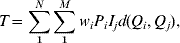
where d(Q i, Q j)=1/[0·001+distance (Q i, Q j)] where the (Euclidean) distance is measured in degrees (i.e. ~110 km) so that d(Q i, Q j) of sites 100 m (flying distance of vectors) apart is about half that of the d( ) between a spot and itself.
Further, let w i (the ‘weight’ of a baseline child) be taken=age for P i=−1 and=1/age for P i=1. This weighting was done because age is an important predictive factor for seropositivity since seroprevalence increases strongly with increasing age [Reference Thai14].
The permutation null distribution (with separate permutations for the two communities in the study) was generated using a specially written computer program. Large values (relative to the permutation null distribution) reflect the existence of hotspots. A total of 100 draws from the permutation null distribution were generated using this program.
Ethical consideration
The protocols for recruitment, testing and follow-up were approved by the Provincial Health Services, the community stations of Ham Kiem and Ham Hiep and the Scientific Committee of Cho Ray Hospital, Ho Chi Minh City. In cooperation with the People's Committee of the villages, the health post-staff and school teachers, all children of the primary school and their parents were informed about the study and consent was obtained from all.
RESULTS
Baseline seroprevalence
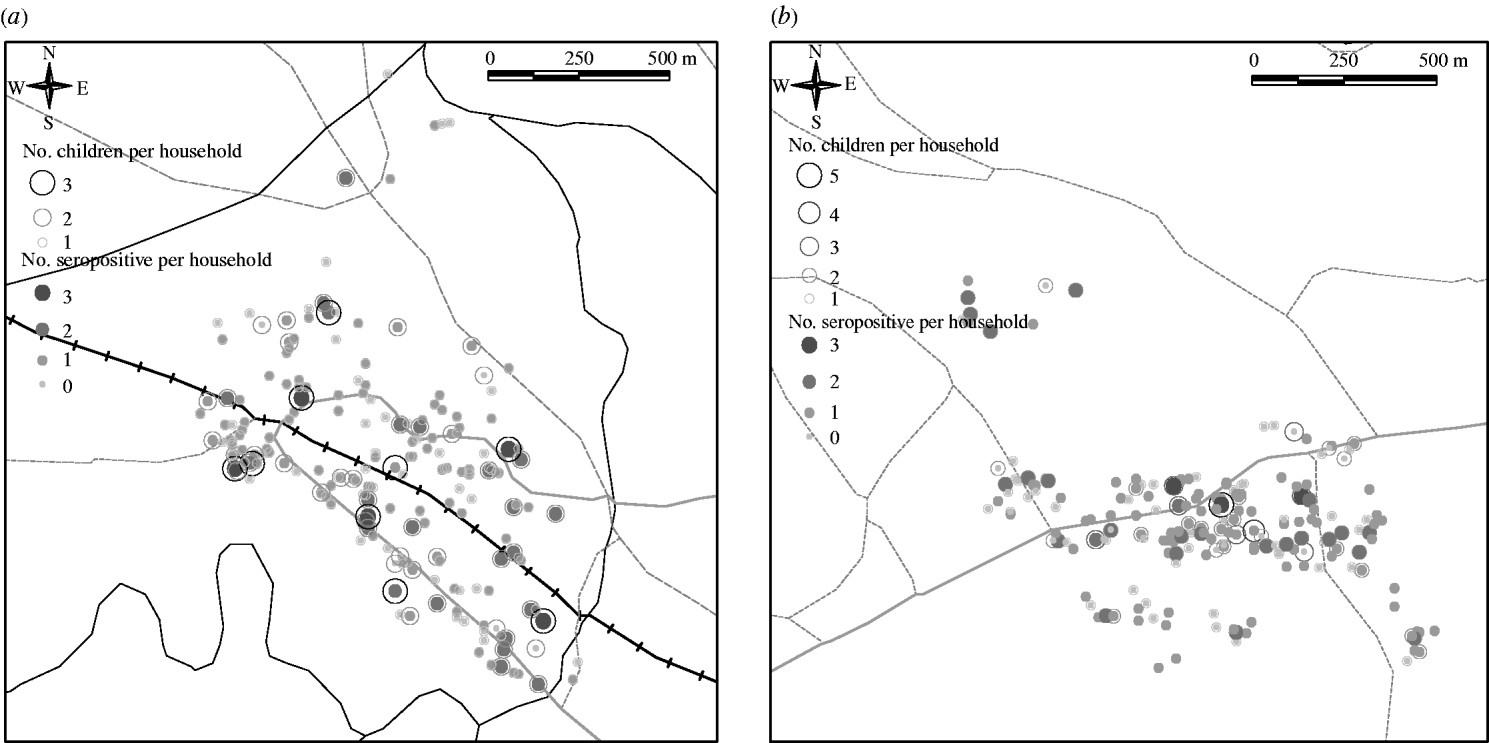
The study design and data sources are shown in Fig. 1. Figure 2 shows the map of Binh Thuan province, Vietnam and location of the study areas. During the household survey in 2003, a total of 400 households, home to 533 children, were visited in order to obtain geographical coordinates. Serological data were available for 521 children of which 339 (65%) were positive for dengue serum-specific IgG. This was taken as background seroprevalence in our study. The spatial distributions of the households of these 521 children in the villages are shown in Fig. 3(a, b).
Data sources overview.

Map of Binh Thuan province, Vietnam and location of the study areas.

Distribution map of children per household in two villages (a) Ham Hiep, (b) Ham Kiem, in Binh Thuan province, Vietnam.
Geographical heterogeneity
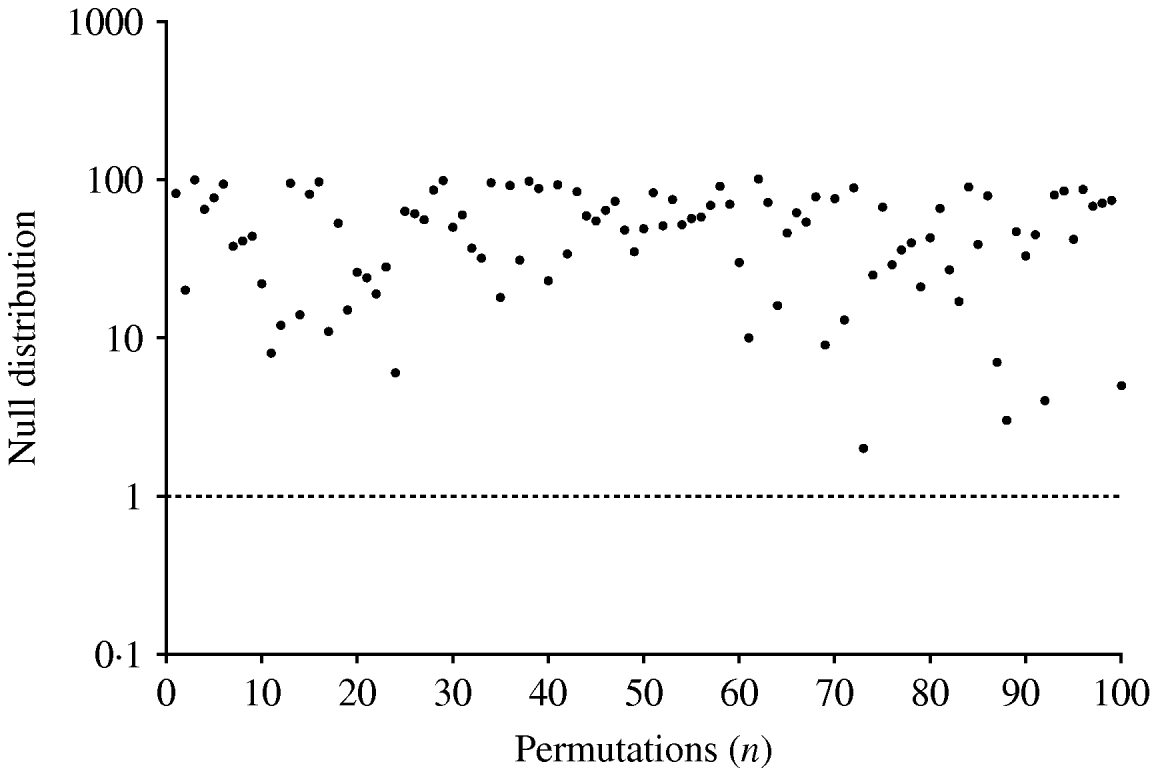
All children (n=216) who had no DENV-specific IgG serum antibodies (dengue naive) in the 2003 serosurvey and who had been followed-up for 23 months were eligible for inclusion in the study to explore the heterogeneity of dengue transmission. Ninety-seven children whose geographical coordinates had not been recorded in 2003 were excluded. Because only dengue-naive children were included, any seroconversion of IgG was due to dengue infection during the 23 months of follow-up. In the permutation analysis, we considered 119 children from Ham Kiem (n=65) and Ham Hiep (n=54). These children were living in 111 households. All children who were followed-up lived in the same house as 2 years previously. Figure 4 shows the permutation null distribution of T observed/T null. The null distribution values exceeded 1 for every permutation, i.e. the observed clustering exceeded random draws from the null distribution 100/100 times. Clearly, this provides cogent evidence for the existence of geographical heterogeneity, i.e. that new infections occurred near places where prevalence was highest at baseline.
The permutation null distribution of T observed/T null.
DISCUSSION
Results in this study showed that new DENV infections occurred near places where seroprevalence was highest at baseline, suggesting important spatial heterogeneity in the transmission of dengue. This study overcomes methodological problems of earlier studies which looked at clustering of symptomatic cases [Reference Beckett8, Reference Mammen16].
There are several plausible explanations for the nearby simultaneous appearance of dengue cases at household level. First, entomological studies have shown that A. Aegypti has a multi-feeding behaviour on multiple people during a single gonotrophic cycle [Reference Gould17–Reference Scott19]. The implications of this behaviour may include the occurrence of clusters of dengue cases in or close to the same household and the rapid and sometimes explosive spread of dengue [Reference Chen9, Reference Waterman20]. However, this is unlikely to account for our observations in view of the probable (long) time lag between ‘baseline’ infections and follow-up infections. Second, local occurrence of dengue clusters could also be due to locally elevated vector density. Cluster investigations in Thailand showed significant differences in the A. aegypti pupae/person ratio in dengue cases in compared to non-dengue cases. However, no significant differences were shown for adult A. Aegypti population density [Reference Mammen16]. Abundance of pupae or adult female mosquitoes may be informative for routine surveillance or as an eradication measure, but these measures lack correlation between indices and dengue disease. Detection of DENV-infected adult A. Aegypti female mosquitoes that can potentially infect multiple individuals may be more relevant for DENV transmission.
Third, focal spreading can also be explained by the movement of the infected mosquitoes with its restriction of the flying range of ~100 m [Reference Harrington21, Reference Liew and Curtis22]. Transmission through a neighbourhood is most likely caused by the activities, daily movements and social networks of infected people as cluster sizes often exceed the flying range of the mosquitoes. Apparently, undiagnosed asymptomatic DENV infections or unrecognized dengue cases with mild symptoms play a more predominant role for the spread of DENV and undetected persistence of transmission locally.
Although this study gives insight into the transmission dynamics of DENV within communes and at household level, there are some limitations: (1) it must be noted that it is impossible to ascertain whether these children were infected at home, at school, or elsewhere. Only household geographical coordinates were considered but children living close together often attend the same school, and make use of the same playgrounds, etc. However, the likely role of household is suggested by observations from a prospective spatial cluster study in Thailand. Absenteeism of children due to fever tended to cluster in small geographical areas where dengue transmission was active, whereas those who were absent for other reasons were always from areas where dengue was not active [Reference Mammen16]. Other reports also showed that household members of dengue seroconverters had a higher relative risk for DENV infection [Reference Morrison11, Reference Getis23, Reference Halstead24]. (2) While our study established geographical clustering, it was not designed to identify the key factors that account for this clustering, such as environmental or entomological factors (water source, water storage, vector density), which have been known to contribute to DENV transmission [Reference Halstead25].
Despite these limitations, results from spatial analysis provide insight into DENV transmission and control. Based on these data, we believe that serosurveillance should play a role in identifying hotspots of transmission and that strategies that are centred only on severe clinical dengue cases will be ineffective in controlling transmission, as only a very small proportion (~5%) of dengue cases will develop into severe disease [Reference Guzman and Kouri26, Reference Kliks27]. Such population-based seroprevalence surveillance in children combined with geographical information systems (GIS), is a rapid, easy-to-perform and affordable tool for identification of possible high-exposure areas at community level. Where possible, identification of dengue risk areas should also be accompanied with vector surveillance and more importantly with the identification of DENV-infected mosquitoes in field settings. Currently, tools for detection of DENV in vectors are not yet available for field application. Thus in addition to infection hotspot identification, control measures should be guided by measurement and control of vector density, e.g. through elimination of breeding sites with perifocal spraying in identified risk areas. However, the effectiveness of insecticidal treatments in open areas is limited by insufficient residual effect with spray application of ultra-low volume of insecticide formulation per unit area, and insecticide application inside homes inhabited by DENV-infected mosquitoes may be more cost-effective. Nevertheless, the success of dengue control cannot only rely on intermittent surveillance and insecticide spraying alone [Reference Wang28], and involvement of the community seems key. However, the best approach to this involvement is still unclear. Educational campaigns have been used to increase awareness of dengue in Vietnam, but their effects on source reduction have never been studied.
ACKNOWLEDGEMENTS
This study was supported by a grant from The Netherlands Foundation for the Advancement of Tropical Research (WOTRO). K. T. D. Thai is supported by a ‘Mosaic’ fellowship from The Netherlands Organization for Scientific Research (NWO).
DECLARATION OF INTEREST
None.



