



Introduction
According to the National Health Service (NHS) workforce survey there were 23 458 practice nurses employed in England in 2012 (The Information Centre for Health and Social Care, Reference Szecsenyi, Campbell, Broge, Laux, Willms, Wensing and Goetz2013) making practice nurses one of the largest groups of nurses in the English NHS. Practice nursing as a profession is increasing in size internationally (McCarthy et al., Reference Margolius and Bodenheimer2012; Merrick et al., Reference McElduff, Lyratzopoulos, Edwards, Heller, Shekelle and Roland2012). The international growth in the practice nurse workforce is attributed to a shift in the delivery of healthcare from acute medical interventions to disease prevention and chronic disease management (McCarthy et al., Reference Margolius and Bodenheimer2012; Primary Care Workforce Commission, Reference Parker, Keleher, Francis and Abdulwadud2015) which is reflective of changing health-care needs of populations in advanced industrial countries and growth in our knowledge and understanding of the determinants of ill health (Harrison and Britt, Reference Harrison and Britt2011; Health Education England, 2014).
The rise in the numbers of practice nurses has been accompanied by a debate about their role and function, impact and effectiveness. In a comparative study undertaken in Australia (Hoare et al., Reference Hoare, Mills and Francis2012) practice nurses in the United Kingdom were identified as having more clinical autonomy than practice nurses in New Zealand and Australia, both of which operate a similar model of primary care to the United Kingdom. Hoare et al. (Reference Hoare, Mills and Francis2012) associated increased practice nurse clinical autonomy in the United Kingdom with the opportunity to run nurse-led clinics in primary care. The growth in practice nurse clinics in the United Kingdom was attributed to Government policies in particular the introduction of new GP contract in 2004 and the Quality Outcome Framework (QOF) which reimbursed GP practices for meeting quality targets across a range of clinical and organisational domains (Lester and Campbell, 2010). Maisey et al. (Reference Lester and Campbell2008) in a qualitative study of the impact of the QOF in primary care found evidence of increased autonomy and job satisfaction among practice nurses, however, this was accompanied by a loss of focus on patient concerns, as perceived by GPs.
Lester and Campbell (2010) identify the reasons and context for the introduction of the new GP contract and QOF in the United Kingdom. They identify among other factors, the rise of evidence-based medicine and the establishment of the National Institute for Health and Clinical Excellence; new public management with an emphasis on monitoring and control and increased concerns about variation in practice in primary care giving rise to variation in patient outcomes. Similar processes to the QOF are reported in Europe (Szecsenyi et al., Reference Robson2011) and Australia (Merrick et al., Reference McElduff, Lyratzopoulos, Edwards, Heller, Shekelle and Roland2012) although they are not as detailed and extensive as those introduced in the United Kingdom.
In a systematic review of the literature Rashid (2010) found that changes in the role of practice nurses in the United Kingdom were driven by perceptions of increased GP workload arising from the new GP contract, practice nurses experienced role limitations in response to QOF giving care that is task and target focussed rather than patient focussed (Rashid, 2010). The QOF represents a mix of quality indicators of which 70% are related to the clinical domain and supported by an evidence base linked to improved patient outcomes (Lester and Campbell, 2010). In a study of the impact on health outcomes of improving the quality of primary care for patients with cardiovascular disease in line with QOF targets McElduff et al. (Reference McCarthy, Cornally, Moran and Courtney2004) concluded that it is possible that meeting QOF targets would result in significant health gains particularly in the 45–84-year-old population. It is possible that the increased workload experienced by GPs is in part a product of the growing clinical evidence base and the routine implementation of QOF quality clinical indicators by practice nurses may impact positively on patient outcomes (McElduff et al., Reference McCarthy, Cornally, Moran and Courtney2004).
However, despite these findings there is a lack of consensus about the role and educational requirements of practice nurses. Even within primary care, divergent opinions between GPs and practice nurses about certain aspects of the practice nurse role have been identified (McCarthy et al., Reference Margolius and Bodenheimer2012). Debates continue about the place of practice nursing in the health-care system with studies calling for increased leadership among practice nurses to support improved teamwork and strategic clinical leadership (Halcomb et.al., Reference Halcomb, Davidson and Patterson2008; Hoare et al., Reference Hoare, Mills and Francis2012). Other studies identify a role for practice nurses in enabling integration between health and social care (Evans et.al., Reference Evans, Drennan and Roberts2005; Howarth et al., Reference Howarth, Holland and Grant2006). The need to develop collaborative multidisciplinary approaches to the delivery of primary care was emphasised in the NHS England primary care workforce commission (2015). Here it was recognised that the fragmentation and duplication that characterises current primary and community care services in the United Kingdom is unsustainable. Instead the Commission advocated a patient-focussed team-based approach with members of the patient care team communicating directly with each other across what currently appear to be impermeable organisational boundaries. In taking this vision forward the Commission recognised the strengths of co-locating community and primary care nursing services and developing confederations of GP practices networked together to give smaller practices equal access to a wider multidisciplinary team. Alongside all members of the team, primary and community care nurses would have access to structured education programmes and continuing professional development with opportunities to develop advanced clinical skills as well as leadership and management skills required to run primary care organisations.
Support for these changes is provided in a systematic review of the international literature (Dennis et al., Reference Dennis, May, Perkins, Zwar, Sibbald and Hasan2009) conducted in Australia, which explored the evidence for task substitution between GPs and nurses in the care of older people living in the community. The review found evidence to support task substitution in primary care as long as it was practiced as part of a well-managed multidisciplinary team. The types of task substitution found to be effective focussed on disease management and/or health promotion advice for a range of long-term conditions managed in primary care. For nurses disease management interventions included case management using guidelines, proactive follow-up, care planning and goal setting. The review suggested that to achieve this requires high-quality comprehensive practice nurse education. However, as the authors point out, the primary care reimbursement system in Australia provided few incentives for practice nurses to undertake additional training or for GPs to release them for such training, particularly if the role of the practice nurse does not develop to include the newly acquired skills.
Margolius and Bodenheimer (Reference Maisey, Steel, Marsh, Gillam, Fleetcroft and Howe2010) recognise that primary care practices must find ways of increasing their capacity to support patients without compromising the quality of care or adding to an already unsustainable workload. They suggest that this can only be achieved by re-structuring the physician (GP) role such that the GP no longer sees all patients but acts as a leader of a well-trained highly functioning primary care team. Structured post-registration educational pathways linked to clear career progression are seen as important in enhancing recruitment and retention of nurses in primary care (Parker et al., 2009; Queens Nursing Institute, Reference Procter, Wilson, Brooks and Kendall2016). However, it would appear that the development of the practice nurse role is interrelated with the development of the GP role and of primary care services, making the introduction of such courses, in isolation from opportunities for career progression for practice nurses, of limited value.
There is clearly a need for more research into the role and function of the practice nurse in enabling improved population health and care. This paper presents the findings from a survey and series of focus groups designed to review the educational attainment, scope of practice and training and education needs of practice nurses in eight Clinical Commissioning Groups (CCGs).Footnote 1
The aims of the study were to:
-
∙ identify the key education priorities for practice nursing across the eight CCGs;
-
∙ identify the education, training, development and support needs of the practice nurses in undertaking current and future roles and activities.
Methodology
The project was commissioned by a CCG collaborative consisting initially of five CCGs working together to plan and commission healthcare for a large urban multicultural population in Southern England. The research was undertaken by academics from a local university (S.P., L.G., A.F.) and was designed to inform the commissioning of education and training for practice nurses and formed part of a local quality improvement initiative.
The methodology used to inform this research drew on the theoretical perspective of real world research (Robson, Reference Rashid2011). In his discussion of real world research Robson suggests that ‘Much real world research focuses on problems and issues of direct relevance to people’s lives to help find ways of dealing with the problems or better understanding of the issue’ (Robson, Reference Rashid2011: 4).
The research reported here was commissioned by the CCGs to gain a better understanding of educational needs of the practice nurse workforce. In particular the CCG were interested in scoping the contribution practice nurses currently made to the care of patients with long-term conditions and identifying the additional education required to enable practice nurses to further develop their role in caring for this patient population. The research consisted of two parts: a questionnaire designed to scope current educational attainment among the practice nurse workforce mapped onto their current role; focus groups designed to gain an understanding of how the practice nurses viewed their current role and their capacity for further developing their role to meet the needs of patients with long-term conditions. Meeting the needs of an ageing population with long-term conditions is a major policy concern for healthcare in industrialised countries including the United Kingdom (NHS England, 2014; Primary Care Workforce Commission, Reference Parker, Keleher, Francis and Abdulwadud2015). Commissioners from the CCG were well aware of the need to develop the local health-care workforce to meet this challenge. As Robson (Reference Rashid2011) points out global problems have local implications which have to be understood if the wider problems are to be adequately addressed. The focus groups therefore built on the findings from the questionnaire in that they were designed to answer an envisaging ‘what if’ question to inform commissioner understanding of the potential capacity of this workforce to develop a collaborative approach to meeting the needs of people with long-term conditions.
Local commissioners and practice nurse leads from the five CCGs formed a steering group and took responsibility for the design and distribution of the questionnaire, the support and facilitation of the focus groups and the design of the education programme. The survey was later replicated in three other CCGs (lead by academic researcher H.L.). In addition, national and local policy documents were analysed to inform the design of the questionnaire, the focus groups and interpretation of the findings.
The questionnaire
The questionnaire was designed by the steering group to collect data on the educational and professional qualifications of practice nurses and on the scope of their role in looking after patients with long-term conditions. The survey used mainly closed questions to ease analysis therefore scoping the role of the practice nurse was limited to quantifiable actions such as running clinics. Practice nurse leads commented on early drafts of the questionnaire which was amended in line with feedback. A near final draft of the questionnaire was piloted with five practice nurses and minor amendments were made before final distribution. The questionnaire consisted mainly of closed questions with some opportunity for comments. Basic demographic data were requested and respondents could choose to remain anonymous or insert their name and email address for follow-up. All but three practice nurses provided an email address. The questionnaire was designed and distributed using the Bristol online survey tool. This provides an electronic link to the survey and exports the results to an excel spreadsheet. Open-ended comments are exported to a text file. Extracts from the questionnaire are given in Figure 1.
Examples of structured questions used in the questionnaire

The electronic link to the questionnaire was sent to the practice nurse leads in each of the eight participating CCGs who were asked to distribute the questionnaire to all practice nurses on their mailing list in their CCG with a covering email explaining the purpose of the survey, that their response will only be seen by academic researchers at the university and would not be available to their employers. The exact number of practice nurses in each CCG was unknown, practice nurse leads were aware that their mailing lists were not reflective of the total number of practice nurses in their CCG, each recipient was asked to forward the questionnaire to colleagues who might not have received it as a result a small number of health care assistants completed the questionnaire. The exact number of practice nurses working in the eight CCGs was unknown, figures accessed from a variety of sources differed and were disputed by the steering group. They are not therefore reported. Because of concerns about access to the electronic survey tool via email hard copies of the questionnaire were sent to practice nurse leads and distributed at practice nurse meetings to those respondents who had not been able to complete the questionnaire online. The fact that all but three respondents chose to provide a unique identifier meant that the analyst could check for duplication of survey submission. No duplication was found. The results were exported to excel and a descriptive analysis of the findings undertaken.
Focus groups
Three focus groups were held with practice nurses involving 34 practice nurses from GP practices across the participating CCGs. These were organised by the practice nurse leads for each CCG. All practice nurses working in each CCG on the practice nurse leads mailing list were invited to attend the focus group. No demographic data was collected. Each focus group lasted about 45 min to 1 h. The focus groups were digitally recorded transcribed with the consent of the participants and anonymised before analysis. Where requested transcripts were sent to the practice nurse lead for further discussion. In addition, 39 practice nurses attended a workshop and worked in small groups to produce written recommendations for practice nurse education and training. The findings from the survey and focus groups were shared with the steering group and used to develop an education and training programme available for nurses in the commissioning area.
The focus group used an open-ended exploration of the current role and daily work experience of the practice nurses, supplementary questions focussed on: their experience of accessing education for their role, the appropriateness of the education they had received in equipping them for their current role, the range of work they undertook in their current role, their ability to meet the needs of the patients attending the practice and whether the system of care could be improved for these patients and if so how and what potentially could they as a workforce offer this group of patients.
Ethical considerations
This project was commissioned as an audit of practice nurse education and training needs. It therefore did not need REC/IRAS approval. It was lead by the CCG and facilitated by the University. The questionnaire was designed by CCG leads and approved by the steering group before distribution. It was possible to complete the questionnaire anonymously, although most practice nurse respondents chose to provide identifiers when completing the questionnaire. The questionnaire results were presented anonymously. The focus groups/workshop were organised by the local practice nurse leads and the transcripts were anonymised and shared with practice nurse leads if requested. Participants were told that the findings would be written up and published. During the focus groups practice nurses expressed that they were pleased to be given an opportunity to make their voices heard and were keen that the key messages were disseminated. There was no obligation to take part in a focus group or to contribute during the focus group, although most participants did take part. A thematic analysis of the focus group findings was anonymised and presented to the steering committee. Following the project there has been considerable interest in the results as it is seen as very topical. Permission was granted by the steering committee to publish the findings.
Survey findings
A total of 272 of respondents completed the survey between July 2013 and April 2014. Most respondents indicated that they were registered nurses (87%). Many respondents also indicated additional professional qualifications. In all, 71% of respondents described their role as practice nurses, 12% advanced nurse practitioners, 7% Support Worker/Health Care Assistant (Bands 1–4) and 6% specialist practitioners. Other job titles were Nurse practitioner (six), Phlebotomist (two), Clinical Service Director, Lead Practice Nurse, Nurse Practitioner & Assistant Practice Manager, Outreach Lead, Practice Development Nurse, Practice Nurse & Clinical Administrator and Practice Nurse Team Leader, Outreach Lead, Practice Development Nurse and Trainee advanced Nurse Practitioner.
Just under half the sample worked part-time (43%) and 56% worked full-time. One respondent was currently not employed and two respondents were agency/bank staff. In all, 35% worked out of hours. The average number of years since starting work in community or practice care was 16, ranging from 0 to 52 years. Only 14% of respondents had five or less years of experience and nearly half the sample (46%) had more than 15 years of experience in community or practice care.
Of the 240 respondents who indicated they were registered nurses most had either a Diploma in Higher Education (48%) or a BSc (33%). In all, 6% of the respondents also had an MSc. Of those indicating they were registered nurses many also indicated additional professional qualifications. Figure 2 shows the range of professional qualifications held by nurse respondents.
Percentage of respondents with each type of professional qualification. Bar chart showing the percentage of nurses with each professional qualification. (Respondents could select more than one option.)

All respondents were asked to give their current grade/band against the NHS grade banding structure. The NHS grade banding structure ranges from 1 to 9, with band 5 being the entry level for newly registered nurses and allied health professionals. Of those respondents who gave a band level, the most common band was 6 (33%) with most respondents at band 6 and above (67%) see Figure 3. A total of 19% of respondents either did not have a band, used a different grading system or stated ‘Other’ for band level.
Percentage of respondents at each band

To address local population needs the survey specifically asked about levels of training achieved in the areas of asthma, diabetes, chronic obstructive pulmonary disease (COPD), heart disease, family planning, triage and travel health. Over all areas, 40% of training was classified as uncertified, 36% as certificated and 24% of the training received in these areas was through an academic qualification (diploma/degree/post-graduate). The level of academic training was also requested for nurses who had sole or shared responsibility for a specific service listed in Figure 4. Figure 4 gives the percentage of nurses who have a sole or shared responsibility for each specialist service it indicates that most nurses covered more than one service area. Figure 5 shows that for nurses with a sole or shared responsibility for a service area, 33% of training was classified as uncertified, 39% classified as certificated and 29% of the training received in these areas was through an academic qualification (diploma/degree/post-graduate). The numbers of nurses who did not specify any training in the area in which they had shared or sole responsibility for a service (by stating N/A or giving no response) was low, ranging between 1 and 11 nurses for each service area (3–16%). Areas with more than 10% of respondents stating they had no training but had shared or sole responsibility for a service were heart disease and triage/minor illness.
Percentage of nurses with a shared or sole responsibility for a specialist area

Percentage of respondents with training in specific areas. Values are given as a percentage of the whole sample, including those who did not respond to the question.

Respondents were asked whether they had attended training in the last 12 months in the areas of: Cardiopulmonary resuscitation (CPR), adult and child safeguarding, infection control, fire safety, moving and handling, health and safety, equipment training, immunisation and anaphylaxis, cervical cytology, ear care, flu update, independent non-medical prescribing, independent non-medical prescribing annual update, specialist COPD, specialist diabetes, specialist long-term conditions, cardiovascular disease, health check, consultation skills and customer service. A total of 14 respondents had not attended training in any of these areas in the last 12 months. The average number of areas for which training had been achieved was 6.9, ranging from 0 to 21. The most commonly achieved areas of training with more than half the respondents having completed training in the last 12 months were CPR (84%), immunisation and anaphylaxis (73%), child safeguarding (73%), cervical cytology (64%), fire safety (63%), adult safeguarding (63%) and infection control (58%). Training was generally rated favourably or with an average response. Over all courses attended, 56% was rated in the top two categories (4 or 5 – excellent) and only 5% in the two poorest categories (2 or 1–poor).
For the 21 specific training areas listed above, respondents were also asked whether they would be interested in attending training in that area. The average number of specified areas where nurses said they would like training was 7.2 and ranged from 0 to all 21. In all, 64 nurses (24%) indicated they did not need training in any of these areas. However, 29 of the 64 listed other training needs, in the open question. The percentage of respondents who listed neither specific training needs nor any additional training needs in the open question was 13%. The responses are given in Table 1, which shows the number and percentage of those indicating a need for training in the area listed as a total of those who answered yes or no to that question and as a percentage of the total sample (including those who answered not applicable to that training need or did not answer the question).
Number and percentage of respondents interested in attending training in each area listed in the questionnaire, and as percentages of those who responded to that question and of the whole sample

COPD=chronic obstructive pulmonary disease; CVD=cardiovascular disease; LTC=long-term conditions.
An open question was asked to identify any other areas of training required. Over half of the respondents (51%, 140) specified some additional training needs with 295 training areas specified in total. Of these, 47 (16%) were specifically requested as training updates. Areas for specific training needs given by more than five nurses are given in Table 2. Most respondents listed a number of areas which are counted separately in the table.
Number and percentage of nurses who said they were interested in specific areas of training in the open question, in descending order
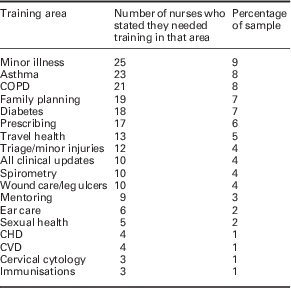
CHD=congenital heart disease; COPD=chronic obstructive pulmonary disease; CVD=cardiovascular disease.
The survey findings indicate a very task-orientated approach to education and training focussing on specific skills and competencies required to perform key aspects of the practice nurse role as evidenced by the high level of uncertificated training. However, this could have been an artefact of the design of the questionnaire which reflected the steering group and education commissioners’ information needs. The workshop similarly provided a long list of topic-based training needs. This is perhaps also reflective of the generalist nature of practice nurses and sets a challenge to education providers to meet this diverse set of needs. However, in the focus groups practice nurses indicated an awareness of the broader health-care context and the potential contribution they could make to realising the transformation of primary care. These findings are discussed below.
Focus group findings
The focus groups produced a large amount of data. The findings from each of the three focus groups were similar and so the data were analysed as one data set. This was categorised by topic and then by theme. Topics included daily workload, QOF, attitude of GP to practice nurse education, access to education courses, access to updates, education and training needs, relationships with patients, relationships with hospital and community care providers, the future of practice nursing. In analysing these topics to inform CCG commissioning key themes were identified which were shared with the CCG commissioners who were concerned to focus on those aspects of the findings that could be influenced by the development of a strategic education and training framework. As Robson (Reference Rashid2011) points out real world research takes place in highly complex situations where conclusions are necessarily tentative and there is a need for sensitivity on the part of the researcher to the political consequences of the findings. Consequently the themes discussed in this paper are those used to inform a strategic response to the findings from the focus groups. Never-the-less they reflect the voices and experiences of the practice nurses across all three focus groups with a particular emphasis on their current frustrations with educational provision and future aspirations for their role.
Across all focus groups a clear distinction was identified between the education needs of early career practice nurses and those that were more experienced:
‘I think perhaps one is to make a dividing line between new practice nurses that need training from the start and therefore will need much more input, to experienced practice nurses that actually just need an update which can be done in maybe in one hour or half a day or depending on what the subject is’.
The theme of novice as against experienced practice nurse resonated throughout the focus groups with clear distinctions being made between the education needs of new entrants and those nurses with many years experience. Experienced practice nurses expressed a real need for updates and considerable frustration and time wasting in their attempts to access updates.
‘You know, we were all sent round a list of courses that are funded. So there are loads of courses on out there…. And then you offer the training and nobody takes it up then when they advertise the course, they don’t get enough practice nurses to go onto it and they just cancel it’.
Across all focus groups the problem was not a lack of courses or funding but rather difficulty in recruiting sufficient nurses to make the course financially viable for the education provider. This reflected a second theme of fragmentation in provision which partly arose from the focus on skills and the wide range of disconnected topics highlighted in the survey findings. A structure of topic-based education does not fit with a developmental higher education framework for course provision. Practice nurses were very aware of the need to be up to date across a wide, diverse and growing range of topics. However, they did not know whether the knowledge base related to each topic had evolved or whether new developments (topics) had been introduced and therefore they did not know whether they had more to learn. This created a sense of anxiety without any obvious way of addressing this unknowable aspect of education need.
The themes of fragmentation and topic-orientated approaches to education created considerable confusion with some practice nurses seemingly accessing a wide range of educational opportunities:
‘I’m on a day diabetes course next week and I’m starting two-day travel course next week as well’.
While others get by on minimal training:
‘I didn’t have any particular formal diabetes course… I just got shown how to check the feet…. And that’s pretty much it’.
Fragmented, topic orientated approaches to education transferred into thinking about educational preparation for the whole role creating a task-orientated checklist approach to the acquisition of knowledge as exemplified by the following comments:
‘Well I’ve been a practice nurse for three years, and I came from a hospital. And so I don’t really have much experience with like asthma and diabetes. So like a long-term conditions courses, I think that’s essential for a new practice nurse because if you’re doing asthma checks and diabetic checks, you wouldn’t really know how to do it or even what you’re looking for. So those are definitely essential ones’.
‘but obviously I can’t do smears and there’s a few other things I still can’t do. I haven’t done an asthma course and things like that. So then it puts more pressure on others in the practice’.
Education seemed to be focussed on the tasks required to do the job rather than the development of the individual, in some cases practice nurses would be released for training to meet the immediate needs of the practice, rather than focussing on the development of the practice workforce. More experienced nurses had adapted to this situation and adopted a pragmatic approach to education:
‘…experienced practice nurses that just actually need an update which can be done in maybe in one hour or half a day or depending on what the subject is, for instance, this year we’ve had a very busy immunisation year, so the updates are quite extensive, whereas another year that might be, could have been done in one or two hours’.
This pragmatic approach was again a reflection of the topic-oriented checklist structure of education which could be bypassed by experienced nurses who had the confidence to seek out and acquire the knowledge they felt they needed to do the job.
Despite their experiences of the structure of education practice nurses were very aware of the wider system of care available to support patients with long-term conditions and the need for greater teamwork to overcome the fragmentation currently experienced by these patients:
‘You see, we’ve got COPD nurses in the community, we’ve got cardiac nurses in the community, we’ve got matrons in the community. And it seems to me that none of them link in together properly with the hospital, with us, and we’re ending up picking up pieces with patients coming out of hospital, going in, coming out, going in, coming out’.
‘Until we work as a team, with our secondary care teams in the hospitals, until they and us sit down in the same room, and discuss things like this, nothing will change’.
But practice nurses also recognised the need to be able to take on a wider cross-sector leadership role:
‘My point is that we need to be looking at more leadership roles. We need practice nurses to be taken to another level if we’re going to actually manage the future situation, in the sense, not just of empowerment, but how can we actually be part and parcel of the development of a role and community services, which if we don’t get it in there soon, we’re going to get left behind’.
The frustration practice nurses expressed in the focus groups reflected the lack developmental opportunities in the structure of educational provision which in turn arose from the fragmented, task and topic orientated interpretation of their generalist role.
CCG responses to the findings
Table 3 gives a list of the training needs identified by practice nurses derived from focus group and workshop data and additional training needs identified from document searches, in particular a search of statutory and mandatory training requirements. It does not indicate the level of education required for each of these topics or the frequency with which updates should be provided. By level we mean whether it should be statutory, mandatory and/or accredited (assessed) at diploma, degree or masters level. This list was shared with the steering group as it represented an urgent educational need that was causing considerable confusion and concern among the practice nurse workforce.
Education topics relevant to Practice Nursing

COPD=chronic obstructive pulmonary disease; CVD=cardiovascular disease; LTC=long-term conditions.
Working with the steering group and commissioners, it was agreed that the topic list (Table 3) would be reviewed by a senior commissioner on an annual basis and any updates on current guidelines identified or new topic introduced. The identified updates and new topics would be commissioned through a single provider who would cover all of the updates and new topics identified in a single session the length of which would depend on the volume of updates and new topics identified but last no more than two days. The training session would be repeated at predetermined dates throughout the year giving all practice nurses the opportunity to attend. This was seen as essential to remove the confusion and uncertainty expressed by practice nurses who were isolated and unable to identify for themselves changes which required updates. It provided a single point of access for practice nurses who had previously spent a long time searching through local provision in order to identify updates that they thought they might need. It also provided a commissioned framework for GP practices making it easier for practice nurses to negotiate and agree study leave. This approach is also designed to address the problem of course cancellation described above. The programme is easy for practice nurses to book in advance and makes efficient use of their time. It has been well received by practice nurses.
The findings from the survey indicate a high level of uncertificated training even for those clinical areas where practice nurses have sole or shared responsibility for a specific clinical service. This means that training was provided via study days and was not assessed so no judgement of competency was made.
The focus groups identified a strong need to organise and develop a coherent education framework that could be agreed across the CCGs and endorsed as an agreed programme for practice nurses. This finding mirrors the recommendations made in a recent national survey of practice nurses conducted by the Queens Nursing Institute (Reference Procter, Wilson, Brooks and Kendall2016). There was general consensus in the steering group that practice nurses should be provided with a ladder of educational attainment which included a foundation or introductory programme for new practice nurses, an intermediate programme to consolidate skills and competencies within the practice and an advanced practice nurse programme to facilitate leadership and whole systems working (see Table 4).
Course outline for GPNs from introduction to advanced practice

CPR=cardiopulmonary resuscitation; GPN=general practice nurse; LTC=long-term conditions.
The CCG practice nurse lead has commissioned the first two modules from the local university and is working with education commissioners to make provision of these modules available to practice nurses through annual education commissioning cycles. This will ensure that practice nurse course fees are met from the current continuing professional and practice development education budget. Practice nurses will still need to negotiate study leave from their GP practice as no funding for salary backfill is available. The need for an induction programme for newly appointed practice nurses has been identified and the CCG are working with local university providers on the design of that programme.
Limitations of the research
The research consisted of a descriptive survey of practice nurses in eight CCGs in England. The survey was distributed using snowball sampling via practice nurse leads in each CCG. The total number of practices nurses employed in each CCG was not known at the time of the survey so it was not possible to calculate a response rate. The data were collected to inform CCG decision making and were orientated to meeting the information and planning needs of the CCGs. Therefore the focus groups concentrated on an exploration of the practice nurses experiences of accessing education as well as an understanding of the type of education practice nurses thought would help enhance their role. Findings are presented to contribute to a constructive debate designed to improve practice nurses education rather than a critical debate of the role and function of the practice nurse.
Discussion
An over-riding imperative recognised by the CCGs is to achieve a much greater degree of integration between hospital services and primary care (NHS England, Reference Merrick, Duffield, Baldwin and Fry2013). In addressing this there is a general recognition that primary care needs to be transformed as part of a wider system and not in isolation from other services. CCG policy recognises that primary care needs a strong interface with social care, community care, mental health services and secondary care. The findings from the focus groups revealed a practice nurse workforce that was very aware of the limitations of the current system in meeting the needs of patients with long-term conditions. Their identified solutions greater team working and greater leadership are well rehearsed in the long-term conditions literature (Howarth et al., Reference Howarth, Holland and Grant2006; Thistlethwaite, Reference Thistlethwaite2011; Ham et al., Reference Ham, Dixon and Brooke2012). However, as the literature review above demonstrates, there is a synergy between education and role development. For practice nurse education to have value and be prioritised in overworked GP practices, role and career development opportunities must be available for those taking part in the educational programmes.
What was apparent from the focus groups was the high level of frustration experienced by practice nurses in accessing education to meet the needs of their current fragmented and task-orientated role and this tended to dominate any discussion about their potential to develop their role to meet future healthcare needs. The strong message from the focus groups was the need to ease access to education for their current role before considering further role development.
The CCG response to these findings is given above. This response can be contrasted with an alternative scheme for the education and training of practice nurses developed by Tower Hamlets primary care trust (PCT) and City University, London (Blunt and Griffin, Reference Blunt and Griffin2013). Known as the Open Doors project, this programme followed a similar curriculum to the one described here. However, it is a two-year full-time course providing aspiring practice nurses with 30 h a week of supervised practice experience in primary care and 7.5 h a week protected learning undertaken in a university environment. Both university fees and salary costs were provided as part of the scheme. The steering group running the project reported here were aware of this programme but also aware that PCT’s operated under a different structure from the current CCG structure with different statutory accountability. Unless a CCG has full authorisation (level 3) NHS England are accountable for Primary Care Contracting and Performance, while CCGs have a more localised role in workforce development, in this case acting as a catalyst to support access to a relevant and structured education programme for practice nurses. In the United Kingdom, GPs remain independent employers, contracting their services to the NHS. Practice nurses are employed by GPs who are responsible for their education and training and this creates considerable structured variation in the educational opportunities available to practice nurses which through this and other work the CCG were keen to reduce.
Conclusion
Findings from this research indicate a practice nurse workforce which lacked career progression, role autonomy or a coherent educational framework. These findings resonate with the findings of other UK and international studies into the role, function and educational needs of practice nurses (Merrick et al., Reference McElduff, Lyratzopoulos, Edwards, Heller, Shekelle and Roland2012; Crossman et al., Reference Crossman, Pfeil, Moore and Howe2015; Queens Nursing Institute, Reference Procter, Wilson, Brooks and Kendall2016). The generalist nature of practice nursing has given rise to a role that is undifferentiated in scope and isolated from the wider health and social care network with whom the patients interact. Practice nurses were aware of their isolation and recognised the strength of their role in enabling a relationship-centred approach with patients over an extended period of time. They valued this aspect of their role and would welcome opportunities to develop this to benefit patients. However, although they recognised this, the structure and organisation of their daily work reduced the extent to which they could develop this aspect of their role.
The survey data indicate a workforce that clusters predominately around the band 6 payscale so a relatively low-level banding within the NHS. The survey demonstrates that many practice nurses have been in post for a long time indicating limited career progression. It also indicates that the majority of practice nurses are only educated to graduate level. Taken together these features indicate an under-developed workforce who, as the focus group data found, spend a lot of time on undifferentiated clinical and administrative tasks some of which could be delegated to non-clinical staff. Opportunities to progress their career by developing their clinical skills towards an advanced practitioner role are limited.
In England supporting practice nurses to get the education and training they require to undertake their role is still very dependent on their GP employer (Crossman et al., Reference Crossman, Pfeil, Moore and Howe2015; Queens Nursing Institute, Reference Procter, Wilson, Brooks and Kendall2016). The scope and complexity of the role has increased considerably since practice nurses were first introduced but this has not been accompanied by an equivalent increase in opportunities to access education and training. These findings reflect the situation described by the British Medical Association commission into the role and function of the practice nurse (General Practitioners Committee, 2001) which does not appear to have changed very much in the last 14 years.
There was however, considerable evidence that practice nurses are making a significant contribution towards the care of patients with long-term conditions taking sole of shared responsibility for delivering specialist services in asthma, diabetes, heart disease and COPD. The role of the practice nurse as a care coordinator for patients with long-term conditions has been explored by Ehrlich et.al. (Reference Ehrlich, Kendall and Muenchberger2012) who identified additional skill sets required to overcome organisational and professional boundaries to integrated care. There was no evidence that practice nurses had been given the opportunity to develop skills in coordination and integration of care for patients.
The shift internationally in the delivery of healthcare from acute medical interventions to disease prevention and chronic disease management (McCarthy et al., Reference Margolius and Bodenheimer2012; Primary Care Workforce Commission, Reference Parker, Keleher, Francis and Abdulwadud2015) has been accompanied by a critical international shortage of GPs (Harrison and Britt, Reference Harrison and Britt2011; NHS GP Taskforce, 2014). Strategies for addressing this shortage vary with some researchers recommending workforce planning based on an analysis of population health-care needs to identify the best mix of professionals required to deliver care (Dierick-van Daele et.al, Reference Dierick-van Daele, Steuten, Romeijn, Derckx and Vrijhoef2011; Queens Nursing Institute, Reference Procter, Wilson, Brooks and Kendall2016). Using this perspective the Queens Nursing Institute (Reference Procter, Wilson, Brooks and Kendall2016) argues that workforce planning needs to recognise differences in nursing roles between community nurses and practice nurses, and by extension between generalist nurses, specialist nurses and care coordinators. Only then might it be possible to overcome the duplication and fragmentation of nursing frequently experienced by patients (Procter et al., 2013).
In contrast the Primary Care Workforce Commission (Reference Parker, Keleher, Francis and Abdulwadud2015) highlights the complexity of workforce planning and advocates a more organic approach within a strong governance framework based on sound patient data. Within these governance frameworks confederations of primary care practices would be encouraged to innovate to meet local health-care needs. Here greater fluidity is envisaged in role development and the distinctions between community and practice nursing are blurred and considered potentially interchangeable for some patient populations. Understanding the implications of these distinctive approaches to workforce planning is critical to informing educational models and education providers will need to work closely with primary care to identify the preferred model of workforce planning being adopted locally. In both models however, the need for structured high quality educational pathways leading to advanced clinical and leadership roles is identified as key to transforming primary care.
Practice nurses have indicated their readiness to participate in education and training to develop their role to meet the needs of the integrated health-care agenda. The CCGs have been able to develop links with local education commissioners and working with local universities designed educational programmes which address current fragmentation in educational provision for practice nurses, making education more relevant and accessible. However, problems remain in releasing practice nurses to attend educational programmes, in enabling practice nurses to access education and in supporting appropriately educated practice nurse access to career development and leadership roles. The generalist nature of practice nursing evidenced in the wide range of topics identified as educational needs by survey respondents, reinforces the specialist nature of this generalist role and creates a particular but important challenge for educational providers and commissioners. Meeting this challenge is crucial to addressing the experience of many respondents in this study of an educational focus on clinical tasks and updates. This paper demonstrates an appetite for more advanced education among practice nurses, a leadership role by the CCGs in working across the whole system to address the education needs of practice nurses, and a willingness on the part of NHS education commissioners to commission education which meets the education needs of the practice nurse workforce. Evidence is still required, however, to inform the scope of the practice nurse role within an integrated system of care and to identify the impact of practice nursing on improving health outcomes and care of local populations.
Acknowledgements
The authors would like to acknowledge and thank the support they received from the CCG commissioners and Quality Leads, Practice Nurse Leads and Practice Nurses in undertaking this study.



