

Alexander von Humboldt’s Rejection
In 1812, the Prussian naturalist Alexander von Humboldt, recently returned from his celebrated expedition to South America, wrote to Emperor Napoleon describing his next goal: to explore the Himalayas, that “high mountain chain that stretches from the source of the Indus to the source of the Ganges.”Footnote 1 Two years later, in June 1814, he was in London accompanying the prince of Prussia on a diplomatic tour. Humboldt visited the library at India House and presented to the Court of Directors his desire to travel to India. Humboldt’s case was also pressed with the prince regent. Nothing came of these requests, and Humboldt was not granted access to India. Three years after that, this time accompanied by his friend the French astronomer François Arago, Humboldt once again visited London and once again sought approval to travel to India, and, once again, he was unsuccessful. Over the next several years, Humboldt continued to press his case with the directors while also gathering financial support. But he never made it to India, most likely because he was never granted permission by the Company.Footnote 2
Instead of Humboldt, a series of Company servants would be the first Europeans to explore the ecologically unique and politically significant string of high mountain ranges. At exactly the time Humboldt was enquiring about access, the Company was employing the Scottish surveyor Alexander Gerard to explore various roads and routes through the Himalayas. His expedition eventually reached nearly 20,000-feet altitude and the border asserted by China. Gerard sent his notebooks with barometric, trigonometrical and meteorological readings, as well as maps and accounts of villages (in regions previously assumed to have been uninhabited and uninhabitable), together with a geological collection gathered at 19,000 feet, back to India House. They would sit in storage for several years before the Company administrator and orientalist Henry Thomas Colebrooke requested access to the materials.Footnote 3 Colebrooke then arranged for the duplicates in the collection to be separated out and donated to the newly established Geological Society of London (founded in part by Company servants). He also edited Gerard’s journal into a publication sponsored by the Royal Asiatic Society.Footnote 4 Less than a decade later, under the patronage of the Company, the Company surgeon, naturalist and curator John Forbes Royle would begin to publish his extensive and influential biogeographical study of the Himalayas (more on Royle in the next chapters).Footnote 5
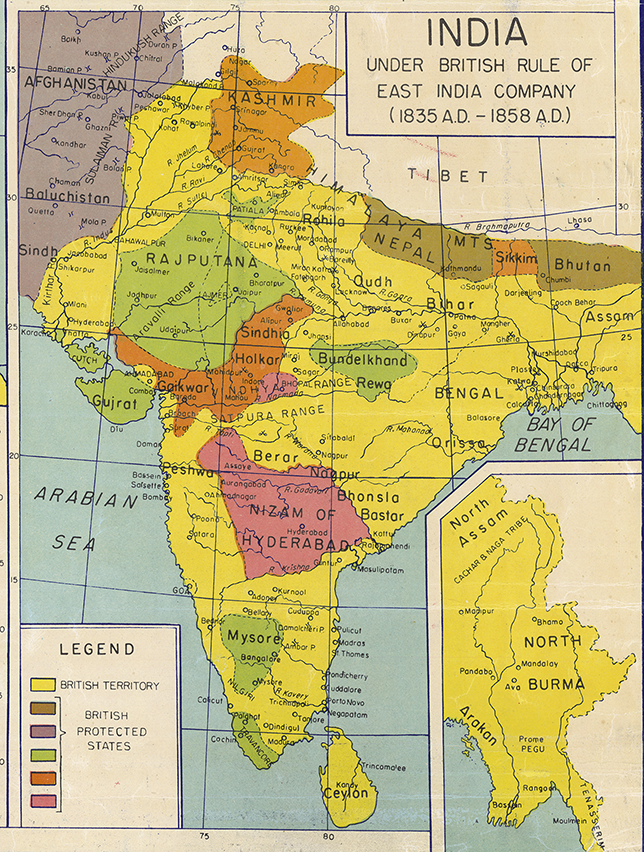
Map of India under British rule, 1833–1858.
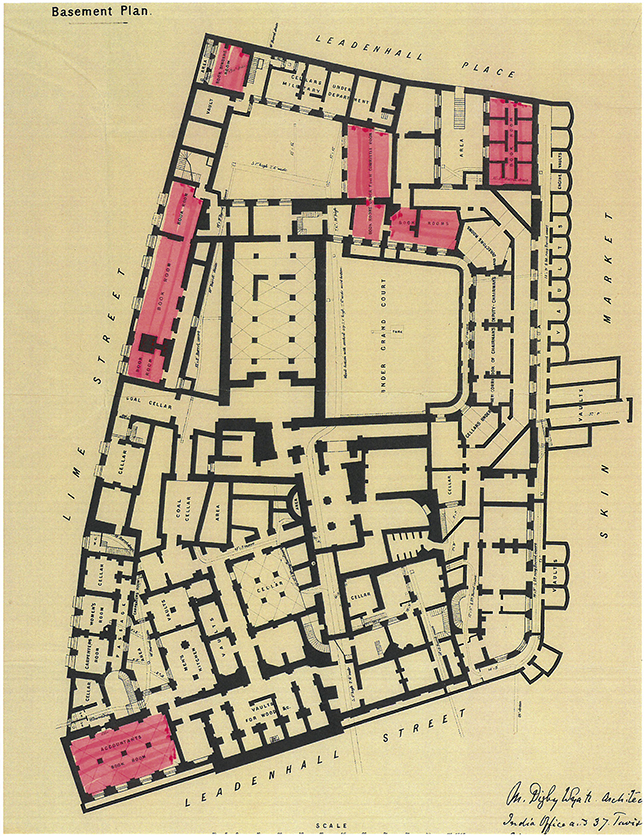
Basement floor with “Book Rooms” highlighted. In the early 1800s much of the basement of India House was used to store Madeira wine, wood, coal and other necessities. Between 1800 and 1858, more and more rooms in the basement were given over to book and record storage, accountants’ rooms and a bookbinder. At some point a “Women’s Room” was added in the southeast corner. Based on plans of the East India House produced by W. Digby Wyatt in 1860, just before its demolition. From a reproduction in Birdwood, George C. M. Relics of the Honourable East India Company: A Series of Fifty Plates. Quaritch, 1909.
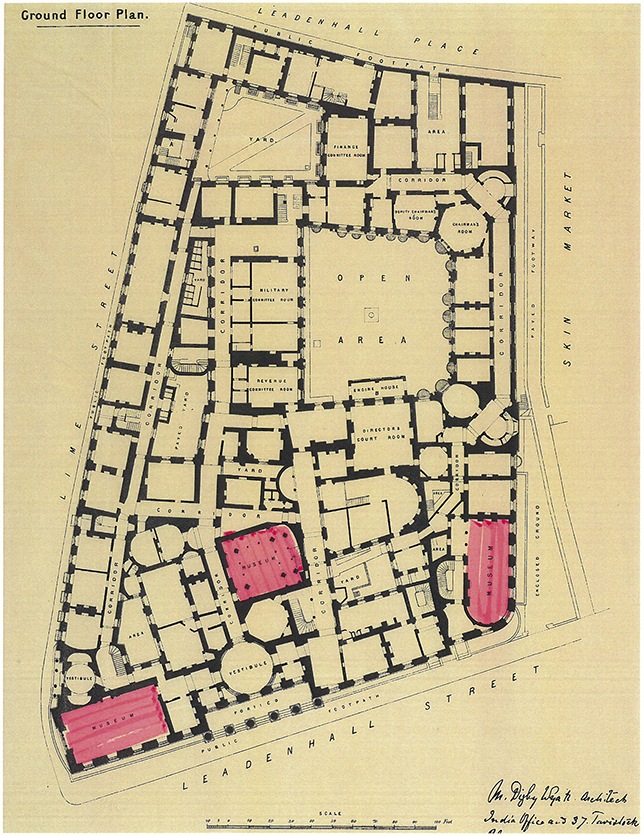
Plan of the ground floor of East India House as it was in 1860, with museum spaces highlighted. The museum has expanded to fill the large rooms in each corner along Leadenhall Street as well as the old Tea Sale Room just past the main vestibule on the right. Based on plans of the East India House produced by W. Digby Wyatt in 1860, just before its demolition. From a reproduction in Birdwood, George C. M. Relics of the Honourable East India Company: A Series of Fifty Plates. Quaritch, 1909.
Plan of the second floor. The original library and museum space from 1801 is in the bottom-left corner. By 1860, the museum and library space had expanded to both adjacent rooms as well as the old surveyor’s office down the hall and to the right, here labeled “bird room of museum.” Based on plans of the East India House produced by W. Digby Wyatt in 1860, just before its demolition. From a reproduction in Birdwood, George C. M. Relics of the Honourable East India Company: A Series of Fifty Plates. Quaritch, 1909.
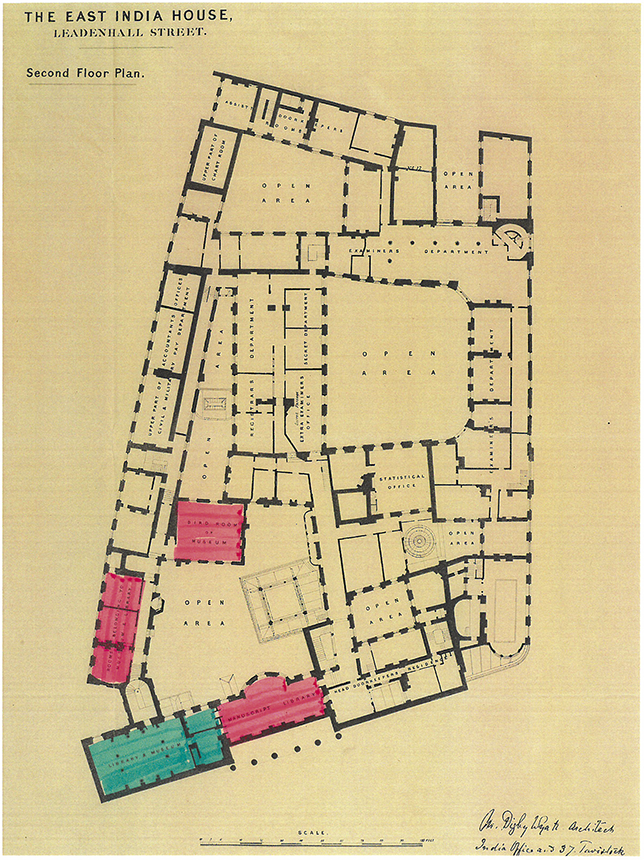
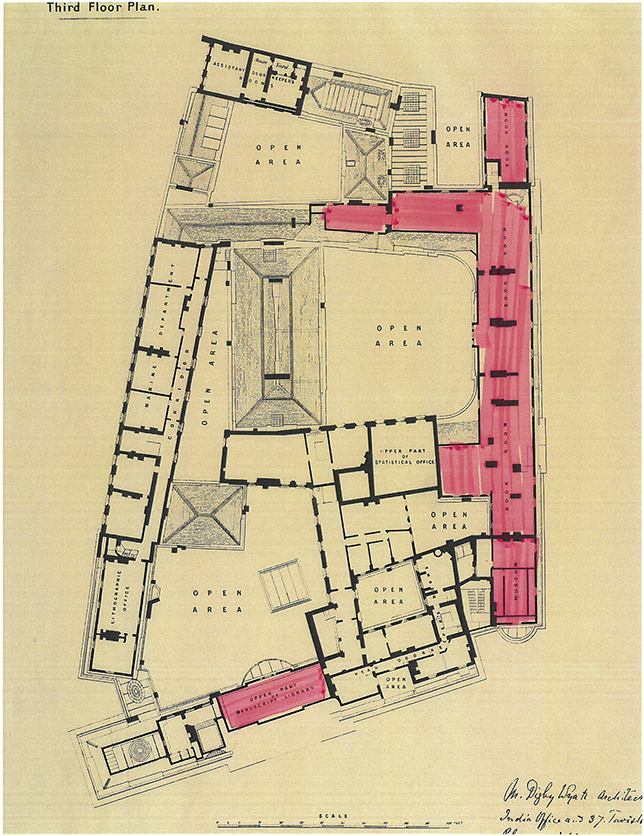
By 1860, the third floor of India House now contained more museum galleries as well as the lithographic office, the upper part of the statistical office and more “Book Rooms.” Based on plans of the East India House produced by W. Digby Wyatt in 1860, just before its demolition. From a reproduction in Birdwood, George C. M. Relics of the Honourable East India Company: A Series of Fifty Plates. Quaritch, 1909.
Napoleon had believed that Humboldt was a Prussian spy, and it is possible the directors were uncomfortable with Humboldt’s relationship with both Napoleon and the Prussian court, both of which were potential imperial rivals. But, as David Arnold notes, it was generally routine for the directors to deny access to naturalists and explorers who weren’t connected to the Company.Footnote 6 Humboldt’s great legacy makes his inability to access the Himalayas seem all the more historically significant, but his rejection is one especially striking example or illustration of how the Company’s powerful monopoly on access to India directly shaped the political economy of science in the period. In exercising their control of access to India, the directors may have been trying to, as Arnold argues, “preserve [their] commercial privileges and prevent outsiders from undermining [their] authority.”Footnote 7 But perhaps it was not so much a worry about their authority being undermined by outside explorers as it was a more basic calculation of a lost opportunity to expand their own circle of authority that drove such policies. And, given the high value, both in direct economic and indirect social and intellectual terms, of the rights to explore, collect and publish on those results, it should not be surprising that access to those resources was routinely restricted by the directors at this time.
This chapter is about the patterns of accumulation at India House after the foundation of the library-museum and during the period in which, despite changes to its charter, the Company retained control over British access to the natural and knowledge resources of Asia. The chapter begins by describing how the Company came to play a more direct role in the acquisition and management of knowledge resources for repositories in Britain. Between the opening of the library and museum and the Great Exhibition of 1851, survey collecting for the Company and private collecting by Company surveyors were primary means by which the Company’s new institutions of knowledge management were enriched. Company surveys during this period became closely tied to both military plundering and biogeographical collecting. Embedded in a series of ongoing conflicts over territory and trade, the making of these collections served as a means of further weakening rival states. Once back in London, these collections would also be crucial to the early development of the Company’s library-museum.
During the same period, Crown support for the old monopoly was beginning to wobble. The last section of this chapter considers the place of knowledge accumulation and management in the tumultuous period around the charter debate of 1813, when many of the Company’s monopoly privileges would be annulled. During these debates, a key defense of the monopoly was for the directors to present the administration at India House as the most trustworthy, authoritative source of knowledge regarding Asia in Britain, and thus the institution most suited to controlling trade and exercising governance. Within the Company, however, confidence in the Company’s grasp of knowledge about Asia was far less absolute, and after the Company’s losses in the 1813 charter, new worries about the Company’s knowledge management practices would lead to even further efforts to centralize and better organize the stores of information accumulating at India House.
Territorial Expansion and Postwar Surveys
June 2, 1802: “Three Chests containing a collection of insect shells, minerals and other objects of natural history made at Ceylon by Mr. Jonville accompanied by a memoir in French and sundry drawings. Received from the Baggage warehouse.”Footnote 8
These chests were the first substantial natural history collections to arrive at the Company’s new museum from abroad. They were also among the first acquisitions made in the context of the Napoleonic wars in Asia. “Mr. Jonville” was Joseph Marie Eudelin Mervé de Jonville, a Corsican hired by the first British governor of Ceylon, Frederick North, when the British occupation began in 1798.Footnote 9 Jonville was first employed to study the lucrative cinnamon plantations. Meanwhile, North had also instructed Jonville to “inquire into, and Collect, whatever regards the Natural philosophy, the natural history, and the meteorology of this island … likewise … the Customs, usages, history, and even languages of the Country.”Footnote 10 Jonville reported in 1800 that while he had managed to acquire “a Considerable Collection of Natural Curiosities,” including roughly 500 specimens and 800 draft drawings, his collecting had been severely limited by his not having been allowed to survey beyond the cinnamon country. Within a few months of writing to North of his desire to collect more broadly across the island, Jonville had been sent with a diplomatic expedition beyond the Company’s territory to the Court of Kandy, where he was to act as official collector, illustrator and interpreter. On returning to the British base at Colombo, he was appointed surveyor-general of the British possessions and was instructed to begin a new survey of the entire island. He began producing a steady stream of maps and reports on subjects such as rice cultivation, elephant hunting, the pearl fisheries and the different regions of the island. Along with two locals, whom Jonville identifies as Andrisaratchi and Adrian Rajapakse, he collected accounts of the religions of the island, and attempted to produce translations of Sinhalese into English.Footnote 11
Among the most prominent of the new generation of collectors were now the Company’s surveyors such as Jonville, formally employed to chart and report upon the vast new territories, simultaneously accumulating observations, measurements, manuscripts and specimens. In the first decades of the nineteenth century, the Company would initiate three different surveys of the vast central territory in India over which it had gained control after the Mysore wars, in 1798. William Lambton would begin a “general survey” using trigonometrical methods, measuring two arcs of the meridian through the Carnatic and one parallel running west from Madras. When transferred to Bengal in 1817, this project would become the root of the Great Trigonometrical Survey of India. A second survey was the geographically detailed topographical survey led by the future first surveyor-general of India, Colin Mackenzie. Colonial surveying and collecting intersect vividly in the life of Mackenzie.Footnote 12 Over the course of a thirty-eight-year career in India, Mackenzie would supervise the construction of dozens of charts and maps and lead the new All-India Survey. Again and again, Mackenzie was dispatched to follow in the wake of Company expansion of formal territorial or informal political control. He was sent to Hyderabad in the 1790s, Mysore between 1799 and 1810 and Java from 1811 to 1813. He became the surveyor-general of Madras in 1810 and then of British India in 1814, a post he held until 1821. On all of his survey assignments, he collected voraciously, usually with the help of local scholars and guides. At his death, Mackenzie had amassed arguably the most significant European collection of information on South and Southeast Asia produced before 1830. Nowhere else was there a government surveyor who was simultaneously one of the most active collectors of literature and manuscripts.Footnote 13
For the Mysore survey, Mackenzie would spend 1800–1807 in the field, during which time he was running two parallel surveys. First, there was the Company’s topographical survey, for which the Company provided assistants and sub-assistants For the Company, he regularly produced large regional maps at 4 miles to the inch, together with district maps at 2 miles to the inch plus an assortment of more detailed maps of areas of special interest.Footnote 14 He also directed some of these Company-funded assistants to pay attention to a wide range of subjects: Mackenzie’s “Hints or Heads of inquiry for Facilitating our Knowledge of the More Southerly Parts of the Deckan [Deccan], 1800” arranged sets of enquiries in different categories ranging from the geographical (modern and ancient names of towns, districts, features of landscape, rivers; local and British distances between locations) to the natural and social (population, languages, ancient and modern history, legal and land revenue systems, local diseases and medicines, “Productions of the country,” plants and animals, “minerals, fossils, ores etc.,” meteorology, arts and sciences, commerce, customs, and [perhaps the category he was most interested in himself] “books and depositories of native learning”).Footnote 15 Some assistants specialized in different areas. Benjamin Heyne, for example, focused in part on natural history. In addition to his notes and publications or “statistical tracts,” Heyne’s collection of birds arrived at the museum in 1813.Footnote 16
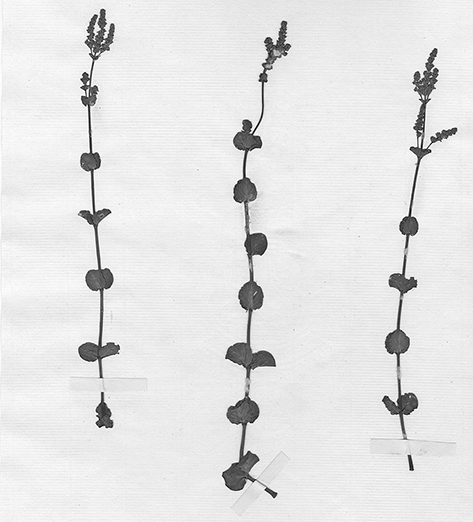
Type specimen of Rotala Rotundifolia collected by Francis Buchanan-Hamilton during his survey of Mysore in the early 1800s. Now at the Natural History Museum, London.
In tandem with this official surveying and collecting, Mackenzie was also building up a vast private collection. For much of this work, he paid for his own assistants and sub-assistants, who were trained largely by the Kavali brothers, Borayya and later Lakshmayya.Footnote 17 In practice, the surveys ran as one. As Horace Hayman Wilson, future Company librarian and an early cataloger of the Mackenzie collection, described it:
The collection of books, papers, and inscriptions went hand in hand with the survey …. In the course of his surveying operations [Mackenzie visited] … all the remarkable places …. Accompanied in his journeys by his native assistants, who were employed to take copies of all inscriptions, and obtain from the Bhramans of the temples, or learned men in the towns or villages, copies of all records in their possession or original statements of local traditions.Footnote 18
Meanwhile, yet another survey of Tipu Sultan’s former territories was commissioned by Wellesley, with the intention of providing, relatively quickly, a “statistical” (descriptive, for the purposes of the state) account of the virtually unknown territory. Some Company shareholders and directors remained skeptical of these territorial expansions. On the advice of William Roxburgh of the Calcutta Botanic Gardens, this commission went to Francis Buchanan (later Buchanan-Hamilton), a surgeon and botanist who had recently acted as botanist and surveyor on a political mission to the Kingdom of Ava (Myanmar) (and whose journal had made its way into Tipu Sultan’s library.)Footnote 19 According to Buchanan’s instructions, the “first and great object” of his survey was to describe the agriculture of the region, but the full list of the information he was tasked with collecting included not only animal and vegetable productions and modes of farming but also climate, mineralogy, manufactures and “the condition of the inhabitants.”Footnote 20 Under this last category, Buchanan was asked to collect whatever information he could about the societies he encountered: food, clothing, religion, history, law, police, custom, commerce. For virtually all categories, Buchanan was asked to pay particular attention to the opportunities for “improvement” of methods, materials and so on.Footnote 21
British occupation of Dutch Java began in 1811, after Napoleon invaded the Netherlands and the Stadtholder sought British protection of its colonies in Asia. Mackenzie was sent from Madras to lead initial reconnaissance and surveying. During the first two years of the British occupation, he would play a key role in reorganizing the administration of Dutch Java under the British lieutenant-governor Stamford Raffles. As head of a committee tasked with comprehending the state of the country, this included conducting a massive survey of the Dutch colonial archives, from which (similar to Orme’s and Dalrymple’s collecting during the British invasion of the Manila in the Seven Years’ War) copies were made and originals taken, resulting in a huge transfer of information about administration, land tenure, revenue and trade, history, natural history, and arts. This archival survey was then complemented with a series of military and topographical surveys. Mackenzie also participated in (and made valuable personal collections during) Raffles’s surprise invasion of the wealthy royal city of Yogyakarta in October 1812.Footnote 22
Mackenzie’s summary of his surveying and collecting work in Java makes clear that large sections of the Dutch archives, which included information on not only Java but also all of the Dutch possessions in the East, had been either copied or removed by the British.Footnote 23 But, as in Mysore, Mackenzie also conducted in parallel a “private” collecting expedition that targeted all kinds of Dutch and Javanese collections. Again, Mackenzie’s work was made possible by the hiring of local informants, one of whom – “an ingenious native of Java” – would return with Mackenzie to India to continue translating the Javanese materials.Footnote 24 A certain amount of coercion in obtaining access to some of the privately held collections seems to have been required:
The colonists were found willing to assist and produce their stores, and the natives were soon reconciled, even the class whose interests might be presumed to travers[e], if not oppose these enquiries. The regents and their dependents were, though at first shy, ultimately cordially assisting to the objects of investigation: and … to the last moment of stay at Batavia (18 July 1833) materials, MSS [manuscripts] and memoirs, in copy or original, with letters in reply to the questions circulated, were transmitted from the most distant parts.Footnote 25
Meanwhile, Raffles was conducting his own surveys of Java, employing the naturalist and surgeon Thomas Horsfield. Horsfield was an American doctor trained at the University of Pennsylvania who had been working for the Dutch East India Company in Java since 1801.Footnote 26 He had been employed as a surveyor and naturalist since 1804, traveling and collecting more or less continuously. In the early decades of his time in Java, he was focused on materia medica and published – mostly in the Batavian Society’s transactions – descriptions of over sixty plants with medical uses.Footnote 27 Together with the Batavian Society, he had also produced a plan for a great Hortus Medicus for the region, to be paid for by sale of the medicines. When he received funding from the government for an expedition along the northwest coast of the island, his attention was also drawn to mineralogy and geology, and to natural history more broadly, especially entomology. By the time the British took over, Horsfield had amassed a large botanical, mineralogical and zoological collection. Now under the enthusiastic patronage of Raffles, Horsfield continued his travels and collecting. A first shipment of Horsfield’s specimens arrived at India House in 1813. Raffles, meanwhile, was leading his own military expeditions to the interior, including the attack on Yogyakarta, to assert British rule. Topographical surveys and collections of archaeological and ethnographic material were gathered along the military route.Footnote 28
Although the French Empire was formally defeated in 1815, the Company remained aggressively entangled in related territorial conflicts for a decade or more. Very soon began some of the so-called little wars of the British Empire in Asia during Europe’s “long peace” of the nineteenth century. On the Indian subcontinent, British defeat of Mysore precipitated a vicious series of conflicts with the powerful Maratha Confederacy, which ended in Britain’s favor in 1818 and was followed by a survey of the Company’s new territories on the Deccan plateau. One of the largest single collections form this period was the massive set of papers, maps and specimens from William Sykes’s survey of this vast central Indian territory. After a furlough back in Britain, in 1824 Sykes returned to India and was hired as the “statistical reporter to the government of Bombay,” a new position that coincided with his survey work but which was cut from the budget in 1829.Footnote 29 Over 4,000 specimens in addition to several hundred drawings and other papers arrived at India House in 1831.Footnote 30 On the northeastern frontier, the wealthy and extensive Burmese Empire attempted to push back the Company’s expansion into northeastern India. The first Anglo-Burmese war from 1824 to 1825 was hugely costly to the British and the Burmese, in terms of both money and lives. Again, following Britain’s success, surveyors would follow and the library and museum would receive a wave of materials.
Material bought, plundered, collected and otherwise acquired in the context of Company surveys made its way back to India House in a variety of ways. Some, like Jonville’s collection from Ceylon, arrived as “gifts,” which the administration had actively encouraged its officers to produce, and for which the administration dangled the possibility of future preference or reward. This was the first material from the island to arrive in the Company collections, possibly in all of Britain. Their status as a “gift” suggests the London administration had no prior knowledge of, or claim to, the materials collected by Jonville, despite the collections having been made while North was surveying land for the Company. Jonville’s salary was likely paid by North rather than by the Company directly, and what he collected seems to thus have been treated as his own (or possibly North’s) property.
As with Orme and Dalrymple decades earlier, Mackenzie, Raffles, Horsfield and Buchanan benefited from the wartime upheaval that created favorable conditions for acquiring manuscripts and other materials. And, as in earlier years, Company servants in this period were still permitted to amass private collections. But, unlike in the days of Dalrymple and Orme, the primary purpose of these surveys was to amass information for the Company, and specifically for the collections being developed at India House. The directors now exercised much greater control over the acquisition of knowledge resources in these newly occupied territories, and encouraged it in formal and direct ways. Thus, Buchanan’s collections and drawings (and also, in the tradition of ship captains’ journals, all of his journals) were considered Company property from the moment the hired officer had acquired or produced them. By 1802, therefore, Buchanan had forwarded a seed collection to Roxburgh in Calcutta and the rest of his materials to the Company library and museum. He also produced a large collection of zoological and botanical drawings.Footnote 31 A portion of these were first claimed by Calcutta; after a tussle, the India House library-museum managed to acquire those in several shipments between 1817 and 1819.Footnote 32 But the vast majority of information collected by him sat unexamined at Madras, and by the early 1830s the Buchanan survey had developed into a scandal, as it emerged during the charter debates that the Company had spent over £30,000 on the survey to little effect. In response, in 1835, the Company took the unusual measure of sending an officer, Montgomery Martin, to India for the sole purpose of reviewing and reporting on the materials.
This would be the first of multiple cases in which the directors were accused by shareholders of egregiously neglecting expensive and valuable information resources. The cost of the collections of Colin Mackenzie also came under scrutiny. The status of a catalog and access to the collection was asked about at the Court of Proprietors on March 19, 1834, to which the directors responded that one Captain Harkness was currently employed at India House cataloging the collections.Footnote 33 Around the same time, a liberal periodical was probing the “actual situation of the Mackenzie collection, with reference to it having been rendered accessible to the public,” and suggested that the recently established Public Records Commission should investigate the status of the collection.Footnote 34 Around the same time, in 1836, the Company’s new surveyor-general of India, Thomas Best Jervis, used part of a period of leave back in London to launch a public campaign against what he saw as outdated cartographic and geographic practices at the Company. Jervis was especially critical of the Company’s lack of support back in India for printing surveys, maps and memoirs.Footnote 35 Since 1821, the Company had employed London lithographic engravers to print the Company’s principal topographical series, the Atlas of India. But the Court continued to resist establishing lithographic presses in British India, arguing that the climate was not conducive to quality printing (to which Jervis replied that the best prints in the world are produced in Italy, which has “as bright a sky and as high a temperature” as the subcontinent).Footnote 36 Thus many maps and plans produced in India remained in manuscript form, and, according to Jervis, much time and money was being wasted on making copies of these by hand.
Like Jonville, Horsfield had been employed by Raffles as a subcontracted collector and explorer, which meant the Company did not claim direct ownership of the material he collected on his surveys. The first set of Horsfield’s collections from Java thus also arrived as a “gift” (when he also sent specimens to Joseph Banks).Footnote 37 In 1813 a collection of zoological specimens, medical and botanical reports and mineralogical studies by Horsfield were gathered in Jakarta and sent on to the Company museum. Charles Wilkins described the first set of Horsfield’s specimens as “a very curious collection of stuffed Birds and Quadrupeds with a great many beautiful and rare insects … in the highest state of preservation.” Wilkins, on behalf of the Library Committee, then requested funds to purchase glazed cases so that the collections “be mounted or set up in the way usually practiced for Cabinets of Natural History.”Footnote 38 Meanwhile, news of the end of the Napoleonic wars, and the orders to return Java to Dutch control, caught Raffles and Horsfield by surprise. Raffles’s first plan was to pack everything up immediately in 1815 and return, with Horsfield in tow, to London. This didn’t happen. Horsfield and the bulk of the collections stayed, while Raffles, now removed from lieutenant-governorship amid accusations of financial impropriety in Java, was called back to England. And while it seems Horsfield did consider either remaining in Java or moving on with his collections to Holland, in the end it was the Company that gained possession of them. Horsfield was hired to be an assistant in the Company museum, then “sold” his entire collection to the East India Company by exchanging the material for a significant salary advance.Footnote 39 Some hurried plans for shipments thus commenced. He would move to London with the last of this material in 1819 in order to join the museum and begin work on publications. Raffles was relieved, writing to Banks in a letter accompanying Horsfield back to London that although “the Dutch have offered to him every possible inducement as far as money and fame would go, to join their party and send his Collections to Holland,” all such offers were refused and “his collections are securely manifested for the Port of London.”Footnote 40 Horsfield would remain working at the museum for the rest of his life, publishing its first catalogs and going on to succeed Wilkins as curator in 1836. For his own part, Raffles would soon return to Java, conduct more surveys and expeditions, and, in 1819, in his most consequential “purchase” of all, acquiring for the Company, under dubious circumstances, the island of Singapore. In 1824, Raffles was returning to London with his family and yet another even bigger haul, over 120 cases of manuscripts and other items, when, just off Bencoolen (Kota Bengkulu, Indonesia), a fire broke out on the ship. All persons were safely evacuated before the fire reached the magazines and the ship exploded.
The Charter of 1813: Company Science in Defense of the Monopoly
When the next charter renewal season began in 1812, the Company’s overall reputation was on a much more positive footing than it had been during the previous charter renewal of 1793. The generally more positive perception of the Company is all the more remarkable given how little had changed in the Company’s structure between the 1790s and 1813. Although the Board of Control now gave the government a more direct role in Company affairs, British India was still being ruled by a corporation, which was led by a board of directors and beholden to shareholders.Footnote 41 Even with the Company’s improved reputation, provincial port representatives and anti-monopoly petitioners organized a lively campaign against the dominance of the Company and of the London ports. In the years leading up to 1813, Britain’s economic order was under multiple stresses: the loss of overseas markets in the wake of the wars, high unemployment, sharply rising food prices and associated riots in towns such as Bristol and Sheffield. All of this put old trade arrangements under new pressure, since they were widely seen as maintaining artificially high import prices. Continuing to allow the Company’s control of the Asian import trade (under which, for example, auctions at India House set floor prices under which sales would not proceed) now carried heavier liabilities for the government. The expanding textile industries were particularly influential, and the government was eager to support them.
When Parliament collated a raft of complaints against the monopoly and presented them to the Company, the rhetorical force of the Company’s reply relied heavily upon two points: first, that the Company’s monopoly was a unique thing, and a political arrangement, with control over trade merely part of that arrangement; and second, that the Company’s institutional expertise regarding Asia was unrivalled, therefore the Company’s ability to govern in and trade with British India was also unrivalled.Footnote 42 It was the Committee of Correspondence, by now the committee from which many policy statements and decisions issued, that drew up the initial defense in reply to Parliament’s questions.Footnote 43 The Committee projected the Company’s authority as not only a state in terms of its current function but also a state in its epistemological position with respect to other British interests involved in the debate. The provincial port owners and merchants, as well as the would-be missionaries pushing to end the ban on evangelizing, were painted by the Committee as dangerously ignorant.Footnote 44 The critics, wrote the Committee, display “so many proofs of want of knowledge on Indian subjects” that their complaints against the monopoly and their proposals for India could not be taken seriously.Footnote 45
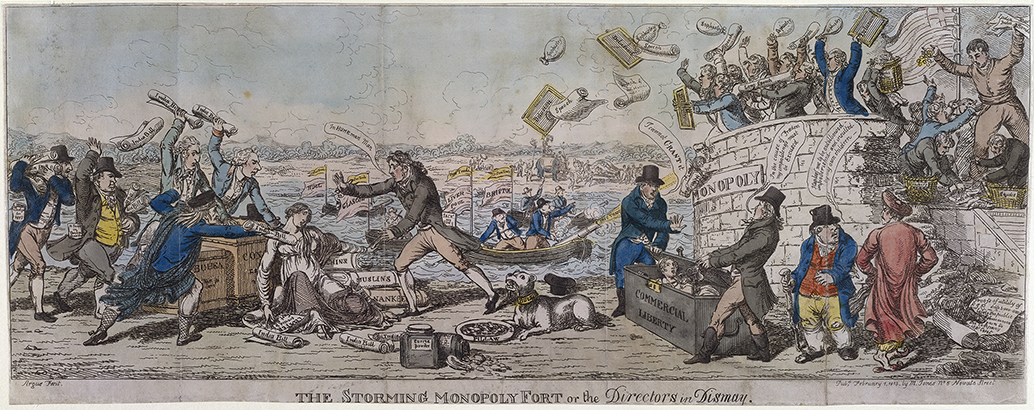
“The Storming of Monopoly Fort,” an 1813 satirical cartoon by Charles Williams, showing the Court of Directors defending “Monopoly Fort” with “long speeches,” “solipsism” and dissertations on the “utility of the EIC.” c.
In support of the monopoly, the Committee also presented its own views of India and the India trade, drawing on a particular worldview, a combination of orientalism, political economy, conjectural history and the history of the Company itself. Parts of the argument could have been pulled straight from the classrooms of Haileybury. At the Company’s new college, the students were introduced, via Malthus in particular, to Adam Smith’s The Wealth of Nations as a foundational work. But Smith’s economic arguments against trade monopolies, and his understanding of the Asia trade, were a point of controversy.Footnote 46 True understanding of the India trade was represented by the Committee as a matter of both knowledge of the culture of India and of the landscape of global trade. Such a combination, it was asserted, came only out of the institutional expertise that the Company had amassed. Scrutiny of the Company and its greatly expanded possessions now entailed ever more detailed renderings of regional history and political structures across a variety of Asian polities. Here, the Committee relied upon the survey reports of Buchanan and Mackenzie for evidence of the social and economic status of the vast new territories now under Company rule. The work of the Company orientalists was required to translate, quite literally, many of the descriptions and features of India that were now taken up as evidence for and against the monopoly. For example, for the largest and most consequential parliamentary report on the monopoly question, the so-called Fifth Report, Wilkins was tasked with producing a glossary of terms. The glossary runs to fifty-eight pages and gives definitions and etymology for, says Wilkins, “all Oriental Terms” that appear in the Report, coming not only from Persian and Arabic but also from “Sanskrit, Hindustany, Bengaly, Telinga, Tamul, Canara, Malabar … Turkish and Malay.”Footnote 47
Many critics of the Company’s monopoly were especially focused on the longstanding trade imbalance between Britain and India. British merchants were still struggling to build markets in British India. Thus, a central, and controversial, issue in the debates was to do with whether it was even possible to increase the Asian market for British exports. And at the core of this question were broad historical-philosophical speculations about the nature of “civilization” in British India, and the degree to which the region could be materially “improved.” The Company had, since the charter of 1793, been required to take on a certain minimum quantity of British exports every year, and had therefore, the Committee claimed, “in a long course of years, made numerous, persevering, costly experiments, in attempting to push the vent [i.e. sale] of British commodities.”Footnote 48 From this experience, as well as from the long history of Asian trade in general, they argued that the India trade – and the failures of British exports to succeed – was as much a fact of nature as the Indian climate itself. Quoting Montesquieu, the Committee agreed that such fixed differences as soil and climate
shall for ever fix the character of commerce …. Every nation which has traded with India has uniformly brought precious metals thither, and brought back precious goods in return. Nature herself produces this effect … India always has been, and always will be what it is now; and those who trade to India will carry money thither and bring none back.Footnote 49
That Indian culture, in the abstract, was ancient, heathen, unchanging and static was a belief shared by all sides of the monopoly debate.Footnote 50 The essence of the debate came down to whether this perceived stagnant civilization could be improved (i.e. made more like Britain), and if so, how. The Committee asserted repeatedly (and in some ways contradicting its own claims of having also effected “improvement” on the subcontinent) that Indian culture, and thus its markets, is largely unchanged and unchangeable.Footnote 51 But to the anti-monopolists, and to the aligned causes of utilitarianism and Christian evangelism, it did not follow from recent history that the Eastern trade would forever remain fossilized. This group argued that the true experiment – that of free trade – had yet to begin. Free trade would be “a substitute and a cure for all commercial evils; would open an unbounded field to British manufacturers, British capital, skill enterprise and knowledge, which would not only supply the wants of the vast population of the East but create wants where they do not exist.”Footnote 52 The anchor of these arguments was (again) Adam Smith, who had claimed in The Wealth of Nations that “the East-Indies offer a market for the manufacturers of Europe, greater and more extensive than both Europe and America put together.”Footnote 53
In response, the Committee asked, “But who should be trusted in judging what would happen … if the monopoly were ended?” Even the theory of “Dr Adam Smith” did not “anticipate any sudden burst of commerce,” and in any case Smith had very little reliable information on India: “His information respecting India was very defective, and erroneous; his prejudices against the East-India Company extreme, and his prognostics concerning the Indian government wholly mistaken.”Footnote 54 Perhaps the greatest strike against the application of Smith’s theories to the Eastern trade, continued the Committee, was the history of that trade since the publication of The Wealth of Nations nearly forty years earlier. Although “all Europe and America” had searched for “that immense market for European manufactures” that Smith said should be found in the East, none had yet been found. Furthermore, they pointed out (without any reference to the slave trade) that Britain’s trade with Africa was nearly as weak as with India and China, yet no similar monopoly existed.
But the real weight of their argument, the Committee asserted repeatedly, came from the Company’s long accumulation of experience and knowledge of India, China and the Eastern trade. The Company derived its opinion “not from any single authority [i.e. Smith] but from the broad page of history and practice.” “On the side of the merchants there is, in truth, nothing but a sanguine theory. On the side of the Company there is the experience of all the nations of Europe for three centuries; there is the testimony of ancient history; there are the climate, the nature, the usages, tastes, prejudices, religious and political institutions of the Eastern people.”Footnote 55 In concluding, the Committee painted the decision of whether to extend the Company’s monopoly as not a matter of policy but a matter of expertise and risk assessment. It asks the Crown, will it risk “such a mighty convulsion” as to put the India trade into the hands of the ignorant? Or will the free trade lobby’s “rage of theory, speculation and innovation” excite instead what it should: a “salutary fear” and a move to “stop short of the precipice” and “rest at some place, so far safe, as not to expose the whole of the empire, Indian and European, to the terrible alternative here brought to view”?Footnote 56
In the end, the Committee’s epistemological tactics for defending the monopoly were largely unsuccessful. The new charter, which would take effect in 1814, maintained the Company’s China trade monopoly and left the government of the Asian colonies in the Company’s hands. But the India and Southeast Asia trade was opened to any private ships of 350 tons and larger, and those traders were also free to enter and leave most British ports rather than being restricted to London. Within British India, though, trade and movement were generally still limited to the main Company settlements. Taken together, these provisions, although opening up trade competition, still left the Company with a significant degree of control over access to India’s natural and knowledge resources; for example, naturalists such as Humboldt would still need permission from the Court of Directors to proceed.
The fate of Haileybury College under the new charter was also initially unclear, but Malthus and others came strongly to the defense of their employer and reiterated (somewhat unconvincingly given the scandals involving student behavior) Haileybury’s goals of educating moral improvement for better governance.Footnote 57 The college was increasingly under pressure from the growing political importance of education in both domestic and colonial circles.Footnote 58 The college, mixing both elements of classical liberal education and specialized training in oriental languages and literature, sat uneasily within the growing controversy between, on the one hand, political conservatives, who broadly favored maintaining the Company’s monopoly as well as India’s traditional legal and cultural systems, along with civil servant training in Indian languages, and, on the other hand, political liberals who broadly favored abolishing the monopoly and introducing European systems of law, languages and even religion to India, as well as civil service training in European subjects. In the end, Haileybury College survived, and the Company retained control over it. However, the Board of Control gained new powers over the Company colleges in India, and the Company was now required to spend at least 1,000,000 rupees (roughly £10,000 at the time) per year on supporting education in India. In addition, the restrictions on Christian missionary activity were lifted and evangelicals were free to establish new schools and societies. This change would be immensely consequential for the future of education in British India.
The Company’s unsuccessful defense of the monopoly also had an immediate material impact on the Company’s knowledge management practices. By the end of the charter debate period, the library-museum was both growing steadily and continuously being used by different Committees within India House. The day books of the library record steady movement of maps, plans, books and other kinds of records to and from different committees within India House. Briefly reviewing the day books from April to December 1815, for example, reveals the following: the Examiner’s Office sending “maps” to the library and receiving, on June 27, the Materia Medica of Hindustan by W. Arnold (Madras, 1813); letters from the court of Persia from 1790 on August 30; and various manuscript reports, such as, on October 6, “a copy of Captain Canning’s Report of his proceedings at Acheen.” In the same period, the Secretary’s Office returned to the library plans of districts (Prince of Wales Island and George Town), bills related to the regulation of shipping, printed copies of the minutes of the Court of Directors’ meetings, and other proceedings, minutes and letters sent to the Company. In November and December 1815, the Chairman’s Office frequently requested the use of certain books about China (e.g. “Staunton’s Chinese Embassy, Barrow’s China, Milburn’s Oriental Commerce”).
But the loss of the India monopoly also further spurred a drive toward internal information organization. In the immediate aftermath of 1813, the directors and the Library Committee seemed intent on reforming how the Company managed and made use of its own archives and collections. During the negotiations over the charter renewal, Committees and the Court reported being frustrated with the state of the Company’s records.Footnote 59 Soon after, the Library Committee proposed a variety of measures that would apply throughout India House and would further centralize archiving and record-keeping. The Registrar’s historical and record-keeping duties were to be folded under the wing of the library. The “particular duties … and object” of the office of the current historiographer, John Bruce, were to be investigated.Footnote 60 The organization of the Secretary’s Office also came under scrutiny. This seems to have been part of a broader conversation over how the Company’s official history was to be generated going forward, and what role the library and the librarian would have in this. New archiving regulations for debates in the Court of Proprietors were proposed, and, most importantly, a regular publication of the debates was to be commenced.Footnote 61 The Library Committee also wanted to take control of the distribution of new publications subscribed for by the Company. All publications coming into India House were now to go through the library and be recorded in the day books. It is unclear when, or if, all the orders were formally put in place, but by 1817, in one way or another, Wilkins had taken over the role of historiographer and the library had absorbed many of the duties of the former Register Office. Along with these new roles came more clerks (including three former assistants to the historiographer) for the library staff and a doubling of the budget for the librarian’s book purchases and other costs.Footnote 62 In these ways, out of the crisis of 1813 came an even stronger institutional commitment to, and pride in, the accumulation and management of knowledge resources at India House.
Missions and Subterfuge
After 1813, with the loss of the Company’s monopoly on the India trade, the remaining monopoly on the China trade gained new importance. The directors had always had a particular focus on gathering material from China, although British access to Chinese territories was relatively limited and constrained. Since its opening, the library and museum had welcomed a small but steady stream of gifts of curiosities for the museum from China, usually opportunistic gifts, such as four paintings and three jade or stone carved landscapes, intended for Empress Josephine but found aboard a ship captured by the British.Footnote 63 Around 1800, there were very few Chinese-language books in Britain; by far the greatest collections of Chinese books and manuscripts were in France.Footnote 64 Jesuit missionaries had been able to supply France and the Vatican with materials from China, but the Company had no similar means of access. There was no chance of obtaining permission to conduct surveys or purchase books or maps for export. The directors had to rely on the initiative and subterfuge of their writers and factors. One set of documents records the interest and means by which the directors attempted to obtain material from China for India House. After having received instructions to obtain books and drawings for the Company’s library, George Staunton, the resident at Canton, replied on January 29, 1804 that
[a] Botanical Painter has been employed in capturing the plants, fruits and flowers of this Country, as they come successively in Season, and we shall continue him till all that is curious in vegetable nature shall be designed. Mr. Kerr His Majesty’s Botanical Gardener directs his employment and sends us descriptions of those already painted which go in the Earl Camden’s Packet together with Drawings of the Malacca Fruits by the same Artist.Footnote 65
These drawings, along with the first shipment of Chinese books, arrived in 1805 on the return of the Earl Camden’s first voyage. With the help of one of the resident’s Chinese interpreters, Staunton had gathered what he said were some of “the most valuable [books] in Chinese literature.” Staunton promised to continue hunting down books, noting his interpreter had provided him with a second list of valuable books to be searched out as well.Footnote 66 In reply, the directors noted one title – described as “Whu-Frou” – appeared to be missing on arrival. They also asked for books specifically on “History, Art and Manufactures” and for materials – “some Elementary Books and implements of writing” – that would be useful for teaching Chinese languages at Haileybury.Footnote 67 In reply, on February 26, 1806, the resident promised that more botanical drawings were to be sent along, and a title that Staunton thought matched the missing title had also been procured, as well as a small collection of writing instruments and “books employed by the Chinese youths.” However, Staunton also goes out of his way to stress the great difficulty of obtaining books for export:Footnote 68
It may be proper however to notice in this place that, exclusive of the difficulty there exists of obtaining such Chinese books, for their utility or curiosity may be deserving of a place in the Hon Company’s library, much embarrassment is experienced in afterwards conveying them to our Ships, as the exportation of Chinese Books is positively forbidden by the Laws and regulations inforced at this Post.
Commercial intelligence was desperately wanted, but such intelligence was often sought in what could be learned about Chinese history, languages, technology and culture. In the series of exchanges just described, a subject of particular interest to the India House orientalists became a focus of inquiry: the relationship between “Babylonian” and Chinese writing. In 1797, the directors sponsored an expedition from their residency at Bussorah (Basra, Iraq) to the ruins of a city on the Euphrates River that French scholars had identified as Babylon (Hillah, south of Baghdad). The aim of the expedition was to collect and send on to India House inscriptions rumored to have been discovered in the ruins.Footnote 69 In 1800, nine large bricks containing inscriptions arrived at India House, the first “Babylonian” inscriptions in England, and became some of the first items displayed in the Company’s library-museum. The directors also distributed some of the smaller stones, including one to the British Museum and one to Banks.Footnote 70 French antiquaries had speculated that “Babylonian” was a form of Chinese, and it was on this question that the directors requested input from French missionaries. A copy of the inscriptions had been sent out to a missionary informant a few years earlier, and a short reply was passed on, only noting that he promised to study the question. However, as Staunton noted in reply, the Chinese authorities had recently severely tightened the rules of communication and movement for Christian missionaries on the mainland, and he did not have hope of hearing any more from his source.
The closure of British access to the missionary network also made it difficult for Staunton to provide any new intelligence on the directors’ final questions: “the date and origin of printed maps of China purchased by the Company [and] whether engraving and printing from metal plates is practiced in China.” In answer, Staunton apologized that “The reasons stated in the last paragraph will account for the delay and difficulty we shall unavoidably experience in endeavoring to satisfy your Hon Court’s enquiries on this subject.” He thus could only speculate that “we are inclined to believe that the art of engraving and printing from metal plates is well known and occasionally practiced in China, in confirmation of which opinion we may add that several Chinese Books have been shown us, for the Printing of which it is affirmed metal types had been employed.”
Eventually, a set of nearly 500 highly detailed botanical illustrations were deposited at India House, each with names in Chinese characters and English transliterations, some with Linnaean classifications.Footnote 71 A large collection of detailed paintings of over fifty Chinese ships drawn from the Canton harbor and its environs were also sent at around the same time. In addition, a set of large and very ornately carved silk lanterns were sent to the library and museum, where they hung in the main rooms for decades.Footnote 72 Other miscellany collected in the first decades included the “last will and testament” of an emperor;Footnote 73 “a commercial vocabulary in Chinese;Footnote 74 an ingot of silver;Footnote 75 the cap of a Mandarin; and the “shoe of a Chinese lady.” As for books, a catalog of Chinese books in the Company library from sometime after 1816 lists eighty-six works, many in multiple volumes, and usually many copies of each title. The collection included many of the books that would be identified as important by the administrator and explorer (and future secretary of the Admiralty) John Barrow, who had accompanied Staunton on a diplomatic mission to Peking, in his Travels to China (1804).Footnote 76 In particular, the works of Confucius were collected in many different editions, including the “nine king [ching] or sacred classics” (or the “four books and five classics”) forming a standard canon of Confucius, the I-Ching, a 134-volume encyclopedia from 1710 (abridged from a 6,000-volume work), and other works on subjects ranging from language, literature and poetry to astronomy, medicine, geography, law, mathematics and history.Footnote 77
The Company establishments in Canton and Macao continued to secrete out books and seek expertise in Chinese languages and culture. The directors also supported a dictionary project, with a printing press set up in Macao, where the Company for a time had more leeway to gather and transmit information, and where early editions of Morrison’s Chinese Dictionary were printed.Footnote 78 In the early 1830s, John Reeves sent a collection of natural history specimens from Macao as well.Footnote 79 In 1815 when another embassy to China was sent, led by William Pitt Amherst, the Company arranged for a naturalist (Clarke Abel, on the recommendation of Joseph Banks) to “get plants for the museum.” The delegation was refused a meeting with the emperor, and though collections apparently were made, they were lost when a returning ship sank.Footnote 80 In roughly the same period, the Company also had allowed (though given little material support to) an Englishman, Thomas Manning, to travel to the interior and all the way to Lhasa.Footnote 81 In these ways over the first thirty years, the Company’s library and museum slowly built up what would be, by then, Britain’s largest collection of books, manuscripts, articles and specimens from China. But, as it would turn out, these collections would be dwarfed by those that would be made once Britain went to war with China in the 1840s and 1860s.
The directors were also keen to acquire information and materials from the neighboring kingdoms and states beyond the Company’s control. The Company’s trade eastward of India across the Bay of Bengal and on to China was of critical importance. Of particular interest were China’s cosmopolitan trading partners in Southeast Asia: Ava (Upper Burma [Myanmar]), Siam (Thailand) and Cochinchina (southern Vietnam). In these regions, the Company was in a very different situation than on the Indian subcontinent. Here, the Company was not yet a territorial power, and the information order was quite different. A mission to Siam and Hué during 1820–1821 was entirely unsuccessful in gaining trading concessions or relations with these states, but did result in new material being sent back to the museum: George Finlayson, a naturalist assigned to the mission, sent back mammals, birds, fish, reptiles and fossils collected.Footnote 82 Much more material was captured and brought back to Britain during the first Anglo-Burmese war of 1824–1826. Much of this ended up, through the prize agent process, in private hands. But many precious manuscripts, natural history collections and works of art were also separated out to be sent to the Company’s library and museum.Footnote 83 And the directors hired at least one covert collector moving beyond Company territory: in 1835, for example, the directors hired as a “news-agent” Charles Masson, who had deserted the Company’s army in the 1820s and had since traveled extensively in Afghanistan collecting information, artifacts and especially a vast collection of ancient coins, now in the British Museum. Masson was granted clemency and a small pension in exchange for the collections he had gathered in Afghanistan.Footnote 84
1799: Last Anglo-Mysore War: East India Company (EIC) gains large parts of southern India 1802: Eudelin de Jonville: A series of Insects from Ceylon, chiefly Lepidpotera, presented to the Indian Government on the transfer of Ceylon to the British Crown; A series of Drawings of Birds from Ceylon; Zoological specimens from Ceylon, chiefly Insects and Shells; with Drawings and descriptions 1803–5: Second Anglo-Maratha War: EIC gains small regions of central India and Gujarat 1804: Claude Russell, esq. Indian Serpents 1808: John Fleming, Esq. – Drawings of Birds 1808: The King of Tanjore’s collection of drawings of mammals and birds 1808: Francis (Buchanan) Hamilton, M.D. Drawings of Mammalia, Birds and Tortoises from “Continental India.” [Collections from the survey of Mysore] 1812: The King of Tanjore. Drawings of Mammalia and Birds from Southern India. Presented by John Torin, Esq. 1817–8: Last Anglo-Mahratta War: EIC gains large parts of central India 1817: Francis (Buchanan) Hamilton, M.D. Drawings of Mammalia and Birds. [Collections from the survey of Mysore] 1819: Francis (Buchanan) Hamilton, M.D. [Collections from the survey of Mysore]; Drawings of Mammalia, Birds, and Reptiles 1831: Colonel W. H. Sykes. The Collection of Natural History made during the Statistical Survey of the Dukhun [Deccan], consisting of specimens and descriptions of Mammalia, Birds, Fishes, Reptiles and Insects 1850: Colonel W.H. Sykes. A Collection of Reptiles, Insects, Mollusca, and miscellaneous Zoological specimens from the Dukhun [Deccan], preserved in spirit 1811: EIC Invasion and Occupation of Dutch Java 1812: Richard Parry, Esq. Drawings of Mammalia and Birds from Sumatra 1812: Thomas Horsfield, M.D. Collections of Mammalia, Birds, Insects, Fishes, Reptiles ] from Java “during the possession of that island by Britain” consisting of “a large series of Insects of all Orders; A large Collection of preserved Birds from Java, with Drawings” 1813: Thomas Stamford Raffles, Lieutenant-Governor of Java- Specimens of Mammalia, preserved Birds and Insects from Java: Horsfield’s Collection 1817: Thomas S. Raffles. Mammalia and preserved Birds from Java: Horsfield’s Collection 1819: Thomas Horsfield, M.D. Collections of Mammalia, Birds, Insects, Fishes, Reptiles from Java consisting of “a large series of Insects of all Orders; A large Collection of preserved Birds from Java, with Drawings” 1820: Sir Thomas Stamford Raffles, Lieutenant-Governor of Fort Marlborough-A collection of Mammalia, Birds and Reptiles from Sumatra 1821: Sir Thomas Stamford Raffles, Drawings of Mammalia and Birds from Sumatra 1823: George Finlayson, Esq. Surgeon and Naturalist to the Mission of John Crawfurd Esq., to Siam & Hué, the capital of Cochinchina. Collection of Mammalia preserved Birds, Fishes, Reptiles and Osteological Specimens made during the Mission. 1824–1826: First Anglo-Burmese War: EIC Gains Large Territories from the Burmese Empire Including Parts of Assam and Manipur (Now in Eastern India) and Arakan (Rakhine) and Tenasserim (Tanintharyi) (Now in Myanmar) 1833: John Reeves, Esq. A Collection of preserved Birds from China, with specimens of Edible Birds’-nests. (Macao) 1840: John William Helfer, M.D. A Collection of Mammalia and Birds from the Coast of Tenasserim. (Burma) 1840–1842: First Opium War: EIC Extends Trade into Southeast Asia and China 1842: Bengal Government – in three shipments: The Entomological Collections made in Chusan, Canton &c. by Theodore Cantor, M.D., acting as Naturalist during the Chinese Expedition; Mollusca and other subjects of Natural History collected at Chusan, Canton &c.; Crustacea from Singapore and the China Sea 1849: Lieut. James W. J. Taylor: Collection of Shells from Singapore and the Indian Archipelago 1854–5: Second Anglo-Burmese War: EIC gains large territories from the Burmese Empire Including Pegu 1854: Theodore Cantor, M.D. – A large Collection of Birds, from Penang and the Indian Archipelago 1814–1816: Anglo-Nepalese War (Gurkha War): EIC gains portions of Nepal and Sikkim 1827: Capt J. D. Herbert. Birds collected during his Geological Survey of the Himalayan Mountains 1832: Nathaniel Wallich, M.D. Skins of Mammals and Birds from Nepal 1837: John McClelland, Esq. Member of the Deputation to Assam for the purpose of investigating the Culture of the Tea Plant. Specimens of Mammalia, Birds and other subjects of Natural History, with drawings and descriptions 1840: Major R Boileau Pemberton. Specimens of Mammalia, Birds, and Insects collected during his Mission to Bootan [Bhutan] in 1837–8 1841: J.T. Pearson Esq.: A collection of Insects from Darjeeling 1841: C.W. Smith, Esq.: A collection of Insects from Chittagong 1842: Ganges Canal Project begins: EIC builds new infrastructure 1843: Hugh Falconer, M.D. [Ganges Canal Project], collection of birds from Northern India. [Large collection of fossils from the Siwalik Hills of Northern India] 1845–1846: First Anglo-Sikh War; EIC Gains Large New Northern Territory 1845: B. H. Hodgson, Esq. A large Collection of Birds from Nepal 1845: B. H. Hodgson, Esq. assistant to the British Resident in Nepal. A large Collection of Mammalia and Birds from Nepal and Tibet 1848: B. H. Hodgson, Esq. Mammalia and Fossils from Sikkim and Darjeeling; Several Birds from Sikkim and Darjeeling 1849: Colonel F. Buckley. A large Collection of Insects in all orders from the Himalayas 1850: Captain Richard Strachey. A large Collection of Mammalia and Birds from Ladakh and Kumaon [Large collection from Tibetan Boundary Commission.] 1854: Captain R.C. Tytler, Bengal Army. Several Specimens of Birds from Dacca 1839–1842: First Anglo-Afghan War 1842: The Bengal Government – Mammalia and Birds collected by William Griffith, Esq. during the Expedition to Afghanistan 1843: The Bombay Government – The Collection of Birds made during the mission of Capt. W C Harris to the Court of Shoa, Abyssinia 1846: Colonel W. H. Sykes. Specimens of Black and other Corals from the Persian Gulf 1851: The Bombay Government – Specimens of the Zoology of Mesopotamia, received from Commander Jones of the Indian Navy, consisting of Birds, Reptiles in spirit, and a few Mammalia and Fishes 1824: Lieut-General Thomas Hardwicke. A Collection of Birds, Mammalia and miscellaneous Zoological Specimens 1829: Madras Government: A Collection of Mammalia, Birds and Insects made by the Company’s Naturalist at Fort St. George 1832: John George Children, Esq. Specimens of Insects 1833: Madras Government: The Zoological Collections made by the late A. T. Christie, M.D., consisting of specimens in all classes of Zoology 1837: Mrs. Impey – Indian Reptiles in spirit 1841: Asiatic Society of Bengal. A collection of Mammalia, preserved Birds and Insects 1841 & 1843 : John McClelland, Esq. Specimens of Mammalia, Birds, and Insects 1842: J. T. Pearson, Esq. - Specimens of Mammalia and Birds 1843: William Griffith, Esq. Specimens of Mammalia, Birds, Fishes and Reptiles 1844: Asiatic Society of Bengal. A large Collection of Mammalia and Birds, with smaller Collections of Fishes, Reptiles and Insects, received by several separate dispatches 1845: Matthew Lovell, Esq., Bengal Medical Service. Several Birds 1845: J Bax, Esq. through Colonel Barnwell. A Collection of Birds 1846: Asiatic Society of Bengal. Large Collections of Birds, received by several separate dispatches 1847: Asiatic Society of Bengal. A Collection of Mammalia, Birds and Crustacea 1849: Ezra T. Downes, Esq. Deputy Assay Master, Bombay Mint. Large Collections of Coelopterous and Hymenopterous Insects 1851: The Bombay Government: Specimens of Birds, received from Commander Jones of the Indian Navy 1851: W. E. Wood, Esq, Hon E.I.C. Medical Service. A specimen of the Adjutant or Gigantic Crane
The South and Interior of the Indian Subcontinent
Eastern Frontiers: Southeast Asia and East Asia
Northern Frontiers
Western Frontiers
Geography unlisted/Mixed collections
Rangoon Relics for a Racquet-Ball Court
In the mid 1850s, Company garrisons were settling into occupation of the royal city of Rangoon (Yangon, Myanmar) after the Company prevailed in the second Burmese war of 1852–1853 and annexed Pegu and Lower Burma into what would be called “British Burma.” Parts of the city were being razed to make space for barracks. One commander reported back to Madras that, during leveling of one of the temple sites in the Eastern Heights district, a large quantity of treasure had been unearthed.Footnote 86 The contents included gold pagodas, a bejeweled gold helmet and belt, gold-leaf manuscripts and “one gold bowl, with cover, containing a lot of charred human bones.”Footnote 87 Brigadier Commander C. Russell forwarded a translation of the scroll but nothing else, requesting instead that his garrison be allowed to sell the grave-robbed items in order to pay for local improvements, partly waterworks but also, most especially, he hoped that “the proceeds [could] be appropriated for the erection of a theatre for the amusement of the European soldiers … [and] for a Racket court for the officers.”Footnote 88
As British building and development projects expanded in the colonies, construction, and especially the frequent practice of leveling sites where old structures or burial mounds had been, now often unearthed such treasures. Coins and other antiquities were continuously being discovered in the colonies as more and more roads and canals were built, towns expanded, forests cleared and fields turned over. Buried treasure, for example, was increasingly subjected to a growing set of regulations. When a find came to the attention of the authorities, tax collectors, antiquaries and, increasingly, archaeologists often clashed with landowners over the rights of ownership of the treasure. Complicating things was the fact that all across the subcontinent, it was not uncommon for families to keep family heirlooms and treasures buried for safekeeping. An 1822 law detailing the rights to finders of a treasure trove required government to pay the finder half the value of the treasure. But this law did not distinguish between “hidden treasure” deposited by residents or their ancestors and a “treasure trove” deposited by unrelated people.Footnote 89 In 1851, the case of fifteen gold coins uncovered in a field in Kandesh (in northern Maharashtra) by one Patel seems to have forced a revision of that law to distinguish cases where owners or relatives of owners of buried treasure are present. Patel had produced evidence that there was “traditional information on his ancestors having buried some treasure in this field” and had obtained permission from an assistant magistrate to search for it. After the search, Patel reported that three pieces of gold had been found, but the magistrate suspected that more treasure had been found than reported, and conducted his own search, finding thirteen more gold coins. Although the laws of treasure also stipulated that finders’ fees would be forfeited if unreported treasure were found, Patel was paid in this case.Footnote 90 In another case from Benares in 1851, a man identified as “Bulijore Sing” discovered “a lot of old gold coins … while digging in or near his house.” Sing reported this to the local police, but only after more than five months. The delay almost caused him to lose out on any payout, but the deputy commissioner in Benares judged
that it would be politic for Govt to waive its right to the Treasure …. By doing so the people would acquire confidence and in the event of any coins or valuables turning up they would be inclined to come forward … curious relics of antiquity would thus be brought to light instead of their being melted down by the finders.Footnote 91
In this case, the finder was allowed to keep half the coins, and the rest went first to the hands of Major M. Kittoe, “Archaeological Enquirer,” who produced a study and a chronological ordering of the coins, noting “many of the coins in this valuable collection appear to be new, at least they are not described by [James] Prinsep in his records in the JAS [Journal of the Asiatic Society of Bengal].” The coins were then sent to Calcutta, to the Asiatic Society of Bengal for inspection and exhibition, and only then were they sent on to the museum at India House.Footnote 92
For the officer in Rangoon wanting a theater and ball court, the cultural and scientific significance of such treasure was entirely commonplace; the finds represented nothing more than a potential increase in the garrison budget. Having conscientiously had the scroll translated – perhaps presuming the information was, to the orientalists and administrators, the most valuable part of the find – he hoped to be able to convert the objects into cash. But the request to sell the items was not approved, and they made their way – like so many cultural and scientific resources – first to Calcutta and then, by 1856, to the India House museum.
The 1830s were a rare decade without territorial wars, so there were no new surveys or wartime collecting expeditions. Still, the wars of the 1810s and 1820s continued to be a major force shaping the India House collection. The first Anglo-Burmese war of 1824–1826 ended with Company gains from the Burmese Empire all along the northeastern coast of the Bay of Bengal, including parts of Assam and Manipur (now in eastern India), Arakan (Rakhine) and Tenasserim (Tanintharyi, now in Myanmar). During the lull up to the first Anglo-Afghan war of 1839–1842, much of the material arriving at India House came from the northern edge of the Company’s territories: birds from the Himalayas in 1827 (sent by J. D. Herbert, Geological Survey of the Himalayan Mountains); mammals and birds from Nepal in 1832 (sent by Wallich); mammals, birds, insects and drawings from Assam in 1837 (sent by John McClelland, collected during a deputation to Assam to investigate the culture of tea); and mammals and birds from Tenasserim in 1840 (sent by John William Helfer). Also in 1840 mammals, birds and insects arrived from Bhutan (again sent by John William Helfer, collected during a mission to Bhutan of 1837), as well as insects from Darjeeling (sent by J. T. Pearson) and Chittagong (sent by C. W. Smith) in 1841.Footnote 93 Birds, fish, reptiles and fossils from Siam and Cochinchina collected in 1823, and from farther east arrived rare and valuable edible bird nests and birds collected from Macao in.
Company wars came roaring back at the end of the 1830s, with renewed imperialist policies pushing aggressive dominance of trade with China and increasingly focusing on the security of the northern borders and the Russian Empire. By this time, the directors (or likely the India House curators via the directors) had secured funds to embed naturalists and collectors within the moving armies. By 1840 it would not be uncommon for specific instructions from the museum to be sent out to officers on campaigns. For example, a memorandum attached to the Tibetan Boundary Commission stressed “the importance which Government attach to the labours of the scientific department of this Mission” and listed “a few points which have an immediate reference to the interest of the Museum of Natural History in this House,” asking for several dozen specific mammals to be collected.Footnote 94 The disastrous attempt to expand into Afghanistan (the first Anglo-Afghan wars of 1839–1840) carried with it the surgeon and naturalist William Griffith. Griffith had been assigned to the Army of the Indus “in a scientific capacity” and was primarily situated among the engineering corps in advance parties.Footnote 95 Griffith was thus granted rare access to areas of great interest to British administrators and naturalists alike. But it was also deemed too dangerous to go on collecting expeditions any distance from camp, making the actual work of collecting very difficult. Ultimately, Griffith would rely on a series of intermediaries, hiring out the work of collecting to locals and purchasing specimens from camp followers. Lachlan Fleetwood records at least twenty assistants hired by Griffith.Footnote 96 Many of Griffith’s looted collections were lost, stolen or damaged (especially by camel transport), but his report and fourteen cases of specimens made it back to Calcutta and were sent on to India House in 1841. Griffith had hoped to return to London and to analyze his collections and publish the results. He had written to William Hooker at Kew Gardens that “my aim has been to amass materials for further study … when a residence in Europe may enable me to avail myself of its splendid libraries and herbaria.”Footnote 97 Yet Griffith never returned to Britain (he died in Malacca four years later). His Afghanistan collections, made at considerable cost to the Company, were, as Horsfield made clear, “bona fide the property of Government.” Griffith had distributed other collections to individuals, but he had claimed these were “collections made away from the country in which I am employed by the Government …. Govt has been so extremely liberal to me that I should feel ashamed if people supposed I would dispose of any part of Govt collections on my own authority.”Footnote 98
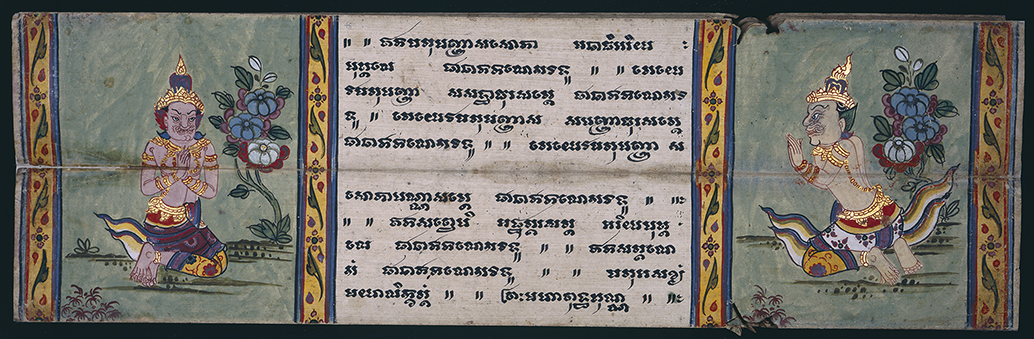
Extracts from “Sutta Pitaka” (“Basket of Discourse”), a canonical collection of Buddhist texts, written in Pali, the language of Theravada Buddhism practiced in much of Southeast Asia. Acquired in 1824 during the first Anglo-Burmese war. Now at the British Library (IO Pali 207, folio f.48).
Some of the zoological material went on display soon after arrival. It was also cataloged by Horsfield. However, the largest collection – Griffith’s botanical collection – remained in the basement of India House, unopened for decades. The remaining papers in Calcutta, including maps and drawings, were eventually collected, edited and published by another surgeon-naturalist, John McClelland. Ironically, McClelland’s justification for publishing the papers before sending them back to India House was exactly because of the acceleration of accumulation of Company science, an acceleration he believed the curators were not fit to handle: “the labours of the greatest Botanist that ever to set foot in India will be lost, perhaps for ever, swamped amidst the accumulated records of hundreds of men that are daily being added to their stores.”Footnote 99
The invasion of Afghanistan was an attempt to secure the far western borders of Company territory. At nearly the same time, the Company also pushed a trading dispute into military action at the far eastern edge of its range. During the first opium wars of 1840–1842, in which the Company sought to protect its trade, and especially the ability to supply opium to China, the Company also assigned a surgeon-naturalist to collect along with the campaign. Theodore Cantor, a nephew of Nathaniel Wallich, and a future collaborator with Horsfield on cataloging work at India House, went to India in 1835 and was hired in 1837 as surgeon attached to the Bombay Marine Survey (where he made a collection of fishes of the Ganges, sent on to India House). He was then sent to China with a Company regiment in 1840. Like Griffith, Cantor was instructed to collect for the government, meaning India House.Footnote 100 Also like Griffith, Cantor paid all expenses himself on the expectation that he would be reimbursed by the directors. Writing to Horsfield from Calcutta on April 20, 1841, he complains: “somehow or other I never received any assistance from Govt except a small quantity of spirits of wine [for specimen preservation], and even that rather late in the day. In a late letter from Govt, I am told they will pay the expenses I have actually incurred, leaving all other renumeration to the decision of the Court of Directors.”Footnote 101
In addition to having to put up his own money for supplies, Cantor would have taken a pay cut to go on “detached” duty as an assistant surgeon. He became ill at the end of the short collecting season (“nothing can be done at Chusan from the middle of October till the commencement of May”) and sent his collections and drawings on to Horsfield, asking that he or “Mr. Hope” (Fredrick William Hope, clergyman, zoologist and first professor of zoology at the University of Oxford) would “do me that favor” and publish a summary and description of the collection in the Transactions of the Entomological Society. “What I wish beyond all things is to have a general conspectus of the Entomology of Central China like that Hope has given of the Himalayah in Royle’s work.”Footnote 102 A complete series of the substantial collections and drawings was then forwarded to India House. The cataloging and publication preparation work was, as we will see was so often the case, taken up by a collective. William Griffith worked on the plants, Fredrick William Hope on the insects, Edward Blyth on the birds and William Benson on the mollusks. It was eventually published, at great expense and with color plates, by the Asiatic Society of Bengal.Footnote 103
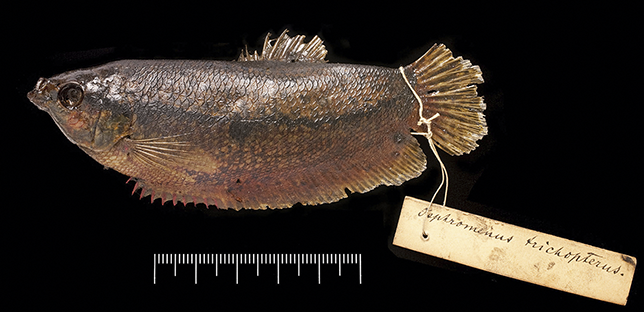
A holotype specimen of Osphromenus trichopterus cantoris, a freshwater fish, collected for the Company’s museum by Theodore Cantor in Penang in 1840. Now in the Natural History Museum, London.
In 1842, Cantor was assigned as a civil surgeon to Prince of Wales Island (Penang), where he was also expected to continue his natural history collecting. Here he was handed the management of five hospitals in addition to a new sanitation department. Still, he sent onward to India House nineteen cases of specimens, containing 11,024 specimens collected during three years of service, including “specimens of edible birds’ nests” of the “best kind,” costing, he says, £300, and, in Case 12, a rare deposit of human remains: “Human Skulls … murderers executed at Pinang December 21, 1843.”Footnote 104 After a short stint as garrison assistant surgeon at Fort William, in 1848 he was sent back to war, this time to Ferozepur during the first Anglo-Sikh wars. He continued to send large collections back to India House until well into the 1850s.Footnote 105
*
The territorial and trading expansion that followed the Napoleonic wars in Asia would result in another great influx of knowledge resources at India House. After an initial wave of wartime plunder such as that from the siege of Seringapatam, there would come more collections that now were the result of Company-led surveys and expeditions into newly acquired territory. The plunder-led phase of wartime collecting – where plunder would be gathered by the prize officers, sold at auction and only then were the proceeds distributed – was now followed by a much more organized and official form of collecting. The result was that even as collections were also growing all across Asia, such as those at the Calcutta Botanical Gardens, the cultural and scientific capital held at India House grew at an even faster pace during the Napoleonic wars and in the “little wars” of border aggression that followed.Footnote 106
War-backed territorial expansion was critical to the growth of Company science in Britain. In addition to material accumulation in the context of war, areas beyond the Company’s formal control were also targets of Company collecting, although, as we have seen, different means had to be employed in these regions. Consequently, as the next chapter will argue, the Company’s missions and attempts at territorial expansion also becomes a driver of the changing material culture and practices of the historical and natural sciences in Britain in this period. Margot Finn has explored this connection with clarity, arguing that “colonial loot and military booty … played an active role in inciting historical practice in nineteenth-century Britain.”Footnote 107 Before 1800, semi-sanctioned practices of individual looting, collecting and personal enrichment were the norm. Such norms were beginning to change during and after the Napoleonic wars.Footnote 108 By 1855, the regulation of material designated “treasure” in formal terms had been replaced by a set of regulations and policies ostensibly meant to ensure that treasure became the property of British India. But even after such laws were in place, and after wartime looting had generally come to be seen as unethical in Europe, even more material flowed into Europe.Footnote 109 In no small part due to the growing pull of the library and museum at India House as a center of Company science, “national” treasure unearthed in the colonies, and often the most valuable and rare items, made their way back to India House to be eventually merged into Britain’s state museums.
We have seen how the establishment of the Company’s new library, museum and colleges was accompanied in the first decades by two related developments in the accumulation and management of knowledge resources at India House: internally, attempts at improving the organization and use of the materials, and, externally, projecting the Company as an institutionalized authority on knowledge of Asia. It is tempting to interpret these developments as yet another step in the Company’s move toward becoming – or trying to appear to become – more state-like by adopting a state-like position of epistemological authority regarding Asia. This might be true were it not for the fact that, at the time, British offices of state were only just beginning to articulate and act upon those ideas themselves. It might be more accurate to interpret the Company, Parliament and Crown offices all undergoing in this period, at the level of information accumulation and management, a similar set of changes.Footnote 110
However, within the next several decades, as political pressures put new stresses on the old form of the Company, part of these debates would turn attention to the India House repository and the Company’s knowledge monopoly. In the aftermath of the loss of the India monopoly, within India House, an increasingly urgent concern for better institutional self-knowledge now joined the ever-present worries over the limitations of the Company’s understanding of the land and people under its domain. As Bowen has shown, there was also plenty of skepticism of the Company’s system of conducting all business in writing and its ever-growing mass of documents at India House, and a persistent worry about the usefulness and quality of the information being accumulated. For example, some members of the Board of Control complained that most of the Company’s correspondence tended to cover matters “that were extremely obvious and almost trifling.” In 1823, Thomas Munro, former governor of Madras, called the archives and India House “a mass of useless trash.”Footnote 111 Munro’s larger point was to stress the limitations of knowledge gained through the written word when compared to understanding that comes with direct experience. With its specimens, samples, manuscripts and works of art, the library and museum contained a different kind of record of India, meaning, at the very least, that the directors did not have to rely “solely on the written word.”Footnote 112 As we will see in the next few chapters, however, the debate over experience versus the archives only became more intense in subsequent decades. Furthermore, as the Company’s relationship to the state further changed, and as new commercial and trading interests took hold, the discourse related to the utility of the library and museum – what it was for and whose interests it should serve – would also begin to change.
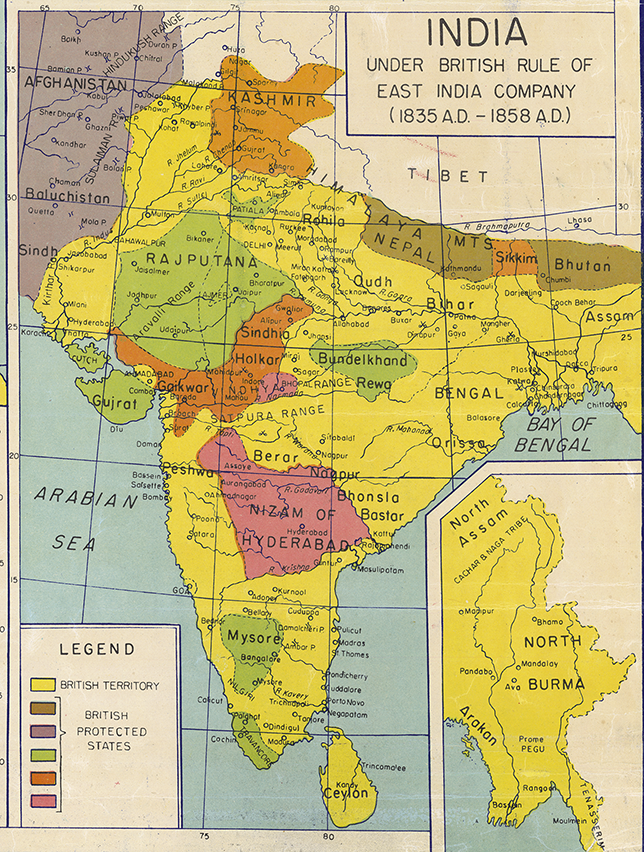
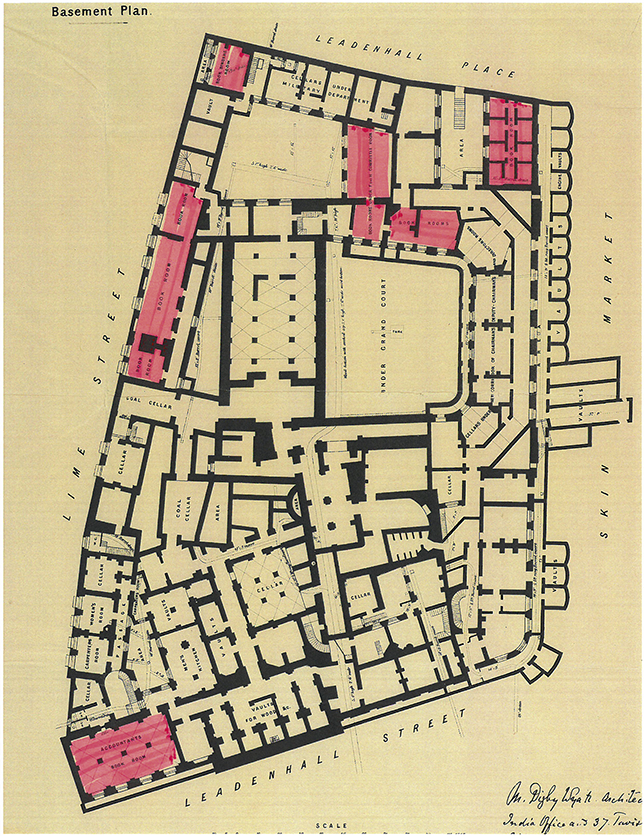
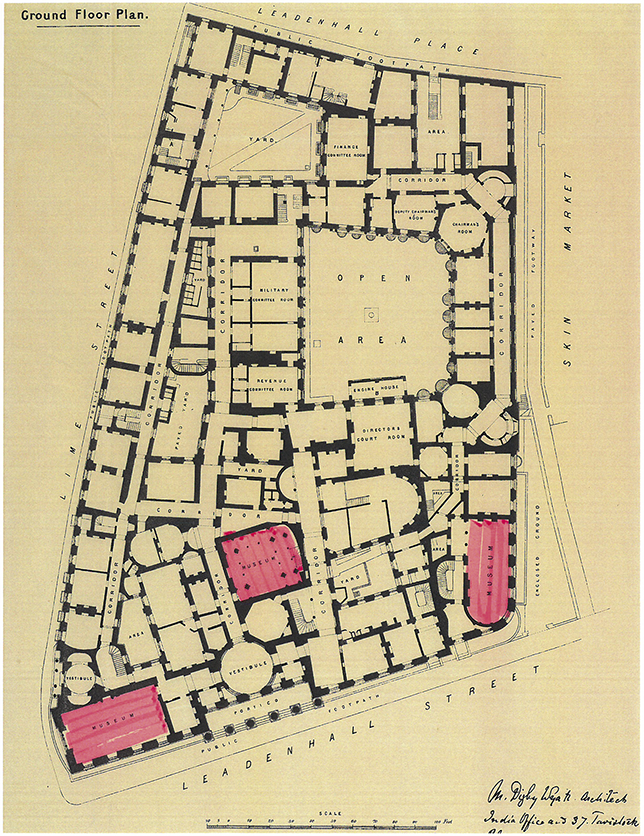
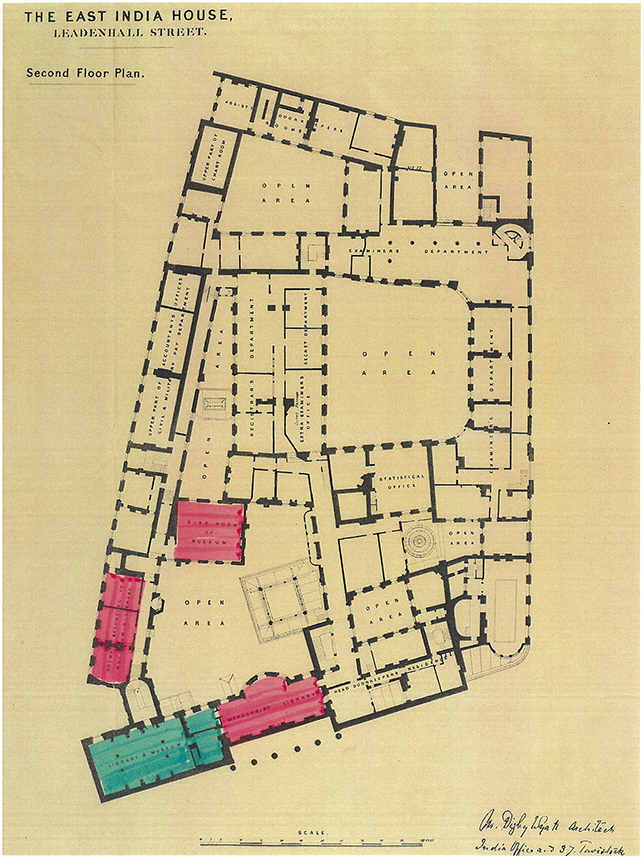
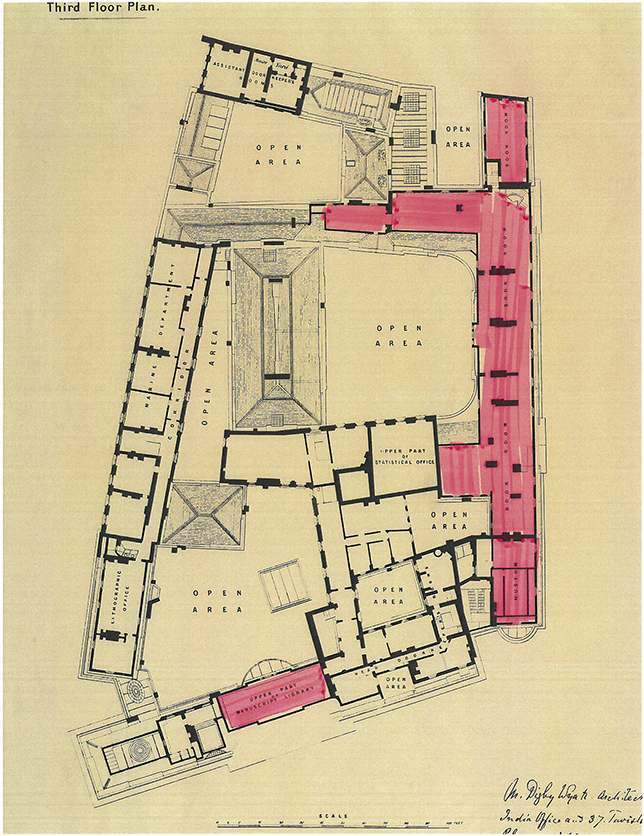
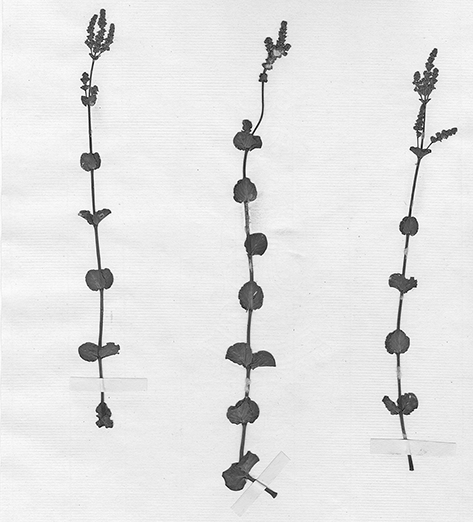
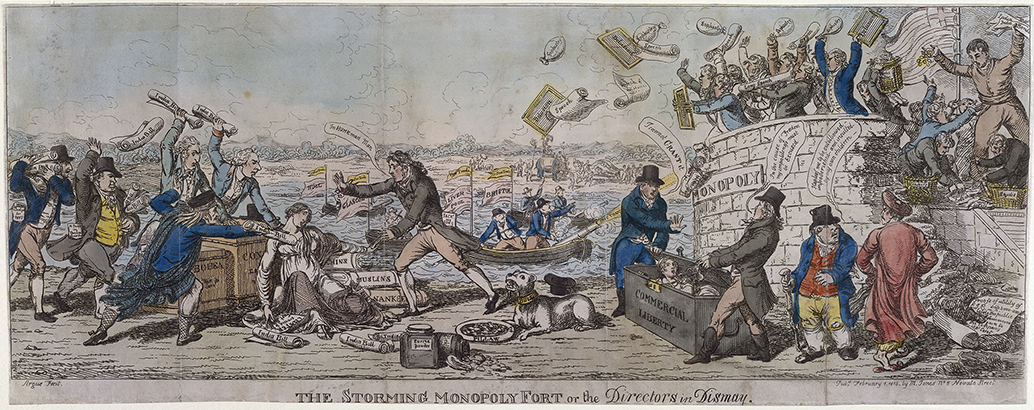

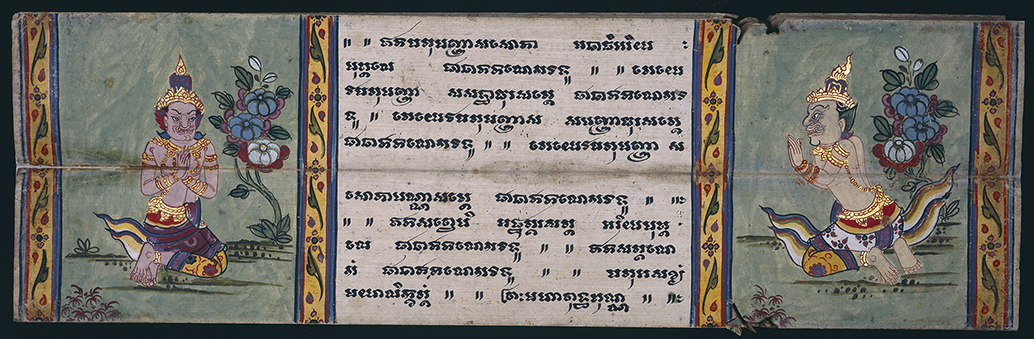
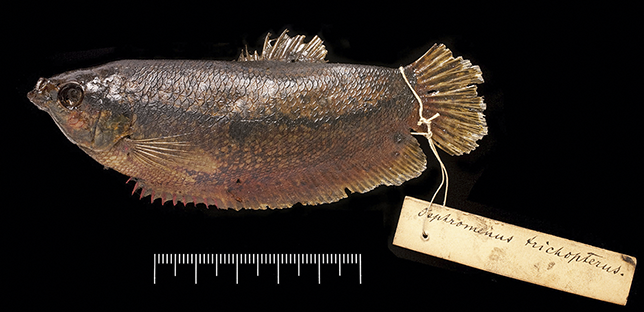

 Open access