



Introduction
This development paper reports on a pragmatic evaluation of an innovative approach to rehabilitating patients following discharge from hospital to self-manage their medicines regimen. It involved community services-based pharmacy technicians (PTs) working with health and social care providers who delivered intermediate care services across Sheffield, a large city in the United Kingdom. The PTs provided training and on-going support to frontline health and social care staff who promoted the reablement of patients. The initiative was a partnership between Sheffield Teaching Hospitals NHS Foundation Trust (STH) that provided community-based healthcare and Sheffield City Council (SCC) that provided social care. The NIHR Collaboration for Leadership in Applied Health and Research and Care (CLAHRC) for South Yorkshire evaluated the initiative.
Background
In the United Kingdom, up to 50% of prescribed medications are not taken as recommended (National Institute for Health and Clinical Excellence, 2009). Failure to take medicines as prescribed has implications for individuals and the healthcare system. At an individual level, patient outcomes are likely to be adversely affected and patient safety compromised (Pretorius et al., Reference Pretorius, Gateric, Swedlund and Miller2013). At healthcare system level it will adversely affect the burden of disease and lead to increased healthcare costs (Royal Pharmaceutical Society, 2013). Patients with chronic conditions who are prescribed new medications are at particular risk of failing to take their medicines as prescribed, especially following discharge from hospital (Barber et al., Reference Barber, Parsons, Clifford, Darracott and Horne2004).
Intermediate care services provide short-term intervention to support patients with chronic conditions or acute need in the transition from hospital to community-based services and maximise independent living (Department of Health, 2001). The provision of intermediate care is within the remit of healthcare although patients receiving intermediate care may also require assistance with activities of daily living (eg, personal hygiene), which is generally provided by social care services within the Local Authority. Intermediate care services are generally limited to six weeks to support patients through a particular period of need. This includes, where appropriate, supporting patients to take prescribed medicines.
An important component of intermediate care is to maximise the patient’s potential for independence from care providers. The term ‘reablement’ refers to services designed to help people adjust to the impact of illness or disability by re-learning the skills needed for daily living that have been lost as a result of deterioration in health or acute illness (Care Services Efficiency Delivery, 2007). In facilitating patients to regain their abilities in everyday activities, reablement strategies can enable patients to self-manage their medication while at the same time promoting medicines adherence and patient safety. The term ‘medicines reablement’ describes the process of rehabilitating patients to be independent with their medication.
Current policy is seeking to align health and social care services to provide a more co-ordinated, integrated approach to care (Ward et al., Reference Ward, Mangan and Miller2013). Service alignment provides an opportunity to develop strategies for medicines reablement involving health and social care staff. Potential benefits include more equitable and timely services for patients, greater patient empowerment, increased staff job satisfaction and health and social care cost savings due to service improvement and improved patient outcomes (Glendinning et al., Reference Glendinning, Jones, Baxter, Rablee, Curtis, Wilde, Arksey and Forder2010; Francis et al., Reference Francis, Fisher and Rutter2011).
PTs are a relatively new group of regulated healthcare professionals who work alongside a registered pharmacist. Most PTs work in hospital or community pharmacies and are involved in preparing and supplying items of medicines. However, there is further potential for PTs to expand their role working alongside other healthcare professionals (McGraw et al., Reference McGraw, Coleman, Ashman and Hayes2012).
The local context
At the time of the initiative, health and social care in Sheffield was experiencing a period of significant change. The downturn in the economic climate, the Health and Social Care Act (2012), demographic change and increasingly complex co-morbidities were factors driving the need to deliver more effective, integrated care in people’s homes.
When NHS Sheffield commissioned the intermediate care services in 2011, the contract specified a requirement for closer integration between health and social care provision. The Intermediate Care Partnership Board, which included public sector provider services, oversaw this process of transformation. A local evaluation of pharmacy interventions identified that medicines optimisation could best be achieved by health and social care working together (Black and Glaves, Reference Black and Glaves2011). The Board subsequently identified medicines reablement as a work-stream with the objective of aligning services to ensure patients received the same pharmaceutical reablement irrespective of whether their service provider was health or social care.
The initiative involved STH Community Intermediate Care Service (CICS) working with the SCC Short Term Intervention Team (STIT). Depending on patient need, frontline intermediate care was provided by rehabilitation assistants (RA) employed by CICS or by support workers (SW) employed by STIT. The integrated medicines reablement service was piloted in three locations across the city.
Medicines reablement in practice
Medicines reablement process
Following hospital discharge a referral was made either by CICS or STIT for a pharmaceutical reablement review to the pharmacy team. All patients were assessed as to their potential for reablement by PTs using their professional judgement. Patients with dementia were referred to occupational therapy for cognitive screening to ascertain their suitability for reablement and some patients with severe dementia were subsequently excluded. In addition, some patients with very severe disability following stroke were considered not suitable for reablement and some patients who had previously required assistance with medicines management before hospital admission resumed their existing care package.
The PT undertook an assessment and set goals with the patient to facilitate their independence in self-administration of their medication. The PT amended the care plan to reflect decisions made with the patient and provide instruction for RAs and SWs. The PT provided on-going support to the RAs and SWs as needed. PTs reassessed the patient after six weeks to determine if medicines reablement had been successful or whether further input was needed. Successful reablement was defined in terms of the patient being independent of care for medicines administration.
Medicines reablement training package
A competency-based training package was developed by the PTs and approved by a joint health and social care governance group. PTs delivered training to three cohorts of staff. The first two cohorts involved RAs and SWs. Due to the large number of social care workers compared with healthcare workers requiring training, a shortened but comprehensive programme was delivered to Cohort 3 that compromised solely SWs. The intention was to train all RAs and SWs in the three pilot locations and provide a reablement service to all eligible patients during a six-month period. This was achieved in two locations, but due to workload pressures only 65% of the SWs could be released for training in Cohort 3.
The training package comprised the following:
-
∙ setting the context for medicines reablement;
-
∙ the reablement process and procedures;
-
∙ demonstration of assistive devices to promote reablement;
-
∙ strategies to build confidence for patients to self-administer with different assistive devices;
-
∙ linking with GPs, community pharmacy and PTs;
-
∙ observed competency assessment of RA/SWs by PTs using simulation and role play.
Participants were provided with information about how to obtain further assistance from the PTs when supporting patients through the reablement process. Training took place over half a day (3.5 h). Course delivery facilitated interagency collaboration as participants were encouraged to share their experiences.
Evaluation of medicines reablement
Aims
The aims of the pragmatic evaluation were to:
-
∙ examine staff perspectives of training;
-
∙ identify the proportion of patients achieving successful medicines reablement at the end of the six-week intermediate care period;
-
∙ explore patient and staff perspectives of the medicines reablement service.
Data collection
Data collection comprised the following:
-
∙ At the end of the training session, a short paper-based questionnaire was administered to participants. It was developed by the evaluation team and piloted with RA/SWs working in a different area. The questions focused on staff perceptions of the extent to which training had equipped them to undertake medicines reablement and their self-perceived confidence in supporting patients to reable, and in using assistive devices, for example a self-fill multi-compartment pill administration box.
-
∙ At the end of the six-month implementation period semi-structured interviews were undertaken with the following.
-
o Patients who had received reablement support from RA/SWs (n=8) two weeks after the reablement had been completed. The topic guide explored participants’ perspectives of the reablement process.
-
o RA/SWs who had been involved in reabling patients (n=15). The topic guide explored participants’ perceived confidence in reabling patients, and their perceptions of the training programme, the reablement process, liaison with PTs, and patient issues.
-
o PTs involved in delivering the programme and supporting RA/SWs during the reablement process (n=2). The topic guide explored their perspective of the training programme and the reablement process.
-
o Managers from CICS and STIT (n=4) were interviewed to gain their perspective of the reablement process from an organisational perspective.
-
-
∙ PTs collated information on the number of patients who had reabled successfully when they completed their follow-up assessment.
Patient interviews were undertaken by a PT in their home. Staff interviews were undertaken by a member of the evaluation team in the workplace at a time convenient to participants. All interviewers had received training.
Ethical considerations
The project complied with the hospital’s ethical principles for service evaluation (Brain et al., Reference Brain, Schofield, Gerrish, Mawson, Mabbott, Patel and Gerrish2011). Informed verbal consent was obtained from participants before interview.
Data analysis
Quantitative data were input into an Excel spread sheet and analysed using descriptive statistics. Interviews were audio-recorded with the participant’s permission and subsequently transcribed. The transcripts were analysed using the principles of framework analysis (Ritchie et al., Reference Ritchie, Spencer and O’Connor2003). Members of the evaluation team familiarised themselves with the data by reading interview transcripts several times. A thematic framework for coding data was developed based on interview agendas and issues arising from initial scrutiny of transcripts. Individual transcripts were coded by applying the thematic framework. The coded data were subsequently organised into themes and relationships between themes mapped by analysing the date set as a whole. Concise summaries of the themes were then developed and these form the basis of the analysis presented. Quotes from interviewees are used to illustrate themes.
Findings
Evaluation of the training package
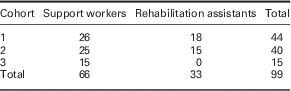
Two thirds of the 99 staff that received training were SWs and the remaining third were RAs. Table 1 shows the number of staff trained in each cohort.
Health and social care staff trained in medicines reablement
A total of 91 participants completed the questionnaire at the end of the training session (response rate 92%). Overall, the training was well received by both RAs and SWs who found the course informative, highly relevant to their role and felt that they would be able to apply the knowledge gained to their practice. All participants perceived that they had acquired the requisite skills to support patients through the medicines reablement process.
Follow-up interviews at the end of the implementation period confirmed that RAs and SWs felt confident in supporting patients through the medicines reablement process.
It’s helped me identify patients who need help with medicines administration, checking what they can do on their own. Using my skills to encourage them to do it themselves.
(RA)
They felt that the training had introduced them to a broader range of assistive devices that could be used to support reablement and they felt confident in supporting patients to use such devices.
It gave us a better idea of technologies that we didn’t know were available. So we can say to people that it would help if they had an eye dropper so they can get their eye drops in.
(SW)
Likewise, PTs thought that at the end of the training session, having observed through role play and simulation exercises, RAs and SWs had the knowledge and skills to support patients with medicines reablement. However, they felt that some SWs who were less familiar with the principles of medicines reablement before training benefited from some initial support in practice.
The SWs enjoyed joint training. Building up links with us helps build their confidence in using different aids. We’ve attended their team meetings to build up those, so that they can approach us.
(PT)
PTs perceived that interdisciplinary training groups fostered collaborative working between health and social care, and helped break down stereotypes, a view reflected by RAs and SWs.
The joint sessions were good because it got people talking. They chatted about their jobs, it helped them understand each other’s roles and appreciate the skills they have.
(PT)
Managers felt that the joint training between RAs and SWs had enabled frontline staff from health and social care to gain firsthand experience of the benefits of providing an integrated service and develop an understanding of how the wider integration of services required by the commissioners could occur.
Proportion of patients reabling
Identification of patients with the potential for medicines reablement commenced after the first cohort completed training. The number of referrals was lower than originally anticipated. This was thought most likely to be due to a change in the referral pathway that occurred at the same time that training was initiated. During the six-month implementation period 198 patients were discharged from hospital into the three pilot localities. In all, 39 (20%) were identified by PTs as potentially suitable for medicines reablement. Patients who were considered not suitable for reablement included those with severe physical or cognitive impairment, patients who had received a community care package that included medicines administration before their recent hospital admission and who were not able or did not wish to reable. Other patients were able to manage their medications themselves. At the time of assessment all patients received medicines counselling and four family members also received support from PTs. A total of 16 patients were referred for assistive devices such as compliance cards, monitored dosage systems, and eye droppers.
Following assessment, 17 patients (44%) were successfully reabled with medication through support from RA/SWs. A further 12 (31%) patients benefited from the initial assessment by the PT who provided aids to assist with self-administration but they did not require on-going support for reablement. The remaining 10 (25%) patients received support from RA/SWs but did not achieve reablement at the end of the six-week period of intermediate care and were transferred to a long-term care provider. The majority of these patients had visits reduced from four to two per day and required prompting with medicines rather than administration by carers.
Patients’ perspectives of medicines reablement
All patients interviewed were admitted to hospital as an emergency admission and had been in hospital for between two and seven weeks. They had all managed their own medication before admission to hospital and were keen to regain their independence following discharge. All patients achieved successful reablement by the end of the intermediate care package, and viewed this very positively. It gave them a sense of achievement and boosted their morale. They were able to resume their ‘normal routine’ and were no longer reliant on having to accommodate the times when care staff were able to visit.
I felt so frustrated at first. I just wanted to be independent. And they helped me to be able to do it myself.
(Patient)
However, two patients experienced a retrograde step when transferring to a long-term care package for other activities of daily living support. Administration of medicines by social care workers was reintroduced even though the patients had successfully reabled. The new long-term care providers were not trained in medicines reablement. One patient summed up her situation: ‘I’ve been made to feel incapable’.
Staff perceptions of the benefits of medicines reablement
Staff interviews identified three areas of perceived benefit of medicines reablement: benefits for patients, staff, and the service.
Benefits for patients
All RAs and SWs spoke positively about medicines reablement, emphasising the importance of patients attaining independence for self-administration of medication as it reduced dependency on others and increased their sense of well-being. They perceived that patients who were independent in taking medication before hospital admission were generally keen to regain control of this aspect of self-management as it gave them a sense of fulfilment and increased autonomy.
The main benefit is getting people to be independent. It’s a big issue for lots of people. They could do it before they went into hospital, so it’s really important to them to get back to how they were, otherwise they feel they’ve lost something.
(SW)
RAs and SWs spoke positively about how different forms of assistive technology had helped them promote patients’ independence.
We’ve had some really positive feedback from patients. Patients feel that the prompt cards are brilliant, it’s easy for them to follow.
(RA)
Patients were also able to establish a routine for taking medications, either for pharmaceutical effect, or for personal preferences.
Like that guy who wanted to take his sleeping tablet at 11 pm. We went as late as we could at 8 pm but it was upsetting him, it was still too early.
(SW)
These views were echoed by PTs and managers who felt that successful medicines reablement improved the patient experience of health and social care, resulted in increased patient morale, and improved patient safety.
All participants were mindful of the addition financial burden placed on patients following intermediate care if patients required an on-going care package for medicines administration.
Previously, meds administration was often the only reason we were still going in at the end of intermediate care. Now, if we can reable them with meds, they won’t need to pay for on-going care.
(SW2)
Benefits for staff
There was agreement amongst all participants that supporting patients through medicines reablement enhanced job satisfaction for RA/SWs.
When we start off they can’t do it, then gradually they can and then they can look after themselves, then we know we’ve done a good job. It’s very satisfying for us.
(SW)
Similarly, PTs found the opportunity to train health and social care staff in medicines reablement and provide on-going support to staff during the enablement process immensely fulfilling.
SWs reported that the absence of a care plan before the initiative meant that they administered medication to patients even when patients had potential to reable. RAs and SWs felt that the assessment undertaken by PTs and subsequent documented care plan gave them clear guidance to support the reablement process.
It depends what the care plan says. Sometimes it’s for a NOMAD (self-fill pill administration box) or from boxes and bottles. Maybe it’s just observing, sometimes it’s prompt and observe. We watch that it’s done correctly and the right dosage is taken. There are different levels but it’s clearly stated on the care plan.
(RA5)
SWs valued on-going access to PTs for timely support, help with problem solving and advice throughout the reablement process. For example, the PT was often able to resolve some problems where previously SWs had to escalate the problem through their line manager.
Benefits for the service
Managers agreed that training meant the workforce was better equipped to support reablement and the quality of intermediate care services had been improved and was more equitable.
It’s about joint working, enabling and empowering social care staff to administer medication in a reablement fashion.
(Manager)
It’s about service users getting an equal service. It’s about using the same procedures for the good of the service user.
(Manager)
Many participants drew attention to the importance of being able to demonstrate potential cost savings to the service as medicines reablement could reduce long-term care demands. It was also suggested that cost savings could be achieved by reducing medication wastage.
When we’re reabling, if they’ve got lots of medication lying about, or have meds still sent through that they’re not taking we can get it sorted out so that they have the right medication and the right amount. So it’s saving the NHS money.
(SW)
Although not evidenced in the current initiative, managers felt that successful medicines reablement may reduce the burden of care on general practitioners and lead ultimately to a reduction in hospital admissions and associated costs.
Managers spoke positively about the added benefits of the medicines reablement initiative. They perceived that joint training had enabled health and social care staff to gain firsthand experience of the benefits of providing an integrated service and develop an understanding of how the wider integration of services required by commissioners could occur.
Being able to pilot medicines reablement initially and instil best practice from a health and social care point of view has enabled my staff to understand how the wider integration of CICS and STIT will happen. It’s about doing it in small steps and then cascading it on to the next geographical area.
(Manager)
Or as one PT succinctly commented: ‘It stops it being them and us. We’re all singing to the same hymn sheet’.
Challenges in implementing medicines reablement
Some challenges to reablement relating to patients included lack of confidence, disruption to the patient’s normal routine when taking medication, and different brands/packaging of medication on discharge from hospital to that dispensed from community pharmacies. PTs were also concerned about whether all patients who had the potential to be reabled were identified and referred.
PTs, RAs and SWs considered that the six-week period of intermediate care was too short to enable some patients to progress with confidence to managing their own medication. They were concerned that the follow-on care package may not focus on medicines reablement.
It can be difficult to do reablement in 6 weeks, it’s not long enough for some people. It’s a slow process that can take 10–12 weeks and needs to be based on client needs. The problem is especially with stroke patients, we get them so far and then they go to an agency and they’re back to square one as they do everything for them.
(RA)
There was a feeling that extending reablement support although more costly in the short term was ultimately beneficial to the service.
If you’re spending 12 weeks with them and getting them independent, they’ll need less care in the end. You’re investing at the start and reducing care costs later on, and possibly stopping hospital readmissions because they’re better at taking their medication.
(RA)
There was also the need to address cultural differences between the two services and overcome barriers to change.
Our staff (health) have had reablement drilled into them. But it wasn’t the same for social care. They’ve said ‘We’re never going to have time to do all that, we won’t have time to sit with somebody’. Whereas we’ve said, ‘If you find you haven’t got time, ring us up, your managers have assured us that you’ll be given time’. We had to reassure them because it’s a totally different culture.
(PT)
Managers also recognised the importance of cultural change.
Changing cultures and ethos, doing with patients, not saying you don’t have time for reablement, understanding the importance of getting patients back to independence. We need staff to change.
(Manager)
Managers and PTs were keen for the service to be continued beyond the initial evaluation period and to be rolled out to other localities across the city. However, they indicated that senior managers from both agencies needed to ensure sign up to cross-boundary working by providing appropriate governance structures to support both organisations.
Getting sign up to work together across different organisations is a challenge. There needs to be the right governance structures to support this type of work across both organisations. There’re challenges with funding for resources like PTs providing training and support to social care staff which is beyond their current remit.
(Manager)
Moreover, they emphasised the importance of shared budgets for on-going medicines reablement.
Unless health and social care budgets come together as one it won’t go forward because it’ll be ‘this is our money’, ‘we haven’t got any money’, ‘this is your saving’. It’s more of a ‘spend to save’ initiative. The risk is that the Council will say they haven’t got the money upfront. There needs to be integration of services and a joint budget.
(PT)
Discussion
This paper has reported on a novel pilot initiative to promote the independence of patients in managing their medication following discharge from hospital to intermediate care services. By implementing a competency-based training package for frontline health and social care staff, patients were supported through a medicines reablement process. The role of PTs, who were part of the healthcare intermediate care team, was critical to the success of the initiative. They provided joint training in medicines reablement, identified patients suitable for reablement following hospital discharge, developed individualised care plans to facilitate reablement and provided on-going support to RAs and SWs during the reablement process.
This pragmatic evaluation suggests several benefits to patients, staff, and the services. However, a more in-depth evaluation of PT-led medicines reablement is required to examine short and long-term outcomes for patients, staff and the service. Future evaluation should also consider the extent to which different components of the initiative (eg, training, on-going PT support) contribute towards successful outcomes. It was beyond the scope of the current initiative to examine the costs and benefits of introducing a PT-led medicines reablement service. A more detailed evaluation involving comparative groups is required to demonstrate whether this represents a clinically and cost-effective service.
The majority of pharmacists/PTs working in community setting are based in pharmacies. Although they provide advice to patients and healthcare professionals working in primary care (NHS England, 2015), they do not generally assess patients in home settings and oversee the reablement process during an episode of intermediate care. The role of PTs in the current initiative is unusual in working across both health and social care and demonstrates the benefits of using their expertise to support patients more directly.
Research examining reablement in intermediate care has focused primarily on reablement undertaken by social care workers in relation to activities of daily living (eg, Glendinning et al., Reference Glendinning, Jones, Baxter, Rablee, Curtis, Wilde, Arksey and Forder2010; Pearson et al., Reference Pearson, Hunt, Cooper, Shepperd, Pawson and Anderson2013). In contrast, this initiative focused specifically on medicines reablement and aligned health and social care workers to achieve a common goal across all patients receiving an intermediate care package, irrespective of their care provider. Several patients who might otherwise have required a long-term care package for medicines management were discharged from health and social care services once the intermediate care package had been delivered.
Patients derived benefit by resuming their lifestyle before hospital admission, regaining their autonomy and increasing their morale. However, although patients whom we interviewed were positive about the reablement process, it may not be so for all patients with the potential for medicines reablement. We did not follow-up those patients who were assessed to have the potential for reablement but ultimately required a long-term care package for medicines administration. Future evaluation of the initiative should examine the reasons why some patients are not reabled successfully as this may influence how the limited PT resource can be targeted more effectively. Moreover, some patients who are reabled successfully may have a different perspective to those of the reablement team. For example, following reablement the loss of contact with care providers may lead to feelings of social isolation for people who live alone and do not have many social activities (SCIE, 2013).
It is of concern that two patients who had been successfully reabled with regard to medication but required a long-term care package for activities of daily living subsequently had their autonomy for administering their own medication removed as they transferred to other care providers. This highlights the need for clear documentation supporting the transfer of care across services and for care staff responsible for on-going care to be able to provide appropriate support to patients who have been reabled successfully with their medication. On-going support from PTs could help achieve a more seamless transfer of care.
A study of 1000 patients experiencing an in-patient hospital stay identified that 20% were re-admitted within a year of discharge due to an adverse drug reaction, with 50% of these admissions being avoidable and more likely to occur in elderly patients (Davies et al., Reference Davies, Green, Mottram, Rowe and Pirmohamed2010). It was beyond the scope of the current evaluation to examine whether the support provided to patients through the medicines reablement process helped to reduce ambiguity in relation to medicines and thus avoid hospital readmission due to medicine errors. A more detailed and larger examination of medicines reablement may provide evidence of its efficacy in regard to patient safety and a reduction in hospital readmission.
The current policy drivers to integrate health and social care services to ensure an equitable, seamless and cost-effective service for end-users present significant challenges in terms of implementation (Tsasis et al., Reference Tsasis, Evans and Owen2012). Designing integrated care requires operating simultaneously at the system level, the service level and at the interface between different care providers and those who use the service (Office for Public Management, 2014). Not only do supportive policies, and governance structures need be in place, the cultural differences and working practices between health and social care need to be addressed. In the current initiative, the interdisciplinary training enabled health and social care frontline staff to gain insight into each other’s roles, ways of working and professional values. This shared understanding was important to achieving ownership and commitment to a common goal of achieving medicines reablement. By starting with a small-scale practice-focussed initiative that could be implemented without requiring major policy, governance or structural changes, the organisations concerned now have evidence of effective collaborative working that can be built upon to support further initiatives to address integration. However, although the service managers overseeing the initiative and the frontline staff delivering care were committed to medicines reablement, the ultimate sustainability and spread of this initiative will require commitment from both clinical commissioning groups responsible for healthcare and local authority commissioners responsible for social care.
Conclusion
This initiative has indicated that medicines reablement can lead to some patients becoming independent of support with taking medication and contribute to staff satisfaction. PTs can play an important part in delivering medicines reablement training to frontline staff and overseeing the reablement process. However, the sustainability and further spread of medicines reablement is dependent on those who commission health and social care. Further research examining medicine reablement is needed to develop a stronger evidence base to inform the commissioning process.
Acknowledgements
The authors wish to thank the patients and staff who participated in this project and members of the Intermediate Care Partnership Board who oversaw the initiative.
Financial Support
This project was funded by the National Institute for Health Research Collaboration for Leadership in Applied Health Research and Care for South Yorkshire (NIHR CLAHRC SY) a pilot that ended in 2013 and by Sheffield Hospitals Charity. Further details about the new NIHR CLAHRC Yorkshire and Humber can be found at www.clahrc-yh.nihr.ac.uk. The views and opinions expressed are those of the authors, and not necessarily those of the NHS, the NIHR or the Department of Health.
Conflicts of Interest
None.



