


Mortality is the most robust outcome measure of medical disease and hence a gold standard of clinical performance. It is an important outcome indicator in respect of mental health, where policies and services are judged, among other things, by their effectiveness in reducing suicide rates. Unnatural deaths, however, give only a partial picture of the life expectancy of a vulnerable population. Natural deaths are less dramatic but every bit as final. The excess mortality of people with schizophrenia is a consistent finding in studies of different populations, different continents and different eras. Reference Brown1–Reference Saha, Chant and McGrath3 The pattern of mortality suggests that the excess unnatural deaths are intrinsic to the disease and the excess natural deaths best explained by altered exposure to environmental risk factors. Reference Kendler4 Service planners will hope that changes in treatment such as the move from asylum to community-based services and the introduction of atypical antipsychotic drugs will improve the mortality of people with schizophrenia. Evidence from Scandinavia Reference Ösby, Correia, Brandt, Ekbom and Sparén5–Reference Munk-Jørgensen and Mortensen7 however suggests that the mortality of people with schizophrenia, especially the mortality from cardiovascular disease, increased between the 1970s and the mid-1990s. We do not know if the same trend occurred in the UK. This paper describes the 25-year follow-up of an English community cohort with schizophrenia, recruited in 1981–1982. It examines overall mortality, and mortality from particular categories and causes of disease as well as changes in mortality over that period.
Method
The cohort comprised all Southampton residents aged 16–65 with schizophrenia and living outside hospital, who had contact with the local National Health Service (NHS) psychiatric services between 1 January 1981 and 31 January 1982 (n = 370). Reference Gibbons, Horn, Powell and Gibbons8 Potential participants were included if they had: a ‘firm diagnosis of schizophrenia’ made by the responsible consultant; case-note evidence of first-rank symptoms of schizophrenia or persistent non-affective delusions or auditory hallucinations, in the absence of organic brain disease; and misuse of alcohol or other substance.
An analysis of the cohort up to 31 December 1994 has been reported. Reference Brown, Barraclough and Inskip9 Using identical methodology, we now present an analysis of the follow-up to 31 August 2006, the midpoint of the twenty-fifth year following recruitment. Participants were classified as alive, dead or untraced, based on the database of the Office of National Statistics. 10 Vital status was then checked through Hampshire Partnership NHS Trust case notes, general practitioner or mental health worker. Participants were classified as alive if there was independent confirmation of contact since the census date. Death was confirmed by death certificate or other official document. Participants were otherwise classified as untraced and were included in the follow-up analysis until the date they were lost. The study had ethics approval from the Southampton and South West Hampshire research ethics committee.
Statistical analysis
The person-years-at-risk were calculated according to the following variables: calendar year (1981–2006), gender, age category (15–19, 20–24, 25–29, 30–34, 35–39, 40–44, 45–49, 50–54, 55–59, 60–64, 65–69, 70–74, 75–79, 80–84, and ≥85 years). The person-years-at-risk were then multiplied by the corresponding mortality rates for England and Wales, 10 thus producing the expected number of deaths for each year/gender/age-specific stratum. Reference Breslow and Day11
The standardised mortality ratio (SMR) was obtained by dividing the number of deaths observed by the number of deaths expected, and multiplying this ratio by 100. An increased SMR is statistically significantly elevated at the 5% level of significance when the lower limit of the 95% confidence interval (CI) is greater than 100. Reference Gardner and Altman12
Standardised mortality ratio were calculated for all causes, for particular ICD 13,14 categories of disease and for specific diseases where more than two deaths were observed. The change in SMR over the study period was analysed by computing SMRs for each 5 years of follow-up. Comparisons between SMRs and tests for trend were performed using Poisson regression. Poisson regression was also used to explore internal relationships in the data independent of the national population rates.
Results
All-cause mortality (ICD–9 001-999, ICD–10 A01–Y99)
The cohort comprised 213 males and 157 females at recruitment. The vital status of 363 (98%) individuals was established on the census date (31 August 2006). A total of 193 were confirmed to be alive, 6 were recorded as alive on the Office for National Statistics database but not independently confirmed, 7 were untraced and 164 deaths were recorded. Of these deaths, 141 were from natural causes and 21 from unnatural causes. Two deaths were from unknown causes; one abroad and one where the death certificate could not be traced.
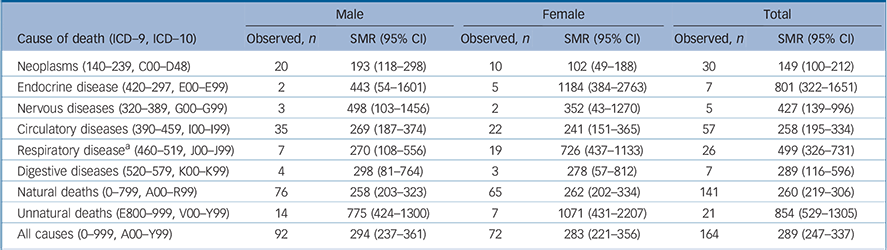
The mean age at death of males was significantly lower than that of the females (57.3 v. 65.5 years, t = 4.3, d.f. = 162, P<0.001). This difference remained when unnatural deaths were excluded from the analysis (males 60.4 years v. females 67.3 years, t = 4.2, d.f. = 139, P<0.001). The all-cause SMR was 289 (95% CI 247–337), a threefold increase in mortality compared with the population of England and Wales (Table 1). Approximately 81% of the excess mortality was from natural causes and 17% from unnatural causes (2% of deaths were undetermined). The all-cause SMR was higher in males, the unemployed, the unmarried and people from lower social classes, but none of these differences were statistically significant. The internal analysis showed that all-cause mortality was higher in males than females, but there were no statistically significant differences when examining unemployment, marital status and social class.
Mortality between 1981 and 2006 of a community cohort of 370 people with schizophrenia by category of disease (ICD–9 and ICD–10), showing observed deaths, standarised mortality ratios (SMRs) and 95% CIs, by gender, for those disease categories where there were five or more deaths
| Male | Female | Total | ||||
|---|---|---|---|---|---|---|
| Cause of death (ICD-9, ICD-10) | Observed, n | SMR (95% CI) | Observed, n | SMR (95% CI) | Observed, n | SMR (95% CI) |
| Neoplasms (140-239, C00-D48) | 20 | 193 (118-298) | 10 | 102 (49-188) | 30 | 149 (100-212) |
| Endocrine disease (420-297, E00-E99) | 2 | 443 (54-1601) | 5 | 1184 (384-2763) | 7 | 801 (322-1651) |
| Nervous diseases (320-389, G00-G99) | 3 | 498 (103-1456) | 2 | 352 (43-1270) | 5 | 427 (139-996) |
| Circulatory diseases (390-459, I00-I99) | 35 | 269 (187-374) | 22 | 241 (151-365) | 57 | 258 (195-334) |
| Respiratory diseasea (460-519, J00-J99) | 7 | 270 (108-556) | 19 | 726 (437-1133) | 26 | 499 (326-731) |
| Digestive diseases (520-579, K00-K99) | 4 | 298 (81-764) | 3 | 278 (57-812) | 7 | 289 (116-596) |
| Natural deaths (0-799, A00-R99) | 76 | 258 (203-323) | 65 | 262 (202-334) | 141 | 260 (219-306) |
| Unnatural deaths (E800-999, V00-Y99) | 14 | 775 (424-1300) | 7 | 1071 (431-2207) | 21 | 854 (529-1305) |
| All causes (0-999, A00-Y99) | 92 | 294 (237-361) | 72 | 283 (221-356) | 164 | 289 (247-337) |
Cause of death
The SMR was increased in most major disease categories (Table 1) but is only presented for disease categories where more than five deaths were reported. Individual categories showed apparent gender differences but only that for respiratory diseases was statistically significant (P = 0.03). The most significant contributions to the overall excess mortality came from circulatory diseases (ICD–9 390–459, ICD–10 I00–I99), which accounted for 33% and respiratory diseases (ICD–9 460–519, ICD–10 J00–J99), which accounted for a further 19%.
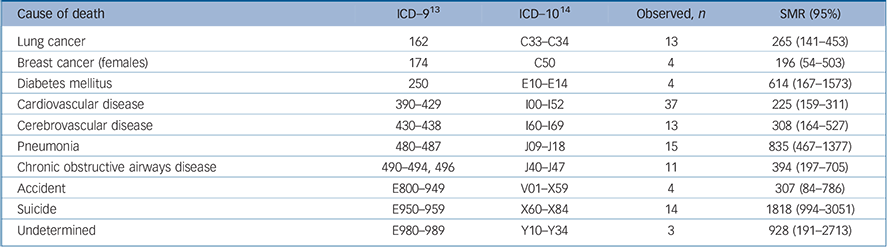
We also examined specific causes of death where the numbers exceeded two. Of 30 cancer deaths, 13 were from lung cancer (SMR = 265, 95% CI 141–453), 4 from female breast cancer (SMR = 196, 95% CI 54–503), the remaining deaths attributed to various types of cancer. The SMRs for suicide, diabetes, pneumonia and chronic obstructive airways disease were strikingly elevated (Table 2).
Mortality between 1981 and 2006 of a community cohort of 370 people with schizophrenia by cause of death (ICD–9 and ICD–10), showing observed deaths, standardised mortality ratios (SMRs) and 95% CIs, for those diseases where there were three or more deaths
| Cause of death | ICD-9 13 | ICD-10 14 | Observed, n | SMR (95%) |
|---|---|---|---|---|
| Lung cancer | 162 | C33-C34 | 13 | 265 (141-453) |
| Breast cancer (females) | 174 | C50 | 4 | 196 (54-503) |
| Diabetes mellitus | 250 | E10-E14 | 4 | 614 (167-1573) |
| Cardiovascular disease | 390-429 | I00-I52 | 37 | 225 (159-311) |
| Cerebrovascular disease | 430-438 | I60-I69 | 13 | 308 (164-527) |
| Pneumonia | 480-487 | J09-J18 | 15 | 835 (467-1377) |
| Chronic obstructive airways disease | 490-494, 496 | J40-J47 | 11 | 394 (197-705) |
| Accident | E800-949 | V01-X59 | 4 | 307 (84-786) |
| Suicide | E950-959 | X60-X84 | 14 | 1818 (994-3051) |
| Undetermined | E980-989 | Y10-Y34 | 3 | 928 (191-2713) |
Smoking-related mortality
A total of 73% (n = 193) of the cohort, for whom smoking status was recorded (n = 266), were cigarette smokers at the outset of the study. This was more than twice the contemporary general population prevalence (35%). 15 The SMR among cigarette smokers was significantly higher than among non-smokers (SMR = 379, 95% CI 311–459 v. SMR = 194, 95% CI 125–286, P = 0.002) and the internal analysis showed that mortality in smokers was more than double that in non-smokers (relative risk (RR) = 2.16, 95% CI 1.31–3.59). Ninety-five deaths were from diseases caused by cigarette smoking, 15 an SMR of 275 (95% CI 222–336). Smoking-related diseases accounted for 70% of the excess natural mortality in the cohort.
Time trends in mortality
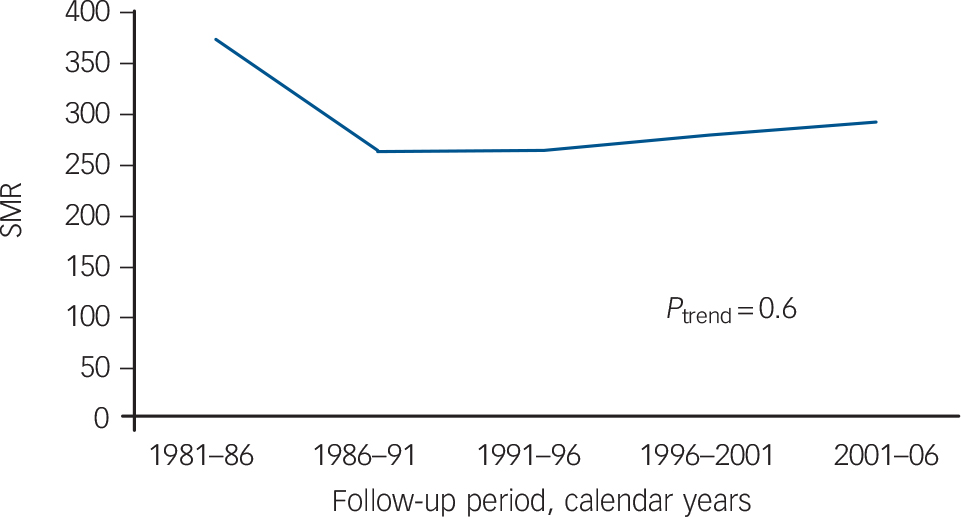
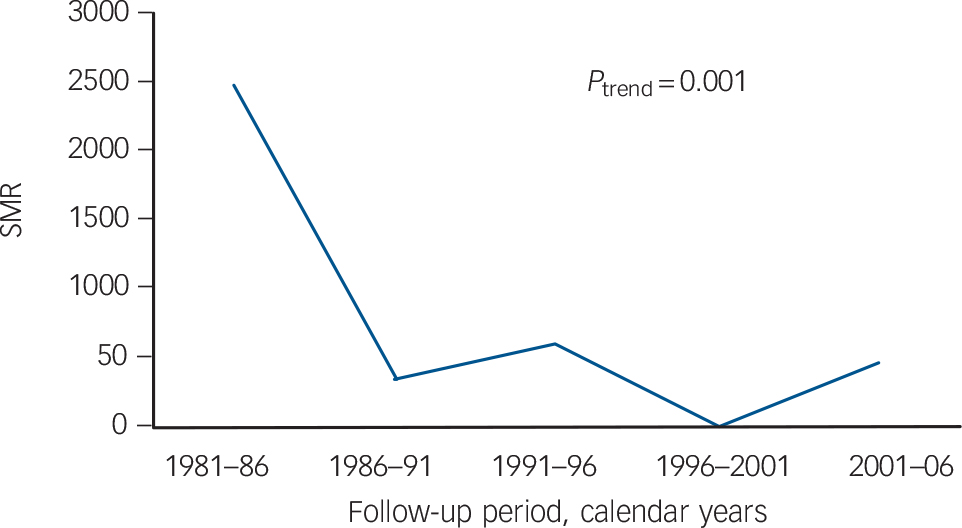
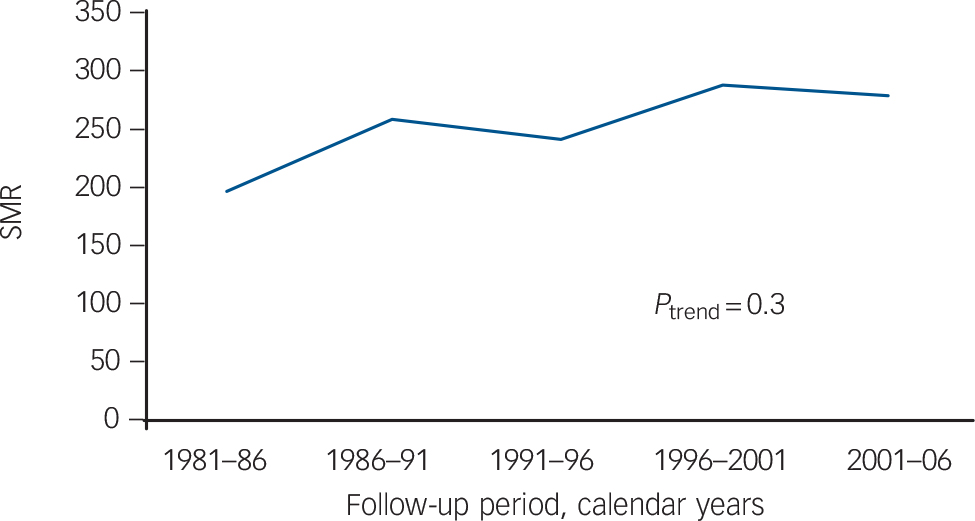
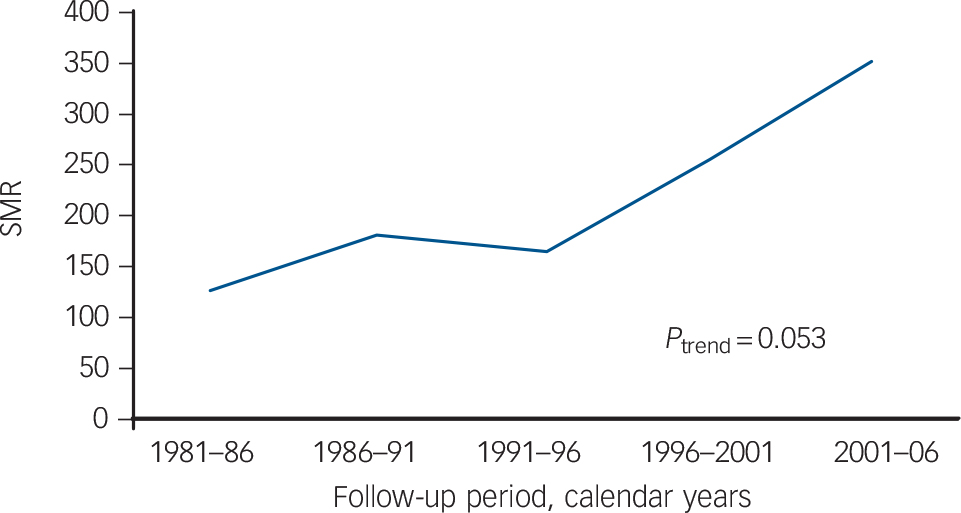
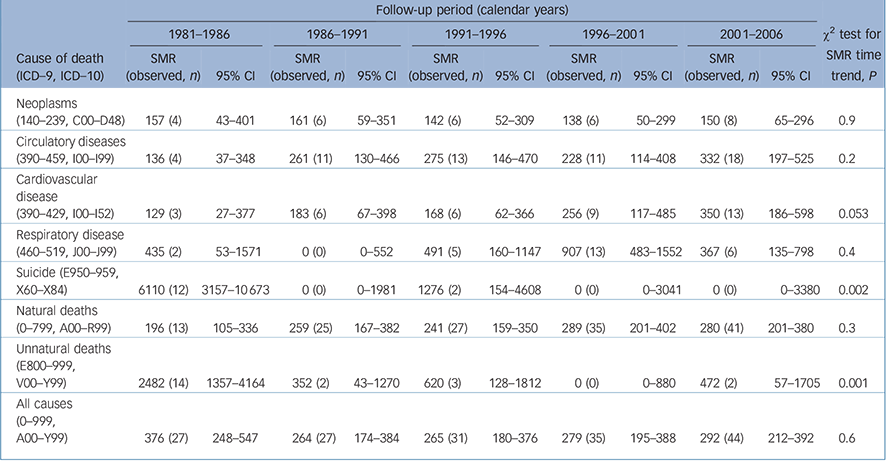
Table 3 and Figures 1, 2, 3, 4 show the time trends in mortality from all causes and various major disease categories.
Changes in all-cause standardised mortality ratios (SMRs) in 5-year periods of a community cohort of 370 people followed over 25 years.
Changes in unnatural cause standardised mortality ratios (SMRs) in 5-year periods of a community cohort of 370 people followed over 25 years.
Changes in natural cause standardised mortality ratios (SMRs) in 5-year periods of a community cohort of 370 people followed over 25 years.
Changes in cardiovascular disease standardised mortality ratios (SMRs) in 5-year periods of a community cohort of 370 people followed over 25 years.
Cause of death of 164 people with schizophrenia with observed deaths (in brackets), standardised mortality ratios (SMRs) and 95% CI, for each 5-years of follow-up, for those disease categories where more than ten deaths were reported
| Follow-up period (calendar years) | |||||||||||
|---|---|---|---|---|---|---|---|---|---|---|---|
| 1981-1986 | 1986-1991 | 1991-1996 | 1996-2001 | 2001-2006 | χ2 test for SMR time trend, P | ||||||
| Cause of death (ICD-9, ICD-10) | SMR (observed, n) | 95% CI | SMR (observed, n) | 95% CI | SMR (observed, n) | 95% CI | SMR (observed, n) | 95% CI | SMR (observed, n) | 95% CI | |
| Neoplasms (140-239, C00-D48) | 157 (4) | 43-401 | 161 (6) | 59-351 | 142 (6) | 52-309 | 138 (6) | 50-299 | 150 (8) | 65-296 | 0.9 |
| Circulatory diseases (390-459, 100-199) | 136 (4) | 37-348 | 261 (11) | 130-466 | 275 (13) | 146-470 | 228 (11) | 114-408 | 332 (18) | 197-525 | 0.2 |
| Cardiovascular disease (390-429, 100-152) | 129 (3) | 27-377 | 183 (6) | 67-398 | 168 (6) | 62-366 | 256 (9) | 117-485 | 350 (13) | 186-598 | 0.053 |
| Respiratory disease (460-519, J00-J99) | 435 (2) | 53-1571 | 0 (0) | 0-552 | 491 (5) | 160-1147 | 907 (13) | 483-1552 | 367 (6) | 135-798 | 0.4 |
| Suicide (E950-959, X60-X84) | 6110 (12) | 3157-10 673 | 0 (0) | 0-1981 | 1276 (2) | 154-4608 | 0 (0) | 0-3041 | 0 (0) | 0-3380 | 0.002 |
| Natural deaths (0-799, A00-R99) | 196 (13) | 105-336 | 259 (25) | 167-382 | 241 (27) | 159-350 | 289 (35) | 201-402 | 280 (41) | 201-380 | 0.3 |
| Unnatural deaths (E800-999, V00-Y99) | 2482 (14) | 1357-4164 | 352 (2) | 43-1270 | 620 (3) | 128-1812 | 0 (0) | 0-880 | 472 (2) | 57-1705 | 0.001 |
| All causes (0-999, A00-Y99) | 376 (27) | 248-547 | 264 (27) | 174-384 | 265 (31) | 180-376 | 279 (35) | 195-388 | 292 (44) | 212-392 | 0.6 |
The all-cause SMR showed small but non-significant changes between 1981 and 2006, falling in the first 5 years then rising slightly from 264 (95% CI 174–384) in 1986–91 to 292 (95% CI 212–392) in 2001–6 (P = 0.6). This was produced by the aggregate effect of a non-significant (P = 0.3) increase in the natural cause SMR between 1981–6 and 2001-6 from 196 (95% CI 105–336) to 280 (95% CI 201–380), and a large and statistically significant (P = 0.001) fall in the unnatural cause SMR from 2482 (95% CI 1357–4164) to 472 (95% CI 57–1705) over the same time period (Table 3). The excess unnatural cause SMR was largely a result of suicide (Table 2), which fell significantly (P = 0.002) over time. The internal analysis also revealed significant negative trends with time for suicide and unnatural deaths (P = 0.002 for both causes).
The SMR for cardiovascular diseases increased over the study period from 129 (95% CI 27–377) in 1981–6 to 350 (95% CI 186–598) in 2001–6. This trend was of borderline statistical significance (P = 0.053). The internal analysis showed no significant trend for this cause (P = 0.3), although using the period 1991–96 as the baseline, the relative risks rose monotonically from 0.76 (95% CI 0.19–3.12) for 1981–86 to 1.52 (95% CI 0.57–4.07) for 2001–6. There were no consistent trends in the other disease categories where more than ten deaths were observed, either examining the SMRs or using an internal analysis.
Discussion
These results support previous findings that people with schizophrenia have a mortality of between two and three times that of the general population, and that most of the excess deaths are from diseases that are the major causes of death in the general population. They indicate that the increased mortality risk is probably lifelong and suggest that the cardiovascular mortality of schizophrenia has increased over the past 25 years relative to the general population. A large part of the excess mortality can probably be attributed to the effects of cigarette smoking.
Strengths and weaknesses
The recruitment process missed people with unrecognised schizophrenia and those who avoided service contact during the index year, but was representative of Southampton residents with schizophrenia living outside hospital and known to local mental health services in 1981–82. People living in the local long-stay hospital and those with a concurrent diagnosis of substance misuse were deliberately excluded, to yield a community cohort of people with uncomplicated disease. Reference Gibbons, Horn, Powell and Gibbons8 The Southampton mental health services were typical of contemporary services, hence the cohort is probably representative of people with schizophrenia who were engaged with mental health services in the early 1980s. The use of a cohort recruited 25 years ago inevitably means that the experience described here may differ from that of people diagnosed more recently.
Ascertainment was more rigorous than in most comparable studies as status was independently checked. Loss to follow-up was small and comparable with that in similar recent studies. Death certificates were matched to NHS central records, using family and given name, date and place of birth, place of death and NHS number where known. The death certificate causes of death are probably more accurate than in the general population, because rates of post-mortem examination (54% v. 22%) and coroner's inquest (15% v. 6%) were higher than the national average. 16 Schizophrenia was mentioned as a contributory cause of death on nine (5%) certificates.
The strengths of this study are the longest follow-up period of recent studies on schizophrenia mortality, the completeness of follow-up and the cross-checking of status. The main weaknesses are the use of a relatively small local cohort that may limit generalisation and the use of a prevalence rather than an incidence cohort. This meant that all but 27 participants had already survived the period of greatest excess mortality at recruitment, an issue which is probably more relevant to unnatural mortality, which is concentrated early in the disease, Reference Inskip, Harris and Barraclough17,Reference Mortensen and Juel18 than to natural mortality. The exclusion of people with comorbid substance misuse probably produced an underestimate of excess mortality.
All-cause mortality
The all-cause, natural cause and unnatural cause SMRs are broadly consistent with comparable recent studies, which suggest that schizophrenia is associated with a two- to threefold increase in mortality, with a large relative excess mortality from unnatural causes among younger people and a less dramatic but numerically greater excess mortality from natural causes among individuals in middle or older age. Reference Brown1–Reference Saha, Chant and McGrath3
Change in mortality with length of follow-up
Previous studies of schizophrenia mortality, both meta-analysis Reference Brown1,Reference Saha, Chant and McGrath3 and large individual cohort studies, Reference Mortensen and Juel18 suggested with one exception, Reference Lawrence, Jablensky, Holman and Pinder19 that all-cause SMR falls with increasing age and with length of follow-up. A very large Scandinavian cohort study found a significant but only very slightly elevated SMR in older people with chronic schizophrenia. Reference Mortensen and Juel20 This pattern is largely because the suicide SMR is highest in young people early in the disease process, Reference Inskip, Harris and Barraclough17,Reference Mortensen and Juel18 when a small number of suicides produce a large overall SMR; probably the most significant process in shorter follow-up studies. The dramatic fall in unnatural cause SMRs over the course of the present study is consistent with these previous observations. The only study that specifically examined natural cause SMR found no clear relationship between length of follow-up and the SMR for natural causes, and an inverse relationship between length of follow-up and cardiovascular SMR. Reference Mortensen and Juel18 The present finding that natural and cardiovascular SMR increased, albeit non-significantly, with length of follow-up contradicts previous findings and gives support to the hypothesis that the cardiovascular mortality of schizophrenia is increasing.
Change in mortality in successive time periods
Evaluating apparent time changes in the mortality of a particular disease is complex. Differences in mortality in successive cohorts may be caused by confounding variables. Changes in mortality of an individual cohort may not generalise to other cohorts. Meta-analysis is susceptible to confounding by the inclusion of heterogeneous studies. One meta-analysis suggests that the all-cause mortality SMR in those with schizophrenia increased Reference Saha, Chant and McGrath3 between the 1970s and the 1990s, a second suggests that it did not. Reference Brown1 One large Scandinavian record linkage study found dramatic increases in all-cause mortality in successive cohorts with schizophrenia, Reference Ösby, Correia, Brandt, Ekbom and Sparén5 whereas another found an increase in the suicide SMR but no time trend in natural mortality. Reference Mortensen and Juel18 Other Scandinavian studies found no significant time trends in mortality over the same time period. Reference Salokangas, Honkonen, Stengård and Koiviston21,Reference Heilå, Haukka, Suvisaari and Lönnquist22 The present study supports findings from Ösby et al's large Swedish study that the natural cause SMR and especially the cardiovascular SMR of people with schizophrenia are increasing, Reference Ösby, Correia, Brandt, Ekbom and Sparén5 a finding that should be of serious concern to mental health clinicians and service planners.
We cannot be sure whether the absolute cardiovascular mortality of people with schizophrenia increased over the study period. Changes in the SMR may be a result of increased cohort mortality, decreased general population mortality or a combination of these two trends. The absolute cardiovascular mortality of the present cohort increased over the course of the study but this would be expected as the cohort itself aged. The annual UK mortality from ischaemic heart disease fell from 36 to 19/10 000 population (males) and 16 to 9/10 000 population (females) between 1982 and 2000. 23 This was incorporated into the calculation of expected deaths but contributes to the rise in cohort cardiovascular SMR. Thus, people with schizophrenia appear to be missing out on the improved cardiovascular mortality of the general population, a situation uncomfortably reminiscent of the 1920s when public health measures reduced tuberculosis mortality in the general population a good decade earlier than among people in asylums. Reference Ødegård24
Cigarette smoking
A twin study Reference Kendler4 suggested that variations in the natural mortality in schizophrenia are best explained by altered patterns of exposure to environmental risk factors. The most significant cardiovascular risk factor in the general population is cigarette smoking. 15 This fell in the UK general population from 39% in 1980 to 25% in 2004, 15 but did not fall in people with schizophrenia; the 1996 prevalence of cigarette smoking in a subgroup (n = 102) of the present cohort was 66% Reference Brown, Birtwistle, Roe and Thomson25 and the prevalence in a similar 2003 Scottish cohort 70%. Reference McCreadie26 Changes in the patterns of cigarette smoking are calculated to account for 36% of the fall in Scottish cardiovascular mortality between 1975 and 1994. Reference Capewell, Morrison and McMurray27 It is therefore likely that the continued high rate of cigarette smoking explains much of the excess cardiovascular (and indeed other) mortality of the present cohort. Reducing smoking-related mortality will require the delivery of effective anti-smoking strategies. At the present time there is evidence that individuals with schizophrenia can stop smoking with appropriate help Reference Campion, Checinski and Nurse28 but no evidence that these interventions have detectable benefits for the population with schizophrenia.
Other probable aetiological factors
Other relevant risk factors include diet, exercise, obesity, relative poverty and poor healthcare, Reference McCreadie26 many of which are interrelated. The present study does not address the impact of the atypical antipsychotic drugs but there are theoretical reasons for concern about their cardiovascular risk. Reference Melkersson and Dahl29 In this context, it is interesting (but far from conclusive) to note that the introduction of these drugs (risperidone in 1993, olanzapine in 1996 and quetiapine in 1997) coincided with the steepest rise in cardiovascular mortality in the present study.
The study suggests that the natural cause mortality of schizophrenia has been two to three times that of the general population throughout. This finding must be of concern to everyone involved with this disease. Further large-scale long-term follow-up studies are needed to establish the reasons behind this increase and to suggest useful interventions. In the meantime the most clinically useful intervention is probably to try and help people with schizophrenia to stop smoking, to promote exercise and to facilitate effective health screening.
Acknowledgements
We would like to acknowledge the work of James and Jane Gibbons, who established the original database, and of Brian Barraclough, who suggested, supported and encouraged this work. Most of the data collection and analysis was done by C.M. and M.K. as part of their university degree courses.




eLetters
No eLetters have been published for this article.