


INTRODUCTION
Measles is a highly contagious and potentially fatal viral infection which most commonly affects infants and young children. Although it is considered as one of the deadliest of all childhood fever/rash illnesses, it is largely preventable by measles vaccination. About 95% of single-dose recipients aged ⩾12 months are said to develop protective immunity against measles [Reference Chen and Fennelly1]. However, the remaining 5% of susceptible population is sufficient to sustain a measles outbreak, which is why many countries today implement a two-dose measles vaccination programme in order to maintain a certain level of vaccination coverage.
Recently, receiving the vaccination within an optimum age period has become an important issue in many countries. Numerous studies suggest that even if the overall coverage of the population was high, a certain proportion within the population lacking timely vaccination could contribute to a measles outbreak [Reference Ong2–Reference Nkowane4]. Consequently, the importance of the recommended vaccination schedule is reinforced in many national immunization programmes.
In Korea, a major measles outbreak occurred in 2001, yielding approximately 55 000 reported cases. Consequently, the National Committee for Measles Elimination executed the National Measles Elimination Plan and became successful in satisfying the WHO measles elimination criteria in 2006. Confirmed measles cases fell to less than one per million population and the documented vaccine coverage rate reached about 99%. However, about 200 new measles cases were reported in children in 2007. The majority of these new cases were identified in Seoul and In-cheon city.
In this study, we aimed to discover the measles vaccine coverage rate and its timeliness in children aged 15–23 months and 4–6 years in the measles outbreak areas of Seoul and In-cheon city. We also aimed to identify the possible barriers to timely measles vaccination.
METHODS
Subjects
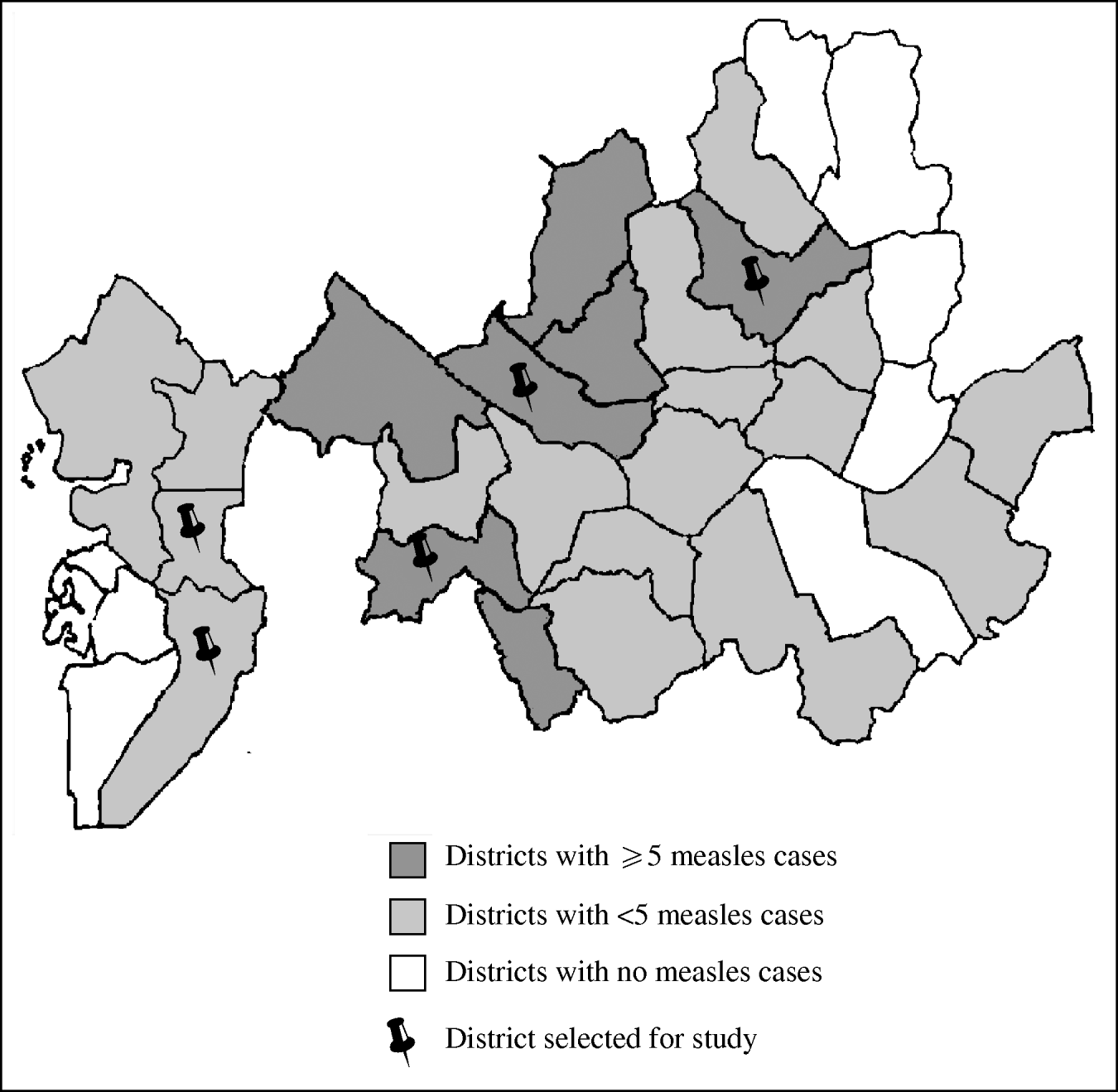
Study subjects were children aged 15–23 months and 4–6 years who were living in the measles outbreak areas of Seoul and In-cheon city in 2007. During the measles outbreak of 2007, new measles cases were reported in parts of Seoul and In-cheon city. Both cities are comprised of districts and the districts comprised of communities, which are lower administrative divisions. Three districts of Seoul and two districts in In-cheon were randomly selected from the districts where measles cases were identified (Fig. 1). Two communities were selected from each district which resulted in 10 selected communities. However, in three selected communities, numbers of residents were insufficient and therefore, a geographically adjacent community was additionally included. In total, 13 communities were selected of which three were adjacent to the initially selected communities.
Sampling areas in the study, Seoul and In-cheon.
Children aged 15–23 months were randomly selected from the community household registration. The community household registration data listing children aged 15–23 months were provided by the community administrative office upon the request of Korea Centers for Disease Control and Prevention. Children aged 4–6 years were surveyed in nurseries which were randomly selected from the list of nurseries provided by the website of the governmental childcare information centre. Samples of households and nurseries were randomly drawn using the statistical package SPSS v. 12.0 (SPSS Inc., USA). From the list of households, 500 were selected and from the list of nurseries, 300 were selected for contact. After they were contacted for consent, 452 children aged 15–23 months and 300 children aged 4–6 years were included in the final analysis. The response rate was 90·4% in the 15–23 months age group.
Survey
A survey was undertaken in order to evaluate the vaccination coverage status and factors that may have been significantly associated with a delayed or missed vaccination dose. We recommended that the parent/caregiver most directly responsible for the child's vaccination should answer the survey. For the 15–23 months age group, door-to-door interviews were carried out. For the 4–6 years age group, visits were made to nursery schools where survey sheets were distributed to caregivers, which were then completed at home and returned.
Vaccination status and age at vaccination were confirmed by checking the immunization card. When the immunization card was not available, vaccination status was determined by information from the caregiver, according to recall. The caregivers were asked whether the child had been vaccinated, the date of vaccination, and the medical facility at which the child was vaccinated. We also evaluated the timeliness of the first dose of measles-mumps-rubella (MMR) vaccine, for which the recommended vaccination age period is from the first day of the 12th month until the final day of the 15th month of life.
The Health Belief Model (HBM) was applied to evaluate possible factors related to delayed or missed vaccinations. In the HBM, whether a person practices a particular health behaviour can be attributed to two major factors: perception of susceptibility to an illness, and the perception of benefit resulting from a health practice [Reference Ogden5, Reference Taylor6]. In addition to susceptibility and benefit, we evaluated barriers to immunization, e.g. cost, lack of time, and accessibility. Caregivers were also tested on their knowledge of measles by 18 questions. Demographic and socioeconomic factors were surveyed.
HBM scores were calculated in five categories: susceptibility to measles, severity of measles, benefit of vaccination, barriers to vaccination, and knowledge about measles vaccination. Susceptibility, severity, benefit, and barriers to vaccination were presented as an average of scores that range from 0 (not at all) to 5 (very much). Knowledge of measles vaccination was worth 1 point for each correct answer, the total knowledge score ranged from 0 to 18.
This study was approved by the Ewha Womans Hospital Institutional Review Board.
Statistical analysis
χ2 test and Fisher's exact test were used to compare the vaccination rates between age groups. Kruskal–Wallis test was used to compare the HBM scores in timely, delayed, and unvaccinated groups in children aged 15–23 months and in vaccinated (recorded), vaccinated (according to recall), and unvaccinated groups in children aged 4–6 years. Multivariate logistic regression was used to evaluate the association between various social factors and vaccination status. Data were analysed using SAS software, version 9.1 (SAS Institute Inc., USA). Statistical significance was defined by a P value of <0·05.
RESULTS
Coverage and timeliness
The coverage of the first MMR dose was 87·8% in children aged 15–23 months and 83·0% in the 4–6 years group (Table 1). When vaccination according to caregivers' recall was taken into account, the vaccination coverage was increased by 10·2% and 11·0%, respectively. For the second dose, 42·0% of the 4–6 years group were unvaccinated and only 58·2% of 6-year-olds (who were in the final year of the recommended age range) were vaccinated.
Vaccination coverage rate in study subjects, 2007
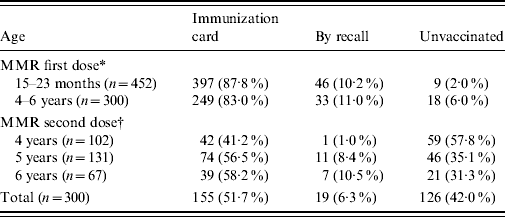
* P=0·004.
† P<0·001 (Fisher's exact test).
Timely vaccination rate for the first dose of MMR for whom card data were available was lower than the overall vaccination rate. Of the 394 children aged 15–23 months, 317 (80·5%) received the first dose of MMR during the recommended period of 12–15 months. Of the 247 children aged 4–6 years, only 175 (70·9%) received the first dose of MMR during the recommended immunization period (Table 2).
Timeliness of the first dose of MMR in study subjects with immunization cards
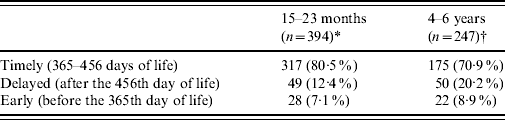
* Three excluded due to unavailability of vaccine dates from the immunization card.
† Two excluded due to unavailability of vaccine dates from the immunization card.
Barriers to timely vaccination
Analysis of the HBM revealed that for children aged 15–23 months, scores for preventive immunization factors were significantly higher in the unvaccinated group than in the delayed and timely groups (Fig. 2). In children aged 4–6 years, scores for preventive immunization factors were significantly higher in children who were unvaccinated compared to children who were vaccinated and had immunization cards (P<0·009). Perception of benefit, severity, and knowledge category were not significantly associated with missed or delayed vaccination doses.
Scores of the Health Belief Model for two age groups. * Significant difference between ‘by recall’ and ‘not yet vaccinated’ groups (P<0·05). † Significant difference between three groups (P<0·009). ‡ Significant difference between ‘by immunization card’ and ‘not yet vaccinated’ groups (P<0·001).

Being aware of the necessity for measles vaccination and its schedule were significantly associated with receiving measles vaccination in both age groups (Table 3). Of children aged 15–23 months, caregivers in the unvaccinated group were more likely to have an erroneous impression that measles immunity could be achieved naturally (P<0·05). Of children aged 4–6 years, 54·0% of the parents who had not had their child vaccinated stated that the reason was because the recommended period was not yet over (P<0·001). Child being sick during the recommended vaccination period was also a significant factor in both age groups.
Preventive immunization factors of the Health Belief Model and measles vaccination
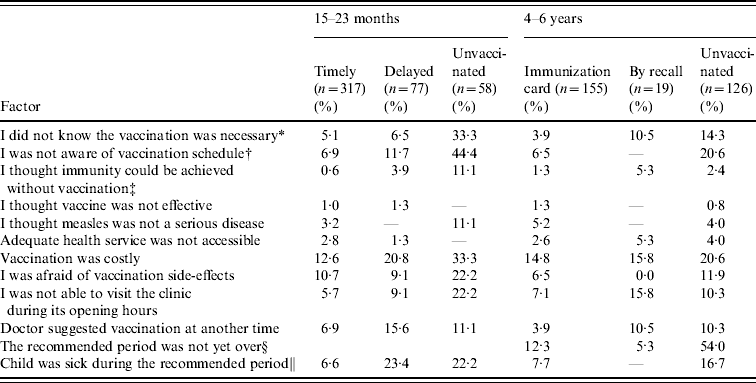
* P<0·05 for both age groups.
† P<0·001 for both age groups.
‡ P<0·05 for 15–23 months age group only.
§ P<0·001 for 4–6 years age group only.
∥ P<0·001 for 15–23 months age group, P<0·05 for 4–6 years age group.
For both doses of MMR, children who were younger among siblings were less likely to be vaccinated, although it was not statistically significant (Table 4). For the first MMR dose, type of current family, vaccination caregiver, and family caregiver were significantly associated with timeliness of vaccination (P<0·05). In households with a single parent, the percentage of unvaccinated children was >15 times higher than in households with both parents present.
Demographic factors and measles vaccination for both doses
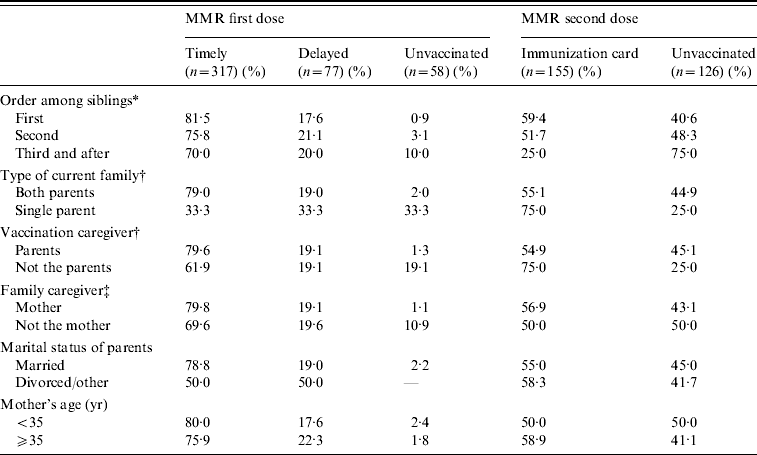
* P<0·1 for both MMR doses.
† P<0·05 for MMR first dose only.
‡ P<0·001 for MMR first dose only.
Children whose mothers were working and had a higher educational level were less likely to receive timely vaccination with statistical significance (Table 5). Of the children whose mothers did not have a job only 1·2% were unvaccinated whereas it was more than seven times higher in children with a working mother. For both doses, accessing to public health services resulted in fewer vaccinations outside the recommended period compared to university hospitals and private clinics (P<0·05). In the multivariate logistic regression analysis, order among siblings and type of healthcare provider were significantly associated with timeliness of measles vaccination (Table 6).
Socioeconomic factors and measles vaccination for both doses
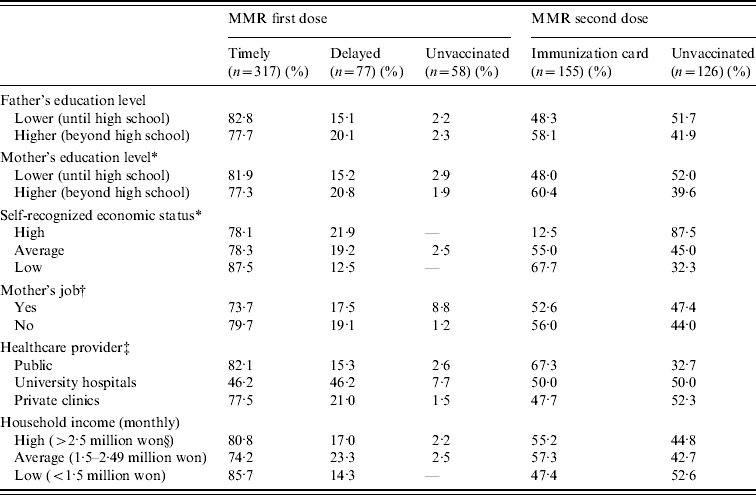
* P<0·05 for MMR second dose only.
† P<0·01 for MMR first dose only.
‡ P<0·05 for both doses.
§ £1 GBP=1370 won.
Multivariate analysis in 15–23 months age group for timeliness of first dose of MMR
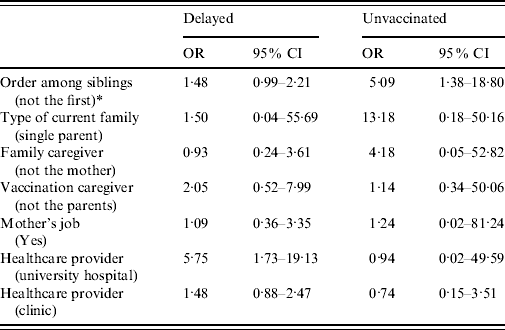
OR, Odds ratio; CI, confidence interval.
* P for trend=0·057.
DISCUSSION
Many of the previously published studies on measles have focused on the percentage of children who have accumulated the appropriate number of vaccinations by a certain age. However, relying on the overall vaccine coverage may mask substantial delays in vaccination and subsequent lack of immunity. This was demonstrated in one study, where a measles outbreak in an otherwise highly vaccinated population was attributed to vaccine failures which resulted from individuals being vaccinated outside the recommended period [Reference Nkowane4]. In our study, we analysed the timeliness of measles vaccinations which revealed that 80·5% of children aged 15–23 months were immunized with the first dose of MMR during the recommended age period which left about 20% of children with either early or delayed immunization.
Timeliness of vaccination has great significance. Age-appropriate vaccination decreases an individual child's risk of vaccine-preventable diseases [Reference Luman7, Reference Atkinson8]. Moreover, delayed vaccination adds to the pool of unprotected children in the population, rendering the population susceptible to outbreaks. Lack of timely vaccination is likely to be one of many causes of measles epidemics [Reference Luman7–Reference Luman11].
Another implication is that children who were delayed in their childhood vaccinations probably had difficulties with medical access and did not catch up on their vaccination schedule even at a later age [Reference Luman11]. These children also had insufficient utilization of other preventive and primary care such as screening, acute illness visits and well-child care visits [Reference Rosewald12]. Thus, increasing healthcare access for immunization is likely to increase use of other primary health services.
A second dose of MMR is administered in order to induce immunity in those who failed to attain immunity through the first dose. After the new school-entry vaccination requirement was implemented in Korea, the overall coverage rate of the second MMR dose for 7-year-old children, which is the age of school entry, was reported to be almost 99% [Reference So13]. Our study revealed that the rate of the second dose of MMR during the recommended immunization period of 4–6 years was only 51·7%. Moreover, the coverage rate of 6-year-olds, which is the final year of the recommended vaccination age, was 58·2% which suggests the possibility that many children are not receiving vaccination even in the final year of the recommended period and were vaccinated after school entry. It can be speculated that although it appears almost all children of school age have been vaccinated, many of these children are not vaccinated on time.
Several reasons could be responsible for this untimely vaccination of the second dose of MMR. In a separate focus group interview that was carried out with several selected participants after the survey, a significant percentage of caregivers answered that the relatively long range of the recommended period gives the sense that there is still plenty of time left for vaccination (data not shown). This may apply not only caregivers but also to doctors, subsequently resulting in delay of vaccination for relatively minor health problems of the child. It is reported that caregivers cite clinic factors as one of the commonest reasons for missed vaccinations, and 19·2% of caregivers were told by clinic staff to attend at another time for vaccination [Reference Corrigall, Coetzee and Cameron14]. In addition, as most of the childhood vaccination schedule is completed around the second year of life, caregivers are less likely to pay attention to the second dose of MMR which is scheduled at 4–6 years. Although the second dose of MMR is recommended at 4–6 years, it can be adequately administered at any time after 1 month of receiving the first dose if the first dose was administered at age ⩾12 months [15]. Consequently, administration of the second dose can be given at an earlier age in order to increase overall coverage rate of the second dose.
The low timeliness of the second dose of MMR is an important issue not only in Korea but also in many countries where the second dose of MMR is scheduled at 4–6 years or later [Reference Ong2, Reference Hutchins16]. Several countries in Europe recommend two doses before age 2 years in order to simplify the vaccination schedules and achieve better protection. Evidence from mathematical modelling suggests that giving the second dose at age 18 months could reduce susceptibility to measles by about 5% compared to giving it at age 4 years. [Reference Wood17]. Modifying the current school-age vaccination requirement to an earlier age or recommending both doses before age 2 years could be encouraged in many other countries.
Our study revealed that caregivers who did not have their child vaccinated were the least aware of the necessity for vaccination and its schedule in both age groups. Another reason for delayed or missed vaccinations was that the child was sick during the recommended immunization period. However, because postponing the vaccination was a voluntary decision by the caregiver, not made by a doctor, we can infer that accurate information about vaccination is not adequately delivered to the general public and that insufficient knowledge is related to inadequate vaccination [Reference Matsumura18].
Our study suggests that being the younger of siblings is a significant demographic factor for delayed or missed vaccination. Several studies suggest that parental attention can be diverted by the presence of multiple children [Reference Luman7, Reference Luman11, Reference Matsumura18].
Single parents and working mothers are suggested to be at higher risk of not having their child vaccinated on time [Reference Matsumura18]. Information delivery could be targeted especially to such families with single parents and working mothers in order to promote vaccination coverage and timeliness. In addition to education, interventions should also include methods that address the needs of these mothers, such as an enabling working environment for working mothers, extended office hours of public health centres, and attitude changes allowing fathers to share the responsibility as well. Education and information delivery should be coupled with changes in social environment and structure in order to promote vaccination coverage and timeliness.
Having a mother with a higher level of education was a significant demographic factor for delayed or missed vaccination for the second dose of MMR. As mothers with higher education are more likely to have a career, we assume that they have less time to spare for their child's primary healthcare and at the same time, are less aware of the necessary information concerning vaccination. It suggests that higher education of the mother does not necessarily correlate with positive health behaviour related to vaccination.
Not many studies have evaluated the association of economic status with vaccination timeliness. Caregivers in our study who had evaluated their economic status as poor were more likely to provide timely vaccination to their child than those who had rated themselves as economically wealthy or average. Although this was an unexpected result, self-evaluated economic status may not necessarily correlate with actual household income. Although we can not be certain of the causes for such an outcome, we suggest that those who view themselves as poor are more likely to refer to public health providers than private clinics for vaccination. This result is in contrast to studies performed in other social circumstances where using a public health vaccination provider was associated with delay in vaccination [Reference Luman11]. In Korea, public health centres, which are located within each district, are open to the public and provide services in various primary healthcare sectors for little expense, if not free. Immunization is among the most important healthcare provided by these centres and mandatory vaccinations, which include MMR vaccination, is free in public health centres, whereas it is not without cost in private clinics and hospitals. Public health centres were also earlier to develop and perform vaccination reminder services.
This study is subject to several limitations. In order to identify children aged 4–6 years, nurseries were selected from a list and children in the nurseries were contacted. Selection bias may have occurred due to children who do not attend nursery schools. Vaccination coverage given by the caregivers from memory may well be subject to recall bias [Reference Corrigall, Coetzee and Cameron14]. In order to evaluate the magnitude of possible recall bias, some caregivers who had given information on coverage data from memory were selected to be compared to the national vaccine registry data. It was revealed that nearly 70% had received vaccination, suggesting that the extent of bias is not significant. The strength of our study is that it is a community-based study. Moreover, it is one of few studies performed in the measles outbreak area that evaluates the timeliness of, and barriers to, immunization.
CONCLUSION
The timely vaccination coverage rate in our study was suboptimal and promotion of timely vaccination needs to be encouraged. Accurate information should be delivered especially to households with single parents and working mothers. Children who are younger among siblings or who are not being cared for by their parents should similarly be targeted as high- risk subgroups. Education and information delivery should be coupled with changes in social environment and structure in order to promote vaccination coverage and timeliness. A systematic approach, such as lowering the vaccination requirement to a younger age might also be encouraged.
ACKNOWLEDGEMENTS
This study was supported by a grant from the Korea Centers for Disease Control and Prevention.
DECLARATION OF INTEREST
None.



