





Introduction
Delirium is a disorder of consciousness that develops acutely due to a variety of complex factors, including physical abnormalities, drug use, and environmental changes. It presents with symptoms of cognitive dysfunction such as disorientation, as well as various psychiatric symptoms such as hallucinations, delusions, and mood swings (American Psychiatric Association, DSM-5 Task Force 2013). Delirium is common in cancer treatment settings. It occurs in 10–31% of medical inpatients (Siddiqi et al. Reference Siddiqi, House and Holmes2006), 37% of patients after surgery (Dyer et al. Reference Dyer, Ashton and Teasdale1995), and 43% of patients with advanced cancer (Uchida et al. Reference Uchida, Okuyama and Ito2015), and the prevalence rises to 68% in terminal palliative care settings and to 88% in the 6 h before death (Lawlor et al. Reference Lawlor, Gagnon and Mancini2000). Delirium is a distressing experience for patients with cancer, caregivers, and healthcare providers (Breitbart et al. Reference Breitbart, Gibson and Tremblay2002a; Bruera et al. Reference Bruera, Bush and Willey2009), and it, therefore, must be carefully monitored and properly managed.
The management of delirium includes non-pharmacologic and pharmacologic therapies (Breitbart and Alici Reference Breitbart and Alici2012). Pharmacotherapy primarily involves antipsychotic administration (Lawlor and Bush Reference Lawlor and Bush2015). While haloperidol has been the standard treatment, atypical antipsychotics are often used instead of typical antipsychotics due to concerns that the latter increase the risk of death (Huybrechts et al. Reference Huybrechts, Gerhard and Crystal2012). Among atypical antipsychotics, quetiapine, olanzapine, and risperidone have been commonly used to treat delirium (Breitbart et al. Reference Breitbart, Tremblay and Gibson2002b; Kishi et al. Reference Kishi, Kato and Okuyama2012; Tahir et al. Reference Tahir, Eeles and Karapareddy2010). It was also found, however, that higher doses of atypical antipsychotics were associated with increased mortality in patients with terminal cancer and delirium (Yokomichi et al. Reference Yokomichi, Maeda and Morita2022). The lack of injectable formulations of atypical antipsychotics is a barrier to their application in patients with delirium who are unable to take them orally. Therefore, haloperidol remains a standard drug for delirium treatment.
However, the use of haloperidol increases the risk of symptom exacerbation in patients with comorbidities such as Parkinson’s disease and Lewy body dementia, as well as in patients with unstable respiratory and cardiovascular conditions. A candidate alternative drug in such cases is hydroxyzine, a first-generation antihistamine used primarily for the treatment of itching, allergies, motion sickness-induced nausea, and insomnia and also widely prescribed for the symptomatic relief of anxiety and tension associated with psychoneurosis (Llorca et al. Reference Llorca, Spadone and Sol2002). Hydroxyzine is also used clinically for sedation (Matsuda et al. Reference Matsuda, Tanimukai and Inoue2020) and insomnia (Spahr et al. Reference Spahr, Coeytaux and Giostra2007) in patients who have difficulty using haloperidol or benzodiazepines due to Parkinson’s disease or respiratory instability, respectively.
Mark Beers published the American Geriatrics Society (AGS) Beers Criteria® for Potentially Inappropriate Medication Use in Older Adults in 1991. The latest AGS Beers Criteria® updated in 2019 indicate that all first-generation antihistamines, including hydroxyzine, have potent anticholinergic properties and should not be used as hypnotics in older adults because of the risk of confusion, dry mouth, constipation, and other anticholinergic effects or toxicity (AGS Beers Criteria® Update Expert Panel 2019). Nevertheless, regardless of this warning and similar ones discussed in review articles, hydroxyzine has been widely prescribed in treating delirium in the real world.
While there is widespread belief that hydroxyzine has potent anticholinergic properties, there is no evidence supporting this. Several in vitro studies evaluated the anticholinergic properties of hydroxyzine, and all found that hydroxyzine has low affinity for muscarinic receptors. Kubo et al. conducted radioligand binding assays using bovine cerebral cortex and found that while some H1-receptor antagonists (mequitazine, cyproheptadine, clemastine, diphenylpyraline, promethazine, homochlorcyclizine, and alimemazine) had high affinity for muscarinic receptors (Ki = 5.0–38 nM), others (mepyramine, terfenadine, methapyrilene, azelastine, meclizine, and hydroxyzine) had low affinity (Ki = 3,600–30,000 nM) (Kubo et al. Reference Kubo, Shirakawa and Kuno1987). Specifically, the Ki of hydroxyzine was 3,800 ± 100 nM. Later, a study conducted by Liu and Farley using mucus gland cells isolated from the airways of swine estimated that the Ki of hydroxyzine against muscarinic receptors was even higher, at 15,000 nM (Liu and Farley Reference Liu and Farley2005). From a pharmacological standpoint, therefore, the recommendation of the Beers Criteria® to avoid hydroxyzine for delirium due to its potent anticholinergic properties is without merit.
Very few studies have investigated the efficacy of hydroxyzine in treating delirium, and the results have been controversial. For example, although a preliminary study reported that the combination of haloperidol and hydroxyzine effectively treated delirium (Sato and Tanaka Reference Sato and Tanaka2022), it was a single-institution study that targeted only a small number of patients with a variety of diseases, about half of which were cancers. Clinical guidelines for delirium in adult patients with cancer found no evidence that hydroxyzine was effective against delirium (Matsuda et al. Reference Matsuda, Tanimukai and Inoue2020).
Considering the discrepancy between the Beers Criteria® recommendations and real-world findings, it is crucial to determine whether administering hydroxyzine to patients with cancer and delirium worsens their delirium. Therefore, we designed an observational, multicenter study to evaluate this issue.
We hypothesized that concomitantly administering hydroxyzine and haloperidol to patients with cancer and delirium would increase each of the following: (1) the number of days from the first day of haloperidol administration to the resolution of delirium; (2) the total dose of antipsychotic medications, including those other than haloperidol (measured in chlorpromazine-equivalent doses); and (3) the frequency of detrimental incidents during delirium, specifically falls and self-removal of drip infusion lines.
Methods
Subjects and interventions
The subjects of this retrospective observational study were patients with cancer who were admitted to the National Cancer Center Hospital (NCCH) and Tohoku University Hospital in Japan from July to December in 2020 and were treated for delirium with either haloperidol alone or the combination of haloperidol and hydroxyzine. Haloperidol (5-mg injection) and hydroxyzine (25-mg injection) were diluted in saline and administered intravenously over 30 min. Decisions to select and add medications were made by each patient’s attending physician.
This study was approved by the NCCH Ethics Committee (approval number: 2021-197). The requirement for informed consent was waived due to the retrospective cohort design. Opt-out information was published on the NCCH website. This study was conducted in accordance with the principles of the Helsinki Declaration.
Survey items and evaluation procedures
Data on the following items were extracted from medical records by 2 psycho-oncologists: medical record number; age; sex; cancer diagnosis (in-hospital cancer registry); cancer treatment (surgery; chemotherapy, including cytotoxic agents, molecularly targeted drugs, and immune checkpoint inhibitors; radiation; hematopoietic stem cell transplantation; and follow-up); total hydroxyzine dose taken within 24 hours of the first dose of haloperidol; benzodiazepine use (daily use); number of days of delirium since the first day of haloperidol administration; detrimental incidents during delirium (falls and self-removal of drip infusion lines); total dose of antipsychotic medications during delirium, including those other than haloperidol (measured in chlorpromazine-equivalent doses); organic brain disorder (history of cerebral infarction or hemorrhage); and cognitive decline or dementia.
The diagnosis of delirium was determined based on the Nursing Delirium Screening Scale (Nu-DESC), a screening tool for delirium that nurses are expected to utilize in their daily care. The Nu-DESC includes 5 items, each rated on a scale from 0 to 2: disorientation, inappropriate behavior, inappropriate communication, illusions/hallucinations, and psychomotor retardation. The sensitivity and specificity of the scale for patients with cancer were 85.7% and 86.8%, respectively (Gaudreau et al. Reference Gaudreau, Gagnon and Harel2005). Delirium was defined by a Nu-DESC score of 1 point or higher (Jeong et al. Reference Jeong, Park and Lee2020). Nu-DESC was evaluated on a calendar-day basis (0:00–24:00), and if there were multiple scores of 0 and 1 or higher, a score of 1 or higher was used. For patients whose medical records contained an incomplete Nu-DESC score or none at all, 2 psycho-oncologists diagnosed delirium using other information in the medical records. A lack of information on delirium was assumed to indicate its absence.
The primary outcome was the number of days from the first day of haloperidol administration to the resolution of delirium. Delirium was considered to have resolved when it was absent for 2 consecutive days.
Secondary outcomes were (1) the total dose of antipsychotic medications, including those other than haloperidol (chlorpromazine-equivalent doses), and (2) the frequencies of detrimental incidents during delirium, specifically falls and self-removal of drip infusion lines.
Statistical analysis
Descriptive statistics were calculated for patient background, cause of delirium, and treatment used to resolve the cause of delirium. Cause of delirium was categorized by 2 psycho-oncologist reviewers using a Delirium Etiology checklist (Trzepacz et al. Reference Trzepacz, Maldonado and Kean2009). This tool categorizes potential causes into drug intoxication, drug withdrawal, metabolic/endocrine disturbance, traumatic brain injury, seizures, intracranial infections, systemic infection, intracranial neoplasm, systemic neoplasm, cerebrovascular, organ insufficiency, other central nervous system, and other. The other category included etiologies such as heat stroke, hypothermia, radiation, postoperative state, immunosuppressed, and fractures. If there was more than 1 cause of delirium, the 2 psycho-oncologists decided on 1 direct cause after discussion. The treatment for the direct cause of delirium was chosen as the treatment used to resolve the cause of delirium. Fisher’s exact test and the unpaired t-test were performed to compare demographic information between patients with and without hydroxyzine use. Fisher’s exact test was performed to compare cause of delirium and treatment used to resolve the cause of delirium between patients with and without hydroxyzine use. Time to delirium resolution (the primary outcome) was compared between the haloperidol group and the hydroxyzine combination group using the log-rank test with the Kaplan–Meier method. Multivariable Cox regression analysis was performed for the associations between extracted data items and the mean number of days from the first day of haloperidol administration to the resolution of delirium, both with and without hydroxyzine use. Regarding secondary outcomes, the unpaired t-test was used to analyze the association between the presence or absence of hydroxyzine use and antipsychotic dosage; a 2-sided P value < 0.05 was considered significant. In addition, Fisher’s exact test was used to compare the association between the presence or absence of hydroxyzine use and the frequencies of detrimental incidents during delirium; a P value < 0.05 was considered significant. Analyses were conducted using IBM SPSS Statistics version 27 (IBM Corp., Armonk, NY, USA). There were no missing data.
Results
Patient background
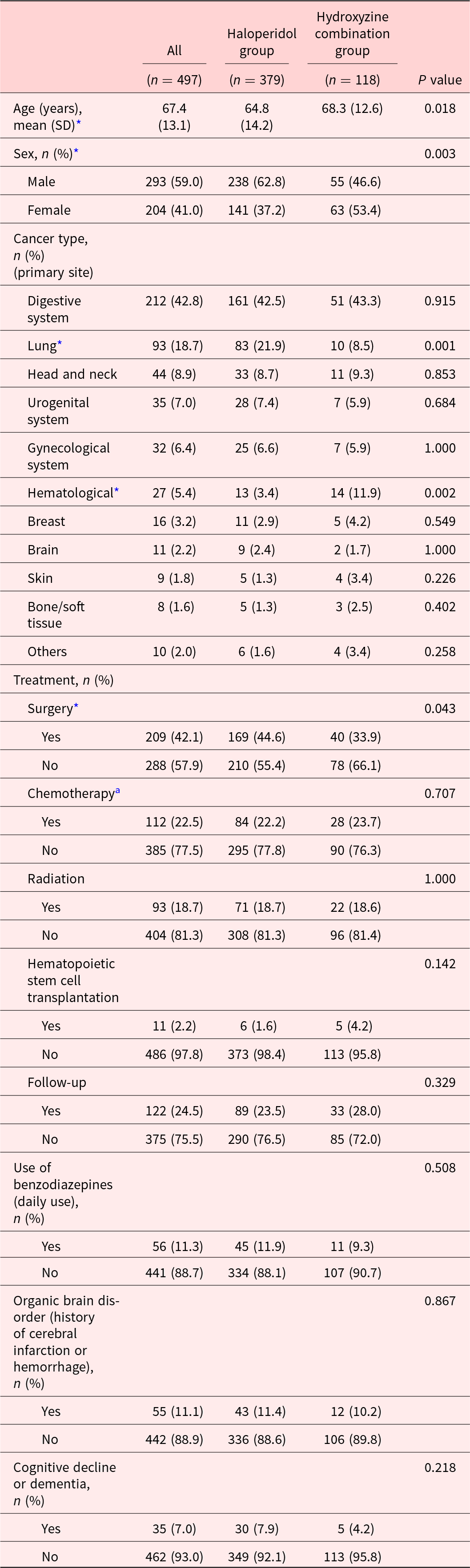
Patient background data are shown in Table 1. From July to December 2020, 497 patients received haloperidol for the treatment of delirium. Of these, 379 (76.3%) received haloperidol without hydroxyzine and 118 (23.7%) received the combination of haloperidol and hydroxyzine. The patients’ mean age (standard deviation) was 67.4 years (13.1). The cancer types (defined by primary site) included digestive system cancer (n = 212; 42.8%), lung cancer (n = 93; 18.7%), head and neck cancer (n = 44; 8.9%), urogenital system cancer (n = 35; 7.0%), gynecological system cancer (n = 32; 6.4%), hematological cancer (n = 27; 5.4%), and others (n = 54; 10.9%). The most common treatment was surgery (n = 209, 42.1%). Lung cancer (P = 0.001) and surgery (P = 0.043) were significantly more common in the haloperidol group than in the hydroxyzine combination group. In contrast, the hydroxyzine combination group was characterized by a significantly higher mean age (P = 0.018) and significantly higher numbers of women (P = 0.003) and patients with hematological cancer (P = 0.002).
Patient background

a Including cytotoxic agents, molecularly targeted drugs, and immune checkpoint inhibitors.
* P < 0.05.
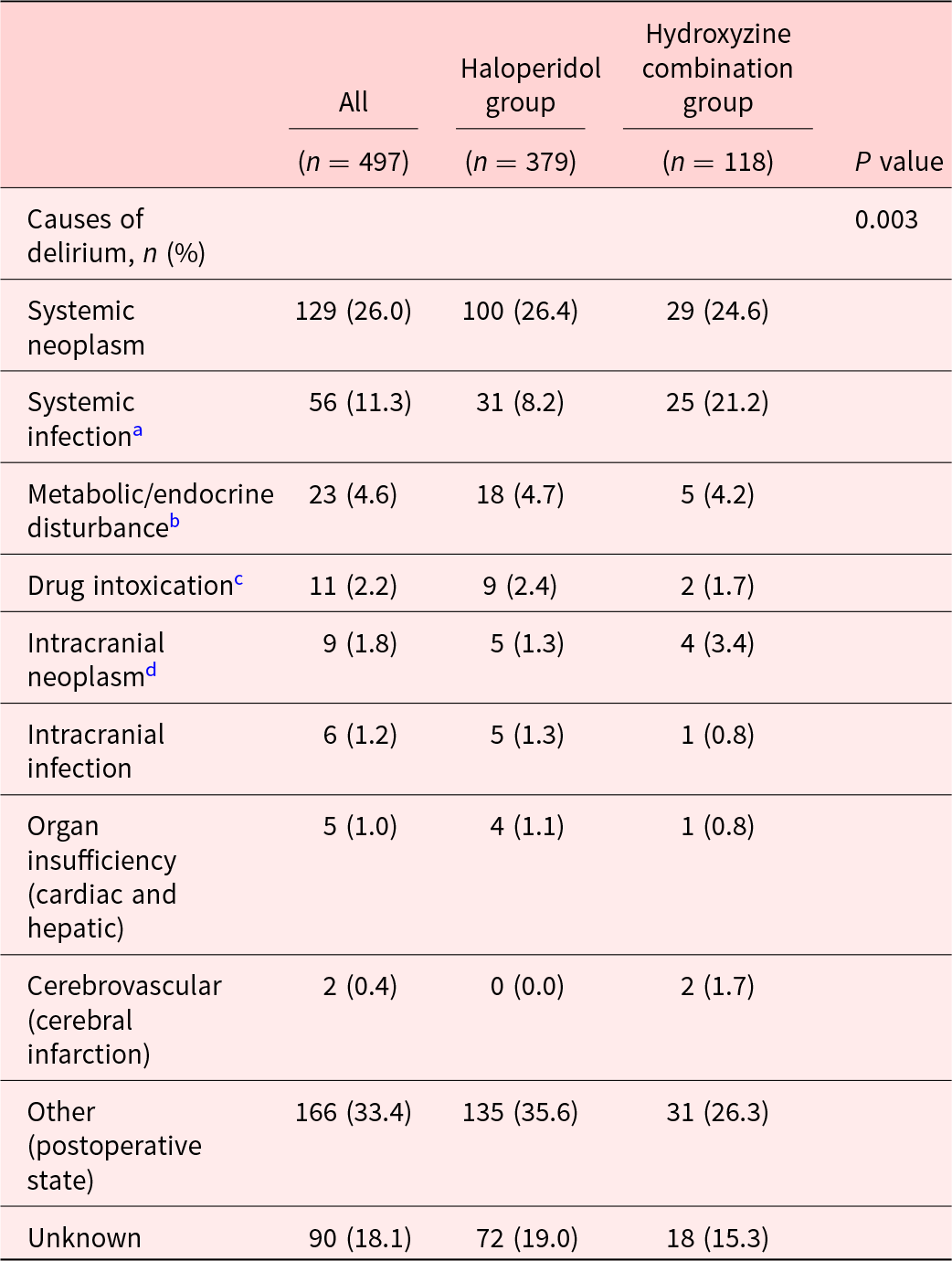
The causes of delirium are shown in Table 2. Systemic infection was more common in the hydroxyzine combination group than in the haloperidol group. Postoperative state was more common in the haloperidol group than in the hydroxyzine combination group.
Causes of delirium

a Including bacteremia, sepsis, respiratory, pyelonephritis, and cellulitis.
b Including volume depletion, hypoxia, anemia, hypercalcemia, hyponatremia, and hyperammonemia.
c Including sedative – hypnotic and prescribed drug (opioid, steroid, and benzodiazepines).
d Including metastasis and meningeal carcinomatosis.
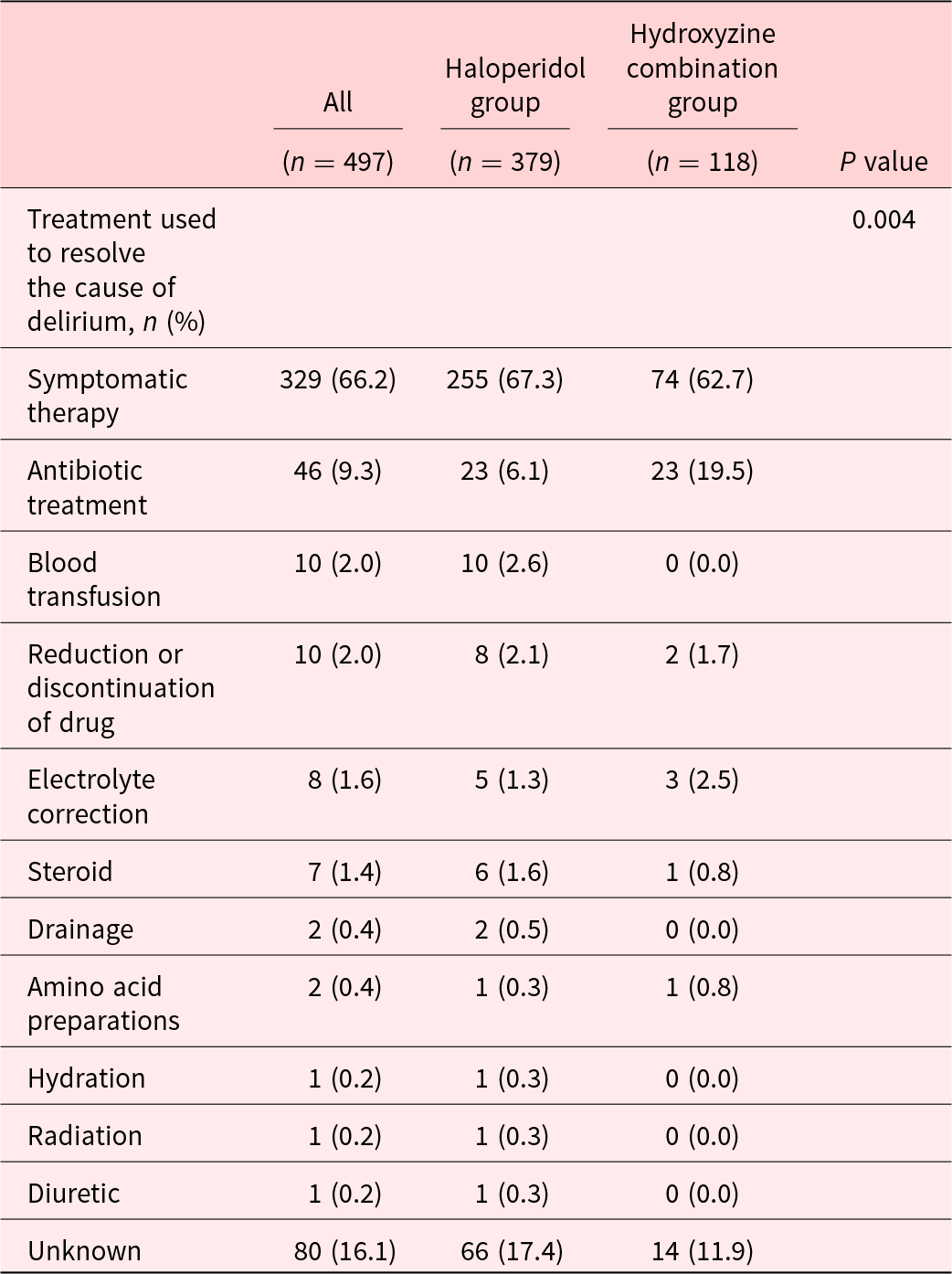
The treatment used to resolve the cause of delirium is shown in Table 3. Symptomatic therapy was more common in the haloperidol group than in the hydroxyzine combination group. Antibiotic treatment was more common in the hydroxyzine combination group than in the haloperidol group.
Treatment used to resolve the cause of delirium

Primary outcome
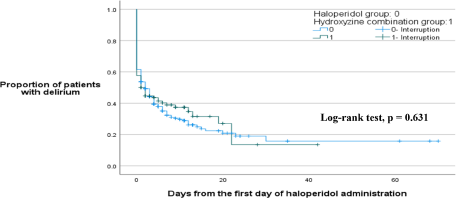
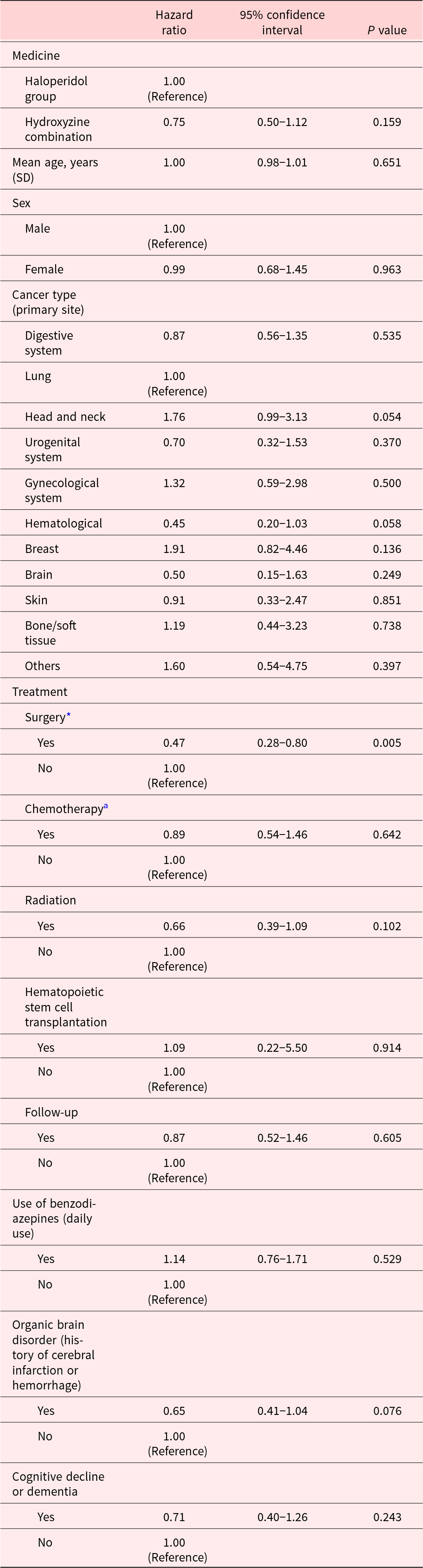
Figure 1 shows the Kaplan–Meier estimates for the number of days from the first day of haloperidol administration to the resolution of delirium. No significant difference in time to delirium resolution was found between the haloperidol group and the hydroxyzine combination group (log-rank test, P = 0.631). After the absence of multicollinearity was confirmed, multivariate analysis was conducted. This showed that surgery was significantly associated with a smaller number of days to delirium resolution (P = 0.005, hazard ratio: 0.472, 95% confidence interval: 0.279–0.800) (Table 4).
The Kaplan–Meier estimates for number of days from the first day of haloperidol administration to resolution of delirium.

Multivariate analysis of the number of days from the first day of haloperidol administration to delirium resolution

a Including cytotoxic agents, molecularly targeted drugs, and immune checkpoint inhibitors.
* P < 0.05.
Secondary outcomes
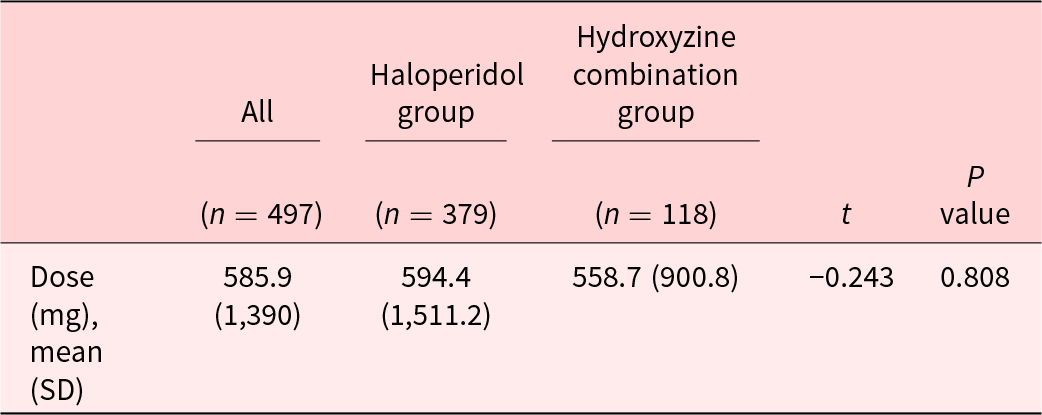
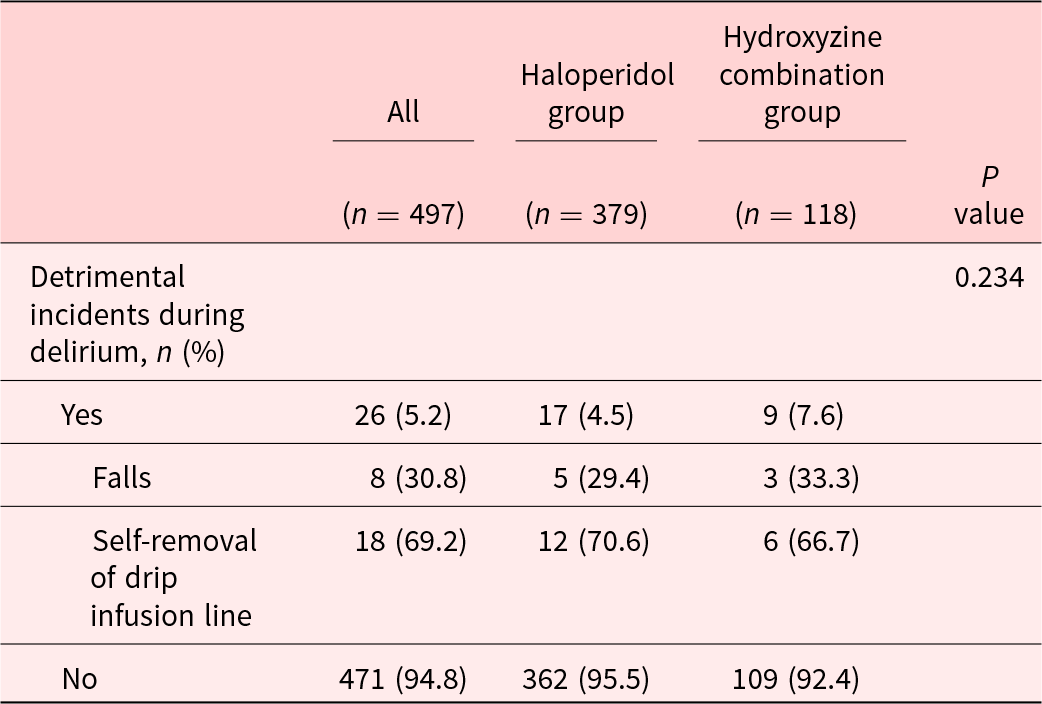
As measured in chlorpromazine-equivalent doses, there was no significant difference in the total dose of antipsychotic medications between the haloperidol group and the hydroxyzine combination group (Table 5). There were also no significant differences between the 2 groups regarding the frequencies of falls and self-removal of drip infusion lines during delirium (Table 6).
Dosage of any antipsychotic medications including those other than haloperidol (chlorpromazine-equivalent doses)

Detrimental incidents, specifically falls and self-removal of drip infusion lines, during delirium

Discussion
This observational study is the first to show that the concomitant use of hydroxyzine and haloperidol did not worsen delirium among patients with cancer. No significant difference in the time to delirium resolution was found between the haloperidol group and the hydroxyzine combination group. The 2 groups also did not differ in terms of the total dose of antipsychotic medications (in chlorpromazine-equivalent doses) or the frequencies of detrimental incidents during delirium, specifically falls and self-removal of drip infusion lines.
Hydroxyzine is a first-generation antihistamine that permeates the blood–brain barrier. It inhibits the action of histamine in the thalamus, hypothalamus, and limbic system and has anxiolytic and sedative effects (Sato and Tanaka Reference Sato and Tanaka2022). The tuberomammillary nucleus, located in the posterior hypothalamus, is the only source of histamine pathways in the human brain and is considered to be an arousal center. Many antihistamines, including hydroxyzine, are H1 blockers that are sedating and are, therefore, sometimes used for insomnia (Abad and Guilleminault Reference Abad and Guilleminault2018) and as alternatives to benzodiazepines for anxiety and panic attacks in both inpatient and outpatient settings (Guaiana et al. Reference Guaiana, Barbui and Cipriani2010). Antihistamines are generally well tolerated, aside from adverse effects like dry mouth, constipation, sedation, and risks of use while driving (Garakani et al. Reference Garakani, Murrough and Freire2020).
Though H1-receptor antagonists have been reported to be associated with the risk of delirium (AGS Beers Criteria® Update Expert Panel 2019), this issue was only examined prospectively for diphenhydramine, and no significantly increased risk of delirium was found (Clegg and Young Reference Clegg and Young2011). Thus, there is little evidence that hydroxyzine increases the risk of developing delirium. Furthermore, the Ki value of hydroxyzine for muscarinic receptors in the bovine cerebral cortex was 3,800 ± 100 nM, suggesting a lower affinity and therefore a weaker anticholinergic effect than other first-generation antihistamines (Kubo et al. Reference Kubo, Shirakawa and Kuno1987). On the other hand, hydroxyzine also has dopamine D2 antagonist activity (Haraguchi et al. Reference Haraguchi, Ito and Kotaki1997). It may, therefore, have a positive impact on delirium because the psychiatric and behavioral disturbances seen in delirium are associated with the direct excitatory effects of excess dopamine, including glutamate-mediated neuropathy (Graham Reference Graham1984) and apoptosis (Pedrosa and Soares-da-Silva Reference Pedrosa and Soares-da-Silva2002). Also, since most antipsychotic drugs have strong dopamine D2 antagonist activity and have been reported to be useful for the treatment of delirium (Boettger et al. Reference Boettger, Friedlander and Breitbart2011), hydroxyzine may also be effective.
The use of antipsychotics in patients with delirium has been shown to induce dose-dependent sedation, extrapyramidal symptoms, and QT prolongation syndrome (Kishi et al. Reference Kishi, Hirota and Matsunaga2016), all of which can lead to increased mortality in older adults and patients with dementia (Gill et al. Reference Gill, Bronskill and Normand2007; Schneeweiss et al. Reference Schneeweiss, Setoguchi and Brookhart2007). QT is the time from the beginning of the Q wave to the end of the T wave on the electrocardiogram. It is the time from the beginning to the end of ventricular excitement. Delirium with agitation that causes psychomotor activation results in violent behavior and other incidents, such as falls and self-removal of drip infusion lines, that burden nursing care (Devlin et al. Reference Devlin, Skrobik and Gélinas2018). Therefore, developing drug therapies to treat delirium with few side effects is an important clinical challenge.
In clinical practice, if the effect of haloperidol is insufficient, additional doses of haloperidol may be given or benzodiazepines may be administered concomitantly. However, overdoses of haloperidol may cause aspiration, drug-induced parkinsonism, and cardiotoxicity. In addition, the concomitant use of benzodiazepines may cause respiratory depression. In 1 study, for example, flunitrazepam-induced respiratory depression was reported in 17% of patients with terminal illness (Matsuo and Morita Reference Matsuo and Morita2007). In addition, patients with delirium and cancer pain are more likely to use opioid analgesics, and the concomitant use of opioids and benzodiazepines increases the risk of excessive respiratory depression (Baillargeon et al. Reference Baillargeon, Singh and Kuo2019). These limitations may be avoided by treating delirium with the combination of haloperidol and hydroxyzine.
A strength of this study is that it included approximately 500 patients with cancer at multiple facilities. Though a previous study compared a haloperidol group and a hydroxyzine combination group, it included only 39 people, including patients without cancer, at 1 facility (Sato and Tanaka Reference Sato and Tanaka2022). That study suggested that haloperidol plus hydroxyzine was effective against delirium, including in patients without cancer. These findings were consistent with our own, which demonstrated that the concomitant use of hydroxyzine and haloperidol in patients with cancer did not exacerbate delirium or increase the frequency of incidents such as falls and self-removal of drip infusion lines when compared to haloperidol alone.
The limitations of this study were as follows. First, the study used a retrospective, observational design. Our findings suggested that the concomitant use of hydroxyzine and haloperidol did not worsen delirium in patients with cancer, but the effectiveness of hydroxyzine against delirium was unclear. The chlorpromazine-equivalent dose was lower in the hydroxyzine combination group than in the haloperidol group; while the difference was not statistically significant, it suggests that hydroxyzine may not adversely affect delirium. To evaluate the benefit of hydroxyzine in patients with cancer, a prospective study is needed. Second, the choice of haloperidol alone or in combination with hydroxyzine was determined by each patient’s physician. The evaluation of medical records in this study showed that many prescriptions were written by physicians who were not specialized in psychiatry, and there was uncertainty about the reasons for their drug selection. Third, although the diagnosis of delirium was determined based on the Nu-DESC, the validity and reliability of the Japanese version have not been confirmed. Fourth, some aspects of the patients’ backgrounds were not equivalent between the haloperidol group and the hydroxyzine combination group. In particular, the hydroxyzine combination group was characterized by a higher mean age and a lower incidence of surgery. Older age has been shown to be the most significant risk factor for delirium (Inouye et al. Reference Inouye, Westendorp and Saczynski2014), while postoperative delirium usually resolves within a week (Lee et al. Reference Lee, Ju and Oh2018). Our analysis also showed that postoperatively, the duration from the first day of haloperidol administration to the resolution of delirium was brief. Therefore, older age and fewer surgeries in the hydroxyzine combination group would be expected to prolong delirium in this group, and the fact that the duration of delirium in this group did not differ significantly from that in the haloperidol group supported the non-inferiority of the concomitant use of hydroxyzine and haloperidol compared with haloperidol alone against delirium. Finally, some aspects of the causes of delirium were not equivalent between the haloperidol group and the hydroxyzine combination group. Systemic infection was more common in the hydroxyzine combination group than in the haloperidol group. Because some infection in delirious patients with cancer was reported to be associated with non-reversibility, more systemic infection in the hydroxyzine combination group would be expected to prolong delirium in this group. Postoperative state was more common in the haloperidol group than in the hydroxyzine combination group. Because postoperative delirium usually resolves within a week (Lee et al. Reference Lee, Ju and Oh2018), fewer postoperative state in the hydroxyzine combination group would be expected to prolong delirium in this group. Therefore, these supported the non-inferiority of the concomitant use of hydroxyzine and haloperidol compared with haloperidol alone against delirium.
Despite these limitations, our findings suggest that treating delirium with the combination of hydroxyzine and haloperidol did not worsen delirium in patients with cancer, indicating that hydroxyzine itself does not exacerbate delirium in this population. Thus, due to hydroxyzine’s inherent effects on anxiety and tension, it is expected to be effective for these symptoms in patients with delirium.
Conclusion
This study showed that the concomitant use of hydroxyzine and haloperidol did not worsen delirium in patients with cancer. As a next step, we aim to conduct a prospective study to evaluate the effectiveness of hydroxyzine for delirium in patients with cancer.
Acknowledgments
The authors express their gratitude to Tomoko Mizuta (Department of Psycho-Oncology, National Cancer Center Hospital, Japan), Masamitsu Maekawa (Department of Pharmaceutical Sciences, Tohoku University Hospital and Faculty of Pharmaceutical Sciences, Tohoku University, Japan) and Tatsuro Ishikawa (Department of Medical Information Technology Center, Tohoku University Hospital, Japan).
Author contributions
All authors contributed to the study conception and design. Data preparation and analysis were performed by Takatoshi Hirayama, Saho Wada, Ryoichi Sadahiro, and Hiromichi Matsuoka. Data collection was performed by Takatoshi Hirayama, Emi Igarashi, Hanae Oshikiri, Masato Suzuka, Yuji Sato, and Toru Imai. The first draft of the manuscript was written by Takatoshi Hirayama. Emi Igarashi, Saho Wada, Ryoichi Sadahiro, Hanae Oshikiri, Masato Suzuka, Yuji Sato, Yusuke Utsumi, Atsushi Sakuma, Rika Nakahara, Toru Imai, Hiroaki Tomita, and Hiromichi Matsuoka commented on subsequent versions of the manuscript. All authors read and approved the final manuscript.
Funding
This research received no specific grant from any funding agency in the commercial or not-for-profit sector.
Competing interests
The authors have no relevant financial or non-financial interests to disclose.
Ethical approval
This study was performed in line with the principles of the Helsinki Declaration. Approval was granted by the National Cancer Center Institutional Review Board on September 22, 2021 (approval number, 2021-197).

 Open access

