





The garden is a cultivated outdoor leisure space that mediates between private and public use, horticulture and agriculture, leisure and labor, and aesthetics and utility.Footnote 1 (Pre)colonial histories of botanical transfer, interspecies entanglement, technologies of cultivation, and hyperlocal knowledge of natural conditions come together in gardens worldwide today. Consequently, from colonial-era botanical gardens still standing in postcolonial spaces to exhibitions at national libraries, from urban regeneration projects to artistic interventions at international biennales, gardens are inviting public explorations of the Anthropocene’s imperial legacies.Footnote 2 Despite their obvious divergences of scale and location, such projects converge in recognizing the aesthetic and nurturing dimensions of gardens as especially conducive to the decolonizing of cultures, spaces, institutions, and pedagogies through reconciliation and collective healing. This issue of Public Humanities intervenes within these engagements by focusing on the creole garden, a horticultural practice which, as articulated by the Caribbean philosopher Edouard Glissant within his novel Tout-monde (1993), recalls the small plots of land that enslaved, indentured, and variously unfree people within the Plantation economy cultivated for access to their own fruits, vegetables, and medicinal plants:
You still believe in isolated things, in race, language, terrain, in the idea. You believe in uniqueness. Yet look at the creole garden—you place all species together within a small strip of land, avocados, lemons, yams, sugarcanes, oranges on top of mandarins, soursops, mint, chilies, sweetcorn, country-onion, cinnamon, breadfruit, pomme-cythère, and another thirty or forty species on this parcel of land that climbs the hill for no more than seventeen metres—they protect each other.Footnote 3
While nourished by the theoretical and Francophone domains represented by Glissant and other Caribbean intellectuals, the creole garden is also becoming a powerful mode of artistic intervention within public spaces outside of those domains. This shift is exemplified by the Greenhouse project, Portugal’s official entry to the 2024 Venice Biennale, which, as its curators explain, “proposes collective action through the creation of a ‘creole garden’ inside Palazzo Franchetti” by combining “sculpture, stage, installation and assembly spaces, to open an area of resistance and freedom for multiple subjectivities.”Footnote 4
In Tout-monde, Glissant invites us into the space he calls a “jardin créole” and we translate as “creole garden,” as resistance to unitary and hegemonic attitudes toward identity, culture, and belonging. It is precisely this political utility of the creole garden as concept and practice that contemporary horticultural activists such as the curators of the Greenhouse project are drawing consciously on. Recognizing such gardens as being a long-standing feature of Creole societies past and present, and both a legacy and antithesis of the plantation economy, they mobilize them to promote biodiversity against monocropping, human subsistence over profit, and sustainable small-scale agricultural practices. In the process, creole gardens become ways to implement what is being called a “decolonial ecology.”Footnote 5 This issue—Creole Gardens as Decolonial Practice: Regrowth, Recycling, Resistance and Repair—brings together academics, artists and activists thinking critically and acting creatively about and around the creole garden as a decolonial space of public reparation for histories of enslavement and indenture that also responds to environmental precarity through initiating new transoceanic conversations. Their contributions chronicle, analyze, and recreate these gardens’ activation of the relationship between humans and nonhumans, and between the built and natural environments, through mobilizing ways of knowing (and doing) that have survived transoceanic diasporas and accelerated capitalism. Botany, pharmacy, foodways, and horticulture become tools of resistance that self-empower marginalized peoples of African, European, and Asian heritage by generating, from displacements and uprooting, new cultures and new solidarities. The offerings in this volume thus span gardens, and creative work around gardens, from the Indian and Atlantic Oceans; Lusophone, Francophone, and Anglophone worlds; and African, Indian, European, (variously) Creole, and indigenous cultural contributions to these spaces. Through our contributors, we showcase living cultural practices that memorialize the traumas of colonialism and globalization while enacting sustainable solutions to the contemporary “polycrisis.”Footnote 6
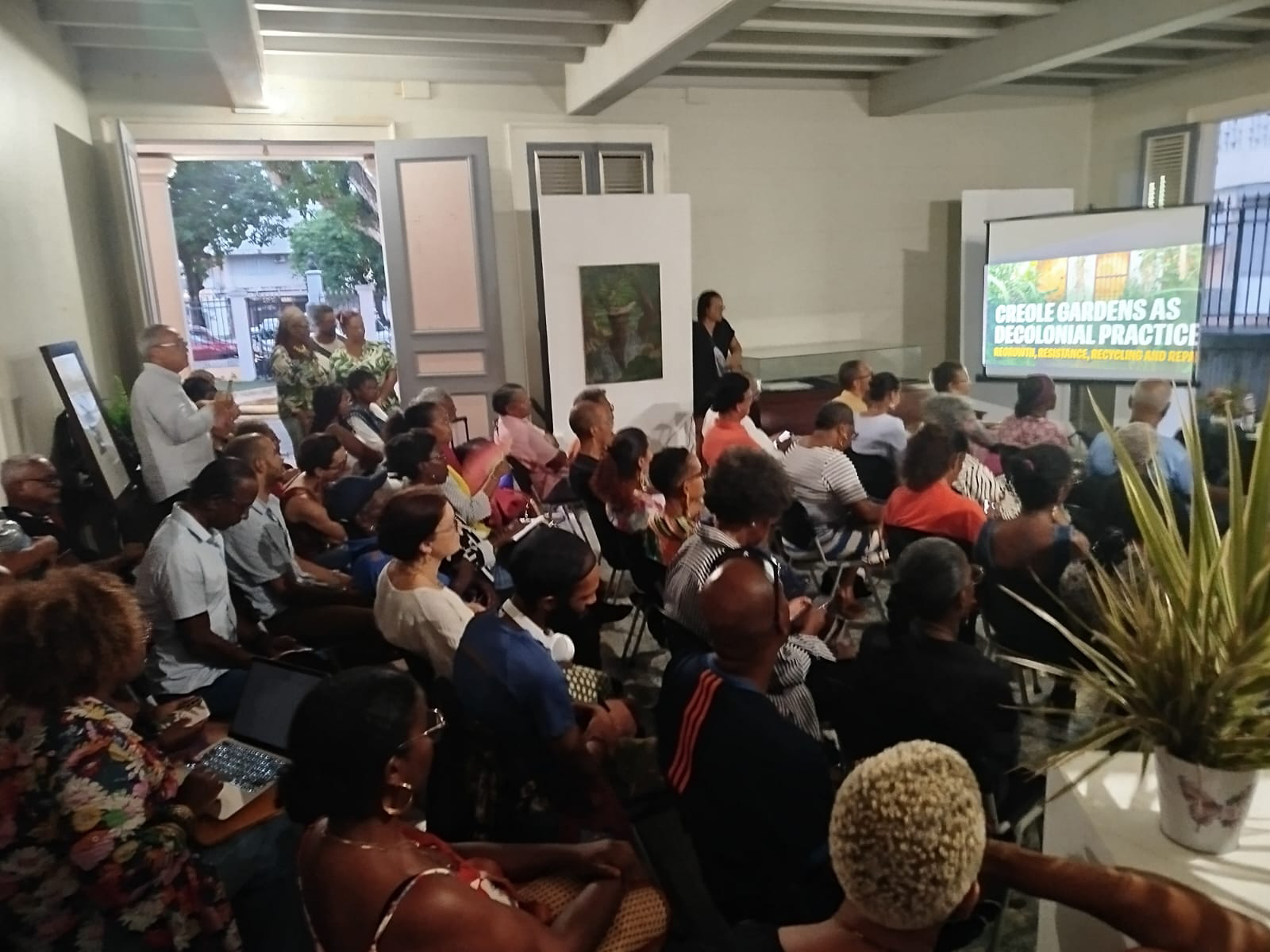
Our task as co-editors is to contextualize these efforts and explicate our curatorial choices. We do so in this introductory article by presenting, first, a discursive genealogy for the “creole garden,” and subsequently elaborating on creolization as the wider process within which the practices around the creole garden emerge. Our discussion is structured around four concepts: “regrowth,” “recycling,” “resistance,” and “repair.” These keywords have emerged through interactions with gardeners in the Seychelles and in Guadeloupe, which we (the co-editors) visited in May 2024 and May 2025, respectively.Footnote 7 Listening to these horticultural activists, we have learnt how they are enacting small-scale resistance to globalization and climate change through their knowledge, preserved in Creole language names of fruits, vegetables, and herbs, and passed down through the generations as a powerful resource linking histories of enslavement and indenture to postcolonial times.Footnote 8 At the museum of Saint-John Perse in Point-à-Pitre, Guadeloupe, a large local audience debated with us the significance of the creole garden for the inheritors of the Caribbean’s painful yet fecund history of creolization that continues to shape their lives through a complex relationship to France and the European Union. Their voices echo those of our contributors based in and writing about other Caribbean islands, Indian Ocean archipelagos, and the littorals of Africa and Asia. This volume is a platform for initiating these conversations between different yet similar Creole contexts, which join up often-separated histories of colonialism, enslavement, and indenture across continents as well as oceans. Together, we use the creole garden’s contemporary prominence to establish its potential for Public Humanities approaches to decolonial projects of regrowth, recycling, resistance and repair invested in the vegetal and the botanical.
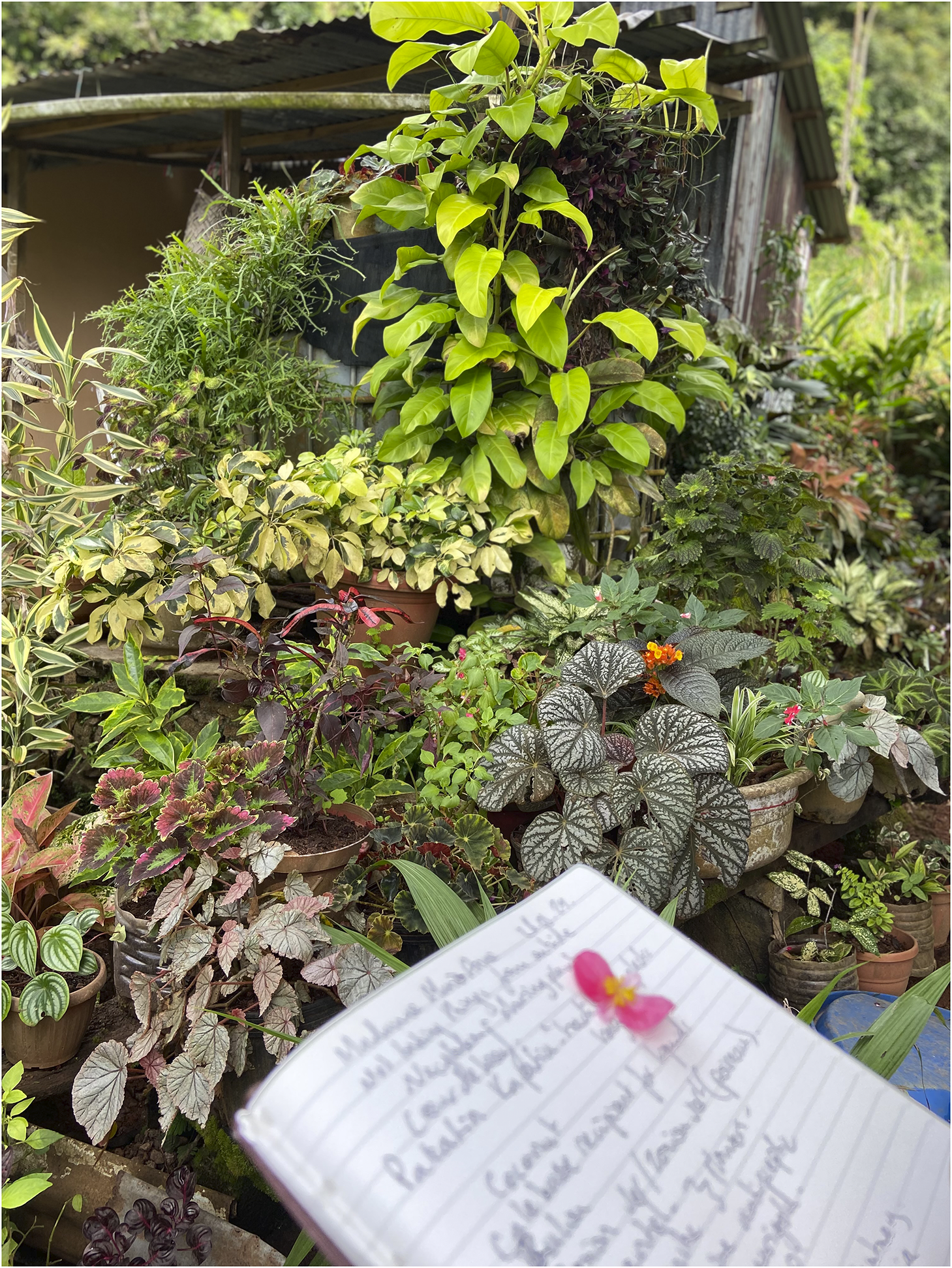
Taking notes in Madame Adrienne’s Garden, Mont-Plaisir, Seychelles. Photo by Ananya Jahanara Kabir, May 2024.

Public debate on Creole Gardens, Musée de Saint-John Perse, Point-a-Pitre, Guadeloupe. Photo by Katarina Jacobson May 2025.

1. Creole garden: A discursive genealogy
The “creole garden” never existed. It is not as provocation that we open with this statement, but, rather, as an opportunity for clarification. Within discursive prose, the French phrase jardin créole and its English equivalent creole garden are deployed to signify the cultivation of a demarcated outdoor space connected to a homestead or settlement, in a manner that rejects, supplements, or transforms the historical logic of the plantation economy. Yet, archival accounts from the Caribbean reveal this genre of horticultural intervention as commanding a variety of descriptors other than creole garden/jardin créole—as confirmed by Catherine Benoît’s examination of the French Caribbean’s “horticultural landscape” as well as Elizabeth DeLoughrey’s discussion of its Anglophone equivalent.Footnote 9 The sources they consult record distinctions between subsistence gardens on the one hand and kitchen gardens on the other. In the former, designated le jardin vivrier in French and provision ground in English, starchy tuberous crops were grown; they were often situated on the margins of the plantation and at a distance from the latter that, as the name implied, adjoined the cottage and was accordingly called jardin de case/ jaden de kaz (“cottage garden”) or backyard garden. Footnote 10 Distinctions were further made between gardens douvan kaz, or in front of the cottage, where ornamental plants might be growing, and those hidden away déryé kaz or “behind the house,” where kitchen pharmacies would find space.Footnote 11 Benoît also notes archival references to ichali (Arawak for “garden”), associated with indigenous species and their modes of cultivation and use.Footnote 12 As varied as the names for the site of the garden, then, are the diverse functions that they historically served and their location vis-à-vis the plantation. In Benoît’s words, a “single paradigm” cannot do justice to this complexity and diversity, for which the term “creole garden,” accordingly, appears “somewhat reductive.”Footnote 13
Nevertheless, as Benoît also notes, this term is often used to shorthand “the subsistence-oriented polyculture” of a “diversified ecosystem where a range of flora and fauna proliferated, in contrast to the expanses of monoculture associated equally with the plantation of old and the specialised ecosystems of contemporary agricultural exploitation.”Footnote 14 Such shorthand enters Sylvia Wynter’s prescient essay of 1971, where “plot” is used to signal the workings both of a novel and of slave gardens as what Jean Casimir calls “counter-plantation” activities.Footnote 15 In the Francophone plantation matrix, the need to refer collectively to these activities could well have given rise to the overarching jardin créole, where the adjective “créole” is used in its demotic sense: to qualify any living being or cultural product of the New World as indigenized, nativized, and thus home-grown.Footnote 16 It is in this oral register, within a dialog between Creolophone characters, that Glissant uses the term “jardin créole” in his novel Tout-monde, privileging it over concurrent terms in use within the French Caribbean including jaden bòkaz and jaden annou. Footnote 17 While these latter terms are not immediately decipherable to non-Creole speakers, the phrase jardin créole in standard French is phonetically close to both its Creole-language equivalents and the English “creole garden.” This fortuitous homophony sanctioned the phrase’s movement into theoretical and historical domains associated with the resurgence of an ideologically charged creole identity that crystallized around the publication of Eloge de la créolité during the same period that Tout-monde was published.Footnote 18 The discursive trajectory of the term “creole garden” within Glissant’s thinking is tracked by Manthia Diawara in his film with Glissant, One World in Relation (Reference Diawara2010), where “Glissant’s strategies of repetition and synthesis [are] at work as he remixes and recombines… ideas that synthesise Atlantic history with the jardin créole and its principles of distribution.”Footnote 19
The Atlantic Ocean, which the film captures Glissant as physically crossing on board ship, catalyzes his reflections on how the enslaved, newly arrived on the “other side of the Atlantic” cultivated “clandestinely” (“clandestins”) their “little secret gardens” (“des petits jardins secrets”), because their masters did not give them enough to eat.Footnote 20 Knowingly infused with the specificity of the Lamentin area of Martinique that is Glissant’s intimate space of recalled sensory reference, this account is an act of critical fabulation—“fabulation” in the sense of made-up, because it is widely attested that plantation owners sanctioned rather than prohibited the cultivation of such gardens in order to minimize the system’s human costs; and “critical” or knowing, because Glissant acknowledges as discursive and imaginative shorthand the use of “creole garden” to describe this scene.Footnote 21 Between the use of “creole garden” in his novel dated 1993, and this film of 2010, where he recapitulates the phrase as “that which is now called a creole garden” (emphasis ours), the concept has entered a second order of signification, whereby it pulls into a shared space horticultural characteristics historically separated and distributed through the spaces around the slave cottage, and between the cottage and the plantation.Footnote 22 “That which is now called the creole garden” thus emerges as a discursive miniature of creolization as process: it “remixes and recombines” features from different domains in improvised, innovative, and unpredictable response to new political exigencies, new economic pressures, and new openings in the cultural field at large. But it is not just as metaphor that the creole garden stands in for creolization: this (re)mixing of functions, forms, constituent vegetation, and location—is seen equally in creole gardens as contemporary practice, within public interventions that explicitly call, or analyze, their sites of activity a “creole garden” or linguistic variants thereof.
This expanded use is reflected in the concept’s recent crossing over into Spanish and Portuguese to explicate public mobilization of horticultural histories and resources within a shared horizon of solidarity in face of neocolonial extractivism, racialization, and precarity on a planetary scale. The Greenhouse project’s account of their creole garden within the Venice Biennale’s Portuguese pavilion, quoted earlier, occurs within a bilingual manifesto that reproduces the English phrase in Portuguese as “jardim crioulo,” and the phrase recurs in descriptions of cultural interventions mobilizing horticultural sites, such as the Capeverdian activist and singer Dino D’Santiago’s curation of a summer program for the Gulbenkian Foundation in Lisbon that, since 2022, brings annually Black and Creolophone musicians to perform in the Foundation’s public gardens.Footnote 23 Likewise, “jardin criollo,” the Spanish translation of “creole garden,” appears increasingly within assessments of Cuban responses to the food shortages of the so-called Special Period, during which people began clandestinely growing vegetables and fruits in garden projects that sprung up in urban “patios y parcelas” (“courtyards and plots”) across Havana.Footnote 24 These cognates of “creole garden” resonantly connect such projects to counter-plantation practices of survival across not just the Caribbean, but also to the Indian Ocean world, generating thereby a critical language that is both abstract enough to capture a range of examples and specific enough to conjure up practices of gardening and gardened spaces as acts and sites of resistance to capitalism, climate change, and precarity. Hence, during the Covid-19 lockdowns, when the researchers in Seychelles represented in this volume began studying the accelerated cultivation of what Seychellois Creole speakers call “traditional gardens” (“zarden tradisyonnel”), it is the phrase “creole garden” and its associated history of resistance to the plantation as system that allowed them to forge an analytical vocabulary for their research and documentation of this practice’s resurgence during pandemic-induced food shortages.Footnote 25
2. Regrowth: The marriages of plants
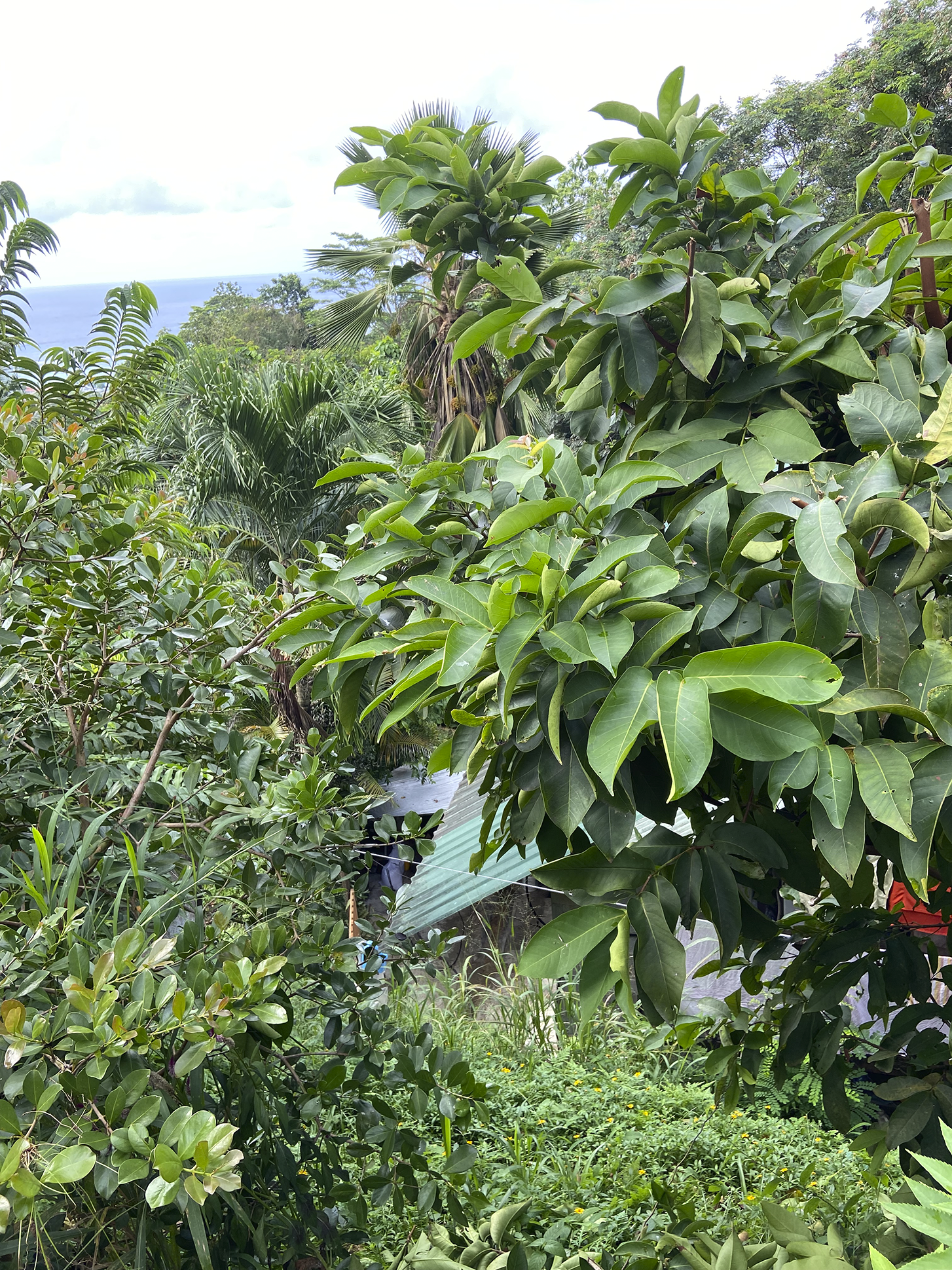
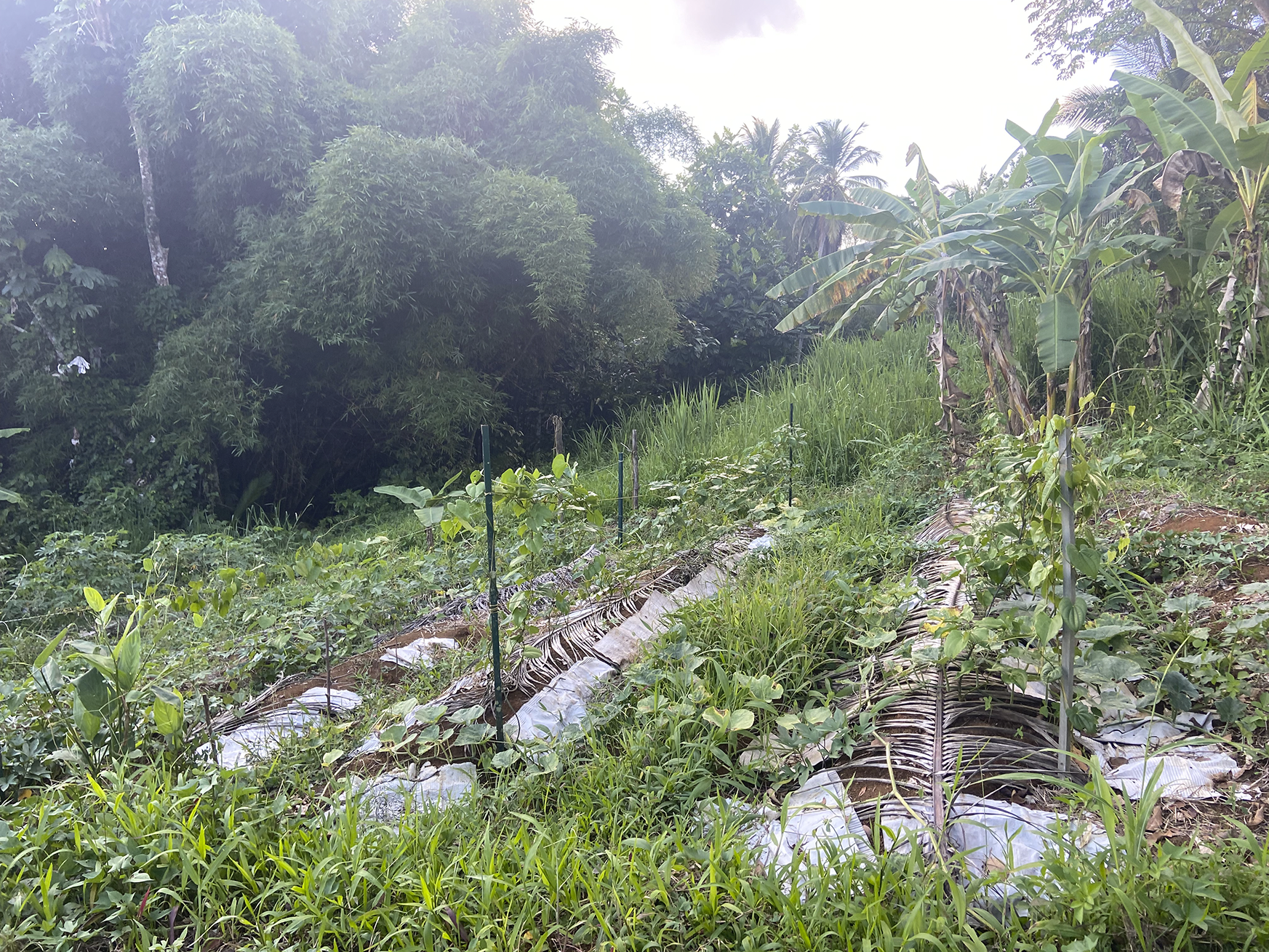
Our field trip to Seychelles was motivated by these research findings by Penda Choppy and her team, which had been commissioned for a UNESCO dossier on the intangible heritage of the Western Indian Ocean. As part of our learning process, Dr Choppy took us to the steep garden of the community elder Madame Marie-Anne Adrienne. After a long ascent by car from the town of Anse Royal to the hamlet of Mont-Plaisir, it is on foot that we climbed the steps leading us through a terrace of small plots and tall trees, a dense layering of greenery on top of which sat Adrienne’s modest house, surrounded by more plants, in pots, as climbing vines, or in beautiful bloom; and trees, big and small, heavy with fruit, or displaying their immense palm leaves. Adrienne’s garden was the first we visited. It contains all the features of what we came to identify as a creole garden, our understanding being progressively refined with each new garden we visited and were walked through by their custodians. The terrain of Adrienne’s plot is its most distinctive feature, and a veritable remnant of the Plantationscape. As Benoît and DeLoughrey explain, “the existence of provision grounds has also been linked to the topography of the island”; on particularly flat islands, every inch of arable land was devoted to monocropping, while on islands with more jagged relief, plantation owners bequeathed “less accessible and often mountainous land […] because it was deemed unfit for sugar cane.”Footnote 26 Whether sanctioned by the colonial power or cultivated in secrecy, the plots were impractical and small; yet, there flourished, as in Adrienne’s garden, an extraordinary multiplicity of species that the unfree laborers cultivated within what Ananya Jahanara Kabir calls “a sliver of space and time.”Footnote 27 The geo-historic context of the plot’s existence thus dictates some of its most salient characteristics today: its biodiversity, verticality, density, and opacity.Footnote 28
Madame Adrienne’s Garden, Mont-Plaisir, Seychelles. Photo by Ananya Jahanara Kabir, May 2024.

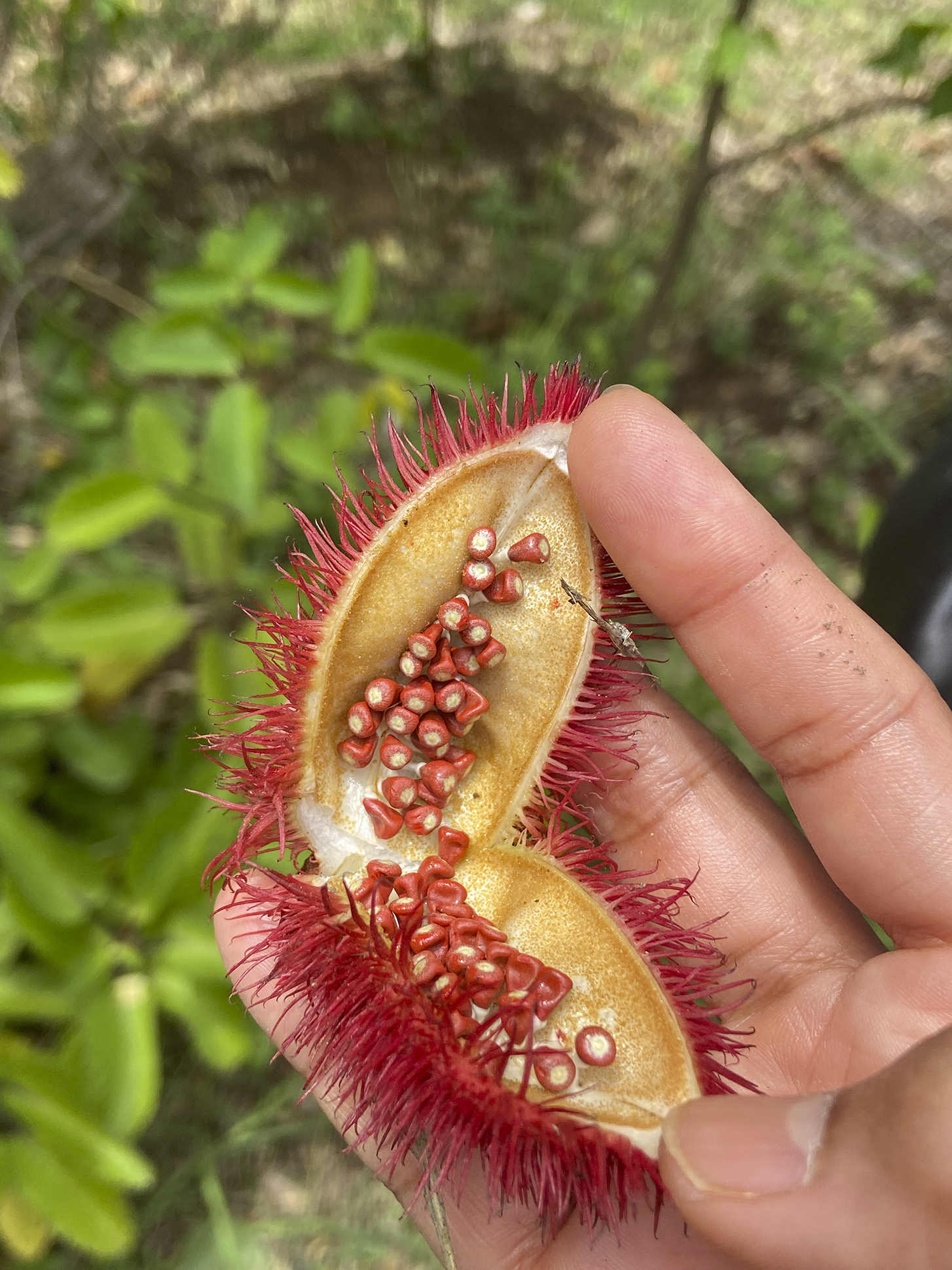
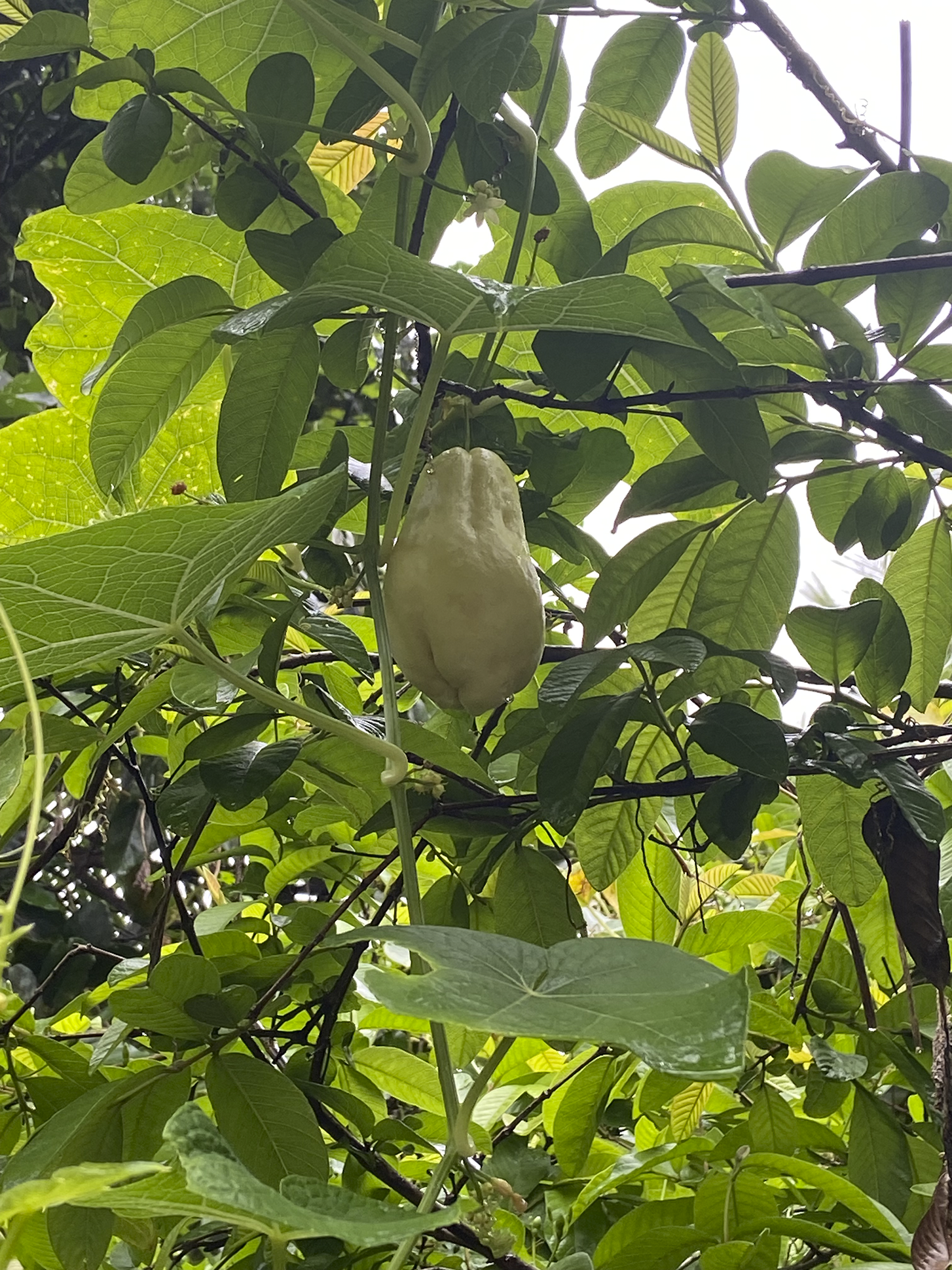
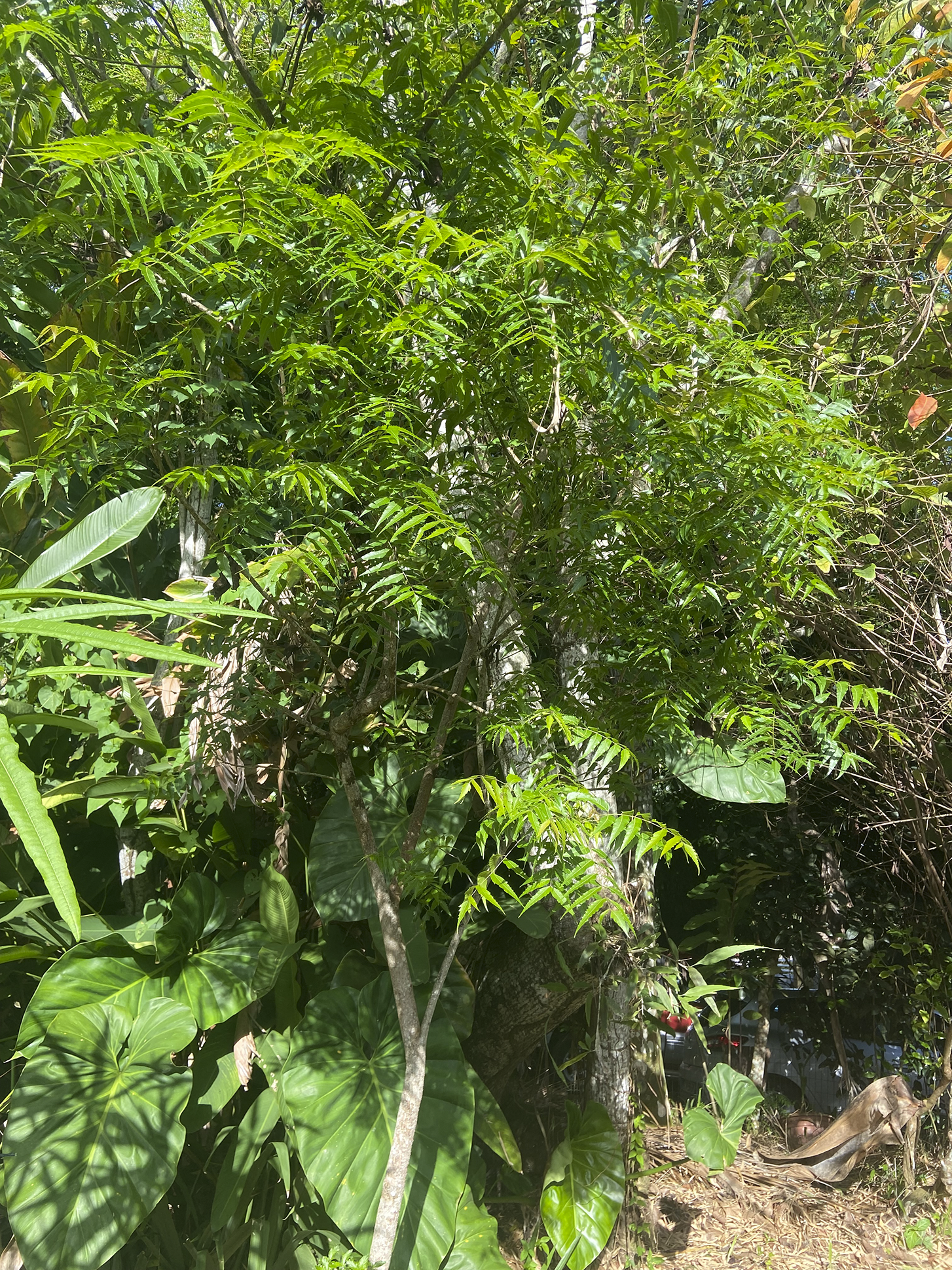
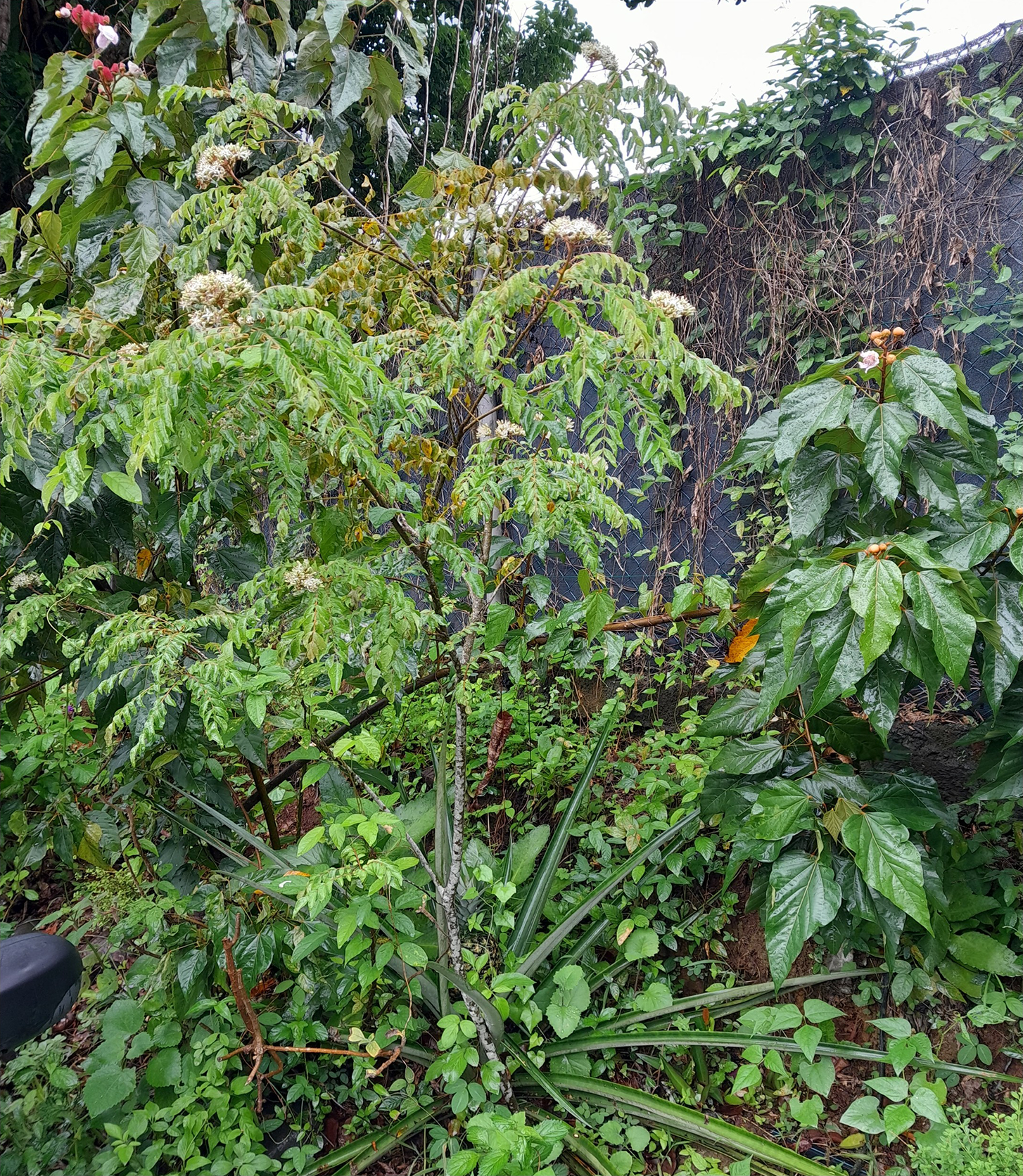
“Look in the Creole garden, you put all the species on a small strip of land,” says Roca to Mathieu in Edouard Glissant’s Tout-Monde. Footnote 29 While some of the gardens we visited are no longer “strips” or “slivers” but fully functioning small farms, the commitment to growing “the greatest possible biodiversity in the smallest possible space” described by Glissant, remains.Footnote 30 In 100% Zèb, Hugues Occibrun’s garden in Guadeloupe’s Petit Bourg, the farmer-activist showed us what he calls the “marriages” of plants. There grew together in a tight and spontaneous assemblage a roucou or achiote tree (Bixa orellana) and a kaloupilé or curry leaf (Murraya koenigii). Roucou, a spiky nut-like fruit, contains small red seeds that the Kalinago used to protect their skin from the sun and may be at the origins of the infamous redskin epithet, as another Guadeloupean gardener, Pamela Obertan, told us.Footnote 31 The roucou plant is therefore strongly associated with indigenous people of Guadeloupe. In Occibrun’s garden, it grew together with kaloupilé, a plant brought into the Caribbean by the Indians who arrived there as indentured laborers. Other “plant marriages” in 100% Zèb similarly illustrate what Eric Prieto calls the “agricultural promiscuity” of the creole garden.Footnote 32 Clitoria or blue pea (Clitoria ternatea) grew entangled with pawoka or bitter gourd (Momordica charantia), and goyave or guava (Psidium guajava) formed a natural trellis for a christophine or chayote (Sicyos edulis) to fructify. The plants are not in competition, but “they know where they will flourish,” Occibrun told us, pointing at a vanilla plant climbing against a tall tree.Footnote 33 In his garden, as in Adrienne’s, the promiscuity of plants is enabled by the verticality of the garden and a technique of layering where plants are raised above ground using most often recycled objects. This elevation turns certain parts of the garden into a dense superposition of different greens.
Roucou (Anatto) “Ichali” garden, campus de Fouillole, Pointe-à-Pitre, Guadeloupe. Photo by Sandrine Soukaï, May 2025.

Marriage christophine-guava, @ 100% Zèb, Petit Bourg, Guadeloupe. Photo by Ananya Jahanara Kabir, May 2025.

We observed this grouping of different species yet again in Sweet-Om garden, a small family farm cultivated by mother and son Thérèse and Yoan Cabidoche in Lamentin, Guadeloupe. While Yoan affirms that Caribbean people no longer knew the plants’ origins because “everything has been creolized,” he was keen to specify the different contributors to the garden’s creolization.Footnote 34 The vépélé or neem (Azadirachta indica) and moringa (Moringa oleifera) trees came with the Indian diaspora, yams (Dioscorea) and kola nut (Cola) with African ancestors, and the damiana (Turnera diffusa) and the practice of small-scale multicropping from Amerindian cultures. Such assemblages both reach back to and develop further the enslaved people’s physical and spiritual sustenance through their slivers of land. The gardens we visited contain an assemblage of plant types which historically had been cultivated separately: the starchy roots and tubers, called “gro manze” in Seychelles, earlier restricted to the provision grounds and jardins vivriers; and vegetables, fruits, herbs and condiments, medicinal plants, plants used in religious ceremonies, and flowers, all associated with the backyard and dooryard gardens or jardins de case. As we walked through the Sweet-Om garden that encircled the Cabidoche family home, moving between forest-like spaces and small terraced beds, we heard about their discovery of old root vegetables in ditches on their terrain that they traced back to the time of slavery and possibly even before that. “We cannot know for sure, but we think the indigenous people helped the maroons grow their food.”Footnote 35 This connection is attested by studies of provisions grounds with “their diverse intercropping of indigenous and African cultivars,” where the enslaved grew crops “blending European, African, and New World cultigens.”Footnote 36 This rich, and, at times, intractable biodiversity is reflected in the plants’ names that, like the plant themselves, create a jumbled layering of meanings that only practiced experts could follow.Footnote 37
“Sweet Om” garden, Lamentin Guadeloupe. Photo by Ananya Jahanara Kabir, May 2025.

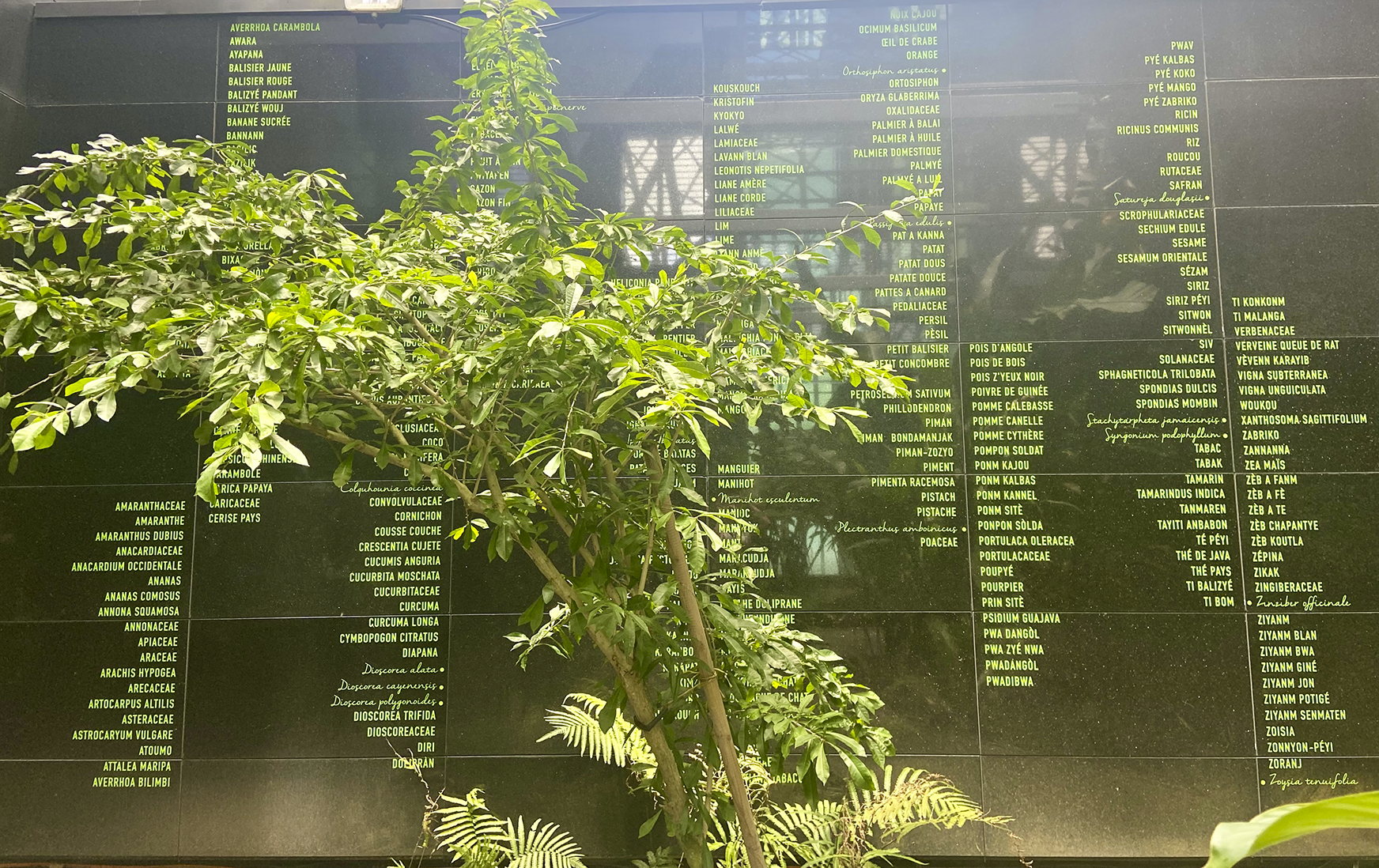
As Occibrun elucidated, “Creole names are very symbolic: they either reference the function, or to the shape of the plant.”Footnote 38 Zèb a fanm or “herb for women” (Sphagneticola trilobata) is the Creole name of a perennial herb that produces small yellow flowers and is known to alleviate the pain of menstruation. Occibrun indeed called it “endometrioses.” Other plant names also deploy the vocabulary of allopathic medicine and pharmaceutical drugs. Zèb maltet or “herb for headache” (Kalanchoe pinnata) is also commonly called “efferalgan” and “doliprane,” after French painkiller brands.Footnote 39 Each plant prompted, in fact, a proliferation of names and semantics, fostered also by our trilingual conversations in Creole, French, and English. The variations and puns create a confusion akin to both the impenetrability of the garden and the opacity that Glissant famously identified within creolized cultural expressions.Footnote 40 “One must know—this is the beauty of the creole garden,” said Yoan Cabidoche after speaking of the medicinal property of a weed growing profusely around a cinnamon tree.Footnote 41 For outsiders, at least, the labor of identifying a plant within the dense and apparently disorganized creole garden is made harder by such elusive nomenclature. “The same plant can have different names, and the same name can designate different plants,” Cabidoche further explained.Footnote 42 We soon learned not to rely on familiar names. If the apricot juice we had drunk seemed peculiar, it was because we were drinking juice from zabrico péyi or “country apricot” (Mammea americana), a large hard fruit completely different in taste from the apricot apart from the round shape and orange flesh. The creole gardens we visited and whose produce we sampled were spaces for not just the growth of lush and precious vegetation, therefore, but the regrowth of techniques and knowledges that re-adapt, repurpose, and transform the cultures, words, and practices of several “old worlds.”
Polysemy of plants, creole garden in the Memorial ACTe (Caribbean Centre of Expressions and Memory of the Slave Trade), Guadeloupe. Photo by Rosa Beunel-Fogarty, May 2025.

3. Recycling: Should the boat not return
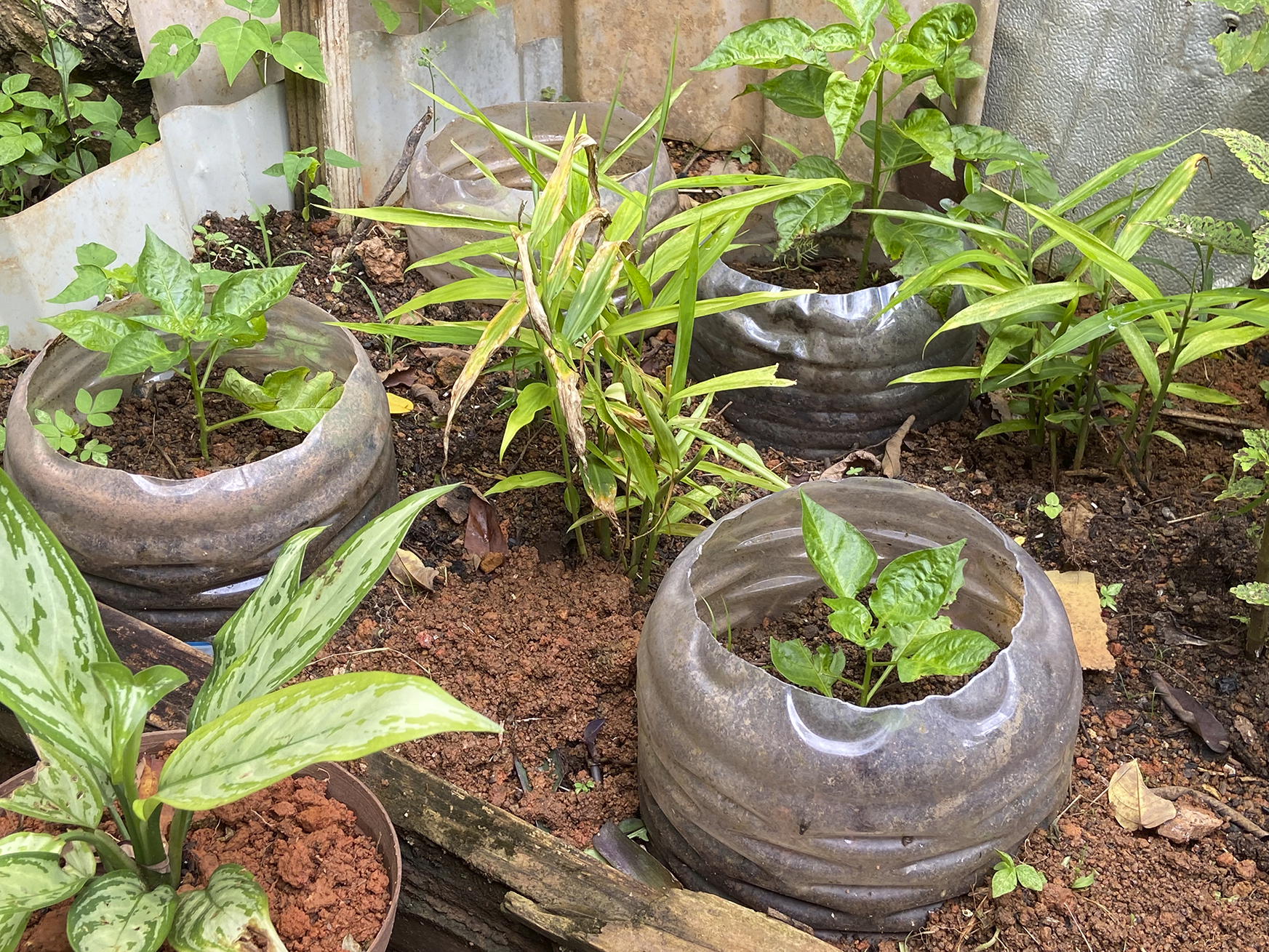
“What do you call your garden?” we asked Madame Adrienne in Seychelles, seeking from her some confirmation of the term “creole garden” we had extracted from our theoretical reading. “Zarden resiklaz” (“recycling garden”) she replied, smiling.Footnote 43 Adrienne’s naming of her garden foregrounds her practice of reusing the products of her garden together with the waste and debris of modern life, and it inspired us to wield this term in our conceptualization of the creole garden. If its prolific regrowth generates all manner of resources, resiklaz is the key to understanding the protocols of their use. “Recycling” encompasses crucial aspects of creolization as enacted in the space of the garden and in its mobilization in the arts. On the one hand, it illustrates how the traces and memories of ancient cultures are reinterpreted and re-adapted to form new creolized cultural expressions; on the other, it is linked to informal creole economies of subsistence and mutual aid that contrast with the capitalist economy of the plantation.Footnote 44 In this issue, Penda Choppy, Cindy Moka, and Terrence Vel describe how Adrienne “repurposed objects that were used as pots for plants included old tires, bowls, jugs, basins, plastic bottles, jerry cans, powdered milk tins and other such household items”; similar products and techniques are recycled in the Guadeloupean gardens we visited: Sweet-Om, 100% Zèb, and Tibert Laventure’s Bitasyon Bwane, where he also reused industrial items from the sugar factory that once stood there.Footnote 45 Recycling enhances the creole garden’s signature verticality while saving on scarce resources of money and space. In the Indian Ocean islands as well as in the Caribbean alike, it also involves the recycling of African, Amerindian, Indian, and European objects and methods: as Choppy and her team demonstrate, the use of “raised beds” in Seychellois gardens derives from knowledge brought therein by the Makua and Malagasy peoples of the Western Indian Ocean.Footnote 46
Recycling jerrycans in Madame Adrienne’s “Resiklaz” (recycling) garden, Mont-Plaisir, Seychelles. photo by Ananya Jahanara Kabir, May 2024.

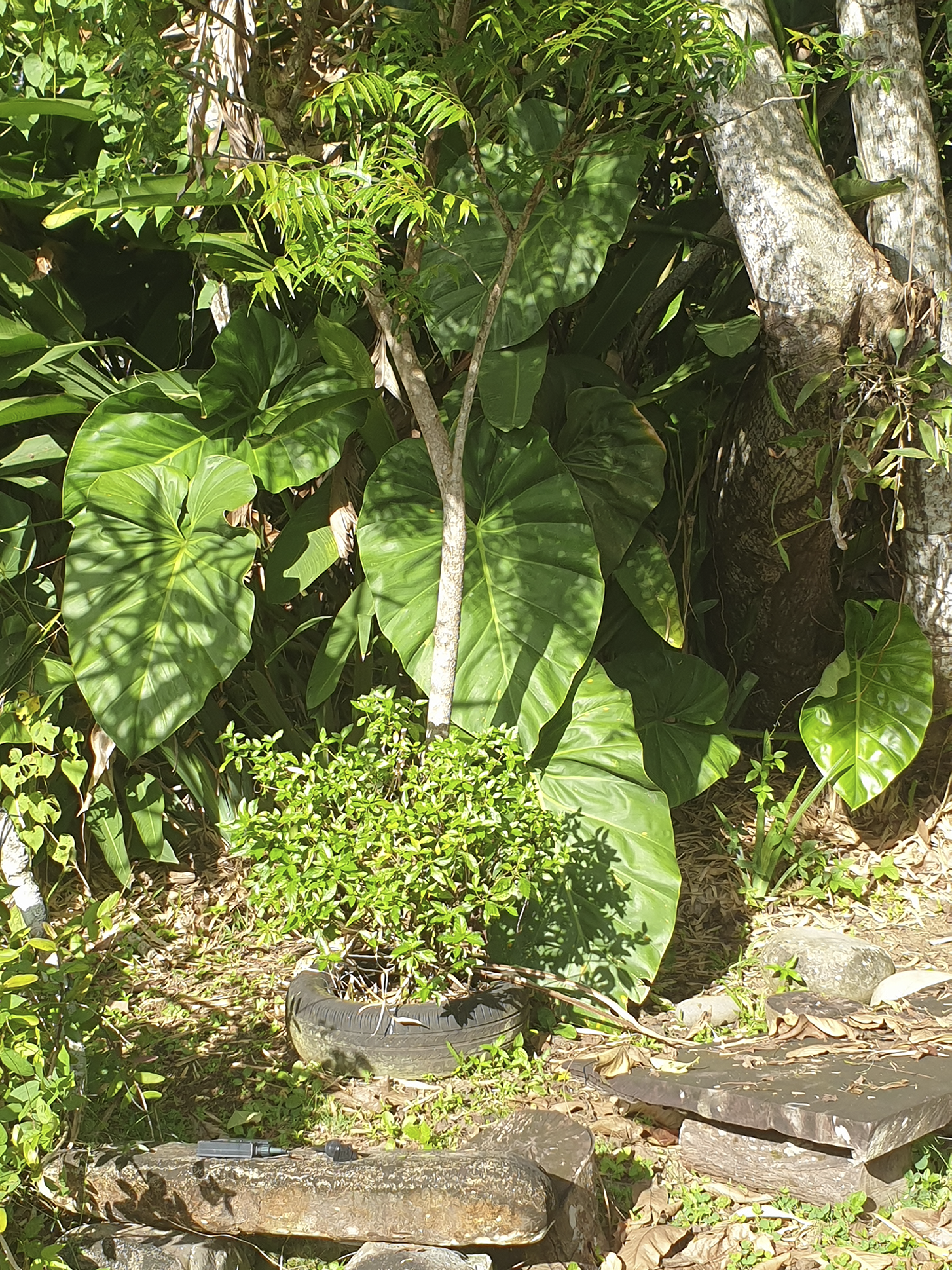
Recycling Tyres at “Sweet Om” garden, Lamentin, Guadeloupe. Photo by Rosa Beunel-Fogarty, May 2025.

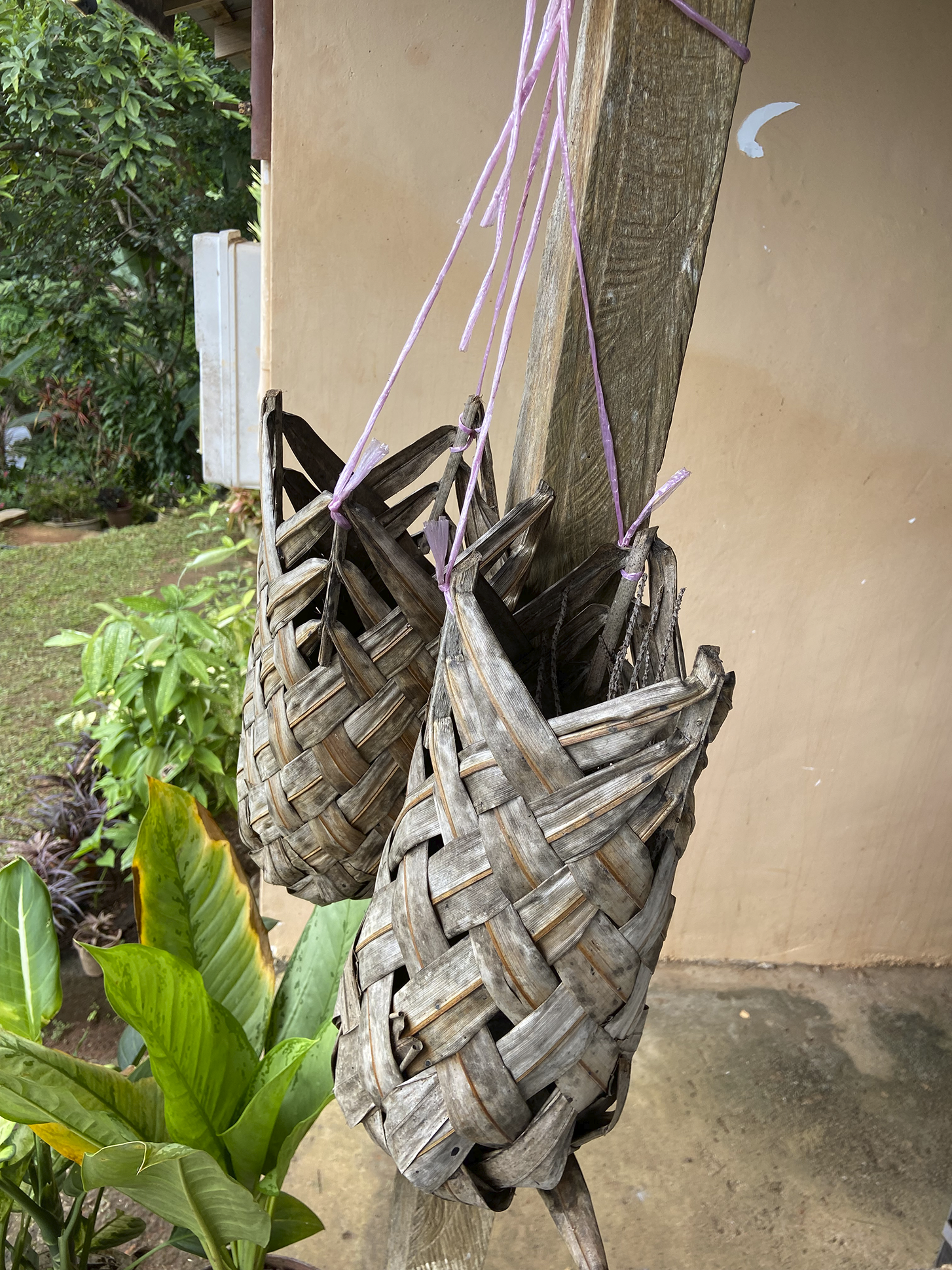
Recycling is thus allied to the role of bricolage within creolizing practices; like bricolage, it showcases how creolization enables new cultures of adaptation within plantation islands, attesting to the shared creativity and resourcefulness of all its settlers, who, through recycling praxis extract(ed) from a capitalist and exploitative economy various forms of autonomy.Footnote 47 In the context of the Anthropocene and the fight against the depletion of the Earth’s resources, recycling is an epiphenomenon of industrialization and associated with the issue of waste treatment, as well as the difficult management of overconsumption and overproduction of objects and packaging. But it is also a process of revalorization that works against capitalism’s continuous creation of waste and its rendering of people and matters disposable, worthless.Footnote 48 During our fieldwork, we observed gardeners and other interlocutors involved with mobilizing the creole garden to enhance the well-being of their island populations, working with the challenge of waste valorization. At the Institut National Supérieur du Professorat et de l’Education (INSPE) in Guadeloupe, under the research axis named “jardin créole,” Régine Dondon Zou leads a team of chemists researching how to valorize the biomass of bagasse (sugar cane waste) and sargassum (algae). At the other end of the scale, gardeners in Seychelles and Guadeloupe repurpose vegetal waste in their garden by using coconut shells to protect certain crops from weeds. Plants are also transformed into household objects to revive waning traditional savoir faire and lifestyles. Bityason Bwane’s Laventure serves his customers drinks and foods in hollowed out calabashes, while both Occibrun and Adrienne weave baskets and bags from palm tree leaves—the latter even calling her products “traditional plastic bags.”Footnote 49 The deployment of the plants’ versatility is a transformation technique akin to recycling, because it offers a mode of consumption which diminishes the hydrocarbons produced through plastic packaging. These methods of repurposing further mark the aspirational independence of creole gardeners from the market economy.
“Traditional plastic bag” or sac vakwa (pandanus), Madame Adrienne’s garden, Mont-Plaisir, Seychelles. Photo by Ananya Jahanara Kabir, May 2024.

Recycling’s fundamental radicality lies in its repudiation of an economy based on purchasing. Objects—in this case, plants—are repurposed through being exchanged or gifted. Their hyper-local circulation between neighbors and friends highlights a parallel network generated by the informal economies that come together historically in the creole garden. Katherine Browne’s study of “creole economics” stresses the importance of the enslaved people’s provision grounds through which they “organized and controlled a secondary economic network, which allowed them to begin to construct an alternative way of life that went beyond the plantation.”Footnote 50 These plots then emerged as “unique spaces of autonomy” from the colonial system.Footnote 51 Although Browne stresses on the culture of individualism that emerged from this informal economy by elaborating on the figure of the “debouya”—“débrouillard” or hustler who uses his cunning to supplement his formal income, our fieldwork showed that gardens are also spaces of community building.Footnote 52 “We never leave the garden empty-handed,” Béatrice Cantal explained.Footnote 53 She volunteers in the association Terre Eau Dyn’amis where neighbors tend to a communal garden in the Guadeloupean village of La Rose Goyave, share the harvest, and even donate vegetables and fruits according to need. Likewise, Obertan started her pedagogical creole garden on the University of Antille’s Fouillole campus in Guadeloupe, despite receiving no funding. “We don’t have money, but we have connections,” she told her students, who soon brought in plants and cuttings from their own family gardens.Footnote 54 In Seychelles, Adrienne exchanges plants from her garden with those from her neighbors’, thus keeping in contact with the community around her. The spontaneous gifting of cuttings allows the free dissemination of plants, vegetables, and fruits, to strikingly reveal the garden as a place of solidarity that promotes economic independence from seed distributors and large-scale agro-businesses. Especially in the French overseas territories of Guadeloupe and Martinique, where the economic dependency to mainland France is lamented as “deep and wide,” the creole garden fosters autonomy and is therefore hailed as an example of “decolonial praxis.”Footnote 55
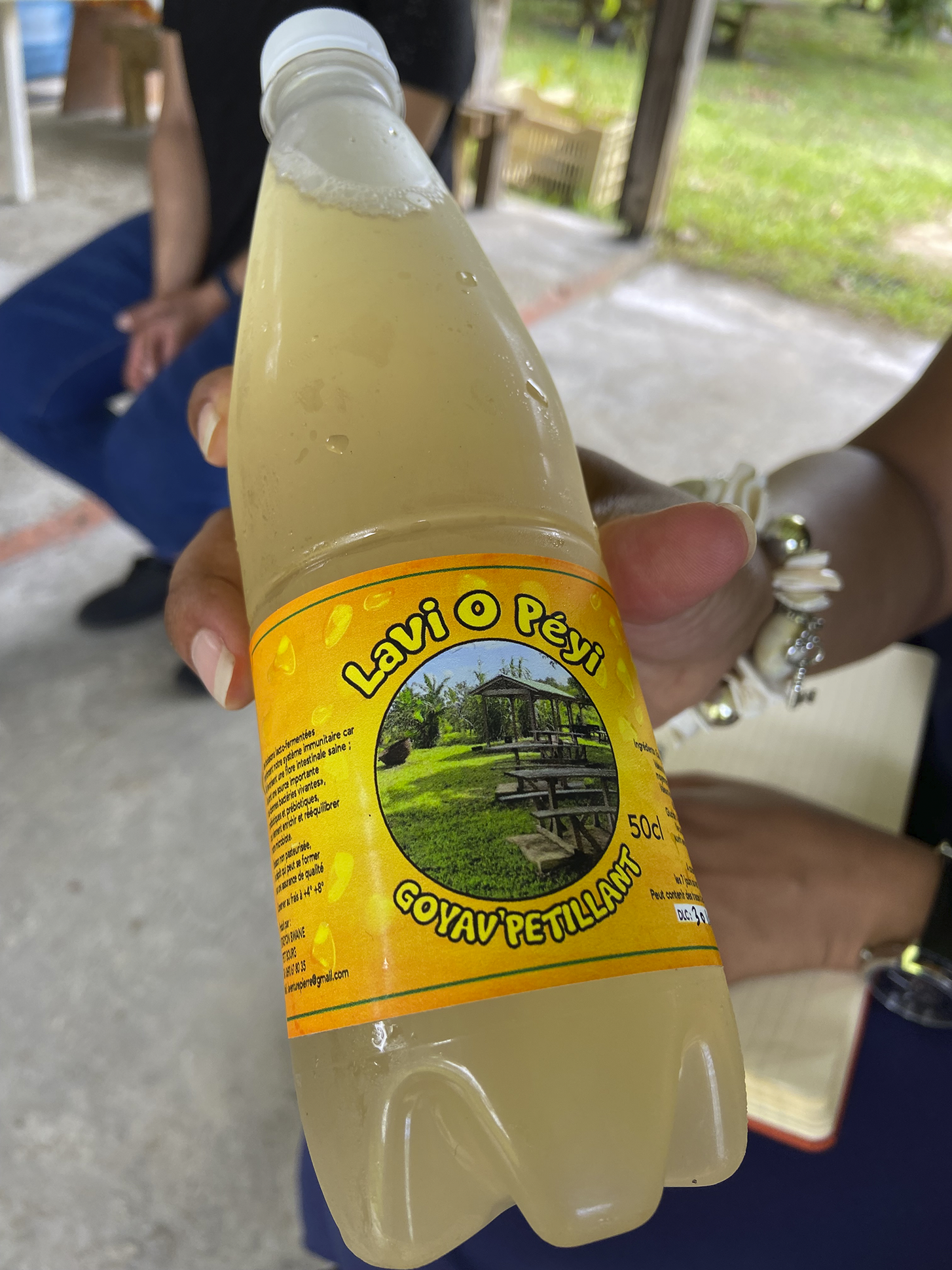
Relationships to France dominated conversations with our Caribbean interlocutors. The infamous dousing of crops with the toxic chemical, chlordecone, is widely recalled as a traumatic consequence of dependency on France, with the episode regularly entering discussions on the importation of food and the issue of food sovereignty.Footnote 56 They frequently illustrated the magnitude of the issue by reminding us that 80% of the food products consumed in Guadeloupe comes from the metropole.Footnote 57 Across the Indian Ocean and Caribbean, the COVID-19 pandemic was also a key (re)mobiliser around the creole garden. “Si bato pa rantré” (should the boats not return) Occibrun reminded us, recycling a Creole saying as an alert about food shortage.Footnote 58 Through their creole gardens, food sovereignty activists structure businesses that attempt independence from imported products sold in supermarkets. At Bitasyon Bwane, Laventure is interested in the transformation of plants into consumable goods. He creates Guadeloupean products as alternatives to imported goods and tastes. “If we want to change things, we need to do with what we have here; we need to stop drinking Coca Cola,” he declared while serving us a delicious bubbly drink made from local herbs and fruits.Footnote 59 Occibrun is also interested in transformation, but his business model is to offer classes teaching people to tend their gardens and produce their own goods. These micro-scalar ventures face several hurdles, including the cost of production, while faced with the challenge of entrenched consumer habits, including capitalist reflexes of unthinking consumption. Occibrun shared that while people enjoy learning about methods of resource transformation, they often prefer to buy his finished products rather than create their own. The historical roots of the creole garden in informal economies and its ongoing participation in anti-capitalist practices of recycling and gifting, therefore, keep alive the question of its role and relevance within acts of resistance against what Ferdinand calls the “plantationocene.”Footnote 60
Coca Cola substitute at Bitasyon Bwane, Petit-Bourg, Guadeloupe. Photo by Ananya Jahanara Kabir, May 2025.

Lifestyle products at 100% Zèb garden, Lamentin, Guadeloupe. Photo by Ananya Jahanara Kabir, May 2025.

4. Resistance: Secret epistemology of péyi
Small it may have been, but “the cottage garden was no insignificant site [‘lieu anodin’],” reiterates Benoît: “contemporary accounts and archaeological excavations have demonstrated how religious, funerary, social, culinary and artistic practices such as dance and music, took place there.”Footnote 61 This participation of gardening within expressive behaviors that nourish creole sociability makes the creole garden as an exemplary site for resistance as well as for articulating what forms such resistance must assume. As we saw with Glissant, explaining how the creole garden engenders resistance often involves critical fabulation around historically attested practices of small plot cultivation by the enslaved. Thus, Ferdinand imagines these practices as part of the first line of defence against the “non-control” over daily life and alienation from the world: “how the inside of their shack was organized, the food grown in the Creole gardens, the prepared dishes, the dances, the intimacy and complicity that could be formed with other enslaved people, the songs, laughter, prayers, and other spiritual practices, all constituted spaces of one’s own within a world organized and governed by the other.”Footnote 62 For Wynter, too, the provision grounds “provided the space for folk knowledge, orality, resistance to commodification, and African and indigenous continuities,” but she focuses on a single crop, drawing a straight line from the “African peasant” to the Caribbean where, “around the growing of yam, of food for survival, he created on the plot a folk culture—the basis of a social order—in three hundred years.”Footnote 63 As she freely admits, “we are compelled to make generalizations.”Footnote 64 We found a striking congruence between these variously generalized accounts of the resistance enabled by creole gardens, and the experiences of self-empowerment narrated to us by people organizing around creole gardens in Guadeloupe—starting with the spontaneous conversations in Creole (rather than French) that gardening together apparently stimulates.Footnote 65
In the French Caribbean today, home to the pioneering advocates of créolité (creoleness) as a political identity, one must strain to overhear conversations in Creole.Footnote 66 Delving into the sociolinguistics and history of this paradox is beyond the scope of our introduction. We simply note that creolization processes are historically implicated with issues of power, prestige, shame, and self-censorship congealed around the creole person’s self-perception as “racial, cultural, economic, and linguistic deficit.”Footnote 67 Within this complex web of pressures and prejudices, the creole garden enables Creole languages to realize their emancipatory and resistive potential. Pragmatic though Creole conversations around gardening must be, the Creole plant names at their heart are mnemonic keys unlocking a knowledge bank of nutrition, healing, and care transferred orally and corporeally across enslaved, maroon, Amerindian, and early white settler groups. This is an alternative (to) archive: as Occibrun says, “each plant has its history.”Footnote 68 The accumulated ways of knowing, entering, and sharing this history through which the creole garden enables resistance also guards its historical clandestinity. We call these opaque and “invisible resource[s]” the secret epistemology of péyi, recalling, through the example of zabricot péyi described earlier, the Creole habit of labeling non-European plants with a European name based on superficial similarities, along with the qualifier péyi (country).Footnote 69 As with the garden itself, the apparent insignificance of this addition is but a cover for micro-acts of resistance. Through it, Creole speakers destabilize established Eurocentric taxonomies—in Boulbina’s words, “the reality, in fact, contradicts taxonomy, and not only in the botanical sense”—as well as repeatedly undermine the non-Creole speaker’s semantic expectations, all the while enjoying together the impact of such semantic deflection.Footnote 70 This is a linguistic equivalent of bigidi in Guadeloupe’s gwoka dance: a deliberate misstep through which a dancer catch others off-guard.Footnote 71 It equally recalls capoeira’s postural and epistemic inversions, which are drawn into the discussion of the Greenhouse project’s creole garden by our contributor Vânia Gala.Footnote 72
The linguistic inversions effected by the naming practices that cluster around the creole garden also involve witty reversals of modernity’s timelines—as exemplified by Adrienne’s calling her hand-woven raffia bag “sak plastik tradisyonnel” (traditional plastic bag).Footnote 73 Such scrambling of linear temporality through talk about the garden and its products “vegetaliz[es] [one’s] sensorium,” and “attun[es] one’s attention to the time-frames and improvisational activity of plants,” another material consequence of which are the changes to normative pedagogic and curricular rhythms induced by Obertan’s structuring of a Master’s course around the creole garden she and her students tend on campus.Footnote 74 Like Occibrun, who consciously foregrounds lunar rhythms while working on his garden 100% Zèb, Obertan and her students “work alongside plants rather than dominating them.”Footnote 75 Repeatedly referring to the garden’s “artisanal energy,” these gardeners clarify how gardening in constricted spaces became the “material basis for creole economics” by “permit[ing] slaves to carve a niche in which creole culture could take shape.”Footnote 76 The creole garden as expression of creole culture moves creole economics beyond the methods of bricolage and the tactics of “debouya” or hustling, to function instead as a resource for resisting “twenty-first century commodification of care through alternative social structures centering on mutual protection and distribution [through] affiliations… that are not limited to the nuclear family or the nation.”Footnote 77 For Glissant, “the jardin créole emerged as a practice of cares [connected] to his long-standing philosophical support for horizontal models of Relations instead of vertical hierarchies of genealogy.”Footnote 78 As “care web,” the creole garden resists Darwinian teleologies of unavoidable elimination by foregrounding an epistemology of péyi nourished through interspecies—and intra-species— “relation of care”; here, plants take care of each other, even as humans take care of plants through honoring the savoir-faire transmitted by people variously subordinated, marginalized, or decimated by the Plantation.Footnote 79
The frequent use of the Arawak term “ichali” for contemporary creole gardens in Guadeloupe is not tokenism, therefore, but collective recognition of the creole garden as living, shared, transtemporal patrimony, “testifying to the memory of lost peoples and reveal[ing] the matrical bond that links them to this Mother-land.”Footnote 80 Such care webs nurture solidarities between groups whose competitiveness and incompatibility is usually highlighted within academic and political commentary. Instead, connecting what our contributors Gabrielle Hosein and Vinay Harrichan call “the botanical afterlives of indenture,” to Afro-Caribbean and Amerindian horticultural legacies, are relationalities that nourish the gardens of Indo-descendant Guadeloupeans, as demonstrated in Sandrine Soukaï’s essay.Footnote 81 Rather than ask whether the creole garden is or is not an example of maronnage, or whether the Indian heritage of the descendants of indentured laborers belong to or stand outside of the Caribbean’s creolizing processes, we see the creole garden as where diverse groups can, like the maroon, “become native.”Footnote 82 While its micro-level interventions might “not succeed in challenging as a whole the plantation’s colonial inhabitation,” creolization’s secret epistemology of péyi schools us in “politically recognizing,” through the creole garden, “this matrical quality of an Earth that exceeds all economic calculation and which, in turn, brings to light the obligations to the human and non-human communities that make it up.”Footnote 83 Hence, these gardens are “spaces of autonomy where a redefinition of the self” is enabled through “transformation of the environment against the ecocide of the plantation and the development of naturalist knowledge apart from the development of scientific botany of the Enlightenment period.”Footnote 84 Indeed, our curated essays mobilize the creole garden as resistance to not only the plantation but also complementary colonial infrastructures of extractive knowledge including the scientific herbarium and the botanical garden.Footnote 85 The transoceanic distribution of these infrastructures makes the creole garden’s resistive capacity part of alternative histories of the Indian Ocean, Atlantic, and Pacific worlds that foreground connection rather than compartmentalization.Footnote 86
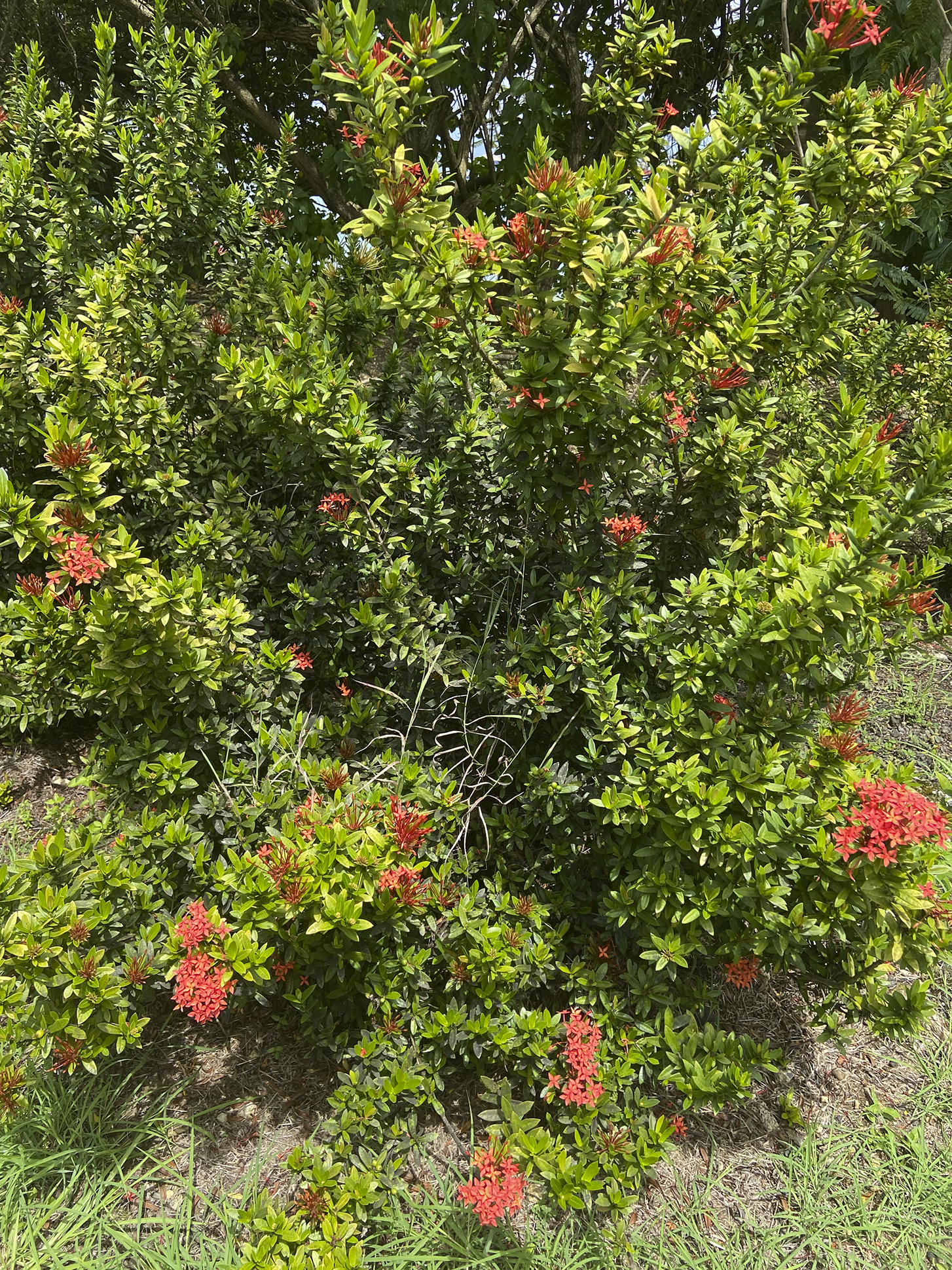
Ixora flowers in the “Ichali” garden, Campus Fouilllole, Point-à-Pitre, Guadeloupe. Photo by Ananya Jahanara Kabir, May 2025.

5. Repair: The magic hedge
Even while scholars have been calling for a history of the “connected oceans,” such connections are constantly being revived through the resources of the creole garden. Shaded by a vépélé or neem tree in her garden, Guadeloupean visual artist Kelly Sinappah Mary spoke to us about its medicinal, ritual, and historical importance. This tree that migrated to the Caribbean from India with the indentured laborers who were her ancestors has further migrated from garden to canvas: “I use its leaves on the skin of my characters: the leaf is a poultice that take care of trauma.”Footnote 87 The neem’s antiseptic properties, a wisdom transposed across oceans, are evoked here in more than a literal sense. “The skin of my characters is landscape,” she says, “the skin is a site of resistance” that exudes “the hidden history of how indentured laborers entered creole society.”Footnote 88 Through her art, Sinappah Mary participates in wider processes of creativity inspired by the creole garden as a site where resistance leads to healing. Different essays in our volume demonstrate how such healing processes can repair the often-broken links between the Indian Ocean world and the Atlantic. Valorizations of a creolized indianité (“Indianness”) through what grows in a Caribbean creole garden thus work alongside artistic responses to historically important colonial gardens worldwide, starting from the Cape Colony’s Company Garden founded in the mid-17th century at that hinge between the Atlantic and the Indian Oceans, the Cape of Good Hope; and to foundational horticultural treatises by European administrators that compiled and systematized knowledge about the medicinal and nutritive value of plants transplanted into those gardens.Footnote 89 To combat the epistemic violence of such “green imperialism,” the artists, writers, and gardeners we showcase turn to the secret epistemology of the péyi, which functions as a knowledge matrix that (re)connects the healing properties of plants to their ritualistic veneration.Footnote 90
Vépélé tree (neem) in “Sweet Om” garden, Lamentin, Guadeloupe. Photo by Rosa Beunel-Fogarty, May 2025.

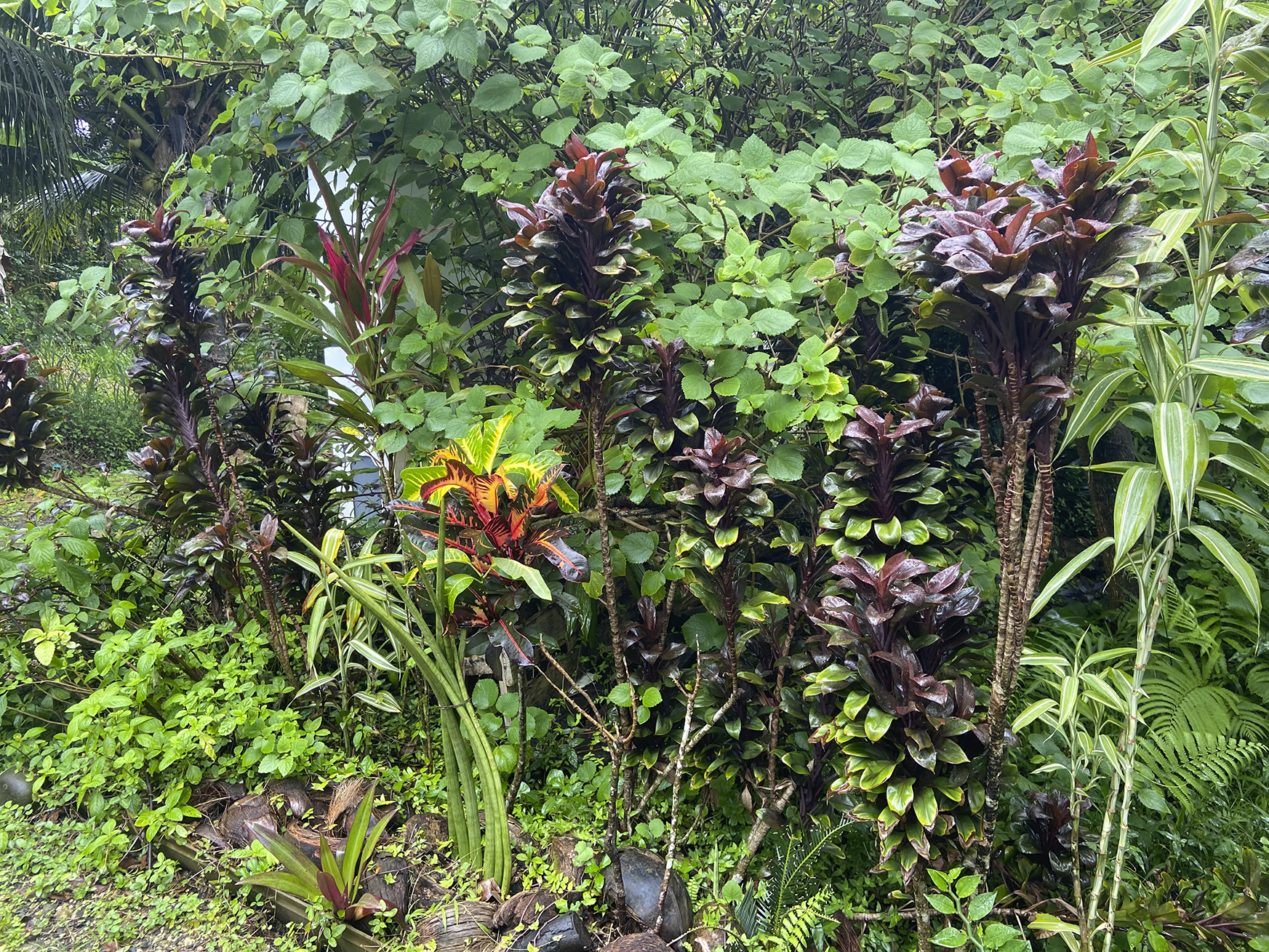
The creole garden’s suture of magic, ritual, and healing is encapsulated in Occibrun’s explanation of what he calls his “magic hedge.”Footnote 91 The flowering and medicinal plants in his garden’s hedge, whose Creole names allude to the Bible (“Job’s Tears”) as well as healing properties (“Vicks” and “végébalm”), emerge as talismans protecting the garden’s human users. The hedge’s structural liminality as boundary marker connects Occibrun’s magic hedge to the ritualistic importance of hedges in the historic slave gardens studied by Benoît where, fortified by magical plants, they constituted the first of several “shells” protecting the enslaved body by isolating it from inimical influences and reconnecting it to beneficial ones.Footnote 92 The secretive healing powers of this transhistorical creole garden also instantiate a transoceanic connection to Indian Ocean horticultural traditions, where a valorization of enclosure inherited from Near Eastern deep histories of paradisal gardens reached high levels of architectural refinement within Islamicate culture.Footnote 93 “Job’s Tears” of Occibrun’s magic hedge is a microcosm of how Abrahamic and apocryphal traditions creolized in the Caribbean; in the Indian Ocean world, in parallel, the same traditions enter contemporary and imagined gardens to repair the traumas of colonialism through the cultural contribution of Muslim mercantile communities, which have long functioned as powerful brokers of creolization.Footnote 94 Our volume mobilizes creole gardens as decolonial resource by bringing together these horticultural and botanical efforts from oceans on either side of the African continent, so that the Guadeloupean vépélé and the Swahili-Islamicate rose can creolize together to create a new garden. In the transoceanic creole garden, “creole” blooms as a new form of indigeneity to heal us from coloniality’s systematically “dis-indigenized” and desacralized landscapes.Footnote 95 Instead of seeking to determine how successful the garden is as a form of resistance to capitalism, we attend to these reparative and “sutural acts” it enables.Footnote 96
The magic hedge, “100% Zèb” garden, Petit Bourg Guadeloupe. Photo by Ananya Jahanara Kabir, May 2025.

“Reparations” are usually understood as the claims of diasporic and postcolonial populations for due compensation for losses caused by enslavement and colonialism and sustained on both psycho-social and economic levels.Footnote 97 Across Europe and the Global South, artists and writers, museum curators and directors, teachers, academics, and even politicians are increasingly articulating these claims for reparation as compensation for historical wrongs. These debates and discussions center on fierce and eloquent demands for restitution as the return of material objects removed from Africa and displayed in European museums.Footnote 98 But they tend to overlook the question of reparation and restitution of losses that are enacted on the mind and the body. How do demands for reparation work with intangible culture and heritages of people forcibly displaced, or whose ways of life colonialism permanently disrupted? Their creative and complex responses to the traumas of enslavement and deracination take shape on every level of embodied cultural expression in creole societies—language, music, dance and ritual, foodways, dress, lifestyle, spirituality. This unexpected creation of new, creolized cultural products through the violent encounter of different population groups took place across the Atlantic and Indian Ocean worlds to inaugurate a specific moment in global modernity. The creole garden is one such product of embodied, collective, creolized culture. As this special issue confirms, it enables us to connect expertise and practice in the Caribbean to the Indian Ocean world, and it cuts across linguistic silos connected to former imperial cartographies. But most importantly, the creole garden opens for us decolonial pathways for reparative practices that are not accommodated within the conversations around reparations provoked by material culture, and indeed, helps begin new conversations around creolization, embodiment, and reparation that go beyond the material object to include cultural forms that are considered intangible and are yet potently felt in the body.
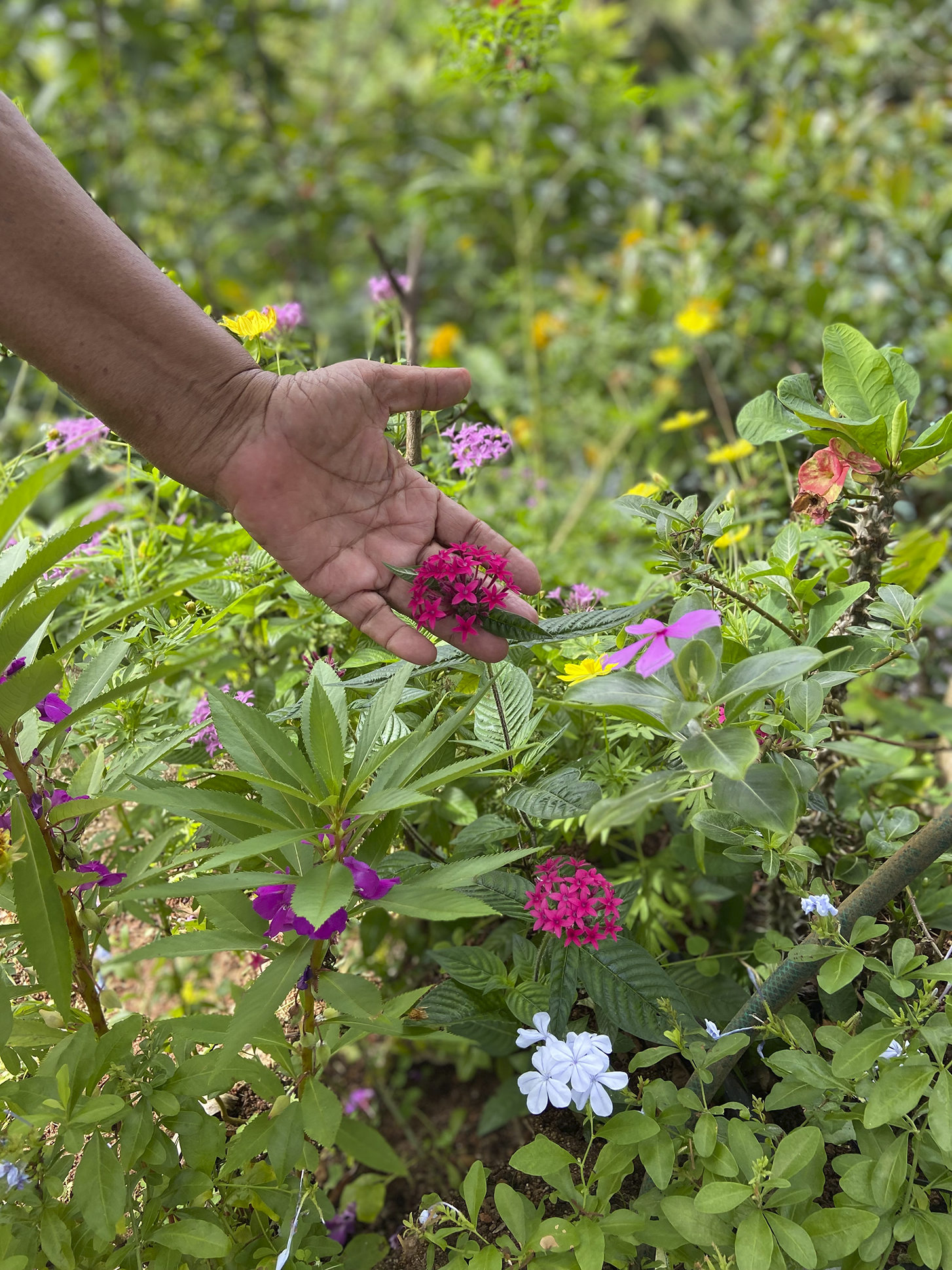
As a creolized practice born through resilience and hard labor, the creole garden corrects an over-metaphoric understanding of “reparation” by reconnecting to repair as a physical act. “Reparation” is also the act of repairing by “reassembling amputated parts, repairing broken links, relaunching the forms of reciprocity without which there can be no progress for humanity.”Footnote 99 As a project of collective repair through the praxis of mutual care and co-operation, the creole garden is a place of achievement. All our interlocutors spoke of effortful physical satisfaction and the healing power of sensory pleasures.Footnote 100 The Indian Ocean Islamicate garden’s concentration of botanical perfumes—roses, jasmines, patchouli, ylang-ylang, resins, and spices—clarifies the creole garden’s mandatory inclusion of flowers as part of these resources for healing.Footnote 101 The Seychellois garden’s rozanmer (“seashore rose” or Madagascar periwinkle) may look nothing like a rose, but, like it, it is a floral catalyst of pleasant sensations that soothes the body laboring under the most difficult circumstances; the arrival of new botanical species from Asia, during different phases of colonialism, strengthens the Caribbean creole garden’s reparative power.Footnote 102 As its secret epistemology grows through such inter-group exchanges within the creolization matrix, the creole garden also repairs through restoring relation between people who entered via different routes “modernity’s hold,” and who cultivate together to heal together.Footnote 103 This “multidirectional” ownership of the traumas of the black Atlantic illuminates parallel and connected processes between the black Atlantic and the Indian Ocean worlds.Footnote 104 It signals strategies, both individual and collective, to address historical wrongs perpetrated through colonialism and slavery, and fashion new alliances, connections, and bridges in the decolonial frame. These possibilities come alive through gardening as embodied, performative, and collective commemorative practice. Gardening triangulates the body with the community and with space, instantiating relationality as vincularidad (“enchainment”) of kinetic, sacred, material, and olfactory histories, to decolonize cartographies that trace the “colonial matrix of power.”Footnote 105
Rozanmer and other flowers, Madame Adrienne’s garden, Mont-Plaisir, Seychelles. Photo by Ananya Jahanara Kabir, May 2024.

6. The creole garden: A ceremony found
Echoing Sylvia Wynter’s powerful yet simple words, “the ceremony must be found”: the creole garden, as presented by our gardeners and as discussed in this issue, is a space of ceremony, of ritual and celebration for creolized communities and for the world as “creolized and marked” by enslavement, indenture, extractive colonialism, and “environmental racism.”Footnote 106 Here, the body interacts with the collective and with the land to provide dignity, pleasure, and healing. The magic hedge, the spirits of the dead who must carefully be managed and respected, the darker world of the night and the rhythms of the moon; the artisanal energies of island world formed through but yet resisting the plantation—all come together into acts of regrowth, recycling, and resistance. It is a ceremony that the creole garden can re-enchant the world. It decolonizes science’s declared “objectivity” even while bringing an embodied praxis to the abstractions of “art,” and proposes new connections between the divided realms of “tradition” and “contemporary.”Footnote 107 The garden as an “archive-repertoire” of the connected oceans activates hidden pasts and futures even as brutality distils beauty, and the same body holds together contraries.Footnote 108 It engenders a “corporeal epistemology, that [through the work of] re-membering integrates the creative and the critical … to generate a reparative creativity in acts of always partial”—but always necessary—“integration and repair.”Footnote 109 Or as Antonio Benítez-Rojo says of the archipelagic geographies of the Creole world: “There’s no centre or circumference, but there are common dynamics that express themselves in a more or less regular way within the chaos and then, gradually, begin assimilating into African, European, Indoamerican, and Asian contexts up to the vanishing point.”Footnote 110
Inspired by Glissant’s call not to “believe in isolated things,” this issue explores engagements with the reparative decolonial praxis of the creole garden across the Caribbean and Indian Ocean.Footnote 111 Our fieldwork in geographically distant archipelagos of the Creole world highlighted commonalities that illuminate historical and cultural connections and suggest potential solidarities, which we have explored throughout this introduction around our keywords. Our transoceanic lens builds on Glissantian thoughts on archipelagicity and Relation to uncover links between the scattered islands of the world that were made invisible by colonization, and which today are still hindered by the complicated, neo- and postcolonial administrative structures and statuses.Footnote 112 Our sojourns in the Caribbean and Seychelles and the encounters and conversations they enabled have taught us that inter-island connections exist and are sought-after by local actors, although they are also frustrated by barriers of language and infrastructure. Thinking with the archipelago highlights the broken relationships that need to be repaired, and foregrounds the proliferation of Creole cultures, whereby the same elements and techniques are recycled in different and sometimes surprising ways, as infinitely fractal variation testifying to the ingenuity and capacity for resistance of the enslaved, the indentured, and workers exploited by capitalism. This transoceanic prism of our fieldwork refracts the contributions assembled in this special issue, opening the way for the development of alternative relationships to (neo)colonial politics through which the creole garden can bear new fruits. Our contributors bring their own disciplinary backgrounds, and artistic, curatorial, and activist experiences to their approaches of gardens that expand the geographical reach, analytical vocabulary, and decolonial potential of the creole garden.
Essays by Annalee Davis, Sandrine Soukaї, Gabrielle Hosein and Vinay Harrichan, and Thera Edwards, Charmaine McKenzie and Nicole Plummer engage with the memories and histories of gardens, plants, and plots of the Caribbean islands including Barbados, Guadeloupe, Trinidad and Tobago, Suriname, and Jamaica that grew on the periphery of the plantation economy and challenged its colonial epistemologies; essays written by Penda Choppy, Cindy Moka, and Terrence Vel, as well as Lina Vincent and Kelsey McFaul, and the original poem by Hussain Bragança explore the presence of the creole garden in the Indian Ocean from the western shores of India to the east African coast via the islands of Reunion and Seychelles. Finally, Vânia Gala brings the creole garden to Mediterranean shores. Choppy et al. and Edwards et al. both present an overview of, respectively, the creole garden and the provision ground in Seychelles and Jamaica. Edwards et al. offers a genealogical account of the slave grounds and kitchen gardens as they turn into small farming post-abolition, lose in popularity, and are now redeployed as state policy to alleviate poverty accelerated by the inflated cost of living and the impacts of climate change. Building on their research commissioned by UNESCO, Choppy et al. provides an original academic exploration of the Seychellois zarden tradisyonnel through scholarship on creole cultures. In doing so, they connect this traditional gardening practice to the Seychellois creole lifestyle characterized by conviviality and creativity in the face of precarity, and reflect on the garden as an intangible creole heritage.
The other essays in the issue focus on artistic, curatorial, and literary approaches to the creole garden. Vincent, Gala, Hosein, and Harrichan present the work undertaken by exhibitions and archives in the process of decolonizing botanical knowledge. Vincent presents her curation of “Travelling Plants,” a traveling exhibition where research artists responded to the herbarium of the French Institute in Pondicherry. Her essay elaborates on how these artistic interventions complicate notions of “insider” and “outsider” or identity and nationhood as articulated through horticultural vocabulary inherited from colonialism of “invasive” or “native” plants. Gala’s essay also investigates artistic responses to coloniality, as it reflects on her collaborative project at the Portuguese pavilion of the Venice Biennale 2024 “Greenhouse” and its accompanying performance “Passa Folhas.” Gala explores how the creole garden they grew in the palazzo is a form of “black plotting,” which, together with the accompanying capoeira performance, foreground a movement-oriented epistemology as a planetary resource for repair. The collaborative essay written by Hosein and Harrichan, and Soukaї’s essay both investigate Indian contributions to the Caribbean creole garden. Reflecting on a archival project that collected photos and videos of plants traveling with the Indian diaspora to the Caribbean and their ongoing journey to North America, Hosein and Harrichan develop the notions of “phytoarchives” and “floral mnemonics” to explore these people’s affective relationship to plants. Their essay also discusses Hosein’s follow-up exhibition “Botanical Afterlives of Indenture.” Soukaї’s intervention offers an in-depth analysis of the Guadeloupean writer and politician Ernest Moutoussamy’s garden that she sees as a poetic and decolonial reimagining of the creole garden. Drawing on literary analysis and interviews with the author, Soukaї explores Moutoussamy’s “savane,” what it reveals about Caribbean creolized Indian culture, its memorialization through plants and its contribution to decolonial ecologies.
McFaul’s essay on Yvonne Adhiambo Owuor’s novel The Dragonfly Sea (2019) and its comparison with Abdulrazak Gurnah’s Paradise (1994) brings an underrepresented East African perspective on the global history of the creole garden and continues Soukaї’s literary investigations of our theme. McFaul’s analysis of the novel’s garden as “creole,” and as a metaphor for the act of novel writing, offers an alternative model of creolized gardening infused by womanist and Indian Ocean Islamicate cultures. Finally, two of our contributors, Davis and Bragança, offer artistic responses to the creole garden emerging from either side of our transoceanic framework, Barbados and Reunion Island. The special issue opens with a photo-essay created by the artist Davis to reflect on her relationship with the Barbadian environment, landscape, and her yard in an era of “Anthropocenic grief.” Davis’s four “arbitrary reflections” use photographic art to accompany her meditations on ecological loss and hope, and on the pleasure and difficulties involved in gardening and in developing an intimate relationship with the surrounding landscape. We close our special issue with an original poem by the independent researcher and artist Bragança recounting the peculiar oral history of a late-nineteenth century Frenchman, Thomas Thibault, and his sexual encounter with a djinn in his garden. Inspired by Samuel Taylor Coleridge’s “Kubla Khan,” the poem reflects on the garden as a space of queerness and creolization. Creative, collaborative, and concerned with the decolonial empowerment enabled by the relationship between humans and plants, the contributions assembled in this special issue provide alternative epistemologies to the plantationocene via the creole garden.
Collaboration can be a political intervention, especially when it is conducted for and as “public humanities.” It is also a risky act. Nevertheless, to ground decolonial praxis in collaboration can generate unexpected reparative pathways. As the gardener knows, it is worth the risk. Like the plants that take care of each other in the creole garden, and demand that we, the humans, ask their permission before we pluck their flowers and leaves, we learn to co-exist again respectfully, to regain our autonomy and sovereignty while remaining careful of the needs of other species that share our space, and heal not only ourselves but the planet in the process. The small acts of care on small plots of land then gain a planetary significance. These are the gardens where creoleness as a resource for repair, was, and is continually being born.Footnote 113
Roucou (Anatto), Kaloupilé (Curry leaf), Nanana (Pineapple), at 100% Zèb garden, Petit Bourg, Guadeloupe. Photo by Rosa Beunel-Fogarty, May 2025.

Author contribution
Conceptualization: A.J.K.; R.B.-F.
Funding statement
This work was supported by King’s College London, Global Engagement Partnership Fund.
Conflicts of interests
The authors declare no competing interests.


 Open access

