

1. Introduction
The conventional narrative surrounding low female labor force participation (FLFP) rates in the Middle East and North Africa (MENA) region attributes these rates to cultural and social norms (Dildar, Reference Dildar2015; Giuliano, Reference Giuliano2017), particularly those related to Islam (Algan & Cahuc, Reference Algan and Cahuc2006; Bayanpour-Tehrani & Sylwester, Reference Bayanpour-Tehrani and Sylwester2013; Kızılca, Reference Kızılca2016; Atasoy, Reference Atasoy2017; Akyol & Ökten, Reference Akyol and Ökten2024). However, by focusing on religious and cultural norms, existing analyses often overlook critical socio-economic factors and regional disparities that are instrumental in shaping FLFP. This paper delves deeper into these factors by examining FLFP gaps among ethnic and religious groups in Syria and their determinants. Syria represents an interesting case study as a country with low FLFP emblematic of the MENA region, having reached 26% in 2021 from a low of 13% in 2010 (World Bank, 2022), and with a Muslim majority and a diverse cultural landscape that includes indigenous Christian groups and various Muslim sects and ethnic minorities.
At the country level, the religion of Islam is associated with low FLFP (Ross, Reference Ross2008; Bayanpour-Tehrani & Sylwester, Reference Bayanpour-Tehrani and Sylwester2013). This paper documents substantial within-country gaps in FLFP across different religions and ethnic groups in the context of a Muslim-majority country. In the population census of 2004, Syrian towns and villages with Christian majorities are found to have an average FLFP rate of 26%, as compared to Sunni Muslim majority areas where the FLFP rate is at only 10%. A similar gap is found between Islamic sects as well, with Alawi-majority areas having an FLFP rate of 28%.
It remains debated whether the correlation between Islam and low FLFP is due to the influence of social norms specific to Muslims, such as restrictions on women’s freedoms and particular Islamic views on gender roles, or if it is due to structural economic factors specific to countries of the MENA (Ross, Reference Ross2008; Assaad, Reference Assaad2014; Assaad et al., Reference Assaad, Hendy, Lassassi and Yassin2020). MENA economies share certain common characteristics such as large and stagnant public sector shares, weak private sectors, and a prevalence of informal and low-quality jobs that may have contributed to the low and stagnant FLFP rates. Within-country differences in these structural factors may also shape the gaps in FLFP between ethnic and religious groups. Furthermore, previous empirical work on FLFP documents the presence of a U-shaped relationship between economic development and FLFP (Goldin, Reference Goldin1995; Mancini, Reference Mancini2018; Tunalı et al., Reference Tunalı, Kırdar and Dayıoğlu2021). As a consequence, within-country differences in economic development may also shape FLFP gaps between ethnic and religious groups, when large regional inequalities are present within the same country.
To explore competing hypotheses, the paper makes use of census data aggregated at the local level and the Gelbach decomposition method which allows for a comparative approach that can determine the relative importance of a range of factors affecting group differences in FLFP. The census presents a snapshot of the country prior to the civil war which began in 2011 and provides a view of large inequalities across the country in terms of economic development and of diversity in measures of income, demography, and human capital. To account for differences in the nature of women’s work in such a diverse context, the analysis makes use of an expanded definition of FLFP, which includes both employment in the modern sector as well as work in the family sector which remains prevalent in many agricultural areas. The analysis explores the roles of economic and demographic development, as well as the dynamics of the family sector and the public sector. To explore the role of social norms in shaping FLFP gaps across ethnic and religious groups, the analysis makes use of Gender Gap Indices (GPI’s) that measure the gender gap in school enrollment among school-aged children, and the gender gaps in the educational attainment of adults at the secondary level and above, and at the tertiary levels. These indices proxy for bias against women associated with the under-investment in girls’ education as compared to boys. The analysis shows that these indices exert a weak influence on FLFP, and only contribute in small part to explaining gaps in FLFP across groups, accounting for only 10% of the FLFP premiums in Alawi and Christian communities.
The findings from the decomposition analysis suggest that the main contributing factors to ethnic and religious gaps in FLFP are the age structure of the population, income, and the public sector employment share, alongside educational attainment. Regional inequality contributes to the observed gaps in FLFP, with industrial regions having the lowest FLFP, while rates are elevated in both agricultural regions and in areas where the service economy predominates. The findings support the idea that economic development shapes the gaps in FLFP between groups in accordance with the U-feminization hypothesis. Meanwhile, elevated FLFP in certain minorities like the Alawis correlates with high public sector employment shares. The public sector in the MENA context is an important share of employment for politically important groups (Assaad, Reference Assaad2014), and its contribution to ethnic and religious gaps in FLFP has not been studied previously. Differences in educational attainment between groups also contribute to shaping FLFP, especially amongst the Christian communities which have a legacy of early progress in educational attainment (Saleh, Reference Saleh2016). On the other hand, differences in the age structure between ethnic and religious groups contribute significantly to the observed gaps in FLFP, explaining over a third of the FLFP premium held by Christian and Alawi women. The important role of the age structure, accompanied by an insignificant role for fertility rates, highlights the role of the demographic dividend in shaping FLFP.
The paper contributes to the debate on religious and ethnic identity, social and cultural norms, and gender inequality. The dynamics of the labor force, the population structure, and educational attainment are crucial to explaining the existing ethnic and religious gaps in FLFP, while observed social norms could not account for these gaps. In exploring these determinants, the study provides a more nuanced understanding of the interplay between culture, gender, and labor force dynamics.
2. Theory and previous research
Religious and ethnic identity can impact FLFP through several mechanisms. One key channel is the influence of social norms, which are shared expectations and informal rules that govern behavior within a group. These norms can shape attitudes toward women’s work and influence both individual choices and structural constraints in the labor market. Religious doctrines, for instance, may prescribe specific roles for women, reinforcing expectations that prioritize domestic responsibilities over workforce participation. In particular, norms related to gender segregation or the belief that women should occupy a subordinate role in the home or public sphere may create significant barriers to FLFP. Because norms are socially constructed and transmitted across generations, they often vary across religious and ethnic groups.
Empirical research has shown that countries with Muslim majorities tend to have significantly lower FLFP compared to the global average (Tzannatos, Reference Tzannatos1999). Several studies have examined the role of religiosity in shaping these patterns (Dildar, Reference Dildar2015; Ugur, Reference Ugur2018). Differences in social norms across religious sects can also contribute to variations in FLFP. For example, Akyol and Ökten (Reference Akyol and Ökten2024) argue that more gender-equal views among Alevi Muslims in Turkey led to an FLFP premium of about twelve percentage points in this group compared to their Sunni Muslim counterparts, even after controlling for observed characteristics. Likewise, ethnic cultures may carry deeply ingrained beliefs about gender roles. In the MENA region, for example, social norms specific to Arab culture have been theorized as a major factor in explaining low FLFP rates (Korotayev et al., Reference Korotayev, Issaev and Shishkina2015). These findings highlight how religious and ethnic norms can act as both direct constraints on FLFP and as broader structural forces that shape societal expectations and labor market dynamics.
On the other hand, group inequalities in socio-economic status or in access to education may also influence FLFP. Different ethnic and religious groups may face different economic opportunities, particularly if these groups are geographically segregated, or when institutional barriers or discrimination affects certain groups. Differences in economic development across areas can also shape FLFP rates in line with the U-feminization hypothesis. Other variables that influence FLFP in a general sense may also contribute to differences in FLFP across groups, such as the age distribution of the population, when differences in FLFP are present across age groups concurrently with differences in the age distributions of different religious/ethnic groups.
Early research into ethnic and religious differences in FLFP employed data from developed countries such as the US. Reimers (Reference Reimers1985) explores the ethnic gaps in FLFP in the US and finds that these can be mostly explained by observed characteristics such as age, education level, and family size. Similarly, Lehrer (Reference Lehrer1995) studies FLFP gaps between Christian denominations in the US and finds that the differences between denominations are partly but not fully accounted for by observed characteristics. More recent studies include cross-country analyses, as well as analyses that focus on developing country contexts. Ross (Reference Ross2008) theorizes that low FLFP in Muslim countries is due to the presence of oil rents, which reduces FLFP through the growth of non-tradable sectors (which include construction and retail services) and through high household incomes which increase women’s reservation wages. While cross-country regressions do not find a strong correlation between fuel exports and FLFP (Bayanpour-Tehrani & Sylwester, Reference Bayanpour-Tehrani and Sylwester2013), the nature of Middle Eastern economies can contribute to the observed low FLFP. Demand-side factors, such as the shrinking public sector (Assaad et al., Reference Assaad, Hendy, Lassassi and Yassin2020), and dualism in the labor market where public sector jobs are highly sought after while outside options are limited to low-quality informal jobs, are additional constraints on FLFP (Assaad, Reference Assaad2014). Gender segregation within the workplace may also shape the demand for female workers as Chatterjee and Vanneman (Reference Chatterjee and Vanneman2022) show in the case of India. In a similar vein, İlkkaracan (Reference İlkkaracan2012) suggests that the lack of a demand-side challenge to breadwinner model resulted in the institutionalization of the gendered labor division in Turkey.
Gaps in economic development across regions may contribute to FLFP gaps between ethnic and religious groups, especially when these groups are geographically segregated. A substantial body of literature explores the impact of economic development on FLFP, frequently employing the feminization U hypothesis (Boserup, Reference Boserup1970; Goldin, Reference Goldin1995). The hypothesis suggests a pattern in FLFP across different stages of economic development. In agricultural economies, FLFP is generally high as women often participate in farming and related activities. However, as these economies transition to industrialization, FLFP tends to decline. This decline is attributed to the shift toward factory jobs and other industrial work, which historically have been less accessible or less culturally acceptable for women. As economies further evolve into post-industrial stages, focusing more on services and knowledge-based industries, FLFP begins to increase again. These sectors often offer more opportunities and greater flexibility for women, leading to higher FLFP. Research focused on developed countries shows the presence of long-term secular increase in female labor force participation over the course of the 20th century (Stanfors & Goldscheider, Reference Stanfors and Goldscheider2017; Mancini, Reference Mancini2018). Changing cultural norms and the family division of labor are part of this story, while structural transformation may have also played an important role (Olivetti & Petrongolo, Reference Olivetti and Petrongolo2016). While this theory has been used to account for differences in FLFP across countries and across time, it has seldom been used to address FLFP gaps within countries or across ethnic and religion groups.
Syria’s complex social fabric and its historical progression from an agriculture-based economy to a more diverse economyFootnote 1 have resulted in differential economic opportunities across groups, possibly impacting FLFP. The different FLFP rates across groups could be shaped by differentials in labor market conditions and in economic development as suggested by the feminization U hypothesis. Economic development can shape FLFP gaps, not only through regional differences in the nature of the economy and available opportunities for women, but also through differences in education attainment across groups, and the demographic composition of different communities, as well as through changing norms that evolve in the process of economic development.
This study contributes to the literature on ethnic and religious disparities in FLFP by focusing on Syria, a country that exhibits both the broader Middle Eastern pattern of low FLFP and significant heterogeneity in labor market outcomes across religious and ethnic groups. While much of the existing research attributes low FLFP in the Middle East and North Africa (MENA) region to cultural and religious norms (Algan & Cahuc, Reference Algan and Cahuc2006; Bayanpour-Tehrani & Sylwester, Reference Bayanpour-Tehrani and Sylwester2013; Dildar, Reference Dildar2015; Kızılca, Reference Kızılca2016; Atasoy, Reference Atasoy2017; Ugur, Reference Ugur2018; Akyol & Ökten, Reference Akyol and Ökten2024), this paper shifts the focus to structural economic and demographic determinants of FLFP disparities within a single Muslim-majority country. The analysis will examine the contributions of various factors to explaining ethnic and religious gaps in FLFP, including economic and demographic structure, and cultural norms. This paper takes an exploratory approach to assessing the relative importance of these factors. Rather than assuming a dominant explanatory mechanism, the analysis tests the strength of association between these factors and FLFP gaps, allowing for an empirical evaluation of whether structural economic and demographic conditions outweigh the influence of cultural and social norms.
3. Ethnic and religious differences in Syria
Syria stands out for its extraordinary ethnic and religious diversity, often described as a “mosaic society” to emphasize the coexistence of various cultural groups (Hinnebusch, Reference Hinnebusch2004). This diversity is deeply rooted in the country’s geography, which has long facilitated migratory movements and reinforced internal fragmentation. Historically, the region that is now Syria was part of the Ottoman Empire until the First World War and later came under French rule before gaining independence in 1945. Since the early 20th century, Syria has undergone significant economic and social transformations. These include state-led industrialization starting in the mid-20th century, followed by economic liberalization in the late 20th century, alongside rising regional economic inequality in the decades leading up to the recent civil war (Hassine, Reference Hassine2015).
Syria provides a uniquely valuable case study for analyzing FLFP in relation to religious, ethnic, and economic factors. While Syria’s FLFP rates are low, in line with other Middle Eastern countries, its diversity and pronounced regional economic inequalities offer a rich spectrum of opportunities and constraints for women. This combination allows for a deeper exploration of how cultural norms and economic conditions shape women’s participation in the labor market. As a Middle Eastern country, Syria has a Muslim and an Arabic-speaking majority, and its low levels of FLFP make it a microcosm for examining mechanisms in the broader region. Using data from the pre-civil war period allows for comparisons across groups in the same institutional context prior to the cantonization brought on by the war which starting in 2011.
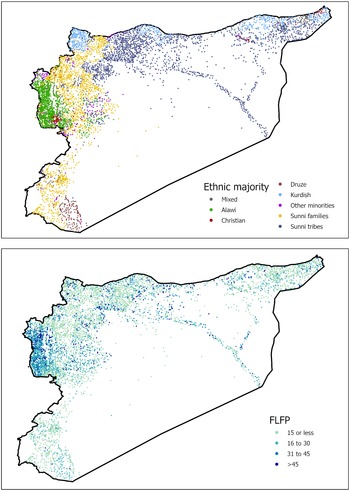
Figure 1 shows a map of Syrian cities, towns, and villages according to ethnic majority. The analysis in this paper follows the definition of ethnic identity which relates this identity to claims of shared ancestry and the cultural practices associated with those claims (Khaddour & Mazur, Reference Khaddour and Mazur2018). Ethnic identity is used here as an umbrella term for religious, sectarian, and national differences. The ethnic majority group in Syria is typically conceptualized as the Arab Sunni Muslim population. However, Khaddour and Mazur (Reference Khaddour and Mazur2018) suggest a more nuanced view, separating this group into tribal and non-tribal groups, employing the terms “Sunni tribes” and “Sunni families” – a terminology adopted in this paper. The Sunni tribes occupy the north-east of the country and have a distinct culture despite sharing the same language and religious affiliation with the Sunni families in the west. Apart from Sunni Muslims, major ethnic groups in Syria include Alawi Muslims, Druzes, Kurds, and Christians, as well as smaller groups such as Shia Muslims, Ismaili Muslims, and Circassians who are all aggregated under the category “Other minorities.” Most of the cities have mixed populations and are categorized as such, while smaller towns and villages are mostly homogenous with a clear majority group in each.
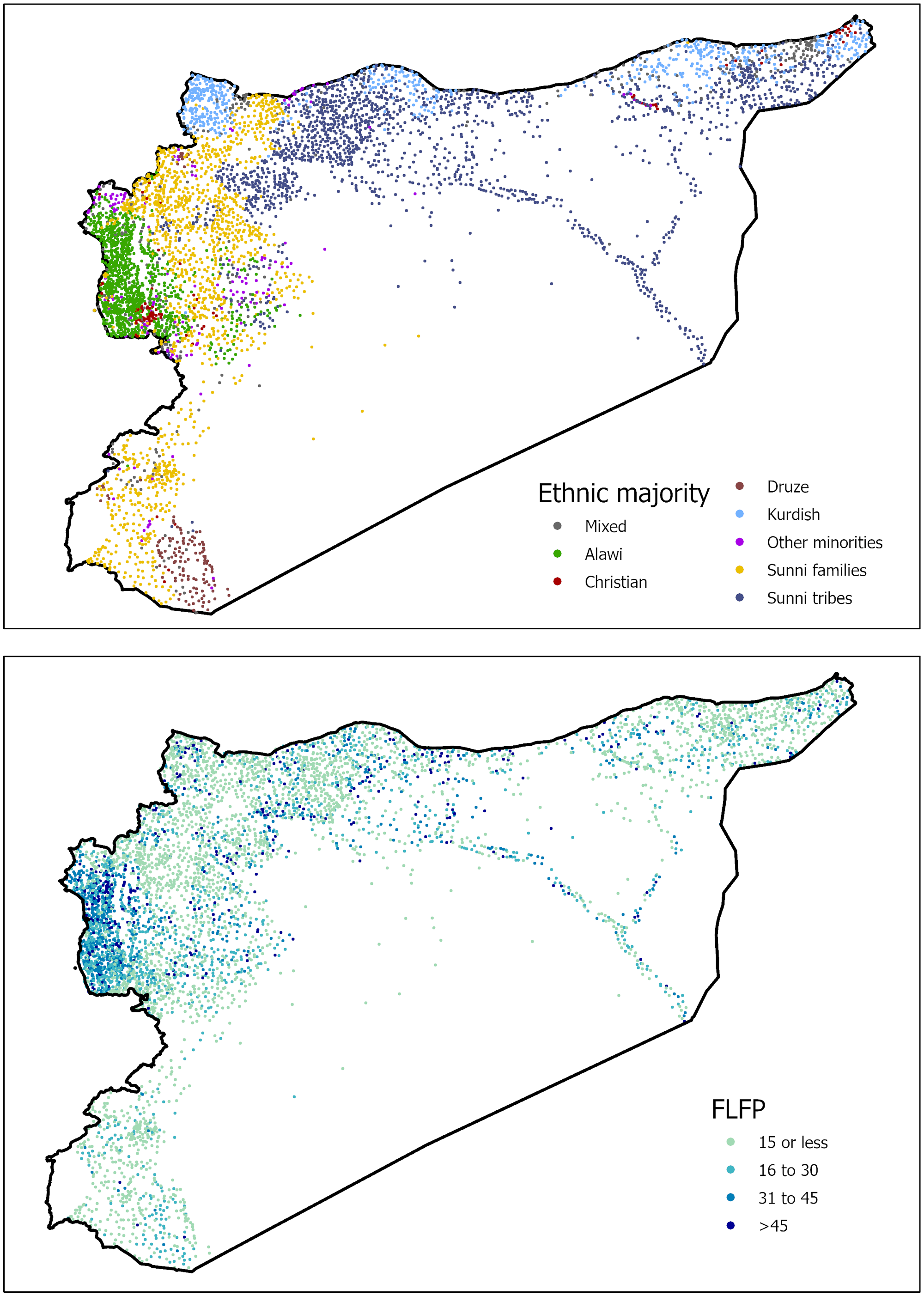
Figure 1. Ethnic composition and female labor force participation (FLFP).
Most Sunni Muslims in Syria follow the Hanafi school of Islamic jurisprudence, noted for its relative adaptability compared to other Islamic legal traditions. Still, religion holds a prominent place in daily life and may shape individuals’ viewpoints and preferences. Several other Muslim and non-Muslim groups are present alongside the Sunni Muslim majority. Antoun (Reference Antoun1991) emphasizes the distinctiveness of Syria’s religious sects, which typically occupy peripheral locations, cluster demographically in territorial “homelands,” and are exclusive in culture and social organization. Muslim sects like Alawis and Druzes, alongside Christians, do not follow the practices that may be common amongst Sunni Muslims, like gender segregation, such as wearing the veil which is common amongst Sunni Muslim women. Cultural and social norms of this kind may play a role in determining FLFP within each group. Sect groups in Syria not only have distinct informal norms, but they also maintain separate courts that deal with matters of personal law such as marriage and divorce, and inheritance (Van Eijk, Reference Van Eijk2016), a practice with deep historical roots in the MENA region.
Other groups like the Sunni tribal communities, Kurds, and other minorities like the Ismailis, Circassians, and Armenians all tend to have distinct social and cultural norms that distinguish each of them. Even though communities like Sunni tribes, Kurds, and Circassians, largely follow a similar form of Sunni Islam, the distinct norms in these communities may shape the lives of women and may affect their propensity to enter the labor market, based on views prevalent in each community regarding women’s proper role in society.
Ethnic and religious inequalities in socio-economic outcomes remain under-studied in this context. However, studies that address neighboring countries can be useful to inform our expectations as many ethnic communities cut across national borders in the region. An early study of religious gaps in fertility in Lebanon found lower fertility among Christian as compared to Muslims, as well as differences between Muslim and Christian sects, but these appeared to converge at higher levels of education (Chamie, Reference Chamie1977). Differentials in education levels between religious groups in the region are long-standing, with Christian school enrollment overtaking Muslim enrollment in the early 20th century (Sassmannshausen, Reference Sassmannshausen2019). Under the French mandate of Syria and Lebanon (1923–1946), private and missionary school were mostly attended by Christian students, while public schools served a majority of Muslim students (Abi-Rached & Diwan, Reference Abi-Rached and Diwan2022), which suggests differences in access to education across groups. The post-colonial period saw the establishment of modern primary schools, which coincided with an increase in Muslim education levels in Egypt, and the beginning of a process of convergence in Muslim and Christian educational levels and labor market outcomes in that country (Saleh, Reference Saleh2016). Still, Christians in the MENA have overall higher incomes, higher educational attainment, and lower fertility than Muslims. Several studies draw on data from Turkey, where religiosity is found to have a negative association with FLFP (Dildar, Reference Dildar2015; Ugur, Reference Ugur2018). Additionally, Alevi Muslim women in Turkey have higher participation than their Sunni Muslim counterparts (Akyol & Ökten, Reference Akyol and Ökten2024). Some studies also assess religious differences in FLFP among Arab women in Israel (e.g., Khattab, Reference Khattab2002; Yonay et al., Reference Yonay, Yaish and Kraus2015) finding significant gaps between Christian, Druze, and Sunni Muslim women in that context.
Courbage and Todd (Reference Courbage and Todd2014) address the fertility gaps among ethnic groups in Syria, focusing on differences in fertility between Alawis, Sunni Muslims, and the tribal regions of the north-east. The authors propose that these divergences are a product of entrenched family structures. Specifically, they highlight that the Alawi community has preserved traditional matrilineal practices, while the Sunni tribes remain the most patrilineal among the nation’s ethnic cohorts. Balanche (Reference Balanche2015), on the other hand, links the diminished Alawi fertility with the relative advancement of the Alawi minority which commenced in the second half of the 20th century. Balanche posits that the acceleration in the fertility transition was due to increased education levels and the induction of Alawi women into public sector employment. These contrasting theories on Alawi fertility can also be used to address women’s entry into the labor force. Elevated FLFP in Alawi regions might stem from beliefs or traditions that inform preferences within this group. Alternatively, higher FLFP could be attributed to more recent factors pertaining to the labor market structure in Alawi areas. The same argumentation can be applied to addressing the Christian advantage in FLFP. The FLFP advantage may be due to differences in deep rooted beliefs among Christians and Sunni Muslims, or they may be a product of other factors including the demographic and economic structure at the local level.
Previous research has highlighted some implications of structural change for gender dynamics in the MENA and how the resulting changes in patterns of life and work affect men and women differently. Abdelali-Martini et al. (Reference Abdelali-Martini, Goldey, Jones and Bailey2003) describes the feminization of agricultural work which took place in MENA countries including Syria (see also Abdelali-Martini & Dey de Pryck, Reference Abdelali-Martini and Dey de Pryck2015). The increased availability of work outside of the agricultural sector led to an exodus of men into more productive and higher paid occupations, increasing the proportion of women among agricultural workers. This points to the spread of the male breadwinner model as a result of structural change. Female labor in the agricultural sector in the MENA includes both waged work in agricultural gangs such as those investigated by Abdelali-Martini, as well as traditional forms of work within the family unit which endures in many areas.
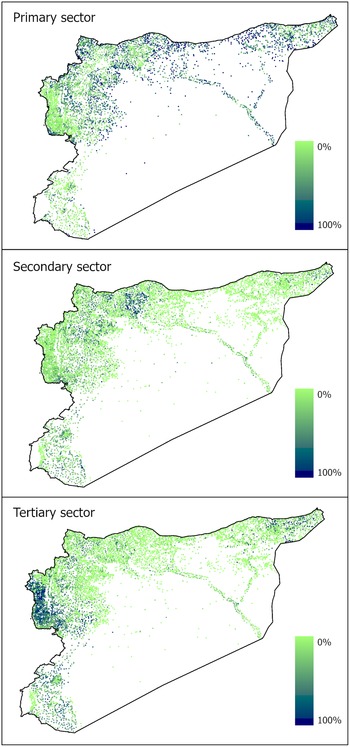
Figure 2 shows the sectoral composition of the labor force across the geography of Syria, which clarifies the inequalities discussed above. The north-east of Syria has a predominantly agricultural economy, while the secondary sector is largest in the western parts of the country apart from the coastal region, and the latter has a mainly service-based economy coinciding with the highest rates of employment in the public sector.
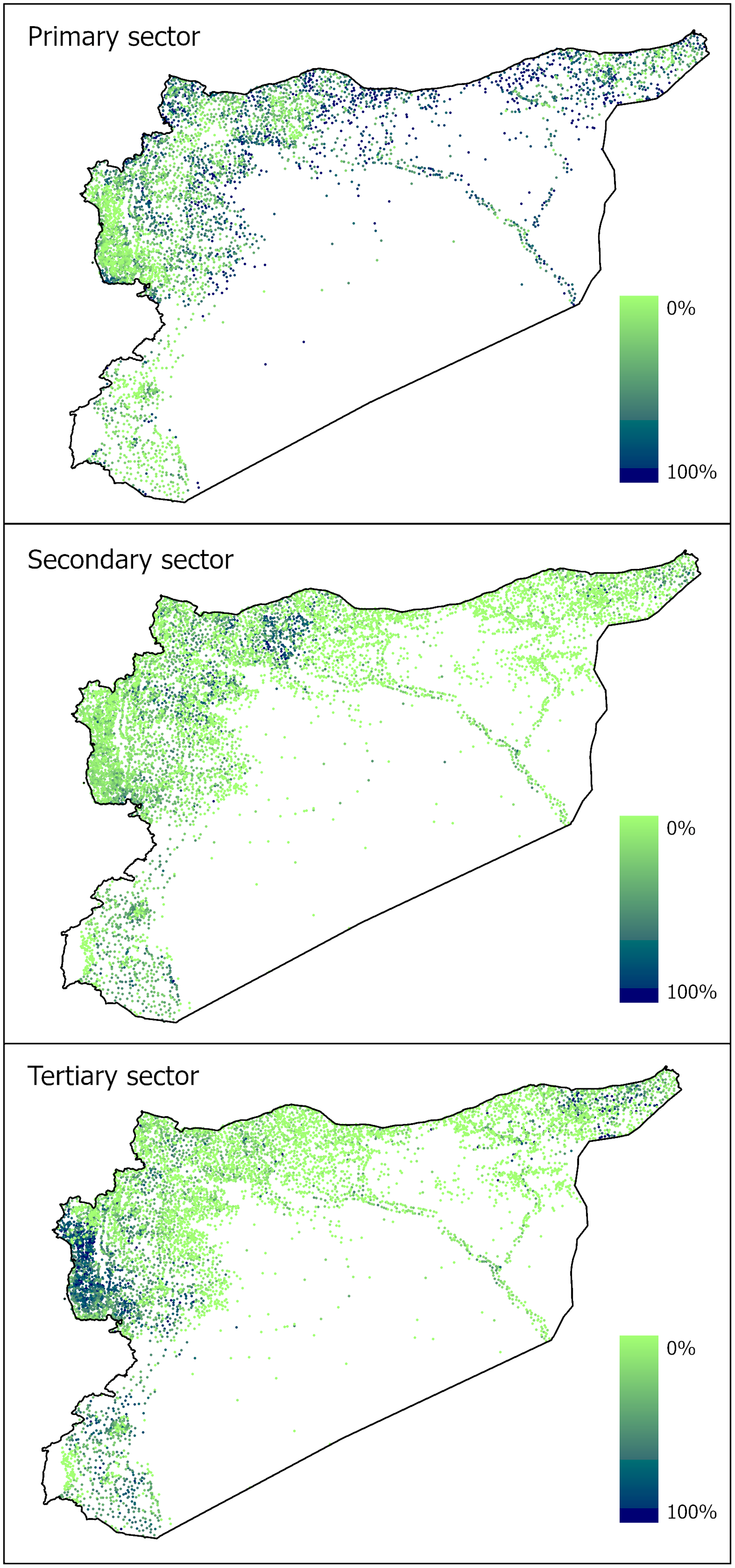
Figure 2. Labor force composition by sector at the local level in Syria.
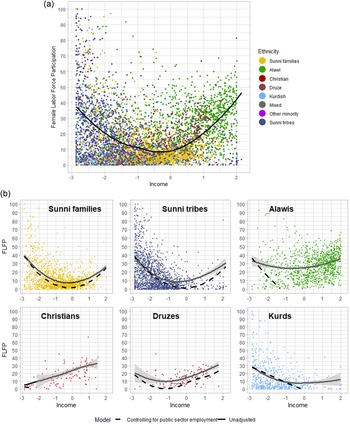
Based on the figure above and the U-feminization hypothesis, we would expect large differences to emerge in FLFP rates between groups in Syria. The first panel in Figure 3 shows FLFP in Syrian towns and villages as a function of income. The line of fit shows a clear U-shaped pattern, with FLFP decreasing as a function of income at low values of income, and then increasing at higher values of income. Areas with a majority of Sunni tribes have higher FLFP that is falling with income, while Sunni families appear to have reached the lowest FLFP rates in the mid-section of the U-curve. Meanwhile, Alawis and Christians have higher FLFP owing to their high average incomes and higher economic development and associated education levels in their areas.
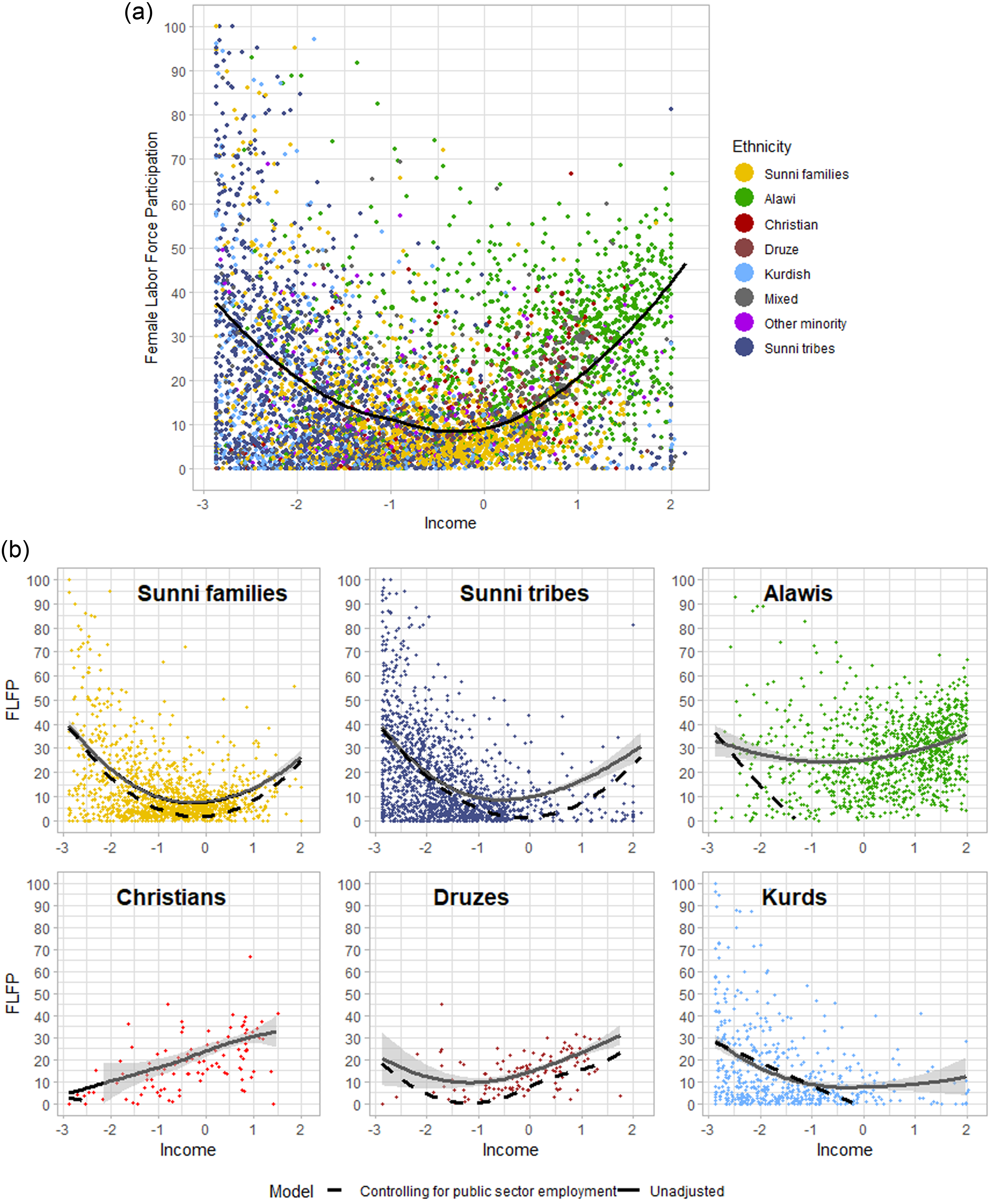
Figure 3. (a) Female labor force participation as a function of income. (b) Female labor force participation as a function of income by ethnic majority. Note: The income measure is imputed based on the sectoral composition of the labor force. The line of fit is estimated using a non-parametric loess function with observations weighed according to population size.
Ethnicity-specific patterns can be seen more clearly in Figure 3b, which breaks down the same relationship according to ethnic group. The U-curve is most found clearly for Sunni families and Sunni tribes, where the U shape resembles that in the previous figure. The dashed line in Figure 3b shows a line of fit based on a similar model that adds a control variable for the share of the working population employed in the public sector, with the line of fit estimated at zero public sector shares for all groups. Controlling for public sector employment lowers the fitted values of FLFP in all groups, but its effect is seen most clearly in Alawi areas where a stark difference between the adjusted and unadjusted fit are found. Public sector employment may have shielded this group from the decline in FLFP that is found in Sunni majority areas. Meanwhile Kurdish FLFP appears to be falling with income, and Druze and Christian FLFP rates are rising with income. The limited data on these smaller groups and their geographic clustering may limit the extent to which the full U pattern can be seen. Similar results are found when using the alternative measure of income imputed using education data (See Appendix Figure 1). The finding that FLFP follows a U-shaped pattern as a function of income accords with the U-feminization hypothesis and justifies the use of second order polynomials in the regression equations in the next section.
4. Data and methods
The data employed in the analysis comes from the population census of 2004, which is the last census conducted in the country to date. The data is aggregated geographically at the level of cities, towns, and villages. It includes measures of female and male labor force participation, as well as data on demographics, economic structure, and education levels. Ethnicity data comes from previous work on the social structures in Syria (Khaddour & Mazur, Reference Khaddour and Mazur2018). A city, town, or village is assigned a majority based on an estimated 80% cutoff (i.e., 80% of the village is of the same ethnic group for the village to have an ethnic majority), with most towns and villages having clear ethnic majorities while cities are typically ethnically mixed. The data necessitates that the ethnic gaps are measured between ethnic majority areas but does not capture ethnic differences between populations within cities.
The use of aggregated data is justified by the nature of the research question, which seeks to explore gaps in FLFP across geographically distinct ethnic majority areas. Additionally, individual-level census data is unavailable in this context. It is important to note that this approach has several limitations: Aggregation omits within-area variation, making it impossible to capture individual-level differences within the same area, or those between ethnic minorities and majorities in mixed urban areas. Another limitation relates to the data on ethnic composition, which was collected based on expert interviews, rather than measured directly. Meaning that ethnic composition shares are likely to be highly imprecise. For this reason, a conservative 80% cutoff is used for assigning the ethnic majority for any city, town, or village, with areas at or below the cutoff treated as “mixed” areas.
To evaluate the relationship between FLFP and economic development, two alternative measures of income are imputed based on the sectoral composition of the labor force or alternatively based on the educational attainment of the labor force. Real wage data is used for the calculations which comes from Syrian Labour Force Survey of 2007. The imputation formula takes the following form for sector-based income:
 $$Incom{e_i} = \;\;\mathop \sum \limits_{j = 1}^7 Sector\;wag{e_j}\;.\;\;Sector\;shar{e_{ij}}$$
Where i refers to the city, town, or village, j to the sector. Sector wage refers to the national-level average wage of sector j, and Sector share is the share of workers in the city/town/village employed in that sector. The set of sectors used to construct the sectoral income measure are agriculture, industry, construction, hotels and restaurants, transportation, finance and real estate, and other services. While wage imputation is standardly used in the study of income inequality (such as income scores, see Sobek Reference Sobek1995), its limitations should also be understood. In this case, the measure captures the sectoral composition of the labor force, with low values of sectoral income corresponding to areas where the labor force is predominantly employed in agriculture, while increasing values of the measure track with the transition of the labor force into secondary and tertiary sector occupations and eventually into service-sector and white-collar dominant economies. The sectoral income measure is standardized according to its z-score value, with the national average weighted by population size taking a value of 0 with a standard deviation of 1. The alternative specification of the income measure uses educational attainment instead of income using the following formula:
 $$Incom{e_i} = \;\;\mathop \sum \limits_{j = 1}^7 Average\;wag{e_j}\;.\;\;Educational\;attainment\;shar{e_{ij}}$$
Where the educational attainment share refers to the share of the adult population in attainment categories: literate, elementary school, middle school, high school, middle academy, and university educated, with the illiterate group treated as the reference group. Average wage refers to the national-level average wage conditional on the educational attainment category.
To understand the contribution of social norms to explaining ethnic gaps in FLFP, gender parity indices (GPIs) in education are used to proxy for bias against girls and women. This bias may take the form of lower investment in girls’ and women’s education as compared to their male counterparts, or as prescriptive norms that limit their freedoms and participation in activities outside the home by limiting their education. Three GPIs are calculated based on the secondary school enrollment ratio between girls and boys, the schooling attainment ratio between adult women and adult men at the secondary level and above, and at the tertiary level. The GPIs measure at 100 in places with equality between the genders, and measure below 100 if male outcomes are higher than female outcomes, and above 100 when female outcomes overtake male outcomes. The enrollment GPI is calculated based on the enrollment of girls and boys aged 15–17 during the stage of upper secondary schooling. In the Syrian context, schooling is mandatory until the age of 16, which allows for variation in the enrollment rate that is determined by parental decisions after the age of 16. The GPI for secondary education and above (termed secondary+) captures the gap in educational attainment at the secondary level and above. And another GPI is used for educational attainment at the tertiary level.
Educational attainment of both women and men is determined by parental investment during late teens and early 20s. Students in Syria typically rely on family support, and in particular women who choose to pursue education beyond the minimum required by law. Pursuing education at above the secondary level also requires postponing marriage, and parental decisions typically play an important role in the timing of marriage. The GPIs are used in the analysis to proxy for the kinds of social norms that inhibit women’s participation in wider society, including prescriptive norms that curb mixing between women and men, or those that favor the seclusion of women or their early marriage. While secondary level students in Syria are often segregated on gender, there is no such segregation above the secondary level. Furthermore, secondary schooling establishments for boys and girls are typically located in close proximity and attending school typically offers opportunity for students of different genders to interact. In effect, low values of the GPIs correspond to places with high differential in educational investment in favor of males, which proxy for both favoritism towards males and limitations on women’s freedom to pursue activities outside the home on par with their male counterparts. Since educational enrollment in Syria is free at all levels, costs of education are not expected to shape the decision to attend school at the secondary or tertiary levels. Though the opportunity cost of education may play a role, particularly in agricultural regions where the labor of young men and women is used on the farm. This possibility is accounted for by including secondary polynomial terms for all GPI measures in the regression analysis.
The Gelbach decomposition method (Gelbach, Reference Gelbach2016) is used to evaluate the role of various factors that determine the ethnic gaps in FLFP. This method allows for estimating the contribution of each individual factor to explaining gaps between groups, without introducing bias due to the order with which the different variables are included. The Gelbach decomposition starts with an unadjusted ordinary least-squares model of the form:
 $$FLF{P_i} = \;\alpha + \;\mathop \sum \limits_{d = 1}^7 {\mu _{d,\ unadjusted}}\;{D_{i}}+ {\varepsilon _i}$$
Where i refers to the city, town, or village. FLFP is the female labor force participation ratio, which measures the ratio of the female population in working age (18–65) who are engaged in the labor force as proportion of the total female population in the same age group. D includes a set of seven ethnic majority dummy variables, which separate the cities, towns, and villages into different ethnic majority groups with Sunni Families as the reference category.
The adjusted model takes a similar form and adds a set of controls:
 $$FLF{P_i} = \;\alpha + \;\mathop \sum \limits_{d = 1}^7 {\mu _{d,\;adjusted}}\;{D_{i\;}} + \;\sum \gamma \;{X_i} + \;{\varepsilon _i}$$
The set of controls $\;{X_i}$
include male labor force participation (MLFP), demographic controls, the imputed income variables, the shares of workers employed in the public sector and in the family sector, and gender parity indices. The demographic controls include the marriage fertility rate, and the proportion of the population aged 15–64. Second-order polynomial terms are used for the demographic controls, income measures, and the gender parity indices to account for the non-linearity due to the U-feminization pattern. An additional specification adds a broader set of controls that include education composition of the female population, a set of infrastructure variables that measure the proportion of homes connected to the electricity network, the sanitation network, and drinking water network, and a set of controls that capture information on informality in home ownership, as well as a broad set of geographic controls that include longitude and latitude and information on agricultural suitability. The observations are weighed by population size, which allows for generalizable analysis that is not skewed by the most numerous villages with the smallest populations.
$\;{X_i}$
include male labor force participation (MLFP), demographic controls, the imputed income variables, the shares of workers employed in the public sector and in the family sector, and gender parity indices. The demographic controls include the marriage fertility rate, and the proportion of the population aged 15–64. Second-order polynomial terms are used for the demographic controls, income measures, and the gender parity indices to account for the non-linearity due to the U-feminization pattern. An additional specification adds a broader set of controls that include education composition of the female population, a set of infrastructure variables that measure the proportion of homes connected to the electricity network, the sanitation network, and drinking water network, and a set of controls that capture information on informality in home ownership, as well as a broad set of geographic controls that include longitude and latitude and information on agricultural suitability. The observations are weighed by population size, which allows for generalizable analysis that is not skewed by the most numerous villages with the smallest populations.
The expanded set of variables is meant to examine mechanisms and additional competing hypotheses. Education, infrastructure, and housing informality capture various mechanisms for the effect of economic development on FLFP. The inclusion of geographic variables is motivated by the idea that social norms around FLFP may be shaped by environmental factors, particularly those related to agricultural suitability. Theories of gendered division of labor suggest that historical reliance on different forms of agriculture – such as plow-based versus shifting cultivation – has long-term effects on gender roles, including attitudes toward women’s work outside the household (Alesina et al., Reference Alesina, Giuliano and Nunn2013). By including controls for agricultural suitability, the analysis accounts for the possibility that historical economic conditions contributed to the development of group-specific labor market norms that persist today.
The FLFP measure is based on an expanded definition which includes both employment in the “modern” labor force, as well as work performed in both the informal sector and in the family sector. The family sector counts activities that are performed within the family unit – which mostly refers to agricultural work but also includes any production activities performed within the household, without necessarily receiving a wage in exchange for this activity. This definition of FLFP does not include any service activities that are not intended for marketization, such as household chores or care activities. This definition accords with the available data and is standardly used in census data collection in developing countries (Gaddis & Klasen, Reference Gaddis and Klasen2014).
Having run models (1) and (2), the explained ethnic gap in FLFP that is due to the added explanatory variables can be expressed as ${\mu _{d,\;adjusted}}$
-
${\mu _{d,\;adjusted}}$
- ${\mu _{d,\;unadjusted}}$
.” To estimate the contribution of each variable to this gap according to the Gelbach method, a set of auxiliary regressions were run for each added covariate and each ethnic group, with each variable used in equation (2) as the dependent variable. For each auxiliary regression, an indicator variable is included for the ethnic majority, alongside controls for longitude and latitude and a constant term. For example, an auxiliary regression for MLFP for Alawis takes the following form (with Sunni families as the base category, and restricting the sample to only Sunni Families and Alawis):
${\mu _{d,\;unadjusted}}$
.” To estimate the contribution of each variable to this gap according to the Gelbach method, a set of auxiliary regressions were run for each added covariate and each ethnic group, with each variable used in equation (2) as the dependent variable. For each auxiliary regression, an indicator variable is included for the ethnic majority, alongside controls for longitude and latitude and a constant term. For example, an auxiliary regression for MLFP for Alawis takes the following form (with Sunni families as the base category, and restricting the sample to only Sunni Families and Alawis):
 $$MLF{P_i} = \alpha +{\tau _{MLFP,\;Alawi}}+{\varepsilon _i}$$
Then the contribution of $MLFP$
to explaining the Alawi-Sunni gap in FLFP is calculated using the following formula:
$MLFP$
to explaining the Alawi-Sunni gap in FLFP is calculated using the following formula:
 $${\delta _{\;MLFP,\;Alawi}} ={\gamma _{MLFP}}{\tau _{MLFP,Alawi}}$$
Where ${\gamma _{MLFP}}$
is the coefficient for
${\gamma _{MLFP}}$
is the coefficient for $MLFP$
obtained from equation (2). The same process is repeated for every ethnic group and every variable introduced in equation (2).
$MLFP$
obtained from equation (2). The same process is repeated for every ethnic group and every variable introduced in equation (2).
In addition to the Gelbach decomposition analysis, the contribution of each variable to explaining ethnic FLFP gaps is tested using models that include each variable as the sole explanatory variable (besides the ethnicity dummy variables and latitude and longitude). The findings from this analysis show similar results to the Gelbach decomposition and are therefore included in the appendix (see Appendix Tables A.1–A.7).
It is important to note that the Gelbach decomposition method explains changes in coefficients due to correlation, but does not imply causal mechanisms. The method has the same limitations as those of OLS, like sensitivity to omitted variable bias. The results presented in the forthcoming section should be read with this limitation in mind. While the available data allows for exploring the roles of a rich set of variables, it is not possible to rule out the presence of other factors outside of the included variables. For example, social norms that are unrelated to the included GPIs and geographic variables, such as those related to the male breadwinner status.
5. Results
5.1. Descriptive statistics and group differences
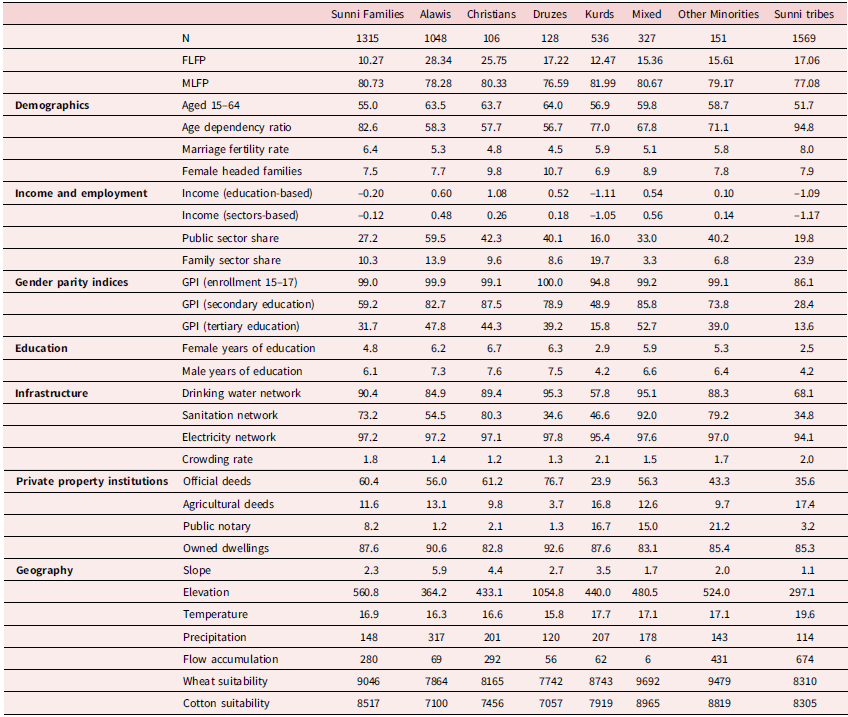
Descriptive statistics are presented in in Table 1. Average FLFP varies widely by group, from 10% for Sunni families to 28% for Alawis and 26% for Christians. The former group is the largest numerically in terms of population and is thus chosen as the reference group in the analysis. In contrast to FLFP, male labor force participation is far more limited in range and only varies between 77% and 81% at the group level. Figure 1 shows a map of FLFP, highlighting a concentration of high FLFP in the coastal areas in the west of Syria where Alawi and Christian majorities predominate. Meanwhile, the inland regions of the country show varied levels of FLFP across geography, with no clear geographic trends or patterns apart from the coastal-inland division, and a mix of both high and low FLFP.
Table 1. Descriptive statistics

Note: The columns represent means weighted by population size in each ethnic majority group of cities, towns, and villages.
The income z-scores shown in Table 1 differ by group, highlighting large regional inequalities across the country. Alawis, Christians, Druze, and Mixed (urban) areas have the highest average incomes, while Kurdish and tribal areas have lower incomes in comparison at around one standard deviation below the mean. While the two income measures are not always equal, they are consistent in terms of sign for all ethnic groups and in terms of magnitude (with the exception of Christian areas where education-based income outpaces sector-based income). As the largest ethnic group, Sunni families are also the nearest to the national average, which is also convenient for the analysis with this group used as the base category. Large regional inequalities are also present in public sector employment, which is highest in Alawi areas at around 60%, but only reaches 27% for Sunni families. Public sector employment is also elevated among Christinas, Druze, and other minorities, reaching around 40%, and is lowest for Kurds and Sunni tribes at 16% and 20%, respectively. In the latter groups, rates of work in the family sector are relatively high at 20% and 24%, respectively, due to the higher rates of agricultural work in the north-east of Syria. Work in the family sector is lowest in mixed areas at only 3%, and measures at 10% for Sunni families.
The infrastructure variables show some disparities between groups, particularly for the sanitation network, while the gaps in the development of the electricity network and the drinking water network are overall smaller and concentrated between the north-east region (Kurds and Sunni tribes) and the rest of the country. Similar patterns can be seen in the variables capturing the formality of the private property institutions. The data records the share of housing deeds according to the type of deed, where different deed types correspond to different levels of formality. Three types are recorded in the data – formal deeds, agricultural deeds, and public notary contracts. Formal deeds correspond to the share of formally owned homes. Agricultural deeds correspond to the share of homes built on formerly agricultural land without a government permit. And public notary contracts correspond to the share of homes where owners possess a notarized contract verifying their purchase of the property from the previous owner, but without holding an official deed to the property.
In terms of geography, there is high agricultural suitability across most regions. The coastal Alawi region receives more rain than is typical for Syria but suffers from relatively lower suitability due to high ruggedness (slope). Druze areas also appear to have lower agricultural suitability as compared to other regions.
The Gender Parity Indices (GPIs) in Table 1 show small gaps in rates of school enrollment for boys and girls aged 15–17, and large gaps in GPIs for educational attainment in the adult population (aged 18 and above) at both the secondary levels and over (secondary+), and at the tertiary levels. Enrollment rates (aged 15–17) are at 99 for all groups with the exception of Kurds and Sunni tribes where they measure at 95 and 86, respectively. These lower rates are likely a function of lower levels of economic development and lower overall educational levels in the north-east of Syria. This can be seen in the low average years of education of adult males which measures at around 4 years in both groups. However, GPIs in the adult population tell a different story, with large gaps in secondary and tertiary educational attainment between men and women. Secondary education GPIs are lowest amongst Sunni tribes at 28, but they are also relatively low for Sunni families and Kurds at 49 and 59, respectively. The measure is higher amongst Alawis, Christians, and mixed populations where it reaches above 80 in all cases, and among Druzes and other minorities at 79 and 74, respectively. Similar patterns are found for tertiary education GPIs, with very large gaps amongst tribes and Kurds. Overall, the highest value is at 53 in mixed (urban) populations where the proportion of women with a tertiary education reaches almost half of that of men.
The gaps in economic development and educational attainment across the country are also associated with differences in demographics across groups. Fertility rates differ markedly, with the highest fertility amongst Sunni tribes, and the lowest amongst the Druzes, Christians, and mixed populations. The age structure and the age dependency ratio differ in turn, with very high dependency ratios and low proportions of the population in the working age amongst Sunni tribes and Sunni families, whereas Alawis, Christians, and Druzes enjoy low dependency ratios and relatively high proportions of the population in working age. The differences in age structure are stark even by global standards. As a comparison, shares of the population in at ages 15–64 in Africa and the European Union measured at 56% and 65%, respectively in 2021 (UN, World Population Prospects, 2022).
5.2. Gelbach decomposition of covariates
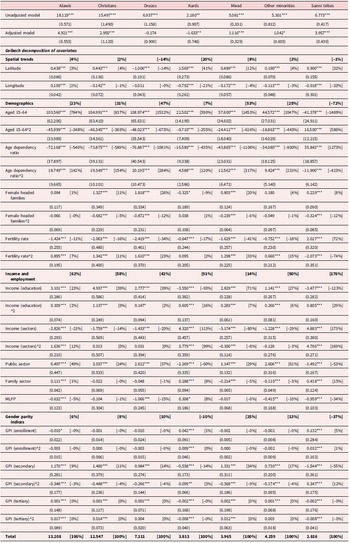
Table 2 shows the Gelbach decomposition of covariates. For each ethnic group, the coefficient on the ethnicity dummy variable is shown for both the unadjusted and adjusted models. Below that, the Gelbach decomposition includes each variable name, the contribution of that variable calculated as described in the methods section (along with the standard error), and the contribution as a percentage of the explained gap (i.e., the difference between the ethnicity dummy variables in the unadjusted and adjusted models). The percentage of contributions are summed for each group of variables, for ease of interpretation, and to address the multicollinearity of closely related variables.
Table 2. Gelbach decomposition of covariates
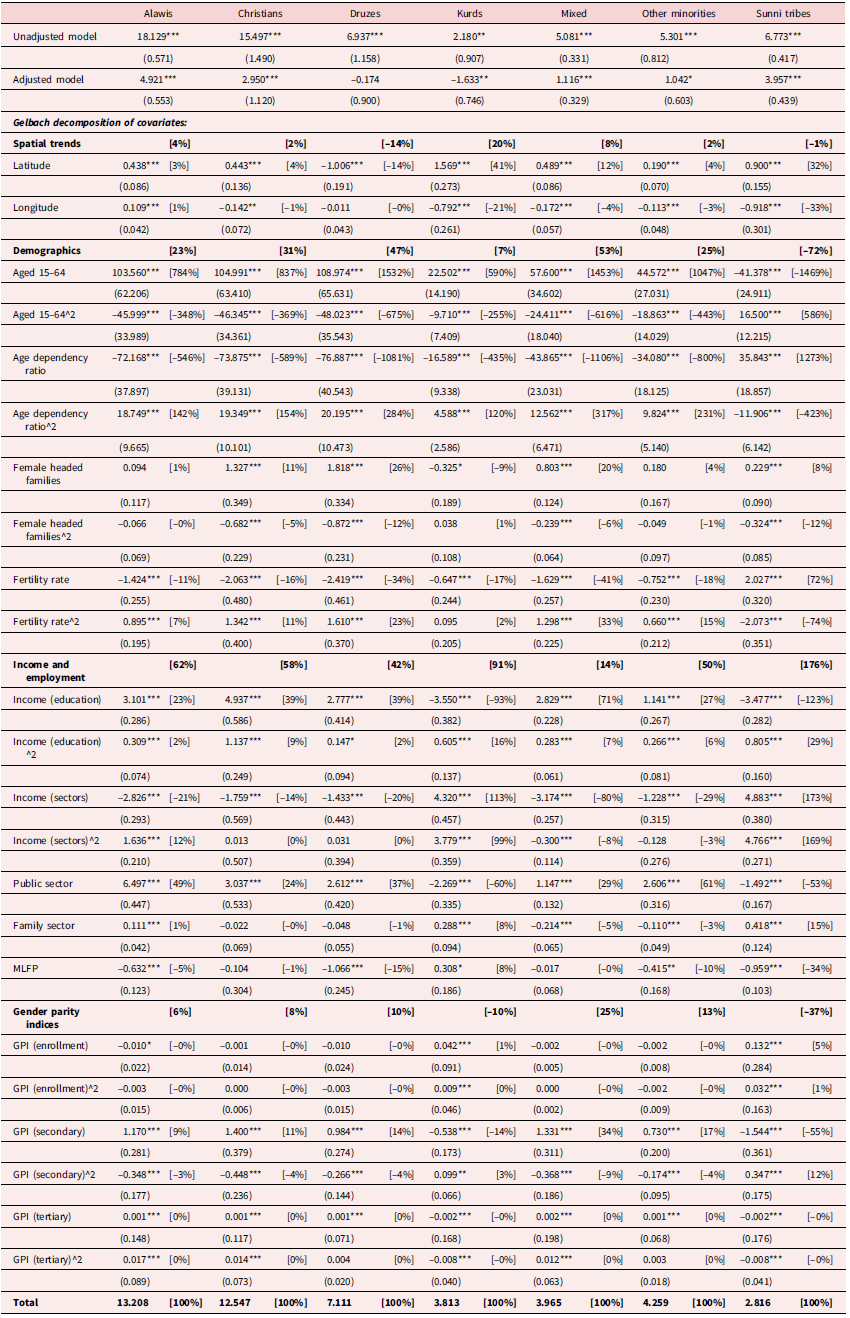
Note: The table shows the coefficients on ethnic group dummies in the unadjusted and the adjusted models. The unadjusted model is a regression of FLFP on ethnic group majority dummies, and the adjusted model adds the control variables shown in the Gelbach decomposition. The Gelbach decomposition shows the contribution of each control variable to explaining the difference in ethnic coefficients between the unadjusted and adjusted models. The percentages in brackets measure the contribution of each control variable as a share of the total gap between the unadjusted and adjusted model ethnicity coefficients. Grouped contributions are shown in bold, where the contributions of each set of variables are grouped together for ease of interpretation. See appendix table A.8 (column 1) for the adjusted model full regression output.
As the ethnicity coefficients show, the majority of FLFP gaps are accounted for by the included variables. The Alawi FLFP premium is reduced from 18.5 to 4.5 percentage points, while the Christian premium is reduced from 16.8 to 3.2 percentage points. The residual gaps in the adjusted model remain statistically significant in some cases, but they are at much reduced levels and do not measure more than 5 percentage points in any ethnic groups.
Turning to the decomposition of covariates, the most important set of variables appear to be the income and employment variables, accounting for 62% of the Alawi FLFP premium and 58% of the Christian premium, and significant shares of premiums in other groups. The public sector share of workers is also an important contributor, especially in the case of the Alawi premium (49%). In the cases of Kurds and Sunni tribes, the negative coefficients indicates that these groups enjoy higher FLFP despite the very low public sector shares in their areas. Instead, the family sector share in these two groups appears to explain a share of their FLFP premia, due to a higher share of workers in agriculture, in line with the U-feminization hypothesis.
The set of demographic variables contribute to explaining around a quarter of the Alawi FLFP premium, and a third of the Christian FLFP premium. Most of this is due to the contribution of the age structure of the population and the age dependency ratio, though the two variables are highly correlated which makes it difficult to separate the two contributions. In contrast, the marriage fertility rate contributes a very small share of the gap (summing the first and second order terms yields 4% for Alawis and 5% for Christians).
The contributions of the gender parity indices are small overall, measuring at 6% for Alawis and 8% for Christians, and are even less significant for Druzes, but they do appear to be larger for mixed (urban) areas at 25% and for Sunni tribes at –37%. The GPI contribution is due almost entirely to the gender gap in secondary educational attainment for the adult population, whereas school-aged and tertiary education GPIs are not contributors. The contributions are positive for the secondary attainment GPI, meaning that a smaller educational gap between women and men is associated with higher FLFP. With the only exception being in Kurds and Sunni tribes where the contributions are negative, which reflect the lower gender parity indices in these group. Here again, the negative relationship between the GPIs and FLFP in these groups is in line with the U-feminization hypothesis. The same results are found when including each GPI separately in both linear and polynomial forms without additional controls (See Appendix Table A.2), which suggests that the small size of GPI contributions are not due to the inclusion of other control variables.
5.3. Gelbach decomposition with additional controls
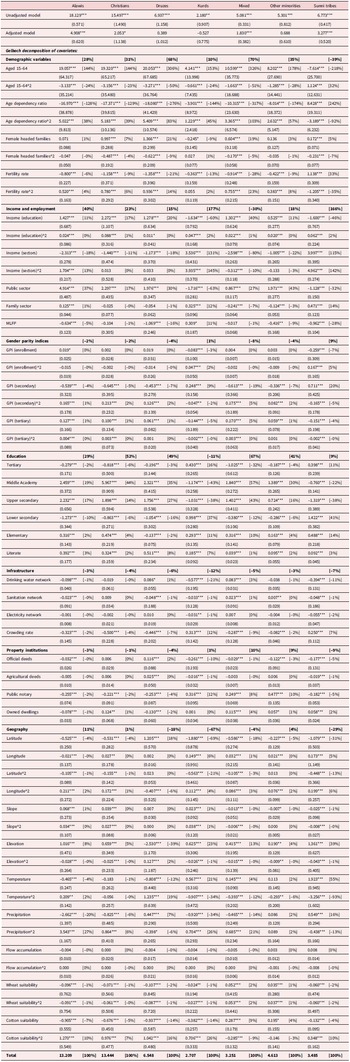
Table 3 repeats the same decomposition analysis with the addition of variables capturing women’s education, infrastructure development, private property institutions, and geography. The expanded model does not differ significantly from the model outlined above in terms of explanatory power, but it allows us to examine some of the mechanisms and additional competing hypotheses.
Table 3. Gelbach decomposition of covariates with additional controls
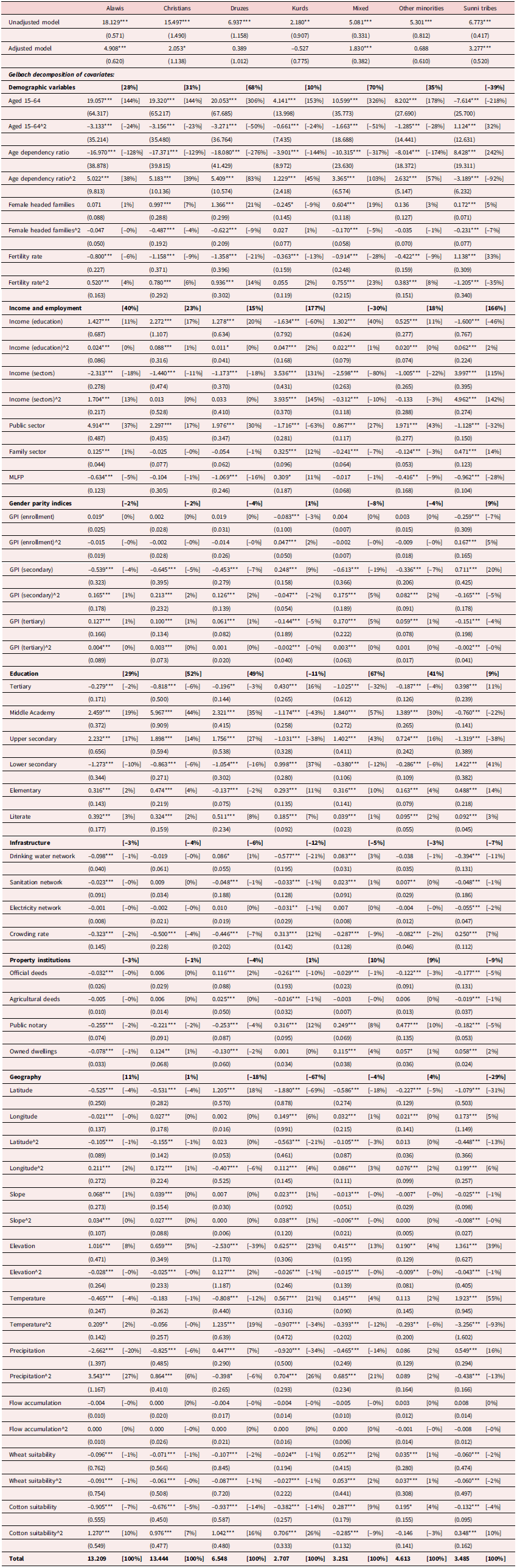
Note: The table shows the coefficients on ethnic group dummies in the unadjusted and the adjusted models. The unadjusted model is a regression of FLFP on ethnic group majority dummies, and the adjusted model adds the control variables shown in the Gelbach decomposition. The Gelbach decomposition shows the contribution of each control variable to explaining the difference in ethnic coefficients between the unadjusted and adjusted models. The percentages in brackets measure the contribution of each control variable as a share of the total gap between the unadjusted and adjusted model ethnicity coefficients. Grouped contributions are shown in bold, where the contributions of each set of variables are grouped together for ease of interpretation. See appendix table A.8 (column 1) for the adjusted model full regression output.
The contributions of the demographic variable appear robust and similar to that found in the previous model. On the other hand, the contribution of the income and employment variables is reduced, and the education variables capture an important share of those contributions. Income and employment explain 40% of the Alawi FLFP premium, and only 23% of that of Christians. The education variables capture 29% of the Alawi premium, and 52% of that of Christians. For Kurds and Sunni tribes, the contribution of education is negative, reflecting the lower average educational attainment in these areas compared to the reference group. The contribution of GPI is very small in the expanded model for both Alawis and Christians, with most of the effect captured by the education controls.
The contributions of infrastructure variables are small and negative overall, exceeding 10% only in the case of Kurds. The negative sign indicates that, on average, groups with better infrastructure tend to have lower FLFP, consistent with the broader U-shaped relationship between economic development and FLFP. However, the modest size of these contributions suggests that infrastructure is not a major mechanism in explaining FLFP differences across groups, particularly compared to the role of educational attainment. The limited effect may also reflect the relatively small variation in infrastructure development, such as the near-universal access to electricity, across the groups studied.
The next set of variables capture the role of private property institutions. The contributions are very small in the case of Alawis and Christians at 3% and 1%, respectively. The effects are slightly larger in the case of Kurds, Sunni tribes, and other minorities reaching up to 9%. In these groups, the effects align with high female participation in agricultural activities, which may be linked to lower land ownership rates in rural areas.
The last set of variables capture the role of geography. The contributions vary in size, measuring at only 1% for Christians, somewhat higher at 11% for Alawis, and reaching up to –67% and –29% for Kurds and Sunni tribes, respectively. In the case of Alawis, the largest contribution comes from the elevation variables at 8%, with higher elevation associated with higher FLFP. For Kurds and Sunni tribes, the contribution of geography appears to be driven by latitude and longitude. The North and East of Syria are the areas inhabited by these groups, which may explain the geographic correlation with FLFP. Wheat suitability and cotton suitability are not major contributors to the observed gaps, with cotton suitability contributing at most 8% in the case of Kurds.
6. Discussion and conclusions
The analysis presented here reveals the presence of large gaps in FLFP between ethnic and religious groups in Syria. Syrian women in Alawi and Christian communities join the labor force at more than twice the rate of their counterparts in the neighboring Sunni Muslim communities. Gaps in FLFP between Muslim sects have only been explored in few countries in the MENA like Turkey (Akyol & Ökten, Reference Akyol and Ökten2024), and the analysis here is the first to measure these gaps in the Syrian context. The presence of Christian-majority areas in Syria also allows for the measurement of Muslim-Christian gaps in FLFP, and not just gaps between Muslim sects. Whereas most previous research on Christian-Muslim gaps in FLFP was undertaken at the country level. Surprisingly, gaps between Muslim sects appear to be at least as large as those between Christians and Muslims, with Alawi Muslim women joining the labor force at slightly higher rates than Christians. And while the Christian premium in FLFP in Syria is significant, Christian FLFP in this context is still consistent with the overall rates found in the MENA region, below the global average and below those of Christian-majority regions of the world like Europe, the Americas, and sub-Saharan Africa.
The decomposition analysis shows that economic and demographic structure matter for the ethnic and religious gaps in FLFP. The analysis does not find a large contribution for social norms as proxied by gender parity in school enrollment and educational attainment, even though women’s education levels are important determinants of FLFP gaps between groups. The analysis contributes to the literature on women’s work in the MENA region by elucidating the factors behind ethnic and religious gaps in FLFP. Recent research has emphasized social and cultural norms as main determinants for divergences in FLFP within and across societies, but the analysis here shows that broader structural factors appear to dominate. The small effects sizes and contributions of GPIs suggest that parental bias against girls is not a major factor behind gaps in FLFP between Muslim sects and communities, or even between Muslims and Christians.
Differences in the age structure across communities appear to play an important and underappreciated role for FLFP gaps, even after controlling for other important factors such as income and education levels. This effect may be due to the reduced dependency ratio resulting from a higher proportion of the population in the working age, leading to lower caregiving burdens which typically fall on women. The effect may also be due to differences in life stages, with a lower proportion of women in childbearing ages amongst those in the working age overall, in groups with relatively high FLFP like Alawis and Christians. Overall, the effect suggests a possible role for a demographic dividend for FLFP, with a more rapid fertility decline in Alawi and Christians communities leading to increased FLFP rates, even though current fertility rates do not play a significant role. Previous literature found that differences in age structure explain substantial parts of the ethnic FLFP gaps in the US (Reimers, Reference Reimers1985). Likewise, large differences in age structure exist between ethnic groups in Syria, with resultant differences in FLFP. The evidence is also in line with recent research suggesting the presence of a demographic dividend for FLFP in Sub-Saharan Africa (Backhaus & Loichinger, Reference Backhaus and Loichinger2022).
One explanation for the link between demographic structure and female labor force participation (FLFP) is the influence of social norms. Gender norms shape demographic patterns by affecting family size and the timing of marriage; societies that value early marriage and large families tend to have more dependents, limiting women’s work opportunities. In turn, demographic structure can reinforce expectations that women provide unpaid care when many children or elderly are present. Yet if fertility and caregiving norms were the main drivers, we would expect fertility rates to strongly predict FLFP, which is not the case. This suggests other factors are also at play, such as differences in age composition itself, which may help explain why fertility rates do not contribute significantly to explaining FLFP gaps.
Income appears to matter for FLFP gaps, but the size of its contribution depends on the ethnic group, as does the contribution of public sector employment share. The finding here supports earlier research on the Alawi community in Syria, and the role of public sector employment in the entry of Alawi women into the labor force (Balanche, Reference Balanche2015). Public sector employment intertwines with economic development, with the poorest areas in the north-east of Syria having relatively low public sector shares, despite FLFP that is higher than average. This is in part due to women’s participation in the agricultural economy, especially amongst Kurds and Sunni tribes, where the contribution of the public sector share is low and negative suggesting that women’s participation in these areas occurs despite the lack of public sector employment opportunities.
The gender gaps in educational attainment and school enrollment play a small role in explaining FLFP gaps between groups, despite the large overall contribution of educational attainment for FLFP gaps. The effect of the educational composition mirrors that of the U-feminization pattern, with the lowest FLFP levels associated with lower secondary education (grade 9 which is typically completed at age 14). Meanwhile, the shares of the lowest education categories are associated with higher FLFP, corresponding to areas with women’s participation in the agricultural economy. The U-shaped pattern also holds between FLFP and years of education (See Appendix Table A.3). Educational attainment can proxy for economic development, capturing the human capital component of the development process (Acemoglu et al., Reference Acemoglu, Gallego and Robinson2014). Declining FLFP with increased levels of education may be driven in part by structural change, but the U-shaped relationship between FLFP and education is also present after controlling for income and demographics.
Overall, the structural correlates of FLFP in Syria mirror previous work on FLFP. Goldin (Reference Goldin1990) emphasizes the role of increased demand of clerical workers for employment gains of women in the US during the first half of the 20th century. Similar patterns appear to be behind the FLFP premiums of Alawi and Christian women in Syria, with relatively high shares of educated workers employed in the mostly white-collar public sector in those groups. This finding also accords with previous macro level evidence on the role of public sector employment in expanding FLFP, both globally and in the MENA region (Klasen, Reference Klasen2019; Assaad et al., Reference Assaad, Hendy, Lassassi and Yassin2020).
By focusing on areas of majority for each group, the analysis inadvertently emphasizes their differences, meaning that the results of the analysis are conservative in the sense that FLFP differences are likely to be less divergent within cities. For example, Sunni Muslims and Christians may have more similar outcomes within Damascus due to acculturation or due to having more similar characteristics. Meanwhile, Sunni Muslims and Christians living in separate towns or villages have little or no interaction between them, and more divergent underlying factors. Future research should explore these settings further to understand whether different dynamics predominate in urban areas.
The civil war that began in 2011 redrew the population map of Syria, but the findings in this paper remain relevant for Syria and the MENA region more broadly. According to World Bank estimates, FLFP in Syria doubled from 13% in 2010 to 26% in 2021 (World Bank, 2022). This increase may have been driven by the fall in incomes, with a shortage of male breadwinners due to conflict and associated deaths and migrations. The war likely changed the calculus regarding the costs and benefits of wage-earning activity for women, and therefore helped push many towards increased participation. Though we should expect FLFP to continue to be shaped by the structural factors explored above, we may see further declines in FLFP in areas where the agricultural economy is in transition, particularly in the north-east of Syria. There is little reason to expect convergence in FLFP rates between groups, as long as regional inequalities remain unaddressed. The de-facto fragmentation of the country following the civil war may result in further divergence between groups, adding political and institutional divergence to the litany of factors involved in shaping FLFP, but it may also lead inadvertently to more equitable distribution of resources which shape FLFP (education, investments, government jobs), especially in historically marginalized regions of the country.
Supplementary material
The supplementary material for this article can be found at https://doi.org/10.1017/dem.2025.10007
Acknowledgements
I am grateful to Martin Dribe and Anna Tegunimataka for their guidance and support, and to participants at the Nordic Conference in Development Economics at Gothenburg University, the 12th Annual Workshop on “Growth, History and Development” at the University of Southern Denmark, and seminar participants at the Centre for Advanced Middle East Studies and the Department of Economic History at Lund University.
Funding statement
This research was supported by the Centre for Advanced Middle Eastern Studies (CMES) at Lund University.
Competing interests
None.


 Open access

