


The Korean War (1950–1953) is notable for several significant battles, the first collective military action by United Nations members, extremes of terrain and weather, and a lack of public interest despite a total of more than 4 million casualties from both sides (Reference EvansEvans, 2000; Reference OdgersOdgers, 2003). In the postwar decades Korean War veterans have received little attention in veteran health literature compared with Second World War, Vietnam War and Gulf War veterans, and few researchers have continued to investigate the health of this ageing group into the 1990s and 2000s. These studies generally suggest that adverse health effects of Korean War service may be persisting well into later life, but their findings are limited by reliance on small, clinic-based samples (Reference Blake, Cook and KeaneBlake et al, 1992; Reference Hyer, Stanger and BoudewynsHyer et al, 1999; Reference McCranie and HyerMcCranie & Hyer, 2000), small numbers of Korean War veterans within larger study groups (Reference Sutker and AllainSutker & Allain, 1996; Reference Port, Engdahl and FrazierPort et al, 2001), self-referred populations (Reference Spiro, Schnurr and AldwinSpiro et al, 1994; Reference Hunt and RobbinsHunt & Robbins, 2001), longitudinal studies excluding people with pre-existing illnesses (Reference Spiro, Schnurr and AldwinSpiro et al, 1994; Reference Schnurr and SpiroSchnurr & Spiro, 1999) and a focus on non-representative prisoners of war (Reference Page, Engdahl and EberlyPage et al, 1991; Reference Engdahl, Dikel and EberlyEngdahl et al, 1997; Reference Page and MillerPage & Miller, 2000; Reference Port, Engdahl and FrazierPort et al, 2001). Further, few studies have recruited a non-veteran comparison group against which to compare veterans’ results.
This paper describes results from a study that aimed to investigate psychological health in Australia's entire population of surviving male Korean War veterans and a comparison group of similarly aged Australian men. The impact of Korean War deployment characteristics, such as service branch, age and rank at deployment and combat severity, on veterans’ psychological health 50 years after the war was also investigated.
METHOD
Recruitment
Our sample was recruited by means of a postal invitation, with two further mailings to non-responders. The veterans group comprised 7612 male Korean War veterans, representing all of those considered to be still alive and residing in Australia from the original deployment of 17 872 Australian armed forces personnel who served in Korea during the conflict and after the armistice, between June 1950 and April 1956. Vital status and place of residence were determined from extensive searches undertaken for a previous mortality study of this group (Reference Harrex, Horsley and JelfsHarrex et al, 2003). Female veterans constituted only 0.3% of the original deployment, and were excluded from the study because of their extremely small numbers and because health patterns in men and women can be quite different (Australian Institute of Health and Welfare, 2002).
We aimed to identify a comparison group of men who were of similar age to the Korean War veterans and who were resident in Australia at the time of the Korean War but did not serve in that conflict. This comparison group was defined and identified in two stages. First, a general population sample of 3022 Australian men aged 65 years and above was randomly selected from the Australian electoral roll. Because voting and electoral roll registration are compulsory in Australia, the electoral roll provides a fairly complete sampling frame of adult Australians; exceptions include an estimated 5% of eligible voters who do not register to vote (Australian Electoral Commission, 2004) and some additional adults excluded on the basis of ineligibility to vote (Australian Electoral Commission, 2005). Upon recruitment, the population sample participants’ responses to questionnaire items were used to identify a subgroup who were either born in Australia, or had arrived and settled in Australia by the end of 1955. This subgroup of population sample participants was included as the study comparison group against which the health of the Korean War veterans was compared.
Data collection
Demographic and health information and some Korean War service characteristics were collected by means of a self-report postal questionnaire. The 14-item Hospital Anxiety and Depression (HAD; Reference Zigmond and SnaithZigmond & Snaith, 1983) scale was used as a brief self-rating measure of anxiety and depression. A review of 747 studies using this scale suggested that it performed well in assessing symptom severity and caseness of anxiety disorders and depression in somatic, psychiatric and primary care patients and in the general population (Reference Bjelland, Dahl and HaugBjelland et al, 2002). The HAD scale's psychometric properties are considered quite good in terms of factor structure, intercorrelation, homogeneity and internal consistency (Reference Mykletun, Stordal and DahlMykletun et al, 2001). Scores equalling 11 or above on the anxiety or depression sub-scales define cases experiencing clinically significant anxiety or depression respectively (Reference Zigmond and SnaithZigmond & Snaith, 1983).
Post-traumatic stress disorder (PTSD) was measured using the 17-item Posttraumatic Stress Disorder Checklist (Reference Blanchard, Jones–Alexander and BuckleyBlanchard et al, 1996; Reference Cook, Elhai and AreanCook et al, 2005). The Checklist has been shown to have high internal consistency (Reference Cook, Elhai and AreanCook et al, 2005), and to correlate well with other measures of PTSD such as the Clinician Administered PTSD Scale (Reference Blanchard, Jones–Alexander and BuckleyBlanchard et al, 1996). Three versions of the PTSD Checklist are available, although the differences between them are minor. Our study used the PTSD Checklist – S, which is a non-military version that can be referenced to any specific traumatic event; questions refer to ‘the stressful experience’. Total scores range from 17 to 85. In Australian Vietnam War combat veterans cut-off scores of 45 or 50 on the PTSD Checklist have both been shown to have good diagnostic accuracy in relation to DSM–IV PTSD diagnoses (Reference Forbes, Creamer and BiddleForbes et al, 2001).
The seven-item Combat Exposure Scale (CES; Reference Keane, Fairbank and CaddellKeane et al, 1989) was used to measure the severity of combat experience during the Korean War deployment. The CES is a widely used measure of combat exposure in war veterans (Reference Blake, Cook and KeaneBlake et al, 1992; Reference Engdahl, Dikel and EberlyEngdahl et al, 1997; Reference Hyer, Stanger and BoudewynsHyer et al, 1999; Reference McCranie and HyerMcCranie & Hyer, 2000). Final scores on the CES are divided into six categories of combat severity, ranging from ‘no combat’ to ‘heavy combat’ (Reference Keane, Fairbank and CaddellKeane et al, 1989; Reference Spiro, Schnurr and AldwinSpiro et al, 1994).
Information regarding the year that veterans first joined the Australian armed forces, any deployment to other major military conflicts, and whether or not they were wounded in action during the Korean War deployment and any associated treatment or evacuation, was also collected in the self-report postal questionnaire. Data on additional Korean War service characteristics such as Navy, Army or Air Force service, rank, age at deployment, and date and duration of deployment, were obtained from Department of Veterans’ Affairs’ records.
Statistical analysis
Statistical analyses and data transformations were predominantly performed using the Statistical Package for the Social Sciences version 11.5 software package with some specified analyses performed using Stata version 8.0 for Windows.
It was anticipated that the age distribution of the comparison group drawn from the electoral roll (26% aged <70 years, 52% aged 70–79 years and 22% aged ≥80 years) would differ notably from that of the Korean War veteran population (8% aged <70 years, 83% aged 70–79 years and 9% aged ≥80 years). Weighting factors based on the proportions of participants in 5-year age bands in each group were therefore applied to the results of the comparison group participants to correct for the difference in age distribution between this group and the participating Korean War veterans.
Group results on dichotomous health outcomes (e.g. PTSD Checklist cases v. non-cases) were first presented as prevalence percentages after applying the age weighting factors to the results of the comparison group participants. Group differences were first quantified using non-weighted but age-adjusted prevalence odds ratios and then estimated after accounting for additional potential confounding factors as well as current age. Odds ratios and their 95% confidence intervals (Reference Altman, Machin and BryantAltman et al, 2000) and level of significance were obtained using binary logistic regression (Reference Hosmer and LemeshowHosmer & Lemeshow, 2000). Continuous outcomes (e.g. PTSD Checklist score) were initially compared between groups using mean and standard deviation scores after applying the weighting factor to the results of the comparison group participants. Differences between unweighted means were then analysed using multiple linear regression (Reference Montgomery, Peck and ViningMontgomery et al, 2001) with Stata version 8.0, first adjusting for current age and subsequently adjusting for additional potential confounding factors as well as current age.
Differences across subgroups of Korean War veterans according to deployment characteristics were modelled using binary logistic regression. Odds ratios and their 95% CIs and level of significance were first obtained using raw outcome counts, and then calculated with adjustment for potential confounding factors. For some deployment characteristics (exposures) the existence and magnitude of response trends in outcome prevalence across exposure categories were also computed, using the exposure categories as linear variables in the regressions.
RESULTS
From the study population of 7612 Korean War veterans, 100 were removed from the sample because they were reported to be dead (n=95), residing overseas (n=1) or to have never been deployed to Korea (n=4). An additional 13 Korean War veterans were identified and added to the study group, bringing the final study group total to 7525. Of these, 6122 (81.4%) veterans participated in the study by returning a completed questionnaire. From the electoral roll sample of 3022 men, 58 were removed because they were reported to be dead (n=43), residing overseas (n=1), Korean War veterans (n=2, who were subsequently included in the veteran group) or ineligible for participation (n=12; for example too young or female). The final population sample totalled 2964 men, of whom 1893 (63.9%) participated. A review of questionnaire responses provided by the 1893 population sample participants identified an eligible comparison group of 1510 (80%) men who were Australian-born or residing in Australia at the time of the Korean War. It is the results for these 1510 comparison group participants that are compared with those of the Korean War veteran participants in this study.
Demographic characteristics
As anticipated, the Korean War veterans group had a smaller proportion of participants under the age of 70 years and over the age of 80 years than the comparison group. Half of the veterans group were aged 70–74 years. The mean age in both study groups was close to 75 years, and participants ranged in age from approximately 66 years old to just under 100 years old. To correct for the difference in age distribution between the two groups, the weighting factor described earlier has been applied to all remaining descriptive results for the comparison group participants.
Table 1 shows that participants from either group were predominantly Australian-born. Those in the veterans group were slightly less likely to be married or in a de facto relationship and slightly more likely to be widowed, divorced or never married. They were also less likely to have post-secondary education qualifications than members of the comparison group. The differences in overall pattern of country of birth, current marital status and highest education level were statistically significant (each P<0.001).
Demographic factors

Korean War deployment characteristics
The Korean War deployment characteristics for the participating veterans are shown in Table 2. More than half of the veterans (56%) were aged 21–25 years at the time of their first Korean War deployment; the youngest was 16 and the oldest 47 years old. Approximately two-thirds of this group (63%) were deployed to Korea within 4 years of first joining the Australian armed forces. Most were enlisted (74%) and more than half (55%) served with the Army. Veterans averaged a total of 285 days (approximately 9½ months) of deployment to Korea, range 1–1188 days (not tabulated). Just under 17% of participants were first deployed to Korea during the mobile phase of the war prior to 30 June 1951. More than 50% were first deployed some time during the static phase between July 1951 and late July 1953. An additional 30% of participating veterans were first deployed to Korea after the armistice was signed on 27 July 1953.
Korean War veteran deployment characteristics

| Korean War veterans (n=6122)1 | ||
|---|---|---|
| Age at first Korean War deployment, years: mean (s.d.) | 23.31 | (3.48) |
| Age category,2 n (%) | ||
| ≤20 years | 1378 | (22.7) |
| 21-25 years | 3406 | (56.0) |
| 26-30 years | 1043 | (17.2) |
| ≥31 years | 253 | (4.2) |
| Duration of previous service with Australian armed forces,3 n (%) | ||
| <1 year | 274 | (4.6) |
| 1 to <2 years | 1453 | (24.4) |
| 2 to <4 years | 2029 | (34.0) |
| 4 to <9 years | 1608 | (27.0) |
| ≥9 years | 600 | (10.1) |
| Service branch, n (%) | ||
| Navy | 2310 | (37.7) |
| Army | 3335 | (54.5) |
| Air Force | 477 | (7.8) |
| Rank, n (%) | ||
| Officer | 444 | (7.3) |
| Non-commissioned officer | 1141 | (18.7) |
| Enlisted rank | 4532 | (74.1) |
| Era first deployed, n (%) | ||
| Mobile phase | 1018 | (16.6) |
| Static phase | 3225 | (52.7) |
| After armistice | 1872 | (30.6) |
| Total duration of deployment, n (%) | ||
| <3 months | 483 | (7.9) |
| 3 to <6 months | 973 | (15.9) |
| 6 to <12 months | 2663 | (43.6) |
| 12 to <18 months | 1704 | (27.9) |
| ≥18 months | 282 | (4.6) |
| Total duration of deployment, days: mean (s.d.) | 284.9 | (139.7) |
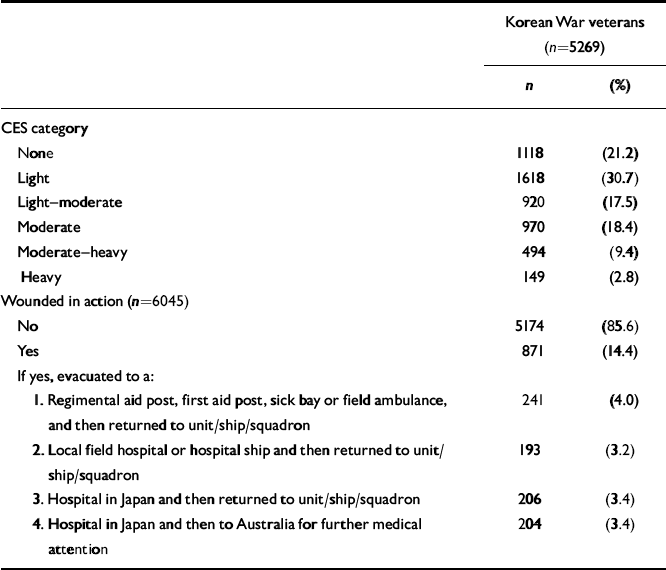
The Korean War veterans’ CES score categories are shown in Table 3. Approximately a fifth (21%) of the veterans reported no combat exposure based on the scenarios described in the CES. These veterans reported, for example, no casualties in their unit, never having to fire rounds at the enemy, never seeing others injured by incoming rounds, and never being in danger of being injured or killed in the line of duty. More commonly veterans reported light, light–moderate and moderate combat exposure. A small proportion of the veterans (3%) reported heavy combat exposure. Additional descriptive analysis (not tabulated) indicated that Army veterans were more likely to report moderate to heavy combat exposure than Navy or Air Force veterans, as were veterans who served during the mobile and/or static phases of the Korean War compared with veterans who were first deployed after the armistice. Furthermore, officers were slightly more likely than those of lower rank to report no combat. These findings in relation to CES reporting by different veterans’ groups were broadly consistent with what is known about the Korean War experience.
Combat exposure, whether wounded in action during Korean War service, and any evacuation
| Korean War veterans (n=5269) | ||
|---|---|---|
| n | (%) | |
| CES category | ||
| None | 1118 | (21.2) |
| Light | 1618 | (30.7) |
| Light—moderate | 920 | (17.5) |
| Moderate | 970 | (18.4) |
| Moderate—heavy | 494 | (9.4) |
| Heavy | 149 | (2.8) |
| Wounded in action (n=6045) | ||
| No | 5174 | (85.6) |
| Yes | 871 | (14.4) |
| If yes, evacuated to a: | ||
| 1. Regimental aid post, first aid post, sick bay or field ambulance, and then returned to unit/ship/squadron | 241 | (4.0) |
| 2. Local field hospital or hospital ship and then returned to unit/ship/squadron | 193 | (3.2) |
| 3. Hospital in Japan and then returned to unit/ship/squadron | 206 | (3.4) |
| 4. Hospital in Japan and then to Australia for further medical attention | 204 | (3.4) |
Veterans’ reports of being wounded in action during the Korean conflict, and the types of evacuation required for their worst injury, are also shown in Table 3. The 871 veterans (14%) who reported being wounded in action, were equally divided in regard to the four types of evacuation (items 1–4 in Table 3) reported for their worst injury. Each increase in type of evacuation was considered likely to represent an increase in injury severity. In addition to their Korean War deployment, 55% of veterans reported involvement in one or more other major military conflicts such as the Second World War, the occupation of Japan by the British Commonwealth Occupying Force, the Malayan emergency, the Borneo/Malaysian confrontation and the Vietnam War (not tabulated). For 45% of veterans, the Korean War was the only major military conflict in which they participated.
Psychological health outcomes
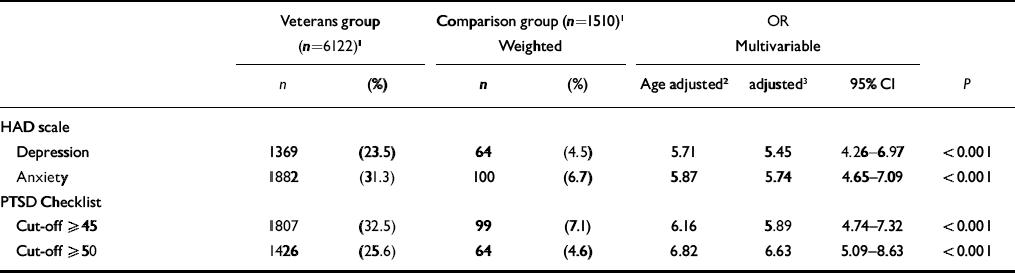
The group mean total scores on each of the HAD scale depression and anxiety subscales are shown in Table 4, and the number of participants meeting HAD scale criteria for depression and/or anxiety (by reaching the cut-off score of 11 or more on either sub-scale) are shown in Table 5. Participants from the veterans group recorded significantly higher mean scores, representing considerably poorer health, on both the depression and anxiety subscales, and were over five times more likely than the comparison group to meet HAD sub-scale criteria for depression or anxiety. Group mean PTSD Checklist scores are also shown in Table 4. The veterans group recorded significantly higher mean PTSD Checklist scores than the comparison group, representing markedly higher symptom reporting in the former group. The numbers of participants meeting criteria for a PTSD diagnosis, using a PTSD Checklist score of 45 or more, or a more stringent score of 50 or more, are shown in Table 5. At both thresholds, those in the veterans group were close to six times more likely to meet criteria for a PTSD diagnosis than the comparison group participants.
Hospital Anxiety and Depression scale and PTSD Checklist scores

| Veterans group (n=6122)1 | Comparison group (n=1510)1 Weighted | Difference between unweighted means Multivariable | ||||||
|---|---|---|---|---|---|---|---|---|
| Mean | (s.d.) | Mean | (s.d.) | Age adjusted2 | adjusted3 | 95% CI | P | |
| HAD depression score | 7.26 | (4.39) | 4.31 | (3.24) | 2.87 | 2.77 | 2.52-3.02 | <0.001 |
| HAD anxiety score | 8.11 | (4.89) | 4.68 | (3.54) | 3.33 | 3.21 | 2.94-3.49 | <0.001 |
| PTSD Checklist score | 36.37 | (17.45) | 24.80 | (10.46) | 11.22 | 10.77 | 9.79-11.76 | <0.001 |
Participants meeting scale criteria for depression and/or anxiety and post-traumatic stress disorder
| Veterans group (n=6122)1 | Comparison group (n=1510)1 Weighted | OR Multivariable | ||||||
|---|---|---|---|---|---|---|---|---|
| n | (%) | n | (%) | Age adjusted2 | adjusted3 | 95% CI | P | |
| HAD scale | ||||||||
| Depression | 1369 | (23.5) | 64 | (4.5) | 5.71 | 5.45 | 4.26-6.97 | <0.001 |
| Anxiety | 1882 | (31.3) | 100 | (6.7) | 5.87 | 5.74 | 4.65-7.09 | <0.001 |
| PTSD Checklist | ||||||||
| Cut-off ≥45 | 1807 | (32.5) | 99 | (7.1) | 6.16 | 5.89 | 4.74-7.32 | <0.001 |
| Cut-off ≥50 | 1426 | (25.6) | 64 | (4.6) | 6.82 | 6.63 | 5.09-8.63 | <0.001 |
Association between psychological health and deployment characteristics
Korean War veterans who met criteria for a PTSD diagnosis, as defined by a high PTSD Checklist cut-off score of 50 or more, and veterans who met HAD scale criteria for depression, across subgroups of deployment characteristics, are enumerated in Table 6.
Veterans meeting scale criteria for depression and post-traumatic stress disorder by deployment characteristics

Within the veterans group, increasing odds of meeting criteria for PTSD or depression were both associated with increasing combat exposure, decreasing level of rank, increasing duration of deployment, being first deployed before the armistice, and being wounded in action. There was also an association between both psychological health outcomes and Service branch, with Army veterans demonstrating the greatest odds of PTSD or depression, followed by Navy veterans, and with Air Force veterans demonstrating the lowest odds. The association between PTSD and increasing level of reported combat exposure was particularly strong, with veterans who reported heavy combat almost 15 times more likely to meet criteria for PTSD than veterans who reported no combat. The dose–response slope indicates that the expected increase in the odds of PTSD per categorical increase in combat exposure level (e.g. from moderate to moderate–heavy) is 65%. The association between depression and combat exposure was also strong, with a 37% expected increase in the odds of depression per categorical increase in combat exposure level.
The other most notable association was with rank; with enlisted ranks being four times more likely – and non-commissioned officers three times more likely – than officers to meet criteria for PTSD. Enlisted ranks and non-commissioned officers were also more than twice as likely as officers to meet criteria for depression. The dose–response slopes indicate a 54% increase in the odds of PTSD and a 43% increase in the odds of depression per categorical decrease in rank.
The likelihood of PTSD was doubled in veterans who reported being wounded in action (regardless of evacuation type) compared with veterans who did not report being wounded, and almost halved in veterans who were first deployed to Korea after the armistice compared with veterans who were first deployed during the earlier phases of the war. Similar patterns were observed for depression, but the associations were not so strong. Increased deployment duration was associated with an expected 27% increase in the odds of PTSD and a 10% increase in the odds of depression. Furthermore PTSD – but not depression – was associated with being younger and having fewer years of service experience when deployed. Additional analysis (not tabulated) indicated that Korean War veterans who had been deployed to other major conflicts did not have worse psychological health than veterans who had not been deployed to other conflicts.
DISCUSSION
The results of our study show that approximately five decades after the Korean War, surviving male Australian veterans are experiencing markedly worse psychological health, as indicated by excessive levels of anxiety, PTSD and depression, compared with a group of similarly aged Australian men who were residing in Australia at the time of the Korean War. Further, there are strong observed associations between poor psychological health in veterans and deployment characteristics of the Korean War, including increasing combat severity, lower rank, service in the Army and being wounded in action, and weaker observed associations with first deployment during the mobile or static phases of the war compared with after the armistice, increasing duration of deployment, younger age and decreasing years of previous military service experience.
Our findings of PTSD prevalences of 26% or 33% in Australian Korean War veterans, using two different cut-off scores for the PTSD Checklist, are consistent with the majority of recent studies of Korean War and Second World War veterans which report PTSD prevalences of 24–32% (Reference Blake, Keane and WineBlake et al, 1990; Reference Engdahl, Dikel and EberlyEngdahl et al, 1997; Reference Hyer and StangerHyer & Stanger, 1997; Reference Schnurr, Ford and FriedmanSchnurr et al, 2000; Reference Hunt and RobbinsHunt & Robbins, 2001; Reference Port, Engdahl and FrazierPort et al, 2001). Importantly, few recent studies have included comparison groups against which the results of the veterans could be directly compared. In our study, the observed prevalence of 5% of comparison group participants meeting PTSD Checklist questionnaire criteria for PTSD appears high compared with a 1.2% Australian male community prevalence of PTSD previously reported using DSM–IV criteria (Reference Creamer, Burgess and McFarlaneCreamer et al, 2001). This suggests that the PTSD Checklist questionnaire results may represent an overestimation of the true level of PTSD in both study groups. Nevertheless, the magnitude of the difference between the veteran and the comparison groups in this study provides compelling evidence that Australian Korean War veterans are experiencing markedly higher levels of PTSD than would be expected in Australian men of similar age and ethnic background. As PTSD is an anxiety disorder, it is consistent that the study results also show veterans to be more likely than the comparison group to meet HAD criteria for anxiety. However, the extent to which anxiety disorders other than PTSD affect Korean War veteran and comparison group participants is not evident from the current analyses. Also using HAD criteria, veterans were shown to be about five times more likely than the comparison group to experience depression. As with the PTSD Checklist questionnaire, the HAD scale results may represent a slight overestimation of the true prevalence of both anxiety and depressive disorders in both study groups, as the observed prevalence of depression in the comparison group is higher than that found in a previous Australian community survey (Australian Bureau of Statistics, 1998). Nonetheless, the magnitude of the difference between the veterans and the comparison group is large.
Interpretation of the study results in regard to psychological health outcomes is limited by the reliance on self-report psychological health instruments. Although well-validated and psychometrically assessed instruments were used, the addition of a clinical assessment would have provided more objective psychological health information, and this should be considered in future studies.
Previous studies have frequently reported increasing severity of combat or war-trauma exposure to be associated with PTSD (Reference Spiro, Schnurr and AldwinSpiro et al, 1994; Reference Sutker and AllainSutker & Allain, 1996; Reference Engdahl, Dikel and EberlyEngdahl et al, 1997; Reference Hunt and RobbinsHunt & Robbins, 2001) and our study provides evidence of this association persisting strongly some 50 years after the Korean War. The conventional interpretation is that the stressful exposures are a central risk factor for the onset of symptoms (Reference Brewin, Andrews and ValentineBrewin et al, 2000); however, multiple additional factors are then thought to contribute to symptom persistence or chronicity (Reference Schnurr, Lunney and SenguptaSchnurr et al, 2004).
The possibility of recall bias must be considered in relation to our finding of an association between current ill health and recall of increased combat severity in a war that occurred five decades earlier. It may be the case that memory of stressful experiences undergoes modification over time owing to the presence of psychological or other adverse health symptoms. A longitudinal study of UK Gulf War veterans (Reference Wessely, Unwin and HotopfWessely et al, 2003) found that recall of military hazards after conflict was not static and was associated with current self-rated perception of health. One possibility is that individuals who have PTSD, for example, remember the events more accurately than those without the disorder (Reference McFarlaneMcFarlane, 1988). Alternatively, recall of threat or fear may become magnified with time in individuals with symptoms (Reference Southwick, Morgan and NicolaouSouthwick et al, 1997). We were limited in our ability to assess the validity of our retrospectively collected combat exposure data; however, we were able to gain some confidence in the data from our observations that the general patterns of reported combat severity were in expected directions. For example, participants in the veterans group who were first deployed to Korea after the signing of the 1953 armistice were considerably less likely to report experiencing moderate to heavy combat compared with those who were deployed during earlier, active phases of the war when the conflict was at its height.
Consistent with our findings in relation to rank, lower rank has also previously been shown to be associated with increased psychological distress or ill health in British Second World War and Korean War veterans (Reference Hunt and RobbinsHunt & Robbins, 2001), and US Gulf War veterans (Reference Ismail, Blatchley and HotopfIsmail et al, 2000), but the reason for these associations is unclear. In relation to the Korean War experience, our data showed that combat severity, assessed using the Combat Exposure Scale, did not differ markedly according to rank. Also, the association between rank and ill health in Korean War veterans persisted after statistical adjustment for age. Therefore, some other characteristic of war deployment related to low rank may be contributing to subsequent health. It is possible that there are rank-related differences in the experience of combat that the CES is not able to detect. For example, our recent research with Australian Navy Gulf War veterans showed that veterans of lower rank reported more dangerous duties, experienced more helplessness associated with an inability to protect self or others from harm, and greater fear of attack, injury or death, than higher-ranked veterans (Reference Ikin, McKenzie and CreamerIkin et al, 2005).
Other military service-related factors – for example access to strategic information, knowledge about the combat zone, type of military training, and personnel selection criteria such as demonstrated leadership, personality hardiness and coping skills – may all vary on average across ranks and contribute to psychological vulnerability or resistance to negative war outcomes. Some of the association between rank and ill health may not be directly related to military service or Korean War deployment. Rank could be a proxy for socioeconomic status (Reference Ismail, Blatchley and HotopfIsmail et al, 2000), which is associated with both psychological and physical morbidity in civilian populations (Reference Sainsbury and HarrisSainsbury & Harris, 2001; Australian Institute of Health and Welfare, 2002). Our statistical adjustment for education might not have fully controlled for other socioeconomic or related health risk factors which may be associated with rank, such as non-military qualifications, income and employment, social support, lifestyle behaviours or access to medical resources.
Like rank, the observed association between Army service and psychological ill health in Korean War veterans may reflect a combination of military service-related differences between the Army, Navy and Air Force, or non-military differences such as socio-economic factors or health behaviours. Army service has also been shown to be associated with elevated mortality and cancer incidence in Australian Korean War veterans (Australian Institute of Health and Welfare, 2003; Reference Harrex, Horsley and JelfsHarrex et al, 2003).
Our finding of an association between being wounded in action in Korea and current psychological disorders in Australian veterans, is somewhat consistent with similar findings in British veterans of the Second World War and Korea (Reference Hunt and RobbinsHunt & Robbins, 2001), the 1991 Gulf War and the 1992–97 Bosnian conflict (Reference Unwin, Blatchley and CokerUnwin et al, 1999). Our findings, more than 50 years after the Korean War ceasefire, suggest that the recent associations observed in the younger Bosnian and Gulf War veterans (Reference Unwin, Blatchley and CokerUnwin et al, 1999) could persist long into the future. An association between increased deployment duration and increased post-traumatic stress symptoms has previously been observed in veterans of the Vietnam War (Reference Vincent, Chamberlain and LongVincent et al, 1994) and Bosnia (Reference Adler, Huffman and BlieseAdler et al, 2005). Our findings again suggest that this effect can persist for a considerable time after deployment.
The study results suggest a complex interrelationship between characteristics of war service and subsequent long-term psychological ill health. Combat severity and duration, war-related injury, inexperience, lack of seniority, and youthfulness all contribute to long-term psychological morbidity. There may be other military and non-military characteristics, such as a malevolent and/or toxic combat environment, socio-economic disadvantage, individual personality traits and levels of social support, that could have also contributed to veterans’ vulnerability to illness and the persistence of symptoms over time, but investigations of these were outside the scope of our study.
Importantly, although past exposures and lifestyle factors cannot be changed, evidence-based treatments for PTSD, anxiety and depression are available (e.g. National Institute for Health and Clinical Excellence, 2006) and these may be effective in reducing the considerable psychological ill health experienced by Korean War veterans in their remaining years. In this regard, the results of our study should be useful in identifying the most appropriate health interventions and levels of service provision required by surviving Korean War veterans. The results of our study could be viewed as providing a possible ‘snapshot’ of the future health concerns faced by younger veterans of more recent conflicts. Indeed, the results of the study could be useful in identifying those veterans of more recent conflicts who may be at greatest risk of adverse psychological health outcomes, and in developing appropriate improved strategies to prevent or reduce long-term psychological morbidity. Long-term follow-up of these veteran groups will be important to assess the effectiveness of any new treatments and other interventions.
Acknowledgements
We are grateful to the following groups and individuals: Professors Priscilla Kincaid Smith (Chair), John McNeil and John Zalcberg from the Scientific Advisory Committee; Colonel Alan McDonald (Retd), Rear Admiral Simon Harrington, Major General Paul Stevens and other members of the Consultative Forum representing the veteran and service community; Mr Denis Murphy, Ms Helen Westbury, Ms Di Sumerhayes and other project staff at the Australian Government Department of Veterans’ Affairs; consultants Dr Philip Boorman and Mr Robert van der Hoek; statistical advisor Associate Professor Andrew Forbes and other Monash University project staff Mr Anthony Del Monaco, Ms Elsa Barton, Ms Christina Dimitriadis, Ms Anna Davidson and Ms Kate Davidson; and the Korean War veterans and comparison group who freely gave their time to participate in this study. Financial support for this research was received from the Australian Government Department of Veterans’ Affairs and the National Health and Medical Research Council.




eLetters
No eLetters have been published for this article.