
Skip to main content Accessibility help
×
  • Cited by 10
    • Show more authors
    • You may already have access via personal or institutional login
    • Select format
    • Publisher:
      Cambridge University Press
      Publication date:
      04 January 2019
      03 January 2019
      ISBN:
      9781108639781
      9781108425087
      9781108441179
      Dimensions:
      (228 x 152 mm)
      Weight & Pages:
      0.6kg, 332 Pages
      Dimensions:
      (229 x 152 mm)
      Weight & Pages:
      0.49kg, 334 Pages
    You may already have access via personal or institutional login
  • Selected: Digital
    Add to cart View cart Buy from Cambridge.org

    Book description

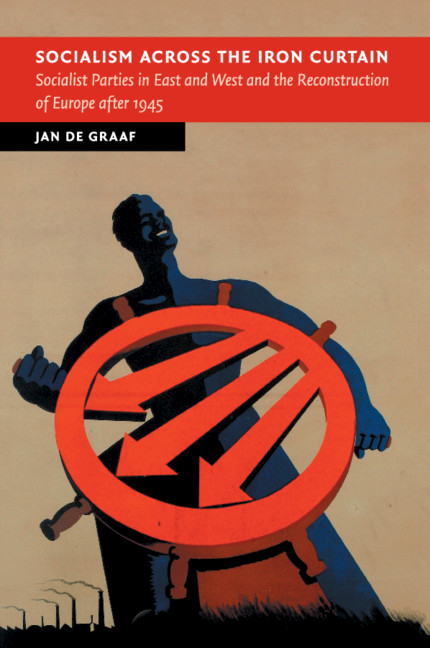
    This innovative pan-European history of post-war socialism challenges the East-West paradigm that still dominates accounts of post-war Europe. Jan De Graaf offers a comparative study of the ways in which the French, Italian and Polish socialist parties and the Czechoslovakian Social Democratic Party dealt with the problems of socio-economic and political reconstruction. Drawing on archival documents in seven languages, De Graaf reveals the profound divide which existed in all four countries between socialist elites and their grassroots as workers reacted hostilely to calls for industrial discipline and for further sacrifices towards the reconstruction effort. He also provides a fresh interpretation of the political weaknesses of socialist parties in post-war continental Europe by stressing the importance of political history and social structure. By placing the attitudes of the continental socialist parties in their proper socio-historical context he highlights the many similarities across and divergences within the two putative blocs.

    Reviews

    'Jan De Graaf's book is fascinating from start to finish and its sharp reading is indispensable to any historian or anyone interested in the period.'

    Gilles Vergnon Source: translated from L’ours

    'De Graaf's comparative method is effective. By the end of the book, one is largely convinced that European socialist parties did not form two separate Eastern and Western blocs in the immediate years after 1945. On several key issues (forms of local popular democracy, attitudes towards strikes and towards the urban industrial working class more generally, cooperation with communists, confidence in parliamentary democracy, the legitimacy of violence to gain political power, and relations with socialist parties abroad) the fault lines ran across East–West divisions.'

    Talbot Imlay Source: International Review of Social History

    ‘Using a transnational focus, De Graaf restores a sense of agency to the historical actors - socialist leaders and the party rank and file - and brilliantly makes sense of their actions, dilemmas, and views against the backdrop of European reconstruction.’

    Kevin J. Callahan Source: Central European History

    ‘... De Graaf’s study will stand for a long time as a reference point for the ways post-war socialism in Europe is perceived and appreciated.’

    Kasper Brasken Source: European History Quarterly

    'Socialism across the Iron Curtain is an important book.'

    Gerd-Rainer Horn Source: Jacobin

    Refine List

    Actions for selected content:

    Select all | Deselect all
    • View selected items
    • Export citations
    • Download PDF (zip)
    • Save to Kindle
    • Save to Dropbox
    • Save to Google Drive

    Save Search

    You can save your searches here and later view and run them again in "My saved searches".

    Please provide a title, maximum of 40 characters.
    ×

    Contents

    Metrics

    Altmetric attention score

    Full text views

    Total number of HTML views: 0
    Total number of PDF views: 0 *
    Loading metrics...

    Book summary page views

    Total views: 0 *
    Loading metrics...

    * Views captured on Cambridge Core between #date#. This data will be updated every 24 hours.

    Usage data cannot currently be displayed.

    Accessibility standard: Unknown

    Why this information is here

    This section outlines the accessibility features of this content - including support for screen readers, full keyboard navigation and high-contrast display options. This may not be relevant for you.

    Accessibility Information

    Accessibility compliance for the HTML of this book is currently unknown and may be updated in the future.
