


Mental disorders are common around the world and burdensome for both the individual and society. Reference Demyttenaere, Bruffaerts, Posada-Villa, Gasquet, Kovess and Lepine1 Given the high prevalence of mental disorders globally, it is necessary to triage resources to those who need them most. Reference Hu2,Reference Wang, Aguilar-Gaxiola, Alonso, Angermeyer, Borges and Bromet3 Although undertreatment receives considerable attention, Reference Mojtabai4–Reference Wittchen and Jacobi6 previous studies suggest that between one-third and half of the patients who are treated for mental disorders do not meet formal criteria for such disorders Reference Regier, Narrow, Rae, Manderscheid, Locke and Goodwin7–Reference Lin, Goering, Lesage and Streiner12 and that 3–14% of people without a mental disorder receive treatment for problems with emotions or the use of substances in a given year. Reference Demyttenaere, Bruffaerts, Posada-Villa, Gasquet, Kovess and Lepine1,Reference Bijl, de Graaf, Hiripi, Kessler, Kohn and Offord13 However, these data are far from conclusive in arguing that a high proportion of treatment going to patients with low need. This is true for several reasons. First, most studies failed to assess other indicators of need for treatment besides diagnoses (for example recent stressors or suicidal behaviours). This is important because mental disorders are not the only indicators of need for treatment. Reference Sareen, Stein, Campbell, Hassard and Menec14,Reference Angold, Costello, Farmer, Burns and Erkanli15 Second, most previous studies did not provide information about the sector in which patients who failed to meet full criteria for a disorder received their treatment. This is important because treatment of such patients in the human services sector (such as spiritual counselling during normal bereavement) or the self-help sector (such as participation in a trauma survivor support group) would not be seen as inappropriate. Third, most of these studies were carried out in a small set of countries (mostly the USA, Reference Regier, Narrow, Rae, Manderscheid, Locke and Goodwin7,Reference Kessler, Frank, Edlund, Katz, Lin and Leaf9 but also Canada Reference Sareen, Stein, Campbell, Hassard and Menec14,Reference Ross, Lin and Cunningham16 Germany, The Netherlands, Chile Reference Bijl, de Graaf, Hiripi, Kessler, Kohn and Offord13 and Australia). Reference Henderson, Korten and Medway17 As far as we are aware, no global data exist that examines the proportion of treatment for problems with emotional issues or substance use received by those patients who fail to meet full criteria for a mental disorder. Such a study is especially timely in an era when governments, policy-makers and healthcare planners face competing priorities and economic constraints. Reference Hu2 Data are reported here on these issues based on an analysis of data collected in the World Health Organization (WHO) World Mental Health (WMH) surveys. The WMH surveys are general population surveys that used structured psychiatric interviews, validated for use worldwide, to measure the presence of mental disorders as well as treatment for problems with emotions or for substance use. The current study builds on earlier WMH studies reporting on the cross-national treatment of mental disorders Reference Demyttenaere, Bruffaerts, Posada-Villa, Gasquet, Kovess and Lepine1,Reference Wang, Aguilar-Gaxiola, Alonso, Angermeyer, Borges and Bromet3,Reference Wang, Angermeyer, Borges, Bruffaerts, Tat Chiu and De Girolamo5 by investigating treatment of people without mental disorders. The specific aims of the study were to investigate the proportion of patients in treatment for problems with emotions or substance use at anytime in the 12 months before interview who failed to meet criteria for a DSM-IV 18 disorder at any time during that 12-month period, to investigate other indicators of need among these patients, to examine the sectors of treatment as well as the frequency and duration of their use of services, and to examine their self-reported reasons for seeking treatment.
Method
Survey respondents
The WMH surveys were carried out in 23 countries in six continents, including: Africa (Nigeria (field dates 200–2003), South Africa (field dates 2003–2004); Asia (Israel (field dates 2002–2004), Iraq (field dates 2006–2007), Japan (field dates 2002–2006), Lebanon (field dates 2002–2003), Beijing (field dates 2002–2003), Shanghai (field dates 2002–2003) and Shenzhen (Peoples Republic of China, field dates 2006–2007)); New Zealand (field dates 2003–2004); Europe (Belgium (field dates 2001–2002), Bulgaria (field dates 2003–2007), France (field dates 2001–2002), Germany (field dates 2002–2003), Italy (field dates 2001–2002), Portugal (field dates 2008–2009), The Netherlands (field dates 2002–2003), Northern Ireland (field dates 2004–2007), Romania (field dates 2005–2006), Spain (field dates 2001–2002), Ukraine (field dates 2002); and North and South America (Brazil (field dates 2005–2007), Colombia (field dates 2003), Mexico (field dates 2001–2002) and the USA (field dates 2002–2003)). Respondents were selected using a stratified multistage clustered-area probability sampling strategy, apart from Japan, where an unclustered two-stage probability sampling method was used. The total sample size was 118 907 with individual country sample sizes ranging from 2357 in Romania to 12 790 in New Zealand. The weighted average response rate across all countries was 71.5%. Using World Bank criteria, 19 countries were classified as low-income (Colombia, Iraq, Nigeria, China and Ukraine), middle-income (Brazil, Bulgaria, Lebanon, Mexico, Romania and South Africa), and high-income countries (all other survey countries) (see online Table DS1).
Surveys were conducted face-to-face by trained lay interviewers. Informed consent was obtained before the start of the interview. Internal subsampling was used to reduce respondent burden by dividing the interview into two parts. Part 1 (all respondents) included sociodemographic variables, the core diagnostic assessment of mental disorders and suicidal behaviours. All Part 1 respondents who met criteria for any lifetime mental disorder and a probability sample of other respondents were administered Part 2. Part 2 included additional information on access to care. Part 2 respondents were weighted by the inverse of their probability of selection for Part 2 of the interview to adjust for differential sampling. Analyses in this study were based on the weighted Part 2 subsample (n = 62 305). Additional weights were used to adjust for differential probabilities of selection within households, to adjust for non-response and to match the samples to population sociodemographic distributions. Further details of the survey design are reported elsewhere. Reference Heeringa, Wells, Hubbard, Mneimneh, Chiu, Sampson, Kessler and Üstün20–Reference Harkness, Pennell, Villar, Gebler, Aguilar-Gaxiola, Bilgen, Kessler and Üstün22
The WHO back translation protocol was used to translate instruments and training materials. Translations were performed by individuals who were bilingual, with consultation to expert panels (with psychiatrists, psychologists and mental health researchers). The following steps were performed: translation from the original (English version into the target language by two independent translators), review of these translations by a group of bilingual people and production of a revised version, translation of the revised version back into English by two different translators; and review of the back translations and production of a final version by the group of bilingual individuals. This protocol was followed in order to obtain instruments with acceptable cross-cultural validity for use worldwide.
Measures
Mental health service utilisation
Treatment utilisation was assessed by the Composite International diagnostic Interview (CIDI) Version 3.0 treatment module. Reference Kessler and Ustun23 Respondents were asked if they received either out-patient or in-patient treatment for problems with emotion regulation, anxiety, psychological distress or use of alcohol or drugs from any providers including mental health professionals (such as psychiatrist, psychologist), general medical professionals (such as general practitioner, occupational therapist) and other non-healthcare professionals (such as religious counsellors, traditional healers, complementary or alternative medicine (CAM)). Examples of these types of providers were presented in a respondent booklet as a visual recall aid. Among those who reported to have used services, follow-up questions were asked about ages at the first and most recent contacts and the number of visits in the past 12 months. Reports of any service use in the past 12 months were classified into the following predefined categories: psychiatrist, non-psychiatrist mental health specialist (psychologist or other non-psychiatrist mental health professional in any setting, social worker or counsellor in a mental health specialty setting and use of a mental health hotline), general medical provider (primary care doctor, other general medical doctor, nurse and any other health professional not previously mentioned), human services professional (religious or spiritual advisor and social worker or counsellor in any setting other than a specialty mental health setting), and CAM (any other type of healer, such as a chiropractor, participation in an internet support group or participation in a self-help group). Those respondents who reported that they received services in the past 12 months were also asked to indicate which of the following reasons they had for seeing a professional: because of emotional problems/problem behaviour, to deal with general bodily complaints, to help making life decisions, to cope with ongoing stress, to cope with stressful events, to come to terms with the past or seeking help because others urged them to.
Mental disorders
DSM-IV diagnoses were made using the fully structured lay-administered CIDI 3.0 diagnostic interview. The DSM-IV criteria were used to generate both lifetime diagnoses and diagnoses of disorders present at any time in the 12 months before interview (referred to as 12-month disorders). DSM-IV/CIDI disorders considered herein include: mood disorders (bipolar type I and II disorders, major depressive disorder and dysthymia), anxiety disorders (panic disorder, agoraphobia without panic, specific phobia, social phobia, generalised anxiety disorder, obsessive-compulsive disorder, post-traumatic stress disorder and adult separation anxiety disorder), impulse control disorders (anorexia, bulimia, binge eating disorder, oppositional defiant disorder, intermittent explosive disorder and pathological gambling disorder) and substance use disorders (alcohol and drug misuse with or without dependence). Only broad diagnostic categories were included as covariates in the statistical models. All diagnoses were made using organic exclusions and diagnostic hierarchy rules, except for the substance use disorders, in which misuse was defined with or without dependence. Masked clinical reappraisal interviews using the Structured Clinical Interview for DSM-IV (SCID) showed generally good concordance between diagnoses based on the CIDI and the SCID for anxiety, mood and substance use disorders. Reference Haro, Arbabzadeh-Bouchez, Brugha, de Girolamo, Guyer and Jin24
Need for treatment
Because clinical need is a heterogeneous concept that goes beyond the mere criteria of a mental disorder, Reference Aoun, Pennebaker and Wood25,Reference Andrews and Henderson26 we complemented the assessment of 12-month mental disorders with other possible need indicators that included exposure to stressful events in the past 12 months, suicidality in the past 12 months (either ideation, plans or attempts), lifetime (but not 12-month) mental disorders, along with other self-reported reasons why people may seek treatment (see online Table DS2). Respondents who did not meet the 12-month criteria for any of the abovementioned DSM-IV/CIDI disorders were divided into subsamples based on a three-category gradient of possible need for treatment: (a) those with at least one lifetime DSM-IV disorder, (b) those without a lifetime DSM-IV disorder but with one or more indicators of severity (i.e. 12-month subthreshold disorders (defined as lacking only one criterion for a diagnosis), exposure to a major stressful event, such as rape or divorce, in the past 12 months, or lifetime admission to hospital for a mental disorder); and (c) the remaining respondents. Respondents were thus grouped into four levels of increasing need for treatment: (a) respondents with any 12-month mental disorder, (b) respondents with a past mental disorder (i.e. a lifetime mental disorder without a 12-month mental disorder), (c) respondents without mental disorder (either 12-month or past) but with any other indicator of need for treatment, or (d) those without any indicator of need for treatment.
Statistical methods
Basic patterns of service use were examined by calculating proportions of people in treatment and mean numbers of visits among those in treatment. Logistic regression analysis was used to study predictors of 12-month treatment and treatment in particular sectors. Standard errors were estimated using the Taylor series method Reference Wolter27 for adjusting the weighting as well as for the geographic clustering of observations both between and within countries. These adjustments were implemented using the SUDAAN software system (version 8.0.1 for Unix). The coefficients in the logistic regression equations and their design-based standard errors were transformed into odds ratios (ORs) and 95% confidenceintervals for ease of interpretation. Multivariate significance tests in the logistic regression analyses were made using Wald χ2 tests based on coefficient variance-covariance matrices, adjusted for design effects using the Taylor series method. Statistical significance was evaluated using two-sided design-based tests and a 0.05 level of significance.
Results
12-month treatment patterns
The overall 12-month treatment rate is 9.2%, with a significant monotonic association between need for treatment and the probability of being treated (Table 1); among those with a 12-month mental disorder, 27.4% reported that they had received services in the past year, compared with 12.0% among those with a lifetime disorder. Lower rates were found in people with lower need for treatment. Despite the fact that we found lower treatment rates in lower-income countries, the association between need for treatment and the probability of receiving treatment was consistent in all three income categories (online Tables DS3a-c).
Of all people in treatment, 52.4% met criteria for a 12-month and 18.4% met criteria for a past mental disorder, a finding that was slightly more pronounced in high-income countries where 55.4% of those in treatment met criteria for a 12-month mental disorder compared with 45.4 and 47.6% in middle- and low-income countries, respectively (see online DS3a-c). Approximately 16% did not report any need for treatment nor a 12-month or lifetime disorder. Individuals without disorders have in general fewer visits than those with disorders, suggesting that the resource allocation for people without disorders is much lower than their percentage in treatment. For example, individuals without any need for treatment represent 15.9% of those in treatment but get only 10.4% of all visits. They are also much less likely to see a psychiatrist (Table 2), which suggests that they take up an even lower proportion of specialty visits. Interestingly, similar results were found after disaggregation for income (see online Tables DS3a-c and DS4a-c).
Respondents with 12-month mental disorders accounted for higher proportion of visits to a psychiatrist (i.e. 72.2%) than to other types of service providers including other mental health providers (66.8%), general medicine (59.5%), human services (57.7%) or CAM providers (62.8%) (Table 2). An inverse pattern was found for respondents with past mental disorder: they accounted for higher proportions of visits to CAM providers (23.3%) than to formal healthcare providers (all within the 12.0–16.3%). Respondents classified as those without treatment need accounted for the highest proportion of visits to human services (19.3%) than to any of the other types of providers, but after disaggregation for income, this was found to be the case only in high- and low-income countries (see Tables DS4a-c).
These differences are reflected in the treatment profiles across the different groups of treatment need indicators (Table 3). First, among people with a 12-month disorder, 51.3% of the visits are delivered by a mental health specialist (either a psychiatrist (22.1%) or another mental healthcare provider (29.2%)). The comparable figure for people without any need indicator is 38.9%. Thus, the proportion of treatment visits in mental healthcare is consistently lower among those individuals without any need indicator compared with those with the highest need. Again, similar patterns were found when looking at these association for income categories separately (see online Tables DS4a(bis)-c(bis)). Second, formal healthcare remains a central treatment setting, even for respondents with less or even absent indicators for treatment need. On average, 68.5% of all visits (regardless of the need category) were delivered by formal healthcare providers (psychiatrist, other mental healthcare or general medicine). After disaggregating for need category, comparable figures were 70.0% for those with a 12-month mental disorder, 60.6% for those with a lifetime mental disorder, 72.6% for those with any need for treatment and 67.3% for those in the lowest need category.
Predictors of treatment in respondents without 12-month disorders
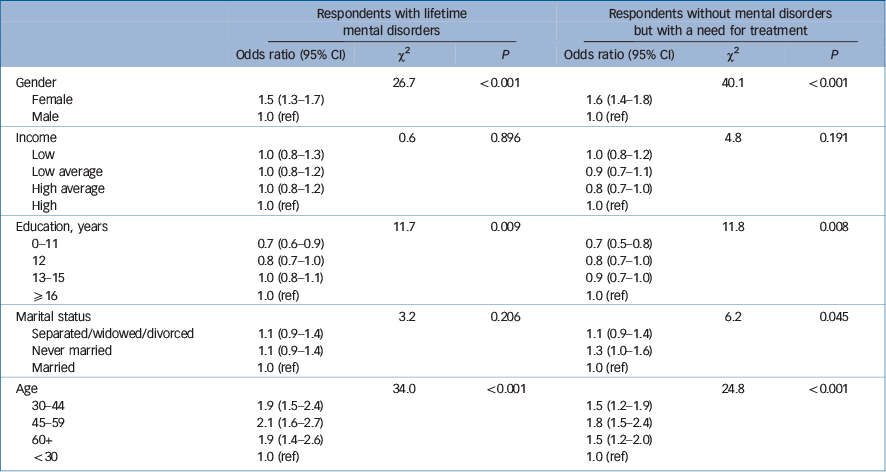
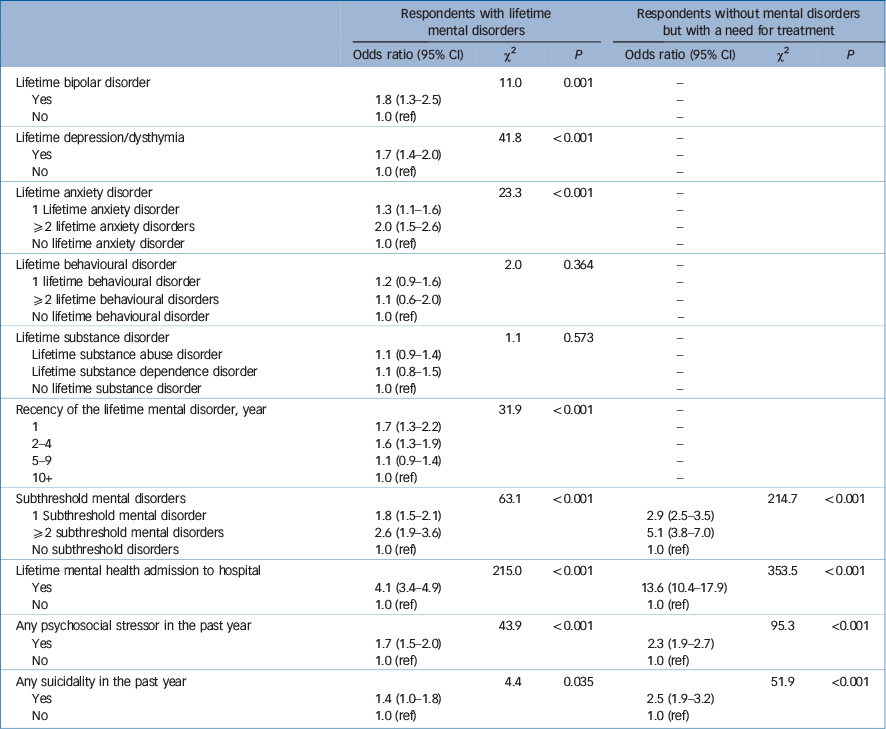
In general, the odds of treatment receipt were higher in female respondents and those older than 30 and lower in individuals with a lower number of years of education (Table 4). Lifetime admission to hospital (ORs in the range 4.1–13.6) and multiple subthreshold disorders (ORs in the range 2.6–5.1) were the most powerful predictors of receiving services (Table 5), followed by past year suicidality (ORs in the range 1.4–2.5) and psychosocial stressors in the past year (ORs in the range 1.7–2.3). In addition, among those with a lifetime disorder, receiving treatment was also associated with lifetime mood disorders (ORs in the range 1.3–2.0) and recency of the lifetime disorders (i.e. the more recent the disorder, the higher the odds of being treated – ORs in the range 1.6–1.7). For the most part, predictors of treatment were similar across income categories, and the strength of the associations remained fairly similar in countries with different income levels (see online Table DS5).
We computed a weighted estimate of treatment need by summing the indicators of treatment need based on the weights from the ORs from Table 5. By doing so we could see whether there was an association between the weighted estimate of need among those with lifetime but no 12-month disorder or among those with no lifetime or 12-month disorder on the one hand and the probability of receiving 12-month treatment on the other. Across income categories, we found a statistical significant strong monotonic relationship between the weighted estimate of need for treatment among those with no 12-month disorder and the probability of receiving 12-month treatment (Tables 6 and 7, online Tables DS6a-c and DS7a-c). People with the highest need scores were systematically eight times more likely to be in treatment compared with people with the lowest need scores. Indeed, the smallest proportion of respondents with the highest need had systematically the highest probability of receiving treatment and, on average, the highest number of visits.
Reasons for seeking treatment
Across country income categories, emotional problems/problem behaviours were the most important reason for seeking mental healthcare (see Table 8), with a higher percentage of those with
Patterns of 12-month treatment among respondents with and without CIDI-3.0/DSM-IV mental disorders

| Need category | Unweighted, n |
Treatment | P | Unweighted
treatment, n |
Distribution of treatment % (s.e.) |
Number of visits | Distribution of visits % (s.e.) |
||||
|---|---|---|---|---|---|---|---|---|---|---|---|
| Prevalence, % (s.e.) |
% (s.e.) | χ2 | Mean (s.e.) |
χ2 | P | ||||||
| Any 12-month mental disorder | 16 602 | 17.6 (0.2) | 27.4 (0.5) | 5 025 | 52.4 (0.7) | 10.1 (0.3) | 64.3 (1.4) | ||||
| Any lifetime mental disorder, without 12-month disorder | 12 180 | 14.1 (0.2) | 12.0 (0.4) | 1 696 | 18.4 (0.5) | 7.0 (0.4) | 15.7 (0.9) | ||||
| Any need for treatment, without lifetime and 12-month disorder | 7 499 | 13.0 (0.2) | 9.4 (0.4) | 905 | 13.3 (0.6) | 5.9 (0.4) | 9.5 (0.7) | ||||
| No need for treatment, without lifetime and 12-month disorder | 26 024 | 55.3 (0.3) | 2.6 (0.1) | 815 | 15.9 (0.6) | 5.4 (0.6) | 10.4 (1.1) | ||||
| Total | 62 305 | 100.0 | 9.2 (0.2) | 2291.5 | < 0.0001 | 8 441 | 100.0 | 28.2 | < 0.0001 | 100.0 | |
Distribution of visits by provider for patients who visited a specific provider among people with and without CIDI-3.0/DSM-IV mental disorders (column percentages)

| Need category | Psychiatrist | Other mental healthcare % (s.e.) |
General medicine % (s.e.) |
Human services % (s.e.) |
Complementary and alternative medicine, % (s.e.) |
Total, % | Unweighted number of visits |
||
|---|---|---|---|---|---|---|---|---|---|
| % (s.e.) | χ2 | P | |||||||
| Any 12-month mental disorder | 72.2 (2.3) | 66.8 (2.1) | 59.5 (1.6) | 57.7 (3.8) | 62.8 (4.4) | 64.7 (1.5) | 7 225 | ||
| Any lifetime mental disorder, without 12-month disorder | 12.0 (1.7) | 16.3 (1.5) | 15.6 (1.6) | 14.6 (2.1) | 23.3 (3.7) | 16.8 (1.1) | 2 133 | ||
| Any need for treatment, without lifetime and 12-month disorder | 12.0 (1.6) | 6.5 (1.0) | 11.6 (0.9) | 8.5 (1.6) | 7.6 (1.8) | 9.0 (0.7) | 1 133 | ||
| No need for treatment, without lifetime and 12-month disorder | 3.8 (0.8) | 10.5 (1.7) | 13.3 (1.1) | 19.3 (4.4) | 6.3 (2.5) | 9.5 (1.0) | 936 | ||
| Total | 100.0 | 96.8 | 0.0001 | 100.0 | 100.0 | 100.0 | 100.0 | 100.0 | 11 427 |
Distribution of visits by provider for patients who visited a specific provider among people with and without CIDI-3.0/DSM-IV mental disorders (row percentages)

| Need category | Psychiatrist | Other mental healthcare % (s.e.) |
General medicine % (s.e.) |
Human
services % (s.e.) |
Complementary and alternative medicine, % (s.e.) |
Total, % | Unweighted
number of visits |
||
|---|---|---|---|---|---|---|---|---|---|
| % (s.e.) | χ2 | P | |||||||
| Any 12-month mental disorder | 22.1 (1.3) | 29.2 (1.4) | 18.7 (0.8) | 7.7 (0.6) | 22.3 (1.9) | 100 | 7 225 | ||
| Any lifetime mental disorder, without 12-month disorder | 14.1 (2.4) | 27.5 (2.5) | 19.0 (2.2) | 7.5 (1.0) | 32.0 (4.2) | 100 | 2 133 | ||
| Any need for treatment, without lifetime and 12-month disorder | 26.3 (3.1) | 20.2 (2.8) | 26.1 (2.2) | 8.0 (1.4) | 19.3 (4.0) | 100 | 1 133 | ||
| No need for treatment, without lifetime and 12-month disorder | 7.8 (1.5) | 31.1 (4.5) | 28.4 (3.2) | 17.4 (4.3) | 15.2 (5.5) | 100 | 936 | ||
| Total | 19.8 (1.0) | 96.8 | < 0.0001 | 28.3 (1.2) | 20.4 (0.7) | 8.6 (0.7) | 23.0 (1.7) | 100 | 11 427 |
Sociodemographic predictors of 12-month service use for mental disorders or emotional problems among respondents without 12-month CIDI-3.0/DSM-IV mental disorders
| Respondents with
lifetime mental disorders |
Respondents without
mental disorders but with a need for treatment |
|||||
|---|---|---|---|---|---|---|
| Odds ratio (95% CI) | χ2 | P | Odds ratio (95% CI) | χ2 | P | |
| Gender | 26.7 | < 0.001 | 40.1 | < 0.001 | ||
| Female | 1.5 (1.3–1.7) | 1.6 (1.4–1.8) | ||||
| Male | 1.0 (ref) | 1.0 (ref) | ||||
| Income | 0.6 | 0.896 | 4.8 | 0.191 | ||
| Low | 1.0 (0.8–1.3) | 1.0 (0.8–1.2) | ||||
| Low average | 1.0 (0.8–1.2) | 0.9 (0.7–1.1) | ||||
| High average | 1.0 (0.8–1.2) | 0.8 (0.7–1.0) | ||||
| High | 1.0 (ref) | 1.0 (ref) | ||||
| Education, years | 11.7 | 0.009 | 11.8 | 0.008 | ||
| 0–11 | 0.7 (0.6–0.9) | 0.7 (0.5–0.8) | ||||
| 12 | 0.8 (0.7–1.0) | 0.8 (0.7–1.0) | ||||
| 13–15 | 1.0 (0.8–1.1) | 0.9 (0.7–1.0) | ||||
| ≥16 | 1.0 (ref) | 1.0 (ref) | ||||
| Marital status | 3.2 | 0.206 | 6.2 | 0.045 | ||
| Separated/widowed/divorced | 1.1 (0.9–1.4) | 1.1 (0.9–1.4) | ||||
| Never married | 1.1 (0.9–1.4) | 1.3 (1.0–1.6) | ||||
| Married | 1.0 (ref) | 1.0 (ref) | ||||
| Age | 34.0 | < 0.001 | 24.8 | < 0.001 | ||
| 30–44 | 1.9 (1.5–2.4) | 1.5 (1.2–1.9) | ||||
| 45–59 | 2.1 (1.6–2.7) | 1.8 (1.5–2.4) | ||||
| 60+ | 1.9 (1.4–2.6) | 1.5 (1.2–2.0) | ||||
| < 30 | 1.0 (ref) | 1.0 (ref) | ||||
Clinical predictors of 12-month service use for mental disorders or emotional problems among respondents without 12-month CIDI-3.0/DSM-IV mental disorders
| Respondents with
lifetime mental disorders |
Respondents without mental disorders but with a need for treatment |
|||||
|---|---|---|---|---|---|---|
| Odds ratio (95% CI) | χ2 | P | Odds ratio (95% CI) | χ2 | P | |
| Lifetime bipolar disorder | 11.0 | 0.001 | – | |||
| Yes | 1.8 (1.3–2.5) | – | ||||
| No | 1.0 (ref) | – | ||||
| Lifetime depression/dysthymia | 41.8 | <0.001 | – | |||
| Yes | 1.7 (1.4–2.0) | – | ||||
| No | 1.0 (ref) | – | ||||
| Lifetime anxiety disorder | 23.3 | < 0.001 | – | |||
| 1 Lifetime anxiety disorder | 1.3 (1.1–1.6) | – | ||||
| ≥2 lifetime anxiety disorders | 2.0 (1.5–2.6) | – | ||||
| No lifetime anxiety disorder | 1.0 (ref) | – | ||||
| Lifetime behavioural disorder | 2.0 | 0.364 | – | |||
| 1 lifetime behavioural disorder | 1.2 (0.9–1.6) | – | ||||
| ≥2 lifetime behavioural disorders | 1.1 (0.6–2.0) | – | ||||
| No lifetime behavioural disorder | 1.0 (ref) | – | ||||
| Lifetime substance disorder | 1.1 | 0.573 | – | |||
| Lifetime substance abuse disorder | 1.1 (0.9–1.4) | – | ||||
| Lifetime substance dependence disorder | 1.1 (0.8–1.5) | – | ||||
| No lifetime substance disorder | 1.0 (ref) | – | ||||
| Recency of the lifetime mental disorder, year | 31.9 | <0.001 | – | |||
| 1 | 1.7 (1.3–2.2) | – | ||||
| 2–4 | 1.6 (1.3–1.9) | – | ||||
| 5–9 | 1.1 (0.9–1.4) | – | ||||
| 10+ | 1.0 (ref) | – | ||||
| Subthreshold mental disorders | 63.1 | < 0.001 | 214.7 | < 0.001 | ||
| 1 Subthreshold mental disorder | 1.8 (1.5–2.1) | 2.9 (2.5–3.5) | ||||
| ≥2 subthreshold mental disorders | 2.6 (1.9–3.6) | 5.1 (3.8–7.0) | ||||
| No subthreshold disorders | 1.0 (ref) | 1.0 (ref) | ||||
| Lifetime mental health admission to hospital | 215.0 | < 0.001 | 353.5 | < 0.001 | ||
| Yes | 4.1 (3.4–4.9) | 13.6 (10.4–17.9) | ||||
| No | 1.0 (ref) | 1.0 (ref) | ||||
| Any psychosocial stressor in the past year | 43.9 | < 0.001 | 95.3 | <0.001 | ||
| Yes | 1.7 (1.5–2.0) | 2.3 (1.9–2.7) | ||||
| No | 1.0 (ref) | 1.0 (ref) | ||||
| Any suicidality in the past year | 4.4 | 0.035 | 51.9 | <0.001 | ||
| Yes | 1.4 (1.0–1.8) | 2.5 (1.9–3.2) | ||||
| No | 1.0 (ref) | 1.0 (ref) | ||||
The association between need for treatment scores and 12-month treatment patterns in respondents with lifetime mental disorders and no 12-month mental disorders

| Need for treatment scores | Prevalence % (s.e.) |
Treatment | Distribution of treatment % (s.e.) |
Number of visits | Distribution of visits % (s.e.) |
Total number of respondents |
||||
|---|---|---|---|---|---|---|---|---|---|---|
| % (s.e.) | χ2 | P | Mean (s.e.) | χ2 | P | |||||
| 0 | 34.2 (0.6) | 6.8 (0.5) | 19.4 (1.1) | 4.9 (0.5) | 13.4 (1.5) | 4 096 | ||||
| 1–3 | 45.4 (0.6) | 11.3 (0.6) | 42.6 (1.3) | 6.5 (0.5) | 39.8 (3.1) | 5 404 | ||||
| 4–8 | 19.4 (0.5) | 20.8 (1.1) | 33.6 (1.5) | 6.7 (0.4) | 32.0 (2.4) | 2 523 | ||||
| 9–16 | 1.0 (0.1) | 52.0 (5.1) | 4.4 (0.6) | 23.6 (5.4) | 14.8 (2.8) | 157 | ||||
| Total | 100.0 | 161.6 | < 0.001 | 100.0 | 5.1 | 0.0017 | 100.0 | 12 180 | ||
The association between need for treatment scores and 12-month treatment patterns in respondents without lifetime mental disorders

| Need for treatment scores | Prevalence % (s.e.) |
Treatment | Distribution of treatment % (s.e.) |
Number of visits | Distribution of visits % (s.e.) |
Total number of respondents |
||||
|---|---|---|---|---|---|---|---|---|---|---|
| % (s.e.) | χ2 | P | Mean (s.e.) | χ2 | P | |||||
| 0 | 81 (0.3) | 2.6 (0.1) | 54.6 (1.2) | 5.4 (0.6) | 52.2 (3.3) | 26 024 | ||||
| 1 | 7.4 (0.2) | 8.9 (0.6) | 16.7 (0.8) | 3.8 (0.3) | 11.4 (1.2) | 3 196 | ||||
| 2 | 9.8 (0.2) | 7.2 (0.5) | 18.1 (1.0) | 7.0 (0.6) | 22.5 (2.1) | 3 453 | ||||
| 3–5 | 1.8 (0.1) | 23.0 (2.0) | 10.6 (0.7) | 7.3 (1.1) | 13.9 (2.2) | 850 | ||||
| Total | 100.0 | 227.8 | <0.001 | 100.0 | 7.4 | <0.001 | 33 523 | |||
Reasons for seeking help among respondents with and without CIDI-3.0/DSM-IV mental disorders (n = 5800)

| Reasons for seeking help | % (s.e.) | Test statistics | ||||
|---|---|---|---|---|---|---|
| Any 12-month mental
disorder, (n = 37l7) |
Any lifetime mental
disorder, without 12-month disorder (n = l090) |
Any need for
treatment, without mental disorder (n = 566) |
No need for treatment
no mental disorders (n = 427) |
χ2 | P | |
| Emotions/problem behaviours | 55.3 (1.1) | 42.3 (1.9) | 43.7 (2.5) | 41.8 (3.2) | 60.5 | < 0.0001 |
| Deal with general body complaint | 25.7 (0.9) | 17.0 (1.4) | 23.5 (2.1) | 18.9 (2.4) | 24.2 | < 0.0001 |
| Help make life decisions | 12.9 (0.7) | 10.8 (1.1) | 11.3 (1.7) | 10.1 (1.9) | 4.4 | 0.2196 |
| Cope with ongoing stress | 37.8 (1.2) | 28.1 (1.7) | 27.0 (2.2) | 27.5 (3.1) | 32.8 | < 0.0001 |
| Cope with stressful events | 26.1 (0.9) | 17.2 (1.3) | 23.9 (2.5) | 17.6 (2.5) | 37.7 | < 0.0001 |
| Come to terms with past | 21.6 (0.8) | 14.7 (1.5) | 12.9 (1.7) | 15.0 (2.1) | 30.2 | < 0.0001 |
| Other reasons | 2.1 (0.3) | 1.5 (0.4) | 3.1 (0.9) | 5.4 (1.2) | 21.5 | 0.0001 |
| Sought help only because others urged | 9.1 (0.5) | 5.4 (0.7) | 8.5 (1.4) | 8.4 (1.9) | 14.1 | 0.0028 |
a 12-month mental disorder endorsing this item (i.e. 55.3%) compared with lower need groups (41.8–43.7% range).Only a minority of all treated respondents (between 5.4 and 9.1%) sought help because others urged them to, suggesting that the majority perceived a need for treatment that brought them into contact with providers. Other common reasons included to cope with ongoing stress and stressful events (especially in high- and middle-income countries) and dealing with bodily complaints (especially in middle- and low-income countries, see online Tables DS8a-c).
Discussion
Main findings
This first cross-national population-based survey revealed that most people in mental healthcare actually meet criteria for a 12-month or past mental disorder. Interestingly, this is a consistent finding across countries with marked differences in economic situations, culture, attitudes towards mental illness and organisation of healthcare. Among those receiving treatment, 16% (with ranges between 12% in high-income and 17% in low-income countries) do not meet criteria for a mental disorder and do not report any need for treatment.
Limitations
The results presented here should be interpreted in the light of the following limitations. First, respondents who did not speak the primary language(s) of the country sufficiently, those institutionalised and those without a fixed address were not included in this study. It may be that such people have different patterns of service use or need for treatment. Moreover, against the background that the need for treatment is elevated in in-patients or specific groups (like those with psychotic disorder or borderline personality disorder), the treatment patterns we found in this study only apply for those mental disorders and need variables included in the CIDI-3.0. Second, the CIDI-3.0 treatment module asks for treatment for emotional or substance misuse problems and not for other reasons like suicidality. In addition, people may have had other reasons that they sought treatment for than those we included. This means that some true cases might have been incorrectly classified as non-cases. Moreover, the data on treatment did not include information about the adequacy or effectiveness of the treatment received. Further research should therefore focus in more detail on received treatment for both mental disorders and other indicators of treatment need and criteria defining treatment adequacy/effectiveness. Third, responses to the survey may have been biased by the use of retrospective self-reports. Previous studies have shown that the validity of the assessment of service use could be biased dependent upon recall time periods Reference Simon and Von Korff28 or frequency of service use, all leading to a modest underestimation of more recent service use. Reference Petrou, Murray, Cooper and Davidson29 It is important to note that this kind of recall failure would mean that our estimates are conservative; that is, that an even smaller proportion of people with recent treatment than we actually estimated had no evidence of a disorder either in the past year or in their lifetime. A fourth limitation is that the countries included in the present study are not representative of all the countries in the world. This may imply that our conclusions may not hold for every nation. A final limitation is that results may have been altered with secular changes such as those introduced by the global economic recession that began in 2008. Reference Evans-Lacko, Knapp, McCrone, Thornicroft and Mojtabai30
Significance of our findings
Our data are in line with previous reports Reference Demyttenaere, Bruffaerts, Posada-Villa, Gasquet, Kovess and Lepine1,Reference Wang, Aguilar-Gaxiola, Alonso, Angermeyer, Borges and Bromet3,Reference Bijl, de Graaf, Hiripi, Kessler, Kohn and Offord13 in demonstrating that a considerable proportion of mental service users do not have a 12-month mental disorder. However, after including other indicators of treatment need, a more refined picture emerges: almost one in five meet criteria for a lifetime mental disorder and another one in seven reports a clinical need for treatment. Also the observed dose-response association between indicators of need for treatment and the probability of receiving treatment from the specialised mental health sector is comparable with the existing literature, Reference Druss, Wang, Sampson, Olfson, Pincus and Wells10,Reference Lin, Goering, Lesage and Streiner12,Reference Bijl, de Graaf, Hiripi, Kessler, Kohn and Offord13,Reference Ross, Lin and Cunningham16 but it is noteworthy that previous studies were mostly performed in high-income countries. Our findings extend available knowledge by suggesting that the gradient between need for treatment and the probability of receiving (specialised) treatment may be a phenomenon that goes beyond economic and cultural differences, but also beyond differences in the organisation of local mental healthcare systems.
Roughly one in five of those in treatment had lifetime (but not 12-month) mental disorders. That respondents with more recent lifetime disorders were up to 70% more likely to be in 12-month treatment suggests that these people might be still in treatment for their recent episode of mental disorder, and may thus reflect long-term treatment approaches that eventually may serve as relapse prevention. Reference Druss, Wang, Sampson, Olfson, Pincus and Wells10 The finding that lifetime mental health or admission to hospital for substance misuse was the strongest predictor of 12-month treatment in the absence of mental disorder is also in line with this interpretation.
Even though 15.9% of people in treatment have neither a mental disorder nor evidence of serious problems that would require treatment, these people make up only 10.4% of all visits. Only 7.8% are treated by a psychiatrist because of the lower intensity of their treatment compared with that of people with disorders or significant problems. Across income categories, between 14 and 21% of treated respondents did not have any indication of treatment need. Although this estimate was clearly higher than the estimate obtained in a US national sample, Reference Druss, Wang, Sampson, Olfson, Pincus and Wells10 it is notable that these patients only accounted for 9–17% of all visits. Interestingly, the vast majority of these patients received care from a formal healthcare setting, suggesting that they contribute to formal healthcare expenditures. On the one hand, this does not necessarily have to be a problem since it might be that these people still have substantial functional impairment after having received adequate treatment in the past. Reference ten Have, Nuyen, Beekman and de Graaf31 On the other hand, however, given that half of serious cases of mental illness are untreated, Reference Wang, Aguilar-Gaxiola, Alonso, Angermeyer, Borges and Bromet3 the question could be raised to what extent (mostly reimbursed) formal healthcare is the appropriate treatment setting for patients that did not report any need for treatment. After all, in times of economic restraints and limited financial resources, more emphasis may be given to (re)allocate resources to those with the highest needs or people who are especially at risk for developing mental disorders like younger cohorts, females or those with lower educational attainment. Reference Graaf, Have, Tuithof and Dorsselaer32 Instead, we found that those treated were older, higher-educated females who are in general at lower risk for developing serious emotional problems. This suggests that at least a part of the treatment resources may be misallocated and that this may be more pronounced in high-income countries. However, this is not a suggestion to omit mild emotional problems from mental healthcare Reference Kessler and Price33 but rather a suggestion that formal healthcare for mild disorders could be more focused on those who are at risk of developing more serious emotional problems.
Across country income levels and across different levels of need for treatment, respondents reported similar reasons for seeking help, with emotions/problem behaviour as the most common reason for seeking help. Also, only a minority (i.e. between 5 and 9%) sought help because others urged them to. That in middle- and low-income countries, apart from emotional reasons, also bodily complaints appeared to be symptoms that drove people into treatment for their emotional problems suggests that the association between bodily complaints, emotional problems and the need for treatment may be moderated by cultural factors Reference Waza, Graham, Zyzanski and Inoue34 or societal values. Reference Maercker35 Further research may focus on a more refined cultural diversity of the interplay between particular cultural ethics, the expression of emotional problems and the association with subjective reasons for seeking help. For instance, one area that might be a focus for further study is the effect of family and/or community reactions on the process of seeking help when an individual has a mental disorder.
In an era where healthcare expenditures are raising progressively around the globe, the question how much a society can afford to guarantee its citizens effective mental healthcare becomes important. Against previous concerns that a considerable portion of service users would not meet criteria for mental disorders, we found some reassuring data regarding overtreatment in mental healthcare: most of the people treated in the mental health sector either meet criteria for a mental disorders or have a specific need for treatment. This does not mean that resources are fully used in an effective and efficient way as we found that 67% of the treatment visits of the people without need take place in (mostly reimbursed) formal healthcare, but also that 22% of the visits of people with mental disorders take place in CAM settings. Not only overtreatment but also suboptimal care may be regarded as wasting resources that prevent effective and efficient mental healthcare. Reference Druss36 Towards this end, careful work is needed to ensure that the right treatment goes to the right people who need it, rather than focusing on the wrong people in treatment. Evidently, we should always bear in mind that optimal treatment allocation rules are not obvious and constantly need to be considered in terms of short- and long-term benefits of an intervention.
Acknowledgements
We thank the WMH staff for assistance with instrumentation, fieldwork and data analysis.




eLetters
No eLetters have been published for this article.