


Introduction
Menstruation is a physiological process characterised by the recurrent discharge of blood and mucosal tissue through the inner lining of the uterus into the vagina, which influences women’s sexual, reproductive, and physical well-being (‘About Menstruation | NICHD - Eunice Kennedy Shriver National Institute of Child Health and Human Development’ 2017). Menstrual hygiene management (MHM) practices globally but especially in the developing world are influenced by local socio-cultural traditions that can adversely impact esteem, quality of life, and well-being (‘About Menstruation | NICHD - Eunice Kennedy Shriver National Institute of Child Health and Human Development’ 2017; Chandar et al. Reference Chandar, Vaishnavi, Priyan and Ganesh Kumar2018). Ensuring safe MHM in adolescent girls and women requires access and utilisation of clean material for absorption of menstrual blood, privacy to change and dispose of the used material, and access to water, sanitation, and hygiene (WASH) facilities for cleaning the private parts (‘Menstrual Health | JMP’ n.d.). Achieving universal menstrual health and hygiene (MHH) requires strengthening systemic factors driving MHM including awareness, social norms, advocacy, and policy factors (‘Menstrual Hygiene’ n.d.).
Menstrual hygiene materials are the products (absorbents) used to catch the menstrual flow including sanitary napkins or pads, menstrual cups, tampons, or cloth, with the use of traditional methods more common in developing countries. The fourth round of the National Family and Health Survey (NFHS-4) in 2015–16 reported 62.1% of women in the reproductive age group using clothes during their menstrual periods. According to the District Level Household Survey-4 (2012–13) in India, 37.6% of women used only cloth, 27.4% used sanitary napkins, and 2.3% used no menstrual hygiene material (Nitika and Lohani Reference Lohani2019). The use of cloth was more common in women of rural areas and lower socioeconomic groups (Roy et al. Reference Roy, Paul, Saha, Barman, Kapasia and Chouhan2021; Nabwera et al. Reference Nabwera, Shah, Neville, Sosseh, Saidykhan, Faal, Sonko, Keita, Schmidt and Torondel2021). The use of unclean cloth, the re-use of cloth without washing and drying in sunlight due to social taboos, or the suboptimal frequency of changing sanitary pads due to access and affordability issues have been frequently reported (Chandar et al. Reference Chandar, Vaishnavi, Priyan and Ganesh Kumar2018; Sarkar et al. Reference Sarkar, Dobe, Dasgupta, Basu and Shahbabu2017). Furthermore, mothers themselves lacking understanding of appropriate menstrual health practices will fail to educate their daughters contributing to a vicious cycle of poor MHH (Sarkar et al. Reference Sarkar, Dobe, Dasgupta, Basu and Shahbabu2017; Upashe, et al. Reference Upashe, Tekelab and Mekonnen2015).
The use of unhygienic materials or the incorrect usage of sanitary products may increase the risk of reproductive and urinary tract infections. Studies from multiple parts of India have reported varying prevalence of reproductive tract infections (RTIs) ranging from 9.7% to 70.0% (Chaudhary et al. Reference Chaudhary, Kalyan, Singh, Agarwal and Qureshi2019; Sharma et al. Reference Sharma, Krishan Goel and Madhukar Thakare2018; Rathore et al. Reference Rathore, Vyas and Bhardwaj2007; Kansal et al. Reference Kansal, Singh and Kumar2016; Balakrishnan et al. Reference Balakrishnan, Carolin, Sudharsan and Shivasakthimani2022). Several studies have also observed an association between the use of unhygienic menstrual absorbents and the burden of RTIs (Sharma et al. Reference Sharma, Krishan Goel and Madhukar Thakare2018; Balakrishnan et al. Reference Balakrishnan, Carolin, Sudharsan and Shivasakthimani2022; Das et al. Reference Das, Baker, Dutta, Swain, Sahoo, Sankar Das and Panda2015; Garg and Anand Reference Garg and Anand2015; Torondel et al. Reference Torondel, Sinha, Mohanty, Swain, Sahoo, Panda and Nayak2018) although most of these were limited in terms of sample size and population representativeness.
The promotion of menstrual health and hygiene globally especially in lower-middle-income countries (LMICs) is a major public health imperative (‘Menstrual Hygiene Scheme (MHS):: National Health Mission’ n.d.; ‘Vikaspedia Domains’ n.d.; ‘Menstrual Health and Hygiene’ n.d.). In India, the government has introduced a MHS under the National Health Mission (NHM) to raise awareness about menstrual hygiene among adolescent girls, particularly in rural areas, increase access and utilisation of sanitary napkins, and provide adequate WASH and sanitary napkin disposal facilities in educational institutions. States and Union Territories across India are being funded to enable the decentralised purchase of sanitary napkins for their distribution at highly subsidised costs to adolescent girls and women in underprivileged communities (‘Menstrual Hygiene Scheme (MHS):: National Health Mission’ n.d.).
The present study analysed sequential rounds of a large nationally representative cross-sectional survey from India to assess the change in the patterns of menstrual hygiene practices and their sociodemographic determinants amongst adolescent girls and young women. The association between the use of menstrual hygiene materials and reproductive tract infections is also explored. To date, there has been no analysis to assess the correlation between free and subsidised sanitary pad/napkin distribution schemes of multiple state governments and their utilisation as the primary method for menstrual hygiene management by substitution of cloth and expected reduction in the burden of reproductive tract infections.
Methods
Data source
Present cross-sectional study utilised data from the Indian National Family and Health Survey (NFHS), round 4 (2015-2016) and round 5 (2019–21) (‘National Family Health Survey’ n.d.). This survey is carried out on a large scale in two phases, which cover a sample that is representative of households throughout India. It collects information on several indicators such as fertility, infant and child mortality, family planning practices, maternal and child health, reproductive health, nutrition, anaemia, use and quality of health and family planning services, etc.
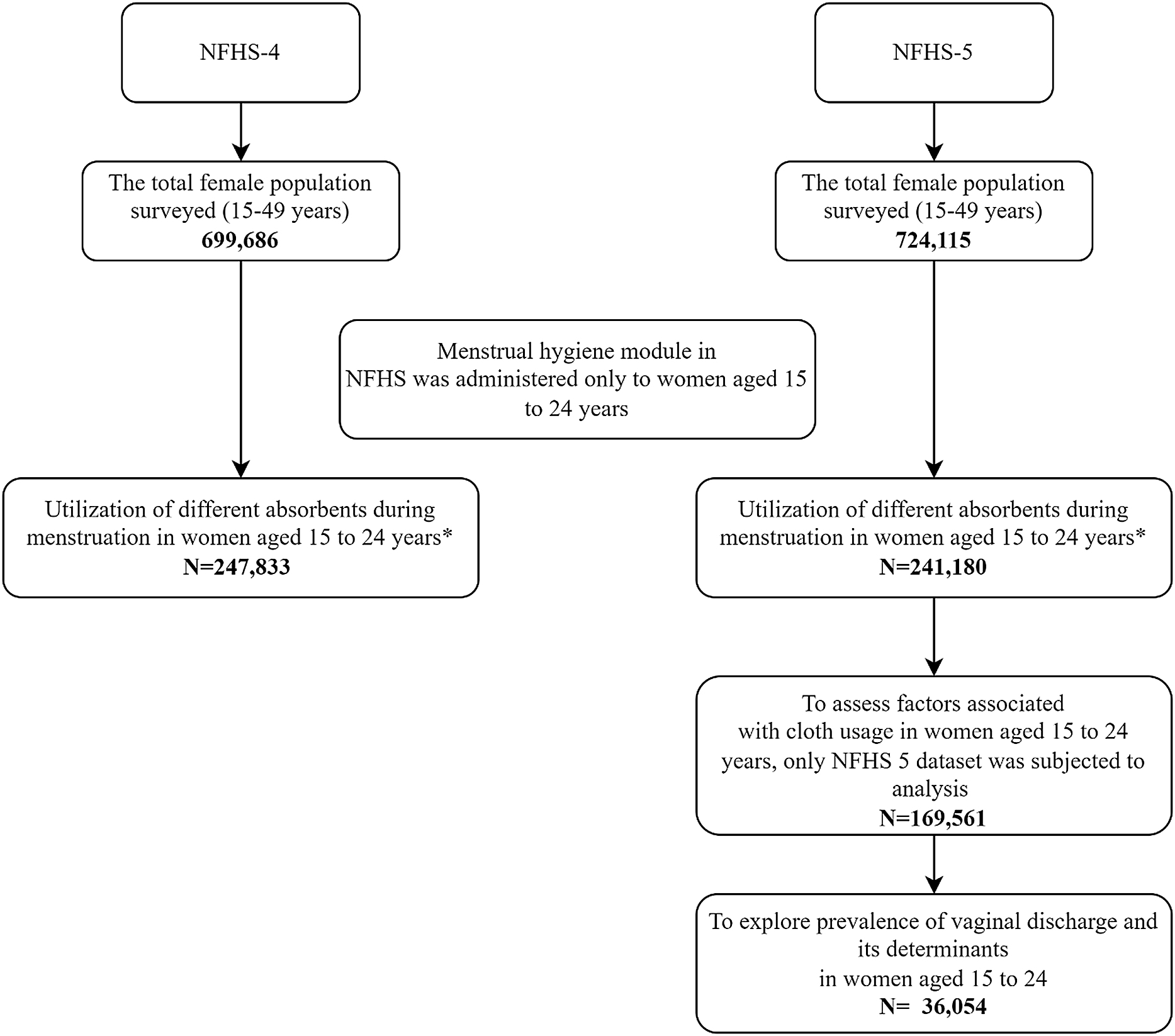
The NFHS-5 was completed in 707 districts selected from all 28 States and 8 Union Territories. Two-stage stratified sampling was employed using the 2011 census as the sampling frame. Each district was initially stratified into urban and rural areas. In the first stage, villages in rural regions and Census Enumeration Blocks in urban areas were chosen as primary sampling units (PSUs) using probability proportional to size sampling. Using a newly developed list of households that had been created by household mapping in the second stage, 22 households from each PSU were systematically chosen with an equal probability. In total, data were collected from 636,699 households and 724,115 women in the age group 15–45.
In NFHS-4, data were collected from 640 districts drawn from 29 states and 7 Union Territories. From 601,509 households, a total of 699,686 women between the ages of 15 and 49 were successfully interviewed.
The following outcomes were assessed in the present study:
-
1. Use of cloth as the preferred material during menstruation
-
2. Has the respondent experienced any genital discharge in the past 12 months?
-
3. Usage of sanitary, unsanitary, or both materials among adolescent girls in Indian states that provide free sanitary napkins for promoting menstrual hygiene among girls in the 10–19 age group under the NHM in India.
Dependent variables
Methods used for menstrual protection: Methods used for menstrual protection: In the NFHS questionnaire, women were asked whether they preferred cloth, locally prepared napkins, sanitary napkins, menstrual cups, tampons, others, or nothing to prevent bloodstains during menstruation. To study factors associated with cloth usage, the use of menstrual products was further classified into two categories – those using only cloth (coded as 1) and those using only hygienic products (coded as 0). Hygienic products included (any) locally prepared napkins, sanitary napkins, menstrual cups, or tampons. Further to the study association between the use of menstrual products and reproductive tract infection, menstrual product users were divided into three groups – unhygienic product users (cloth/others/nothing), hygienic product users (locally prepared napkins/sanitary napkins/menstrual cups/tampons), and those who used both. In the survey, inquiries pertaining to menstrual hygiene practices were directed solely to women within the age range of 15 to 24.
Reproductive tract infection: Reproductive tract infections (RTIs) include three types of infections: 1) sexually transmitted diseases (STDs), 2) endogenous infections, caused by an overgrowth of organisms normally present in the genital tract of healthy women, such as bacterial vaginosis or vulvovaginal candidiasis, and 3) iatrogenic infections, which may result from improperly performed medical procedures such as unsafe abortion or poor delivery practices (‘Reproductive Tract Infections Reproductive Health Epidemiology Series Module 3’, n.d.). Typical symptoms of RTI include – pain in the lower abdomen and pelvis, unusual or heavy vaginal discharge that may have an unpleasant odour, unusual vaginal bleeding, especially during or after sex or between periods, painful sex, fever, occasionally accompanied by chills, painful, frequent, or difficult urination (‘Sexually Transmitted and Other Reproductive Tract Infections’, n.d.). The NFHS does not directly record the presence of RTIs in women. However, within the NFHS module, women were queried to assess the presence of Sexually Transmitted Infections through a triad of questions: if she had a disease contracted through sexual contact, experienced a bad-smelling abnormal genital discharge, or had a genital sore or ulcer in the 12 months preceding the survey. The current study utilised the presence of vaginal discharge within the 12 months preceding the survey as a proxy indicator for RTIs, considering it is one of the commonly presented symptoms of RTIs and its widely acknowledged association with this class of infection (‘Sexually Transmitted and Other Reproductive Tract Infections’, n.d.; Chaudhary et al. Reference Chaudhary, Kalyan, Singh, Agarwal and Qureshi2019; Sharma et al. Reference Sharma, Krishan Goel and Madhukar Thakare2018; Kansal et al. Reference Kansal, Singh and Kumar2016; Mehta, Parikh, and Bala, Reference Mehta, Parikh and Balan.d.; Ademas et al. Reference Ademas, Adane, Sisay, Kloos, Eneyew, Keleb, Lingerew, Derso and Alemu2020).
Independent variables
Sociodemographic characteristics: In the study, demographic and socioeconomic variables such as age (15-24/25-34/>34), place of residence, educational attainment, marital status, religion, ethnic group, employment status, and wealth index were considered.
Wealth index – Each person received a score that was generated using principal component analysis based on the number and types of consumer goods a household owns – from a television to a bicycle or car – as well as dwelling factors like the source of drinking water, bathroom facilities, and flooring materials. The score was then divided into five quintiles: poorest, poorer, medium, richer, and richest.
Mass media exposure: Women were asked how often they read newspapers, watched television, and listened to the radio. Their responses ranged from not at all to less than once per week, to at least once per week, to every day. Each variable was further divided into binary categories: no exposure (not at all)/exposure (less than once a week/at least once a week/every day). Finally, the degree of mass media exposure was derived as either complete exposure (Exposure to all 3 media), partial exposure (exposure to any one or two media), or none (exposure to none of the media).
History of sexual activity: Women were asked about their sexual history in the previous four weeks, and it was divided into three categories for analysis: never had sex/active/not active (not active in last 4 weeks-postpartum or no postpartum).
Sanitation and other hygiene-related practices during menstruation: For analysis, data on the availability of toilet facilities in the households were classified into No facility/Flush/pit/composite & others. Women were asked if they take baths during menstruation (Yes/No).
Distribution of sanitary napkins to adolescent girls: States were classified into two categories (Yes/No) based on whether they offer pads for free or at an affordable price to adolescent girls. Eight states in total provide free sanitary napkins in schools: Uttar Pradesh, Rajasthan, Maharashtra, Odisha, Chhattisgarh, Andhra Pradesh, and Kerala. Adolescent girls (rural) in Bihar receive Rs 300 as part of the Kishori Swasthya Yojana to purchase sanitary napkins (Jha Reference Jha2022).
Statistical analysis
The sociodemographic characteristics of the women respondents in NFHS-4 and NFHS-5 were summarised using descriptive statistics after applying appropriate weights. Continuous variables are expressed in terms of mean (SD) or median (IQR) depending on the distribution, while categorical variables are presented in frequency and percentages. The use of various menstrual products in NFHS-5 and NFHS-4 was summarised using descriptive analysis with appropriate weights. All the analyses focused on women within the age range of 15 to 24 years.
To assess the factors associated with cloth usage and vaginal discharge (serving as a proxy measure for reproductive tract infection), respectively, only the NFHS 5 dataset was analysed. Univariable logistic regression followed by multivariable logistic regression was undertaken. The association between the use of sanitary or unsanitary menstruation products and vaginal discharge was further assessed by excluding women who reported having genital sores in the past 12 months from those who had vaginal discharge which could be suggestive of STD. P values less than 0.05 were considered statistically significant. All results are presented in terms of odds ratio (OR) and 95% confidence intervals (CIs).
Additionally, menstruation product utilization across states offering free sanitary napkins and those not offering, stratified by age - adolescent (15–19 years) and young women (>19–24 years), was examined. STATA, version 15.1, was used to compute all analyses.
Ethical considerations
The present study is the secondary data analysis of publicly available NFHS-4 and NFHS-5 data. The survey’s participants voluntarily and knowingly gave their consent. The International Institute of Population Sciences’ ethical review board granted the survey its ethical approval (IIPS).
Result
A total of 247,833 (NFHS-4) and 241,180 (NFHS-5) women in the 15–24 age group were interviewed regarding their menstrual hygiene practices (Figure 1). In the NFHS-4, the mean (SD) age of the women was 19.5 (2.9) years. Nearly two in three (67.9%) women lived in rural areas and four in five (79.1%) were Hindu by religion. Close to one-third of the surveyed women (31.9%) belonged to SC and ST groups. One in every ten women never attended school (10.3%). Nearly 59.0% of the women reportedly had never been in the union and only 14.9% were employed at the time of the survey. Around 62% of the surveyed women had access to toilets within their household. The sociodemographic profiles of the women surveyed in NFHS-5 were largely congruent with those observed in NFHS-4, except for a significant increase in the percentage of women with access to toilet facilities (81.1%) and a higher proportion who had completed higher levels of schooling. (Table 1)
Study Participants Included in Analyses. * Utilization of different menstrual absorbents was captured through multiple choice question.
Sociodemographic Characteristics of the Women Respondents Aged 15 to 24 Years
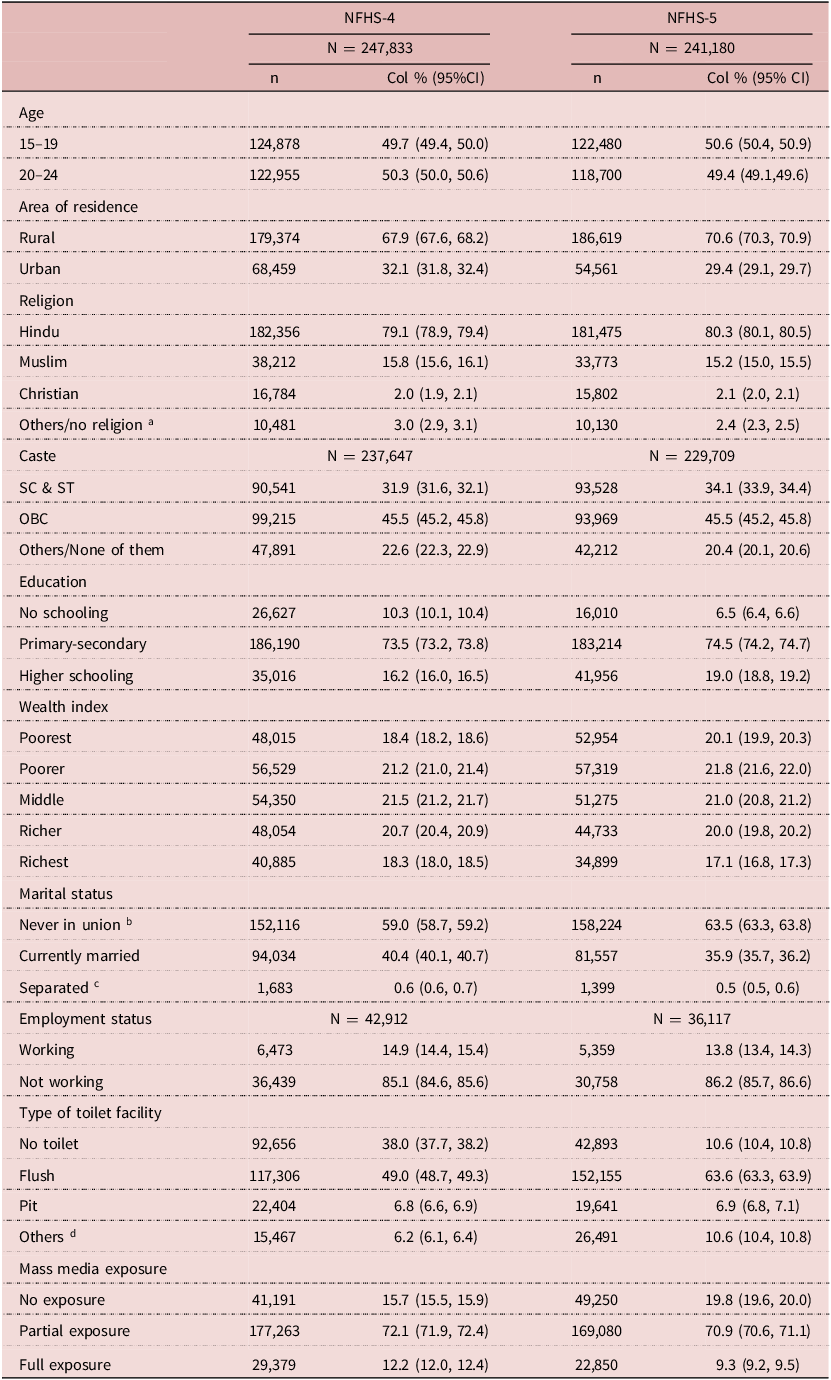
a Include Sikh, Jain, Buddhist, Parsi, Jewish, other, and those who reported no religion.
b Also include whose Gauna was yet to be done.
c Include all divorced/Separated/deserted/widowed women.
d Includes composting/hanging/bucket/dry toilets and others.
The proportion of women using sanitary napkins as absorbent during menstruation exhibited a significant increase from 41.8% in NFHS-4 to 64.1% in NFHS-5. (Table 2) Further analysis was conducted using the NFHS-5 data to explore the factors associated with cloth usage, employing binary logistic regression followed by multivariable logistic regression. Among the women surveyed in NFHS-5, 55,450 women exclusively used cloth, while 114,111 exclusively relied on sanitary pads for menstrual management. On binary logistic regression, women aged 20–24 years, (cOR: 1.05; 95% CI: 1.03, 1.08), living in rural areas (cOR: 4.27; 95% CI: 4.09, 4.45), those belonging to socially disadvantaged communities, and those married (cOR: 1.76; 95% CI: 1.71, 1.81) or separated (cOR: 2.70; 95% CI: 2.24, 3.24) compared to younger women (15–19), those from urban region, belonging to non-SC/ST/OBC households, and never had been in union, respectively, had significantly higher odds of using cloth as menstrual absorbent material. Women with higher schooling were less likely to use cloth (cOR: 0.03; 95% CI: 0.03, 0.04) when compared to women with no schooling. Cloth use was also lowest in the richest quintiles (cOR: 0.03; 95% CI: 0.03, 0.04) although the odds of cloth usage were higher in working women (cOR: 1.46; 95% CI: 1.32, 1.61). Those women who did not have toilet facilities at home (cOR: 1.73; 95% CI: 1.65, 1.82) also had higher odds of using cloth. Women exposed to media partially or fully were less likely to use cloth compared to those who were not exposed to media at all.
Prevalence of Different Absorbents Usage During Menstruation in NFHS-5 & NFHS-4
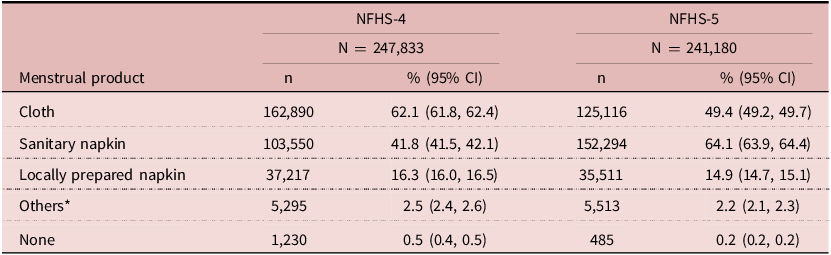
* Others include tampons, menstrual cups, and others. The NFHS-4 survey didn’t include ‘Menstrual cup’ as a category, but it was introduced in NFHS-5.
All the exploratory variables that were significantly associated with cloth usage as menstrual absorbent (p <0.05) in binary logistic regression were included in the adjusted regression model. After adjusting, the odds of cloth usage remained high in the 20–24 age group, rural regions, and women who were working. Similarly, higher schooling, higher wealth quintile, having flush toilets, and exposure to media were associated with reduced cloth usage. (Table 3)
Factors Associated with Cloth Usage as a Preferred Absorbent to Prevent Staining During Menstruation in Women Aged 15 to 24 (NFHS-5, 2019–21)
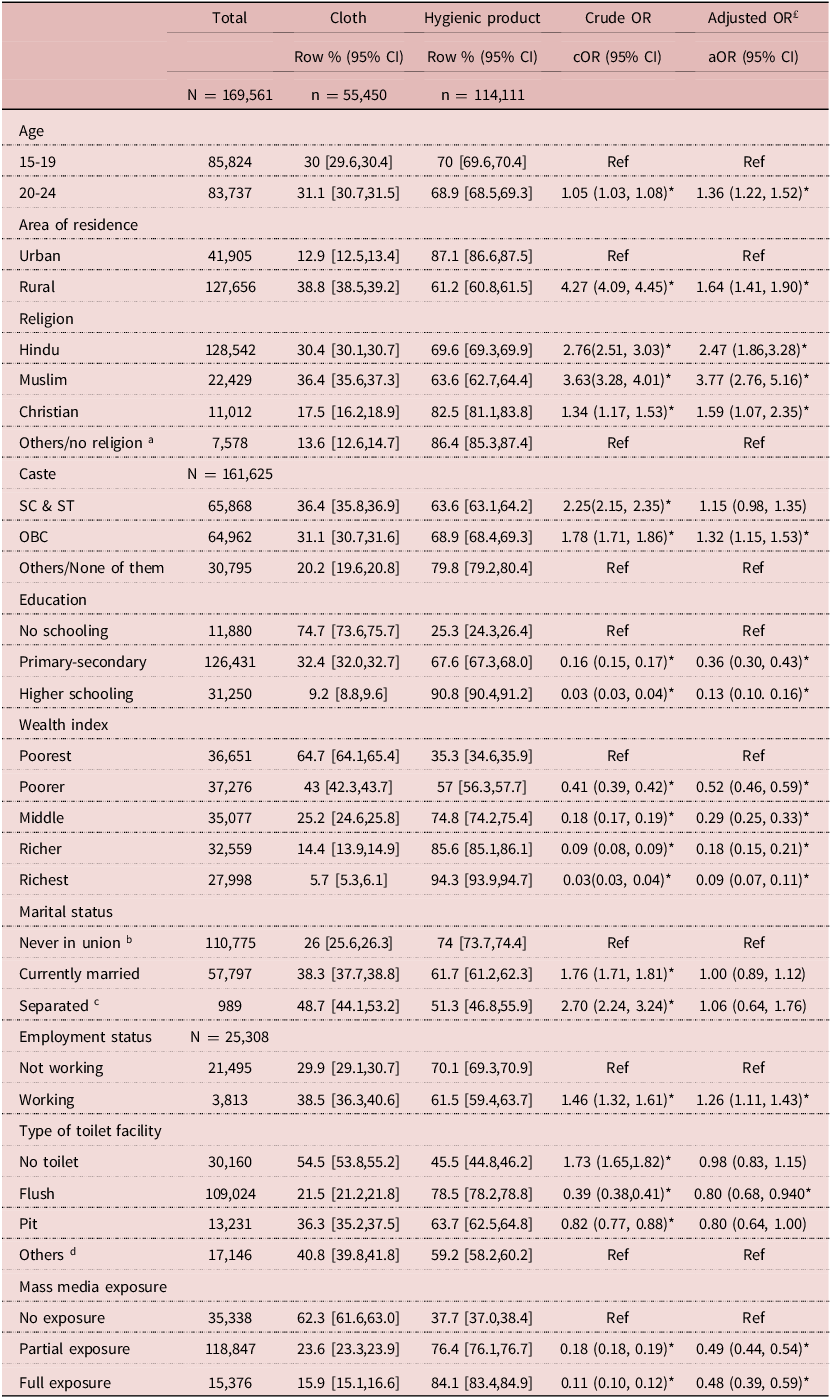
Estat gof = 0.96; *Indicates p values <0.05;
£ Adjusted for all the variables that were statistically significant with a P value <0.05 in bivariable logistic regression.
a Include Sikh, Jain, Buddhist, Parsi, Jewish, other, and those who reported no religion.
b Also include whose Gauna was yet to be done.
c Include all divorced/Separated/deserted/widowed women.
d Includes composting/hanging/bucket/dry toilets and others.
Additionally, among the 485 women who reported not using any absorbent to prevent bloodstains during menstruation, a relatively higher proportion were from rural areas, had lower levels of education or none at all, were in the poorest wealth quintile, and lacked media exposure (Results are detailed in the supplementary table).
A total of 108,435 women in the 15–49 age group were surveyed on whether they experienced vaginal discharge in the previous 12 months, of which 6.9% (n = 8,207; 95% CI: 6.7, 7.1) women reported having such symptoms. Furthermore, among women aged 15 to 24, 3.6% (n/N = 1,370/ 36,083; 95% CI: 3.4, 3.9) reported a history of vaginal discharge in the preceding 12 months. On bivariable logistic regression, women using unhygienic menstrual absorbents were found to be 1.5 times more likely to experience vaginal discharge compared to those using hygienic menstrual absorbents (cOR = 1.53; 95% CI:1.28, 1.83). Higher odds of vaginal discharge were also observed among women in the higher age group (cOR = 4.40; 95% CI: 3.66, 5.28) those who lived in rural areas (cOR = 1.41: 95% CI: 1.16, 1.72), and those with no media exposure (cOR = 1.77; 95% CI: 1.28, 2.46). In addition, women with higher education levels (cOR = 0.31; 95% CI: 0.23, 0.40) and higher wealth quintiles (cOR = 0.78; 95% CI: 0.61, 0.99) had lower odds of experiencing vaginal discharge. However, when adjusted for all exploratory factors with a P value <0.05, the association between vaginal discharge and the type of menstrual absorbent used was not statistically significant. Further, women with a history of vaginal discharge who also had a recent history of genital sores (n = 438) were excluded from the analysis. While the use of sanitary products during menstruation initially appeared to have a protective effect in this subgroup, the association was not statistically significant after adjusting for potential confounders. (Tables 4 & 5)
Prevalence of Vaginal Discharge and its Determinants in Women Aged 15 to 24 (NFHS-5, 2019–21)
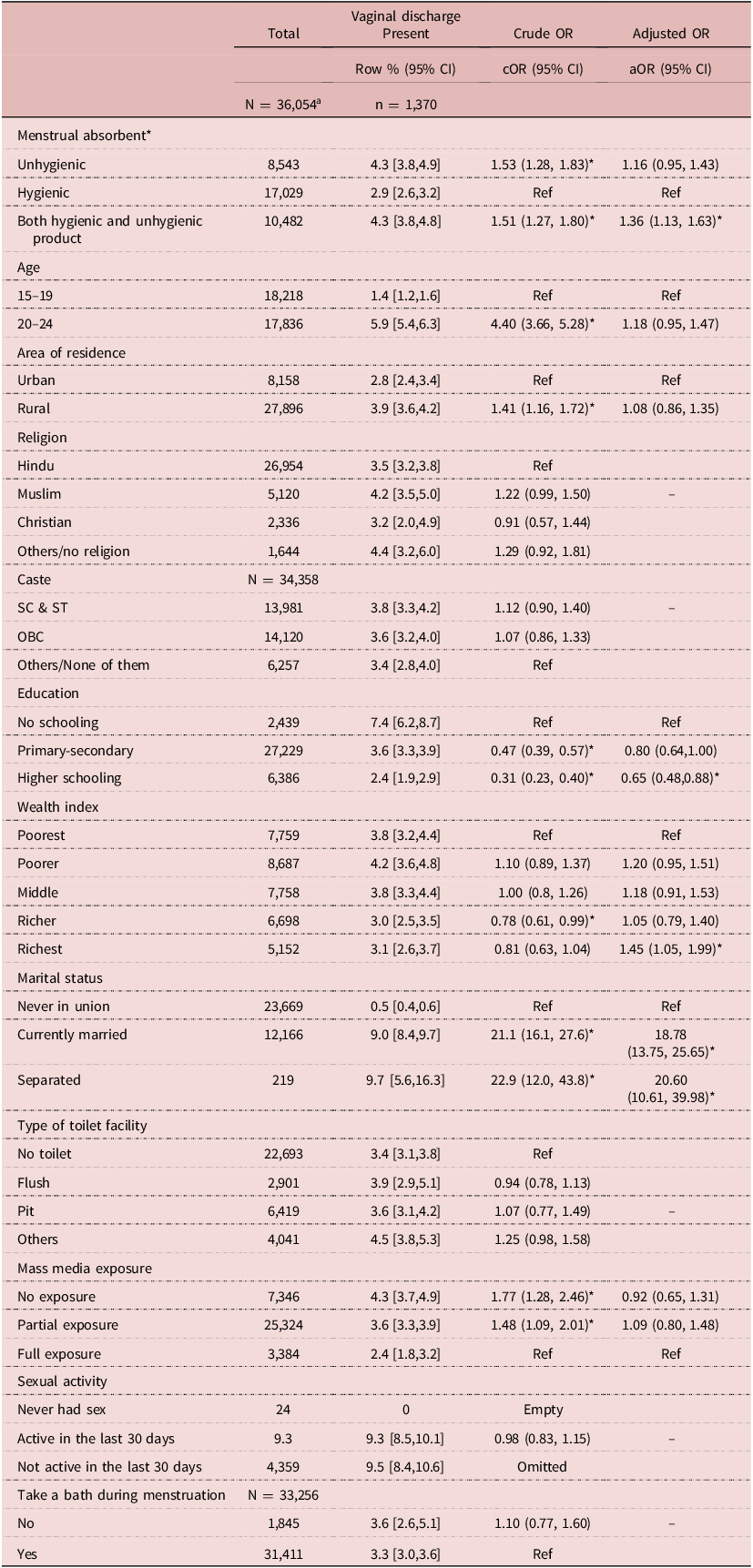
a (n = 29) observations were recorded as ‘do not know’ and were excluded from the analyses; Estat gof = 0.18;
* Indicates p-value <0.05.
Association Between Use of Menstrual Absorbents and Vaginal Discharge Excluding Women with Genital Sores
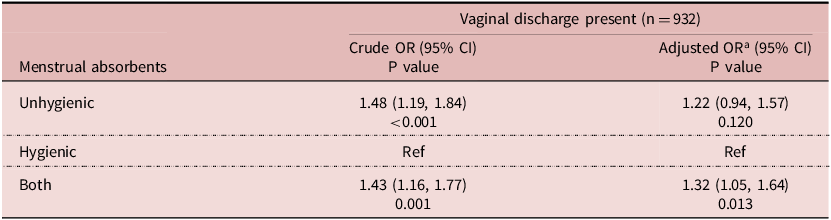
a Adjusted for variables including age, education, area of residence, wealth index, marital status, and media exposure.
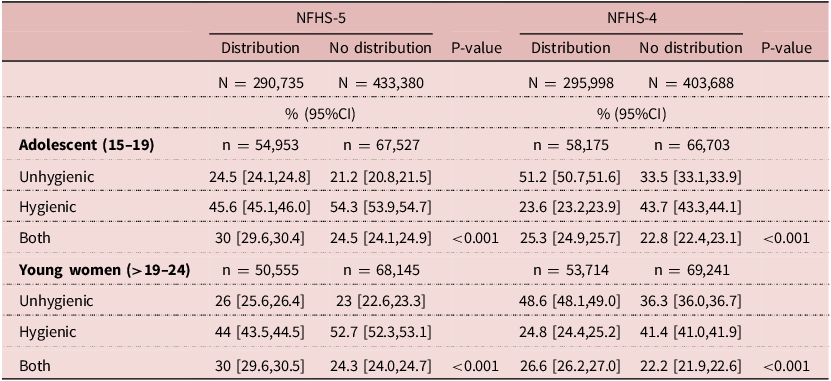
The prevalence of sanitary and unsanitary menstrual absorbent use among adolescent girls and young women up to 24 years old was compared between states that had initiated government MHSs providing free sanitary napkins to school-going girls within the past five years with states that have yet to implement the scheme. Between NFHS 4 and NFHS 5, there was a marked decline in the percentage of women using unhygienic products and a notable rise in the percentage of women using hygienic products in states where free sanitary napkins were distributed, in contrast to states that had not yet introduced the programme. (Table 6)
Prevalence of Menstrual Absorbents Usage by Indian States Providing Free Sanitary Napkins Among Adolescent School-Going Girls
Discussion
The present study findings based on the largest nationally representative demographic and health surveys in India observed nearly a one-third increase in the proportion of women (15–24 years) using modern hygienic sanitary products during menstruation between NFHS-4 (2015-16) and NFHS-5 (2019–21). Furthermore, in this study, lower educational status was a predictor of the non-utilisation of sanitary pads, which corroborates evidence from previous studies (Chauhan et al. Reference Chauhan, Kumar, Marbaniang, Srivastava, Patel and Dhillon2021; Garg et al. Reference Garg, Bhatnagar, Singh, Basu, Borle, Marimuthu, Azmi, Dabi and Bala2022).
However, the burden of vaginal discharge suggestive of reproductive tract infections amongst adolescent girls and young women in India did not differ significantly between the sanitary pads and cloth users on adjustment for potential confounders. Previous studies in India comparing the use of sanitary napkins versus cloth during menstruation and the susceptibility to reproductive tract infections (RTIs) have shown mixed results. A study done on 619 school-going girls in South India observed those with low menstrual hygiene index had a higher likelihood of having symptoms of white discharge (Narayan et al. Reference Narayan, Srinivasa, Pelto and Veerammal2001). In contrast, a study conducted from a low-income urban agglomerate in Northern India did not detect a statistically significant difference in self-reported vaginal discharge between women who used sanitary napkins and those who used fresh cloths or homemade pads (Singh et al. Reference Singh, Devi, Garg and Mehra2001). Similar findings were reported from a study in Tanzania, where there was no discernible difference between cloth and sanitary napkin users in terms of the prevalence of bacterial vaginosis (Baisley et al. Reference Baisley, Changalucha, Weiss, Mugeye, Everett, Hambleton and Hay2009). Another study conducted in Bangladesh found that women who do not maintain good hygiene during menstruation have higher odds of developing a reproductive tract infection (Wasserheit et al. Reference Wasserheit, Harris, Chakraborty, Kay and Mason1989). A study in Gambia, on the other hand, found no association between bacterial vaginosis and menstrual hygiene (Demba et al. Reference Demba, Morison, van der Loeff, Awasana, Gooding, Bailey, Mayaud and West2005). A possible reason for the lack of significant reduction of RTI symptoms despite the adoption of sanitary pads as observed in the present study may be a function of behavioural determinants in a multifactorial causal pathway. Makeshift cloth pads when reused in low-income LMIC settings possibly increase the risk of infection when they are reused without washing, cleaning, and drying indoors instead of out in the sunlight due to stigma-related concerns. Furthermore, suboptimal frequency of replacement of disposable sanitary pads during menses or mixed napkin and cloth usage due to poor awareness or unmet need for menstrual hygiene material has been frequently observed in LMICs particularly amongst women from low socioeconomic backgrounds (Garg et al. Reference Garg, Bhatnagar, Singh, Basu, Borle, Marimuthu, Azmi, Dabi and Bala2022; Smith et al. Reference Smith, Muli, Schwab and Hennegan2020).
National public health policy in India prioritises menstrual hygiene promotion in adolescent girls and women through the implementation of the MHSMHS under the aegis of the landmark NHM through which funds are allotted to state governments for the decentralised purchase of sanitary napkin packs for distribution to beneficiaries. To date, the MHS for free pad distribution in schools and through subsidised rates in urban poor communities has already been implemented in 9 States and Union Territories in India (India. Ministry of Drinking Water and Sanitation 2015). This analysis suggests that states implementing the MHS within the past five years have reduced by half the prevalence of unhygienic menstrual absorbent amongst adolescent girls and young women (15–24 years) compared to non-MHS implementing states.
The present study has certain important policy implications. First, the use of sanitary napkins in India has increased by a third in the past five years driven among other factors by government impetus on the distribution of free or subsidised pads in the most vulnerable populations. Nevertheless, a previous study from Delhi conducted in low-income urban resettlement colonies observed that women of low socioeconomic status often switch to using cloth if they lack access to pads which suggests the critical dependence of women on this scheme to fulfil their menstrual hygiene needs (Garg et al. Reference Garg, Bhatnagar, Singh, Basu, Borle, Marimuthu, Azmi, Dabi and Bala2022). Factors such as the push to accelerate sanitation coverage through improved WASH facilities, especially in rural India, may also have increased the acceptability of modern menstrual absorbents; however, the present study could not determine a causal association. Second, the expansion in the use of healthy sanitary methods does not correlate with a significant reduction in the burden of reproductive tract infections, which suggests that menstrual health campaigns in India should focus on the message of correct frequency of changing pads apart from the advantage in reducing staining and avoiding missing school or work during menses (‘Akshay Kumar Lends Support to New Campaign on Menstrual Hygiene’ 2018; Austrian et al. Reference Austrian, Kangwana, Muthengi and Soler-Hampejsek2021). Third, the public health ethics of massively advancing sanitary pad use in India through large-scale government intervention and subsidies are currently lacking, especially in the absence of an evaluation of the cost-effectiveness of the free pad schemes. Even if sanitary pads are an essential public health good that should be made universally affordable and available to women, the associated environmental implications and concerns arising from the inadequate availability of used sanitary napkin disposal facilities in India also co-exist as a major public health challenge. The NFHS provides crucial data on various aspects of public health, including women’s health. However, the existing NFHS interview schedule does not capture information on how women dispose of used menstrual pads, which may be collected through relevant questions in future rounds of the NFHS. Furthermore, water scarcity is a well-established factor contributing to poor menstrual hygiene in LMICs (Patel et al. Reference Patel, Panda, Chandra Sahoo, Saxena, Singh Chouhan, Singh, Ghosh and Panda2022). However, in the NFHS, only drinking water accessibility was assessed in the participants, which precluded incorporating the variable in the current model.
There are certain study limitations. The extent of improvement in menstrual hygiene knowledge and attitudes in the participants could not be assessed because no such data was captured in the survey. Like other demographic and health surveys in LMICs, specific questions that measured the extent of fulfilment of menstrual material needs were not queried (Smith et al. Reference Smith, Muli, Schwab and Hennegan2020).
Furthermore, in this analysis, cloth use during menstruation was considered unsanitary since information on the mode of its utilisation was lacking although cloth pads that are correctly applied and dried prior to reuse are safe and protective against infections (Daher et al. Reference Daher, Albaini, Siff, Farah and Jallad2022). Information on menstrual hygiene beliefs and practices, source of pad access and barriers, and the associated costs and affordability was not collected in this survey, which precluded evaluation of the perceived usefulness and current shortcomings of the MHS for women in India. Finally, this analysis relied on self-reported vaginal discharge alone rather than clinical confirmation for defining RTI, which may have resulted in an underestimation of the true burden and determinants of RTI in the participants.
In conclusion, more than six in ten adolescent girls and young women in India use sanitary pads during menses with significantly reduced utilisation in those without schooling, living in rural areas, and belonging to comparatively poorer wealth quintiles. The increase in sanitary pad use coverage increased by one-third between NFHS-4 (2015-16) and NFHS-5 (2019–21) with the pace of switch from cloth to pad doubling on average in the states implementing free pad distribution schemes during the same period. However, there was only a small reduction in the prevalence of vaginal discharge in the respondents with no statistically significant association observed with the type of absorbent used suggesting only limited applicability in real-world control of reproductive tract infections.
Acknowledgements
The analysis was conducted on NFHS data published and available for download through the Demographic Health Survey Program’s data distribution system after approval of the proposal.
Funding statement
This research did not receive any specific grant from funding agencies in the public, commercial, or not-for-profit sectors.
Competing interests
None.


 Open access

