

Because diversity, customisation, and contextuality are key features of the model, it can be applied to many different contexts. An important point is the universality of values. This plays a role not only in the (cross-)cultural perspective and the decolonial position but also in the discussion about whether a universal conceptualisation of ‘decent work’ is possible. This discussion is reflected in one of the most important debates within the capabilities approach, between Nussbaum and Sen, regarding whether there should be a universal list of central capabilities (Nussbaum) or not (Sen, value-openness).
This debate, and its implications for work, is addressed in Part I (Chapters 5 and 6). The discussion is important for this part because of its connection to cross-cultural diversity (Chapter 11), the decolonial perspective (Chapter 12), and work capabilities in different occupations and countries (Chapter 13). This connectivity is already addressed in Chapter 5.
The important aspect of leadership is discussed in Chapter 14, and Chapter 15 argues that CA is also suitable for addressing future challenges such as artificial intelligence, climate change, and growing global inequality.
In line with the normative principle of the CA, this part, in addition to the content, places a significant emphasis on policy implementation. The following chapters are included in this part:
11. (Cross-)Cultural Perspectives on the Capability Model
12. Decent Work and Social Justice from the Vantage Point of the Global South: Decoloniality and the Capability Approach as Parrhesia
13. Work Capabilities in Different Occupations and Countries
14. The Capability Approach: A Guiding Framework for Work Capabilities and Leadership
15. Future Work and the Capability Model: Digitalisation, Globalisation, and Climate Change
Introduction
The capability approach (CA), as developed by Amartya Sen [Reference Sen1] and Martha Nussbaum [Reference Nussbaum2], provides a comprehensive framework for evaluating and promoting human well-being. By emphasising the ‘doings and beings’ individuals have reason to value, the CA shifts the focus from traditional economic metrics to a more holistic understanding of human flourishing [Reference Sen1]. Central to this approach are the principles of diversity, customisation, and contextuality, which enable its application across varied cultural and institutional contexts [Reference Nussbaum2]. While grounded in the universality of human values, the CA also respects the uniqueness of individual and collective experiences, making it particularly suited for cross-cultural and decolonial perspectives.
This chapter explores the universality and contextual applicability of the capability model from a cross-cultural perspective, emphasising the importance of tailoring its implementation to specific societal needs. It highlights how the CA addresses questions about whether a universal conception of ‘decent work’ is possible and demonstrates its relevance for policy applications aimed at fostering inclusivity and equity. Furthermore, classic theoretical distinctions (such as the etic-emic debate) within cross-cultural and cultural psychology are introduced and mapped onto the CA premises. By drawing from theoretical foundations, empirical evidence, and practical applications, the chapter underscores the dynamic interplay between individual agency and cultural contexts, offering insights into how the CA can be a transformative tool in diverse settings and environments.
This chapter contributes to expanding the CA by presenting not only its foundational concepts but also weaving them together with indigenous philosophical traditions, cross-cultural psychological debates (notably the tension between universalism and cultural specificity), and methodological innovations. It seeks to demonstrate that the CA is not a static or prescriptive model but rather a hybrid, dynamic, decolonial, and context-sensitive framework capable of accommodating diverse cultural conceptions of well-being, justice, and human flourishing, particularly in contexts shaped by colonial histories, structural oppression, and collective world views (see also Chapter 12).
Theoretical Foundations of the Capability Approach
The CA originated in response to limitations in traditional welfare economics, which often reduce well-being to material resources or utility. Instead, Sen proposed that well-being should be measured in terms of individuals’ capabilities, that is, their real freedoms to achieve the lives they value [Reference Sen1, Reference Sen3, Reference Sen and McMurrin4]. This groundbreaking shift highlighted the inadequacy of metrics such as GDP in capturing human development, advocating instead for an evaluative framework rooted in people’s actual opportunities and choices [Reference Sen and McMurrin4].
Nussbaum expanded this theoretical framework by introducing a list of ten central capabilities, including life, bodily health, bodily integrity, practical reason, and affiliation [Reference Nussbaum2, Reference Nussbaum5]. Her emphasis on dignity, autonomy, and agency underscored the importance of creating conditions that allow individuals to live a life they have reason to value [Reference Nussbaum5]. This list served as a philosophical foundation for operationalising the CA in policy and practice, already demonstrating its versatility across different cultural and institutional contexts – a crucial point that we will return to later in this chapter.
The CA’s focus on substantive freedoms distinguishes it from other models of well-being, such as utilitarianism or resource-based approaches. By prioritising individual agencies and the diversity of values, the CA addresses inequalities that arise from systemic barriers, such as social norms, institutional constraints, and cultural practices [Reference Sen1, Reference Sen6]. This perspective has been instrumental in various applications, from assessing poverty to designing educational and workplace policies [Reference Nussbaum5, Reference Sen6, Reference Robeyns7].
Additionally, the CA’s emphasis on contextual sensitivity has made it a valuable tool in cross-cultural settings. By recognising that capabilities are shaped by local conditions, such as cultural norms and institutional structures, the CA provides a nuanced framework for understanding and addressing disparities in well-being [Reference Sen8, Reference Alkire9, Reference Clark10]. This adaptability allows it to balance universal principles of human dignity and autonomy with respect to cultural diversity, making it particularly relevant for addressing global challenges such as inequality and social justice [Reference Comim, Qizilbash and Alkire11] (see Chapter 5).
The Default (Cross-)Cultural Origin of the Capability Approach
As mentioned, Amartya Sen developed the concept of ‘capability’ out of dissatisfaction with existing concepts and theoretical frameworks for evaluating a society [Reference Sen and McMurrin4, Reference Robeyns7, Reference Sen12]. The capability concept has its roots in his work with Drèze on famines in India and China [Reference Drèze and Sen13, Reference Drèze and Sen14], where they challenged the Malthusian notion that famines result solely from an imbalance between exponential population growth and food supply and, as such, were seen as an inevitable ‘Darwinian’ correction to overpopulation (see also Chapters 1 and 5).
Sen, however, demonstrated that factors other than food availability determined whether people experienced famine [Reference Sen3]. Specifically, he highlighted whether individuals had the freedom and opportunity to convert their labour into wages and their wages into food as the most crucial factor. This focus on the interplay between individual agency and systemic constraints became the foundation for the capability model. From this model, and initially within the context of development economics, the capability concept defined equality in terms of freedoms and opportunities rather than material wealth or subjective satisfaction (as in utilitarianism).
Sen further argued that it is not only about the resources available or how people subjectively perceive their situation, which is often influenced by “response shifts” (“adaptive preferences” in capability terms; adjustments in norms and expectations to align with one’s situation) but also about the actual opportunities available to members of a society and how these opportunities are distributed [Reference Sen15]. At an individual level, ‘capability’ means having the freedom to do or be what one values, on the basis of the various combinations of opportunities at one’s disposal. It then becomes clear that this framework was carefully developed from within a culture, meticulously describing the unique features of a context that can promote well-being and flourishing, even in the face of so-called objective hardship.
Where the cultural origin of the CA is evident, its cross-cultural roots are somewhat less apparent. Follow-up studies aimed at providing a universal definition of some of the model’s key concepts, that is, classifications that would hold in most or nearly every context or cultural setting. For example, in consequent thinking [Reference Coast, Smith and Lorgelly16, Reference Morris17, Reference Murphy and Gardoni18], freedom was assumed to encompass two aspects: the process aspect, which refers to the ability to shape one’s life and environment, and the opportunity aspect, which refers to the ability to achieve valued goals. Capability, then, represents the set of tasks and activities that are valuable and meaningful to individuals and lie within their reach. Owing to their importance in a specific context, these tasks should be accessible to everyone. This concept has since been successfully applied in various fields [Reference Coast, Smith and Lorgelly16, Reference Morris17, Reference Murphy and Gardoni18].
When applied to labour [Reference Van der Klink, Bültmann, Brouwer, Burdorf, Schaufeli and Zijlstra19, Reference Van der Klink, Bültmann, Burdorf, Schaufeli, Zijlstra and Abma20], the capability concept can be clarified by comparing it with performance and capacity, familiar terms from the International Classification of Functioning, Disability, and Health model by the World Health Organization [Reference Morris17]. Performance refers to what an individual actually does, whereas capacity refers to what they are capable of doing. Capability, in turn, relates to an individual’s capacity (what they can do) in conjunction with the opportunities provided by their environment (what they are enabled to do). It is therefore essential that contexts, whether they represent organisations or (local, regional, and national) governments, offer opportunities that enable capacities to unfold.
Sabine Alkire illustrated this with a straightforward example involving cycling: even if someone has the ability to cycle, theyFootnote 1 need access to a bike, suitable roads, and the absence of restrictive social conditions to do so [Reference Alkire9]. Capability encompasses all these aspects: physical attributes, cycling skills, access to a bicycle, and an enabling physical (e.g., roads) and social environment (e.g., no curfew). This simple analogy may illustrate the universality of the CA’s key premise. The core complexity of capability, however, lies in this concept of ‘being able’, which refers both to having the ability and to being provided with the means to exercise it. In the context of labour, this duality is equally important: individuals must be both capable and enabled to work. Capability reflects both the employee’s skills and motivation and the organisational environment that is supportive and enables meaningful contributions. Thus, it is not enough for someone to have knowledge, skills, and the desire to develop them further; the organisational context must also support these efforts and create opportunities for valuable work to be performed [Reference Alkire9, Reference Van der Klink, Bültmann, Brouwer, Burdorf, Schaufeli and Zijlstra19]. Able individuals within enabling contexts would be a good motto.
The Quest for Universals
In a similar vein, policymakers should be urged to deliver the necessary (pre)conditions for individuals to fulfil their basic needs, both physically (e.g., in Sen’s view [Reference Sen3] of being able to afford food) and psychologically [e.g., in Maslow’s view [Reference Maslow21, Reference Maslow22] of self-actualisation, which later formed the basis of further developments within the framework of the self-determination theory [Reference Ryan and Deci23–Reference Chen, Van Assche, Vansteenkiste, Soenens and Beyers26]. As such, a preliminary conclusion could be that, owing to its grounding within cultural psychology, the cross-cultural validity of the CA stood the test of time. The argument we will develop in the next section is that one should not think of these universals as variables, concepts, or even processes that can be readily applied to any given context or in any situation. Rather, we propose that the universals in the CA can be viewed as principles that guide research and practice across various settings. The CA indeed offers a set of foundational principles that make it uniquely suited for addressing well-being in diverse contexts. These key features are as follows:
A focus on individual agency: The CA prioritises what individuals are free to do and be rather than what they merely possess (see Chapter 3, quote of Sayer). This emphasis on agency aligns with the notion that true well-being stems from the ability to make choices and take actions that are meaningful to the individual [Reference Sen27]. It challenges deterministic or paternalistic models by centring on personal empowerment and the removal of barriers to choice.
An honest validation of pluralism: By acknowledging the diversity of human aspirations, the CA avoids prescribing a singular notion of well-being. Instead, it respects the multiplicity of values and goals that individuals and communities may pursue [Reference Nussbaum2, Reference Nussbaum5]. This pluralistic approach enables the CA to remain inclusive and adaptable across cultural, social, and economic contexts.
Context sensitivity: Recognising that cultural, social, and institutional factors shape capabilities, the CA emphasises the importance of contextuality in capability formation. This feature ensures that the approach can be tailored to address the unique challenges and opportunities within specific environments [Reference Alkire9]. It is particularly significant in cross-cultural applications, where historical, political, and cultural conditions profoundly influence individual freedoms and choices [Reference Van der Klink, Bültmann, Brouwer, Burdorf, Schaufeli and Zijlstra19, Reference Lee and Wechtler28].
In cross-cultural contexts, these principles underscore the importance of understanding diverse value systems, cultural norms, and historical conditions that influence individual freedoms and choices. For example, studies on indigenous philosophies, such as Ubuntu and Buen Vivir, reveal how relational and ecological values can expand the conceptual scope of the CA [Reference Watene29, Reference Watene and Yap30, Reference Metz, Ndlovu-Gatsheni and Ngcaweni31]. These insights reinforce the CA’s capacity to bridge universal principles with culturally specific applications, fostering both individual and collective well-being across the globe [Reference Bockstael and Watene32].
(Cross-)Cultural Applications of the Capability Approach
In this section, we briefly discuss what and how (cross-)cultural psychology is, and we highlight how the CA easily inscribes itself into this field. Cross-cultural psychology has been variously defined in the literature, the earliest ones stemming from the nineteenth century [Reference Tylor33], when a relatively static view of culture as the social heredity of a society [Reference Chen34] or the man-made part of the environment [Reference Van Assche35] was commonplace. A consideration of some more recent operationalisations sheds light on how the field is currently more dynamically construed by its students. According to a definition provided in an advanced textbook of cross-cultural psychology [Reference Berry, Poortinga, Segall and Dasen36], the aim of the field is to study similarities and differences in individual psychological functioning in various cultural and ethnic groups. Moreover, a vital mission should be to explore the relationships between psychological variables and sociocultural, ecological, and biological variables, as well as changes in these variables and their interrelationships. This is a comprehensive definition of the field, involving, on the one hand, a comparative focus on similarities and differences across cultures and, on the other hand, a focus on relating psychological variables to environmental and even biological ones.
This duality ultimately led to the creation of two independent yet related subdisciplines: ‘cross-cultural psychology’, which focuses on the comparison of cultures in terms of values, attitudes, roles, perceptions, and cognitions, and ‘cultural psychology’, which focuses on one culture as a complex and complicated unit that is worthy of proper examination [Reference Berry, Poortinga, Segall and Dasen36]. Most researchers in the field focus on one approach rather than the other, resulting in variations in perspectives and emphases. Inherent in these characterisations is the issue of whether a universalistic (comparative, or ‘etic’) or a contextualistic (noncomparative, relativistic, or ‘emic’) perspective is preferred. This is essentially a methodological problem that will be addressed later. Notably, although often seen as conflicting [Reference Shweder37], the two perspectives can rather be considered complementary.
Cultural psychology examines psychological phenomena within their cultural context, emphasising that all human psychology should inherently be cultural psychology, as no psychological processes occur in isolation from culture. However, since this ideal is far from reality, psychological studies that explicitly consider cultural contexts qualify as cultural psychology [Reference Kağıtçıbaşı38]. When such studies adopt a comparative approach involving at least two cultures, even implicitly, they fall within the domain of cross-cultural psychology. Hence, the title “(Cross-)Cultural Psychology” reflects the intentional inclusion of both perspectives. For this chapter, the term ‘cross-cultural’ will generally be used unless a specific distinction is being made to ‘cultural psychology’.
Etic and Emic Research within the Capability Approach
Cross-cultural psychology offers valuable insights into the applicability of the CA across diverse cultural settings. Two primary approaches, etic and emic, frame this discourse. This distinction originated in linguistics in the 1950s to designate two complementary standpoints for the analysis of human language and behaviour: phonetic (analysing sounds in speech) versus phonemic (concentrating on distinctive sounds of a language). It has been subject to debates in the humanities and social sciences ever since [Reference Van de Vijver and Clauss-Ehlers39]. In the 1960s, the distinction was introduced into anthropology, where etic came to stand for an objective, scientific understanding of cultural phenomena, whereas emic arose as unique interpretations of the world through the subjective viewpoints of cultural insiders. Over time, both concepts have been adopted by several other disciplines and subfields, such as cross-cultural psychology. Although the division remains relevant, scholars currently agree that both approaches are complementary and can be beneficial for further developing existing theoretical frameworks, such as the CA. Galperin et al. propose a research cycle where one type of study is conducted after another, creating a self-nourishing loop [Reference Galperin, Punnett, Ford and Lituchy40].
Etic approaches involve universal frameworks to analyse cultural phenomena. For example, Schwartz’s values framework categorises universal values such as autonomy, benevolence, and tradition, which align with the CA’s principles of human dignity and agency [Reference Schwartz41, Reference Politi, Van Assche, Lüders, Sankaran, Anderson and Green42]. Etic approaches aim to identify cross-culturally valid constructs that transcend specific cultural contexts, providing a basis for comparing diverse societies in common dimensions. Another example, as already discussed, is the framework of self-determination theory [Reference Ryan and Deci23, Reference Chen, Aelterman, Beyers, Boone, Brenning and Deeder43]. While such frameworks offer valuable insights into shared human values and needs, critics argue that their focus on universality can sometimes oversimplify cultural differences and overlook unique contextual nuances [Reference Harkness, Van de Vijver and Mohler44, Reference Van Assche45].
In contrast, emic approaches prioritise culture-specific constructs, emphasising the importance of understanding values, behaviours, and beliefs within their cultural contexts. This perspective aligns closely with the CA’s emphasis on contextuality, as it allows for tailored applications that respect cultural nuances and local priorities. For instance, the concept of Ubuntu in African societies highlights communal well-being and interconnectedness, offering a culturally grounded lens through which to understand relational capabilities [Reference Metz, Ndlovu-Gatsheni and Ngcaweni31]. Similarly, indigenous perspectives on sustainability and spirituality can inform localised applications of the CA in ways that universal frameworks might overlook [Reference Watene and Yap30]. Finally, in postconflict and postcolonial societies, context-sensitive approaches have also shown great promise in paving the way for peace and reconciliation [Reference Karić, Van Assche and Swart46, Reference Van Assche, Roets, Haesevoets and Noor47].
Integrating etic and emic approaches can significantly enhance CA’s cross-cultural and cultural relevance. While etic approaches provide a foundational understanding of shared human values, emic approaches ensure that cultural specificity and diversity are not sacrificed in the pursuit of universality [Reference Berry48]. This integration fosters a balanced perspective that accommodates both global principles and local particularities, enabling the CA to address complex cultural dynamics effectively [Reference Triandis49].
Moreover, recent developments in cultural psychology highlight the potential for bridging these approaches through ‘cultural syndromes’, which describe patterns of shared attitudes, beliefs, and norms within specific societies [Reference Van Assche, Bahamondes and Sibley50]. By incorporating such insights, the CA can better account for the interplay between universal human aspirations and culturally specific ways of achieving them [Reference Binder and Binder51]. In summary, the integration of etic and emic approaches provides a robust theoretical foundation for applying CA in cross-cultural settings. By balancing universal principles with cultural specificity, CA can effectively address the complexities of human well-being in a global yet diverse world.
We can see parallels here between the concepts of etic and emic with the differences between contract thinkers and outcome-realisation thinkers, ‘Niti’ and ‘Nyaya’, and ideographic and nomothetic perspectives, as discussed in Chapters 1, 2, and 3. In Chapter 1, we observed Sen’s preference for ‘Nyaya’. Chapter 2 argues for integration and emphasises the complementarity between the ideographic and nomothetic perspectives, as is done earlier for etic and emic. Chapter 3 argues that adapting contributive justice as the guiding concept of justice transforms the CA into an integrative approach.
Pitfalls in the Literature, Bypassed by the Capability Approach
The CA operates at the intersection of universal values and cultural specificity, making it uniquely suited for applications across diverse settings. It champions human dignity and agency as universal principles while recognising the variability in how these principles manifest across cultures. Usually, a second type of differentiation that is often made in cross-cultural studies is that between the material aspects of a culture, such as the built environment, as well as customs and behaviours (‘explicit culture’), on the one hand, and culture as a symbolic meaning system referring to shared ideas and meanings, such as beliefs and values (‘implicit culture’), on the other hand [Reference Berry, Poortinga, Segall and Dasen36, Reference Triandis49]. A first pitfall here is the risk of oversimplifying or dichotomising cultural phenomena, which are more often than not interconnected.
Implicitly, this differentiation could also reinforce a static view of culture [Reference Chen34], where explicit and implicit aspects are treated as fixed and separate. However, culture is dynamic, with explicit practices often reshaping implicit values and vice versa. A second pitfall is that explicit cultural elements are more readily observable and measurable, whereas implicit cultural aspects, such as beliefs and values, are harder to quantify [Reference Van Assche, Bahamondes and Sibley50]. This disparity can lead to an overemphasis on explicit culture in research, which neglects the critical influence of implicit factors. Third, this binary distinction might fail to account for how the material and symbolic aspects of culture vary across contexts and evolve over time [Reference Binder and Binder51]. For example, a physical structure (explicit culture) such as a temple has both material significance and deeply embedded symbolic meanings that vary by cultural and historical context.
Moreover, Binder and Binder argue that recognising the cultural and context-specific value of capabilities strengthens the CA’s applicability in diverse settings [Reference Binder and Binder51]. This adaptability is particularly significant in addressing global challenges such as inequality, where universal principles must be reconciled with local realities. These contributions illustrate how in the CA universality and contextuality can coexist, fostering inclusivity while respecting cultural diversity. By bridging universal principles with specific cultural contexts, the CA provides a powerful framework for addressing disparities in well-being. Its emphasis on relational and collective dimensions [Reference Triandis49], a universally diverse orientation [Reference Van Assche52] (see also Chapter 12, quote Cézare) and a particular focus on the role of norms [Reference Van Assche, Haesevoets and Roets53] ensures that interventions are both contextually appropriate and aligned with broader humanistic values, making it a valuable tool for promoting global equity and justice.
Finally, Western cultures often assert a universalist claim, framing their ways of being, thinking, and acting as ‘natural’ and universally applicable. This perspective assumes the existence of a ‘generic’ individual – a theoretical, abstract model that is deemed representative of all humanity. Within this framework, culture is reduced to minor variations in a shared underlying theme, neglecting the diversity of lived experiences across the globe. This outlook is particularly evident in the prevalence of WEIRD (Western, Educated, Industrialised, Rich, and Democratic) populations as the implicit standard for psychological, sociological, and cultural research [Reference Henrich, Heine and Norenzayan54]. Taking WEIRD theories as a frame of reference for cross-cultural comparisons also risks promoting an occidentalocentric world view, which imposes its cultural assumptions and values on other societies while marginalising non-Western perspectives.
This approach not only perpetuates cultural biases but also undermines efforts to understand and appreciate the full spectrum of human diversity, a pitfall that is bypassed by the CA. In the current politically and economically uncertain era [Reference Scharbert, Reiter, Sakel, Ter Horst, Geukes and Gosling55, Reference Scharbert, Humberg, Kroencke, Reiter, Sakel and Ter Horst56], such a framework offers a valuable basis for other research. By directly and indirectly addressing these pitfalls, the CA offers a holistic approach that acknowledges the interplay between explicit and implicit cultural dimensions, considers contextual, temporal, and cultural dynamics, and ensures methodological rigour to avoid bias or reductionism.
Outstanding (Cross-)Cultural Questions within the Capability Approach
In the following section, we focus on three key debates: procedural versus contributive justice, resources versus capabilities, and capability sets versus well-being.
Procedural versus Contributive Justice
In cross-cultural settings, the CA’s emphasis on procedural and contributive justice is particularly salient. Procedural justice focuses on the fairness of processes, ensuring that all individuals have equal opportunities to participate in decision-making and hence links to resources and opportunities [Reference Rawls57]. Contributive justice, on the other hand, emphasises the active participation of individuals in creating just outcomes. This principle resonates with non-Western ethical frameworks, such as Ubuntu, which values mutual support, collective responsibility, and the intrinsic dignity of contributing to communal well-being [Reference Metz, Ndlovu-Gatsheni and Ngcaweni31]. By framing justice as a participatory process rather than merely an outcome, CA aligns with indigenous and collectivist perspectives that prioritise relational and community-oriented values (see also Chapter 3).
The integration of both of these justice principles into the CA underscores its transformative potential in addressing global inequities. For example, in indigenous contexts, contributive justice aligns with the recognition of self-determination and cultural preservation as fundamental capabilities [Reference Panzironi58]. Similarly, procedural justice ensures that marginalised groups have a voice in shaping policies and practices that affect their well-being. By embedding procedural and contributive justice within its framework, the CA not only advocates for equitable outcomes but also empowers individuals and communities to actively shape their futures.
This dual emphasis enhances its relevance in cross-cultural applications, fostering environments where justice is both experienced and enacted collaboratively. However, more work still needs to be done, especially in underrepresented contexts and among marginalised groups. Future studies should employ participatory research methods, such as community-based participatory research, to involve local communities in identifying and prioritising aspects of justice. This approach ensures that cultural specificities are respected and incorporated into the operationalisation process.
Resources versus Capabilities
A second key distinction in the CA lies in its differentiation between resources and capabilities. Resources refer to the material and non-material means that individuals have at their disposal, such as income, education, and healthcare. Capabilities, however, represent the real freedoms individuals have to achieve in terms of their valued functionings (i.e., the ‘doings and beings’ that constitute a fulfilling life [Reference Sen1]). This distinction is particularly significant in cross-cultural contexts, where access to resources and their conversion into capabilities can vary greatly owing to social norms, institutional structures, and cultural practices. For example, educational resources may be available in a given society, but cultural restrictions or gender norms may limit certain groups’ ability to utilise these resources effectively [Reference Robeyns7].
Moreover, the CA recognises that individual and collective values influence how resources are converted into capabilities. In many indigenous communities, relational and ecological values shape priorities, leading to a focus on communal well-being and sustainability over individual material accumulation [Reference Watene and Yap30]. This perspective underscores the importance of understanding the broader sociocultural and institutional contexts in which capabilities are developed and exercised. The emphasis on capabilities over resources also highlights systemic inequalities. While resources are often distributed unequally, the CA shifts attention to the real freedoms that individuals have to utilise those resources, advocating for policies that address underlying conversion factors. These include social barriers, discriminatory practices, and institutional constraints that prevent individuals from achieving their potential [Reference Alkire9].
By focusing on capabilities rather than merely resources, the CA provides a more comprehensive framework for understanding and addressing well-being disparities (see also Chapters 1 and 2). It underscores the need for inclusive policies and practices that not only distribute resources equitably but also ensure that individuals and communities have the freedoms to lead lives they value. A significant remaining question within the CA is as follows: How can the concept of ‘freedoms to lead lives individuals value’ be operationalised in diverse cultural contexts without imposing external value systems? While the CA emphasises individual freedoms and pluralism, translating these principles into concrete policies and interventions can be challenging, particularly in cross-cultural or multicultural settings. The CA responds to this challenge through its principles of normativity, contextuality, diversity, and openness (see Chapter 5).
Capability Sets versus Well-Being
The CA also posits that well-being arises not from singular achievements but from a comprehensive set of capabilities. This holistic perspective acknowledges that different dimensions of well-being (relational, material, and spiritual) may hold varying degrees of importance in culturally diverse societies. For example, in many indigenous communities, relational well-being, rooted in connections to family, community, and nature, is prioritised over individualistic measures of success [Reference Watene and Yap30].
This multidimensional view of well-being is particularly relevant in addressing global inequities, as it emphasises the interplay between personal freedoms and collective values. It challenges reductionist approaches that focus solely on economic indicators, advocating instead for a nuanced understanding of how diverse cultural, social, and historical contexts shape well-being [Reference Alkire9]. By promoting a comprehensive set of capabilities, the CA enables individuals and communities to thrive across multiple dimensions, fostering both individual flourishing and collective resilience.
On the basis of the sustainable employability model of Van der Klink et al. [Reference Van der Klink, Bültmann, Brouwer, Burdorf, Schaufeli and Zijlstra19] (see Chapter 2), we propose specific cultural practices, emphasising the role of supportive environments in enhancing individuals’ real freedoms to achieve valued functionings. The three main principles are as follows:
Cultural adaptability: Institutions should design flexible structures that reflect and respect diverse cultural norms, traditions, and values. Adaptability involves tailoring roles, workflows, and policies to align with culturally specific expectations, allowing individuals to navigate and balance communal and personal priorities effectively. For example, accommodating religious practices or family obligations can enhance engagement and cohesion in culturally diverse environments [Reference Sutton, Pierce, Burke, Salas, Burke, Pierce and Salas59].
Individual and cultural agency: Empowering individuals to make choices aligned with their personal values and cultural contexts is critical. By fostering autonomy while respecting cultural norms, organisations can enable individuals to take ownership of their paths and decisions. This approach enhances motivation and engagement, particularly in settings where collective values or community priorities significantly influence individual aspirations [Reference Ryan and Deci23].
Holistic well-being within cultural frameworks: Recognising the interplay between physical, mental, social, and cultural well-being is essential. Assessments of hedonic (happiness- and pleasure-related) and eudaimonic (meaning- and purpose-related) facets of well-being necessarily include multifaceted needs, including health, psychological resilience, relational connections, and alignment with cultural expectations [Reference Ryff and Keyes60]. By integrating cultural elements, such as communal values or traditional habits and customs, local institutions can support both professional success and personal fulfilment and flourishing.
These principles highlight the importance of cultural sensitivity and inclusivity in creating environments that empower individuals and communities to thrive, bridging global frameworks with local realities. They are also particularly relevant in cross-cultural contexts. For example, in collectivist cultures, relational well-being and community engagement may take precedence over individual achievements, necessitating local policies that emphasise collaboration and mutual support. Similarly, in individualistic cultures, fostering autonomy and self-expression may be paramount [Reference Van Assche, Bahamondes and Sibley50]. By integrating these principles into policies and practices, our model provides a pathway for creating inclusive, adaptable, and empowering cities, neighbourhoods, and communities that align with the CA’s emphasis on human dignity and agency – see, in this respect, the publication by Stiglitz, Sen, and Fitoussi [Reference Stiglitz, Sen and Fitoussi61].
Indigenous Philosophies and the Capability Approach
Recent studies have further explored the interplay between indigenous philosophies and the CA.
Illustrative Empirical Examples
Watene and Yap, for instance, argue that the Māori’s holistic relationship with nature can enrich the CA’s applications in areas such as sustainable development and environmental justice [Reference Watene and Yap30]. This perspective underscores the CA’s ability to incorporate ecological and spiritual dimensions, expanding its relevance beyond conventional domains. Other non-Western philosophies, such as Ubuntu and Buen Vivir, likewise provide valuable perspectives on the CA’s applicability in cross-cultural settings. Ubuntu,Footnote 2 a Southern African philosophy, emphasises community, interconnectedness, and mutual support, aligning closely with the CA’s focus on relational capabilities. This perspective shifts the focus from individual achievements to collective well-being, advocating for practices that promote shared responsibility and mutual flourishing [Reference Sen3].
Similarly, Buen Vivir, rooted in indigenous Latin American world views, advocates for a harmonious living with nature. This philosophy challenges the CA to incorporate ecological and spiritual dimensions into its framework, recognising the interdependence between human well-being and environmental sustainability [Reference Gudynas62]. Buen Vivir critiques growth-oriented development models, instead emphasising the importance of balance, reciprocity, and respect for natural systems. In Ecuador and Bolivia, for example, national development plans, which draw upon community consultations, replaced GDP as the sole indicator of progress and now incorporate metrics such as ecological sustainability, relational harmony, and community participation [Reference Gudynas62]. Tying various philosophies together, Panzironi introduced the concept of “indigenous capability rights”, highlighting collective capabilities and self-determination as essential components of indigenous well-being [Reference Panzironi58]. This framework demonstrates how the CA can be adapted to address the unique needs and aspirations of indigenous communities, emphasising their rights to autonomous self-governance and cultural preservation.
The integration of these philosophies into the CA enriches its theoretical and practical applications by highlighting values that transcend material well-being. Ubuntu’s emphasis on communal harmony complements the CA’s relational aspects, whereas Buen Vivir expands the approach to include environmental justice and the spiritual connections that many indigenous cultures prioritise [Reference Watene and Yap30]. Incorporating such perspectives requires a broader understanding of well-being that goes beyond individualistic or utilitarian metrics. By engaging with these philosophies, the CA becomes more inclusive, addressing the needs and aspirations of diverse cultural contexts while challenging dominant paradigms that often marginalise non-Western perspectives. This chapter is therefore inherently linked with Chapter 12 on decolonial perspectives within the CA.
Indeed, the legacies of colonialism continue to shape the sociopolitical and economic structures of many societies in the Global South, where collective identities and interdependent survival systems remain strong. In such settings, capability deprivation is not merely a matter of lacking individual freedoms but reflects broader histories of dispossession, epistemic marginalisation, and structural coercion [Reference de Sousa Santos63]. For example, indigenous communities in South Africa and Latin America continue to face limited access to education, land, and healthcare, not only because of contemporary poverty but also because of settler colonial policies that erased traditional knowledge systems and undermined collective governance structures [Reference Panzironi58]. To fully understand and remedy such forms of deprivation, the CA must engage with these structural dynamics. Scholars such as Ndlovu-Gatsheni have called for a decolonial CA that recognises collective trauma and institutionalised the injustice of historically oppressed communities [Reference Ndlovu-Gatsheni64].
The Individual–Collective Tension in the Capability Approach
At the same time, another friction emerges within the CA. While the CA traditionally centres on individual agency (the real freedom to do and be what one values), many indigenous world views emphasise relationality, collective responsibility, and interdependence as fundamental to well-being. This invites critical reflection and theoretical refinement of the CA. Ubuntu, for instance, is grounded in the notion that “a person is a person through other persons” [Reference Metz, Ndlovu-Gatsheni and Ngcaweni31, p. 97]. This challenges Western liberal models of agency as individualistic and self-contained. Within an Ubuntu framework, well-being is not merely a personal achievement but also a relational accomplishment embedded in community dynamics and mutual recognition. Similarly, Buen Vivir (sumak kawsay) centres on harmony between individuals, communities, and nature. Rather than prioritising personal achievement or autonomy, Buen Vivir emphasises collective well-being, reciprocity, and ecological balance. It thus pushes the CA to move beyond a human-centred, individual-rights-based framework towards a more eco-centric and communitarian model [Reference Gudynas62].
In the Māori world view, concepts such as whanaungatanga (kinship, belonging) and manaakitanga (hospitality, mutual care) stress the importance of maintaining social and spiritual relationships. These are not capabilities in the conventional CA sense but may instead be thought of as collective capabilities (i.e., functionings that depend on group cohesion and shared meaning, rather than individual choice alone [Reference Watene29]). Rather than viewing these as incompatible with the CA, recent scholars have argued for theoretical expansions of agency to include relational and collective dimensions [Reference Ndlovu-Gatsheni64]. One way forward is to reconceptualise agency not as the absence of external constraints but as the capacity to cocreate meaningful lives within a web of interdependence. Binder and Binder proposed a model that embeds self-determination and community control over health systems as collective capabilities [Reference Binder and Binder51]. This aligns with feminist critiques of autonomy and brings the CA closer to relational models of justice.
Practical Implications and Recommendations
A Framework for Balancing Universal Values with Cultural Specificity
To guide the practical application of the CA in culturally diverse contexts, we propose a three-pronged framework:
Dialogical universalism: Instead of assuming a fixed, top-down list of universal values, dialogical universalism, as explored by thinkers such as Tong Shijun [Reference Shijun66], proposes a way to navigate ethical and cultural differences through dialogue, aiming for shared understanding and universal principles. It moves beyond rigid universalism (which assumes a single set of universally applicable norms) and relativism (which emphasises cultural uniqueness). Instead, it stresses the importance of critical engagement, respect, and mutual understanding in the process of constructing shared norms and values [Reference Dembour, Cowan, Dembour and Wilson67]. This philosophy is anchored in structured dialogue with local communities to co-define that shared ethical ground is close to diverse ideologies such as interculturalism and polyculturalism [Reference Dembour, Cowan, Dembour and Wilson67, Reference Acar, Assche, Dierckx, Pollmanns, Politi and Kunuroglu68]. This universality without uniformity preserves the normative aspiration of the CA while accommodating cultural variation and allowing for local interpretations (Chapter 12).
Contextual thresholds: Fundamental rights should be protected by setting moral thresholds below which no cultural justification is acceptable (e.g., practices violating bodily integrity or gender equality). Nussbaum has argued for a minimal list of central capabilities grounded in dignity while respecting implementation flexibility [Reference Nussbaum2]. These red lines are aligned with international human rights standards and serve as ethical boundaries that prevent cultural relativism from legitimising harmful practices [Reference Donnelly70].
Participatory pluralism: In the context of democratic theory, participatory research emphasises the importance of diverse citizen participation in shaping public policy and governance while also acknowledging the legitimacy of multiple perspectives and interests [Reference Schubotz71]. It moves beyond a simple aggregation of interests towards actively engaging with and understanding the nuances of different viewpoints. Empowering local actors to co-design capability lists could help ensure that cultural norms are not passively accepted or imposed but actively negotiated in ways that protect vulnerable groups (see, in this respect, Wolff and De-Shalit [Reference Wolff and De Shalit72]). A prime example here is the two case studies conducted by Schischka et al. [Reference Schischka, Dalziel and Saunders73]. Across sixteen focus groups, participants in a community garden project in a low‐income neighbourhood in New Zealand, as well as a self‐help development project for women in a Samoan village, learned to define capabilities that were valuable in creating new opportunities for themselves.
Application Strategies
The previous sections taught us the depth and breadth of the CA as a scientific framework. To effectively apply this approach in cross-cultural contexts, several strategies are recommended:
Engage local communities: Top-down approaches should be complemented by grassroots engagement to understand and address community-specific needs. Engaging with local stakeholders ensures that interventions are grounded in the lived experiences and priorities of the community. Participatory methodologies, such as focus groups and codesign workshops, can facilitate meaningful dialogue and foster local ownership of initiatives [Reference Chambers74].
Promote cultural sensitivity: Policymakers and practitioners must be attuned to cultural norms and values to ensure contextually appropriate interventions [Reference Van Assche, Haesevoets and Roets53]. This involves understanding the historical, social, and cultural dynamics that shape communities’ aspirations and constraints. For example, recognising the role of extended family networks in collectivist societies can help design programmes that leverage communal resources effectively [Reference Triandis49].
Foster relational capabilities: Building loving and respectful relationships within workplaces and communities can enhance collective well-being and individual flourishing. Relational capabilities emphasise the importance of mutual recognition, empathy, and cooperation. Practices such as (well thought-through) team-building activities, inclusive leadership, and conflict resolution training can strengthen interpersonal connections and foster a sense of belonging [Reference Nussbaum2].
Incorporate indigenous knowledge: Integrating indigenous philosophies and traditional knowledge systems can enrich the CA’s theoretical and practical applications. This approach not only validates the wisdom of local communities but also promotes more inclusive and sustainable development. For example, indigenous ecological practices can inform environmental policies that prioritise sustainability and intergenerational equity [Reference Watene and Yap30].
Use measurable constructs: abstract capabilities can be operationalised in culturally sensitive ways. For instance, Bockstael and Watene described the use of deliberative participatory methods to identify capabilities among Australian Aboriginal communities [Reference Bockstael and Watene32]. Instead of applying predefined metrics, these researchers held collective workshops where community members articulated locally relevant capabilities (e.g., connection to land, intergenerational knowledge transfer). These were later incorporated into regional development indicators, ensuring that cultural values were reflected in policy frameworks (see also Chapter 5).
Ensure flexibility in implementation: Flexibility is crucial for adapting interventions to diverse cultural and institutional contexts. Policies should allow for iterative feedback and modifications on the basis of ongoing evaluation and community input. This adaptability can help address unforeseen challenges and ensure that initiatives remain responsive to the needs of their target populations [Reference Alkire9].
By employing these strategies, the CA can serve as a transformative tool for addressing global disparities while respecting cultural diversity. These practices highlight the importance of inclusive, context-sensitive methodologies that empower individuals and communities to realise their potential in ways that are meaningful to them. By highlighting these easy-to-implement recommendations, we do not wish to ignore the remaining challenges within the CA and its (cross-)cultural nature. The emic-etic debate is prominent in many theoretical frameworks, and the question of cultural universality versus relativity also plays within the CA. For example, how can the CA balance universal human values, such as dignity and agency, with culturally specific understandings of well-being and valued functionings?
In terms of measurement – of implemented interventions – it also remains unclear how the multifaceted and context-dependent nature of capabilities can be effectively measured, especially when implicit cultural values shape what is considered desirable or achievable. Future studies should focus on creating adaptable and multidimensional metrics that reflect both individual and collective capabilities, allowing for more nuanced assessments that account for cultural variation. Finally, in both theory and practice, we should be aware of power dynamics. The main challenge for the CA will be to ensure that the voices of marginalised or underrepresented groups are authentically included in defining and prioritising capabilities. Addressing intersectional identities (such as gender, ethnicity, and socio-economic status) can help unpack how systemic power barriers influence the realisation of capabilities differently for various groups, further refining the CA’s applicability.
Conclusion
We can confidently conclude that the CA offers a robust and adaptable framework for promoting human well-being across diverse cultural contexts. By balancing universal principles, such as human dignity and agency, with cultural specificity, the CA provides a nuanced approach to addressing the complexities of cross-cultural and cultural applications. Its emphasis on relational capabilities, contextuality, and valuing pluralism ensures that interventions are inclusive and sensitive to the unique dynamics of local contexts.
Future research and practice should continue to explore the interplay between individual capabilities, cultural values, and structural factors. This includes examining how diverse cultural and institutional settings influence the formation of capabilities and identifying strategies to enhance their realisation in a sustainable and equitable manner. Efforts to integrate non-Western philosophies, such as Ubuntu and Buen Vivir, can further enrich the CA by broadening its theoretical and practical applications.
As global challenges such as political polarisation, economic inequality, environmental degradation, and cultural conflicts persist, the CA’s transformative potential becomes increasingly vital. By fostering inclusivity, equity, and sustainability, the CA not only addresses disparities in well-being but also paves the way for a more just and harmonious global society. Through continued innovation and collaboration, the CA can serve as a guiding framework for building a world where all individuals have the freedom and opportunity to lead lives they value.
Introduction: Setting the Scene on Universalising ‘Decent Work’
What is meant by ‘decent work’ in different social environments? At a global level, it may be understood in a regulatory, ‘functional’, and hierarchical sense that is faithful to normative vocabularies and structural arrangements that are enfolded by an abundance of institutions such as the International Labour Organisation (ILO), the United Nations (UN), and academia. Decent work, however, can also serve emancipatory objectives, as well as concrete efforts to address job creation, rights at work, inclusion, dignity, fair pay, equity, social protection, and social dialogue; this is important in many ways. However, there exists a risk of hegemonic versions that may prevent particularist expressions from different contexts and, as a consequence, become complicit in reproducing the very same order that particularist expressions seek to counter. This dialectic of the provincial versus the universal is a long-standing conversation in academia and in political discourse. Aimé Césaire illuminates this discussion by positing the following:
I am not burying myself in a narrow particularism. But neither do I want to lose myself in an emaciated universalism. There are two ways to lose oneself: walled segregation in the particular or dilution in the ‘universal’. My conception of the universal is that of a universal enriched by all that is particular, a universal enriched by every particular: the deepening and coexistence of all particulars.
This instructive excerpt from Cesaire aligns with Sen’s concept of ‘Nyaya’ (see Chapters 1 and 2) and demonstrates the possibility of a shared universal, but the key condition of possibility is the recognition of the particular/provincial. A universal meaning of decent work is therefore possible. The view of a universal meaning of decent work resonates with the transcendentality of Marx’s dictum: “Workers of the world, unite; you have nothing to lose but your chains.” This focuses on the worker’s universal identity, which can play a significant role in proposing and establishing universal values for workers. It cannot be denied, however, that these well-meaning dictums, shaped by respective local histories, may develop a life of their own; for example, in the South African miners’ strike of 1922, the dictum took a racial turn into: ‘Workers of the World, Fight and Unite for a White South Africa!’. See the section on ‘South Africa and the Coloniality of Work’ for an elaboration of the South African example.
Michel Foucault entirely dismisses the idea of the universal by stating that no single, overarching theory can fully account for all contexts, only situated responses to specific questions are possible [Reference Sarup2]. How can we conceptualise well-being and decent work with universal application when the precarity of workers differs across the globe as caused by respective historical circumstances and legal and social institutions? This chapter argues that notions of well-being and decent work need to be contextualised through the recognition of localised concrete social realities before they can be universalised. This approach prevents solutions adopted from other social orders that often result in constructed social policies that deepen the structural social exclusions of others.
The proposed approach also enables the analysis to move away from idealist improvisations of concepts, especially in the face of changes in the world of work, where new information technologies and the proliferation of legalities have not restrained the challenges that exist. This position, we hope, can help us break down the persistent divisions between the global North/Global South, Centre/Periphery, Communist/Capitalist, and Developed/Non-developed and thus create a universal meaning of decent work in the process of transcending but not invisibilising particularities of national and group identities.
Rather than viewing the universalisation of well-being and decent work as a means to incorporate those who are structurally marginalised into the mainstream, this chapter aims to create a platform for shared cultural values on the basis of dialogue, equality, justice, inclusion, and societal solidarity. These values will enable us to interrogate the streams of the social division of work and to scrutinise the existing ideas and frameworks of the very meaning of work. At the centre of this chapter are three questions.
First, is the following question: How may border thinking help us think about decent work in different societal contexts? Border thinking is a decolonial concept that is based on the idea that “the theoretical and epistemic must have a lived dimension to them, and it constitutes the alternative experiences of those who have been excluded from knowledge production by modernity” [Reference Mignolo and Tlostanova3, p. 206]. This terrain has been overemphasised by many scholars: “no one has ever devised a method for detaching the scholar from the circumstances of life, from the fact of his involvement, conscious or unconscious, with a class, set of beliefs, a social position or from the mere activity of being a member of a society” [Reference Said4, p. 10].
Second, is it possible to be human in the workplace? Decent work and capital may seem to be contradictory couplings because, in modernity, workers appear to be tools that may be disposed of after certain hours or age (retirement) and use. An examination of the fundamental practicalities of the concept of decent work may reveal how it is connected to an underlying philosophy of humanity, human dignity, justice, equity, and flourishing. However, the complexity of the world system in modernity places other people below the human line, something that disrupts all efforts to transcend particularities in the pursuit of a universal concept of decent work. The Portuguese scholar Boaventura Santos introduced the concept of the abyssal line. The abyssal line denotes a line that separates metropolitan societies from colonial societies after the end of historical colonialism and that also divides the social reality within the respective societies [Reference Santos5]. Santos’s posture reveals how normative categories may be limiting due to variances in the socio-historical circumstances of people; however, we submit that the centrality of the human and basic social needs in all these challenges demands a universal explanation.
This leads to the third question: how, despite enduring intra-communal antagonisms, may social justice theories help construct a universal understanding of decent work that transcends national and epistemological lines?
Using two social justice frameworks that converge, diverge, and cross-fertilise, the decolonial epistemic lens, and the capability approach (CA), we critically examine how concepts emerging from local specificities can be embedded in broader universal critique. On the basis of these two theories, we provide a platform for understanding how not only local conceptions of decent work may be generated but also how they may be broadened to incorporate and inform experiences from other global contexts. Located in the South African experience and historical context and to reinforce our argument, the chapter is overarched by Michel Foucault’s concept of parrhesia.
Parrhesia, an early-century Greek concept, denotes “a verbal activity in which the speaker expresses his personal relationship to truth, and risks his life because he recognises truth-telling as a duty to improve or help other people as well as himself” [Reference Foucault6, p. 20]. It is “linked to a certain social situation, to a difference of status between the speaker and his audience, to the fact that the parrehsiastas says something which is dangerous to himself and thus involves a risk” [Reference Foucault6, p. 13]. It is about truth. “In Parrhesia, the speaker emphasises the fact that he is both the subject of the enunciation and the subject of the enunciandum” [Reference Foucault6, p. 17]. Decolonial theory and the CA as parrhesia are relevant in discoursing decent work, particularly in the colonies where the definition of labour was built on the back of dehumanisation, exploitation, and dispossession.
This complex character of labour foundations is explored through an attempt to amalgamate the decolonial epistemic lens and the CA as one way to move beyond Eurocentric frameworks that marginalize the role of the colonial experience in shaping the modern world. A proper and authentic understanding of this complex character plays an important role in constructing a transformative and universal understanding of decent work. Perhaps only then can we think of an organic solidarity that deviates from transfixed bourgeoise scholarship that is ignorant of non-Western epistemologies. Consequently, in the Foucauldian spirit, “the parrehsiastas primarily chooses a specific relationship to himself: he prefers himself as a truth-teller rather than a living being who is false to himself” [Reference Foucault6, p. 17], which tells the truth as duty and an element of risk as espoused in many cultures such as Steve Biko’s Frank Talk: “Bourgeoise humanism has been implicated in the false consolidation of scientific racism” [Reference Biko and Stubbs7, p. 29]; or, in another example, Jewish historians: “whichever approach they took, they risked incurring the wrath of peers, relatives and eventually the state for being unwilling to accept the prevalent view of Zionism” [Reference Pappé8, p. 9].
South Africa and the Coloniality of Work: Need for a Paradigm Shift
To understand what decent work means in the Global South, especially in the South African context, it is essential to reckon with the enduring legacy of colonialism and apartheid. These historical structures and power asymmetries continue to shape the labour environment. These systems do not merely impose economic inequalities; they institute an ontological division in humanity itself, a division that continues to shape labour relations. The concept of decent work cannot be approached as a neutral or universal category because it has long been entangled in colonial legacies and racial hierarchies.
This section argues that coloniality is not a residue of the past but rather an enduring structure that informs modernity and the meanings of labour, productivity, and human worth. It seeks to unveil how well-meaning universalist claims about decent work may unwittingly sustain the very systems of inequality they aim to challenge. Therefore, this section reveals how universal claims to decent work may mask and sometimes reproduce hierarchies of race, value, and voice. Decolonial thought and the CA, when read as parrhesia truth-telling in the face of risk, offer critical tools to confront this contradiction.
The Dual Nature of Modernity: Progress and Domination and Coloniality as the Evil Image of Modernity
Modernity is often understood as a period of scientific progress, reason, individual freedom, and enlightenment. These ideals, interwoven with the era and the ideas of the Enlightenment, have historically had both positive and negative consequences in the Western world in which they originated. On the one hand, they brought important progress. On the other hand, major problems arose because these ideas became intertwined and came to justify extreme forms of orthodox Calvinism and capitalism. In colonised societies, these effects are more severe and disastrous [Reference Mignolo and Tlostanova3, Reference Santos5]. These ideas served, through a claim of universal validity and thus the vindication of conversion, as vehicles of domination; modernity was for these colonised populations not only an external imposition but also an existential disruption. As Anthony Giddens noted, the Enlightenment project combined with capitalism and Protestantism produced a form of modernity that was not only productive but also hierarchical and exclusionary [Reference Tucker9]. In colonised contexts such as South Africa, modernity was not experienced as liberation but as a structure of violence, expropriation, and racialised discipline. Other decolonial thinkers, such as Walter Mignolo and Nelson Maldonado-Torres, recognise that coloniality is the obverse of modernity, its structuring logic of dehumanisation, racial classification, and dispossession [Reference Maldonado-Torres10, Reference Mignolo11]. In this context, concepts such as well-being, freedom, and even decent work are not innocent or neutral; they are historically entangled with projects of hierarchy and domination.
Coloniality did not end with formal decolonisation. It persists in contemporary structures of power, knowledge, and labour. Concepts such as decent work, when abstracted from these historical roots, risk becoming epistemically violent. What appears universal may in fact be (Western) provincial, a Western conception of labour exported globally through international institutions, development agendas, and academic frameworks. A key task, then, is to denaturalise these concepts and examine how they may conceal rather than correct global inequalities.
In South Africa, modernist ideals of labour were grafted onto colonial needs. As Wallerstein noted, the global division of labour organised countries into “core” and “periphery” – a division not merely economic but racialised. At the core: high wages, rights, and dignity. In the periphery: low wages, coercion, and expendability [Reference Wallerstein12]. This duality is not just economic; it reflects the coloniality of being, in which some are recognised as fully human and others as disposable.
The Colonial Construction of the Worker: Violence as Foundation
In South Africa, the coloniality of work is not a metaphor. It is a lived reality rooted in the dispossession of land, forced labour, and racial hierarchies that define the economic order. In line with this, the very category of the worker in the South African context cannot be disentangled from coercion. Africans were systematically dispossessed of land and livelihoods through legislation such as the Glen Grey Act [13], not to liberate labour but to compel it. The Act was designed to dispossess Black South Africans of land and compel them into wage labour, not as free agents but as coerced subjects. This foundational violence underpins what decolonial scholars term the coloniality of being, the dehumanisation and marginalisation of non-Europeans from the zone of full humanity.
Decent work, in this context, cannot be understood without recognising how work itself was historically constructed as a tool of domination. The idea of labour was intertwined with Christian morality and capitalist productivity, both of which required the redefinition of African subjectivity. As Atkins [Reference Atkins14] and Magubane [Reference Magubane15] have shown, Black South Africans were moulded, through violence, laws, and cultural repression, into an idealised worker modelled on European capitalist values. This was not a neutral process; it was one of social death [Reference Atkins14], of erasing cultural identities and replacing them with commodified labour roles.
Structural Continuities: Apartheid and Its Afterlife
Despite the formal end of apartheid, the legacies of these colonial constructions, such as the racialised distribution of labour, persist in South Africa’s post-apartheid labour market and continue to shape who gets what kind of work, under what conditions, and at what social cost. As Magubane observed, even after the official end of apartheid, Black South Africans continue to dominate the ranks of domestic work, mining, and other precarious sectors and servile roles [Reference Magubane15]. In this sense, apartheid’s labour logic has mutated but not vanished. The contemporary reality of black workers walking white children or pets while separated from their own families is not merely anecdotal; it is systemic. These are not isolated indignities but symptoms of an enduring “zone of non-being” [Reference Fanon16], where dignity and recognition remain deferred. Despite the formal dismantling of apartheid and claims of a rapture, forms of dehumanisation persist in contemporary South Africa’s labour landscape [Reference Boëttger and Rathbone17]. Conditions of segregation are no longer legally sanctioned in the country; however, the struggle for social rights and decent work remains burdened by pervasive structural inequalities [Reference Bazana18]. For example, Black South Africans remain disproportionately represented and concentrated in insecure, low-wage, and low-skilled jobs in sectors such as farming, domestic work, mining, and the gig economy [Reference Alexander, Lekgowa, Mmope, Sinwell and Xezwi19, Reference Bhorat and Khan20]. The transition from the legal segregation of apartheid to contemporary structural inequality remains strikingly evident even in inherited spatial apartheid, where many township residents still endure long, costly commutes into economic hubs owing to the racially motivated geography engineered under apartheid [Reference Mabin and Smit21, Reference Turok and Borel-Saladin22]. Coupled with this is the rise of casualised and informal labour, often through schemes such as the Expanded Public Works Programme (EPWP), which offer only insecure temporary jobs and fail to alleviate social and economic precarity [Reference Mkhatshwa-Ngwenya23]. Examples include Nasi Ispani, a government initiative to provide access and job opportunities to unemployed youth. Racial pay disparities also persist, as documented by recent litigation and labour market data showing that white South Africans continue to dominate top-paying positions and enjoy significantly higher remuneration than their Black counterparts do, despite policy reforms such as Broad-Based Black Economic Empowerment (B-BBEE) and employment equity and how white household annual income is five times greater than that of black families [Reference Boëttger and Rathbone17, Reference Diedericks and Bosch24]. The Marikana massacre of 2012 tragically also epitomised how labour remains racialised and dehumanised: the state’s lethal response to black mine workers striking for fair wages revealed disturbing continuities with apartheid-era patterns of labour control and repression [Reference Boëttger and Rathbone17].
This racialised order is not simply a matter of inequality in pay or conditions. It reflects deeper epistemic assumptions about who is considered fully human, who is seen as disposable, and who gets to define what constitutes dignity and fairness at work. The notion of the ‘illegal miner’, for example, strips human beings of their history, struggles, and context, reducing them to objects of criminality. Similarly, the horrifying case of workers being fed to lions, or the massacre of striking miners at Marikana in 2012, are not aberrations but symptoms of a deeper colonial logic where certain lives remain ungrievable and expendable.
Thingification and the Denial of Agency
The idea of a “gate of misery”, as described by Atkins [Reference Atkins14], captures this process: people were driven into labour through manufactured poverty and displacement. This echoes Aimé Césaire’s concept of “thingification” [Reference Césaire and Edwards1], the reduction of colonised people to mere instruments of labour, devoid of agency or dignity. In South Africa, this is not a rhetorical device but a historical reality. The apartheid regime, building upon colonial foundations, sought to define African people not by their humanity but by their labour utility [Reference Atkins14]. Education was designed not for empowerment but for functional compliance, as former South African prime minister Hendrik Verwoerd’s infamous remarks make clear: “What is the use of teaching a Bantu child mathematics when it cannot use it in practice? This is quite absurd. Education must train people in accordance with their opportunities in life, according to the sphere in which they live” [Reference Verwoerd25].
This process of reducing people to labour inputs in South Africa continues today in different forms through the commodification of workers and the normalisation of inequality. Multiple examples demonstrate how systemic inequality continues to shape the South African labour market, particularly for historically marginalised groups. In the mining sector, for example, workers often endure dangerous conditions, substandard living arrangements, and precarious employment, whereas executives and multinational companies reap enormous profits, revealing how inequality is embedded and normalised in extractive industries [Reference Alexander, Bonnema, Farmer and Reimold26, Reference Webster and Dor27]. Similarly, platform-based gig workers, such as those employed by Uber or Bolt, are classified as independent contractors and thereby excluded from labour protection, including Unemployment Insurance Fund contributions, medical aid, pension benefits, and paid sick leave, effectively commodifying them as tools rather than employees with rights [28, Reference Bhorat, Kanbur and Stanwix29]. Labour brokering further exacerbates dispensability, particularly in outsourced sectors such as university cleaning services, where workers receive minimal job security or social benefits [Reference Kenny and Bezuidenhout30]. Farm and domestic labour, employing over a million mostly black women from historically disadvantaged communities, continues to reflect the legacy of apartheid-era labour exploitation; many still earn below the minimum wage and face systemic barriers to workplace protection, reinforcing their treatment as interchangeable and disposable rather than as rights-bearing individuals [Reference Alfers, Lund and Moussie31, Reference Du Toit32]. Across these sectors, the persistence of commodification and disposability underscores how labour remains deeply racialised, gendered, and hierarchical in post-apartheid South Africa [Reference Satgar33].
To be compelled into labour without agency is to be denied the possibility of decency. It is here that the universal language of decent work loses its ethical coherence; it cannot be universal if it obscures the structurally coerced conditions of entry. This denial of agency is also evident in how unemployment functions as a tool of coercion. In conditions of extreme poverty and high joblessness, workers have no real choice. Their entry into the labour market is not voluntary but shaped by structural necessity, a choice between a black mamba and a cobra, as the saying goes. This undermines any simplistic claim that all employment is inherently good.
Framed through the decolonial epistemic lens, the critique examines the complex realities of Black South Africans in the world of work as shaped by historical systemic marginalisation. While acknowledging the colonial and apartheid legacies that continue to shape labour conditions, the critique does not seek to portray workers as passive subjects of history. Instead, the study underscores a dual reality, where on the one hand, primarily black, coloured, and migrant workers remain subject to exploitative, precarious, and insecure employment conditions. These include workers seen in the plight of EPWP participants, unprotected domestic workers, and ride-hailing drivers demanding fair treatment [Reference Webster and Dor27, Reference Satgar33] and others, where increasing numbers of Black South Africans hold power and challenge these inequities. Post-apartheid South Africa has adopted transformative policies aimed at redressing these systemic inequalities in the world of work, such as BEE and B-BBEE. However, the various policies’ impacts have been deeply contested and complex precisely for the failure to change the structural foundations of the economy since unemployment, poverty, and inequality remain overwhelmingly racialised and the majority of the historically disadvantaged remain excluded from the economy. While these policies are presented as redistributive, critics argue that they are merely a facade for power aggrandisement, simultaneously perpetuating the hegemony of large, white corporations rather than fundamentally changing ownership structures or breaking down structural inequality [Reference Tangri and Southall34, Reference Ponte, Roberts and Van Sittert35]. These same companies structure and fund BEE deals by fronting black elites, protecting the interests of racialised capital instead of genuine transformation. As such, the result is a mutation rather than a transformation with a dual economy characterised by a small black elite that has been parachuted to access wealth and influence, whereas the black and poor majority remains locked in precarious work, high unemployment, and spatial inequality, largely excluded from the promised benefits of empowerment [Reference Southall36]. Rather than disrupting economic injustice, B-BBEE has too often reproduced it under the guise of reform. Therefore, there is a need to understand how historical injustices mutate, not disappear, coupled with a deeper questioning of whose knowledge, values, and definitions of dignity and fairness dominate the world of work and how these can be reimagined from the margins [Reference Southall36, Reference Acemoglu, Gelb and Robinson37, Reference Chipkin, Swilling, Bhorat, Buthelezi, Duma and Friedenstein38]. Thus, there remains a call for those in power, especially those from historically disadvantaged backgrounds, to leverage their reclaimed agency to transform labour systems in ways that are more inclusive, dignified, and aligned with decolonial values. Representation alone is not liberation without systemic reform, and black leadership can be co-opted to maintain inequality.
Beyond Theoretical Redundancy: Two Core Frames
To avoid theoretical saturation and yet remain analytically sharp, we propose, following Aimé Cézaire, two interlocking frames [Reference Césaire and Edwards1]:
1. Coloniality of Work: This frame highlights how the very foundations of labour relations in the Global South are rooted in violence, exclusion, and racial hierarchies. Work, as it was constructed in colonial and apartheid South Africa, was not a site of human dignity but of social death [Reference Patterson39]. A universal claim to decent work that does not reckon with these origins risks reproducing what Grosfoguel calls “epistemicide”, the erasure of non-Western ways of understanding value, labour, and dignity [Reference Grosfoguel40].
2. Thingification of the Worker: Drawing on Césaire [Reference Césaire and Edwards1] and Spivak [Reference Spivak, Nelson and Grossberg41], this frame problematises the assumption that all workers possess agency. In conditions of mass unemployment or coerced labour, the choice to work is often between two forms of suffering. Can the subaltern truly be a worker when the conditions of choice are defined by structural violence?
Together, these frames illustrate how the universalising and historical discourse on decent work, however well intended, must confront its complicity in reproducing colonial logic. We do so next.
Towards an Epistemic Disobedience
To grasp the full implications of this historical continuity, we must interrogate the epistemologies that shape dominant labour discourses. What is needed, then, is not just a critique of working conditions but an epistemic disobedience, a refusal to accept dominant frameworks that obscure the coloniality of labour. Following Santos [Reference Santos5], we distinguish between knowledge as regulation and knowledge as emancipation. The former maintains the status quo, the fiction of neutrality and objectivity; the latter emerges from lived experience, centres historical consciousness, and justice and aims at transformation. Decolonial thought insists that decent work must be redefined not from the standpoint of regulatory institutions such as the ILO alone but from subaltern knowledge that reveals how work is experienced under conditions of structural violence.
This is not a call to abandon the concept of decent work but to reground it. We argue for a “pluriversal” conception that resists the hegemonic universalism of the Enlightenment and embraces a universal enriched by particularity [Reference Césaire and Edwards1]. This means acknowledging that what counts as ‘decent’ must be negotiated with communities shaped by coloniality, not imposed upon them.
Decoloniality and the CA, when combined, offer a way to think beyond both parochial particularism and abstract universalism. Sen’s focus on situated capabilities [Reference Sen42–Reference Sen and Brooks45], when placed in dialogue with decolonial thought, allows us to envision a pluriversal approach to decent work: one that recognises shared human aspirations while grounding them in historical and cultural specificity. This is not about rejecting universal values but about reimagining them from the margins.
Decent Work as Parrhesia: Towards Contextual Universalism
The challenge, then, is not to discard the notion of decent work but to rescue it from abstraction and moral grandstanding. This requires a parrhesiastic posture: courage to tell inconvenient truths, particularly about how concepts that promise liberation may carry the residue of domination. It is about reclaiming these concepts from their institutional confines and rerooting them in the lived realities of those historically excluded from their promises. This requires listening to subaltern voices, validating indigenous knowledge, and crafting labour policies that are not only inclusive in form but also transformative in substance. Decent work in the context of decoloniality, in this sense, is not merely critical; it is reconstructive. It opens space for reimagining work as a site of human dignity grounded in relationality, history, and justice.
Only through such an approach can we envision a truly universal concept of decent work: one that neither imposes sameness nor glorifies difference but recognises the human in every particular and the particular in every human. The South African experience offers both a warning and a possibility. It shows how universal ideals can be weaponised through coloniality but also how they can be reclaimed through resistance, memory, and solidarity. Decent work, redefined through the lens of decoloniality and the CA, can become not a tool of regulation but a pathway to rehumanisation.
Only then can we meet the need for a paradigm shift, not by erasing difference but by building a new epistemological ecosystem where multiple truths coexist and inform each other in the shared pursuit of justice and dignity in the world of work.
A Capability Approach
The previous section focused on the decolonial lens and demonstrated how it is impossible to imagine organised and decent work in contemporary South Africa without recognising the historical moorings and multitude of processes that characterise this history. This section explores the CA and how this approach, together with the decolonial approach, may cross-fertilise the pursuit of universal values of decent work that may shape policy in a global context.
The CA, as advanced by Sen [Reference Sen43] and Nussbaum [Reference Nussbaum46], is a normative framework focused on expanding individuals’ freedoms to do and be what they have reason to value. It centres on human flourishing and dignity, arguing that social arrangements should support people’s capabilities, the real opportunities they have to pursue meaningful lives. This approach has gained prominence in discussions of decent work, sustainable development, and social justice, including the UN’s Sustainable Development Goal 8 (SDG 8), which aims to promote productive employment and decent work for all [47].
Despite its global uptake, the CA has faced criticism – particularly from decolonial and critical scholars – for being overly individualistic, universalist, and insufficiently contextual [Reference Deneulin48, Reference Maldonado-Torres49]. However, such critiques risk misrepresenting the framework. While the CA emphasises individual agency, it does not isolate individuals from their social, political, or historical contexts. In contrast, it explicitly acknowledges that capabilities are shaped by relational structures such as institutions, culture, and power dynamics [Reference Nussbaum46, Reference Robeyns50]. Education and health, for instance, are recognised not only as individual achievements but also as preconditions for future agency, forming a recursive loop where the outcomes of one cycle become the (individual and contextual) inputs of the next [Reference Sen42, Reference Alkire51].
The CA’s emphasis on transformation, emancipation, and structural change aligns closely with broader social justice goals. It is not merely descriptive but deeply normative and interventionist, seeking to reshape social realities to enhance substantive freedoms. Therefore, the convergence with the decolonial lens is striking. For example, both theories can deepen conversations if our epistemological positions pursue acts of solidarity, connectedness, and collective attempts at social transformation guided by an emergent understanding of historical constraints and possibilities.
In this sense, parrhesia – the act of courageous truth-telling in the face of power – is not an external supplement to either the CA or decolonial thinking but a constitutive feature of it. Speaking truth to unjust systems and advocating for dignity, equity, and inclusion are embedded in the CA’s as well as in decolonial ethical commitments [Reference Foucault6, Reference Mbembe52].
Critiques that dismiss the CA as Western or Eurocentric often overlook its flexibility and openness to plural conceptions of the good (see Chapter 5). While universalist in aspiration, the CA explicitly rejects imposing a single model of development. Instead, it provides a procedural framework in which locally valued capabilities can be identified in context [Reference Sen and Brooks45, Reference Nussbaum46]. As such, it can be mobilised to support decolonial struggles that seek epistemic justice and self-determination.
Recent policy reversals across various global contexts – including rollbacks on affirmative action and the erosion of labour protection – have intensified anxieties around justice, equity, and human dignity. These developments stand in stark contrast to the ILO’s Decent Work Agenda, which emphasises equity, non-discrimination, and freedom of association [53], and to the broader SDGs [47]. In this context, the CA offers an important lens for evaluating systemic exclusions and for reclaiming the human in work.
In the spirit of epistemic humility and global dialogue, the CA can be enriched by insights from decolonial thought. Traditions from indigenous, African, and feminist epistemologies emphasise community, reciprocity, and interconnectedness – values not foreign to the CA but entirely compatible with its emphasis on relational well-being. When mobilised alongside the CA, decolonial critique deepens the analysis of power and historical injustice, whereas the CA contributes a normative scaffold for imagining concrete pathways of change.
Interconnected Histories and the Work of Eric Wolf
This relational understanding of justice and the connection, apart from the parrhesia aspect, between the CA and decolonial thinking finds a strong historical basis in the work of Eric Wolf [Reference Wolf54], who warned against the fragmentation of disciplines and the isolation of human societies from broader systemic contexts. In Europe and the People without History, Wolf argues that humankind constitutes “a totality of interconnected processes” and that scholarly inquiries that disassemble this totality into separate parts – without reassembling them – present a “false reality” [Reference Wolf54]. He critiques how economics, for instance, became severed from social and political life, reducing production to market transactions and erasing the relational foundations of human organisation [Reference Wolf54].
Wolf’s critique resonates with the connection between the CA and decolonial thinking in at least three principal ways:
Challenging Fragmentation. Both Wolf and the CA reject siloed analysis. The CA calls for the integration of economic, political, and social dimensions of development to understand how freedoms are expanded or constrained. This resonates with decolonial critiques of Western epistemology, which expose how colonial knowledge systems fragmented and depoliticised the lives of the colonised. Therefore, like Wolf, the CA and decolonial thought both resist reductive, siloed approaches and argue for contextual, relational, and historically embedded understandings of well-being and justice.
Restoring Agency to the Marginalised. Wolf restores historical agency to the so-called people without history, showing how non-European societies actively shaped global transformations. The CA likewise centres agency – not as abstract autonomy but as the real ability to act meaningfully in the world. Similarly, decolonial thought insists on valuing epistemologies from the Global South and recognising the historical silencing of colonised peoples.
All these frameworks call for the recovery of voice and recognition for historically marginalised actors.
Critiquing Eurocentric Models of Development. Wolf’s work helps explain why Western-centric development thinking fails: it is based on the false idea that Europe developed autonomously and linearly, and others must ‘catch up’. This critique is echoed in the CA’s call to focus on plural, locally relevant values of well-being, not just GDP or modernisation and decolonial demands for development rooted in local knowledge and values.
Together, these approaches advocate for a post-universalist, context-sensitive vision of justice and development.
Eric Wolf’s book, in sum, provides a historical–materialist critique of Western knowledge systems and shows how global inequality was actively produced through interconnected processes. His work aligns with the emphasis on agency in the CA. It can help ground the CA historically and align it with decolonial concerns about voice, epistemic justice, and the rehumanisation of those written out of dominant histories.
To conclude this section, the CA – far from being Eurocentric or overly individualistic – offers a dynamic, context-sensitive, and justice-oriented framework that aligns with the core concerns of decolonial thought. Both perspectives call for truth-telling (parrhesia) in the face of structural injustice, and both foreground the agency, dignity, and futures of those who have long been excluded from dominant narratives of development.
The CA is most important when every individual has been ushered into the human zone and not ‘thingified’ and removed from the structural curse of being eternal hewers of wood, drawers of water, doing chores for those in the zone of being, tillers of the soil, permanent immigrants, and diggers of mines who are not heard or covered by well-meaning human proclamations. Cathedral builders and not merely stonecutters in the terminology of the anecdote this book started with.
Practical Implications
This chapter underscores that decent work, when viewed through the combined lens of decoloniality and the CA, must be reclaimed from abstraction and rooted in lived realities. Practical implications can be formulated on four levels:
Policy and Regulation. Labour policies and empowerment frameworks (e.g., B-BBEE, public works programmes, and platform regulation) should be evaluated and redesigned on the basis of their impact on workers’ capabilities rather than formal compliance alone. Procurement, just transition policies, and minimum wage systems should be tied explicitly to the expansion of capabilities such as voice, agency, and security.
Organisations and Social Partners. Employers, unions, and professional bodies can operationalise this by instituting capability audits and incorporating paresthesia mechanisms – safe, structured opportunities for truth-telling without retaliation – into workplace governance. Such measures would transform diversity and inclusion programmes into genuine practices of co-creation.
Workplace Practice. At the micro level, occupational health and career services should integrate capability-oriented tools into counselling and case management, ensuring that workers’ agency, voice, and dignity are central in pathways to sustainable employability. Community forums for decent work could further institutionalise participatory dialogue.
Measurement and Accountability. New tools such as capability impact assessments and conscio-hierarchality audits are needed to reveal structural conversion barriers (e.g., commuting burdens and racialised job segregation). These instruments complement existing compliance-based monitoring and restore attention to substantive freedoms (see Chapter 4).
Future Research
The argument advanced in this chapter also opens several lines for further scholarly inquiry:
Conceptual Development. More work is needed to articulate contextual universalism in decent work – a framework that identifies core freedoms while allowing contextual variation. Similarly, theorising parrhesia as a workplace right deserves systematic exploration.
Measurement and Methods. Future studies should co-create decolonial capability indices that reflect workers’ situated realities in the Global South. The development of valid measures of conscio-hierarchality would allow researchers to capture how historical hierarchies translate into contemporary work-related inequalities.
Policy and Organisational Evaluation. Rigorous impact evaluations of redesigned public works programmes, B-BBEE reforms, and capability-based procurement practices can provide evidence of what truly enhances worker freedoms. Longitudinal research on platform workers and mining communities could illuminate how labour regimes evolve under globalisation and climate transitions.
Historical and Comparative Studies. Further archival and ethnographic research is needed to trace how colonial and apartheid logics persist in labour institutions. Comparative studies across Global North and South contexts may reveal the institutional conversion factors that most effectively expand capabilities under resource constraints.
These implications and research directions aim to move the discourse on decent work beyond compliance and rhetoric. By embedding parrhesia, epistemic justice, and capability expansion into both scholarship and practice, decent work can be reimagined as a site of rehumanisation and solidarity rather than regulation alone.
Conclusion: Pathways to Universal Conceptions of Decent Work
It cannot be overstated that work plays a crucial role in the global economy and in personal development. Owing to technological developments, the effects of pandemics such as COVID-19, outsourcing, and other geopolitical changes, decent work has even become more important. However, what cannot be ignored is that in the Global South, the genealogy of work is laced with mechanisms of domination, dehumanisation, and expropriation and the logic that currently guides workplace relations. An alien idea of work was imposed upon people whose identity, culture, and humanity were eroded, and white supremacy was forced into their way of life. These injustices may not only shape policies but also form the practices in society today. We have argued that the decolonial epistemic lens and the CA are applicable theories that are sensitive to deep structural issues without claiming superiority to Eurocentric epistemes. We have also suggested that decent work should not be premised on profit nor should it ignore dehumanisation, but it must be produced in an economic, political, and ideological system that facilitates a singular humanity. In this spirit, we propose several frameworks.
First, building from Eric Wolf’s argument of the singular logic of modernity/coloniality, we propose that things and events must be understood as interconnected [Reference Wolf54]. To understand social phenomena, we need to place them in a historical context. As noted by Aimé Césaire, the universal should be enriched by that which is particular [Reference Césaire and Edwards1]. For example, the historical circumstances of apartheid and dispossession in South Africa are not in isolation. The internal South African contradictions are a product of a larger global history of modernity/coloniality. Therefore, universal understandings of decent work can emerge only when this interconnectedness is recognised and history is understood as part of a broader, evolving global power structure.
Second, in the workplace, there should be awareness of its historical position. The workplace in South Africa inherits a legacy of injustices, as demonstrated in the chapter. Diversity and inclusion, without paying attention to colonial roots and structures, may be insufficient for transformative and distributary objectives. Important in this respect is the concept of conscio-hierarchality [Reference Ngwenya and Bohman55]. This concept calls for a heightened awareness of one’s social and psychological positioning within the global hierarchy of being, a construct rooted in the historical and ongoing structures of modernity/coloniality. This hierarchy stratifies individuals according to intersecting categories such as race, gender, class, sexuality, and religion, elevating the European, capitalist, patriarchal, white, and heterosexual subject as the normative ideal [Reference Maldonado-Torres49]. As an interdisciplinary intervention, conscio-hierarchality challenges dominant ways of knowing and being that underpin interpersonal, institutional, and economic relations. It is particularly relevant to contemporary discussions on well-being and decent work – as in this book – as it reveals how structural inequalities shape access to dignity, opportunity, and psychological flourishing.
From a psychological standpoint, conscio-hierarchality affirms the human subject as inherently valuable, deserving of respect and voice beyond ascribed social identities such as ‘migrant’, ‘disabled’, or ‘low-skilled worker’. This aligns with psychological frameworks that link subjective well-being to autonomy, recognition, and inclusion. However, it also highlights the limitations of individual-level interventions when systemic barriers such as racism, ableism, and economic precarity remain unaddressed.
The concept thus critiques how modern institutions, including labour markets, reproduce inequality by framing cultural and social differences through a deficit lens. It stresses that oppression is intersectional and that individuals experience exclusion and exploitation across multiple axes, such as being black, queer, working class, or undocumented. Such positionalities profoundly influence access to decent work, defined not only by fair income and safe conditions but also by respect, agency, and psychological safety in the workplace.
Conscio-hierarchality, therefore, calls for a shift in how well-being and labour are conceptualised: from individual performance and productivity to collective dignity and structural equity. It challenges dominant economic and policy discourses that overlook the historical and cultural dimensions of labour and instead privilege epistemologies that centre relationality, community, and lived experience. This includes valuing situated knowledge that speaks from the margins and challenges the universality of Western paradigms. Ultimately, by recognising and disrupting the epistemic and structural foundations of inequality, conscio-hierarchality enables more inclusive understandings of well-being and decent work, grounded in justice, contextual sensitivity, and the rehumanisation of labour.
The Relevance of the Capability Approach to Work and Employment
The capability approach (CA) is concerned with human flourishing and development and thus applies to studying the quality of life of individuals, individual well-being, social outcomes, and public policies in various occupations and countries [Reference Anand, Comim, Fennell and Anand1, Reference Fukuda-Parr, Cid-Martinez, Nissanke and Ocampo2]. In the CA, Sen offers a comprehensive framework for evaluating human well-being beyond traditional economic measures such as income or utility [Reference Sen3]. The CA emphasises what individuals are able to do and be – the capabilities and the functionings that they achieve. Measuring and studying these capabilities are essential for formulating policies that enhance human development and promote social justice, especially in the context of work. Building on Sen’s work, Nussbaum proposed a list of central human capabilities essential for a life with dignity, including life, bodily health, bodily integrity, senses, imagination, thought, emotions, practical reason, affiliation, other species, play, and control over one’s environment [Reference Nussbaum4]. These capabilities give people the freedom and opportunity to live their lives in meaningful and fulfilling ways. There is a debate between Sen and Nussbaum in which Sen’s position is that capabilities are always context- and situation-dependent and that a generally valid list of capabilities, as drawn up by Nussbaum, conflicts with this. For an extensive discussion of the debate between Sen and Nussbaum, see Robeyns [Reference Robeyns5].
Work capabilities refer to individuals’ opportunities to achieve the functioning they value in their work, such as earning a living, contributing to society, and developing skills. Understanding work capabilities, as conceptualised in the CA, across various occupations, sectors, and countries holds significant value for several reasons [Reference Bryson, O’Neil and Bryson6–Reference Zimmermann and Engelbrecht13].
First, different occupations have unique demands, resources, and contexts. Understanding the capabilities required in each occupation can help policymakers and interventionists better tailor policies and interventions to enhance employees’ capabilities. Across countries, the socio-economic, cultural, and regulatory contexts vary significantly. The CA allows appreciating these variations, ensuring that human development interventions are contextually appropriate [Reference Egdell and McQuaid8].
Second, by focusing on individuals’ capabilities, it becomes possible to identify and address inequalities in access to resources and opportunities that affect their work outcomes. This is particularly important for marginalised groups in different occupations and countries that may face systemic barriers. Understanding capabilities also helps in the design of inclusive workplaces by identifying employees’ diverse needs and aspirations across roles and regions, promoting more equitable development and well-being opportunities [Reference Dellve, Jonsson, Flisbäck, Bengtsson, Falk Erhag, Lagerlöf Nilsson, Rydberg Sterner and Skoog7, Reference Gloss, Carr, Reichman, Abdul-Nasiru and Oestereich14].
Third, the CA connects an individual’s capabilities with their well-being [Reference Barnard, Rothmann, De Beer, Lubbe and Mrayyan15–Reference Ragadu and Rothmann18]. By understanding capabilities within various work contexts, organisations and policymakers can create environments that support employees’ well-being and fulfilment. Insights into capabilities help in the design of jobs and career pathways that promote sustainable employability, ensuring that workers can thrive and remain employable throughout their careers, regardless of industry changes or geographical location.
Fourth, the nature of work is rapidly changing due to technological advancements, globalisation, and shifts in labour markets. Understanding work capabilities enables individuals and organisations to adapt by focusing on developing relevant capabilities that match the evolving demands across occupations and countries. With global migration and diverse workforces becoming common, recognising the capabilities needed in different cultural and professional contexts allows organisations to create flexible and inclusive work environments [Reference Gloss, Carr, Reichman, Abdul-Nasiru and Oestereich14]. This finding shows that capabilities include not only the individual aspects of well-being and flourishing at work but also the entitlement of the social and organisational environment to facilitate the realisation of capabilities.
Fifth, the CA emphasises individuals’ freedom to pursue the work they value. By understanding capabilities in various contexts, strategies can be developed that empower workers to have agency in their career development and job roles. Labour relations and power dynamics may vary across countries. Understanding capabilities helps create participatory environments where employees feel that they have a say in shaping their work conditions and contributing meaningfully to their workplaces.
Finally, the CA aligns well with global frameworks such as sustainable development goals [Reference Seckler and Volkert11], especially those related to decent work and economic growth. By understanding capabilities across occupations and countries, policies can be aligned with these goals, promoting sustainable and inclusive economic development. Understanding capabilities across countries also allows for comparative studies, providing valuable insights into best practices and strategies that can be adapted or scaled across regions and promoting global collaboration and development.
Global Variations in Work Capabilities
The CA has been applied to understand work capabilities in different countries, revealing disparities in income and employment opportunities. In India, individuals’ work capabilities were found to correlate with income levels [Reference Banerjee19]. In Belgium, France, and the Netherlands, institutional contexts shape work-related functioning differently for regular and self-employed workers [Reference Focacci and Pichault20]. The CA has been used to assess occupational health and safety, particularly among vulnerable workers [Reference Bernardi21], and to analyse human resource practices from an economic and human development perspective [Reference Subramanian, Miquel Verd, Vero, Zimmermann and Subramanian22]. Researchers have explored methodological challenges in operationalising the approach for cross-country comparisons [Reference Hollywood, McCarthy, Spencely and Winstone23]. Employment services in Finland have been examined for their support of immigrant women’s capabilities [Reference Steel and Jyrkinen24].
Researchers [Reference Ragadu and Rothmann18, Reference Wissing25] have criticised the tendency to focus capability assessment and development on Western, educated, industrialised, rich, and democratic (WEIRD) countries [Reference Henrich, Heine and Norenzayan26]. Work capabilities, as conceptualised in the CA, differ significantly between occupations in various socio-economic contexts, especially when comparing WEIRD and non-WEIRD countries. The criticism is unfounded. Especially in the early stages of CA research, with a strong focus on developmental economics, most research (and interventions) using CA were conducted in Africa, and to a lesser extent in Latin America. Only after the application of the CA to other domains (health, education, and social sciences) around 2000 did research interest emerge in Western countries. Moreover, there is also a large difference between autocratic and non-autocratic countries. These differences stem from variations in socio-economic structures, cultural norms, institutional frameworks, and levels of resource availability [Reference Henrich, Heine and Norenzayan26]. As noted earlier, Sen argues against a predetermined list of capabilities, suggesting that people must be asked directly about their valued beings (states) and doings (activities) [Reference Sen3].
Access to resources and opportunities may vary across countries [Reference Feng, Hu, Afshan, Irfan, Hu and Abbas27, Reference Füllemann, Brauchli, Jenny and Bauer28]. In resource-rich contexts, workers often have access to advanced tools, professional development, and supportive policies that enhance capabilities such as autonomy, learning, and well-being. In resource-constrained countries, inadequate infrastructure, limited access to training, and poor working conditions can restrict capabilities, leaving workers unable to utilise their potential or pursue valued outcomes fully.
Cultural conventions influence the perception of work competencies and capabilities [Reference Chen, Lam, Buchtel and Bond29, Reference Ryan, Boyce, Ghumman, Jundt, Schmidt and Gibby30, Reference Zou, Tam, Morris, Lee, Lau and Chiu31]. For instance, creativity and innovation may be highly valued in Western contexts, whereas collectivism and social integration are emphasised in many African and Asian contexts. Cultural norms and values complicate comparisons, as what individuals value at work (e.g., autonomy, security, or social contribution) differs across societies [Reference Nussbaum4, Reference DeJaeghere32]. Moreover, differences in personal, social, and environmental conversion factors also affect how resources translate into capabilities, making country comparisons problematic [Reference Sen3, Reference Robeyns5].
Table 13.1 shows the possible reasons for global variations in work capabilities in WEIRD and non-WEIRD countries [Reference Gloss, Carr, Reichman, Abdul-Nasiru and Oestereich14, Reference Henrich, Heine and Norenzayan26, Reference Miles33].
| Variable | WEIRD countries | Non-WEIRD countries |
|---|---|---|
| Autonomy and decision-making | The emphasis is on individual autonomy, self-direction, and decision-making. | Collectivism often takes precedence, with a greater emphasis on collaboration, loyalty, and respect for authority. |
| Social integration and relationships at work | Workplace interactions are often formalised, with a focus on individual performance and outcomes. | Social integration is central to many occupations for success and resilience. |
| Innovation and adaptability | Innovation and adaptability are highly valued capabilities, driven by access to advanced education, technology, and research opportunities. | Innovation exists, but is often constrained by limited resources and opportunities. |
| Access to resources and infrastructure | Workers typically enjoy good access to education, training, technology, and workplace infrastructure. | Many occupations are shaped by resource scarcity, informal employment, and limited access to training. |
| Job security and stability | Occupations often provide stronger labour protections and social safety nets, fostering capabilities such as job security and well-being. | Precarity and informal labour dominate, particularly in sectors such as agriculture, construction, and domestic work. |
| Equity and inclusion | The workplace diversity and inclusion initiatives of many occupations aim to enhance equity-related capabilities. | Structural inequalities, such as those based on gender, race, and social class, are more pronounced. |
Various conclusions can be drawn from comparing capabilities in the WEIRD and non-WEIRD contexts. First, the CA is universally relevant but locally grounded. The strength of the CA lies in its ability to transcend cultural boundaries while remaining sensitive to local values and constraints. Second, cross-context comparisons show that capability deprivation is often the result of institutional failure rather than individual deficits. By focusing on what people are genuinely able to do and be in their work, the CA makes visible the structural injustices that persist within and across countries. Third, the CA encourages a shift from output to freedom. This perspective encourages policymakers and employers to reframe work quality beyond economic indicators towards the real opportunities workers have to flourish.
Different countries have varying levels of economic development, labour market conditions, and social infrastructure, all of which shape the opportunities available for individuals to achieve desired work outcomes [Reference Bosch-Sijtsema, Fruchter, Vartiainen and Ruohomäki34–Reference Pearce, Xin, Xu and Rao37]. The CA holds transformative promise for work in non-WEIRD countries.
Occupational Variations in Work Capabilities
Efforts to enhance work capabilities must be occupation-specific and informed by local socio-economic realities rather than adopt a one-size-fits-all model.
Research has shown that institutional support in various countries significantly affects work capabilities, particularly for regular employees compared with self-employed workers [Reference Focacci and Pichault20, Reference Van Gorp, Van der Klink, Abma, Jongen, Van Lieshout and Arnoldus38, Reference Drobnic and Guillen Rodriguez39]. Work–home tensions vary by institutional context, with job demands and autonomy playing paradoxical roles. Additionally, the institutional context significantly shapes the work capabilities of regular versus self-employed workers.
Studies have shown that job characteristics have an impact on well-being [Reference Ellorenco, Teng-Calleja, Bertulfo, Clemente and Menguito40, Reference Suppa41]. Favourable job characteristics, such as autonomy and wage justice, enhance subjective well-being, whereas work-related stressors and inequalities reduce life satisfaction. Decision-making and earning a good income are crucial in various occupations, and capabilities have a significant effect on well-being, job performance, and the intention to stay. A study conducted on the capabilities of special education teachers in Namibia [Reference Murangi, Rothmann and Nel42] revealed that all seven work capabilities identified by Van der Klink et al. [Reference Van der Klink, Bültmann, Burdorf, Schaufeli, Zijlstra and Abma12] and Abma et al. [Reference Abma, Brouwer, De Vries, Arends, Robroek and Cuijpers43] in the Netherlands were valuable. However, not all were afforded the necessary opportunities, and not all were achieved.
Table 13.2 shows a comparison between occupations in WEIRD and non-WEIRD countries [Reference Barnard, Rothmann, De Beer, Lubbe and Mrayyan15, Reference Delclos, Bright, Carson, Felknor, Mackey and Morandi44–Reference Suvedi, Ghimire and Channa48].
Comparing work capabilities across different occupations is inherently complex due to significant variation in work tasks, job design, and contextual conditions. Occupations differ in the nature of their demands, which shape the relevance of specific capabilities [Reference Bonvin and Farvaque49, Reference Robeyns50]. For example, autonomy and creativity may be central in professional roles, whereas physical integrity and income security may be more salient in manual or precarious work. Moreover, differences in job control, access to resources, and social recognition affect how capabilities are enabled or constrained [Reference Van der Klink, Bültmann, Burdorf, Schaufeli, Zijlstra and Abma12]. Even within the same occupational category, contextual factors such as organisational setting, employment status, and labour protection vary widely, influencing workers’ real freedoms to pursue valued outcomes. The role of personal, social, and environmental conversion factors further complicates comparison, as these factors mediate the extent to which occupational characteristics translate into meaningful capabilities [Reference Sen3, Reference Robeyns50]. These challenges highlight the need for a nuanced, context-sensitive approach to analysing occupational differences in work capabilities.
Case Studies: Measurement and Use of Work Capabilities in Diverse Contexts
This section focuses on work capabilities in different contexts via the same measuring instrument: the Capability Set for Work Questionnaire (CSWQ). The CSWQ, developed to measure work capabilities, is used to analyse findings regarding work capabilities in different contexts [Reference Van der Klink, Bültmann, Burdorf, Schaufeli, Zijlstra and Abma12, Reference Abma, Brouwer, De Vries, Arends, Robroek and Cuijpers43]. The CSWQ assesses seven key work-related capabilities: (a) using knowledge and skills; (b) developing new knowledge and skills; (c) being involved in important decisions; (d) building and maintaining meaningful contacts at work; (e) setting one’s own goals; (f) earning good income; and (g) contributing to something valuable. Studies have shown that the CSWQ is a reliable and valid instrument for measuring work capabilities in Jamaica [Reference Lewis, Rothmann and Van der Klink51], the Republic of South Africa (RSA) [Reference De Wet and Rothmann16, Reference Ragadu and Rothmann18, Reference Barnard, Rothmann, De Beer and Lubbe52], Namibia [Reference Murangi, Rothmann and Nel42], and the Netherlands [Reference Abma, Brouwer, De Vries, Arends, Robroek and Cuijpers43, Reference Gürbüz, Joosen, Kooij, Bakker, Van der Klink and Brouwers53]. Table 13.3 shows the percentages of work capabilities (as measured by the CSWQ) in different occupations.
| GW (n = 1250) The Netherlands | SET (n = 200) Namibia | ENUR (n = 195) RSA | SSE (n = 141) RSA | ECDP (n = 434) RSA | EHI (n = 335) Jamaica | |
|---|---|---|---|---|---|---|
| UKS: V | 92 | 95 | 94 | 97 | 91 | 86 |
| UKS: E | 78 | 80 | 78 | 82 | 70 | 64 |
| UKS: A | 77 | 75 | 78 | 86 | 70 | 65 |
| Cap | – | 66 | 66 | 79 | 57 | 53 |
| DKS: V | 79 | 93 | 91 | 92 | 87 | 83 |
| DKS: E | 62 | 74 | 68 | 77 | 67 | 64 |
| DKS: A | 57 | 73 | 70 | 76 | 68 | 61 |
| Cap | – | 63 | 62 | 70 | 53 | 52 |
| IID: V | 71 | 82 | 78 | 82 | 69 | 71 |
| IID: E | 51 | 63 | 45 | 61 | 52 | 51 |
| IID: A | 46 | 61 | 43 | 60 | 50 | 48 |
| Cap | – | 52 | 36 | 54 | 39 | 42 |
| MRW: V | 69 | 91 | 89 | 91 | 88 | 77 |
| MRW: E | 70 | 79 | 67 | 77 | 74 | 70 |
| MRW: A | 70 | 72 | 65 | 83 | 73 | 60 |
| Cap | – | 65 | 59 | 75 | 62 | 54 |
| SOG: V | 75 | 96 | 85 | 90 | 89 | 81 |
| SOG: E | 65 | 81 | 61 | 78 | 73 | 60 |
| SOG: A | 61 | 72 | 58 | 80 | 72 | 56 |
| Cap | – | 67 | 52 | 73 | 72 | 50 |
| EGI: V | 82 | 83 | 85 | 89 | 86 | 88 |
| EGI: E | 51 | 54 | 26 | 54 | 35 | 36 |
| EGI: A | 49 | 50 | 32 | 59 | 41 | 38 |
| Cap | – | 45 | 22 | 50 | 27 | 30 |
| CSV: V | 75 | 92 | 83 | 93 | 82 | 80 |
| CSV: E | 61 | 70 | 51 | 80 | 62 | 55 |
| CSV: A | 58 | 68 | 50 | 79 | 62 | 52 |
| Cap | – | 62 | 44 | 74 | 50 | 45 |
Notes: GW = general workers; SET = special education teachers; ENUR = emergency nurses; SSE = secondary school educators; ECDP = early childhood development educators; EHI = hospitality workers; Cap = capability. Note that the data for the Netherlands did not include the combination of value, enablement, and achievement in capabilities.
Based on the results in Table 13.3, the lowest capabilities (expressed in terms of the combination of value, enablement, and achievement) were earning a good income, being involved in decision-making, and developing new knowledge and skills. In Jamaica, the lowest capabilities were earning a good income, being involved in decision-making, and contributing to something valuable. The percentages of the lowest capabilities (i.e., earning good income and being involved in decision-making) in the Namibian sample exhibited the same tendencies as those in the Dutch and Jamaican samples. Studies in South Africa have shown that the lowest capabilities in three occupations are as follows [Reference De Wet and Rothmann16, Reference Ragadu and Rothmann18, Reference Barnard, Rothmann, De Beer and Lubbe52]: earning a good income and being involved in decision-making.
The original validation study of the CSWQ in the Netherlands demonstrated significant correlations between the capability set and various work outcomes, including work ability, work performance, and sickness absence [Reference Abma, Brouwer, De Vries, Arends, Robroek and Cuijpers43]. Thus, a more comprehensive capability set is associated with better work outcomes. A capability set is a collection of options that facilitate a range of valued beings and doings, that is, opportunities in a specific context [Reference Sen3, Reference Van der Klink, Bültmann, Burdorf, Schaufeli, Zijlstra and Abma12, Reference Abma, Brouwer, De Vries, Arends, Robroek and Cuijpers43]. According to Abma et al., assessing the work-related well-being of individuals should go beyond determining whether they have particular capabilities [Reference Abma, Brouwer, De Vries, Arends, Robroek and Cuijpers43]. Instead, it requires an evaluation of the range and richness from which an individual can choose. Van der Klink et al. argued that flourishing emerges from the freedom to choose from diverse, meaningful capabilities rather than having access to isolated capabilities [Reference Van der Klink, Bültmann, Burdorf, Schaufeli, Zijlstra and Abma12].
Figure 13.1 illustrates the capability sets identified via latent class analysis of special education teachers in Namibia (Figure 13.1a) [Reference Murangi, Rothmann and Nel42], early childhood development practitioners in South Africa (Figure 13.1b) [Reference Ragadu and Rothmann18], emergency nurses in South Africa (Figure 13.1c) [Reference Barnard, Rothmann, De Beer and Lubbe52], and hospitality workers in Jamaica (Figure 13.1d) [Reference Lewis54]. Other studies confirmed that larger capability sets lead to better work and organisational outcomes [Reference De Wet and Rothmann16, Reference Abma, Brouwer, De Vries, Arends, Robroek and Cuijpers43, Reference Gürbüz, Joosen, Kooij, Bakker, Van der Klink and Brouwers53, Reference Fleuren, Lai, Gruenewald-Schmitz, Larkin and Yuan55, Reference Schriemer, Roelen, Abma, Van Rhenen, Van der Klink and Bültmann56]. However, the latter studies did not identify different capability sets through latent class analyses.
Capability sets in different occupations.
Special education teachers.

Figure 13.1Figure 13.1a. Long description
The Robust group maintains the highest probability scores, generally staying above 0.80, with a peak at 1.00 for the C S V capability and a notable dip at around 0.70 for E G I. The Moderate group shows more fluctuation, starting near 0.70 for U K S, dipping to its lowest point for E G I at around 0.30, and recovering slightly for C S V. The Weak group reflects the lowest probabilities, hovering near 0.00 for U K S, D K S, I I D before rising to a peak of approximately 0.22 for M R W and E G I.
ECDP practitioners.
Notes: UKS = using knowledge and skills; DKS = developing knowledge and skills; IID = involvement in important decisions; MRW = developing and maintaining meaningful relationships at work; SOG = setting own goals; EGI = earning a good income; CSV = contributing to something valuable.

Figure 13.1Figure 13.1b. Long description
The Robust group maintains the highest probability, starting at 1.00 for U K S, dipping to approximately 0.75 for I I D, peaking again at 1.00 for S O G, and ending at roughly 0.93 for C S V. The Knowledge or Skills group shows high probability for U K S and D K S at around 0.88 but drops significantly to 0.40 at I I D. It peaks again for M R W at around 0.60 before declining toward the end. The Weak group stays consistently low, mostly below 0.10 for U K S, D K S, I I D, peaking slightly for M R W at around 0.32, and reaching its lowest point for E G I. The Relational group starts with low probabilities at around 0.30 for U K S, D K S, and I I D, but shows a sharp increase to peak at around 1.00 for S O G, matching the Robust group at that specific capability.
Emergency nurses.

Figure 13.1Figure 13.1c. Long description
The Robust group maintains the highest probability, starting at around 0.90 for U K S and D K S, dipping to approximately 0.80 for I I D, reaching its peak of 1.00 for M R W and a significant dip for E G I at around 0.55. The Knowledge or Skills group shows high probability for U K S and D K S at around 0.80 but falls significantly for I I D at around 0.22 before rising again toward S O G. The weak group remains below 0.20 for U K S, D K S, and I I D, reaching its highest point of 0.30 for M R W and dipping to 0.00 for E G I and C S V.
Hospitality workers.

Figure 13.1Figure 13.1d. Long description
The Robust group stays mostly above 0.80, with a dip for E G I at around 0.62. The Knowledge or Skills group starts high at approximately 0.70 but trends downward toward the end, specifically for E G I. The Contributing Valuable curve starts very low at around 0.18 but shows a significant upward trend, peaking at 1.00 for C S V. The Weak group remains near or below 0.10 throughout all capabilities.
Research with early childhood development practitioners in South Africa identified four distinct capability sets: robust (33.18%), relational (19.26%), knowledge/skills (17.17%), and weak (30.39%) [Reference Ragadu and Rothmann18]. Practitioners with a robust capability set reported higher levels of decent work than those with weaker capability sets did. Research involving emergency nurses highlighted three capability sets, namely, robust (37%), knowledge/skills (34%), and weak (29%) capability sets [Reference Barnard, Rothmann, De Beer and Lubbe52]. In their study with special education teachers, Murangi et al. identified three capability sets: robust (43%), moderate (39.5%), and weak (17.5%) [Reference Murangi, Rothmann and Nel42]. Lewis reported four capability sets: robust (34.7%), contributing something valuable (5.7%), using and developing knowledge/skills (32%), and weak (28.96%) [Reference Lewis54].
Studies employing the CSWQ across various contexts have consistently shown that a more comprehensive capability set is associated with improved work outcomes, including increased well-being, job satisfaction, and performance [Reference De Wet and Rothmann16, Reference Barnard, Rothmann, De Beer and Lubbe52, Reference Lewis54, Reference Murangi, Rothmann and Nel57]. A study focusing on workers with multiple sclerosis revealed that a greater capability set was associated with better work outcomes, indicating the applicability of the questionnaire in assessing sustainable employability among individuals with chronic health conditions [Reference van Egmond, van der Hiele, de Rooij, van Gorp, Jongen and van der Klink58].
Individual Agency, Structural Constraints, and Work Capabilities
The interaction between individual agency and structural constraints significantly shapes work capabilities [Reference Subramanian, Miquel Verd, Vero, Zimmermann and Subramanian22]. While personal motivation and skills (agency) are important, external factors such as workplace policies, organisational culture, and socio-economic conditions can either enhance or limit an individual’s ability to fully realise their work ability. Structural constraints can obstruct individual agency, whereas supportive structures foster success across multiple domains.
A capability-centric approach contrasts with a resource-centric approach [Reference Van der Klink, Bültmann, Burdorf, Schaufeli, Zijlstra and Abma12]. For individuals to flourish at work, they need capabilities [Reference De Wet and Rothmann16]. Individuals also need job resources (e.g., manager support, equipment, and colleague support) to be well. However, resources only have value because of what individuals can do by converting resources into valuable capabilities [Reference Van der Klink, Bültmann, Burdorf, Schaufeli, Zijlstra and Abma12]. This is referred to as a conversion factor, which explains why people have different abilities to convert resources into capabilities [Reference Robeyns50].
Wolff and De-Shalit emphasise the importance of this dynamic, noting that a supportive environment can lead to “fertile functioning”, where success in one area creates positive spillovers in others [Reference Wolff and de-Shalit59]. Conversely, structural barriers can lead to “corrosive disadvantage”, where disadvantages in one domain negatively affect multiple areas of a person’s work and the life of the organisation. Both individual agency and structural constraints and opportunities significantly influence each other in creating work capabilities that lead to valued functioning. The success or failure of individuals in the workplace is not merely a matter of personal characteristics but is deeply intertwined with the broader systemic factors in which they operate.
Research in various occupations has shown that work capabilities are associated with social well-being [Reference Barnard, Rothmann, De Beer, Lubbe and Mrayyan15, Reference De Wet and Rothmann16, Reference Ragadu and Rothmann18]. For example, Barnard et al. reported that a lack of capabilities was associated with exhaustion and mental distance among emergency nurses in South Africa [Reference Barnard, Rothmann, De Beer and Lubbe52]. De Wet and Rothmann reported that a weak capability set was associated with poor emotional well-being (feeling good), psychological well-being (functioning well), and social well-being (fitting in) among secondary school teachers in sub-Saharan Africa [Reference De Wet and Rothmann16].
Strategies to Enhance Work Capabilities
Various strategies to enhance work capabilities can be considered. Table 13.4 provides a framework for operationalising the CA to address issues such as inequality, precarity, technological disruption, and sustainability [Reference Van der Klink, Bültmann, Burdorf, Schaufeli, Zijlstra and Abma12, Reference Gloss, Carr, Reichman, Abdul-Nasiru and Oestereich14, Reference Abma, Brouwer, De Vries, Arends, Robroek and Cuijpers43, Reference Ashford, Hall, Arango-Quiroga, Metaxas and Showalter60, Reference Fernández-Baldor, Boni, Lillo and Hueso61, Reference Steel62].

Table 13.4 Long description
The table has two columns titled Variable and Intervention.
Row 1 column 1 reads. Inequality and discrimination.
Row 1 column 2 reads. Provide access to training and development programmes, particularly for marginalised groups, to ensure equal opportunities for capability development.
Implement workplace policies that combat gender, racial, and socio-economic discrimination, fostering inclusion and diversity.
Row 2 column 1 reads. Precarity in employment.
Row 2 column 2 reads. Develop social protection systems, such as unemployment insurance, pensions, and healthcare benefits, to reduce the vulnerabilities of precarious workers.
Encourage the transition of informal jobs into formal employment by supporting small enterprises, introducing labour rights for informal workers, and improving access to financial and legal resources.
Row 3 column 1 reads. Technological disruptions.
Row 3 column 2 reads. Invest in lifelong learning initiatives that enable workers to adapt to shifts in labour demand, ensuring capabilities such as adaptability and innovation.
Provide low-income and rural areas with affordable access to technology and digital literacy programmes to eradicate the digital divide.
Row 4 column 1 reads. Environmental sustainability.
Row 4 column 2 reads. Develop capabilities for employment in environmentally sustainable industries such as renewable energy, sustainable agriculture, and conservation.
Equip workers with skills to adapt to climate-related challenges such as changes in agricultural practices or disaster management.
Implications for Policy and Practice
The CA is an interdisciplinary framework that helps conceptualise and assess complex issues such as poverty, inequality, justice, and well-being [Reference Robeyns50]. Its adaptability allows for application across various disciplines. The CA offers an evaluative framework that acknowledges human diversity and emphasises the importance of freedom, agency, choice, and context as its key features [Reference Javornik, Yerkes, Jansen, Yerkes, Javornik and Kurowska63]. However, adhering to its key features is essential when the CA is integrated into organisational and institutional contexts (see also Chapter 5).
As a people-centred framework, the CA emphasises that policies should prioritise expanding individuals’ capabilities rather than merely focusing on resources and utilities [Reference Gloss, Carr, Reichman, Abdul-Nasiru and Oestereich14, Reference Kimhur64]. When incorporating the CA into any organisational or institutional framework, it is essential to uphold this principle of “each person as an end” [Reference Abreu, Comim and Jones65]. Applying the CA within an organisational context shifts the focus of human resource management from the needs of the organisation to the freedom of individuals [Reference Sferrazzo and Ruffini66]. Consequently, social policies should be viewed as a means, in other words, as resources. When policies are implemented, they should focus on how individuals can use them as resources to increase their capability to lead the lives they value [Reference Biggeri and Ferrannini67].
Addressing disparities in work capabilities requires tailored interventions, including equitable policies, resource allocation, and education systems that enhance the capabilities most relevant to each context. In non-WEIRD countries, improving access to basic capabilities such as safety, fair wages, and training is essential. In WEIRD contexts, fostering more inclusive and adaptive work environments can further enhance capabilities such as innovation and collaboration.
Governments and organisations play crucial roles in fostering work capabilities when conceptualised through the CA, which emphasises providing individuals with the freedom and opportunities to achieve their valued goals. Table 13.5 summarises the interventions by governments [Reference Ashford, Hall, Arango-Quiroga, Metaxas and Showalter60, Reference Bueno68, Reference Ivanyna and Salerno69, Reference Robinson70].

Table 13.5 Long description
The table has two columns titled Variable and Intervention.
Row 1 column 1 reads. Creating enabling policy frameworks.
Row 1 column 2 reads. Design and enforce policies that ensure fair wages, job security, and decent working conditions.
Invest in education and vocational training programmes to ensure that individuals can develop the capabilities necessary for the changing nature of work.
Implement social safety nets to enable workers to maintain their capabilities during economic insecurity.
Row 2 column 1 reads. Addressing structural inequalities.
Row 2 column 2 reads. Assist marginalised groups in developing their capabilities by promoting gender equality, combating discrimination, and providing access to resources.
Enhance access to essential infrastructure, including transportation and technology, particularly in underserved areas, to expand work opportunities.
Row 3 column 1 reads. Regulating workplace practices.
Row 3 column 2 reads. Enforce regulations to ensure safe, healthy, and dignified working conditions across industries.
Enact policies that encourage flexible working arrangements and reasonable working hours, enabling workers to balance professional and personal goals.
Row 4 column 1 reads. Fostering future-oriented capabilities.
Row 4 column 2 reads. Assist workers in adapting to changes in the workplace by providing access to technology and promoting digital literacy.
Table 13.6 summarises the interventions by organisations [Reference Montano, Hoven and Siegrist71, Reference Picco, Gragnano, Daghini and Miglioretti72, Reference Ropponen, Känsälä, Rantanen and Toppinen-Tanner73].

Table 13.6 Long description
The table has two columns titled Variable and Intervention.
Row 1 column 1 reads. Creating a supportive work environment.
Row 1 column 2 reads. Foster a culture that enables workers to make decisions and take ownership of their tasks, thereby enhancing their ability for self-direction.
Offer opportunities to build and expand employees’ skills.
Create environments where workers feel safe to express ideas, seek help, and take risks without fear of negative repercussions.
Row 2 column 1 reads. Aligning work with individual values.
Row 2 column 2 reads. Allow employees to shape their roles in ways that align with their interests, strengths, and values, thereby fostering meaning and satisfaction.
Provide regular, constructive feedback and recognition to support workers’ sense of accomplishment and belonging.
Row 3 column 1 reads. Align individual and organisational values.
Row 3 column 2 reads. Create conditions where people genuinely have the freedom to pursue what they find meaningful at work while supporting the organisation’s purpose.
Row 4 column 1 reads. Addressing precarity.
Row 4 column 2 reads. Ensure equitable pay and access to benefits such as healthcare, pensions, and paid leave, enabling workers to achieve economic stability.
Transition temporary or gig workers to more stable roles, where possible, enhancing their long-term capabilities.
Row 5 column 1 reads. Promoting equity and inclusion.
Row 5 column 2 reads. Develop programmes that address systemic barriers, ensuring that all workers, regardless of gender, race, or disability, have equal opportunities to thrive.
Row 6 column 1 reads. Adapting to global and local challenges.
Row 6 column 2 reads. Implement mental health initiatives and wellness programmes to safeguard emotional and social capabilities.
Enable employees with the skills and resources needed for technological advancements.
Governments and organisations should collaborate to co-develop training programmes, promote entrepreneurship, and address local labour market needs. Governments can provide tax incentives or subsidies to organisations prioritising capability development through training programmes, green jobs, or inclusivity. Both governments and organisations should support research to identify workers’ evolving needs and adapt strategies to foster work capabilities in different contexts. Governments and organisations play complementary roles in fostering work capabilities, with governments creating structural and policy foundations and organisations implementing these principles in workplace practices. By prioritising capability development, governments and organisations can address global challenges such as inequality, precarity, and the changing nature of work.
Future Research and Practice
Future research on work capabilities could include further application and expansion of the generic work capabilities set [Reference Van der Klink, Bültmann, Burdorf, Schaufeli, Zijlstra and Abma12, Reference Abma, Brouwer, De Vries, Arends, Robroek and Cuijpers43], focusing on its application across different organisational, geographic, and demographic settings. This could provide a deeper understanding of how capabilities vary in these diverse contexts. Larger, contextualised datasets are needed to explore the nuances of these capabilities in various work environments.
Research incorporating the prioritisation of specific work capabilities in the sets and how changes in their interactions affect both employee performance and well-being could provide further insights for policy and best practices in varying contexts. Understanding these shifts could offer practical insights for improving work environments and outcomes. Longitudinal mixed-methods studies are recommended to examine the long-term effects of corrosive disadvantages and fertile functioning on work capabilities. These studies could reveal how persistent inequalities or positive opportunities shape workforce dynamics.
Conclusion
Examining work capabilities in occupations and countries fosters inclusive growth, well-being, and freedom to pursue meaningful work. Tailoring policies to diverse cultural, socio-economic, and regulatory settings helps identify systemic barriers, especially those affecting marginalised groups, and address resource and opportunity inequalities. This approach fosters inclusive workplaces that cater to diverse needs, promote individual growth, and support sustainable employability.
Work capabilities are context dependent and shaped by complex interactions among personal aspirations, workplace conditions, and broader structural factors. Understanding and addressing these variations across occupations and countries are crucial for promoting decent work and fostering human flourishing. The CA provides a robust framework for evaluating these dynamics, ensuring that research and interventions remain people-centred and justice-oriented. The CA emphasises the importance of capability-enhancing work over purely productive labour [Reference Bueno68]. The approach offers insights into addressing inequalities [Reference Gloss, Carr, Reichman, Abdul-Nasiru and Oestereich14] and promoting worker well-being [Reference Miles33].
Operationalising and measuring work capabilities require context-specific indicators reflecting the opportunities and freedoms available in a particular setting [Reference Leßmann74]. Ubels et al. argued that existing instruments may not fully capture the burdens people experience while achieving their capabilities in specific contexts [Reference Ubels, Hernandez-Villafuerte and Schlander75]. The development of standardised measures across contexts risks oversimplification or misrepresentation of local realities [Reference Yap and Yu76]. Furthermore, in contexts with high power imbalances or systemic inequalities, such as in postcolonial or marginalised communities or autocratic systems, individuals may have limited freedom to pursue work capabilities due to structural barriers. This limitation can distort comparisons, as forces outside individual control may constrain capabilities.
Operationalising the CA to address global work-related challenges requires multilevel action involving governments, organisations, and individuals. By focusing on enabling environments, equitable policies, and adaptive practices, the approach can help workers achieve their full potential, reduce global inequalities, and foster sustainable and inclusive growth in the workforce. Identifying the capabilities essential for work, such as autonomy, skill development, job security, and social integration, is crucial. These capabilities may vary by occupation but should be in alignment with universal human needs and aspirations.
The results show that income is a critical factor when considering human capabilities. A key connection between work and human capabilities lies in paid work as a source of income, enabling individuals to develop their capabilities [Reference Bueno68]. While earning income is essential for most people to expand their central capabilities, the CA emphasises income itself and the degree to which it can be translated into meaningful capabilities. This perspective focuses on ensuring work environments that allow workers to exercise and enhance their capabilities. Jobs that offer little discretion limit meaningful relationships or restrict workers’ freedom to choose tasks, which can diminish their capabilities and overall well-being.
Studying work capabilities in diverse contexts underscores the need for tailored, context-sensitive interventions that expand individuals’ freedom and address structural inequalities, ultimately ensuring inclusive and sustainable development. This approach recognises how local conditions, such as labour protection, cultural conventions, and resource constraints, shape perceptions of meaningful work, essential competencies, and available opportunities. By adopting nuanced methodologies and comparative analyses, policymakers and organisations can derive best practices from varied settings, enrich our understanding of human flourishing, and refine policy reforms and institutional changes.
Applying the CA to different occupational and national contexts illuminates how income levels, institutional support, and cultural factors shape individuals’ freedom to pursue meaningful work. Research has shown that, compared with regular employment, resource availability and social policies significantly influence work-related functioning, particularly for self-employed workers. Tailoring interventions to address the structural and sociocultural conditions that promote or constrain people’s capability sets in different occupations and countries is essential.
Exploring work capabilities across occupations and countries highlights that social justice issues remain central to the CA. As more scholars and practitioners investigate the interplay between institutional contexts, cultural differences, and individual aspirations, the relevance of the CA continues to grow. By advancing measurement techniques, addressing methodological complexities, and identifying context-sensitive strategies, future studies can more effectively promote decent work and enhance the well-being of workers worldwide.
Introduction
Leadership is the process of influencing and guiding individuals or groups towards achieving shared goals and fostering motivation, collaboration, and innovation to achieve desired outcomes [Reference Northouse1]. From the perspective of the capability approach (CA), leadership refers to the process of expanding the capability sets of individuals and groups, enabling them to achieve functionings they value and supporting their well-being and agency [Reference Robeyns2, Reference Sen3]. The concept of leadership intertwined with the CA offers a comprehensive framework for enhancing organisational and individual potential.
The CA emphasises enhancing individuals’ real freedoms to pursue valued life courses, which, when applied to organisational contexts, shifts the focus from organisational needs to individual freedoms [Reference Harfield, Davy, Dawson, Mulholland, Braunack-Mayer and Brown4]. Focusing on expanding individuals’ freedoms and opportunities to achieve well-being is closely aligned with leadership styles that accentuate empowerment, autonomy, and development. Leaders create opportunities by enabling individuals and teams to develop their capabilities, ensuring an environment where they can achieve meaningful and valued outcomes, and promoting well-being, autonomy, and inclusivity. It aligns leadership practices intended to enhance human flourishing and social justice in the workplace. The CA in leadership emphasises ethical and moral reasoning, encouraging leaders to consider the broader impact of their decisions on employees and the community.
Evaluating the key concepts of the CA within the context of leadership in work and organisational settings (see Table 14.1) highlights their relevance in promoting individual and collective growth, well-being, and ethical decision-making [Reference Robeyns2, Reference Sen3, Reference Gloss, Carr, Reichman, Abdul-Nasiru and Oestereich5, Reference Van der Klink, Bültmann, Burdorf, Schaufeli, Zijlstra and Abma6].
| Concept | Relevance to leadership |
|---|---|
| Capabilities | Leaders play a crucial role in expanding the capabilities of people. By enhancing capabilities, leaders can create an environment where employees can develop skills, pursue career goals, and engage in meaningful work. |
| Functionings | Effective leaders support their team members in converting their capabilities into valued functionings by removing barriers, offering encouragement, and creating conducive work environments. |
| Agency | Leaders who empower employees and foster a sense of ownership and autonomy in their work enhance employees’ sense of agency. |
| Conversion factors | Leaders must be aware of and address various conversion factors to ensure that employees can fully realise their capabilities. |
By considering all four concepts, leaders can adopt a holistic approach that goes beyond managing performance to foster employees’ overall well-being and development. Leaders who are mindful of conversion factors and aim to enhance capabilities while respecting agency are more likely to build equitable and inclusive organisations where diverse talents and perspectives are valued. When leaders promote capabilities and functionings, they align individual aspirations with organisational goals, creating a more motivated and committed workforce that contributes to sustainable organisational success (see also Chapter 7 and the ‘Integration with Other Chapters’ section).
Leadership Models and Employee Capabilities
The following section focuses on leadership styles that relate to the CA: empowering leadership, authentic leadership, leadership as a coach, engaging leadership, and inclusive leadership.
Empowering Leadership
Kim and Beehr describe empowering leadership as “a specific form of leadership that, by its definition, is especially relevant to providing personal resources to subordinates (in the form of autonomy, developmental support, and development of employee competence)” [Reference Kim and Beehr7, p. 2022]. Empowering leadership is a leadership style in which leaders allow autonomy, ensure involvement, and facilitate a process in which employees take initiative and control.
Various studies have revealed a positive relationship between empowering leadership and psychological empowerment across various contexts [Reference Amundsen and Martinsen8–Reference Zhang and Bartol12]. Spreitzer identified four dimensions of psychological empowerment: meaning, competence, self-determination, and impact [Reference Spreitzer13]. Research has focused on conceptualising and developing instruments that measure leader-empowering behaviour. These instruments include dimensions such as self-directed decision-making, delegation, accountability, coaching, information sharing, opportunistic thinking, self-development, encouragement, showing concern, and interaction with the team [Reference Amundsen and Martinsen8, Reference Arnold, Arad, Rhoades and Drasgow14–Reference Ahearne, Mathieu and Rapp17].
The outcomes of leader-empowering behaviour include increased autonomy, performance, psychological empowerment, organisational commitment, job satisfaction, unleashed potential, increased motivation, allowing employees to be more agile, job performance, extra-role behaviours, improved work engagement, and decreased turnover intention [Reference Albrecht and Andreetta18–Reference Stander and Rothmann24].
Integration of Empowering Leadership and the Capability Approach
Although the CA does not prescribe a fixed list of capabilities [Reference Albuquerque Pai, Anand, Pazhoothundathil and Ashok25], relevant capabilities for the work environment may include development by acquiring knowledge and skills as well as employment to provide a livelihood and ensure material well-being and social relationships where people engage in social activities.
Empowering leadership is in alignment with the CA, which stresses the importance of equitable access to opportunities by ensuring that all employees have equal chances to develop their capabilities and contribute meaningfully. The alignment focuses on increasing individuals’ freedom and opportunities to optimise their potential and make meaningful choices in their personal and work lives [Reference Dang26].
In an organisational context, empowering leadership can be seen as a practical application of the CA to agency, as it promotes a workplace where employees take ownership of their development rather than being passive recipients. Development as a characteristic of empowering leadership involves expanding capabilities by providing individuals with the autonomy, resources, and support needed to make decisions and take initiative [Reference Arnold, Arad, Rhoades and Drasgow14, Reference Konczak, Stelly and Trusty15]. This leadership style promotes self-efficacy, feelings of competence, and decision-making that support personal growth and enhance meaning, aligning itself with the focus of the CA on enabling individuals to live the lives they value.
The development of people will increase their employability. Enhancing competence, supported by an inner feeling of self-efficacy, self-determination, and knowing that one can make a difference, leads to higher motivation levels and positive work experiences [Reference Kim and Beehr7]. At the same time, individuals will be more confident and optimistic when applying for another position. Pearce and Sims [Reference Pearce and Sims16] identify self-development, whereas Konczak et al. [Reference Konczak, Stelly and Trusty15] mention skills development and coaching as part of their empowering leader constructs.
Arnold et al.’s approach to empowering leadership strongly focuses on empowerment within a team [Reference Arnold, Arad, Rhoades and Drasgow14]. They identify interacting with the team as one of four empowering leader dimensions. Effective teamwork with high levels of trust, cooperation, and healthy team dynamics addresses social interaction needs. Empowering leaders do not practise individual-focused micromanagement, leading to bureaucratic processes and limiting team or individual initiative [Reference Kirkman, Chen and Mathieu27]. When leaders share information, it is beneficial in assisting employees in establishing trust and building sound relationships [Reference Si and Wei28]. Leaders should ensure the inclusion of all team members.
Authentic Leadership
Luthans and Avolio define authentic leadership as “a process that draws from both positive psychological capacities and a highly developed organisational context, which results in both greater self-awareness and self-regulated positive behaviours on the part of leaders and associates, fostering positive self-development” [Reference Luthans, Avolio, Cameron, Dutton and Quinn29, p. 243]. Walumbwa et al. add to the definition “positive ethical climate to foster the four core dimensions of authentic leadership, enabling positive follower self-development” [Reference Walumbwa, Avolio, Gardner, Wernsing and Peterson30, p. 94]. The four dimensions include balanced processing, an internalised moral perspective, relational transparency, and self-awareness [Reference Avolio and Gardner31].
Authentic leaders can inspire and motivate subordinates to identify and take ownership of their work [Reference Avolio, Walumbwa and Day32], resulting in positive outcomes such as organisational citizenship behaviour, psychological safety, commitment, satisfaction, trust, psychological empowerment, work engagement, and performance [Reference Walumbwa, Avolio, Gardner, Wernsing and Peterson30, Reference Alok33–Reference Towsen, Stander and Van der Vaart36].
Integration of Authentic Leadership and the Capability Approach
The CA stresses that employees have the freedom and opportunities to identify work values and to be enabled to live these values in their work [Reference Van der Klink37]. According to Van der Klink et al. [Reference Van der Klink, Bültmann, Burdorf, Schaufeli, Zijlstra and Abma6] and Abma et al. [Reference Abma, Brouwer, De Vries, Arends, Robroek and Cuijpers38], work values become capabilities if employees find these values important in their work, are enabled by contextual factors to achieve these values, and can achieve them. The challenge for leaders is to facilitate a process to identify what capabilities employees value and whether they are enabled and able to achieve such values in the workplace.
The CA is concerned with employees’ freedom to achieve well-being. Kleynhans et al. reported that leaders with insight, who act fairly, share information transparently, and create healthy relationships contribute to employee wellness, with an expected positive impact on organisational health [Reference Kleynhans, Heyns and Stander39]. According to the CA, well-being is about available resources and capabilities that allow employees opportunities to do what they value. Both authentic leadership and CA emphasise enabling people to optimise their full potential and well-being ethically and transparently. Authentic leadership prioritises moral behaviour, transparency, and integrity, whereas the CA focuses on justice and fairness.
According to Gardner et al., authentic leadership creates a culture characterised by participation, care, and support for one another; increased engagement; and a focus on developing strengths [Reference Gardner, Avolio, Luthans, May and Walumbwa40]. Balanced processing, one of the dimensions of authentic leadership, refers to behaviour where the leader considers the opinions of others in decision-making to reach conclusions [Reference Walumbwa, Avolio, Gardner, Wernsing and Peterson30, Reference Avolio and Gardner31]. This enables employees to make self-directed decisions and solve problems in a psychologically safe and positive work environment. When involving employees in decision-making, leaders should ensure that they set clear goals with employees, clarify expectations, allow ownership, and have a process to manage the achievement of outcomes.
The relationship between leaders and employees depends on the maturity of both groups. According to Kleynhans et al., healthy relationships are the cornerstone of a positive work climate, which is a prerequisite for building trust and enhancing employees’ well-being [Reference Kleynhans, Heyns and Stander39]. This strengthens employees’ willingness to deal with challenges and cope with a complex business environment. Authentic leaders have insight into who they are, what they believe, and what they value. They behave according to their values and beliefs while transparently engaging with others [Reference Uluturk, Yilmaz Altuntas and Hürmeriç41].
Authentic leaders are likely to foster positive social exchanges, which can affect team members’ well-being [Reference Ilies, Morgeson and Nahrgang42]. Chen and Sriphon link authentic leadership to social exchange relationships and trust [Reference Chen and Sriphon43]. The need to belong is a basic human need that is satisfied by supportive and positive relationships and the transparency with which authentic leaders interact [Reference Alok33]. Relational transparency focuses on genuineness and openness when individuals share information and express thoughts and feelings [Reference Walumbwa, Avolio, Gardner, Wernsing and Peterson30]. When leaders set an example of transparency and ethics, they create trust and meaningful relationships [Reference Asad, Dastgeer, Uz Zaman, Khalid, Brohi and Bibi44], leading to healthy and supportive work environments where people feel valued and supported.
Experiencing a leader as transparent and acting with integrity can motivate employees to trust the leader and the organisation [Reference Kleynhans, Heyns and Stander34, Reference Asad, Dastgeer, Uz Zaman, Khalid, Brohi and Bibi44] and to feel comfortable enhancing their self-awareness in a safe space. Kleynhans et al. reported that leaders’ self-awareness and balanced processing could increase employees’ self-acceptance, personal development, and mastery of their work demands [Reference Kleynhans, Heyns and Stander39].
In conclusion, as with empowering leadership, the relationship between authentic leadership and the CA lies in a shared commitment to empowering employees, promoting ownership and autonomy, and creating work environments that support human flourishing. According to Albuquerque et al., little research has been conducted on leadership and the CA [Reference Albuquerque Pai, Anand, Pazhoothundathil and Ashok25].
Leader as a Coach
Disruptive work practices and environments require leaders in organisations to be transactional and focused on ensuring that employees are encouraged to excel in such environments. Therefore, leaders must shape organisations into systems that are able to adapt, learn, and grow. Leaders are required to build performance cultures that can enhance employee skills and organisational performance. Leaders are, therefore, seen as coaches who can drive employees and organisations forward by defining and practising positive cultures of performance [Reference Ibarra and Scoular45]. The leader plays a pivotal role as a coach in their employees’ careers. To cultivate this role effectively, the leader needs to understand the employee’s capabilities and how to unlock them for optimal performance.
The leader, as coach, is seen as one who motivates, encourages, and provides feedback to individuals and the team [Reference Pousa and Mathieu46]. Furthermore, the leader, as coach, creates learning opportunities and empowers their employees. The liberating leader creates an environment that ignites the employee’s initiative and creativity [Reference Sferrazzo and Ruffini47]. Liberated employees are those who can engage in stimulating work activities and enhance job performance. Employees’ sense of purpose is linked to engagement and productivity, highlighting the value added to the bottom line of the organisation [Reference Afram, Manresa and Mas-Machuca48]. The leader, as a coach, should empower employees to be involved in decision-making and ensure that they have the freedom to act in accordance with their own needs [Reference Afram, Manresa and Mas-Machuca48].
The role of the leader as a coach is to identify employee potential and harness it by encouraging employees and motivating them [Reference Yuan, Wang, Huang and Zhu49]. Therefore, coaching leaders enhance their employees by developing their capabilities through understanding what employees value and influencing their feelings and attitudes at work [Reference McCarthy and Milner50]. As coaches, leaders are also responsible for creating psychologically safe environments for employees to explore their potential and attain aspects of the work they value. Psychologically safe environments are environments where employees can express their views and opinions and take positive action without any fear of retaliation or reprimand from their leaders and colleagues [Reference Wowor and Dewi51].
Integration of the Leader as Coach and the Capability Approach
The CA fosters an environment where the leader, as a coach, can thrive in ensuring that employees are able to attain work capabilities that they value. The leader, as a coach, has the opportunity to capitalise on the value aspects of employees in accordance with the CA by ensuring that employees are involved in valuable aspects of their work. Creating environments that stimulate employee performance requires the leader to act as a coach, creating opportunities that positively influence the functioning of employees in their roles.
Human development is a core principle of the CA; the focus on the human development aspect falls on individuals being agents of change, building associations with ‘freedoms’ [Reference Frediani, Clark, Biggeri, Clark, Biggeri and Frediani52]. Freedoms are seen as an expansion of individual capabilities [Reference Robeyns2]. However, this expansion is influenced by internal and external factors that can support the freedom to achieve or restrict it. The leader, as a coach, has the opportunity to positively influence the outcome by utilising the opportunities associated with the freedom to achieve. Leaders in organisations can enhance this perspective by developing environments that allow for growth through opportunities and competency development [Reference Getz53]. Employees must have the agency to attain opportunities and outcomes that they value [Reference Alkire54].
The coaching leader’s role is to remove any obstacles that may deter employees from achieving their values. The leader does this by building a safe environment for employees to share their thoughts; the leader shares their expertise, motivates, and provides quality feedback [Reference Ali, Raza, Ali and Imtaiz55]. Talent management is regarded as attracting, developing, engaging, and retaining talent [Reference Gallardo-Gallardo, Thunnissen and Scullion56]. Related challenges linked to talent management include identifying and retaining talented employees, technology, limited skills and capabilities, globalisation, and, in some cases, the resulting effect of a lack of resources, which mostly creates these challenges [Reference Vaiman, Collings and Scullion57].
Engaging Leadership
The concept of engaging leadership focuses on leaders’ ability to empower employees in organisations by granting them freedom of choice in their work, ensuring competence, and forming connections between employees [Reference Schaufeli58]. Engaging leaders seek to enhance employee performance by granting employees the freedom to participate in collaborative team efforts, providing opportunities for self-development, and ensuring autonomy in employee roles [Reference Firouznia, Allameh and Hosseini59]. The positive link between work engagement and employee performance indicates that leaders are pivotal in ensuring that employees are engaged [Reference Van Tuin, Schaufeli, Van Rhenen and Kuiper60]. Predictors of work engagement are often personal resources and job resources that lead to work performance [Reference Popli and Rizvi61]. Schaufeli (2021) expand on this by highlighting the role of leaders in attaining work performance by being supportive, recognising employees, and ensuring effective teamwork [Reference Schaufeli62]. Engaging leaders support the notion of work autonomy, relatedness, and competence.
Integration of Engaging Leadership and the Capability Approach
Engaging leaders can motivate, inspire, strengthen, and empower their followers [Reference Decuypere and Schaufeli63]. A constantly changing environment requires employees to be offered support and opportunities to thrive in it. Positive leaders are required to ensure high levels of engagement from employees in such dynamic environments [Reference Schaufeli58]. However, the interaction depends not only on leaders; employees also need to ensure that they play a major role in achieving organisational performance. Employee capabilities are essential in the co-creation of high performance of the organisation. Therefore, appealing to a leader’s characteristics, such as support from employees and offering organisational resources, is similar to the job demands-resources model [Reference Scholze and Hecker64]. This notion is reinforced by the self-determination theory, which supports autonomy, effective functioning, relation to others, and competence of employees [Reference Ryan and Deci65], resembling the CA, which highlights similar elements of enhancing employee performance and wellness [Reference White, Imperiale and Perera66]. Engaging leaders can integrate the CA by ensuring that they offer employees support for projects, activities, and other elements of work. Enabling this support by offering employees autonomy and opportunities to explore elements of work that they value can increase employee engagement and satisfaction [Reference De Klerk and Barnett10, Reference Subramanian, Miquel Verd, Vero, Zimmermann and Subramanian67].
Employee capabilities can be enhanced by environments that are positive for employee behaviour, thus positively influencing how employees function in their work environments [Reference Stephens68]. For leaders to engage with their employees effectively, work environments need to be enabling, offer opportunities to employees, support employee vision, and integrate employee values and organisational strategies in how they manage their employees [Reference Mazzetti, Schaufeli and Senel69].
Employees with satisfied psychological needs are more engaged [Reference Rahmadani, Schaufeli, Ivanova and Osin70]. The CA allows the engaging leader to interact with employees by understanding what motivates them in their work environments, thus allowing them to discover what employees value. This understanding builds a foundation of what influences how employees function and how they can be utilised to influence human flourishing in organisations [Reference Ragadu and Rothmann71]. Therefore, the engaging leader style can be integrated with the CA to effectively manage, motivate, develop, and enable talented individuals to flourish in the workplace.
Inclusive Leadership
A key role for leaders is to create and frame initiatives to facilitate a workplace that promotes inclusion [Reference Kuknor and Bhattacharya72]. Shore et al. define inclusion as “the degree to which an employee perceives that he or she is an esteemed member of the work group through experiencing treatment that satisfies his or her needs for belongingness and uniqueness” [Reference Shore, Randel, Chung, Dean, Holcombe Ehrhart and Singh73, p. 1265]. Similarity to others fulfils the need to belong, whereas differences from others fulfil the need to be unique. Therefore, leaders and co-workers are essential resources for fulfilling the need for belongingness and building the work capabilities of employees [Reference Shore, Randel, Chung, Dean, Holcombe Ehrhart and Singh73]. On the basis of Shore et al.’s research, four leadership orientations can be distinguished: inclusion (high belongingness and uniqueness), exclusion (low belongingness and uniqueness), assimilation (high belongingness but low uniqueness), and differentiation (high uniqueness but low belongingness).
Shore et al. developed the concept of inclusion based on optimal distinctiveness theory, which states that individuals are more likely to feel included when they feel that they are part of the group and feel valued for their unique attributes [Reference Shore, Randel, Chung, Dean, Holcombe Ehrhart and Singh73]. According to the common in-group model of social identity, inclusive leaders can foster a sense of belonging by emphasising how different subgroups share a common identity [Reference Horton and Griffin74]. Within social identity theory, mutual intergroup differentiation [Reference Hewstone and Brown75] promotes recognition of the expertise of each subgroup, which is in line with the value of the uniqueness that inclusive leadership must simultaneously ensure [Reference Randel, Galvin, Shore, Ehrhart, Chung and Dean76].
Practices that make diverse individuals feel included will be ineffective unless they adopt an inclusion perspective that balances employees’ need for belongingness and uniqueness [Reference Shore, Randel, Chung, Dean, Holcombe Ehrhart and Singh73]. In organisations, leadership behaviour is critical in fostering inclusion [Reference Nishii77]. Various leadership behaviours, such as leader‒member exchange [Reference Nishii and Mayer78], transformational leadership [Reference Hüttermann and Boerner79], and authentic leadership [Reference Cottrill, Denise Lopez, Hoffman, Hofbauer and Podsiadlowski80], have been linked to diversity and inclusion. Nembhard and Edmondson introduced the concept of leader inclusiveness (i.e., leader behaviours that invite and appreciate others’ contributions) [Reference Nembhard and Edmondson81]. However, these models and approaches do not provide a sound conceptualisation and operationalisation of inclusive leadership that is distinct from other forms of leadership [Reference Al-Atwi and Al-Hassani82, Reference Randel83]. Furthermore, most research has not focused on the importance of the leader inclusion of employees with marginalised social identities [Reference Shore, Cleveland and Sanchez84].
Randel et al. argue that leadership creates the context for inclusion to be perceived [Reference Randel, Galvin, Shore, Ehrhart, Chung and Dean76]. Consequently, inclusive leadership has been defined as “a set of leader behaviors that are focused on facilitating group members feeling part of the group (belongingness) and retaining their sense of individuality (uniqueness) while contributing to group processes and outcomes” [Reference Randel, Galvin, Shore, Ehrhart, Chung and Dean76, p. 191]. Leader inclusion behaviours that enhance belongingness involve (a) supporting individuals as group members, (b) ensuring justice and equity, and (c) sharing in decision-making. Shore et al. argue for creating conditions for inclusion that the leader can enact: (a) providing access to critical information and resources and (b) displaying respect for the individual [Reference Shore, Cleveland and Sanchez84]. The combination of these latter two behaviours also increases members’ experience of belonging. Randel et al. argue that two leader behaviours facilitate member experiences of being valued for uniqueness: (a) encouraging diverse contributions and (b) helping group members contribute fully [Reference Randel, Galvin, Shore, Ehrhart, Chung and Dean76]. Shore et al. suggest additional leader behaviours for enhancing member experiences of being valued for uniqueness: (a) prioritising psychological safety for all team members; (b) displaying respect for employee identity groups; and (c) supporting displays of authenticity for themselves and team members [Reference Shore, Cleveland and Sanchez84]. Inclusive leadership increases psychological safety, work group identification, and psychological empowerment [Reference Randel, Galvin, Shore, Ehrhart, Chung and Dean76, Reference Shore and Chung85], which makes it a relevant construct linked to work capabilities.
Integration of Inclusive Leadership and the Capability Approach
Inclusive leadership fits the CA and offers a transformative framework for fostering equity, agency, and flourishing in organisational settings. Inclusive leadership emphasises creating environments where diverse individuals feel valued, respected, and empowered to contribute meaningfully. The role of inclusive leadership in fostering psychological safety, encouraging diverse voices, and establishing participative practices that build trust and collaboration is closely aligned with the CA, which prioritises expanding individuals’ freedoms and opportunities to achieve valuable functionings. By adopting inclusive leadership, organisations can enhance employees’ capability sets by removing barriers to participation, addressing systemic inequalities, and enabling autonomy. Leaders who embrace inclusivity act as enablers of human development, creating work environments that ensure belongingness and uniqueness.
Integration with Other Chapters
The leadership styles we have described aim to enable leaders in organisations to facilitate and promote the achievement of capabilities by employees. This is important because it shifts the focus from increasing the value of the organisation in purely financial‒economic terms to increasing value, which also includes the well-being, value realisation, and autonomy of the employee. This is complementary to the approach in Chapter 7, which focuses on managerial capabilities. In Chapter 7 (Figure 7.1, Box B), the managerial capability set is elaborated as follows: “Managerial capability set to achieve direction, stakeholder empowerment and stakeholder self-realisation.”
The basic premise is that managers have the ability and freedom (capability) to evaluate what are important capabilities for employees and the possibilities and limitations to achieve them. In Chapter 7 it is elaborated that Kulkarni refers to the following key managerial capability [Reference Kulkarni86, p. 18]: “the ability to evaluate stakeholder [employee] capabilities and provide freedom to stakeholders [employees]. This capability involves managers using their knowledge of stakeholder [employee] capabilities. For example, this knowledge may involve an understanding of not only the factors that contribute to stakeholder [employee] voice but also the impediments in implementing processes that encourage stakeholder [employee] voice.” (Kulkarni uses the term ‘stakeholder’; the term ‘[employee]’ has been added for clarification/specification.)
Implications for Research, Practice, and Policy
The CA emphasises enhancing individuals’ freedoms to live valued lives [Reference Bates, Walker and Unterhalter87]. When applied to organisational contexts, it shifts the focus from organisational needs to individual freedoms [Reference Sferrazzo and Ruffini88]. However, collective capabilities can sometimes conflict with individual capabilities, as social institutions may use coercion to override individual freedoms [Reference Godfrey-Wood and Mamani-Vargas89]. The approach has been applied to labour regulation, promoting worker well-being and participation [Reference Miles90]. In leadership, it supports the development of a democratic learning society [Reference Bates, Walker and Unterhalter87] and can help leaders cope with challenges such as the COVID-19 pandemic [Reference Ramohai and Holtzhausen91]. The concept of ‘living well together’ is proposed as an extension of Sen’s approach, which considers social structures and institutions [Reference Deneulin and McGregor92]. Decent work and robust capability sets are associated with employee flourishing [Reference Ragadu and Rothmann71], whereas leadership that enables flourishing for all is identified as a pressing challenge [Reference Elkington and Upward93].
The CA has various implications for leadership. First, it emphasises the enhancement of individuals’ overall development and well-being, not just their productivity. It recognises that people have diverse aspirations and that work should be a space to grow, develop, and achieve a balanced, fulfilling life. Leaders using the CA emphasise skill development, autonomy, and the ability to engage meaningfully in work. They aim to help individuals expand their capabilities, fostering an environment where everyone can contribute to the success of the organisation while achieving personal fulfilment. The CA encourages organisations to move beyond a narrow focus on profit or output and instead promotes environments that support employees’ physical, mental, and emotional well-being.
Second, the CA values autonomy and agency, emphasising that employees should have the freedom to make choices and pursue goals that are aligned with their values and aspirations. In work and organisational settings, this translates to leadership and management practices that empower employees, giving them a sense of ownership and control over their work.
Third, the CA is grounded in principles of justice and fairness, making it particularly relevant for creating inclusive and equitable work environments. Different individuals may face different challenges and barriers (conversion factors) that affect their ability to achieve their potential. This insight helps organisations identify and address inequities related to gender, race, disability, or socio-economic status. Organisations can create more inclusive policies and practices by focusing on expanding capabilities for all employees, ensuring that everyone can develop their skills and contribute meaningfully.
Fourth, the CA helps align individual aspirations with organisational objectives by focusing on the development of capabilities that are valuable to both parties. Organisations that invest in developing employees’ capabilities often experience greater commitment to, and alignment with, organisational goals because employees see their personal growth and well-being as being directly connected to their work. This alignment can lead to greater engagement, performance, and retention levels, benefiting both the organisation and its employees.
Fifth, organisations can better prepare employees for the changing nature of work by focusing on capabilities. This approach encourages the development of a diverse skill set and promotes lifelong learning, enabling employees to adapt to new roles, technologies, and work environments. It also supports the concept of sustainable employability, ensuring that employees have the skills, resources, and opportunities they need to remain employable and fulfilled throughout their careers.
The CA provides a moral framework for leaders and managers, emphasising the importance of promoting well-being, fairness, and justice in the workplace. It encourages leaders to take a broader view of their responsibilities, considering economic outcomes and the ethical implications of their decisions for employees and the wider community. This approach can foster more ethical and socially responsible organisational cultures, which are increasingly valued in today’s globalised and interconnected society.
Finally, when organisations invest in developing capabilities and creating supportive environments, employees feel valued and supported, which enhances their engagement and productivity. Employees who experience autonomy, growth opportunities, and alignment between their personal and professional goals are more likely to be motivated, committed, and willing to go beyond expectations in their roles.
Opportunities for Future Research and Practice
Future research and practice on leadership from the perspective of the CA offer rich opportunities for exploration and innovation. Leadership development programmes can be designed and evaluated to help leaders understand and apply the principles of the CA in their practices, supported by coaching and mentoring frameworks that emphasise enabling employees to achieve their potential. Organisational policies and practices that facilitate capability development, such as flexible work arrangements and participative decision-making, can promote leadership accountability by fostering inclusive and equitable opportunities for employees. Cultivating organisational cultures that prioritise individual and collective well-being alongside performance goals is essential for creating environments where employees feel valued, respected, and empowered to contribute meaningfully.
Conclusion
In conclusion, the CA integrates diverse leadership styles, which in turn enrich the application of the CA and provides a transformative framework for leadership in organisations, emphasising the importance of promoting individual and collective well-being. These styles emphasise autonomy, participation, ethical decision-making, individualised support, and diversity, collectively fostering human flourishing and sustainable development.
By shifting the focus from performance metrics to the development of capabilities, the CA prioritises equity, autonomy, and human dignity. Leaders guided by the CA create inclusive and supportive environments that address systemic barriers, enabling employees to achieve valued functionings and align their aspirations with organisational goals. By addressing contextual factors, leaders can remove barriers, expand freedoms, and ensure equitable access to opportunities. Ultimately, the CA underscores the moral responsibility of leaders to advance social justice, promote well-being, and create workplaces that enable employees to lead meaningful and fulfilling lives while contributing to organisational success.
Introduction: Why Work Capabilities Matter Now
The capability approach (CA) shifts attention from mere resources and outputs to real freedoms: the opportunities people have to be and to do what they have reason to value in their working lives [Reference Sen1, Reference Nussbaum2]. At the start of this book, this is captured by the metaphor of the cathedral builder: every worker should have the potential to contribute to something meaningful, provided that the social, organisational, and institutional context enables them to do so [Reference Shore, Randel, Chung, Dean, Holcombe Ehrhart and Singh3]. The CA is both normative (work should enhance capabilities) and context-sensitive (what is valuable differs across people and settings). This prevents both economic reductionism and paternalistic ‘one-size-fits-all’ prescriptions, while ensuring legitimacy through public deliberation and the inclusion of marginalised voices [Reference Venkatapuram, Van der Klink and Rothmann4]. Classical contributions underline that justice in work means equality of freedoms, not just equality of resources, and that institutions have duties to protect, expand, and restore human capabilities [Reference Davis, Schoorman and Donaldson5, Reference Van Ees, Van der Klink, Van der Klink and Rothmann6].
The former chapters of this book showed that the CA, applied to work, can cope with these challenges. In this chapter, we argue that the CA is also suitable for dealing with foreseeable future challenges, such as digitalisation, globalisation, and climate change. To this end, the work environment must be revised from a capability perspective into a more egalitarian, diverse, and inclusive one.
This makes the CA a suitable framework for transforming the challenges of future developments, such as digitalisation, globalisation, and diversity, and the ecological crisis, into opportunities for increased participation in decision-making and workers’ freedoms and well-being.
Wolff and de-Shalit argue that these freedoms (capabilities and functionings) only have meaning if they are also secure in the sense of being future-proof and sustainable [Reference Wolff and De-Shalit7]. They introduce the concept of ‘secure functionings’. This refers to the stability and resilience of a person’s functionings and capability set over time – the assurance that one’s basic capabilities will not suddenly collapse or be withdrawn. It’s not enough to have capabilities at one point in time; individuals need confidence that these will be protected and sustainable.
Wolff and de-Shalit contrast secure functionings with precarious capability possession – for example, someone might currently be housed but at constant risk of eviction, or have a job but under insecure conditions [Reference Wolff and De-Shalit7].
We endorse the ideas of Wolff and de-Shalit. For current work, but certainly also for the challenges in future work described in this chapter, future security is just as important as a good current level of flourishing and well-being at work.
Framing the Future of Work through the Capability Lens
As an open and integrating framework, the CA is particularly well-suited to interpret how technological, global, and ecological transformations shape work and well-being. Chapters 1 and 2 introduced the model of sustainable employability and the seven work values – ranging from using and developing knowledge and skills, to participation in decision-making, fair income, and contributing to a greater good [Reference Shore, Randel, Chung, Dean, Holcombe Ehrhart and Singh3, Reference Van Ees, Van der Klink, Van der Klink and Rothmann6, Reference Van der Klink, Bültmann, Burdorf, Schaufeli, Zijlstra and Abma8, Reference Abma, Brouwer, De Vries, Arends, Robroek and Cuijpers9]. Chapter 8 demonstrated in a scientific way and Chapter 10 in a practical way, how strategic and inclusive human resource management (HRM) can translate these values into genuine opportunities (capability sets) at the micro, meso, and macro levels [Reference Kersten, Van Heijster, Borghouts, Van Veldhoven, Van der Klink, Van der Klink and Rothmann10, Reference Joosen, Van Casteren, Meerman, Lewis, Dollevoet, Schaapveld, Van der Klink and Rothmann11]. The CA thus provides a bridge between individual aspirations [Reference Rothmann, Ragadu, Barnard, Murangi, Van der Klink and Rothmann12], organisational governance [Reference Van Ees, Van der Klink, Van der Klink and Rothmann6, Reference Kersten, Van Heijster, Borghouts, Van Veldhoven, Van der Klink, Van der Klink and Rothmann10], and societal transitions, while identifying conversion gaps where resources do not translate into real opportunities [Reference Venkatapuram, Van der Klink and Rothmann4, Reference Van der Klink, Rothmann, Van der Klink and Rothmann13, Reference Van der Klink, Schaufeli, Bültmann, Brouwer, Abma, Burdorf, Van der Klink and Rothmann14, Reference Van der Klink, Van der Klink and Rothmann15].
Digitalisation: Skills, Autonomy, and the Changing Nature of Work
Technology, automation, and artificial intelligence (AI) are reshaping tasks, eliminating some and creating new ones [Reference Acemoglu and Restrepo16, Reference Rothmann, Greeff, Bunt, Van Niekerk, Harry and Coetzee17]. This requires the acquisition of complementary human skills rather than simply replacing them. A new form of management is needed that introduces a new dynamic of algorithmic control and a focus on fairness, depending on design and governance [Reference Kellogg, Valentine and Christin18, Reference Wood, Graham, Lehdonvirta and Hjorth19]. Remote and hybrid work have become structural, with mixed effects. On the one hand, capabilities may be at stake, such as opportunities for learning, autonomy, participation, and meaningful social relationships, as enshrined in the seven work values [Reference Van der Klink, Bültmann, Burdorf, Schaufeli, Zijlstra and Abma8, Reference Abma, Brouwer, De Vries, Arends, Robroek and Cuijpers9]. On the other hand, there are positive effects on efficient productivity from a strict financial-economic perspective when work is properly organised [Reference Barrero, Bloom and Davis20, Reference Bloom, Liang, Roberts and Ying21].
According to Oosterlaken, the CA offers a compelling framework for guiding the implementation of technology in organisations [Reference Oosterlaken22]. Technology is often promoted as a tool for development. For example, enabling farmers in low-income countries to access market prices via mobile phones and increase their incomes. Such innovations can expand human capabilities across diverse domains, including health, education, livelihoods, and democratic participation. From a CA perspective, information and communication technologies embody the ideal of creating opportunities for individuals to choose which valued ‘functionings’ to pursue.
From the perspective of the CA, technology, automation, and AI are not just passive tools. They are active ‘mediators’ that shape individuals’ experiences, actions, and sense of self [Reference Rothmann, Greeff, Bunt, Van Niekerk, Harry and Coetzee17]. For example, smartphones act as a portal through which individuals engage with others, access information, and navigate their daily lives. Technology’s power lies in its ability to either expand or restrict individuals’ capabilities – their real freedoms. Whether its impact is positive or negative depends on how it is designed and used.
Technology, automation, and AI expand capabilities and well-being in the following ways:
Developing and maintaining meaningful relationships: Communication technologies directly expand individuals’ capability for building and maintaining meaningful contacts, especially across distances.
Developing new knowledge and skills: Personalised education platforms directly enhance individuals’ capability to develop new knowledge and skills.
Using knowledge and skills: Productivity tools, such as specialised software, allow individuals to better apply their professional expertise in work.
Technology, automation, and AI restrict capabilities and well-being in the following ways:
Developing and maintaining meaningful relationships: ‘Technoference’, or the interference of technology in personal relationships, can reduce individuals’ capability for meaningful connection.
Exposure to ‘cyberbullying’ and ‘unhealthy comparisons’ on digital platforms can harm mental health and restrict individuals’ well-being.
Equality: The ‘digital divide’ – the gap in access to technology – can worsen inequalities and restrict opportunities for those left behind.
To genuinely expand capabilities, technology must be designed and regulated with attention to human agency and the lives people have reason to value [Reference Oosterlaken22]. A CA-informed approach would therefore prioritise the following strategies:
Skills agenda: investing in digital literacy, transversal skills, and lifelong learning infrastructures [23].
Value-sensitive design: ensuring participatory processes that involve workers in the design, implementation, and governance of digital tools [Reference Friedman, Kahn, Borning, Huldtgren, Doorn, Schuurbiers, Van de Poel and Gorman24, Reference Ehn, Schuler and Namioka25]. Within organisations, this means deploying technology, automation, and AI in ways that enhance, rather than erode, workers’ autonomy, skills, and participation.
Autonomy-supportive organisations: monitoring not only performance but also potential capability deprivations such as loss of participation and taking measures to prevent this. Using tools like the Capability Set for Work Questionnaire (CSWQ) and structured capability dialogues [Reference Van der Klink, Schaufeli, Bültmann, Brouwer, Abma, Burdorf, Van der Klink and Rothmann14] [see Chapter 2, appendices].
By considering the strategies mentioned, technological innovation becomes a means to support socio-technical systems that foster well-being and justice, rather than merely driving efficiency or profit [Reference Rothmann, Greeff, Bunt, Van Niekerk, Harry and Coetzee17, Reference Oosterlaken22].
Globalisation: Diversity, Inequality, and Cross-Border Complexity
The CA demonstrates that globalisation creates both enabling and constraining conditions for work capabilities through migration dynamics, the dual effects of economic globalisation on job opportunities and employment security, and global-local interactions that generate new forms of work inequality based on cultural diversity, gender, and migrant status [Reference Krishnakumar and Sarti26, Reference Preibisch, Dodd and Su27, Reference Koggel28]. Researchers describe migration as both a capability and a context where work capabilities are shaped, constrained, or expanded [Reference Preibisch, Dodd and Su27, Reference Eichsteller29, Reference Gasper and Truong30]. Diversity has positive outcomes when psychological safety and inclusive practices are present, but without these conditions, diversity can create tension and inefficiency [Reference Verwijs and Russo31]. Globalisation interacts with local systems of oppression to create new forms of capability deprivation, notably for migrants and women [Reference Preibisch, Dodd and Su27, Reference Gasper and Truong30].
Inequality is a pressing challenge. Highly skilled workers and technology-intensive sectors benefit from open markets, while low-skilled or geographically immobile workers often face job insecurity and stagnant wages [Reference De Stefano32]. Platform and gig work have created new opportunities but also heightened precarity, leaving workers with few protections or benefits [Reference Anwar33]. Migration intermediaries, which facilitate cross-border labour mobility, can simultaneously empower and exploit workers by charging fees and enforcing dependency relationships [Reference Sha and Khor34]. Inequality is not only about wages but also about unequal access to education, health care, and opportunities for meaningful work. New organisational forms, such as platform work and remote teams, can broaden access to work, but can also redistribute risks and power asymmetrically [35]. Virtual, culturally diverse teams perform well when coordination, scope, and role clarity are guaranteed [Reference Hinds, Liu and Lyon36].
Cross-border complexity challenges organisations and policymakers as firms operate across jurisdictions with varying labour laws, worker protections, and cultural expectations [Reference Karacan37]. Managing global teams requires coordinating across time zones, languages, and norms about work hours and authority. Complex supply chains raise questions about how to ensure fair treatment of workers in countries with weaker labour standards. Research on “mobility injustice” highlights how cross-border commuters and migrant workers face vulnerabilities tied to legal status, documentation, and social protections [Reference Karacan37].
Diversity, inequality, and cross-border complexity are defining challenges of the globalised future of work. The CA provides a normative lens to evaluate whether work arrangements genuinely expand human freedoms rather than increase efficiency or profit [Reference Sen1, Reference Nussbaum2]. In the context of diversity, this means moving beyond demographic representation to ensure that all workers can fully participate, exercise voice, and influence decision-making. This can be achieved through culturally sensitive work design, training for cultural agility, and environments that foster psychological safety, so that diversity becomes a source of empowerment rather than marginalisation [Reference Verwijs and Russo31].
Applied to inequality, the CA reframes the issue as one of unequal freedoms, not just unequal outcomes. It calls for policies that guarantee basic capabilities for all workers – such as access to education, health, decent working conditions, and opportunities for skill development – so that individuals can pursue lives they value. Practical measures include extending social protections to gig and platform workers, supporting lifelong learning and reskilling programmes, and enforcing global labour standards across supply chains [Reference Stephens38].
For cross-border complexity, the CA emphasises the need to eliminate institutional and structural barriers that restrict workers’ actual freedoms. This could involve harmonising labour standards internationally, recognising qualifications across borders, and creating policies that protect migrant workers’ rights regardless of their legal status. Digital tools and flexible organisational practices can help workers navigate time-zone and language differences, preserving work–life balance and preventing exclusion from key decisions [Reference Sha and Khor34].
Capabilities such as participation, meaningful connections, and a fair income may be at stake. For marginalised groups, access to opportunities and conversion factors (such as language, recognition of qualifications, or safety) are critical. Chapter 8 demonstrated how inclusive HRM can address these challenges, emphasising employment security over limited job security [Reference Kersten, Van Heijster, Borghouts, Van Veldhoven, Van der Klink, Van der Klink and Rothmann10].
Possible strategies are:
intercultural competence training and inclusive routines [Reference Deardorff39];
inclusion by design in HR practices and governance structures [Reference Shore, Randel, Chung, Dean, Holcombe Ehrhart and Singh3]; and
fairer organisational leadership with transparent rating systems, accessible data, and representation of workers’ voices [35].
These strategies aim to ensure that globalisation and diversity lead to empowerment, rather than marginalisation and greater inequality.
Climate Change: Sustainability, Purpose, and Transformation
The ecological crisis demands rapid decarbonisation and major sectoral shifts [40]. Zimmerman and Engelbrecht argue for a reconceptualisation of work within a normative rather than a preference-based framework [Reference Zimmermann, Noël and Schmidt41]. Preference-based frameworks are often evident in social and ecological approaches, which focus on individual choice or satisfaction. In contrast, a normative framework emphasises justice and stakeholder participation as a means to work towards socio-ecological sustainability. A capability-based definition of sustainable work integrates ecological and social sustainability with opportunities for political participation, emphasising that truly sustainable work must enable workers to shape the conditions of their labour while contributing to broader socio-ecological well-being [Reference Zimmermann and Engelbrecht42].
Conceptualising responses to climate change through the CA frames development in terms of people’s substantive freedoms rather than narrow outcomes or preferences [Reference Sen1, Reference Nussbaum2]. This perspective asks whether sustainability strategies expand or restrict stakeholders’ real opportunities to achieve valued ways of living. For instance, an organisation may succeed in reducing its carbon footprint by imposing strict productivity targets; yet, in doing so, it may undermine workers’ autonomy and well-being, effectively constraining their capabilities [Reference Holland43].
Viewing climate action through the lens of the CA reframes organisational purpose as enabling capabilities that support climate resilience and justice. The goal of business shifts from compliance or efficiency towards ‘true business sustainability’, where the organisation’s raison d’être is explicitly aligned with societal and ecological well-being [Reference Dyllick and Muff44]. Purpose becomes a vehicle for fostering collective capabilities [Reference Van Ees, Van der Klink, Van der Klink and Rothmann6], such as the capacity to deliberate about long-term climate risks, share responsibility across stakeholders, and innovate in socially just ways [Reference Schlosberg45]. Embedding participatory decision-making processes enables employees to exercise their capability for ‘practical reason’ – to choose meaningful goals – and for ‘affiliation’, to work in ways that respect the dignity of others [Reference Nussbaum2].
Organisational transformation in this context is not purely structural but normative: it seeks to broaden stakeholders’ abilities to contribute to a just transition. Key capabilities such as education, voice, and security become central, raising questions about whether organisational policies provide the knowledge, skills, and stability needed to adapt to sustainability transitions [Reference Zanoni and Janssens46]. Leadership plays a crucial role here. Caldwell et al. argue for a model of virtuous leadership grounded in character and moral purpose, which helps expand employees’ moral agency and strengthens their ability to exercise practical reason when addressing climate-related challenges [Reference Caldwell, Hasan and Smith47].
This approach also provides a bridge between social and ecological justice. Socially, it requires that climate strategies do not reduce basic capabilities – such as health or livelihood – for vulnerable groups [Reference Schlosberg45]. Ecologically, it recognises that future generations’ capabilities depend on respecting planetary boundaries today [Reference Holland43]. Success, therefore, must be measured not only in financial or ecological social governance terms, however well-intentioned the latter may be, but also in whether organisational actions secure the capability of current and future communities to live dignified lives [Reference Westley, Olsson, Folke, Homer-Dixon, Vredenburg and Loorbach48].
Finally, the CA offers practical tools for research and organisational assessment. Scholars can map relevant capabilities, drawing on the list developed by Van der Klink et al. [Reference Van der Klink, Bültmann, Burdorf, Schaufeli, Zijlstra and Abma8] and tested by Abma et al. [Reference Abma, Brouwer, De Vries, Arends, Robroek and Cuijpers9] or developing context-specific sets. Organisational practices – whether in governance, human resources, or supply chains – can then be analysed in terms of which capabilities they expand or restrict. This also opens the door for capability-sensitive metrics, such as access to green jobs, participation in decision-making, or resilience to climate shocks, providing a nuanced basis for evaluating socio-ecological transformation [Reference Westley, Olsson, Folke, Homer-Dixon, Vredenburg and Loorbach48, Reference Gehman, Treviño and Garud49].
Principles of a just transition emphasise social dialogue, decent jobs, and retraining [50]. Risks include job losses in carbon-intensive sectors, greenwashing, and moral distress when workers’ values clash with organisational practices. Capabilities at stake include agency, contribution to the common good, fair income, and participation in decision-making regarding the shaping of transitions [Reference Van der Klink, Bültmann, Burdorf, Schaufeli, Zijlstra and Abma8, Reference Abma, Brouwer, De Vries, Arends, Robroek and Cuijpers9, Reference Edmondson51].
Possible strategies are:
Green skills and jobs: coordinated upskilling and reskilling alliances [50].
Capability impact transparency: reporting not only on carbon reductions and sustainability aims but also on impacts on workers’ freedoms and well-being.
Co-creation of transition pathways: engaging employees and stakeholders in planning, ensuring fairness and legitimacy [50].
These strategies aim to increase participation in decision-making about the transition and to enhance employee freedoms and well-being.
Leading for Capabilities: Resilience, Flexibility, and Inclusion
The accelerating transformations of the world of work – driven by digitalisation, demographic shifts, and global uncertainty – demand new forms of leadership that move beyond output control towards fostering human flourishing. Traditional approaches to leadership often focus on efficiency, compliance, or short-term performance, but such models risk constraining rather than enabling employees’ opportunities to thrive. The CA provides a compelling alternative: it conceptualises leadership not as the exercise of authority but as the expansion of employees’ substantive freedoms to achieve valued beings and doings [Reference Sen1, Reference Van der Klink, Bültmann, Burdorf, Schaufeli, Zijlstra and Abma8, Reference Abma, Brouwer, De Vries, Arends, Robroek and Cuijpers9].
Framing leadership through the CA shifts the central question from “how do leaders maximise productivity?” to ‘do organisational practices expand or restrict people’s real opportunities to live meaningful working lives?’ Leadership becomes an ethical practice of enabling resilience, flexibility, and inclusion, recognising that these qualities are not merely instrumental to organisational survival but intrinsic to human dignity at work.
This perspective challenges leaders to create environments of trust, participation, and openness, where individuals feel safe to speak up, take risks, and learn from failure [Reference Carmeli, Reiter-Palmon and Ziv52, Reference Morrison53]. It positions resilience not as individual toughness but as a collective capability supported by fair policies, inclusive practices, and long-term investment in skills and development [Reference Nishii54]. Flexibility, likewise, is redefined: it is not simply about adapting to external pressures but about ensuring that workers retain meaningful choice and agency amid transitions. Inclusion becomes more than representational diversity; it is the practice of supporting both belonging and uniqueness, thereby expanding the capability sets of all employees [Reference Shore, Randel, Chung, Dean, Holcombe Ehrhart and Singh3, Reference Van der Wilt, Van der Klink and Rothmann55].
Seen this way, leadership is inherently normative. It is not only about responding to disruption but about shaping workplaces that enlarge human freedom, voice, and participation in ways that foster resilience across individuals and organisations alike. By grounding leadership in the CA, the pursuit of competitive advantage is reoriented towards enabling workers to flourish while contributing to collective adaptability and justice.
In conclusion, we can say that capability achievement depends on the context. Leaders should consider using tools like the CSWQ to tailor interventions to the capabilities of employees [Reference Van der Klink, Bültmann, Burdorf, Schaufeli, Zijlstra and Abma8, Reference Abma, Brouwer, De Vries, Arends, Robroek and Cuijpers9].
Trust is an important foundation for developing capabilities. When leaders demonstrate openness, admit mistakes, and respond appreciatively to input, employees are willing to speak up, take risks, and learn from mistakes [Reference Edmondson51, Reference Carmeli, Reiter-Palmon and Ziv52]. In addition to trust, capability development also requires long-term thinking. Capabilities such as developing new knowledge and skills develop over time and require openness and balancing short-term goals with long-term indicators [Reference Peccei and Van De Voorde56].
Expanding capability sets is facilitated by inclusive leadership [Reference Shore, Randel, Chung, Dean, Holcombe Ehrhart and Singh3, Reference Nishii54], which is characterised by participation in decision-making, leading to innovation and better decisions [Reference Morrison53], and by supporting both belongingness and uniqueness. For leadership under the capability lens, it implies that psychological safety is a precondition for learning, innovation, and adaptation [Reference Edmondson51, Reference Edmondson57] and that leaders must first listen to capability concerns before structuring them into policy and strategy [Reference Van der Wilt, Van der Klink and Rothmann55, Reference Chachaa, Rothmann, Stander, Van der Klink and Rothmann58].
For the organisation, it implies that HRM serves as a capability engine: aligning strategic and inclusive HRM so that individual and organisational goals mutually reinforce each other [Reference Kersten, Van Heijster, Borghouts, Van Veldhoven, Van der Klink, Van der Klink and Rothmann10]. On the board level, stewardship-based governance emphasises long-term value and fairness rather than short-term control [Reference Davis, Schoorman and Donaldson5, Reference Van Ees, Van der Klink, Van der Klink and Rothmann6].
Actionable Strategies for Decision-Makers
Using the CA means looking beyond resources to the real freedoms people have in their lives.
Decision-makers can apply the practical strategies outlined next to expand their capabilities. The three domains that were the focus of this chapter are discussed. Furthermore, we are convinced that if organisations and leaders within those organisations apply CA in the manner we have listed, it will provide a method and strategy to cope with unforeseen changes.
It is important that this undertaking to apply the CA, as well as the “actionable strategies” elaborated next, address job security. This concept, based on the ideas and empirical findings of Wolff and de-Shalit [Reference Wolff and De-Shalit7)], was explained in the introduction to this chapter.
a. Digitalisation
Employ digital tools to support rather than control workers.
Conduct participatory audits of AI systems (focusing on purpose, risks, bias, contestability) [Reference Acemoglu and Restrepo16, Reference Kellogg, Valentine and Christin18, Reference Friedman, Kahn, Borning, Huldtgren, Doorn, Schuurbiers, Van de Poel and Gorman24, Reference Ehn, Schuler and Namioka25].
Measure capability outcomes regularly and integrate them as a goal into performance and development cycles [Reference Edmondson51].
Diversity and inclusion.
Embedding diversity as an asset, not a checkbox.
Institutionalise inclusive routines in teams and decision-making [Reference Kellogg, Valentine and Christin18, Reference Wood, Graham, Lehdonvirta and Hjorth19].
Redesign rewards and career systems for employment security and long-term capability growth [Reference Kersten, Van Heijster, Borghouts, Van Veldhoven, Van der Klink, Van der Klink and Rothmann10].
b. Sustainability
c. Co-creation
Involve workers in designing schedules, tasks, and digital tools [Reference Edmondson51].
Normalise capability-oriented conversations in HR and leadership practices [Reference Kersten, Van Heijster, Borghouts, Van Veldhoven, Van der Klink, Van der Klink and Rothmann10].
Conclusion: Supporting Human Capabilities in a Changing World
Digitalisation, globalisation, and climate change pose disruptive challenges but also create opportunities for more meaningful, sustainable work. The CA offers a powerful lens to translate these dynamics into just and empowering organisational choices. The future of work must align organisational goals with human flourishing: resilience and sustainability are about enabling systems and able people. This is expressed in the central question: do our decisions expand the real freedoms of workers to do the work and to be the persons they have reason to value?
This chapter conceptually illustrates the extension of CA to future work. It illustrates how HRM and (organisational) leadership should foster normative policies that provide a framework for addressing digitalisation, globalisation, and climate change. Research could focus on whether HRM and leadership, designed from a capabilities perspective, lead to more freedoms and well-being for workers. Longitudinal research could investigate whether the capabilities lens delivers the desired results at the work, organisational, and capabilities levels.
This chapter also concludes the book. In this book, we have attempted to demonstrate how the normative and open nature of the CA conceptually aligns it with other models. Moreover, it is suitable for assessing gaps in the acquisition of freedoms and well-being at work. This justice aspect can be strengthened by linking contributive justice to the CA.
The CA proved to be integrative not only at the conceptual level, but also at the organisational levels: at the boardroom level (corporate governance), the operational level (HRM), and the individual employee level (flourishing work). We saw that the CA can identify problems, areas for improvement, and practical solutions at these three organisational levels.
Ultimately, the CA can be applied in various contexts. A key point emerged as the universality of values. This plays a role in the (cross-)cultural perspective, the decolonial position, and leadership, but also in the (related) discussion about whether a universal conceptualisation of “decent work” is possible. We saw a solution in “a universalism enriched by every particular”. This is a statement by Césare, but it fundamentally reflects Sen’s ideas and pragmatic, situational choice for the perspective of “situation-dependent realisation”.
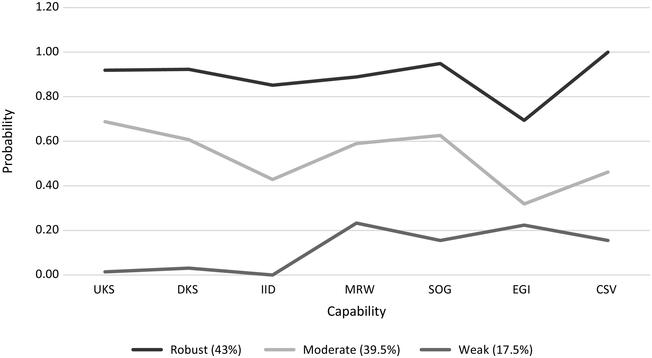
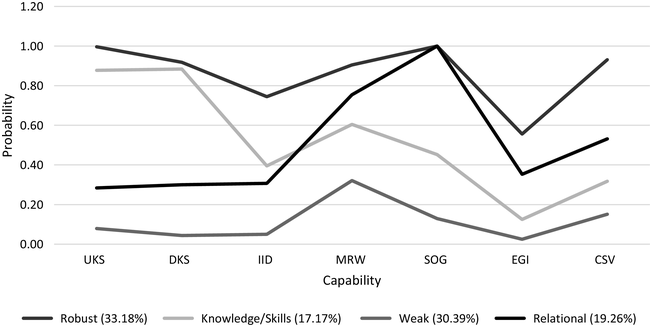
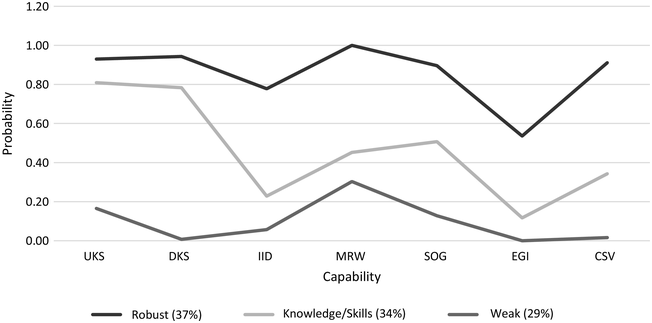
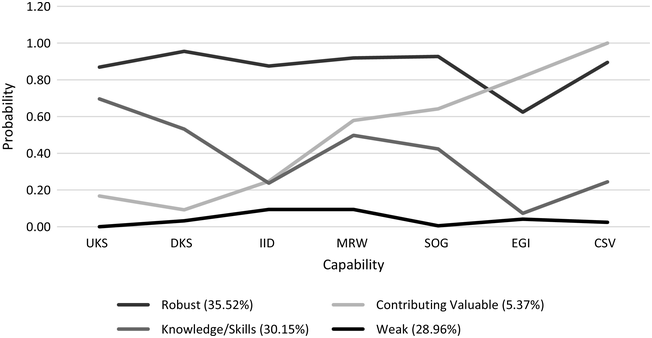

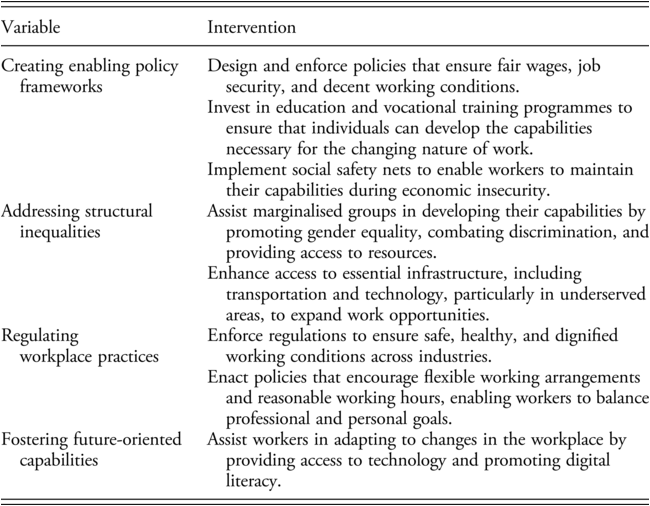


 Open access