


Although there is consensus on the existence of a short-term postoperative cognitive deficit in the elderly, long-term effects are rarely investigated. Methodological shortcomings in previous studies also include non-representative samples, too narrow a range of cognitive tests and univariate statistical analyses (Reference Ritchie, Polge and de RoquefeuilRitchie et al, 1997; Reference Dodds and AllisonDodds & Allison, 1998). Most studies have excluded patients with pre-existing cognitive, psychiatric or central nervous system disorders, as well as patients taking tranquillisers or antidepressants. While avoiding a number of potential confounding factors, this excludes the possibility of examining interaction effects, for example increased vulnerability of subjects with psychogeriatric disorders to anaesthetic damage or drug interaction with anaesthesia (Reference HirschHirsch, 1995; Reference Parikh and ChungParikh & Chung, 1995). This also reduces surgical samples to a relatively healthy non-representative subpopulation. The present report aims to examine the principal areas of cognitive function likely to be affected by anaesthesia according to current conceptual models of information processing within a more representative cohort of elderly persons.
METHOD
Selection of subjects
A total of 140 consecutive admissions over the age of 64 years for orthopaedic programmed surgery were recruited into the study over a 14-month period. There were no formal inclusion criteria apart from signed agreement to participate in the study. Orthopaedic surgery is most commonly performed in elderly patients and avoids the possible confounding effects of heavy intra-operative sedation and haemodynamic instability associated with major blood loss and transfusions as in cardiac surgery. The anaesthetic technique was not standardised because the objective of this study was to detect alterations in cognitive function that could be found after anaesthesia under conditions generalisable to the real-life situation of a busy operating room, rather than to compare the effects of different agents and techniques.
Cognitive evaluation
Each subject was examined pre-operatively at 9 days (mean=9 days, s.d.=4) and at 3 months (mean=97 days, s.d.=17) using a comprehensive computerised cognitive battery. This examination, the ECO (Examen Cognitif par Ordinateur), was used to assess working memory, verbal and visuo-spatial secondary memory, implicit memory, language skills (word and syntax comprehension, naming, verbal fluency, articulation), visuo-spatial performance (ideational, ideo-motor and constructive apraxia, functional and semantic categorisation of visual data, visual reasoning and form perception) and focused and divided attention (visual and auditory modalities) (Reference Ritchie, Allard and HuppertRitchie et al, 1993).
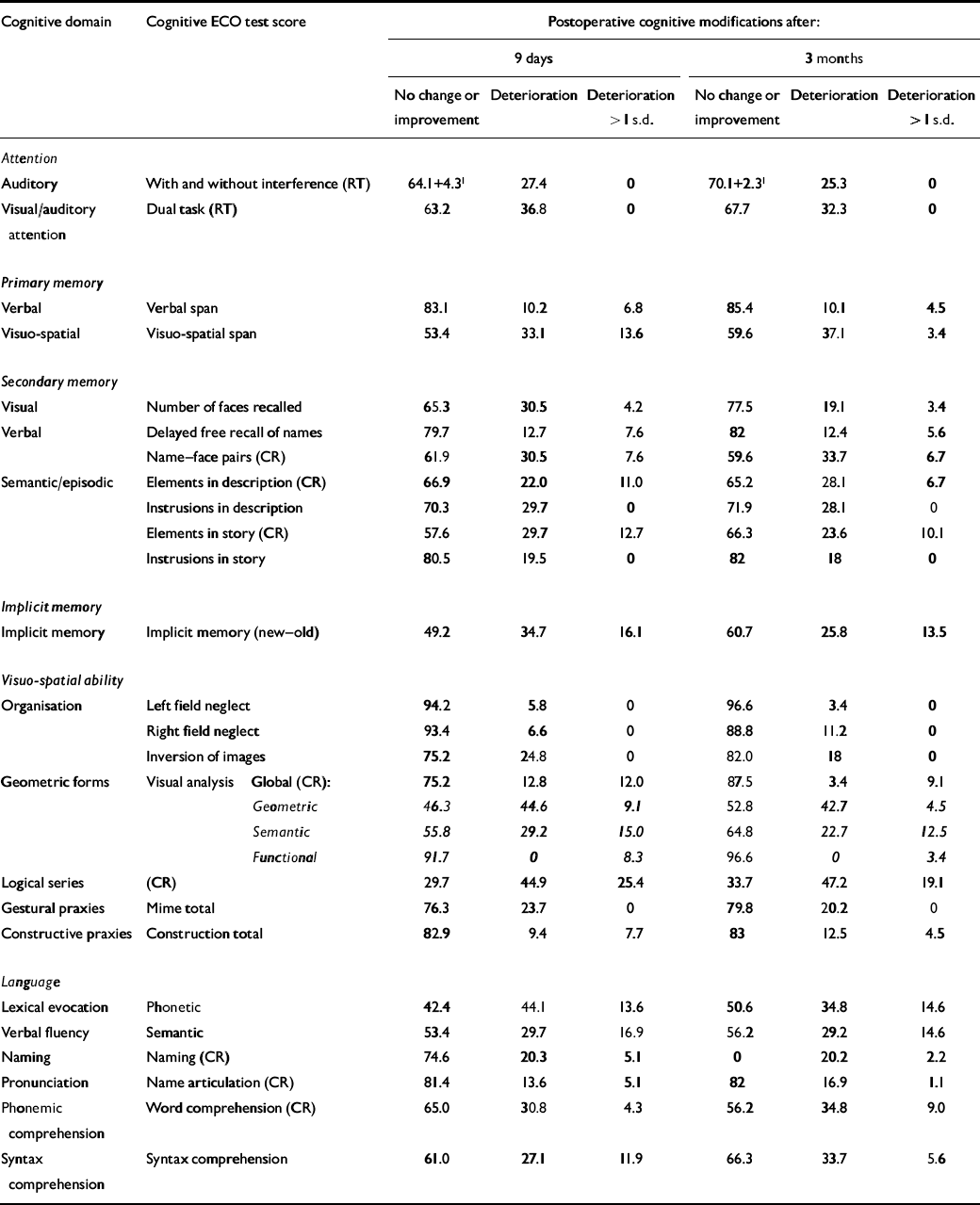
Twenty-one summary scores were derived from the 159 ECO variables representing six cognitive domains (see Table 1):
Percentage of subjects showing no change or improvement, deterioration and deterioration of more than one standard deviation from pre-operative levels up to 9 days and 3 months postoperatively
| Cognitive domain | Cognitive ECO test score | Postoperative cognitive modifications after: | |||||
|---|---|---|---|---|---|---|---|
| 9 days | 3 months | ||||||
| No change or improvement | Deterioration | Deterioration > 1 s.d. | No change or improvement | Deterioration | Deterioration > 1 s.d. | ||
| Attention | |||||||
| Auditory | With and without interference (RT) | 64.1+4.31 | 27.4 | 0 | 70.1+2.31 | 25.3 | 0 |
| Visual/auditory attention | Dual task (RT) | 63.2 | 36.8 | 0 | 67.7 | 32.3 | 0 |
| Primary memory | |||||||
| Verbal | Verbal span | 83.1 | 10.2 | 6.8 | 85.4 | 10.1 | 4.5 |
| Visuo-spatial | Visuo-spatial span | 53.4 | 33.1 | 13.6 | 59.6 | 37.1 | 3.4 |
| Secondary memory | |||||||
| Visual | Number of faces recalled | 65.3 | 30.5 | 4.2 | 77.5 | 19.1 | 3.4 |
| Verbal | Delayed free recall of names | 79.7 | 12.7 | 7.6 | 82 | 12.4 | 5.6 |
| Name-face pairs (CR) | 61.9 | 30.5 | 7.6 | 59.6 | 33.7 | 6.7 | |
| Semantic/episodic | Elements in description (CR) | 66.9 | 22.0 | 11.0 | 65.2 | 28.1 | 6.7 |
| Instrusions in description | 70.3 | 29.7 | 0 | 71.9 | 28.1 | 0 | |
| Elements in story (CR) | 57.6 | 29.7 | 12.7 | 66.3 | 23.6 | 10.1 | |
| Instrusions in story | 80.5 | 19.5 | 0 | 82 | 18 | 0 | |
| Implicit memory | |||||||
| Implicit memory | Implicit memory (new-old) | 49.2 | 34.7 | 16.1 | 60.7 | 25.8 | 13.5 |
| Visuo-spatial ability | |||||||
| Organisation | Left field neglect | 94.2 | 5.8 | 0 | 96.6 | 3.4 | 0 |
| Right field neglect | 93.4 | 6.6 | 0 | 88.8 | 11.2 | 0 | |
| Inversion of images | 75.2 | 24.8 | 0 | 82.0 | 18 | 0 | |
| Geometric forms | Visual analysis Global (CR): | 75.2 | 12.8 | 12.0 | 87.5 | 3.4 | 9.1 |
| Geometric | 46.3 | 44.6 | 9.1 | 52.8 | 42.7 | 4.5 | |
| Semantic | 55.8 | 29.2 | 15.0 | 64.8 | 22.7 | 12.5 | |
| Functional | 91.7 | 0 | 8.3 | 96.6 | 0 | 3.4 | |
| Logical series | (CR) | 29.7 | 44.9 | 25.4 | 33.7 | 47.2 | 19.1 |
| Gestural praxies | Mime total | 76.3 | 23.7 | 0 | 79.8 | 20.2 | 0 |
| Constructive praxies | Construction total | 82.9 | 9.4 | 7.7 | 83 | 12.5 | 4.5 |
| Language | |||||||
| Lexical evocation | Phonetic | 42.4 | 44.1 | 13.6 | 50.6 | 34.8 | 14.6 |
| Verbal fluency | Semantic | 53.4 | 29.7 | 16.9 | 56.2 | 29.2 | 14.6 |
| Naming | Naming (CR) | 74.6 | 20.3 | 5.1 | 0 | 20.2 | 2.2 |
| Pronunciation | Name articulation (CR) | 81.4 | 13.6 | 5.1 | 82 | 16.9 | 1.1 |
| Phonemic comprehension | Word comprehension (CR) | 65.0 | 30.8 | 4.3 | 56.2 | 34.8 | 9.0 |
| Syntax comprehension | Syntax comprehension | 61.0 | 27.1 | 11.9 | 66.3 | 33.7 | 5.6 |
-
(a) Attention: measured by response time on a dual task (simultaneous visual selection and counting of auditory stimuli).
-
(b) Primary memory (verbal and visual span): assessed by immediate recall of first names and visual trails of increasing length.
-
(c) Secondary memory: measured by delayed recall of first names and their associated faces, and prose recall.
-
(d) Implicit memory: measured by reference to the number of trials required to recognise previously presented items as compared with novel stimuli reconstructed progressively on the computer screen.
-
(e) Visuo-spatial ability: measured by reference to two scores; number of correct responses on tasks of shape-matching, semantic and functional categorisation and reproduction of three-dimensional figures; and response time on shape, functional and semantic matching tasks.
-
(f) Language: assessed by tests of word and syntax comprehension, naming and verbal fluency. Two scores are derived; total number of correct responses; and word and syntax comprehension response time.
In addition to cognitive assessment at the time of admission, pre-existing cognitive deterioration is established by an informant questionnaire completed by caregivers (DECO, Détérioration Cognitive Observée) that measures changes in cognitive performance over the past year. Previous validation studies in both clinical and population settings have shown this instrument to be highly sensitive to early modifications in cognitive functioning due to multiple causes (Reference Ritchie and FuhrerRitchie & Fuhrer, 1995). DECO scores range from a maximum of 38 (no change over the past year) down to zero (significant change over the 19 areas of cognitive performance examined). A score lower than 30 is generally considered to indicate a high probability of senile dementia within a general population sample.
Depressive symptomatology
Depressive symptomatology is described by reference to the French version of the Center for Epidemiological Studies Depression Scale (CES-D, Reference Fuhrer and RouillonFuhrer & Rouillon, 1989). This questionnaire has been validated both in the USA and in France as a measure of clinical depression.
Adaptation and behaviour scale
Ability to perform activities of daily living was assessed by the adaptation and behaviour scale ECA (Echelle de Comportement et d'Adaptation) developed by Ritchie & Ledésert (Reference Ritchie and Ledésert1991). This questionnaire is completed by relatives and has been constructed with reference to the disability classifications given by the World Health Organization (1988). The scale has high interrater and retest reliability and is highly sensitive to small changes in activity level due to cognitive impairment.
General questionnaire
A general questionnaire was administered in order to obtain socio-demographic information, current pathology and treatment, surgery antecedents and to note details of the surgical procedures, type of anaesthesia, duration of hospitalisation and management after discharge.
Statistical analysis
Significant alteration in cognitive decline was defined as the modification of more than one standard deviation on one of the 21 summary ECO scores from baseline to postoperative levels. Formal criteria for subclinical cognitive impairment have uniformly used this one standard deviation criterion, for example in the definition of ageing-associated cognitive decline (Reference Blackford and La RueBlackford & La Rue, 1989), mild cognitive decline (Reference Williams-RussoWorld Health Organization, 1993) and mild neurocognitive disorders (American Psychiatric Association, 1994).
Relative risk for cognitive decline in each cognitive domain at 3 months was calculated from decline scores, which were obtained by subtracting scores at 3 months from scores obtained pre- operatively. The decline score is positive for subjects showing decline and negative for those showing improvement.
All statistical analyses were performed with SPSS for Windows NT, version 8.01F (SPSS, 1998).
RESULTS
Socio-demographic characteristics, depressive symptomatology and initial cognitive state
The sample consists of 94 women and 46 men. This gender distribution is typical of patients undergoing orthopaedic surgery as already described (Reference Williams-Russo, Sharrock and MattisWilliams-Russo et al, 1995). The age range of subjects is 64-87 years (mean=72.6, s.d.=5.4). The educational level of the subjects, with 3% of the sample having primary school education, 68% secondary education, 23% the baccalaureat (end of high school certificate) and 6% tertiary education, corresponds reasonably well with the distribution observed in the general French population. For multivariate analysis, subjects were divided into two educational groups (primary and secondary educational levels, n=99; baccalaureat and tertiary education, n=41) and two age groups (less than 75 years, n=99; 75 years and over, n=41).
Using separate CES-D cut-off points for depressive illness established for men (> 17) and women (≥ 23) in France (Reference Fuhrer and RouillonFuhrer & Rouillon, 1989) it was found that depressive symptomatology was common in the sample, with 21% of subjects reaching the level of major depressive episode as compared with an observed 14% within the general elderly population (Reference Fuhrer, Antonucci and GagnonFuhrer et al, 1992).
The pre-existing cognitive deterioration mean score (DECO) of the sample was 33.8 (s.d.=5.9). Fifteen per cent of subjects were at risk of having early-stage senile dementia (i.e. DECO score < 30).
Participation rates
Of the 140 subjects who completed the pre-operative interview, 133 were re-examined at 9 days postoperatively. Of these, 98 were again examined at 3 months post-operatively. Examination of the socio-demographic characteristics, depression and ECA scores of subjects retained and lost at 3 months showed no significant differences. By contrast, DECO scores appeared significantly lower for subjects who withdrew at 9 days (31.4, s.d.=8.2) compared with those retained at 3 months (34.7, s.d.=4.7) (P=0.005). Of the 21 subjects at high risk of having early-stage senile dementia at entry into the study, 11 were lost at 3 months.
Ability to perform activities of daily living
Mean ECA score at entry was 68.0 (s.d.=7.2), which did not differ significantly from that at 3 months (mean 67.7, s.d.=7.9). Detailed examination of the 15 individual ECA variables also showed no significant difference between initial and 3-month scores, except for one item (ability to put oneself to bed) (P=0.046), probably related to surgery type.
Initially, ECA scores were significantly lower for the oldest group (> 75 years) (P=0.014) and for subjects with high risk of having early-stage senile dementia at entry (P=0.002). After 3 months, the same pattern was observed without any further significant ECA score alteration in each of these groups.
The ECA score after 3 months (but not pre-operatively) was significantly lower for subjects with high risk of depression (P<0.03). There was no correlation between initial and 3-month postoperative ECA and CES-D scores.
Cognitive evaluation
According to the cognitive domain considered, 5.8-70.3% of subjects showed a drop in performance 9 days postoperatively (Table 1). Deterioration of more than one standard deviation was observed to occur in 25.4% of subjects on a test of visuospatial reasoning (logical series). After 3 months a similar pattern of alteration was observed, with a decrease in subjects experiencing deterioration (3.4-66.3%). Among the various cognitive domains investigated, no subject showed significant deterioration after 3 months in attention tasks, and less than 5% of subjects showed a significant deterioration in primary memory, which was affected only in the immediate postoperative period. With regard to visuo-spatial ability, significant deterioration was principally observed in visuospatial reasoning (19.1%) and visual analysis with semantic cues (12.5%). Secondary verbal memory, implicit memory and language were altered significantly over a wide range of items (from 1.1-14.6% of subjects).
Altogether, 29% of subjects showed no significant alteration after 9 days, on any of the ECO test scores listed in Table 1, and this increased to 44% after 3 months (Fig. 1). Among those who deteriorated after 9 days, 19% of subjects showed a significant deterioration in at least four test scores at 9 days and 11% after 3 months. Among the 29% of subjects for whom no significant deterioration was noted after 9 days, 21% had the same level after 3 months as pre-operatively and 8% showed a late cognitive decline. Among the 71% of subjects with significant early cognitive decline, 15% did not experience any modification between 9 days and 3 months, 38% showed improvement in one to four cognitive tests (with 23% returning to their pre-operative level and 15% remaining below) whereas 18% continued to deteriorate in one to three tests.
Cognitive alteration level of subjects at 9 days and 3 months postoperatively. The results are expressed as a function of the number of ECO (Echelle de Compartement et d'Adaptation; Reference Ritchie and LedésertRitchie & Ledésert, 1991) test scores altered significantly: those corresponding to a deterioration of more than one standard deviation from pre-operative levels up to 9 days (□) or 3 months postoperatively (▪). Zero stands for the proportion of subjects for which no significant modification was noted in any of the ECO tests listed in Table 1.

Subjects showing the greatest degree of deterioration tended to be the most elderly, those with the lowest educational level and those with a recent history of cognitive deterioration before surgery. A high rate of cognitive impairment in subjects refusing follow-up has undoubtedly led to an underestimation of actual impairment rates at 3 months.
Effect of anaesthesia type
Fifty-two subjects were exposed to general anaesthesia with sedation and 88 to local anaesthesia. In this latter group, 77 subjects submitted to peridural anaesthesia (or rachianaesthesia), of whom 22 received additional sedation. After general anaesthesia, 38% of sub- jects showed no alteration in cognitive performance 9 days after the operation, compared with 24% after peridural anaesthesia without sedation. After 3 months, regardless of anaesthesia type, half of the subjects showed no significant cognitive change compared with pre-operative levels. The same proportion of subjects (17-20%) continued to deteriorate between 9 days and 3 months for both general and peridural anaesthesia without sedation. The proportion of subjects with improved performance was higher in the peridural group (49%) compared with the general anaesthesia group (26%).
For subjects undergoing general anaesthesia, there was an increase in the relative risk (RR) for cognitive decline on tasks of visuo-spatial analysis (RR=2.8; 95% CI 1.1-6.9) and also on verbal fluency (RR=1.7; 95% CI 1.1-2.6). For peridural anaesthesia and in the absence of sedation, the risk increase was related principally to implicit memory (RR=1.7; 95% CI 1.2-2.2) and primary or short-term verbal memory (RR=5.4; 95% CI 1.2-24.2). Adding sedation to peridural anaesthesia led to a decline in verbal secondary memory (RR=3.8; 95% CI 1.0-14.5). There was no significant difference in the anaesthesia duration between the groups, which contributed only to a slight decline on tasks of implicit memory (RR=1.4; 95% CI 1.0-2.0).
Depressive symptomatology
The global depression score (CES-D) was 13.9 (s.d.=9.9) and did not differ between men and women. Regardless of gender, after 3 months there was no modification either in the global depression score (14.5, s.d.=10.7) or in specific symptoms. In the patients depressed before surgery, 88% were still depressed at 3 months. In the non-depressed group before operation, 9.7% were depressed at 3 months. After 3 months there was no modification of global CES-D score whether subjects were initially depressed or not, indicating that depression status was not modified by undergoing the operation. Pre-operative depression is thus a good predictor of post-operative depression, as has been previously observed (Reference McKhann, Borowicz and GoldsboroughMckhann et al, 1997).
Interactive effects between depressive symptomatology and pre-existing cognitive deterioration
The depressed group showed decreased performance in visual secondary memory (RR=3.3; 95% CI 1.2-8.9). The subjects at higher risk of having a high rate of pre-operative cognitive impairment at entry into the study showed decreased performance in constructional apraxia (RR=3.9; 95% CI 1.4-11.2) and secondary visual recall (RR=3.8; 95% CI 1.4-10.2). No significant correlation was found between CES-D score pre-operatively and the DECO score.
Performance on each ECO variable across the three examinations was examined by multivariate analysis of variance with corresponding univariate F tests. Subjects without depressive symptomatology improved significantly in visual secondary memory tests up to 9 days and continued to improve after 3 months (F=4.6, P=0.035), whereas the depressed group showed no learning effect. Subjects at risk of depression also experienced deterioration between 9 days and 3 months in the performance of a complex attention task, whereas the non- depressed group did not modify its performance (F=4.4, P=0.044). Pre-existing cognitive deterioration precluded any learning effect in various tasks, namely language word comprehension (F=6.2, P=0.016), episodic secondary memory (F=6.1, P=0.016), visuo-spatial analysis (F=4.6, P=0.036), and visuo-spatial primary memory (F=5.5, P=0.022), whereas the group not at risk improved at 9 days, or at 3 months in the case of visuo-spatial primary memory.
Effects of age and education level
Significant improvement in language from pre-operative levels to 9 days postoperatively is seen in the younger age group as compared with the over 75 group in which no such learning effect was observed (semantic fluency, F=9.0, P=0.004). With regard to visuo-spatial analysis (F=11.9, P=0.001), the younger age group also showed a learning effect from pre-operative levels to 9 days postoperatively, whereas in the older group improvement was significant only after 3 months.
A learning effect was also observed only up to 9 days in secondary visual memory (F=10.6, P=0.002) for the high education group, whereas in the low education group the improvement was progressive up to 3 months postoperatively. Education effects are also evident on implicit memory (F=4.5, P=0.036), with deterioration observed between 9 days and 3 months in the low education group, whereas no modifications were observed for the high education group.
Regression model
A regression model was used to evaluate the relative contribution of the above-identified risk factors (age, education, initial depressive symptomatology, pre-operative cognitive decline, type of anaesthesia) to postoperative cognitive decline. The latter dependent variable is the decline score. Type of anaesthesia was found to be the most significant determinant of decline in verbal fluency scores (phonetic, P=0.047; semantic prompt, P=0.025), visuo-spatial analysis (P=0.02) and implicit memory (P=0.03), with greater decline being observed for general anaesthesia. Peridural anaesthesia in the absence of sedation appeared as a significant determinant of decline in primary (P=0.032) and secondary (P=0.031) verbal memory and implicit memory (P=0.003). Applying sedation during peridural anaesthesia led to a significant decline in secondary memory on tasks of narrative recall (P=0.025). Poor pre-operative levels of cognitive performance were found to contribute significantly to decline on face recall (P < 0.025), irrespective of the anaesthesia type, and on visuo-spatial analysis after general anaesthesia (P=0.03).
DISCUSSION
Cognitive domains altered postoperatively
This study shows that anaesthesia and orthopaedic surgery are related to long-term postoperative decline in the elderly. However, cognitive alteration is not a universal phenomenon. Secondary and implicit memory and visuo-spatial and linguistic tasks were the most frequently affected, appearing more sensitive to both early and late postoperative dysfunction than tests of attention, primary memory and psychomotor skill, suggesting a differential susceptibility of cognitive functions to early postoperative impairment. More particularly, verbal and semantic domains mainly corresponding to frontal and temporal cerebral areas appeared more sensitive to postoperative decline than auditory and visual domains.
Postoperative cognitive change across time
At 9 days 71% of subjects show significant alteration in at least one cognitive test score, and 56% at 3 months. Because the same test battery was used on all three test occasions, repeated examination could have led to an underestimation of the proportion of subjects with cognitive decline, considering that subjects who did not decline could be those for whom a learning effect did not occur. Such rapid cognitive deterioration affecting a large number of subjects is evidently far greater than the rates observed in the general population (Reference Ritchie, Leibovici and LedésertRitchie et al, 1996; Reference Dodds and AllisonDodds & Allison, 1998). The high proportion of declining patients detected in the present study probably results both from the use of a wide range of sensitive neurological tests and also from the absence of exclusion criteria concerning the initial health status of the patients.
It should be noted that systematically the same cognitive domains were found to be significantly altered at 9 days and 3 months for more than 72% of the subjects showing persistent decline (only 6% of subjects experienced slight deterioration for which quite distinct domains were altered between 9 days and 3 months). This strongly argues for acute detection of a real postoperative cognitive decline. This also provides a partial basis for attributing the observed cognitive deficit at 3 months postoperatively to central nervous system trauma occurring during surgery and anaesthesia, although the lack of a control group does not permit us to estimate to what extent it may have been due to associated factors such as stress and pain.
Improvement between 9 days and 3 months (for 38% of subjects) can result either from a learning effect and/or from a reversibility of the deleterious effect of the anaesthesia or complete elimination of residual anaesthetics.
Risk factors
Four groups appear to be at particularly high risk of postoperative cognitive decline in that either they do not show the benefit of previous learning or they deteriorate: the very old (over 75 years); those with low levels of education; subjects with high pre-operative levels of depressive symptomatology; and those with a recent history of cognitive impairment.
Age frequently has been reported as a risk factor for cognitive alteration after anaesthesia. This is probably related to the important changes in both physiology and pharmacokinetics occurring with ageing and the possible interaction of anaesthetic drugs with current medication in the elderly (Reference Parikh and ChungParikh & Chung, 1995; Reference Jones and HunterJones & Hunter, 1996).
Age also has been found to have an interactive effect with educational level in determining the degree of cognitive decline over time. Increased neuronal reserves in the more educated appears to compensate temporarily for any cognitive loss (Reference Touchon and RitchieTouchon & Ritchie, 1999). Elderly persons with a high level of education show greatest resistance to changes on tests with a high learned component (language and secondary memory), whereas level of education makes relatively little difference to the rate of change for cognitive functions such as attention, implicit memory and visuo-spatial analysis, which are hypothesised to be less influenced by environmental effects (Reference Leibovici, Ritchie and LedésertLeibovici et al, 1996).
Depression is known to influence some specific area of cognition, notably attention (Reference Cassens, Wolfe and ZolaCassens et al, 1990), and it appears partly and variably involved in the decline in cognitive performance after anaesthesia (Reference Savageau, Stanton and JenkinsSavageau et al, 1982; Reference Williams-Russo, Sharrock and MattisWilliams-Russo et al, 1995; Reference McKhann, Borowicz and GoldsboroughMcKhann et al, 1997).
Recent history of cognitive decline has not been investigated to date as a risk factor for cognitive decline after anaesthesia because such subjects are usually excluded from most studies, although they represent a significant proportion of the elderly population (15% in the present study).
Possible biases and limitations
Although the relatively high drop-out rate between 9 days and 3 months (28%) in this study was a cause for concern, analysis of the various demographic variables suggested that the non-returners did not differ from the returners and there was no interaction between return/no return and anaesthetic choice. The only difference concerned pre-existing cognitive deterioration, which was greater in the non-returner group. Hence, the differential drop-out rate could have biased the results of this study. This probably did not affect the evolution pattern between 9 days and 3 months because the subjects at cognitive deterioration risk retained after 3 months partitioned roughly equally between the improving, declining and no change groups. This is likely to have minimised the number of subjects showing a persistently high number of deteriorated scores at 3 months, especially in the peridural anaesthesia group (see below). A high drop-out rate is common when conducting a thorough assessment with an elderly population owing to problems of transportation and high illness rates. Furthermore, elderly persons are frequently concerned about their diminishing mental abilities, commonly refusing to go through personally irrelevant mental gymnastics. This is especially true for people suffering from pre-existing cognitive alteration (Reference Blumenthal, Mahanna and MaddenBlumenthal et al, 1995).
It should be noted also that subjects were not assigned randomly to general or local anaesthesia groups, and the preponderance of local anaesthesia in this series reflects the existing concerns of anaesthetists and patients as to the possible effects of general anaesthesia. The proportion of subjects at risk (older and low educational level, depressive symptomatology or pre-existing cognitive deterioration) was in fact 1.6- to 2-fold higher in the peridural group than in the general anaesthesia group. This is an important bias both in our study and previous observations, making hazardous a comparative evaluation of both practices in the absence of any randomisation. On the other hand, the design of the present study permitted the evaluation of cognitive change under externally valid conditions, reflecting fairly well the real-life situation of the geriatric orthopaedic surgery population. It also demonstrates that subgroups of elderly subjects are at higher risk and that cognitive domains are differentially affected according to age and pre-existing disabilities.
Clinical Implications and Limitations
CLINICAL IMPLICATIONS
-
▪ Subgroups of the elderly population at highest risk of postoperative cognitive decline (those aged > 75 years, with low educational level, with pre-operative cognitive impairment or with depression) are identified.
-
▪ Specific cognitive functions affected (language, visuo-spatial ability and secondary memory) are identified.
-
▪ A programme of peri-operative intervention for subgroups at risk needs to be examined.
LIMITATIONS
-
▪ Subject numbers did not permit analysis of the possible contribution of specific anaesthetic agents.
-
▪ A 28% drop-out rate after 3 months.
-
▪ Subjects could not be assigned randomly to general and local anaesthetic groups.
ACKNOWLEDGEMENTS
We owe special thanks to Michel Djakovic for his help in interviewing and to Hill Rom, France, which provided a mobile table permitting subjects to respond to a computer screen in a reclining position. The study was supported by a grant from the Centre Hospitalier Universitaire (protocol PHRC UF 7504).




eLetters
No eLetters have been published for this article.