

Anorexia nervosa and bulimia nervosa affect approximately 0.9% and 1.5% of women, respectively (Hudson et al., Reference Hudson, Hiripi, Pope and Kessler2007). Despite these seemingly modest rates, disordered eating is a serious mental health problem, especially for women in their teens and early twenties, contributing to significant morbidity and mortality (Whiteford et al., Reference Whiteford, Degenhardt, Rehm, Baxter, Ferrari, Erskine and Vos2013). While clinical diagnoses are relatively rare, the frequency of specific disordered eating symptoms, such as episodes of binge eating (eating a large amount of food in a discrete period of time, accompanied by a sense of loss of control) are reported to be more prevalent. For example, a population-based study conducted by Hudson and colleagues (Reference Hudson, Hiripi, Pope and Kessler2007) found the lifetime prevalence of bulimia nervosa to be around 1.5% in women, but the prevalence of binge eating behavior (i.e., recurrent episodes of binge eating accompanied by lack of control during episodes, occurring two times a week for 3 months or longer) alone to be 4.5%.
Prior research has suggested that personality traits may play a distinct role in the development of eating pathology (see Cassin & von Ranson, Reference Cassin and von Ranson2005, for a review). High neuroticism scores have been consistently correlated with eating disorder diagnoses. Results for other indices of personality have been equivocal. For instance, mixed evidence suggests that lower conscientiousness and agreeableness and greater openness to experience are associated with eating disorders, although the association with openness may be mediated by low neuroticism and agreeableness scores. Extraversion, on the other hand, appears to have weak to non-existent associations with disordered eating. Increased impulsivity and novelty seeking have also been noted among individuals with bulimia nervosa, the binge/purge subtype of anorexia nervosa, and those who binge eat compared with control individuals. Other aspects of temperament, such as harm avoidance, are also elevated across all subtypes of eating disorders. Taken together, these studies suggest that personality traits may be contributors to the etiology of disordered eating.
Aspects of disordered eating (e.g., binge eating episodes) and personality traits are moderately heritable. Previous research has indicated that disordered eating characteristics are influenced by additive genetic effects and individual-specific environmental effects, with shared environment playing a negligible role overall. Specifically, for binge eating, heritability estimates range from 17–82% (Bulik et al., Reference Bulik, Sullivan and Kendler1998, Reference Bulik, Sullivan and Kendler2003; Munn et al., Reference Munn, Stallings, Rhee, Sobik, Corley, Rhea and Hewitt2010; Munn-Chernoff et al., Reference Munn-Chernoff, Duncan, Grant, Wade, Agrawal, Bucholz and Heath2013; Reichborn-Kjennerud et al., Reference Reichborn-Kjennerud, Bulik, Kendler, Roysamb, Maes, Tambs and Harris2003, Reference Reichborn-Kjennerud, Bulik, Tambs and Harris2004; Wade et al., Reference Wade, Treloar and Martin2008). Likewise, additive genetic and individual-specific environmental factors account for the majority of the variance in personality traits (Jang et al., Reference Jang, Livesley and Vernon1996; Viken et al., Reference Viken, Rose, Kaprio and Koskenvuo1994) with heritabilities ranging from 40–55% (Bezdjian et al., Reference Bezdjian, Baker and Tuvblad2011; Finkel & McGue, Reference Finkel and McGue1997; Jang et al., Reference Jang, Livesley and Vernon1996; Luciano et al., Reference Luciano, Wainwright, Wright and Martin2006). Similar to binge eating, there is little evidence for shared environmental factors; however, some studies have supported the role of non-additive genetic influences on personality, particularly neuroticism, as assessed via the Eysenck Personality Questionnaire (Eaves et al., Reference Eaves, Heath, Neale, Hewitt and Martin1998; Keller et al., Reference Keller, Coventry, Heath and Martin2005; Lake et al., Reference Lake, Eaves, Maes, Heath and Martin2000) but not when measured using other scales, such as the NEO Inventories (Jang et al., Reference Jang, Livesley and Vernon1996, Reference Jang, McCrae, Angleitner, Riemann and Livesley1998).
Despite this evidence for phenotypic correlations between aspects of disordered eating, particularly binge eating, and personality traits and their individual, heritable underpinnings, only three studies have investigated the overlap of genetic and environmental factors on disordered eating and personality. Wade and colleagues (Reference Wade, Martin, Tiggemann, Abraham, Treloar and Heath2000) examined the overlapping origins of eating pathology (score across 16 items related to disordered eating), personality traits such as neuroticism and self-esteem, and factors pertaining to perceptions of parental bonding in middle-aged women. From a single independent pathway model, they noted that individual-specific environmental factors accounted for a large proportion of the variance in and covariance between a majority of the variables, with little evidence for shared genetic influences. A second study (Klump et al., Reference Klump, McGue and Iacono2002) of adolescent girls reported significant correlations between negative emotionality (tendency to experience negative mood states, such as anxiety; Tellegen, Reference Tellegen1982), positive emotionality (tendency to be social and engage in positive mood states) and constraints, and aspects of disordered eating such as body dissatisfaction, weight preoccupation, compensatory behaviors, and binge eating. Unlike the prior study (Wade et al., Reference Wade, Martin, Tiggemann, Abraham, Treloar and Heath2000), Klump and colleagues (Reference Klump, McGue and Iacono2002) concluded that additive genetic and individual-specific environmental factors best explained the overlap between personality traits and aspects of disordered eating. Finally, a recent study (Racine et al., Reference Racine, Keel, Burt, Sisk, Neale, Boker and Klump2013) examined associations among negative urgency (or the tendency to act rashly or impulsively in response to negative affect), negative affect, binge eating, and emotional eating in late adolescent girls and young adult women. Similar to Klump and colleagues (Reference Klump, McGue and Iacono2002), genetic and individual-specific environmental factors contributed most to the overlap of these phenotypes, with the largest proportion of the correlation explained by genetic factors. Thus, the evidence surrounding the role of genetic contributions to the correlation between aspects of disordered eating and personality remain mixed and largely restricted to personality indices of negative mood states.
In an effort to extend this literature, the aim of the current study was to examine the association between personality traits (neuroticism, extraversion, conscientiousness, agreeableness, openness to experience, and control/impulsivity) and binge eating episode, the most widely studied aspect of disordered eating and now the basis for the new DSM-5 binge eating disorder (American Psychiatric Association, 2013). As noted above, prior studies have largely focused on neuroticism alone or broader domains of negative mood states, and we are not aware of any study that has explored the role of genetic factors in the relationship between additional personality measures (e.g., conscientiousness) and binge eating episodes. For those personality traits that were significantly associated with binge eating, we then examined the extent to which genetic and environmental factors contributed to this correlation.
Methods
Sample
Data for this study are drawn from the Missouri Adolescent Female Twin Study (MOAFTS), a cohort of same-sex female twin pairs identified from birth records who were born between July 1, 1975 and June 30, 1985 (Heath et al., Reference Heath, Howells, Bucholz, Glowinski, Nelson and Madden2002). Using a cohort-sequential sampling design, twins and their parents were invited to take part in the baseline interviews, with at least one biological parent interviewed (generally the mother) during 1994–1999, when the twins were 13, 15, 17, or 19 years old. Further details regarding sample recruitment and characteristics of this first wave of interview data are given elsewhere (Knopik et al., Reference Knopik, Sparrow, Madden, Bucholz, Hudziak, Reich and Heath2005). As the baseline assessment was targeted at behaviors specific to childhood and adolescence, not all measures of psychopathology were administered. During 2002–2005, all eligible twins, regardless of whether they had participated in the baseline assessments or not (and as long as they had not declined to participate in future interviews) were invited to participate in the first full-length adult follow-up interview. Of the 3,446 twins interviewed at baseline, 2,356 (82.9%) participated in the adult follow-up, along with an additional 1,431 eligible twins, aged 18–29 years. The final sample (N = 3,787, 14.6% African American, with the remainder of European American ancestry) represented 80% of live born female twins identified via state birth records. The individual twins could be classified as 964 monozygotic (MZ) and 809 dizygotic (DZ) pairs with an additional 97 MZ and 145 DZ twins whose co-twin did not participate. Contemporaneously, 3,661 of these twins responded to a mailed questionnaire that included personality measures. The protocol was approved by the Washington University School of Medicine Institutional Review Board, and all twins gave informed consent before study participation.
For the present analyses, data on 3,233 twins of self-reported European American descent were utilized. As the etiological underpinnings of binge eating episodes and personality may vary across ethnic groups and the proportion of African American twins available was modest, we restricted these analyses to the European American subjects only. The 3,233 twins constituted 854 MZ and 663 DZ pairs as well as 84 MZ and 115 DZ twins whose co-twins did not participate.
Measures
Binge eating episode
The Semi-Structured Assessment of the Genetics of Alcoholism (SSAGA) was administered via a telephone interview to the twins (Bucholz et al., Reference Bucholz, Cadoret, Cloninger, Dinwiddie, Hesselbrock, Nurnberger and Schuckit1994). The eating disorders section was adapted from the Diagnostic Interview Schedule (version 4; Robins et al., Reference Robins, Cottler, Bucholz and Compton1996). Although primarily aimed at obtaining DSM-IV diagnoses, some changes were made to the section — a detailed explanation of these modifications may be found elsewhere (Duncan et al., Reference Duncan, Bucholz, Neuman, Agrawal, Madden and Heath2007). All items represent lifetime assessments, were dichotomously coded, and based on single items that were presented to all participants without any study-related skips. Binge eating was assessed as ever eating a large amount of food in a short period of time, usually less than two hours. Those who reported binge eating were asked if they had experienced loss of control (i.e., they were afraid that they could not stop eating) during those times. A three-level ordinal measure (no binge eating, binge eating without loss of control, and binge eating with loss of control) was used to define an episode of binge eating and for analyses.
Personality
Neuroticism, extraversion, openness to experience, agreeableness, and conscientiousness were coded using 12 items, each drawn from the NEO Five Factor Inventory (Costa & McCrae, Reference Costa and McCrae1985), whereas control/impulsivity was scored by reverse-coding 12 items that assessed control from the Multidimensional Personality Questionnaire (MPQ; Tellegen, Reference Tellegen1982) — hence increasing scores on our measure of impulsivity reflect lower levels of control (i.e., being cautious, reflective, rational, liking to plan). We refer to this measure throughout the article as control/impulsivity to distinguish it from numerous other measures of impulsivity (e.g., sensation seeking, disinhibition). Average scores for each individual were calculated and then scores in the sample were used to create categorical personality variables representing data quartiles. This was done for two reasons — first, the personality measures were not normally distributed; second, the statistical software package used for twin analyses did not accommodate the modeling of covariation between an ordinal (e.g., binge eating) and a continuous (e.g., continuously distributed neuroticism) measure.
Analysis
First, we examined phenotypic correlations for each categorically defined personality measure with binge eating, using polychoric correlation estimates from SAS (SAS Institute, 1999). Only those correlations that were equal to or exceeded an absolute value of 0.20 were further explored using the twin design.
Bivariate twin models using Cholesky decomposition were used to parse the variance in and the covariance between individual personality traits and binge eating episodes into their additive genetic (A), shared environmental (C), and individual-specific environmental (E) sources. All models were fit to raw data in the statistical software package Mx (Neale et al., Reference Neale, Boxer, Xie and Maes2006) using full information maximum likelihood. Thresholds were adjusted for age. The chi-square difference test (Δχ2; Neale & Cardon, Reference Neale and Cardon1992) was used to examine whether constraining parameters to zero resulted in a significant deterioration in the model fit.
Results
Binge eating episode was endorsed by 7.4% of the sample, with 4.8% and 2.6% reporting it without and with loss of control respectively. Table 1 shows polychoric phenotypic correlations between binge eating and personality traits. Correlations ranged from -0.21 to 0.32 and were relatively modest. Correlations between binge eating episode and all personality traits were significant, with higher neuroticism, openness to experience, and impulsivity, and lower extraversion, agreeableness, and conscientiousness scores correlating with binge eating episode. Based on these phenotypic correlations, we elected to focus on the genetic relationship between binge eating episode and neuroticism as well as conscientiousness as those correlations exceeded an absolute value of 0.20.
Polychoric Correlations [95% Confidence Interval (CI)] of Binge Eating Episode With Personality Traits and Correlations Between Monozygotic (R MZ) and Dizygotic (R DZ) Twins for Those Measures Used in Twin Analyses

All correlations significant at p < .05; correlations in bold ≥ |0.2| and hence, pursued in twin models.
The test for multivariate normality was satisfied for all three ordinal measures (p > .05). MZ and DZ twin correlations (r MZ and r DZ, respectively; Table 1) suggested that genetic and individual-specific environmental effects contributed to the variance in all three measures.
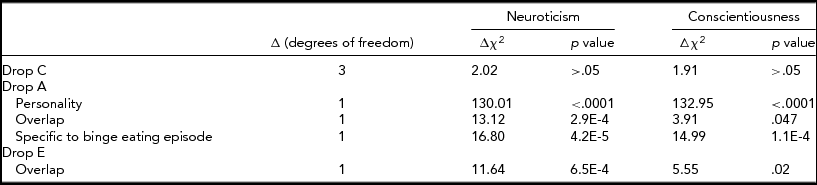
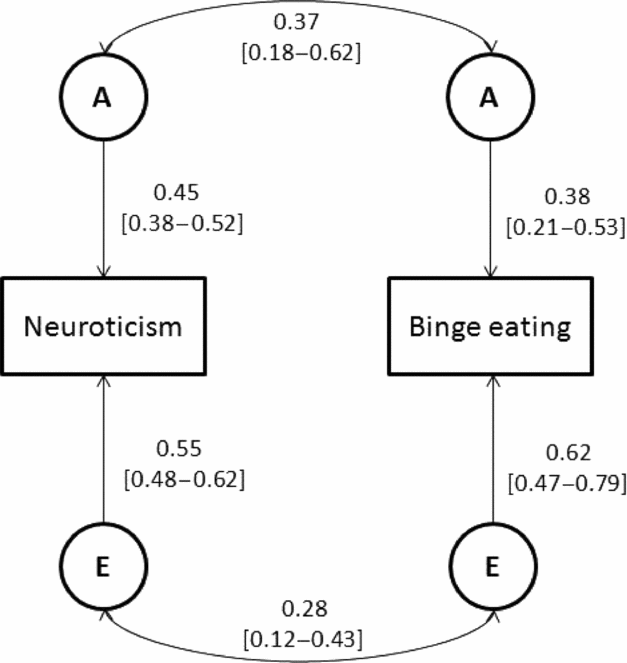
The best-fitting bivariate twin model for the relationship between binge eating episode and neuroticism and conscientiousness is depicted in Figures 1 and 2. As indicated by the fit statistics (Table 2), shared environmental (but not genetic) influences could be constrained to zero without a significant deterioration in the model fit. Additive genetic influences explained 38–45% of the variance in the measures, with the remainder attributable to individual-specific environment. For both personality traits, estimates of heritability closely approximated those that would have been obtained if using continuously distributed scores (h 2 N = 0.45 [95% CI: 0.39–0.52]; h 2 C = 0.42 [95% CI: 0.35–0.48]), supporting our use of categorical personality measures.
Model-Fit Statistics for Bivariate Twin Models Examining the Relationship Between Binge Eating Episode, Neuroticism, and Conscientiousness
Best-fitting bivariate model of binge eating episode and neuroticism.
Note: A = additive genetic effects; E = individual-specific environmental effects. 95% confidence intervals are shown in parenthesis.
Best-fitting bivariate model of binge eating episode and conscientiousness.
Note: A = additive genetic effects; E = individual-specific environmental effects. 95% confidence intervals are shown in parenthesis.
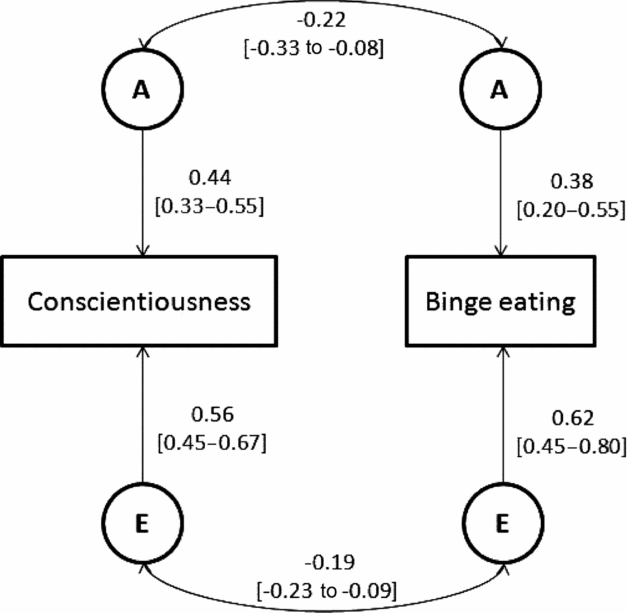
The covariance between binge eating episode and the personality traits of neuroticism and conscientiousness was also attributable, about equally, to additive genetic and individual-specific environmental factors. For neuroticism, additive genetic and individual-specific environment explained 49% and 51% of the covariance with binge eating episode, respectively. Likewise, for conscientiousness, 45% and 55% of the covariance with binge eating episode was due to additive genetic and individual-specific environmental factors respectively. With respect to the genetic influences on binge eating episode, only 13.7% and 4.8% were attributable to those genes that also influenced neuroticism and conscientiousness respectively, suggesting that despite the significant genetic correlations, a vast majority of the genetic influences on binge eating episodes were distinct from those influencing personality. Likewise, only 8% and 3.6% of the individual-specific environmental influences on binge eating episode were attributable to those influencing neuroticism and conscientiousness respectively.
Discussion
In this study, we sought to examine the correlations between binge eating episodes and personality traits drawn from the NEO (neuroticism, extraversion, openness to experience, agreeableness, and conscientiousness) as well as control/impulsivity, and to further explore the genetic and environmental underpinnings of the more robust of these correlations. Consistent with the extant literature (Cassin & von Ranson, Reference Cassin and von Ranson2005; Claes et al., Reference Claes, Vandereycken, Luyten, Soenens, Pieters and Vertommen2006; Diaz-Marsa et al., Reference Diaz-Marsa, Carrasco and Saiz2000; Miller et al., Reference Miller, Schmidt, Vaillancourt, McDougall and Laliberte2006), we found positive correlations for neuroticism, openness to experience, and control/impulsivity, and negative correlations for extraversion, agreeableness, and conscientiousness. We pursued the strongest of these — the correlations between binge eating episodes and neuroticism as well as conscientiousness.
The heritability estimate of binge eating episodes from our study was fairly comparable to those reported previously (Bulik et al., Reference Bulik, Sullivan and Kendler1998; Munn et al., Reference Munn, Stallings, Rhee, Sobik, Corley, Rhea and Hewitt2010; Munn-Chernoff et al., Reference Munn-Chernoff, Duncan, Grant, Wade, Agrawal, Bucholz and Heath2013; Reichborn-Kjennerud et al., Reference Reichborn-Kjennerud, Bulik, Kendler, Roysamb, Maes, Tambs and Harris2003), as were those for neuroticism and conscientiousness (Jang et al., Reference Jang, Livesley and Vernon1996; Wray et al., Reference Wray, Birley, Sullivan, Visscher and Martin2007). Consistent with two prior studies (Klump et al., Reference Klump, McGue and Iacono2002; Racine et al., Reference Racine, Keel, Burt, Sisk, Neale, Boker and Klump2013) that studied varying definitions of negative mood states, we found that genetic and environmental factors contributed to the relationship between a binge eating episode and neuroticism. However, our results differ from another study (Wade et al., Reference Wade, Martin, Tiggemann, Abraham, Treloar and Heath2000) that indicated little genetic overlap between disordered eating and neuroticism. This might be due to the heterogeneous measure of disordered eating used in that study, which included obesity, binge eating, and clinical diagnoses for anorexia and bulimia nervosa. Additionally, the age of the twins in the study performed by Wade et al. (Reference Wade, Martin, Tiggemann, Abraham, Treloar and Heath2000) ranged from 30 to 45 years, which is more than that of the twins examined in the present study, and it is possible that genetic effects decrease with time as individuals age beyond the point of risk for eating pathologies.
What does this shared etiology reflect? It is possible that neuroticism, which reflects a tendency towards increased negative mood states, represents a common diathesis from which binge eating episodes and a host of other related pathologies (e.g., major depression) emerge (Levinson, Reference Levinson2006). We did note that sisters of individuals endorsing any form of binge eating episode, on average, reported somewhat higher neuroticism scores (mean = 1.92, SE = 0.68) than sisters of those who did not have a history of any binge eating episode (mean = 1.68, SE = 0.63). Alternatively, individuals with an increased vulnerability to neuroticism, which approaches pathological levels, may cope by binge eating (Lilenfeld, Reference Lilenfeld2011).
In contrast to the few studies that have previously examined negative emotionality/neuroticism, ours is the only study to have parsed the covariance between binge eating episode and conscientiousness, in equal measure, to its additive genetic and individual-specific environmental sources. While studies have documented lower scores of conscientiousness in individuals with eating disorders (Ghaderi & Scott, Reference Ghaderi and Scott2001), we are not aware of any twin studies of this relationship. As measured by the NEO-FFI, conscientiousness reflects organization and control, and therefore, may share etiological underpinnings with lack of control during binge eating episodes. Nevertheless, the phenotypic correlation was modest and the relative contribution of genetic and environmental factors should be replicated.
Some limitations of the present study are noteworthy. First, binge eating episodes were assessed with two questions and did not include frequency of these episodes. Second, as binge eating episodes and personality traits were assessed concurrently, the results from this study cannot speak of causal relations or the direction of the relation between these episodes and personality. However, as the cross-trait, individual-specific environmental correlation was significant, it is possible that causal influences contribute to the relationship between binge eating episodes and these personality traits. Fourth, it is possible that with larger sample sizes, even the modest correlations between the other personality traits and binge eating episodes could be disaggregated into their genetic and environmental sources. Finally, the results of this study may not generalize to other populations. For instance, due to the relatively modest proportion of African American twins in this cohort, we confined our analyses to the Caucasian subset of twins. Results in the African American cohort may differ from those reported here. Likewise, associations in male twins may be quite different.
Features of disordered eating, such as binge eating, are noted in the general population, including in those not meeting diagnostic criteria for eating disorders. That they share etiological underpinnings with neuroticism and conscientiousness indicates the dimensional and integrative nature of behaviors that reflect putatively disordered components (e.g., binge eating) and those that are relatively normative (e.g., personality). Furthermore, unpacking the genetic pathways that underlie these traits could shed light on how they potentially influence each other and ultimately, refine our understanding of the many facets of disordered eating.
Acknowledgments
This work is supported by AA11998, AA07728, AA09022, and K05AA17688 (ACH); AA12640 and DA14363 (KKB); and DA23668 and DA32573 (AA). MMC was supported by training grant T32 AA07580 (ACH).



