





It is difficult to ascertain the exact number of sudden cardiac deaths in Europe among people <35 years of age, but we can be sure that it increases every year.Reference Winkel, Holst and Theilade 1 The common challenge for cardiologists, other physicians, and healthcare professionals in general throughout Europe is to realise the potential for sudden cardiac death and to contribute to public health efforts to reduce its burden.Reference Priori, Aliot and Blømstrom-Lundqvist 2 In Italy, about 1000 young people per year are victims of sudden cardiac death. Such an incidence is comparable with that of other Western countries, as reported in the literature.Reference van der Werf, van Langen and Wilde 3
The reasons for such fatal events are usually undiagnosed diseases and they include the following: hypertrophic cardiomyopathy, arrhythmogenic right ventricular dysplasia, long and short QT interval,Reference Hobbs, Peterson and Moss 4 Brugada-like electrocardiogram pattern,Reference Brugada, Brugada and Brugada 5 atrioventricular block, ventricular pre-excitation Wolff–Parkinson–White syndrome,Reference Obeyesekere, Gula, Skanes, Leong-Sit and Klein 6 coronary artery anomalies, and valvulopathy. Recently, much attention has been paid to the electrocardiogram early re-polarisation pattern signs, which, although common in the population, especially in young people and athletes,Reference Corrado, Pelliccia and Heidbuchel 7 in some cases seem to be associated with sudden cardiac death.
An effective prevention requires the early diagnosis of pathologies responsible for sudden cardiac death. This is possible by using a strategy for mass screenings – that is, by performing electrocardiographic screening of newborns or infants. Screening activities in schools and pre-participation screening for sport activities, regardless of agonism or no agonism will be useful too.
As there are no reliable and comparable epidemiological studies available in Italy concerning genetic anomalies causing sudden cardiac death, the population must be investigated in order to identify family groups carrying such genetic anomalies.Reference Noseworthy and Newton-Che 8 , Reference Lombardi 9
The use of a telecardiology device allowed us to maximise the number of students monitored in different Italian regions and to reduce the costs for data evaluation.
Telemedicine experiments in Italy cover a long-time tradition dating back to the early 1970s. In particular, the project “Telecar” for teleconsulting of cardiac pathologies has to be highlighted.Reference Bertazzoni, Genuini and Aguglia 10
In this paper, we present the results of our retrospective observational study based on the analyses of data acquired during a telecardiology pilot project initiated in Italy in early 2010.
The aims of the present study were to describe the incidence of electrocardiogram abnormalities in different Italian regions and to evaluate the possible correlations with risk factors.
The project was led and coordinated by the Department of Cardiovascular, Respiratory, Nephrological and Geriatric Sciences of University “Sapienza” of Rome together with “Fondazione Italiana Cuore e Circolazione” – Italian Foundation Heart and Circulation; http://hubmiur.pubblica.istruzione.it/web/istruzione/prot2820_10. It involved cardiologists and bioengineers of the Telecardiology Research Unit of the National Institute for Cardiovascular Research.
Preliminary results of this Italian project were published in the study by De Lazzari et al.Reference De Lazzari, Pisanelli, D’Ambrosi, Genuini and Fedele 11 , Reference De Lazzari, Pisanelli, Genuini, Silvetti, D’Ambrosi and Fedele 12
Material and methods
An observational retrospective study was carried out using data obtained during a pilot project of telecardiology in Italy. The pilot telecardiology project enrolled students between 16 and 19 years of age attending Italian schools in eight different regions. Data were collected in a classroom that was properly equipped in order to perform the electrocardiograms. The dislocation of the electrodes and electrocardiogram were realised by physicians of the of Specialization School in Cardiology of the Department of Cardiovascular, Respiratory, Nephrological and Geriatric Sciences of University “Sapienza” in Rome and by cardiologists who were guaranteed volunteers of the Italian Foundation Heart and Circulation. The pilot study involved cardiologists, nurses, and biomedical engineers.Reference De Lazzari, Pisanelli, D’Ambrosi, Genuini and Fedele 11 , Reference De Lazzari, Pisanelli, Genuini, Silvetti, D’Ambrosi and Fedele 12
The experimental procedures involving human patients described in this study were approved by the Institutional Review Board of “Sapienza” University.
A written informed consent was signed by the students who were above 18 years of age. For those under 18 years of age, the written consent was signed by one of the parents.
After this phase, all preliminary data needed were collected, that is anamnesis, physical examination, and blood pressure measurements.
Data collection was carried out using a questionnaire concerning risk factors such as smoking status, alcohol consumption, family history of cardiovascular disease, and drug abuse (Appendix 1).
After data collection, the screening phase was launched by performing electrocardiography on every student involved. A portable electrocardiography device was used for this purpose.
A device for electrocardiogram recording and storing had already been evaluated by Singh and Hsiao,Reference Singh and Hsiao 13 , Reference Singh, Carlson and Hsiao 14 whereas Olson et al demonstrated the advantages of Mobile Cardiac Outpatient Telemetry systems with respect to traditional systems in the diagnostic evaluation of symptoms such as palpitations, dizziness, and syncope.
The paperless device used in the pilot study was the ELI 10, which has been developed by Mortara Instrument (Milwaukee, WI, USA).
It is possible to acquire, store, and finally transmit 12-lead electrocardiogram signals to a reference teleconsulting centre. The device can store up to 60 electrocardiograms, expandable to 150, in its memory. Data transmission is wireless and a SIM card similar to that of mobile phones is needed. 15
Individual electrocardiograms can be monitored in real time on the device display and can be analysed by means of the “VERITAS” Mortara proprietary algorithm. 16 Acquisition errors are minimised by an easy and user-friendly interface. Should electrocardiograms be printed, the device can be connected to a printer by means of a USB cable.
For each student, the electrocardiogram track was sent in real time to a teleconsulting centre in the Cardiology Department of “Sapienza” University. Each electrocardiogram was immediately seen by a cardiologist who contacted colleagues in the school in case of presence of relevant anomalies. Otherwise, the report was issued some days later.
A second electrocardiogram registration was performed if one of the following alterations were observed in the teleconsulting centre: PR interval <200 ms, and if the PR interval normalised after hyperventilation the electrocardiogram was classified as “within normal limits”; abnormal T-wave inversion in leads V2–V4; Brugada patterns in leads V1 or V2; and high resting heart rate due to anxiety.
Interactive second-level analysis was performed by 10 expert clinical cardiologists in order to identify and screen normal electrocardiograms. On the contrary, the electrocardiograms individuated at the second level as pathological or “within the normal limits” were evaluated at the third level of the analysis by two expert cardiologists in electrophysiology and paediatric cardiology. Patients having abnormal findings after the third basal electrocardiogram analysis have been recommended to undergo additional medical examinations.
A dedicated ambulatory facility was available at the Department of Cardiovascular, Respiratory, Nephrological and Geriatric Sciences for all the students in order to perform to a deeper clinical evaluation. Students who preferred other healthcare settings for second level examination were followed-up by phone.
Data collected by the reference centre were stored in a specific database in which a unique code is associated with each student and data can be evaluated anonymously for epidemiological purposes.
The alterations highlighted by the electrocardiogram signal that have been considered in the present study were as follows:
-
∙ superventricular ectopic beats,Reference Subbiah, Gollob and Gula 17
-
∙ ventricular ectopic beats,Reference Moss, Davis, DeCamilla and Bayer 18
-
∙ atrioventricular block (I, II, and III),Reference Subbiah, Gollob and Gula 17
-
∙ Brugada-like electrocardiogram pattern,
-
∙ left anterior/posterior fascicular block,
-
∙ left/right ventricular hypertrophy,
-
∙ long and short QT interval,Reference Hobbs, Peterson and Moss 4
-
∙ abnormal re-polarisation phase,
-
∙ left/right atrial enlargement,Reference Subbiah, Gollob and Gula 17
-
∙ short PQ interval,
-
∙ complete left/right bundle branch block,
-
∙ ventricular pre-excitation Wolff–Parkinson–White syndrome,
-
∙ junctional rhythm,
-
∙ coronary sinus rhythm.
By matching pathological electrocardiogram data with questionnaire answers, it was possible to analyse the percentage of students who simultaneously presented an altered electrocardiogram and at least one of the risk factors – for example, smoking, alcohol, familiarity, and taking narcotic drugs. Finally, a correlation was established between electrocardiogram alterations and high body mass index values.
Means and standard deviations were calculated, and the χ2 test for the comparison of two proportions expressed as a percentage was performed using MedCalc statistical software for biomedical research.
Results
The results of the observational retrospective study were obtained by analysing the measured data on a population of 13,016 students divided almost equally between males (44.96%) and females (55.04%) and almost equally distributed among the three Italian macroregions – North, Centre, and South. Table 1 shows the results regarding general characteristics of the population and the answers collected in the questionnaire.
Results obtained analysing data collected in the questionnaire.

A first analysis of the collected data showed that, out of 13,016 students undergoing electrocardiography tests, 24% had at least one of the 14 electrocardiogram pathological alterations considered in our study, 32% had electrocardiogram values within the normal range, and finally 44% had electrocardiogram signals in the borderline range (Fig 1).
Percentage of students having an electrocardiogram with at least one of the 14 alterations considered in our study, having electrocardiogram values within the normal range and in the borderline range. The percentages are calculated for 13,016 students in Italy (left upper window). The students from the Central (right upper window), Northern (left lower window), and Southern regions (right lower window) of Italy are about 1/3 of the entire examined population.

The trend was the same in all Italian regions (Fig 1). According to the data collected in our country, there is a prevalence of male students presenting an altered electrocardiogram signal, 57.2% males and 42.8% females (Table 2), with minimal variations in the different regions.
Distribution between male and female students having at least one of the electrocardiogram pathological alterations considered in this study.
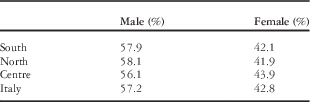
Table 3 reports the percentages of students presenting the 14 electrocardiogram pathological alterations considered in this retrospective study. Percentages of incidence calculated for the entire population and in the North, South, and Central regions are as follows: superventricular ectopic beats, ventricular ectopic beats, atrioventricular block, Brugada-like electrocardiogram pattern (Bs), left anterior/posterior fascicular block (FB), complete left/right bundle branch block, short PQ interval, left/right atrial enlargement, long and short QT interval, abnormal re-polarisation phase, left/right ventricular hypertrophy, junctional rhythm, ventricular pre-excitation Wolff–Parkinson–White syndrome, and coronary sinus rhythm.
Students presenting the 14 electrocardiogram pathological alterations considered in the retrospective study.

Table 4 shows the percentage of students with pathological electrocardiograms without one or more risk factors (row 1) and the percentage of students with pathological electrocardiogram alterations with one or more risk factors present at the same time (row 2). In our country, 8.2% of students, from a population of 13,016 patients, have a pathological electrocardiogram and at the same time use narcotic drugs, smoke, drink alcohol, or have a family history of heart disease (row 2).
Correlations between altered electrocardiogram and one or more risk factors.

Considering the group consisting of supraventricular arrhythmias as superventricular ectopic beats, sinus tachycardia, and sinus arrhythmia, it was possible to correlate that group with students who smoke or drink alcohol. Row 3 (Table 4) reports the percentages of smokers affected by supraventricular arrhythmias – for example, in Italy, among students who smoke, 37.2% are affected by supraventricular arrhythmias. In row 4, we represent the percentages of students affected by supraventricular arrhythmias who are also habitual smokers – for example, in Italy, among students affected by supraventricular arrhythmias, about 17.6% of them smoke. Finally, row 5 shows that 36.3% of students in Italy who drink alcohol are affected by supraventricular arrhythmias. In Italy, the percentage of students affected by supraventricular arrhythmias among those who consume alcohol is 16.4% (29.6% in the North, 11.9% in the Central, and 10.0% in the South).
In our country, within the group of students who reported smoking and alcohol consumption, the percentage of people affected by superventricular arrhythmias was 35.0%: 15.8% males (row 1, Table 5) and 19.2% females (row 2). In the same table, row 3 (4) presents the percentage of males (female) affected by one or more electrocardiogram signal alterations correlated with narcotic drug use. In row 5 (6), we present the percentages of males (female) among young people affected by one or more electrocardiogram signal alterations correlated with alcohol consumption. In North Italy, 4.1% (2.3%) of male (female) students affected by one or more electrocardiogram signal alterations were alcohol consumers. The other rows in Table 5 show the percentage of male (female) students affected by one or more electrocardiogram signal alterations correlated with alcohol consumption (rows 5 and 6), smoking (rows 7 and 8), and family history of heart disease (rows 9 and 10). It is possible to observe that in the South of our country, 7.5% of the students affected by altered electrocardiograms smoked. Finally, Figure 2 shows the percentage of pathological electrocardiogram signals correlated to high body mass index (>25) in the different geographical areas.
Correlation between students affected by altered electrocardiograms and high body mass index (BMI>25). The correlation was studied only on students having electrocardiogram signal alterations. Percentages for males and females are calculated for each geographical area. ECG=electrocardiogram.

Percentage of students having electrocardiogram signal alterations correlated with each of the risk factors.

The percentages presented in Figure 2 are calculated considering only the students (male or female) affected by one of the 14 electrocardiogram alterations presented in the study. Considering the population of 13,016 students, in Italy, the percentage of patients having electrocardiogram alterations and high body mass index (>25) was 10.1% (7.3% males and 2.8% females).
Discussion
The present study, to our knowledge, is the first to describe the incidence of electrocardiogram abnormalities in a “general” Italian student population. The main findings of the present study are as follows: a high percentage (24%) of electrocardiogram alterations was observed; no significant differences were observed between the North, Centre, and South of Italy in terms of electrocardiogram findings; a possible correlation between electrocardiogram abnormalities and risk factors was observed.
Sudden cardiac death in young people, athletes or not, is a devastating event. Therefore, it is highly important to screen young people in the general population for disorders associated with a high risk for sudden cardiac death.
Recently, the European Society of Cardiology and the American Heart Association published guidelines for pre-participation screening of young athletes planning to begin competitive sports. The objection of the American Heart Association to perform universal electrocardiogram screening in young people is because of the risk of obtaining false-positive results that may cause trouble to young people and their families and necessitate second-level examinations. The European Society of Cardiology guidelines approved a standard 12-lead electrocardiogram based on scientific evidence of the national screening programme introduced in Italy since 1982 that reduced the annual incidence of sudden cardiac death in young athletes from 3.6 of 100.000 person-years in 1979 to 0.4 of 100.000 person-years in 2003.
Electrocardiography can be considered a fundamental part of a medical examination, which all young people should undergo, whether the are athletes or not. Although in the past there was the possibility that young people were subjected to medical screening during school visits or during military visits, nowadays teenagers usually do not undergo medical examinations, or an electrocardiographic screening, especially those who do not have specific reason, as they do not take part in competitive sport activities.
As far as secondary prevention of sudden cardiac death in Italy is concerned, a significant step forward has been made in 2013 with Balduzzi’s law.Reference Balduzzi and Gnudi 19 According to this law, it is mandatory to provide automated external defibrillators to competitive and amateur sports societies and clubs. Of course, to expand the culture of emergency is certainly a sign of progress, but abandoning screening in favour of improving resuscitation is not the best formula to allow the progress of science and culture of health. Lampert and MyerburgReference Lampert and Myerburg 20 believe that “the combination of prevention and intervention offers more opportunities to save lives than either alone, as has been suggested from analyses of coronary heart disease deaths”.
Pre-participation screening is a fundamental public health initiative and it is possible to provide economic sustainability of the electrocardiogram screening strategy. In order to guarantee the economic sustainability of the electrocardiogram screening programme, it is useful to consider the major non-profit institutions that operate in this sense as well. In our case, the Italian Foundation of Heart and Circulation, affiliated to the Italian Society of Cardiology, has technically performed history, physical examination, and electrocardiography studies, with the help of medical volunteer staff, and the cost of electrocardiogram screening is reduced to less than three euro per screened person.
Conclusions
This retrospective observational study was based on data collected during the telecardiology pilot study. Such a study permitted to maximise data collection and to minimise the costs for collecting such data. This pilot study is still going on in Italy and other data will be added to that considered in this observational study.
The major advantage of telematic tools such as those used in this pilot study is the chance of having an easily available, large amount of data. These data can be collected outside the hospital without recurring to specialised personnel. Therefore, telecardiology can be profitably used for prevention and to reduce the costs required to achieve mass screening.
Moreover, it is relevant to underline how important it is to use telemedicine tools in the care of the general population and not only in patients with heart failure and in patients who cannot get to the hospital; it can also be used for mass screening regardless of the cultural contest, the national healthcare system, and the regulation in force.
The main beneficiaries of a project of this kind are people who do not undergo medical checks because they are asymptomatic or they do not play sports.
Finally, a project of this size can also contribute to set up a National registry providing electrocardiogram data in large young populations.
It can also be regarded as a paradigm of sustainability of cardiovascular prevention programmes.
Acknowledgement
None.
Financial Support
This work was supported by the Italian Ministry of Education, University and Research (M.I.U.R.) Flagship InterOmics Project (cod. PB05).
Conflicts of Interest
None.
Ethical Standards
The authors assert that all the procedures contributing to this work comply with the ethical standards of the relevant national guidelines and with the Helsinki Declaration of 1975, as revised in 2008, and has been approved by the institutional committees (Comitato Etico dell’Università “Sapienza” – Verbale della seduta del 28/05/2015).
Appendix 1
Medical history questionnaire (Terminology used is obviously simplified in order to be understood by people with no specific medical training)


 Open access

