


Professionals caring for people with long-term and serious illnesses are frequently exposed to distressing emotional situations and profound suffering, which can lead to burnout. Reference Maslach1 Indeed, mental health staff represent one of the categories of health workers at highest risk of burnout, Reference Thomsen, Soares, Nolan, Dallender and Arnetz2,Reference Snibbe, Radcliffe, Weisberger, Richards and Kelly3 and burnout is a critical issue for mental healthcare delivery, as it can lead to the decreased effectiveness of the workforce and, ultimately, poorer treatment outcomes. Reference Priebe, Fakhoury, White, Watts, Bebbington and Billings4 Moreover, mental health services throughout Europe are currently facing severe financial shortages and consequent shortfalls in the number of sector-employed professionals. The situation is particularly pressing in European countries with a public national health service, such as the UK 5 and Italy. Reference de Girolamo, Bassi, Neri, Ruggeri, Santone and Picardi6 In this context, workers' feelings of job disaffection and burnout can play a key role in further reducing the mental health service workforce.
Historically, burnout has been considered more a personal problem than an organisational one. Reference Maslach and Leiter7 Studies exploring determinants of burnout in mental health settings generally focus on individual sociodemographic factors, Reference Prosser, Johnson, Kuipers, Szmukler, Bebbington and Thornicroft8–Reference Edwards, Burnard, Coyle, Fothergill and Hannigan10 individual occupational characteristics, Reference Reid, Johnson, Morant, Kuipers, Szmukler and Thornicroft11–Reference Evans, Huxley, Gately, Webber, Mears and Pajak14 or on predisposing personality traits. Reference Deary, Agius and Sadler15,Reference Iacovides, Fountoulakis, Moysidou and Lerodiakonou16 Yet, recent research has expanded the theoretical burnout framework to include perceived organisational sources of stress. Maslach & Leiter Reference Maslach and Leiter7 proposed that burnout develops as the result of mismatches between professionals and their job contexts in several areas of working life. Specifically, mismatch occurs when the process of establishing a psychological ‘contract’ with one's job leaves critical issues unresolved, or when working relationships change in such a way as to feel unacceptable to the worker. Leiter & Maslach Reference Leiter and Maslach17 accordingly proposed the ‘mediation model’, which postulates that the greater the worker–job mismatch, the greater the likelihood of burnout. The mediation model offers a promising approach for research and applied intervention, as it focuses upon the relationship of burnout to sources within the work context. Reference Leiter, Maslach, Perrewe and Ganster18 Burnout is viewed from this perspective as an individual syndrome mediated in the work context, where perceived organisational factors have greater influence than personal factors. Reference Maslach and Goldberg19–Reference Maslach and Leiter21 To date, however, no research in psychiatric settings has specifically focused on perceived occupational contexts by adopting the framework of the mediation model. Reference Leiter and Maslach17
Furthermore, most studies conducted in mental health settings generally examined one or two professional categories at a time (e.g. psychiatrists and/or social workers, nurses and/or occupational therapists), Reference Guthrie, Tattan, Williams, Black and Bacliocotti9–Reference Reid, Johnson, Morant, Kuipers, Szmukler and Thornicroft11, Reference Korkeila, Töyry, Kumpulainen, Toivola, Räsänen and Kalimo22–Reference Kumar, Fischer, Robinson, Hatcher and Bhagat24 with only a few concurrently considering the wide range of mental health occupational profiles. Reference Prosser, Johnson, Kuipers, Szmukler, Bebbington and Thornicroft8,Reference Prosser, Johnson, Kuipers, Dunn, Szmukler and Reid12,Reference Sørgaard, Ryan, Hill and Dawson25
The present study surveyed a large, representative sample of Italian mental health staff. Its aims were to estimate and compare the prevalence of burnout among different occupational profiles, and to explore burnout predictors by considering both individual job-related characteristics and perceived organisational factors. Specifically, we hypothesised that: burnout among Italian mental health staff represents a serious concern, as it affects a considerable proportion of service staff; burnout differentially affects various psychiatric sector professional categories; and perceived organisational factors play a key role in predicting burnout.
Method
Design
The present study was a cross-sectional survey conducted in the broader context of the Psychosis Incident Cohort Outcome Study (PICOS) – a multisite collaborative research study assessing the outcome of individuals with first-episode psychosis attending community mental health services located in the Veneto region, Italy. The PICOS aims to develop a comprehensive model for predicting the outcome of first-episode psychosis by integrating genetic, magnetic resonance imaging and psychosocial factors. Of the putative predictors considered, contextual factors – i.e. the participating services' structural characteristics, the emotional atmosphere of the therapeutic milieu and the degree of worker burnout – are expected to play a crucial role in individuals' outcomes. Reference Eklund and Hansson26–Reference Rossberg, Melle, Opjordsmoen and Friis28
The context of care
Psychiatric care in Italy is delivered by the national health service through the departments of mental health. Each department of mental health is responsible for a geographically defined area, operates as a multidisciplinary team, deals with the full array of mental health needs of the local adult population and typically provides a wide range of comprehensive and integrated programmes, including in-patient, day care, rehabilitation, outpatient care, home visits, a 24-hour emergency service and residential facilities for long-term patients. Reference de Girolamo, Bassi, Neri, Ruggeri, Santone and Picardi6
Participants
All mental health staff employed in the PICOS catchment areas (approximately 3.7 million inhabitants) were eligible for the survey, which examined a wide range of job categories, such as psychiatrists, clinical psychologists, resident psychiatrists, hospital and community psychiatric nurses, occupational therapists, social workers, healthcare support workers, and secretarial staff. Reference Lasalvia, Gentile, Ruggeri, Marcolin, Nosè and Cappellari29 The data were collected from January to March 2005. Twenty-two of the 28 collaborating PICOS sites (78.5%) agreed to participate and provided a list of their mental health staff. The surveyed sample is representative of mental health staff working in the public psychiatric sector in the Veneto region, since participants did not differ from non-participants in terms of sociodemographic characteristics and occupational profile and the participating sites did not differ from non-participating ones in terms of structural data (e.g. number of psychiatric in-patient beds per 10 000 inhabitants, non-hospital residential facility beds per 10 000 inhabitants) or location within the broader study catchment area (urban v. rural, deprived v. affluent) (t-test, P>0.05) (data available from the authors).
Measures
Information was obtained by using the Italian version of the Organizational Checkup Survey (OCS), Reference Leiter and Maslach30,Reference Borgogni, Galati and Petitta31 a comprehensive package comprising the following four schedules.
Maslach Burnout Inventory–General Survey
The Maslach Burnout Inventory–General Survey (MBI–GS) Reference Schaufeli, Leiter, Maslach, Jackson, Maslach, Jackson and Leiter32 is a modified version of the original MBI, Reference Maslach, Jackson and Leiter33 which consists of 16 items constituting three subscales. Emotional exhaustion (5 items) covers the experience of both emotional and physical fatigue; cynicism (5 items) reflects indifference, detached attitude towards work and active disengagement from work; professional efficacy (6 items) consists of feelings of competence, successful achievement and accomplishment in one's work, which diminish when burnout is developing. All MBI–GS items are scored on a seven-point rating scale ranging from zero (never) to six (always).
Individuals with burnout were defined based on the Dutch cut-off scores, Reference Schaufeli and Van Dierendonck34 the only published validated European cut-off scores available in the literature, i.e. exhaustion >2.20 and either cynicism >2.00 or efficacy <3.66. Preliminary analyses provided evidence that the Dutch cut-off scores also apply to the Italian sample (details on the procedure and data available from the authors).
Areas of Worklife Scale
The Areas of Worklife Scale (AWS) Reference Leiter, Maslach, Perrewe and Ganster18 is a self-report survey assessing six working life domains: workload (six items), which examines the amount of work to be done in a given time; control (three items) refers to the opportunity to make choices and decisions, to solve problems and to contribute to the fulfilment of responsibilities; reward (four items) relates to (both financial and social) recognition for contributions on the job; community (five items) describes the quality of the organisation's social environment; fairness (six items) relates to the perceived extent to which the organisation has consistent and equitable rules for everyone working there; values (five items) refers to the degree of correspondence between employees' personal and professional values and the organisation's principles and practices. Items are scored on a five-point Likert scale ranging from one (‘strongly disagree’) to five (‘strongly agree’).
Evaluation of Changes
The Evaluation of Changes is a self-rated scale assessing perceived changes in the organisation over the previous year; it consists of ten items scored on a five-point Likert scale ranging from one (‘strongly negative change’) to five (‘strongly positive change’).
Management Areas
This is a self-rated scale composed of three dimensions: leadership (six items); skills development (four items); and work-group cohesion (three items). Each item is scored on a five-point Likert scale ranging from one (‘strongly disagree’) to five (‘strongly agree’).
Statistical analyses
The chi-squared test was used to assess associations between categorical variables. Analysis of variance (ANOVA) was used to compare mean scores among independent groups. All tests were two-tailed at a significance level of 0.01.
Generalized linear latent and mixed models (GLLAMMs) Reference Rabe-Hesketh, Skrondal and Pickles35 were used to explore predictors for the MBI–GS dimensions (exhaustion, cynicism, efficacy); burnout dimensions, one at a time, were modelled by linear regression equations, with different possible intercepts for different study sites. A first set of models was fitted with gender, years of mental health sector employment, type of labour contract, degree of face-to-face interaction with users and type of professional category each being entered as the independent variable (univariate models). A second set of models was estimated by entering all these variables, plus the perceived organisational factors (i.e. the six working life areas, perceived changes, and the three management areas) (multivariate models). The GLLAMMs considered the two-level hierarchical structure generated by the study design, i.e. individuals (level one) nested within study sites (level two). This structure generates a correlation pattern among the measures, which has to be taken into consideration to obtain reliable estimates of the regression coefficients. The GLLAMMs comprise both a fixed and a random part: the fixed part, by estimating regression coefficients, shows which characteristics affect burnout; the random part identifies the proportion of total variance explained by differences between study sites. Moreover, in order to check for the ‘real’ effect of study site, a sensitivity analysis was performed that did not use the cluster structure, i.e. the models were re-run with the same set of predictors without considering the constraint of study site (the effect of study site, however, was not significant (data available from the authors) and was therefore omitted from the final models). The same strategy was used for the binary dependent variable ‘to be in burnout’.
The analyses were performed using SPSS 14.0 and Stata 8.0 (‘gllamm’ command) for Windows.
Results
Participant characteristics
A total of 2017 mental health staff employed in the 22 participating sites were asked to take part in the survey by completing the OCS; 1585 questionnaires were returned (78.6%); the maximum number of questionnaires reporting information was 1499, with 1328 questionnaires fully completed. The percentage of valid questionnaires per site ranged from 38.7% to 99.0% (chi-squared test, P<0.01). Online Table DS1 provides an overall view of the respondent sample's sociodemographic and job characteristics.
The majority of the participants were women (64.8%), aged 36–65 years (67.8%), had completed secondary school (40.4%), and nearly 61% had been employed in the mental health sector for at least 6 years. Most of the participants were permanently employed (79.1%), full time (89.9%), and most (88.0%) had daily face-to-face interaction with service users. The most numerous job category groups were: psychiatric nurses (42.2%), support workers (22.9%) and psychiatrists (10.5%). The study sites significantly differed for all the occupational and sociodemographic characteristics (except for gender), reflecting a wide heterogeneity in participating site composition (chi-square test, P<0.001).
Participant burnout levels
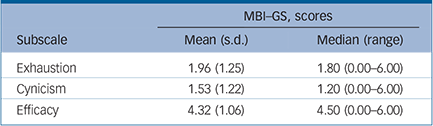
Table 1 shows the sample's three MBI-GS subscale score means. As compared with the Italian MBI–GS norms, Reference Borgogni, Galati and Petitta31 our sample's standardised t-scores showed average burnout levels (t-score range: 46–55) for all three subscales.
Mean scores for the three subscales of the Maslach Burnout Inventory–General Survey (MBI–GS)
| MBI—GS, scores | ||
|---|---|---|
| Subscale | Mean (s.d.) | Median (range) |
| Exhaustion | 1.96 (1.25) | 1.80 (0.00-6.00) |
| Cynicism | 1.53 (1.22) | 1.20 (0.00-6.00) |
| Efficacy | 4.32 (1.06) | 4.50 (0.00-6.00) |
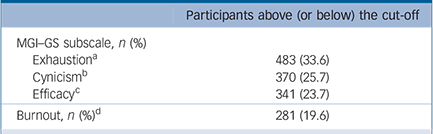
More than one-third of respondents reported high distress levels for exhaustion and a quarter of the sample reported high cynicism and low efficacy levels (Table 2). Analysis of variance and chi-squared tests revealed significant across-site exhaustion and cynicism differences (P<0.001), but no differences for efficacy. The professional categories reporting the most severe exhaustion were social workers and psychiatrists (50.0% and 37.6%, respectively); the highest levels of severe cynicism were found among psychiatrists and mental health nurses (23.0% and 21.0% respectively), and the lowest reported efficacy levels were observed among social workers and nurses (34.2% and 24.0%, respectively).
Proportion of respondents exceeding the Maslach Burnout Inventory–General Survey (MBI–GS) cut-off scores and proportion of respondents experiencing severe burnout
| Participants above (or below) the cut-off | |
|---|---|
| MGI—GS subscale, n (%) | |
| Exhaustiona | 483 (33.6) |
| Cynicismb | 370 (25.7) |
| Efficacyc | 341 (23.7) |
| Burnout, n (%)d | 281 (19.6) |
Table 2 also shows the proportion of respondents experiencing severe burnout. Indeed, nearly one-fifth of the overall sample showed signs of severe burnout. Significant across-site differences were found in the number of participants experiencing severe burnout levels (chi-squared test, P<0.001). Social workers represented the professional category with the highest burnout rates (30.8%), the lowest was for psychologists (12.0%).
AWS, Evaluation of Changes, and Management Areas
Mean scores for the six areas of the AWS, the ten items of the Evaluation of Changes scale, and the three dimensions of the Management Areas scale were compared across sites: ANOVA (P<0.001) yielded significant differences for all the subscales, indicating, as expected, a high degree of across-site variability in perceived organisational factors. Means, standard deviations, and correlations tables for all OCS measures are available from the authors upon request.
MBI–GS component predictors
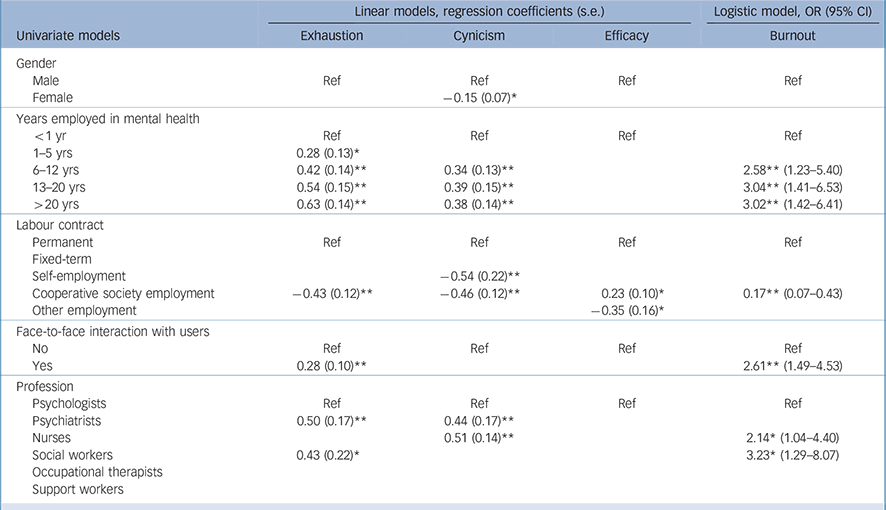
Table 3 shows the univariate regression analyses results, with distress levels used for the three MBI–GS subscales as dependent variables, and sociodemographic and job characteristics as independent factors.
Distress levels for the three Maslach Burnout Inventory–General Survey (MBI–GS) subscales and burnout conditions in the overall sample: univariate linear and logistic models for sociodemographic and job characteristics (n = 1420). Only significant coefficients are reported
| Linear models, regression coefficients (s.e.) | Logistic model, OR (95% CI) | |||
|---|---|---|---|---|
| Univariate models | Exhaustion | Cynicism | Efficacy | Burnout |
| Gender | ||||
| Male | Ref | Ref | Ref | Ref |
| Female | -0.15 (0.07)* | |||
| Years employed in mental health | ||||
| <1 yr | Ref | Ref | Ref | Ref |
| 1-5 yrs | 0.28 (0.13)* | |||
| 6-12 yrs | 0.42 (0.14)** | 0.34 (0.13)** | 2.58** (1.23-5.40) | |
| 13-20 yrs | 0.54 (0.15)** | 0.39 (0.15)** | 3.04** (1.41-6.53) | |
| >20 yrs | 0.63 (0.14)** | 0.38 (0.14)** | 3.02** (1.42-6.41) | |
| Labour contract | ||||
| Permanent | Ref | Ref | Ref | Ref |
| Fixed-term | ||||
| Self-employment | -0.54 (0.22)** | |||
| Cooperative society employment | -0.43 (0.12)** | -0.46 (0.12)** | 0.23 (0.10)* | 0.17** (0.07-0.43) |
| Other employment | -0.35 (0.16)* | |||
| Face-to-face interaction with users | ||||
| No | Ref | Ref | Ref | Ref |
| Yes | 0.28 (0.10)** | 2.61** (1.49-4.53) | ||
| Profession | ||||
| Psychologists | Ref | Ref | Ref | Ref |
| Psychiatrists | 0.50 (0.17)** | 0.44 (0.17)** | ||
| Nurses | 0.51 (0.14)** | 2.14* (1.04-4.40) | ||
| Social workers | 0.43 (0.22)* | 3.23* (1.29-8.07) | ||
| Occupational therapists | ||||
| Support workers | ||||
Higher exhaustion levels were found in staff employed for more than 1 year in mental health (suggesting a ‘dose–response’ relation thereby, i.e. a direct relation between exhaustion levels and years of employment), in permanent staff, in staff with frequent face-to-face patient interaction, and in social workers and psychiatrists (using psychologists as the reference category). Higher cynicism levels were found in men, in staff with longer tenure in mental health, in permanent staff, in nurses and psychiatrists. Lower efficacy was found in permanent staff and employees with temporary and atypical contracts.
Table 3 also shows the univariate logistic regression analyses results with the dependent variable of being in burnout. Risk of burnout was significantly higher for staff employed for more than 6 years, employees involved in face-to-face interaction with patients, social workers and nurses. Conversely, cooperative society employees showed a lower burnout risk.
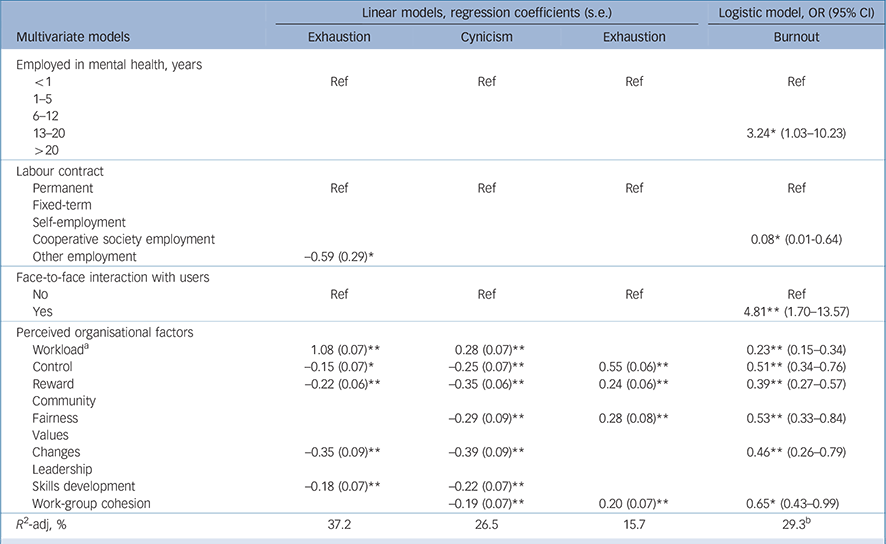
Table 4 reports the multivariate regression analyses results, with the three MBI–GS dimensions used as dependent variables, and sociodemographics, job-related characteristics and perceived organisational factors used as independent variables.
Levels of distress in the three subscales of the Maslach Burnout Inventory–General Survey and condition of burnout in the overall sample: multivariate linear and logistic models (n = 1420). Only significant coefficients are reported
| Linear models, regression coefficients (s.e.) | Logistic model, OR (95% CI) | |||
|---|---|---|---|---|
| Multivariate models | Exhaustion | Cynicism | Exhaustion | Burnout |
| Employed in mental health, years | ||||
| <1 | Ref | Ref | Ref | Ref |
| 1-5 | ||||
| 6-12 | ||||
| 13-20 | 3.24* (1.03-10.23) | |||
| >20 | ||||
| Labour contract | ||||
| Permanent | Ref | Ref | Ref | Ref |
| Fixed-term | ||||
| Self-employment | ||||
| Cooperative society employment | 0.08* (0.01-0.64) | |||
| Other employment | -0.59 (0.29)* | |||
| Face-to-face interaction with users | ||||
| No | Ref | Ref | Ref | Ref |
| Yes | 4.81** (1.70-13.57) | |||
| Perceived organisational factors | ||||
| Workloada | 1.08 (0.07)** | 0.28 (0.07)** | 0.23** (0.15-0.34) | |
| Control | -0.15 (0.07)* | -0.25 (0.07)** | 0.55 (0.06)** | 0.51** (0.34-0.76) |
| Reward | -0.22 (0.06)** | -0.35 (0.06)** | 0.24 (0.06)** | 0.39** (0.27-0.57) |
| Community | ||||
| Fairness | -0.29 (0.09)** | 0.28 (0.08)** | 0.53** (0.33-0.84) | |
| Values | ||||
| Changes | -0.35 (0.09)** | -0.39 (0.09)** | 0.46** (0.26-0.79) | |
| Leadership | ||||
| Skills development | -0.18 (0.07)** | -0.22 (0.07)** | ||
| Work-group cohesion | -0.19 (0.07)** | 0.20 (0.07)** | 0.65* (0.43-0.99) | |
| R 2-adj, % | 37.2 | 26.5 | 15.7 | 29.3b |
Most univariate associations lost their significance, and other significant predictors pertaining to working-life and management areas emerged, when the perceived organisational factors were entered all together into the models. Specifically, the main exhaustion predictor was workload (i.e. the higher workload, the higher exhaustion); other significant predictors were changes, reward, skills development and control, with the model accounting for 37% of the total variance. The main cynicism predictors were organisational changes occurring over the previous year and reward (i.e. the fewer positive changes and rewards, the higher the cynicism observed); other significant predictors were perceived fairness, workload, control, skills development and work-group cohesion, with the model accounting for 26.5% of the total variance. The main efficacy predictor was control (i.e. the lower job control, the lower professional efficacy); other significant predictors were fairness, reward, and work-group cohesion, with the model accounting for approximately 16% of the total variance.
The predictors of burnout
Multivariate logistic regression analysis showed that some job-related characteristics maintained their significance with relation to burnout, even after the AWS, Evaluation of Changes and Management Areas scores had been entered into the model (Table 4). Specifically, the risk of burnout was significantly higher for staff involved in face-to-face interaction with patients and for those employed in mental health for more than 12 years. These two job-related factors represent the strongest predictors of burnout, with odds ratios respectively of 4.81 (95% CI 1.70–13.57) and 3.24 (95% CI 1.03–10.23). Yet, some perceived organisational factors also exerted a key role: low workload, high control, high reward, high fairness, positive changes and high work-group cohesion all showed evidence of being important protective factors against the risk of burnout.
Discussion
Strengths and limitations
To our knowledge, this is the first study examining burnout in a large, representative sample of mental health staff and different types of professional categories and contract conditions. It therefore represents a major research advance in the field, as mental health staff morale studies to date have mostly considered single groups of professionals. Reference Prosser, Johnson, Kuipers, Szmukler, Bebbington and Thornicroft8,Reference Edwards, Burnard, Coyle, Fothergill and Hannigan10,Reference Evans, Huxley, Gately, Webber, Mears and Pajak14,Reference Onyett, Pillinger and Muijen36,Reference Priebe, Fakhoury, Hoffmann and Powell37 The present study's strengths lie in its: representativeness; sample size (approximately 2000 participants), the largest ever surveyed in research on burnout in mental health; and response rate (nearly 80%), one of the highest ever reported in the literature. Moreover, this is the first study exploring predictors of burnout by considering not only individual sociodemographic and occupational characteristics, but also perceived contextual factors, by assuming that work environment can fully account for what has previously been considered the individual syndrome of burnout. Reference Maslach, Schaufeli and Leiter20 Lastly, as far as we know, this is the first study in mental health to adopt the OCS, Reference Leiter and Maslach17 a new methodology based on the most recent conceptual developments in burnout research.
The study also has some limitations. First, job-independent factors (such as personal factors, problems related to the overall socioeconomic environment, labour market pressures) might have contributed to the high workforce stress rates observed, although the sample size (all mental health staff working within the catchment area were approached) and the regression results suggest the improbability of the substantial impact of these factors. Second, other contextual ‘objective’ variables not considered in the analyses might have exerted a significant role in the prediction of burnout. Third, the cross-sectional nature of the survey did not allow for the determination of causal relationships. Fourth, the generalisability of our findings should be taken with caution, as the study was conducted in the specificity of the Italian national healthcare system. Finally, the study did not address positive attitudes towards work, such as job satisfaction.
Burnout prevalence among mental health staff
Our findings confirmed the first hypothesis, since nearly two-thirds of respondents reported high levels of emotional exhaustion, and a quarter expressed high levels of negative, cynical attitudes and feelings about service users and perceived low professional efficacy. Moreover, nearly one in five staff suffered from severe burnout. The burnout prevalence among Italian mental health staff is a cause for concern, as this condition can further deplete public mental health services' already scarce human resources. Reference Lasalvia, Gentile, Ruggeri, Marcolin, Nosè and Cappellari29 The proportion of Italian mental health staff scoring above the MBI cut-off was similar to that found by Prosser et al Reference Prosser, Johnson, Kuipers, Szmukler, Bebbington and Thornicroft8 in London (24%), but somewhat lower than reported by other studies conducted in the UK. Reference Onyett, Pillinger and Muijen36,Reference Reid, Johnson, Morant, Kuipers, Szmukler and Thornicroft11
Our results also confirmed the second hypothesis, since burnout has a different impact on the various professional categories, with severe burnout shown to be more frequent among social workers and psychiatrists. This finding is consistent with the results of a survey conducted in England and Wales Reference Evans, Huxley, Gately, Webber, Mears and Pajak14 in which social workers were shown to be more emotionally exhausted and more depersonalised than other mental health staff. High stress and emotional exhaustion levels among social workers represent a concern and are likely to worsen the low recruitment rates and retention problems associated with social work in many Western countries. Reference Lloyd and King23 One possible explanation for the high rates of emotional exhaustion in social workers may lie in their specific mental health sector role and responsibilities: social workers significantly contribute to the work of community mental health teams, but are also a scarce and declining resource in many countries, including Italy. Reference Lasalvia, Gentile, Ruggeri, Marcolin, Nosè and Cappellari29 It is therefore possible that they operate under a heavy workload without feeling valued for the work they do.
Psychiatry consistently shows signs of being a ‘high-burnout’ profession. Reference Kumar38 The burnout symptom of emotional exhaustion is common in this profession, especially among community care psychiatrists. Reference Prosser, Johnson, Kuipers, Szmukler, Bebbington and Thornicroft8,Reference Korkeila, Töyry, Kumpulainen, Toivola, Räsänen and Kalimo22 In a study conducted in New Zealand, two-thirds of psychiatrists described moderately to severely high levels of emotional exhaustion. Reference Kumar, Fischer, Robinson, Hatcher and Bhagat24 The proportion of psychiatrists suffering from severe burnout in our sample was similar to that found in the UK in a national survey. Reference Pajak, Mears, Kendall, Katona and Medina39 Psychiatrists have the most intense form of interpersonal contact with patients and deal with extremely distressed or disturbed individuals on a regular basis. Although psychiatrists work fewer hours on average than physicians or surgeons, they report more emotional exhaustion and more severe depression because of workload Reference Deary, Agius and Sadler15 than either physicians or surgeons do. This difference may be as a result of the particular nature of psychiatrists' work or to psychiatrists' specific personality characteristics, which might make them particularly vulnerable to job stress. Reference Fischer, Kumar and Hatcher40
Factors predicting exhaustion, cynicism and efficacy
Multivariate regressions led us to confirm the third study hypothesis, as we found that perceived organisational factors were the only significant predictors for the three MBI–GS subscales. Moreover, a set of specific predictors accounted for each MBI–GS subscale, with no significant study site effect nor professional category effects. In terms of strength of association, a main predictor was detected for each MBI–GS component (Fig. 1): high workload was most predictive of exhaustion; poor rewards and few perceived positive changes in an organisation were most predictive of disengagement from work; and lack of participation in decision-making was most predictive of reduced professional efficacy. Overall, our multivariate data seem to fit the ‘job demand resources model’, which postulates that job demands and lacking job resources are specifically linked to emotional exhaustion and depersonalisation, respectively. Reference Bakker, Demerouti and Euwema41 The model assumes two underlying processes: that energy depletion is driven by high job demands (e.g. time pressure, emotional demands, cognitive demands, shift work) and is associated with exhaustion; and that erosion of motivation is driven by lack of job resources (e.g. supervisor support, feedback, control, task variety, financial rewards) and is associated with disengagement (cynicism) and lack of efficacy.
Relation between significant predictors (individual and perceived contextual factors) and the three dimensions of burnout on the Maslach Burnout Inventory–General Survey.

Factors predicting burnout
With respect to the predictors of burnout, our third hypothesis (i.e. that perceived occupational factors play a major role in predicting burnout) was only partially confirmed, as some individual characteristics were also found to be involved. Specifically, staff having close face-to-face interaction with patients and with longer job tenure in mental health were more likely to develop burnout. The observation that burnout levels are higher among healthcare workers who deal intensively with patients on a daily basis represents a consistent finding. Reference Maslach, Schaufeli and Leiter20 However, studies assessing both negative and positive attitude towards work (such as, respectively, burnout and job satisfaction), found that exposure to patients is a major stressor, but also a key source of reward: Reference Edwards, Burnard, Coyle, Fothergill and Hannigan10–Reference Prosser, Johnson, Kuipers, Dunn, Szmukler and Reid12 staff can be emotionally burdened and at the same time experience high intrinsic job satisfaction because of the meaning they attach to their work. This apparent paradoxical finding indicates that the use of only negatively framed measures, such as the MBI, gives a partial view when assessing organisational well-being in healthcare contexts and that positive outcomes, such job satisfaction, should also be included.
The finding that a longer career is associated with higher burnout is controversial. Our results are consistent with those of other studies conducted in high-risk medical specialties. Reference Quattrin, Zanini, Nascig, Annunziata, Calligaris and Brusaferro42,Reference Klersy, Callegari, Martinelli, Vizzardi, Navino and Malberti43 This finding seems logically plausible, since if burnout is the result of chronic job-related stress, older workers or staff with longer job tenure would be expected to have higher burnout levels. Yet, this finding contrasts with other studies, which found that older mental health staff tend to show lower levels of burnout than younger workers. Reference Guthrie, Tattan, Williams, Black and Bacliocotti9,Reference Kumar, Fischer, Robinson, Hatcher and Bhagat24,Reference Billings, Johnson, Bebbington, Greaves, Priebe and Muijen44,Reference Reininghaus and Priebe45 Moore & Cooper have formulated several hypotheses to explain this finding, including differences in position, control, money, influence and expertise. Reference Moore and Cooper46 Prosser et al suggest that burnout can be offset by the benefits of experience and adaptation at both an individual and organisational level. Reference Prosser, Johnson, Kuipers, Dunn, Szmukler and Reid12 However, it may also be possible that this represents a cohort effect reflecting the early departure from clinical work by those staff members who eventually succumb to burnout. Reference Billings, Johnson, Bebbington, Greaves, Priebe and Muijen44,Reference Lloyd and King23 Only the widespread adoption of repeated-measures studies in burnout research may lead to a better understanding of this aspect. Reference Lloyd and King23,Reference Eichler, Schützwohl, Priebe, Wright, Adamowski and Rymaszewska47
Among perceived organisational factors, one management process (work-group cohesion) and two working life areas (fairness and control) best predicted burnout. We found that a poorly cohesive work group is at higher risk of burnout. Work-group cohesion may be defined as the degree to which an individual believes that the members of his/her work group are willing to work together and are committed to the completion of the tasks and goals of the group. Reference Riordan and Weatherly48 Group cohesion relates directly to job satisfaction, namely through human relations with fellow employees and supervisors. Reference Gilbert and Tang49,Reference Blegen50 Therefore, work-group cohesion appears to be an important factor for mitigating stress-related effects on job performance and, in turn, for preventing burnout. It is interesting to note that team cohesion is increased by effective group performance; Reference Mullen and Copper51 however, how to promote effective team working is a cause for concern, since only a minority of health staff employed in the British National Health Service report to be working in coherent and effective work teams. 52
Fairness is the second main burnout predictor. This administrative leadership dimension Reference Leiter and Maslach17 shares some qualities with reward and group cohesion. Fairness is a supervisor or management quality, in the sense that people of higher authority in a given organisation have the responsibility for making judgements and decisions that affect the work environment of staff members. Early research in this field suggested that staff members' perception of supervisors as being both fair and supportive contributes to acceptance of major organisational changes and reduces their susceptibility to burnout. Reference Leiter and Harvie53 The impact on performance, attitudes to work and well-being at work of an ‘engaging’ style of leadership (i.e. a leader who encourages and enables the development of an organisation characterised by a culture based on integrity, openness, transparency and concern for employees) has recently been documented. Reference Alimo-Metcalfe, Alban-Metcalfe, Bradley, Mariathasan and Samele54 Therefore, this specific area of working life deserves further consideration in future research on mental health staff.
Implications for practice
Developing a favourable team climate should be considered a target in interventions designed to reduce staff burnout. Various strategies have been proposed to treat and to prevent burnout: Reference Marine, Ruotsalainen, Serra and Verbeek55 most focus on individual solutions, such as removing a burnt-out worker from the job, or individual strategies to either strengthen the worker's internal resources or to change his/her work behaviour. Yet, these approaches are only partially effective, because most research, and our data are consistent with this view, has found that situational and organisational factors play a greater role in burnout than individual factors. Individually oriented approaches (e.g. coping skills or deep relaxation techniques) can help professionals alleviate their sense of exhaustion, but they do not deal with the other two components of burnout. Moreover, individual strategies are relatively ineffective in the workplace, where people have much less control over stressors than in other domains of their lives. This empirical recognition of six areas of working life therefore expands the range of options for organisational intervention. Rather than having intervention examine the work overload area, it might more effectively focus on other types of individual–work environment mismatch: for example, people may be able to tolerate greater workload if they value their work and feel they are doing something important or if they feel well-rewarded for their efforts. Intervention in this instance could therefore be aimed at the areas of reward and fairness.
Although the potential value of organisational intervention is great, these programmes are not easy to implement; Reference Killaspy, Johnson, King and Bebbington56 they frequently require a complex degree of collaboration and considerable economic investment. Further research in the area of mental health is needed to identify those problematic aspects that might lend themselves to targeted forms of intervention.
Funding
This study was supported by the Ricerca Sanitaria Finalizzata n. 219/05, Giunta Regionale del Veneto with a grant to A.L.
Acknowledgements
See the online supplement for details of members of the PICOS-Veneto group. We thank Professor Michael Leiter and Professor Graham Thornicroft for their helpful comments on an early version of this manuscript.




eLetters
No eLetters have been published for this article.