


It is widely recognised that psychiatric morbidity covaries with psychoactive substance use among adolescents (Reference Weinberg, Rahdert and ColliverWeinberg et al, 1998; Reference Kandel, Johnson and BirdKandel et al, 1999) as well as adults (Reference Kessler, Crum and WarnerKessler et al, 1997; Reference Farrell, Howes and BebbingtonFarrell et al, 2001). A young person who uses one type of substance has an increased likelihood of using other substances; strong links between drug use and smoking, and between drug use and drinking, have been reported (Reference Anderson, Plant and PlantAnderson et al, 1998; Reference Becher, Boreham, Emery, Boreham and ShawBecher et al, 2001; Reference Rey, Sawyer and RaphaelRey et al, 2002). This complicates efforts to clarify which particular licit or illicit substances are most strongly linked with psychiatric disorders. Personal difficulties, family difficulties and broader life adversities may also increase a young person's vulnerability to substance use and psychiatric problems. This report explores the relationship between smoking, drinking and cannabis use and psychiatric morbidity in a nationally derived household sample of young people aged 13–15 years. It aims to identify which of these substances is associated with the greatest likelihood of being classified with a psychiatric disorder.
METHOD
In 1999 the Office for National Statistics (ONS) carried out a major national mental health survey of children aged 5–15 years living in England, Scotland and Wales. Details of the study method and protocol have been published elsewhere and salient aspects only are presented here (see Reference Meltzer, Gatward and GoodmanMeltzer et al, 2000). The sample was drawn from child benefit records held by the Child Benefit Centre. A total of 14 250 letters were sent to selected families (30 letters for each of 475 postal sectors covered). Selection of these postal sectors was influenced by practical and financial constraints and the data were therefore weighted to allow for imbalances in the geographical distribution of sectors arising from this process. The addresses for 790 families (5.5%) were subsequently found to be ineligible (because the family had moved and could not be traced, or because the child was in foster care, outside the target age range or deceased). A further 6.5% of families contacted ONS to opt out of the study. Interviewers visited the 12 529 remaining addresses. Data were collected from 83.3% of these families (14.2% did not wish to participate, and the interviewers failed to make contact with the remaining 2.5%). Parents, teachers, and children aged 11–15 years were interviewed. Where possible, interviews were conducted in private using computer-assisted self-interviewing. This report uses data gathered from the child interviews for participants in the 13–15 year age group (n=2624).
Measures
Demographic measures
Demographic characteristics were measured using a series of closed questions. The nine categories recommended by the Government Statistical Service (1996) were used to assess ethnicity. Because of the small numbers of respondents in most of the non-White ethnic groups, the categories were collapsed into five groups (‘White’, ‘Black’, ‘Indian’, ‘Pakistani/Bangladeshi’ and ‘other’) as used by Meltzer et al (Reference Meltzer, Gatward and Goodman2000). The addresses of participating families were classified using six broad categories from the ACORN geodemographic targeting classification (CACI Information Services, 1993). These categories provide a broad socio-economic categorisation which is complementary to social class categorisation.
Family variables
The parent interviews included questions about the characteristics of the family in which the child was living. These included the marital status of the parent (married, cohabiting or lone parent), the number of children in the household, family economic status (whether either or both parents were working) and gross annual household income (a series of categories which were later used to calculate weekly income). The parent was also questioned about the type of accommodation in which the family lived (detached, semi-detached or terraced house, maisonette or flat) and housing tenure (whether the property was owned, or rented privately or from the social sector). The reported relationships between different family members in the household were recorded to establish whether or not the family was ‘reconstituted’ (i.e. if there were any stepchildren in the family).
Mental health
Mental health was assessed using items based on ICD–10 and DSM–IV diagnostic criteria (World Health Organization, 1992; American Psychiatric Association, 1994). Structured interviews tend to elicit overreporting of rare symptoms. It has been suggested that this might arise from respondents not fully understanding the questions (Reference Brugha, Bebbington and JenkinsBrugha et al, 1999). To address this problem, the structured questions were supplemented by open-ended questions which interviewers were instructed to use when symptoms were identified. Answers to these questions were transcribed but not rated by the interviewers. Instead, experienced clinical raters, masked to the data on substance use, reviewed the data from the structured and open-ended questions and assigned each child a diagnosis (or no diagnosis). Further details of these measures and of the validity and reliability of the resulting diagnoses have been published elsewhere (Reference Goodman, Ford and SimmonsGoodman et al, 2000).
Psychoactive substance use
Questions pertaining to the use of alcohol, cigarettes and cannabis were taken from the national surveys of smoking, drinking and drug use conducted by the ONS (Reference Goddard and HigginsGoddard & Higgins, 1999; Reference Becher, Boreham, Emery, Boreham and ShawBecher et al, 2001). These were self-completed using a laptop computer.
RESULTS
Sample characteristics
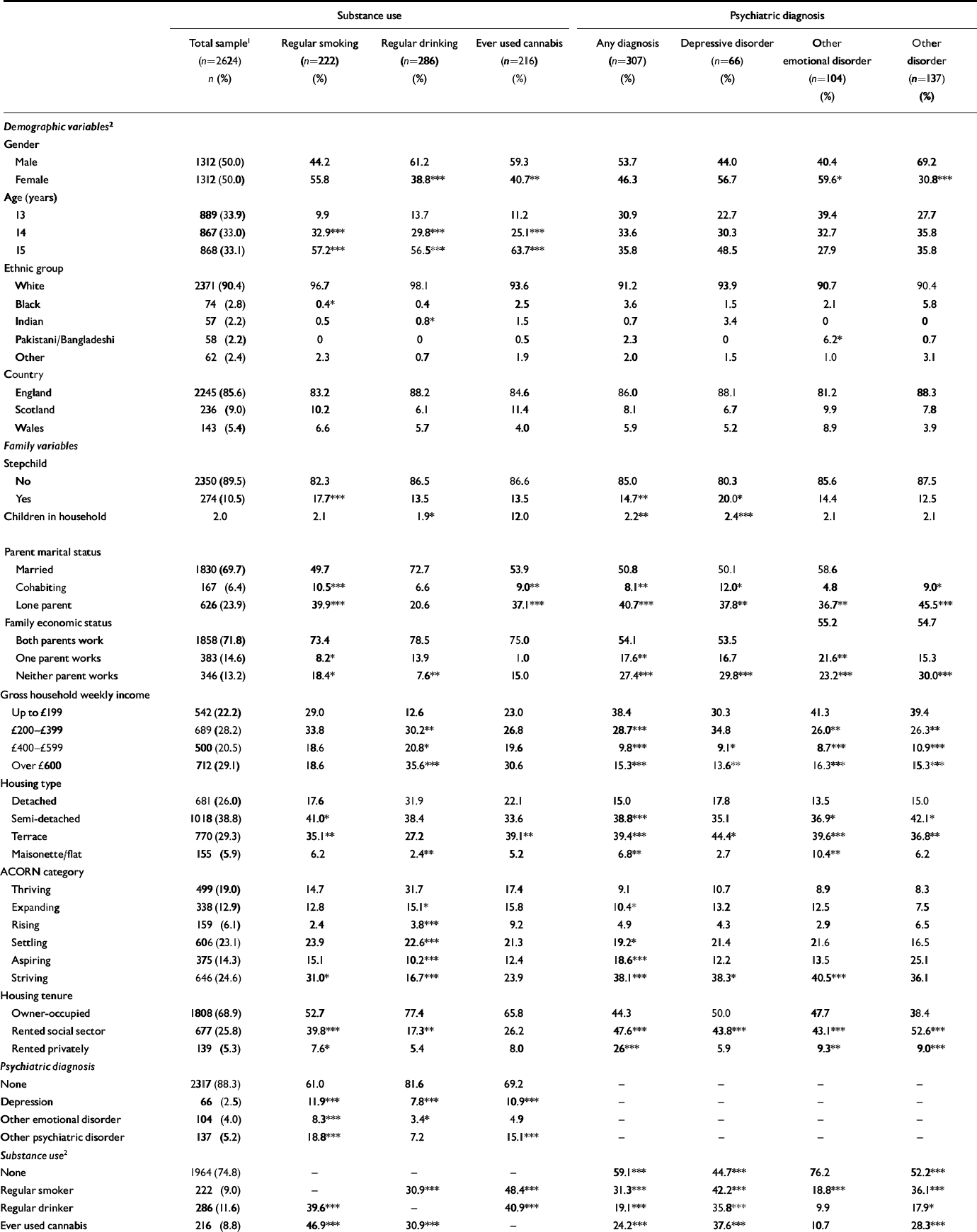
Half of the young people interviewed (1312) were girls. Most families (2245; 85.6%) were from England, 236 (9.0%) from Scotland and 143 (5.4%) from Wales. Nine out of ten respondents (2371) were White and 74 (2.8%) were Black (Table 1).
Characteristics of the study sample classified by substance use and psychiatric diagnosis
| Substance use | Psychiatric diagnosis | |||||||
|---|---|---|---|---|---|---|---|---|
| Totl sample1 (n=2624) n (%) | Regular smoking (n=222) (%) | Regular drinking (n=286) (%) | Ever used cannabis (n=216) (%) | Any diagnosis (n=307) (%) | Depressive disorder (n=66) (%) | Other emotional disorder (n=104) (%) | Other disorder (n=137) (%) | |
| Demographic variables 2 | ||||||||
| Gender | ||||||||
| Male | 1312 (50.0) | 44.2 | 61.2 | 59.3 | 53.7 | 44.0 | 40.4 | 69.2 |
| Female | 1312 (50.0) | 55.8 | 38.8*** | 40.7** | 46.3 | 56.7 | 59.6* | 30.8*** |
| Age (years) | ||||||||
| 13 | 889 (33.9) | 9.9 | 13.7 | 11.2 | 30.9 | 22.7 | 39.4 | 27.7 |
| 14 | 867 (33.0) | 32.9*** | 29.8*** | 25.1*** | 33.6 | 30.3 | 32.7 | 35.8 |
| 15 | 868 (33.1) | 57.2*** | 56.5*** | 63.7*** | 35.8 | 48.5 | 27.9 | 35.8 |
| Ethnic group | ||||||||
| White | 2371 (90.4) | 96.7 | 98.1 | 93.6 | 91.2 | 93.9 | 90.7 | 90.4 |
| Black | 74 (2.8) | 0.4* | 0.4 | 2.5 | 3.6 | 1.5 | 2.1 | 5.8 |
| Indian | 57 (2.2) | 0.5 | 0.8* | 1.5 | 0.7 | 3.4 | 0 | 0 |
| Pakistani/Bangladeshi | 58 (2.2) | 0 | 0 | 0.5 | 2.3 | 0 | 6.2* | 0.7 |
| Other | 62 (2.4) | 2.3 | 0.7 | 1.9 | 2.0 | 1.5 | 1.0 | 3.1 |
| Country | ||||||||
| England | 2245 (85.6) | 83.2 | 88.2 | 84.6 | 86.0 | 88.1 | 81.2 | 88.3 |
| Scotland | 236 (9.0) | 10.2 | 6.1 | 11.4 | 8.1 | 6.7 | 9.9 | 7.8 |
| Wales | 143 (5.4) | 6.6 | 5.7 | 4.0 | 5.9 | 5.2 | 8.9 | 3.9 |
| Family variables | ||||||||
| Stepchild | ||||||||
| No | 2350 (89.5) | 82.3 | 86.5 | 86.6 | 85.0 | 80.3 | 85.6 | 87.5 |
| Yes | 274 (10.5) | 17.7*** | 13.5 | 13.5 | 14.7** | 20.0* | 14.4 | 12.5 |
| Children in household | 2.0 | 2.1 | 1.9* | 12.0 | 2.2** | 2.4*** | 2.1 | 2.1 |
| Parent marital status | ||||||||
| Married | 1830 (69.7) | 49.7 | 72.7 | 53.9 | 50.8 | 50.1 | 58.6 | |
| Cohabiting | 167 (6.4) | 10.5*** | 6.6 | 9.0** | 8.1** | 12.0* | 4.8 | 9.0* |
| Lone parent | 626 (23.9) | 39.9*** | 20.6 | 37.1*** | 40.7*** | 37.8** | 36.7** | 45.5*** |
| Family economic status | 55.2 | 54.7 | ||||||
| Both parents work | 1858 (71.8) | 73.4 | 78.5 | 75.0 | 54.1 | 53.5 | ||
| One parent works | 383 (14.6) | 8.2* | 13.9 | 1.0 | 17.6** | 16.7 | 21.6** | 15.3 |
| Neither parent works | 346 (13.2) | 18.4* | 7.6** | 15.0 | 27.4*** | 29.8*** | 23.2*** | 30.0*** |
| Gross household weekly income | ||||||||
| Up to £199 | 542 (22.2) | 29.0 | 12.6 | 23.0 | 38.4 | 30.3 | 41.3 | 39.4 |
| £200-£399 | 689 (28.2) | 33.8 | 30.2** | 26.8 | 28.7*** | 34.8 | 26.0** | 26.3** |
| £400-£599 | 500 (20.5) | 18.6 | 20.8* | 19.6 | 9.8*** | 9.1* | 8.7*** | 10.9*** |
| Over £600 | 712 (29.1) | 18.6 | 35.6*** | 30.6 | 15.3*** | 13.6** | 16.3*** | 15.3*** |
| Housing type | ||||||||
| Detached | 681 (26.0) | 17.6 | 31.9 | 22.1 | 15.0 | 17.8 | 13.5 | 15.0 |
| Semi-detached | 1018 (38.8) | 41.0* | 38.4 | 33.6 | 38.8*** | 35.1 | 36.9* | 42.1* |
| Terrace | 770 (29.3) | 35.1** | 27.2 | 39.1** | 39.4*** | 44.4* | 39.6*** | 36.8** |
| Maisonette/flat | 155 (5.9) | 6.2 | 2.4** | 5.2 | 6.8** | 2.7 | 10.4** | 6.2 |
| ACORN category | ||||||||
| Thriving | 499 (19.0) | 14.7 | 31.7 | 17.4 | 9.1 | 10.7 | 8.9 | 8.3 |
| Expanding | 338 (12.9) | 12.8 | 15.1* | 15.8 | 10.4* | 13.2 | 12.5 | 7.5 |
| Rising | 159 (6.1) | 2.4 | 3.8*** | 9.2 | 4.9 | 4.3 | 2.9 | 6.5 |
| Settling | 606 (23.1) | 23.9 | 22.6*** | 21.3 | 19.2* | 21.4 | 21.6 | 16.5 |
| Aspiring | 375 (14.3) | 15.1 | 10.2*** | 12.4 | 18.6*** | 12.2 | 13.5 | 25.1 |
| Striving | 646 (24.6) | 31.0* | 16.7*** | 23.9 | 38.1*** | 38.3* | 40.5*** | 36.1 |
| Housing tenure | ||||||||
| Owner-occupied | 1808 (68.9) | 52.7 | 77.4 | 65.8 | 44.3 | 50.0 | 47.7 | 38.4 |
| Rented social sector | 677 (25.8) | 39.8*** | 17.3** | 26.2 | 47.6*** | 43.8*** | 43.1*** | 52.6*** |
| Rented privately | 139 (5.3) | 7.6* | 5.4 | 8.0 | 26*** | 5.9 | 9.3** | 9.0*** |
| Psychiatric diagnosis | ||||||||
| None | 2317 (88.3) | 61.0 | 81.6 | 69.2 | - | - | - | - |
| Depression | 66 (2.5) | 11.9*** | 7.8*** | 10.9*** | - | - | - | - |
| Other emotional disorder | 104 (4.0) | 8.3*** | 3.4* | 4.9 | - | - | - | - |
| Other psychiatric disorder | 137 (5.2) | 18.8*** | 7.2 | 15.1*** | - | - | - | - |
| Substance use 2 | ||||||||
| None | 1964 (74.8) | - | - | - | 59.1*** | 44.7*** | 76.2 | 52.2*** |
| Regular smoker | 222 (9.0) | - | 30.9*** | 48.4*** | 31.3*** | 42.2*** | 18.8*** | 36.1*** |
| Regular drinker | 286 (11.6) | 39.6*** | - | 40.9*** | 19.1*** | 35.8*** | 9.9 | 17.9* |
| Ever used cannabis | 216 (8.8) | 46.9*** | 30.9*** | - | 24.2*** | 37.6*** | 10.7 | 28.3*** |
Mental health
Just over one in ten of the children in this study were classified as having a psychiatric diagnosis. Of these, 171 children had an emotional disorder, of whom 66 were diagnosed with a depressive disorder. The remaining 136 children had other disorders (predominantly disruptive behavioural disorders, but ranging from pervasive developmental disorder to eating disorders). The numbers with specific diagnoses were too small for meaningful analysis and so broad categories for type of disorder were used.
Drinking, smoking and cannabis use
One hundred and sixty-six of the respondents indicated that they did not wish to complete the section of the interview pertaining to substance use. These cases were therefore dropped from the analyses using these variables, leaving data on 2458 remaining cases. There was no significant demographic difference between the study participants who responded to the questions on substance use and those who did not.
A third of the responders (867; 35.3%) reported that they had never consumed an alcoholic drink. A further 35 (1.4%) stated that they did not currently drink alcohol. Of the 1557 drinkers, 286 (18.4%) estimated that they drank alcohol at least once a week and were classified as ‘regular’ drinkers. Half of the participants claimed that they had never tried a cigarette, and a further quarter that they had smoked just once; 189 indicated that they ‘used to smoke’ and 113 that they currently smoked occasionally. Just 9.0% (222) of the sample classed themselves as ‘regular’ smokers and just over half of these (56.1%) were girls.
Almost one in ten (216; 8.8%) admitted to having tried cannabis (88 girls), 91 of whom estimated that they were using this drug at least once a month at the time of interview.
An eight-category polysubstance use variable was computed to show the three-way cross-over between those classified as ‘regular smokers’, ‘regular drinkers’ and ‘lifetime cannabis users’. Four-fifths of the sample (1964; 79.9%) were not current drinkers or smokers and had never used cannabis. These were assigned a score of 0 to denote the baseline comparison category. A further 81 participants (3.3%) were classified as regular smokers only; 162 (6.6%) were regular drinkers only; 77 (3.2%) had used cannabis only; 36 (1.5%) were both regular drinkers and smokers; 51 (2.1%) were regular smokers who had also used cannabis; 35 (1.4%) were regular drinkers who had also used cannabis; and finally, 53 (2.1%) were both regular smokers and drinkers and had also used cannabis.
Logistic regression analyses
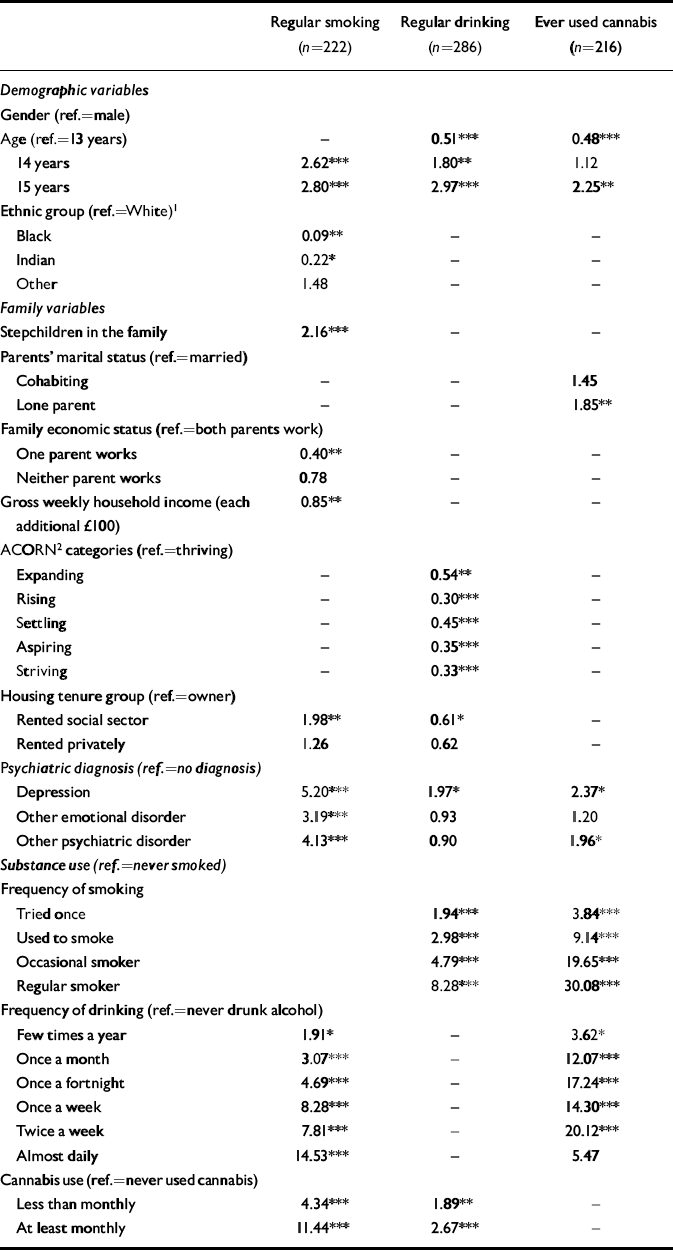
Three series of logistic regressions were conducted to explore the characteristics of the regular smokers, the regular drinkers, and the lifetime cannabis users. Respondents were characterised in terms of demographic data, family background variables, psychiatric diagnoses and other substance use. Frequency data for these variables are presented in Table 1. Table 2 summarises the results from the logistic regression analyses showing the adjusted odds for the predictor variables that reached statistical significance (P<0.05).
Adjusted odds ratios for substance use from logistic regressions (n=2624)
| Regular smoking (n=222) | Regular drinking (n=286) | Ever used cannabis (n=216) | |
|---|---|---|---|
| Demographic variables | |||
| Gender (ref.=male) | |||
| Age (ref.=13 years) | - | 0.51*** | 0.48*** |
| 14 years | 2.62*** | 1.80** | 1.12 |
| 15 years | 2.80*** | 2.97*** | 2.25** |
| Ethnic group (ref.=White)1 | |||
| Black | 0.09** | - | - |
| Indian | 0.22* | - | - |
| Other | 1.48 | - | - |
| Family variables | |||
| Stepchildren in the family | 2.16*** | - | - |
| Parents' marital status (ref.=married) | |||
| Cohabiting | - | - | 1.45 |
| Lone parent | - | - | 1.85** |
| Family economic status (ref.=both parents work) | |||
| One parent works | 0.40** | - | - |
| Neither parent works | 0.78 | - | - |
| Gross weekly household income (each additional £100) | 0.85** | - | - |
| ACORN2 categories (ref.=thriving) | |||
| Expanding | - | 0.54** | - |
| Rising | - | 0.30*** | - |
| Settling | - | 0.45*** | - |
| Aspiring | - | 0.35*** | - |
| Striving | - | 0.33*** | - |
| Housing tenure group (ref.=owner) | |||
| Rented social sector | 1.98** | 0.61* | - |
| Rented privately | 1.26 | 0.62 | - |
| Psychiatric diagnosis (ref.=no diagnosis) | |||
| Depression | 5.20*** | 1.97* | 2.37* |
| Other emotional disorder | 3.19*** | 0.93 | 1.20 |
| Other psychiatric disorder | 4.13*** | 0.90 | 1.96* |
| Substance use (ref.=never smoked) | |||
| Frequency of smoking | |||
| Tried once | 1.94*** | 3.84*** | |
| Used to smoke | 2.98*** | 9.14*** | |
| Occasional smoker | 4.79*** | 19.65*** | |
| Regular smoker | 8.28*** | 30.08*** | |
| Frequency of drinking (ref.=never drunk alcohol) | |||
| Few times a year | 1.91* | - | 3.62* |
| Once a month | 3.07*** | - | 12.07*** |
| Once a fortnight | 4.69*** | - | 17.24*** |
| Once a week | 8.28*** | - | 14.30*** |
| Twice a week | 7.81*** | - | 20.12*** |
| Almost daily | 14.53*** | - | 5.47 |
| Cannabis use (ref.=never used cannabis) | |||
| Less than monthly | 4.34*** | 1.89** | - |
| At least monthly | 11.44*** | 2.67*** | - |
Demographic variables
As expected, increased age was a significant risk factor for use of all three substances: the odds for regular smoking and regular drinking at age 15 years were almost triple those for 13-year-olds. Gender was a significant predictor in just two of the models: female respondents were less likely to be regular drinkers or to have used cannabis than their male peers. Black and Indian children were less likely to be current smokers than those who were White. Ethnic group did not predict regular alcohol use or cannabis use in the other two models.
Family variables
There was little consistency in which family variables were associated with substance use in the sample. Children who were living in families where there were stepchildren were more than twice as likely to be regular smokers. A similarly increased risk was associated with living in social-sector rented accommodation. In contrast, children from families where just one parent was working were less than half as likely to be current smokers than those with two working parents. Similarly, greater household income was also associated with a reduction in smoking risk.
Respondents who were classified as living in a ‘thriving’ area according to the ACORN categories were more likely to be regular drinkers than those from any of the other five categories. Living in social-sector rented accommodation decreased the risk of regular alcohol use.
Just one family variable reached significance in the model predicting lifetime cannabis use: children from lone parent families were almost twice as likely to have used cannabis than children from families where the parents were married (adjusted OR=1.85, P<0.01).
Mental health
Each of the three categories of psychiatric disorder was associated with an increased risk of being a regular smoker. In particular, those suffering from a depressive disorder were over five times as likely to be smokers. Depressive disorder also doubled the risk of regular drinking (adjusted OR=1.97, P<0.05) and of lifetime cannabis use (adjusted OR=2.37, P<0.05). The odds for cannabis use by those with some other ‘non-emotional’ type of disorder were similarly inflated (adjusted OR=1.96, P<0.05).
Psychoactive substance use
Smoking, drinking and cannabis use were consistently interrelated, with more frequent use of one substance carrying an increased risk of use of the other two. For example, when compared with non-drinkers, respondents who reported that they drank alcohol at least once a fortnight were almost five times as likely to be regular smokers. The odds ratio increased to 8.28 in respondents who drank at least once a week. Furthermore, the likelihood of being classified as a regular drinker was approximately double in adolescents who had tried cigarettes and eight times greater in regular smokers. Similar relationships were observed between cannabis use and regular smoking and drinking. When compared with non-cannabis users, respondents who admitted to using this drug at least once a month at the time of interview were 11.44 times more likely to be regular smokers and 2.67 times more likely to be regular drinkers.
Relationship between substance use and mental health
The relationship between substance use and mental health was examined further by means of four additional logistic regressions with the following dependent variables:
-
(a) any psychiatric diagnosis;
-
(b) depressive disorder;
-
(c) other emotional disorder;
-
(d) other (non-emotional) psychiatric disorder.
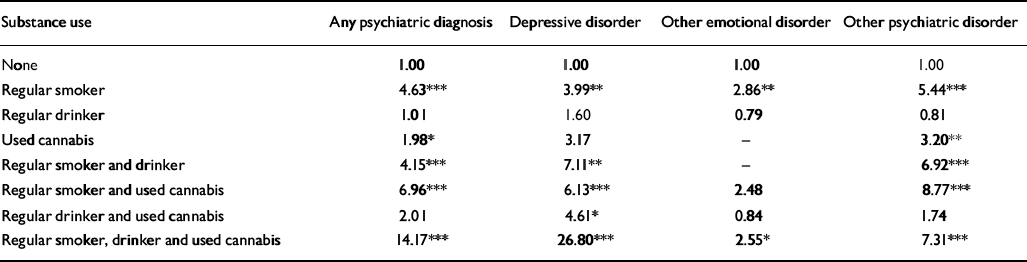
The relationship between the eight-category polysubstance use variable described earlier and psychiatric diagnoses was examined while controlling for the background and family variables in Table 2. The results from these four regressions are presented in Table 3. Individuals who were not classified as regular drinkers or smokers and had never used cannabis were used as the comparison group (labelled ‘none’).
Adjusted odds ratios from logistic regression predicting psychiatric diagnoses when controlling for all significant background variables listed in Tables 1 and 2 (n=2624)
| Substance use | Any psychiatric diagnosis | Depressive disorder | Other emotional disorder | Other psychiatric disorder |
|---|---|---|---|---|
| None | 1.00 | 1.00 | 1.00 | 1.00 |
| Regular smoker | 4.63*** | 3.99** | 2.86** | 5.44*** |
| Regular drinker | 1.01 | 1.60 | 0.79 | 0.81 |
| Used cannabis | 1.98* | 3.17 | - | 3.20** |
| Regular smoker and drinker | 4.15*** | 7.11** | - | 6.92*** |
| Regular smoker and used cannabis | 6.96*** | 6.13*** | 2.48 | 8.77*** |
| Regular drinker and used cannabis | 2.01 | 4.61* | 0.84 | 1.74 |
| Regular smoker, drinker and used cannabis | 14.17*** | 26.80*** | 2.55* | 7.31*** |
Any diagnosis
The likelihood of having any psychiatric diagnosis was quadrupled in adolescents who were just regular smokers. A similarly increased risk was evident in those who were regular smokers and regular drinkers. Furthermore, regular smokers who had also used cannabis were almost seven times as likely as those in the ‘none’ category to have a psychiatric disorder, and the risk doubled again (adjusted OR=14.17, P<0.001) for users of all three substances.
Depressive diagnosis
Both the regular smokers and the regular drinkers who had also used cannabis were four to five times more likely to have a depressive disorder than those in the comparison category. For those who both smoked and drank on a regular basis, the adjusted odds ratio increased to 7.11 (P<0.01). However, by far the greatest risk for a depressive disorder was observed in the users of all three substances (adjusted OR=26.80, P<0.001).
Other emotional disorder
The relationship between substance use and other emotional disorders was less pronounced. In common with the other diagnoses, being a regular smoker was associated with an increased risk (adjusted OR=2.86, P<0.01), as was being a user of all three substances (adjusted OR=2.55, P<0.05).
Other psychiatric disorders
Once again, participants who reported regular smoking were over five times more likely to have a diagnosis of ‘other (non-emotional) psychiatric disorder’; these odds increased to 6.92 for regular users of both tobacco and alcohol and to 8.77 for regular smokers who had tried cannabis. Finally, the increase in risk for users of all three substances was 7.31 (P<0.001).
Interactions between substances
Further analyses were conducted to examine which of the three substances (tobacco, alcohol and cannabis) predicted each of the above four categories of psychiatric disorder. A series of logistic regressions examined the relationship between psychiatric diagnosis and the interactions between the three substances. These showed that the main drug-related effects were primarily due to whether or not individuals were categorised as regular smokers, and secondarily whether or not they were regular cannabis users (with one exception: only regular smoking predicted ‘other emotional disorder’; adjusted OR=2.13, P<0.01). In particular, in respondents who smoked, the risk of having any type of psychiatric diagnosis was more than quadrupled (adjusted OR=4.35, P<0.001); the odds were 3.45 for depressive disorders (P<0.001), 2.13 for other emotional disorders (P<0.004) and 4.66 for other types of psychiatric disorder (P<0.001). Regular use of cannabis (more than once a month) further increased the risk of any psychiatric diagnosis by a factor of 3.50 (P<0.001), that of depressive disorder by 3.91 (P<0.001) and that of other psychiatric diagnosis by 2.18 (P<0.05). In no case was there any additional effect associated with having used cannabis on a less frequent basis, regular alcohol use or taking all three substances that could not be explained by other drug combinations.
DISCUSSION
Data from a nationally representative sample of young people aged 13–15 years were used to examine links between psychiatric comorbidity and smoking, drinking and cannabis use. In common with a number of other studies (e.g. Reference Rohde, Lewsinsohn and SeeleyRohde et al, 1996; Reference Milich, Lynam and ZimmermanMilich et al, 2000; Reference Fergusson and WoodwardFergusson & Woodward, 2002), having a psychiatric disorder was associated with an increased likelihood of psychoactive substance use. Furthermore, and again consistent with much of the literature on polysubstance use in adolescence (e.g. Reference Anderson, Plant and PlantAnderson et al, 1998), greater involvement with one substance carried an increased risk of other substance use. Analyses of the interactions between smoking, drinking and cannabis use indicated that the relationship between substance use and psychiatric morbidity was primarily explained by regular smoking and to a lesser extent by regular (i.e. at least once a month) cannabis use. There was no evidence that either regular drinking or less frequent use of cannabis additionally increased the risk of psychiatric disorder.
In the initial logistic regression analyses, regular smoking was consistently related to the psychiatric disorders studied. In particular, those with depressive disorders were over five times more likely to be regular smokers than individuals with no diagnosis. Other research studies have noted similar links between smoking and affective disorders in both adults (e.g. Reference Glassman, Helzer and CoveyGlassman et al, 1990; Reference Farrell, Howes and BebbingtonFarrell et al, 2001) and young people (Reference Breslau, Kilbey and AndreskiBreslau et al, 1991; Reference Patton, Hibbert and RosierPatton et al, 1996; Reference Fergusson and WoodwardFergusson & Woodward, 2002). Associations between tobacco use and drug dependence, anxiety and psychosis have also been reported elsewhere (Reference Degenhardt and HallDegenhardt & Hall, 2001). One study found strong links between nicotine dependence and nearly all psychiatric disorders in adolescents, yet no consistent relationship between disorders and regular smoking or experimental use (Reference Dierker, Avenevoli and MerikangasDierker et al, 2001). In our study no distinction was made between regular and dependent nicotine use; dependent individuals were included in the general category labelled ‘regular smokers’. Consequently, it is possible that the strong relationships between psychiatric diagnoses and regular use noted here were in fact driven by the presence of nicotine-dependent individuals in this category.
The finding that depressive disorders and other (non-emotional) psychiatric disorders were associated with roughly double the risk of cannabis use is consistent with studies that have noted that people who use cannabis are at greater risk of psycho-social disorders and personal adjustment problems than those who do not (e.g. Reference Reilly, Didcott and SwiftReilly et al, 1998; Reference Troisi, Pasini and SaraccoTroisi et al, 1998). Regier et al (Reference Regier, Farmer and Rae1990) found that half of the cannabis-dependent individuals from a community sample met DSM–III criteria (American Psychiatric Association, 1980) for other disorders (excluding alcohol- or drug-related disorders). Similar findings have been described in adolescents and young people (e.g. Reference Rey, Sawyer and RaphaelRey et al, 2002). Fergusson et al (Reference Fergusson, Lynskey and Horwood1997) reported an association between early cannabis use (before the age of 15 years) and an increased risk of a range of psychiatric disorders and problem behaviours.
Polydrug use
It is widely recognised that many adolescents who engage in the regular use of one psychoactive substance are also users of other licit or illicit drugs. This presents a considerable challenge when attempting to ascertain which particular drug or drug combinations are associated with psychiatric morbidity. Kandel and colleagues examined the comorbidity of dependence on single and multiple drugs with anxiety and depressive disorders, and found that for individuals who were uniquely dependent on cigarettes, alcohol or illicit drugs the risk of psychiatric diagnosis was roughly doubled, while being dependent on an illicit drug and a legal substance quadrupled this risk (Reference Kandel, Huang and DaviesKandel et al, 2001).
We approached this problem by examining the relationship between mental health and different categories of substance in the sample (regular smoking, regular drinking and cannabis use, and the four possible combinations of these behaviours), while controlling for background and socio-familial factors. The regular smokers, and respondents who were in the category for all three drugs, were consistently at greater risk of psychiatric disorders. Furthermore, if a regular smoker was also a regular drinker or had used cannabis, the risk of mental disorder was further increased (with one exception: ‘other emotional disorder’). Second, the analyses examined which of the three types of substance use (tobacco, alcohol and cannabis) was most closely related to psychiatric diagnoses. The strongest effect was associated with regular cigarette smoking, with an additional risk if an individual was a regular cannabis user (again, with one exception: ‘other emotional disorder’). Less frequent cannabis use and regular alcohol use were both unrelated to psychiatric disorder when background variables and other substance use were controlled for. These results complement those reported by Degenhardt et al (Reference Degenhardt, Hall and Lynskey2001), who found consistent links between tobacco use and a number of different psychiatric diagnoses in a representative sample of Australian adults. Another study found stronger links between psychopathology and extent of cannabis use compared with alcohol use (Reference Milich, Lynam and ZimmermanMilich et al, 2000). However, it is worth noting that although the current study provided little evidence for links between regular alcohol use and psychiatric disorders, follow-up data would be required to examine whether long-term regular use of alcohol is linked to subsequent negative psychiatric outcomes.
Socio-demographic findings
A number of socio-demographic factors were associated with smoking, drinking and cannabis use over and above the influence exerted by psychiatric disorders and other substance use. Female participants were less likely to be regular drinkers or to have ever used cannabis than their male peers. Interestingly, despite evidence from other recent UK-based studies that girls are more likely to be regular smokers than boys of a similar age (e.g. Reference Becher, Boreham, Emery, Boreham and ShawBecher et al, 2001), gender was not significantly related to regular smoking in the current analyses. In common with the results of the majority of national and international studies of substance use in adolescence (e.g. Reference Becher, Boreham, Emery, Boreham and ShawBecher et al, 2001; Reference Rey, Sawyer and RaphaelRey et al, 2002) smoking, drinking and cannabis use were found to be strongly associated with increasing age.
Children from more affluent families were slightly more likely to be regular alcohol users, but less likely to smoke cigarettes regularly. Although seemingly unrelated to smoking or cannabis use, the ACORN categories (CACI Information Services, 1993) predicted regular alcohol use: respondents from families living in ‘thriving’ areas (those populated by wealthy achievers living in suburban areas, affluent ‘greys’ (middle-aged people) in rural communities and prosperous pensioners in retirement areas) were significantly more likely to be ‘regular drinkers’ than those from elsewhere. It is possible that the consumption of alcohol under parental supervision at mealtimes was more common among the more affluent families. This could explain the higher prevalence of weekly drinking in children from families with higher incomes, families who are owner-occupiers and those who live in ‘thriving’ areas. In contrast, it is unlikely that the cigarette and cannabis use occurs to a similar degree in what could be described as positive family contexts. Future studies that explore the links between substance use and psychiatric morbidity should control for the social context of substance use (particularly alcohol) so that the relationships noted in the current study can be further disentangled.
In contrast, respondents living in social-sector rented accommodation were less likely to be regular drinkers, but approximately twice as likely to be regular smokers compared with those living in privately owned homes. The likelihood of being a ‘regular smoker’ decreased significantly with increasing gross household income. A strong association between deprivation and levels of smoking has been noted by a number of researchers (e.g. Reference Jarvis, Wardle, Marmot and WilkinsonJarvis & Wardle, 1999). Our findings indicate a similar relationship for tobacco.
Relationships between substance use and family structure were also evident. Children from what were classified as ‘reconstituted’ homes (i.e. with stepchildren) were more than twice as likely to be regular smokers. In contrast, the smoking risk for participants who came from homes where just one parent was working was less than half of that for respondents with two working parents. Finally, in common with findings noted by Rey et al (Reference Rey, Sawyer and Raphael2002) from a sample of Australian teenagers, children of lone parents were nearly twice as likely than their peers to have tried cannabis.
Limitations of the study
A number of limitations should be considered when interpreting the findings from this study. First, the measures pertaining to substance use relied solely on self-report. Although reviews have suggested that this is a reasonably accurate means of eliciting data on this subject from young people, the quality of the data is likely to be affected by the circumstances under which interviews were conducted. The levels of self-reported substance use tended to be lower than those from other recent UK national surveys such as those by Becher et al (Reference Becher, Boreham, Emery, Boreham and Shaw2001) and by Goddard & Higgins (Reference Goddard and Higgins1999). Although considerable effort was invested in emphasising the confidentiality of the data, the fact that interviews were conducted in a home setting and respondents were aware that their parents and a schoolteacher were also going to be interviewed for the study might have contributed to more underreporting of substance use than studies that have used self-completion techniques to gather data within the school environment. Furthermore, it is possible that the 166 participants who opted out of the section on substance use did so because they were in fact substance users. This paper therefore implicitly assumes that no bias was engendered by this potential underreporting. Because of the broad nature of the core aims of the survey the actual questions on substance use were limited and no measures of dependence were taken. A further limitation was that the small numbers of individuals with particular diagnoses precluded more specific analyses to examine differences in the links between substance use and individual disorders.
In summary, the study has provided additional evidence that users of one substance are at increased risk of using others. The findings also confirm previous assertions that substance use and psychiatric disorders often co-occur in adolescents as well as in adults. Finally, analyses of the interactions between smoking, drinking and cannabis use indicated that the primary link between substance use and psychiatric disorder was explained by regular smoking, and that the risk of disorder was additionally augmented if an individual was using cannabis on a regular basis.
Clinical implications
It has been noted elsewhere that a large proportion of research into psychiatric morbidity and substance use has tended to focus on alcohol and illicit drug use, with smoking as a secondary interest (Reference Dierker, Avenevoli and MerikangasDierker et al, 2001). Our findings suggest that far from being subsidiary, tobacco use is of central importance when trying to make sense of the links between substance use and mental disorders. There is growing interest in the links between smoking and psychiatric disorders. The current findings provide further evidence that smoking is linked to baseline psychiatric morbidity and to other forms of substance involvement too. It is important not to overlook both legal and illegal substance use issues in adolescents who are showing signs of psychiatric problems. Similarly, where substance use concerns are brought to the fore, it could be useful to screen for and address psychiatric morbidities. Finally, our results emphasise the importance of investing in smoking prevention at an early age.
Clinical Implications and Limitations
CLINICAL IMPLICATIONS
-
▪ It is important to consider the central role of tobacco use when trying to make sense of the links between substance use and mental disorders.
-
▪ Where substance use issues are evident in adolescents, it could be useful to screen for and address psychiatric morbidities.
-
▪ Investing in smoking prevention at an early age is of paramount importance.
LIMITATIONS
-
▪ The substance use measures relied solely on self-report.
-
▪ Questions on substance use were limited and no measure of dependence was applied.
-
▪ The small numbers of individuals with particular diagnoses precluded more specific analyses examining differences in the links between substance use and individual disorders.
Acknowledgements
We gratefully acknowledge the help of the Department of Health Drug Misuse Research Initiative, which supported this work. The views are those of the authors.




eLetters
No eLetters have been published for this article.