


Worldwide, freshwater biodiversity is in decline and increasingly threatened. Fishes are the best-documented indicators of this decline. General threats to persistence include: (1) competition for water, (2) habitat alteration, (3) pollution, (4) invasions of alien species, (5) commercial exploitation and (6) global climate change. Regional faunas usually face multiple, simultaneous causes of decline. Threatened species belong to all major evolutionary lineages of fishes, although families with the most imperilled species are those with the most species (e.g. Cyprinidae, Cichlidae). Independent evaluation of California’s highly endemic (81%) fish fauna for comparison with IUCN results validates the alarm generated by IUCN evaluations. However, IUCN overall evaluation is conservative, because it does not include many intraspecific taxa for which extinction trends are roughly double those at the species level. Dramatic global loss of freshwater fish species is imminent without immediate and bold actions by multiple countries.
9.1 Introduction
Fishes are appropriate indicators of trends in aquatic biodiversity because their enormous variety reflects a wide range of environmental conditions. Fish also have a major impact on the distribution and abundance of other organisms in waters they inhabit. Examination of the trends of freshwater fish faunas from different parts of the world indicate that most faunas are in serious decline and in need of immediate protection…We conservatively estimate that 20% of the freshwater fish species of the world are already extinct or in serious decline.
Tragically, global conditions for freshwater fishes have not stabilised or improved since 1992, but have worsened. Leidy and Moyle (Reference Leidy, Moyle, Fiedler and Karieva1997), in a status review of the world’s marine and freshwater fishes, noted that during the six years since their previous study, freshwater fishes had continued to decline, although this assessment was partly the result of better information. Much of the recorded decline at that time was in regions where the fish fauna had been intensively studied, suggesting that in poorly documented areas most fish declines and extinctions were going unrecorded. This observation has been borne out by Darwell and Freyhof (Reference Closs, Angermeier, Darwell, Balcombe, Closs, Krkosek and Olden2015) who found 31% of 7300 freshwater fish species assessed were threatened with extinction (2013 IUCN Red List). Notably, this threatened percentage excluded 1571 species with insufficient data on which to base an assessment as well as 69 species known to be either completely extinct or extinct in the wild. Analysis of the 2022 IUCN database shows that the situation is not improving (Box 9.1).
The IUCN Red List (version 2022-1) database is a useful tool to predict the probable global future of freshwater fishes; it indicates that the future of currently recognised fishes is grim (Table 9.1). The 18,000 species of freshwater fishes represent just over 50% of all known fish species; the IUCN data indicates that about 20–30% of these fishes are threatened with extinction, or nearly so, by the end of the century, with extinction rates varying from region to region. Most of these species are not the subject of conservation plans. IUCN lists 89 freshwater fishes as extinct and another 12 as extinct in the wild. Of 13,276 species of freshwater fishes assessed by IUCN, 728 species are Critically Endangered, 1054 are Endangered and 1156 are Vulnerable. Threatened fishes comprise about 22% (n = 2938) of the total assessed freshwater taxa. Threatened fishes belong to all taxonomic orders, indicating that threatened fishes are globally and taxonomically diverse. Half of all assessed freshwater fishes are considered to be widespread and/or abundant (i.e. Least Concern). Another 2556 taxa have insufficient information to assess extinction risk (i.e. Data Deficient). Decreasing or unknown population trends characterise 14% (n = 1836 spp.) and 67% (n = 8898) of all threatened freshwater fish species, subspecies and subpopulations, respectively. Only 17% of species populations are considered stable and less than 1% are increasing. For Near Threatened Species, 30% have decreasing populations, suggesting that these taxa may soon be threatened.
| CLASS/Order | EX/EW | CR | EN | VU | Subtotal Threatened Species (CR+EN+VU) | NT | DD | LC |
|---|---|---|---|---|---|---|---|---|
| CEPHALASPIDOMORPHI | ||||||||
| Petromyzontiformes (lampreys) | 1 | 2 | 4 | 2 | 8 | 3 | 3 | 23 |
| CHONDRICHTHYES | ||||||||
| Carcharhiniformes (groundsharks) | 0 | 2 | 0 | 4 | 6 | 1 | 0 | 0 |
| Myliobatiformes (stingrays) | 0 | 3 | 6 | 1 | 10 | 1 | 17 | 5 |
| Rhinopristiformes (shovelnose rays) | 0 | 5 | 0 | 0 | 5 | 0 | 0 | 0 |
| ACTINOPTERYGII | ||||||||
| Acipenseriformes (sturgeons, paddlefishes) | 4 | 33 | 15 | 22 | 70 | 0 | 0 | 1 |
| Osteoglossiformes (bony tongues) | 1 | 0 | 6 | 16 | 22 | 5 | 41 | 143 |
| Clupeiformes (herrings) | 0 | 4 | 8 | 12 | 23 | 3 | 39 | 112 |
| Anguilliformes (eels) | 0 | 1 | 3 | 2 | 6 | 4 | 5 | 11 |
| Gonorynchiformes (milkfish, hingemouth) | 0 | 0 | 1 | 4 | 5 | 0 | 11 | 17 |
| Cypriniformes (carps, minnows, loaches, suckers, barbs) | 44 | 163 | 300 | 339 | 802 | 170 | 676 | 1443 |
| Siluriformes (catfishes) | 2 | 72 | 154 | 156 | 382 | 129 | 664 | 866 |
| Gymnotiformes (neotropical knifefishes) | 0 | 7 | 1 | 14 | 22 | 4 | 30 | 80 |
| Characiformes (caracins) | 0 | 17 | 62 | 70 | 149 | 51 | 203 | 946 |
| Esociformes (pikes, mudminnows) | 0 | 0 | 0 | 1 | 1 | 0 | 0 | 11 |
| Salmoniformes (salmon, trout, allies) | 20 | 26 | 33 | 36 | 95 | 8 | 52 | 82 |
| Percopsiformes (trout-perches, pirate perches) | 0 | 1 | 0 | 0 | 1 | 3 | 0 | 5 |
| Ophidiiformes (cusk eels) | 0 | 1 | 4 | 2 | 7 | 2 | 0 | 0 |
| Batrachoidiformes (toadfishes) | 0 | 0 | 0 | 1 | 1 | 0 | 3 | 4 |
| Sygnathiformes (pipefishes, seahorses) | 0 | 1 | 1 | 1 | 3 | 1 | 17 | 23 |
| Synbranchiformes (spiny eels) | 0 | 2 | 6 | 6 | 14 | 4 | 18 | 63 |
| Mugiliformes (mullets) | 0 | 0 | 1 | 0 | 1 | 0 | 6 | 32 |
| Beloniformes (needle fishes) | 0 | 7 | 9 | 7 | 23 | 14 | 21 | 54 |
| Atheriniformes (silversides) | 1 | 48 | 53 | 44 | 145 | 28 | 31 | 86 |
| Cyprinodontiformes (rivulines, killifishes, live bearers) | 19 | 108 | 162 | 172 | 497 | 105 | 349 | 1304 |
| Perciformes (perch-likes) | 6 | 156 | 152 | 189 | 596 | 128 | 472 | 1505 |
| Gasterosteiformes (sticklebacks) | 1 | 1 | 1 | 2 | 4 | 2 | 1 | 13 |
| Scorpaeniformes (scorpionfishes and flatheads) | 1 | 3 | 1 | 6 | 10 | 4 | 9 | 87 |
| Tetraodontiformes (puffers, filefishes) | 0 | 0 | 2 | 1 | 3 | 3 | 8 | 35 |
Globally, loss of freshwater biodiversity is a leading crisis in conservation (Darwell et al., Reference Darwell, Bremerich and De Weveret2018; Harrison et al., Reference Harrison, Abell and Darwall2018; Reid et al., Reference Reid, Carlson and Creed2018; World Wide Fund for Nature, Reference Almond, Grooten and Petersen2020, 2021). Fishes are among the most conspicuous, best-documented indicators of this biotic decline (Dudgeon et al., Reference Dudgeon, Arthington and Gessner2006; Strayer and Dudgeon, Reference Strayer and Dudgeon2010; Darwell and Freyhoff, Reference Darwell, Freyhof, Closs, Krkosek and Olden2015). Ricciardi and Rasmussen (Reference Ricciardi and Rasmussen1999) capture this crisis in terms of predicted extinctions in North America of five major groups of freshwater organisms, including fishes, which they estimated will average 4% of the fauna per decade. They comment that ‘…temperate freshwater ecosystems are being depleted of species as rapidly as tropical rainforests’ (p. 1220). Given advances in our understanding of this crisis in the last 20 years, the estimates of Ricciardi and Rasmussen (Reference Ricciardi and Rasmussen1999) are undoubtedly conservative.
The authors live in a well-defined geographic region of the world, California, USA, with a highly endemic fish fauna (81% of 134 taxa) (Moyle et al., Reference Moyle, Katz and Quiñones2011, Reference Moyle, Kiernan, Crain and Quiñones2013, Reference Moyle, Quiñones, Katz and Weaver2015). Our most recent analysis indicates that 51% of the total fauna is either extinct or threatened with extinction, with 30% being ‘near-threatened’ by IUCN standards (Leidy and Moyle, Reference Leidy and Moyle2021) (Figure 9.1). Only 19% of the fishes can be regarded as secure for the immediate future. The situation in California likely reflects the future of freshwater fishes in many other geographic areas of the world. Using the comparatively well-studied fish fauna of California as background, in this chapter we discuss the following topics:Footnote 1
How many species of freshwater fishes are there?
What are the general population trends in freshwater fishes?
Why is the freshwater fish crisis so severe and what are the primary causes of fish declines?
Are some families of fishes more vulnerable to extinction than others?
How well does the IUCN Red List represent the status of fish faunas?
What is the likely future of the world’s freshwater fish fauna?
Examples of extinct and threatened California freshwater fishes.
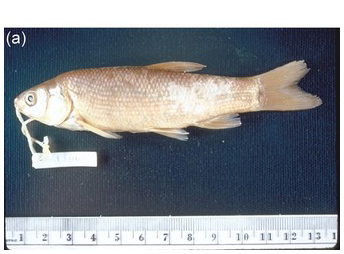
The endemic, extinct, thicktail chub, Gila crassicauda, was historically one of the most abundant fish in lowland aquatic habitats of Central California.
Delta smelt, Hypomesus transpacificus, a critically endangered member of the Osmeridae.

McCloud River redband trout, Oncorhynchus mykiss stonei, an endangered member of the Salmonidae from Trout Creek, California.

The endangered Owens pupfish, Cyprinodon radiosus, a small endemic fish that is restricted to isolated springs in arid southeastern California.

9.2 How Many Species of Freshwater Fishes Are There?
Remarkably, there are now more described freshwater fish species than marine species, a trend that is likely to continue. As of 2022, there are 36,345 recognised species of fishes, of which 18,345 (51%) are freshwater fishes (Fricke et al., Reference Fricke, Eschmeyer and Fong2022). From 2010 through 2020, 4020 new fish species were described, translating to an average of about 365 new fish species per year (Fricke et al., Reference Fricke, Eschmeyer and Fong2022). Three taxonomic orders and one family composed primarily of freshwater fishes account for 65% of the newly described species: Siluriformes, Cypriniformes, Cyprinodontiformes and Cichlidae.
Two factors primarily explain the ongoing discovery of new species of freshwater fishes. First, in part as a response to the freshwater biodiversity crisis, there have been increased efforts by scientists to inventory and describe aquatic faunas in poorly known regions of the world. For example, in 2013, Australian researchers discovered 20 new species of fishes while surveying 17 remote rivers in the Kimberly Region (University of Melbourne, 2016). The discoveries increased the number of described freshwater fishes in Australia by almost 10%. Similarly, the USA’s National Science Foundation (NSF) funded multiyear research programmes to understand the global species richness of the two most diverse groups of freshwater fishes, the catfishes (Siluriformes) and the carps and minnows (Cypriniformes) (NSF 2008, 2010). The catfish research project resulted in the astonishing discovery of 430 new species, with another 350–500 new species’ descriptions anticipated.
Second, there has been a substantial increase in new freshwater fish species that are part of complexes of cryptic species (Adams et al., Reference Adams, Raadik, Burridge and Georges2014). Cryptic species are species that are not recognised because they are hidden under the names of widely distributed, well-recognised species; they often appear morphologically identical to the described species, while they are genetically quite distinct (Bickford et al., Reference Bickford, Lohman and Sodhi2007). The increasing use and decreasing costs of molecular studies such as DNA barcoding and other genomic techniques continues to reveal new cryptic species and this trend will likely continue. For example, Ramirez et al. (Reference Ramirez, Birindelli and Carvalho2017), using DNA barcoding, detected potential cryptic diversity within 10 nominal species of the neotropical, species-rich family Anostomidae (Characiformes). Similarly, Adams et al. (Reference Adams, Raadik, Burridge and Georges2014) used allozyme, mtDNA and morphological techniques on populations of an Australian freshwater fish (Galaxias olidus) and found 15 cryptic taxa. Baumsteiger and Moyle (Reference Baumsteiger and Moyle2019) used DNA (RAD) sequencing genomics to clarify and assign taxonomic categories to a comparatively well-studied species complex of two California cyprinids, the California roach (Hesperoleucus symmetricus) and hitch (Lavinia exilicauda) (Figure 9.2). This genomic analysis revealed a complex hierarchy that included two genera, six species, four subspecies and several distinct population segments. These studies strongly suggest that more analyses are needed to detect cryptic taxa, even within abundant, widely distributed fishes (Adams et al., Reference Adams, Raadik, Burridge and Georges2014). In the absence of molecular information on cryptic species, there will be consistent underestimation of numbers of threatened freshwater fish species.
A substantial portion of the increase in new freshwater fish species is from the discovery of cryptic species. For example, a genomic analysis of California roach (Hesperoleucus spp.) revealed a complex hierarchy that included two genera, six species, four subspecies, and several distinct population segments. Pictured is a roach (H. symmetricus navarroensis) from the Russian River in breeding colours (Baumsteiger and Moyle, Reference Baumsteiger and Moyle2019).

9.3 What Are the Major Trends in Status of Freshwater Fishes?
Understanding population sizes and trends is critical to effective management and conservation of fish species. We used the IUCN Red List (version 2022-1) database as a tool to predict the probable future of freshwater fishes and concluded that the future of currently recognised fishes appears grim (Box 9.1, Table 9.1). There are nine IUCN Red List categories for classifying species global extinction risk (IUCN 2012): (1) an Extinct (EX) taxon is one where there is no reasonable doubt that the last individual has died, (2) Extinct in the Wild (EW) refers to taxa only known to survive in captivity, or as naturalised populations well outside the native range, (3) taxa are Critically Endangered (CE) when considered to be facing extremely high risk of extinction in the wild, (4) taxa are Endangered (EN) when facing a very high risk of extinction, (5) Vulnerable (VU) refers to taxa facing high risk of extinction, (6) Near Threatened (NT) taxa do not meet the criteria for CR, EN or VU, but are close to qualifying for or are likely to qualify for a threatened category in the near future, (7) Least Concern (LC) taxa do not meet the criteria of CR, EN, VU or NT, and are widespread and/or abundant, (8) taxa are Data Deficient (DD) when there is insufficient information to make a direct, or indirect, assessment of extinction risk based on distribution and/or population status and (9) Not Evaluated (NE) means that a taxon has not yet been assessed against the criteria. All taxa listed as Critically Endangered, Endangered, or Vulnerable are considered together as ‘threatened’.
Of 13,276 species of freshwater fishes assessed by the IUCN, 5% were Critically Endangered, 8% were Endangered and 9% were Vulnerable. Threatened fishes therefore comprise about 22% (n = 2938) of the total assessed taxa. Population trends for threatened, Near Threatened and Data Deficient freshwater fishes indicate that more species are headed for extinct or threatened status. Decreasing or unknown population trends characterise 14% and 66% of all threatened fish taxa, respectively. Considered stable or increasing are only 18% of known assessed taxa and 9% of threatened and Near Threatened populations, respectively. These statistics indicate that many Near Threatened species will accelerate their slide towards extinction in the future. Unfortunately, another 2418 taxa, or 95% of Data Deficient species, lack information on population trends.
A paucity of information on regional population trends of freshwater fishes exists globally (IUCN, 2022). Regionally, fish species with decreasing populations are most likely to be in Asia (21% declining populations), especially South and Southeast Asia. Globally, population trends are unknown for 52% and 61% of threatened and Near Threatened fish species, respectively, although it would not be surprising if most are in decline. We have very little information on fish species abundance trends for Sub-Saharan Africa (73% unknown) and South America (86%). Surprisingly, trends are not well known for a significant percentage of the threatened and Near Threatened fishes from some of the better-studied regions of the world, most notably Europe (58%) and North America (45%) (IUCN, 2022).
As of this writing, there are 2236 freshwater fish species or subspecies listed as threatened or near-threatened that need conservation actions based on research, conservation planning, and monitoring (IUCN, 2022). Conservation actions required for these species have been recommended over 4520 times and include land and water protection and management, species management strategies, education and awareness programmes, law and policy changes, and livelihood and economic incentive programmes. Not surprisingly, the most needed conservation actions for freshwater fishes revolve around habitat protection, management and restoration. Research is most urgently needed to resolve population size, distribution and trends, life history and ecology, taxonomy and threats, as well as to develop plans for management, harvest and trade. Most species have multiple conservation issues. Unfortunately, threatened fishes are currently not receiving the conservation, management and research actions that are necessary to reverse continued declines, much less hasten recovery. Alarmingly, 1269 Critically Endangered or Endangered freshwater fishes require multiple conservation actions to prevent imminent extinction. Also, 302 Near Threatened freshwater fishes need conservation actions or research to prevent them from further decline.
Perhaps most troubling, 28% (n = 539) of threatened freshwater fishes need their status assessment updated (IUCN, 2022). It is likely that populations of threatened species that lack current information will continue to decline. The next section shows why this is so likely.
9.4 Why Is the Freshwater Crisis So Severe?
The ultimate cause of the freshwater biodiversity crisis is the ever-increasing human population coupled with increased demand for resources needed for improved standards of living. As more and more of the Earth’s water is used to support people, less and less of it is available for other animals and plants. Consequently, a high percentage of rivers, lakes and wetlands of the world are highly altered, overexploited and polluted, putting tremendous stress on aquatic organisms, including fishes. Given that 80% of the world’s people live in areas where the poor quality or low availability of water is a threat to their health and wellbeing (Vörösmarty et al., Reference Vörösmarty, McIntyre and Gessner2010), providing clean and abundant water for fishes could also benefit billions of people directly.
Moyle and Leidy (Reference Moyle, Leidy, Fiedler and Jain1992) categorised the more proximate causes of freshwater fish declines into five synergistic, non-exclusive causes of decline, to which we now have added global climate change. Closs et al. (Reference Closs, Angermeier, Darwell, Balcombe, Closs, Krkosek and Olden2015) used similar groupings. They include: (1) competition for water, (2) habitat alteration, (3) pollution, (4) invasions of alien species, (5) commercial exploitation and (6) global climate change.
9.4.1 Competition for Water
People require large quantities of freshwater, which is why we build our cities on rivers, lakes and estuaries, create thousands of dams and diversions, and irrigate millions of acres of farmland. According to the United Nations (WWAP, 2019, p. 13):
Water use has been increasing worldwide by about 1% per year since the 1980s…This steady rise has principally been led by surging demand in developing countries and emerging economies (although per capita water use in the majority of these countries remains far below water use in developed countries – they are merely catching up). This growth is driven by a combination of population growth, socio-economic development and evolving consumption patterns… Agriculture (including irrigation, livestock and aquaculture) is by far the largest water consumer, accounting for 69% of annual water withdrawals globally. Industry (including power generation) accounts for 19% and households for 12% …Global water demand is expected to continue increasing at a similar rate until 2050, accounting for an increase of 20 to 30% above the current level of water use…
Water left in rivers to support fishes and a wide variety of other life is often regarded as water ‘wasting to the sea’. The Aral Sea of Kazakhstan is a sad reminder of what can result from competition for water between people and fishes, when people win. Once the fourth largest lake in the world, the Aral Sea has mostly dried up because inflowing rivers are diverted to supply water to grow cotton, with no reductions of water diversion during drought (Figure 9.3). Thirty-two species of native fishes, as well as the fisheries they supported, have been extirpated as a result. At present, a small part of the northern Aral Sea is being restored to a lake-like environment, to conserve remaining endemic fishes and fisheries (Micklin, Reference Micklin2016).
The Aral Sea was once the fourth largest freshwater lake in the world. Water diversions for the expansion of agriculture have greatly reduced its size. A 2018 NASA image of the Aral Sea shows the drastic contraction of the sea since 1960 (yellow lines depict 1960 shoreline).

While the Aral Sea disaster is visible from satellites, most habitats of disappearing fishes are small, such as the spring pool systems spread across arid southwestern North America. The endemic pupfishes and similar desert fishes disappear one by one as the water from the aquifers feeding these springs is pumped away for urban and agricultural use. Many of the remaining pools contain aggressive non-native fish species.
9.4.2 Habitat Alteration
Most of the world’s major rivers are severely altered from their historical conditions by levees, dams, diversions, roads and other human constructions (Figure 9.4). Our cities and farms typically cover the floodplains and wetlands that have only recently been appreciated for their importance to fish and other components of riverine ecosystems, as well as for flood management (Opperman et al., Reference Opperman, Moyle, Larsen, Florsheim and Manfree2017). Habitat alteration is often continuous from the valley floor lakes and rivers to mountain tributaries, as people attempt to control the movement of water to send it where it is desired, not necessarily where it would flow naturally (Williams et al., Reference Williams, Moyle, Kondolf and Webb2019). In many areas, intensive use of lands in watersheds for a myriad of purposes, such as timber production, agriculture and urban expansion, results in watersheds with degraded streams and lakes that have lost much of their native fauna.
The Three Gorges Dam constructed on the Yangtze River is the largest hydroelectric dam in the world. It has severely affected the fish fauna of the river.
The 2000 photo depicts river conditions during construction of the dam.

The 2006 photo shows the dam following completion.

Increasingly, native fishes are isolated in the least disturbed aquatic habitats or in protected streams because they cannot adapt to new, extreme conditions. This general observation was the basis for the Index of Biotic Integrity (IBI) developed by James Karr in the 1980s, for streams in the Midwestern USA, and widely used as the basis for rapid bioassessment by resource management agencies (Karr, Reference Karr1991). A fundamental assumption for IBIs is that the abundance and diversity of native fishes is an excellent indicator of ‘healthy’ habitat. However, in some highly disturbed waters, native fishes are integrated into fish assemblages that also contain many non-native species, forming novel ecosystems shaped by human presence (Moyle, Reference Moyle2014). Most aquatic habitats of the world today are disturbed to some degree, and thus are increasingly divergent from historical conditions (Figure 9.5). Climate change is accelerating this process, which is leading to increased homogenisation of fish faunas around the world. See Closs et al. (Reference Closs, Angermeier, Darwell, Balcombe, Closs, Krkosek and Olden2015) for further discussion of these habitat alteration issues.
Gold mining pits in the Amazon rainforest of eastern Peru result in forest clearing, sedimentation, and the discharge of toxic substances into rivers and wetlands with devastating impacts to freshwater fishes.

9.4.3 Pollution
Streams, lakes, ponds and estuaries are sumps for the waste and other by-products of human activity: all water flows downhill, carrying dissolved materials with it. Pollution, from coarse sediment to sewage to ‘contaminants of emerging concern’ such as residuals of human medications, is ubiquitous. Traces of pesticides and other materials can be found even in the most remote and ‘pristine’ waters. The vast literature on pollution effects on fishes documents such things as:
fish kills over broad areas
reduced survival of eggs and larvae
reduced growth rates
altered behaviour, such as reduced ability to migrate
diminished ecosystem health as the result of the combined effects of multiple pollutants and other elements (Matthaei and Lange, Reference Matthaei, Lange, Closs, Krkosek and Olden2016).
9.4.4 Invasions of Non-Native Species
Most waterways around the world support non-native species of fishes. Species with global distributions due to human intervention include brown and rainbow trout (cold waters), common carp, goldfish and mosquitofish (temperate waters), and Mozambique tilapia and guppy (tropical waters). In highly altered habitats (e.g. reservoirs), alien fishes suppress native fish populations through predation, competition or disease. In California, there are over 50 species of alien fishes and about 130 species of native fishes (Moyle and Marchetti, Reference Moyle and Marchetti2006). Generally favoured in altered habitats, non-native species show an increase in abundance as climate change accelerates habitat change and increases competition for water between people and fishes (Moyle et al., Reference Moyle, Kiernan, Crain and Quiñones2013). This is a pattern occurring throughout the world. The result will be increased dominance of local fish faunas by a few highly tolerant species, many non-natives (Figure 9.6).
Bighead carp (Hypophthalmichthys nobilis) are a non-native species established in rivers in the midwestern USA, but have not yet invaded (as of 2021) the Great Lakes. They are plankton-feeding fish that can become extremely abundant, altering food webs and displacing native fishes.

9.4.5 Commercial Exploitation
Commercial fisheries for wild fish are a significant protein source in much of the world, especially fisheries in tropical rivers (Funge-Smith and Bennett, Reference Funge-Smith and Bennett2019). In the floodplains of the lower Mekong River, for example, over one million tons of wild fish are harvested each year (Ziv et al., Reference Ziv, Baran, Nam, Rodríguez-Iturbe and Levin2012). Not surprisingly, overexploitation of many, if not most, stocks of wild freshwater fishes contributes to the overall decline of freshwater fishes (Allan et al., Reference Allan, Abell and Hogan2005). Such fisheries are usually not very selective because they employ a wide variety of gear, capturing fishes of all sizes. Allan et al. (Reference Allan, Abell and Hogan2005) noted that ‘assemblage overfishing’ results in significant, often undesirable, changes in fish faunas in many large waterways, from the Laurentian Great Lakes to major tropical rivers such as the Mekong (Figure 9.7).
Fishing with a cast net in lower Mekong River basin. Fisheries in the Mekong are an important source of protein for millions of people.

9.4.6 Global Climate Change
Rising sea levels, prolonged droughts, massive floods, warmer waters (see Barbarossa et al., Reference Barbarossa, Bosmans and Wanders2021) and increasingly distressed human populations are all predictions of global climate change. All of these events will adversely impact freshwater fish abundance and diversity, although a few hardy, widely introduced alien species (e.g. common carp) will no doubt thrive (Moyle et al., Reference Moyle, Kiernan, Crain and Quiñones2013) (Figure 9.8). A significant factor affecting native fishes is the predictable human reaction to take actions to fight the changing conditions, which further decreases habitat for fishes. Such actions include construction of additional hardened infrastructure (dams, levees, sea walls, etc.), increased exploitation of remaining fishes, increased diversion of freshwater, invasion of salt water into historically freshwater areas and general degradation of freshwater habitats. Much depends on how and when we let such seemingly inevitable changes take place and how conservation fits into the planning. However, the ever-present desire of most governments for such big projects does not bode well for the fishes.
Threatened bull trout (Salvelinus confluentus) are apex predators in the cold streams and rivers of the western United States. Climate change threatens these fish by decreasing snowpack and stream baseflows, increasing summer water temperatures, and inducing more frequent flooding from rain-on-snow precipitation events.

9.5 Are Some Families of Freshwater Fishes More Vulnerable to Extinction than Others?
Every major taxonomic group of freshwater fishes contains at least one threatened species, an indication of the pervasive, detrimental effects of human activities on aquatic ecosystems. For example, according to the IUCN (2022), the number of threatened species within 37 orders containing freshwater fishes ranges from one (i.e. Esociformes,Percopsiformes, Batrachoidiformes, Mugiliformes) to over 802 (Cypriniformes) (Table 9.1). Nine orders comprising 24 freshwater families have greater than 20 threatened species (Table 9.2). The highest numbers of threatened freshwater fish species are within species-rich families such as the Cyprinidae and Cichlidae. However, entire fish families – major evolutionary lineages – are threatened with extinction. For example, within the Galaxiidae (including mudfishes) and Acipenseridae (including sturgeon) 76% and 94%, respectively, of the species are threatened with extinction. Below, we examine the diversity of human threats to five families of freshwater fishes with differing degrees of endemism, distribution, diversity and abundance.
| ORDER/Family | CR | EN | VU | Total threatened species (CR+EN+VU) | Total IUCN assessed freshwater taxa in family (%) |
|---|---|---|---|---|---|
| OSTEOGLOSSIFORMES | |||||
| Mormyridae (elephantfishes) | 0 | 5 | 16 | 21 | 11 |
| ACIPENSERIFORMES | |||||
| Acipenseridae (sturgeons and paddlefish) | 32 | 14 | 19 | 65 | 94 |
| CYPRINIFORMES | |||||
| Cyprinidae (carps, minnows and relatives) | 67 | 107 | 138 | 312 | 24 |
| Cobitidae (true loaches) | 8 | 20 | 14 | 42 | 29 |
| PERCIFORMES | |||||
| Cichlidae (cichlids) | 123 | 80 | 113 | 316 | 22 |
| Percidae (perches) | 10 | 18 | 30 | 58 | 26 |
| Gobiidae (gobies) | 18 | 27 | 28 | 73 | 15 |
| Eleotridae (sleeper gobies) | 19 | 12 | 5 | 36 | 24 |
| Osphronemidae (gouramies) | 16 | 31 | 21 | 68 | 55 |
| Rivulidae (killifishes) | 41 | 31 | 48 | 120 | 42 |
| Goodeidae (splitfins) | 13 | 14 | 6 | 33 | 83 |
| CYPRINODONTIFORMES | |||||
| Nothobranchidae (African rivulines) | 11 | 59 | 65 | 135 | 48 |
| Poeciliidae (poeciliids) | 25 | 23 | 27 | 75 | 24 |
| Cyprinodontidae (pupfishes) | 6 | 15 | 18 | 39 | 56 |
| OSMERIFORMES | |||||
| Galaxiidae (galaxiids and mudfish) | 25 | 23 | 8 | 56 | 76 |
| ATHERINIFORMES | |||||
| Bedotiidae (Madagascar rainbowfish) | 6 | 9 | 8 | 23 | 82 |
| Melanotaeniidae (rainbowfishes) | 20 | 22 | 25 | 67 | 58 |
| Atherinopsidae (neotropical silversides) | 7 | 9 | 6 | 22 | 40 |
| SALMONIFORMES | |||||
| Salmonidae (salmon, trout, chars, whitefish, and graylings) | 26 | 33 | 36 | 95 | 37 |
| SILURIFORMES | |||||
| Mochokidae (upside-down catfish) | 7 | 15 | 15 | 37 | 18 |
| Loricariidae (armored catfishes) | 13 | 35 | 24 | 72 | 12 |
| Bagridae (naked catfishes) | 5 | 9 | 10 | 24 | 13 |
| Sisoridae (Sisorid catfishes) | 3 | 11 | 12 | 26 | 14 |
| Clariidae (airbreathing catfishes) | 6 | 8 | 9 | 23 | 22 |
CR = Critically Endangered, EN = Endangered, VU = Vulnerable
a Includes species, subspecies and varieties, and subpopulations
9.5.1 Cyprinidae: Global Distribution, Local Threats
Carps and minnows are one of the most species-rich, abundant and widespread freshwater fish families. Over three thousand species are recognised (Fricke et al., Reference Fricke, Eschmeyer and Fong2022), with the number of taxa being described rapidly increasing. Cyprinids range in size from the giant barb of the Mekong, which reached over 2 m in length with weights of 300 kg (Figure 9.9), to the dwarf minnow (Paedocypris progenetica), the world’s smallest freshwater vertebrate, from Sumatra, which only reaches 8–12 mm in length. Cyprinid fishes are often the most abundant fishes in river systems and support important fisheries. For example, migratory cyprinids are harvested literally by the billions in the Mekong River and are a principal source of protein and income for residents of the Mekong Basin (Baird et al., Reference Baird, Flaherty and Phylavanh2003).
The giant barb or Siamese carp, Catlocarpio siamensis, is the largest carp/barb (Cypriniformes) in the world and is endangered by dams and overfishing. This giant barb was caught on the Mekong River.

Cyprinid fishes are native to river systems in tropical and temperate climates of every continent, except Australia and Antarctica. They have adapted to environments from giant floodplain rivers to tiny desert springs and are significant elements of many regional fish faunas, often showing high endemism. Thus, Xing et al. (Reference Xing, Zhang, Fan and Zhao2016) found that the 654 species of Cyprinidae known in China made up almost half the total fish species (n = 1323) of the country and that 67% were endemic to China. In contrast, some species, such as the common carp and grass carp, have been widely introduced outside their native range, adjusting quickly to new environments, often with harmful effects on native fishes.
It should not be surprising that with such a high diversity of freshwater-dependent species, extinction threatens many cyprinids. Leidy and Moyle (Reference Leidy, Moyle, Fiedler and Karieva1997) found that 157 species, 8% of the known cyprinids at that time, were threatened. Thirty-five years later, 312 species were listed as threatened by IUCN, which includes 24% of the assessed species (IUCN, 2022). Within China alone, 108 cyprinid species (16.5% of the family) fit the IUCN threatened species criteria (Xing et al., Reference Xing, Zhang, Fan and Zhao2016). While such a rapid decline reflects better information, it is also highly likely to be real, led by the loss of species in isolated or highly modified habitats, especially big rivers.
All the factors listed in this chapter as proximate causes of decline affect cyprinids. For example, the Twee River redfin is endemic to a small watershed in South Africa. It is facing extinction through removal of water from the stream by farmers, riparian habitat alteration, pollution from agricultural wastewater and contaminants, and invasions of non-native predators and competitors (Impson et al., Reference Impson, Marriott, Bills and Skelton2007), all factors exacerbated by climate change. In the Mekong River, the fisheries, among the most productive in the world, are showing signs of overfishing: they focus more and more on small fishes (usually cyprinids) with wide population fluctuations. Many of the larger species are threatened with extinction, including some of the largest of all freshwater fishes (Hogan et al., Reference Hogan, Moyle, May, Vander Zander and Baird2004; Fengzhi et al., Reference Fengzhi, Zarfl and Bremerich2019). Even these productive fisheries, however, are threatened by the rapid construction of dozens of large hydropower dams, which change flow timing and volume and capture sediment. New dams proposed for the river, if built as planned, will likely eliminate the vast fish migrations and the fisheries that depend on them (Baran, Reference Baran2010). They are also likely to decimate the many unexploited endemic fishes that are part of the highly diverse fauna (781 species). Unfortunately, only after dam completions will we find out which cyprinid species have declined or are extinct.
9.5.2 Cichlidae: Food for People, Food for Thought
The Cichlidae are deep-bodied, spiny-rayed fishes adapted for living in lakes, rivers, estuaries and backwaters of tropical Asia, Africa and the Americas. Their complex behaviour, most notably parental behaviour, and adaptability has led to rapid speciation in tropical regions, but especially in the rift lakes of Africa. A handful of tilapia species (Nile, Mozambique and blue tilapias, plus their hybrids) are important aquaculture species throughout the tropics (Figure 9.10). This use has resulted in their becoming widespread in natural environments as well. And, not to be dismissed, the popularity of small brightly coloured cichlids as aquarium fishes has led to the introduction of diverse species into warm waters worldwide. No doubt aquaculture and aquarium species will assure the continued presence of Cichlidae in waters of the world, even if many ‘wild’ species have disappeared.
Map showing location of African Great Lakes, which support an astonishing diversity of cichlid fishes, with a different group of hundreds of species in each lake. Unfortunately, the predatory Nile perch was introduced into Lake Victoria to establish a fishery. One of its impacts has been to drive many of the lake’s cichlid species to extinction through its voracious predation. Pastel drawing created by and copyright held by Chris Mari van Dyck.

The total number of cichlid species is an open question, given that many (if not most) species are undescribed. Fricke et al. (Reference Fricke, Eschmeyer and Fong2022) counted 1749 species in the taxonomic literature, but estimates of the number of species in the rift lakes are around 500 for Lake Victoria, 500–1000 for Lake Malawi and 1800 in Lake Tanganyika. Even if these estimates are widely off, they demonstrate three of the most astonishing radiations of fishes on the planet (Hastings et al., Reference Hastings, Walker and Galland2014) and indicate that conservation efforts need to concentrate on the lakes and their watersheds.
The African rift lake of most concern for cichlid conservation now is Lake Victoria, the world’s second largest freshwater lake. The introduction of the Nile perch, a voracious piscivore that grows to 2 m and devours small cichlids of all sorts, threatens the entire endemic cichlid radiation. An additional threat is competition from introduced Nile tilapia, which thrive in the more turbid water. Increased human populations in the watershed have resulted in deforestation and expanded agriculture, which in turn led to more sediment going into the lake and increased pollution and subsequent eutrophication. Fisheries have also grown, while native cichlid populations have crashed in most areas of the lake. Fifty-five percent of the assessed species have been found to be in danger of extinction; many species may already be extinct (Sayer et al., Reference Sayer, Máiz-Tomé and Darwall2018).
In summary, the Cichlidae contains some of the most abundant and widespread (through introductions) freshwater fishes in the world. But it also includes many endemic species threatened with extinction, with numerous taxa not yet described. The future of most cichlid species depends on effective conservation and management of their native waters.
9.5.3 Bedotiidae: Madagascar Endemics
The Indian Ocean island of Madagascar, located off the east coast of Africa, is a freshwater biodiversity hotspot (Ravelomanana et al., Reference Ravelomanana, Maiz-Tome, Darwell, Máiz-Tomé, Sayer and Darwall2018). Due to long isolation, Madagascar supports a highly endemic (>50%) freshwater fish fauna of approximately 183 species, with many new endemic species descriptions anticipated (Stiassny and Raminosoa, Reference Stiassny, Raminosoa, Teugels, Guégan and Albaret1994). Most of these endemic fishes are in decline, as exemplified by the endemic family Bedotiidae, the Madagascar rainbowfishes. The Bedotiidae includes 28 species of small (<10 cm) fishes found in small- to medium-sized rivers and lakes, and in seasonal brackish swamps draining from Madagascar’s eastern mountain slopes (IUCN, 2022). Every species is threatened, including six species that are considered Critically Endangered, nine as Endangered and eight as Vulnerable (IUCN, 2022).
Madagascar rainbowfish are declining for multiple reasons. Chronic, widespread clearing of forests for wood and agriculture have decimated aquatic habitats for almost all of Madagascar’s native freshwater fishes (Ravelomanana et al., Reference Ravelomanana, Maiz-Tome, Darwell, Máiz-Tomé, Sayer and Darwall2018). The IUCN, (2022) identifies deforestation and non-native fishes as the greatest threat to rainbowfish. Deforestation results in loss of fish spawning habitats due to increased sedimentation, increased water temperatures from the reduction of streamside forests, and water quality degradation. The introduction of non-native fish species to support fisheries and aquaculture, including the common carp (Cyprinidae), largemouth bass (Centrarchidae), trout (Salmonidae), several species of tilapia and the Asian snakehead pose severe threats to rainbowfish through direct competition, predation, and disturbance of nesting and spawning sites (Ravelomanana et al., Reference Ravelomanana, Maiz-Tome, Darwell, Máiz-Tomé, Sayer and Darwall2018).
Other human activities are also detrimental to rainbowfish (Ravelomanana et al., Reference Ravelomanana, Maiz-Tome, Darwell, Máiz-Tomé, Sayer and Darwall2018; IUCN, 2022).They include wetland conversion, subsistence fisheries, farming, grazing and ranching, and mining and forestry operations that exacerbate soil erosion and sedimentation. Increased occurrence of extreme events related to climate change, such as prolonged droughts, and increased flood frequency and intensity also contribute to habitat degradation for these fishes (Ravelomanana et al., Reference Ravelomanana, Maiz-Tome, Darwell, Máiz-Tomé, Sayer and Darwall2018).
9.5.4 Sturgeons and Paddlefishes: Big, Valuable River Fishes
The sturgeons (Acipenseridae, 25 species, 2 subspecies, and 42 subpopulations) and paddlefishes (Polyodontidae, two species) are the only living representatives of the ancient order Acipenseriformes (Figure 9.11). They are among the most imperilled lineages of freshwater fishes in the world, in large part because they are the only source of ‘true’ caviar. Sturgeon and paddlefish are adapted for living in large river systems that include inland seas, large continental rivers and estuaries. All undergo migrations in or to freshwater for spawning. Found in North America and Eurasia, they include the Critically Endangered beluga sturgeon, which is the largest freshwater fish in the world, reaching lengths of 8 m and weights of 1300 kg.
The world’s largest fishes are some of the most endangered. The American paddlefish (Polydon spathula) is native to the Mississippi River drainage, USA, and its conservation status is vulnerable to pollution, overfishing and other factors. Its closest relative, the Chinese paddlefish, recently was declared extinct.

Ninety-four percent of sturgeon species, subspecies or subpopulations listed by the IUCN (2022) are threatened (n = 65) with extinction; 36 have experienced steep decreasing population trends such that they face an extremely high risk of extinction in the wild. The American paddlefish is extirpated from much of its historical range, and remaining populations are in steep decline; the Chinese paddlefish is apparently extinct.
The cumulative effects of all major causes of fish decline discussed in this chapter have severely affected sturgeon and paddlefish populations (Haxton and Cano, Reference Haxton and Cano2016). However, global sturgeon populations have suffered most from two factors: illegal overexploitation and the fragmentation of large, free-flowing rivers by dams. Harvest is a problem for these fishes because of the high value of caviar, which only increases in value as wild sturgeon and paddlefish become rare. The caviar fishery for all species focuses on large mature females, which are likely to be 25–100 years old, depending on size and species. Replacement rates are slow, despite high fecundities.
Eurasian sturgeons. Construction of the Volgorad Dam in 1958 on the lower Volga River blocked spawning migrations of beluga, Russian and stellate sturgeons (Ruban et al., Reference Ruban, Khodorevskaya and Shatunovskii2019). Altered flow regimes below the dam further adversely affected the quality of remaining spawning, juvenile rearing and foraging habitats in the Volga River and the Caspian Sea. Illegal fishing and pollution in the Volga River Delta and the Caspian Sea have also adversely affected reproduction, growth and survival (Ruban et al., Reference Ruban, Khodorevskaya and Shatunovskii2019). For similar reasons, five of six sturgeon species found in the Danube River and the Black Sea are Critically Endangered (Friedrich, Reference Friedrich, Schmutz and Sendzimir2018).
Alabama sturgeon. The small (to 0.78 m) Alabama sturgeon is North America’s most endangered sturgeon. Dams have reduced its river habitat in the lower reaches of just two rivers in southern Alabama (Kuhajda and Rider, Reference Kuhajda and Rider2016). There are no reliable population estimates for the Alabama sturgeon. Without restored access to historical spawning grounds through the removal of several dams, the Alabama sturgeon has a high likelihood of extinction.
Chinese sturgeon and paddlefish. In the Yangtze River, China, there are several imperilled sturgeon species, as well as the Chinese paddlefish (likely extinct) (Figure 9.12). They suffer from the same human activities that have adversely affected sturgeon elsewhere (Xing et al., Reference Xing, Zhang, Fan and Zhao2016), i.e. continued adverse dam operation, new dams and overexploitation.
The pallid sturgeon (Scaphirhynchus albus) is native to the Mississippi and Missouri River systems, USA, and is considered endangered. Dam construction and dredging have altered its habitat, preventing the sturgeon from reproducing.

Because sturgeons and paddlefishes are so valuable, large aquaculture operations exist for some species, mainly to provide caviar. Their value and adaptability to captive conditions create strong incentives to rear species in captivity, despite the high costs of producing mature fish. However, aquaculture is also a tool to restore sturgeon and paddlefish populations to the wild.
9.5.5 Salmonidae: Hidden Diversity in Cold Water Fishes
The Salmonidae are cold water fishes, adapted for thriving in the dynamic Pleistocene and post-Pleistocene fresh and salt waters of the Northern Hemisphere. Their oily flesh, abundance and high aesthetic qualities have made them the focus of sport and commercial fisheries, as well as aquaculture, worldwide. But their wide distribution and tendency to become easily isolated into small, distinct populations (often recognised as species) means that many species and populations are facing extinction in the modern world.
The most iconic species, the Pacific and Atlantic salmons, are anadromous; they spawn in freshwater but migrate vast distances to forage in northern oceans. Salmonids are masters at adapting to local conditions, so many isolated populations of ‘trout’ and ‘char’ are found throughout the family’s native range (Kershner et al., Reference Kershner, Williams, Greswell and Lobon-Cervia2019), as are species ‘flocks’ of whitefishes that partition the food resources of the large lakes scattered across the northern landscape. Local adaptation is rapid, so many of these isolated trout, char and whitefishes are now recognised as distinct taxa. Two hundred and fifty-seven known species, subspecies and subpopulations are now recognised by the IUCN (2022), with more being described regularly as new genetic techniques uncover additional taxa. When we wrote about this family in 1997, only 56 species were recognised.
Recognised taxa are only a small part of this family’s diversity. Thanks to the enormous interest in the family by the public, fishers and scientists, considerable efforts have been made to understand the evolutionary history and genetic structure of local populations of widespread species. Much of the recent research has been to catalogue diversity so distinctive forms can be protected. To demonstrate the value of this approach, Rand et al. (Reference Rand, Goslin and Gross2012) compiled information on populations of sockeye salmon throughout its range, in spawning streams along the Pacific Rim from eastern Russia to the western USA. They identified 98 ‘independent populations’. Using IUCN criteria, five of these populations were determined to be extinct, and 27% of the 63 populations evaluated were at risk of extinction. IUCN now includes this information as part of their database on threatened salmonids. In the USA, language of the 1973 Endangered Species Act allows protection of ‘distinct population segments’ (DPSs) of vertebrate species and today many such DPSs of fishes, especially salmon, are protected under the ESA. For example, in California, three of eight DPSs of Chinook salmon are listed as threatened or endangered species, although all eight segments could qualify (Moyle et al., Reference Moyle, Lusardi, Samuel and Katz2017). This demonstrates the importance of protecting distinct populations of species, both to protect the species as a whole and to make sure each species retains the ability to adapt to changing conditions.
The sockeye salmon discussed above is an excellent example of a widespread species that is likely to persist indefinitely, even with the extirpation of most subpopulations. This persistence will be in part due to its high value in fisheries. Similar species include rainbow trout (steelhead), Chinook salmon and Atlantic salmon. All will persist at some level, perhaps only through hatcheries that produce semi-domesticated juveniles for release into the wild. The North Pacific Ocean now has so many hatchery-origin chum and pink salmon that they are reducing the abundance of other species, even birds (Springer and van Vliet, Reference Springer and van Vliet2014).
In contrast, many inland species of salmonids are threatened with extinction. The IUCN (2022) lists 95 taxa as being threatened, with about 87% of species needing status updates. The causes are multiple and involve all the factors listed for fishes in general, as described eloquently by Behnke (Reference Behnke2002) for salmonids throughout North America and by Kershner et al. (Reference Kershner, Williams, Greswell and Lobon-Cervia2019) for the world. For many isolated populations of trout, char and whitefish, declines are tied to degradation of watersheds by domestic livestock grazing, logging, mining and other factors, often in combination with invasions of aggressive non-native species such as rainbow trout and brown trout (which now have worldwide distributions in cold water). Restoration or protection of endemic species of salmonids often requires both elimination of non-native species from the watershed and intensive watershed management to restore appropriate ecosystem functions. For example, Eagle Lake rainbow trout in California are now maintained by regular planting of hatchery-reared fish. Long-term restoration of a wild population requires eradication of alien brook trout from their principal spawning stream, as well as protection of the stream and lake from cattle grazing and other disturbances. If present trends continue, the Salmonidae will be represented in the future mainly by a few widely introduced species, remnant or hatchery populations of widespread anadromous species and a few highly managed populations of endemic trout, whitefish and grayling.
The obvious conclusion we reach from this section is that extinction does not respect taxonomic boundaries; no family or lineage is immune to anthropogenic changes. Large families such as the Cyprinidae and Salmonidae are more likely to have representatives in future fish faunas, although species richness will be much lower. Families with few species are candidates for total extinction.
9.6 How Well Does the IUCN Red List Represent the Status of Fish Faunas?
In this chapter, we have relied heavily on data and information from IUCN to make our points about the decline of freshwater fishes worldwide. The task that IUCN has undertaken to track the status of fishes is enormous. New species are being described at a record rate, while entire faunas are in rapid decline, extinctions are occurring and very little information is available on the status of most species and their habitats. Nevertheless, IUCN plans to have all known fishes evaluated by 2022 (W. Darwell, IUCN, personal communication, May 2019).
To understand better how well the IUCN list represents the status of the world’s fishes, we compared the status of the fish fauna of California with that of fishes in the IUCN database. California is a geographically defined area, to which most of its fishes are endemic, and suffers from high use and abuse of its limited water supply. We first examined the status of California fishes only at the species level. There are 82 species divided among 13 families with the largest families being Cyprinidae (23 species), Catostomidae (11) and Cottidae (12); 54 (66%) of the full species are endemic; 42 (51%) of the species have been evaluated by IUCN, which found that 15 (36% of those evaluated) were threatened with extinction (Vulnerable+Endangered+Critically Endangered); 3 of the 42 species were extinct in California but still extant outside the state, and two endemic species were globally extinct (Clear Lake splittail, thicktail chub).
For comparison, we examined the entire list of recognised freshwater fish taxa in California (134 taxa, 81% endemic). This list includes 100 taxa with formal species or subspecies designations, 10 undescribed subspecies and 24 Distinct Population Segments (see Section 9.5.5 for DPS explanation). Eighty-two (61%) of the taxa were either not evaluated by IUCN, were deemed globally extinct, or were Data Deficient. Of the 49 IUCN-assessed taxa (not including three species extinct in California but still extant elsewhere), 13 (27%) were classified by IUCN as Threatened. When we rated the status of all extant species in California using independent measures (Moyle et al., Reference Moyle, Quiñones, Katz and Weaver2015), 63 (49%) were scored in categories reasonably equivalent to the three IUCN categories lumped together as threatened. In short, our evaluation of the status of all native fish taxa results in about twice as many taxa being regarded as threatened with extinction than the IUCN evaluations would indicate.
The California example shows that IUCN evaluations of species are reliable, if conservative, for those California fishes fully evaluated. We could independently verify them, although there are many species still to be evaluated. In California, however, much of the diversity that is threatened with extinction is below the species level. This is one reason federal regulatory agencies in the USA use the Distinct Population Segment as a legal basis for protecting many fishes as Threatened or Endangered, such as the Sacramento winter-run Chinook salmon and the southern California steelhead (Moyle et al., Reference Moyle, Lusardi, Samuel and Katz2017). The addition of 98 populations of sockeye salmon to the IUCN list of evaluated species indicates commendable awareness of this issue.
9.7 Conclusions: What Is The Future Of Freshwater Fishes Around The World?
Over 18,000 freshwater fishes have been described so far, representing over half the world’s fishes. The discovery of new freshwater fishes continues, especially with the unveiling of cryptic species. But the world seems to be on a path to eliminate species faster than they are discovered. It is likely that several species have become threatened or even extinct during the relatively short time that it has taken us to write this chapter. The decline of freshwater fishes worldwide will continue as long as: (1) the human demand for goods and services keeps growing, (2) climate change continues at its present rapid pace and (3) people fail to realise that healthy aquatic ecosystems are essential to both people and fish.
Any prognosis of an improved future for freshwater fishes appears unlikely, as it does for the state of aquatic biodiversity and aquatic ecosystems in general, for which fish are good status indicators (Darwell et al., Reference Darwell, Bremerich and De Weveret2018; Harrison et al., Reference Harrison, Abell and Darwall2018; Tickner et al., Reference Tickner, Opperman and Abell2020). Some 30 years ago, we estimated that 20% of the world’s freshwater fish species were already extinct or in severe decline (Moyle and Leidy, Reference Moyle, Leidy, Fiedler and Jain1992). That number has grown substantially. Recent reviews support the conclusion that the current increasing trend in freshwater fish endangerment will not decrease, but will accelerate. Threatened with extinction are about 30% of the 9824 freshwater fish species, subspecies and varieties, and subpopulations assessed by IUCN in 2020; most already have declining populations. This estimate is very conservative, given the information in this chapter. Equally alarming is that we still know very little about the current population status of many freshwater fishes; only about half the known species having been assessed by IUCN so far.
In our view, the information we present here provides a strong indication that without extraordinary measures, at least 40–50% of all freshwater fish species will be extinct in the wild or close to it by the end of the century, if not sooner. Unfortunately, most of these fishes do not have conservation actions in place or planned. It is likely that we will not recognise extinction events until long after they have happened (Baumsteiger and Moyle, Reference Baumsteiger and Moyle2017). Many persisting species in the future are likely to be found in captivity or small refuges, especially if the fishes cannot survive within new, highly simplified ecosystems. One vision for streams worldwide, especially in urban areas, is to have highly homogenised, if depauperate, fish faunas, part of novel ecosystems dominated by people and non-native species such as the common carp, tilapia, largemouth bass, a catfish or two and mosquitofish. A few hardy native fishes might serve as a distinctive part of each local assemblage.
An urgent question is whether there are conservation strategies that have proven successful in reversing decline of freshwater fishes that might serve as examples for the future. We know what to do to save aquatic biodiversity, but generally lack the will to do it. Several chapters in Closs et al. (Reference Closs, Krkosek and Olden2016) thoroughly discuss fish conservation strategies aimed at mitigating the adverse effects of dams, protecting migratory fishes, protecting apex predators, using artificial propagation, managing sustainable fisheries, conserving genetic diversity and using freshwater conservation planning, among other topics. Protecting freshwater aquatic biodiversity will require that multiple strategies and approaches be used depending on the specific circumstances of the challenge (Tickner et al., Reference Tickner, Opperman and Abell2020). However, there is no substitute for protecting and managing a wide variety of rivers, streams, lakes and wetlands in each region of the world to assure that a good fraction of our fish diversity survives into the indefinite future. Whole watersheds need to be managed for their biota, with native fishes as indicators of successful conservation actions. Aquatic refuges cannot just exist as incidental parts of terrestrial reserves, but must be a central focus of a system of aquatic reserves. Successful aquatic reserves will need to be embedded in a broad scheme of river management that integrates the people’s needs with those of fishes and their ecosystems. Opperman et al. (Reference Opperman, Hartmann and Carvallo2019), for example, present a detailed plan for integrating hydropower development worldwide into conservation strategies for large river systems such as the Mekong River; this river system begins on the Tibetan Plateau and runs through China, Myanmar, Laos, Thailand and Cambodia, emptying into the South China Sea in Vietnam. Without such massive planning and actions by multiple countries, much of the astonishing fish diversity of this large tropical river system will quickly be lost, along with the benefits of their fisheries.
The need for large-scale action to reduce the rapid decline of fish abundance and diversity is widely recognised among aquatic ecologists and biologists (and other professionals) who deal with fish conservation and management. However, the severity of the global situation seems to be underestimated by most. The ever-increasing trend in use and abuse of our freshwaters by people means that the extinction of fish species on a large scale is a near-certainty in the foreseeable future. Given the scope of the problem and conflicts that fish conservation often engenders, large-scale solutions are unlikely to arise. Fish biologists and aquatic scientists should continue to propose solutions to power, such as those discussed above, while engaging in more local actions that might save a species or two. Such professionals have specialised knowledge that gives them special responsibilities to act. Here are examples of the kinds of actions we have in mind:
Work with local communities and naturalists to protect/enhance/manage the aquatic diversity in a local stream or lake.
Recognise that captive breeding can ‘save’ a species, but only if the species can be reintroduced into a restored habitat. This process must happen fast to be effective, with minimal fish domestication. Production fish hatcheries mainly produce domesticated fish, very different from their progenitors.
Recognise that respect for human diversity should pay dividends in creating more respect for biological diversity.
Provide input into education at all levels about fish, biodiversity and aquatic conservation. One goal should be to create a new generation of naturalists who can continue fighting to protect fishes and their habitats.
Work with artists in all media to provide positive views of fishes, streams and lakes.
Promote the development and expansion of fish collections in museums, so they become more than mausoleums for lost species but major forces for conservation.
Support or even develop legislation that helps to protect the remaining native species, such as preventing alien species introductions.
Develop easy-to-use methods for rapid determination of fish status. Ideally, these approaches would link to the more demanding IUCN methods developed for all species (e.g. Moyle et al., Reference Moyle, Katz and Quiñones2011, Reference Moyle, Kiernan, Crain and Quiñones2013, Reference Moyle, Quiñones, Katz and Weaver2015).
We are sure others can increase and modify this list in many ways. But, regardless, it is important for individuals with a love of aquatic environments to think of themselves as being part of a global conservation effort. Personal success can be measured by the success of small actions at the local level.
(Jacques Yves Cousteau)


