





Introduction
Individual donations are an important component of overall charitable giving; for example, in the USA, individual donors contribute 66.3% of all donations (Giving USA, 2025). As individual donors play an important role in charitable fundraising, researchers and practitioners have increasingly examined how presenting beneficiary information, especially images, can enhance donation behavior. In practice, popular charitable websites, such as GoFundMe, encourage beneficiaries to present high-quality, personal images on their fundraising pages to help potential donors connect with their stories (GoFundMe, 2025). Existing literature also explores how to present beneficiaries’ images to enhance donation effectiveness (Hou et al., Reference Hou, Zhang, Zhao and Guo2023; Meier, Reference Meier2024). While incorporating beneficiaries’ images in fundraising materials can help them receive assistance and increase donation effectiveness, it also creates an ethical–effectiveness paradox for nonprofit organizations. On the one hand, displaying identifiable images of beneficiaries can strengthen donors’ emotional engagement and promote donations; on the other hand, it may undermine privacy protection and pose ethical challenges for charitable communication. (e.g., Bhati, Reference Bhati2023; Livingstone et al., Reference Livingstone, Servais and Wilkinson2023; Snyder et al., Reference Snyder, Mathers and Crooks2016).
This ethical–effectiveness paradox is widely observed in charitable fundraising. Many beneficiaries, due to age, health, or cognitive decline, lose control over their image usage in fundraising campaigns (Bhati & Eikenberry, Reference Bhati and Eikenberry2016; Snyder & Crooks, Reference Snyder and Crooks2021). Even when beneficiaries consent to share their photos, they often do so reluctantly, weighing the risks and benefits of displaying their images (Gonzales et al., Reference Gonzales, Kwon, Lynch and Fritz2018). This situation frequently places donors in a superior position rather than valuing the beneficiaries’ privacy (Tang et al., Reference Tang, Gong, Bian, Zheng and Yang2022). With recent advancements in anonymization techniques (Laishram et al., Reference Laishram, Shaheryar, Lee and Jung2025), nonprofit organizations and beneficiaries now have new options, such as using anonymized images in fundraising (see examples in Appendix A). Face anonymization is a common privacy protection strategy achieved by either fully or partially obscuring individuals’ facial information (Ren et al., Reference Ren, Lee and Ryoo2018). This practice has gained increasing attention from online platforms, nonprofit organizations, and beneficiaries themselves. For example, we conducted a content analysis and found that 47% of 209 long-term projects on Sina Philanthropy and 42% of 89 long-term projects on BangBang Public Welfare, two well-recognized charitable online platforms, have implemented anonymization techniques. Despite the growing prevalence of anonymization practices in real-world fundraising, empirical research directly examining how face anonymization influences donors’ emotional and cognitive responses and subsequent donation behavior remains unexplored.
In charitable fundraising, information asymmetry often exists between beneficiaries (and nonprofits) and potential donors. Donors cannot directly observe the trustworthiness of an organization or the emotional needs of beneficiaries, but infer them from observable cues such as facial presentation (Grossmann, Reference Grossmann2017). Signaling theory provides a suitable framework for understanding how such cues convey unobservable attributes that influence donor responses (Spence, Reference Spence1973). Within this framework, emotional signals refer to expressive cues that communicate beneficiaries’ affective states and evoke empathy in donors, whereas cognitive signals refer to informational cues that convey the credibility of nonprofit organizations. These two types of signals can influence donors’ emotional and evaluative responses, such as empathy toward beneficiaries and perceived credibility of the nonprofit organization. Specifically, empathy refers to an emotional state that arises from understanding and sharing another person’s feelings or condition, motivating compassionate concern and helping behaviors (Basil et al., Reference Basil, Ridgway and Basil2008), while credibility reflects donors’ cognitive evaluations of a nonprofit organization’s trustworthiness, ethical responsibility, and ability to fulfill its commitments (Erdem et al., Reference Erdem, Swait and Valenzuela2006). Varying levels of face anonymization (i.e., full, partial, or none; Laishram et al., Reference Laishram, Shaheryar, Lee and Jung2025; Ren et al., Reference Ren, Lee and Ryoo2018) may change the relative salience of emotional and cognitive signals. As cognitive signals, anonymization measures, whether partial or full-face, reflect nonprofit organizations’ efforts to protect beneficiaries’ privacy, thereby enhancing donors’ perceived credibility of the organization and increasing donation amount. In contrast, as emotional signals, facial information, whether partially or fully displayed, elicits stronger empathy toward beneficiaries, thereby promoting donation amount.
Furthermore, individual differences in information-processing tendencies may influence how donors interpret the signals embedded in fundraising images. Individuals high in need for cognition (NFC) are intrinsically motivated to engage in effortful thinking and rely more on analytical reasoning, whereas those low in NFC rely less on analytical reasoning (Cacioppo & Petty, Reference Cacioppo and Petty1982). Given that cognitive signals (i.e., privacy protection conveys organizational credibility) require deliberate evaluation and reasoning, NFC is expected to moderate their effects on donation amount. In contrast, emotional signals such as beneficiaries’ facial expressions are intuitive cues that can be quickly perceived and interpreted, which tend to elicit automatic affective reactions and require relatively little cognitive elaboration (Brockbank & Feldon, Reference Brockbank and Feldon2024; Palomero-Gallagher & Amunts, Reference Palomero-Gallagher and Amunts2022), making them less influenced by individual differences in NFC.
Building on this reasoning and the increasing emphasis on ethical fundraising practices, our research aims to examine how different levels of face anonymization affect donation effectiveness through donors’ empathy and perceived credibility, and how these effects vary depending on donors’ NFC. In particular, we focus on the donation amount as the indicator of donation effectiveness. Measuring donation amount through an incentive-compatible method can better reduce social desirability bias and reflect donors’ genuine behavioral responses (Gong et al., Reference Gong, Yu, Zheng and Bian2025).
The remaining structure of this research is organized as follows: First, we review the literature to establish the theoretical foundation and develop our research hypotheses. Next, we conduct two studies to test these hypotheses. Based on the results, we discuss our findings, propose theoretical and practical implications, discuss the limitations of our research, and offer directions for future studies.
Literature review and hypothesis development
Signaling theory
Signaling theory was initially developed to explain how individuals convey information about their otherwise unobservable attributes through observable cues to reduce information asymmetry in the job market (Spence, Reference Spence1973, Reference Spence1974). It was later extended to broader contexts as a general framework for understanding how signals influence individual perception and decision-making (Connelly et al., Reference Connelly, Certo, Ireland and Reutzel2011; Spence, Reference Spence2002). Scholars have proposed two primary types of signals, cognitive and emotional, which influence receivers through different yet complementary routes and together enhance donation effectiveness (e.g., Moradi et al., Reference Moradi, Dass, Arnett and Badrinarayanan2024; Wang et al., Reference Wang, Guo, Wu and Liu2020). Cognitive signals convey informational or competence-related cues that prompt analytical evaluation and influence perceptions of credibility, reliability, or trust (Schneider et al., Reference Schneider, Dykmann and Teubner2025). In contrast, emotional signals express affective states or intentions that elicit intuitive, empathy-based, and warmth-related responses (Heerdink et al., Reference Heerdink, van Kleef, Homan and Fischer2015). The primary distinction lies in the processing pathway: cognitive signals engage deliberate reasoning and judgment, whereas emotional signals operate through automatic and affective mechanisms (Levine et al., Reference Levine, Barasch, Rand, Berman and Small2018).
Signaling theory has also been widely applied in philanthropic and nonprofit contexts, where cognitive and emotional signals influence donors’ perceptions and behavioral responses. Emotional signals, particularly facial cues such as facial expressions (Lu et al., Reference Lu, Xu and Fan2024), eye gaze (Zheng et al., Reference Zheng, Liu, Gong and Wang2025a), and facial color (Zheng et al., Reference Zheng, Zhang, Gong and Lv2025b) of beneficiaries, have been shown to increase donors’ empathy toward beneficiaries and strengthen their attachment and affinity toward nonprofit organizations. Cognitive signals, especially at the organization level, such as engaging in charitable behavior (Dang et al., Reference Dang, Nguyen and Pervan2020), the degree of engagement intensity (Silver et al., Reference Silver, Kelly and Small2021), and the level of transparency (Heinberg et al., Reference Heinberg, Liu, Huang and Eisingerich2021), affect donor trust, reinforce perceptions of intrinsic motivation, and bolster evaluations of organizational credibility and ethical responsibility.
The effects of face anonymization techniques on donation amount
The ethics–effectiveness dilemma captures the inherent conflict in charitable communication between safeguarding beneficiaries’ privacy and evoking the emotional engagement necessary to motivate donations. This dilemma becomes particularly salient when nonprofit organizations adopt different face anonymization techniques in fundraising communication, as varying levels of anonymization influence the effectiveness of cognitive and emotional signals.
From a cognitive signal perspective, face anonymization can be considered more favorable than no anonymization because it conveys informational cues about an organization’s credibility and ethical responsibility. Prior research indicates that when brands actively protect customers’ privacy, they enhance cognitive evaluations, strengthen trust and satisfaction, and foster brand loyalty and patronage (Ooi et al., Reference Ooi, Hew and Lin2018). Beneficiaries’ privacy concerns are particularly sensitive, as they often involve revealing their difficult circumstances (Bhati & Eikenberry, Reference Bhati and Eikenberry2016; Livingstone et al., Reference Livingstone, Servais and Wilkinson2023). Nonprofits that anonymize beneficiaries’ faces, whether fully or partially, signal their genuine commitment to protecting privacy. Such actions send positive cognitive signals that strengthen donors’ perceptions of organizational integrity and may increase their donation amount.
From an emotional signal perspective, anonymization can disrupt affective communication between beneficiaries and donors. Facial cues, particularly gaze and facial expression, serve as important channels that enable empathy and interpersonal connection (Grossmann, Reference Grossmann2017). Accordingly, non-anonymized images tend to elicit stronger emotional responses and greater feelings of closeness from observers. Nevertheless, partial-face anonymization can preserve part of this affective transmission by maintaining essential emotional cues. Psychological evidence suggests that presenting partial facial information, such as only the mouth or eyes, can effectively express emotions and shape observers’ perceptions (Witkower & Tracy, Reference Witkower and Tracy2019). In charitable contexts, showing only the eye region can also guide gaze direction and maintain emotional salience (Kelsey et al., Reference Kelsey, Vaish and Grossmann2021). Therefore, partial anonymization can simultaneously deliver cognitive reassurance and emotional engagement, leading to stronger empathy, greater trust, and ultimately higher donation amounts than full-face or non-anonymized conditions. Thus, H1 is proposed.
H1 : Partial-face anonymization can result in a higher donation amount than full-face or non-anonymized conditions.
Mediation effects of empathy and nonprofit organization’s credibility
The preceding section discussed the main effect of face anonymization techniques on donation amount. Building on this, we further explore the internal mechanisms, focusing on the mediating roles of credibility and empathy. Beneficiaries’ facial information serves as a visible signal in fundraising, which can enhance donors’ empathy toward the beneficiaries. Additionally, the anonymization techniques used act as a signal that may lead donors to infer the credibility of the nonprofit organization.
Empathy
Empathy is an emotional state that arises from understanding another person’s feelings or condition (Gugenishvili & Nyström, Reference Gugenishvili and Nyström2024; Soyoren & Aktas, Reference Soyoren and Aktas2024). It enables individuals to perceive situations as if they were personally affected rather than from a detached perspective (Basil et al., Reference Basil, Ridgway and Basil2008). As a fundamental element of social interaction and communication (Nakahashi & Ohtsuki, Reference Nakahashi and Ohtsuki2015), empathy allows individuals to accurately detect and respond to others’ emotions (Trajano et al., Reference Trajano, Sousa-Filho, Matos and Lessa2023).
We argue that facial information functions as an emotional signal that evokes donors’ empathy, thereby enhancing their donation amount in charitable fundraising. Observing facial expressions enables individuals to decode others’ emotional states, and such emotional recognition is critical for eliciting empathic concern toward beneficiaries (Jang, Reference Jang2022). When donors vicariously experience the beneficiaries’ emotions, their empathy intensifies and motivates prosocial responses, including charitable giving (Basil et al., Reference Basil, Ridgway and Basil2008). However, when facial information is fully obscured, emotional signals such as eye contact and subtle expressions are removed, disrupting affective resonance and reducing empathic engagement. In contrast, partial-face anonymization preserves essential expressive features, which remain a powerful channel for conveying emotions and interpersonal connection (McCrackin & Itier, Reference McCrackin and Itier2021). As a result, partial anonymization may maintain a comparable level of emotional engagement to that of non-anonymized images while still signaling respect for privacy. Donors who experience higher empathy are more attuned to beneficiaries’ suffering and exhibit stronger helping motivation (Wiepking et al., Reference Wiepking, Einolf and Yang2023). Therefore, we propose that both partial-face anonymization and no anonymization can enhance donors’ empathy more than full-face anonymization, thereby increasing the donation amount. Thus, H2 is proposed.
H2 : Empathy mediates the relationship between anonymization techniques and donation amount. Specifically, partial-face anonymization and no anonymization (compared to full-face anonymization) increase donors’ empathy toward beneficiaries, which in turn results in a higher donation amount.
Nonprofit organization’s credibility
In addition to empathy, we argue that the perception of a nonprofit organization’s credibility mediates the mechanism through which face anonymization techniques influence donation amount. Face anonymization serves as an observable signal in fundraising, allowing donors to infer unobservable attributes of the nonprofit organization, such as its commitment and effectiveness in carrying out its projects. This perception of credibility is based on the believability of the information conveyed by the organization and its ability and willingness to fulfill its promises (Erdem et al., Reference Erdem, Swait and Valenzuela2006).
We argue that anonymization techniques function as cognitive signals that enhance donors’ perceived credibility of nonprofit organizations, thereby increasing their donation amount in charitable fundraising. Employing the face anonymization technique signals nonprofit organizations’ competence, professionalism, and ethical responsibility in handling sensitive beneficiary information. These signals indicate that the organization is capable of balancing ethical concerns with operational transparency (Ogiso & Mano, Reference Ogiso and Mano2025), thereby reinforcing donors’ confidence in its governance. In particular, both partial-face and full-face anonymization can be perceived as effective approaches, as they signal the organization’s sensitivity to privacy and ethical responsibility in managing beneficiary information. This enhanced credibility strengthens the nonprofit organization’s image and fosters closer relationships between donors and the organization (Shahid et al., Reference Shahid, Becker and Kundi2022), ultimately encouraging donors to make higher donations. Thus, H3 is proposed.
H3: Donors’ perceived credibility of the nonprofit organization mediates the relationship between anonymization techniques and donation amount. Specifically, both partial-face and full-face anonymization (compared to no anonymization) increase donors’ perception of the nonprofit organization’s credibility, which in turn leads to higher donation amounts.
Moderating effect of NFC
NFC is defined as a stable individual difference in intrinsic motivation to engage in and enjoy effortful cognitive activity (Cacioppo & Petty, Reference Cacioppo and Petty1982). Individuals with low NFC lack motivation for effortful thinking, while those with high NFC are intrinsically motivated, curious, and enjoy complex tasks (Lavrijsen et al., Reference Lavrijsen, Preckel, Verachtert, Vansteenkiste and Verschueren2021). Individuals with high NFC allocate more cognitive resources to challenging tasks and find cognitive effort less aversive (Westbrook et al., Reference Westbrook, Kester and Braver2013), and prefer subtle information more than those with low NFC (Ilicic et al., Reference Ilicic, Baxter and Kulczynski2015).
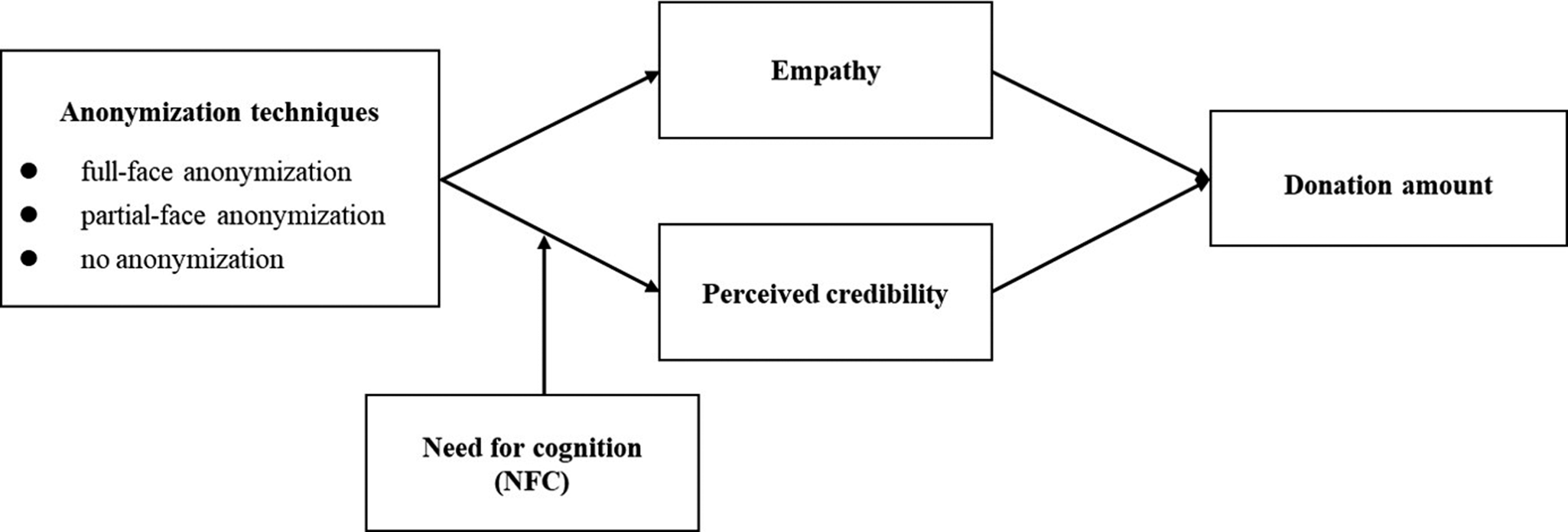
In fundraising, we argue that levels of NFC can influence the effectiveness of different anonymization techniques. Specifically, individuals with high NFC are more likely to engage in comprehensive information processing and allocate more cognitive resources when evaluating fundraising, whereas those with low NFC rely more on intuitive responses and engage in less cognitive effort (Gärtner et al., Reference Gärtner, Grass, Wolff, Goschke, Strobel and Strobel2021). While emotional appeal generally enhances ad effectiveness for individuals with low NFC, both emotional and cognitive appeals can be effective for those with high NFC (Kulkarni et al., Reference Kulkarni, Kalro and Sharma2020). Cognitive signals, such as those reflecting a nonprofit organization’s credibility through privacy protection, tend to require more deliberate interpretation and reasoning. NFC is likely to exert a stronger moderating effect on this cognitive pathway than on the emotional one. In contrast, emotional signals, such as beneficiaries’ facial expressions, are typically processed more intuitively and may therefore be less affected by individual differences in NFC. Therefore, we propose that donors with high NFC are more responsive to the dual signaling conveyed by partial-face anonymization. Because these individuals engage in deeper cognitive processing, they are more likely to recognize the organization’s privacy-protection efforts as a signal of credibility while still perceiving sufficient emotional cues to evoke empathy. Consequently, partial-face anonymization should enhance donation effectiveness more than full-face or no anonymization for high-NFC donors. In contrast, donors with low NFC rely primarily on intuitive and affective processing; they respond mainly to emotional cues rather than to cognitively inferred signals of credibility. Thus, for low-NFC donors, partial-face anonymization may not offer a distinct advantage over no anonymization, as both conditions elicit similar levels of empathic engagement. Thus, H4 is proposed. The conceptual framework is shown in Figure 1.
H4: The indirect effect of partial-face anonymization (versus no anonymization) on donation behavior through perceived credibility is significant for donors with high NFC but not for those with low NFC.
Conceptual framework.

Fig. 1. Long description
The flowchart consists of five rectangular boxes connected by arrows.
On the far left, a large box titled Anonymization techniques contains a bulleted list:
* full-face anonymization
* partial-face anonymization
* no anonymization
Two arrows originate from this box. One points upward to a box labeled Empathy. The other points downward to a box labeled Perceived credibility.
Below the initial flow, a box titled Need for cognition N F C has an upward-pointing arrow that intersects the line leading to Perceived credibility, indicating a moderating effect.
On the far right, a final box titled Donation amount receives two converging arrows, one from Empathy and one from Perceived credibility, representing the final outcome of the framework.
Study 1
Study 1 aims to explore the effect of face anonymization on donation amount. We expect that employing partial-face anonymization will increase donors’ donation amount compared to both non-anonymization and full-face anonymization (H1).
Method
We recruited 330 participants (Mage = 30.94, 43.33% male) from Credamo platform (www.credamo.com), employing a between-subjects design. This platform is one of the largest questionnaire survey panels in China. Participants were randomly assigned to one of three anonymization technique conditions: full-face, partial-face, or no anonymization. The Credamo platform automatically restricts each verified participant to a single survey condition and prevents duplicate participation across groups by tracking unique user accounts and device information. A priori power analysis using G*Power 3.1 (Faul et al., Reference Faul, Erdfelder, Lang and Buchner2007) indicated that a sample size of 206 would provide 90% statistical power (1-β) to detect a medium effect size (f = .25) at a significance level (α = .05). Our sample size exceeds this criterion.
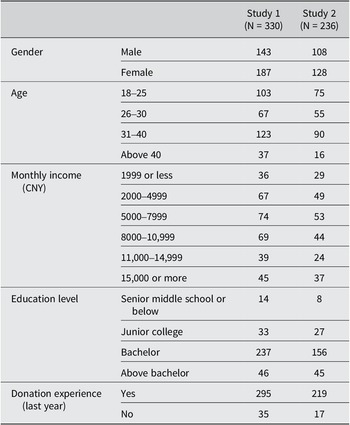
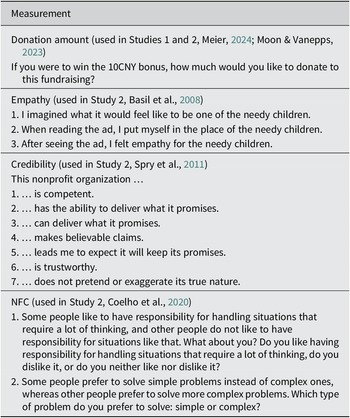
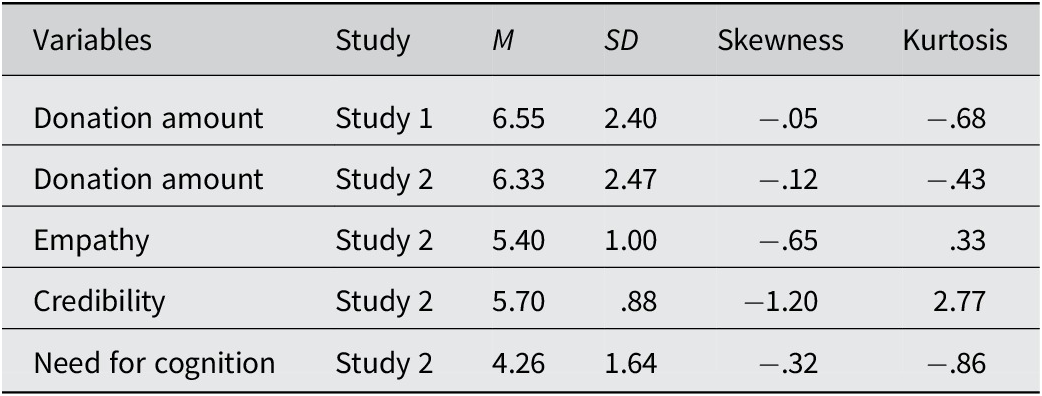
In this study, we selected a fundraising program aimed at alleviating elderly poverty. The ad content is detailed in Appendix B1. We manipulated face anonymization techniques as outlined in previous research (Laishram et al., Reference Laishram, Shaheryar, Lee and Jung2025). To minimize social desirability bias, we measured the donation amount as the dependent variable, adopting methods from prior studies (Meier, Reference Meier2024; Moon & Vanepps, Reference Moon and VanEpps2023). Participants were informed that 10 of them would be randomly selected to receive 10 CNY each, and they could choose to donate any portion of this amount to the fundraising effort, keeping the remainder. Participants then completed a manipulation check to verify if the beneficiaries’ faces were anonymized (yes or no) and the anonymized area (full or partial). Finally, participants provided demographic information, including gender, age, education level, monthly income, and their donation experience over the past year. Table 1 summarizes participants’ demographic information, and Table 2 details the measurement scales. The descriptive statistics of all variables are displayed in Table 3. Besides, no significant differences were found in demographic characteristics across experimental conditions, indicating acceptable sample homogeneity (Fs < 2.60, ps > 0.05, n.s.).
Demographic information of participants

Table 1. Long description
The table is organized into four columns: Demographic Category, Sub-category, Study 1 (N equals 330), and Study 2 (N equals 236).
* Gender: Male (Study 1: 143; Study 2: 108), Female (Study 1: 187; Study 2: 128).
* Age: 18 to 25 (Study 1: 103; Study 2: 75), 26 to 30 (Study 1: 67; Study 2: 55), 31 to 40 (Study 1: 123; Study 2: 90), Above 40 (Study 1: 37; Study 2: 16).
* Monthly income in C N Y: 1999 or less (Study 1: 36; Study 2: 29), 2000 to 4999 (Study 1: 67; Study 2: 49), 5000 to 7999 (Study 1: 74; Study 2: 53), 8000 to 10,999 (Study 1: 69; Study 2: 44), 11,000 to 14,999 (Study 1: 39; Study 2: 24), 15,000 or more (Study 1: 45; Study 2: 37).
* Education level: Senior middle school or below (Study 1: 14; Study 2: 8), Junior college (Study 1: 33; Study 2: 27), Bachelor (Study 1: 237; Study 2: 156), Above bachelor (Study 1: 46; Study 2: 45).
* Donation experience in the last year: Yes (Study 1: 295; Study 2: 219), No (Study 1: 35; Study 2: 17).
Measurement of constructs

Table 2. Long description
The table consists of a single column titled Measurement.
* Donation amount (used in Studies 1 and 2, Meier, 2024; Moon and Vanepps, 2023): If you were to win the 10 C N Y bonus, how much would you like to donate to this fundraising?
* Empathy (used in Study 2, Basil et al., 2008):
1. I imagined what it would feel like to be one of the needy children.
2. When reading the ad, I put myself in the place of the needy children.
3. After seeing the ad, I felt empathy for the needy children.
* Credibility (used in Study 2, Spry et al., 2011): This nonprofit organization...
1. ...is competent.
2. ...has the ability to deliver what it promises.
3. ...can deliver what it promises.
4. ...makes believable claims.
5. ...leads me to expect it will keep its promises.
6. ...is trustworthy.
7. ...does not pretend or exaggerate its true nature.
* N F C (used in Study 2, Coelho et al., 2020):
1. Some people like to have responsibility for handling situations that require a lot of thinking, and other people do not like to have responsibility for situations like that. What about you? Do you like having responsibility for handling situations that require a lot of thinking, do you dislike it, or do you neither like nor dislike it?
2. Some people prefer to solve simple problems instead of complex ones, whereas other people prefer to solve more complex problems. Which type of problem do you prefer to solve: simple or complex?
Descriptive statistics of variables in two studies

Table 3. Long description
The table consists of six columns: Variables, Study, M (Mean), S D (Standard Deviation), Skewness, and Kurtosis.
* Donation amount for Study 1: Mean 6.55, S D 2.40, Skewness minus .05, Kurtosis minus .68.
* Donation amount for Study 2: Mean 6.33, S D 2.47, Skewness minus .12, Kurtosis minus .43.
* Empathy for Study 2: Mean 5.40, S D 1.00, Skewness minus .65, Kurtosis .33.
* Credibility for Study 2: Mean 5.70, S D .88, Skewness minus 1.20, Kurtosis 2.77.
* Need for cognition for Study 2: Mean 4.26, S D 1.64, Skewness minus .32, Kurtosis minus .86.
Results analysis
Manipulation check
We first assessed the effectiveness of the manipulation to determine whether participants could accurately identify if the charitable ad employed anonymization techniques. In the no anonymization condition, 106 out of 110 participants correctly identified their assigned condition. In the full-face anonymization condition, 107 out of 108 participants accurately identified their assigned condition. In the partial-face anonymization condition, 105 of 112 participants correctly identified their assigned condition (x 2(2) = 279.55, p < .001). We also evaluated the manipulation of the anonymized area. In the full-face anonymization condition, 95 out of 108 participants accurately identified the full-face anonymization. In the partial-face anonymization condition, 105 of 112 participants correctly identified the partial-face anonymization (x 2(1) = 147.63, p < .001). These results indicate that the manipulation of anonymization techniques was successful.
Donation amount
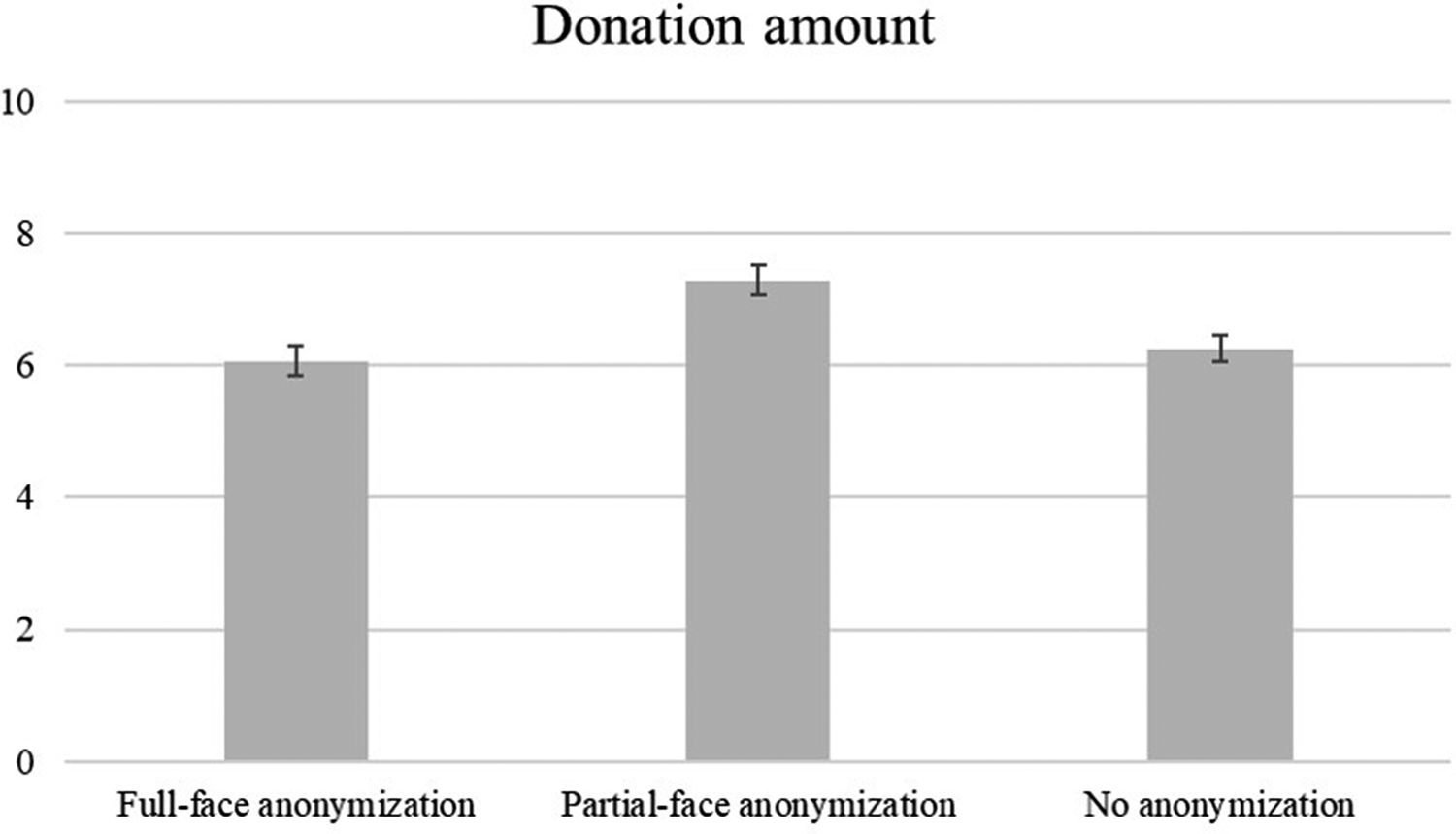
A one-way ANOVA revealed a significant effect of three experimental conditions on donation amount (F(2, 327) = 8.71, p < .001, η2 = .051). This effect remains significant after controlling for participants’ gender, age, monthly income, education level, and donation experience (F(2, 322) = 6.56, p = .002, η2 = .039). None of the control variables had significant effects (all ps > .05). Specifically, participants in the partial-face anonymization condition (M = 7.29, SD = 2.44) donated significantly more than those in the full-face anonymization condition (M = 6.07, SD = 2.44, p = .001) and no anonymization condition (M = 6.26, SD = 2.13, p = .003). The results supported H1. No significant difference was found between the no anonymization and full-face anonymization conditions (p = .72). The mean pattern is shown in Figure 2.
Effects of face anonymization techniques on donation amount (Study 1).

Study 2
Study 2 aims to investigate the internal mechanisms underlying the observed effects in Study 1. We examine the mediation effects of empathy (H2) and credibility (H3), as well as the moderating effects of NFC (H4). This study used a different type of beneficiary (children) instead of elderly individuals used in Study 1.
Method
We recruited 236 participants (Mage = 29.33, 45.76% male) from the same platform as used in Study 1. Participants were randomly assigned to one of three anonymization technique conditions: full-face, partial-face, or no anonymization. The sample size in this study meets the 90% statistical power criterion mentioned in Study 1.
In this study, we selected a children’s poverty alleviation fundraising program. The ad content is detailed in Appendix B2. Manipulation of face anonymization techniques and measurement of donation amount followed the same procedures as in Study 1. After viewing the fundraising ad and reporting their donation amount, participants indicated their empathy toward the beneficiaries, perceived credibility of the nonprofit organization, and their NFC. They also completed the same manipulation check as in Study 1. Empathy was measured using three items adapted from Basil et al. (Reference Basil, Ridgway and Basil2008). The perceived credibility of the nonprofit organization was assessed with seven items adapted from Spry et al. (Reference Spry, Pappu and Cornwell2011). NFC was measured using two items adapted from Coelho et al. (Reference Coelho, Hanel and Wolf2020). All variables demonstrated reliability (Empathy: α = .78; Credibility: α = .91; NFC: α = .86, Pearson’s r = .76). Finally, participants provided demographic information, including gender, age, education level, monthly income, and their donation experience over the past year. NFC was classified into low (≤ 4.50, N = 121) and high (> 4.50, N = 115) categories based on the median. Detailed demographic information is provided in Table 1, and the specific measurements are shown in Table 2. Besides, descriptive statistics of variables are presented in Table 3. Besides, no significant differences were found in demographic characteristics across experimental conditions, indicating acceptable sample homogeneity (Fs < 2.73, ps > 0.05, n.s.).
Results analysis
Manipulation check
We first assessed whether participants could distinguish between the different anonymization techniques used in the fundraising ad. In the no anonymization condition, 74 of 79 participants correctly indicated their assigned condition. In the full-face anonymization condition, 77 of 79 participants accurately indicated their assigned condition. In the partial-face anonymization condition, 75 of 78 participants accurately indicated their assigned condition (x 2(2) = 193.26, p < .001). We then examined the accuracy of participants’ identification of the anonymized area. In the full-face anonymization condition, 66 of 79 participants accurately identified the condition, while in the partial-face anonymization condition, 74 of 78 participants correctly indicated their condition (x 2(1) = 97.68, p < .001). Thus, the manipulation of anonymization techniques was successful.
Donation amount
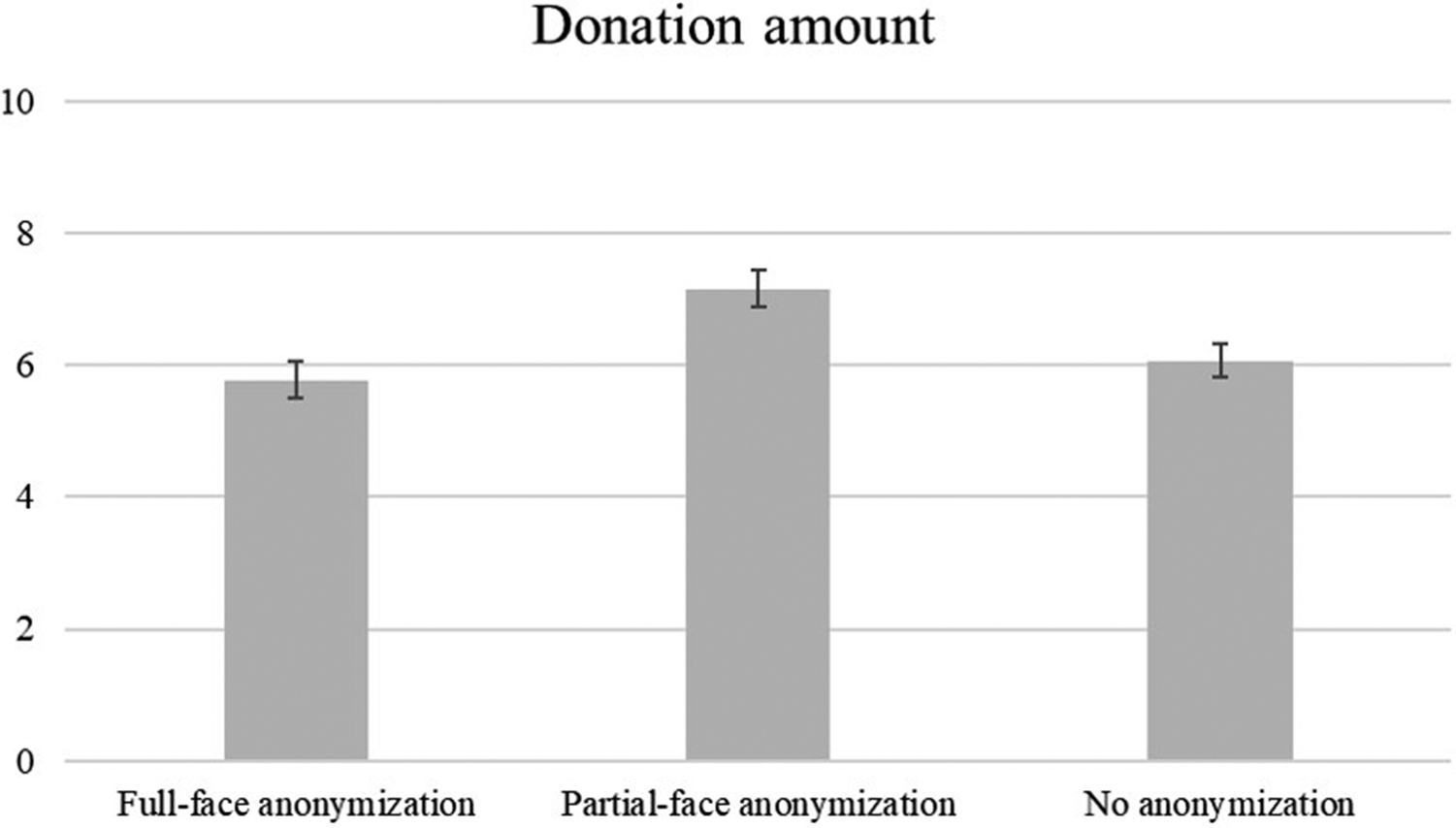
A one-way ANOVA revealed a significant effect of three experimental conditions on donation amount (F(2, 233) = 7.15, p = .001, η2 = .058). This effect remains significant after controlling for participants’ gender, age, monthly income, education level, and donation experience (F(2, 228) = 6.47, p = .002, η2 = .054). Specifically, participants in the partial-face anonymization condition (M = 7.16, SD = 2.43) donated more than those in the full-face anonymization condition (M = 5.77, SD = 2.49, p = .001) and the no anonymization condition (M = 6.07, SD = 2.30, p = .007). There were no significant differences in donation amount between the no anonymization condition and the full-face anonymization condition (p = .51). The results are consistent with the findings of H1 from Study 1. The mean pattern is shown in Figure 3.
Effects of face anonymization techniques on donation amount (Study 2).

Mediating effects of empathy and credibility
We employed SPSS PROCESS model 4 to test the mediating effects of empathy and credibility (Hayes, Reference Hayes2018). We set face anonymization techniques as an independent variable, empathy and credibility as mediating variables, donation amount as a dependent variable, and gender, age, and participants’ gender, age, monthly income, education level, and donation experience as control variables. The bootstrap analysis (5,000 resamples) revealed that the mediating role of empathy was significant when compared the full-face with the partial-face (full-face = 0, partial-face = 1; ab = .50, 95% CI = [.23, .82]) and no anonymization condition (none = 0, full-face = 1; ab = −.50, 95% CI = [−.83, −.21]). The mediating role of empathy was not significant when comparing the partial-face and the no anonymization condition (none = 0, partial-face = 1; ab = .00, 95% CI = [−.23, .24]). The findings provided support for H2. The bootstrap analysis (5,000 resamples) also revealed that the mediating role of credibility was significant when compared the no anonymization with the partial-face (none = 0, partial-face = 1; ab = .29, 95% CI = [.06, .59]) and full-face anonymization condition (none = 0, full-face = 1; ab = .27, 95% CI = [.06, .53]). The mediating role of credibility was not significant when comparing the partial-face and the full-face anonymization condition (full-face = 0, partial-face = 1; ab = .03, 95% CI = [−.10, .19]). The findings provided support for H3. The detailed comparison is reported in Appendix C1.
Interaction effect of anonymization techniques and the NFC
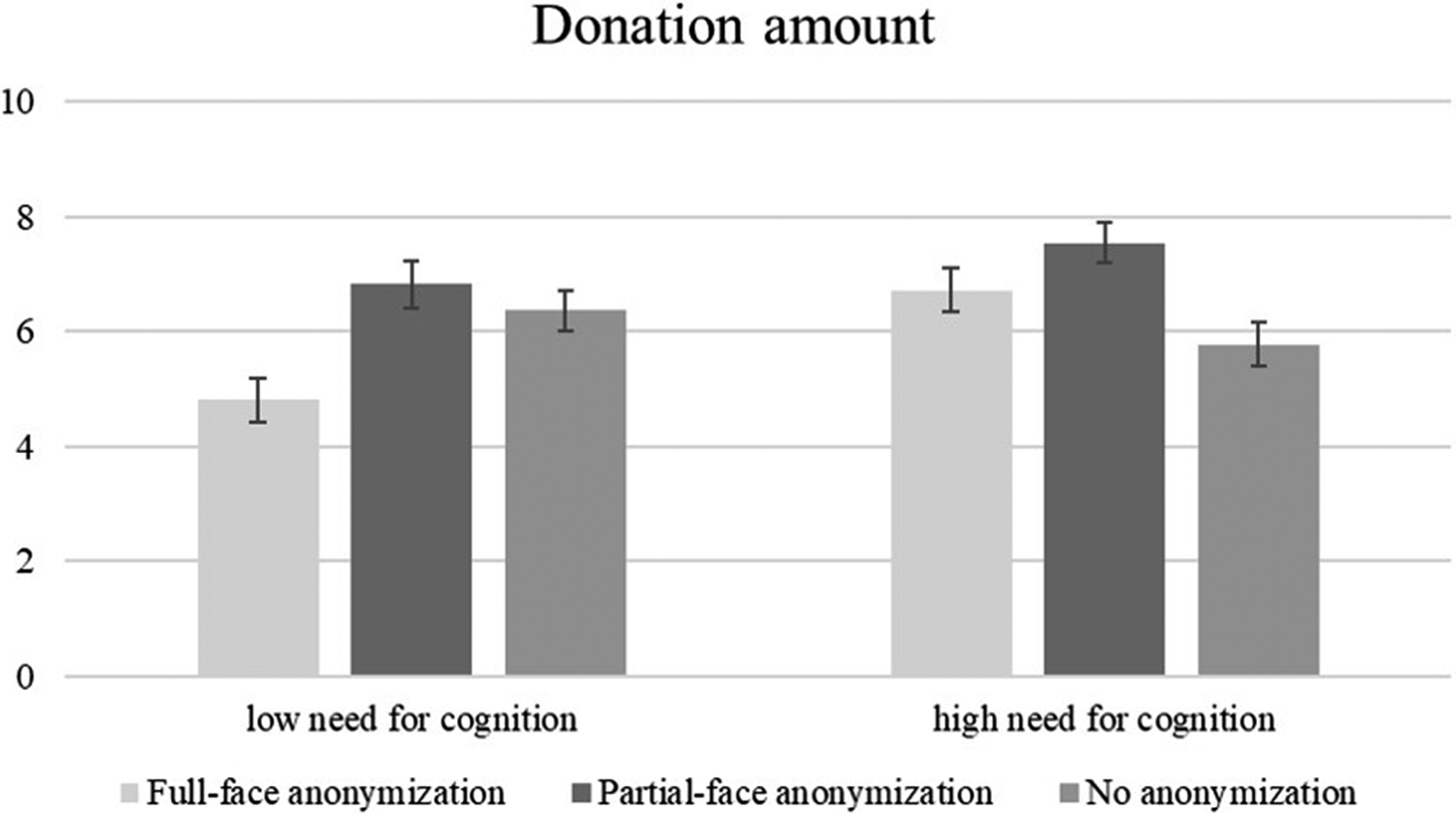
A 3 × 2 ANOVA analysis revealed a significant interaction effect of anonymization techniques and the NFC on donation amount (F(2, 230) = 5.68, p < .01, η2 = .047). This interaction effect remains significant when we control participants’ gender, age, monthly income, education level, and donation experience (F(2, 225) = 5.45, p < .01, η2 = .046). Specifically, for participants with high NFC, fundraising featuring partial-face anonymization reported a high level of donation amount (M = 7.54, SD = 2.07) compared to full-face (M = 6.72, SD = 2.33, p = .06) and no anonymization (M = 5.77, SD = 2.37, p = .001) expressions. The latter two conditions have no significant differences (p = .12). Conversely, for participants with low NFC, fundraising featuring partial-face (M = 6.82, SD = 2.68) and no anonymization (M = 6.36, SD = 2.22) have no significant differences (p = .39). They both had a positive significant effect than full-face anonymization (M = 4.80, SD = 2.30, ps < .01). Figure 4 shows the mean pattern concerning this interaction effects.
Interaction effects of face anonymization techniques and NFC on donation amount (Study 2).

Fig. 4. Long description
The Y axis is labeled Donation amount with a scale from 0 to 10 in increments of 2. The X axis contains two categories: low need for cognition and high need for cognition. A legend at the bottom identifies three bar types: light gray for Full-face anonymization, dark gray for Partial-face anonymization, and medium gray for No anonymization. All bars include vertical error bars.
In the low need for cognition group:
* Full-face anonymization is approximately 4.8.
* Partial-face anonymization is approximately 6.8.
* No anonymization is approximately 6.4.
In the high need for cognition group:
* Full-face anonymization is approximately 6.7.
* Partial-face anonymization is approximately 7.5.
* No anonymization is approximately 5.8.
Moderated mediation analysis
We conducted a moderated mediation analysis using Process Model 8 to validate the moderating effect of NFC on the mediation model (Hayes, Reference Hayes2018). We set the face anonymization techniques as the independent variable, empathy and credibility as the mediating variables, donation amount as the dependent variable, NFC as the moderating variable, and participants’ gender, age, monthly income, education level, and donation experience as control variables.
The bootstrapping results (5,000 resamples) indicated that the indirect effects of credibility were affected by NFC. Specifically, when compared partial and no anonymization for participants with high NFC, the indirect effect of credibility was significant (none = 0, partial-face = 1; ab = .42, 95% CI = [.08, .86]), whereas this effect was not significant for participants with low NFC (none = 0, partial-face = 1; ab = .14, 95% CI = [−.05, .37]). Thus, H4 was supported. No other significant differences between low and high NFC were found. The detailed comparison is reported in Appendix C2.
General discussion
Discussion of studies
In this research, we investigated two face anonymization techniques, partial-face and full-face anonymization, and compared them with no anonymization. We conducted two studies to test our hypotheses. Study 1 explored the effects of face anonymization techniques on donation effectiveness (H1). Based on the findings, Study 2 examined the mediating effects of empathy (H2) and credibility (H3), as well as the moderating role of NFC (H4).
The results of Studies 1 and 2 consistently revealed that face anonymization techniques significantly influence donation amount by shaping donors’ perceived credibility of the nonprofit organization and their empathy toward beneficiaries, supporting H1, H2, and H3. Partial-face anonymization proved more effective than both no anonymization and full-face anonymization, as it simultaneously enhances credibility and empathy. On the one hand, partial-face and full-face anonymization obscure beneficiaries’ facial information compared to no anonymization, which may enhance the nonprofit organization’s perceived credibility by signaling attention to privacy protection (Shahid et al., Reference Shahid, Becker and Kundi2022). On the other hand, partial-face and no anonymization present facial information that fosters donors’ empathy toward beneficiaries (Basil et al., Reference Basil, Ridgway and Basil2008), which in turn increases their donation amount (Wiepking et al., Reference Wiepking, Einolf and Yang2023). Therefore, partial-face anonymization appears to be a more effective approach, as it balances the signaling of credibility with empathy, which in turn enhances donation outcomes.
The results of Study 2 revealed the moderating effect of NFC, providing support for H4. Individuals with high NFC engage in deeper information processing, making both emotional and cognitive appeals effective, while those with low NFC rely more on intuitive and emotional responses (Gärtner et al., Reference Gärtner, Grass, Wolff, Goschke, Strobel and Strobel2021; Kulkarni et al., Reference Kulkarni, Kalro and Sharma2020). For donors with high NFC, partial-face anonymization is likely to enhance donation effectiveness compared to full-face anonymization or no anonymization, as it signals both credibility and empathy. Conversely, for those with low NFC, partial-face anonymization does not significantly outperform no anonymization, as these donors are more influenced by emotional factors, such as empathy toward beneficiaries, which makes partial-face and no anonymization similarly effective.
Theoretical implications
The theoretical implications of this research are threefold. First, this research examines how anonymization techniques of beneficiaries’ facial information influence individual donation behavior. Given the growing focus on beneficiary privacy in charitable contexts (e.g., Livingstone et al., Reference Livingstone, Servais and Wilkinson2023; Snyder & Crooks, Reference Snyder and Crooks2021), it is increasingly valuable to explore how privacy strategies might influence donor behavior. As a potential privacy-protection technique, face anonymization provides a new perspective for future research to examine how this strategy influences donor responses in fundraising.
Second, this research broadens the application of signaling theory in charitable giving by offering a more nuanced understanding of how facial information functions as a signal. Previous studies have generally treated the presence or absence of facial information as an emotional signal that primarily affects donors’ empathy and emotional engagement with beneficiaries (Lu et al., Reference Lu, Xu and Fan2024; Zheng et al., Reference Zheng, Liu, Gong and Wang2025a, Reference Zheng, Zhang, Gong and Lv2025b). However, our findings suggest that the absence of facial information—particularly when interpreted by donors as an effort to protect beneficiaries’ privacy—can also operate as a cognitive signal, enhancing perceptions of organizational credibility. This perspective enriches the theoretical understanding of signaling theory in philanthropic contexts, especially regarding how facial cues and their absence convey different types of information. Moreover, this research introduces a new conceptual insight that a single cue may simultaneously carry both emotional and cognitive meanings, depending on how donors interpret the signal.
Finally, we expand on the moderating role of NFC in fundraising by shifting the focus from textual information to visual elements. While existing research has explored NFC’s impact on textual campaign elements (Lee & Chu, Reference Lee and Chu2023) and information about nonprofit organizations (Koksal et al., Reference Koksal, Darrat and James2022), our research specifically investigates how NFC moderates donors’ responses to visual cues, particularly the anonymized beneficiaries’ faces. This approach offers a novel perspective on how NFC interacts with visual cues in philanthropy, enhancing our understanding of NFC’s interaction with visual signals in fundraising.
Practical implications
The current research has several practical implications for charitable platforms, nonprofit organizations, and beneficiaries. First, this research can provide beneficiaries with confidence that using partial-face anonymization, rather than no anonymization, effectively balances donation effectiveness with privacy protection. Many beneficiaries may agree to share their photos reluctantly, weighing the risks and benefits of their images being displayed in fundraising efforts (Gonzales et al., Reference Gonzales, Kwon, Lynch and Fritz2018). Our findings suggest that partial-face anonymization is as effective as, or even more effective than, no anonymization in eliciting donor support.
Second, nonprofit organizations and beneficiaries should carefully consider the ethical–effectiveness paradox when deciding on the use of facial anonymization. Specifically, anonymization highlights ethical responsibility and enhances credibility, whereas facial presentation fosters emotional engagement and strengthens empathy among donors. This implies that, in practice, the degree of anonymization should be carefully designed, particularly regarding the technical implementation of anonymization techniques, to ensure an appropriate balance between ethical privacy protection and fundraising effectiveness.
Third, charitable platforms can optimize their outreach by tailoring information to specific donors based on the type of face anonymization submitted by beneficiaries. For instance, images with full-face anonymization could be directed toward potential donors with high NFC, who are likely to engage more deeply with the content. Conversely, images with no anonymization could be targeted at donors with low NFC, who are more responsive to emotional appeals. Research shows that factors such as age and education level are significantly related to NFC (Bruinsma & Crutzen, Reference Bruinsma and Crutzen2018). By leveraging existing donor data, charitable platforms can infer NFC levels and tailor their communications accordingly.
Limitations and future research
Several limitations in our research can be addressed in future studies. First, future research could explore additional forms of partial-face anonymization. Our research focused on a method that retains the eyes while obscuring the mouth, a common practice in reality. Previous psychological studies have revealed potential differences in the expressive or perceptual roles of individual facial features, such as the mouth and eyes (e.g., Witkower & Tracy, Reference Witkower and Tracy2019). Building on this perspective, future research could examine whether different partial anonymization methods (e.g., obscuring the eyes versus the mouth) might lead to different effects from those observed in the present research. In addition, it is important for future research to examine how beneficiaries themselves perceive and accept different forms of partial-face anonymization, and whether they regard these practices as meaningful privacy-protection measures.
Second, future research should examine how cultural factors influence the effectiveness of face anonymization on donation. Our research was conducted with Chinese participants and beneficiaries. In some other cultures, however, charitable campaigns may adopt different persuasive strategies with varying emotional intensity, such as using highly emotional shock appeals to elicit empathy and donations (Albouy & Décaudin, Reference Albouy and Décaudin2018; Cockrill & Parsonage, Reference Cockrill and Parsonage2016). The influence of anonymization techniques on donation behavior, particularly through the mediation of empathy, may vary across cultural contexts.
Third, the present research provides experimental evidence for the effects of face anonymization techniques on donation outcomes by adopting different beneficiary types to increase the diversity of research contexts. Future research could further strengthen the reliability of these findings by conducting multiple experiments with consistent materials and identical beneficiary stimuli. Moreover, future studies could adopt methodological alternatives, such as analyzing secondary or field data from real charitable platforms, to examine how anonymization techniques influence donors’ actual behaviors in natural settings. Such a multimethod approach would enhance the external validity of the findings and provide a more comprehensive understanding of anonymization in real-world fundraising.
Supplementary material
The supplementary material for this article can be found at http://doi.org/10.1017/S0957876526000215.
Funding statement
The work was supported by the National Natural Science Foundation of China (Grant No. 72172102), granted to Chundong Zheng.
Competing interests
The authors report there are no competing interests to declare.


 Open access

