


Introduction
As an EU Member State, the UK did not conduct its own external trade policy, as this was an exclusive competence of the EU.Footnote 1 The repatriation of powers to conclude free trade agreements (FTAs) was a much-anticipated effect of the UK’s withdrawal from the EU and was central to proponents’ vision for a successful post-Brexit future.Footnote 2 However, given the make-up of the UK territorial constitution, the return of trade policy competence raised questions about the position of devolved authorities.
The contemporary devolution arrangements in the UK originated and evolved in the context of EU membership. From the outset, a shared obligation to follow and implement EU laws acted as a constraint on the degree of intra-UK regulatory divergence which would otherwise have resulted from the devolution of competences from London to Edinburgh, Cardiff and Belfast. Similarly, because trade policy was carried out by the EU, there was no autonomous UK trade policy to which devolved authorities could meaningfully contribute.Footnote 3 The issue of the relationship between devolution and UK post-Brexit trade policy is pertinent because of parallel developments in the nature of devolution and of FTAs in recent decades. Since 1998, the scope of powers devolved to Scotland, Wales, and Northern Ireland has expanded such that respective administrations now have competence in a wide range of policy areas.Footnote 4 Simultaneously, the scope of modern FTAs has expanded beyond tariffs and quotas as most now cover devolved matters in the UK such as procurement as well as environmental and labour standards.
In anticipation of the return of powers to conclude trade agreements, concerns were raised by some academics about the possible exclusion of devolved authorities from processes likely to impact on areas of policy relating to devolved matters.Footnote 5 Devolved authorities also worried that post-Brexit UK FTAs may be used to regulate areas that fell within devolved competence and, in doing so, inhibit their regulatory autonomy.Footnote 6 At the same time, the UK Government was concerned that intra-UK divergence at devolved level might undermine its leverage in trade negotiations.Footnote 7 One of the key aims of this paper then is to examine whether the concerns, outlined above, of the UK Government and devolved authorities in relation to the substantive impact of trade agreements on devolved competences and legislation have materialised in practice.
This study is timely, as it comes at a moment when the UK has now concluded a sufficient number of post-Brexit trade agreements to permit a meaningful assessment of their implications for devolved competence and legislation. The first batch of FTAs concluded by the UK post-Brexit are the so-called ‘rollover’ agreements, where the UK replicated agreements that it benefited from as an EU Member State. Because these agreements were incorporated in domestic law, their impact on devolved legislation was minimal. However, more than half a decade on from the UK’s formal departure from the EU, the UK has signed a number of new FTAs with third-countries that did not have FTAs with the EU pre-Brexit. These agreements allow us to assess the extent to which the substantive content of such agreements overlap with devolved competences and, where overlaps do exist, whether these agreements affected devolved regulatory autonomy by causing legislative changes at devolved level. Further, this analysis also explores how post-Brexit FTAs affect devolved competences and the balance of territorial powers. Indeed, one of the key contributions of this paper is to expose how, even where such agreements cause few substantive changes to devolved legislation, their existence and operation can still impact the scope and exercise of devolved competences.
To achieve this, the paper uses a mixed-method approach that combines desk-based doctrinal analysis of legal texts of UK FTAs, semi-structured qualitative interviews with devolved and central government officials, and empirical research. The semi-structured interviews were carried out with seven officials working on trade policy: four from devolved governments, including representation from Scotland, Wales and Northern Ireland; and three from central government, including two officials from the Department of Business and Trade and one from the Cabinet Office. The empirical dimension consists of the development of, what is to our knowledge, the first comprehensive dataset that systematically maps the substantive content of post-Brexit UK FTAs and identifies the corresponding areas of overlap with devolved competence.Footnote 8 To understand how these overlaps affect devolved legislation, we carry out doctrinal analysis not only of the agreements themselves, but also of the domestic legislative framework implementing UK trade agreement obligations, in combination with qualitative interviews with government officials at both national and devolved levels. We find that whilst there is extensive overlap between the content of FTAs and devolved competence, these agreements have, to date, not led to significant changes to devolved legislation. This is in part because the UK has so far not signed FTAs that imposed significant constraints on domestic regulation. However, we also find that the impact of UK FTAs on the regulatory autonomy of devolved authorities cannot be fully understood without considering the role of the domestic legal framework through which international trade obligations are implemented. In certain instances, namely the United Kingdom Internal Market Act 2020 (UKIMA 2020),Footnote 9 FTAs have been used as pretexts to enact domestic legislation that imposes constraints on devolved powers. In other cases, such legislation obscures the true extent to which FTAs may affect devolved competences. This ‘double bind’ makes it difficult to disentangle the sources of constraint and to identify areas which require scrutiny at devolved level.
The structure of this paper is as follows. Section 1 situates the analysis in a wider context regarding the trend of including regulatory issues in FTAs and the impact this has on the autonomy of national and subnational entities. Section 2 examines the UK’s post-Brexit FTA practice and, drawing on extensive original research, maps the overlaps between UK FTAs and devolved competences. It finds that there are significant overlaps between the content of UK FTAs and devolved competences. Section 3 examines the domestic processes for the implementation of international commitments in UK law, with particular attention to the post-Brexit legislative framework associated with FTAs. It highlights several problematic features of this framework, notably the limited parliamentary scrutiny of international agreements and the marginalisation of devolved authorities in the implementation process. Section 4 determines whether FTAs have led to changes in devolved legislation. It finds that while relatively few FTAs have resulted in substantive amendments to devolved law, their interaction with domestic implementing legislation has nonetheless affected devolved autonomy in ways that may prove problematic.
1. The regulatory dimension of FTAs and devolved autonomy
(a) The rise of ‘regulatory’ FTAs and the erosion of regulatory autonomy
FTAs have progressively moved away from their traditional focus on border barriers and have increasingly sought to address ‘behind-the-border’ measuresFootnote 10 – that is, non-tariff measures such as domestic legislation on competition, procurement, intellectual property, health, labour and environmental standards.Footnote 11 Today, it is no longer uncommon for trade agreements – whether at the multilateralFootnote 12 or regionalFootnote 13 level – to include provisions on matters typically associated with domestic regulation.Footnote 14
The growing regulatory dimension of contemporary FTAs has proved problematic insofar as it has disrupted the delicate balancing act that the international trading system sought to achieve in the aftermath of the Second World War between, on the one hand, the desire to liberalise trade and, on the other hand, the need to safeguard the ability of sovereign states to regulate domestic matters.Footnote 15 Because FTAs had historically focused on border measures, such as tariffs and quotas, countries remained free to decide on the content of domestic policy and regulatory measures so long as such measures were applied on a non-discriminatory basis. Contemporary FTAs, however, have blurred the line between trade liberalisation and domestic regulation by creating obligations on states to regulate certain areas in certain ways.
There is a considerable field of scholarship examining the ways in which FTAs can impact on the regulatory autonomy of states.Footnote 16 Broadly speaking, the term ‘regulatory autonomy’ is understood to concern the ability of states ‘to maintain and adopt measures that reflect their public policy objectives’.Footnote 17 According to Frankel and Kolsky Lewis, FTAs can directly affect the ability of states to regulate in two important ways: first, by constraining how rules are adopted (that is, by imposing disciplines that affect regulatory decision-making processes); and, secondly, by imposing obligations that affect the substantive content of domestic legislation.Footnote 18 All FTAs involve a balancing act, by the parties, between the desire to remove barriers to trade and the loss of regulatory flexibility that results from the removal of such barriers. The more ambitious a trade agreement, the more a state’s regulatory autonomy will be constrained and vice versa.Footnote 19 Here, it is worth distinguishing between FTAs that merely pursue trade liberalisation and those that are aimed at achieving market integration.Footnote 20 Most FTAs can be placed under the trade liberalisation paradigm – that is, agreements that aim to ‘facilitate economic exchanges’Footnote 21 whilst stopping short of requiring the type of regulatory convergence that is required to fully remove regulatory barriers to trade. From a regulatory perspective, FTAs that are focused on trade liberalisation, mimic multilateral trade rules in prohibiting discriminatory application of domestic rules whilst imposing minimal constraints on the substance of domestic regulation.Footnote 22 Although more recent FTAs have incorporated provisions on regulatory coherence and cooperation – typically promoting good regulatory practices such as transparency and providing fora for dialogue on regulatory barriers – these mechanisms generally stop short of imposing binding or detailed regulatory frameworks.Footnote 23 Further, although contemporary FTAs frequently oblige parties to adhere to multilateral environmental agreements and International Labour Organization conventions, these commitments often merely reflect the domestic status quo.Footnote 24 At the other end of the spectrum, FTAs pursuing market integration will address regulatory barriers to trade by requiring regulatory convergence – that is alignment on the substantive content of domestic rules. This is typically achieved by imposing harmonisation or mutual recognition of standards.Footnote 25 Such agreements are, however, rare because they reduce the regulatory flexibility of parties and require the establishment of common institutional and regulatory frameworks that are difficult to maintain.Footnote 26 In short, the extent to which a trade agreement will affect the parties’ regulatory autonomy will to a large extent reflect the level of economic integration pursued by the agreement.
Political economy literature has also shown that FTAs can affect the regulatory autonomy of states in ways that are highly problematic. Trade agreements can operate as techniques of legal diffusion whereby specific approaches to regulating issues are exported to third-countries.Footnote 27 This is particularly relevant in FTAs that are characterised by power asymmetries where high-income countries impose their regulatory approaches on less powerful and low-income countries.Footnote 28 FTAs can also inhibit regulatory autonomy by disincentivising countries from regulating at all. The term ‘regulatory chill’ (typically associated with international investment law) was coined to describe how the fear of capital flightFootnote 29 or the threat of being subject to investor-state dispute settlement mechanismsFootnote 30 could deter states from carrying out environmental and social regulatory reforms. FTAs may also be used by governments to reduce their own regulatory autonomy. FTAs can ‘lock in’ a domestic policy reform to make it harder for future governments to reverse such reforms.Footnote 31 In some instances, FTAs have been used to force through unpopular regulatory reforms at the domestic level. The term ‘policy laundering’ has thus been used to describe the process through which national governments will deliberately include obligations in international treaties which require domestic regulatory reforms that they have struggled to adopt via internal democratic legislative processes.Footnote 32 Modern FTAs thus affect regulatory autonomy in a myriad of ways. They can create tensions, internationally, between states, as well as domestically between different branches of power. However, as discussed in the following section, the widening scope of FTAs has also caused, at the domestic level, vertical tensions between different levels of government.Footnote 33
(b) Vertical tensions in the context of UK post-Brexit FTAs: between trade liberalisation and market integration
In multilevel systems of governance, where legislative competences are not centralised but distributed between central, regional and local authorities, the overlap between the content of FTAs and subnational competences can cause difficult political and constitutional questions. These include questions concerning the power of central governments to include such matters in trade negotiations, the right of subnational entities to refuse to implement international commitments derived from FTAs, as well as the allocation of liability for the failure to comply with those commitments.Footnote 34 Different constitutional systems create different types of vertical tensions, which require different solutions. For example, vertical tensions can be acute in federal systems where subnational entities have the exclusive power to regulate in their spheres of competences.Footnote 35 This is because those entities can refuse to implement obligations derived from international treaties where they overlap and, in doing so, place the federal government in a position where it could not guarantee compliance with such agreements.Footnote 36
The UK, however, is not a federal system.Footnote 37 Rather the UK has adopted a system of devolution in which it remains a highly centralised state where devolved territories are granted less autonomy and fewer safeguards than subnational entities in federal systems.Footnote 38 This system entails the delegation of legislative and executive powers from the Parliament to subnational institutions in Scotland,Footnote 39 Wales, and Northern Ireland, while preserving parliamentary sovereignty. Devolved legislative competences are therefore not exclusive. Such competences are only delegated to devolved authorities and can ultimately be withdrawn by Parliament.Footnote 40 This system creates unique challenges in the context of the conclusion and implementation of FTAs. Because foreign affairs fall under the exclusive competence of central government,Footnote 41 the latter can conclude agreements that regulate devolved matters and may require implementation at devolved level. And, where devolved authorities refuse to implement international trade obligations, central government has the powers to direct devolved authorities to ensure compliance.Footnote 42
For a long time, the vertical tensions which could result in the overlap between FTAs and devolution were avoided because the decentralisation of powers through devolution occurred in the context of EU membership. Because trade policy was conducted in Brussels, potential frictions were not felt as keenly as they would have been if the decisions were being made closer to home by the UK central government.Footnote 43 EU membership thus created a distance whereby trade policy-making at EU level felt removed from the realities of devolved politics. The UK’s decision to withdraw from the EU had the effect of bringing trade policy closer to home and highlighted the overlaps between the content of FTAs and devolved competences. These overlaps were quickly identified as a potential source of vertical tensions between central and devolved governments. Indeed, because external trade matters fall under the royal prerogative, devolved authorities expressed concerns that the UK Government may use FTAs to regulate otherwise devolved matters and, in doing so, undermine devolved powers.Footnote 44 The UK Government, on the other hand, worried that autonomy at devolved level might lead to regulatory divergence within the UK which would, in turn, undermine its ability to negotiate ambitious FTAs.Footnote 45 First, because regulatory divergence across the UK would undermine its ability to make substantive regulatory commitments in FTAs.Footnote 46 Secondly, because the UK’s trade partners might be reluctant to engage in trade negotiations if goods entering the UK were to be subject to additional internal regulatory trade barriers.Footnote 47 These concerns were reflected in the enactment of the UKIMA 2020Footnote 48 where the UK Government justified the placing of constraints on devolved regulatory autonomy in part by reference to the desire to ensure that the UK was not hamstrung in international trade negotiations.Footnote 49
The UKIMA 2020 exposes the complex nature of the vertical tensions associated with UK FTAs and devolution. Whilst, from a devolved perspective, these agreements were viewed as potential threats to devolved autonomy, the UK Government saw in devolved autonomy (and regulatory diversity) a potential constraint on its external trade action. The balance of power in the UK systemFootnote 50 meant that the latter concern prevailed over the former, with the enactment of legislation which placed internal disciplines on the ability of devolved authorities to pursue regulatory divergence. Both the Scottish Parliament and the Senedd refused to consent to the United Kingdom Internal Market Bill, with representatives variously labelling its provisions as an ‘assault’Footnote 51 and an ‘unwarranted attack’Footnote 52 on devolution. Whilst the Northern Ireland institutions were not sitting at the time, they subsequently rejected the Act in a symbolic vote.Footnote 53 A number of academic studies have since affirmed the initial assessments of devolved representatives regarding the centralising rationale underpinning the UKIMA 2020.Footnote 54 In short, before the UK had even formally departed from the EU or begun the process of crafting its own autonomous trade policy, post-Brexit UK FTAs were already producing a form of ‘indirect’ regulatory constraint where devolved autonomy was inhibited not by agreements themselves but by domestic legislation seeking to address the theoretical possibility that future post-Brexit UK FTAs may substantively affect devolved matters.
The regulatory autonomy concerns expressed by both the UK Government and devolved authorities regarding post-Brexit UK FTAs related, mostly, to the possibility that these agreements could affect the scope of devolved competences by constraining the ability of devolved authorities to regulate or by requiring substantive changes to domestic legislation, whether at the national or devolved level. The rest of this paper examines the extent to which the theoretical concerns regarding the substantive effect of UK FTAs on devolved legislation have been verified in practice: to what extent does the substantive content of post-Brexit UK FTAs overlap with devolved matters and, where overlaps exist, to what extent have these agreements substantively affected devolved competences and legislation?
2. UK post-Brexit FTA practice, devolution and overlaps
(a) A brief overview of post-Brexit UK FTA practice – from rollover to new UK FTAs
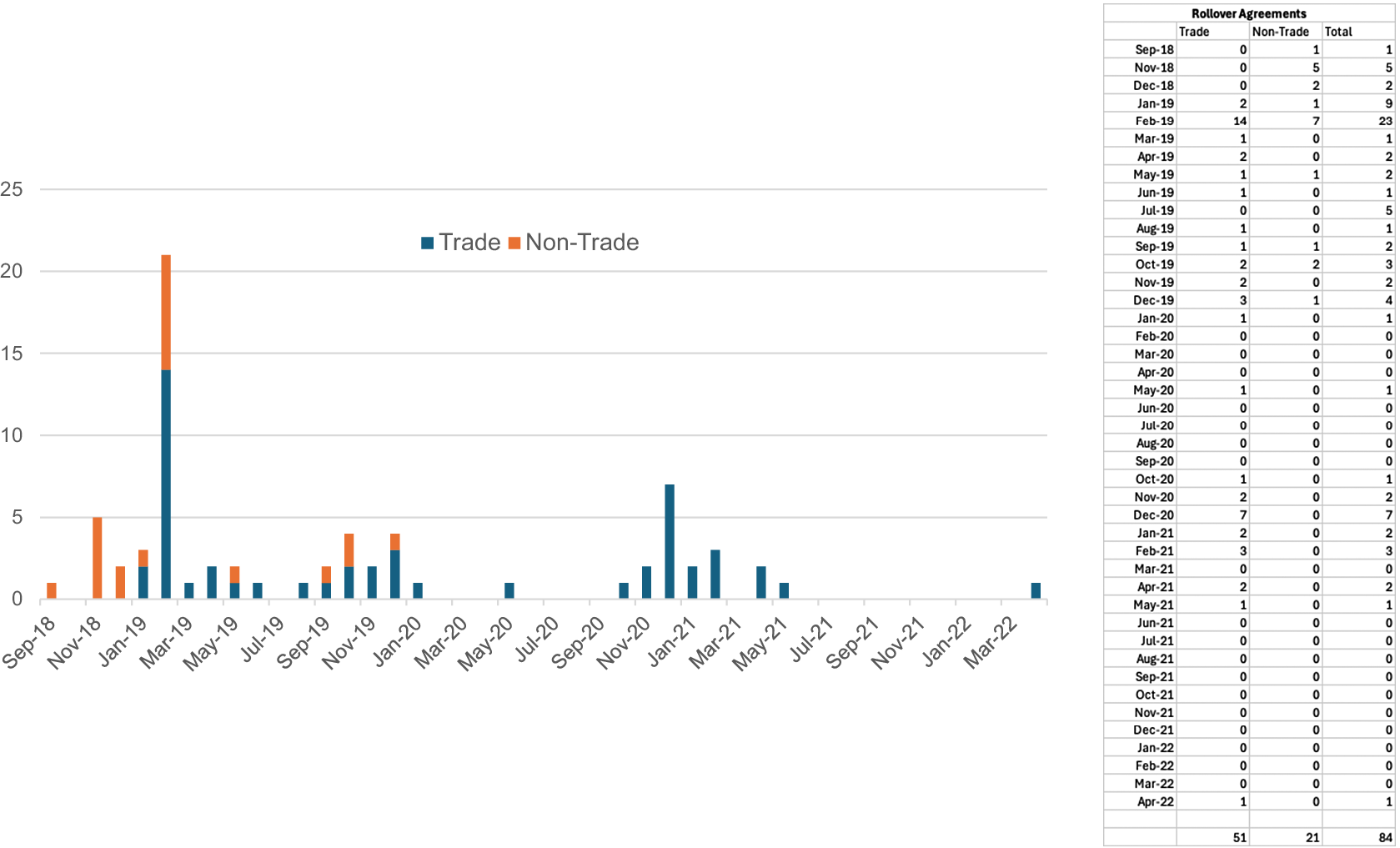
In the early days of the UK’s post-Brexit trade policy, the UK prioritised maintaining third-country market access levels that had been secured in the context of EU FTAs. The initial focus was thus on the conclusion of rollover (or ‘continuity’) – that is, agreements that sought to replicate FTAs negotiated by the EU on behalf of the UK during its period of membership.Footnote 55 Each of these roll-over agreements would be ‘based, as closely as possible, on maintaining the effects of the trade agreement that country already has [sic] with the EU’.Footnote 56 By the end of 2024, the UK had concluded 51 ‘rollover’ FTAs.
Alongside the ‘trade continuity programme’, the UK initiated negotiations with certain countries that did not, at the time when the UK decided to leave the EU, have an FTA with the EU. In the first five years after the UK formally withdrew from the EU, two wholly new FTAs – with New Zealand, Australia and India respectively – and one Accession Protocol to an existing trade agreement – the Comprehensive and Progressive Agreement for Trans-Pacific Partnership (CPTPP) – were concluded by the UK. More recently, the UK has successfully concluded a trade agreement with India.Footnote 57 Additionally, a small number of new bilateral mutual recognition agreements (MRAs) were concluded by the UK; these either replace MRAs previously rolled over from EU membership or represent new MRAs.Footnote 58
As part of the Brexit process, the UK also engaged in ‘future relationship’ talks with the EU that resulted in the EU-UK Trade and Cooperation Agreement (TCA). Although it sets the terms for EU-UK trade, the TCA is different from other post-Brexit FTAs in several ways. The most important distinctive feature for this research is that the nature of the TCA’s implementation in UK law is different to that of other post-Brexit FTAs. In particular, the requirements of Part 2 of the Constitutional Reform and Governance Act 2010 (CRGA 2010),Footnote 59 for example, which normally apply to any international agreement signed by the UK,Footnote 60 were specifically disapplied under section 36 of the European Union (Future Relationship) Act 2020 which gives the TCA legal effect domestically.Footnote 61 This makes it more difficult, for the purposes of this research, to compare the TCA to other post-Brexit UK FTAs and, for this reason, it is not considered alongside them in subsequent sections. Similarly, the UK-India FTA is excluded from the scope of the present study as, at the time of writing, it has yet to be ratified and implemented.Footnote 62
(b) Mapping overlaps between international obligations and devolved competence
Mapping intersections between UK FTAs and devolved competence is not straightforward. In part, the complexity of the task flows from the constitutional paradox whereby provisions in FTAs are by definition reservedFootnote 63 or exceptedFootnote 64 (ie policy in these areas is made by central UK government exclusively), yet, certain of these provisions must be implemented or adhered to by devolved authorities in order to produce domestic effect.Footnote 65 This constitutionally derived complexity is exacerbated by a lack of clarity regarding the boundaries of devolved competence vis-à-vis reserved competence in certain policy areas.Footnote 66 Further, based on this research, official reporting (eg in explanatory memoranda) on the legislative implications of FTAs tends to lack detail and specificity, particularly from a devolved perspective.Footnote 67
Notwithstanding methodological challenges, this research involved developing a comprehensive database of UK international agreements concluded between mid-2017 and the end of 2024 and laid before parliament and ratified under the requirements of the CRGA 2010. To supplement the information in the database, semi-structured interviews were carried out with senior officials working on external non-EU UK trade policy in central government and in each of the devolved governments. Only a small number of interviews took place. While this is partly due to reluctance among officials to speak about the internal operation of trade policy during this (Brexit-dominated) period of UK politics, it is also the case that very few officials in devolved governments worked on non-EU UK trade during this time. A similar set of questions was asked during each interview, with only minor adaptations to address the interviewees’ respective positions. The questions focused on participants’ experience of the negotiation and conclusion of UK trade agreements as well as experiences of the domestic processes for ratification and implementation. Interview transcripts were used to corroborate findings from the database regarding overlaps between the scope of FTAs and the scope of devolved powers and to provide further insights into the extent and nature of the substantive impact of FTA implementation at devolved level.
The research time period starts at the same time as the online public record of international agreements maintained by the House of Lords International Agreements CommitteeFootnote 68 which just predates the point at which the UK began concluding FTAs separate from the EU.Footnote 69 The initial stage of mapping included all international agreements laid under the CRGA 2010 during the research period. FTAs and non-FTAs were then distinguished; the former are understood to include any UK international treaty that removes or seeks to remove barriers to trade between the parties. This definition includes ‘regional trade agreements (ie FTAs and customs unions) as per Article XXIV of the General Agreement on Tariffs and Trade (GATT) as well as other international treaties governing commercial exchanges (ie mutual recognition agreements and customs cooperation agreements).Footnote 70 The focus is therefore on legally binding FTAsFootnote 71 rather than soft law – not legally binding – arrangements such as the recently concluded EU-US Economic Prosperity Deal.Footnote 72
The database includes a high-level assessment of whether provisions of international agreements overlap with devolved competence and identifies affected policy areas where relevant.Footnote 73 These assessments are based on a cross-reading of the terms of the relevant treaty, relevant official guidance, and the devolved statutes. On this basis, 63 (47%) of the 133 UK non-FTAs and 53 (84%) of the 63 UK FTAs are identified as overlapping with devolved competence. There is, therefore, a clear difference between trade and non-FTAs with the former more likely to overlap with devolved competence.
Based on this research, 45 of the 51 rollover FTAs concluded by the UK between 2019 and 2022 overlap with policy areas that are fully or partially devolved in one or more devolved territory. Any limits to devolved competence that arose from EU FTAs during the UK’s EU membership, therefore, continue to exist post-Brexit via these rollover UK FTAs. Areas of overlap include, for example, public procurement, animal and plant health standards, environmental and labour standards and tourism.
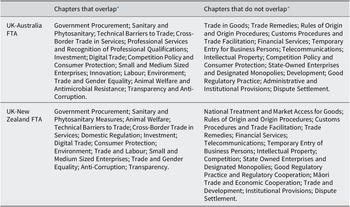
When it comes to new UK FTAs, overlaps between their scope and the scope of devolved competence are even more significant. In other words, there are more areas of overlap in new FTAs than in any rollover agreement and the commitments in overlap areas tend to be deeper.Footnote 74 For example, whilst rollover agreements tend to contain chapters on labour and environment protection, the scope of corresponding chapters in UK-AU and UK-NZ FTAs is wider.Footnote 75 Of the 32 chapters in the UK-AU FTA, 15 make provisions in areas that are devolved in whole or in part in one or more devolved territory. Similarly, of the 33 chapters in the UK-NZ FTA, again, 15 make provisions in wholly or partially devolved areas in Scotland, Wales and Northern Ireland.
The extent of the overlap between these new agreements with areas of devolved policy underlines their potential regulatory impact in Scotland, Wales, and Northern Ireland. Importantly, however, the nature and extent of these overlaps varies significantly, thereby raising questions about the substantive impact on devolved policymaking. To discern whether the high level of overlaps with devolved competence are affecting devolved competences and/or leading to substantive legislative changes at devolved level, it is necessary to look at the way in which the UK’s new-found trade obligations are being implemented.
3. Implementation of international trade law obligations in the UK
(a) Constitutional framework for the reception of UK post-Brexit FTAs
Foreign affairs fall under the royal prerogative – that is, the exclusive competence of the executive branch of power. This means that international treaties, including international FTAs, may only be negotiated and concluded by the UK Government. However, international treaties are subject to at least two important domestic legal constraints. First, in order for treaties to enter into force they must be ratified in accordance with the parliamentary scrutiny procedure set out under the CRGA 2010. Secondly, the UK has a dualist legal orderFootnote 76 where international law and domestic law are treated as autonomous legal systems. In practical terms, this means that international law cannot create rights and obligations in domestic law unless they are incorporated through domestic law.Footnote 77 Dedicated legislation must be passed to give effect to the international agreements signed by the UK, normally via an Act of primary law passed at Westminster. Depending on the specifics of the case, the dedicated primary Act of domestic law will: (i) give the international agreement direct effect in the UK; (ii) make all or some of the changes to existing UK law necessary to give it effect; or (iii) grant UK ministers ‘enabling powers’ to give effect to its provisions via secondary legislation.Footnote 78
Ratification and implementation are distinct processes pursuing distinct aims. Ratification is intended to ensure parliamentary scrutiny of governmental action whereas implementation is intended to give international law legal effect within the domestic legal system. However, both mechanisms have been criticised for skewing the balance of power in favour of central government. Ratification is often characterised as an unsophisticated tool to carry out parliamentary scrutiny of international agreements which, as previously discussed, increasingly delve into areas of domestic regulation.Footnote 79 This is because ratification only provides parliaments with a binary choice to either a approve or reject an agreement in its entirety. The CRGA 2010 is particularly problematic insofar as it even fails to provide the UK Parliament with this basic binary choice. Indeed, under the CRGA 2010, treaties are laid before Parliament for 21 sitting days during which Parliament can object to ratification.Footnote 80 However, if Parliament objects to ratification, the UK Government must wait another 21 sitting days before it can ratify the treaty.Footnote 81 In other words, the UK Parliament cannot reject an international treaty – it can only opt to temporarily withhold its approval.Footnote 82
One counter to the criticisms levelled at the limitations at the statutory treaty procedures is that, international law can only be incorporated into domestic law through implementing legislation adopted by Parliament.Footnote 83 In fact, it is established practice for the UK Government not to seek ratification until all implementing legislation has been passed.Footnote 84 However, not all international treaties require implementing legislation and, even where they do, Parliament has no power to amend the commitments derived from such treaties.Footnote 85
The centrality of the UK Government in treaty-making, combined with limited parliamentary scrutiny and specific features of UK’s dualist system, have led scholars and policy makers to call for reforms to ensure greater democratic accountability in the treaty-making process.Footnote 86 Devolution brings an additional layer of complexity in relation to the implementation of international treaties in domestic law. Because the power to conclude FTAs is ‘reserved’ in the UK system,Footnote 87 the UK Government can sign up to any international agreement regardless of whether it concerns a policy area that is otherwise devolved. In practice, however, international agreements often overlap with devolved competence insomuch as they create new obligations or restrictions on devolved policymakers. Changes to devolved law are, therefore, sometimes required in order to implement international agreements in the UK legal order.
In principle, devolved authorities need not necessarily be involved in the implementation process. Notwithstanding devolution, the UK Parliament remains sovereign, meaning it can legislate for all parts of the UK, including in devolved areas.Footnote 88 However, since contemporary devolution began, the UK Government has adhered to the (non-bindingFootnote 89) ‘Sewel Convention’Footnote 90 whereby it ‘will not normally legislate with regard to devolved matters except with the agreement of the devolved legislature’.Footnote 91 This means that, where an Act of the UK Parliament seeks to change the law in a devolved policy area, or to change the competence of devolved institutions, the UK Government is expected to consult the devolved authorities prior to introducing the relevant Bill and, once it is introduced, a legislative consent memorandum (LCM) must be published by the respective devolved governments.Footnote 92 Before such a Bill reaches its final stages in the UK Parliament, a vote, based on an LCM, will be held to either grant or withhold consent in the devolved legislatures.Footnote 93
However, in another example of the highly centralised nature of the UK’s constitutional system, the role played by devolved authorities in implementation international commitment can be curtailed. Where international law commitments fall within the scope of ‘concurrent powers’, ie policy areas that fall under competence of both central and devolved governments – UK ministers can regulate in devolved areas without consent.Footnote 94 These concurrent powers effectively bypass the Sewel Convention and LCM process by allowing changes to be made by UK Government ministers via secondary legislation in devolved areas. Further, as confirmed in Miller, whilst the Sewel Convention ‘has an important role in facilitating harmonious relationships between the UK Parliament and the devolved legislatures’ it is not legally enforceable.Footnote 95 The upshot is that the UK Parliament can opt to legislate without the consent of the devolved legislature.
Taken together, these features show how the incorporation of international treaties into domestic/devolved law is a process structurally dominated by the UK central government to the exclusion of devolved administrations. As discussed in the following section, the potential impact of this exclusion on the regulatory autonomy of devolved authorities was a concern that was identified in the context of the establishment of the post-Brexit legal framework for the implementation of UK FTAs
(b) The legal framework for the implementation of UK FTAs at devolved level
(i) Implementation of continuity FTAs
In assessing the implementation of post-Brexit UK FTAs, a distinction should be drawn between the implementation framework for rollover FTAs and that for new FTAs (see Figure 1). The UK’s trade continuity programme was implemented via a specific domestic legislative framework comprising different laws which interact with each other. First, section 2 of the Trade Act 2021 (TA 2021) empowered UK ministers and devolved authorities to make regulations for the purpose of implementing non-tariff provisions of an international trade agreement to which the UK was already a signatory via its EU membership.Footnote 96 This provision was complemented by section 9 of the Taxation (Cross-border Trade) Act 2018, which empowered UK Treasury ministers to make regulations giving effect to tariff provisions of international agreements concluded by the UK.Footnote 97 The implementation these FTAs was also affected by legislation intended to translate EU law into UK law, namely the European Union (Withdrawal) Act 2018. This legal instrument created a new category of domestic law which copied EU law onto the domestic statute book as ‘retained EU law’ (or REUL).Footnote 98 Included in this wholesale transmission of REUL were obligations that previously gave effect to EU FTAs. As a result, the legislative implementation necessary to give effect to rollover agreements under the TA 2021 was minimal. A majority (58%) of rollover agreements are ‘short-form’, meaning they are based on an incorporation clause providing for the original EU agreement to be ‘incorporated into and made part of the Agreement, mutatis mutandis, subject to the provisions of the continuity agreement’ which generally made only minor technical changes (eg changing ‘EU’ to ‘UK’). The rest (42%) of the rollover agreements are ‘long-form’, meaning the text is a modified reproduction of the original EU agreement.Footnote 99 The domestic implementation of, in particular, ‘short-form’ but also ‘long-form’ rollover agreements thus relied to a very significant extent on pre-existing REUL.
UK agreements ‘rolled over’ from EU membership.

In a sign of the potential conflicts to come, the development of this legislative framework was mired in controversy. An initial version of the Trade Bill, introduced in 2017,Footnote 100 granted powers to devolved authorities to implement FTA provisions in devolved areas but these powers were limited to matters pertaining to retained EU law. Scotland and WalesFootnote 101 both opposed this version because of the ‘unacceptable constraints’Footnote 102 it placed on devolved authorities; they refused consent on this basis. However, the 2017 Trade Bill was not concluded before Parliament was prorogued for the 2019 general electionFootnote 103 and, when a new version was introduced, the powers it granted to devolved authorities were not limited in respect of retained EU law. Whilst this particular issue was resolved, another potentially significant source of tension remained, as powers under section 2 of TA 2021 are also ‘concurrent’, meaning UK ministers can regulate in devolved areas without devolved consent. However, although this feature of the TA 2021 was raised as a concern by the Scottish Government and Welsh Government in LCMs lodged during the passage of the BillFootnote 104 both, ultimately, recommended consent overall.Footnote 105
(ii) Implementation of ‘new’ FTAs
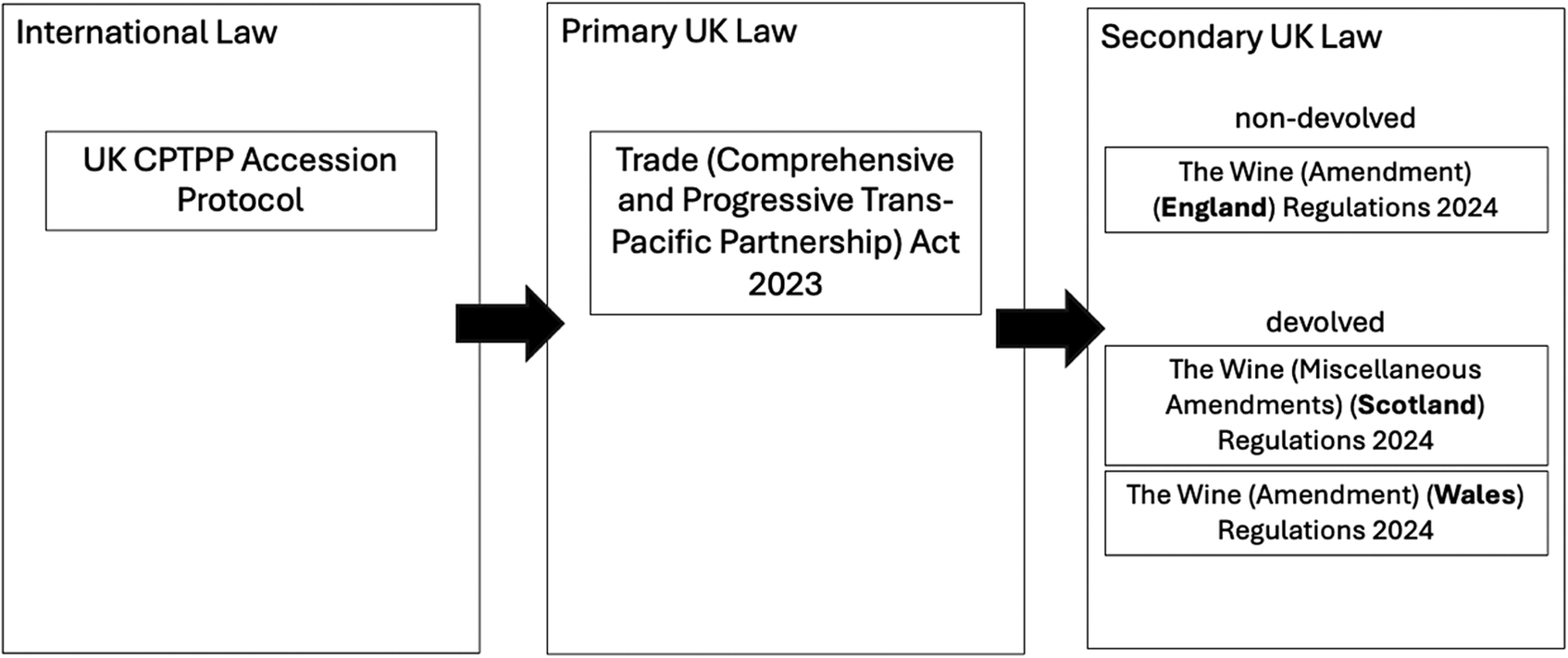
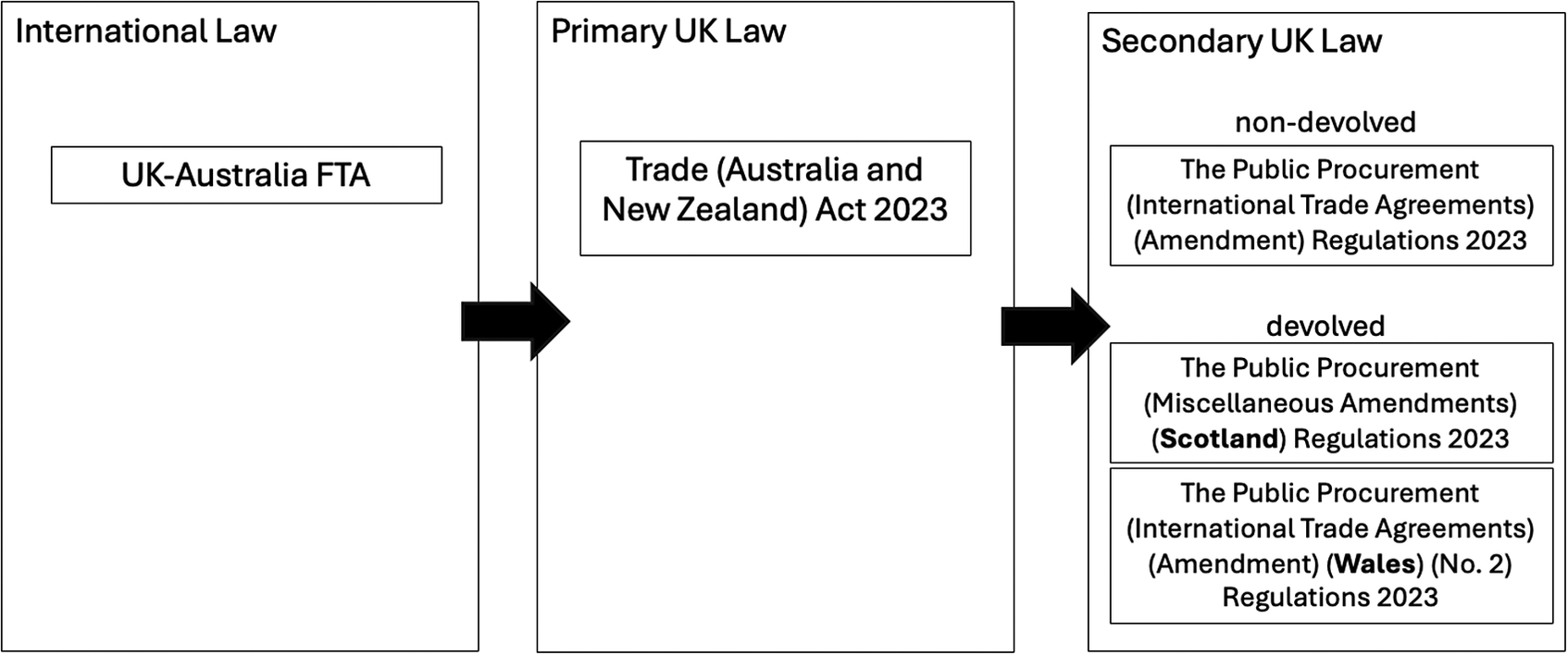
Focusing on new post-Brexit UK FTAs, these have all been implemented via acts of dedicated primary law that make necessary changes to existing law and/or grant enabling powers to UK ministers to do the same via regulations. Specific primary legislation was required to give effect to new UK FTAs. The two novel UK FTAs with Australia and New Zealand, and the Accession to the CPTPP are each associated with an Act of primary UK law. Notwithstanding the expansive scope of the UK-NZ FTA, the UK-AU FTA, and the CPTPP, implementing legislation for all three is narrow in focus. The provisions of the Trade (Australia and New Zealand) Act 2023 relate only to the government procurement chapters of both agreements (see Table 1).Footnote 106 While more substantive, the Trade (Comprehensive and Progressive Agreement for Trans-Pacific Partnership) Act 2024 still relates to a relatively small number of CPTPP provisions, namely: technical barriers to trade; government procurement; and intellectual property (see Figure 2).Footnote 107 While secondary legislation has been adopted under both acts (see Section 4, below), the specificity of the primary legislation is notable insomuch as it indicates that despite being ‘new’ to the post-Brexit UK, these agreements do not appear to have introduced extensive new regulatory obligations domestically.
UK-AU FTA and UK-NZ FTA: overlaps with devolved competence

* Language reflects chapter titles of the UK-NZ and UK-AU FTA respectively. Chapters on Initial Provisions and General Definitions, General Provisions and Exceptions, and Final Provisions are excluded.
UK legislative implementation: CPTPP accession protocol.

(iii) Assimilated legislation as a vehicle for UK FTA implementation
Recent amendments to the status of REUL, via the Retained EU Law (Revocation and Reform) Act 2023,Footnote 108 raise some problematic issues concerning the implementation of FTAs. The REUL(RR)A 2023 provided for the renaming of ‘retained EU law’ as ‘assimilated law’ and the revocation of over 500 instruments of assimilated law and the removal of (a UK version of) EU general principles of law, including the principle of supremacy. Controversially, it also granted UK ministers (devolved and central) broad new powers to revise, revoke or restate assimilated laws via regulations, subject to a series of conditions including that relevant changes do not increase the overall regulatory burden of the given law.Footnote 109
With respect to post-Brexit UK FTAs, the REUL(RR)A 2023 is problematic because among the body of laws copied from EU law into UK law are provisions that implement what are now UK international obligations giving effect to rollover FTAs, as well as certain provisions of new FTAs.Footnote 110 This sub-category of assimilated law that gives effect to post-Brexit UK FTAs is not distinguished; nor are REUL(RR)A 2023 powers to make changes to assimilated law specifically limited in respect of regulations that implement these obligations. According to responses from officials in research interviews, the facilitative role assimilated law plays in the implementation of post-Brexit FTAs has not been a focus of either central or devolved government attention. Indeed, interviews confirmed that scrutiny of the legal implications of new and rollover FTAs at the devolved level tends to be more in-depth for areas where devolved consent is required. Moreover, devolved governments rely on the legal analysis of central government to identify trade agreement provisions with devolved law implications. This is significant because it suggests that certain obligations of UK FTAs which overlap with devolved competence, but which are already implemented in domestic law (including via assimilated law), have not been subject to scrutiny or consideration as international obligations at the devolved level. Assimilated legislation may thus play a hidden but consequential role in masking the true impact of FTAs on devolved matters, by embedding international obligations in domestic law without triggering the scrutiny such obligations would otherwise attract.
4. Implementation of UK post-Brexit FTAs at the devolved level
(a) The limited impact of UK FTAs on devolved legislation
The general approach to the implementation of post-Brexit FTAs has involved making changes via primary acts while empowering ministers to make further changes via secondary acts. As a result, the full implications for devolved legislation must involve detailed consideration of secondary law changes. To the extent that new UK FTAs are those most likely to require and result in regulatory change (due primarily to the aforementioned effect of REUL/assimilated law), this section examines the extent to which the implementation of such agreements has resulted in regulatory changes at the domestic level, particularly within devolved jurisdictions. The findings indicate that, notwithstanding significant overlaps between the scope of new UK FTAs and devolved competence, only a small number of commitments and obligations contained in the UK-AU FTA, the UK-NZ FTA and the CPTPP Accession Protocol required specific legislative implementation at devolved level.
Where legislative changes have occurred at devolved level, they tend to be minor and technical (see Figures 2 and 3). For example, to implement the UK-AU FTA and the UK-NZ FTA the only changes required in devolved law concerned public procurement. Using powers granted under the Trade (Australia and New Zealand) Act 2023,Footnote 111, a Scottish Statutory Instrument (SSI) was made by Scottish ministersFootnote 112 to amend four pieces of devolved assimilated EU law on procurement in Scotland, and a Welsh Statutory Instrument (WSI) was made by Welsh ministersFootnote 113 to amend three pieces of assimilated law on procurement in Wales.Footnote 114 Changes introduced by the SSI mirrored those introduced by a UK Statutory Instrument made by UK ministersFootnote 115 and changes made by the WSI supplemented the same. The UKSI changes extended to England, Northern Ireland and to Wales in respect of non-devolved areas which were not amended by the WSI.Footnote 116 In substance, the main change across all three instruments of secondary law was to add the UK-AU and UK-NZ FTAs to schedules listing international agreements with public procurement obligations to which UK contracting parties are subject.
UK legislative implementation: Australia and New Zealand FTAs.

A similar pattern is replicated for the small number of new post-Brexit MRAs concluded by the UK. Only one has, so far, required dedicated legislative implementation at devolved level: the UK-Switzerland Agreement on Recognition of Professional Qualifications. While most provisions of this agreement were implemented via a UK-wide statutory instrumentFootnote 117 specific provisions were made for professions for which regulation is devolved in WalesFootnote 118 and specific provisions were made for the legal profession in Northern Ireland.Footnote 119
The small number of legislative changes linked to new UK FTAs reflects the fact that such agreements tend not to include detailed regulatory commitments and, at best, merely reflect the existing domestic regulatory status quo. As an example, whilst both the UK-AU and UK-NZ FTAs contain comprehensive ‘Environment’ chapters covering devolved policy areas, no specific implementation was required to give them domestic effect. The UK-AU environment chapter makes provisions across a wide range of areas. It includes: multilateral environmental agreements; climate change; environmental goods and services; circular economy; ozone depleting substances and hydrofluorocarbons; air quality; protection of marine environment from ship pollution; marine litter; marine wild capture fisheries; sustainable forest management and trade; trade and biodiversity; invasive alien species; conservation and illegal wildlife trade; and corporate social responsibility.Footnote 120 Although most of these policy areas are either partially or wholly devolved, the majority of the commitments included in UK-AU FTA are enshrined in pre-existing legislation, especially assimilated law. For example, regarding ozone depleting substances, the UK-AU FTA requires that ‘each Party shall take measures to control the production and consumption of, and trade in, substances controlled by the Montreal Protocol’.Footnote 121 While in the EU, the Montreal ProtocolFootnote 122 was implemented in UK law under Regulation (EC) No 1005/2009 on substances that deplete the ozone layer (the ODS Regulation).Footnote 123 For England, Scotland and Wales further effect is given to the (now assimilated law) ODS Regulation via a statutory instrumentFootnote 124 whereas in Northern Ireland a statutory rule makes equivalent provisions.Footnote 125
The limited impact of FTAs on devolved legislation is to be expected given that these agreements remain very much focused on trade liberalisation rather than market integration. Regulatory barriers to trade are only addressed in a very superficial mannerFootnote 126 and there is no attempt to pursue regulatory convergence on domestic rules.Footnote 127 The upshot is that some of the concerns about devolution being ‘hollowed out’ by an independent UK trade policy may have been overstated. However, by the same token, UK Government concerns that regulatory divergence at devolved level might undermine its ability to negotiate FTAs appear unwarranted. As stated above, the repatriation of trade policy powers to the UK was part of the logic underlying the UKIMA 2020 and with it the introduction of new constraints on devolved autonomy. The limited effect of UK FTAs on domestic legislation indicates that this argument for the centripetal effects of the UKIMA 2020 has, so far, not been justified by reality. The relationship between the UKIMA 2020 and UK FTAs illustrates how UK FTAs have the potential to impose – and in some instances already have imposed – constraints on devolved regulatory autonomy. And these constrains typically do not simply result from the obligation to comply with FTAs but rather from the interaction between these agreements and the domestic legal framework. In this way, UK FTAs and domestic legislation operate as a double bind on regulatory autonomy. First, where UK FTAs impose regulatory obligations on devolved authorities, those constraints are reinforced through domestic implementing legislation in ways that can undermine the balance of devolved competences. And, secondly, even in the absence of formally binding obligations, domestic legislation associated with FTAs can both create constraints and obscure the true extent of UK FTA obligations that overlap with devolved competence. The following sections provide examples of this ‘double bind’ dynamic.
(b) Concurrent powers and the risk of central encroachment on devolved competence
In the few areas where UK FTAs have caused changes in devolved legislation, the Sewel Convention and LCMs have been features of the domestic implementation processes. These processes have given rise to concerns that the implementation of UK FTAs could undermine devolved competences. This is specifically the case in areas where the relevant implementing Act grants ‘concurrent’ enabling powers, meaning that UK Government ministers (alongside devolved ministers) are empowered to implement the relevant UK FTAs via regulations in areas of devolved competence without requiring devolved consent.Footnote 128
For example, in relation to government procurement, the Trade (CPTPP) Act 2024 made changes to the Procurement Act 2023Footnote 129 (which repealed the three pieces of assimilated law that were amended under the Trade (Australia and New Zealand) Act 2023, except as they apply in Scotland) to give effect to the relevant obligations arising from the CPTPP. Because this involved making changes in areas of devolved competence in Scotland and Wales, the UK Government sought the legislative consent of the two legislatures. Scotland consented to the relevant provisions, explaining in its LCM that the Scottish Government described the changes required as ‘minor’Footnote 130 and ‘technical’.Footnote 131 Moreover, as these amendments were ‘necessary in order to implement an international obligation’Footnote 132 the Scottish Government noted that ‘no substantive discretion [was] exercisable in the matter’.Footnote 133 Wales, by contrast, only partially consented to the relevant provisions. Across two LCMs, the Welsh Government outlined their view that the Trade (CPTPP) Act 2024 engaged devolved areas in relation to procurement, conformity assessments, and the designations of origin and geographical indications.Footnote 134 The UK Government, for its part, disagreed with this assessment, stating instead that the Act only engaged devolved competence in Wales in relation to its procurement provisions.Footnote 135 When a vote was taken on the provisions of the Trade (CPTPP) Act 2024 considered by the Welsh Government to be in devolved competence, the Senedd consented to provisions related to conformity assessment bodies, designations of origin and geographical indications but did not consent to provisions related to procurement.Footnote 136 The decision to withhold consent in this area reflected the Welsh Government’s position not to consent to provisions in UK primary law which grant concurrent powers enabling UK ministers to act in devolved areas without consent or notification.Footnote 137 However, notwithstanding the absence of full legislative consent from Wales, the Trade (CPTPP) Act became law in March 2024.
What we see then is that the interplay between UK FTAs and domestic implementing framework acts can be both a substantive and procedural constraint on devolved autonomy. Not only can FTAs impose substantive regulatory obligations on devolved authorities but, also, changes to legislation can be realised by sidestepping devolved consent. Such instances may become more common as the UK negotiates agreements with larger trade partners who are likely to make more demands from the UK regarding the removal of regulatory barriers to trade. For example, the US has made no secret of its desire to get the UK to change its regulatory standards in devolved areas relating to agricultural biotechnology, agricultural chemicals and pesticides.Footnote 138 More recently, the EU and the UK announced their intent to negotiate an agreement on sanitary and phytosanitary (SPS) rules that would require the UK to dynamically align with EU agri-food rules.Footnote 139 Such an agreement would be firmly placed on the market integration end of the spectrum insofar as it would require the UK to comply with swathes of EU agri-food legislation. Although devolved authorities may welcome an EU-UK SPS agreement,Footnote 140 concerns have been expressed about how the domestic implementation of any such agreement might impact on devolved autonomy.Footnote 141
(c) Assimilated legislation as a hidden constraint on devolved autonomy
Beyond the limited depth of regulatory commitments in UK FTAs, another explanation for the discrepancy between the degree of overlap between UK FTAs and devolved competences alongside the limited requirement for legislative implementation at devolved level is the role of assimilated law. Many of the obligations included in post-Brexit UK FTAs affirm established regulatory standards which were given effect in domestic law though assimilated law provisions. And because most of these policy areas are wholly or partially devolved, the implementation of the relevant FTA obligations tends to also rely on assimilated law. The example cited above regarding the implementation of UK-AU FTA obligations on ozone depleting substances is typical in this regard.
Another example concerns the regulation of air quality. While the relevant UK-AU FTA obligations are not stringent, their implementation in the UK again relies on devolved assimilated law. Article 22.9 of the UK-AU FTA requires that parties ‘cooperate to address matters of mutual interest with respect to air quality’, which may include ambient air quality planning, modelling and monitoring sources and their emissions, measurement and inventory methodologies for air quality and emissions measurements.Footnote 142 In the UK these objectives are met by the implementation of EU Directive 2008/50/EC on ambient air quality and cleaner air for Europe.Footnote 143 Because regulation of air quality is devolved, this Directive is given effect for England by a statutory instrument,Footnote 144 for Scotland by an SSI,Footnote 145 for Wales by a WSIFootnote 146 and for Northern Ireland by a Statutory Rule.Footnote 147
From a devolved perspective, this assimilated law dynamic is problematic insomuch as it obscures the true impact of FTA obligations on devolved matters. Officials interviewed reported more engagement between central and devolved government in areas where consent or specific changes in devolved law are required and consequentially more scrutiny at devolved level of the relevant provisions. The discrepancy between the (large) extent of overlaps and the (small) number of legislative changes needed, including due to provisions already having effect in assimilated law, suggests certain aspects of UK FTAs – those that overlap with competence but require no legal change – have been under-scrutinised from a devolved perspective.
Further, in theory, assimilated law giving effect to international commitments under FTAs is another constraint on devolved authorities. If devolved authorities sought to roll back assimilated law that gives effect to new FTAs, they could not do so due to their statutory duty to abide by UK international obligations. This is indicative of an interesting dynamic at play in the UK’s newly independent trade policy practice. By reaffirming existing regulatory standards in its post-Brexit FTAs, the UK Government is, in effect, locking-in those standards and preventing their decline. This also results in an effective constraint on devolved regulatory autonomy but not one that is likely to be strongly resisted. In view of the pro-EU regulatory preference of the administrations in Scotland and WalesFootnote 148 and the obligations of the administration in Northern Ireland under the Windsor Framework,Footnote 149 the likelihood of devolved representatives protesting the maintenance of UK regulatory standards inherited from the EU is unlikely. A contrary question arises regarding the possibility of devolved authorities relying on obligations in FTAs to challenge deregulatory changes made by the UK Government to assimilated law in England which also implement FTA obligations. Here, we see once again how FTAs, in combination with domestic legislation, can restrict, in unexcepted ways, the regulatory flexibility of both central and devolved authorities.
Conclusion
This study set out to determine whether FTAs concluded by the UK since its exit from the EU have affected devolved regulatory autonomy. To do this, it developed a comprehensive dataset charting the substantive overlaps between UK post-Brexit FTAs and devolved matters. It is, to our knowledge, the only such dataset currently available and should provide an important tool for UK trade law and policy scholars to explore questions relating to the interaction between UK trade law and devolution and, more generally, international trade law and subnational governance.
Whilst the dataset confirmed the significant breadth of substantive overlaps between UK FTAs and devolved matters, our analysis of the implementation of these agreements reveals that there are few instances where such agreements have led to changes in devolved legislation. This is, in part, due to the nature of the FTAs which, so far, focus on trade liberalisation rather than market integration. Where agreements include regulatory commitments, these tend to, at most, replicate existing domestic regulatory standards. At first glance then, the concerns expressed by devolved authorities, in the early days of Brexit, about the UK Government potentially using FTAs to regulate devolved matters appear overstated. However, this is not to say that FTAs do not impact on devolved regulatory autonomy. First, by reaffirming regulatory standards enshrined in domestic law, FTAs ‘lock-in’ such standards at devolved level. Secondly, even though there are few cases where FTA commitments have led to changes in devolved legislation, we can already see instances where the implementation of trade commitments at devolved level have led to tensions between central and devolved governments. Thirdly, going forward, the UK could conclude FTAs pursuing market integration. If such agreements cover areas of devolved competence, significant constraints are likely to be placed on devolved legislation and the tensions mentioned above might be heightened.
More importantly, our analysis shows that the impact of UK FTAs on devolved regulatory autonomy can only be fully appreciated when considering the domestic legal framework which underpins the implementation of these agreements. We saw, for example, how UK FTAs were used as a pretext to justify the imposition of limits, via the UKIMA 2020, on the ability of devolved authorities’ ability to pursue regulatory divergence. We saw how implementing legislation could be used to sidestep devolved consent. We also saw how the REUL(RR)A 2023, by incorporating commitments enshrined in these agreements, acts as both a constraint on devolved autonomy and an insurance policy against any future attempts by the UK Government to lower regulatory standards in areas where UK FTAs and devolved matters overlap. This complex ‘double bind’ dynamic highlights that constraints on devolved regulatory autonomy associated with UK FTAs are not always a direct consequence of international trade commitments but can stem from domestic legislative choices. While much of the literature on the impact of FTAs presumes a straightforward imposition of constraints on regulatory autonomy, this study highlights that such constraints are not always solely attributable to FTAs but are also shaped by the internal architecture of domestic legal frameworks. This insight makes an important contribution by adding nuance to the prevailing narrative of FTAs as the main source of constraint on regulatory autonomy and calls for a more careful disentangling of the interplay between international obligations and domestic legal structures when assessing the relationship between FTAs and regulatory autonomy.

 Open access

