


The year 1968 brought great turmoil and demands for social, cultural, and political change. Protests around the globe signified the escalation of social conflicts. People, mostly students, took to the streets to voice their dissent for wars, repression of civil liberties, the political, military, and bureaucratic elites, dictatorial and authoritarian systems, colonization, and the clashes between the mainstream and counterculture, among other issues. In the US, the protesters opposed the draft and the country’s involvement in the Vietnam War, then well into its second decade. The assassinations of Martin Luther King, Jr. and Robert F. Kennedy and the founding of the Black Panther Party, all leading toward a turning point in the Civil Rights Movement, also marked the year. The women’s liberation and African independence movements had begun, the Cultural Revolution in China had reached its peak, and the Palestinian–Israeli conflict was in full swing, as were many other political upheavals and insurgencies in Europe, Asia, Africa, and South America. In Eastern European countries under communist rule, there was also growing opposition to the violation of civil rights, including freedom of speech.
Yugoslavia was no exception. The student demonstrations in Belgrade in the summer of 1968 (starting on June 2) were the first mass protests in the country since the Second World War. Demonstrations in other major cities – namely the capitals of other republics, including Sarajevo (Bosnia and Herzegovina), Zagreb (Croatia), and Ljubljana (Slovenia) – soon followed. The protesters, comprising mostly students, demanded solutions to several social and civil rights issues, such as the lack of employment in the country, the repression of societal inequalities, federally endorsed violence, and limited press freedom.Footnote 1 Most of these problems were offshoots of Yugoslavia’s unsuccessful economic reform program of 1964, which sought to economically balance the nation between Soviet-dominated Eastern Europe and the US-dominated West. The newly introduced system of self-management – the devolution of power from the federal center of Serbia to the republicsFootnote 2 – instead of boosting the Yugoslav economy, resulted in growing unemployment and wage disparity.
During this period, students in Yugoslavia were engaged with major international issues and thus saw their demonstration as part of a global movement. In solidarity with student protests in other countries, students in Belgrade, and later in Sarajevo, organized sit-ins to protest “the genocide by American imperialists” in Vietnam.Footnote 3 The demonstrations in Belgrade escalated when the police violently stormed the University of Belgrade Faculty of Philosophy building, where students and professors were barricaded. Following the intense week of protests, on June 9, 1968, President Tito announced in a televised address that the students were right in demanding a more equitable society and that he would agree to the students’ demands. Although Tito never followed through on his promise, as an act of compromise, the League of Communists of Yugoslavia gifted the students a building in the center of Belgrade – a student-managed safe space where they could freely express their views and creativity. This was the birth of the iconic Student Cultural Center (Studentski kulturni centar, henceforth SKC), which officially opened on April 4, 1971, to coincide with the celebration of Students’ Day in Belgrade (Figure 7.1).Footnote 4
The Student Cultural Center in Belgrade (SKC Archive).
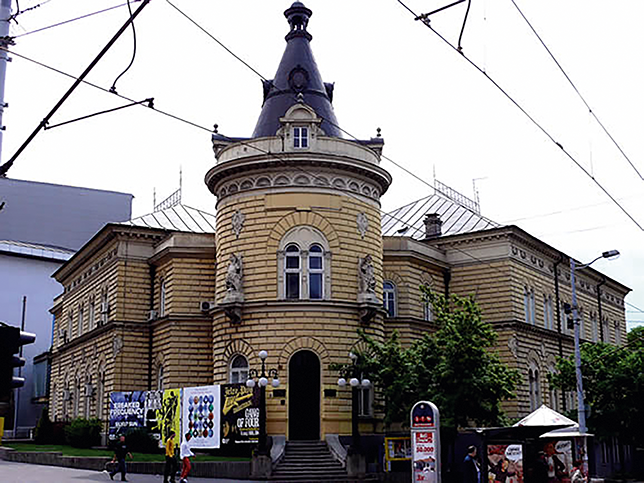
Figure 7.1 Long description
It is a brick building in a mixed architectural style. It was initially constructed as an Officer’s Club in the late nineteenth century in 1895, designed to resemble a medieval castle, incorporating elements of Romanticism with a corner tower and martial symbols on the façade. Located in the center of Belgrade, this building stands in sharp contrast with the brutalist and socialist modernism styles prevalent in the surrounding buildings.
Envisioned as the first multipurpose space for students to explore their artistic vision in all spheres, the center featured a movie theater and concert halls, smaller concert stages, a dance hall, art galleries, libraries and reading rooms, a club restaurant, and a summer garden. The scope of innovation and the originality of artistic activity surpassed anyone’s imagination. The center became a hotspot for the avant-garde scene not only in Belgrade but for all of Yugoslavia, and a magnet for international collaborations through groundbreaking event programming. It gave rise to the New Art Practice, a term coined by art critic Ješa Denegri,Footnote 5 referring to the work produced by the generation of Yugoslav artists coming of age in the 1960s and 1970s, who were practicing their art in student cultural centers and other alternative spaces.Footnote 6 Other significant centers were the University of Zagreb Student Center, founded in 1957, and the Student Cultural Center in Ljubljana, Slovenia [Društvo Študentski kulturni center, ŠKUC], founded in 1972.
The first fifteen years of operation of the SKC represent the center’s “Golden Era.” With events and exhibitions showcasing the newest trends – from conceptualism, performance art, happenings, minimalism, and Fluxus to the emergence of new wave [novi talas] in Yugoslav popular music – a wide range of activity blossomed at the SKC. Musicologist Ivana Miladinović Prica notes that the SKC represented an integral part of the cultural legacy of socialism.Footnote 7 The first currents of New Art Practice emerged in SKC’s visual arts programs and events with pioneering work by the emerging “Belgrade Six” art students at the Faculty of Fine Arts in Belgrade: Marina Abramović (b. 1946), Slobodan Era Milivojević (1944–2021), Neša Paripović (b. 1942), Zoran Popović (b. 1944), Raša Todosijević (1945–2024), and Gergelj Gera Urkom (b. 1940).
By the late 1970s, experimental and alternative programming expanded to the music division at the hands of the rebellious young composers from the conservative Music Academy in Belgrade (now renamed the Faculty of Music): the Opus 4 collective comprising Milimir Drašković (1952–2014), Miodrag Lazarov Pashu (1949–2025), Miroslav Savić (b. 1954), and Vladimir Tošić (b. 1949) and Ansambl za drugu novu muziku [Ensemble for Different New Music], cofounded by Miloš Raičković (b. 1956), and including some of the earliest and most daring performers of avant-garde music, such as pianist Nada Kolundžija (b. 1952). Opus 4 and Ensemble for Different New Music (henceforth ADNM), together with the music editorial board of the SKC, with Miroslav Savić at the helm, helped shape a new avant-garde music trajectory in Yugoslavia, initiated unprecedented international collaborations with experimental music festivals, and, as Miladinović Prica notes, played an essential role in forming SKC’s overall avant-garde artistic profile for more than a decade.Footnote 8
Art critic and scholar Jelena Vesić argues that while Yugoslavia in the 1970s was characterized by processes that aimed to liberate society, New Art practices that evolved in the context of new liberal institutions such as the SKC were influenced by Western, neo-Marxist, post-1968 criticism.Footnote 9 This chapter examines the experimental artistic activity at the Student Cultural Center in Belgrade during its “Golden Era” of the 1970s and 1980s, the unique sociocultural events that led to the formation of such an incredibly significant, innovative, and influential avant-garde scene in Yugoslavia, and its impact on the European art scene on both sides of the Iron Curtain.
The Golden Era of the Student Cultural Center
The Student Cultural Center in Belgrade made enormous strides in all realms of artistic expression during its Golden Era – in fine arts, photography, conceptual art, performance art, theater, film, and music – and played a crucial role in developing the country’s experimental art scene. In the first years of its operation, the SKC Art Gallery had greater international visibility than the Center’s other scenes. The trailblazers in the art scene, the “Belgrade Six,” were already internationally recognized figures. Their encounters and collaborations abroad with the leading artists in new practices, including conceptual art, performance art, happenings, and Fluxus, enabled them to bring the newest trends to Yugoslavia and attract notable critics and artists from Western Europe and the US.
As Amy Bryzgel aptly notes, Fluxus, founded in the 1960s by George Maciunas (1931–1978), was a “significant point of contact between East and West” as it brought together a community of artists dedicated to experimental art and synthesis of different media, including visual arts, music, poetry, and design.Footnote 10 These artists emphasized the artistic process over the finished product of an art piece.Footnote 11 The first international exhibition of conceptual art in Yugoslavia took place in Zagreb on April 23, 1971, at the entrance hallway of a residential building, a “haustor.” The exhibition, titled “At the Moment,” was organized by Braco (b. 1948) and Nena (b. 1950) Dimitrijević, following their travels across Europe where they met conceptual artists. The process of organizing “At the Moment” involved sending letters of invitation to the participants and then exhibiting those responses. The participants were artists from Europe and the US,Footnote 12 as well as Yugoslav artists including Bosnian conceptual artist Braco Dimitrijević, Croatian cinematographer and photographer Goran Trbuljak (b. 1948), a Slovenian OHO Group, and Group KôD from Novi Sad – the first artistic collective in Serbia whose activities involved happenings and performances, actions and interventions in public space, concrete poetry, and land art.Footnote 13 Scholar Ivana Bago notes that the fact that the exhibition was organized independently of any institutional affiliation and took place in such an informal space was interpreted by some critics – most notably Denegri – to “embody the subversive noncommercial and anti-institutional character of conceptual art itself.”Footnote 14 The exhibition was restaged (with both Braco and Nena Dimitrijević) five months later at the SKC in Belgrade under the title, “In Another Moment” [U drugom trenutku], where Catherine Millet also gave a lecture on conceptual art.Footnote 15
The first conceptual art event held at the SKC Art Gallery, June 22–30, 1971, barely two months after the opening of the Center, was “Drangularijum” [Trinketarium], attended by 600 spectators.Footnote 16 The event changed the art trajectory in Yugoslavia as it abandoned the traditional conventions of art exhibitions. It featured young artists – students at the Faculty of Fine Arts in Belgrade – who were invited to present to an audience of artists, art critics, and art historians not their artworks but their extra-artistic objects.Footnote 17 The concept of Drangularijum – “a ready-made exhibition” of preexisting objects that were significant to artists’ lives – was by no means new or original, but it was the first such presentation in Belgrade. Critic and curator Bojana Pejić explained the event’s purpose and significance in the exhibition catalog: “Drangularijum does not want to be new and original …. It is an attempt to introduce uneasiness or provocation in the static atmosphere of Belgrade gallery life.”Footnote 18 Marina Abramović further remarked that the exhibit that featured what the critics described as “torn boxes, ladders, and smashed walls” was an allegorical statement, arguing that traditional (i.e., classical) works already had their place – at the museums, where they ought to remain – so that experimental art could be exhibited at the SKC.Footnote 19
Both the “Drangularijum” and “Generation 71” exhibitions (the latter took place on September 10–25, 1971, and featured the Belgrade Six artists and Evgenija Demnievska [b. 1946]) were momentous events that drastically changed people’s attitude toward art in Yugoslavia. This new generation of young artists took a large step into the realm of free expression, emancipated from the prejudices of having to cultivate only one form of artistic expression. They were seeking new “principles of plastic language” in their lives, experiences, and direct understanding of reality.Footnote 20 The SKC annual summary report from 1971 tells a story of the movement’s success: The Art Gallery exhibitions alone drew around 2,500 visitors and were regularly reviewed and discussed on the radio, TV, and in newspapers. The newly formed Filmforum, dedicated to the presentation of “nonconventional” films, became one of the most significant festivals in the country. The following year (1972), the SKC organized 285 events with 609 participants, not counting 7 choral ensembles, 10 orchestras, 18 chamber ensembles, and 16 theater groups, which altogether boasted 81,282 visitors.Footnote 21 The art department of the SKC opened the Small Gallery, which featured works by new artists from around Yugoslavia, and the theater department found its voice with “expanded theater” production of new, daring pieces. The SKC Library continued to acquire notable literature in arts and humanities from abroad and expand its print publications – the divisions published three issues of Filmforum, seven catalogs on art exhibits, and a collection of poems by Dragan Stojanović (b. 1945), in addition to numerous posters, flyers, invitations, and program notes. The student-led SKC was running like a well-oiled machine.
The most significant and successful international event, “Aprilski susreti” – April Encounters: Festival of Expanded Media – was founded on April 4, 1972, (again, to coincide with the Students’ Day celebrations in Belgrade) and conceived as an interdisciplinary artistic program that would transcend the boundaries between art forms. Joseph Beuys, whom Abramović met in Edinburgh, performed at the April Encounters in SKC in 1974, the same year Abramović presented her notorious Rhythm 5 (Figure 7.2).
Activities in the early years of the Student Cultural Center in Belgrade. Photos by Nebojša Čanković.
Raša Todosijević with his partner Marinela Koželj performing Drinking Water – Inversions, Imitations, and Contrasts at the Fourth April Encounters, April 19, 1975. During this thirty-five-minute performance, Todosijević drank twenty-six glasses of water, synchronizing his rhythm of swallowing to the breathing of a fish that he threw on the floor in front of the audience.
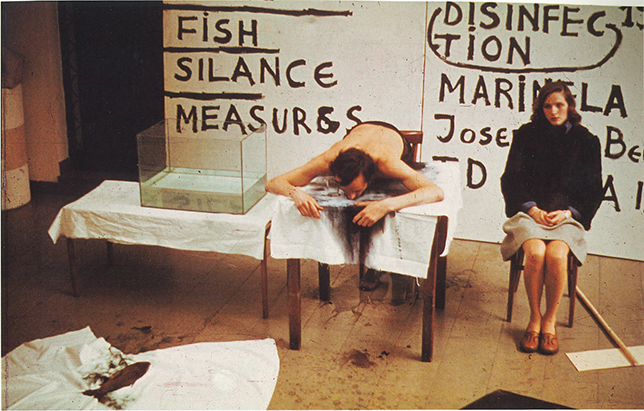
Figure 7.2a Long description
During this 35-minute performance, Todosijević drank twenty-six glasses of water, synchronizing his rhythm of swallowing to the breathing of a fish that he threw on the floor in front of the audience. This disturbing photograph shows a shirtless Todosijević leaning over a small table, almost lying on top of it with his upper torso, his face pressed against the stained white tablecloth, his arms holding on to the top brim of the table. To his right is a larger table, also covered with a white tablecloth, on top of which is an aquarium, filled quarter-way with water. To his right is a woman seated on a chair, with her hands crossed on her lap, staring into a fish, which is in front of them, on a white cloth stained with blood. The floor is stained with water and blood. Behind them is a white wall panel with words in large letters written on it. On the left, three words separated by lines are featured: fish, silence, measures.
Marina Abramović performs Rhythm 5 in 1974. Abramović provides the following instructions for the performance of this work: “I construct a five-pointed star (the construction is made in wood shavings soaked in 100 liters of petrol). I light the star. I walk around the star. I cut my hair and throw it into each point of the star. I pare my fingernails and throw them into each point of the star. I cut my toenails and throw them into each point of the star. I enter the empty space in the star and lie down. Duration: 1 ½ hours.” During this performance, Abramović passed out due to the lack of oxygen and had to be rescued by onlookers.
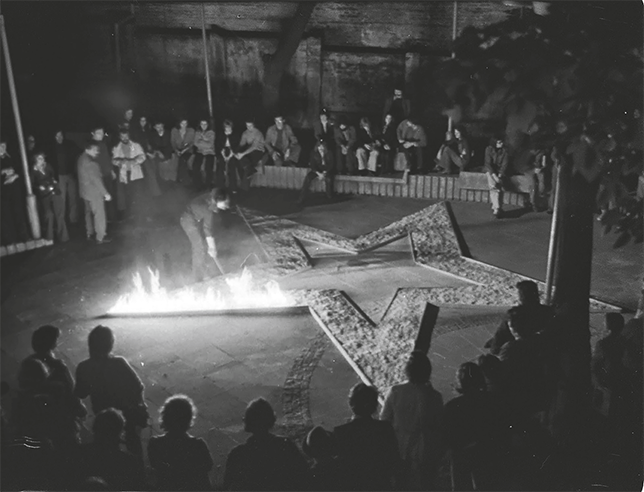
Figure 7.2b Long description
On the sidewalk, in front of the Student Cultural Center, at nighttime, is the outline of a large star, made out of wood. Marina Abramović is holding a stick, lighting the wood outlining the star. One side of the star is already lit in flames. A large group of onlookers is standing around it, some seated on the low wall.
The SKC received some early criticism in the press. Only a month after its opening, an article in Večernje Novosti [Evening News] featured a piece titled, “A Library with No Books,” noting how in a rush to open its doors on the Students’ Day, many attributes of the Center were incomplete, due to the lack of government funding.Footnote 22 The library had no books, reading rooms, or desks, and the movie theater had no movie screen or projector installed (making the Filmforum’s enormous success only more remarkable). But by September 1971, major newspapers were starting to recognize the important role the SKC played – both as an institution that highlighted the most talented Yugoslav artistic, intellectual, and creative student life, and as a model of how Yugoslavia should be perceived internationally.
However, this attraction toward the SKC within Belgrade’s elite and intellectuals prompted critics to question the purpose of the Center and whom it was serving. A newspaper article from May 26, 1971 (Večernje Novosti) pointed out that SKC was skewing away from its initial purpose, which was to serve the student body, and was no longer a “club for students” but a “club for snobs.” Magazine Duga similarly criticized the Center and its biggest event – April Encounters – referring to the SKC in its heading as the “Student Aristocratic Center,” insinuating that students constituted barely any of the participants, or even observers, in an event whose sole purpose was to showcase artworks created by students. Critic M. Gorda singled out Gina Pane’s “art,” which featured the artist kneeling on the floor and vomiting, Todosijević’s exhibition of two chairs over which the words “or” [ili] and “but” [ali] were inscribed, and Milivojević’s performance, in which the author, dressed in a carboard carton, trimmed his mustache.Footnote 23 However, Gorda clarified that it was not the rationale for this type of art or exhibit that was being questioned, but the generational divide, which points to the fact that the SKC no longer seemed to provide space for students. Critic Dušan Sabo raised the same questions in his review, titled “Elitism of the young” (“Mladih elitizam ili aprildžije”) in Indeks.Footnote 24 Despite criticism by those who did not understand the purpose of forming national and international connections and the significance of presenting the newest avant-garde trends on their home turf, the SKC had by 1974 become not only an artistic scene for students but a cultural phenomenon.Footnote 25
Music at the Student Cultural Center
Unlike the New Art movement, musical activities at the SKC did not find a footing in the avant-garde scene during its initial year. The first music concert at the Center was held on May 20, 1971. As described in press clippings, it was an intimate concert of Baroque chamber music without much, if any, advertisement and publicity, featuring the most celebrated Yugoslav flutist at the time, Miodrag Azanjac. Already by the following year, music concerts produced at the SKC were moving toward experimentalism, and numerous notable music ensembles, competitions, festivals, and concert series were formed soon after. On April 6, 1972, at the First April Encounters, SKC programmed its first experimental music concert, featuring a highly acclaimed Acezantez, a Croatian avant-garde chamber group founded by Dubravko Detoni.Footnote 26 The four performers (piano, organ, drums, and clarinet) played to an audience of 250 guests, filling the SKC’s Grand Hall to capacity (Figure 7.3). The concert, which kept the audience captivated past midnight, received mixed reviews in the papers. One critic noted that the ensemble performed several “compositions” that completely broke away from all tradition, which even the most “extreme” student would have perceived as an absolute extravagance that left no room for establishing any kind of dialogue.Footnote 27 Another critic described the music as “moaning,”Footnote 28 and other headings bore titles of “tired” and “lonely” avant-garde.Footnote 29
Acezantez performs at the April Encounters at the Student Cultural Center in Belgrade, April 6, 1972.
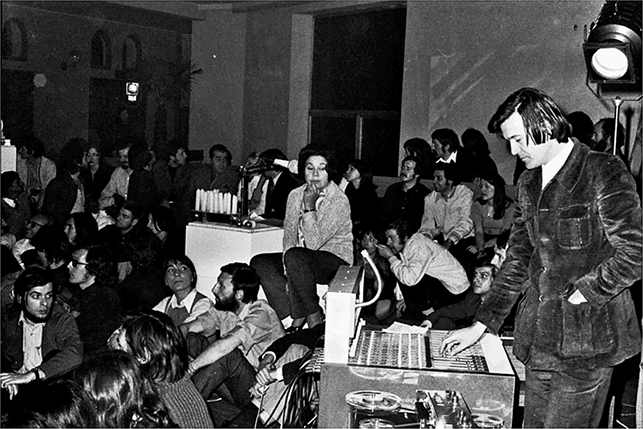
Figure 7.3 Long description
Dubravko Detoni is standing on the right side of the photograph, wearing a plush jacket and jeans. His left hand is in his jacket pocket, while he is operating the electronics panel with his right hand. The audience in a packed hall is young people, some seated on chairs, some on tables, looking either in front of them or turning to the side to watch Detoni.
The music division at the SKC quickly caught up with other departments of the Center and started modernizing its programming. The Center produced many concerts in collaboration with other recently established institutions and festivals, such as the Belgrade International Theater Festival, founded in 1967, and the Belgrade Music Festival, founded in 1969. Perhaps, the most significant was the “Muzička moderna” [Musical Modernism] concert series produced in collaboration with the Third Program of Radio Belgrade – a program dedicated to the presentation and promotion of avant-garde and experimental music. These concerts, which were also broadcast on the Third Program radio, featured Yugoslav composers programmed alongside European and American avant-gardists, such as Luigi Dallapiccola and Krzysztof Penderecki. Some concerts aimed to highlight music by Yugoslav composers from a particular region, for instance, the “An Evening of Croatian Music” series, highlighting the works of individual composers, such as Kelemen or Detoni, who were regularly featured at the Music Biennale Zagreb. The concert series also allowed notable national and international ensembles and soloists, such as the Zagreb String Quartet, pianist Fred Došek (1925–2008), and experimental ensemble Saeta and the Percussion Studio from Ljubljana, to participate. As such, Muzička moderna played a crucial role in the modernization and proliferation of Yugoslav art music.
In the 1970s, especially the first part of the decade, the young generation of Yugoslav composers was still catching up to Western modernist trends and fighting the traditionalists who controlled institutions of higher education. By necessity, the SKC became a crucial space for progressive artists to familiarize themselves with Western avant-garde compositional techniques and practices. They effectively promoted their own works and music across Yugoslavia. Likewise, they introduced Yugoslav audiences to trends from abroad by holding listening sessions for newly acquired albums (such as music by John Cage, Philip Glass, and Steve Reich), organizing guest lectures (notably, Mauricio Kagel led a workshop on May 31, 1974), and programming music by composers from abroad. Furthermore, the composers of the SKC Music Division created opportunities for students from music academies in Zagreb, Ljubljana, Skopje, and Belgrade to meet, collaborate, and engage with like-minded artists from around the country.
By 1974, concerts featuring music by Cage, Mauricio Kagel, Goffredo Petrassi, Włodzimierz Kotoński, Charlemagne Palestine, and Karlheinz Stockhausen were becoming common, and Yugoslav musicians were performing and recording contemporary music repertoire.Footnote 30 Among them, performances by Nada Kolundžija, one of the foremost pianists in Yugoslavia to specialize in contemporary music by Yugoslav and foreign composers, are significant. In the words of a notable Yugoslav scholar of aesthetics, Miško Šuvaković, “Kolundžija is a pianist of new music – or, to be precise, a performer of the truly contemporaneous piano music as a contemporary art,” who chose to be “an accomplice of the contemporaneity,” which Šuvaković concludes was “firstly a choice and, then, a practice.”Footnote 31 Kolundžija’s 1979 concerts of the entire opus of Arnold Schoenberg’s piano works and her 1980 performances of Cage’s Sonatas and Interludes for prepared piano stand out as the first performances of these works in the country.Footnote 32
One of the principal objectives of the SKC, in addition to the promotion of new music and national and international collaborations, was to establish the Center as a genuine space for students since the rigidly conservative curriculum at the Faculty of Music in Belgrade (FMU) was not supportive of modern and experimental music. Young composers at FMU who were implementing newer musical trends like minimalism and experimentalism were barred from passing their final exams. Despite minimal support from their professors (notably, Vasilije Mokranjac [1923–1984]), who were sympathetic to their young students’ curiosity, the staunch gatekeepers of traditionalism, namely, Stanojlo Rajičić, Aleksandar Obradović, Rajko Maksimović, and Petar Ozgijan, flunked any student attempting to write music in avant-garde styles, especially minimalism. As a consequence, several students were expelled from the institution, while others defected from the composition program or FMU on their own. (As discussed in the previous chapters, many of these students went on to study with Vladan Radovanović at the Electronic Studio of Radio Belgrade.) For these students, the SKC (located conveniently adjacent to the Faculty of Music) was the primary venue to explore and develop their artistic needs. Thus, the conservative Faculty of Music unintentionally played a crucial role in establishing the SKC as a center of experimental music in Yugoslavia. The most rebellious composers of this generation were Milimir Drašković, Miodrag Lazarov Pashu, Miroslav Savić, Vladimir Tošić, and Miloš Raičković [Milos Raickovich], who were students of composition at the FMU between 1972 and 1981. The first four formed an influential composers’ group, Opus 4, and the latter initiated the formation of the Ensemble for Different New Music. Together, these young composers, and especially the Opus 4 collective, reshaped the music programming at the SKC, published books, articles, and records of new music, founded festivals of new music that made the Center a magnet for experimental music across both Blocs, and changed the trajectory of Yugoslav music.
Members of Opus 4 (Figure 7.4), each with a distinct voice but united in their exploration of new approaches to music, were primarily composers but also performance and multimedia artists who deployed texts, film, photography, video, and other media during their concerts. The collective was a unique phenomenon in the music life of Yugoslavia at that time. Tošić suggests that the formation of such a composers’ collective was an avant-garde act in itself. He further elaborates that, from today’s perspective, it is difficult to speculate what exactly led to the formation of the collective, whose mission, concept, and purpose – both for the composers and their art – the society did not understand at the time.Footnote 33 Tošić specifies four principal needs that contributed to the formation of Opus 4: (1) to explore without restriction each member’s individual artistic concerns; (2) to learn about contemporary music and techniques; (3) to change the attitudes of traditional thinking about music in the country; and (4) to present their art to the public.Footnote 34 In other words, the young composers took it upon themselves to learn about contemporary music, to create, experiment, and promote their musical innovations, which they could not achieve at their academic institution, and to change the mindset of the audience.
Opus 4: (from left to right) Miroslav Savić, Milimir Drašković, Vladimir Tošić, Miodrag Lazarov Pashu. The Student Cultural Center, Belgrade, ca. 1980.
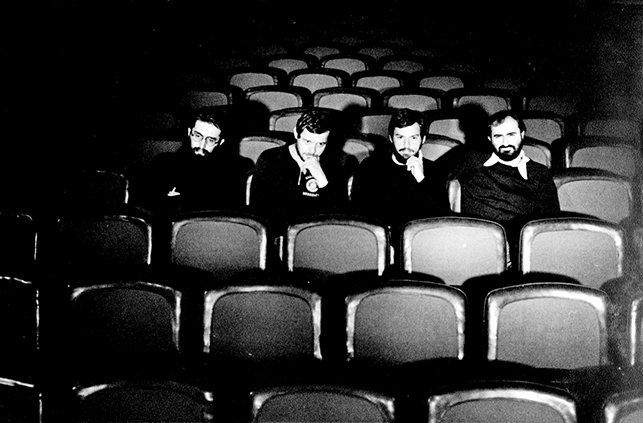
Figure 7.4 Long description
From left to right are Miroslav Savić, Milimir Drašković, Vladimir Tošić, and Miodrag Lazarov Pashu. They are seated in the middle row of an empty hall at the Student Cultural Center in Belgrade. The spotlight illuminates the four composers in a dim hall and empty seats in front of them and behind them.
The first performance by the members of Opus 4 (although not yet formally operating under that name) took place on May 20, 1976, at the Grand Hall of the SKC. The program featured works by only two composers – several arrangements of 10 by Savić (for solo piano; for piano four hands; and for tam-tam) and Fragments for piano and Mélange for piatto, gong, timpani, and piano by Tošić. Lazarov Pashu’s Dvanaesttonske varijacije [Twelve-tone variations] was not performed due to technical issues. Drašković participated as a conductor and a performer, alongside three other members of Opus 4 and pianists Kolundžija and Ksenija Zečević. The concert was the first official demonstration of collaboration and interaction, both creatively and organizationally, among the four composers.
The works performed at this concert were the first presentation of minimalist/reductionist music by Yugoslav composers.Footnote 35 Savić’s 10 – a reference to the binary numbers “1” and “0,” which represent sound and silence, respectively – is a student work from 1974 (Example 7.1). It was a significant achievement for the composer, demonstrating a “break from Messiaen” and a “connection to serial and minimalist/reductionist principles.”Footnote 36 In this work, Savić maintains specific relations between pitch, dynamics, and durational series so that a particular element in the pitch series corresponds to a specific element in other series. In that the young composers did not know much about minimalism formally, and were not allowed to pursue it at the FMU, 10 represented Savić’s creative independence, one of the foremost principles of Opus 4. Tošić’s Mélange (1975) is one of the earliest examples of minimalist/reductionist work in Yugoslavia. In addition to the new compositional style, which was hardly known in Yugoslavia at this time, the graphic notation of the score (Example 7.2) was jarringly new for the traditional academic circles in Belgrade.Footnote 37
Miroslav Savić, 10 for piano (1974), page 1 of the score.
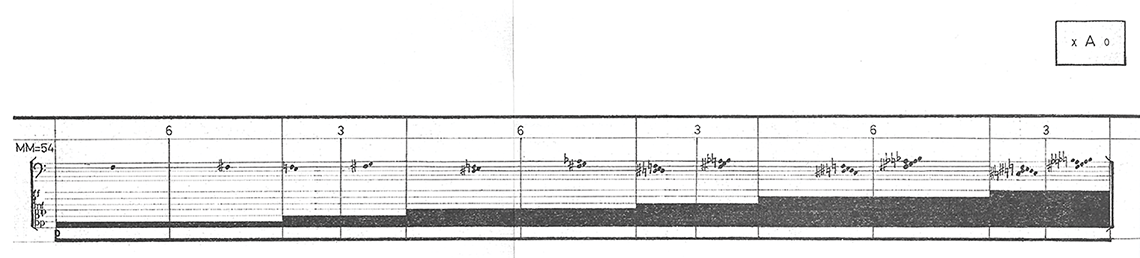
Example 7.1 Long description
Featuring a single grand staff system, the top staff has arhythmic pitches divided into twelve segments. The first filled-in notehead is F, the next one is F sharp, and then from the next segment on, Savić systematically adds a new pitch, creating clusters of two and then up to six notes. The bottom staff has seven lines, and the spaces in between designate dynamics levels, from bottom to top, pianissimo, piano, mezzo piano, mezzo forte, forte, and fortissimo. The first two segments fill the entire space across of the pianissimo dynamics, the next two of the piano, and Savić continues to gradually increase the dynamics levels every other segment. As such, the black colored space across the page is systematically thickening as the piece progresses.
Vladimir Tošić, Mélange (1975) for piatto, gong, timpani, and piano, the first page of the score.
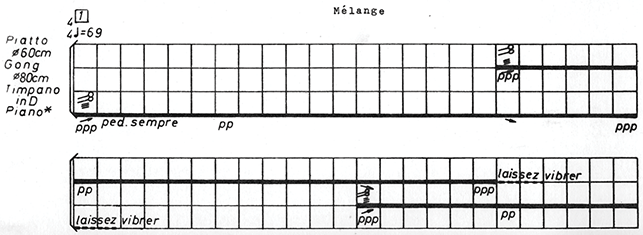
Example 7.2 Long description
Each system contains a grid of three rows of squares. On the left, Tošić indicates that the top line of the grid is for piatto, the one below for gong, the next one for timpani in D, and the bottom line for piano. Above the system, Tošić indicates 4/4 meter and tempo of quarter note = 69. On the bottom, he indicates the dynamics level, starting with triple piano and pedal sempre. Rather than using music notation, the score features pictures of timpani sticks, dynamics markings, and text, such as, laissez vibrer in French.
A review of the concert, published in the magazine Student, effectively captures the energy and excitement of the performance, which was conceptually choreographed in detail:
The audience is seated
The lights are turned off except for one beam dimly reflecting the piano on the stage
A young woman [Kolundžija] appears on the stage, wearing a colorful tunic and jeans, and sits at the piano; the concert officially begins
Unusual music is heard [10 for piano], which sounds very suggestive, owing to the performer’s concentration
After her performance, another young woman [Zečević] appears on the stage and, with an exaggerated expressivity, plays Vladimir Tošić’s Fragments for piano
As the concert continues, young men, clad in jeans, enter and exit the stage, and, in all seriousness, perform their colleagues’ works.Footnote 38
Already with their first public performance, the young composers made quite an impression and a statement. Just as Marina Abramović and the Belgrade Six had destroyed the perception of what an art exhibit ought to be with Drangularijum five years earlier, the composers, too, by their manner of personal attire and their musical style, pushed the boundaries of the classical music concert. Tošić confirms, noting that the inaugural performance announced the type of music the group would continue to develop – music based on the principle of reductionism, repetition, and atypical instrumentation.Footnote 39 Concert critic Mirmar agreed:
The pieces performed occupy everyone’s full attention and elicit countless emotions and an unusual thought process: one especially feels the process of time … While by the manner of their dress, the composers and performers appeared somewhat nonchalant, their performance and attitude proved everyone wrong. First of all, they were much more professional than some of their colleagues who, on the stage, during pauses, tell jokes or chew gum. Clearly, they did not want to place an emphasis on themselves, which was most obvious during the performance of Tošić’s Mélange, during which the performers (now dressed in black, so as not to draw any attention to themselves), moved to the darkly lit part of the stage. As intended, the audience’s interest was piqued by music only.Footnote 40
The activity of Opus 4 lasted through 1982, with their last public concert held on June 10, 1982, at the Twelfth International Festival of Experimental Music in Bourges, France. Despite their relatively short existence, Opus 4 had become a phenomenon, as will be discussed in more detail in the following chapter. Influenced by American minimalism and Cage-style experimentalism, the works of Opus 4 merged music with performance, Fluxus, and audiovisual media. Opus 4, together with the Ensemble for Different New Music, which was working under the auspices of the music editorial board of the SKC and continued to perform their music and those of other minimalists, not only shaped the music program at the SKC but entirely reshaped new art in 1970s Yugoslavia. Miladinović Prica views the groups’ practice as an “authentic local practice that pursues radical modernism”; that is, while the composers of Opus 4 worked on the “European cultural periphery,” away from any leading European cultural centers, “[they] received stimuli from various sources, which they processed and developed into independent, autochthonous, and experimental artistic practice.”Footnote 41 Opus 4 became synonymous with the concept of the neo-avant-garde in the late 1970s and early 1980s in Belgrade, Serbia, and Yugoslavia.
International Collaborations at the Student Cultural Center
A student-run music editorial board was initiated at the SKC in 1978 by Opus 4, Raičković, and Miloš Petrović, with Savić appointed as editor-in-chief. During his tenure, the music division of the SKC founded the festival Druga nova muzika [Different New Music], which ran annually from 1984 through 1986. These festivals were the culmination of music experimentation in Serbia (and Yugoslavia), cultural exchange between both Blocs during the Cold War, and international visibility for Yugoslav composers and ensembles. As Miladinović Prica argues, “[they] put Belgrade onto the map of the artistic network, becoming a European center for minimalist and experimental music.”Footnote 42 But perhaps even more importantly, the festivals put a spotlight on musical minimalism – a style that was little understood or valued at the time in Yugoslavia.
The 1984 Festival was organized by Savić and Drašković in collaboration with Michael Fahres (b. 1951), a German-born composer based in Utrecht.Footnote 43 It was also supported by Radio Television Belgrade, the German Cultural Center in Belgrade, the French Cultural Center in Belgrade, and the Gaudeamus Foundation in Amsterdam. The five-day inaugural event (May 16–20) was the young composers’ largest undertaking, with the primary aim to “reaffirm the work of composers and also ensembles specializing in the performance of ‘different new music.’”Footnote 44 By “different new music,” they meant any style of music that stood in opposition to conventions and explored innovative techniques, such as reduction, repetitiveness, and process. They also used new forms of realization, like media expansion, ambience, and time-space limitation, and created novel experiences, such as conceptualism and meta-approach.Footnote 45
The festival organizers programmed the works by leading experimental and minimalist composers, juxtaposing artists from the US (Reich, Robert Moran, and Frank Zappa) with others from across both European Blocs and Yugoslavia (Savić, Drašković, Tošić, Aleš Gasparič, Milan Graovac, Boštjan Perovšek, and Miloš Petrović).Footnote 46 Luc Ferrari and Hans Otte, among others, were in attendance. The Hungarian experimental group 180-as Csoport, the Slovenian ensemble Saeta, and Ensemble for Different New Music were the featured performers.Footnote 47 In their annual SKC activity report, Savić and Drašković wrote that the festival not only gathered a representative group of European minimalist composers but that, for the first time in Yugoslavia, it also presented a comprehensive picture (in terms of the variety of styles and different generations) of minimalist music.Footnote 48 Lazarov Pashu’s essay on the festival notes that the event “radically expanded the canon of contemporary music in Yugoslavia”Footnote 49 but that, unlike their counterparts from abroad, Yugoslav composers were not “constrained” within the “single medium” of minimalism but operated within a wider range of expanded media by including music, video, and performance art in their works.Footnote 50
The festival also screened a forty-minute experimental film, Prašina u Beogradu [Dust in Belgrade], directed by Zoran Solomun.Footnote 51 The film, produced by SKC Filmforum, was recorded during Fahres’s artistic residency in Belgrade. Set to the music of Arvo Pärt, Karel Goeyvaerts, Fahres, Louis Andriessen, and Carlos Santos, it shows Fahres walking and driving around Belgrade on a gloomy, rainy day. The stream of music is interrupted as Fahres narrates his thoughts on minimalism. One segment of the film takes place inside the SKC – in Fahres’s words, the center of minimalism in Yugoslavia – and features experimental videos of “three of the most active minimalist composers” in the country: Savić, Lazarov Pashu, and Drašković. The videos effectively capture each composer’s personality and individuality, but also the level of their artistry and daring innovation. Savić’s video, M for piano, features the composer appearing and disappearing from view by ducking behind the piano and outlining the shape of the letter M with his motion, while a hamster is moving around atop the lid of the piano, eating pellets. In Lazarov Pashu’s Istorija funkcionalne tonalnosti [The history of functional tonality], the composer is seated on a chair inside a phone booth, singing various do-mi-sol patterns in major and minor keys. Drummer Borivoje Pavićević, with a cigarette in his mouth, is performing Drašković’s Drummer /s/ for the drum set.
The SKC Filmforum captured the first two festivals on film,Footnote 52 which, in addition to providing a historical record of the event, also featured interviews with composers and performers around the city – in an abandoned building, in a busy underground passageway, on the street, at a park, on a boat. The performances inside the SKC Grand Hall drew a packed audience, clad in comfortable clothing, just like the performers and composers. They grooved to the music, immersing themselves in the new sound experience, some with their eyes closed, others chatting and laughing, and a few smoking cigarettes. The films truly encapsulate the zeitgeist of the SKC and Belgrade of the 1980s and demonstrate why SKC and Belgrade became a magnet for experimental artists from both Blocs. Belgrade, the capital of a liberal communist Yugoslavia, with the support of the Communist Party, allowed (and funded) students and artists free rein to experiment in all modes of creative expression.
Even though the second festival, held on May 10–12, 1985, was smaller in terms of participants and performances, it demonstrated an even greater authenticity and creative freedom for Yugoslav composers.Footnote 53 The Ensemble for Different New Music performed minimalist works by five Yugoslav composers commissioned for the event: Savić (ABC Bossa Nova), Lazarov Pashu (Time 3), Ognjen Bogdanović (Fade), Marjan Šijanec (The Shedding of Leaves Makes the Trees Invisible), and Veljko Nikolić (Tlan [Soil]). The opening piece of the festival (and the 1985 film) was Savić’s ABC Bossa Nova. It was conducted by Šijanec and featured the Music School “Vučković” Girls Choir singing solfege syllables in a layered, repetitive manner. Members of the ADNM played bossa nova rhythmic patterns on a wide range of percussive instruments (including the conga, bongos, whistles, maracas, and different drums and tubes). This performance was nothing short of spectacular. It encapsulated the organizers’ vision of presenting “different” music, not only highlighting the stark contrast with the traditional mode of expression at the Faculty of Music (and generally, everywhere outside the SKC) but also presenting a different type of minimalist music – minimalism with a greater variety of style and individuality, as Savić stated in his closing remarks. Victor Ekimovsky, one of the featured composers at the festival, summarizes the daring creativity he saw at the SKC quite effectively when recollecting his experience: “At that time in Yugoslavia, a group of interesting young composers were active; their experiments were performed in genres that seemed to us strange as hell: happenings, actions, performance art, texts, graphics, silent music, and even dispensing with generic labels altogether.”Footnote 54
Due to insufficient funding,Footnote 55 the third (and last) rendition of the festival, held May 18–22, 1986, featured only Yugoslav composers. Among the returnees were Drašković, Lazarov Pashu, Savić, Tošić, Raičković, and Šijanec. Works by Dušan Bogdanović, Nataša Bogojević, Brina Jež, Boris Kovač, Stevan Kovač Tikmajer, and Vlastimir Trajković were also programmed. Unlike the previous two editions of the festival, which only presented the newest works by all participants, the 1986 festival was envisioned as a “retrospective” of Yugoslav minimalist music.Footnote 56 The festival included some of the earliest Yugoslav minimalist pieces (such as Raičković’s Permutations [1976–1978] and Flying Trio [1979]), alongside those composed in the 1980s and commissioned by and premiered at the festival. The festival illustrated the Yugoslav composers’ relentless quest for new heights of expression and experimentation, using a wide range of media. For instance, Tošić’s Four In/Dependent Events is written for four different ensembles – string quartet; wind quintet; piano and electric piano; and vibraphone and marimbaphone – and the four groups can simultaneously perform in different spaces or even different cities. In the first part of its premiere performance at the University Student Center in Zagreb in 1985, all four groups performed in separate halls without listening to one another while the synthesis of their performance was transmitted over the radio in real time. In the second half of the concert, all four groups played in the same hall, while the radio broadcast the performance by only one ensemble (i.e., one “in/dependent event”).Footnote 57 Dušan Bogdanović and Raša Todosijević had their sound and multimedia installations displayed at the SKC Art Gallery, while Milimir Drašković presented his films Opera and Orgelwerke.
Unlike any other music festivals in Serbia (and hardly anywhere in Yugoslavia), these were envisioned fully as festivals of experimental and minimalist music – “minimalist” as understood, adapted, and practiced by Yugoslav self-taught, curious, and authentic composers. Renditions of the Different New Music events fully displayed the various “cultural impulses” that were unfolding in Yugoslavia at the time. As Miladinović Prica concludes, “[the festival] attested to the existence of parallel systems of culture in Yugoslavia, the neo-avant-garde that operated outside the boundaries of its dominant (mainstream) culture.”Footnote 58 Just like Abramović and the Belgrade Six, who profoundly changed the direction of new art in the early 1970s, the minimalist composers’ achievements served as a prime example of the newest avant-garde tendencies in the country, unapologetically resisting and dissenting against “the establishment.”
The Student Cultural Center: A Cultural Phenomenon
It is astonishing that Belgrade’s Student Cultural Center – a student-run institution with insufficient government funding – became such a cultural phenomenon in an incredibly short period. Only two months after its opening, Abramović and the Belgrade Six shocked the audiences and set the stage for what was to come. The impact was immediate. It attested to the nation’s hunger for change – for freedom of expression – following the country’s postwar adoption of socialist realism and the ensuing cultural isolation within a communist ideology. It was also a testament to the young students’ unparalleled self-governance, resourcefulness, talent for organization, and collaborative spirit. Above all, the new generation craved exploration and experimentation.
The first ten years of activity and progress at the SKC were spectacular. It would be hard to imagine that the Center could get any bigger, yet it did, spurred on by two notable developments: first, the death of President Tito in 1980, and second, the country’s subsequent interest and immersion in Western culture that led to the birth of Yugoslavia’s distinct and world-renowned new wave and punk music scene. With the music division’s expansion to produce alternative concerts of some of the most popular national and international bands, Belgrade and the SKC reached epic popularity, becoming the epicenter of all modes of alternative music and experimentation.
The SKC became the central gathering place for Belgrade’s youth in the 1980s, representing the apex of cultural “cool”; everyone wanted to be a “SKC kid.” Inside the Center, students attended concerts (pop, rock, new wave, punk, jazz, and experimental art music), caught free showings of cult-classic movies, viewed exhibitions in one of its five galleries,Footnote 59 and saw cutting-edge theater productions. The SKC’s courtyard café and the indoor SKC Club were the most popular meeting places for students. The curbside outside the SKC was known as a makeshift and unregulated flea market for comic books and the largest collection of albums in Belgrade, especially bootleg and pirated LPs.
The SKC reflected the youth-cultural absorption of all modes of cultural trends from the West and indulged in all types of decadence. One concerned citizen shared their disbelief at learning that one could buy a pin button that featured a logo of Coca-Cola with altered spelling alluding to a popular narcotic drug – “Co-Caine” (Figure 7.5). “Kids are buying pin buttons with a message that says, ‘Enjoy,’ ‘It’s the real thing,’” the author writes, “while in big letters across the button is inscribed the name of one of the most potent narcotics.” To clarify the obvious, the author elucidates, “Cocaine is the enjoyment that they are referring to. This message is being sold at the SKC.”
“Дрогирани беџеви, а клинци купују …” [Drug buttons, yet kids are buying them …], Politika, February 2, 1982 (SKC Archive).
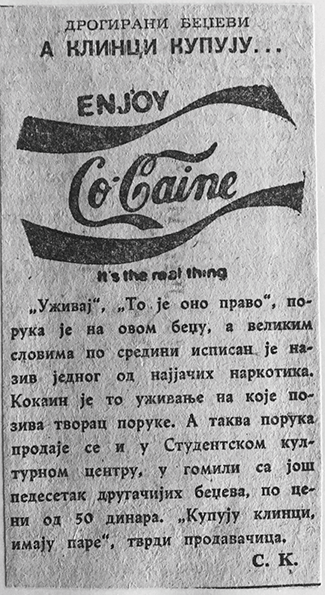
Figure 7.5 Long description
It shows the design of the pin button being sold at the Student Cultural Center, with a letter by a concerned citizen printed below it. The design of the button copies the Coca-Cola logo, but with the words, Enjoy Cocaine, It’s the real thing.
In another article glamorizing indulgence and decadence, a celebrated Yugoslav artist, Milovan “DeStil” Marković, pens a piece titled “Water sex u SKC-u” [Water sex at SKC], in which he not only offers an illustrative portrait of Belgrade’s night culture but accurately captures the spirit of the 1980s Belgrade youth, and SKC as its epitome. In the subheading he writes, “All you need to do is stop and watch, and you can see everything; you can talk to anyone interesting because everyone seems communicative, harmless, and always ready for some action. The SKC goers are the bearers of Belgrade’s new night culture.” The article opens with a narration of Marković’s telephone conversation with a friend earlier that day, using the Belgrade slang du jour in the manner of stream-of-consciousness, that vividly sets the stage for a description of a wild, yet very typical night out at the SKC:
Hey, where are we going tonight? Seriously – we’re going to the SKC, it’s such a cool vibe. Everyone will be there, all late-night owls go there. Wear the outfit you bought in Rome, it will be chic, and don’t forget your Walkman – it’s a trip to listen to it in a crowd of crazy people …. It will be insane, the whole town will be there, all jet-setters and new-wavers … It will be amazing. I love chaos, crowds, colors, madness. I love to hang out at SKC, we always have a crazy good time, such a cool crowd. ‘SKC I love you too much …’.”Footnote 60
Perhaps it came as no surprise when the SKC Grand Hall caught on fire (spreading to the attic, roof, and balcony) around midnight on December 28, 1983, following a concert by a rock/new-wave band from Belgrade, U Škripcu. The investigation was never completed, and what caused the fire was never revealed, although one report speculated that it was caused by cigarettes. This was the third fire at the SKC in two weeks – the first two were caught in time and extinguished immediately; the third caused significant damage to the building.
No one could have envisioned the meteoric rise of the SKC and the scope of its wide international appeal and reach. Certainly not the Communist Party of Yugoslavia, which had gifted the building as a “playground” for students but fully enjoyed its spectacular success – the Center aligned with the Party’s message of self-managed socialism. That is, as Nemanja Sovtić discerns, instead of imposing on society an abstract subject of the working class, the political system of self-management socialism spurred the emergence of a concrete structure of interests arising from social life.Footnote 61 Hence, progress in Yugoslavia’s cultural sphere reflected the progress of the country’s political system.
The SKC phenomenon was the result of a perfect storm – a combination of political and sociocultural events in Cold War Yugoslavia. Weary of the status quo and economic reforms but energized by waves of progress and change, the students in Belgrade demanded to be heard. Seeking to break away from the bonds of repression, control, and conservatism, they dismantled traditional cultural institutions and expanded the limits of innovation, technology, and artistic expression. The young experimentalists, including Marina Abramović, the Belgrade Six, Opus 4, and the Ensemble for Different New Music, were unstoppable. Yugoslavia’s unique cultural and geopolitical positioning as a socialist and nonaligned state in a world divided by different political ideologies worked to the artists’ advantage. Their “playground” was accessible to all like-minded artists from both sides of the Iron Curtain. They managed to transform the Student Cultural Center, and in turn Belgrade, into a magnet for experimental artists from both Blocs, an international center for artistic collaboration and cultural exchange, and a national model for the promotion of arts, culture, and freedom of expression in Yugoslavia.
On December 7, 1977, Miloš Raičković assembled a group of friends from the Faculty of Music in Belgrade (FMU) and took center stage at the Student Cultural Center (SKC). The ensemble, comprising Olgica Antić, Aleksandar Damnjanović, Dragan Ilić, Nada Kolundžija, Anđelka Marjanović, Branka Parlić, Miroslav Savić, Slobodan Todorović, and Ksenija Zečević, would soon become known as Ansambl za drugu novu muziku (ADNM) [Ensemble for Different New Music] – a changing group of musicians who promoted music by minimalist composers (Figure 8.1). The pieces presented at this concert had caused an uproar at the FMU six months earlier, where Raičković was in his second year of studies in composition. Upon witnessing his thirty-five-minute work, Permutations for three pianos and eighteen hands, the jury, comprising three diehard traditionalists – Stanojlo Rajičić, Aleksandar Obradović, and Petar Ozgijan – gave him a failing grade. The cause for this tumult: Raičković had composed a piece of minimalist music.
Ansambl za drugu novu muziku [Ensemble for Different New Music] ca. 1978: (from left to right) Miloš Raičković, Katarina Miljković, Aleksandar Damnjanović, Ksenija Zečević, Nada Kolundžija, Miroslav Savić, Branka Parlić, Vladimir Tošić, Miodrag Lazarov Pashu, Milimir Drašković.
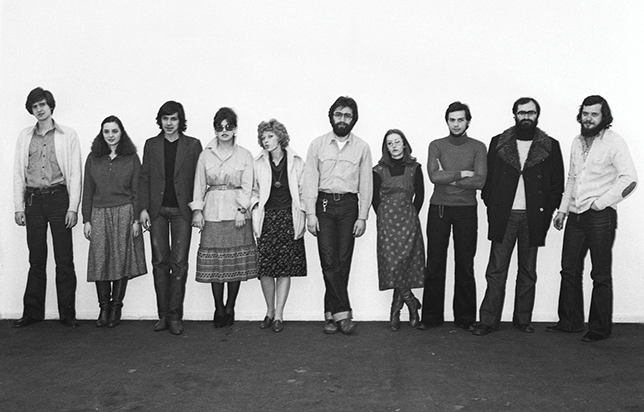
Figure 8.1 Long description
The ten members are lined up against the wall, standing casually, facing the camera are from left to right, Miloš Raičković, Katarina Miljković, Aleksandar Damnjanović, Ksenija Zečević, Nada Kolundžija, Miroslav Savić, Branka Parlić, Vladimir Tošić, Miodrag Lazarov Pashu, and Milimir Drašković.
In summer 1976, Raičković went to Paris to study with Olivier Messiaen (as auditeur libre in his courses at the Paris Conservatory). Raičković explains, “I was interested in serialism at that time, so Belgrade was not the place for me.”Footnote 1 However, while in Paris, Raičković encountered Steve Reich’s Music for 18 Musicians, which left a profound and everlasting effect on the young composer. Raičković reveals this experience in a candid interview with musicologist Valentina Radoman:
To me, Paris [in the 1970s], with composers like Messiaen, Boulez, and Xenakis, was the center of new music. Paradoxically, it was there that I “discovered” composers like Reich, Glass, Riley, and Meredith Monk, who performed their music at concerts. The minimal music of that time sounded new, powerful, and uninhibited, and it had already acquired a substantial audience. The atmosphere at these concerts seemed to me “healthier,” more open, and more humane than the atmosphere at the concerts given by the “dissonant avant-gardists.” At minimalists’ concerts, there was something “communal” about the music-making. People were friendly. In concerts at IRCAM, on the other hand, there was no sense of enjoyment and community, there was more of a feeling of “every man for himself,” or, rather, “every intellectual by himself.” Dissonant music had a neurotic and depressive effect. In some sense, there was a war between the two camps. On one side, you had a powerful, state-supported avant-garde with Boulez in charge of IRCAM; and on the other, you had visiting minimalists. The two styles never mixed at the same concert. These were separate worlds. I do remember an exception, a concert by the American minimalist Frederic Rzewski, presented at the Paris Conservatory (a bastion of dissonant aesthetics). After the first piece, all hell broke loose, and while some people were applauding, many more were shouting obscenities and booing. It was a strange phenomenon – that such anger was provoked by a very consonant piece.Footnote 2
When Raičković returned to Belgrade, he wrote a piece inspired by Reich – Permutations (1976–1977). Like his peers, Milimir Drašković, Miodrag Lazarov Pashu, Miroslav Savić, and Vladimir Tošić, who formed their composer collective, Opus 4, Raičković found no support or room for compositional growth at his home institution. Rather than succumbing to the “dogmatic and conservative” leanings of academia,Footnote 3 and giving in to the pressure of composing in “moderated modernism,” these rebellious students turned to American minimalism. They found a new, welcoming home for their experimentation and exploration: the Student Cultural Center.
The new musical style emerging from the SKC by these young composers during the late 1970s was grounded in American minimalism and experimentalism. Without support from their faculty and no means to learn about musical minimalism in Yugoslavia, these composers were self-taught and self-driven. As students at the FMU, they were familiar with early performance and conceptual art exhibitions by Marina Abramović, the “Belgrade Six,” and Joseph Beuys, among others, at the SKC during the early 1970s. They translated articles about American minimalist composers in their publication Nova/minimalna muzika [New/Minimal Music] and also Cage’s article, “The Future of Music: Credo,” which they referred to as truly “visionary.”Footnote 4 Savić, at the helm of the SKC Music Division, held the first public listening sessions for the recordings by Cage, La Monte Young, and others. Just as they were coming of age, Cage and the Merce Cunningham Dance Company made a spectacular showing at the Belgrade International Theater Festival (BITEF) in 1972.Footnote 5 Although the young composers did not attend this event, they certainly learned about the legendary performance later.Footnote 6 Shortly after, Cage’s influence changed the course of these composers’ artistic development. Raičković and the composers of Opus 4 would soon develop styles that “advocated for a new musical pluralism,” as Ivana Miladinović Prica argues – their radical musical innovation introduced experimental, minimalist, and electroacoustic music, and also performance art, video art, metamusic, and Fluxus to both the Belgrade and the Yugoslav art scene.Footnote 7
A Distinctive Brand of Yugoslav Minimalism
Musical minimalism emerged in the United States in the 1960s with the works of La Monte Young, Terry Riley, Steve Reich, and Philip Glass.”Footnote 8 The term “minimal” itself was coined by Michael Nyman and Tom Johnson to describe the compositions of Henning Christiansen and Alvin Lucier.Footnote 9 The term originated in reference to plastic arts, the type of art that was widely unfamiliar to critics, audiences, and musicians at that time, so when applied to music, the term was perceived negatively – it came to describe music with “no substance” or “music where nothing happens.”Footnote 10 With such a negative connotation, it is no surprise that both Reich and Glass adamantly detested the term and the association of their music with “minimalism.” As Jonathan Bernard points out, when Reich was asked to define minimalism, he responded, “I don’t. I steer away from that whole thing. Minimalism is not a word that I made up.” Glass showed an even stronger disdain by exclaiming that the term should be “stamped out.”Footnote 11 However, it is not just the term “minimalism” that has been contested historically; the reception of this music in the US was problematic from its inception. To this day, scholars remain divided on the state of minimalism. As Peter Shelley writes, for some scholars, “minimalism is a practice that died out almost as soon as it began,” while others view it as one of the most vital musical practices.Footnote 12 Even in 1980 when Glass and Reich were asked if minimalism as a living practice still existed, they quipped, “No – and good riddance, too.”Footnote 13
Strikingly, at the same time when music critics in the US were arguing that minimalism had reached the end of its short-lived run by the mid 1970s, citing that “its original practitioners [have] gone on to other things,”Footnote 14 the style was just emerging in Belgrade and Yugoslavia with the works of Opus 4 and Raičković. Their music was met with much criticism and resistance from academia, hardly surprising for conservative institutions that were still adhering to the principles of socialist realism.Footnote 15 Even the Zagreb Biennale avoided programming minimalist works in its rich and diverse offerings – the first minimalist work was not performed until May 13, 1979, when Raičković, with the Ensemble for Different New Music, and Michael Nyman with his ensemble, were programmed a concert, themed “Minimalia.” The program notes read, “It is a strange paradox that the Biennale had never before programmed even a single piece of so-called ‘minimal music,’ a significant phenomenon that emerged at the end of the 1960s.”Footnote 16 With the determination of Opus 4 (and individual effort by each composer), Raičković, and ADNM, minimalism reached all regions of Yugoslavia during the late 1970s and throughout the 1980s. But theirs was a distinctive brand of minimalism, grounded in the principles of conceptual art, music reduction, multimedia, individuality, and open structure (or opus ephemerum) for Opus 4 composers,Footnote 17 and a “purer” form of minimalism for Raičković, which he called “New Classicism.”
Miloš Raičković and New Classicism
When Raičković and his friends took the stage at the SKC on December 7, 1977 (Figure 8.2), it was both an act in defiance of the “dogmatic” Faculty of Music and a liberating experience for the composer. In the program notes, the composer explains that he aimed to achieve “confidence in listening” – an assurance that the listener would not hear anything unpredictable.Footnote 18 The concert critic Dragan Mlađenović, in a review titled “The Situation with Professors Is Not Surprising,” referring to Raičković’s teachers at the FMU who had rejected his piece and had consequently flunked him, describes the novelty of Raičković’s approach to composition:
The music of Milos Raičković, a young composer from Belgrade (who, with his bad luck, is a student at the Faculty of Music) who recently performed at the Student Cultural Center, is divorced from 19th-century forms. The concert was especially interesting because it confirmed that the divorce is not only formal but also substantive, thus, it is definitive. Raičković deliberately runs away from an expression that is grounded in the principle of conflict and opposition – from a traditional harmonic structure. His music is based on a captivatingly calm flow and a predictable process of ordinary and unpretentious musical language.Footnote 19
Miloš Raičković conducts the Ensemble for Different New Music, December 7, 1977, Student Cultural Center in Belgrade.
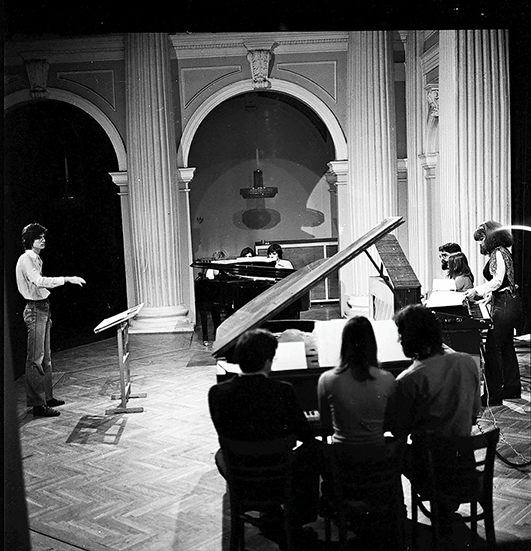
Figure 8.2 Long description
Clad in a white shirt and jeans, Raičković has a music stand with a score on it in front of him. He directs the ensemble with his right hand. On the stage are two grand pianos, one to Raičković’s right and the other to his left, with three performers sitting at each. In front of him is an upright piano with two pianists sitting at it and an electric keyboard next to it with another performer standing and playing it.
Permutations was originally a piece in three movements, based on the principle of permutations of six pitches, C, D, E, G, A, B (in some movements it is systematic, in others arbitrary), and repetition, a style to which Raičković referred to as “ascetic minimalism.”Footnote 20 Raičković later expanded the work into a cycle, Permutations I–V, each one constituting an individual “event” framed around a different procedure of permutations of these six notes. The first three pieces (titled “Little Peaceful Music,” “Canon,” and “Water Tones”) are based on a random order of permutations. Permutations I, written for a single line on any instrument but for two performers, repeats 192 segments of 6 pitches (6 segments per line, with 32 lines) (Example 8.1). The two performers take turns playing each line. In Permutations II (for two pianos played by seven performers), each performer is assigned a single octave, thus covering together the entire range of the piano. The seven parts begin in unison and gradually branch out into a canon. For the form of Permutations III, Raičković was inspired by Jackson Pollock’s “action painting” – a term coined by critic Harold Rosenberg to refer to a style of painting in which artists see the canvas as a space for action.Footnote 21 Raičković explains that in this work, the permutations of the pitches are arbitrary and there is no discernible pulse – the durations of long and short notes are also random. It is the conductor who shapes the piece by controlling who plays at any particular moment and determines the dynamics, articulation, and tempo for each performer. Hence, Raičković likens the role of the conductor to a painter who “makes a general gesture (spilling the paint in a certain way in a particular direction) but cannot predict the details of the painting.”Footnote 22 He concludes by noting that the musical form of “Water Tones” is thus “created by the conductor,” and each performance represents a new “version” of the piece.Footnote 23
Miloš Raičković, Permutations I, “Little Peaceful Music” (1976), the first line.

Example 8.1 Long description
Written in 6/4 meter on a single treble staff, it features six groups of sixteenth-note septuplets that play a rotating pattern of a melody that contains only six pitches, C, D, E, G, A, B.
Permutations IV, “Mirror” (1980), added a few years later, is for piano six hands, where each hand plays one note at a time, generating a chord with all six pitches. The work follows a systematic process of pitch reordering, both horizontally and vertically, until all 720 possible combinations are exhausted. In the last piece in the cycle, Permutations V, “Sound of the White Hole” (1978), for six performers on various keyboard and mallet instruments, all performers play the permutations (linearly or as chord clusters) in the same octave. The piece again features 720 systematic combinations, but each is orchestrated differently.Footnote 24
Following the initial presentations of Permutations at the SKC, Raičković reprised the same program with ADNM at the University Student Center in Zagreb [Studentski centar sveučilišta] on February 24, 1977, and then a month later, he returned to SKC in Belgrade with two other composers-performers – Aleksandar Damnjanović (b. 1958) and Katarina Miljković (b. 1959) – to present a new version of Permutations III.Footnote 25 Permutations III and V were performed at the Music Biennale in Zagreb on May 13, 1979 – the aforementioned “Minimalia” concert. The entire cycle was revived at the third rendition of the Festival for Different New Music, May 18–22, 1986, at the SKC.
By 1979, Raičković had started composing in a new style, which he termed “New Classicism” – a blend of minimalism and the “Viennese Classical and early Romantic” styles. In these works, the form is “classical” (such as sonata form or variations, among others), but tonally, the music is reduced to only a few pitches of the scale. However, Raičković does not see anything “reductionist” in working with a small number of pitches. He explains: “It is simply my own material. When I write, I don’t feel that anything is missing.”Footnote 26 His compositional technique is not grounded in the typical minimalist techniques, such as Reich’s repetitive patterns or Glass’s additive rhythms. Rather, Raičković applies a new method in each work; one such approach is using fragments from a theme, mixing them with the initial material, and then splitting them into even smaller fragments and proceeding to work with them again in a new way, “like a collage,” explains the composer.Footnote 27 This new approach creates a “new quality” and a “new energy” in his music, enabling Raičković to both express his feelings and satisfy his needs for a clear and coherent musical language.
Opus 4: Minimalism and Fluxus
The young composers comprising the Opus 4 collective – Drašković, Lazarov Pashu, Savić, and Tošić – emerged on the scene on May 20, 1976, about a year before Raičković’s debut. Also rebelling against rigid conservatism at the Faculty of Music and suffering the same fate of rejection by their professors, they robustly organized activities at the SKC, often together with Raičković and Miloš Petrović.Footnote 28 Their common interests in experimentation, musical pluralism, and individual growth brought them together and radically changed the course of music in Yugoslavia at the time. Their work as composers-performers within Opus 4 lasted until 1982, followed by continued individual experimentation. Even while working within the collective, freedom of individual expression was one of the group’s guiding principles. Lazarov Pashu reveals in an interview: “In our scheduled [Opus 4] meetings, each one of us would explain what we were working on, or what we were intending to do in the upcoming performances,” concluding that although they were all so different, they influenced and learned from one another.Footnote 29
The period coinciding with the formation of Opus 4 – the 1970s – was ripe for new artistic and cultural currents in Belgrade and Yugoslavia. The Electronic Studio of Radio Belgrade, the first electronic studio in Yugoslavia, was founded; the Third Program of Radio Belgrade, the first radio program dedicated to the promotion and broadcast of new music, was established; the SKC in Belgrade opened its doors to the young generation of student artists, free to experiment and express themselves in any way they wanted; the annual April Encounters – a festival of expanded media and conceptual art spearheaded by Marina Abramović and the “Belgrade Six” – were launched; many other festivals around Yugoslavia (especially in Belgrade, Zagreb, and Ljubljana), such as the Music Biennale Zagreb and BITEF, were already recognized as centers for international exchange; David Tudor, Cage, and the Merce Cunningham Dance Company created three different “events” for the 1972 BITEF;Footnote 30 Glass’s iconic performance of Einstein on the Beach was performed at BITEF in 1976;Footnote 31 and the innovation of the video recorder and other technology enabled these composers to incorporate multimedia in their works. Vladimir Tošić puts it succinctly:
It was our luck that this was the period of vast expansion of new art in Belgrade and Yugoslavia, and it was all happening at the Student Cultural Center – our second home. Conceptual art was at its peak with local artists such as Marina Abramović, Raša Todosijević, Zoran Popović, Neša Paripović, and world-renowned artists like Hans Otte, Mauricio Kagel, Joseph Beuys, among many others. As early as 1976, a cult play by Bob Wilson set to the music of Philip Glass, Einstein on the Beach, was performed at BITEF in Belgrade. We, too, created our most significant projects both individually and collectively at that time and ventured out into the world. It was truly the most creative moment for new art [in Yugoslavia], and we operated in total correlation to it and were a crucial part of it.Footnote 32
The young composers absorbed the radical creativity happening around them in Belgrade and, influenced by it all, especially by minimalism, Cage-inspired happenings and events, conceptual and performance art, and Fluxus, they developed their distinct style. It was not unusual that Fluxus and Cage were the primary sources of inspiration for the Opus 4 composers. Fluxus, founded by Lithuanian-born American artist George Maciunas in the 1960s, quickly spread across Eastern and Central Europe. Further, Cage and Cunningham had performed in Prague in 1964 and contributed to the further reach of Fluxus across the West. Amy Bryzgel argues that Fluxus was a “significant point of contact between East and West.”Footnote 33 With Cage’s influence on this avant-garde art movement, for young experimental composers in Yugoslavia, he was at the center of it all.
Milimir Drašković
From the very beginning of his career, Drašković showed an interest in integrating multimedia, including installations, video projections, and performance art, into his compositions. Not considering his music as “minimalist” in style until 1988 (with HPSCHD I, 1988, followed by HPSCHD II, 1990, both for harpsichord), Cage’s experimentations and Fluxus resonated more with him. While Drašković’s minimalist works are rather simple – they are based on a strict repetition of small segments, which he treats as a series – his multimedia works illustrate daring innovation and originality. Cage’s treatment of silence had an impact on Drašković. In a conceptual work titled Muzika u Beogradu [Music in Belgrade] (1978), Drašković presents a blank score of music, with just the title written on it (Example 8.2), explicitly evoking Cage’s 4‘33".
Milimir Drašković, Muzika u Beogradu [Music in Belgrade] (1978).
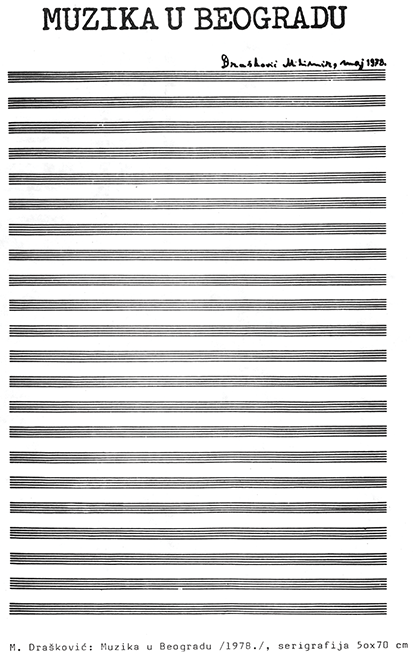
Example 8.2 Long description
On top of the page, typewritten in all-caps is the title of the work. Above the first staff line, on the right side, is the composer’s signature, Drašković Milimir, May 1978.
Dirigent [Conductor] (1979) is another conceptual work that has no traditionally notated music in it. The work, which, per Drašković’s inscription on the “score” (published as a booklet),Footnote 34 lasts for 22‘14", features thirty slides of Drašković, clad in a tuxedo and holding a baton, and making various gestures and facial expressions (Figure 8.3). Most of the slides are blurry, conveying motion. Each image portrays Drašković in a different position (i.e., gesture) and from a new angle, as if he were instructing specific sections of the orchestra, and the audience were listening. Lazarov Pashu described this project as both a musical work that one cannot hear and “a literary work that does not rest on any linguistic signifiers,”Footnote 35 while Mirjana Veselinović-Hofman regards Drašković’s works as a prime example of the “destruction of the institution of music,” much as Cage did with his experimentations at the New School in New York.Footnote 36
Milimir Drašković, Dirigent [Conductor] (1979), still photographs.
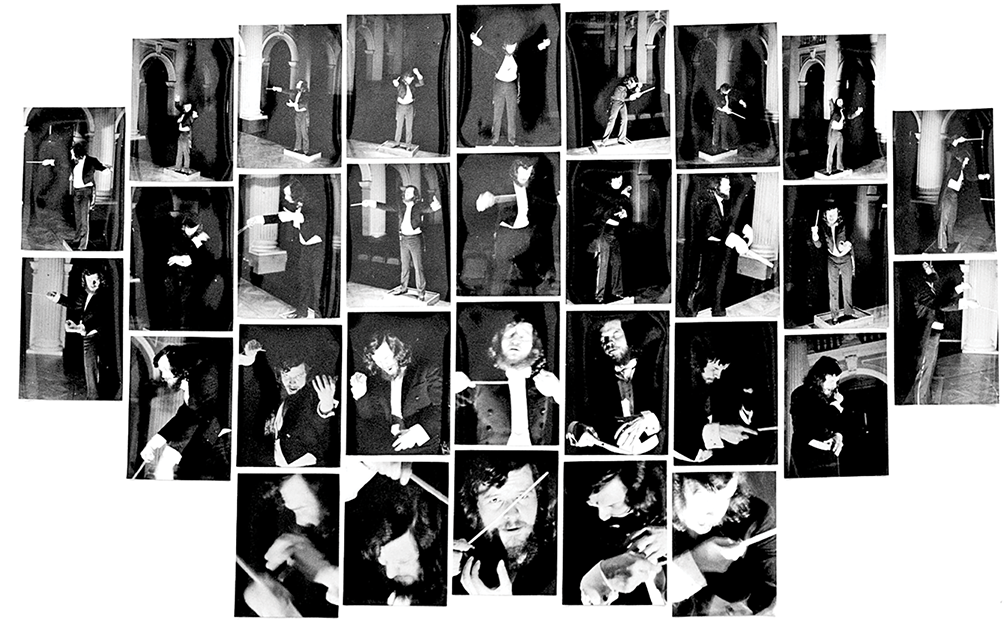
Figure 8.3 Long description
The slides are arranged in four rows. Each slide depicts Drašković in a different pose, standing on the podium and holding the baton with his arms horizontally spread out, conducting with one hand while gesturing with another, leaning to the side, making facial expressions, and so on. Some slides show his entire body on the stage from different angles, while others zoom in on his face to show his facial expressions and gestures.
In addition to the treatment of silence (that is, blurring the lines between music and silence), gestures, conceptual and performance art, and multimedia, Drašković’s works also exhibit Cage’s principles of indeterminacy and aleatory. They named these types of works ideosemas – combining the notions of an “idea” and “schema” – to denote “the entire body of works with contextual and immanent structural properties.”Footnote 37 In Drašković’s oeuvre, the concept of ideosemas is illustrated in works such as Opera (1979), 1–12 (1980), Klavir, Op. 4, No. 1 (1980), Video, Op. 4, No. 1 (1981), and Muzički magazin [Music store] (1982).
In 1–12, Drašković calls for up to twelve performers on different instruments. He further specifies that each player chooses a different pitch from the chromatic aggregate; they all begin playing together and stop once they have noticed that the others have stopped, without exceeding five minutes of inactivity. Klavir, Opus 4, No. 1 is for one to four performers on one to four pianos (with optional amplification) (Figure 8.4). The composer’s directions indicate the following:
Performers, all together, play a CLUSTER of 88 NOTES.
All players simultaneously STRIKE the cluster as HARD AS POSSIBLE
(with the pedal down) and remain STANDING at the piano(s)
as long as they can HEAR–SENSE the sound of the piano.
They can leave the stage one by one.Footnote 38
Milimir Drašković, Klavir, Opus 4, No. 1 (1980).
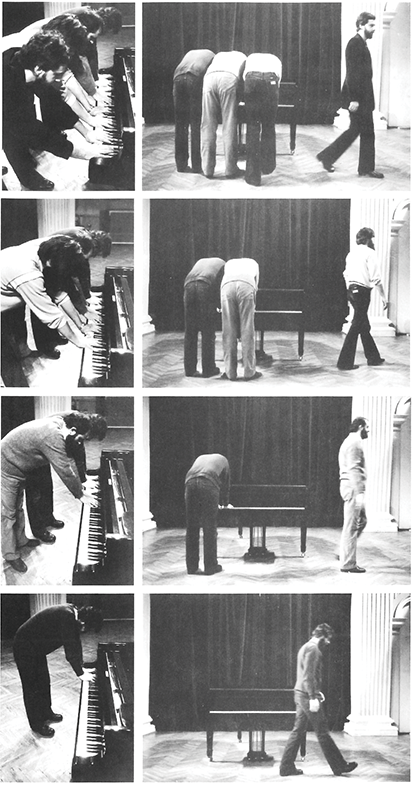
Figure 8.4 Long description
The collage is arranged in two columns, with four photographs in each. In the left column is a side view of the performers standing and leaning over the keyboard of the grand piano with both hands pressing the keys. The first photo shows all four players, the photo below shows three, the next one shows two, and the last photo shows the last remaining performer. In the right column is the view from behind each of the previous photos, showing four players, then one departing to leave three, and so on.
Similarly, in Video, Opus 4, No. 1 (again, intended for performance by Opus 4), Drašković calls for one to four author-performers, each standing in a corner of a square room. This work conveys each author’s attitude toward their own work, noting that with the presence of multiple authors in the same room, there is a possibility that there may be “common attitudes” displayed. Works like Music Store and Rođendan [Birthday] (1979) call for more variance and indeterminacy. In his event Rođendan, Drašković invites his friends to celebrate his twenty-seventh birthday at the SKC Happy New Art Gallery. There, Drašković presents twenty-seven blank audio cassettes, each one symbolically representing one year of his life. With this work, Drašković again blurs the lines of sound and silence, and of private and public, as Miladinović Prica notes, by transforming his private celebration into a public and cultural event.Footnote 39 In the Music Store, the composer invites others to join him in visiting a music instrument and record store on Terazije Street and playing all available instruments inside the store. Drašković records the sounds with various possible effects (with equipment available at the shop, such as echo machines) and then plays the recording in front of the store. This event, which took place on May 26, 1982, was part of the festivities organized by the SKC around Belgrade – in the streets, squares, and parks – in a week-long celebration (May 24–30, 1982) of National Youth Day.Footnote 40 The festivities, themed “Grad u reinkarnaciji” [A city in reincarnation], featured music performances, rock concerts, art and architectural installations, video and film projections, photo interventions, theater performances, and other street events.Footnote 41
Miodrag Lazarov Pashu
Pashu was also particularly influenced by Cage, especially by his events and happenings. For Pashu, Cage was “an irreplaceable figure of 20th-century music … because he made the very notion of research and experiment aesthetically relevant.”Footnote 42 Pashu’s approach to composition and application of Cage’s ideas differed in three ways from those of his Opus 4 peers, as he explains in an interview:
First, I implemented my philosophical and theoretical attitudes in complementing the multidisciplinary approach. In that, I was inventing new phenomenalistic forms, such as meta-music, integrated-object, or mic-medium. Second, I used theory as one of the disciplines in my global multidisciplinary approach … alongside composing music, conceptualizing, and realizing multimedia art and visual works. And, third, I ventured into visual art by conceptualizing and realizing works with neon as assemblages of neon tubes, neon sentences, or mathematical logic statements on canvas, marble, or gold plates.Footnote 43
Pashu’s approach is unmistakably influenced by conceptual, tactile, polymedial, and metamusical works by Radovanović, with whom he studied at EMS Radio Belgrade. Recognizing that Radovanović had already engaged in avant-garde music research decades ago, Pashu acknowledges his indebtedness to the Yugoslav experimental pioneer:
In our country, this new approach came into existence via the Expanded Media Festival, organized by the Student Cultural Center. It especially developed in the domain of visual arts … and sound – the auditory, in the broadest sense of the word. Before I joined this creative trend, it was already preceded by two elder colleagues, Vladan Radovanović and Paul Pignon, although the younger generation, which also includes myself, nonetheless differs in their approach.Footnote 44
Pashu’s creativity – influenced by Cage and Radovanović, but also with a distinct voice – is evident in his two cycles of metamusic/metalinguistic media: twenty works in his Muzika koja se misli [Music that is thought about] cycle and twenty-two works of Muzika koja se čita [Music that is read], both from 1982. The former features a numbered list with steps on how one should think about a specified piece of music. For instance, No. 10 only has one line of text, which directs the participant to think about the notion that one does not need to think about music or performers in a musical way. No. 8 provides a longer list of instructions:
1. Think about Igra.Footnote 45 If you think about Igra, you will free yourself of everything traditional, archetypical, conceptual, or semiotic.
2. Think about Tape–art 2 by Miodrag Lazarov Pashu.Footnote 46
3. Think about the supertonic.
4. Think [about the supertonic] in the highest register.
5. Check your pitch. Think about it.
6. Think about the adaptability of “I” with structure.
6a. Think about the adaptability of your “I, with Music that is thought about.”
7. Think about a segment of a piece. Why (and if) the segment must be as good as the work itself.
8. Walk around the city and try to compose. Think about what you think you are composing.
9. Think about G-sharp. And specifically, G-sharp in Ockeghem, da Venosa, Bach, Scarlatti, Mozart, Liszt, Schoenberg, and Cage.
10. Think about the harmony of spheres. About tutti. About harmony denoting an agreement between a musical thought and actual (realized) music.
11. Think about diminuendo.
11a. Also about ritenuto.
11b. And about perdendosi.
The latter cycle features a sheet with words written on it that are to be read (aloud or silently). No. 10, for instance, lists the following words: pianissimo, accelerando, sostenuto, herojski [heroically], and una corda. These works are built on the verbal and visual musical knowledge of music – Pashu expects the participants to apply their previous musical experience, understanding, and knowledge of music in order to interpret his compositions. That is, expecting the participants to think of a “G-sharp” presupposes that they know what that pitch denotes and how it sounds (i.e., its frequency). Asking them to think not only about that pitch but also about a particular musical, historical, and cultural context in which it may occur – in the works of specified composers – presupposes that the participant will have some knowledge about the history and theory of music.
Pashu created a series of ideosemas works. In Objekat koji svira na dodir [An object that plays on touch] (1982), Pashu sits on an ordinary wooden chair in a room and starts singing whenever someone touches him. He produces a new melody or a new sound each time, and the singing lasts as long as the duration of the touch. The piece lasts as long as there are “touchers.”Footnote 47 Several Fonoserije–Identiteti [Phonoseries–identities] explore a variety of musical and semantic characteristics. For instance, Dvanaest tonova temperovanog sistema [The twelve notes of the equal-tempered scale] explores the properties of acoustics and tone series. Pashu calls for the performer to depress a key on the amplified piano (with the lid raised, and a microphone placed near the strings) and shout the name of the key being depressed near the point where the hammer strikes the string. Then, the performer depresses several keys at the same time and shouts the name of those notes. While the order of pitches to be played/shouted is provided by the composer, the rhythm of shouting is variable, and the pitch and loudness level of shouting should be maintained throughout the performance. Pashu specifies that the amplification must be good enough to allow for the hall to echo with each shout and string resonance.
In exploring the musicality of semantic structures, Pashu presents several other works, such as Phonoseries–Identities / of Dynamic Structure, where he calls for the performer to pronounce the dynamic indications with the intensity they denote. In a work titled Struktura jednako struktura jednako struktura jednako struktura [Structure equals structure equals structure equals structure] (1982), Pashu sits at a table (in a gallery or a similar environment) and, either with or without sound amplification, utters the following text: “I am saying one word every minute,” pronouncing each word a minute apart. Pashu incorporates his body into the performance in Dva vida zvučnog [Two aspects of sound] (1981–1982), in which the work starts with the performer producing two contrasting sounds – loud and soft – by hitting his body in two different ways. While doing this, the Pashu stands up and takes a deep bow. Next to him are two piles of different types of paper. The performer first grabs a piece of paper from the first pile and tears it up quickly, producing a sound. This action is followed by tearing a paper slowly from the second pile, which produces a quieter sound (Figure 8.5).
Miodrag Lazarov Pashu, Dva vida zvučnog [Two aspects of sound] (1981–1982).
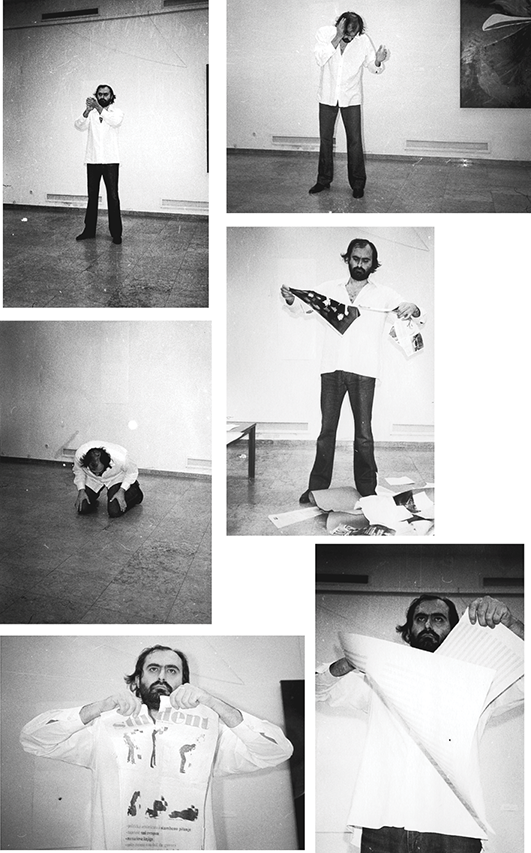
Figure 8.5 Long description
Pashu is shown in different poses, standing and clapping his hands in front of him, clapping his hands to the side, kneeling while resting his hands on his thighs, and standing up while ripping different kinds of paper, which he discards on the floor.
A similar type of performance is seen in Pashu’s work, John Cage 0‘00" (4‘33" br. 2). On the occasion of Cage’s seventieth birthday (in 1982), Drašković, Savić, and Lazarov Pashu each produced a version of a video with the same title. These works are a response to Cage’s work of the same title – 0‘00" (4‘33" No. 2) – and follow his instructions to create a performance of a “disciplined action.” Cage provides more details for the execution of the works, specifying that the particular action may be interrupted but cannot be repeated in another performance or cannot be the performance of a musical composition.Footnote 48 In his version, Pashu holds a large piece of paper with three lines of text, each containing one word, “Cage / 0‘00" / Pashu,” before proceeding to rip it.
While the majority of Pashu’s works integrate audio-video installations, mixed media, performance and conceptual art, and events – such as Pashu reklama [Pashu advertisement], in which he rides in a car with public-address equipment that plays his music while he is speaking words of praise of his works and himselfFootnote 49 – he also composed several works in the minimalist style. Pashu’s minimalist compositions follow a “simple” method of exact repetitions of patterns, either a specified or an indeterminate number of times. This method is evident in his pieces Vreme 1 [Time 1] and Vreme 2, both from 1981. In Vreme 2 for piano, Pashu writes out the figures in exact musical notation (Example 8.3) but notes that each pattern can be repeated an indeterminate number of times. In Vreme 1 for two timpani, Pashu presents more specific verbal instructions but indeterminate musical notation. He notes that there are two possible formats in which this work can be presented. In the ideal format, each figure should be repeated exactly sixteen times, and in the relative format, there are four parameters of possibilities:
1. The performer decides how many times each figure should be repeated. This can be decided either before or during the performance.
2. It is recommended that the figures with smaller rhythmic values should be repeated at least sixteen times.
3. Figures with longer note values can be repeated fewer times.
4. The number of repetitions of figures can be done in a systematically decreasing way.
Miodrag Lazarov Pashu, Vreme 2 [Time 2] for piano (1981), first two pages of the score.
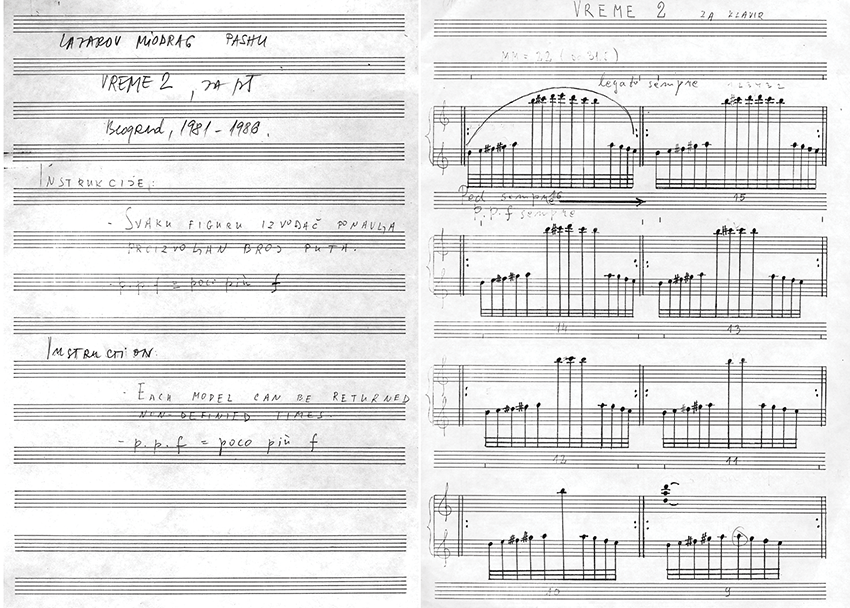
Example 8.3 Long description
The score is written on 14-stave loose manuscript sheets. The title page lists the composer’s name, title of the work, and the date (Belgrade, 1981 through 1986). Below, Pashu writes the instructions, first in Serbian and then in English. They read, Each model can be returned non-defined times / poco più forte. The page of the score shows the first eight measures of the work, two measures written in each system. Each measure is delineated by repeat bars. It shows a pattern of notes broken between two hands. The number of notes in each group (i.e., measure) systematically decreases by removing one note from the right-hand part. It starts with sixteen sixty-fourth notes playing the following pattern: left hand, treble clef playing D, E, F sharp, G sharp, and A. The right hand continues with B, C sharp, D, E, D, C sharp, and B. Then, the left hand takes over and continues the downward motion with A, G sharp, F sharp, E. In the next measure, the grouping is reduced to fifteen thirty-second notes, with the top E in the right hand eliminated. By the time we reach the end of the page, the pattern is reduced to nine notes, played only by the left hand, D, E, F sharp, G sharp, A, A, G sharp, F sharp, E. The piece is notated in tempo of 22 beats per minute, legato sempre, pedal sempre, and poco più forte sempre.
Pashu’s works created during the years of Opus 4’s activity illustrate how they thought of their pieces both individually and collectively. While some of Pashu’s works were intended to be performed by himself as a soloist, many of the works (as we also saw in Drašković’s Klavir, Opus 4 and Video, Opus 4) were created with the entire group in mind, each member having a role of a composer-performer. This collaboration among the members, as illustrated in Pashu’s Objektivne varijacije – Konkretne varijacije (Figure 8.6), ensured that their projects would be performed, which was one of the primary reasons for the creation of the group. Tošić further elaborates:
Like all (young) artists, members of Opus 4 also strongly desired to see their creations performed on the stage for the public. However, our road to success was marred by many challenges that were easier to overcome collectively. On the one hand, the existing traditional ensembles were not familiar with new practices and thus were not interested in playing avant-garde music. On the other hand, there were no ensembles fit to perform this kind of music. For these reasons alone, we were forced to perform our work by ourselves. Also, due to the fact that we needed creative performers who were versatile in many media types, we created works specifically with Opus 4 in mind, knowing very well the possibilities and limitations of each member, and using them to maximum capacity. This was quite advantageous to us because it allowed for the greatest mobility without any intermediaries, and also for the realization of each work with maximum authenticity. The group could perform almost any envisioned project, independently and adequately.Footnote 50
Miodrag Lazarov Pashu, Objektivne varijacije – Konkretne varijacije [Objective variations – Concrete variations] (1981), Student Cultural Center. In this work, performers change the position of their bodies according to parameters specified by the composer.
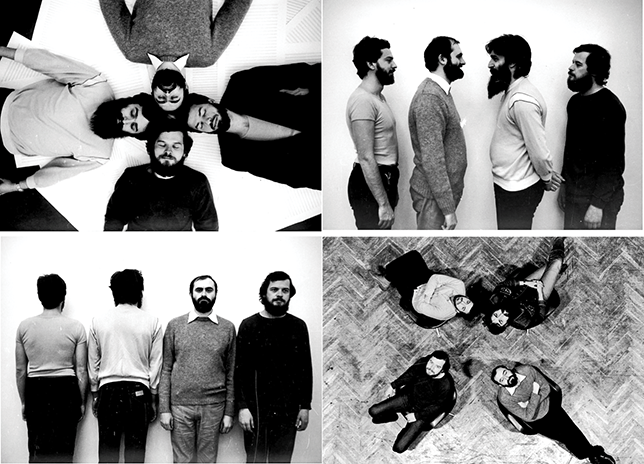
Figure 8.6 Long description
On each slide, performers change the position of their bodies according to parameters specified by the composer. On the top left photograph, the four performers are lying on the floor on their backs, positioned perpendicularly, their heads touching. The shot is taken from above. On the top right, the four performers are standing sideways, close together. Tošić and Pashu are facing to the right, while Savić and Drašković are facing to their left. In this way, Pashu and Savić are facing one another directly, their faces only inches apart. On the bottom left, two performers are standing closely next to each other. Two are shown facing backwards, and the other two are facing forward. On the bottom right, the four performers are sitting on chairs, facing away from each other, their heads leaning back and almost touching; the shot is taken from above.
Miroslav “Miša” Savić
As editor-in-chief of the Music Division at the SKC, the role he assumed in 1978, Savić launched a program Proširena muzika [Expanded music], with the purpose of “staging actions that would be essentially musical, but realized in different, extra-musical media, highlighting a different nature of music.”Footnote 51 In this role, Savić played a significant role in the success and visibility of Opus 4, Ensemble for Different New Music, and in general, all musical activity, including performances, publications, listening sessions, documentation, and festivals that took place at the SKC.
As a student of composition at FMU, Savić was introduced to the music of Messiaen and quickly became enthralled by the style and (serial) technique of the French composer. However, absorbing the radical presentations of new art by Marina Abramović and the “Belgrade Six” at the SKC, and hearing about new musical trends in the US, Savić made a conscious decision in his third year of studies to take the opposite stance in his then-serial approach to composing: minimalism.Footnote 52 He first demonstrated this departure from serialism and the formation of his own, distinct, and new style in the aforementioned 10 for piano (1974).Footnote 53 With the formation of Opus 4 and Ensemble for Different New Music, Savić created several renditions of the work, including a version for a gong (1976), which premiered on May 20, 1976 at the SKC (Figure 8.7).
Miroslav Savić, 10 for gong (1976). (From left to right): Miodrag Lazarov Pashu, Vladimir Tošić, and Miroslav Savić.
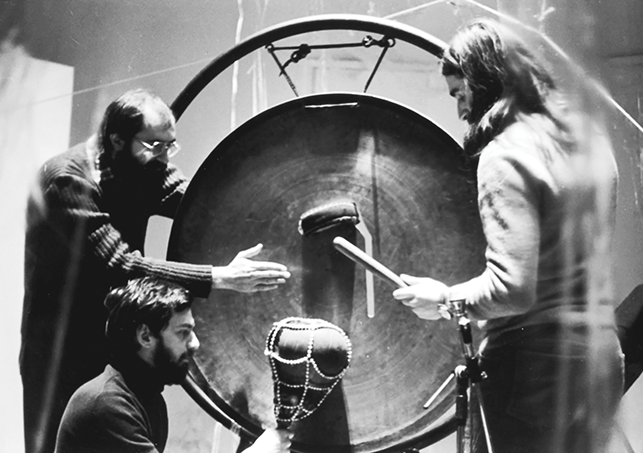
Figure 8.7 Long description
In the center is a large gong. On the left, Miodrag Lazarov Pashu taps the instrument with his right hand, while stopping the gong from the other side with his left hand. On the bottom left, Tošić is kneeling and hitting the gong with a large decorative mallet. On the right, Savić is hitting the gong with a stick.
About a month earlier, Savić took center stage at the SKC April Encounters Festival of Expanded Media for his performance of a solo piano work, 24 sata/akord [24 hours/chord]. In this intense work that pushes the boundaries of endurance of both the performer and the audience, Savić sits at the piano for an entire day and plays continuously a cluster of six notes – D♯, E, F, F♯, G, G♯ – at a tempo of fifty-four beats per minute. Thus, Savić and the audience listened to the repeated sounding of the chord nearly every second for twenty-four hours straight. Savić notes that by the end of the performance, about 500 people remained in the hall, and that at the conclusion, someone jokingly asked for one more minute.Footnote 54
Savić explored the limitations of his body in other early experimental works of this period. In
 [
[

 ] (1978), Savić lies on his back on top of the piano with his head and arms stretched above the keyboard. He remains in this position, not producing any sound, for as long as he can endure. As fatigue overtakes him, he lets his head and hands fall on the keyboard, producing sound. Similarly, in Zagrejani kružeći zvuk klavira [Heated circulating piano sound] (1978), Savić lies on his stomach on top of the piano with his head and arms above the keyboard, while playing a continuous tremolo. As fatigue advances, his hands move closer together (horizontally), while his head moves closer to the keyboard (vertically). The change in motion produces a change in the sound.Footnote 55 In an interview with Dunja Blažević, SKC Director at the time, following the 1978 performance at the SKC, Savić (nonchalantly smoking a cannabis joint on camera), reveals more information about the meaning of this work:
This work, unlike my other works up to this point, is very connected to the concept of “body art” because the body participates directly in the making of the sound. What is important concerning this work, in addition to the position of the body, is the hands. Hands present a visual element in the performance of any instrument, but especially in piano performance. Unlike my previous works, and likely not foreseeable in any pieces in the near future, this work displays a very pronounced use of the body. There are two elements at play here: a heated room and the sound that circulates in this heat around the room.Footnote 56 The action of the “body art” creates the sound, thus all elements merge together in this work.Footnote 57
Miladinović Prica insightfully observes that in this work, the artist’s body plays the main part, whereas the piano performs a “supporting” role in what is a rather demanding and precarious bodily action.Footnote 58 The performances of these “body art” works are quite demanding and challenging. During the performance of Svirati/ne-svirati at the Bone 16 Performance Art Festival in Bern in 2014 (Figure 8.8), Savić fell off the piano, hit his head on the tiled floor, and had to be rushed to the hospital.
Miroslav Savić, Svirati / ne-svirati––ne-zvuk / zvuk [Play / not-play—not-sound / Sound] (1978), Bone 16 Performance Art Festival, Bern, 2014.
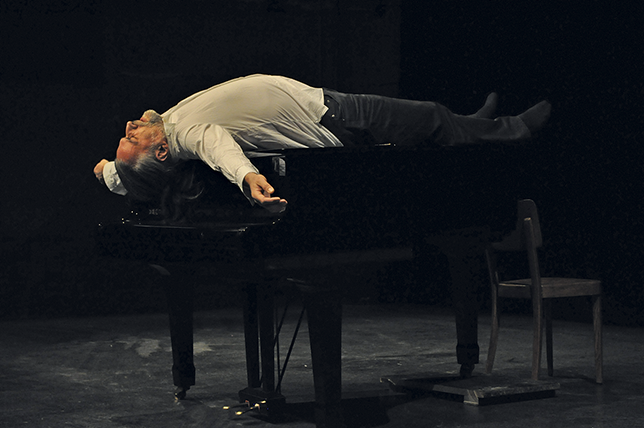
Figure 8.8 Long description
Savić, wearing a white shirt, black jeans, and black socks, is lying on his back on top of the grand piano, with his arms stretched outward and his head hanging backward over the lid. Next to the piano on a dimly lit stage is a dark brown wooden chair Savić used to climb on top of the piano.
Savić created many other works that put the notions of sound and silence in opposition, incorporate the body as an instrument, and present music conceptually. In Dve pozicije [Two positions] (1978), Savić stands in front of a piano, dressed only in a white shirt, already testing the audience’s comfort with his nudity. Ten keys on the keyboard are taped down in advance. With his eyes closed, he approaches the piano and strikes another ten keys with all his fingers, remaining in this position as long as the sound resonates. Then, he steps back and repeats the same action another nine times (Figure 8.9). Other pieces, such as Guranje klavira po podlozi od celofana [Pushing a piano across the floor covered in cellophane], provide no other information than what the title already implies. However, these works, with simple instructions, reveal a radical departure of musical expression from what the majority of composers in Yugoslavia (and certainly all of their professors at the FMU) practiced or could even comprehend as music.
Miroslav Savić, Dve pozicije [Two positions] (1978), Bone 16 Festival, Bern, 2014.
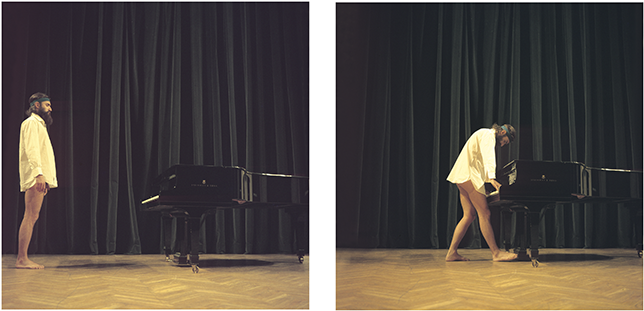
Figure 8.9 Long description
In the left photograph, Savić is standing barefoot on the stage, with his eyes closed, about three steps from the grand piano. He is wearing just a white button-down shirt and nothing else, exposing his nude lower body. He is sporting longish hair, a bushy, thick beard, and a bright blue headband. In the next photo, Savić is leaning over the keyboard, still with his eyes closed, as both hands depress the keys, with his right bare foot pressing the pedal.
In addition to these experimental body art and performance art projects, events, and happenings, Savić also created many multimedia and electroacoustic works and, as we saw in Chapter 6, did more for computerized music than any other composer in Yugoslavia. His conceptual art projects (i.e., ideosemas) are also notable. Similar to the works of Drašković and Pashu, Savić also relied on semantics to portray his musical works – these compositions produce no actual musical sound; the music is entirely conceptualized. One such example is Zatvoreni krug (klavira) [Imprisoned (piano) sound] (1976), an installation in which Savić covers the entire surface of a room with pages from a graphic score of his other piece Zvuk 326880. He then proceeds to shut the door and lock the room for the entire duration of “action,” barring the audience from “attending” the concert, even though this is a concert of conceptual music. Miladinović Prica suggests that Savić betrays his audience by confronting it with an impossible task – by placing the performance beyond the public’s reach.Footnote 59 However, according to Savić, this visual installation of music is not meant to be heard or even viewed – its form is time and space, which, in this case, is represented by the interior of the hall.
The drastic shift in Savić’s creative output during his student years was a reaction to what he was forced to compose by his professors. Thus, as Savić explained, the starkest stylistic opposition to the mandated serialism for him at that time was minimalism. Quite a prolific composer in this style as well, his method may be generally characterized as “integral serialism” – a technique in which several processes of repetition and reduction occur simultaneously in multiple parameters (such as pitch, rhythm, or text), albeit in a free manner. A prime example of this technique is a series of “ABC” compositions, especially his three works from 1983 – ABC Music, ABC Music for Conga, and N.N. for Piano (later reconstructed as ABC Music for Piano) – and also ABC Bossa Nova (1985), which he wrote for the Festival of Different New Music. ABC Music for Conga, for instance, contains thirty-four patterns that are repeated individually according to specified processes. Each pattern contains three pitches, A, B♭, and C (hence the title),Footnote 60 four solfege syllables, re, mi, fa, and sol, and rhythmic patterns of notes and rests. As the piece unfolds, the solfege syllables are gradually replaced with the three notated pitches, and rhythmic patterns turn into a steady pulse (Example 8.4).Footnote 61
Miroslav Savić, ABC Music for Conga (1983), the first page of the score.
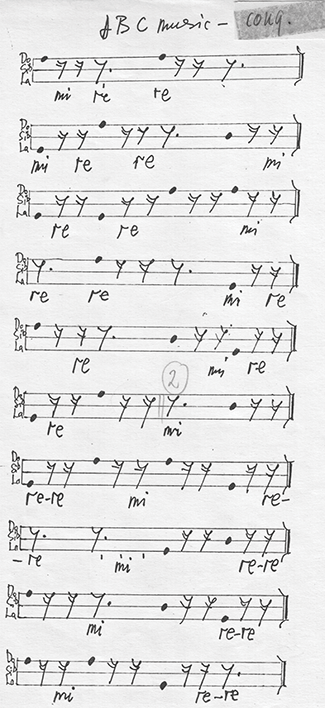
Example 8.4 Long description
The lines correspond to pitches Do on top, Si flat in the middle, and La on the bottom. Noteheads indicate when the pitch is sounding. For instance, in the first measure, the notehead is at the beginning of the measure on the top line, Do, followed by two sixteenth and one dotted eighth note rest. Underneath, syllables mi and re are written. Another notehead follows on the top line with the syllable re underneath, followed again by two sixteenth- and one dotted eighth note rest. In each measure, the rhythmic and pitch placement of noteheads changes, as do the durations of rests in between, and the placement of the syllables.
Minimalist works by both Savić and Tošić represent a breakthrough in “integral minimalism” in Belgrade and one of the most significant developments in the trajectory of Yugoslav music history. Their activity, together with that of Drašković, Pashu, Raičković, and ADNM, which pioneered and promoted their minimalist works, defined the new Yugoslav avant-garde in the late 1970s and early 1980s. While all four members of Opus 4 ventured into the realm of minimalism, Tošić most notably stayed the course throughout his career, still composing in this style.
Vladimir Tošić
Tošić debuted his piece Mélange in 1975. At that point, this piece represented a radical departure from the musical practice at the time and a direct defiance of the “establishment” (i.e., the FMU). The work, featuring graphic notation and minimalist techniques of repetitions and reductions, caused quite a stir among the musical “elites.” Tošić departed from traditional expression quite quickly and developed a new individual style early on, as he reveals:
My development was incredibly fast – it occurred during my first two years of studies at the [FMU] (1973–75). That is why there are not many examples of non-reductionist music in my opus. Those rare examples are from those early days of my studies when I had to create something that would fit the curriculum in some way. Already in my second year, I composed Mélange, and in it, I already established my basic musical foundation for all my future works. However, since I was still a student at that time, I had to compose pieces that were not purely minimalist. But I gave it my best to preserve my authentic voice in them.Footnote 62
Tošić is the most representative “minimalist” composer in Serbia, unapologetically still composing in the same style. Influenced by Reich from the beginning, Tošić’s music is characterized by strict processes of repetition and gradual reduction. While his method has evolved over the years, mainly by relaxing the strict integral processes, the essence of his style remains unchanged. Tošić reflects:
My [style of] minimalism evolved because I felt the need to “loosen” my method, which I found to be one of the strictest that I know. I wanted to “free” it a bit so that it would become more communicative, while still maintaining all characteristics of my musical thinking.
Simply put, I did it by taking my compositions that were based on a super strict process (like in Mélange and Di/fuzija) and creating new compositions that were based on several (typically, three to five) shorter and separate processes. This allowed me to speed up the flow of events in my music and establish a better connection with the audience (for example, in works like Dual, Varial, and Altus).Footnote 63
A meticulous and methodical person with an analytical mind and the need to understand musical structure and processes, Tošić has, in addition to his artistic work, written prolifically about music, especially about the principles of minimalism, providing analyses of his (and other composers’) music.Footnote 64 Unlike Raičković, who does not consider his minimalist music reductionist in any way, Tošić recognizes the concept of reduction as the basis of his (and all) music written in this style. He defines reduction as a “deliberate and consistent reduction of the number of elements on which a work is built,” which occurs through the principle of “reduction of sound and the reduction of procedures.”Footnote 65 He further elaborates that the reduction of the sound affects four basic elements of sound – pitch, duration, dynamics, and timbre – a method he uses in Mélange, for instance. Varial for piano (1990) is an example of a composition where the changes in dynamics constitute the principal reductionist process (Example 8.5). Here, the sound color and tension change through the process of systematic increase and decrease of dynamics.
Vladimir Tošić, Varial for piano (1990), mm. 56–63.
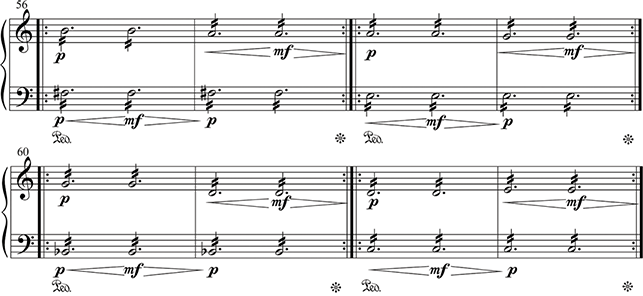
Example 8.5 Long description
Each motivic segment comprises two measures, delineated by repeat bars. Thus, there are four segments in this excerpt. Each measure in both hands only has two dotted half notes, with a double slash across the stem indicating that they are to be played as rapidly repeated sixteenth notes. The first segment has only two pitches in the right hand, the repeated B in the right hand with each notated as a dotted half note in measure 56 and a repeated A in measure 57. Meanwhile, the left hand only plays F sharp. In the next segment, the right hand plays repeated A in measure 58, followed by G in measure 57, while the left hand only plays E. In measure 60, the right hand plays G and then D in measure 61, while the left hand plays B flat. In the last segment, the right hand plays D in measure 62 and then E in measure 63, while the left hand plays C.
Reduction of procedures assumes that a composition is structured according to a single method or a small number of related techniques. Reduction of procedures is achieved through repetition, layering (of rhythms, timbres, melodies, etc.), permutations, interpolations (i.e., inserting one piece of musical material into another), and rotation.Footnote 66 As an example of a reductionist piece that is built on a single process and where all four parameters of sound (pitch, rhythm, dynamics, timbre) undergo a strict, systematic, and symmetrical process via the method of permutations and layering, he cites Mélange. That Tošić composed a minimalist piece with such a complex structure in his second year of undergraduate studies, without any formal training in the technique of this style – a style that was virtually unknown in Yugoslavia at the time – is truly remarkable. How and when Tošić heard about American minimalism is not quite clear; the music of Reich, Glass, Young, and Riley was certainly not performed anywhere in Yugoslavia at the time, not even at the Biennale, nor was it played over the radio. Tošić claims that in 1975, when he composed Mélange, he had not even heard the term “minimalism.” In his book, Words about Music, he clarifies:
What I know for certain is that in 1975, I never had any clue that something like [minimalism] existed. The first time I heard the word “minimalism” was when Miša Savić mentioned it in a public lecture at the Faculty of Music … I remember very well how, at that moment, I even thought, “What a dumb way to refer to music,” and I was certain at that time that he had made up that word. I believe this was in 1976. Even today, I still think the term is inappropriate, which is why I have always used the terms “reduction” and “reductionism.”Footnote 67
Whether or not Tošić’s recollection is accurate makes little difference. He would still have learned and understood the method on his own, which speaks volumes about his analytical and creative thinking.
Many of Tošić’s minimalist compositions feature an identifying characteristic: a melodic and harmonic language is built using eight pitches, C, G, E, B♭, D, F♯, A, B, a sequence derived from every other pitch of the overtone series. He terms this collection his “aliquot mode.” Example 8.6 illustrates Tošić’s use of the eight-note mode, which he manipulates with reductionist principles of repetition throughout the piece. Varial also demonstrates Tošić’s preference for using few (and the same) rhythmic values in a work. He explains that using a small number of different rhythmic values, and often only one, creates a “neutral” pulsation. The absence of many different durational values diminishes the sense of motion. Typically, Tošić uses either long durational values (as in Varial) or consistently short ones, which he repeats, as in Aludijum for piano (1991).
Vladimir Tošić, Aludijum for piano (1990), two measures.
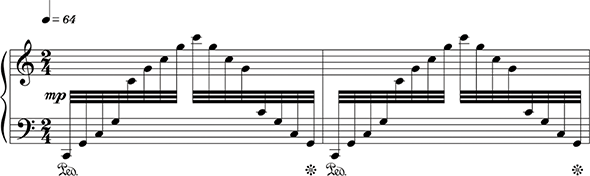
Example 8.6 Long description
Written in 2/4 meter and tempo of 64 beats per minute, it shows arpeggiation of C G C pitches across four octaves in thirty second notes. The left hand arpeggiates upward before the right hand takes over, continuing arpeggiation upward until it reaches C in the sixth register and then brings the arpeggiation downward to the left hand. The entire segment is indicated to be played under one pedal. The second measure is an exact repeat of the previous one.
Working with eight pitches (“aliquot mode”) and small durational values, Tošić’s musical language is recognizable. However, an indefinite number of different ways to apply reductionist principles (repetition, rotations, permutations, and interpolations) of various musical parameters (pitch, timbre, dynamics, and rhythm), with one or several processes, sequential or simultaneous (i.e., integral), strict or free, allows Tošić to think about musical organization of his works in novel ways. The variety of his approach is evident even when looking at a small sample of his oeuvre. For instance, in Di/fuzija [Di/fusion] for two pianos (1982), Tošić applies the process of permutations of eight pitches, and in Arios for cello and piano (1986), he bases the principle on repetition (Example 8.7).Footnote 68
Vladimir Tošić’s minimalist/reductionist methods.
Di/fuzija for two pianos (1982), Reh. H.
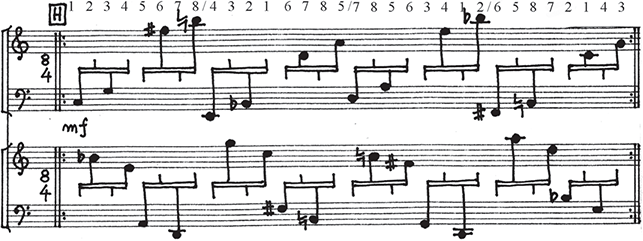
Example 8.7a Long description
The excerpt depicts one measure at rehearsal H written in 8/4 meter and repeat bars. The motive alternates between two hands, written entirely in sixteenth notes, hence eight groups of sixteenth-note pattern. On the top system, showing the Piano 1 part, the left hand plays on the first and third sixteenth notes, arpeggiating a chord upwards, with the right hand continuing to play on the sixth and eighth sixteenth notes. The second piano does not coincide with the first piano. The second piano arpeggiates the chord downwards, with the right hand playing first on the second and fourth sixteenth notes and the left hand on the fifth and seventh. In this manner, each note in the sixteenth-note grouping is played by alternating pianist and alternating hand.
Arios for cello and piano (1986), mm. 66–71.
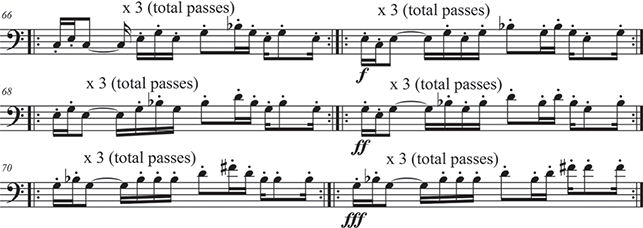
Example 8.7b Long description
It shows measures 66 through 71, written on a single staff with three lines in bass clef in 4/4 meter. Each measure has repeat bars, in which a motive is indicated to be repeated three times. The motives are simple, featuring only four different pitches and outlining seventh chords. Each motive is notated in staccato. The first line is in forte dynamics, the second in fortissimo, and the third in forte fortissimo. The first line outlines chord, C E G B flat; the next line outlines chord, E G B flat D; and the third line outlines G B flat D F sharp.
Tošić presented his work Di/fuzija in the US in 1987, when the work was programmed at the Bowling Green New Music Festival. He returned to Ohio in 2000 as artist-in-residence. Composer Adam Mirza was in his first year of master’s studies at Bowling Green during Tošić’s visit, and more than twenty years later he vividly recalled the event and the impact Tošić made on him at the time – but also his surprise at learning that American minimalism was so prevalent and popular in Yugoslavia. He explained:
I met Vladimir Tošić during my Master’s program in Music Composition at Bowling Green during the 2000–2001 academic year. I recall he visited the composition studio to share recordings and scores of his music (a piece for two pianos), and he also met individually with a few students, including me. At the time, I was very interested in minimalism, which I understood then as an essentially American phenomenon. Meeting Tošić and hearing his music came as something of a shock. It confused my understanding of a [perceived] binary opposition between American minimalism and European lyric expressionism. His form of minimalism seemed heavy and deep. His presence, steady-eyed and reflective, differed from what I was encountering in the energetic, personality-driven statements and entrepreneurial activities of West Coast and New York City artists. He moved at a different speed. Speaking with him, I think, helped me slow down.Footnote 69
While Tošić is foremost a minimalist (i.e., reductionist) composer, he has also explored multimedia and conceptual art, especially during his tenure with Opus 4. For instance, in Ne/mogućnost [Im/possibility] (1981), he presents a series of thirty-nine slides in which a hand is seen approaching the piano and then retracting from it (Figure 8.10). This composition, with no actual sound, done entirely in the medium of photography, “condemns the event of sound to impossibility,” as Miladinović Prica proposes.Footnote 70 Tošić explains that he experimented with the visual element in his works both for curiosity and necessity (to represent ideas that traditional music notation could not convey). He further elucidates that he has always encountered music in two ways – through sound and sight – and thus decided to represent it in this work only visually.Footnote 71
Vladimir Tošić, Ne/mogućnost [Im/possibility] (1981).
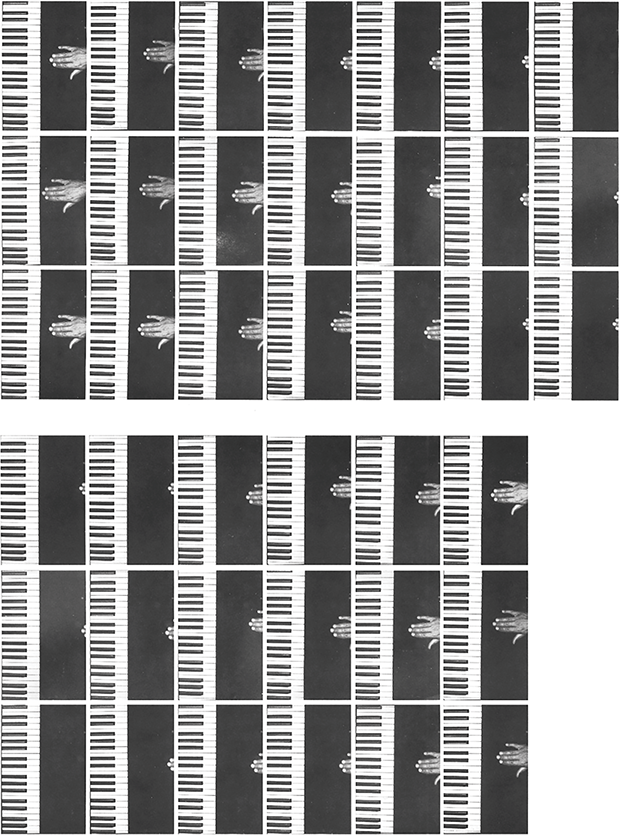
Figure 8.17 Long description
On top are shown two octaves of the piano keyboard. Below it is black space, in which Tošić’s right hand gradually appears in view. The first slide is just black space, the next slide shows tips of a couple of fingers and so on until the entire hand becomes visible gradually with each slide, before it starts to slowly disappear from view, ending again, with black space with white keyboard above it on the last slide.
Conclusion
Owing to the robust activity and organization of Opus 4, Miloš Raičković, and the Ensemble for Different New Music, the young experimental composers and performers in Belgrade gained national and international prominence. Their popularity spread quickly across Yugoslavia, with performances throughout the entire region, but especially in Croatia and Slovenia. Funded by the Yugoslav government but also by American, French, and German cultural centers in Belgrade, the group represented their radical and innovative creations abroad, with performances in Utrecht, Paris, Burges, and Almada (Portugal). Their impact on Yugoslav composers was enormous – the once-traditional Faculty of Music could no longer contain the composers’ “rebellion” against the system. Vuk Kulenović (1946–2017), Vlastimir Trajković (1947–2017), Zoran Erić, Katarina Miljković, Ana Mihajlović (b. 1968), and Ognjen Bogdanović (b. 1965) are just a few of the composers who were in some way influenced by American minimalism (and later postminimalism), Raičković, and Opus 4.Footnote 72
With Savić’s leadership of the SKC’s Music Division and his vision for international collaborations, the Center attracted those seeking artistic experimentation and looking to connect the East with the West in a fruitful exchange of ideas, despite the geopolitical division of the world at the time. Opus 4, ADNM (the ensemble that performed and promoted their music across Yugoslavia), and SKC – a student-led institution that was a conduit for all manner of expression and experimentation – became synonymous with the new wave of avant-garde music in Yugoslavia. Opus 4 was the neo-avant-garde.
The achievements of Opus 4 are well documented, owing to SKC reports, the composers’ preservation of documents, and their efforts in printing and recording their activities. Nebojša Čanković, the official SKC photographer during the 1970s and 1980s, captured these moments in history, providing a close visual document of artistic creativity in Belgrade.Footnote 73 Radio Television Belgrade aired many public events and made at least three films about musical minimalism in Belgrade, Opus 4, and the Different New Music Festivals that Savić organized. At the 1983 exhibition at the Art Gallery in Pristina (Kosovo), curated by Ješa Denegri, in collaboration with the Museum of Contemporary Art in Belgrade, celebrating “New Art in Yugoslavia 1970–1980,” the work of Opus 4 was prominently featured.Footnote 74 One newspaper article, noting that more than 130 artists were displayed at this exhibition, features the iconic shot of Savić performing his Zagrejani kružeći zvuk klavira at the SKC.Footnote 75
The experimental creations of these young, rebellious composers (and performers) at the SKC are the last example of such a radical shift in the history of Yugoslav music. Miladinović Prica argues that their open-mindedness toward new approaches to music composition and expression, and their radically new style, to this day constitute “the farthest reaches of new music in Serbian music history.”Footnote 76 I would extend this statement to note that Opus 4 composers have made some of the largest strides in Yugoslav music history, as no composers since them have defined a new era – a new avant-garde – in the trajectory of the country’s musical development. And to think it all started because they did not want to write serial music anymore makes a truly remarkable avant-garde statement in itself.
In 1980, the Serbian writer Jovan Radulović (1951–2018) penned a collection of eight short stories titled Golubnjača [Dovecote].Footnote 1 Despite the sensitive topic of the book, Radulović was awarded a literary prize, “Sedam sekretara SOKOJ-a” [Seven Secretaries of the League of Communists of the Youth of Yugoslavia] in Zagreb, Croatia. In 1981, the book was adapted as a stage play, premiering on October 10, 1981, in Novi Sad, Serbia, after the Boško Buha Theater in Belgrade, which had commissioned the play, refused to stage it. By December 13 of the same year, the play was banned in Yugoslavia for stoking nationalist and anti-Yugoslav feelings.
The story is set in Krajina (the author’s birthplace), a village in the region of Dalmatia, during the 1950s and early 1960s. Although geographically situated in Croatia, Krajina was inhabited by both Serbs and Croats who hardly ever interacted because of the region’s dark history – during the Second World War, Krajina was part of the Independent State of Croatia, governed by the Croatian fascists, Ustashe, with the support of the Axis Powers. The Ustashe’s principal aim was to create a “racially pure state,” free of Serbs, Jews, and Roma people.Footnote 2 The narrator of the story recalls the events from his childhood and the wartime stories he had heard from the elders in the village when the Ustashe came to their village and brutally killed many people, discarding their bodies in a dovecote. David Norris notes that stories like Dovecote, which involved the retelling (or fictionalization) of ethnically motivated killings during the Second World War, were taboo during Tito’s Yugoslavia.Footnote 3 Quoting historian Dejan Djokić, Norris supports that argument:
Fratricidal war between Yugoslavs, which, historians now agree, led to more victims than the armed resistance against foreign occupiers, was not to be publicly debated at best, and to be forgotten at worst. Paradoxically, numerous monuments to the “victims of fascism,” erected throughout the former Yugoslavia, presented a painful reminder to those who survived – a reminder of both the horrors of the war and of the ideologization of the past.Footnote 4
Josip Broz Tito, the Yugoslav lifetime president, governed the country from 1945 through his death on May 4, 1980. His death marked the beginning of the end of Yugoslavia – the deep cracks in Tito’s ideal vision of postwar socialist unity and brotherhood were emerging onto the surface. The rapid rise of nationalism eventually led to the conflicts of the 1990s and the subsequent disintegration of the country. Any artistic works created in Yugoslavia following Tito’s death that, like Dovecote, were considered to contain messages “contrary to the ideological leanings of the League of Communists, denying the achievements of the War of National Liberation, socialist revolution and any further developments in the Yugoslav system of Socialist Self–Management” were banned.Footnote 5 In other words, the Communist Party deemed that no work that sends a message about the destruction of brotherhood and unity could hold true artistic value.
The “beginning of the end” manifested in Yugoslavia’s cultural life. Tito’s death awoke nationalist resentments, seeds he managed to keep under the surface during his rule, and quickly contributed to a decline of socialist and communist ideology. Simultaneously, Yugoslavia was becoming more receptive to ideas and trends emerging from the West, which were now permeating the cultural and artistic spheres across the region. The degeneration of communist rule was not occurring only in Yugoslavia: on November 9, 1989, the Berlin Wall, symbol of a divided Europe, was brought down. By summer 1990, all of the previously communist regimes in Eastern Europe had ended, and by December 24, 1991, the Soviet Union had officially dissolved.
Political changes in Yugoslavia during the 1980s, combined with the rise of nationalism, directly affected the nation’s cultural life. The politics of national sovereignty were translated into a new practice, with artists asserting a national identity in their works. The concept of identity implies the existence of some individual or collective characteristic, or a feature, by which a certain person or social group is recognizable. In Yugoslavia, a multiethnic, multilingual, and multireligious country, whose regions had been under four empires over its history – Byzantine, Venetian, Ottoman, and Austro-Hungarian – and which had changed its borders and political systems several times in the twentieth century even before the country’s dissolution in 1991, the notion of national identity is an elusive and complex issue.Footnote 6
Many composers began to assert their national identity by incorporating certain folkloric elements into their music, such as folk melodies, irregular rhythmic patterns prevalent in the traditional music and dances in the region, narratives, and traditional instruments. For some Serbian composers, incorporating the Byzantine system of modes and chants – the Octoechos, which forms the basis of Orthodox Christian sacred music – was the answer. This trend is evident in the works of Ljubica Marić during the 1950s and 1960s, but also after her reemergence on the scene in the 1980s.Footnote 7 Other examples include Miloš Petrović’s ten-piece cycle, Istorija Vizantije [The history of Byzantium] (1991), and Katarina Miljković’s Sequenza 6 (1989). Other composers used folk idioms (such as melodies, rhythms, or harmonies) as a source for their music, already discussed with respect to Ludmila Frajt’s affinity toward the folk idioms in her music from the 1970s,Footnote 8 in works such as Tužbalica [Lamentation] (1973), Kres [Bonfire] (1973), and Ekloga [Eclogue] (1974), and Srđan Hofman’s source material of folk tunes from the regions of Serbia and Croatia in Uzorci [Samples] (1991).Footnote 9
However, some composers’ approach to nationalism was much more political. For example, some referred directly to the epic poetry of the fourteenth century, which celebrates Serbian heroic battles against the Ottoman Empire. The most notable of these originated with the heroes of the Battle of Kosovo (1389). The Kosovo Myth is perhaps the most crucial Serbian nationalist myth, captured in literary form in an epic poetry cycle, titled Kosovski ciklus [The Battle of Kosovo].Footnote 10 It emerged shortly after the Battle of Kosovo, in which Serbian forces, led by Prince Lazar Hrebeljanović of Serbia, fought heroically and lost against the Ottoman army, led by Sultan Murad Hüdavendigâr. The Kosovo battle is regarded as the “sacred ground” for Serbs. With the rise of nationalism in the 1980s and the escalating dispute regarding the status of Kosovo – which initially declared independence from Serbia in 1990, a step that at the time was disputed by Serbia on legal grounds – some Serbian composers chose narratives from the Kosovo Cycle for their music, asserting Kosovo as indisputably Serbian sacred land. This claim is seen in works such as Zoran Erić’s ballet Banović Strahinja (1981), which celebrates one of the noblest heroes of the Kosovo poetry cycle, and also in Rajko Maksimović’s The Passion of St. Prince Lazarus (1989) and Ivan Jevtić’s Zadužbine Kosova [The legacy of Kosovo] (1989).
However, not all composers incorporated nationalist (or folk) elements in their works of the 1980s. Those composers who were not interested in contributing to (or stoking) nationalist divisions turned to popular genres for sources and musical quotation. This new musical expression marked a new era in the arts: postmodernism. A Serbian scholar of art aesthetics, Miško Šuvaković, argues that the term “postmodern” not only reflects new expression in the arts, but refers to a general “post-Cold-War international culture, inherent to the post-technological, informational, and semiotic society.”Footnote 11 In general terms, postmodern music evokes the past through musical quotations and a renewal of tonality and traditional forms.Footnote 12 This phenomenon is evident in Vladan Radovanović’s autoquotations and quotations of Bach, Beethoven, Mozart, and Stravinsky in his radiophonic work, Small Eternal Lake (1984)Footnote 13 and Milan Mihajlović’s Eine kleine Trauermusik (1990) – one of the earliest examples of musical quotations in the Yugoslav repertoire. Postmodernist techniques also manifest in Miloš Raičković’s reimagined neoclassicism in his works since 1979, Dejan Despić’s return to traditional forms in Three Meditations for cello (1989), or references to French impressionism, Renaissance monody, minimalism, and repetition by Vlastimir Trajković (whose works are among the earliest written in postmodernist and postminimalist style).Footnote 14
In the 1980s, all these musical tendencies coexisted and formed a pluralistic approach to composition. That is the reason we can see Vuk Kulenović’s use of Serbian folk motives, such as the asymmetrical meter 3+2+2+3 in Raskovnik (1981), but also influences from jazz, blues, Indian raga, popular genres, and “Balkan” folk in his other works.Footnote 15 However, Mirjana Veselinović-Hofman suggests that in postmodernism, musical tradition is evoked in ways contrary to the principles of neoclassicism. More specifically, Veselinović-Hofman observes that the composers do not look back to the past out of affinity toward a particular historical style, but from an individual understanding and experience of particular musical styles and boundaries (whether they are archaic, geographic, or ethnic, for instance) without any notion of hierarchy.Footnote 16 Despite the plurality of postmodernist styles and sources, Veselinović-Hofman cautions that postmodern compositions are not mosaics or collages (although we do see the use of collage in Srđan Hofman’s Déjà vu [1985]), but rather new, authentic, and individual musical contexts that communicate with historical tradition via a complex “game” of resignification.Footnote 17
A handful of composers stand out with their individualistic approach to postmodernist aesthetic, separating them from “mainstream” postmodernist Yugoslav trends. Perhaps the most illustrative examples are Ivana Stefanović, with her expressive poetic essays that incorporate electronics but also traditional instruments and feature a variety of sound sources recorded during her extensive travels abroad, and a young generation of Serbian composers – Ognjen Bogdanović (b. 1965), Nataša Bogojević (b. 1966), Igor Gostuški (b. 1966), Srđan Jaćimović (1960–2006), Vladimir Jovanović (1956–2016), Ana Mihajlović (b. 1968), and Isidora Žebeljan (1967–2020) – who formed the group “The Magnificent Seven,” and whose aesthetic is marked by crossing genres and incorporating popular culture elements in their works, which have reached a wide audience.Footnote 18
Ivana Stefanović: Poetic Musical Essays
One of the most versatile, prolific, and poetically expressive composers, Ivana Stefanović (b. 1948), began her music education before she was even aware of it. Her father, Pavle Stefanović, a noted music critic, was an essential figure in Yugoslav modernism. He organized and moderated discussions on avant-garde music for the Third Program of Radio Belgrade, a station dedicated entirely to the performance and promotion of new music in Yugoslavia. His daughter recalls that she grew up listening to her father’s conversations with some of the most prominent composers, artists, theater actors, philosophers, writers, and professors. One of Ivana Stefanović’s greatest musical influences early on was one of her father’s closest friends, Ljubica Marić, a frequent visitor at their house. Stefanović reveals that while Marić never disclosed to her what it meant to her to be a composer, let alone a woman composer, she did open the door to Stefanović and her self-discovery.Footnote 19
Marić’s influence on Stefanović can be seen in works that draw on “archaic” elements – Orthodox liturgical texts – such as in Psalm for solo soprano and mixed choir (1990), composed to commemorate the 300th anniversary of the Great Serb Migrations,Footnote 20 or in I niotkudu pomošti [When cometh no succour] for ancient instruments, percussion, and strings (1989) on the same topic.Footnote 21 Stefanović developed the initial idea for the latter piece in 1974 after discovering a letter written in archaic Serbian language by Patriarch Arsenije III Čarnojević to Count Golovin (one of the closest allies of the Russian Tsar Peter the Great) on October 29, 1705. In a fragment of that letter, written quite poetically and powerfully, one phrase in particular echoed with the composer: “i niotkudu pomošti,” which translates in modern Serbian to “a pomoći ni sa jedne strane” (and no help from any side). The underlying tone of this composition is one of the hopelessness and despair that men, women, and children – migrants, going from their homeland into uncertainty – must have felt, awaiting help from many sides that never arrived “from any side.”Footnote 22
Another significant source of early inspiration in Stefanović’s life was her trips to Poland for the Warsaw Autumn music festivals, which she began attending even before she started her studies at the Music Academy in Belgrade (now the Faculty of Music). In Warsaw, she encountered the newest contemporary music trends and a music scene that “penetrated Poland with all its might, despite the heavy Iron Curtain,” as she explains.Footnote 23 Stefanović’s early works feature a variety of techniques she had heard in Poland, including dense polyphonic textures and applications of mathematical proportions.Footnote 24
After her studies in Belgrade and subsequent work at Radio Belgrade, where she first started working in the domain of electronic music, Stefanović went to Paris (1979–1981), where she continued her research at the Institut de recherche et coordination acoustique/musique (IRCAM) (Figure 9.1). The composer reminisces about her experience in Paris:
Like many others, I, too, went abroad during the late 1970s for further training. At that time, there was no other place in the world more interesting than the Institute for Research and Coordination in Acoustics/Music in Paris. Everything was so new, from charismatic director Pierre Boulez to enormous computers for sound “production.” But I didn’t just work for 16 hours per day, although that’s what I mostly did; rather, I wandered around, absorbed, explored everything unknown and unfamiliar to me, visited museums, had conversations I will never forget, heard and saw things I liked and disliked, all of which contributed to me forming a wide perspective on the world of arts.Footnote 25
Ivana Stefanović during her studies at IRCAM in Paris, June 1981.
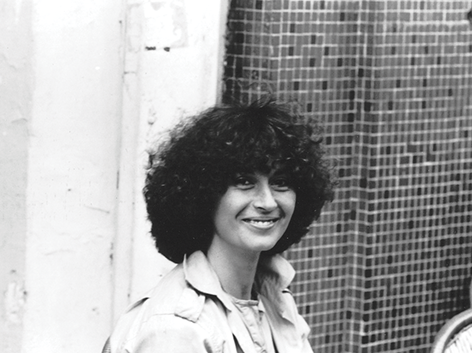
The work that emerged from IRCAM is Kuda sa pticom na dlanu [Wither with a bird on the palm of your hand] for percussion ensemble and tape (1979), a piece that uses sounds of water, fire, air, and earth. Stefanović attributes the title of the work to a Serbian writer and novelist, Isidora Sekulić (1877–1958). In her book about a Montenegrin prince-bishop and poet, Njegoš, Sekulić wrote that “the poet holds death in the palm of his hand as if he were holding a little bird that can’t do him any harm.”Footnote 26 Stefanović further elaborates that what impressed her about this image of death was its portrayal of “sitting meekly on the palm of the poet’s hand as he offers it a moment of rest.”Footnote 27 In her composition, Stefanović interprets this image with unexpected harmonies, a metaphor for the existence of connection and causality in all things, as well as the notion that any human, sooner or later, finds a way to reach harmony between themselves and time, the world, and, in the end, nothingness.Footnote 28
These statements are indicative of Stefanović’s curiosity for the unfamiliar and her approach to composition with a distinctive poetic way of expressing ideas, whether in music or words. Always soaking up everything in her surroundings, Stefanović hears music in every source, as she describes in her book Muzika od ma čega [Music made out of anything]:
When I say music, I think about many things. I think about an enormous, complex, comprehensive, collective phenomenon without any conceptual fragmentation into parts, groups, types, directions, styles, genres, theories, histories, forms … I think about the totality of sound and of sounding. About harmony and dissonance, equally. I think about the sound of nature, the city, machines, but also a lone frulaFootnote 29 or a large symphony orchestra. I think about something infinite and limitless, something simultaneously magnificent and ephemeral.Footnote 30
That Stefanović hears music everywhere around her is evident from her description of the cities she has lived in. Of her native Belgrade, Stefanović writes:
I love the street, the city, the noise, sirens, clanking trolleys. In the summer, I love the treetops. In the spring, I love the Linden trees on Krunska Street. In the winter, the racket of children sledding on the street. That is the language I understand.Footnote 31
During her four-year stay in Damascus, Syria (1995–1999),Footnote 32 Stefanović recorded her impressions of the city in a travelogue titled Put za Damask [The road to Damascus]. Her opening entry reveals just how she hears language as music:
Tonight, someone said: salam alaykum. Then, ahlan wa sahlan. What does it mean – I asked. Peace be with you, they responded. Peace be with you, and you are welcome. But I only heard long vowels. Water as it rolls over the rocks.Footnote 33
The notion that Stefanović hears language as music is hardly surprising, for she considers that the two ways of expression are interwoven. She explains:
I chose to use many languages – to write (words) and to compose (music and sound). Those who have read my books say that the structure of my text reveals that I am a composer … evident from the nature of my narrative and the way I structure my material. I am firmly bound to clear, spoken discourse. And I am also very bound to the abstract language of music. Thus, twofold, intertwined, connected. The more time passes, the less I can favor one over the other.Footnote 34
Stefanović recorded her visual impressions of the cities in prose and their sounds on tape, which she used in her radiophonic works, producing what musicologist Ana Kotevska calls the composer’s “sound impressions of the cities.”Footnote 35 These sounds of the environment can be heard in works like The Epistle of Bird for tape (1974), Paysage for harpsichord and tape (1980), Metropolis of Silence/Old Ras (radiophonic work, 1992), and First Eastern Dream for tape (1998). The composer described this process in her book, noting that for her, the art of sound is yet another “significant album of memories that contains the photos of sounds, sound landscapes, the horizons of the heard or the unheard.”Footnote 36 In Damascus, for instance, Stefanović records the chatter of people on the streets speaking in different languages, the sounds of children playing and singing, the clamor of the marketplace, the calls for prayers, men playing board games in the park, church bells, among many other sounds of the city and nature. But she also notes silence, which holds a prominent meaning in her oeuvre.Footnote 37
Stefanović’s earliest experimental radiophonic work is Lingua/Phonia/Patria (1988–1989), coproduced by Radionica zvuka [Sound Workshop] of Radio Belgrade and Hörspielstudio WDR in Cologne. Awestruck by the multilingualism in Yugoslavia, Klaus Schöning, director of the Hörspielstudio WDR at the time, suggested to Stefanović that she conduct acoustic research on Yugoslav multilingualism as an authentic and rare opportunity for the creation of a new radiophonic syncretism. However, while Stefanović was recording language samples from different ethnic groups and developing this project idea further, multilingual Yugoslavia was itself falling apart. Stefanović explains:
The Yugoslav community experienced a strong, brutal jolt. The collective and individual consciousness of the citizens suffered a strong, shocking blow that they could not withstand. The weak and loose ligaments of multilingualism (and multiculturalism) were revealed, but in me, it created clearer and more illuminating reasons to hurry my project.
Thus, the idea was born on the rotten ground of the disintegrating country, which you could feel in the air. … Shortly before any of this would have been even possible to do any longer, Lingua/Phonia/Patria was created, and the code for its understanding and interpretation suddenly became: farewell, parting.Footnote 38
Years later, Stefanović still reminisced:
I still wonder: since I already wanted to say goodbye to a country that was dying, why did I choose the most difficult road and use the material without any distinct emotional properties? The words I selected as the basis of this work had only vocal and semantic value. Yet, I still wanted to tell something extremely emotional, which was conveyed through the “music” of voices: children’s, women’s, choir, monastic, through timbre, color, vibrato, purity, loudness, through shouts, roars … that is, someone did “sing” after all! And while we were working inside the studio, history was rolling along outside; there were demonstrations, voices, clamor.Footnote 39
Ironically, the work she had envisioned to celebrate Yugoslavia’s unique multicultural and multiethnic state bore witness to its disintegration. Stefanović received an award for Lingua/Phonia/Patria in 1991, the year a full-blown, decade-long, brutal conflict began in Yugoslavia.
The Magnificent Seven: A Cult of Personalities
In 1988, seven young, daring, and exceptionally talented students at the Faculty of Music made a loud splash. Embracing pop, folk, MTV, musical theater, and film music, and fighting academic elitism, they brought something so new, fresh, and raw to the Yugoslav music scene. They were classical music composers with rock-star personas. They made quirky, artistic, and experimental music videos and played concerts in packed music halls. Nataša Bogojević remembers: “Our second concert was at the Student Cultural Center. The concert was sold out, and there were hundreds of people standing in the back of the hall like it was a rock concert.”Footnote 40
As Milin notes, one of the characteristic features of 1980s postmodernist expression is the composers’ desire to reach a broader audience, as music was no longer viewed to be “isolated by avant-garde ideology.”Footnote 41 Rather, music of this decade assimilated impulses from the spheres of jazz and rock music, which influenced the creation of works with elements of repetition and minimalism, with special attention devoted to sound quality. The young composers-performers – Bogdanović, Bogojević, Gostuški, Jaćimović, Jovanović, Mihajlović, and Žebeljan – calling themselves Veličanstvenih sedam [The Magnificent Seven], embodied and personified postmodernist aesthetic (Figure 9.2).Footnote 42 Not since the experimentations of Opus 4 did anyone come so close to “jolting” the art music scene in Yugoslavia with their musical, visual, and embodied expressions.
Veličanstvenih sedam [The Magnificent Seven]: (top row, left to right) Igor Gostuški and Ana Mihajlović; (center, left to right) Ognjen Bogdanović, Nataša Bogojević, and Srđan Jaćimović; (bottom, left to right) Isidora Žebeljan and Vladimir Jovanović.
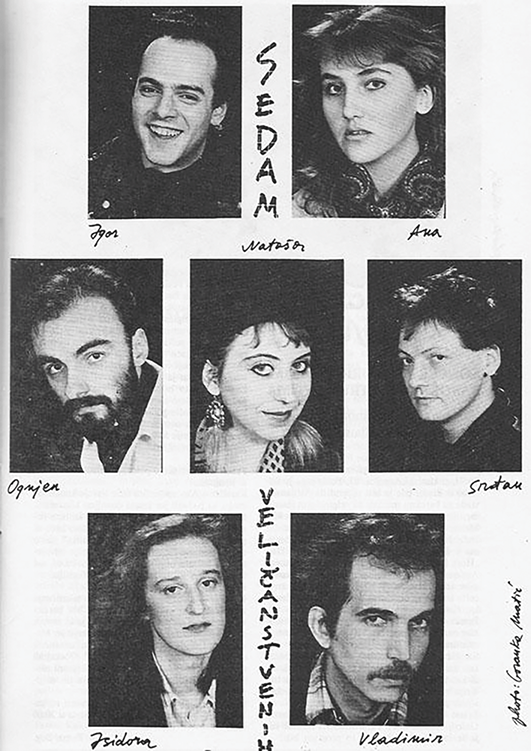
Figure 9.2 Long description
On the top are Igor Gostuški and Ana Mihajlović. In the center, left to right are Ognjen Bogdanović, Nataša Bogojević, and Srđan Jaćimović. On the bottom, left to right are Isidora Žebeljan and Vladimir Jovanović. Under each headshot is a corresponding name. Written vertically across the page is the name of the group.
Isidora Žebeljan describes how special this experience was:
The Magnificent Seven came together in the 1980s, the time when it was so wonderful to live in Belgrade and Yugoslavia because there was this new, special kind of energy bubbling everywhere …. We believed that our music was going to start a revolution against the unbearably tiresome and conservative legacy of postwar avant-garde music, whose remnants, unfortunately, still survive to this day …. We were great friends, we led a bohemian lifestyle, we had a lot of fun, but we also shared enthusiasm for minimalism, new wave, 20th-century masterworks, contemporary alternative music – for example, the Lounge Lizards, John Lurie, as well as the Cocteau Twins, Keith Jarrett, Pat Metheny, music composed by our professors Vlastimir Trajković, Zoran Erić, and Vuk Kulenović. And, of course, we wrote and played our music to each other with so much love and exhilaration.Footnote 43
Shortly after coming together, the seven composers wrote their “nonmanifesto,” which they never published, in which they outlined, in stream-of-consciousness style, their main objectives:
THIS IS NOT A MANIFESTO NOR WAS IT EVER SUPPOSED TO BE ONE
and the cultural elitism to which contemporary Yugoslav musical creation is condemned is both loathed and jealously guarded they are not avant-garde they lack sufficient intelligence and respect and they don’t want their music performed on merit for patience and endurance they are rude and pretentious they are called the magnificent seven aggressive and innovative they live think and compose and now announce it on all available media outlets the magnificent seven write music that one can listen to at home and many times over at the time marked by aggression of subcultural creativity more than ever before it senseless and pointless to ignore its influence and argue over the need for communication blah blah blahFootnote 44
The seven composers were considered the “new hope” of what was becoming a stale, academic music scene in Belgrade and Yugoslavia. Even before they formed the group, these young composers had already collected impressive accolades. Their works were performed at the Review of Yugoslav Music in Opatija (Croatia), where Ognjen Bogdanović’s compositions were included twice on the list of the most notable accomplishments (in 1986 and 1987). Bogdanović received several awards from the Composers’ Association of Serbia, as did Bogojević in 1989 for Da li da te pospem lišćem [Should I sprinkle leaves on you?] and Mihajlović in 1987 for her choral work Trag [Trace] and a piano suite Sunce [Sun]. Bogdanović also received the Faculty of Music “Stevan Hristić” Award,Footnote 45 while Bogojević was awarded the prestigious annual Josip Slavenski Prize for composition in 1987 for Formes différentes de sonneries de la Rose+Croix [Different forms of bells of Rose + Croix].Footnote 46 Igor Gostuški, in collaboration with Dragoljub Ilić, received an award from the jury, critics, and the audience at the Belgrade Spring [Beogradsko proleće] Festival. Impressively, Isidora Žebeljan had already as a student composed electronic, chamber, and vocal works, as well as incidental music for the play Life Is a Fairy Tale and a film score for Maria Like You.Footnote 47
The style of the Magnificent Seven was eclectic and distinct, not only as a group but also at a personal level. What brought them together was their love for popular music (pop, rock, and jazz, both Yugoslav and Western), a desire to shock the system, an aspiration to reach a wide (general) audience, and the audacity to stand up to the conservatism at the Faculty of Music. The Editorial Office for Classical Music of Radio Belgrade 1 also took notice:
It was not any single musical idea that brought them together, nor was it the fact that they were studying with the same professor at the Faculty of Music, where most of them are still students. They were not even united by common interest, which would be easier to achieve now in seven-fold forces.
What brought them together was their common need to write music that they love, music that those outside their circles (the audience) would believe in and accept as theirs, as music they love and listen to.Footnote 48
The Magnificent Seven was more than a group of composers; it was a phenomenon. As Žebeljan reveals in a radio interview nearly two decades later, the group was communicating with the audience not only through their music but also their clothes, makeup, costumes, concert productions, media appearances, and overall presentation:
The Magnificent Seven did wonders for the musical life of Belgrade. We organized concerts in a special way and spiced them up to break the atmosphere of grave seriousness associated with classical music concerts. Grounded in all of that was our enormous love for music and our vast enthusiasm. Those were the times when all other outstanding musicians and performers fully supported us.
We put much thought into the way we should design our concerts, how to dress and present ourselves, and what costumes to choose, not in a theatrical way but in a way that would stand out as somehow different. At one of our concerts, Slađana Milošević participated and sang in an impostor’s voice. This was the period of experimentation and incorporation of some pop elements, not in terms of pop music, but rather popular culture of that time.Footnote 49
It is telling that Slađana Milošević (1955–2024) performed with the Magnificent Seven – she was the most popular female pop star in Yugoslavia in the 1980s, known for her experimentations and genre-crossing, including pop, rock, heavy metal, new wave, synth-rock, jazz, and classical music. Nataša Bogojević succinctly explains it: “We wanted to be ‘classical’ MTV music stars so we collaborated with rock musicians.”Footnote 50 At the concert with the Magnificent Seven, held on March 19, 1989, at the Dvorana Kolarčevog Narodnog Univerziteta in Belgrade, Slađana Milošević performed with Igor Gostuški his Toccata (1988), a solo piano work that the composer had arranged for this occasion to include vocals by Milošević. Shortly after, the duo recorded an MTV-style music video, in which Gostuški plays a toccata-style work with repeating motives of constantly running notes but in irregular time, evoking both pop and jazz idioms, with Milošević vocalizing (with made-up words) in an overproduced and improvisatory manner. Underneath the piano and vocals, a synthesized sound of strings, drums, and other electronics recorded on tape amplifies the 1980s synth-pop style. The artistic video features close-ups of Milošević’s face in color with the singer’s strikingly red lipstick, superimposed against black-and-white shots of Gostuški’s hands playing the piano while sporting a notably oversized ring. The contrasting shots fade in and out and overlap to create intentionally blurry images.Footnote 51
Igor Gostuški’s musical aesthetic – with an inclination for avant-garde/postmodernist experimentation – is remarkable, considering that his father, Dragutin Gostuški – a notable Serbian composer, music historian, and aesthetician – was a staunch traditionalist in the 1950s and 1960s, who objected to all avant-garde tendencies or experimentations in music, especially the use of electronics. Deeply rooted in his traditional beliefs, which he referred to as “laws” as grounded in Ancient Greek philosophy, Dragutin Gostuški held a traditional (and outdated) view that “beauty is an absolute, irrefutable, and indestructible aesthetic fact” and that “a basic constituent of beauty for all the arts is harmony.”Footnote 52 With his son, thankfully, the apple fell far from the tree.
In a radio interview, Ognjen Bogdanović reminisces about the incredible popularity of the Magnificent Seven:
Not only were we fully embraced by all institutions – radio, concert agencies, and even the Faculty of Music – but the media was so hungry for us, they pulled us on all sides, we were invited everywhere. We played that game – that we were some sort of rock stars, not fully “classical” musicians. All doors were open to us – wherever we wanted to be and whatever we wanted to do, people accepted us with both hands, promoted us, pushed us.Footnote 53
The seven young composers were so popular that Television Belgrade (which later became Radio Television Serbia) recorded and produced their music videos. During the 1980s, Yugoslavia had an incredibly original, vibrant, and renowned new-wave music scene, which even caught the eye of the Western media – British music magazines Melody Maker and NME, as well as the Dutch Koekrand, wrote several articles in awe of the distinct flavor of Yugoslav punk, postpunk, and new wave.Footnote 54 The largest national record company in Yugoslavia, Jugoton, recorded these new alternative artists, and Television Belgrade promoted them with state-of-the-art music videos, which debuted more than a year before MTV launched in August 1981.Footnote 55
The Magnificent Seven attained a rock-star level of popularity in the country. Bogdanović reveals their dedication to the craft, originality, and the level of support they received from Television Belgrade:
In the mid-1980s, there was a new, pioneering TV program called “Videotilt,” produced by TV Beograd, which ran weekly on TVB2. It grew out of the “Odabrani trenutak” [The chosen moment] televisual intermezzo, often used to fill gaps in the continuity either with someone’s concert performance or a succession of lovely landscape images over music. Videotilt took the original idea of merging music and visuals (in the domain of classical music) but emphasized heavily the domestic music scene. As all of us, but chiefly Nata [Nataša], Isidora, and myself were already pretty well-known and established as the “young new hopes,” Videotilt took it further – the way we carried ourselves at the time and the hype from how we promoted ourselves was very media friendly (it wasn’t on purpose – it’s just how we were). Nata and I, in particular, benefited from the program, having been given the widest exposure. All of that coincided with the opening of the then-new and hi-tech television center in Košutnjak, so the stage was perfectly set as our playground to roam around.
Several video clips achieved some notoriety – one was mine; it was set to the music of my Memorabilia and, in fact, it was a short thriller-horror film, inspired by Brian De Palma’s Dressed to Kill, filmed around various Belgrade locations with a skeleton crew. The whole idea of the video – the script, the direction, even the all-important editing in the mold of MTV – was supervised by me, which today would probably be totally inconceivable, but it gives an idea as to just how involved we were. That video is unfortunately presumed lost, as TV Belgrade had a shortage of tapes, which were routinely taped over.Footnote 56 I think that one of Nataša’s videos may have survived, namely a piano piece called Kusagasuk, where she frolics around with Aleksandar Šandorov, who performed the piece.
So yeah, there was Videotilt as the new platform yearning for hot new content, and there was us yearning to provide it – a perfect (shit)storm.Footnote 57
While the above-mentioned video of Nataša Bogojević’s Kusagasuk does not seem to have survived, her video for Velika Slova [Capital letters], recorded for Videotilt in 1984 – thus, before the formation of the Magnificent Seven – illustrates the composer’s quirkiness.Footnote 58 The comical piece is one of the songs from the composer’s Putovanje po gramatici [A journey through grammar] cycle for mezzo-soprano and piano, set to the poetry of Jovan Ćirilov (1931–2014). The video features Bogojević playing the piano and singing in a musical theater style with exaggerated gestures, wearing an extravagant headdress and a matching costume with Pagliacci-inspired theatrical makeup.
In her debut with the Magnificent Seven, Bogojević presented a very different type of work, Formes différentes de sonneries de la Rose+Croix for piano, prepared piano, and harpsichord (1986), illustrating the composer’s versatility and genre-hopping, one of the group’s characteristics. Bogojević reveals that the inspiration for her piece came from Erik Satie’s chords heard in the opening of his miniature, “Air du grand Prieur” of the 1892 Sonneries de la Rose + Croix cycle. However, in a program note, Bogojević describes her novel approach to deconstructing Satie’s work, writing, “Depersonalized, in their altered context, these chords became the material out of which personal sonorities are freely formed.”Footnote 59 Shifting into a new musical time, Bogojević groups Satie’s chords “accidentally and imperceptibly,” turning them into “quasi quotations of our urban musical environment.”Footnote 60 Bogojević’s Formes différentes won the prestigious Josip Slavenski Prize for composition in Belgrade in 1987, was recognized as one of the top ten most notable compositions presented at the Review of Yugoslav Music Festival in Opatija in 1988, and the following year was awarded the third prize at the UNESCO-Rostrum of Composers in Paris (1989), a remarkable feat for the young composer.
In addition to incorporating popular culture into their music, some of the Magnificent Seven composers also infused their works with motives of their Serbian national heritage and tradition, which was especially becoming a recognizable trait for Bogojević and Žebeljan. Folk melodies, strong and asymmetrical rhythmic patterns, irregular repetitions of ostinati, and peculiar timbres, often created from the combination of eclectic instruments and ensembles, characterize a unique aesthetic of Žebeljan’s oeuvre, which eventually propelled her to become one of the most recognized and widely performed Serbian composers.Footnote 61 These traits are evident even in her earliest works. For instance, in Selište [A settlement] for string orchestra (1987), Žebeljan uses folk melodies from Vojvodina (the northern province of Serbia) as a metaphor for a settlement, now long gone; yet, as people pass through it, its memories live through the retelling of folk tales. On the other hand, Pep It Up (1988), for soprano, prepared piano, string quintet, and percussion, combines elements of Stravinsky-like strong and dissonant polychords, amplified with the drum set and other percussive instruments, and samba-like rhythms and melodic patterns, illustrating the composer’s “extraordinary rhythmic imagination.”Footnote 62 In a program note, Žebeljan reveals that the work was inspired by “replicants and androids – the perfect artificial human beings, created by the composer’s imagination,” and it represents their way of understanding and experiencing music.Footnote 63
With their unconventional concerts and provocative music videos, the Magnificent Seven were recognized with the Best Young Musician [Najbolji mladi muzičar] Award, presented by Radio Belgrade. Music critics could not get enough of the youngsters. Following their debut performance at the SKC on May 27, 1988, a columnist for the newspaper Duga, wrote:
The Grand Hall of the Student Cultural Center was too small for the [audience] who rushed to hear the debut concert of the Magnificent Seven, a group featuring the youngest composers of art music today. Unlike the composers of previous generations – the followers of modernism – this generation declares itself as postmodernist. What is the difference? The fact that, like other “post-modernists,” the magnificent seven dared to face European musical tradition without fearing the modernist, anti-European, and masochistic dogmas. Unbelievable but true: in their compositions, the European ear can once again hear the lovely sounds and consonances of the long-banished melodiousness and harmonies …. The second significant distinction of their music: it brings the audience back to the concert halls, the same audience that the neo-avant-gardes and quasi-avant-gardes once chased out of the halls.Footnote 64
Another critic for Polet noted that with their two outstanding concerts in Belgrade in 1988 – at the Gallery of the Cultural Center and the SKC – the Magnificent Seven “restored hope for classical music,” with their music making a strong mark “not only on the entire season but the entire last decade of Belgrade’s musical life.” In the publication Student, the group was described as “truly refreshing” and their music as a “new kind of listenable,” clearly demonstrating that they were composers of the modern day, aware of the history in which they were living and on which they were leaving a strong mark.Footnote 65
Tragically, shortly after their formation and just as they were gaining nationwide popularity, the political instability in Yugoslavia in 1990 brought everything to a sudden end, turning their dream into a nightmare. Milin remarks, “[The Magnificent Seven] were ambitious and impatient to get recognition for their works …. Preoccupied by their music, these young composers hardly noticed that their country was nearing some big events – not only the end of the communist era but also the break-out of secessionist wars that would dramatically change the map of their country and the fate of millions of people.”Footnote 66
All but one member of the Magnificent Seven fled Yugoslavia with the start of the brutal conflicts in the early 1990s. As Bogdanović yearningly says, “Only Isidora remained behind on the soil of our homeland, holding a light and shining it brightly for all of us until we returned.”Footnote 67 Only Igor Gostuški eventually returned, for no one could even imagine that their country would engage in decade-long bloodshed and disintegrate shortly after their departure. The country they left no longer existed.
On October 18, 1990, a United States Intelligence operative issued a grim and concise report to the US government:
Yugoslavia will cease to function as a federal state within a year, and will probably dissolve within two. Economic reform will not stave off the breakup …. A full-scale interrepublic war is unlikely, but serious intercommunal conflict will accompany the breakup and will continue afterward. The violence will be intractable and bitter. There is little the United States and its European allies can do to preserve Yugoslav unity.Footnote 1
As noted in this report, in an uncanny play-by-play scenario, the Socialist Federal Republic of Yugoslavia ceased to exist in January 1992.
The collapse of communism in Eastern Europe in 1989, symbolized by the fall of the Berlin Wall, the subsequent unification of Germany in 1990, and the dissolution of the Soviet Union in 1991, all served to weaken Yugoslavia’s ruling Communist Party and its political stability. Slobodan Milošević had been Serbia’s president since 1989, rising steadily to power from life as a banker to president of the Serbian Communist Party in 1987. But in the national election of 1990, Yugoslavia’s first democratic election since the Second World War, Croatia and Slovenia gave power to the noncommunist parties, a decision that dealt a serious blow to Milošević’s authority and rhetoric of Serbian ultranationalism. On December 23, 1990, Slovenia voted to secede from Yugoslavia. Croatia followed in May 1991, with both former republics of the Yugoslav federation declaring themselves independent on June 25, 1991.Footnote 2
On March 9, 1991, the Serbian opposition party, led by Vuk Drašković, organized a massive protest in Belgrade against Milošević. It is estimated that between 70,000 and 150,000 people took to the streets, prompting Milošević, as head of the state-controlled police and Yugoslav National Army (JNA), to deploy troops to suppress the protest. A violent clash (illustrated in Figure E.1) claimed the lives of two people. The protests ended on March 14, 1991, with little change. Milošević remained in power, and in June 1991, he deployed the JNA to Slovenia and Croatia to forcibly stop the republics from seceding from the federation. While the military intervention in Slovenia ended in ten days, the war in Croatia, followed by the war in Bosnia and Herzegovina the following year, lasted through 1995. That same year, the war in Kosovo started, ending with the US- and NATO-led bombing of Serbia from March 29 to June 10, 1999. Two waves of economic sanctions imposed on Serbia, first from 1991 to 1995 and again from 1998 to 2000, devastated the country economically. What followed was a violent collapse of the political state and harsh economic sanctions, with subsequent hyperinflation, mass impoverishment, international isolation, and the destruction of infrastructure. This collapse led to an “unstoppable brain drain.”Footnote 3 The impact of the conflicts left the once-flourishing republics of Yugoslavia destitute, both economically and intellectually.
March 9, 1991: Massive protests in Belgrade in opposition to Slobodan Milošević’s rule and the imminent start of the conflict in the region. Photo by Goranka Matić.
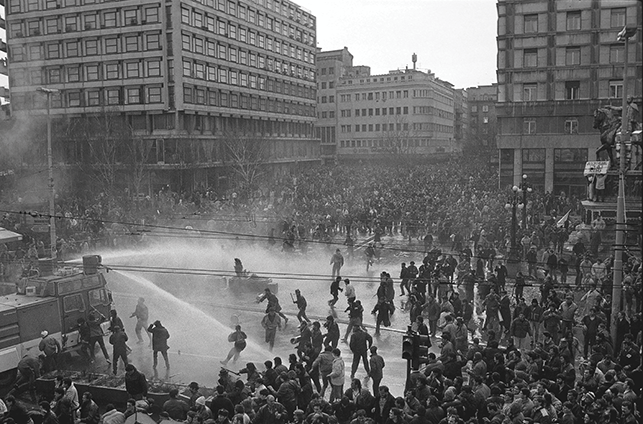
Figure E.1 Long description
Gathered in the center of the city in front of the Mihailo Obrenović, Prince of Serbia, on horseback statue at Republic Square, thousands of people are protesting. The state-controlled policemen are depicted chasing and hitting the citizens with sticks. In the middle, the crowd is dispersed by a truck firing massive water cannons on several sides directly at the people. The Republic Square is surrounded by grey buildings in the brutalist and modern socialist style. The photo is taken from above, likely from a terrace or a window.
In her research on the mass exodus of Yugoslav composers during the 1990s,Footnote 4 Ivana Medić reveals appalling statistics: While a few composers left Yugoslavia before the war – including Aleksandar Damnjanović, Miodrag Lazarov Pashu, and Miloš Raičković – hundreds (and hundreds of thousands of other intellectuals and professionals) left in a mass exodus during the early 1990s. In Serbia alone, Medić tracks more than seventy composers (many of mixed “Yugoslav” ethnicities) who left during the war. She notes that for a small country, the exile of such a large number of composers of different generations constituted “an irreparable loss.”Footnote 5 Among those who fled were six composers of the Magnificent Seven group: Ognjen Bogdanović, Nataša Bogojević, Ana Mihajlović, Katarina Miljković, and Igor Gostuški. Bogdanović reveals the horrors of 1991 and making the difficult decision to leave, the chilling details he still remembers vividly more than thirty years later:
It was late September 1991, and already there was war going on in Croatia. I did my compulsory army service not long before that (1988–1989), as I had been postponing it due to being a full-time student. It was the time when the whole of Belgrade was massively evading being drafted, so many guys did what I did – jumped balconies during raids and slept elsewhere at night, hiding from the military police. They were literally at my heels – obviously, they were given instructions to draft the “fresh out of the army” first. Going to the war was not an option for me, and it soon became apparent that the proper thing to do would be to escape for real – abroad. I booked a flight to London.
I remember it was the night before the flight – I had keys to the Association of Serbian Composers’ premises and stayed there very late, copying audio tapes of my music to take with me to London when I suddenly became aware of a very low, deep, distant rumble – at first, I thought something was wrong with the tape I was copying, but the rumble persisted even when I switched off the music. I went outside, and it was louder. I locked up [the building] and followed the ominous noise, which seemed to have been coming from the direction of Bulevar Revolucije. When I got there after a short walk, I saw a procession of army tanks rolling down the street and taking the turn into Street Kneza Miloša and then onwards, presumably to the highway towards Zagreb, moving on to join the war. At that moment, I knew that I couldn’t wait for the hours to pass before the flight.
It all went alright at the airport, no trouble at the border, but it was emotionally draining because my parents were there to see me off. It was Tuesday, October 1st; already on Friday of that week, it became impossible to leave the country without a special military permission if you were a male adult between 18 and 55. So in that sense, I took one of the last regular flights out.
Once in London, there were Belgrade refugees everywhere – loads of people I knew, “gradske face” [city faces], and even some friends I knew well, so it kind of helped “the transition.” Plenty of people eventually returned to Serbia, but I did not, even though I had already been employed as Vlasta’s [Trajković] assistant at the Faculty. I was given a year-long non-paid leave from work, ostensibly to “go to Paris to further my electronic music education” but after the year had elapsed and the political situation only got worse, I had to send in my notice by post, so Isidora [Žebeljan] went on to fill my shoes as the assistant in Vlasta’s class. To this day I wonder if such a radically life-changing decision was the right thing to do, but on the other hand, I knew I had little choice – had I remained in Belgrade, I would have most probably ended up in a psychiatric ward (and many people have, I hear). These were the nastiest years of our recent history, and I’m glad I had absolutely nothing to do with it.Footnote 6
Vuk Kulenović, a composer of mixed Bosnian and Serbian ethnicities, who had taught at the Faculty of Music since 1979, left due to political and economic reasons. In an interview, he explains:
I moved [to the US] at the age of 46. I had to start everything from scratch, which was incredibly hard …. But life [in Yugoslavia], with dreadful politics, was much more difficult. I remember I went for a bike ride with my son around Kalemegdan [park]. I had just received my monthly salary, and when I stopped by the ice cream stand, my monthly salary was not even enough to buy two ice creams.Footnote 7 That’s when I thought – enough is enough – and that’s when I made the decision to leave.Footnote 8
Together with the Magnificent Seven, an entire generation of promising young composers, most of whom would find success abroad, left, depleting the Faculty of Music, Belgrade, Serbia, and the fractured nation of its creative voice: Svetlana Maraš, Jug Konstantin Marković, Marko Nikodijević, Milica Paranosić, Jasna Veličković, Aleksandra Vrebalov, and Đuro Živković, among others.
Srđan Hofman, who was Professor of Composition, Head of the Tonski Studio, and Dean of Faculty during the war, elucidates in retrospect the heavy consequences of the war, economic sanctions, and brain drain on the Faculty of Music:
Although the gradual entropy of the social system [of the 1980s], as well as economic problems, became ever more clearly manifest, while the government seemed to endure in a kind of mild hibernation, higher education still enjoyed a considerable degree of autonomy …. However, after the failed historical opportunity for a painless transition into a multi-party democracy and market economy – for which Yugoslavia in the late 1980s was in every respect better prepared than the countries of the “Eastern Bloc” – the blood-and-soil ideology prevailed. Thus, after the orchestrated nationalist rallies in Serbia, and the elections in Croatia won by the Croatian Democratic Union permeated with elements of Ustasha ideology, after intimidation and shameless war-mongering propaganda through the media, we suddenly found ourselves in the midst of the creation (some called it a “revival”) of tiny national states. The claims for such nation-building were based now on some self-proclaimed historical rights, and then on the demographics of a given region, but the borders were drawn by weapons, and in the course of that process, the ethnic composition of disputed territories was being forcibly altered. As we all know, this was accompanied by war crimes, murders, and looting. In Serbia, there were sanctions to boot, with the accompanying economic, cultural, and every other form of isolation, galloping inflation, dreadfully empty shops, banks with no money, hospitals without medicines, salaries (of university professors, for instance) which at a certain moment fell to the equivalent of four to five German marks, shortages of fuel, heating …. The early 1990s saw not only the total breakdown of the Serbian economy, but also the destruction of the existing system of values, socially acceptable moral norms, and the functioning of the legal system.
In such circumstances, my main preoccupation was to sustain and advance the professional level of teaching at the Faculty, to create an atmosphere in which both teachers and students could devote themselves to the development of their profession. I was convinced that we would not allow our best students … to become a “lost generation.” … This is why I persevered – rather successfully at that – in keeping the Faculty outside of politics, and politics outside of the Faculty.Footnote 9
With the sudden violent dissolution of the political state, all artistic activities in Yugoslavia, and especially Serbia, once a major attraction for experimental musicians and artists from East and West, came to a complete halt. The post-1945 Yugoslav cultural programs vanished, and all academic and art institutions were on the brink of collapse during the 1990s. Vladan Radovanović recalls the challenges that led to the closure of the Electronic Studio of Radio Belgrade, noting that during the late 1980s, the Studio hosted thirty-eight Yugoslav and ten international artists, while in the 1990s, only three Serbian and one international artist (Thomas Wells, from the US). The Studio would become fully inoperable in 2002, unable to accommodate even local artists.Footnote 10 Without any available funding during the war, the legendary custom-made Synthi 100 was slated to be discarded.Footnote 11
Despite the recent computerization of both EMS Radio Belgrade and especially the Tonski Studio at the Faculty of Music in the mid 1980s that allowed Yugoslav composers to finally catch up to technological and musical innovations and trends from the West and organize conferences and festivals of computer art, the economic sanctions, the exodus of students and faculty, and the lack of funding for electronic maintenance and upgrades, resulted in a decades-long stalemate. All creative activities and collaborations were suspended. While the Music Biennale Zagreb continued its programming even during the war, the 1991 festival would be the last one to program Serbian composers (Zoran Erić, Vuk Kulenović, Rajko Maksimović, and Vladan Radovanović) for decades to come, and subsequent meetings had a significantly reduced international representation. The Student Cultural Center in Belgrade, once a beacon of progress, became irrelevant.Footnote 12
The most significant artistic and educational institutions of the former Yugoslavia survived the war. Survived. However, Yugoslavia, the progressive communist-socialist state, now broken into pieces, literally and metaphorically, would never recapture the glory of the momentous avant-garde and experimental scene of its past.
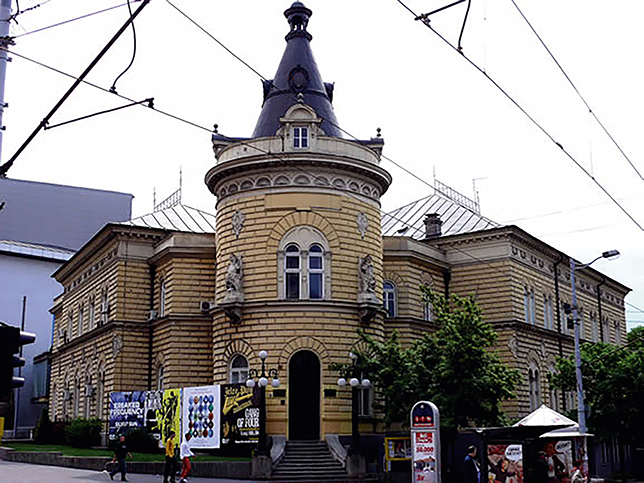
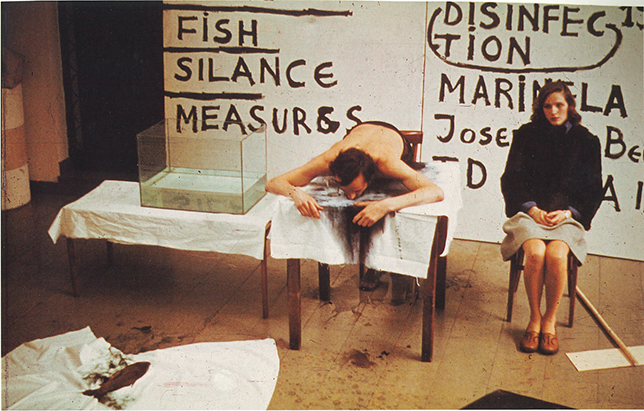
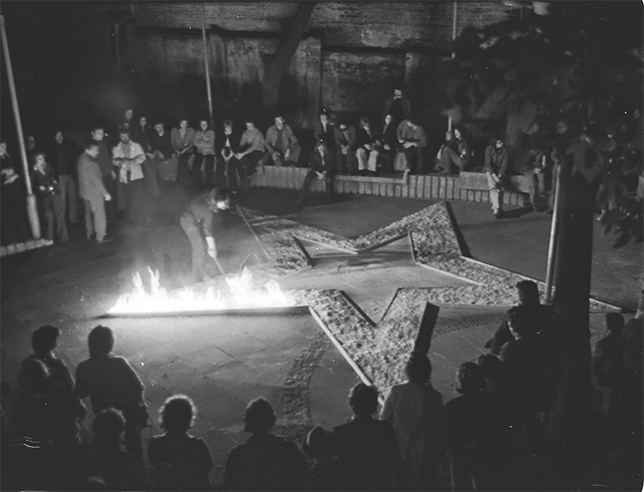
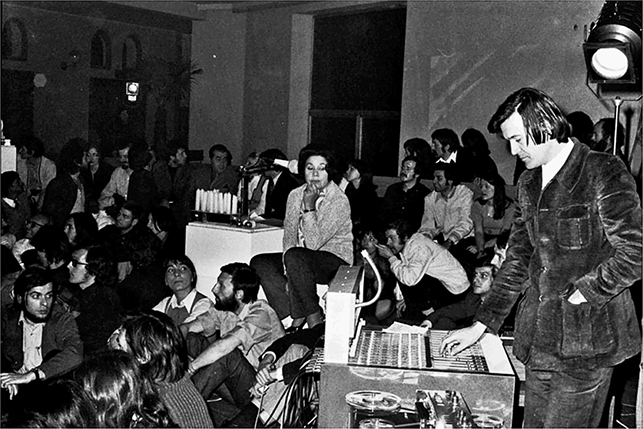
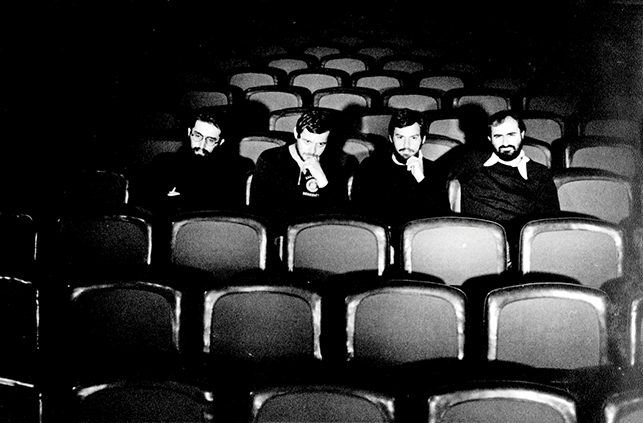
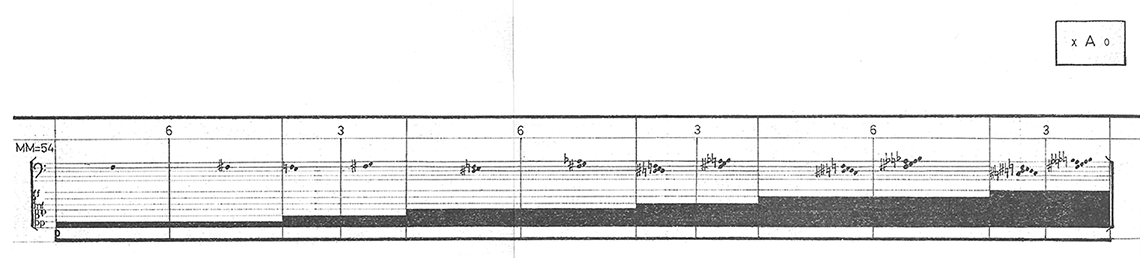
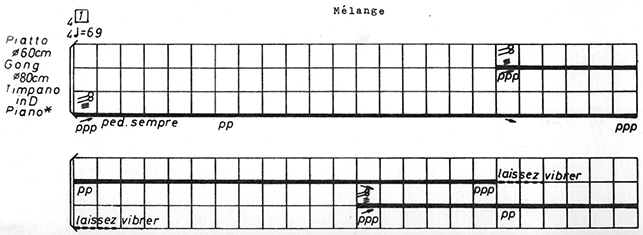
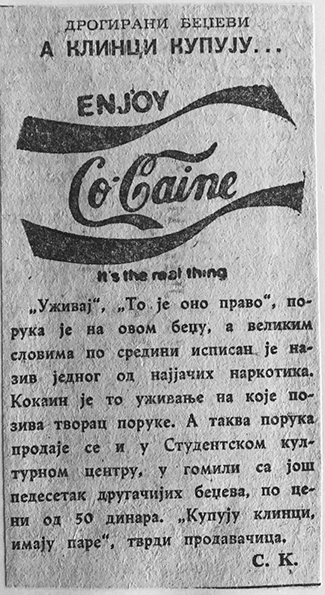
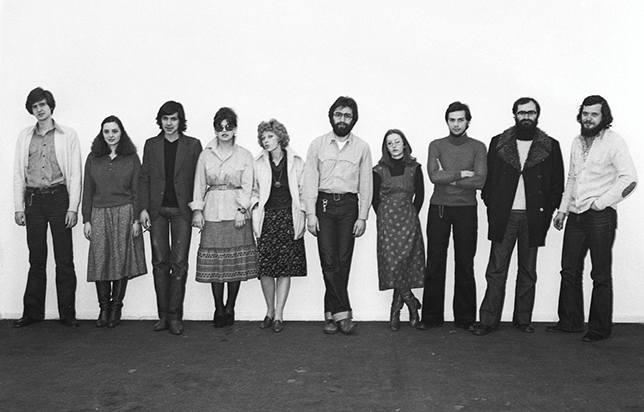
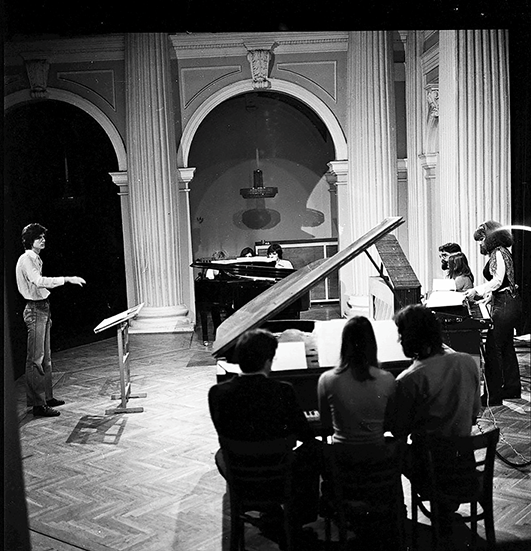

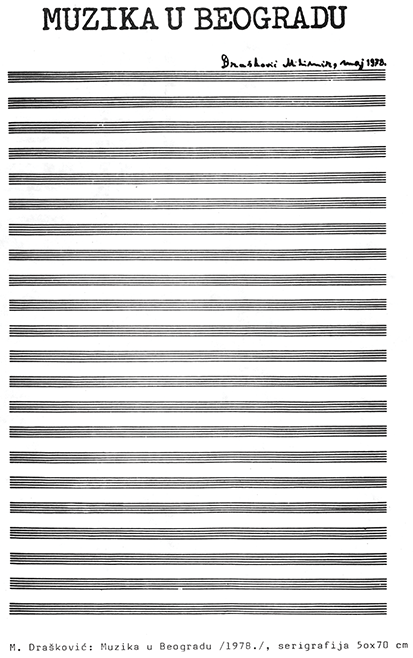
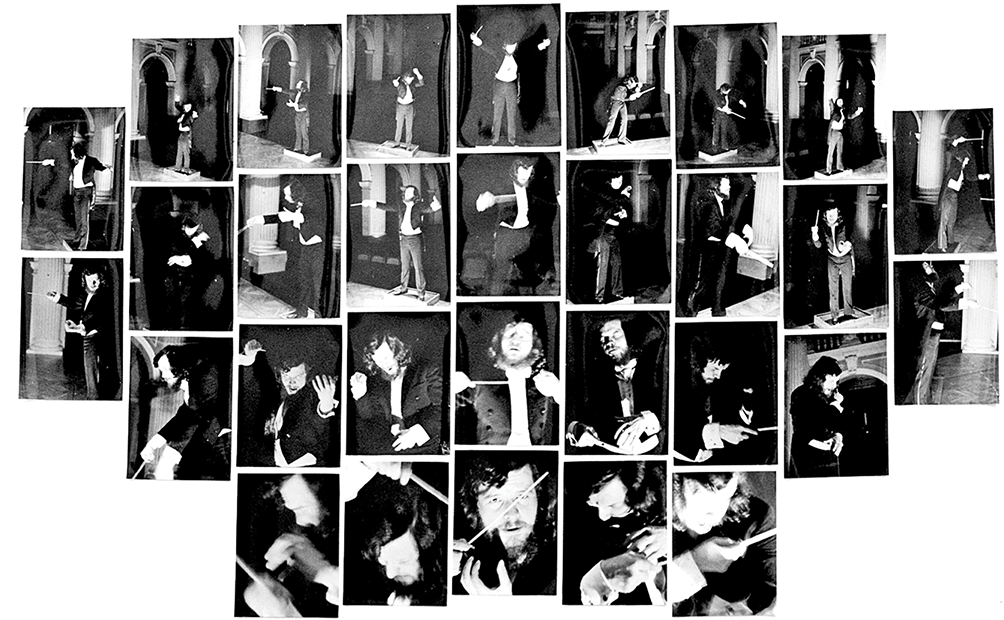
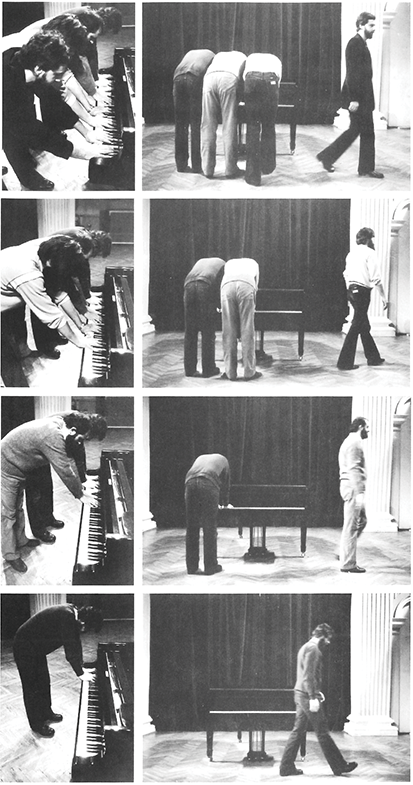
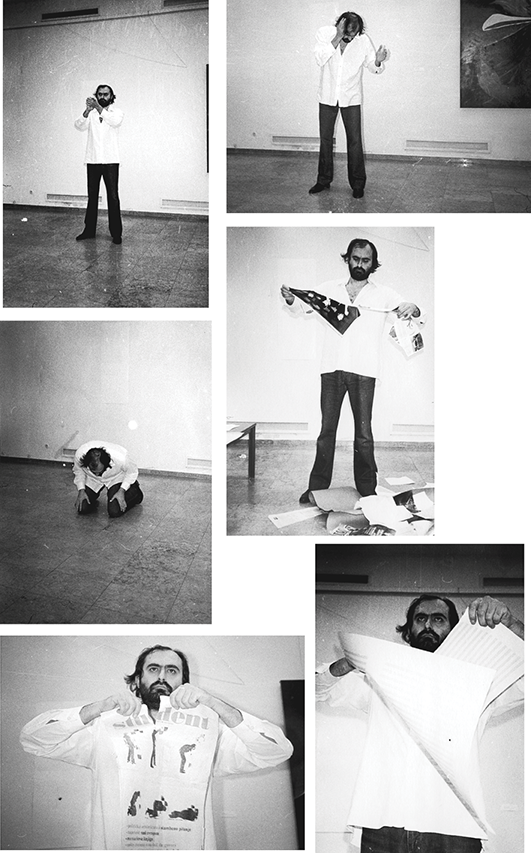
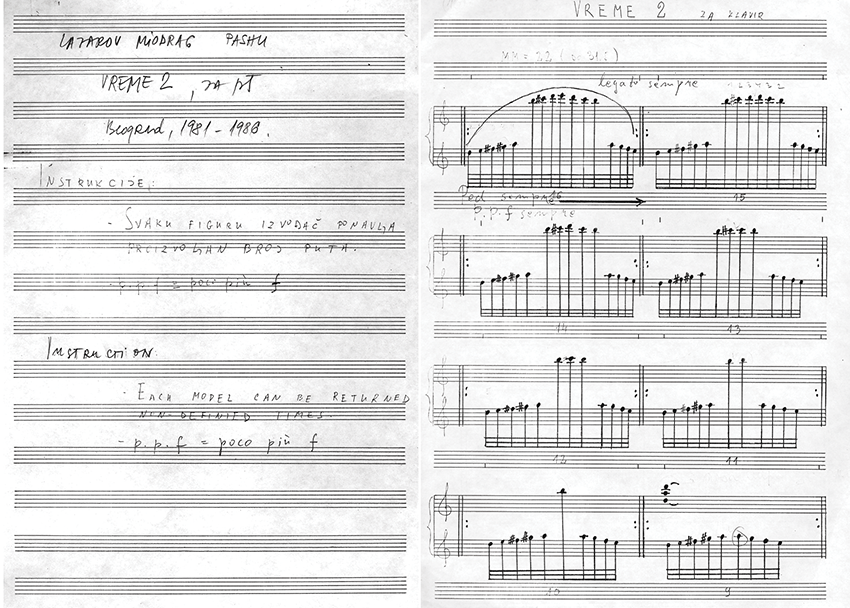
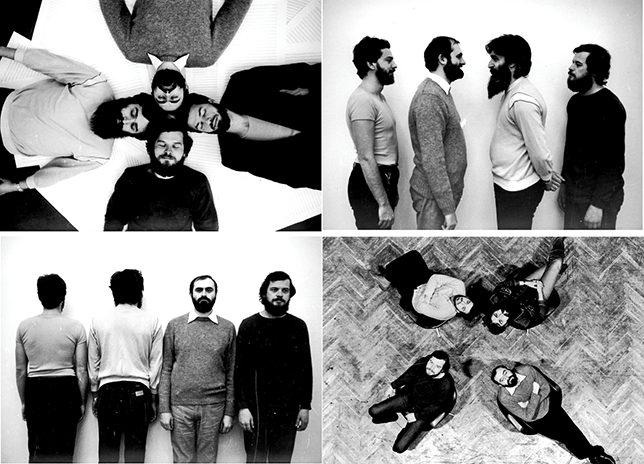
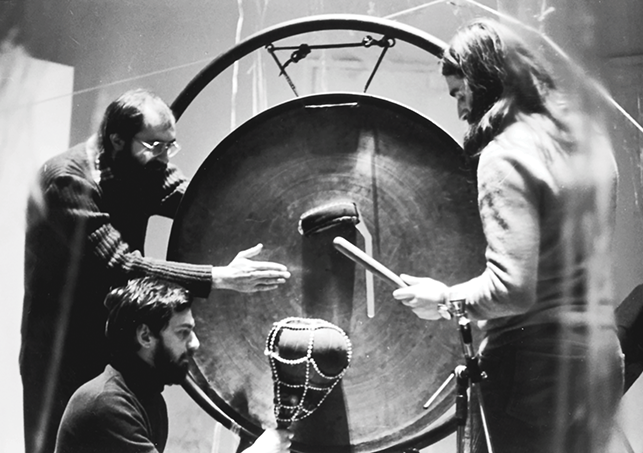
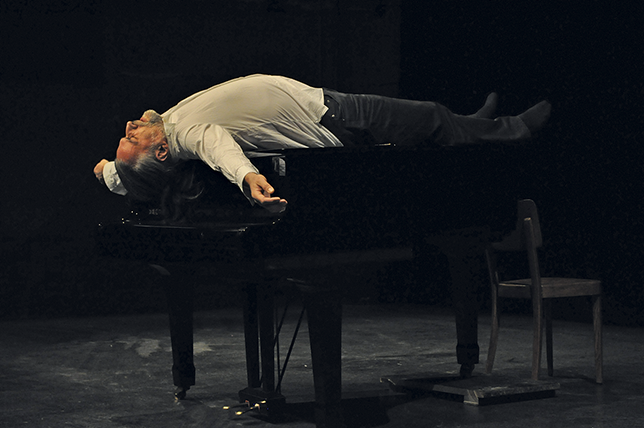
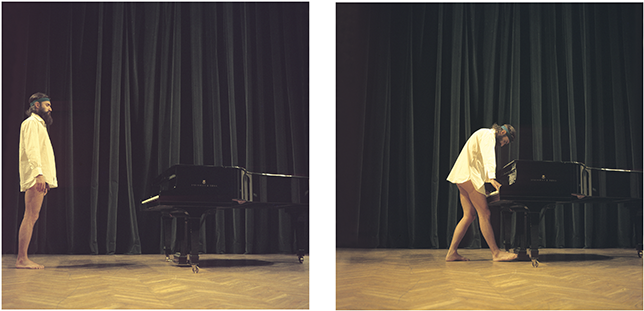
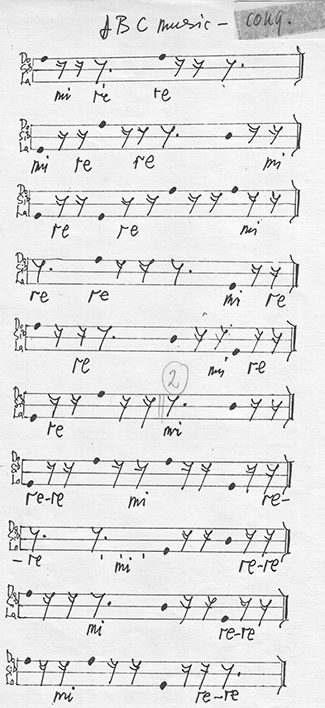
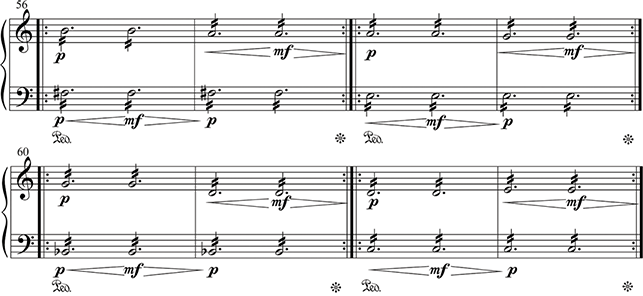
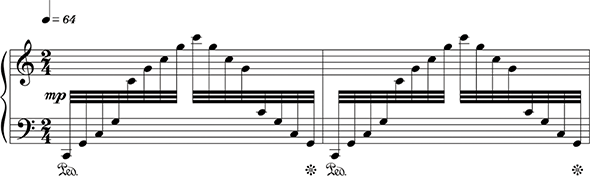
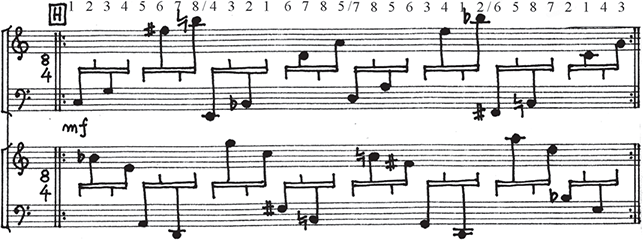
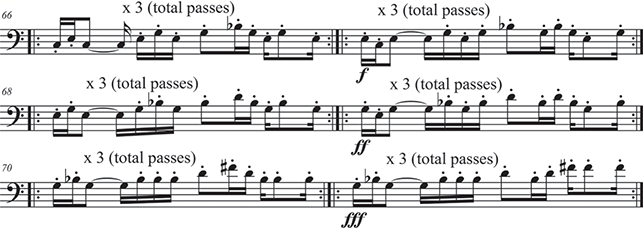
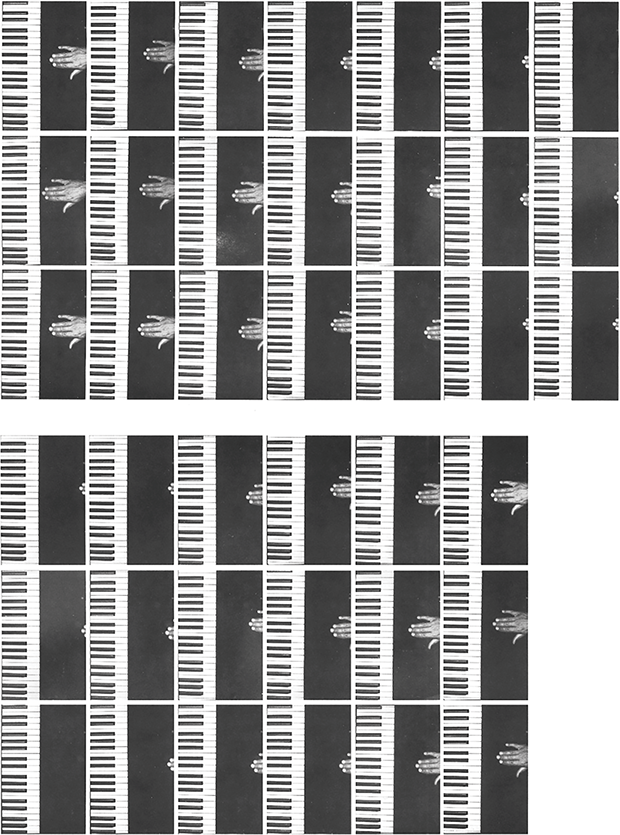
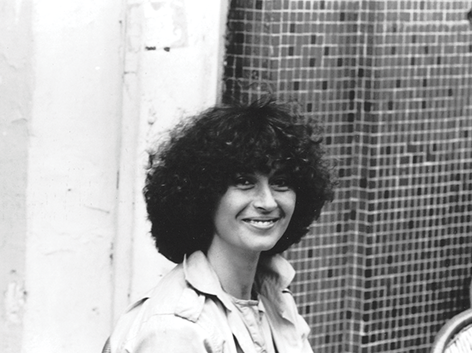
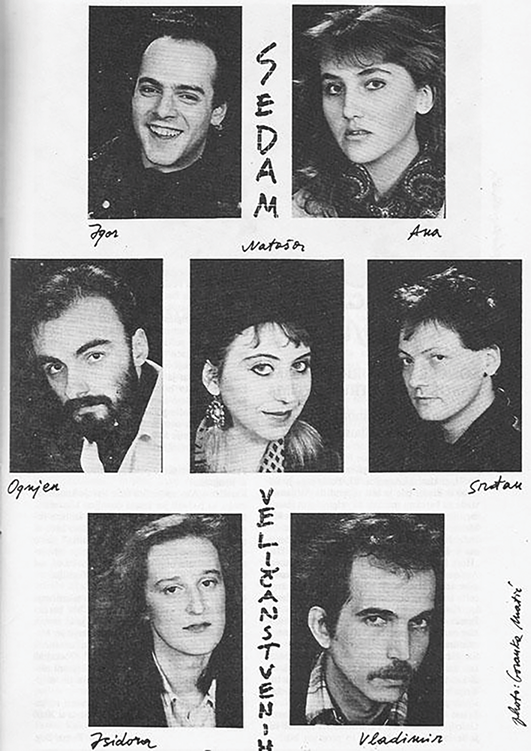
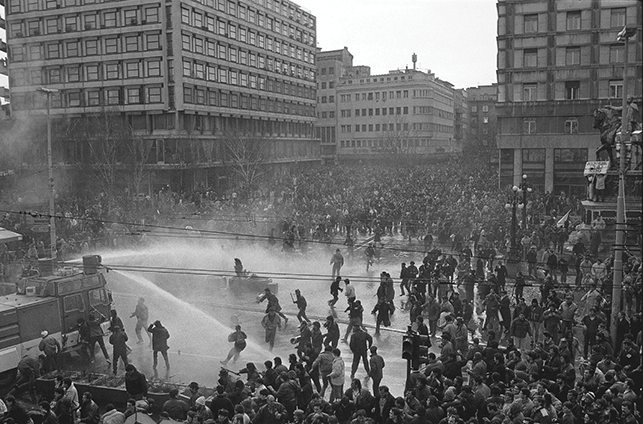

 Open access