

Introduction
The ‘Hidden Foods’ project is a new research programme aimed at reconstructing the importance of plant foods in prehistoric forager subsistence in Southern Europe, with a particular focus on Italy and the Balkans. The role of plant foods in pre-agrarian societies remains one of the major issues of world prehistory. Popular narratives still envisage ancient foragers as primarily ‘meat-eaters’, mainly as a consequence of the poor preservation of plant remains in early prehistoric contexts, and due to the employment of methods particularly focused on the contribution of animal protein to human diet (e.g. isotope analysis) (e.g. Bocherens 2009; Jones 2009; Richards 2009). Recently, new methods applied to archaeological evidence have provided a different understanding of hunter-gatherer dietary preference and interaction with the environment. Harvesting and processing might not have been the sole prerogative of agricultural societies, and plant foods seem to have played an important role amongst hunter-gatherers (e.g. Revedin et al. 2010).
Research objectives and methods
The project will investigate different categories of archaeological evidence (ground stone tools, archaeological sediments and human skeletal remains) in order to assess the role of plant foods in prehistoric hunter-gatherers’ diet and health, as well as to explore the causal links between the processing of plant foods and technological changes in artefact production. A suite of methodological approaches will be applied: use-wear analysis; starch granule and phytolith identification; analysis of macro- and micro-botanical remains in archaeological sediments; experimental activities; analysis of dental calculus; and the study of dental pathologies.
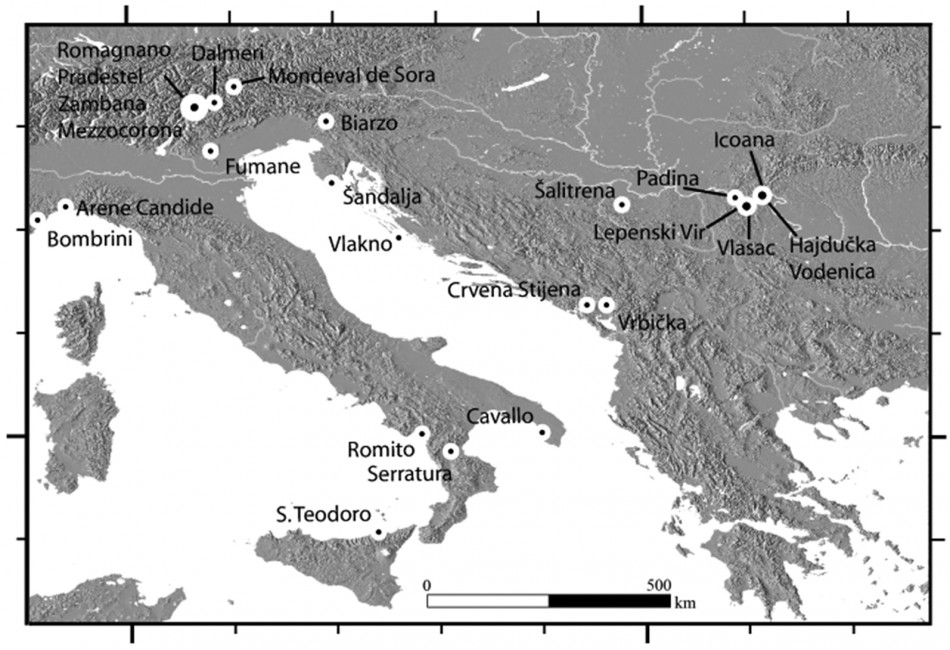
Location map of the sites investigated by the ‘Hidden Foods’ project.

Archaeological sediment, stone artefacts and human remains: preliminary investigations
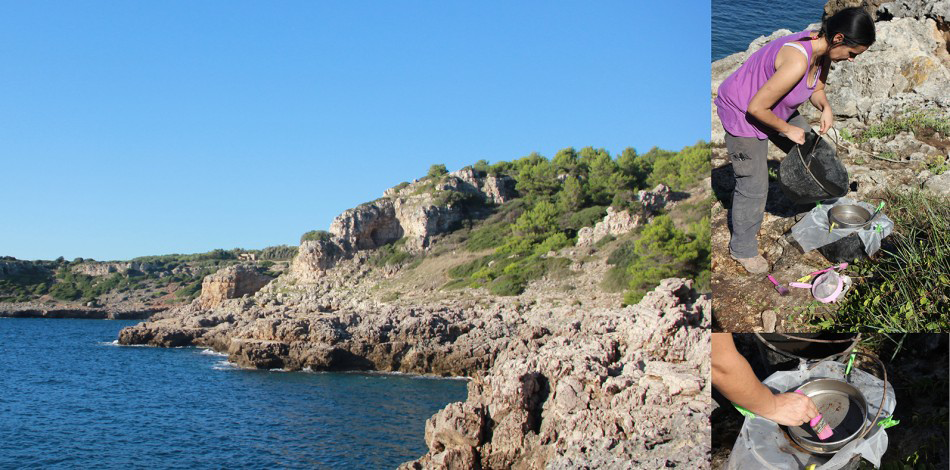
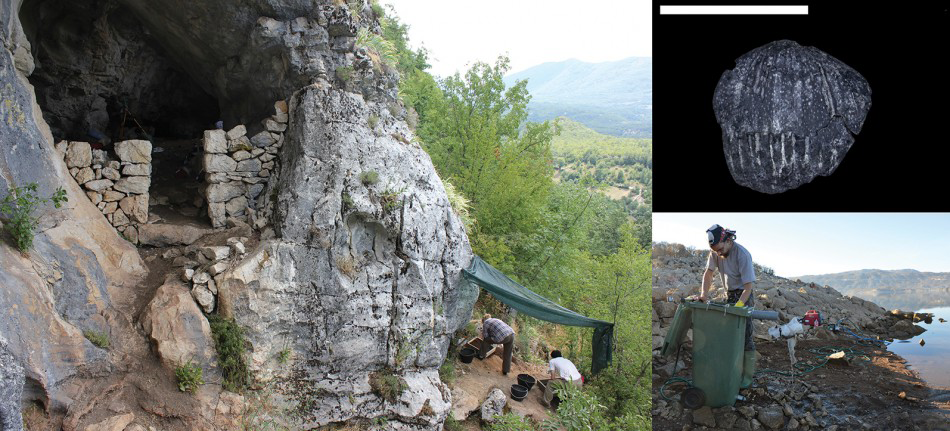
The project commenced in July 2015. The first fieldwork activities have been concentrated in Italy, Croatia and Montenegro. Extensive flotation was carried out at the caves of Cavallo (Italy), Vlakno (Croatia) and Vrbićka (Montenegro) (Figure 1). Soil samples were extensively collected from Upper Palaeolithic (Cavallo Cave) (Figure 2) as well as Late Upper Palaeolithic and Mesolithic (Vrbićka and Vlakno Caves) layers (Figure 3). A large amount of charred plant remains (e.g. seeds, hard shells, parenchyma tissues and so on), and charcoals, were recovered at different sites, highlighting the urgent need to instigate systematic flotation at Palaeolithic and Mesolithic excavations generally. In the coming years, flotation will continue at these sites and new fieldwork is planned in Italy at Bombrini Cave (in collaboration with F. Negrino and J. Riel-Salvatore), Fumane Cave (in collaboration with M. Peresani), Serratura Cave (in collaboration with F. Martini, L. Sarti and D. Lo Vetro) and, in Serbia, at Vlasac (in collaboration with D. Boric) (Figure 1).
A) Entrance of the Cavallo Cave in southern Italy (left) and detail of flotation activity (top and bottom right); photographs by G. Mutri.

Entrance of the Vrbićka Cave in Montenegro (left); hazelnut shell remains recovered through flotation (top right) and flotation activity (bottom right); photographs by D. Boric and E. Cristiani.

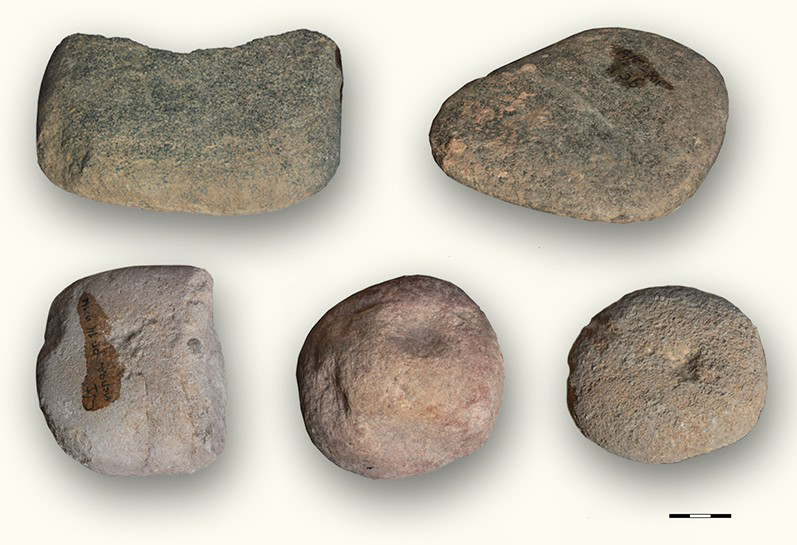
Selection of ground stone tools from Vlasac (Serbia); photographs by E. Cristiani.

Initial research on ground stone tools has focused on the Mesolithic assemblage of the site of Vlasac (Figure 1). Tools discovered in 1970–1971, and during new investigations directed by D. Boric (2006–2009), are under investigation (Figure 4). Traces and residues preserved on the surfaces (e.g. starch granules, plant and animal fibres), and related to the use of the ground stone tools, will be analysed. Future research is planned on Mesolithic artefacts from Icoana, Romania (in collaboration with C. Bonsall and A. Boroneant), as well as on ground stone tools from several Upper Palaeolithic/Mesolithic sites in Italy (e.g. Dalmeri Rockshelter, Serratura and Romito Caves), Croatia (Vlakno Cave) and Montenegro (Vrbicka Cave and Crvena Stijena) (Figure 1).
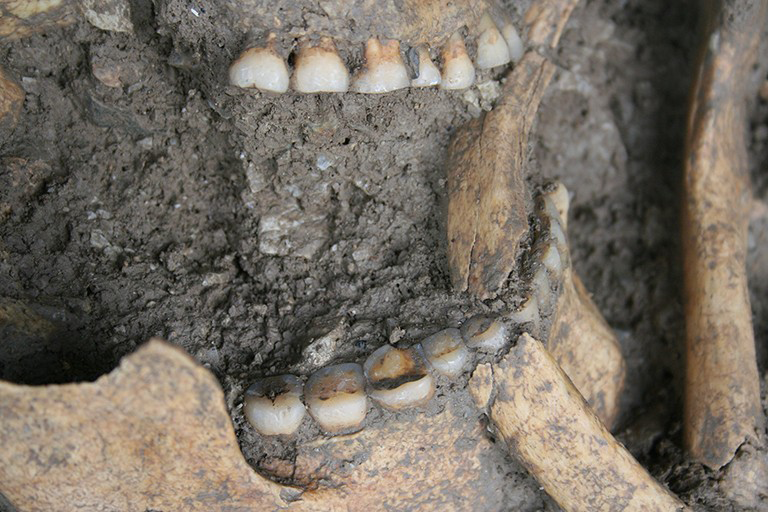
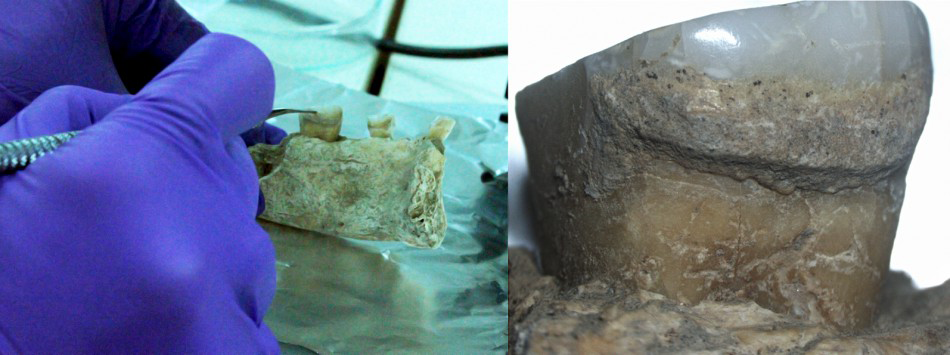
Research on human dental calculus has started with the analysis of individuals recently excavated at Vlasac, dated to the Late Mesolithic and the Mesolithic–Neolithic transition phase (Figures 5 & 6). Starch granules found in large numbers in dental calculus indicate that Holocene forager diet was more balanced than previously thought and included different species of grasses of the Poaceae family (Cristiani et al. in press). Mesolithic dental calculus from individuals buried at Mondeval de Sora (Italy) and Vlakno Cave are currently under investigation.
Human remains from Vlasac (new excavations) selected for the study of dental wear; photograph by D. Boric.

Sampling dental calculus from Vlasac (new excavations) (left); detail of calculus preserved on Mesolithic individual from the same site (right); photographs by E. Cristiani.

Finally, a collaboration with the Botanical Gardens of Belgrade (Serbia) and Cambridge (UK) was started with the aim of assembling modern edible and medicinal plants native to the central Balkans and the Mediterranean region, as well as non-dietary items (e.g. plants used for cordage). This collection will be developed during the project and made available as a reference resource for other archaeological projects.
Further details of the project are available at: www.hiddenfoods.eu (accessed 17 May 2016).
Acknowledgements
The authors express their very great appreciation to the European Research Council for funding the ‘Hidden Foods’ project.