Introduction
Foodborne illnesses are a concern for correctional facilities. A study of outbreaks reported to the CDC Foodborne Outbreak Surveillance System 1998–2014 found outbreaks in correctional facilities were among the largest foodborne outbreaks in the USA each year [Reference Marlow1]. Incarcerated persons had a rate of outbreak-related illness more than six times greater than non-incarcerated persons. The most common aetiologic agents of foodborne outbreaks in correctional institutions were Clostridium perfringens (28% of outbreaks) and Salmonella spp. (27% of outbreaks). All five deaths related to foodborne outbreaks at correctional institutions during the study period were caused by salmonellosis.
Each day, the 35 California Department of Corrections and Rehabilitation (CDCR) adult institutions feed more than 110 000 inmates, many of whom have medical conditions rendering them vulnerable to serious complications from foodborne infections. Despite the large volume of meals served, few foodborne outbreaks have been detected; we are aware of three in the decade preceding this outbreak. In 2006, pasteurised milk was associated with a large outbreak of campylobacteriosis affecting nine CDCR institutions, one county jail and one state mental health facility [Reference Yuan, Mohle-Boetani and Vugia2]. In 2010, an outbreak of C. perfringens associated with improper cooling of an instant potato product occurred at a single prison. And in 2012, an outbreak of salmonellosis occurred at a single prison; investigation by California Correctional Health Care Services (CCHCS) could not identify a food source, but found it was likely an item from the prison menu [3].
On 28 April 2016 the Chief Medical Executive of a CDCR prison for men in Fresno County (Prison A) alerted the CCHCS Public Health Branch of a cluster of diarrhoeal illness. The following day, the Fresno County Department of Public Health reported their laboratory had isolated Salmonella enterica serogroup B from stool cultures of two of four Prison A inmates tested. Within a week, the California Department of Public Health (CDPH) Microbial Diseases Laboratory further characterised the isolates as serotype I 4,[5],12:i:-.
We describe the epidemiological, environmental and laboratory investigations conducted by CCHCS in collaboration with CDCR, Fresno County Department of Public Health and CDPH resulting in the identification and characterisation of a composite product containing beef, mechanically separated chicken (MSC) and textured vegetable protein epidemiologically linked to illness. Mechanically separated poultry (MSP, including MSC) is a product of high-pressure processing of poultry parts, usually the parts left after meat pieces have been removed (e.g., bones, ligaments), The US Department of Agriculture (USDA) describes MSP as a product of cake-batter texture suited to processed products such as hot dogs, bologna, nuggets and sausages. Due to its low cost, kitchens at prisons, jails and homeless shelters often cook with raw MSP.
Methods
Descriptive study
Case finding
The public health nurse (PHN) at Prison A encouraged inmates with current or recent diarrhoeal illness to seek medical attention and interviewed those who were ill.
We defined a probable case of outbreak-related salmonellosis as diarrhoea with abdominal cramping in an inmate at Prison A with onset 1 April to 19 May and a confirmed case as a case meeting the probable case definition with detection of S. enterica in a stool specimen from the symptomatic period. We calculated attack rate using the case count as the numerator and the population of Prison A on 30 April as the denominator.
To determine the extent of the outbreak, we identified potentially related infections at CDCR adult prisons in an internal CCHCS data base of clinical diagnostic test results, 1 January–29 July 2016 and reviewed the medical charts of patients with laboratory-confirmed S. enterica infections. To identify any potentially related infections in the USA and obtain guidance in our investigation, we consulted CDPH Infectious Diseases Branch and the USDA Food Safety and Inspection Service (FSIS).
Descriptive epidemiology
We generated an epidemic curve and described cases by race-ethnicity, yard and housing unit.
Employee illness investigation
Using attendance records, the kitchen manager identified non-inmate kitchen staff with diarrhoeal illness during the outbreak period. We interviewed these employees about foods consumed from the prison kitchen prior to illness onset.
Hypothesis generation
We toured the prison kitchens. To characterise foods commonly eaten by patients, we reviewed menus, food shipment records and records from the canteen, where inmates can purchase pre-packaged foods.
Due to time constraints in the prison environment, we could conduct only a limited number of in-depth hypothesis-generating interviews. Using a list compiled by the PHN, we identified seven patients representing all five prison yards who had a diarrhoeal illness. We chose patients with laboratory confirmation of Salmonella, patients who had confirmed fever and patients with recent onset of illness. One patient declined to participate; we completed interviews with the other six. The median period between onset of illness and the interview was 12 days (range 6–34). Using a questionnaire and copies of the prison kitchen menus for the period in question, we asked patients about symptoms of illness and foods consumed in the week preceding illness onset, including foods served by the kitchen, those purchased from the canteen or vending machines and those received in packages. We asked about foods previously associated with S. enterica infections in general (eggs, fruits and vegetables, nuts) and serogroup B infections in particular (meats) [Reference Jackson4]. We also asked patients about food-sharing behaviours.
Analytic study
Cohort study
Assuming a prevalence of exposure of 90% and an attack rate of 20% in the exposed group, we estimated that a cohort of approximately 400 patients would be needed to detect a risk ratio of 10 (two-sided significance level 0.95, power 0.80). Based on these power calculations, we selected the cohort to be the residents of the three housing units in the yard with the greatest number of patients on the line list.
On 19 May, we conducted interviews (voluntary, confidential and anonymous) using a standardised questionnaire with questions about symptoms of gastrointestinal illness experienced in April and May (diarrhoea, bloody diarrhoea, abdominal cramps, vomiting and fever) and questions about specific foods eaten (19 items from the prison kitchen (including green salad, coleslaw salad, dishes made with ground meat and dishes made with pieces of chicken) and four from the canteen). Foods were selected for the questionnaire based on the hypothesis-generating interviews (produce and meats) and the foods that have been previously associated with serotype I 4,[5],12:i:- (meats) [Reference Jackson4]. We asked persons reporting diarrhoea about foods they likely ate in the week preceding illness onset and those without diarrhoea about foods they likely ate in the month of April. A visual aid helped interviewees distinguish between canteen products.
We excluded from analysis inmates with illness including diarrhoea, vomiting, or fever that did not meet the case definition. Based on anecdotes shared by interviewers, it is likely that some of the persons who had access to both the Religious Meat Alternative (RMA) and the meat items from the regular menu likely at meats from both sources, while others ate only from the RMA; our questionnaire failed to distinguish whether subjects ate meats just from the RMA or meats from both the RMA and the regular menu; therefore, persons who answered yes to the question about RMA were excluded from analysis of the meat items from the regular menu. We analysed individual exposure questions (e.g., dishes with ground meat) and composite exposures (e.g., any canteen sausage).
Statistical analyses
We cross-tabulated exposures with outcome and calculated Fisher exact P-values in SAS version 9.4 using PROC FREQ. We calculated risk ratios (RR) and Taylor series-based 95% confidence intervals (CI) using the Two by Two Table function in OpenEpi version 3.03a. To assess for an independent association, we calculated odds ratios (OR) and 95% CI by simple logistic regression in SAS using PROC LOGISTIC, then, for exposures that were significant, we used a multivariate logistic regression model to calculate adjusted OR.
Environmental investigation
Evaluation of cooking procedures
To assess cooking temperatures during the exposure period, we reviewed kitchen logs from April 2016. We looked for gaps in temperature logs and compared the maximum food temperatures measured with the USDA-recommended safe internal cooking temperatures for meats (74 °C for chicken and composite products containing chicken). On 2 August, the CDPH Environmental Management Branch inspected in the central kitchen, observed the cooking of a dish that included the ground meat product epidemiologically linked to illness and evaluated food handlers.
Environmental laboratory investigation
On 25–27 May, CDPH Food and Drug Branch (FDB) collected food samples from the kitchen at Prison A, choosing samples based on the most likely sources of the strain isolated from patients and the preliminary results of the cohort study: one bag (8–10 pounds) each (raw and frozen) of (1) the ground meat product, (2) boneless chicken thigh strips and (3) boneless cubed dark meat chicken. Frozen daily sample meals (a single tray of food from each meal, as served to inmates) from 2 to 6 May were available; FDB sampled those dishes made from the ground meat product (goulash served 2 May, tamale pie served 3 May) and the chicken thigh strips (chicken fajita served 5 May). The CDPH Food and Drug Laboratory Branch (FDLB) conducted microbiological testing of multiple subsamples from each item, including serotyping and PFGE analysis for a subset of the isolates. From records, we identified a Prison Industries Authority (PIA) processing facility as the producer of the ground meat product that was epidemiologically linked to the illnesses. From the processing facility, FDB sampled seven additional lots of the ground meat product as well as its soy component and pre-cooked hot dogs made from the same beef and MSC as the ground meat product. FDLB tested 60 subsamples of the soy and eight subsamples from each lot of the ground meat product. FSIS tested the seven S. Infantis isolates from the ground meat product for antibiotic resistance. USDA had jurisdiction over the beef and MSC components and did not test them individually.
Results
Descriptive study
Case finding
At Prison A, 39 patients had illnesses that met the case definition (37 probable, two confirmed); the attack rate was 1.2%. S. enterica serotype I 4,[5],12:i:- with PFGE pattern JPXX01.0179 (pattern 179) was isolated from samples from two of two confirmed case-patients.
One patient at another CDCR prison had laboratory-confirmed salmonellosis with diarrhoea and abdominal cramps with onset 6 July; the isolate was serotype Typhimurium. No additional outbreaks or cases of salmonellosis were found at CDCR institutions.
Descriptive epidemiology
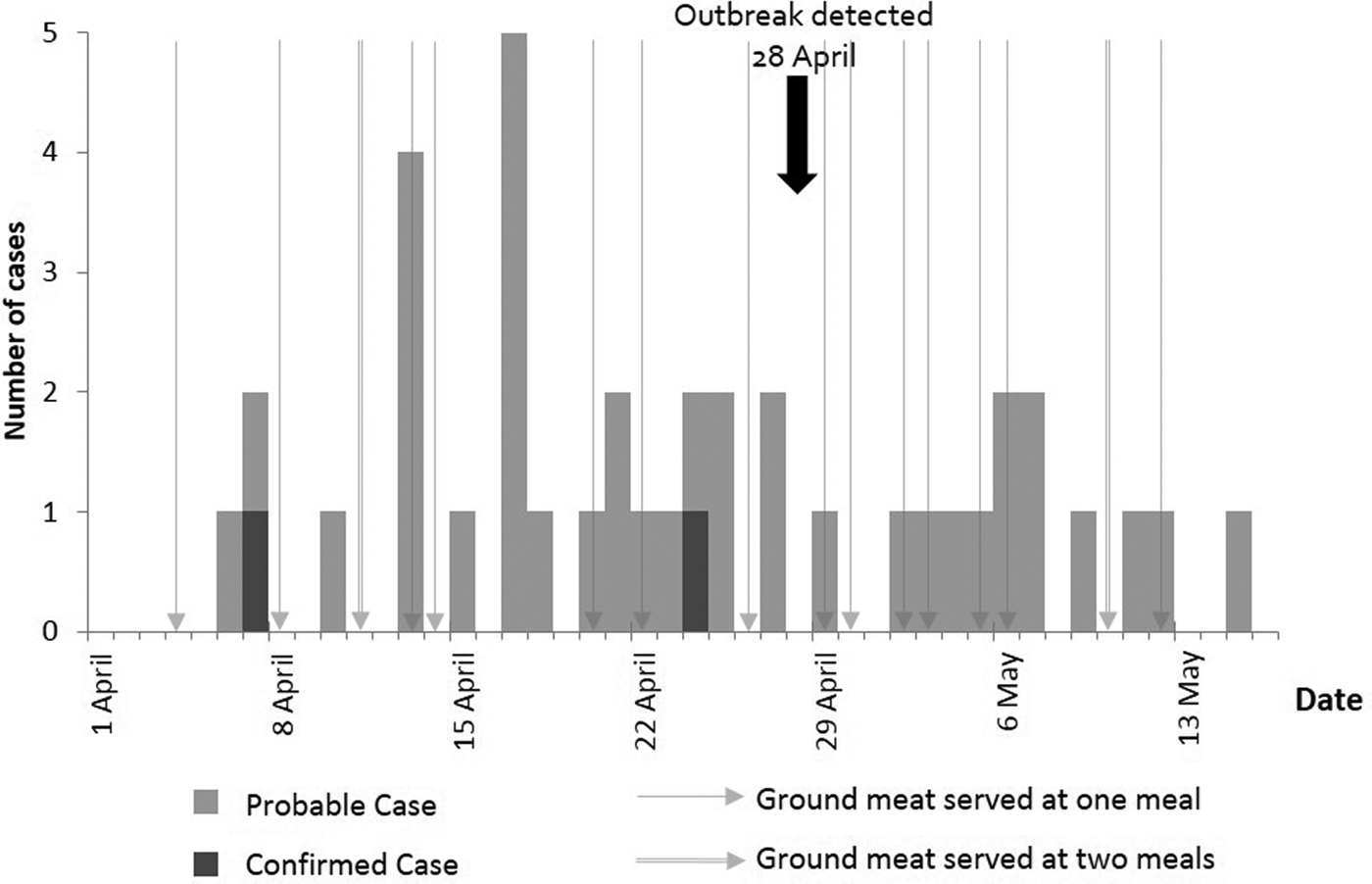
Onset dates for the 39 confirmed and probable cases were 6 April–15 May (Fig. 1); the two confirmed cases were in patients with onsets of 7 April and 24 April. Case-patients resided in each of the 5 yards at Prison A. The median age of case-patients was 38 years (range 22–63), similar to the median age of all inmates at Prison A (34, range 18–65). The distribution of race/ethnicity among case-patients was similar to the prison population. Nine (23%) worked in the kitchens.
A number of inmates reporting symptoms (diarrhoea with abdominal cramps) to clinical staff by date of onset and meals including epidemiologically linked ground meat product by day.
Employee illness investigation
Three non-inmate employees missed work due to diarrhoeal illness during the epidemic period. During the week before illness onset, two of the three employees tasted dishes cooked in the prison kitchen, some of which likely contained the ground meat product.
Analytic study
Cohort study
Of 419 inmates offered interviews, 372 accepted (89%) and 371 completed interviews. Of those inmates interviewed, 46 (12%) had illness that met the probable case definition and 295 (80%) had no illness and we excluded 30 (8%) from the analysis. Of those inmates who met the probable case definition, six (13%) had bloody diarrhoea, nine (20%) had vomiting and 18 (39%) felt feverish or had a fever. The median duration of diarrhoea was 3 days (range 1–21), the median number of loose stools in a day was 5 (range 2–15), and onsets were 1 April–5 May.
Those who ate dishes with ground meat had a higher attack rate (15%) than those who did not consume ground meat (4%) (RR 3.39, 95% CI 1.1–10.6) (Table 1). Those who ate any of the four canteen sausage items had a lower attack rate (8%) than those who did not (27%) (RR 0.30, 95% CI 0.2–0.5). Those who ate from a spread (a supplementary meal prepared by inmates in cells or prison yards from items purchased at the canteen) also had a lower attack rate (9%) than those who did not (20%) (RR 0.46, 95% CI 0.3–0.8).
Attack rates, risk ratios (RR) and 95% confidence intervals (CI) (unadjusted) for selected food items from the prison kitchen and canteen and for eating from a spread (cohort study)

a Fisher exact test.
Of the 15 excluded from the analysis of dishes containing meats because they had access to the RMA, three had an illness that met the probable case definition. We could not determine whether these 15 individuals consumed meats from the regular menu and the RMA, or just from the RMA.
After adjustment by multivariate logistic regression, eating dishes with ground meat were associated with increased odds of illness, (adjusted OR 3.67, 95% CI 1.08–12.50) and eating a sausage from the canteen with decreased odds (adjusted OR 0.29, 95% CI 0.14–0.61), while eating from a spread did not have a significant effect (adjusted OR 0.70, 95% CI 0.34–1.44).
The prison kitchen frequently served dishes containing the epidemiologically linked ground meat product during the epidemic period (Fig. 1).
Environmental investigation
Evaluation of cooking procedures
Kitchen records indicated all dishes cooked in April containing the ground meat product were heated to at least 74 °C, either during initial cooking in the central kitchen, or during reheating in the satellite kitchen. During the inspection, food temperatures were maintained within acceptable food safety parameters during thawing, cooking and cooling of the ground meat product.
Environmental laboratory investigation
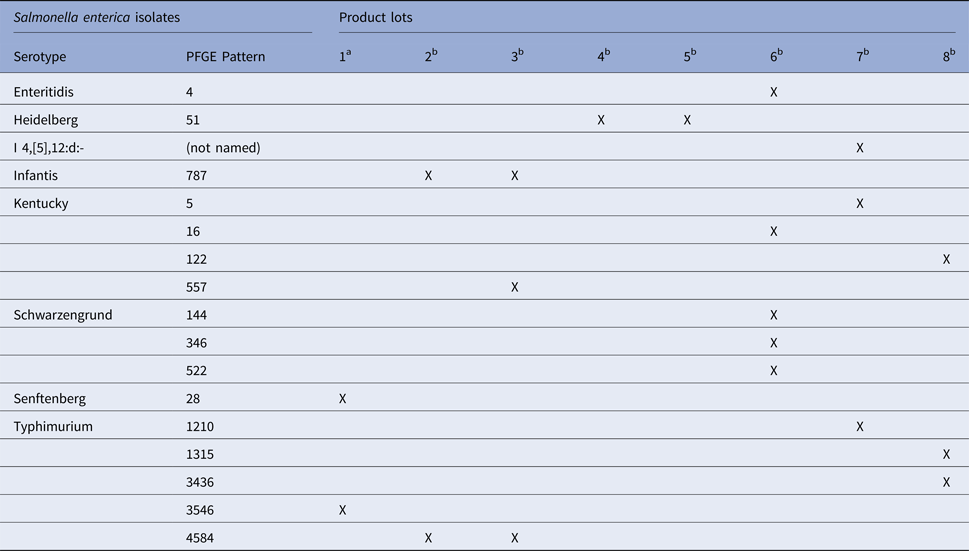
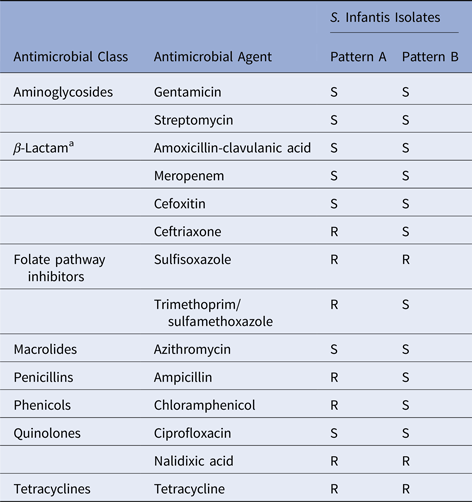
The ground meat product epidemiologically linked to illness was manufactured by PIA from its three component ingredients (beef (34%), MSC (33%) and textured vegetable protein (soy) (33%)), with no other ingredients. PIA distributed the product raw to CDCR institutions throughout the state. On 22 July, 26 of 35 institutions had uncooked product on hand. S. enterica was present in all subsamples of the ground meat product collected at the Prison A kitchen; both serotypes Typhimurium and Senftenberg were isolated. S. enterica was present in all subsamples of all seven lots of ground meat collected at the processing facility; no S. enterica was detected in the soy component of the ground meat product collected at the processing facility. No S. enterica was detected in the daily sample meals, chicken strips and chicken cubes, collected at the prison kitchen, or the precooked hot dogs, collected at the processing facility. Among the 42 isolates that were fully characterised, there were seven serotypes (Typhimurium, Infantis, Kentucky, Heidelberg, Schwarzengrund, Enteritidis and I 4,[5],12:d:-) and 15 distinct PFGE patterns (Table 2). Seven of the isolates were S. Infantis with the PFGE pattern JFXX01.0787 (pattern 787). All seven of the S. Infantis isolates were multidrug-resistant (MDR); four of the seven isolates exhibited resistance to seven antimicrobials within six classes (penicillins, third generation cephalosporins, phenicols, quinolones, folate pathway inhibitors and tetracyclins) (pattern A) and three were resistant to three antimicrobials within three classes (pattern B) (Table 3).
Salmonella enterica isolates categorised by serotype and PFGE pattern isolated from lots of the ground meat product (composite of beef, mechanically separated chicken and textured vegetable protein)
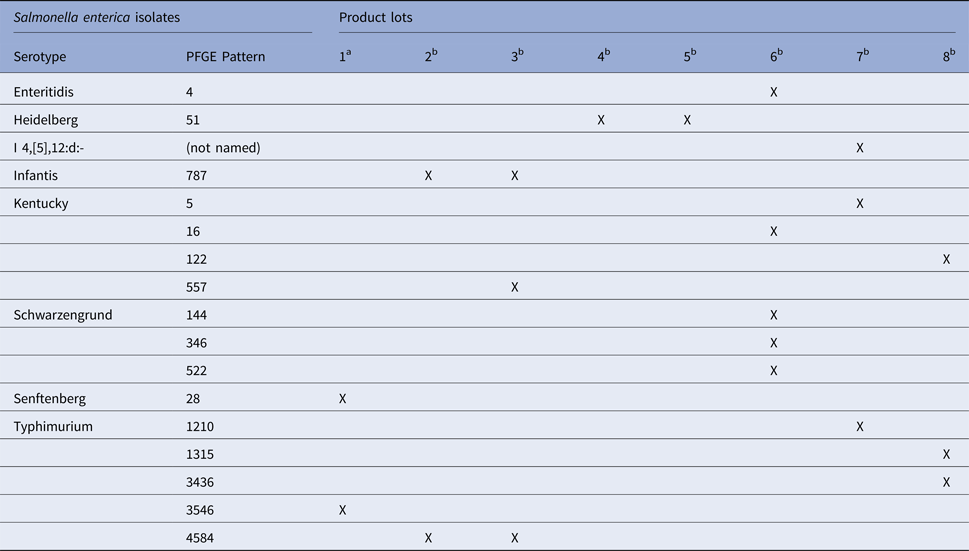
a Lot samples collected from the prison kitchen.
b Lot samples collected from the processing facility.
Antimicrobial resistance of Salmonella enterica serotype Infantis isolates from ground meat product (composite of beef, mechanically separated chicken and textured vegetable protein)

S, Sensitive; R, Resistant.
a ± β-lactamase inhibitors.
Discussion
In April and May 2016, a California prison experienced a large outbreak of salmonellosis. Epidemiological and microbiological evidence implicated the consumption of a highly contaminated ground meat product composed of beef, MSC and soy as the cause of the outbreak. The prison excluded ill inmates from kitchen work until symptoms resolved and two stool samples, taken at an interval of at least 24 h, tested negative for S. enterica. Due to the presence of MDR S. Infantis, on 22 July, PIA and CDCR impounded and disposed of 76 204 kg of the ground meat product. Due to high levels of S. enterica in MSC generally, on 5 September, PIA implemented new product specifications for ground meat and meat patty products distributed uncooked to institutions, replacing MSC with chicken meat.
A cohort study revealed that eating dishes made in the prison kitchen from the ground meat product was associated with illness. Other foods from the prison kitchen identified as possible sources of Salmonella (salads, fruits, sausages, hamburger patties, other dishes containing beef, chicken or turkey meat) were not associated with illness. Inmates who ate foods from the canteen (sausage, spreads) had lower rates of illness than those who did not. Although eating canteen sausage or from spreads was not positively or negatively associated with eating ground meat, these foods supplement and occasionally replace meals from the prison kitchen, likely reducing the amount of ground meat consumed and therefore reducing exposure to the risk. The attack rate (1.2%) based on the cases reported by the PHN that came to medical attention was lower than the attack rate (12%) in the cohort study. Patients with mild illness may not feel compelled to seek medical care, or may not seek medical care because they do not want to be isolated.
Foodborne outbreaks in the community are commonly investigated in a case-control study. However, in an institutional setting such as a prison, where the food exposures are shared by a high proportion of the population, a cohort study may be necessary to achieve the power required to identify an association of illness with a commonly consumed food. In the investigation of the 2006 CDCR campylobacteriosis outbreak, the cohort study found a significant association not detected by the case-control study [Reference Yuan, Mohle-Boetani and Vugia2].
Pattern 179, isolated from two case-patients, is rarely isolated from patients in California. The most recent food isolates of pattern 179 were from MSC from Florida in February 2014 and from chicken from Georgia in May 2014. The lots of ground meat consumed by the patients with laboratory-confirmed salmonellosis prior to onset were not available for testing. Although the strain isolated from case-patients was not isolated from the ground meat, the presence of S. enterica in all subsamples of all lots tested and the differing serotypes isolated are consistent with a high level of contamination in the ground meat product. No S. enterica was found in the soy and neither the MSC nor the beef was tested separately.
Based on microbiological evidence generated by environmental laboratory investigation and data reported by FSIS, the MSC component of the ground meat product is the most plausible source of the S. enterica. MSC has a higher prevalence of Salmonella spp. (82.9%) than ground beef (1.6%) [5]. Further, the serotypes of S. enterica isolated from the ground meat product have been associated with chicken more often than beef. Five of the eight serotypes isolated from the ground meat product (Kentucky, Enteritidis, Typhimurium, Infantis, Heidelberg) are the five most prevalent serotypes in broiler chicken carcasses and in ground chicken. In contrast, none of the seven most prevalent serotypes in ground beef (Montevideo, Dublin, Cerro, Newport, Muenchen, Anatum, Munster) were found in the ground meat product [6]. Additionally, the S. enterica isolated from case-patients (pattern 179) has previously been isolated from chicken (including MSC), but never from beef.
The MDR S. Infantis in the ground meat product could cause serious, difficult-to-treat infections. S. Infantis isolates from the ground meat product had resistance to drugs in six classes. These isolates were resistant to ceftriaxone and trimethoprim-sulfamethoxazole, two drugs critically important to human health according to US Food and Drug Administration guidance [7]. Pattern 787 is a rare PFGE pattern associated with consumption of domestic chicken and with international travel. Many of the pattern 787 isolates have a plasmid that bears multiple resistance genes conferring resistance to as many as 11 drugs, including the bla CTX−M−65 gene which encodes an extended-spectrum β-lactamase (ESBL) conferring resistance to third-generation cephalosporins such as ceftriaxone [Reference Grigg8]. In the USA, infections with ESBL-producing bacterial species are a rare, but may be increasing [Reference Kassakian and Mermel9, Reference Brenner, Prabhakaran and Lowros10]. Ceftriaxone is important for the treatment of salmonellosis. Ceftriaxone-resistant Salmonella infections can be more severe and may have higher rates of hospitalisation and treatment options are limited [Reference Varma11–Reference Angulo and Mølbak13].
Despite the distribution of the epidemiologically linked ground meat product to the majority of CDCR adult institutions, an outbreak was detected at Prison A but not at other prisons. One hypothesis was that Prison A had substandard cooking and food handling practices. Illnesses at Prison A occurred despite the fact that a review of cooking records for the outbreak period and an inspection of the central kitchen and the cooking of a dish containing the ground meat demonstrated no kitchen However, a review of cooking records and an inspection of the central kitchen and the cooking of a dish containing the ground meat showed that illnesses at Prison A occurred despite the demonstration of no practices of concern. Exceptionally high levels of contamination in the ground meat combined with unrecognised lapses of in kitchen practices may have permitted the S. enterica to persist in cooked dishes served to inmates. In salmonellosis outbreaks, low estimated bacterial dose ingested per person is associated with prolonged incubation periods [Reference Abe14]. The epidemiological curve at Prison A is flatter than would occur with a short incubation period, but it is consistent with ingestion of a low dose of S. enterica as in a cooked dish, possibly on more than one occasion.
MSC sampled by USDA has a higher prevalence of Salmonella spp. (82.9%) than ground chicken (39.0%), other comminuted chicken (41.7%) and broiler chickens (3.8%) [5]. Two recent salmonellosis outbreaks highlight the hazard posed by MSP use in institutional kitchens. In an outbreak of at a correctional facility in Tennessee in 2013, an investigation implicated MSC as the source of the MDR S. Heidelberg [Reference Taylor15]. MSP (chicken and/or turkey) was the ingredient of concern in a July 2016 outbreak of S. Infantis at a detention facility in South Carolina (C. Grigg, unpublished observations). The S. Infantis isolated from patients in the South Carolina outbreak was indistinguishable by PFGE to that isolated from the ground meat product in the present investigation (pattern 787) (A. Green, unpublished observations). Interestingly, both of these MSP-related outbreaks occurred in correctional settings.
The primary strength of this investigation of this outbreak was the multiple and complementary approaches. An analytic study detected a statistically significant association of illness with the ground meat; sufficient power was achieved through the use of a cohort study design and the recruitment of a large cohort. Potential bias toward the null was introduced into the cohort study by asking cases about consumption during a week-long period and controls about consumption during a month-long period; additionally, recall bias was possible due to the time elapsed between the likely exposure period and the interviews. Use of a visually aid likely facilitated accurate recall. Untruthful answers from study participants could have biased results toward or away from the null. The strengths of the environmental investigation were the microbiological testing of the epidemiologically linked product and the inspection of cooking procedures used to prepare a meal using this product. One limitation of the microbiological testing was that the lots of the ground meat consumed by the two confirmed cases prior to symptom onset were not available for testing; another limitation was that only one of the three component ingredients was tested individually. A limitation of the evaluation of cooking procedures was that the inspection did not necessarily represent practices at all times.
Due to the high level of Salmonella contamination in the epidemiologically linked ground meat product and in MSC in general, we advised MSC not be used in kitchens in CDCR institutions; MSC can continue to be safely used in products such as hot dogs which are thermally processed under a USDA-approved Hazard Analysis Critical Control Point plan at the PIA facility prior to distribution to institutions. Reducing the levels of Salmonella spp. in poultry products has been proposed as a means of reducing the public health burden of salmonellosis in the USA [Reference McEntire16]. Reformulation of the product by replacing MSC with chicken meat should reduce the level of S. enterica in the product, thereby reducing the risk of exposing vulnerable inmates. The impounding, disposal and reformulation of the ground meat product likely prevented morbidity and mortality among California inmates.
Conclusions and recommendations
Our findings and the other two recent outbreak investigations referenced in the previous section indicate that the use of raw MSP in correctional facilities puts the incarcerated population at risk of exposure to S. enterica, including MDR strains. Public health authorities should reassess the safety of using raw MSP in meals cooked in institutional settings.
Acknowledgements
We thank CCHCS, particularly Meet Boparai, Marlena Scherer, Sharon Albers, Randy Griggs, Kim Lucas and Bruce Leistikow, CDCR, particularly Scott Frauenheim, Alfonso Bonilla and Raymond Castellanoz, CDPH, particularly Jeff Higa, Duc Vugia, Michael Needham and Patrick Kennelly, USDA-FSIS, particularly Alice Green and the Fresno County Department of Public Health. This research received no specific grant from any funding agency, commercial or not-for-profit sectors.
Declaration of Interest
None.