


On Christmas Eve 2002, the Department of Health published the financial allocations to Primary Care Trusts (PCTs) for 2003/4. As usual, this was accompanied by a detailed ‘exposition book’, setting out how the distribution of the available £45.3 bn was decided (Department of Health Finance and Investment Directorate, 2002). Three years ago, I wrote a short article showing how a close reading of this publication could be used to identify notional mental health budgets in these allocations (Reference GloverGlover, 1999). Bindman et al (Reference Bindman, Glover and Goldberg2000) demonstrated that many health authorities, particularly those that service more deprived areas, spend substantially less on mental health care. As this is the first time financial allocations have been made directly to PCTs, it is helpful to repeat that calculation for the new organisations.
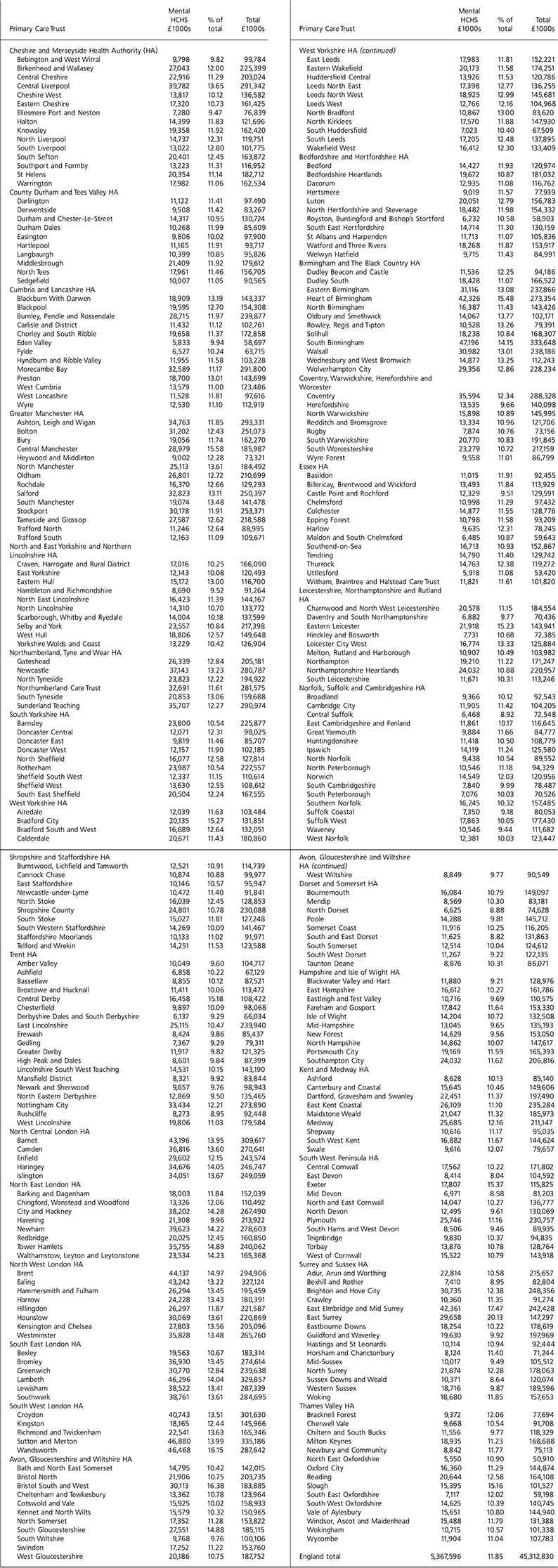
The total resources available for the NHS are determined politically. Each PCT is allocated a share of this with which to meet the health care needs of its population. For the most part, the Department of Health does not identify sub-divisions in these allocations, and PCTs' discretion in using the money is largely unfettered. However, the formulae used to determine the share allocated effectively consider five distinct areas (including mental health) in which PCTs will need to spend. These are considered separately in the formula because their distributions around the country differ. If all PCTs were to use their resources in line with the formulae, their spending patterns would look very different; East Devon would spend 8.04% of its budget on mental health, while East Surrey would spend 20.13%. The figures for each PCT are shown in Table 1. East Surrey tops the league as a result of re-allocation of resources for the old long-stay patients of the Epsom cluster of mental hospitals.
2003/4 Total resource limits for Primary Care Trusts and amount and percentage attributable to hospital and community health services (HCHS) for mental health
| Primary Care Trust | Mental HCHS £1000s | % of total | Total £1000s |
|---|---|---|---|
| Cheshire and Merseyside Health Authority (HA) | |||
| Bebington and West Wirral | 9,798 | 9.82 | 99,784 |
| Birkenhead and Wallasey | 27,043 | 12.00 | 225,399 |
| Central Cheshire | 22,916 | 11.29 | 203,024 |
| Central Liverpool | 39,782 | 13.65 | 291,342 |
| Cheshire West | 13,817 | 10.12 | 136,582 |
| Eastern Cheshire | 17,320 | 10.73 | 161,425 |
| Ellesmere Port and Neston | 7,280 | 9.47 | 76,839 |
| Halton | 14,399 | 11.83 | 121,696 |
| Knowsley | 19,358 | 11.92 | 162,420 |
| North Liverpool | 14,737 | 12.31 | 119,751 |
| South Liverpool | 13,022 | 12.80 | 101,775 |
| South Sefton | 20,401 | 12.45 | 163,872 |
| Southport and Formby | 13,223 | 11.31 | 116,952 |
| St Helens | 20,354 | 11.14 | 182,712 |
| Warrington | 17,982 | 11.06 | 162,534 |
| County Durham and Tees Valley HA | |||
| Darlington | 11,122 | 11.41 | 97.490 |
| Derwentside | 9,508 | 11.42 | 83,267 |
| Durham and Chester-Le-Street | 14,317 | 10.95 | 130,724 |
| Durham Dales | 10,268 | 11.99 | 85,609 |
| Easington | 9,806 | 10.02 | 97,900 |
| Hartlepool | 11,165 | 11.91 | 93,717 |
| Langbaurgh | 10,399 | 10.85 | 95,826 |
| Middlesbrough | 21,409 | 11.92 | 179,612 |
| North Tees | 17,961 | 11.46 | 156,705 |
| Sedgefield | 10,007 | 11.05 | 90,565 |
| Cumbria and Lancashire HA | |||
| Blackburn With Darwen | 18,909 | 13.19 | 143,337 |
| Blackpool | 19,595 | 12.70 | 154,308 |
| Burnley, Pendle and Rossendale | 28,715 | 11.97 | 239,877 |
| Carlisle and District | 11,432 | 11.12 | 102,761 |
| Chorley and South Ribble | 19,658 | 11.37 | 172,858 |
| Eden Valley | 5,833 | 9.94 | 58,697 |
| Fylde | 6,527 | 10.24 | 63,715 |
| Hyndburn and Ribble Valley | 11,955 | 11.58 | 103,228 |
| Morecambe Bay | 32,589 | 11.17 | 291,800 |
| Preston | 18,700 | 13.01 | 143,699 |
| West Cumbria | 13,579 | 11.00 | 123,486 |
| West Lancashire | 11,528 | 11.81 | 97,616 |
| Wyre | 12,530 | 11.10 | 112,919 |
| Greater Manchester HA | |||
| Ashton, Leigh and Wigan | 34,763 | 11.85 | 293,331 |
| Bolton | 31,202 | 12.43 | 251,073 |
| Bury | 19,056 | 11.74 | 162,270 |
| Central Manchester | 28,979 | 15.58 | 185,987 |
| Heywood and Middleton | 9,002 | 12.28 | 73,321 |
| North Manchester | 25,113 | 13.61 | 184,492 |
| Oldham | 26,801 | 12.72 | 210,699 |
| Rochdale | 16,370 | 12.66 | 129,293 |
| Salford | 32,823 | 13.11 | 250,397 |
| South Manchester | 19,074 | 13.48 | 141,478 |
| Stockport | 30,178 | 11.91 | 253,371 |
| Tameside and Glossop | 27,587 | 12.62 | 218,588 |
| Trafford North | 11,246 | 12.64 | 88,995 |
| Trafford South | 12,163 | 11.09 | 109,671 |
| North and East Yorkshire and Northern Lincolnshire HA | |||
| Craven, Harrogate and Rural District | 17,016 | 10.25 | 166,090 |
| East Yorkshire | 12,143 | 10.08 | 120,493 |
| Eastern Hull | 15,172 | 13.00 | 116,700 |
| Hambleton and Richmondshire | 8,690 | 9.52 | 91,264 |
| North East Lincolnshire | 16,423 | 11.39 | 144,167 |
| North Lincolnshire | 14,310 | 10.70 | 133,772 |
| Scarborough, Whitby and Ryedale | 14,004 | 10.18 | 137,599 |
| Selby and York | 23,557 | 10.84 | 217,398 |
| West Hull | 18,806 | 12.57 | 149,648 |
| Yorkshire Wolds and Coast | 13,229 | 10.42 | 126,904 |
| Northumberland, Tyne and Wear HA | |||
| Gateshead | 26,339 | 12.84 | 205,181 |
| Newcastle | 37,143 | 13.23 | 280,787 |
| North Tyneside | 23,823 | 12.22 | 194,922 |
| Northumberland Care Trust | 32,691 | 11.61 | 281,575 |
| South Tyneside | 20,853 | 13.06 | 159,688 |
| Sunderland Teaching | 35,707 | 12.27 | 290,974 |
| South Yorkshire HA | |||
| Barnsley | 23,800 | 10.54 | 225,877 |
| Doncaster Central | 12,071 | 12.31 | 98,025 |
| Doncaster East | 9,819 | 11.46 | 85,707 |
| Doncaster West | 12,157 | 11.90 | 102,185 |
| North Sheffield | 16,077 | 12.58 | 127,814 |
| Rotherham | 23,987 | 10.54 | 227,557 |
| Sheffield South West | 12,337 | 11.15 | 110,614 |
| Sheffield West | 13,630 | 12.55 | 108,612 |
| South East Sheffield | 20,504 | 12.24 | 167,555 |
| West Yorkshire HA | |||
| Airedale | 12,039 | 11.63 | 103,484 |
| Bradford City | 20,135 | 15.27 | 131,851 |
| Bradford South and West | 16,689 | 12.64 | 132,051 |
| Calderdale | 20,671 | 11.43 | 180,860 |
| East Leeds | 17,983 | 11.81 | 152,221 |
| Eastern Wakefield | 20,173 | 11.58 | 174,251 |
| Huddersfield Central | 13,926 | 11.53 | 120,786 |
| Leeds North East | 17,398 | 12.77 | 136,255 |
| Leeds North West | 18,925 | 12.99 | 145,681 |
| Leeds West | 12,766 | 12.16 | 104,968 |
| North Bradford | 10,867 | 13.00 | 83,620 |
| North Kirklees | 17,570 | 11.88 | 147,930 |
| South Huddersfield | 7,023 | 10.40 | 67,509 |
| South Leeds | 17,205 | 12.48 | 137,895 |
| Wakefield West | 16,412 | 12.30 | 133,409 |
| Bedfordshire and Hertfordshire HA | |||
| Bedford | 14,427 | 11.93 | 120,974 |
| Bedfordshire Heartlands | 19,672 | 10.87 | 181,032 |
| Dacorum | 12,935 | 11.08 | 116,762 |
| Hertsmere | 9,019 | 11.57 | 77,939 |
| Luton | 20,051 | 12.79 | 156,783 |
| North Hertfordshire and Stevenage | 18,482 | 11.98 | 154,332 |
| Royston, Buntingford and Bishop's Stortford | 6,232 | 10.58 | 58,903 |
| South East Hertfordshire | 14,714 | 11.30 | 130,159 |
| St Albans and Harpenden | 11,713 | 11.07 | 105,836 |
| Watford and Three Rivers | 18,268 | 11.87 | 153,917 |
| Welwyn Hatfield | 9,715 | 11.43 | 84,991 |
| Birmingham and The Black Country HA | |||
| Dudley Beacon and Castle | 11,536 | 12.25 | 94,186 |
| Dudley South | 18,428 | 11.07 | 166,522 |
| Eastern Birmingham | 31,116 | 13.08 | 237,866 |
| Heart of Birmingham | 42,326 | 15.48 | 273,354 |
| North Birmingham | 16,387 | 11.43 | 143,426 |
| Oldbury and Smethwick | 14,067 | 13.77 | 102,171 |
| Rowley, Regis and Tipton | 10,528 | 13.26 | 79,391 |
| Solihull | 18,238 | 10.84 | 168,307 |
| South Birmingham | 47,196 | 14.15 | 333,648 |
| Walsall | 30,982 | 13.01 | 238,186 |
| Wednesbury and West Bromwich | 14,877 | 13.25 | 112,243 |
| Wolverhampton City | 29,356 | 12.86 | 228,234 |
| Coventry, Warwickshire, Herefordshire and Worcester | |||
| Coventry | 35,594 | 12.34 | 288,328 |
| Herefordshire | 13,535 | 9.66 | 140,098 |
| North Warwickshire | 15,898 | 10.89 | 145,995 |
| Redditch and Bromsgrove | 13,334 | 10.96 | 121,706 |
| Rugby | 7,874 | 10.76 | 73,156 |
| South Warwickshire | 20,770 | 10.83 | 191,845 |
| South Worcestershire | 23,279 | 10.72 | 217,159 |
| Wyre Forest | 9,558 | 11.01 | 86,799 |
| Essex HA | |||
| Basildon | 11,015 | 11.91 | 92,455 |
| Billericay, Brentwood and Wickford | 13,493 | 11.84 | 113,929 |
| Castle Point and Rochford | 12,329 | 9.51 | 129,591 |
| Chelmsford | 10,998 | 11.29 | 97,432 |
| Colchester | 14,877 | 11.55 | 128,776 |
| Epping Forest | 10,798 | 11.58 | 93,209 |
| Harlow | 9,635 | 12.31 | 78,245 |
| Maldon and South Chelmsford | 6,485 | 10.87 | 59,643 |
| Southend-on-Sea | 16,713 | 10.93 | 152,867 |
| Tendring | 14,790 | 11.40 | 129,742 |
| Thurrock | 14,763 | 12.38 | 119,272 |
| Uttlesford | 5,918 | 11.08 | 53,420 |
| Witham, Braintree and Halstead Care Trust | 11,821 | 11.61 | 101,820 |
| Leicestershire, Northamptonshire and Rutland HA | |||
| Charnwood and North West Leicestershire | 20,578 | 11.15 | 184,554 |
| Daventry and South Northamptonshire | 6,882 | 9.77 | 70,436 |
| Eastern Leicester | 21,918 | 15.23 | 143,941 |
| Hinckley and Bosworth | 7,731 | 10.68 | 72,385 |
| Leicester City West | 16,774 | 13.33 | 125,884 |
| Melton, Rutland and Harborough | 10,907 | 10.49 | 103,982 |
| Northampton | 19,210 | 11.22 | 171,247 |
| Northamptonshire Heartlands | 24,032 | 10.88 | 220,957 |
| South Leicestershire | 11,671 | 10.31 | 113,246 |
| Norfolk, Suffolk and Cambridgeshire HA | |||
| Broadland | 9,366 | 10.12 | 92,543 |
| Cambridge City | 11,905 | 11.42 | 104,205 |
| Central Suffolk | 6,468 | 8.92 | 72,548 |
| East Cambridgeshire and Fenland | 11,861 | 10.17 | 116,645 |
| Great Yarmouth | 9,884 | 11.66 | 84,777 |
| Huntingdonshire | 11,418 | 10.50 | 108,779 |
| Ipswich | 14,119 | 11.24 | 125,580 |
| North Norfolk | 9,438 | 10.54 | 89,552 |
| North Peterborough | 10,546 | 11.18 | 94,329 |
| Norwich | 14,549 | 12.03 | 120,956 |
| South Cambridgeshire | 7,840 | 9.99 | 78,487 |
| South Peterborough | 7,076 | 10.03 | 70,526 |
| Southern Norfolk | 16,245 | 10.32 | 157,485 |
| Suffolk Coastal | 7,350 | 9.18 | 80,053 |
| Suffolk West | 17,863 | 10.05 | 177,430 |
| Waveney | 10,546 | 9.44 | 111,682 |
| West Norfolk | 12,381 | 10.03 | 123,447 |
| Shropshire and Staffordshire HA | |||
| Burntwood, Lichfield and Tamworth | 12,521 | 10.91 | 114,739 |
| Cannock Chase | 10,874 | 10.88 | 99,977 |
| East Staffordshire | 10,146 | 10.57 | 95,947 |
| Newcastle-under-Lyme | 10,472 | 11.40 | 91,841 |
| North Stoke | 16,039 | 12.45 | 128,853 |
| Shropshire County | 24,801 | 10.78 | 230,088 |
| South Stoke | 15,027 | 11.81 | 127,248 |
| South Western Staffordshire | 14,269 | 10.09 | 141,467 |
| Staffordshire Moorlands | 10,133 | 11.02 | 91,971 |
| Telford and Wrekin | 14,251 | 11.53 | 123,588 |
| Trent HA | |||
| Amber Valley | 10,049 | 9.60 | 104,717 |
| Ashfield | 6,858 | 10.22 | 67,129 |
| Bassetlaw | 8,855 | 10.12 | 87,521 |
| Broxtowe and Hucknall | 11,411 | 10.06 | 113,472 |
| Central Derby | 16,458 | 15.18 | 108,422 |
| Chesterfield | 9,897 | 10.09 | 98,068 |
| Derbyshire Dales and South Derbyshire | 6,137 | 9.29 | 66,034 |
| East Lincolnshire | 25,115 | 10.47 | 239,940 |
| Erewash | 8,424 | 9.86 | 85,437 |
| Gedling | 7,367 | 9.29 | 79,311 |
| Greater Derby | 11,917 | 9.82 | 121,325 |
| High Peak and Dales | 8,601 | 9.84 | 87,399 |
| Lincolnshire South West Teaching | 14,531 | 10.15 | 143,190 |
| Mansfield District | 8,321 | 9.92 | 83,844 |
| Newark and Sherwood | 9,657 | 9.76 | 98,943 |
| North Eastern Derbyshire | 12,869 | 9.50 | 135,465 |
| Nottingham City | 33,434 | 12.21 | 273,890 |
| Rushcliffe | 8,273 | 8.95 | 92,448 |
| West Lincolnshire | 19,806 | 11.03 | 179,584 |
| North Central London HA | |||
| Barnet | 43,196 | 13.95 | 309,617 |
| Camden | 36,816 | 13.60 | 270,641 |
| Enfield | 29,602 | 12.15 | 243,574 |
| Haringey | 34,676 | 14.05 | 246,747 |
| Islington | 34,051 | 13.67 | 249,059 |
| North East London HA | |||
| Barking and Dagenham | 18,003 | 11.84 | 152,039 |
| Chingford, Wanstead and Woodford | 13,326 | 12.06 | 110,492 |
| City and Hackney | 38,202 | 14.28 | 267,490 |
| Havering | 21,308 | 9.96 | 213,922 |
| Newham | 39,623 | 14.22 | 278,603 |
| Redbridge | 20,025 | 12.45 | 160,850 |
| Tower Hamlets | 35,755 | 14.89 | 240,062 |
| Walthamstow, Leyton and Leytonstone | 23,534 | 14.23 | 165,368 |
| North West London HA | |||
| Brent | 44,137 | 14.97 | 294,906 |
| Ealing | 43,242 | 13.22 | 327,124 |
| Hammersmith and Fulham | 26,294 | 13.45 | 195,459 |
| Harrow | 24,228 | 13.43 | 180,391 |
| Hillingdon | 26,297 | 11.87 | 221,587 |
| Hounslow | 30,069 | 13.61 | 220,869 |
| Kensington and Chelsea | 27,803 | 13.56 | 205,096 |
| Westminster | 35,828 | 13.48 | 265,760 |
| South East London HA | |||
| Bexley | 19,563 | 10.67 | 183,314 |
| Bromley | 36,930 | 13.45 | 274,614 |
| Greenwich | 30,770 | 12.84 | 239,638 |
| Lambeth | 46,296 | 14.04 | 329,857 |
| Lewisham | 38,522 | 13.41 | 287,339 |
| Southwark | 38,761 | 13.61 | 284,695 |
| South West London HA | |||
| Croydon | 40,743 | 13.51 | 301,630 |
| Kingston | 18,165 | 12.44 | 145,966 |
| Richmond and Twickenham | 22,541 | 13.63 | 165,346 |
| Sutton and Merton | 46,880 | 13.99 | 335,186 |
| Wandsworth | 46,468 | 16.15 | 287,642 |
| Avon, Gloucestershire and Wiltshire HA | |||
| Bath and North East Somerset | 14,795 | 10.42 | 142,015 |
| Bristol North | 21,906 | 10.75 | 203,735 |
| Bristol South and West | 30,113 | 16.38 | 183,885 |
| Cheltenham and Tewkesbury | 13,362 | 10.78 | 123,964 |
| Cotswold and Vale | 15,925 | 10.02 | 158,933 |
| Kennet and North Wilts | 15,579 | 10.32 | 150,965 |
| North Somerset | 17,352 | 11.28 | 153,822 |
| South Gloucestershire | 27,551 | 14.88 | 185,115 |
| South Wiltshire | 9,768 | 9.76 | 100,106 |
| Swindon | 17,252 | 11.22 | 153,760 |
| West Gloucestershire | 20,186 | 10.75 | 187,752 |
| West Wiltshire | 8,849 | 9.77 | 90,549 |
| Dorset and Somerset HA | |||
| Bournemouth | 16,084 | 10.79 | 149,097 |
| Mendip | 8,569 | 10.30 | 83,181 |
| North Dorset | 6,625 | 8.88 | 74,628 |
| Poole | 14,288 | 9.81 | 145,712 |
| Somerset Coast | 11,916 | 10.25 | 116,205 |
| South and East Dorset | 11,625 | 8.82 | 131,863 |
| South Somerset | 12,514 | 10.04 | 124,612 |
| South West Dorset | 11,267 | 9.22 | 122,135 |
| Taunton Deane | 8,876 | 10.31 | 86,071 |
| Hampshire and Isle of Wight HA | |||
| Blackwater Valley and Hart | 11,880 | 9.21 | 128,976 |
| East Hampshire | 16,612 | 10.27 | 161,786 |
| Eastleigh and Test Valley | 10,716 | 9.69 | 110,575 |
| Fareham and Gosport | 17,842 | 11.64 | 153,330 |
| Isle of Wight | 14,204 | 10.72 | 132,508 |
| Mid-Hampshire | 13,045 | 9.65 | 135,193 |
| New Forest | 14,629 | 9.56 | 153,050 |
| North Hampshire | 14,862 | 10.07 | 147,617 |
| Portsmouth City | 19,169 | 11.59 | 165,393 |
| Southampton City | 24,032 | 11.62 | 206,816 |
| Kent and Medway HA | |||
| Ashford | 8,628 | 10.13 | 85,140 |
| Canterbury and Coastal | 15,645 | 10.46 | 149,606 |
| Dartford, Gravesham and Swanley | 22,451 | 11.37 | 197,490 |
| East Kent Coastal | 26,109 | 11.10 | 235,284 |
| Maidstone Weald | 21,047 | 11.32 | 185,973 |
| Medway | 25,685 | 12.16 | 211,147 |
| Shepway | 10,616 | 11.17 | 95,035 |
| South West Kent | 16,882 | 11.67 | 144,624 |
| Swale | 9,616 | 12.07 | 79,657 |
| South West Peninsula HA | |||
| Central Cornwall | 17,562 | 10.22 | 171,802 |
| East Devon | 8,414 | 8.04 | 104,592 |
| Exeter | 17,807 | 15.37 | 115,825 |
| Mid Devon | 6,971 | 8.58 | 81,203 |
| North and East Cornwall | 14,047 | 10.27 | 136,777 |
| North Devon | 12,495 | 9.61 | 130,069 |
| Plymouth | 25,746 | 11.16 | 230,757 |
| South Hams and West Devon | 8,506 | 9.46 | 89,935 |
| Teignbridge | 9,830 | 10.37 | 94,835 |
| Torbay | 13,876 | 10.78 | 128,764 |
| West of Cornwall | 15,522 | 10.79 | 143,918 |
| Surrey and Sussex HA | |||
| Adur, Arun and Worthing | 22,814 | 10.58 | 215,657 |
| Bexhill and Rother | 7,410 | 8.95 | 82,804 |
| Brighton and Hove City | 30,735 | 12.38 | 248,356 |
| Crawley | 10,360 | 11.35 | 91,274 |
| East Elmbridge and Mid Surrey | 42,361 | 17.47 | 242,428 |
| East Surrey | 29,658 | 20.13 | 147,297 |
| Eastbourne Downs | 18,254 | 10.22 | 178,619 |
| Guildford and Waverley | 19,630 | 9.92 | 197,969 |
| Hastings and St Leonards | 10,114 | 10.94 | 92,444 |
| Horsham and Chanctonbury | 8,124 | 11.40 | 71,244 |
| Mid-Sussex | 10,017 | 9.49 | 105,512 |
| North Surrey | 21,874 | 12.28 | 178,063 |
| Sussex Downs and Weald | 10,371 | 8.64 | 120,074 |
| Western Sussex | 18,716 | 9.87 | 189,596 |
| Woking | 18,680 | 11.85 | 157,653 |
| Thames Valley HA | |||
| Bracknell Forest | 9,372 | 12.06 | 77,694 |
| Cherwell Vale | 9,668 | 10.54 | 91,708 |
| Chiltern and South Bucks | 11,556 | 9.77 | 118,329 |
| Milton Keynes | 18,935 | 11.23 | 168,688 |
| Newbury and Community | 8,842 | 11.77 | 75,113 |
| North East Oxfordshire | 5,550 | 10.90 | 50,910 |
| Oxford City | 16,360 | 11.29 | 144,874 |
| Reading | 20,644 | 12.58 | 164,108 |
| Slough | 15,395 | 15.16 | 101,527 |
| South East Oxfordshire | 7,117 | 12.02 | 59,198 |
| South West Oxfordshire | 14,625 | 10.39 | 140,745 |
| Vale of Aylesbury | 15,651 | 10.80 | 144,940 |
| Windsor, Ascot and Maidenhead | 15,488 | 11.79 | 131,388 |
| Wokingham | 10,715 | 10.57 | 101,338 |
| Wycombe | 11,904 | 11.04 | 107,783 |
| England total | 5,367,596 | 11.85 | 45,312,830 |
How is this calculated?
A full explanation of this calculation and the assumptions underlying it is beyond the scope of this short article (Reference GloverGlover, 2003). However, the principles are as follows. The resource allocation process starts by identifying the ‘weighted population’ that is the responsibility of each PCT. For hospital and community health services (HCHS), the population is assigned four weightings. These are for:
-
1) Age profile (older people require more spending than young adults)
-
2) Health need (areas where the population is likely to be sicker need more)
-
3) Market forces factors (in some areas anything is costlier)
-
4) Emergency ambulance costs (allowing for geographic influences)
The health needs relating to mental health care (not including learning disabilities) and other types of care are calculated separately, allowing parallel analyses. For prescribing costs, effects of age and sex profiles, proportions exempt from prescription charges and some specific types of morbidity are calculated. For cash-limited general medical services costs (GMSCL), age, Jarman scores, rates of limiting long-standing illness and market forces factors are considered and for HIV/AIDS, infection rates are used. To arrive at an appropriate single figure combining these elements, the department looks to the most recent available national spending profile for a weighting of the proportion of allocations that should follow each set of needs weights.
Having identified a fair share (or ‘target’) of the available national resource for each PCT, this is compared with what was available to the PCT area in the previous year and a set of rules is devised for the speed at which it is realistic to move individual allocations towards the target. For 2003/4, every PCT will get an increase of at least 8.33%. None will be left more than 10% under its target, but with the constraint that none will be pushed closer to its target share by more than 2%. (This leaves nine PCTs at 10% or more below target — Easington, -20.23%, Tendring, -15.05%, Knowsley, -14.91%, Barking and Dagenham, -14.70%, Ashfield, -12.82%, North Liverpool, -12.51%, Central Liverpool, -10.61%, Heart of Birmingham, -10.55% and Tower Hamlets, -10.00%.)
Finally, two types of further adjustment are made. Additions are made of new allocations to address specific issues (this year these are hospital weighting lists, new cost of living increases, out of hours improvements for general practice and the cost of taking on prison health care). Redistributions between PCTs are made where individuals are treated outside the PCT responsible for them (the largest of these is for mental illness and patients with learning disability institutionalised prior to 1970).
To calculate the figures shown in Table 1, all these steps were followed from the Department of Health spreadsheets, the only difference being that the allocations for the clinical areas were kept separate. Where additional allocations and distributions relate to one clinical area, these were attributed accordingly. Otherwise, they were applied to the general total. The resulting total figures are the same as those for PCTs 2003/4 Resource Limit (row L in the DH Initial Resource Limit spreadsheets).
What does it mean?
The actual task confronting PCTs in determining how to spend the resources allocated to them is, of course, much more complex than to be calculable on a few spread-sheets. Established patterns of spending cannot be overturned in a short period. Local profiles of buildings and other relatively fixed elements make particular services more or less efficient in ways that cannot be quickly altered. Rising or falling population numbers give rise to over- or under-use of facilities, with inevitable consequences for unit costs. Finally, national allocation rules can only really allow for influences that have a broadly national effect. Because of this, local decisions need to be made to take into account additional or differing influences.
The department's resource allocation team goes to considerable lengths to calculate the fairest possible share-out of resources, but it is national policy that the use of local resources is at the discretion of PCTs. Thus, it would be difficult for the department to publish the type of analysis presented here, which could be seen as fettering local discretion. However, given the thoroughness of the work they undertake, it seems appropriate to present this perspective as at least one element that PCTs should be thinking about in reaching the important decisions they have to take.


 Open access


eLetters
No eLetters have been published for this article.