


1. Introduction
At a global level, economic growth has tended to be accompanied by a reduction in poverty, which in turn has long been known to have the potential to reduce food insecurity and undernutrition (Haddad et al., Reference Haddad, Alderman, Appleton, Song and Yohannes2003; Strauss and Thomas, Reference Strauss and Thomas1998). Indeed, Smith and Haddad (Reference Smith and Haddad2002) present compelling evidence that, at least in the late 20th century, income growth has led to a reduction in child undernutrition across low and middle-income countries. Likewise, improvements in food security and nutrition should contribute to economic growth. Yet after decades of steady progress in improving global food security, both the number of people undernourished and the prevalence of undernourishment globally have increased in the past few years, and are projected to increase further (FAO et al., 2020). Climate change is already affecting agricultural production in complex ways and having a measurable negative impact on food security (Romanello et al., Reference Romanello, McGushin and Di Napoli2021), and may well be responsible, at least in part, for this new trend. As such, climate change is likely to make the design of effective food policies to improve food security more complicated but also more important. It is therefore timely to explore the determinants of food insecurity, and the role of food policies in reducing food insecurity, particularly in the context of a changing climate.
Food security is a multi-dimensional concept, comprising access to food, food availability, utilisation and stability. It has been defined as existing when ‘… all people, at all times, have physical and economic access to sufficient, safe and nutritious food that meets their dietary needs and food preferences for an active and healthy life’ (World Food Summit, 1996). As such, the definition takes into account the physical availability of food; whether individuals can afford the food; the quality and cultural appropriateness of the food; and stability of that access over time (Ville et al., Reference Ville, Po, Sen, Bui and Melgar-Quiñonez2019). More recently, food insecurity has been monitored using the Food Insecurity Experience Scale (FIES), which relies on asking people directly about their experiences of food insecurity across eight dimensions, including variety consumed, quantity consumed, running out of food and spending a whole day without eating (Ville et al., Reference Ville, Po, Sen, Bui and Melgar-Quiñonez2019).
Macroeconomic policies can affect food security in multiple ways, such as through the impact on food production, global food availability and trade, household income and access to health and education infrastructure (Díaz-Bonilla, Reference Díaz-Bonilla2015). Food insecure households have been found to be particularly vulnerable to food price fluctuations (Díaz-Bonilla, Reference Díaz-Bonilla2015), suggesting that policies that reduce such fluctuations may also improve food security. Further, the stabilisation of prices may in turn contribute to economic growth, as appears to have been the case in Asia in the second half of the 20th century (Timmer, Reference Timmer2000). There is also plenty of evidence that, even controlling for poverty, governments can actively influence food insecurity through targeted policies, particularly in the form of safety nets that provide cash or food transfers, the importance of which for vulnerable populations has been highlighted by the on-going COVID-19 pandemic (Amjath-Babu et al., Reference Amjath-Babu, Krupnik, Thilsted and McDonald2020; Gilligan, Reference Gilligan, Swinnen and McDermott2020; Laborde et al., Reference Laborde, Martin, Vos, Swinnen and McDermott2020).
Ethiopia has long suffered from high levels of food insecurity, which have been closely linked to domestic food shortages and famine, which in turn have in part been linked to low-input low-output agriculture and frequent drought conditions (Devereux and Sussex, Reference Devereux and Sussex2000; Mohamed, Reference Mohamed2017). Though the prevalence of undernourishment had been falling in Ethiopia, from 47 per cent in 2000–2002 to 13.8 per cent in 2014–2016, consistent with global trends, in recent years, and similarly consistent with global data, undernourishment has been increasing, reaching 16.2 per cent in 2018–2020, despite relatively high levels of economic growth. In absolute numbers, 7.1 million Ethiopians received emergency food assistance in 2004, falling to just over a million in 2008 (World Bank, 2017). This rapid decline in food insecurity has been partly credited to the Productive Safety Net Programme (PSNP), which was introduced in 2005, with a goal of reducing chronic food insecurity by providing cash transfers, public works and nutritional feeding programmes; and through efforts to increase agricultural productivity. This programme is far more comprehensive than earlier efforts to provide emergency assistance primarily through food aid, and indeed has evolved over time, with increasing emphasis on cash transfers rather than food transfers (Berhane et al., Reference Berhane, Gilligan, Hoddinott, Kumar and Taffesse2014). Studies have found that PSNP has decreased the food gap (defined as the number of times when households could not meet their food needs) in Ethiopia from 3.6 to 2.3 months (Berhane et al., Reference Berhane, Hodinott, Kumar, Taffesse, Diresse, Yohannes, Sabates-Wheeler, Handino, Lind, Tefera and Feyera2011, Reference Berhane, Gilligan, Hoddinott, Kumar and Taffesse2014; Gilligan et al., Reference Gilligan, Hoddinott and Taffesse2009; Sabates-Wheeler and Devereux, Reference Sabates-Wheeler and Devereux2010).
Most of the existing literature purporting to determine the socioeconomic impacts of climate change tends to focus only on weather shocks, for example, Antonelli et al. (Reference Antonelli, Coromaldi, Dasgupta, Emmerling and Shayegh2020), Burke et al. (Reference Burke, Hsiang and Miguel2015), Shayegh et al. (Reference Shayegh, Manoussi and Dasgupta2020), and Sisha (Reference Sisha2020); or mean temperature change; whether annual (Burke et al., Reference Burke, Hsiang and Miguel2015), monthly (Burke et al., Reference Burke, González, Baylis, Heft-Neal, Baysan, Basu and Hsiang2018), or weekly (Antonelli et al., Reference Antonelli, Coromaldi, Dasgupta, Emmerling and Shayegh2020; Shayegh et al., Reference Shayegh, Manoussi and Dasgupta2020). In contrast, using high-resolution reanalysis climate data, we also control for climatic shocks in the form of temperature anomalies from a long-term mean; along with four distinct weather shocks, month-to-month change in temperature, three-monthly mean temperature, three-monthly total precipitation, and a perception-based drought variable. Combining this climate and weather data with multiple waves of the Ethiopia Socioeconomic Survey (ESS), we explore whether, and the extent to which, socioeconomic drivers such as education and income, coping mechanisms and safety nets, act as modifiers. The ESS collects information on agricultural activities along with data on education and health, labour force status and labour supply, economic activities and access to services and resources. The richness of the survey allows us to control for various socioeconomic determinants of food insecurity, including gender and education of the household head; income of the households; safety nets in the form of cash and food assistance; coping strategies adopted by households; and price changes of major food items.
In the next section, we focus on government food policies, and specifically the long standing debate on whether, and under what conditions, cash or food transfers are most appropriate and effective. In Section 3, we provide details on the empirical model we employ, and the data set. The results are presented in Section 4 and we conclude in Section 5, focusing on the policy implications of our findings.
2. Government safety nets and food insecurity
Interest in safety nets, a key element of social protection, grew considerably in the early 2000s, but safety nets have been a feature in societies for many millennia. Alderman and Hoddinott (Reference Alderman and Hoddinott2007) provide a useful summary of their history and breadth. While Bezuneh and Deaton (Reference Bezuneh and Deaton1997) suggest that ‘a fundamental premise of safety net concepts is to undertake investments today that diminish higher social costs in the future’, others have conceptualised safety nets as short-term, non-contributory transfers, provided in response to shocks (Alwang and Norton, Reference Alwang and Norton2011). There has also been discussion as to whether safety nets should be more integrated into broader efforts to reduce poverty and help households manage risk (Monchuk, Reference Monchuk2014). Safety nets have also proven controversial. Part of that controversy is the extent to which safety nets do indeed promote growth and ensure the benefits are shared across society, or rather discourage work and investment and therefore longer term growth and development (Hoddinott, Reference Hoddinott2008). For example, safety nets may crowd out private precautionary savings (Dercon, Reference Dercon2002).
Key debates in the literature over how to implement social safety nets include whether cash, food or vouchers are most appropriate; whether conditionally should be attached; and how to target (Gentilini and Omamo, Reference Gentilini and Omamo2009; Sabates-Wheeler and Devereux, Reference Sabates-Wheeler and Devereux2010). Food-based safety nets are, as their name suggests, tied to the provision of food, directly or through vouchers (Rogers and Coates, Reference Rogers and Coates2002). There is some evidence that historically, food aid was paid little attention by international organisations such as the World Bank and IMF (Bezuneh and Deaton, Reference Bezuneh and Deaton1997), even though empirical evidence suggests that food-based safety nets can under some circumstances be an important tool for reducing poverty and food insecurity (Brown and Gentilini, Reference Brown and Gentilini2007).
In theory, cash transfers, being fungible, allow individuals to maximise their utility (Lhachimi and Seuring, Reference Lhachimi and Seuring2019), and so might be considered a better option than providing people with food, whether directly or as food vouchers (Rogers and Coates, Reference Rogers and Coates2002). Indeed, there is growing evidence in sub-Saharan Africa that unconditional cash transfers are effective at increasing households’ consumption of food, livestock holdings and purchases of durables; and are effective responses to short term food crises (Ralston et al., Reference Ralston, Andrews and Hsiao2017). However, evidence from the literature also suggests that whether cash or food transfers are more effective at reducing food insecurity is likely to be dependent on the specific situation, and the details of how a policy is designed and implemented (Babatunde and Olagunju, 2020). For example, cash transfers may be less effective where food markets are not functioning effectively (Dietrich and Schmerzeck, Reference Dietrich and Schmerzeck2019). In the context of Kenya’s Hunger Safety Net Programme (HSNP), Dietrich and Schmerzeck (Reference Dietrich and Schmerzeck2019) find this to be the case for more isolated communities. Cash transfers may also increase poor households’ exposure to food price fluctuations (Addisu, Reference Addisu2020). Food transfers tend to be more costly to implement, limit choice, and may distort food markets (Babu, Reference Babu2002). However, food transfers tend to be controlled by women, and may therefore benefit childhood food security directly, whereas men are more likely to control cash transfers, suggesting that there is a strong gender element linked to safety nets and food security (Sabates-Wheeler and Devereux, Reference Sabates-Wheeler and Devereux2010). Food transfers may also be more appropriate where food markets are thin and cash transfers could push up food prices (Sabates-Wheeler and Devereux, Reference Sabates-Wheeler and Devereux2010).
In the context of India, Pingali et al. (Reference Pingali, Aiyar, Abraham and Rahman2019) suggest that food-based safety net programs may have failed because they focus on calorie-based supplementation, rather than broader measures of nutrition. In contrast, they find that public works programs provide multiple benefits that include households increasing their expenditure on food and improving their broader nutritional intake. More generally, there are broad concerns over the extent to which ‘tied’ aid is likely to be inefficient, particularly in terms of logistics and cost, distorting markets and limiting consumer choice (Babu, Reference Babu2002). Unlike in-kind transfers, cash transfers allow individuals to buy goods that maximise the increase in their utility, but such choices might include goods that are harmful to health (Lhachimi and Seuring, Reference Lhachimi and Seuring2019).
There have been a number of randomised interventions to test the impact of cash versus in-kind transfers. Examples include Hoddinott et al. (Reference Hoddinott, Sandstrőm and Upton2014), who undertook a randomised intervention in Niger to test the impact of cash and food transfers on food security. They found that those households that received a food basket experienced lower levels of food insecurity whilst those that received cash spent more on agricultural inputs. However, as has been observed in the literature, the cost of implementing the food transfers was higher. Schwab (Reference Schwab2020) similarly undertook a randomised comparison. He found that households in Yemen that received a cash transfer had a greater diversity and higher quality of diet, compared with those that received in-kind food comprising wheat flour and oil. Similar to Hoddinott et al. (Reference Hoddinott, Sandstrőm and Upton2014), implementing food transfers was more costly. Bhalla et al. (Reference Bhalla, Handa, Angeles and Seidenfeld2018) study the impact of Zimbabwe’s Harmonised Social Cash Transfer (HSCT) on food security in the country and find that Food Security and Diet Diversity scores improve for households eligible for cash transfer. However, the authors find no improvements for food consumption. Miller et al. (Reference Miller, Tsoka and Reichert2011) also conclude that cash transfers from the Malawi Social Cash Transfer Scheme (SCTS) allowed households to increase food expenditures and improve dietary diversity.
Sabates-Wheeler and Devereux (Reference Sabates-Wheeler and Devereux2010), though now somewhat dated, suggested that the debate over whether cash or food is the better safety net remains unresolved. They further observed that in reality, governments are likely to employ a combination of approaches to dealing with social protection, with many governments offering cash transfers even for emergency purposes, and food aid remaining important especially when there are commodity market failures. The World Food Programme has tended to allocate around half of its operational funds to in-kind food (around 50 per cent in 2019 compared with 57 per cent in 2018), and around a third to cash transfers (with and without restrictions).Footnote 1
3. Methods and data
3.1. Empirical framework
We use a fixed-effects linear probability model (LPM) using longitudinal micro survey data (with the same households tracked across the waves) from the ESS combined with high-resolution climatic data to investigate the determinants of food insecurity in Ethiopia (equation (1)). The LPM is a type of OLS regression model for binary outcomes:
 $$ {y}_{it}\hskip1.5pt =\hskip1.5pt \delta {X}_{it}+\phi {Z}_{it}+\theta {C}_{it}+\pi {H}_{it}+{\alpha}_i+{\phi}_m+{\gamma}_t+{\unicode{x03B5}}_{it}, $$
where $ {y}_{it} $
is a binary outcome for household i in wave t in response to a specific food insecurity related question (see Section 3.2). The dependent variable is equal to 1 if the household responded that they had suffered from food insecurity for one or more days during the last seven days. Following existing literature (Antonelli et al., Reference Antonelli, Coromaldi, Dasgupta, Emmerling and Shayegh2020; Shayegh et al., Reference Shayegh, Manoussi and Dasgupta2020),
$ {y}_{it} $
is a binary outcome for household i in wave t in response to a specific food insecurity related question (see Section 3.2). The dependent variable is equal to 1 if the household responded that they had suffered from food insecurity for one or more days during the last seven days. Following existing literature (Antonelli et al., Reference Antonelli, Coromaldi, Dasgupta, Emmerling and Shayegh2020; Shayegh et al., Reference Shayegh, Manoussi and Dasgupta2020), $ \delta {X}_{it} $
is a vector of socioeconomic and demographic characteristics of each households such as gender, age and education of the household head, household size, total household income (from agricultural and non-farm activities), and whether a household was able to rely on savings in response to a shock. We expect that the probability of food insecurity would be higher for larger households, while higher income households are likely to have a lower chance of food insecurity. In terms of human capital dividends, households with relatively more education may have a lower probability of suffering from food insecurity.
$ \delta {X}_{it} $
is a vector of socioeconomic and demographic characteristics of each households such as gender, age and education of the household head, household size, total household income (from agricultural and non-farm activities), and whether a household was able to rely on savings in response to a shock. We expect that the probability of food insecurity would be higher for larger households, while higher income households are likely to have a lower chance of food insecurity. In terms of human capital dividends, households with relatively more education may have a lower probability of suffering from food insecurity. $ \phi {Z}_{it} $
is a vector of safety nets, controlling for whether a household received cash and/or food benefits and/or participated in the PSNP. Our main specification also includes interaction terms between these safety nets and mean temperature of the 3 months prior to the interview date to study any potential modifying effect of social protection policies on weather shocks on food insecurity.
$ \phi {Z}_{it} $
is a vector of safety nets, controlling for whether a household received cash and/or food benefits and/or participated in the PSNP. Our main specification also includes interaction terms between these safety nets and mean temperature of the 3 months prior to the interview date to study any potential modifying effect of social protection policies on weather shocks on food insecurity. $ \theta {C}_{it} $
is a vector of both climate and weather shocks, including annual temperature anomaly, measured by the difference between a given year’s mean temperature and the long-term mean of the 1981–2010 periodFootnote
2; monthly temperature variability, which measures the month-to-month change in temperature; mean temperature of the 3 months prior to the interview date; total precipitation 3 months prior to the interview date; and whether a household reported to have experienced a drought in the previous 12 months. The temperature and the precipitation variables are extracted from the ERA5 dataset while the drought variable is extracted from the ESS dataset.Footnote
3
$ \theta {C}_{it} $
is a vector of both climate and weather shocks, including annual temperature anomaly, measured by the difference between a given year’s mean temperature and the long-term mean of the 1981–2010 periodFootnote
2; monthly temperature variability, which measures the month-to-month change in temperature; mean temperature of the 3 months prior to the interview date; total precipitation 3 months prior to the interview date; and whether a household reported to have experienced a drought in the previous 12 months. The temperature and the precipitation variables are extracted from the ERA5 dataset while the drought variable is extracted from the ESS dataset.Footnote
3 $ \pi {H}_{it} $
includes two dummy variables. The first indicates if the area harvested was lower than the area planted. It is likely that a lower than expected harvested area would increase the chances of a household suffering from food insecurity. The second dummy variable indicates whether the main purpose of households storing their own produce was to sell at a higher price or to keep for home use. Home uses (the reference category) identified in the survey include own consumption and saving seeds to plant next season, though the latter is mentioned infrequently. A household’s decision to store crops for home use or to sell later at a higher price may influence whether that household has greater access to basic food items or greater access to cash that can also be used to diversify diets. We also include household, wave and month of interview fixed-effects, to control for unobserved time-invariant household heterogeneity (constant unobserved factors that may influence measured food security among households), time variant unobserved heterogeneity across survey waves, and seasonality, respectively. Our analysis uses the sampling weights reported in the surveys. We use clustered standard errors at the regional level to account for correlation and heteroskedasticity among households within a given region.
$ \pi {H}_{it} $
includes two dummy variables. The first indicates if the area harvested was lower than the area planted. It is likely that a lower than expected harvested area would increase the chances of a household suffering from food insecurity. The second dummy variable indicates whether the main purpose of households storing their own produce was to sell at a higher price or to keep for home use. Home uses (the reference category) identified in the survey include own consumption and saving seeds to plant next season, though the latter is mentioned infrequently. A household’s decision to store crops for home use or to sell later at a higher price may influence whether that household has greater access to basic food items or greater access to cash that can also be used to diversify diets. We also include household, wave and month of interview fixed-effects, to control for unobserved time-invariant household heterogeneity (constant unobserved factors that may influence measured food security among households), time variant unobserved heterogeneity across survey waves, and seasonality, respectively. Our analysis uses the sampling weights reported in the surveys. We use clustered standard errors at the regional level to account for correlation and heteroskedasticity among households within a given region.
3.2. Data
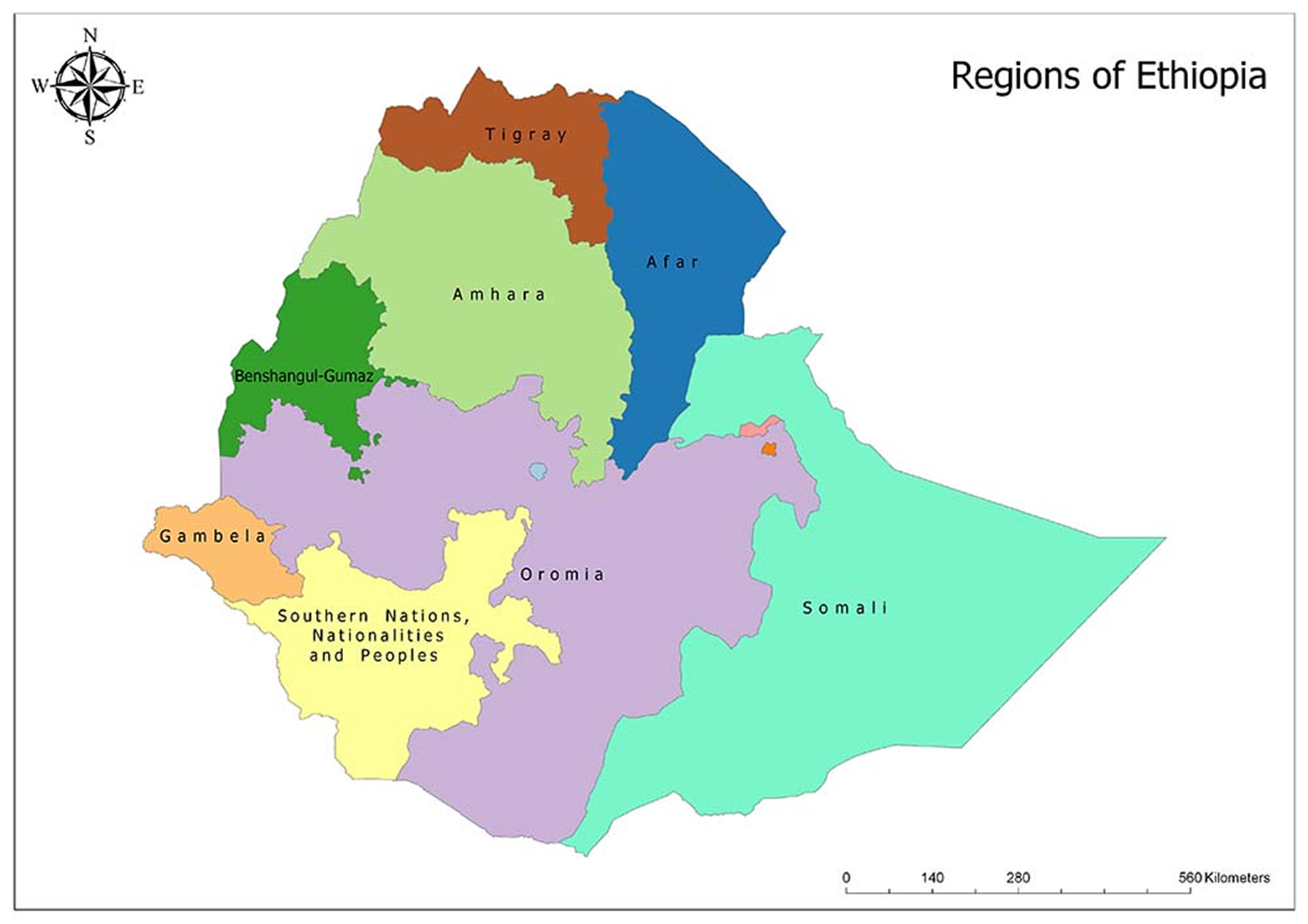
For our analysis, we combine two datasets. For the socioeconomic data, we use three waves of ESS. This is conducted with a two-stage probability sample and implemented in collaboration with the World Bank Living Standards Measurement Study (LSMS). The survey aims to collect information on agricultural data, socioeconomic characteristics at the household-level, welfare indicators, occupational and income characteristics and food security. ESS is a nationally representative longitudinal survey of over 5000 households followed over time living in rural and urban areas (figure 1). The first wave of the ESS was conducted between August 2011 and January 2012, the second between September 2013 and April 2014 and the third between September 2015 and April 2016. We extract the following four questions from the food security module of the ESS:
-
1. In the past 7 days, how many days have you or someone in your household had to rely on less preferred foods?
-
2. In the past 7 days, how many days have you or someone in your household had to limit the variety of foods eaten?
-
3. In the past 7 days, how many days have you or someone in your household had to limit portion size at mealtimes?
-
4. In the past 7 days, how many days have you or someone in your household had to go a whole day and night without eating anything?
With regard to the climate data, we use reanalysed climate data from ERA5-Land, the fifth generation European Centre for Medium-Range Weather Forecasts (ECMWF) atmospheric reanalysis of the global climate. Reanalysed climate data combines global climate model (numerical representation of the recent climate) with observational and satellite observations. Reanalysed data has the advantage of producing long time series and spanning the entire planet (Hersbach et al., Reference Hersbach, Bell, Berrisford, Hirahara, Horányi, Muñoz-Sabater, Nicolas, Peubey, Radu, Schepers, Simmons, Soci, Abdalla, Abellan, Balsamo, Bechtold, Biavati, Bidlot, Bonavita, De Chiara, Dahlgren, Dee, Diamantakis, Dragani, Flemming, Forbes, Fuentes, Geer, Haimberger, Healy, Hogan, Hólm, Janisková, Keeley, Laloyaux, Lopez, Lupu, Radnoti, de Rosnay, Rozum, Vamborg, Villaume and Thépaut2020). Data from ERA5-Land is available at a spatial resolution of 0.1 $ {}^{\circ} $ $ \times $
0.1
$ \times $
0.1 $ {}^{\circ} $
and hourly temporal resolution (C3S, 2017). We extracted the climatic data for each household using the geographical coordinates of the households from the survey data before computing the monthly and three-monthly temperature and precipitation values. Finally, they are matched by the date of each respondent’s interview.
$ {}^{\circ} $
and hourly temporal resolution (C3S, 2017). We extracted the climatic data for each household using the geographical coordinates of the households from the survey data before computing the monthly and three-monthly temperature and precipitation values. Finally, they are matched by the date of each respondent’s interview.
(Colour online) Map of Ethiopia. Source: USAID
4. Results
4.1. Descriptive statistics
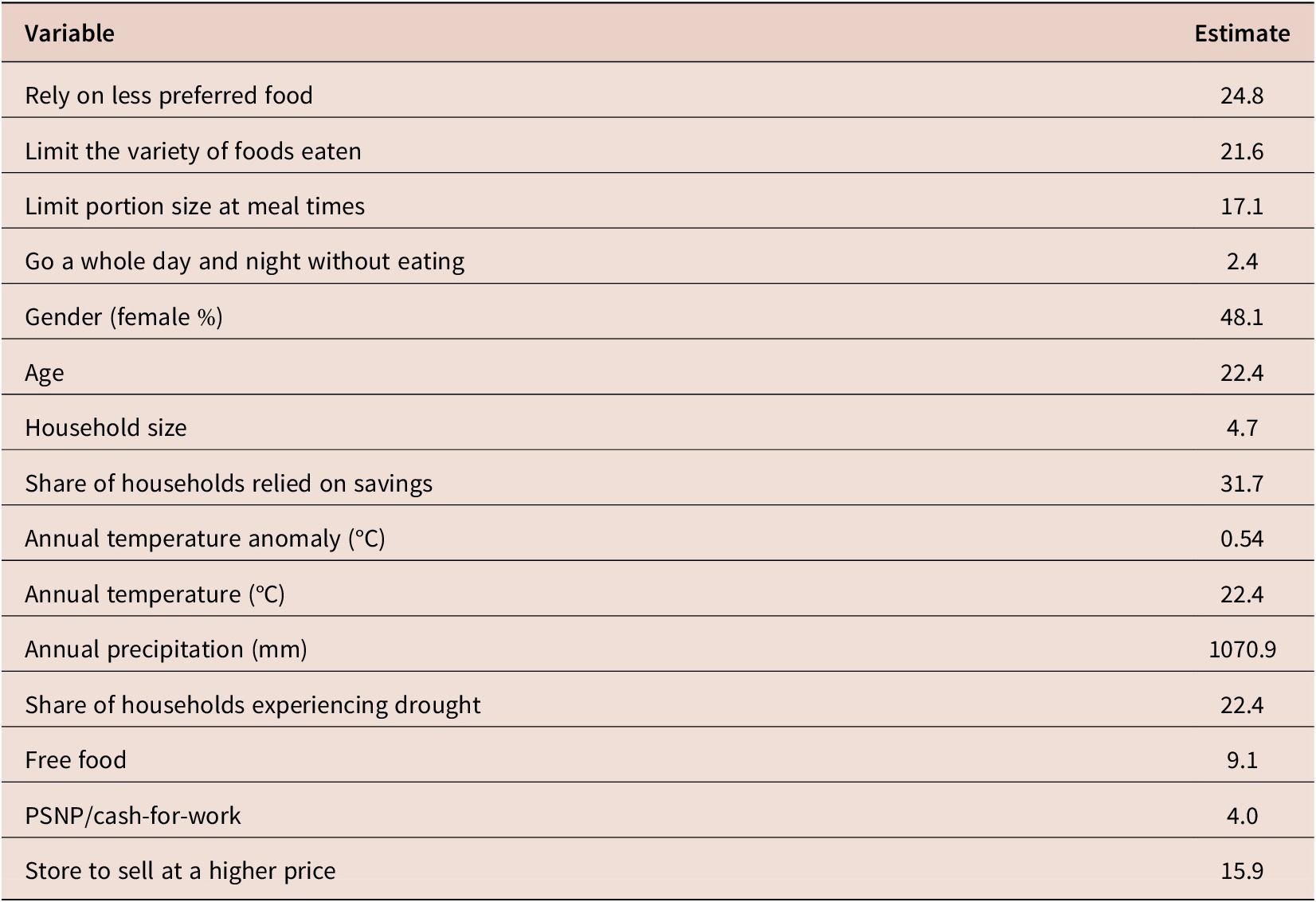
Table 1 below provides the descriptive statistics of the major variables used in the paper. The data show that 48 per cent of the respondents in the survey are female and average age of these respondents is slightly over 22 years. The data suggest that around 9 per cent of households accessed food safety nets, and just over 4 per cent accessed cash, either through the PSNP programme, or through cash-for-work programmes. However, this data is skewed left as the coverage of the PSNP programme in the urban areas is relatively low.
Descriptive statistics
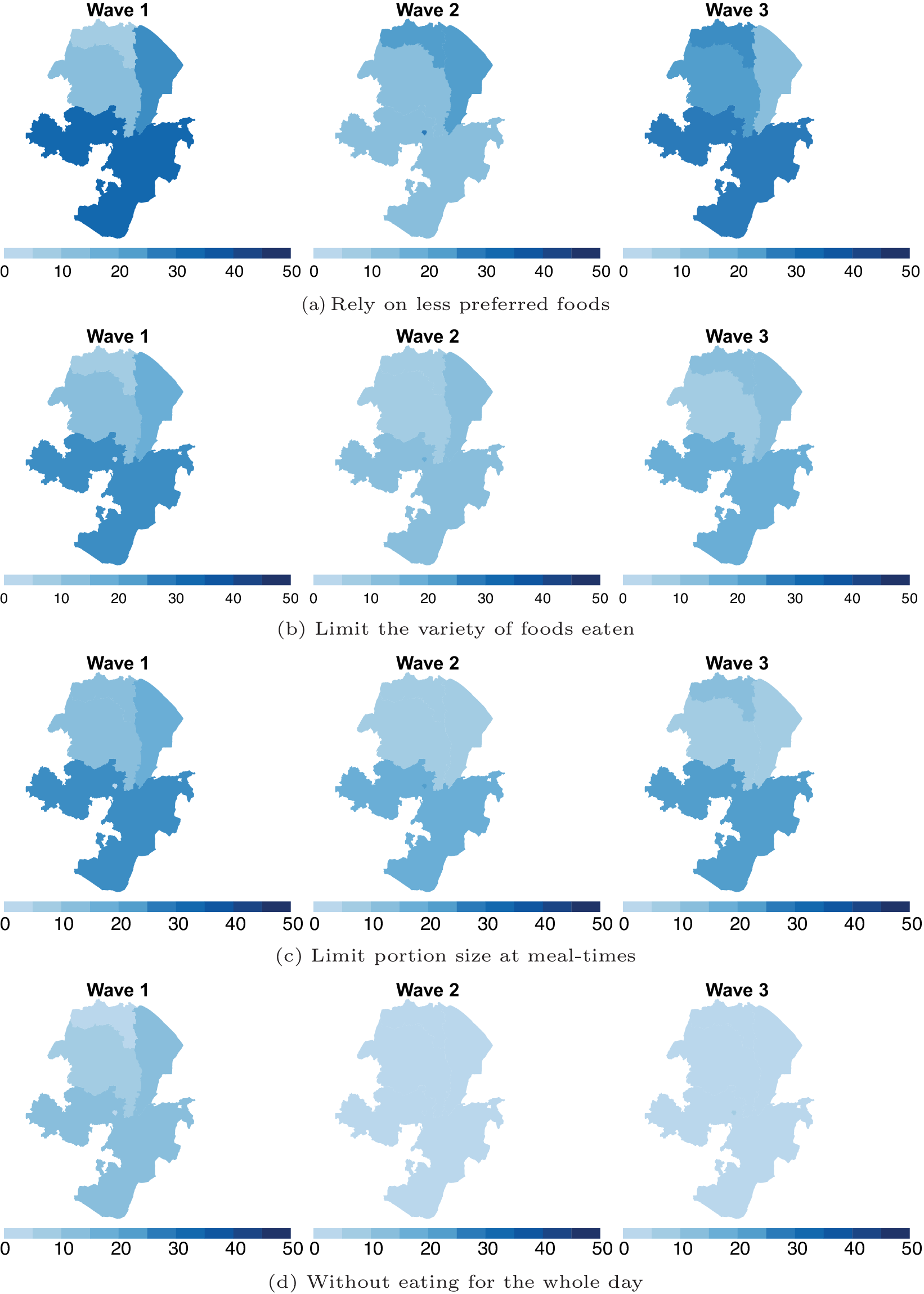
The maps in figure 2a–d reveal a country where food security is compromised across multiple dimensions, and across space and time, with households in Gambelia, Somalie, and the Southern Nations, Nationalities and People’s Region (SNNP) experiencing the highest levels of food insecurity in Ethiopia. With regards to the most extreme measure of food insecurity, going without eating for the whole day, the data suggest that there has been a clear improvement over time across the three waves. However, for what might be termed the more nuanced concepts of food insecurity, such as relying on less preferred foods, there has not been a similar consistent improvement, as we might have anticipated given that the country was experiencing considerable economic growth over this time. By exploring four different concepts of food security, we can see that households, particularly in the south of the country, appear to be making adjustments in their eating habits, not just reducing how much they consume, but switching to less preferred and possibly lower quality foods, and possibly compromising their nutritional status by limiting the variety of foods that they consume.
(Colour online) Food security situation in Ethiopia (2011–2012; 2013–2014; and 2015–2016)
4.2. Empirical findings
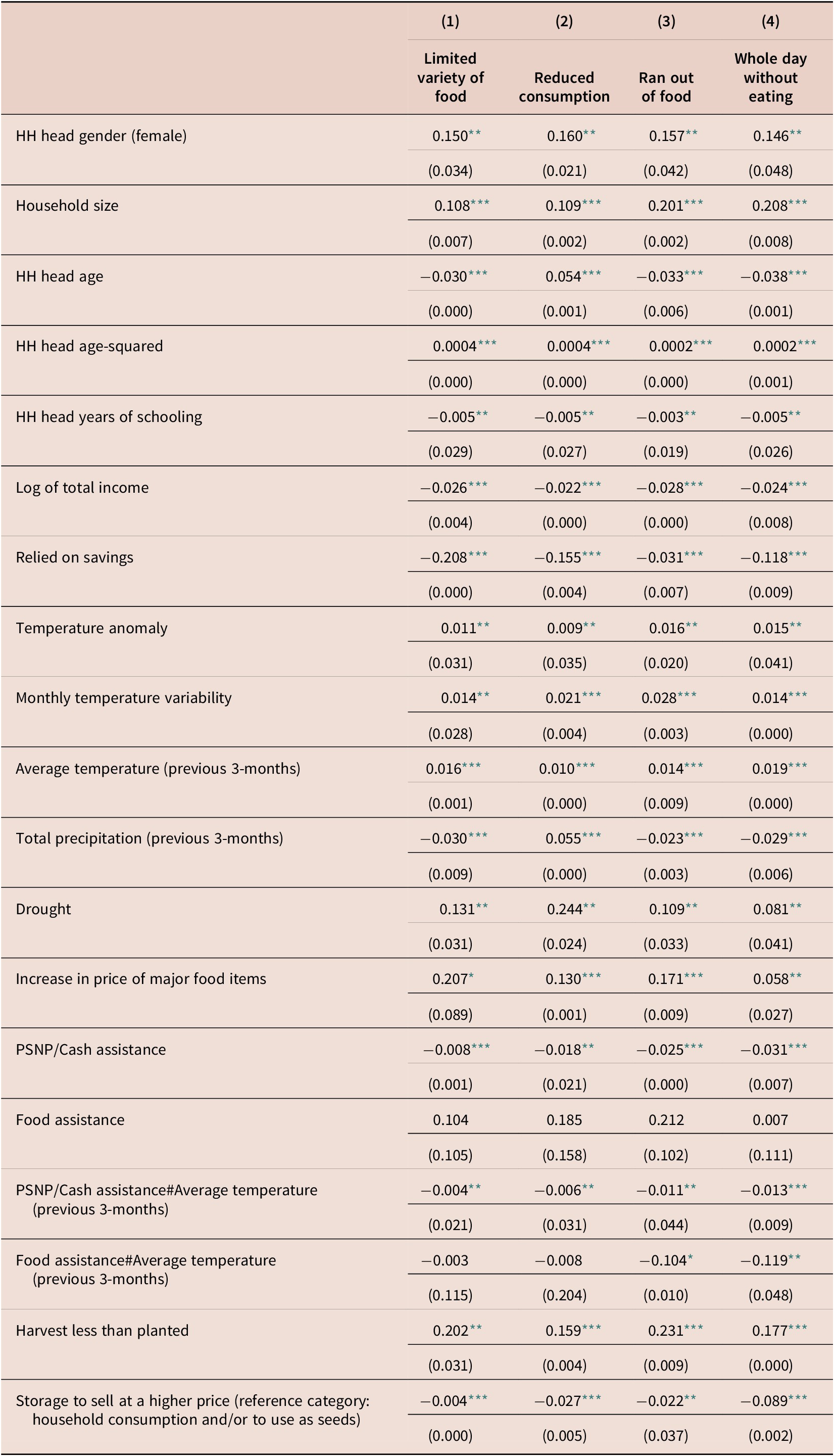
Our findings (table 2) suggest that both the level and volatility of temperatures increase multi-dimensional food insecurity in Ethiopia (as manifested by relying on less preferred food items consumed, reduced consumption, limiting portion size and not eating for the whole day). The highest impact of these two variables is on reduced consumption through limited variety of foods consumed. While these two temperature variables provide the impact of weather shocks on food insecurity, increasing temperature anomaly (climate shock) also results in an increase in the chance of food insecurity among households (highest impact on households having to rely on less preferred food items). Increase in total precipitation (average of previous 3 months) on the other hand, reduces the probability of food insecurity. Households that reported facing drought as one of the shocks also had a higher probability of food insecurity (again the highest impact is on reduced consumption through limited variety of foods consumed).
Determinants of food insecurity in Ethiopia—modifying impacts of safety nets
Note: p-values are in parentheses.
*** p < 0.01;
** p < 0.05;
* p < 0.10.
Food security is strongly influenced by a household’s ability to afford food and as expected, higher income households seem to be more food secure. Our results also show that increasing prices of food items resulted in an increase in the incidences of food insecurity among households. In terms of sociodemographic determinants of food insecurity in Ethiopia, the econometric results reveal that female-led households have a higher chance of suffering from food insecurity compared to male-led households. We also find that households with relatively higher educated heads tend to suffer less from food insecurity, although the coefficients for education are rather small. Further, larger households have a higher probability of food insecurity (highest impact on limited portion size and going without eating for the whole day).
Focusing on the policy aspects of our research, we study the efficacy of government cash assistance versus food assistance. Our results suggest that assistance in the form of PSNP and/or cash transfers have been more effective than the provision of free food in reducing the probability of food insecurity in Ethiopia. Indeed, the results suggest that food assistance has failed to reduce food insecurity over the three waves of ESS in Ethiopia. The interaction of the safety nets and average temperature of the previous 3 months suggests that though increases in three-monthly temperature increase the probability of food insecurity for the average household, a safety net in the form of PSNP participation or cash transfer results in a slight decline in these impacts. As such, PSNP participation or cash transfer do act as modifiers to adverse impacts of weather shocks on food security in Ethiopia.
Further, in terms of coping strategies adopted by households, we find that households that were able to rely on their savings were less likely to suffer from food insecurity, even controlling for total household income. Interestingly, agricultural households that stored their harvested crops in anticipation of being able to sell at higher prices in the future (rather than for own-household consumption smoothing and/or to use as seeds for planting), had a lower probability of suffering from food insecurity. These findings suggest that access to cash has a positive influence on households’ ability to improve food security. Our results are consistent across the four indicators of food insecurity both in terms of magnitude of the coefficients and statistical significance.
4.3. Robustness tests
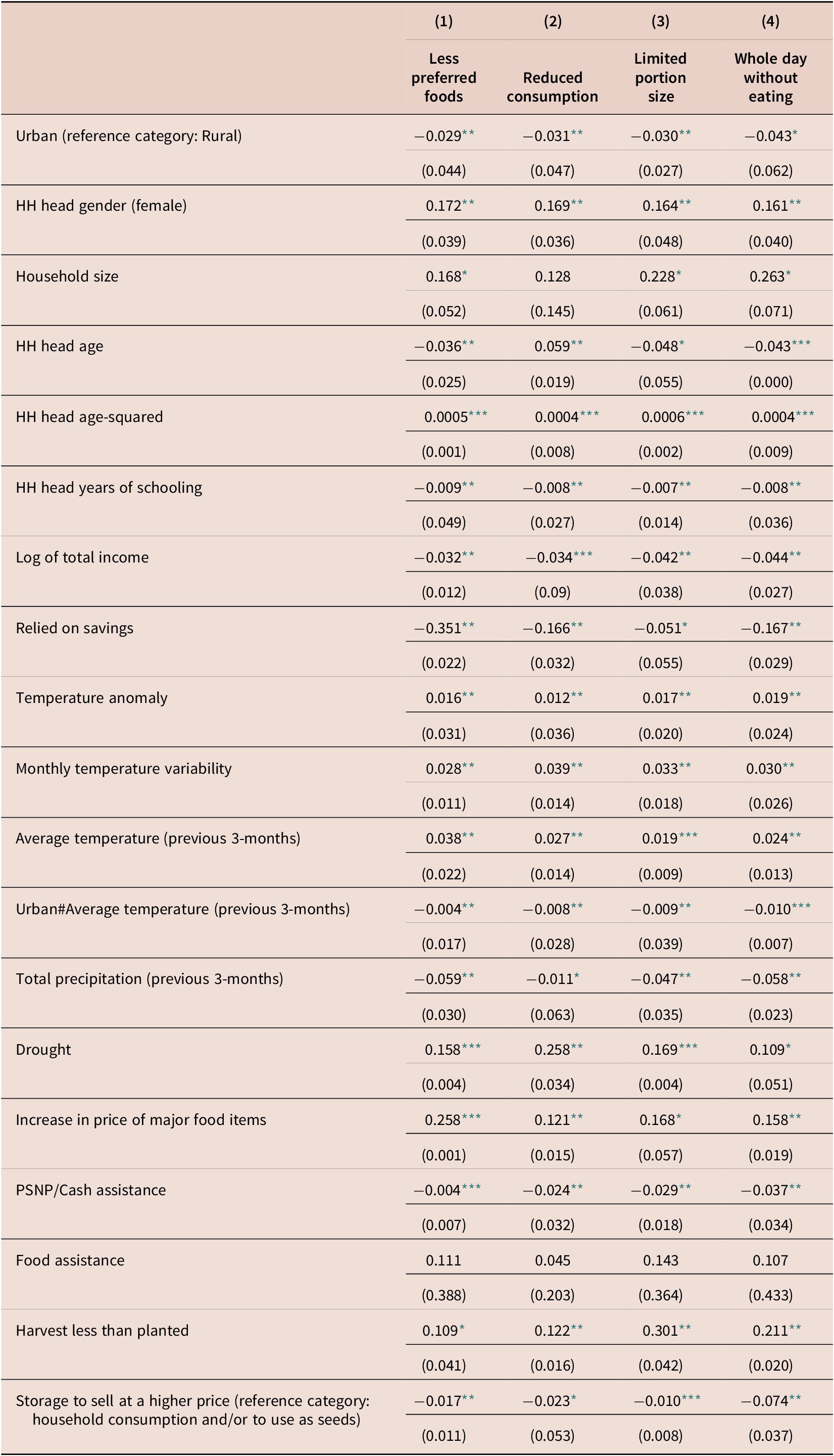
As a robustness test, we use regional fixed-effects instead of household fixed-effects. This specification allows us to control for the potential differentiated impact of the rural–urban divide in Ethiopia on food insecurity. While the results are similar to our base specification, the coefficients are generally larger. We add a dummy variable indicating whether the household is from a rural or urban area of Ethiopia and an interaction term between this variable and the average temperature of the previous 3 months. These results suggest that a household in an urban area is less likely to suffer from food insecurity (across all the four food security indicators) relative to a rural household. The coefficients of the interaction term suggest that the effect of 3-months average temperature on food security is lower for an urban household compared to a rural one (table 3).
Determinants of food insecurity in Ethiopia
Note: p-values are in parentheses.
*** p < 0.01;
** p < 0.05;
* p < 0.10.
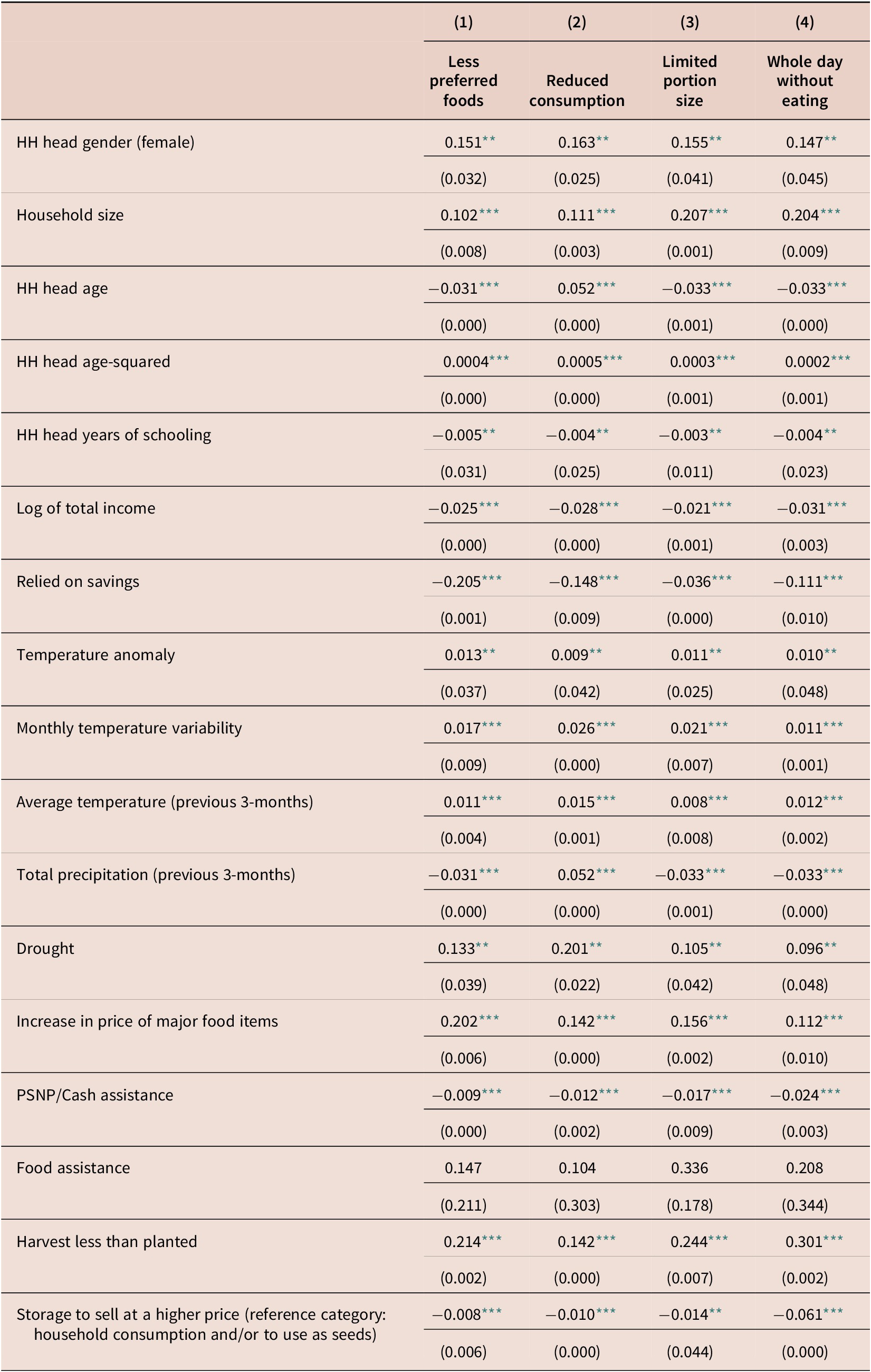
We also re-run our base specification (equation (1)) without the temperature and safety net interaction terms. These results (table 4) are consistent with those provided in table 2 above both in terms of signs of the coefficients and significance.
Determinants of food insecurity in Ethiopia
Note: p-values are in parentheses.
*** p < 0.01;
** p < 0.05;
* p < 0.10.
5. Discussion and policy implications
There is a considerable focus in the climate economics literature on the socioeconomic impacts of weather shocks. Our paper, building on this literature, combining household survey data with high-resolution climate and weather data, and controlling for a rich set of predictors, makes a novel contribution by investigating the impact of both climate and weather shocks on food insecurity. Our results show that both these shocks adversely affect the probability of household-level food insecurity. Our econometric results are consistent across the four indicators of food insecurity (relying on less preferred food items, reducing consumption of food items, limiting portion sizes and going a whole day without eating). While our results are intuitive with respect to socioeconomic determinants, we quantify the effects and identify important heterogeneities, and as such provide evidence supporting the need for multi-approached macroeconomic policies tailored to local contexts. Our approach also allows us to identify and highlight spatial heterogeneities, including an important finding that urban households have a lower probability of suffering from food insecurity compared to rural ones; and that the impact of temperature related weather shock is also lower on urban households. Climate and weather shocks have adverse effects on food security even after controlling for socioeconomic factors including income and rising food prices. Possible transmission channels could be declining nutritional content of food or additional physiological stress on human bodies, caused by heat and heat stress.
Our micro-based findings have a number of important implications for food security policy at the macro level, particularly in the context of a changing climate. First, our analysis suggests that, in Ethiopia during the time period covered by the data, cash transfers have been more effective than food assistance in reducing food insecurity. That cash has been found to be more effective than food is consistent with the general consensus in the literature. However, the literature also makes clear that local contexts matter; and how climate shocks are manifested, whether as food shortages, rising prices, or falling incomes, is likely to influence the most appropriate design of the policy instrument. Dejene and Cochrane (Reference Dejene and Cochrane2021) collected data for 387 land scarce or landless households enrolled in the PSNP programme from Ethiopia’s Southern region in 2017 and 2018. Almost all the households experienced some dimension of food insecurity, indeed 92 per cent reported worrying that their household would not have enough food, yet 88 per cent of the households are reported to have used their cash transfers to pay off debts. These findings make clear both the fungibility of cash transfers, and that food insecure households may not, in the short-run, prioritise increased expenditure on food when they have other more pressing issues to deal with. However, to the extent that safety nets can play a role in longer term poverty reduction, risk management and economic growth more broadly, households might be increasing their chances at reducing food insecurity in the longer term, consistent with Bezuneh and Deaton (Reference Bezuneh and Deaton1997) who highlight the role of safety nets as investments in the future. Though our findings are consistent with the literature that suggests that food assistance is generally less effective than cash, it is not clear as to why food assistance appears to be ineffective with regards to reducing food insecurity in our paper. Reasons for this lack of effectiveness could be related to the logistical challenges of food distribution; or the crowding out of food production (Arega and Shively, Reference Arega and Shively2019). However, further research is needed to determine the mechanisms through which these different forms of assistance are more or less effective.
Second, though there is evidence in the literature that safety nets can both contribute to food security and to longer term economic growth and development (Hoddinott, Reference Hoddinott2008), some studies have suggested that safety nets could crowd out private precautionary savings (Dercon, Reference Dercon2002). Our findings suggest that households that had savings to rely on had a lower chance of suffering from food insecurity. Thus, with respect to coping mechanisms, programmes that encourage and enable households to save will likely improve food security. We recognise of course that it is particularly hard for the poorest households to save. However, there is evidence that poor households may ‘undersave’ due to imperfect markets (Karlan et al., Reference Karlan, Ratan and Zinman2014), suggesting an important role for government policy in reducing and removing market failures. More broadly, safety nets are likely to have longer term impacts on economic growth through improvements in health of the population. These impacts may not be picked up in the short and medium-term, but this growth in turn could also benefit food security in the longer term (Alderman and Yemtsov, Reference Alderman and Yemtsov2014), consistent with the human capital—growth literature (Barro, Reference Barro2001). While increase in income in Ethiopia is expected to improve the food security situation, adverse impacts of climate and weather shocks are likely to offset some of these gains.
Third, the role of storage has long been recognised as important for consumption smoothing in agriculture-dependent households, and consistent with this, here we identify household-level storage as an important element of reducing food insecurity, particularly where households intend to sell, rather than consume the stored food and/or to use as seeds for planting, once prices increase. As climate change increasingly disrupts both international food systems and domestic production, the role of strategic grain reserves at the country level is increasingly being discussed (Bank, Reference Bank2021). Implicit in our research findings is that a better understanding of how state, private and individual household storage are likely to interact and affect food security, is needed. Tesfaye and Tirivayi (Reference Tesfaye and Tirivayi2018) find evidence that improved storage technologies, such as the use of metal silos, and airtight drums, can improve food and nutrition security in Ethiopia.
Fourth, consistent with findings of Alemu and Mengistu (Reference Alemu, Mengistu, Castro, Azul, Leal Filho and Azeiteiro2019), climate change is likely to worsen food security in East African countries through higher temperatures and lower precipitation. Effective food policies will likely need to address both longer term trends and short term shocks. As such, food policies might be directed both to improving agricultural yields in the context of a changing climate where temperatures are increasing, and drought is more likely; and at improving households’ abilities to cope with immediate term weather shocks that tend to drive prices up and make food less affordable.
Finally, though we focus in this paper on the quantity of food households are able to access, a broader understanding of food security is likely to be needed, driven by appropriate data collected that addresses the quality and nutritional content of food, along with quantity.


 Open access

