Introduction
Chronic obstructive pulmonary disease (COPD) is a progressive lung disease that is characterized with multiple comorbidities. Anxiety and depression are two of the most common comorbidities seen in COPD (Mikkelsen et al., Reference Mikkelsen, Middelboe, Pisinger and Stage2004).
Emotional exhaustion, paranoid reactions, psychosexual disorders, panic disorder and, most commonly, anxiety and depression are some psychiatric disorders that may be seen in COPD patients (American Thoracic Society, 1995; Kaplan and Sadock, Reference Kaplan and Sadock1996). The prevalence of anxiety and depression varies from 6% to 50% in many studies (Ede et al., Reference Ede, Yzermans and Brouwer1999; Dahlén and Janson, Reference Dahlén and Janson2002; Mikkelsen et al., Reference Mikkelsen, Middelboe, Pisinger and Stage2004).
Even if the development of anxiety and depression is not clearly explained, psychological and organic factors are predicted in the main pathogenetic mechanism.
Dyspnea, which is the most common symptom in COPD, may cause panic attack and fear of death. On the other hand, dyspnea may occur because of anxiety and depression (Ede et al., Reference Ede, Yzermans and Brouwer1999).
The psychiatric disorders may have a significant impact on the quality of life of people with COPD by restriction of activities, interference with sleep and limitation of social life (Cully, Reference Cully, Graham, Stanley, Ferguson, Sharafkhaneh, Souchek and Kunik2006; Wilson, Reference Wilson2006). The presence of depression in COPD patients decreases tolerance to the disease and comorbidities (Ede et al., Reference Ede, Yzermans and Brouwer1999).
Depression and anxiety are found to be more common with lower FEV1 values, which means that psychiatric symptoms increase in patients with more severe COPD (Kim et al., Reference Kim, Kunik, Molinari, Hillman, Lalani, Orengo, Petersen, Nahas and Goodnight-White2000) [according to COPD classification by Global Initiative for Chronic Obstructive Lung Disease (GOLD) criteria (Fabbri and Hurd, Reference Fabbri and Hurd2003)]. In addition, it has been pointed out that there is an increase in mortality rates, diminished social and physical functions and extended hospitalization in COPD patients with depression (Ng et al., Reference Ng, Niti, Tan, Cao, Ong and Eng2007).
Psychosocial factors are thought to be risk factors for COPD exacerbations, as they are more common in COPD patients with anxiety or depression (Dahlén and Janson, Reference Dahlén and Janson2002).
The adherence to treatment (especially inhaler therapies) is found to be variable by people with COPD (Bourbeau and Bartlett, Reference Bourbeau and Bartlett2008). Many problems occur in treatment use, such as misusage, wrong dosage or maintenance of inhaler therapies. The low-treatment adherence (LTA) may cause many problems that vary from an increase in pulmonary symptoms to mortality. It has been showed that the presence of anxiety and depression may affect the treatment adherence in COPD (Norwood, Reference Norwood2006). We aimed to demonstrate whether symptoms of anxiety and depression affect the treatment adherence of COPD patients.
Materials and methods
This cross-sectional study includes 78 COPD patients (diagnosed as having COPD according to GOLD criteria) (Ng et al., Reference Ng, Niti, Tan, Cao, Ong and Eng2007) who attended our department's outpatient clinic in Dokuz Eylul University Hospital in June 2009. The inclusion criteria included using an inhaler or oral bronchodilator therapy for COPD. The patients who had a history of psychiatric disorder or were under treatment with psychiatric drugs or uncooperative because of low general health status were excluded. Written informed consent was obtained from all of the patients. The study was also approved by the Ethics Committee at the Medical Faculty of Dokuz Eylul University.
There were two visits with each patient in a period of six months. At the first visit age, gender, medical history, medical treatment because of another disease, socio-demographic variables (socio-economical situation, educational status, profession, smoking habit, living alone or not, etc.) and clinical pulmonary symptoms were recorded.
All patients underwent standard spirometry to confirm the presence of COPD and to determine the stage of COPD: mild, FEV1 > 80%; moderate, FEV1 = 50–80%; severe, FEV1 = 30–50%; and very severe, FEV1 < 30%, according to GOLD criteria (Ng et al., Reference Ng, Niti, Tan, Cao, Ong and Eng2007).
The correct way that the patient's bronchodilator therapy should be used was demonstrated for standardization. The correct inhalation time, dosage and frequency of brochodilators were explained with all details.
The second visit was nearly six months after the first visit. The patients were questioned about attendance at the emergency room/our clinic or hospitalizations with an acute exacerbation of COPD. Hospital Anxiety and Depression Scale (HADS) (Aydemir et al., Reference Aydemir, Güvenir, Küey and Kültür1997), Anxiety Sensitivity Index (ASI) (Mantar et al., Reference Mantar, Yemez and Alkın2010) and Short-Form 36-Item Questionnaire (SF-36) (Koçyiğit et al., Reference Koçyiğit, Aydemir, Fişek, Ölmez and Memiş1999) questionnaires were carried out at that visit. Turkish versions of these scales were used. Clinical symptoms were also recorded.
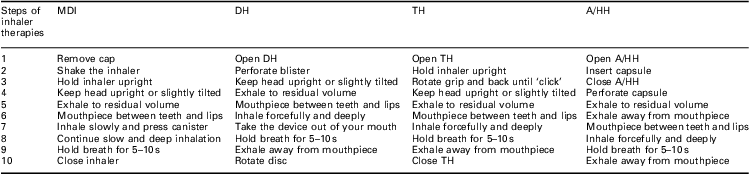
Treatment adherence of the patients was evaluated through a number of steps. First, the patients demonstrated how they had used their bronchodilator devices. The time, dosage and frequency of bronchodilators carried out in one day were questioned. ‘National Guide of Turkish Thoracic Society for Asthma’ and some other reviews were used for scoring the bronchodilator usage performance of patients (van der Palen et al., Reference van der Palen, Klein, Van Herwaarden, Ziehlhuis and Seydel1999; Turkish Thoracic Society, 2000). A scoring table was improved for the evaluation of treatment adherence according to the following parameters: the correct way of usage of the inhaler therapy: 5 points (each step in Table 1 = 0.5 points; if the patient used more than one therapy, the mean of inhaler therapy points would be used); the correct time usage in one day: 2 points (if no: 0 point); the correct dosage of the therapy in one day: 2 points (if no: 0 point); and regular usage of the therapy between two visits: 2 points (if no: 0 point). The maximum usage point is 11. Total scores of 9 or higher were accepted as demonstrating high adherence to COPD treatment. The patients with a score lower than 9 were considered to have low adherence. This number for high or low adherence was selected because it represents at least use of three correct elements in four steps.
Steps in usage of inhaler therapies

MDI = metred dose inhaler; DH = diskhaler; TH = turbuhaler; A/HH = aeroliser/handihaler.
HADS, developed by Zigmond and Snaith, is a self-report scale to determine the risk of anxiety and depressive states among medical patients (Zigmond and Snaith, Reference Zigmond and Snaith1983). It includes 14 questions; anxiety is evaluated by odd and depression by even-numbered questions. Each question has a 4-point (0–3) response category, and thus the possible scores range from 0 to 21 for anxiety and 0 to 21 for depression. Two cut-off scores are used for detecting depression and anxiety. A score of 11 or higher is a valid case for anxiety, whereas it is 8 or higher for depression.
ASI-3 is a self-report index to determine the severity of anxiety sensitivity, fears of anxiety symptoms that are based on beliefs that these symptoms have harmful consequences. It is an 18-item measure assessing physical, cognitive and social concerns (Taylor et al., Reference Taylor, Zvolensky, Cox, Deacon, Heimberg, Ledley, Abramowitz, Holaway, Sandin, Stewart, Coles, Eng, Daly, Arrindell, Bouvard and Cardenas2007).
SF-36 is an instrument to measure health-related quality of life in patients with COPD. It is a useful survey to use in clinical practice and investigations and also contains psychometric measurements (Mahler and Mackowiak, Reference Mahler and Mackowiak1995).
Demographic characteristics, social factors, smoking habit, the presence of medical treatment because of another disease, clinical pulmonary symptoms, COPD stages, attendance at the emergency room or hospitalized with an acute exacerbation and scores of HADS, ASI-3 and SF-36 by patients with COPD who had high-treatment adherence (HTA) were compared with patients with low treatment adherence. χ 2 statistics were used to compare categorical variables and independent sample t-tests were used to compare continuous variables.
Results
The characteristics of the COPD patients
Sixty-two of 78 patients, 53 (85.5%) men and nine (14.5%) women with a mean age of 64.9 + 9.9 attended for the second visit. The majority of the patients had severe COPD (46%), whereas 24% had moderate, 18% had very severe and 12% had mild obstruction. In terms of educational status, only 10 (16.1%) exceeded high school level.
Of the 62 patients (95.2%), 59 had a smoking history. Sixteen patients (25.8%) were still smoking, whereas most had quit smoking after being diagnosed with COPD (74.2%).
Dyspnea was the most frequent symptom (32.2%). About three-fourths of the patients (77.4%) had comorbidities and hypertension (27.4%) and coronary artery disease (16.1%) were the most common comorbidities.
Prevalence of psychiatric symptoms
According to HADS, 18 (29%) patients had high anxiety and 11 (17.7%) patients had high depression scores. It was remarkable that all patients who had high depression scores were men. In contrast, 62.5% of those with high anxiety scores were women. Six patients (9.7%) were found to have both high anxiety and depression scores. No statistically significant differences were found between genders for depression and anxiety scores (P = 0.132 and 0.058, respectively).
We searched for any relationship between symptoms of anxiety and depression and some characteristics of COPD patients (Table 2). The presence of dyspnea was significantly associated with developing symptoms of depression (P = 0.014).
Relationship between depression/anxiety with characteristics of patients

COPD = chronic obstructive pulmonary disease.
aStatistically significant difference.
Patients according to treatment adherence
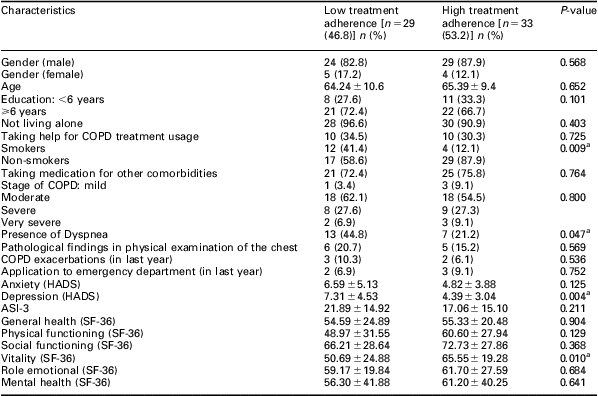
Thirty-three patients (53.2%) had HTA, whereas the LTA group consisted of 29 (46.8%) patients.
There were no statistical differences between the HTA and LTA groups in terms of age, gender, educational level, the presence of comorbidity, classification of COPD, high anxiety score, according to HADS, and ASI-3 score; however, 41.4% of patients in the LTA group were still smoking in contrast to 12.1% in the HTA group (P = 0.009). Dyspnea was found frequent in LTA patients (P = 0.047; Table 3). LTA correlated with higher depression scores (P = 0.004) and the vitality score in the SF-36 was also statistically low in this group (P = 0.01; Table 3).
Characteristics of patients and scores of HADS, ASI-III and SF-36 according to treatment adherence
HADS = Hospital Anxiety and Depression Scale; ASI-3 = Anxiety Sensitivity Index-3; SF-36 = Short-Form 36-Item Questionnaire; COPD = chronic obstructive pulmonary disease.
aStatistically significant difference.
Discussion
Many studies have investigated the relationship between COPD and the presence of anxiety and depression. We found the prevalence of clinically relevant anxiety to be 29% and depression to be 17.7% in our patients with COPD, which is similar to other studies (Ede et al., Reference Ede, Yzermans and Brouwer1999; Dahlén and Janson, Reference Dahlén and Janson2002; Mikkelsen et al., Reference Mikkelsen, Middelboe, Pisinger and Stage2004).
Some characteristics of COPD may affect the presence and prevalence of clinically relevant anxiety and depression. Smoking is one of the most important parameters. Some studies have demonstrated that active smoking COPD patients are more likely to have depression or anxiety (van Manen et al., Reference van Manen, Bindels, Dekker, Ijzermans, van der Zee and Schade2002; Almeida and Pfaff, Reference Almeida and Pfaff2005). The factors that contribute to smoking can also predispose to anxiety and depressive disorders (Hill et al., Reference Hill, Geist, Goldstein and Lacasse2008). Our results with higher rate of anxiety (37.5% versus 26.1%) and depression (25% versus 15.2%) symptoms in the smokers’ group (still smoking) compared with non-smokers’ group (never smoked or quitted smoking) supports this relationship.
Rates of psychiatric disorders were found to be higher in women with COPD than in men with COPD in previous studies (Karajgi et al., Reference Karajgi, Rifkin, Doddi and Kolli1990; Laurin et al., Reference Laurin, Lavoie, Bacon, Dupuis, Lacoste, Cartier and Labrecque2007), which is a contrast with our results. Laurin et al. found that women had worse control of symptoms and greater psychological distress than men, making treatment of COPD in women more challenging. As our study included only nine women, we could not comment about the effects of gender on the prevalence of psychiatric disorders in people with COPD.
Dyspnea, which is one of the most common symptoms seen in COPD, was found to be higher in the patients who had symptoms of depression in our study. While dyspnea may catalyse some psychiatric disorders such as panic reactions (Nutt et al., Reference Nutt, Ballenger and Lepine1999), it may also occur because of anxiety and depression (Ede et al., Reference Ede, Yzermans and Brouwer1999). Thus, it may be the reason or the result of high rate of depression symptoms.
Depression and anxiety were found to be more common in patients with severe COPD (with lower FEV1 values) in previous studies (Ede et al., Reference Ede, Yzermans and Brouwer1999; van Manen et al., Reference van Manen, Bindels, Dekker, Ijzermans, van der Zee and Schade2002). However, our results showed no significant differences between stages of COPD and the presence of clinically relevant anxiety/depression. This result may have occurred because of the heterogenous patient numbers in each of the groups of patients with different levels of severity of COPD.
Adherence to COPD treatment is an important parameter for the prognosis of patients; poor therapeutic adherence can reduce the clinical benefit of treatment. It has been found that mortality and morbidity rates were low in patients with HTA (Antoniu, Reference Antoniu2010). In our study, we demonstrated that the patients with the presence of clinically relevant depression were still smoking, also having symptoms of dyspnea, and these patients were mostly in the group with LTA. As the presence of anxiety and depression symptoms may affect the cognitive functions in COPD patients, it is also thought to affect the treatment adherence in COPD. Norwood comment that, when depression develops, patients are less adherent to treatment plans (Norwood, Reference Norwood2006).
Continued smoking by people with COPD was also found as a significant factor in the LTA group. Previous studies also had similar findings: patients with COPD who continued smoking had lower adherence to drug treatment than those who quit (Santana et al., Reference Santana, Squassoni, Neder and Fiss2010). In addition, it was found that depressive symptoms were correlated with continued smoking (de Voogd et al., Reference de Voogd, Wempe, Koëter, Postema, van Sonderen, Ranchor, Coyne and Sanderman2009) and it is suggested that there is a strong relationship between treatment adherence, symptoms of depression and current smoking in COPD patients.
Although Diagnostic and Statistical Manual of Mental Disorders, fourth edition (DSM-IV) criteria are used for the diagnosis of depression and anxiety (Maurer et al., Reference Maurer, Rebbapragada, Borson, Goldstein, Kunik, Yohannes and Hanania2008), scales such as HADS are a reasonable choice for screening anxiety and depression (Zigmond and Snaith, Reference Zigmond and Snaith1983). HADS is known to be a well-documented instrument for assessing and screening symptoms of anxiety and depression in different populations. High scores on HADS have been found to correspond to a clinical diagnosis of anxiety or depression-making scales such as HADS and ASI useful tests for guiding patient diagnosis.
There are a wide range of findings concerning treatment adherence by patients with COPD that show adherence varying between 10% and 90% (van Grunsven et al., Reference van Grunsven, van Schayck, van Deuveren, van Herwaarden, Akkermans and van Weel2000; Bender et al., Reference Bender, Pedan and Varasteh2006). In the Lung Health Study (Rand et al., Reference Rand, Nides, Cowles, Wise and Connett1995), therapeutic adherence with inhaled treatment was found to be 60%, which was similar to our study. As there is in general a high rate of LTA among COPD patients, it is important to improve treatment adherence. There is only little evidence about the use of strategies to improve adherence by patients with COPD. Barnestein-Fonseca et al. (Reference Barnestein-Fonseca, Leiva-Fernández, Vidal-España, García-Ruiz, Prados-Torres and Leiva-Fernández2011) pointed out that the application of a multifactor intervention (COPD information, dose reminders and reinforcing audiovisual material, motivational aspects and inhalation technique training) may increase the therapeutic adherence in COPD patients. These results show the importance of cognitive, emotional and motivational aspects of the patients, which have to be evaluated carefully in daily clinical practice.
Our study has some limitations. The scale for measuring adherence to therapy was developed according to local guidelines and it has not been formally validated. As we assessed the presence of dyspnea using a subjective method in our study, this may not provide strong evidence of the presence of dyspnea. In addition, this was a cross-sectional study including the COPD patients who attended our clinic in one month; this explains the heterogeneity in gender inequality. A prospective study with more patients and a similar number of each gender would provide more reliable results about this subject.
Conclusion
It was found that depression and anxiety states are frequent among patients with COPD. Continued smoking and the presence of depression symptoms may affect the adherence of patients to treatment. Therefore, to increase the adherence to medication and to reduce symptoms such as dyspnea, it is crucial to treat any symptoms of depression that a patient has and help patients cease smoking.