


Psychotic experiences of hallucinations and delusional experiences are common in the general population with lifetime prevalence rates of 5.8–12.5% being consistently reported by meta-analysisReference Linscott and van Os1 and large epidemiological surveys.Reference McGrath, Saha, Al-Hamzawi, Alonso, Bromet and Bruffaerts2 These rates are considerably higher than those for psychotic disorders and there has been increasing recognition that psychotic experiences should no longer be viewed solely as risk indicators for psychotic illnesses.Reference Stochl, Khandaker, Lewis, Perez, Goodyer and Zammit3 Over recent years the relationship between childhood adversity and both psychotic experiences and psychosis has been increasingly studied. Meta-analyses have reported that exposure to childhood adversity is associated with a 76% increased risk of psychotic experiencesReference Trotta, Murray and Fisher4 and an increased risk for psychosis (odds ratio 2.78, 95% CI 2.34–3.31).Reference Varese, Smeets, Drukker, Lieverse, Lataster and Viechtbauer5 Although different forms of childhood adversity often co-occur, some specificity has been reported, with exposure to childhood sexual abuse (CSA) being particularly associated with symptoms of abnormal perception and childhood physical abuse (CPA) with symptoms of abnormal thought.Reference Bentall, Wickham, Shevlin and Varese6
The relationship between CSA, CPA and psychotic experiences is complex. CSA and CPA often co-occur and are associated with confounding risk factors that reflect other environmental exposure, such as childhood socioeconomic disadvantage and adverse family functioning.Reference Kessler, McLaughlin, Green, Gruber, Sampson and Zaslavsky7 There are also established associations between psychotic experiences and mental health disorders (such as anxiety, depression),Reference Varghese, Scott, Welham, Bor, Najman and O'Callaghan8 cannabis use,Reference Jones, Gage, Heron, Hickman, Lewis and Munafo9 exposure to stressful life eventsReference Collip, Wigman, Myin-Germeys, Jacobs, Derom and Thiery10 and unemploymentReference McGrath, Saha, Al-Hamzawi, Alonso, Bromet and Bruffaerts2 occurring contemporaneously with psychotic experiences suggesting that these factors may mediate the association between childhood adversity and psychotic experiences. This complexity has been a major limitation of many previous studies that have not accounted for all of these factors. This paper addresses these issues by using data from a 35-year longitudinal birth cohort study, the Christchurch Health and Development Study (CHDS), to examine the relationship between exposure to CSA, CPA and psychotic experiences in adulthood taking into account potential confounding and time-dynamic covariate factors.
Method
Participants
Data were gathered from the CHDS, a birth cohort of 1265 individuals (635 males, 630 females) born in the Christchurch (New Zealand) urban region in mid-1977 and studied at birth, 4 months, 1 year and annually to age 16, and again at 18, 21, 25, 30 and 35 years.Reference Fergusson and Horwood11 All information was confidential and collected with signed consent. The study is approved by the Canterbury Ethics Committee.
Sample sizes, based on outcome measures used in the study, were 984 (at age 30) and 959 (at age 35), representing 79–80% of the surviving sample at each observation. As in previous epidemiological studies of psychotic experiences,Reference McGrath, Saha, Al-Hamzawi, Alonso, Bromet and Bruffaerts2 an a priori decision was made to exclude participants with a formal diagnosis of psychotic disorder (by self-report at age 35). This resulted in exclusion of three participants. We did not have access to other clinical measures and it is possible that a small number of participants with psychotic illness, who had not reported these diagnoses to us, were not excluded.
Measures
Exposure to childhood sexual and physical abuse (0–16 years)
CSA
At ages 18 and 21 years, sample members were questioned about their experience of CSA (0–16 years).Reference Fergusson, Lynskey and Horwood12, Reference Fergusson, Horwood and Woodward13 Those who reported this were questioned further and classified on a three-level scale reflecting the most extreme form of CSA reported at either age; ‘no exposure’ (85.9%), ‘some exposure’ (non-contact abuse or contact CSA not involving attempted or completed intercourse) (7.8%) and ‘severe exposure’ (attempted/completed oral, anal or vaginal intercourse) (6.3%).
CPA
At ages 18 and 21 years, sample members were asked to describe the extent to which their parents used physical punishment during childhood (0–16 years).Reference Fergusson and Lynskey14 This information was classified on a three-level scale reflecting the most severe form of physical punishment; ‘no or rare exposure’ (82.5%), ‘some exposure’ (at least one parent used physical punishment on a regular basis) (11.2%) and ‘severe exposure’ (at least one parent used physical punishment too often or too severely, or treated the respondent in a harsh or abusive manner) (6.4%).
Reliability of CSA/CPA measurement
The availability of repeated measures data on CSA and CPA provided an opportunity to examine the stability of abuse reporting and the effects of current mental state on reporting errors. This analysis has been reported in a previous paperReference Fergusson, Horwood and Woodward13 that produced the following conclusions:
(a) Reports of CSA and CPA showed considerable instability with kappa values between assessments made at ages 18 and 21 ranging from 0.45 to 0.47.
(b) Although reports showed considerable instability and change between 18 and 21 years, there was no evidence to suggest that these reports were influenced by current mental state measures.
(c) Latent class analyses showed that combining the reports gathered at ages 18 and 21 using an ‘or’ algorithm in which the participant was assigned to the most severe outcome reported at 18 or 21 led to a correct rate of assignment to the latent classes greater than 98%.
In summary, these findings suggested that combining reports of physical and sexual abuse in the ways described above led to accurate classification of reported exposure to CSA and CPA in which any errors of reporting were unrelated to current mental state.
Psychotic experiences
At ages 30 and 35 years, sample members were questioned about their experience of psychotic experiences during the 5-year period since the previous assessment. Measurement of psychotic experiences was derived from the Diagnostic Interview Schedule for DSM-IV (DIS-IV),Reference Robins, Cottler, Bucholz, Compton, North and Rourke15 assessing two classes of psychotic experiences: symptoms of abnormal thought (delusions of persecution or guilt, bizarre delusions, delusions of reference, passivity and thought control) and symptoms of abnormal perception (auditory, visual, olfactory, gustatory and tactile hallucinations). Cohort members were asked which psychotic experiences they had experienced, using a three-point scale labelled ‘no’, ‘maybe’ and ‘yes’. A total symptom score for each class of symptoms for each participant was obtained by summing the number of items to which participants indicated ‘yes’. For this investigation, the measures of abnormal thought and abnormal perception were used as separate outcome variables. Full details of the questions asked are given in supplementary Table 1 available at https://doi.org/10.1192/bjp.2018.264.
Potential confounders
A number of potential confounding factors were abstracted from the study database, on the basis that they have been shown to be related to both abuse exposure and psychotic experiences in adolescence and adulthood.Reference McGrath, Saha, Al-Hamzawi, Alonso, Bromet and Bruffaerts2
Time-dynamic covariate factors (ages 25–30 and 30–35 years)
A series of measures of mental health and substance use, along with life stress and unemployment (as a significant stress) were selected from the study database. Details of the measurement of these potential confounding and time-dynamic factors are given in supplementary Appendix 1.
Statistical analysis
The data analyses took place over four steps. In the first step, bivariate associations between the classification of exposure to CSA and CPA and the repeated measures of psychotic experiences in adulthood were obtained by fitting a series of negative binomial generalised estimating equation (GEE) models to the data using Stata.
In the second step, bivariate associations between the classification of exposure to CSA and CPA and the potential confounding factors noted above were obtained via Spearman's rank-order correlations, estimated using SAS 9.4.
In the third step, the associations between: (a) abnormal thought symptoms and abnormal perception symptoms at ages 30 and 35 years; and (b) mental health, substance use, life stress and unemployment at ages 30 and 35 years; were obtained via Spearman's rank-order correlations, estimated using SAS 9.4.
In the final step, the GEE models described above were extended to include the potential confounding factors noted above. In order to investigate possible mediators of the association between abuse exposure and psychotic experiences, the adjusted models were further extended to include the time-dynamic covariate factors described above, entered simultaneously. Full details are given in supplementary Appendix 2.
Results
Data were available for 962 participants; 6.3% had been exposed to severe CSA and 6.4% to severe CPA. A total of 5.4% of the cohort reported one or more abnormal thought symptom at age 30, and 2.4% at age 35. At age 30, 3.7% reported at least one symptom of abnormal perception, while at age 35 the rate was 2.6%. Changes in rates were due in part to losses to follow-up, in which several cohort members reporting psychotic experiences at age 30 were unavailable for interview at age 35.
Associations between abuse exposure (0–16 years) and psychotic experiences (ages 25–30 and 30–35 years)
As shown in Table 1, for CSA exposure, rates of psychotic experiences generally increased with increasing levels of CSA. Those in the ‘severe exposure’ category reported significantly (P < 0.05) greater levels of both abnormal thought and abnormal perception symptoms over the periods 25–30 and 30–35 years than those in the ‘not exposed’ or ‘some exposure’ groups. The pooled rates (per 100) of psychotic experiences showed that the ‘severe exposure’ group had rates of psychotic experiences that were 3.2–4.3 times higher than in the ‘not exposed’ group.
Mean (per 100) number of psychotic experiences, by childhood sexual and physical abuse exposure
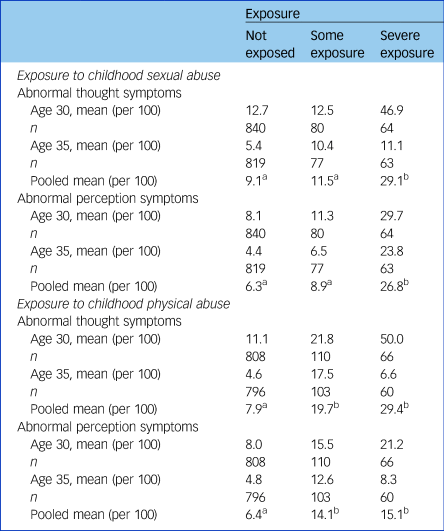
Differing superscripts (a, b) indicate statistically significant (P<0.05) difference (likelihood-rate χ2 difference test).
Table 1 also shows that a similar pattern was observed for CPA, except that individuals in both the ‘some exposure’ and ‘severe exposure’ groups had pooled rates of psychotic experiences over the periods 25–30 and 30–35 years that were significantly (P < 0.05) higher than individuals in the ‘not exposed’ group. The pooled rates (per 100) of psychotic experiences showed that the ‘some exposure’ group had rates of symptoms that were 2.2–2.5 times higher than the ‘not exposed’ group, and that the ‘severe exposure’ group had rates of symptoms that were 2.4–3.7 times higher than the ‘not exposed’ group.
Associations between abuse exposure (0–16 years) and potential confounding factors in childhood
As noted above, the associations in Table 1 could, at least partially, be accounted for by the influence of childhood factors that increased the likelihood of exposure to either CSA or CPA. Table 2 shows that both CSA and CPA were significantly (P < 0.05) correlated with a series of sociodemographic factors reflecting childhood disadvantage and a series of measures of adverse family functioning in childhood. The pattern of correlations shows that individuals with higher levels of abuse exposure were also more likely to have been exposed to higher levels of family dysfunction and parental maladaptive behaviour during childhood. It also shows that a series of individual factors measured in childhood were also significantly (P < 0.05) associated with CSA and CPA. For example, those exposed to higher levels of CSA (but not CPA) were more likely to be female. Also, higher levels of CSA and CPA were related to: lower IQ; lower parental attachment; higher rates of conduct, attention problems, anxious/withdrawn behaviours in childhood; and higher rates of major depression, anxiety disorder and suicidal ideation in mid-adolescence.
Spearman correlations between measures of childhood sexual abuse and childhood physical abuse and potential confounding factors
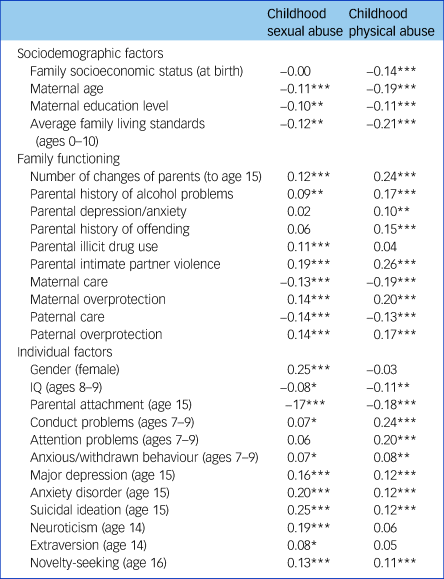
* P<0.05, **P<0.01, ***P<0.001.
Associations between psychotic experiences (ages 25–30 and 30–35 years) and potential time-dynamic covariate factors related to mental health, substance use, life stress and unemployment
As noted above, the associations between abuse exposure in childhood and adult psychotic experiences could, in part, be explained by the effects of time-dynamic covariation. Table 3 shows that, with a few exceptions, there was a general pattern of moderate-to-strong statistically significant (P < 0.05) correlations between psychotic experiences and each of the mental health, substance use, life stress and unemployment measures, at ages 25–30 and 30–35 years. Those reporting higher rates of psychotic experiences were also more likely to meet criteria for mental health and substance use disorders, and to report higher levels of life stress and unemployment.
Spearman correlations between psychotic experiences (ages 30 and 35) and mental health, substance use, life stress and unemployment factors (ages 30 and 35)
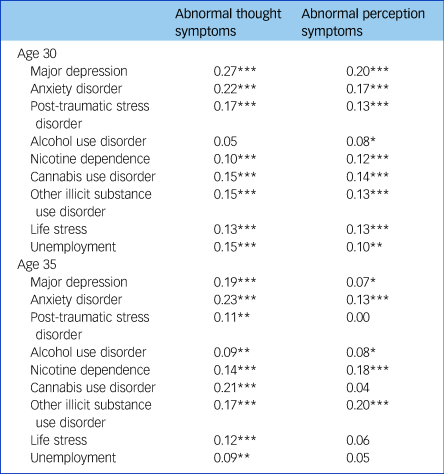
* P<0.05, **P<0.01, ***P<0.001.
Adjustment of associations between abuse exposure (ages 0–16 years) and psychotic experiences (ages 25–30 and 30–35 years) for potential confounding factors, and time-dynamic covariate factors
The final step in the analyses involved fitting two pairs of GEE models (one pair for abnormal thought symptoms, and the other for abnormal perception symptoms) to the data. In the first model, for each symptom class, the three-level indicators of CSA and CPA were entered simultaneously, followed by a series of potential confounding factors. In the second model, for each symptom class, the fitted model was augmented by a series of time-dynamic covariate factors measured at ages 30 and 35 years. Table 4 shows that for CSA, those in the ‘severe exposure’ group had significantly (P < 0.05) higher rates of both abnormal thought and abnormal perception symptoms, after controlling for confounding and time-dynamic covariate factors. After controlling for confounding factors (model 1), those in the ‘severe exposure’ group had rates of abnormal thought symptoms that were 4.41 times higher than those in the ‘no exposure’ group, and rates of abnormal perception symptoms that were 4.74 times higher than those in the ‘no exposure’ group. Further adjustment for time-dynamic covariate factors (model 2) reduced the magnitude of these associations, with those in the ‘severe exposure’ group having rates of abnormal thought symptoms that were 2.25 times higher than those in the ‘no exposure’ group, and rates of abnormal perception symptoms that were 4.08 times higher than those in the ‘no exposure’ group. On the other hand, there was no evidence of a statistically significant difference in rates between the ‘some exposure’ and the ‘no exposure’ group.
Incidence rate ratios (and 95% confidence intervals) for the associations between childhood sexual and physical abuse exposure and psychotic experiences, after adjustment for potential confounding factors and time-dynamic covariate factors

a. Statistically significant (P<0.05) confounding factors (for abnormal thought symptoms) included: maternal age; parental history of illicit drug use; maternal overprotection; paternal overprotection; parental attachment; gender; IQ; major depression (age 15); neuroticism (age 14). Statistically significant (P<0.05) confounding factors (for abnormal perception symptoms) included: maternal age; maternal education; parental illicit drug use; gender; neuroticism (age 14); extraversion (age 14); novelty-seeking (age 16).
b. Statistically significant (P<0.05) covariate factors (for abnormal thought symptoms) included: major depression; anxiety disorder; nicotine dependence; other illicit substance dependence. Statistically significant (P<0.05) covariate factors (for abnormal perception symptoms) included: major depression; anxiety disorder; cannabis use disorder; life stress.
Table 4 also shows that for CPA, those in the ‘severe exposure’ group had significantly higher rates of abnormal perception symptoms after controlling for confounding factors (but not after controlling for time-dynamic covariate factors). After controlling for confounding factors, those in the ‘severe exposure’ group had rates of symptoms that were 2.14 times higher than those in the ‘no exposure’ group. Further control for time-dynamic covariate factors reduced this association to statistical non-significance, suggesting that the observed association between severe levels of physical abuse and psychotic experiences were mediated by contemporaneous mental health and substance use disorders, and life events. There was no evidence of a statistically significant association between exposure to CPA and abnormal thought symptoms after controlling for confounding and time-dynamic covariate factors, and no evidence of statistically significant differences between the ‘some exposure’ and ‘no exposure’ groups for either outcome, in either model.
Discussion
Using data from a 35-year study of a longitudinal birth cohort (the CHDS) we report that those who had been exposed to severe levels of CSA (but not CPA) reported psychotic experiences at a higher frequency than those with no, or less severe CSA. This association could not be fully accounted for by either confounding factors or time-dynamic covariate factors.
The association between exposure to severe CSA and psychotic experiences was strong. After controlling for confounding and time-dynamic covariate factors, rates of abnormal perception and abnormal thought symptoms were 4.1 and 2.2 times higher, respectively, compared with those without CSA exposure. Although there has been increasing evidence from cross-sectional studies linking exposure to CSA with psychotic experiencesReference McGrath, McLaughlin, Saha, Aguilar-Gaxiola, Al-Hamzawi and Alonso16 this study is the first to examine this association using a longitudinal design while investigating the impact of confounding and time-dynamic covariate factors.
As discussed above, the relationship between CSA and the reporting of psychotic experiences is complex and the analyses used in this study reflected this. We showed that exposure to CSA was associated with a large number of individual confounding factors and those associated with sociodemographic disadvantage and disturbed family functioning. Although confounding factors have been examined in cross-sectional population studiesReference Bebbington, Jonas, Kuipers, King, Cooper and Brugha17 these have often relied on retrospective recall whereas this longitudinal birth cohort design was able to ascertain this information prospectively and over multiple time points. We also examined potential time-dynamic covariate factors and showed that those reporting higher rates of psychotic experiences were more likely to meet criteria for mental health and substance use disorders, and to report higher levels of life stress and exposure to unemployment. Previous studies have reported similar findings and noted the bi-directional associations between psychotic experiences and mental disorders with the presence of psychotic experiences increasing the risk of mental disorders, and most mental disorders increasing the risk of psychotic experiences.Reference McGrath, Saha, Al-Hamzawi, Andrade, Benjet and Bromet18 Our analyses showed that it was important to adjust for these confounding and time-dynamic covariate factors but that doing so only reduced the magnitude of the association between CSA and psychotic experiences, which remained significant.
The association between the experience of psychotic experiences and CSA was strongest when the exposure was severe, involving attempted or completed oral, anal or vaginal intercourse. In fact, there was no evidence of a statistically significant difference in rates of psychotic experiences between the ‘some exposure’ group and the ‘no exposure’ group. This dose–response effect has been reported previously,Reference Cutajar, Mullen, Ogloff, Thomas, Wells and Spataro19 with the association between CSA and psychotic experiences being particularly strong when it involved sexual intercourse.Reference Bebbington, Jonas, Kuipers, King, Cooper and Brugha17
We also examined the impact of another form of childhood adversity, CPA, on psychotic experiences. Although there were observed associations between CPA and psychotic experiences these were explained by confounding factors and time-dynamic covariation arising from co-occurring mental health and substance use disorders, and life events. These findings contradict previous studies that have reported a significant association between exposure to CPA and psychotic experiences.Reference Varese, Smeets, Drukker, Lieverse, Lataster and Viechtbauer5, Reference van Dam, van Nierop, Viechtbauer, Velthorst, van Winkel and Genetic20 We suggest that these differences are explained by the quality of our study design, which controlled for a wide range of confounding and time-dynamic covariate factors and simultaneously modelled both CSA and CPA on psychotic experiences.
We also found some specificity of psychotic experiences reported with exposure to CSA particularly increasing the risk of symptoms of abnormal perception. These experiences were four times greater in the severely exposed group than those who had had no exposure (in contrast, abnormal thought symptoms were twice as high in those severely exposed). Previous studies have suggested that exposure to CSA can result in changes to emotional, cognitive and neurobiological processes such as increased emotional reactivity, poor emotion regulation and cognitive control. The mechanisms involved have not been established but may involve an impact on biological systems (dysregulated cortisol,Reference Faravelli, Gorini Amedei, Rotella, Faravelli, Palla and Consoli21 reduced cortical thicknessReference Habets, Marcelis, Gronenschild, Drukker, van Os and Genetic22 and changes in the dopamine systemReference van Winkel, Stefanis and Myin-Germeys23) and/or psychological processes (source monitoring biases, i.e. the ability to differentiate between internal and external stimuli, dissociation and cognitive schema/thinking styles).Reference Bentall, de Sousa, Varese, Wickham, Sitko and Haarmans24
The findings from this study have considerable clinical relevance. From a public health perspective they would suggest that much of the disease burden attributable to psychotic experiences in adults may be explained by CSA. Efforts to reduce exposure to CSA and to provide effective treatment for those exposed continues to be a vital public health challenge. The findings are consistent with clinical observations and an increasing number of studies that in many individuals who report psychotic experiences this can be explained on the basis of CSA exposure and does not necessarily imply an underlying primary psychotic disorder.Reference van Nierop, van Os, Gunther, Myin-Germeys, de Graaf and ten Have25 Furthermore, understanding the aetiological basis of these symptoms could help guide treatment, as although antipsychotic medications are an effective treatment for major psychotic disorders their evidence as a treatment for psychotic experiences in people who do not have a psychotic disorder is much less clear.
Limitations
Although there are considerable strengths to the study design there are also some limitations. The number of participants reporting psychotic experiences was relatively low (7.1%); however, this is similar to other population studies (i.e. lifetime prevalence 5.8–12.5%).Reference McGrath, Saha, Al-Hamzawi, Alonso, Bromet and Bruffaerts2 Similarly the number of participants exposed to severe CSA is also relatively low (i.e. 6.3%) but also in the range reported by other general population studies (i.e. 1.5–8.4%).Reference McGrath, Saha, Al-Hamzawi, Alonso, Bromet and Bruffaerts2 The reports of childhood adversity were retrospective at ages 18 and 21 but we have previously shown that combining reports at ages 18 and 21 led to accurate classification of childhood adversity.Reference Fergusson, Horwood and Woodward13 Other studies have also consistently demonstrated the validity and reliability of retrospective reports of trauma in these populations.Reference Fisher, Craig, Fearon, Morgan, Dazzan and Lappin26 It should also be noted that three individuals who self-reported a diagnosis of a psychotic disorder were excluded from the analyses, in agreement with previous research in this area.Reference McGrath, Saha, Al-Hamzawi, Alonso, Bromet and Bruffaerts2 However, inclusion of these individuals in the analyses did not materially alter the results. Finally, assessment of psychotic experiences using the DIS-IV were obtained only at ages 30 and 35 in the cohort. Earlier adult assessments of psychotic experiences in the cohort (at ages 18, 21, and 25 years) were undertaken using the Symptom Checklist-90,Reference Derogatis, Lipman and Covi27 which is not directly comparable with the DIS-IV.
Implications and significance
This study provides robust evidence on the relationship between CSA and psychotic experiences in adulthood. The results show a robust association between exposure to severe CSA (but not CPA) and psychotic experiences, with a marked increase in risk for symptoms of abnormal perception in particular. There was also evidence that a series of both potential confounding factors and time-dynamic covariate factors explained some portion of the association between CSA and psychotic experiences, and fully explained the associations between CPA and psychotic experiences. Although the study is unable to provide conclusive evidence of a causal link between CSA and psychotic experiences, these findings add to the large body of evidence showing that reducing exposure to CSA remains a vital public health challenge.
Funding
The Christchurch Health and Development Study is funded by the Health Research Council of New Zealand (Programme Grants 11/792 and 16/600).
Supplementary material
Supplementary material is available online at https://doi.org/10.1192/bjp.2018.264.




eLetters
No eLetters have been published for this article.