Introduction
Between 1950 and the late 1970s, the Chinese government launched a series of reform initiatives aimed at improving access to and delivery of basic health care services (Shaw, Reference Shaw2006; Dong and Phillips, Reference Dong and Phillips2008). These reforms included the New Rural Cooperative Medical Scheme (NRCMS), which provides basic health insurance coverage to rural residents, the Medical Assistance safety net scheme, which helps vulnerable populations under NRCMS with contributions and copayments, enhanced government spending on prevention and public health, and provider payment reform (Wagstaff et al., Reference Wagstaff, Lindelow, Wang and Zhang2009). During the beginning of the 21st century, China's central government (ie, Communist Party Committee and State Council in 2009) passed a sweeping health care reform plan, which called for the development of community health centers (CHCs) and strengthening of the primary care and public health systems (Liu et al., Reference Liu, Wang, Kong and Cheng2011; Wang et al., Reference Wang, Gusmono and Cao2011). This reform was largely brought on by the 2003 epidemic of severe acute respiratory disease syndrome, which highlighted the weakened state of China's public health and primary care infrastructure. This weakened primary care system was characterized by a large proportion of ill-qualified health providers, escalating costs, and poor quality of medical care (Franks et al., Reference Franks, Clancy and Nutting1992; Wang et al., Reference Wang, Kushner, Frey, Ping and Qian2007; Yip et al., Reference Yip, Hsiao, Chen, Hu, Ma and Maynard2012).
The World Health Organization's (WHO) 1978 Alma-Ata Declaration broadly defined primary care as essential and first-contact health care was universally made accessible to individuals in their community and provided not only by clinicians but also other health workers (Levine et al., Reference Levine, Harrison, Mechaber, Phillips and Gallagher2008). The primary care workforce (PCW) serving China's grassroots communities is quite large and diverse; thus, the definition of a primary care provider (PCP) used in this study is consistent with the WHO definition of primary care. In China, there were 1.11 million PCPs (called health workers) working in village clinics, 1.13 million PCPs working in rural township health centers, and 0.21 million PCPs working in urban health centers as of 2009. These PCPs collectively accounted for 31.3% of China's total health work force, and delivered 2.85 billion outpatient visits, or 51.9% of the total outpatient visits (WHO, 1978). In comparison, the United States government recorded nearly 300 000 primary care professionals (ie, physicians, nurse practitioners, and physician assistants) in 2010; the majority of these professionals are located in urban areas of the country (Agency for Healthcare Research and Quality, 2012). The United Kingdom recorded ∼77 000 medical and dental staff as of 2002 (Rechel et al., Reference Rechel, Dubois and McKee2006). Both the United States and United Kingdom have attempted to bolster the PCW in the last two decades, with the United States in particular, struggling to produce a more even distribution of PCPs throughout the country.
A strong PCW is a critical factor of a well-functioning primary care system. Over the past two decades, numerous studies have established that effective primary care can lead to improved population health and medical cost savings (Shi, Reference Shi1994; Shi et al., Reference Shi, Starfield, Kennedy and Kawachi1999; Shi and Starfield, Reference Shi and Starfield2000; Shi et al., Reference Shi, Starfield, Politzer and Regan2002; Ministry of Health, 2010). This latter point is especially important, as the Chinese government has increasingly had to deal with escalating costs that are associated with attempts to ‘modernize’ health care; these attempts emphasize medical technologies and increased specialization among the health care workforce yet often prove to be costly, ineffective, and impractical. Further, recent studies that captured the domains of primary care (ie, accessibility, continuity, comprehensiveness, and coordination) showed that high-quality primary care could attenuate, if not eliminate, the adverse impact of income inequality on health (Shi and Starfield, Reference Shi and Starfield2001; Starfield et al., Reference Starfield, Shi and Macinko2005; Shi et al., Reference Shi, Stevens and Polizer2007; Starfield and Shi, Reference Starfield and Shi2007). Promoting the primary care system in China is significant and necessary for several reasons – it would address existing income inequalities among the vast population, it would improve upon the severe lack of qualified health professionals (particularly in rural areas), and it would offer a way of delivering cost-effective care in an equitable way (Liu et al., Reference Liu, Wang, Kong and Cheng2011; Wang et al., Reference Wang, Gusmono and Cao2011).
Assessing the satisfaction level of Chinese PCPs is of critical importance to the improvement of primary care practice in China. Research has linked job satisfaction among providers with a more positive attitude within the workplace, institutional loyalty (displayed by high retention and low attrition), improved performance (eg, high-quality patient care), greater patient satisfaction, and improved patient outcomes (Salive, Reference Salive1997; Politzer et al., Reference Politzer, Yoon, Shi, Hughes, Regan and Gaston2001; Landon, Reference Landon2004; Scheurer et al., Reference Scheurer, McKean, Miller and Wetterneck2009; Schoen et al., Reference Schoen, Ostorn, Doty, Squires, Peugh and Applebaum2009; Aseltine et al., Reference Aseltine, Katz and Geragoslan2010; Savageau et al., Reference Savageau, Ferguson, Bohike, Cragin and O'Connell2011). A substantial portion of China's health care reform initiatives is centered on improving the quality of care delivered to the population, and bolstering the PCW; thus, poor job satisfaction among the PCW would have severe ramifications on the successful implementation of reform. This study will investigate the factors associated with job satisfaction among the PCW that serves China's grassroots communities, providing a snapshot of the current state of the PCW. To the extent that dissatisfaction exists, our study will use empirical evidence to address perceived deficiencies in the system/practice and suggest to policymakers concrete areas for improvement that would help advance primary care development in China.
Methods
Data
Data for this study came from the 2011 China Primary Care Workforce Survey. Sponsored by the Ministry of Health, this nationally representative survey provides the most current assessment of grassroots PCPs practicing in rural and urban communities throughout China. Consistent with the WHO's broad definition of primary care, PCPs survey included clinicians, nurses, and public health practitioners (PHPs) who each play an integral role in delivering primary care services through China's CHCs. Similar to CHCs in the United States, CHCs in China are the primary institutions for offering basic medical treatment and public health services, and serve as the backbone of the country's safety net system (Pan et al., Reference Pan, Dib, Wang and Zhang2006).
A multistage, stratified purposive sampling design was employed to ensure that surveyed samples were representative of the PCW practicing in grassroots communities throughout China. Researchers conducted primary data collection, and purposive sampling was used to account for small sample sizes. Specifically, five provinces representing Eastern, Central, and Western China were selected that captured a wide range of socio-economic factors and health care development (ie, the Eastern provinces were more economically advanced, the Central provinces were characterized by an average level of economic advancement, and the Western provinces were the least economically developed). A similar logic was employed in the selection of townships and health centers. Within each province, two rural counties and one urban district were selected based on their general representativeness within the province. Next, three townships (Xiang) from each rural county were selected based on their general representativeness within the selected county. The rural townships’ CHCs became the final sampling unit; similarly, the urban districts’ CHCs became the final sampling unit. In addition, five village clinics were randomly selected from each rural township to capture the practice of village doctors (formally labeled ‘barefoot doctors’). The characteristics of village clinics across the country are relatively homogenous, so random selection was appropriate in this portion of the sampling scheme.
The research team visited the selected study sites (ie, CHCs) along with trained interviewers. The various types of vocations within the PCW were limited at each CHC, so we approached the entire PCW for inclusion in this study. Therefore, and with the exception of those who were sick or absent, all PCPs were invited to participate in the survey and no specific sampling scheme was used. To ensure confidentiality, a self-administered 20-min questionnaire was used, and research staff were available to address any questions by the respondents. No respondent identifier was recorded and no local cadres were allowed to accompany the study team. All eligible PCPs agreed to participate. The final study sample consists of 863 PCPs including: 180 doctors, 123 nurses, and 100 PHPs practicing in 30 rural township CHCs; 121 doctors, 127 nurses, and 60 PHPs practicing in 25 urban district CHCs; and 152 village doctors practicing in 150 village clinics.
It is important to include these four types of PCW in this study. Doctors, public health providers, nurses, and village doctors all provide some level of basic clinical and preventive services, as well as supplementary care on an as-needed basis. However, physicians tend to focus on clinical treatment and patient education during clinical visits to a CHC, while public health providers focus more on community-level health concerns (eg, chronic illness, communicable diseases, immunizations throughout a community). Nurses typically provide assistance to doctors, as well as a large proportion of health-related training and patient counseling. Finally, village doctors perform all of the aforementioned functions in a community. A study that facilitates understanding of the everyday activities and respective roles of the PCW is therefore vitally important due to these similarities and differences. Findings could also assist in designing targeted training programs to address specific concerns that are identified in this study as well as determinants of job satisfaction among the PCW.
Measures
In the literature, job satisfaction is portrayed as a complex construct based on both intrinsic and extrinsic factors (Salive, Reference Salive1997; Politzer et al., Reference Politzer, Yoon, Shi, Hughes, Regan and Gaston2001; Landon, Reference Landon2004; Scheurer et al., Reference Scheurer, McKean, Miller and Wetterneck2009; Schoen et al., Reference Schoen, Ostorn, Doty, Squires, Peugh and Applebaum2009; Aseltine et al., Reference Aseltine, Katz and Geragoslan2010; Savageau et al., Reference Savageau, Ferguson, Bohike, Cragin and O'Connell2011). For the purpose of this study, 12 outcome measures were chosen from survey responses that were intended to reflect a full picture of PCPs’ job satisfaction, and are similar to measures used in other studies (Pan et al., Reference Pan, Dib, Wang and Zhang2006). Intrinsic factors of job satisfaction are those related to tasks and responsibilities associated with a particular job role; thus, the outcome measures capturing intrinsic job satisfaction included reported satisfaction with: training opportunities, professional development, receipt of honors/awards, personal relationships, respect from patients, and workload. Extrinsic factors of job satisfaction are those related to the working environment (ie, external to job roles and responsibilities). The outcome measures chosen to capture extrinsic factors included reported satisfaction with: income, benefits, living environment, working conditions, and management. The following response categories were used on all 12 items: very dissatisfied (1), dissatisfied (2), average (3), satisfied (4), and very satisfied (5). In addition, a satisfaction scale was constructed that summed the 11 individual satisfaction components, yielding an overall measure of job satisfaction.
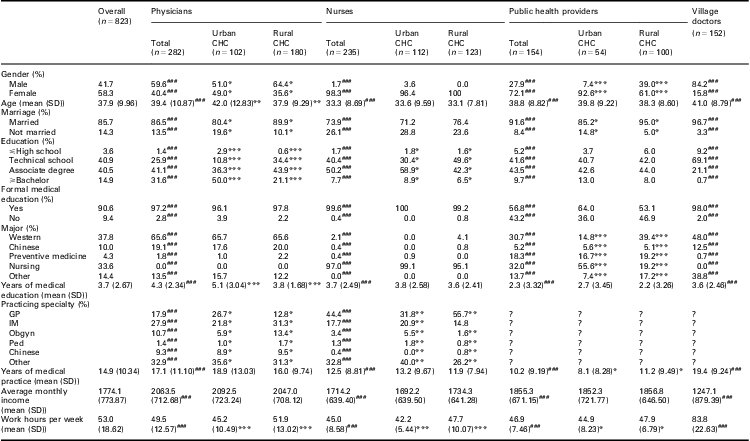
A number of descriptive covariates were also chosen for inclusion in the study analyses. These included: gender, age, marital status, education, whether PCP received formal medical training, major or medical specialty, years of medical education, practicing specialty, years of medical practice, average monthly income, and average weekly work hours. In China, formal education could include both bachelors and less-than-bachelors education (eg, 2-year technical school diploma or 3-year professional associate degree). Nurses are typically formally trained by medical or nursing schools; however, many current nurses receive license through hospital-based programs or on-the-job training (defined as ‘non-formal medical training’ in Table 1).
Profile of Chinese primary care providers

CHC = community health center.
Between groups: #0.05 ⩾ P ⩾ 0.01; ##0.01 > P ⩾ 0.001; ###P < 0.001 based on χ 2-test or ANOVA.
Within groups: *0.05 ⩾ P ⩾ 0.01; **0.01 > P ⩾ 0.001; ***P < 0.001 based on χ 2-test or t-test.
Analyses
The analytic strategy was to investigate associations between characteristics of the PCPs and intrinsic/extrinsic factors of job satisfaction.
First, descriptive statistics (ie, distributions, means, and SD) were obtained to provide a general profile of Chinese PCPs by type and rural/urban setting. Differences between types of PCPs (ie, physicians, nurses, PHPs, or village doctors) and between practice setting (ie, rural or urban) were assessed using either χ 2- tests for categorical measures or t-tests/ANOVA for continuous measures.
Next, comparative analyses investigated associations between job satisfaction and either PCP type of practice setting, producing measures of means and proportions. Means are based on a 5-point Likert scale, with 3 reflecting an average rating, 4 or 5 reflecting a satisfied rating, and 1 or 2 reflecting a dissatisfied rating. Finally, multivariate linear analyses examined associations between outcome measures of job satisfaction and PCP type or practice setting, while controlling for a number of covariates. All covariates were assessed for possible multicollinearity before their inclusion in the final multivariate models. In addition, a provincial identifier was included as a set of dummy variables (results not shown but available upon request) in order to account for the multistage sampling design and the heterogeneous nature of the provincial stratum. No county or district identifiers were included because of the homogeneous nature of within-province samples.
Results
Profile of Chinese PCPs
Table 1 shows the profile of Chinese community-based PCPs based on the national survey results. Most of the PCPs are women (58.3%) with an average age of 37.9 years (see Overall column). Most PCPs are married (85.7%) and have achieved a level of education from a technical school (40.9%) or associate degree program (40.5%). Although most have received formal medical education (90.6%), only about 15% of PCPs have a bachelors degree or higher. Furthermore, the average number of years of medical education among PCPs is only 3.7 years. Most have Western medicine as their major (37.8%), followed by nursing (33.6%). The average monthly income among surveyed PCPs is RMB 1774.1 (or <US$300). The PCPs’ work an average of 53 h/week.
There are several notable differences based on these characteristics among the community-based PCPs (see Total columns). Although doctors are predominantly male (84.2% for village doctors and 59.6% for physicians), nurses and public health providers are more likely to be female (98.3% and 72.1%, respectively, P < 0.001). Doctors and PHPs tend to be older than nurses (38.8–41.0 years among doctors versus 33.3 years among nurses, P < 0.001). Village doctors and PHPs are more likely to be married than physicians and nurses (91.6–96.7% of village doctors and PHPs married versus 73.9–86.5% of physicians and nurses, P < 0.001). In terms of education, physicians (31.6%) are most likely to have bachelors degrees or higher, whereas village doctors (0.7%) are least likely. PHPs are the group that is least likely to have a formal medical education (56.8%, P < 0.001). Although doctors are more likely to be trained in Western medicine (65.6% for physicians and 48.0% for village doctors), nurses are more likely to be trained in nursing (97.0%), and PHPs in both nursing (32%) and Western medicine (30.7%). The average years of medical education are greatest among physicians (4.3 years) and fewest among PHPs (2.3 years). Nurses are more likely to practice as a general practitioner than physicians (44.4% of nurses versus 19.0% of physicians, P < 0.001). Village doctors have the most number of years of medical practice (19.4 years), whereas PHPs have the fewest (10.2 years). Average monthly income is highest among physicians (RMB2063.5 or US$344) and lowest among village doctors (RMB1247.1 or US$207). In contrast, the average number of work hours is highest for village doctors (83.8 h) and fewest for nurses (45 h).
In addition to the significant differences observed among PCPs, there are also significant rural–urban differences within the physician group (see Urban and Rural columns). For example, physicians working in rural CHCs are more likely to be male, younger, married, and work longer hours, but less likely to have a bachelors degree or higher compared with physicians working in urban CHCs. Likewise, PHPs working in rural CHCs are more likely to be male, married, and work longer hours, compared with PHPs working in urban CHCs. Nurses working in rural CHCs also work longer hours and are less likely to have a bachelors degree or higher compared with nurses working in urban CHCs.
Job satisfaction by Chinese PCPs
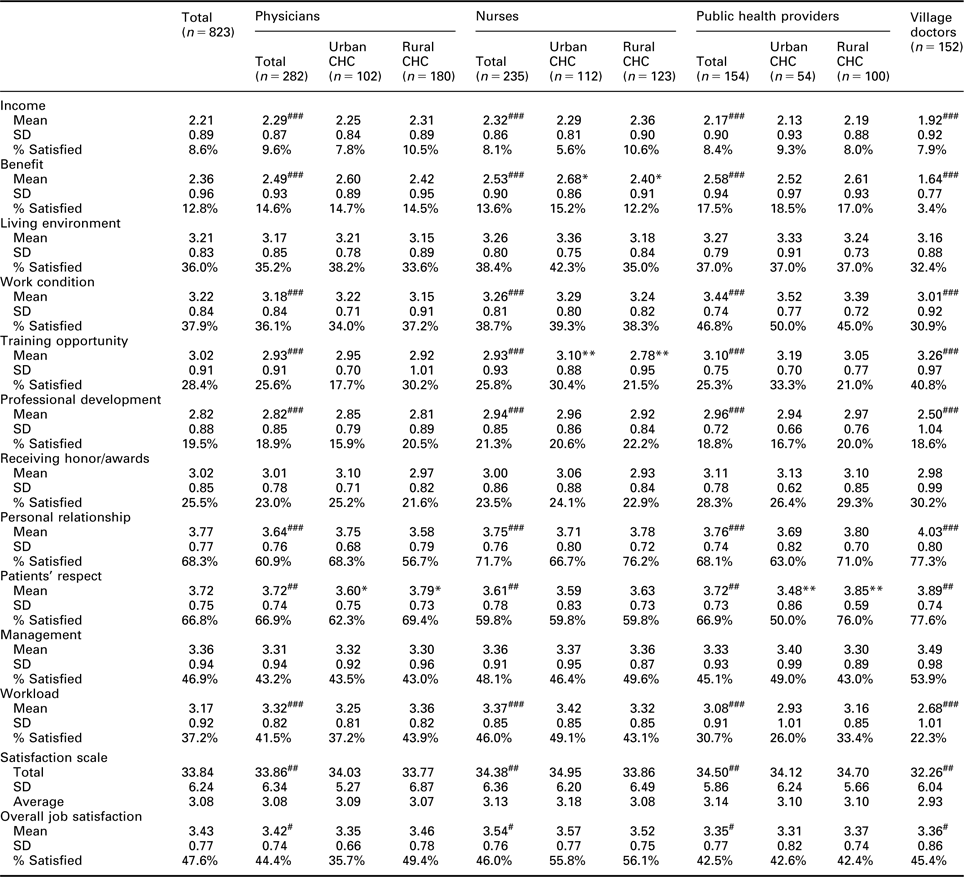
Table 2 presents job satisfaction by Chinese community-based PCPs. Overall, 47.6% of the PCPs are satisfied with their job (see Total column). Among the 11 individual satisfaction items, PCPs are most satisfied with their personal (ie, collegial) relationships (3.77), followed by patients’ respect (3.72), relationship with management (3.36), working conditions (3.22), living environment (3.21), workload (3.17), training opportunities (3.02), and receipt of honors/awards (3.2). They are least satisfied with income level (2.21), followed by benefits (2.36), and professional development (2.82). Figure 1 displays the satisfaction factors in rank-order format (based on percent reporting either satisfied or very satisfied) across the four types of PCPs surveyed.
Chinese primary care providers’ job satisfaction
CHC = community health center.
Note: Satisfaction item is coded as (1) very dissatisfied, (2) dissatisfied, (3) average, (4) satisfied, and (5) very satisfied. Satisfaction Scale is the sum of 11 individual satisfaction items ranging from 11 (very dissatisfied) to 55 (very satisfied). ‘% Satisfied’ reflects the % of respondents who were either satisfied or very satisfied.
Between groups: #0.05 ⩾ P ⩾ 0.01; ##0.01 > P ⩾ 0.001; ###0.001 > P based on ANOVA. Within groups: *0.05 ⩾ P ⩾ 0.01; **0.01 > P ⩾ 0.001 based on t-test.
Ranking of job satisfaction components by types of Chinese primary care providers (PCPs). Between groups: *0.05 ⩾ P ⩾ 0.01; **0.01 > P ⩾ 0.001; ***P < 0.001 based on χ 2-test.
There are significant differences based on indicators of job satisfaction factors among the community-based PCPs (see Total columns from Table 2), particularly between village doctors and others. Village doctors are least satisfied with income (1.92 among village doctors versus 2.17–2.32 among other groups, P < 0.001), benefits (1.64 among village doctors versus 2.36–2.58 among other groups, P < 0.001), working conditions (3.01 among village doctors versus 3.22–3.44 among other groups, P < 0.001), professional development (2.50 among village doctors versus 2.82–2.96 among other groups, P < 0.001), and workload (2.68 among village doctors versus 3.08–3.37 among other groups, P < 0.001). Typically working alone, they are less concerned with personal relationships than other PCPs (4.03 among village doctors versus 3.64–3.76 among other groups, P < 0.001). Nurses and CHC doctors are less satisfied with training opportunity than PHPs and village doctors (2.93 among village doctors versus 3.10–3.26 among other groups, P < 0.001).
There are relatively few significant rural–urban differences within each type of PCP (see Urban and Rural columns from Table 2). For example, significant differences between rural and urban CHC physicians and PHPs are only present on one of the 11 satisfaction indicators, with rural physicians and rural PHPs being slightly more satisfied with patients’ respect than their urban counterparts (3.79 versus 3.60, P < 0.05, 3.85 versus 3.48, P < 0.01, respectively). Rural and urban CHC nurses are only significantly different on two of the 11 satisfaction factors, with urban nurses being more satisfied with benefits (2.68 versus 2.40, P < 0.05) and training opportunities (3.10 versus 2.78, P < 0.01) than their urban counterparts.
Factors associated with PCP's job satisfaction
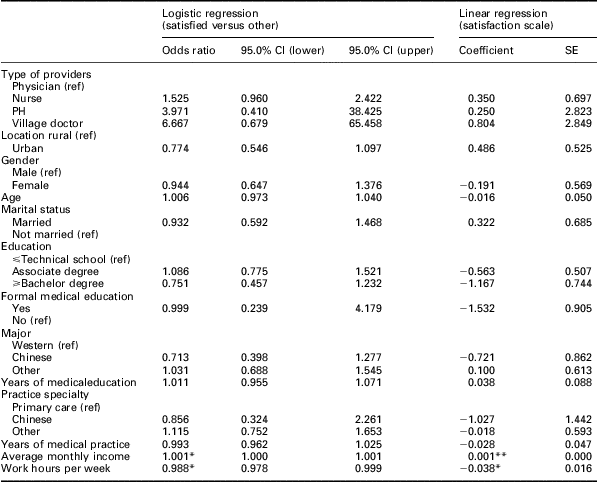
Table 3 presents results from both logistic and multiple linear regression analyses of the individual and practice characteristics associated with Chinese PCPs’ overall job satisfaction. The logistic regression model uses the overall satisfaction measure (ie, satisfied or very satisfied versus other) as the dependent variable. The linear regression model uses the summary satisfaction scale (based on 11 individual satisfaction items) as the dependent variable. All multivariate models also include categorical indicators representing type of PCP and practice setting (ie, rural versus urban).
Correlates of Chinese primary care providers’ job satisfaction
*P < 0.05; **P < 0.01.
Both models yield similar findings. Higher average monthly income is significantly associated with higher work satisfaction (P < 0.05 for the logistic regression model and P < 0.01 for the linear regression model). In contrast, greater weekly work hours is inversely associated with work satisfaction (P < 0.05 for both multivariate models). After controlling for several covariates, neither type of PCP nor practice setting were significantly associated with job satisfaction.
Discussion
This study provides the most current information on the profile of Chinese community-based PCPs and their job satisfaction. Examining the PCW based on several descriptive characteristics revealed a number of notable differences. For example, doctors are more likely to be male, whereas PHPs and nurses are more likely to be female. The overall educational level among PCPs is quite low; the sampled PCPs averaged just 3.7 years of medical education and <15% reported having a bachelors degree or higher. Western medicine remains the most dominant major during medical education, with traditional Chinese medicine lagging far behind. Nurses are more likely than physicians to practice as general practitioners. Chinese PCPs reported practicing medicine for an average of ∼15 years, yet reported a monthly income of just RMB1774.1 (US$296). Finally, we found that work hours are generally long (an overall average of 53 h/week), particularly for village doctors who reported working an average of about 84 h/week.
The overall satisfaction level appears to be somewhat low, with only 47.6% of the Chinese PCPs either satisfied or very satisfied with their jobs. This is considerably less than the 80% satisfaction level that has been reported by American primary care physicians in the literature (Shi et al., Reference Shi, Starfield, Kennedy and Kawachi1999; Shi and Starfield, Reference Shi and Starfield2001). Overall, Chinese PCPs are least satisfied with their income levels and benefits, and most satisfied with respect from patients and personal relationships. These findings mirrored those of similar studies showing income especially to be a significant contributing factor toward job satisfaction among PCPs practicing in the United States (Shi et al., Reference Shi, Starfield, Kennedy and Kawachi1999). For the most part, there was no clear pattern that emerged with regard to reported satisfaction with intrinsic versus extrinsic factors, yet interestingly, the measures garnering the lowest scores were extrinsic factors, whereas those garnering the highest satisfaction scores were intrinsic factors.
These findings suggest that Chinese PCPs may find their job rewarding in many ways, since they are quite satisfied with their perceived respect from patients as well as their personal relationships in their practice. Satisfaction levels for these two factors were especially high among village doctors. However, Chinese PCPs are also quite dissatisfied with their incomes, benefits, and opportunities for professional development; satisfaction scored for these factors were particularly low among village doctors. It was also notable that each PCP subgroup reported low levels of satisfaction with workload (ranging from about 49% satisfied among urban nurses to about 22% satisfied among village doctors). Despite seemingly low pay and significant workloads, community-based PCPs reported practicing in the same post for an average of 15 years. This is contrary to studies in the literature that have linked job dissatisfaction with increased attrition rates (Shi and Starfield, Reference Shi and Starfield2000; Reference Shi and Starfield2001; Politzer et al., Reference Politzer, Yoon, Shi, Hughes, Regan and Gaston2001; Shi et al., Reference Shi, Starfield, Politzer and Regan2002; Reference Shi, Stevens and Polizer2007; Starfield et al., Reference Starfield, Shi and Macinko2005; Starfield and Shi, Reference Starfield and Shi2007). There may be several ways to reconcile these findings. Chinese PCPs may be hampered in their job mobility because of low levels of educational preparation. They may also feel unequipped to pursue further career options, as suggested by the low levels of satisfaction with professional development observed in this study. Third, there may be a minimum of additional or more attractive job options in a PCP's respective practice location, and few may be able or willing to relocate to another geographic region within the country. Finally, it may be that PCPs’ satisfaction with certain intrinsic aspects of their work provides enough career fulfillment that they are willing to overlook their dissatisfaction with a number of extrinsic factors.
The findings from this study have important policy implications for the development and sustainability of China's primary care system. The Chinese government has devoted considerable resources to expanding health care access, primarily by providing affordable insurance coverage to both rural and urban residents. The government had set a target of having 90% of the country's population covered by social health insurance by 2011 (Salive, Reference Salive1997; Landon, Reference Landon2004). However, few reform initiatives have been undertaken to bolster the PCW. The government recognized the importance of community-based primary care as instrumental in providing access to citizens and advocated a rational CHC-tertiary hospital referral system, and governmental support has primarily gone toward building the physical facilities and infrastructure of CHCs with the goal of having one CHC per 10 000 population (Wang et al., Reference Wang, Gusmono and Cao2011). However, there has been no concurrent investment in the development of a strong PCW nationwide, nor has there been a significant increase in public funding for community-based PCPs. Policymakers should explore initiatives that would enhance pay and benefits for PCPs, particularly for village doctors who face unstable incomes and a lack of social security coverage because of mostly being self-employed and their reliance on government subsidies rather than regular salaries. Policymakers should also consider improving medical education for all PCPs, and provide funding and support for medical institutions to offer professional development and other training opportunities to medical staff. Such initiatives may also encourage an increasing number of Chinese students to enter the PCW – relieving some of the workload burden that PCPs currently face, and allowing more time for patient interaction. Without provider-side initiatives such as these, the development of an effective primary care system will be difficult, and equitable access to high-quality medical care may not be realized.
The current study has a number of limitations. First, with only five provinces included in the sampling frame, and the purposive sampling method (due to a limited number of units that were included in each stratum), the national representativeness of the study sample cannot be ascertained. However, we believe that the selected provinces, counties, districts, and villages are generally representative of the typical economic and health development characteristics in the respective locales. Second, the cross-sectional nature of the study dictates that association, rather than causality, can be studied. Third, the method of data collection (ie, self-report) could render some measures less reliable. For example, income and benefits could be under-reported, whereas work hours may be exaggerated, and no independent means of corroborations are available. However, since the study was anonymous and no local cadres were present during data collection, we are generally confident about the overall reliability of respondents’ answers. Furthermore, the high participation rate among PCPs indicates that respondents were generally interested in the study. Finally, the relatively low levels of job satisfaction reported on several indicators suggest that respondents were not hesitant to report their perceptions accurately and honestly.
In conclusion, our study shows that the Chinese community-based PCW is quite vast and diverse. Overall, they are quite satisfied with a number of job characteristics associated with interactions with patients and other staff. However, our findings suggest there are areas of dissatisfaction with regard to training, pay, or feeling overworked. The Chinese government should enhance its investment in educational and training programs that target PCPs and improve the compensation and benefits of currently practicing PCPs. Such improvements would bolster existing reforms to strengthen the country's medical infrastructure, and contribute to a more effective and efficient primary care system. Given the importance of primary care to positive health outcomes and well-being, as well as the demonstrated cost-effectiveness of primary care seen in other systems around the world, such an investment seems highly warranted and is critical to ensuring a well-trained and sustained PCW.
Acknowledgement
This study is supported by National Science Foundation of China (NSFC). Contract number: 70973068.