


INTRODUCTION
The World Health Organization European Region has established a target of 2010 for measles and rubella elimination [1]. A strategic plan has been developed [2], which includes routine two-dose measles vaccination in all 53 member states and strengthening of surveillance for measles and rubella. Criteria for assessing the strength of measles surveillance are critical for assessing the achievement of measles elimination, as it has been estimated that only 9–29% of measles cases and 30–48% of cases seen by clinicians were reported to health officials during outbreaks in countries considered to have well-functioning surveillance systems [Reference van Isterdael3, Reference Ewert4]. A minimum standard rate of investigation for measles of 1/100 000 population was proposed based on an assessment of over 80 sources of measles-like rash investigation. However, the range of investigation varied from 0·1 to 22·6/100 000 cases investigated [Reference Harpaz and Papania5]. Others have pointed out that establishing a target rate of investigation may need to consider the epidemiology of measles-like illness (MLI) in a given region and take into consideration local resources available [Reference Durrheim, Speare and Ogunbanjo6].
In 2002, the Russian Federation implemented a programme for measles elimination by 2010 [7]. While the immunization strategy remained the routine two-dose measles vaccination at ages 12 months and 6 years, a large proportion of measles cases were being observed in older age groups. The problem of older measles-susceptible age groups in republics of the former Soviet Union has been recognized [Reference Spika8–Reference Hanon10]. In the Ukraine, this has been associated with decreased two-dose measles vaccine effectiveness in persons who received measles vaccine before the early 1990s [Reference Velicko11].
To better define what an appropriate rate of investigation might be and to assist the health authorities in the Russian Federation in developing guidelines for measles surveillance, we undertook a study to assess different rates of case investigation for MLI in territories believed to have low incidence of disease.
METHODS
Eleven territories of the Russian Federation were selected for the study based on their low incidence of reported measles during the previous 4–7 years, and their being served by one of two of the 10 subnational reference laboratories for measles. Selected territories were included in one of four groups based on convenience, so that the population under surveillance in each group was at least four million. Each group of territories was arbitrarily assigned a targeted rate for investigation of MLI.
The 11 participating territories in each of the four groups with their respective population size under surveillance and subnational reference laboratory are given in Table 1. These 11 territories had reported a total of 82 measles cases during the 4-year period, 2000–2003, yielding an average annual rate of 0·12 cases/100 000 population. Five (45%) territories had reported no measles cases, and 42 (51·2%) of the measles cases reported were from St. Petersburg (average annual rate of 0·23/100 000 population).
Enhanced surveillance targeted sampling groups by participating territories, population size and subnational reference laboratories
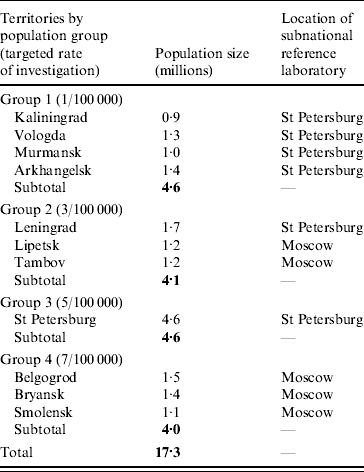
Participating territories maintained their existing passive surveillance activities for measles, which is a nationally reportable disease requiring submission of a blood specimen for diagnostic testing within 3 days of clinical diagnosis. These blood specimens were sent to the responsible subnational measles reference laboratory as part of routine surveillance.
Enhanced surveillance was also undertaken during the 3-year period from March 2004 to February 2007 for clinical illnesses with measles-like rash and a fever of ⩾38·5°C. This surveillance was coordinated by clinical epidemiologists in their respective territorial Sanitary Epidemiological Surveillance (SES) units. The clinical epidemiologists regularly met with and held seminars for clinicians to encourage them to identify patients with MLI and to collect blood samples from them for diagnostic testing. Attention was given to identifying older children and young adults, because of the measles epidemiology in the Russian Federation. The blood specimens were usually sent on a weekly basis to the responsible subnational measles reference laboratory. A targeted number of cases for investigation was identified based on the population under surveillance and the assigned surveillance group, which had targets of 1, 3, 5 or 7 suspected cases/100 000 population.
Meetings were held with epidemiologists, clinicians and virologists from the 11 participating territories to discuss the protocol before the project began. These individuals were responsible for training clinicians and epidemiologists in their respective jurisdictions and for monitoring patient enrolment. Annual meetings were held to review the previous year's data and to share experiences, best practices and provide feedback to participating territories. Information was also communicated to participating territories on a regular basis by the responsible subnational measles laboratory.
Blood specimens were obtained from all MLI cases detected during enhanced surveillance, along with information on clinical signs and symptoms, the primary diagnosis and demographic information. All clinical specimens collected through routine and enhanced surveillance were tested for measles IgM antibody, using an ELISA method (Dade-Behring, Germany). Specimens collected, which were part of enhanced surveillance and negative for anti-measles IgM, were tested for anti-rubella IgM by ELISA (Dade-Behring), as recommended by the WHO Regional Office for Europe. Each participating laboratory had standard operating procedures, a quality assurance programme and was accredited as part of the WHO European Region's measles and rubella laboratory network.
The population size for each of the participating territories was obtained from the Annual Statistical Bulletin of the Russian Federation [12]. The number of MLI cases detected and laboratory confirmed through routine and enhanced surveillance were determined for each group of territories. A rate of investigation and measles incidence were calculated using the population under surveillance in the respective group.
To further evaluate a rate of MLI case investigation of around 1–2/100 000, a model was developed to evaluate the performance of enhanced surveillance with respect to routine surveillance. The routine investigation rate (z) was used as a covariant in the logistic function regression. We assumed the investigation rate was an independent variable; therefore, we were able to develop a model to estimate the ratio of increase in number of cases detected through enhanced surveillance (x 2) to the number of cases detected through routine surveillance (x 1), assuming the number of confirmed cases for both routine and enhanced surveillance had Poisson distributions with means λ1 and λ2 respectively, and a conditional distribution of x 2 on the total number of cases was binomial with probability λ2/(λ1+λ2)=ρ/(1+ρ), where ρ is the ratio of the enhanced mean to that of the routine mean; ρ/(1+ρ) is the ratio of the increase in the number of cases under enhanced surveillance to the total number of cases. The probability of an increase in the number of cases found as a function of the investigation rate was modelled by the logistic function. The expression

uses z as a covariant.
Likelihood was used to estimate the parameters and conduct inferences. Fieller's method was used to obtain the confidence intervals for these estimates [Reference Beyene and Moineddin13]. A Poisson distribution was assigned to each of the two variables (routine and enhanced surveillance) and a generalized linear model procedure was performed in order to determine if a given increase in routine surveillance would be sufficient to replace enhanced surveillance. All computational modelling was performed using the statistical software R (Department of Statistics and Mathematics, Wirtshaftsuniversität, Austria).
RESULTS
A total of 2217 patients were investigated during the 3-year study period. Of these, 1875 (84·6%) were included as part of enhanced surveillance (Table 2). In total, 159 laboratory-confirmed measles cases were found, of which 49 (31%) were detected through enhanced surveillance. The detection rate based on confirmed cases for routine surveillance was 32·2 cases/100 investigated MLI, and the detection rate for enhanced surveillance was 2·6 cases/100 investigated MLI.
Rate of investigation for measles-like illness through routine and enhanced surveillance by population group, 2004–2007
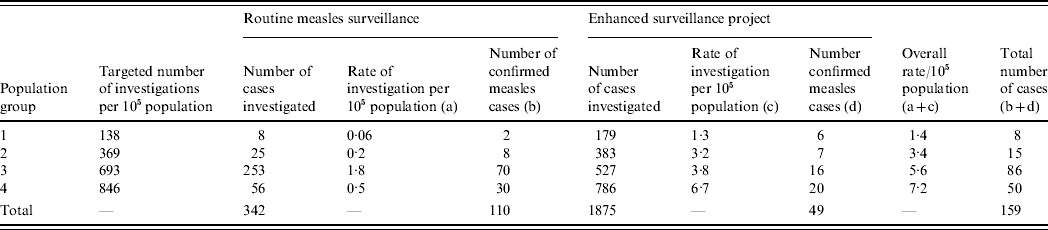
Of the 159 laboratory-confirmed cases, 147 (92%) were considered to be a result of indigenous transmission, while 12 (8%) cases were imported. Two cases were linked to imported cases with no further spread. Eighty-six (54%) of the measles cases were detected in population group 3 (St Petersburg), which also had six imported cases.
Over the 3-year period, all territorial groups met their assigned target rate of MLI investigation (Table 2). Population group 3, which had the highest average annual measles incidence (0·62/100 000 population), also had the highest rate of measles investigation performed through routine surveillance. The rates of investigation by study year are presented in Table 3, which shows that these rates did not differ appreciably by year except for population group 3, which was unable to meet its target rate of MLI investigation during the first year and consistently had the highest rate of investigation through routine surveillance.
Rate of investigation through enhanced surveillance and the overall rate by population group and study year
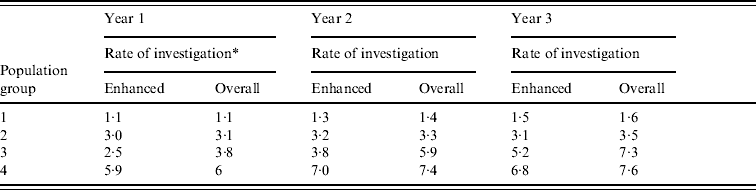
* Rate per 105 population.
The median age of confirmed measles cases was 23 years (range 9 months to 52 years); 102 (64%) measles cases were aged ⩾20 years. The median age of the 110 measles cases detected through routine surveillance was 24 years (range 1–52 years), and the median age of the 49 measles cases detected through enhanced surveillance was 22 years (range 9 months to 49 years). The median age of the 1875 MLI cases detected through surveillance enhancement was 27 years (range 9 months to 85 years).
The clinical diagnoses of patients tested for MLI are shown in Table 4. The clinical diagnosis most commonly identified was rubella; 2·1% and 53·3% were confirmed as measles and rubella, respectively. The second most common clinical diagnosis was allergic rash/dermatitis, which accounted for 18·5–24% of persons tested during the 3-year period. Of these 3·2% and 7·3% were confirmed as measles and rubella, respectively.
Clinical diagnoses of patients tested for measles-like illness (MLI) as part of routine and enhanced surveillance for MLI, 2004–2007
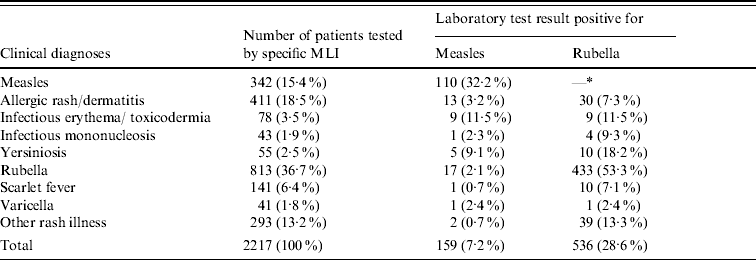
* Suspected measles cases detected through routine surveillance were not tested for rubella, therefore the total number of cases tested for rubella was 1875.
Measles was the clinical diagnosis most commonly found to be positive for measles IgM antibody, representing 110 (32·2%) of 342 cases investigated (Table 4). However, the next most common diagnoses found to be laboratory-confirmed measles were infectious erythema/toxicodermia (11·5%) and yersiniosis (9·1%) (Table 4). These latter two diagnostic categories were also were found to be frequently positive for rubella IgM antibody, but the overall number of cases tested and the proportion that were measles or rubella IgM-positive varied markedly by year during the 3-year study period. Depending on the year, 0–23·5% of yersiniosis cases were measles IgM-positive, compared to 5·9–46·7% that were rubella IgM-positive; 0–19·5% of infectious erythema/toxicodermia cases were measles IgM-positive, compared to 5·9–27·8% that were rubella IgM-positive.
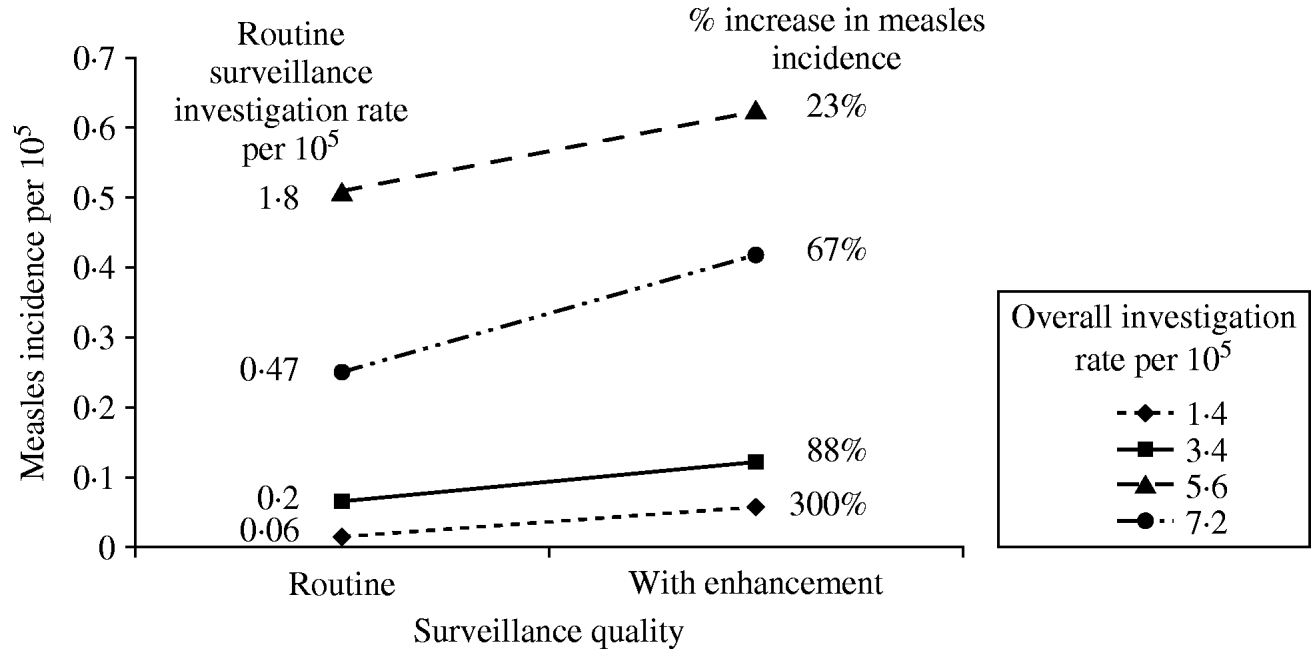
To assess what impact different rates of investigation might have for detecting measles, we looked at several comparisons between the different population groups with regard to measles incidence detected through routine and enhanced surveillance, respectively. Figure 1 shows a plot of measles incidence detected through routine surveillance by routine surveillance investigation rate, and the measles incidence detected with different intensities of surveillance enhancement. While there appeared to be a relationship between measles incidence detected through routine surveillance and the rate of cases investigated, there also appeared to be an inverse relationship between the incidence detected during routine surveillance and the percentage increase in measles cases detected with enhanced surveillance. The population group with a routine surveillance investigation rate of 1·8/100 000 had a 23% increase in cases detected when the rate of investigation increased 3·1-fold to 5·6/100 000. The population group with a routine surveillance rate of investigation of 0·06/100 000 observed a 300% increase in measles incidence when the rate of investigation increased 23·3-fold to 1·4/100 000.
Measles incidence by rate of suspected cases investigated. The incidence of measles detected through routine surveillance varied between 0·02 and 0·51 per 105 population and was associated with rates of investigation between 0·06 and 1·8 per 105 population. With enhancement of surveillance from 1·4 to 7·2 suspected cases investigated per 105 population, there was an increase in measles incidence that varied between 23% and 300%; the population groups having the greatest increase with enhancement had the lowest initial measles incidence.
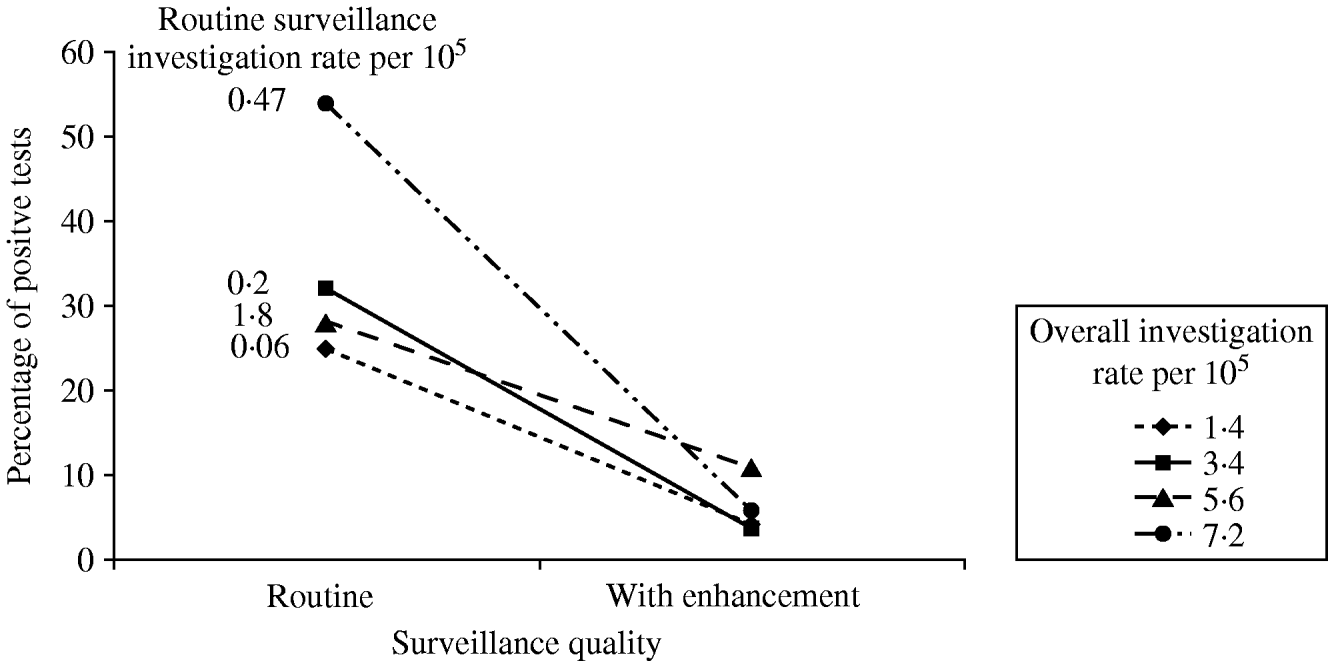
To further investigate the impact of increasing the rate of case investigation on the sensitivity of surveillance, we studied the percentage of persons assessed who had positive measles IgM tests during both routine surveillance and with surveillance enhancements (Fig. 2). With routine surveillance, the percentage of positive tests varied between 25% and 54% and was unrelated to the rate of cases investigated. With surveillance enhancements, the overall percentage of positive tests declined to between 3·7% and 11%. The population group with the highest measles incidence (0·62/100 000) had the highest percentage of persons investigated with a positive measles IgM test.
Percentage of positive measles laboratory tests by rate of suspected cases investigated. The percentage of suspected measles cases found to be positive by IgM testing during routine surveillance varied between 25% and 54%. The percentage of suspected cases found to be IgM positive decreased to between 3·7% and 11% with the increased rate of measles-like illness investigation.
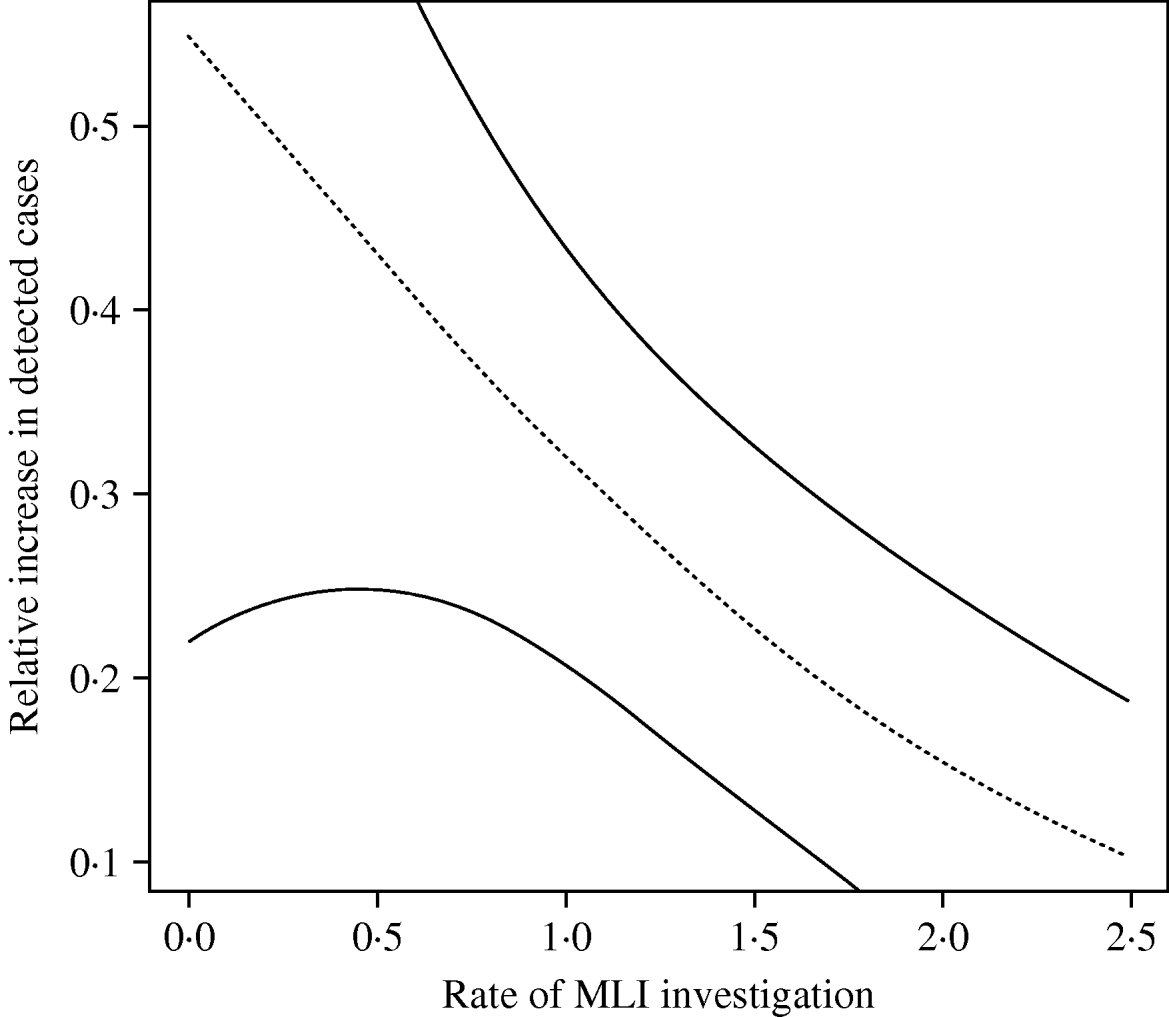
To further study the relative increase in measles cases detected by a MLI investigation rate around 1–2/100 000, we modelled the ratio of the increase in the number of cases detected through enhanced surveillance to the number of cases detected through routine surveillance by the rate of investigation (Fig. 3). With a MLI investigation rate of 1/100 000, a 32% increase in cases was found (95% CI 21–43), while with a MLI investigation rate of 2/100 000 (95% CI 6–25), this increase was 15%.
Ratio of the increase in the number of cases detected through enhanced surveillance to the number of cases detected through routine surveillance by the rate of investigation of measles-like illness (MLI). Investigation rate per 105 population. The dotted line represents the mean probability of detecting additional measles cases at the indicated rate of MLI investigation. The solid lines represent the upper and lower 95% confidence intervals.
DISCUSSION
The epidemiology of measles and rubella in the selected territories of the Russian Federation and the existing health system provided an opportunity to assess different intensities of surveillance to detect measles cases and different methods and practices that could be used to strengthen surveillance. The incidence of rubella made this experience similar to many other countries where rubella vaccines have not or have only recently been introduced; rubella being an illness with maculopapular rash that can be confused with measles, as was found in our study. Rubella was not a reportable disease requiring laboratory testing, but enhanced surveillance did include rubella cases, although continued testing was not encouraged when a rubella outbreak was laboratory confirmed. Given the marked differences between the incidence of measles and rubella in the Russian Federation, maintaining integrated laboratory-based surveillance for both was not economically feasible at the time of the study.
The measles susceptibility in older age groups in the Russian Federation is unique to countries of the former Soviet Union, and those that used measles vaccines produced there. This placed challenges on the existing surveillance system, which was more oriented to monitoring for disease in children, and required the engagement of clinicians primarily seeing adult patients. Epidemiologists in the participating territories were able to establish links with these clinicians and encourage the collection of specimens, so that the mean and median ages for measles cases and MLI were similar. The annual project meetings allowed participants from different territories to assess their progress compared to each other and to share best practices.
A rate of investigation for assessing measles surveillance quality should consider a number of factors. The primary objective for surveillance in countries that have achieved the high levels of population immunity required for elimination should be to detect clusters of cases and assess chains of transmission, thereby providing evidence that sustained or indigenous transmission is not occurring. Within the WHO European Region, an effective reproduction number (R) target of 0·70 has been identified in order to achieve measles elimination; this is the number of secondary cases resulting from a case of measles in a population exposed to natural infection and/or vaccination [14]. Using this target, theoretical distributions of outbreak size and the number of generations of spread following an importation have been calculated [Reference De Serres, Gay and Farrington15]. Surveillance for measles during an elimination phase should allow for full assessment of outbreak or cluster size and the number of generations of disease, i.e. the extent of chains of transmission. During our study, all of the measles cases detected were isolated cases, except for two that were linked to imported cases.
The proportion of MLI cases not confirmed as measles through laboratory testing (i.e. discarded) is also an indicator of measles surveillance quality [Reference Harpaz16]. In our study, suspected cases found to be IgM positive markedly decreased in all population groups with an increasing intensity of surveillance. While it is not clear what a suitable rate for positive tests might be, a median rate of 13% of suspected cases being confirmed by laboratory testing was identified during a 2-year period (1997–1998) in the USA [Reference Harpaz16]. In the UK during a 7-year period (1995–2001), 3% of suspected cases tested were confirmed [Reference Ramsey17]. These data suggest that rates of IgM-positive tests found during our 3-year period of enhanced surveillance, from 3·7% to 11%, reflect a reasonable level of surveillance sensitivity.
Another indicator of surveillance quality during an elimination phase is the proportion of cases identified as being imported. In the USA during 1996–1998, 154 (30%) of cases assessed, with information on importation status, were imported from other countries or from other states [Reference Harpaz16]. In the UK during 1995–2001, 239 (36%) of 665 confirmed cases were classified as sporadic and not associated with defined clusters; 54 (23%) of sporadic cases were associated with importation and another 44 (18%) were considered to be probable importations [Reference Ramsey17]. The lower rate of importation detected in cases in the 11 territories could indicate either higher undetected rates of measles virus transmission, particularly in adults, or inadequate case investigation by persons not familiar with methods used in other countries with very low measles incidence.
The results of the 3-year surveillance project confirmed that the territories chosen had a low incidence of measles, while at the same time, a high incidence of rubella. However, improvements can be made to enable the detection of more measles cases. Human and financial resources are important considerations when creating a surveillance system, particularly in countries with relatively limited resources available within the health sector. Defining a benchmark sustainable surveillance rate for monitoring MLI is a key issue for measles elimination activities in all WHO regions. In the Russian Federation, the costs associated with importing laboratory test kits, the costs and logistics associated with transportation of specimens over long distances and the human resource capacity of SES units to sustain a chosen suspected case investigation rate were all considered along with the probability of missing cases at a given rate of investigation. Using Figure 3, one can estimate that a rate of investigation of 2/100 000 will still result in missed cases, but it was felt in the Russian Federation that the incremental benefit of further increasing the rate did not justify the important increase in resources required. This rate of case investigation would be adequate to allow finding the tip of the iceberg, which is of critical importance [Reference Papania and Strebel18].
ACKNOWLEDGEMENTS
The authors thank the WHO European Regional Office for Europe and the US Centers for Disease Control and Prevention for financial support; the Federal Rospotrebnadzor and public health authorities in all 11 territories for administrative and project support; epidemiologists, clinicians and microbiologists in the participating territories and at the Moscow and St Petersburg Regional Measles and Rubella Centres for implementation of the project; Dr M. Mulders at the WHO Regional Office for Europe for support of the Russian measles and rubella laboratory network; Dr El-Shaarawi for his assistance with the statistical analysis; and Angela Catford for editorial assistance.
DECLARATION OF INTEREST
None.



