


INTRODUCTION
It is often said that for successful language development, it is important to start early, and that it is optimal to start as early as possible. However, most studies on age of onset (AoO) focus on differences between child and adult second language (L2) learners (cf. Hernandez & Li, Reference Hernandez and Li2007; Hyltenstam & Abrahamsson, Reference Hyltenstam, Abrahamsson, Doughty and Long2003), and little is known about early AoO effects. In this study, we investigate children who started to learn a new language between the ages of zero and four in order to determine whether ‘the sooner the better’ holds for early child bilinguals.
The few studies that have investigated early effects of AoO looked at different aspects of language. While the studies on vocabulary development report positive effects of AoO and show that children with a later AoO perform better (Golberg, Paradis & Crago, Reference Golberg, Paradis and Crago2008; Snedeker, Geren & Shafto, Reference Snedeker, Geren and Shafto2007, 2012), studies on children's accuracy at using grammatical morphemes report no effect (Snedeker et al., Reference Snedeker, Geren and Shafto2007), negative effects (Unsworth, Reference Unsworth2013; Unsworth, Argyri, Cornips, Hulk, Sorace & Tsimpli, Reference Unsworth, Argyri, Cornips, Hulk, Sorace and Tsimpli2014), and positive effects (Blom & Paradis, Reference Blom and Paradis2015) of AoO. For the present study, we investigate Dutch vocabulary size and the correct use of Dutch grammatical morphemes (inflection) in Frisian–Dutch bilingual children. The children who participated in the study were five or six at time of testing and had an AoO for Frisian from birth and for Dutch between ages zero and four. Analyses on vocabulary tested whether we could replicate previous findings with a new population. With regard to grammatical morphemes, our goal was to examine the presence and direction of AoO effects and relationships between AoO, transfer, and exposure.
Participants were recruited from the Dutch province of Friesland. Friesland is a bilingual province where both the national majority language, Dutch, and the regional minority language, Frisian, have official status. Outside of the Netherlands, the regional language is known as West Frisian to avoid confusion with the Frisian languages spoken in Germany. Whenever the term ‘Frisian’ is used in this paper, it refers to the West Frisian language. Historically, Frisian is most closely related to English, but over time English and Frisian have diverged, while Dutch and Frisian have converged due to language contact (Gooskens & Heeringa, Reference Gooskens, Heeringa, Gilbers, Schreuder and Knevel2004). Structural similarities and differences between Dutch and Frisian allowed us to investigate interactions between AoO and transfer. Besides transfer, the intensity of exposure to Dutch was examined, because it is likely that children who differ in AoO also differ in the amount of exposure to the target language and contexts in which exposure takes place (Unsworth et al., Reference Unsworth, Argyri, Cornips, Hulk, Sorace and Tsimpli2014).
Investigating early AoO effects is relevant for several reasons. First, it can shed light on the relationship between linguistic development and other developing skills that support learning language. For instance, older children have more cognitive, linguistic, social, and literacy-related resources available that could predict a faster rate of language development (Blom & Paradis, Reference Blom and Paradis2015; Cummins, Reference Cummins, Malave and Duquette1991, Reference Cummins2000; Snedeker et al., Reference Snedeker, Geren and Shafto2012). These are all reasons to suspect that within childhood the idea of ‘the sooner the better’ may not necessarily hold. Second, it may provide information on the effects of transfer. Namely, further entrenchment of first language (L1) characteristics and perceptual fine-tuning to language-specific properties could hinder learning the unfamiliar L2 characteristics (Ellis, Reference Ellis2006; Kuhl, Reference Kuhl2000; Kuhl, Williams, Lacerda, Stevens & Lindblom, Reference Kuhl, Williams, Lacerda, Stevens and Lindblom1992; McDonald, Reference McDonald2000; Unsworth et al., Reference Unsworth, Argyri, Cornips, Hulk, Sorace and Tsimpli2014). Thus, sooner may be better if a child's L1 differs from the L2. Third, from a practical viewpoint, early AoO effects could be important for determining the optimal age for starting bilingual or immersion programmes at (pre-)school (Cummins, Reference Cummins1980; Genesee, Reference Genesee1978).
Age of onset: a positive or negative effect?
Studies on AoO focus on different aspects of children's language development. Interestingly, the outcomes seem to differ depending on whether vocabulary or grammar is studied. Studies on vocabulary development quite consistently show a positive relationship between AoO and vocabulary size and vocabulary growth, which goes against the idea of ‘the sooner the better’. Snedeker et al. (2007) analyzed the data of a sample of internationally adopted children whose AoO ranged between 2;7 and 5;6. The data in this study were based on parental report (Communicative Developmental Inventory 2). The older adoptees had larger vocabularies than the younger adoptees, in particular in the first few months after arrival into the new family. When compared to younger infants who were not adopted, it turned out that the internationally adopted children acquired vocabulary about four times as rapidly. In parallel with these findings, Golberg et al. (Reference Golberg, Paradis and Crago2008) found that immigrant children learning English L2 who were exposed to English after age five (60 months) had a larger receptive vocabulary than English L2 learners who were exposed to English earlier. Snedeker et al. (Reference Snedeker, Geren and Shafto2012) report that adopted children learn abstract words that refer to past tense, certain behaviours, or internal states earlier than infants, which suggests that cognitive development constrains vocabulary development in specific ways.
The results of research on grammar are less consistent. In the study by Snedeker et al. (Reference Snedeker, Geren and Shafto2007), AoO did not predict the proportion of grammatical morphemes used or grammatical complexity. With respect to grammar measures, there was also no difference between the non-adopted infants and the internationally adopted older children, suggesting that cognitive development does not influence grammatical development during early childhood. In a study comparing bilingual children with and without specific language impairment (SLI) who were English second-language learners, Blom and Paradis (Reference Blom and Paradis2015) found that a later AoO was associated with fewer omissions of regular tense inflection. This positive effect of AoO was carried by the SLI group. Blom and Paradis argue that having more resources (associated with older age) may be particularly relevant to children with SLI, who often have less verbal short-term memory capacity and a shorter attention span than their peers with typical development (TD). Also, children with SLI may rely on declarative memory for regular inflection (Pierpont & Ullman, Reference Pierpont and Ullman2005). Declarative memory consists of associations that are strengthened based on environmental information, which, in turn, is accumulated over time. For children with TD, such accumulated information may be less relevant because they rely on procedural memory for using regular inflection (Pierpont & Ullman, Reference Pierpont and Ullman2005).
Other areas of research report negative effects of AoO on grammar acquisition. Unsworth et al. (Reference Unsworth, Argyri, Cornips, Hulk, Sorace and Tsimpli2014) investigated effects of AoO in bilingual children learning Dutch or Greek with English as their L1, and found that children with a later AoO performed less accurately in the grammar tests they used than children with an earlier AoO. In this study, a factorial design was used with three learner groups for each language: simultaneous bilinguals (2L1), early successive bilinguals whose AoO lies between 1;0 and 4;0 (mean: 2;4/2;2), and successive bilinguals with an AoO between 4;0 and 10;0 (mean: 6;4/6;5). In both languages, morphemes expressing grammatical gender were investigated. For Dutch, AoO effects emerged when (cumulative) exposure was not controlled; when the early and late successive bilinguals were matched on exposure, their accuracy was the same. For Greek, the 2L1 group outperformed both other groups. The early successive children were less accurate on feminine/masculine gender than the 2L1 group, but they performed better than the late successive group. For neuter nouns, both the 2L1 group and early successive learners outperformed the successive learners.
Unsworth et al. (Reference Unsworth, Argyri, Cornips, Hulk, Sorace and Tsimpli2014) suggest that English L1 children with an older AoO performed less accurately on Greek grammatical gender than English L1 children with a younger AoO because the older children have had more experience with a language without grammatical gender (English), and may display stronger effects of negative transfer. At the onset of exposure to Greek, the early successive children started from the English system, which was already, to some degree, in place, and which does not classify nouns based on gender. The authors furthermore do not rule out the possibility that the AoO effects in Greek could be input effects in disguise, because matching was only possible for a small subset of the data. Note furthermore that the effects of AoO only emerged in the ANOVA based on group comparisons, but AoO did not emerge as a significant predictor in the regression analysis, limiting the predictive value that can be assigned to AoO based on this study.
The mixed findings on early AoO effects in the domain of grammar, as well as the explanations given for the findings, resemble outcomes and explanations in studies that compare learners who have started to learn the L2 during childhood with post-puberty learners. Some of these studies find that AoO is not an important predictor for morphological attainment (Jia & Fuse, Reference Jia and Fuse2007) or report a positive effect of AoO on learning grammar as an effect of more cognitive resources and better abilities to use declarative memory at older ages (Muñoz, Reference Muñoz and Muñoz2006; Pfenninger, Reference Pfenninger2011). Others conclude that AoO influences learning grammatical morphology negatively (Johnson & Newport, Reference Johnson and Newport1989; McDonald, Reference McDonald2000). Such negative effects of AoO have been attributed to maturational constraints and motivational factors, but also to stronger effects of (negative) L1 transfer at later ages and differences in exposure between early and later learners (Birdsong, Reference Birdsong and Birdsong1999, Reference Birdsong2006).
In sum, whereas research on early AoO effects in vocabulary consistently shows positive effects of AoO, previous research on grammar is inconsistent and shows no effects, positive effects, and also negative effects of AoO. The primary aim of this study was to replicate the positive effect of AoO by investigating Frisian–Dutch children's receptive vocabularies. The second aim was to examine AoO effects on bound grammatical morphemes, more specifically noun plurals and past participles. It has been suggested that the negative effects of AoO on grammatical morphology are to some extent caused by effects of transfer that become stronger over time (Birdsong, Reference Birdsong and Birdsong1999, Reference Birdsong2006; Ellis, Reference Ellis2006; McDonald, Reference McDonald2000; Unsworth et al., Reference Unsworth, Argyri, Cornips, Hulk, Sorace and Tsimpli2014). In the next section, the relevant properties of Dutch and Frisian are explained in order to determine possible effects of transfer that could contribute to AoO effects.
Age of onset and transfer: noun plurals and past participles in Dutch and Frisian
While some researchers have argued that transfer plays no role in acquiring bound inflectional morphology (Eubank, Reference Eubank1993), others conclude that “although the wholesale transfer of bound morphology from one language to another is a highly restricted phenomenon, it does occur quite frequently when the source and target languages are lexically and morphologically related” (Jarvis & Pavlenko, Reference Jarvis and Pavlenko2008, p. 96). For instance, when the L1 and the L2 share lexical properties (e.g. verb stem) but differ in the inflected forms, a learner might be triggered to use the L1 inflected form in the L2. However, previous research indicates that transfer effects on bound grammatical morphology are found without significant lexical and morphological overlap, showing that transfer takes place on a more abstract level. One example comes from research on English tense inflection showing that child L2 learners of English with an isolating L1 such as Cantonese omit obligatory tense inflection in English more persistently than children with richly inflected L1s such as Spanish (Blom & Paradis, Reference Blom and Paradis2015; Blom, Paradis & Sorenson Duncan, Reference Blom, Paradis and Sorenson Duncan2012). Other studies show that the negative effects of AoO are more pronounced when L1 and L2 have less overlap (McDonald, Reference McDonald2000; Monaghan & Ellis, Reference Monaghan and Ellis2002; Sabourin, Stowe & de Haan, Reference Sabourin, Stowe and de Haan2006; Zevin & Seidenberg, Reference Zevin and Seidenberg2002, Reference Zevin and Seidenberg2004) and that with increasing age it becomes more difficult to process and learn L2 properties that are not part of the L1 (Ellis, Reference Ellis2006).
In this study, noun plurals and past participles were investigated. Both types of rules overlap between Frisian, the children's L1, and Dutch, their L2. However, there are also differences between the inflectional rules in the two languages, which may be a source of negative transfer. Below, the rules of Dutch and Frisian noun plurals and past participles are explained in order to derive more specific predictions for interactions between AoO and transfer.
Nouns are pluralized in Dutch in two ways, either with the suffix -en (boek–boeken ‘book–books’) or with the suffix -s (tafel–tafels ‘table–tables’). The -s suffix is used with fewer nouns and has a lower type frequency than the -en suffix: the type frequency of -s is about 31% (Baayen, McQueen, Dijkstra & Schreuder, Reference Baayen, McQueen, Dijkstra, Schreuder, Baayen and Schreuder2003). Both -en and -s plurals are viewed as regular. In addition there are various subregularities that apply to a limited number of nouns (n < 50). These are, for instance, plurals formed through the combination of -en suffixation and lengthening of the stem vowel (dak–daken ‘roof–roofs’), change of the stem vowel (schip–schepen ‘ship–ships’, overheid–overheden ‘government–governments’), adding of a coda (koe–koeien ‘cow–cows’), or suffixation of -eren (kind–kinderen ‘child–children’).
As in Dutch, Frisian plurals are formed by adding the -en suffix (dak–dakken ‘roof–roofs’) or -s suffix (leppel–leppels ‘spoon–spoons’). In addition, there are nouns in which breaking occurs, a phenomenon which involves the alternation of rising and falling diphthongs. Breaking is a functionally redundant rule, since all plural forms with breaking also have the -en suffix that marks plurality (Ytsma, Reference Ytsma1995, pp. 39–40). A few nouns in Frisian are highly irregular. For instance, some plurals are identical to their singular form (bern–bern ‘child–children’). Others only alter the stem vowel (ko–kij ‘cow–cows’). Some forms are regular in one language, but irregular in the other, e.g. skoech–skuon ‘shoe–shoes’ in Frisian is irregular, whereas schoen–schoenen in Dutch is regular. Conversely, dak–dakken is regular in Frisian while dak–daken (with lengthening of the stem vowel) in Dutch is irregular.
In Dutch, infinitival forms are uniformly formed through adding the -en suffix. Participle formation, in contrast, is dependent on whether verbs are regular or irregular. Dutch regular verbs have participles that are formed with a circumfix, ge_t/d (dans–gedanst ‘dance–danced’, ren–gerend ‘run–run’). This pattern applies to more than 80% of the verbs (based on Tabak, Schreuder & Baayen, Reference Tabak, Schreuder, Baayen, Kepser and Reis2005). Participles of irregular verbs are formed with the circumfix ge_en and an alternation of the stem vowel that can be traced back to the Ablaut (zit–gezeten ‘sit–sat’). In addition, subregularities exist with a low type frequency, with either the circumfix ge_t or ge_en and a significant stem change beyond the stem vowel. For instance, breng–gebracht ‘bring–brought’ or verliez–verloren ‘lose–lost’. If verbs already have a prefix, such as the verb ‘lose’ where the stem verliez contains the prefix ver-, no participial prefix is added.
Frisian regular verbs either have an infinitive that ends in -e or an infinitive that ends in -je (wenje ‘to live’). Participles of the first type are formed with a suffix -t (bakke–bakt ‘bake–baked’) or -d (draaie–draaid ‘turn–turned’), whereas participles of the latter are formed with a suffix -e (dûnsje–dûnse ‘dance–danced’). The participles of irregular verbs in Frisian can be divided into three classes. One class consists of participles that are similar to the second/third person singular present tense with Wechselflexion, a pattern in which the second and third person are distinct from the rest of the present tense paradigm (Dammel, Reference Dammel, Dammel, Kürschner and Nübling2010) (meitsje–makke ‘make–made’; reitsje–rekke ‘hit–hit’). The second type has participles formed with the suffix -en and alternation of the stem vowel (swimme–swommen ‘swim–swum’), while the third type forms participles with a stem change beyond the stem vowel (sykje–socht ‘search–searched’).
Research questions and predictions for the present study
For this study we investigated, first, whether we could replicate earlier findings on effects of AoO on vocabulary size in a sample of bilingual Frisian–Dutch children. The guiding research question is formulated in (1).
1. Does AoO of exposure to Dutch predict the size of the Dutch vocabulary in Frisian–Dutch bilingual children?
Vocabulary development relies on access to concepts, and older learners will have more concepts available than younger learners. Older children will also have more associations in declarative memory that support learning new words, they have more verbal short-term memory capacity, and better attention spans than younger children. Verbal short-term memory enables children to retain phonological information, which is important for vocabulary development (Edwards & Munson, Reference Edwards, Munson and Schwartz2009). Attention refers to the process of concentrating cognitive resources on one stimulus while ignoring other stimuli (Posner, Reference Posner2012). To learn words, specific referents have to be selected out of multiple possible referents and mapped onto the relevant strings of sounds. To do this accurately, a good attention span is mandatory. For vocabulary, a positive effect of AoO was therefore expected.
In the present study, AoO was treated as a continuous variable. In other research, AoO is often a dichotomous variable (Golberg et al., Reference Golberg, Paradis and Crago2008; Unsworth et al., Reference Unsworth, Argyri, Cornips, Hulk, Sorace and Tsimpli2014). However, dichotomization leads to a loss of precision and more error (Baayen, Reference Baayen2004). As pointed out in Unsworth et al. (Reference Unsworth, Argyri, Cornips, Hulk, Sorace and Tsimpli2014), AoO and exposure are easily confounded in the sense that an earlier AoO may go hand-in-hand with more consistent exposure and a greater intensity of exposure (see also, Flege, Reference Flege, Piske and Young-Scholten2009, for further discussion on this issue). In order to rule out a confound between AoO of exposure to Dutch and intensity of exposure to Dutch in the home environment, we included the latter as a covariate in the analyses and, if necessary, decorrelated AoO and length of exposure.
Second, we examined the effect of AoO on children's accuracy with Dutch noun plurals and past participles, thereby investigating the simultaneous effect of AoO, proficiency at Frisian inflection, type of inflection, and intensity of exposure. The research question is in (2).
2. Do AoO of exposure to Dutch, proficiency at Frisian inflection, type of inflection, and intensity of exposure to Dutch predict Frisian–Dutch bilingual children's accuracy at using Dutch noun plurals and past participles?
Regarding grammar in general, an older AoO may predict better performance because an older AoO is associated with more cognitive resources (verbal short-term memory, attention span, declarative knowledge) (Gathercole, Reference Gathercole1998; Kolling & Knopf, Reference Kolling and Knopf2015). Effects of AoO could be negative if AoO is confounded with exposure and/or AoO is moderated by transfer. Regarding exposure, a similar method was applied in the analyses in which inflection was the dependent variable, as was done in the analyses with vocabulary as the dependent variable. Proficiency at using Frisian inflection was included to assess effects of transfer more globally. A global negative effect of transfer could be expected for past participles due to the absence of a participial prefix in Frisian. Because longer learning of Frisian past participles could lead to more persistent omission of the participial prefix in Dutch and errors in the choice of the suffix (-d/-t, -en, -e), AoO may therefore show a negative effect for past participles and no effect for noun plurals. Transfer may also cause local negative effects of AoO, because longer exposure to and greater entrenchment of specific Frisian forms that differ from Dutch may be associated with an extended period of errors with the Dutch equivalents. To explore local transfer effects and the relation to AoO, research question (3) was formulated.
3. Are there differences between inflected forms that overlap between Frisian and Dutch and inflected forms that do not overlap between the two languages?
a. Is children's accuracy on inflected forms that overlap higher than for inflected forms that do not overlap?
b. Does AoO have a differential effect on inflected forms that do and do not overlap?
We expected better performance on overlapping forms than on forms that do not overlap. A later AoO for Dutch implies greater entrenchment of the specific Frisian forms, hence children may be more likely to make mistakes on Dutch forms that do not overlap with Frisian forms. This effect was not expected for the overlapping forms.
METHOD
Participants
For the study, data from 122 five- and six-year-old Frisian–Dutch bilingual children were analysed (M age at testing = 5:10, SD = 6 months). Participants were selected by contacting primary schools in the more rural parts of the province of Friesland. About 54% of the inhabitants of Friesland speak Frisian as their L1 and about 48% speak Frisian to their children (Provinsje Fryslân, 2011). The prevalence of Frisian is strongest in the more rural parts of the province. A total of fifteen schools participated. Fourteen of these schools are situated in municipalities where 60% to 80% of the population speak Frisian as their L1 (Provinsje Fryslân, 2011).
The sample showed individual variation in the children's AoO of exposure to Frisian and Dutch, with clearly a larger amount of variation for Dutch than for Frisian. The majority of the children had been exposed to Frisian from birth (91·5%). Fewer children had been exposed to Dutch from birth (66%). For two children, details about their AoO for Dutch were not available at time of data analysis, and for a third child the AoO for Frisian was unavailable. For the purpose of this study, we focused on Dutch, because for Dutch AoO was sufficiently varied, whereas this was not the case for Frisian. Data from the children with exposure to Frisian at later ages and data from children for whom no information regarding AoO was available were excluded from the study (n = 12).
Measures
The dependent variables in the study were receptive vocabulary as measured by the Dutch version of the Peabody Picture Vocabulary Task (PPVT; Schlichting, Reference Schlichting2005) and accuracy at using Dutch morphology as measured by a subtest of the Taaltoets alle kinderen (TAK, ‘Language assessment for all children’; Verhoeven & Vermeer, Reference Verhoeven and Vermeer2002). The PPVT is a standardized multiple-choice test for people aged between 2;3 and 90. It contains 204 items divided over seventeen sets, each containing twelve items. The items are ordered by difficulty, starting with the easier, more frequent items in the first set, after which the degree of complexity gradually increases. Each item is a sheet with four pictures from which the participant has to indicate the stimulus word. For the current study, participants were tested on the 144 items of the first twelve sets of the task. The dependent variable was calculated by counting the number of correct items.
The TAK word formation task tests plural formation with nouns and participle formation with verbs. In total there are twenty-four items, twelve elicit noun plurals and twelve elicit past participles. Items in the TAK test fall in three classes which differ according to regularity. Each class contains eight items, divided over four noun plurals and four past participles. Highly regular plurals are formed with -en, somewhat less regular plurals with -s, and irregular plurals are formed through the combination of -en suffixation and lengthening of the stem vowel. Highly regular past participles are formed with the circumfix, ge_t/d. Less regular past participles are formed with the circumfix ge_en and alternation of the stem vowel. Irregular past participles are formed with the circumfix ge_t or ge_en – except for the item verloren ‘lost’, which has no participial prefix – and a significant stem change, beyond the stem vowel. The items are listed in ‘Appendix 1’.
Only morphological errors that were related to specific properties of the inflected form were counted as incorrect. This included omission of the plural suffix or use of an incorrect plural suffix with items testing noun pluralization. In those cases where pluralization required lengthening of the stem vowel, as in dak–daken ‘roof–roofs’, no lengthening of the stem vowel was also counted as incorrect. Final -n deletion was not counted as a mistake, as this is common practice in colloquial Dutch (Booij, Reference Booij1995, p. 141). Phonological errors in the stem and not in the target morpheme, such as krande instead of kranten ‘newspapers’, were also not considered a mistake. With items testing participles, the following were counted as incorrect: omission of the prefix or suffix, the incorrect use of a prefix or a suffix, and errors with the stem (i.e. no/incorrect changes to the stem).
In order to answer the third research question, TAK items were assigned the value ‘overlap’ in cases of lexical and morphological overlap between Dutch and Frisian (n = 13). Morphological overlap was defined as similar suffixes and changes in the stem that are needed to form the plural or the participle. The Dutch prefix ge- for participles was not considered. For instance, kocht and amers (Frisian) and gekocht and emmers (Dutch) have the same suffix and stem change (no stem change in the case of amers–emmers). Items were assigned the value ‘no_overlap’ if the inflected form in Frisian is different from the inflected form in Dutch (n = 11). This could either be a difference in lexical form, as in gespeeld (Dutch) and boarte (Frisian) ‘played’, or a difference with respect to stem change, as in daken (Dutch) and dakken (Frisian) ‘roofs’. In the latter case, children may be misled by Frisian since in Frisian the inflected, plural form does not have lengthening of the stem vowel (resembling regular plural forms in Dutch), while in Dutch the inflected form requires lengthening of the stem vowel. Some items that were assigned the value ‘no_overlap’ also had a difference in suffix, alongside a difference in stem change or a difference in lexical form.
The independent variables in the study were AoO of exposure to Dutch, proficiency at Frisian inflection (noun plurals, past participles), and type of inflection. Type of inflection consisted of two values: noun plurals and past participles. Further explanation is given below as to how AoO for Dutch, intensity of exposure to Dutch, and proficiency at Frisian inflection were measured.
AoO for Dutch and intensity of exposure to Dutch were measured with a parental questionnaire based on the Questionnaire for Parents of Bilingual Children (PaBiQ) (COST Action IS0804, 2011; Tuller, Reference Tuller, Armon-Lotem, de Jong and Meir2015). For the purpose of the project, questions were added to determine a child's AoO: “Was there a certain age at which your child received more exposure to Dutch than before. YES/NO”? “If YES, what age was this and what caused the change?” Whether the parents' responses were consistent with questions regarding the languages that the parents used with the child was checked. All children who had one parent speaking Dutch and the other parent speaking Frisian were assigned an AoO for Dutch of zero.
Besides information about AoO for Dutch, the PaBiQ also provided information on intensity of exposure to Dutch in the home environment. Intensity of exposure to Dutch was a measure of current exposure and measured as the mean proportion of Dutch input that the child received from his mother, father, siblings, and other adults who looked after the child regularly at the time of testing. Each of these individuals was asked how often (s)he spoke Frisian and Dutch to the child: ‘never’ (0% = 0), ‘seldom’ (25% = ·25), ‘sometimes’ (50% = ·50), ‘usually’ (75% = ·75), and ‘always’ (100% = 1·00). Siblings were cumulated in one score, as it did not happen that different siblings spoke different languages to the target child. Contact with other adults ranged from once per week to five times a week. In cases where there was more than one other adult, the average proportion of these other adults was calculated.
For the purposes of this research a Frisian word formation task was developed. Like the Dutch task, the Frisian task comprises twelve noun plurals and twelve past participles with different degrees of regularity.
Procedures
The schools distributed information about the research and consent forms to the parents of the five- and six-year-old children. Only children with parental consent were tested. The tasks were administered in a series of language and cognitive tasks that were divided over two sessions, each lasting one hour. The Frisian language tasks were tested in the first session and the Dutch language tasks in the second. Between these two test sessions there was a minimum of five days to minimize influence from the Frisian test on the Dutch test. Each child was tested individually by a bilingual speaker of Frisian and Dutch. During the first session the individual who took the tests consistently spoke Frisian, and during the second session she consistently spoke Dutch. The children were encouraged to speak Frisian during the first and Dutch during the second session, but they were by no means forced to do so. Afterwards the participants were rewarded with a gel pen.
RESULTS
Descriptive statistics
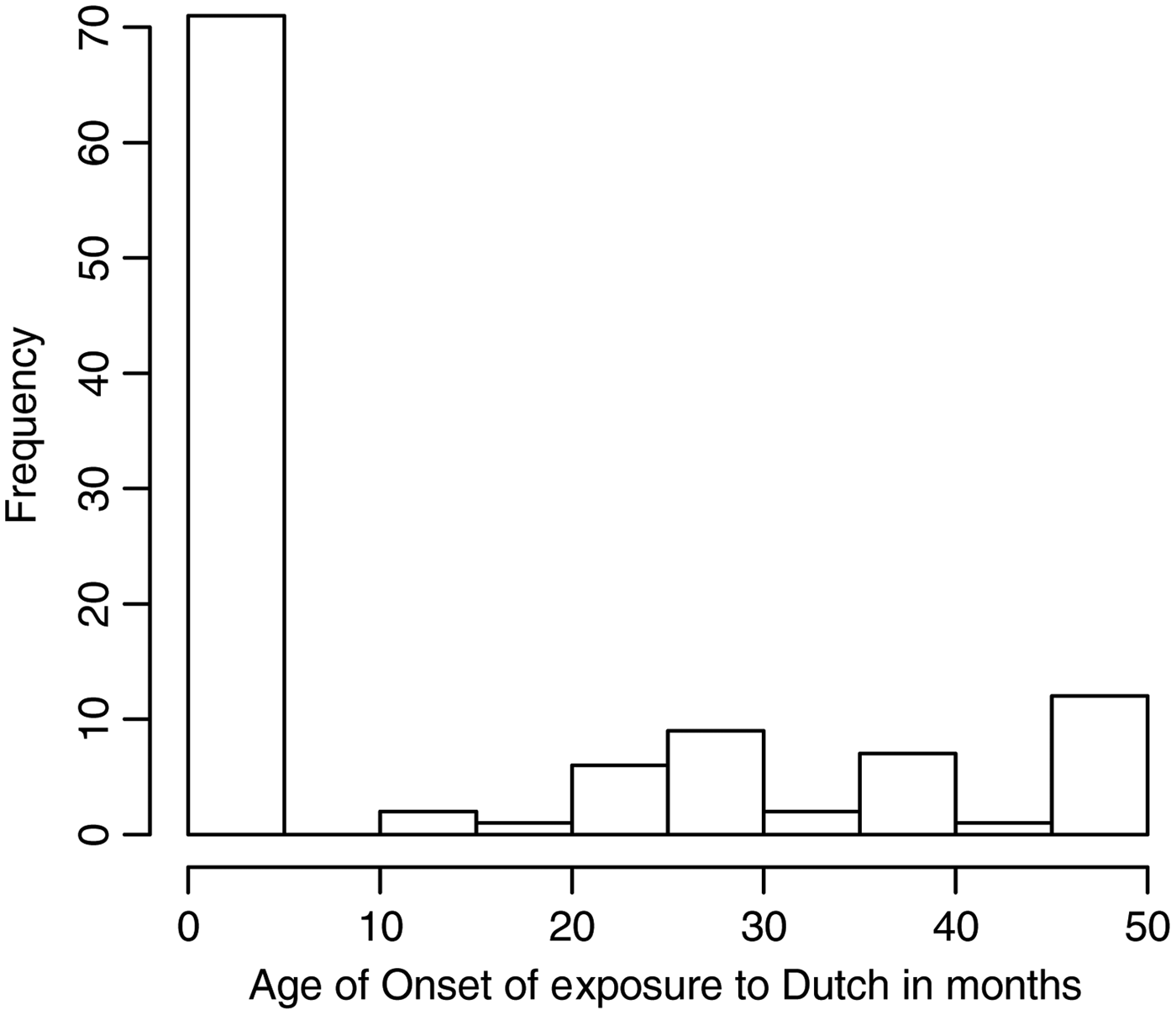
The children's mean AoO of exposure to Dutch was one year (ranging between zero and four years). Figure 1 shows the distribution of AoO in the sample. The children's mean intensity of exposure to Dutch at home was ·32 (SD = 0·25; range = 0–1). On average, proficiency in Frisian inflection was 13·65 (SD = 5; range = 2–23; maximum score = 24), and proficiency in Dutch inflection was 15 (SD = 3·15; range = 8–23; maximum score = 24). Their mean score on Dutch receptive vocabulary was 93 (SD = 7·62; range = 67–115; maximum score = 144).
Distribution of AoO of exposure to Dutch in months.

Closer inspection of the children's use of Dutch inflection revealed that on average the proportion correct on noun plurals (M = 0·67; SD = 0·07) was higher than on past participles (M = 0·58; SD = 0·24). Regarding regularity, the proportion of correct responses was lowest for items with a low degree of regularity (M = 0·54; SD = 0·15), followed by medium regularity (M = 0·62; SD = 0·18). The proportion of correct responses was highest for items with a high degree of regularity (M = 0·71; SD = 0·16), as expected.
The types of errors that the children made are summarized in Tables 1 (noun plurals) and 2 (past participles). Table 1 indicates that by far most errors with noun plurals were made with the most irregular items: 95% (411/430) of the errors with noun plurals were made with items in class 3 (NP3). In those cases, children did not apply lengthening of the stem vowel. Of the errors with a suffix, 32% (10/31) were cases of suffix omission, and 68% (21/31) were cases of a wrong suffix. ‘Other’ refers to children either responding with “I do not know” or using a different word.
Types of errors with noun plurals class 1 (NP1), class 2 (NP2), class 3 (NP3)

Types of errors past participles class 1 (PP1), class 2 (PP2), class 3 (PP3)

Table 2 demonstrates that with past participles, almost half of the errors (275/564) were made with items in class 3, that is, the most irregular forms (PP3). All errors with the suffix (only) comprise uses of an incorrect suffix. Stem changes were difficult for the children, as indicated by the relative frequency of stem errors (37%), as compared to errors with the prefix (0%) or suffix (23%). Combined errors were most frequently combinations of a wrong stem and an incorrect suffix, and hardly ever contained omissions of the prefix (n = 5). Omission of a prefix as the sole error only occurred twice.
Effects of AoO on vocabulary
The first research question was addressed by analyzing the data using multiple linear regression, with Dutch receptive vocabulary as the dependent variable and AoO for Dutch and intensity of exposure to Dutch as predictors. The correlation between AoO and intensity of exposure was significant but moderately strong and did not exceed the level of 0·70 which would lead to co-linearity (r(109) = –0·53, p < ·001). Therefore, the two predictors could be included in the same regression model.
A multiple linear regression analysis revealed that neither AoO nor intensity of exposure emerged as significant predictors. However, positive effects of AoO could have been masked by negative effects of length of exposure; namely, children with a later AoO also had a shorter length of exposure (r(111) = –0·94, p < ·001). Length of exposure was calculated by subtracting AoO from age at time of testing. To isolate the effect of age, we predicted the variation in AoO for Dutch by length of exposure to Dutch using linear regression. The residual variation, that is, the variation in AoO that could not be explained by length of exposure, was used to create a new decorrelated AoO predictor. This predictor correlated significantly with the original AoO predictor, though the correlation was not strong (r(111) = 0·33, p < ·001). Together, AoO (decorrelated) and intensity of exposure explained a significant amount of variance (F(2,110) = 12·85, p < ·001, adjusted R 2 = 0·17) in the children's Dutch receptive vocabulary. AoO emerged as a significant predictor (β = 0·53, p < ·001), as did intensity of exposure to Dutch (β = 5·99, p = ·02).
About 2/3 of the children were exposed to Dutch from birth and only 1/3 received exposure to Dutch at later ages. Because the sample was unbalanced, we also ran a multiple linear regression analysis with a subsample of the children. In this analysis, half of the children (n = 40) were exposed to Dutch from birth and the other half (n = 40) were exposed to Dutch at later ages. This did not alter the outcomes: AoO (decorrelated) and intensity of exposure explained a significant amount of variance (F(2,80) = 7·96, p < ·001, adjusted R 2 = 0·14) in children's Dutch receptive vocabulary. Both AoO (β = ·44, p < ·001) and intensity of exposure to Dutch (β = 5·90, p = ·02) predicted a significant amount of variance.
Effects of AoO on inflectional morphology
To address the second research question, the data were analyzed using mixed logistic regression modelling. This method is suitable because the dependent variable for the grammatical morphemes is binary (correct, incorrect). Child and Item were included as random-effect variables and AoO (decorrelated), proficiency at Frisian inflection, type of inflection, and intensity of exposure to Dutch as fixed-effect predictor variables. We started with the full model that included all four predictors (model 1) and then tested reduced models by removing non-significant predictors (backward elimination). Models were compared using the Akaike Information Criterion (AIC): a lower AIC value implies a better model fit. The reduced model with significant main effects of AoO, intensity of exposure to Dutch, and proficiency at Frisian inflection (model 2) had a slightly better model fit than the full model (in which type of inflection turned out to be a non-significant predictor): AIC model 1 = 1889·2, AIC model 2 = 1888·6. Again, we re-ran the analyses with a subsample to check the outcomes for a more balanced sample (see above). In this smaller sample, AoO was not significant, while the significant main effects for intensity of exposure to Dutch and proficiency at Frisian inflection remained unaltered (model 3). Relevant model information (coefficients, standard error, z-value and associated p-value) can be found in ‘Appendix 2’.
The data were further explored using non-parametric classification procedures, which provide insight into the variable structure (Hothorn, Hornik & Zeileis, Reference Hothorn, Hornik and Zeileis2006; Strobl, Malley & Tutz, Reference Strobl, Mallay and Tutz2009; see for application to linguistic data and further explanation: Blom & Baayen, Reference Blom and Baayen2012; Blom & Paradis, Reference Blom and Paradis2015; Tagliamonte & Baayen, Reference Tagliamonte and Baayen2012). The goal of classification is to build a model that predicts the outcome value based on a number of prespecified variables. We started with binary recursive partitioning, a procedure in which one classification tree is built. AoO for Dutch, intensity of exposure to Dutch, proficiency at Frisian inflection, and type of inflection were entered as the predictors, and accuracy (correct, incorrect) was the outcome variable. Figure 2 shows the result. The full set of observations is at the top (node 1). The boxes at the bottom indicate the predicted probability that in the subsets (which result from splitting) a response is either correct or incorrect. For instance, the tree shows that for plurals the probability that children respond correctly is about 0·70 (node 2). The tree also shows that whereas accuracy at using past participles is influenced by all predictors, accuracy at using noun plurals is not.
Binary recursive partitioning tree for children's accuracy at using Dutch inflection based on the prespecified predictors intensity of exposure (Intensity_exposure_Dutch), type of inflection (Inflection_type) divided into noun plurals (plur) and past participles (part), proficiency at Frisian inflection (Proficiency_Frisian), and AoO (AoO_Dutch_resid).
The first and top-most split (node 1) is made based on type of inflection, and shows that the children perform better with noun plurals than with past participles. As explained above, the children's performance on noun plurals is unaffected by intensity of exposure or proficiency at using Frisian inflection. This is different for past participles. Node 3 shows that children whose intensity of exposure to Dutch is higher than 0·40 perform better with Dutch past participles than children with an intensity of exposure to Dutch of 0·40 or lower. Both within the group with lower and higher intensity of exposure, proficiency at using Frisian inflection is relevant (node 4, node 13): in the group with lower intensity of exposure, the optimal splitting value is at a proficiency score of 15, whereas in the group with higher intensity of exposure this is at a proficiency score of 11. In both exposure groups, the direction of the effect is positive, showing that children who are more proficient at using Frisian inflection make fewer errors at using past participles in Dutch than children who are less proficient at using Frisian inflection. AoO turned out to be relevant for accuracy in using past participles, but only for a subgroup of children (n = 22): within the group of children who were relatively proficient at inflection in Frisian (score > 15) and had a relatively low intensity of exposure (score ≤ 0·40), children with a higher AoO were more accurate than children with a lower AoO.
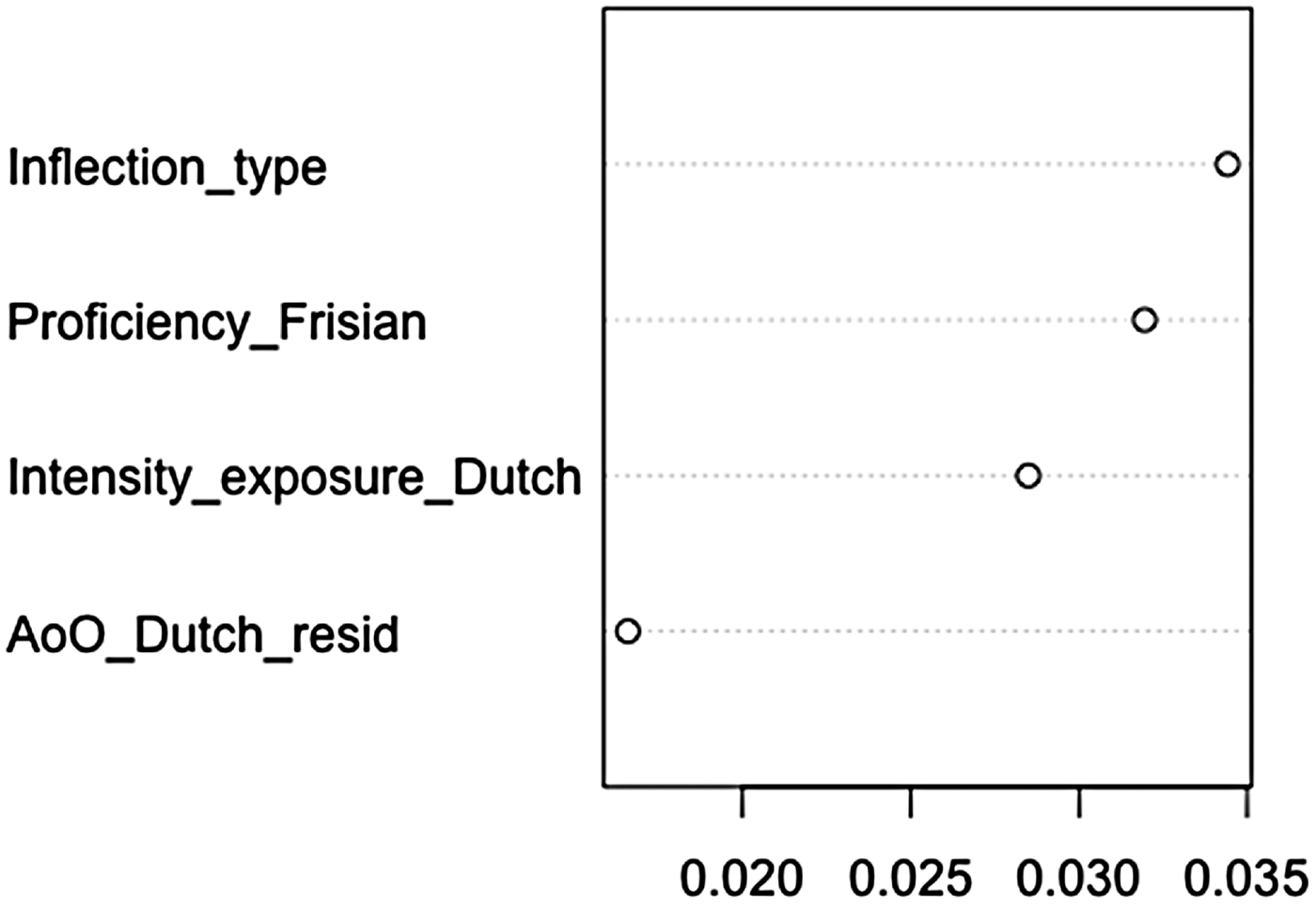
A single tree is easy to interpret. However, single trees can be unstable, and their predictive accuracy can therefore be low. To remedy this, the recommendation is to also perform analyses where ensembles of trees are grown (Strobl et al., Reference Strobl, Mallay and Tutz2009). The output of this random forest procedure is plotted in the variable importance plot in Figure 3. Figure 3 demonstrates the relative importance of the four predictors based on a large number of trees. The predictors on the y-axis are ordered with the most important at the top and the least important at the bottom. Variable importance, as indicated on the x-axis, is calculated by means of a permutation test: it is the (normalized) difference between the prediction error before and after the values for a predictor have been permuted. The rationale behind this measure is that if a variable is not important, permutation will not degrade the prediction accuracy.
Variable importance plot indicating the relative importance of the predictors intensity of exposure (Intensity_exposure_Dutch), type of inflection (Inflection_type), proficiency at Frisian inflection (Proficiency_Frisian), and AoO (AoO_Dutch_resid) with respect to children's accuracy at using Dutch inflection.
Figure 3 reveals that inflection type is the most important predictor, followed by proficiency at Frisian inflection and intensity of exposure to Dutch. Of least importance is AoO, in line with the outcomes of binary recursive partitioning, where AoO did not emerge in the classification tree.
Both the binary recursive partitioning and random forest analysis were applied to the more balanced, smaller dataset. The classification tree was similar to Figure 2without nodes 6, 7, and 10. Thus, in the smaller sample, AoO did not contribute significantly. Variable importance remained unaltered.
Effects of AoO in relation to cross-linguistic overlap
The third research question is concerned with the overlap between Dutch and Frisian, and how overlap may interact with AoO. The difference in accuracy between the set of items that overlap across Frisian and Dutch and the set of items that do not overlap is statistically significant, as indicated by the outcomes of a paired sample t-test (t(110) = 13·91, p < ·001): the children performed better with the overlap set than the set without overlap (see Table 3). Most items without overlap are irregular items (n = 6), fewer items without overlap have medium regularity (n = 3), and the lowest number of items without overlap is highly regular (n = 2). Good performance on overlapping items and poorer performance on items without overlap can therefore not solely be attributed to positive versus negative transfer from Frisian to Dutch, but could also be an effect of regularity.
Mean accuracies and standard deviation for items that did and did not overlap between Frisian and Dutch

A follow-up analysis was performed in which noun plurals and past participles were analyzed separately, as the confound between overlap and regularity is only relevant to noun plurals. A two-way repeated measures ANOVA with Inflection type (noun plurals, past participles) and Overlap (overlap, no overlap) as the within-subject variables indicates a significant main effect of Inflection type (F(1,109) = 4·83, p = ·03, η p2 = 0·042), a main effect of Overlap (F(1,109) = 178·33, p < ·001, η p2 = 0·62), and a significant interaction between Inflection type and Overlap (F(1,109) = 22·35, p < ·001, η p2 = 0·16). Paired-sample t-tests indicate that the children are more accurate with the overlapping items than with the items without overlap with noun plurals (t(109) = 24·88, p < ·001, η p2 = 0·85) and with past participles (t(109) = 4·98, p < ·001, η p2 = 0·19). Both effects remain significant after a Bonferroni adjusted alpha level of 0·025 (0·05/2 = 0·025) for multiple comparisons. The interaction effect is caused by the difference in effect size, which is clearly larger for noun plurals than past participles. Table 3 lists the mean accuracies (SD).
Next, two mixed logistic regressions were performed, one on the set of items that overlap between Frisian and Dutch and one on the set of items that do not overlap between the two languages. AoO (decorrelated) and intensity of exposure to Dutch were entered as fixed-effect predictors, and Child and Item were entered as random-effect predictors. In the overlap set only AoO emerged as a significant predictor, and in the set without overlap both predictors were significant (‘Appendix 3’, models 4 and 5). However, AoO did not emerge in the two classification trees.
DISCUSSION AND CONCLUSION
The main goal of this study was to investigate whether differences exist between children who start to learn a new language at a very early age or somewhat later. As such, the findings of our study bear on the question of whether children should start learning a new language as early as possible. Previous research has indicated that for vocabulary growth an older AoO can be helpful (Golberg et al., Reference Golberg, Paradis and Crago2008; Snedeker et al., Reference Snedeker, Geren and Shafto2007, 2012), a finding which we sought to replicate in our study with Frisian–Dutch bilingual children. The children in the present study were exposed to Frisian from birth and to Dutch between zero and four. Regarding the development of grammar, and more specifically closed-class elements and bound and free grammatical morphemes, results about the effect of AoO are mixed (Blom & Paradis, Reference Blom and Paradis2015; Snedeker et al., Reference Snedeker, Geren and Shafto2007; Unsworth et al., Reference Unsworth, Argyri, Cornips, Hulk, Sorace and Tsimpli2014). As part of this study, we also investigated effects of AoO on noun plural and past participle formation in the same group of bilingual Frisian–Dutch children. Transfer and exposure were included in the study because these factors are related to and easily confounded with AoO.
In line with previous research on immigrant children learning English L2 (Golberg et al., Reference Golberg, Paradis and Crago2008) and internationally adopted children (Snedeker et al., Reference Snedeker, Geren and Shafto2007, 2012), we found that an older AoO supports bilingual Frisian–Dutch children's vocabulary development (research question (1)). When a model was run with AoO for Dutch, and intensity of exposure to Dutch as predictors, no effects emerged. However, AoO was confounded with length of exposure, and when we created a new, decorrelated, predictor AoO, it did predict vocabulary size in the expected direction. Thus, the positive effect of AoO on vocabulary development is valid across various bilingual child populations: not only internationally adopted children and English L2 learners in an immigration setting but also bilingual Frisian–Dutch children seem to develop their vocabulary in their new language more rapidly when they are older. The AoO range investigated in our study was smaller than in previous studies. Combining the outcomes of the various studies, we can conclude that the positive effect of AoO on vocabulary development holds (at least) for an AoO range between ages zero and approximately six years, where the lower limit is based on the present study and the upper boundary is based on Golberg et al. (Reference Golberg, Paradis and Crago2008). Besides AoO for Dutch, intensity of exposure to Dutch emerged as a significant predictor of vocabulary size. This parallels findings reported in previous research. For instance, Cobo-Lewis, Pearson, Eiler, and Umbel (Reference Cobo-Lewis, Pearson, Eiler, Umbel, Oller and Eilers2002) found that extent of exposure predicted bilingual children's vocabulary.
Regarding inflectional rules, our study shows that AoO for Dutch (decorrelated), intensity of exposure to Dutch, and proficiency at Frisian inflection predict bilingual Frisian–Dutch children's accuracy at using noun plurals and past participles in Dutch (research question (2)). Non-parametric classification procedures demonstrated effects of type of inflection, intensity of exposure to Dutch, and proficiency at Frisian inflection. AoO also emerged as a significant predictor – children with an older AoO performed better than children with a younger AoO – but the effect of AoO was only relevant to a small subset of the data. The low importance of AoO was confirmed by the variable importance plot, and when the analyses were performed on a smaller but more balanced subsample of the data AoO did not emerge as a significant predictor. Based on these outcomes, we conclude that AoO had some positive effects on grammar, but the effects were limited, and possibly negligible, which is in line with findings on closed-class morphemes in internationally adopted children (Snedeker et al., Reference Snedeker, Geren and Shafto2007) and tense inflection in immigrant children learning English L2 with typical language development (Blom & Paradis, Reference Blom and Paradis2015). Intensity of exposure to Dutch was a more important predictor than AoO, which is in line with findings reported by Unsworth et al. (Reference Unsworth, Argyri, Cornips, Hulk, Sorace and Tsimpli2014) for grammatical morphemes expressing gender.
The above findings reveal that AoO affects both vocabulary and grammar positively. At the same time, a contrast was found because AoO had clearly more influence on vocabulary than on grammar. Both vocabulary and grammar development could benefit from more cognitive resources, such as a larger verbal short-term memory, better attention spans, and more declarative knowledge. The difference between vocabulary and grammar could be explained by the relevance of conceptual development for vocabulary versus grammar. In order to learn vocabulary, a child has to map conceptual and phonological information. Older children know more concepts than younger children, and therefore their L2 vocabulary may show faster growth. Consequently, children with an older AoO have larger vocabularies than younger children. Conceptual development is less important for learning how to form noun plurals and past participles than for vocabulary development.
Intensity of exposure affected both vocabulary and grammar, as AoO did. The influence of AoO on vocabulary was more prominent than the influence of intensity of exposure, whereas, regarding inflection, the influence of intensity of exposure was more prominent than the influence of AoO. In this study, intensity of exposure to Dutch may have had a relatively small effect on the children's Dutch receptive vocabulary because of the extensive lexical overlap between Frisian and Dutch. Consequently, even with little exposure to, and limited knowledge of, Dutch, a Frisian-speaking child can perform accurately on a Dutch receptive vocabulary task because of experience with Frisian (see, for a similar point regarding other closely related languages, Kelley & Kohnert, Reference Kelley and Kohnert2012; Stadthagen-González, Gathercole, Pérez-Tattam & Yavas, Reference Stadthagen-González, Gathercole, Pérez-Tattam, Yavas and Gathercole2013).
With respect to the larger effect that intensity of exposure to Dutch has on vocabulary than on inflection, it is also important to consider task effects. Vocabulary was tested with a multiple-choice task in which children heard a word and indicated its meaning by choosing one of four pictures. The four pictures provided children with cues regarding the meaning of the words, and the children could also select a picture by reasoning and excluding options. Inflection was tested using an elicitation task with no cues regarding the target inflected form. Thus, the multiple-choice task used to test vocabulary may be a less sensitive measure of children's knowledge of Dutch, and hence less sensitive to the intensity of exposure to Dutch compared to the ‘open’ production task that was used to test inflection.
Finally, we investigated effects of transfer between Frisian and Dutch in relation to AoO (research questions (2) and (3)). We tentatively predicted a global negative transfer effect for past participles, and an interaction between AoO and inflection type. The descriptive statistics indicated that the children indeed performed better with noun plurals than with past participles, which was confirmed by the outcomes of the classification procedures. The binary recursive partitioning tree demonstrated an interaction between AoO and inflection type: AoO emerged as a predictor for past participles only. However, this AoO effect was positive, showing that an older AoO was associated with fewer errors, instead of more errors as was tentatively predicted. Also, the children hardly ever omitted the participial prefix when they used Dutch past participles. Based on this we conclude that past participle use in Dutch was not affected by global negative transfer from Frisian. The predictive value of accuracy at using Frisian inflection revealed a global positive transfer effect. More granular analysis at the level of lexical items suggested that this may be due to lexical overlap between Frisian and Dutch. Taken together, these findings suggest that the Frisian–Dutch bilingual children separate their inflectional rules in Frisian and Dutch, but when lexical items are identical in the two languages, children seem to rely on the language other (Frisian) than the one tested (Dutch), suggesting a partly shared lexicon.
Based on a suggestion by Unsworth et al. (Reference Unsworth, Argyri, Cornips, Hulk, Sorace and Tsimpli2014), we hypothesized that AoO may have a negative effect in the set of items that do not overlap between the two languages. The opposite was found: AoO had some small positive effect in both sets. Note, however, that Unworth et al.'s suggestion was based on data on grammatical gender, that is, morphosyntactic rules, whereas in our analysis negative effects of AoO were investigated at the level of lexical items that do or do not overlap between the L1 and L2. Our findings do not rule out the possibility that with respect to grammatical features that are not present in the L1 and have to be learned in the L2, a later AoO of exposure to the L2 could be detrimental. Given the hypothesis that effects of (negative) transfer are more prominent when L1 and L2 have less overlap (McDonald, Reference McDonald2000; Monaghan & Ellis, Reference Monaghan and Ellis2002; Sabourin et al., Reference Sabourin, Stowe and de Haan2006; Zevin & Seidenberg, Reference Zevin and Seidenberg2002, Reference Zevin and Seidenberg2004), it would be pertinent to manipulate overlap at the level of grammar, and contrast children with an inflecting versus non-inflecting L1 in order to investigate whether greater familiarization with a non-inflecting language delays learning inflection in the L2.
There are a number of limitations to our study that are relevant to mention. In this study, we decorrelated AoO and length of exposure, which were highly confounded. Although the correlation between the decorrelated predictor AoO and the original predictor was significant, the correlation was small to medium. Thus, the original AoO predictor and the decorrelated AoO predictor overlap in what they measure, but there is also a substantial amount of variance that is not shared by the two measures of AoO. Moreover, although we used a decorrelated measure of AoO and included intensity of (current) exposure as a covariate, we cannot exclude the possibility that AoO was still to some degree confounded with exposure, because we did not include cumulative exposure, which combines length and intensity of exposure. Note, furthermore, that in this study AoO ranged between zero and four. Within this age range, AoO had hardly any effect on the development of grammatical morphemes, but this does not rule out the possibility that AoO shows an effect with a broader age range. Finally, this study was limited to accuracy data, and we did not systematically investigate AoO in relation to error types (Meisel, Reference Meisel2009). In this respect it is relevant to note that the error types in Tables 1 and 2 are not specific to bilingual children but are found in Dutch monolinguals as well (De Houwer & Gillis, Reference De Houwer, Gillis, Gillis and De Houwer1998; Van Wijk, Reference Van Wijk2006).
In this study, we investigated effects of age of onset on vocabulary and grammar (inflection) in a sample of five- and six-year-old bilingual Frisian–Dutch children. Age of onset of exposure to Dutch, which ranged from zero to four, had a positive effect on the children's Dutch receptive vocabulary, reflecting the role of conceptual development on vocabulary acquisition. Accuracy at using inflection, in contrast, was hardly influenced by age of onset, showing that, during early childhood, cognitive maturing has little influence on the acquisition of inflection. Taken together, the main finding of this study is that the common idea that it is better to start as soon as possible with learning a new language does not necessarily hold. In fact, this study with Frisian–Dutch bilinguals shows that, for the correct use of grammatical morphemes, it does not matter whether children start at age zero or four. For rapidly learning words in a new language it may be helpful to first build a substantial vocabulary in the first language before learning a new language.
Appendix 1: items of the Dutch TAK word formation test and the Frisian word formation test
Appendix 2: model specifications full dataset
Model 1 full model, full dataset, fixed effects:
Model 2 reduced model, full dataset, fixed effects:
Model 3 reduced model, balanced dataset, fixed effects:
Appendix 3: Model specifications and classification trees for datasets with and without overlap
Model 4 dataset with overlap, fixed effects:

Model 5 dataset without overlap, fixed effects: