

Italian tunes are needed for the Italian, for the Turk, Turkish tunes would be needed. Each is affected only by accents that are familiar to him; his nerves yield to them only insofar as his mind disposes them to it: he must understand the language that is spoken to him for what is said to him to be able to move him.Footnote 1
Jean-Jacques Rousseau, Essai sur l’origine des langues
In order to bring forth this invention, which from time to time many men have worked on, it was necessary for there to be people skilled in the music of other nations; just as by the unity of various voices a melody is formed, in the same way, with the unified knowledge of the music of the Armenians, Greeks, Turks, and Latins, our [notation] was invented.Footnote 2
Minas Bzhshkean, Erazhshtut‘iwn
In 1743–44, Jean-Jacques Rousseau held a short-lived post as secretary to the French ambassador in Venice. His account of this sojourn in Confessions includes well-known descriptions of the concerts of the charitable scuole for poor girls and his revelatory discovery of the charms of Italian music.Footnote 3 Rousseau doesn’t mention whether, between his administrative duties and his ambivalent enjoyment of the pleasures of the city, he had the chance to take a boat across the lagoon to the Catholic Armenian monastery of San Lazzaro, which had been established over twenty years earlier. If he did go there, distant memories of the experience might have played a part in his decision to start wearing Armenian dress when he was in exile in the Swiss canton of Neuchâtel (then under the jurisdiction of Frederick the Great) in 1762–65. In any case, the immediate reason was ostensibly health-related: Rousseau was plagued by urinary problems and a loose-fitting robe would make it easier to use a catheter. As luck would have it, there happened to be an Armenian tailor who regularly visited a relative in Montmorency, the small commune outside Paris where Rousseau had written Émile (the draconian reaction to which had forced him to flee France).Footnote 4 Of course, this doesn’t explain why he also needed to wear a fur kalpak, as depicted in a portrait by the Scottish society painter Allan Ramsay in 1766, completed while Rousseau was a guest of David Hume in London (Figure 1).Footnote 5
Allan Ramsay (1713–84), Jean-Jacques Rousseau, 1766. Scottish National Gallery, Edinburgh.

Rousseau’s choice of dress might be understood as a simple case of Orientalism: a form of masquerade, as Matthew Head has suggested, that sits comfortably alongside the eighteenth-century European fashion for turquerie and garbled parodies of Ottoman music and manners by the likes of Lully, Rameau, Handel, and Mozart.Footnote 6 Certainly, the reactions of his contemporaries would seem to support such an interpretation: Rousseau was delighted that, upon seeing him in Armenian costume for the first time, his patron in Neuchâtel, the Scottish Jacobite Earl Keith, greeted him with the pseudo-Arabic ‘salamaleki’.Footnote 7 So far, so Orientalist. Yet Rousseau’s — and indeed the Earl Keith’s — interest in the East was more than skin-deep, as the historian Ian Coller has shown.Footnote 8 Rousseau’s father Isaac spent seven years in Istanbul as watchmaker to the Ottoman court, and another relative grew up in Isfahan before becoming French consul at Basra. In his late teens, Rousseau travelled around Switzerland on a quixotic fundraising mission with a (possibly bogus) Greek Orthodox priest from Jerusalem. In Neuchâtel, the Earl Keith’s household included a young woman called Emetullah, described as ‘a Moslem from Armenia’, as well as ‘Ibrahim the Tartar, said by Keith to be related to the Grand Lama; Stéphan the Kalmouk; and Motcho the Negro’.Footnote 9 Rousseau was also accompanied in Neuchâtel by his beloved dog, Sultan (his previous dog, Turc, died in 1761). As Coller has argued, Rousseau’s personal ties and fascination with the East informed his political and philosophical views, as expressed in Émile and other works, and suggest the possibility of a more nuanced approach to relations between Europe and the Islamicate world during the age of Enlightenment.
Coller suggests that one source of inspiration for Rousseau’s favourable portrayal of Muslim society in the sequel to Émile might have been the story of the ‘generous Turk’ in the first entrée of Rameau’s Les Indes galantes (1735).Footnote 10 Larry Wolff has similarly argued that operatic depictions of the Ottomans during the long eighteenth century were characterized by a sympathetic attitude due to a lowered sense of military threat following the failed siege of Vienna in 1683.Footnote 11 However, while Wolff is attentive to the geopolitical context of Orientalist operas, like most other writers on this subject he focuses solely on European perceptions and representations, and omits serious consideration of Ottoman musical, cultural, or intellectual practices on their own terms (aside from some obligatory references to the Janissary band).Footnote 12 Relatedly, Wolff takes for granted that the Enlightenment was an essentially European affair, albeit one that was shaped through contacts with other cultures and the reflexive philosophizing that this engendered. Coller’s considerably less Eurocentric account reveals some of the material networks that connected Paris and London with Algiers or Istanbul, but he stops short of examining in detail the experiences and perceptions of the non-Europeans whom Rousseau encountered. Thus, while these scholars advocate for a more global conception of the Enlightenment, it is still one that is seen and heard predominantly through the eyes and ears of western Europeans. The same holds true, of course, for other studies of European perceptions of the Ottoman Empire or more distant lands during the early modern period.Footnote 13
Yet might it be possible to recover other experiences of connected early modern worlds? Those of, for example, the Armenian tailor and his relative on the outskirts of Paris, or the young Muslim woman from the Caucasus, or the Greek Orthodox priest who ended up on the gallows in a provincial Dutch town? Following such threads might reveal a different kind of cosmopolitan geography, one that is connected to but not centred on the metropolitan cities of western Europe, and in which Istanbul, Jerusalem, or Isfahan might, for some of those who travelled along its roads and byways, exert a more powerful centripetal force than Paris, Rome, or Vienna. This suggests that there may also be multiple directions of travel and circulation: not just Europeans going ‘there’ and coming back ‘here’ with tales and tokens of the East, but also those who set out by foot, horse, and ship to reach the westernmost lands of Eurasia, sometimes settling there, sometimes moving on to other places, sometimes returning home to explain the customs of the locals to their compatriots, or to make good on a business deal that financed the journey.Footnote 14 We might even ask what these lesser-known cosmopolitans — including those who, like Rousseau, did not venture far but discovered other worlds through reading and personal encounters — thought about Rousseau and his notions of Enlightenment, or indeed about his notions of harmony. Might we conceive, in other words, not just of an alternative geographical mapping, but of alternative intellectual networks that exist outside of, though still in relation to, the discursive domain of the European Enlightenment? And how might this change our understanding of what it means to write ‘connected’ or ‘global’ histories of music?
This essay explores these questions through the lens of a musical treatise written in 1812 by the Catholic Armenian polymath Minas Bzhshkean (1777–1851).Footnote 15 The treatise discusses the reform of the notation system used in Armenian church music, which was undertaken in collaboration with Bzhshkean’s patrons, the Tiwzean family, and the musician Hambardzum Limōnchean (1768–1839). My primary concern is not with the practical adoption of the new notation system or its technical aspects, but with the global historical and intellectual context in which the idea of notational reform emerged. The invention of Hampartsum notation has usually been interpreted within the nationalistic framework of either Armenian or Turkish music history.Footnote 16 As I will show, however, it emerged out of a much more complex and extensive conjunction of factors, including interactions between different confessional groups in the Ottoman Empire as well as the transimperial networks of the Armenian diaspora. These networks were shaped by forced migrations, commercial ties, and contacts between Eastern Christians and Catholic missionaries. Above all, the notational reform was the result of an intellectual revival led by the Mekhitarist monastic order of San Lazzaro, which involved a critical engagement with the Enlightenment and played a central role in Armenian cultural life from the mid-eighteenth to the mid-nineteenth century. While the movement has long been studied as an aspect of Armenian intellectual history, and more recently in relation to global histories of print, little attention has been paid to its intersections with music history. However, a study of connections between the Mekhitarist revival and efforts towards musical reform in the Ottoman Empire provides a rich opportunity for thinking about music and enlightenment in global historical context.
In what follows, I first consider how recent scholarship on the global history of the Enlightenment might be applied to the study of music history. I then situate Bzhshkean’s treatise and career within a transimperial network of cultural production and patronage, sketching the connected material and intellectual histories which converged in the impetus towards notational reform. In the main parts of the essay, through a detailed analysis of the opening chapters of the treatise, I discuss how Bzhshkean interpreted European writing on music by authors including Rousseau, Kircher, and other, lesser-known figures, and how he integrated these ideas with those drawn from Armenian, Greek, and Ottoman intellectual and musical traditions. In the concluding section, I compare the invention of Hampartsum notation with other projects of musical reform in the Ottoman Empire, including the contemporaneous reform of Greek notation, especially with regards to their engagement with the emancipatory politics of the Enlightenment. Finally, by reconsidering Rousseau’s own notation system and his Essai sur l’origine des langues within this expanded historical framework, I offer some reflections on how the Armenian notational reform might offer new ways to think about the nexus between music, language, and national identity in the Enlightenment and beyond.
Music, Enlightenment, and Connected History
Research on music and global history during the Enlightenment has generally focused on encounters between Western travellers or settlers and indigenous music traditions, and the representation of non-European musics in eighteenth-century Western scholarship.Footnote 17 Needless to say, these areas are closely linked to European economic and colonial expansion during the early modern period, and the concomitant shift in subjectivity whereby Europeans came to view themselves and their music as uniquely civilized. But while it is essential to acknowledge that the Enlightenment was constituted by what Enrique Dussel (referring to modernity) calls ‘a dialectical relation with a non-European alterity’,Footnote 18 it is equally important to understand how non-European actors themselves contributed to the emergence of global modernity through material networks and activities as well as intellectual and cultural practices. The global circulation of ideas associated with the Enlightenment during the eighteenth and nineteenth centuries occurred via convoluted pathways of appropriation, translation, and reinterpretation in diverse local conditions. As Sebastian Conrad argues, to the extent that this process actualized the purported universality of the Enlightenment, not as a unilateral process of diffusion or colonial imposition but through creative acts of synthesis and reinvention by local actors with their own ideals and intentions, ‘[s]ocial groups in Istanbul, Manila and Shanghai literally made the Enlightenment’.Footnote 19
Drawing inspiration from Conrad’s critical reappraisal of the Enlightenment, I suggest that music history might also be reconceptualized within a more pluralistic, multicentred, and connected framework. At first sight, the debate about notational reform within the Catholic Armenian community may appear to be a highly localized issue, of little consequence for larger historical or methodological questions. Yet as I will show, it can be adequately understood only by taking into account its connections with broader historical processes, social groups, and cultural practices both within and beyond the Ottoman Empire. Scholars such as Jean-Paul Ghobrial and Sebouh Aslanian have shown how the mobility and cultural syncretism of Eastern Christians in the early modern Islamicate world can provide a vivid illustration of the interaction between microhistorical and global processes.Footnote 20 Indeed, as Sanjay Subrahmanyam points out in his seminal article on connected history, it is precisely such cases of cultural syncretism, which often fall through the gaps between national, linguistic, and disciplinary boundaries, that are most valuable for thinking about connectedness.Footnote 21 An awareness of globality should not obscure the local contexts that are essential for understanding the ways in which people make sense of and embody processes of connection. Moreover, connectedness encompasses not just encounters between Europeans and non-Europeans, but local, regional, and global entanglements between multiple cultural and linguistic groups, both over the longue durée and in the more intensive forms associated with modernity. Hence, while a connected historiographical framework offers the possibility of transcending the boundaries of the nation-state, this relates as much to Armenian, Turkish, or Greek national histories as to British, French, or German.
In the present essay, then, I am interested in the complexities and ambiguities that arise from deep histories of cultural and political entanglement, and the ways in which the ideals of the Enlightenment were interpreted musically by non-European subjects. By taking a non-European source and its local context as an initial vantage point, I want to suggest that contact with European ideas or practices was not always the most important factor in processes of musical reform, and that they often jostled for attention alongside many other streams of intellectual discourse, social alliances, and cultural practices.Footnote 22 This is also to suggest an alternative to the familiar story of state-led efforts to institute European musical practices as an aspect of military and bureaucratic reform, and the diffusion of Western art music and its conventions into global contexts.Footnote 23 In order to write more inclusive, multicentred, and fine-grained global histories of music, it is crucial that we take into serious consideration local non-European histories and social conditions, and recognize that these are equally as complex and multifaceted as the better-known and perhaps more attractive stories of encounters between Westerners and exotic others. In this way, we might gain an unfamiliar perspective on the place of Europe in global music history, which does not locate it at the centre of the narrative, but somewhere within a deeper and broader mix of historical processes and entanglements. We can begin to explore such entanglements through a consideration of the Armenian reception of the Enlightenment via the Mekhitarist order, and especially the career of one of its foremost representatives, Minas Bzhshkean.
Minas Bzhshkean and the Mekhitarist Revival
The monastery of San Lazzaro was established in 1717 by Mkhit‘ar Sebastats‘i (1676–1749).Footnote 24 Born in the Ottoman town of Sivas in central Anatolia, Mkhit‘ar probably converted to Catholicism through contact with Armenian graduates of the Collegio Urbano de Propaganda Fide as well as Jesuit missionaries in Aleppo.Footnote 25 In 1703, having fallen foul of both the Armenian patriarch and the Ottoman authorities in Istanbul, Mkhit‘ar and a small group of disciples fled to the ill-fated Kingdom of the Morea, which had been established by the Venetian Republic four years previously. When the Ottomans reconquered the territory in 1715, Mkhit‘ar and his followers sought refuge in Venice, where they were granted permission to build a monastery on the island of San Lazzaro. With papal recognition, the Mekhitarists adopted a version of Benedictine rule (which, importantly, allowed a high degree of latitude for individual communities), and soon began to publish books, initially using local printers.
During the late eighteenth and nineteenth centuries, San Lazzaro was an extraordinarily productive centre of scholarship and printing, and Mekhitarist books were distributed across Europe and Asia, often for use in schools affiliated with the order.Footnote 26 While the majority of these books were on religious topics, they also included works on secular subjects. Like ‘visionary drudges’ elsewhere, the monks of San Lazzaro laboured over grammars, lexicons, and dictionaries which helped to transform a widely dispersed diaspora into an imagined cultural-linguistic community.Footnote 27 Abbot Mkhit‘ar himself published the first grammar of vernacular Armenian in 1727, followed three years later by a grammar of the classical language. The first volume of Mkhit‘ar’s dictionary of Armenian was published in 1749, six years before Samuel Johnson’s dictionary of English.Footnote 28 In addition, the Mekhitarists collected, edited, and published classical Armenian manuscripts, wrote new works on history and geography, and translated religious and secular European books.
Although they were affiliated with Rome, the Mekhitarists were dedicated to the ‘renaissance’ (veratsnund) of the entire Armenian nation (including Apostolic Armenians, who vastly outnumbered Catholic Armenians). They believed Armenians had fallen into a state of ignorance and dispersion which could be reversed through education, linguistic standardization, and a consequent revival of their past cultural greatness and unity. The Mekhitarist revival has therefore often been understood as a prelude to the Armenian nationalist movements that emerged in the late nineteenth century.Footnote 29 To be sure, there were isolated calls to establish an independent Armenian state by figures such as Israel Ori (1658–1711) and the adventurer Joseph Emin (1726–1809), who, together with a group of merchants in Madras, published a prototypical constitution in the 1780s. But these revolutionary ideas were on the whole denounced by the Armenian Church, and the Mekhitarists were similarly opposed to projects of political — rather than spiritual or intellectual — liberation.Footnote 30
The majority of Armenians lived in Islamicate empires, and negotiated a complex relationship between communal identity and assimilation to their wider cultural environment. By the late eighteenth century, Istanbul was the largest diasporic centre, and thus the largest market for Mekhitarist books.Footnote 31 The monks of San Lazzaro typically hailed from the Turkish-speaking Armenian communities of the Ottoman Empire. A large number of books and periodicals published by the order were therefore in Armeno-Turkish (i.e. Turkish in Armenian script), including translations of works such as Pope’s Essay on Man, Voltaire’s Candide, and Metastasio’s oratorios.Footnote 32 Monks who had completed their training at San Lazzaro often returned to the Ottoman Empire to establish schools and minister to local Armenian communities.
The Mekhitarist revival was facilitated by global diasporic connections, and by a longer history of printing that began with the establishment of the first Armenian press in Venice in 1512. Books printed here and in other port cities such as Amsterdam, Marseille, Istanbul, or Madras were financed and distributed via mercantile and ecclesiastical networks that extended from the North Sea to the Indian Ocean.Footnote 33 Thus, as Sebouh Aslanian has argued, the Mekhitarist revival cannot be interpreted solely within the framework of Armenian national history, but must be situated in relation to developments in both Europe and the Islamicate world, and as an aspect of larger global connections during the early modern period. At the same time, the movement belongs intellectually to what David Sorkin has called the ‘religious Enlightenment’, encompassing developments such as the Jewish Haskalah, which was similarly led by a clerical intelligentsia and supported by a mercantile diaspora, but also similar projects of reform within Protestant and Catholic contexts.Footnote 34 As I will discuss below, there are close similarities — but also significant divergences — with the Greek Enlightenment, particularly as this related to ideas of musical reform.
The entanglements of the Armenian Enlightenment with developments in Europe and the Ottoman Empire are well illustrated by the career of Minas Bzhshkean.Footnote 35 While Bzhshkean is an obscure figure in musicology, a brief discussion of his biography and publications will help to situate his musical treatise within a wider intellectual and historical framework. Born in 1777 in Trabzon, an Ottoman port on the Black Sea coast, Bzhshkean (Figure 2) was sent to San Lazzaro at the age of twelve and became a doctor of the church (vardapet) in 1804. He then returned to the Ottoman Empire via eastern Europe, arriving in Istanbul in 1808. He entered the household of the Tiwzeans (known in Turkish as Düzyan or Düzoğlu), who were Catholic and perhaps the wealthiest and most powerful Armenian family in the empire at the time. Bzhshkean served them as a private confessor and tutor, and was the head of a Mekhitarist school established by the family in Galata, a district with a high proportion of European and non-Muslim residents. In 1812, he completed a treatise on music (intended for publication in 1815), which is discussed in detail below. In 1815, Bzhshkean left Istanbul in order to found a school in Trabzon. He spent two years travelling around the Black Sea coast, and undertook a journey to Germany, Poland, and the Crimea in 1820. In around 1822, he moved to Karasupazar (present-day Bilohirsk) in the Crimea, once the centre of an Ottoman vassal state ruled by Tatar Muslims, but part of the Russian Empire since being annexed by Catherine the Great in 1783. At some point before 1830, he moved to Lemberg (present-day Lviv) in Galicia, which had been incorporated by the Habsburgs during the partition of Poland in 1772, and where a Kipchak Turkish-speaking Armenian community had lived since the late medieval period.Footnote 36 It was here that Bzhshkean died in 1851.
Unknown artist, Father Minas Bzhshkean, undated; the subject is holding a copy of his book K‘erakanut‘iwn Haykazean Lezui, Bats‘adreal i Ṙusats‘ Barbaṙ (Grammar of the Armenian language, explained in the Russian idiom) (I Tparani Srboyn Ghazaru, 1840). San Lazzaro Mekhitarist Monastery, Venice. Photo courtesy of Fr Vahan Ohanian.

Bzhshkean was a prolific author, and his publications demonstrate the significance of his contribution to the Mekhitarist movement as well as the intellectual scope of the latter. Although Bzhshkean moved between Armenian diasporic centres in Europe, the Ottoman Empire, and Russia, he sent all of his books to San Lazzaro for publication. Several of these, including his translation of Robinson Crusoe (1817), were among the first literary works to be published in vernacular Armenian.Footnote 37 As well as a number of other works for children, Bzhskean published a pioneering historical and geographical study of the Black Sea (1819), a history of the Armenian communities of Galicia and the Crimea (1830), and a two-volume history of the papacy (1838).Footnote 38 He also contributed to the Mekhitarist philological project by publishing works on Armenian and Russian grammar.Footnote 39 His ‘polyglot grammar’ of 1844, which was dedicated to Tsar Nicholas I, compares more than a dozen different languages in six different scripts (Figure 3).Footnote 40
Comparative table of pronouns from Minas Bzhshkean, K‘erakanut‘iwn Bazmalezu (Polyglot grammar) (I Gortsarani Srboyn Ghazaru, 1844), pp. 72–73. The languages illustrated are (from left to right): Arabic, Hebrew, Ottoman Turkish, Tatar, Persian, Armenian, Greek, Latin, Italian, French, German, English, Russian, Hungarian. Digitized by Greenstone Digital Library.

In addition to his scholarly activities, Bzhshkean was closely involved in both pedagogy and performative practices including music and theatre, which were supported by his patrons in Istanbul. Bzhshkean is credited with staging the first scripted Turkish-language plays in the Ottoman Empire, a practice that was adopted for the education of novices at San Lazzaro in the 1730s.Footnote 41 The plays were performed at Mekhitarist schools and at the Tiwzeans’ residences, which were sites of cultural production and intellectual debate. The Tiwzean family had been in charge of the Ottoman imperial mint since 1758, and had connections with both Muslim and European elites.Footnote 42 Like other elite Armenians, they had adopted Ottoman cultural practices and were loyal servants of the sultan, but they were also major patrons of the Armenian Enlightenment. As well as supporting scholars such as Bzhshkean, the family sponsored or actively contributed to Mekhitarist publications, including grammars, dictionaries, editions of classical Armenian works, and new periodicals. Their most important contribution to the Mekhitarist movement was the establishment by Hovhannēs Tiwzean (1749–1812) of the Arsharuni Society in 1812. This was the first learned society of its kind in Istanbul, which supported translations of books recently published in Europe, as well as ‘the composition and publication of completely new books in science, arts and history, by which our readers’ minds will be illuminated’.Footnote 43
Bzhshkean’s treatise on notational reform was written in this fertile intellectual and cultural environment. Members of the Tiwzean family were actively involved in developing the notation system, together with another of their clients, the musician Hambardzum Limōnchean (1768–1839; known in Turkish as Hamparsum Limonciyan).Footnote 44 A fellow Catholic, Limōnchean was trained in Armenian chant but also played the Ottoman long-necked lute tanbur, which he may have learned from Mevlevi Sufi musicians. In addition, he studied Byzantine chant and notation, which was not uncommon amongst Armenian musicians during this period. Although Limōnchean is often portrayed as the sole inventor of the new notation system, it was in fact the result of a collaboration between Limōnchean, Bzhshkean, and the Tiwzeans.Footnote 45 The main sponsor of Bzhshkean’s treatise was Anton Tiwzean (1765–1814), who, together with his brother Hovhannēs and the latter’s sons Sergis and Mik‘ayel, were skilled in Ottoman music.Footnote 46 Another of Hovhannēs’s sons, Hakob Tiwzean (1793–1847), also contributed to the development of the notation system. Hakob was educated in Paris, and, according to Bzhshkean, ‘by his intelligence had become very learned in Latin music’.Footnote 47 In order to understand how these diverse musical traditions were integrated by Bzhshkean and his collaborators, and how their project of notational reform resonated with the broader Armenian reception of the Enlightenment, I will now examine Bzhshkean’s treatise in more detail.
Erazhshtut‘iwn and Its Sources
The full title of Bzhshkean’s treatise is Erazhshtut‘iwn or ē Hamaṙōt Teghekut‘iwn Erazhshtakan Skzbants‘ Elewējut‘eants‘ Eghanakats‘ ew Nshanagrats‘ Khazits‘ (Music: that is, brief information about musical principles, the scales of the modes, and the written signs of the notes).Footnote 48 Written in clear, vernacular prose, it is a didactic work whose primary aim is to introduce the principles of the new notation system. In the following, I will focus on the first two chapters, which contain a short history of music, a rationale for notational reform, and a discussion of the physics of sound. I will first summarize the contents of these chapters, discussing the Armenian and European sources used by Bzhshkean, and briefly outline the technical aspects of the notation system. The following section will then analyse Bzhshkean’s arguments for notational reform in relation to the Mekhitarist revival and the translation of Enlightenment thought into his local intellectual and cultural environment.
Like much scholarship of the early modern period, Erazhshtut‘iwn draws on both classical and scriptural sources. However, these are shaped by a long history of translation and critical reception in the Armenian intellectual tradition. Thus, the epigraph to Bzhshkean’s treatise is from a work by David the Invincible (Tawit‘ Anhaght‘), a sixth-century Neoplatonist philosopher.Footnote 49 This is also the source for the introductory discussion that follows, which outlines the views of Plato and the Pythagoreans on the relationship between music, virtue, and cosmic harmony and the role of poets and singers such as Homer in ancient civic society. Turning to the question of the origins of music, Bzhshkean considers various theories propounded by natural philosophers, but dismisses them as ‘fables’ (aṙaspelner) and concludes that the Biblical story of Jubal’s invention of music is the most reliable.Footnote 50 Nonetheless, he also discusses the theory of Lucretius (supported by Kircher) that music originally arose from the sound of the wind in the reeds of the Nile, the role of the Greek muses, and Pythagoras’s acquisition of the knowledge of harmonic ratios from the Egyptians.
Some of this material is clearly derived, albeit without acknowledgement, from Rousseau’s Dictionnaire de musique (1768), and more specifically the article ‘Musique’.Footnote 51 There were multiple translations of the Dictionnaire into other European languages soon after it was published, and it is not clear which edition was consulted by Bzhshkean, or whether he used an intermediary source.Footnote 52 Furthermore, much of the material in the Dictionnaire was itself borrowed from earlier sources, particularly in relation to commonly known stories of music’s origins or its legendary powers. Nonetheless, the particular constellation of names, dates, and facts presented in the introduction to Erazhshtut‘iwn puts it beyond doubt that the Dictionnaire was one of Bzhshkean’s source texts, either directly or indirectly.Footnote 53
At the same time, Bzhshkean does not simply adopt material from Rousseau or other European sources unchanged, but selectively integrates it with other material that centres the intellectual traditions of the Armenians, which encompassed many of the same classical and Biblical sources. Thus, having discussed the musical practices of the Biblical prophets, ancient Chaldeans, Assyrians, and Jews according to the Roman Jewish historian Flavius Josephus, he turns towards the Armenians.Footnote 54 Since the art of music was preserved by Noah, who lived in Armenia after the ark landed on Mount Ararat, ‘according to a plausible conjecture, music first flourished among Armenians after the flood’. Furthermore, ‘if the Chaldeans and Assyrians were skilled in music, the Armenians must have been even more skilled; because amongst Eastern peoples, in ancient times the Armenians were more clear-sighted and more civilized.’Footnote 55 This emphasis on the historical achievements of the Armenians is reinforced by a discussion of epic songs and ceremonial music amongst the ancient Armenian kings, based on the late classical history of Movsēs Khorenats‘i (an edition of which was published in Amsterdam in 1695), and singing in the early Armenian Church, referring to the historian Step‘anos Ōṙbēlean (d. 1305).Footnote 56
Thus, Bzhshkean argues, music has always possessed extraordinary power. Borrowing again from Rousseau’s Dictionnaire, he describes how Timotheus could sooth Alexander’s rage or quicken his martial spirit by playing music. Following Rousseau loosely, he supports this well-known classical story by referring to more recent evidence, including a musician who so agitated the feelings of King Eric of Denmark that he killed his servant, Peter of Holland’s ability to break glasses with his voice (as related by Morhof), and Kircher’s claim that the sound of an organ has the power to move rocks. As Bzhshkean comments: ‘if music moves a rock, how much more might it move man’s stony heart to virtue and civility?’Footnote 57 Because music possesses so many benefits, the ancients sought to document its principles in writing, and the books of Aristoxenus and Ptolemy (among the Greeks) and Boethius and Augustine (among the Latins) are still known. However, the nōt‘a of the ancients was ‘extremely difficult and obscure’, and a new system was invented by Guido of Arezzo and perfected by Johannes de Muris in 1330. For this reason, ‘music has almost reached the height of perfection in Europe, and it was venerated to such an extent, especially in the early 1700s, that today great and small, rich and poor alike know music, choral singing, and so on’.Footnote 58
Here Bzhshkean turns once again to the Armenians. The ancient Armenians were certainly skilled in music, as indicated by the musical vocabulary recorded by David the Invincible. There may even have been ancient theoretical books on the subject, which might have succumbed, like so many other valuable works, to dust and bookworms. However, in recent times the Armenians have borrowed many musical and other practices from the Greeks, a process which began during the time of the Cilician Kingdom (1199–1375).Footnote 59 Therefore, a new notation system is needed in order to preserve Armenian music, in the same way that the invention of the Armenian script by Mesrop Mashtots‘ in the early fifth century enabled the preservation of a distinctive religious and literary culture:
And because music [i.e. notation] resembles writing, in that writing is also organized, in the same way its formation was also difficult. Thus Saint Mesrop experienced such a degree of difficulty in attempting to adapt Greek or Syriac writing for us that it was impossible, because their way and their spelling is one thing, and our way is another. Until he invented [the alphabet] anew it could not be; and in the same way, our melodies being very different from the melodies of the Latins, it was impossible for [Armenian musicians] to establish a rule, and for them to write Eastern melodies with their notation, to the point that it became necessary to invent the musical neumes or symbols anew, with a new method, with which it would be possible to read and write not only our melodies, but also the melodies of every other nation, just as every language can be written with the Armenian script — yet it might be that now it has been discovered it will appear easy to those seeing it, just as appeared the discovery of America.Footnote 60
Bzhshkean then describes the process by which he and his collaborators developed the new notation system, culminating in the composition of his treatise in 1812. In order that the notation would enable the writing of various ‘Eastern’ (arewelean) musics, ‘it was necessary that in some places we should follow the method of Greek music, and in some places we would apply the method of European music, and in many places that we would give examples of Turkish [music].’Footnote 61 Because Turkish (tachki) musical forms such as the peşrev are the most ‘ordered’ (kargaworeal) and ‘well proportioned’ (ch‘ap‘akts‘eal), they are most frequently used as examples that will be clearly grasped by readers. The aims of the reformers are summarized thus:
our desire was to establish a rule amongst the people, so that a musician would understand what he sings and plays, and write what he learns, read it as it is written and compose various melodies; [so that he would] write, [and] transmit it to others so that they can learn without effort; and not to change the melodies of our people, but to put them in order; although if the people wish, our melodies too can be ordered and taken down in writing, not so that they will be changed, but rather so that they will be sung in a uniform way in every city and every place, just as the melodies of the Latins are.Footnote 62
In concluding the introduction, Bzhshkean emphasizes that a rational musical system serves to increase patriotism (azgasirut‘iwn), because ‘the appetite for science awakens greater love of the people’. Furthermore, if the new notation system is adopted and perfected by the Armenians, ‘henceforth our nation will not seem the most imperfect amongst peoples, but instead all intelligent and brave, whether in virtue or in science’. The value of musical reform is further underlined by combining the Enlightenment ideal of progress with the Neoplatonist axiom that ‘man’s soul being intelligent and rational, is illuminated by scientific things’ in the same way that angels are glorified by the beauty of harmony and order that is manifested in the music of the spheres.Footnote 63
The following chapter contains a detailed discussion of the physics of sound, explaining vibration as the movement of particles and its impact on the inner ear; the physiology of human and avian voices; elasticity and the properties of sounding bodies; vacuums and the propagation of sound through different substances; the acoustics of buildings and other spaces; the velocity of sound; amplification and reverberation; and consonance and sympathetic resonance (Figure 4).Footnote 64 Much of this material is probably derived from Athanasius Kircher’s Musurgia Universalis (1650), which was widely distributed via Jesuit missions during the seventeenth and eighteenth centuries.Footnote 65 However, Bzhshkean also discusses more recent literature that is not found in the Musurgia, including the experiments of William Derham (published in 1708–09), which were the first to produce an accurate measurement for the speed of sound, and Jean-Antoine Nollet’s discovery (1743) that sound is transmitted through water.Footnote 66
Figures illustrating some principles of acoustics and the relationship between notational symbols and the frets of the Ottoman tanbur. Minas Bzhshkean, Erazhshtut‘iwn or ē Hamaṙōt Teghekut‘iwn Erazhshtakan Skzbants‘ Elewējut‘eants‘ Eghanakats‘ ew Nshanagrats‘ Khazits‘ (Music: that is, brief information about musical principles, the scales of the modes, and the written signs of the notes), unpaginated. Uncatalogued manuscript, San Lazzaro Mekhitarist Monastery, Venice.

While Derham is mentioned in Rousseau’s Dictionnaire, Nollet is not, and the details provided by Bzhshkean indicate that he must have taken this information from another (unidentified) source.Footnote 67 The material derived from Kircher and other sources is also reconstituted in various ways. Bzhshkean’s points of reference are those closest at hand rather than being drawn from European musical practices. Hence, the vibration of materials and the tuning of different lengths of string are discussed with reference to Ottoman instruments such as the tanbur and kanun, and Bzhshkean’s understanding of ‘consonance’ (hamadzaynut‘iwn) or ‘harmony’ (nerdashnakut‘iwn) is based on the modal system of Ottoman music, rather than tonal polyphony.Footnote 68 As he explains, ‘the entire art of music is derived from this [the laws of consonance], about which Latin musicians speak with lengthy rules, such as how the fourth, fifth, sixth, and eighth tones agree with each other […]; however, because their music does not conform with ours, we will omit them’.Footnote 69
Following his discussion of the physics of sound, Bzhshkean revisits the history of notation and the rationale for the new system. The writing of music, he explains, ‘appears as a very wondrous thing to those who do not know it, just as the [indigenous] Americans were amazed by writing and how it could be reproduced in speech’. Many ancient peoples had notation, including the Egyptians, Jews, Arabs, Latins, and Armenians. The Latins gradually perfected the rules of their system, beginning with Boethius and continuing with Saint Gregory and Guido of Arezzo. As for the Armenians, however, ‘having been subject to great misfortune, wandering here and there, in this art [of notation] too they remained very imperfect.’ Armenian music was once highly developed and the notation was widely understood, but, as Bzhshkean has previously explained, this knowledge declined during the Cilician period and afterwards due to Greek influence.Footnote 70 Attempting vainly to clarify the usage of the existing neumes, he reasons that the Armenian system is related to Byzantine notation, ‘and because their system was obscure and imperfect, our neumes have also remained obscure and imperfect’.Footnote 71
The reformed notation system was not indicative of relative intervals (as in some neumatic systems), but was based on the principle of one-to-one correspondence between symbol and (movable) scale degree (although some neumes indicating embellishments were also included). In this way, it would avoid the interpretative confusion and regional divergences produced by the old notation (as well as the Byzantine system), which meant that ‘in every land and every city [cantors] sing differently’. However, the reformers did not wish to adopt completely new symbols, but instead transformed the function of the existing symbols. Thus, ‘by using the signs of our ancestors, we wish to give respect to their discovery, since it is possible that they were discovered in the pre-Christian period, and in ancient times too such signs were used.’Footnote 72 After discussing some of the correspondences between Armenian and Ottoman modes, Bzhshkean concludes the chapter by highlighting another advantage of the new notation system: it can be written directly on plain paper, rather than requiring lined staff paper as the nōt‘a of the Latins does.Footnote 73
The remaining chapters of Erazhshtut‘iwn are concerned with the technical features of Hampartsum notation and its relation to Ottoman and Armenian musical practices. While a detailed discussion is beyond the scope of this essay, a brief explanation will help to illuminate Bzhshkean’s wider arguments about notational reform and to compare it with other methods of musical notation.Footnote 74 Like the Armenian script, Hampartsum notation is written from left to right. The majority of the graphic symbols are based on medieval Armenian neumes (khaz), from which their names are also derived, but they are assigned new values and functions. The system includes seven basic pitch symbols representing a heptatonic scale. These symbols may be altered by adding a tail or a horizontal line to represent higher or lower octaves. The placement of a small sign above or below the main pitch symbol indicates a heightening of the pitch by an indeterminate amount (ranging from an approximate quarter tone to a large semitone), which may change depending on the modal environment. While the exact intonation of pitches is not indicated, the underlying system corresponds to the fundamental pitch set of Ottoman music as represented by the fretting of the long-necked lute tanbur (see Figure 4). Duration is indicated partly through the arrangement of pitch symbols into regular groups and the division of larger rhythmic cycles into smaller units. More detailed aspects of rhythmic articulation are indicated by a set of proportional signs (representing e.g. one time unit, half a time unit, a quarter and so on) placed above the pitch symbols. The same signs indicate rests when placed at the same level as pitch symbols. Other symbols may be used to indicate qualitative aspects including vocal or instrumental techniques (e.g. tremolo or vibrato), phrasing and articulation, and stylized embellishments.Footnote 75
The appendix to Erazhshtut‘iwn includes a number of notated examples, from Armenian church music to pedagogical exercises and Ottoman secular genres.Footnote 76 A transcription is provided below of the beginning of an instrumental prelude (peşrev) by the Ottoman Greek composer Corci (d. 1778).Footnote 77 The original notation of the complete work is shown in Figure 5, and a transcription of the first section (serhane) in Example 1, with Hampartsum notation provided above the staff.Footnote 78
An instrumental prelude (peşrev) in Hampartsum notation. The heading reads: ‘P‘ēshrēf. Tiwkeah Chorchinin, Usuli fahtē.’ (Prelude. [In the mode] dügâh by Corci, in the rhythmic cycle fahte.) Minas Bzhshkean, Erazhshtut‘iwn, p. 66. Uncatalogued manuscript, San Lazzaro Mekhitarist Monastery, Venice.

Transcription of the first section (serhane) of Figure 5.

While there are many aspects of Hampartsum notation that may be analysed further, there are two issues that are directly relevant to the concerns of this essay. Firstly, in functional and conceptual terms the notation system is relatively simple to learn, as was intended by Bzhshkean and his collaborators. Although there is some latitude for interpretation, its relative lack of ambiguity contrasts with what was perceived by the reformists as the difficulty of older neumatic systems, whether Armenian, Greek, or Latin. As discussed below, this simplicity was also contrasted by Bzhshkean with the supposedly cumbersome theoretical rules and material requirements (i.e. special lined paper) of Western staff notation. Secondly, Hampartsum notation incorporates a variety of elements drawn from different musical traditions. Graphically, the symbols are based mainly on the khaz and the Armenian script, although some of the qualitative signs may be derived from Greek neumes.Footnote 79 Other aspects, such as the division of the rhythmic cycle into regular four- or two-unit bars and the use of proportional duration signs, are evidently inspired by European staff notation.Footnote 80 Finally, the underlying conceptualization of pitch and much of the technical nomenclature are based on the theory and practice of Ottoman music. Thus, as Bzhshkean writes, ‘just as by the unity of various voices a melody is formed, in the same way, with the unified knowledge of the music of the Armenians, Greeks, Turks, and Latins, our [notation] was invented.’Footnote 81
Translating the Enlightenment: Notational Reform and the Mekhitarist Revival
The perceived simplicity and pedagogical utility of Hampartsum notation reflected the reformist aspirations of Bzhshkean and his collaborators, which were representative of the ideals of the Enlightenment as interpreted in the context of the Mekhitarist revival. Yet at the same time, the fundamentally syncretic nature of the notation system was shaped by the complex history of the Armenian diaspora. Accordingly, Erazhshtut‘iwn demonstrates many of the traits of the Mekhitarist worldview, beginning with a historiographic framework based on the notion of a golden age followed by a period of cultural decline. This revivalist discourse is, of course, shared with other nationalist or proto-nationalist movements. In the Armenian case, the golden age is associated mainly with the period of late antiquity, when the Armenians were the first nation to accept Christianity, and developed a unique culture during the third to sixth centuries. The Cilician Kingdom, meanwhile, was the last period in which the Armenians enjoyed political sovereignty before several centuries of foreign rule.Footnote 82 This process of dispersion and assimilation to foreign cultures had, according to Bzhshkean, led to the loss of valuable knowledge, including an understanding of the Armenian neumes, and to a confusing diversity of musical practices.
Bzhshkean’s revealing analogy between the new notation system and the invention of the Armenian script invokes one of the most illustrious achievements of antiquity as well as the linguistic reform project of the Mekhitarists. As Abbot Mkhit‘ar wrote in his dictionary of 1749, the vernacular Armenian language had become ‘torn and scattered into as many pieces as there are regions, or even cities and villages. This language is sometimes so decomposed that people seem to speak another language and not Armenian.’Footnote 83 Mekhitarist scholars aimed to counter these degenerative and centrifugal tendencies by standardizing the vernacular and classical languages, defining their grammatic, orthographic, and lexical principles, and disseminating this knowledge though print and education. In the minds of Bzhshkean and his collaborators, the notational reform would similarly create a standardized, rational system of musical pedagogy and transmission, in which melodies would not be sung differently in every town and village, but uniformly and in accordance with clearly articulated rules (though, to be sure, this would be realized far less effectively than in the case of the linguistic reforms). Furthermore, ‘when the melodies and hymns are written and, with the will of the people, are printed with this notation, in all places and at every time they will remain in that mode and will always be sung in the same way; after a thousand years have passed, they will not be changed by a hair’s breadth.’Footnote 84
However, both linguistic and musical reformers faced an uphill struggle against the realities of diasporic life. As we have seen, a great number of Armenians in the Ottoman Empire were Turcophone, and loan words from Turkish or other languages made up a high proportion of the vernacular Armenian lexicon.Footnote 85 Similarly, Bzhshkean realized that the examples most likely to be understood by his readers would be those drawn from Ottoman music, and much of the technical vocabulary of Erazhshtut‘iwn is comprised of Ottoman Turkish nomenclature. At the same time, Bzhshkean recognized that, as an aspect of a deep shared history in religion, literature, and other areas, Armenian musical practices had long been intertwined with those of the Greek Orthodox community. Limōnchean himself was trained in Byzantine chant and had previously attempted to develop a notation system based on Greek neumes, while other sources confirm that Byzantine chant was an important point of reference for Armenian musicians in the late eighteenth century and earlier.Footnote 86 Thus, while the reformers lamented that Armenian music was ‘tinted with foreign colours’, they also took a pragmatic approach that acknowledged the complex cultural entanglements between different Ottoman communities.Footnote 87
In this regard, it is useful to distinguish between language and script. The latter was an important marker of identity in an empire where non-Muslim communities often spoke Turkish in everyday life, but worshipped and studied in ancient scriptural languages.Footnote 88 The Armenian script, acquired as an aspect of elementary religious education, was a tool of literacy regardless of the language spoken, and a means of maintaining a common Armenian identity across geographical and social boundaries. Similarly, Bzhshkean and his collaborators intentionally retained the symbols of the old neumatic notation, which was associated with past cultural greatness and a distinctive identity rooted in the Armenian Church. However, the music to be written in the reformed notation was not necessarily Armenian: as Bzhshkean claimed, in the same way that all languages could be written with the Armenian script, so the new notation system ‘would not only serve our melodies, but also those of the Ottomans, Arabs, and Greeks, and others’. Like Bzhshkean’s similar assertion that Hampartsum notation would be suitable for ‘the melodies of every other nation’, this refers primarily to the different ethnic and religious communities of the Ottoman Empire.Footnote 89
This universalistic and ecumenical aspiration, in harmony with the tenor of the Enlightenment, was not unrealistic. During the eighteenth and nineteenth centuries, the Armenian script was a vehicle for important developments in Ottoman literary culture, including the first scripted plays (championed by none other than Bzhshkean) and novels in Turkish, although these hybrid works were until recently excluded on nationalistic grounds from both Turkish and Armenian literary canons.Footnote 90 In the later nineteenth century, leading Muslim intellectuals advocated the use of the Armenian alphabet as a superior alternative to the Arabic or Latin scripts for writing Ottoman Turkish.Footnote 91 Likewise, Hampartsum notation was adopted by Muslim musicians in the mid-nineteenth century, and much of the Ottoman Turkish repertoire was preserved as a consequence of the Armenian notational reform.Footnote 92
The reformers were motivated by ideals of progress, rationality, and universality that resonated in a general sense with the Enlightenment. They also engaged directly with European musical literature and practices. The introduction to Erazhshtut‘iwn has much in common with European music histories of the eighteenth century, such as those of Forkel, Burney, Hawkins, and La Borde, and specific passages are borrowed from Rousseau’s Dictionnaire de musique. Footnote 93 The second chapter, based partly on Kircher’s Musurgia Universalis, appears to be the first Ottoman source in any language to include detailed discussion of the mechanistic theories of sound that emerged in Europe during the seventeenth century. Furthermore, the reformers had at least some knowledge of European music theory and notation, and they aspired to the orderliness, uniformity, and fixity that they perceived in the music of the Latins. However, there are a number of reasons why these facts should not be interpreted as evidence of a simple and predictable process of ‘Westernization’.
Perhaps most importantly, although the reformers were capable of adopting European staff notation, for both practical and ideological reasons they chose not to. Staff notation was deemed unsuitable for ‘Eastern’ music, which for Bzhshkean included the music of the Armenians as well as other Ottoman communities. The Latins had no means of representing intervals smaller than a semitone, which were what gave this music its affective ‘playfulness’ (khagh), and their theory was overburdened with complex rules about harmony that were irrelevant to modal practice.Footnote 94 A further impracticality was the need for lined staff paper. Moreover, in order to avoid undue criticism and to encourage their compatriots to accept the new system, the reformers were loath to abandon the existing symbols of Armenian church music. In functional terms, however, the reformed system most closely resembled neither Armenian or Greek neumatic notations, nor European staff notation, but the letter notations (based on the Arabic script) used in Ottoman music. This was an important factor (inter alia) in its later acceptance amongst Muslim musicians, unlike the reformed Byzantine notation that emerged during the same decade, which remained essentially neumatic and was never adopted by Muslim musicians.Footnote 95
Bzhshkean’s use of European music books also needs to placed in wider context. While his historical schema is similar to that found in eighteenth-century European music histories, it is not simply imitative or derivative. The central focus of Bzhshkean’s history is, unsurprisingly, the Armenians, and the place of Europe is ancillary. While the Latins might be admired for the development of their notation system, this is presented not as a model to be adopted, but as a spur for the Armenians to revive their own past greatness. Furthermore, while some of the historical material in Erazhshtut‘iwn is taken from European sources, much of it was already a familiar part of the Armenian intellectual tradition. Hence, widely known stories of the invention of music or its affective power in the hands of legendary sages such as Pythagoras and Orpheus were found in the work of David the Invincible as well as more recent Armenian authors such as Grigor Gapasak‘alean (c. 1740–1808).Footnote 96 At the same time, Pythagoras was a canonical figure in Arabic, Persian, and Turkish music writing, and both Bzhshkean and Gapasak‘alean invoke correspondences between modes and cosmological phenomena that were an integral part of Islamicate music theory until the late Ottoman period.Footnote 97 Contemporary European knowledge was therefore appropriated by Bzhshkean as but one more element in an intellectual and cultural world that was already profoundly syncretic as a result of earlier historical entanglements. To be sure, the use of more recent European scholarship demonstrates the desire of the reformers to illuminate their readers’ minds with ‘completely new books in science, arts and history’, as Hovhannēs Tiwzean advocated in 1812.Footnote 98 However, this is understood as a universal historical process that is compatible with older systems of knowledge and cultural practice, rather than a radical, alienating rupture with tradition.
The newest type of knowledge to be integrated by Bzhshkean is the Newtonian model of acoustics. Although harmonic ratios and other aspects of acoustics were discussed at length in earlier Islamicate music writing, they did not form an important part of the Ottoman intellectual tradition after the fifteenth century. The inclusion of this information in Erazhshtut‘iwn may therefore appear to represent a watershed: a shift towards a rationalistic conception of listening that, as Veit Erlmann and other scholars have argued, was instrumental to the emergence of (Western) modernity.Footnote 99 However, Bzhshkean’s treatment of this material is a reminder to be wary of the conventional narrative of the Enlightenment as the triumph of secular reason. For while Bzhshkean is in many senses a committed rationalist, scientific knowledge is ultimately conceived as a testament to the divinely ordered nature of the universe, and is subordinate to knowledge of the Creator and his message to mankind.Footnote 100
Far from being evidence of an Oriental susceptibility to irrationality or fanatical religiosity, such views were commonly held by natural philosophers associated with the scientific revolution, including Kircher and Newton. As Paula Findlen has shown, Kircher’s reputation declined during the Enlightenment while Newton was deified as a paragon of scientific reason. However, Newton’s speculations on the physics of sound (and, relatedly, on the spectrum of light) were fundamentally informed by his interests in theology as well as occult subjects such as Pythagoreanism and Hermeticism.Footnote 101 In any case, Kircher’s writings continued to be routinely used by music historians and natural philosophers into the late eighteenth century and beyond. His description of an amplifying trumpet used by Alexander the Great, for instance, which is also mentioned by Bzhshkean, was considered spurious until Morhof claimed to have seen a copy of the original text on which it was based (which was attributed to Aristotle and had been translated from Arabic into Latin). A replication of the instrument was built in 1796 by Gottfried Huth, Professor of Physics at the University of Frankfurt.Footnote 102 Even the more recent discoveries in acoustics cited by Bzhshkean were made by religious men: William Derham was an Anglican rector, while the Abbé Nollet was a theology graduate.
Part of the difficulty in identifying the European sources used by Bzhshkean is that the introductory sections of eighteenth-century music histories are themselves ‘a realm of fiction, conjecture and mysticism, peopled by gods and legendary beings […] a series of sourceless retellings, whose authority was accumulated rhetorically through frequency of repetition’.Footnote 103 As Head argues, this historical discourse stands in uneasy relationship with the purportedly rational and secular values of (post-)Enlightenment scholarship. The idea that the ancient Armenians had learned the art of music from Noah after the ark landed on Mount Ararat is, after all, no more (and if anything rather less) implausible than Rameau’s hypothesis that the theory of the triple progression had been transmitted by Noah’s descendants to China and thence Egypt.Footnote 104 Before dismissing such ideas as anachronistic remnants of a pre-rational age it is worth remembering that an essentially similar historiographic framework, which locates the beginnings of music in a conjectural Orient somewhere between the Holy Land and the Far East, was still thought appropriate for the introduction to the New Oxford History of Music in 1957.Footnote 105 Only a Panglossian optimism would lead us to suppose that the current age of vibrational ontologies, post-human ecomusicology, and decolonial neo-comparativism will be viewed more kindly by posterity. Perhaps the best we can hope for is that such ideas will one day (if humans are still around in some form) be deemed sufficiently quirky to merit tongue-in-cheek discussion as evidence of the epistemological chasm between ancients and moderns.
Beyond North and South: Provincializing Rousseau
The enlightened monks of San Lazzaro shared many of Rousseau’s philosophical ideals, including a belief in the moral virtue of the ancients and a concomitant notion of history as a process of dispersion and decline, as well as an ecumenical approach to religion and an acute understanding of the relationship between language and national identity. In musical thought, too, there are significant points of convergence between the Citizen of Geneva and his erudite Armenian readers in Venice and Istanbul.Footnote 106 They felt similarly about the tiresomeness of harmonic rules, and would certainly have agreed that the music of the ancient Greeks was monophonic rather than polyphonic, sweetened by melodic inflections that could not be notated or grasped by musicians and scholars in modern Paris. The inventors of Hampartsum notation would surely have approved of Rousseau’s proposal for a new notation system presented to the French Academy of Sciences in 1742, though despite having apparently consulted the relevant entry (‘Notes’) in the Dictionnaire de musique, Bzhshkean makes no mention at all of Rousseau’s system.Footnote 107 While the two notation methods were thus independently conceived and relate to quite different musical practices and cultural contexts, they shared a reformist aspiration towards systematization, universalism, and pedagogical efficiency that embodied key ideals of the Enlightenment.
Founded on rational principles, simple to learn, and avoiding the need for ‘all that hindrance of lines and staff’ (which, as someone who earned a living by copying music, Rousseau had evidently had enough of), Rousseau’s cipher notation was the subject of his first scholarly publications, and he continued using it to the end of his life, though it never caught on.Footnote 108 Or at least, not in Europe: it was adapted in China (and Japan) during the early twentieth century in the context of a different effort towards musical reform (around the same time that Chinese intellectuals were arguing that Rousseau’s theory of the social contract was essentially a restatement of classical Confucianism), partly due to its coincidental similarities much older local notation systems.Footnote 109 Of course, while they would have appreciated his espousal of movable rather than fixed scale degrees, the Armenian reformers would have struggled with the fact that Rousseau’s notation did not allow for more than twelve semitones per octave, and bore no resemblance to the Armenian neumes. As both Rousseau and Bzhshkean found out, the success or failure of musical reforms depends on a multitude of interrelated factors, including material conditions such as the availability of suitable print technology or local economies of manuscript production, the pedagogical and performance practices of theorists and musicians, and broader social and historical issues of language, culture, and politics.
Although the Armenian reformers had much common ground with Rousseau, they also diverged on certain matters, and on others they may have agreed in principle but had to adjust their actions according to different set of conditions. In some senses, the Mekhitarists were truer believers in the Age of Reason than Rousseau, for whom civilization and learning were a source of corruption and decline rather than improvement and progress.Footnote 110 Despite their lack of interest in triadic progressions, they might even have sided with Rameau when it came to the primacy of rational order and natural laws. But like other representatives of the religious Enlightenment (and unlike Joseph Emin and his associates in Madras), the monks of San Lazzaro were not anti-clerical, nor supporters of revolution, republicanism, popular sovereignty, or even constitutionalism. Fraternité was one thing, liberté and égalité quite another.
In fact, Bzhshkean must have been in Venice when it was occupied by Napoleon in 1797–98 and again in 1805–14, though one wouldn’t know it from his publications.Footnote 111 The monastery of San Lazzaro was spared the wrath that might otherwise have been directed towards a Catholic institution because it was judged to be an ‘academy of science’.Footnote 112 A year after the conquest of Venice, the French army advanced into Ottoman Egypt, accompanied by a cadre of Orientalist savants. The monumental Description de l’Égypte includes substantial treatises by Guillaume André Villoteau (1759–1839) — who also authored a detailed critique of Rousseau’s Essai sur l’origine des langues — on the musics of various communities in Cairo, including the Armenians.Footnote 113 The invasion and attendant scholarly project have, with good cause, been interpreted as representing a seminal shift in geopolitical power relations, in which the Enlightenment is a willing handmaiden to European colonialism.Footnote 114 However, by paying attention to the activities and perceptions of local subjects, rather than focusing solely on European sources, we may arrive at a more pluralistic, more complex, and perhaps more equitable understanding of the relationship between music, scholarship, and political emancipation.
The complexity and variety of connections between Enlightenment and musical reform can be better understood by comparing the Armenian case with contemporary developments amongst other communities in the Ottoman Empire. The most closely related example is the New Method of Byzantine notation, which was created by Chrysanthos of Madytos (c. 1770–1846) and his collaborators in Istanbul during the same decade that Bzhshkean was writing his treatise. The Greek reformed system was explained in a short treatise published in Paris in 1821, and then in the more extensive Theōrētikon mega tēs mousikēs (Great theory of music), published in Trieste in 1832.Footnote 115 The New Method was adopted by the Greek Orthodox Church, but was also used for dozens of collections of songs in Greco-Turkish (i.e. Turkish in Greek script) published in Istanbul during the nineteenth century.Footnote 116 Like the Armenian case, the notational reform was an outcome of an intellectual awakening amongst Greek Orthodox clerics and their diasporic mercantile patrons that began in the eighteenth century, and was closely connected to questions of linguistic and educational reform, cultural revival, and national identity.Footnote 117
But although there were a number of connections between the Greek and Armenian reforms, different social and political conditions, and not least a different positionality in relation to Europe and the Ottoman Empire, produced different historical trajectories. The Theōrētikon mega draws liberally on Rousseau’s Dictionnaire de musique and other European sources (including Villoteau), as well as discussing aspects of Ottoman music practice, but in comparison with Erazhshtut‘iwn places much heavier emphasis on ancient Greek music theory.Footnote 118 This was a reflection not of any real historical continuity between ancient and modern Greek practices, but rather of a revolutionary spirit that sought to revive the glory of ancient Greece for the cause of national awakening. Embodied in organisations such as the Society of Friends (founded in Odesa in 1814), the revolutionary cause was bolstered by European philhellenism and led, in the same year that Theōrētikon mega was published, to the establishment of an independent Greek kingdom ruled by a minor Bavarian prince. By contrast, it was only in the late nineteenth century that the notion of political independence gained wider traction amongst the Armenian intelligentsia, not coincidentally at the same time that Armenia became strategically important for the Great Powers as an aspect of the so-called Eastern Question. (When Lord Byron, pre-eminent philhellene and admirer of Rousseau, had proposed to publish an Armenian grammar in 1819 after studying at San Lazzaro, the learned monks rejected his original preface because of its inflammatory remarks towards the Sublime Porte.)Footnote 119
To take a second example, the founding document of modern Arabic music theory was written by the Lebanese Christian intellectual Mīkhāʾīl Mushāqa (1800–88). Although it was composed in around 1840, the treatise was not published in Arabic until an edition was prepared by the Jesuit missionary Pierre-Louis Ronzevalle in 1899, but its theoretical description of a twenty-four-note equal-tempered scale is widely (if inaccurately) regarded as the first detailed exposition of the modern Arabic pitch system.Footnote 120 Once again, Mushāqa’s treatise was the product of a syncretic local environment and transimperial networks of commerce, proselytism, and print, and drew on earlier Arabic sources and contemporary Ottoman practices as well as the Theōrētikon mega and Villoteau’s (somewhat confused) discussion of Arabic music in Description de l’Égypte. The descendant of a Greek silk merchant from Corfu whose family had converted to Catholicism, Mushāqa studied mathematics, astronomy, geography, and music in Damascus and medicine with a French physician in Cairo, eventually converting to Protestantism and becoming American Viceconsul in Damascus.Footnote 121 He was also associated with a group of Syrian Christian merchants and scholars in the Egyptian port of Damietta, who made the first translations of Enlightenment literature into Arabic. These contributed in turn to the emergence of the Arab cultural and political ‘awakening’ (nahḍa) in the nineteenth century.Footnote 122
Many other projects of musical reform emerged out of the Ottoman Empire during the nineteenth and early twentieth centuries, from Bulgarian choral societies to the ‘musical revolution’ of the nascent Turkish republic, all of them interpreting the intellectual and political ideals of the Enlightenment according to complex and unpredictable local conditions shaped by history, language, and culture. Of course, the same might be said of musical reforms further afield, from Beijing to Buenos Aires (where, incidentally, the last book in Armeno-Turkish was published in 1967).Footnote 123 At the core of global projects of musical reform is an assumed set of linkages between music, language, territory, and national identity that emerged during the Enlightenment and was given distinctive expression in Rousseau’s Essai sur l’origine des langues and other writings. These associations, which were rearticulated and developed at different historical moments in the work of Herder and many subsequent thinkers, were central to the disciplinary formation of musicology as well as to cultural nationalist movements throughout the nineteenth and twentieth centuries.Footnote 124 However, the musical reforms of the Armenians and other communities of the Ottoman Empire offer an opportunity to rethink the relationship between music, geography, and language in terms of connection and entanglement rather than bounded national communities or mutually opposed civilizations.
The notion of the Enlightenment as an exclusively European affair is bound up with a vision of history determined by essentially separate (‘sovereign’) nations or civilizations, itself a legacy of the eighteenth century.Footnote 125 For Rousseau, it is axiomatic that ‘every National Music derives its principal character from the language to which it belongs’, which is in turn the product of a local climate and an organic connection to a particular territory.Footnote 126 Yet such beliefs are difficult to sustain in contexts where people, ideas, languages, and musical practices travel and interact in complex ways across national and imperial borders, whether as a result of diasporic migrations and settlements, the circulation of capital and commodities, or the synthesis of diverse intellectual and cultural traditions over the longue durée. This is not to advocate a nostalgic celebration of ethnic and religious harmony, nor to deny the power relations that underlie all human interactions, but to attempt to think beyond the framework of nation-states and self-contained civilizations.
Rousseau’s understanding of music history was defined on the one hand by local debates about the merits of different national (especially French and Italian) musics, and on the other by an imagined climatic and affective geography of a cold North and a warm South. According to Rousseau, Arabic and Persian (like Italian and Greek) are southern languages, while Turkish (like French and English) is a northern language.Footnote 127 Following from the idea that language and music are — or should be — direct expressions of a people’s character, Rousseau is mistrustful of linguistic and musical syncretism.Footnote 128 Likewise, writing systems reflect the civilizational stage of a people, and should have an organic relation to the language they represent, although Rousseau recognizes that this is seldom the case, which he attributes to a gradual and unavoidable process of corruption.Footnote 129 While Rousseau doesn’t discuss the Armenian language or script, there is little doubt that literate Armenians would have recognized themselves amongst the ‘civilized’ nations who have developed an alphabet (as opposed the pictographs and logographs of ‘savage’ and ‘barbarous’ peoples, respectively).Footnote 130 Indeed, Rousseau’s hypothesis that the alphabet ‘must have been devised by commercial peoples who, traveling in several countries and having to speak several languages, were forced to invent characters that could be common to all of them’ seems particularly apt (although the invention of the alphabet was actually connected to the early history of the Armenian Church).Footnote 131
Writing under the sign of the Enlightenment, the Mekhitarists subscribed in principle to the idea that language and homeland are primary determinants of national identity, and that syncretism is therefore a result of dispersion and degeneration. But whereas it may have seemed relatively straightforward to identify a musical and linguistic tradition that was coextensive with France, England, or Italy (though this too, of course, is complicated by historical realities), the idea of a sovereign Armenia (or Greece, Bulgaria, Egypt, or any other constituent ‘nation’ of the Ottoman Empire) was more nebulous, and the cultural practices associated with it less easily circumscribed. The Ottoman language itself was an amalgam of Turkish, Arabic, and Persian, spoken (in different registers) as a mother-tongue by many Armenians and other ethnic and religious communities (who also spoke other languages) and written in a variety of scripts. There were Armenians who lived in their historical homeland in eastern Anatolia and the southern Caucasus, but just as many who lived elsewhere in the empire, or in Europe, Russia, Iran, or India. Correspondingly, the musical practices of Ottoman communities were not natural expressions of climate, territory, language, or national character, but localized accretions of disparate elements that were synthesized and developed through long periods of interaction with other linguistic, ethnic, and religious groups.
The point here is not to offer a positivistic critique of Rousseau’s speculative genealogy of language and music, but rather to highlight its historical and cultural specificity, or the way in which it reflects, as Rousseau says, ‘the penchant we have of relating everything to our [own] practices’.Footnote 132 To understand the Enlightenment as an aspect of global history is not simply to expand its geographical scope, but to attend to the circulations, connections, and entanglements — what Conrad calls the ‘conditions of globality’ — that precipitated projects of intellectual, cultural, and political reform.Footnote 133 Just as the conditions of globality altered the ways in which Europeans made sense of the world, people elsewhere responded to these conditions according to the exigencies of their own local environments. These were not homogenous, timeless cultures that were insulated from change before contact with Europe, but dynamic historical formations that were already connected to other peoples and places. However, while the Enlightenment was shaped by older and newer connections at both local and global levels, it also gave birth to ideas which — articulated by philosophes in Paris as well as reformers in Istanbul, Calcutta, or Tokyo — came to obscure such connections by propagating the sovereignty and uniformity of national languages and musics. In this sense, texts such as Erazhshtut‘iwn occupy a pivotal position, bearing witness to deep-rooted entanglements and far-reaching synchronicities, but also containing the seeds of a worldview which strives to confine histories of music within national or civilizational borders.
Soon after the publication of his Dissertation sur la musique moderne, a reformist tract comparable in its aims to Erazhshtut‘iwn, Rousseau left Paris to take up his secretarial post in Venice. To northerners like Rousseau, La Serenissima was an enchanting southern locale, overflowing with warmth, vitality, and melody. It was also the gateway to the East, a bustling marketplace, a cosmopolitan city of ambassadors, dragomans, merchants, and missionaries, where dozens of different languages were spoken and read. At the same time, these qualities made it a symbol of corruption, a Tower of Babel and a once noble republic that had succumbed to luxury and decadence. Although it seems unlikely that Rousseau visited San Lazzaro, he does mention that while in Venice he met ‘an Armenian, a man of intelligence, who had never heard any Music’.Footnote 134 The point of the anecdote that follows is to demonstrate the superiority of Italian over French music to the untutored ear. The parochialism that led Rousseau to assume that a ‘Music’ worthy of the name did not exist beyond his own small corner of the globe is perhaps unrepresentative of his mature philosophical views. If, however, having observed the Armenian’s reactions to a concert of French and Italian arias, he then asked him to sing a song in his own tongue, one hopes that the future author of the Dictionnaire de musique would have appreciated the close relationship between words, affect, and melody that is necessarily a feature of monophonic vocal music. He might have been dismayed, though, if the man had chosen to sing something not in Armenian, but in Turkish, Persian, or some other language. But, then again, so might Abbot Mkhit‘ar, secluded in an island monastery across the water from the theatres and salons of Venice, toiling away on his own dictionary.
Conclusion
Coinciding with the unprecedented growth of European power through imperial conquest and economic expansion, the Enlightenment is closely bound up with both coloniality and modernity. While the idea of the Enlightenment as the product of a uniquely European propensity for rational thought or democratic politics may still hold sway in some quarters, such triumphalist narratives have been called into question by alternative approaches that emphasize its global and colonial contexts. As in other areas of human knowledge, discourses about music in eighteenth-century Europe were shaped by an increased awareness of other cultures. Non-Europeans were also represented on stage and in musical works through exoticist and Orientalist stereotypes and appropriations. These practices contributed to an emerging sense of Europe as the pinnacle of civilizational development and the yardstick of universal norms. More broadly, the Enlightenment has been seen by its critics as a key component of the dehumanizing aspects of modernity that resulted not just in colonialist oppression but also twentieth-century totalitarianism.
However, the notion of the Enlightenment as synonymous with Western hegemony ignores the fact that its ideals have been creatively adopted for a variety of purposes by individuals and social groups across the globe. To be sure, paying attention to such processes does not necessarily avoid the historiographic and moral problems raised by critics of the Enlightenment. A figure like Bzhshkean might be seen as simply another lettered elite who attempted to impose modern, rationalist ideals on ordinary people through powerful institutions and technologies commanded by capitalist patrons, leading eventually to the emergence of exclusionary discourses of national identity. But like its celebratory variant, which sees the Mekhitarist revival as a catalyst for national emancipation and the attainment of a universal (Western) modernity, this would efface all of the internal complexities in the reception of the Enlightenment both amongst Armenian intellectuals and elsewhere. Indeed, it would be just as reductive as portraying Rousseau or other philosophes either as mere mouthpieces for European colonialism or as avatars of an innate Western superiority. At the very least, then, if it is crucial to remember that the Enlightenment encompassed a wide variety of intellectual and political projects, the inclusion of non-European sources and voices should demonstrate that this variety was also globally widespread. In other words, thinking about the Enlightenment as a global historical process does not just offer an expanded geographical scope, but contributes to a more diverse understanding of what the Enlightenment could mean for its many proponents.
The idea that the Enlightenment — or modernity — was constituted through interactions between Europe and the rest of the world is by now a familiar one. Yet the great majority of scholarship continues to focus only on the European side of this process. In this article, I have attempted to provide an alternative perspective by foregrounding the production of Enlightenment discourse by a non-European subject in relation to local musical practices. Rather than assuming a stark divide between Europe and the rest of the world — in which the Enlightenment, for good or for ill, is understood as an essentially ‘Western’ project — I suggest that the conceptual framework of ‘connected’ history may offer a more useful approach. If Rousseau’s sartorial habits or his ideas about music and language were shaped by increased global connections during the eighteenth century, this is equally true of Bzhshkean’s peripatetic career or his treatise on notational reform. My aim has therefore been not simply to provide an analysis of an unfamiliar non-European text, but to reconceptualize the relationship between Europe and other places as mutually constitutive. The Enlightenment may have been created through the expansion of Western colonial, economic, and epistemic regimes, but it is also necessary to understand how it was appropriated, reinvented, and critiqued by a variety of non-European actors — and, most importantly, how these processes were connected.


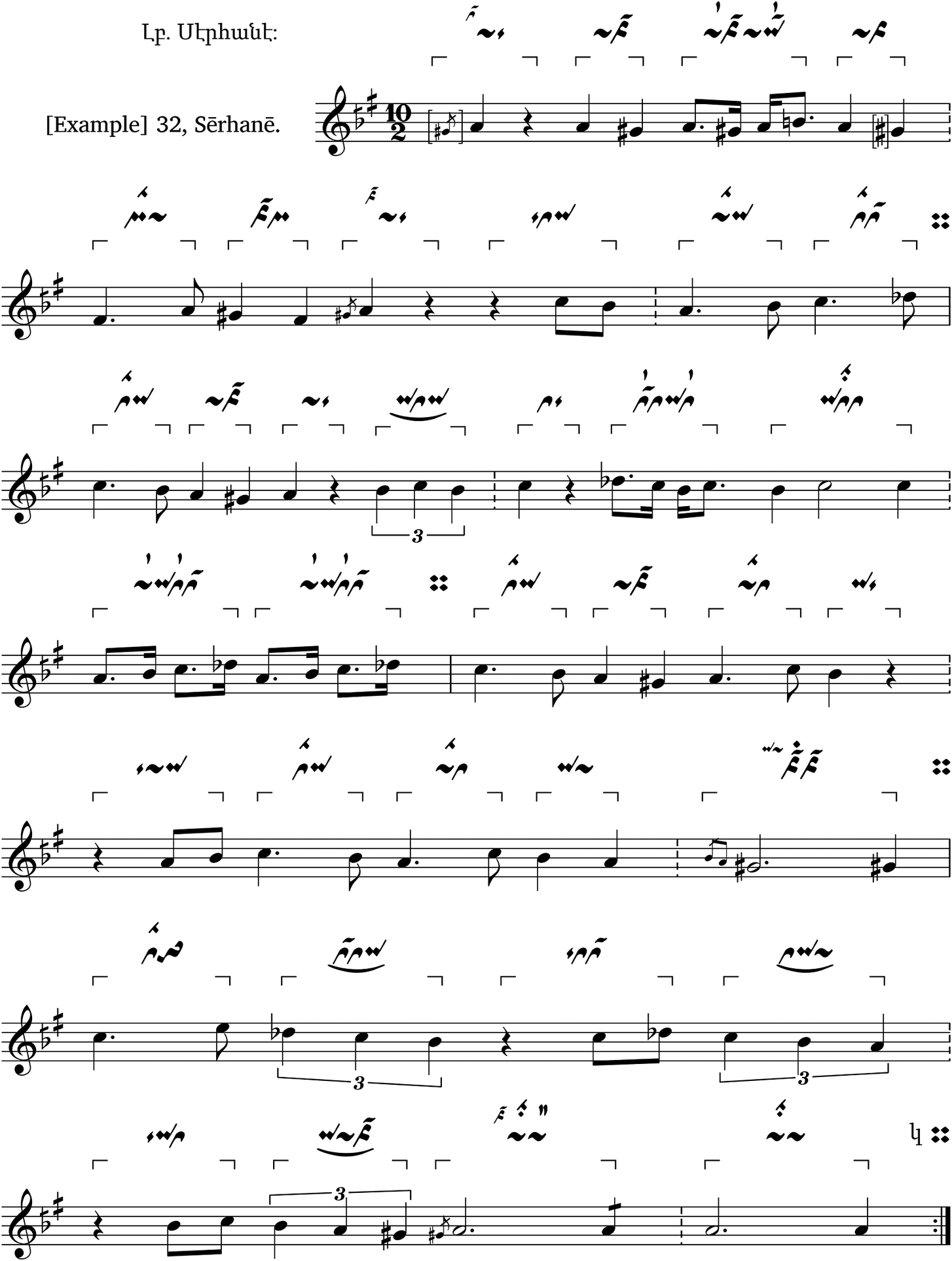

 Open access

