





Introduction
Scholarship on civil society increasingly questions accounts of “shrinking civic space” as a linear or purely repressive process, instead emphasizing a more dynamic configuration shaped by simultaneous openings and closures (e.g., O’Brien, Reference O’Brien2023; Toepler et al., Reference Toepler, Zimmer, Fröhlich and Obuch2020). This “adaptive turn” shifts analytical focus from how the state compresses civic space to how organizations navigate complex and sometimes contradictory governance environments (e.g., Aasland et al., Reference Aasland, Kropp and Meylakhs2020; Doyle, Reference Doyle2016). Although this literature demonstrates that NGOs exercise constrained agency, it has paid less attention to how such agency operates through digital infrastructures that increasingly shape visibility, legitimacy, and resource access.
Digital infrastructures are increasingly reshaping the nonprofit sector and reconfiguring how organizations relate to both the state and the market (Lai & Spires, Reference Lai and Spires2021). In this context, platform-based fundraising has become an important site for understanding NGO autonomy. Existing scholarship remains divided on whether digital fundraising expands or constrains the autonomy of marginalized NGOs (e.g., Cui & Wu, Reference Cui and Wu2024; Shi & Yang, Reference Shi, Yang, deLisle, Goldstein and Yang2016). For more politically sensitive and resource-marginalized organizations, digital fundraising creates a particularly sharp dilemma: it may open new possibilities for survival, but it also reshapes the conditions under which advocacy remains visible, legitimate, and materially sustainable.
In China, this tension is especially visible in Tencent’s 99 Charity Day (99 gongyiri), which has become the country’s most prominent platform-based fundraising infrastructure since 2015. Yet such platforms do not simply expand access to resources. They also function as gatekeepers by intensifying censorship, platform oversight, and algorithmic competition, thereby reshaping the conditions under which grassroots gender NGOs can remain visible and fundable (Cui & Wu, Reference Cui and Wu2024; Han et al., Reference Han, Lee and Song2025; Song et al., Reference Song, Lee and Han2023). Beyond the question of whether digital fundraising enables or constrains NGO autonomy, this article asks how NGOs navigate contradictory conditions over time and through which recurring practices they pursue resources, legitimacy, and advocacy under platform-mediated governance. This question is particularly revealing in the case of grassroots gender NGOs in China. These organizations operate at the intersection of political sensitivity, resource marginalization, and platform-mediated visibility.
Grassroots gender NGOs in China occupy a complex position within the civic landscape, many emerging after the 1995 UN Fourth World Conference on Women in Beijing and initially shaped by transnational gender mainstreaming agendas and foreign donor funding (Yang, Reference Yang2020). Since the 2016 Charity Law and the 2017 Overseas NGO Law sharply restricted foreign funding and intensified regulatory scrutiny, many grassroots organizations have been forced to seek domestically legitimate alternatives for survival (Spires, Reference Spires2020). At the same time, gender-related issues remain publicly visible in paradoxical ways. Although explicitly rights-based advocacy has become increasingly precarious, broader discussions of misogyny, domestic violence, youth well-being, and everyday gender inequality continue to circulate on mainstream platforms and draw donor attention. This leaves grassroots gender NGOs in an ambivalent position: they are neither fully excluded from digital fundraising nor securely incorporated into it. To remain present within mainstream philanthropic spaces, they must continually adjust how gender concerns are framed, signaled, and scaled.
Drawing on a longitudinal dataset of 463 crowdfunding projects initiated by 124 gender NGOs on Tencent Charity between 2015 and 2024, this article examines how constrained agency is enacted through recurring fundraising practices in platform-mediated environments. In doing so, we show how such agency is continually recalibrated and sustained through digital practices under shifting conditions of platformization and regulatory uncertainty.
The article opens with a literature review situating the study at the intersection of state–society relations, nonprofit marketization, and digital philanthropy, framing grassroots gender NGOs as a lens on negotiated civic space. After introducing our Tencent Charity dataset of gender-related fundraising projects, we present findings in three steps: (1) how political regulation and platform capitalism reshape fundraising opportunities; (2) how NGOs practice strategic conformity through state-aligned reframing and affective marketization; and (3) how they employ strategic stealth via calibrated (in)visibility and intersectional boundary-spanning. The conclusion brings these together to conceptualize strategic conformity and stealth as co-evolving repertoires of adaptive agency and considers their wider implications.
Navigating state–society relations through nonprofit marketization
Scholarship on NGOs in authoritarian and hybrid regimes has shifted from emphasizing repression to exploring how organizations negotiate constrained spaces. Instead of seeing NGOs as either co-opted or oppositional, recent work frames them as strategic actors navigating complex and sometimes contradictory governance arrangements. Organizations may accommodate state agendas to secure operational space, recalibrate their structures and practices in response to regulatory ambiguity, or strategically reposition sensitive issues through coded or development-oriented narratives to preserve mission continuity (Aasland et al., Reference Aasland, Kropp and Meylakhs2020; Dai & Spires, Reference Dai and Spires2018). In such settings, state governance operates by compelling NGOs to continually interpret shifting boundaries of permissible action (O’Brien, Reference O’Brien2023; Toepler et al., Reference Toepler, Zimmer, Fröhlich and Obuch2020).
China’s nonprofit sector exemplifies this negotiated governance and strategic responses. Concepts such as consultative authoritarianism (Teets, Reference Teets2013) and contingent symbiosis (Spires, Reference Spires2011) capture how state actors and NGOs sustain transactional relationships by trading nonconfrontation for constrained participation. Recent scholarship complicates this view by showing how organizational responses are shaped by uneven local resource environments (Hsu et al., Reference Hsu, Hsu and Hasmath2017) and how organizations navigate authoritarian governance through differentiated strategies of adaptation, including the management of state relations, organizational positioning, and selective incorporation under changing political conditions (Farid & Li, Reference Farid and Li2021; Hasmath & Hsu, Reference Hasmath and Hsu2014; Wu & Zhang, Reference Wu and Zhang2025). Taken together, NGOs have to constantly negotiate the degree of alignment required for survival while preserving autonomy without triggering sanctions.
The introduction of market forces adds further complexity, prompting debate over whether marketization empowers or constrains NGO autonomy under authoritarian rule. Some argue that marketization pushes NGOs to prioritize revenue generation over mission integrity, exacerbating goal displacement (Lai & Spires, Reference Lai and Spires2021). Others, however, contend that in authoritarian contexts the market can paradoxically enhance autonomy by providing resource channels beyond direct state control, contrary to its often-demobilizing effects in liberal societies (Yu & Chen, Reference Yu and Chen2018). These tensions are amplified under the platformization of digital philanthropy. Whereas corporate philanthropy privileges large, professional NGOs, crowdfunding platforms reduce entry barriers and costs, opening opportunities for grassroots actors (Lai et al., Reference Lai, Zhu, Tao and Spires2015). Contrary to earlier fragmented online fundraising on forums and bulletin boards, platformization broadens participation, enabling NGOs to access wider publics through user-friendly, gamified tools (Shi & Yang, Reference Shi, Yang, deLisle, Goldstein and Yang2016; Wu & Yang, Reference Wu and Yang2016; Yu, Reference Yu2017).
While platforms promise greater reach, they also impose new burdens on NGOs. Research highlights the challenges of sustaining donor attention, building communities, and converting visibility into donations (Lovejoy & Saxton, Reference Lovejoy and Saxton2012; Zheng, Reference Zheng2023). These tasks demand continuous digital labor, professionalization, and advanced digital literacy (Mato-Santiso et al., Reference Mato-Santiso, Rey-García and Sanzo-Pérez2021). Moreover, algorithmic recommendation systems incentivize NGOs to adopt platform-favored narratives that align with neoliberal logics of efficiency and emotional appeal (Cui & Wu, Reference Cui and Wu2024; Lai & Spires, Reference Lai and Spires2021).
In authoritarian settings, platforms serve as channels for financial resources and simultaneously operate as extensions of state censorship and surveillance, thereby subjecting NGOs to both technological regulation and political oversight (Cui & Wu, Reference Cui and Wu2024; Yu & Chen, Reference Yu and Chen2018). While digital platforms expand potential donor access, research indicates that contributors continue to prefer state-affiliated or officially endorsed organizations, limiting the anticipated benefits of online fundraising for grassroots NGOs (Song et al., Reference Song, Lee and Han2023). As a result, NGOs confront a hybrid governance environment in which political priorities, market incentives, and platform architectures co-shape what kinds of advocacy can be pursued, publicized, or even imagined. These dynamics are particularly consequential for grassroots gender NGOs working at the intersection of more politically sensitive gender and sexuality agendas and resource-scarce organizational ecologies.
Grassroots gender NGOs and adaptive strategies in platformized fundraising
Grassroots gender NGOs provide a particularly revealing case for examining this process. In this study, grassroots gender NGOs refer to legally registered, small- to medium-sized, locally embedded, community-based organizations working on gender-related issues, excluding government-organized NGOs (GONGOs). These organizations typically rely on hybrid funding structures that combine digital crowdfunding, foundation grants, government procurement, market-oriented services, and monthly donations. This funding profile makes them especially sensitive to changes in both political regulation and platformized resource distribution.
Over the past decade, civil society in China has faced tightening regulatory constraints even as feminist and LGBT+ debates have gained unprecedented online visibility. Regulatory governance has constrained the organizational space for gender advocacy through marginalization, administrative pressure, and episodic crackdown (Wang, Reference Wang2021). Paradoxically, gender issues continue to mobilize affective publics, as discussions of misogyny, sexual harassment, and everyday gender injustice circulate widely on mainstream platforms (Fincher, Reference Fincher2018; Wang, Reference Wang2023). This sustained visibility draws in part on the socialist legacy of women’s protection and equality, which provides a state-sanctioned moral frame for articulating gender concerns (Liu, Reference Liu2024). Unlike labor or environmental rights, which directly implicate state accountability and have receded from rights-based advocacy on fundraising platforms even prior to the 2017 Overseas NGO Law, gender issues can retain a degree of contentiousness while remaining discursively contained within acceptable boundaries. These dynamics place grassroots gender NGOs in a paradoxical position, working within an arena that is both politically sensitive and publicly negotiable.
Recent scholarship has paid increasing attention to online fundraising among grassroots NGOs in China. As fundraising capacity is highly shaped by access to legitimacy, social networks, and political ties (Zhou & Ye, Reference Zhou and Ye2021), it has prompted growing interest in how grassroots organizations navigate platformized fundraising despite their relative lack of such advantages. Existing studies identify several adaptive strategies. Some cultivate moral distinction through claims of “pureness” vis-à-vis bureaucratic and corporate philanthropy (Zhou & Han, Reference Zhou and Han2019). Some operate as “sympathy vendors,” tailoring emotionally resonant narratives to capture fragmented user attention (Huang, Reference Huang2022). These strategies show that grassroots NGOs must navigate platform attention logics and marketized competition creatively, especially as resources are increasingly concentrated in larger organizations. Other studies argue that NGOs are not always passive actors, showing that successful online fundraising may also enable grassroots NGOs to reshape local politics, suggesting that platform-based fundraising serves not only for resource acquisition but also as a means of expanding social ties, mobilizing publics, and reconfiguring local relational dynamics (Han et al., Reference Han, Lee and Song2025). Together, these studies show that digital fundraising opens selective opportunities while also reformatting the terms of organizational action.
Most research in this strand focuses largely on organizations in mainstream charitable sectors like disability and child welfare, leaving the more contentious field of gender and sexuality underexamined. We still know much less about what tensions emerge when these strategies operate within an advocacy field that is simultaneously publicly visible and politically constrained. Research on gender organizations is especially well-suited to illuminating this tension. On the one hand, gender issues retain sustained visibility and affective resonance in digital space. On the other hand, gender advocacy as an organized practice is subject to heightened political scrutiny and legitimacy pressures. Examining grassroots gender NGOs therefore offers a valuable lens for understanding how constrained agency is enacted and continually recalibrated where visibility, legitimacy, and autonomy are in constant tension.
Method and data
This study employs online archival research and content analysis using data from Tencent Charity, China’s largest digital fundraising platform. Recent methodological discussions have highlighted the value of documents for nonprofit and voluntary sector research, not only as sources of information, but also as materials situated within a broader “field of action” (Ho et al., Reference Ho, Duffy and Benjamin2023). Through a systematic review of over 10,000 99 Charity Day campaigns, we identified 124 grassroots gender NGOs and constructed a dataset of 463 projects covering the period from the initiative’s first launch in 2015 to 2024. Most of these gender NGOs are small in scale, with fewer than 10 staff members. Despite their limited size, nearly all completed formal registration with the Ministry of Civil Affairs between 2013 and 2018, a period of rapid nonprofit institutionalization in China, and only three operate as social enterprises. The sample does not include unregistered or informal gender collectives that are not eligible to participate independently in the 99 Charity Day. In addition, most of these organizations are located in first-tier cities or provincial capitals, with a particular concentration in metropolitan Beijing (19), Shenzhen (12), and Guangzhou (11).
To identify gender-related fundraising projects on the Tencent Charity platform, we conducted a systematic keyword search across project titles, descriptions, and organizational profiles. We developed the keyword list inductively, drawing on long-term engagement with grassroots gender NGOs—participating in workshops and seminars (2023–2025), analyzing WeChat campaign materials, and consulting annually curated feminist fundraising lists since 2019. Although limited in scope, these lists offered valuable insight into widely recognized thematic framings. We refined the list through iterative pilot searches to minimize false positives. The finalized keyword set comprised five thematic clusters central to gender-focused philanthropy in China (see Table 1). We cross-checked the search results against organizations identified through fieldwork and curated feminist project lists; when campaigns did not explicitly contain the keywords but were substantively gender-related, we manually included them.
Keyword clusters for gender projects

Table 1. Long description
The table consists of two columns: Thematic cluster and Representative keywords.
* Row 1: Gender and women. Keywords include gender (xingbie), women (funv), female (nvxing), girl (nvsheng/nvtong), female student (nvxuesheng), bud (hualei), and sister (jiemei).
* Row 2: Socioeconomic vulnerability. Keywords include rural women (xiangcun funv), female labor worker (nvgong), domestic helper (jiazheng), and women in poverty (kunjing nvxing).
* Row 3: Sex education and anti-gender-based violence. Keywords include sex education (xingjiaoyu), sex safety (xinganquan), safety education (anquan jiaoyu), sexual assault (xingqin), sexual harassment (xingsaorao), violence (baoli), and domestic violence (jiabao).
* Row 4: Health, care, and bodily needs. Keywords include mother (muqin/mama), maternity (muying), reproductive health (shengzhi jiankang), menstruation (yuejing), sanitary pad (weishengjin), and disabled women (canzhang nvxing).
* Row 5: Sexual minorities and gender diversity. Keywords include rainbow (caihong), L G B T, sexual minority (xingshaoshu), tongzhi, and H I V / A I D S (aizi).
After applying the keywords, the platform retrieved all projects containing them in titles, descriptions, or organizational names. We then manually reviewed each project and excluded those unrelated to promoting gender equality.Footnote 1 Beyond explicitly gender-related projects, we systematically included all fundraising initiatives launched by identifiable gender NGOs on the platform, regardless of explicit gender references, while excluding GONGO projects. This comprehensive inclusion allowed us to track shifts in organizational missions and boundary-spanning strategies through which gender NGOs respond to political regulation and platform incentives. The search results comprise 124 organizations and 624 projects. In a second screening, we removed 161 entries: 15 projects predated the launch of Tencent’s crowdfunding system and were treated as archival anomalies, and 146 were sub-projects whose outcomes were already aggregated under main projects. To avoid duplication, our analysis focuses exclusively on the main projects.
We conducted an issue-based classification of 463 projects by coding each project’s primary philanthropic theme based on its description. Both authors independently coded all projects using a shared rubric and resolved discrepancies through discussion. This yielded eight categories: rural women empowerment (126), sex education (92), migrant women and children support (72), HIV control (42), LGBT+ (28), gender-based violence (25), disabilities (10), and others (68). Projects spanning multiple themes were assigned to the category most closely aligned with their stated mission. We employ a theory-informed inductive analysis to identify organizational-level patterns in issue framing and project positioning. To situate gender NGOs relative to other similar actors, we also searched labor and environmental fundraising projects.Footnote 2 As of 2025, only two labor-related projects remain active, both focused on providing free meals, while environmental projects largely align with state-endorsed “green development” agendas. This contrast makes grassroots gender NGOs a particularly revealing case for examining adaptive fundraising strategies amid evolving platform and state logics. This article relies primarily on a publicly available archival dataset, while selectively incorporating interview insights from a broader research project conducted by the authors in 2024–2025 to contextualize the platform dynamics observed in the archival material.
Navigating changing political regulation and platform capitalism
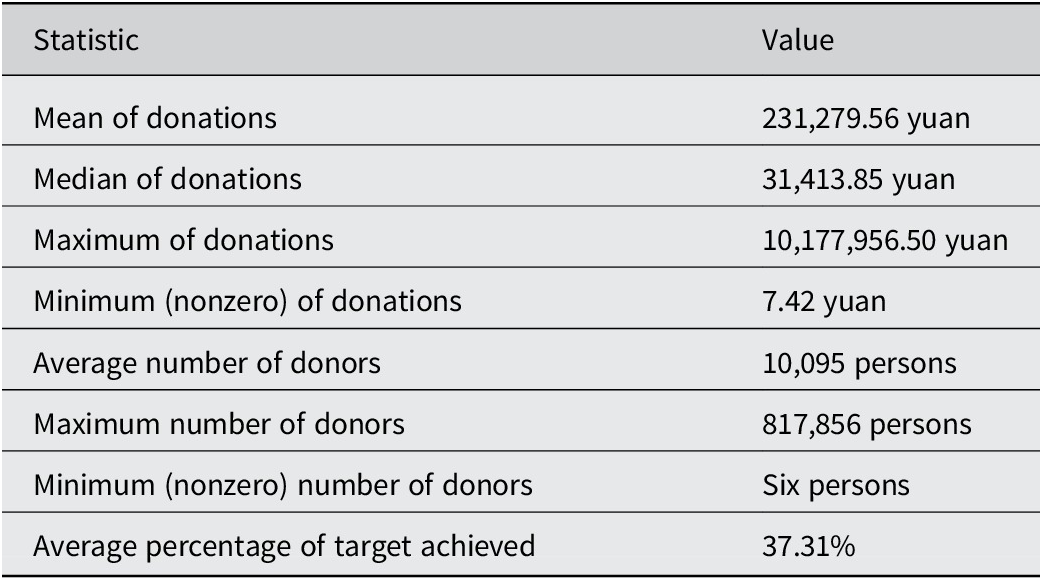
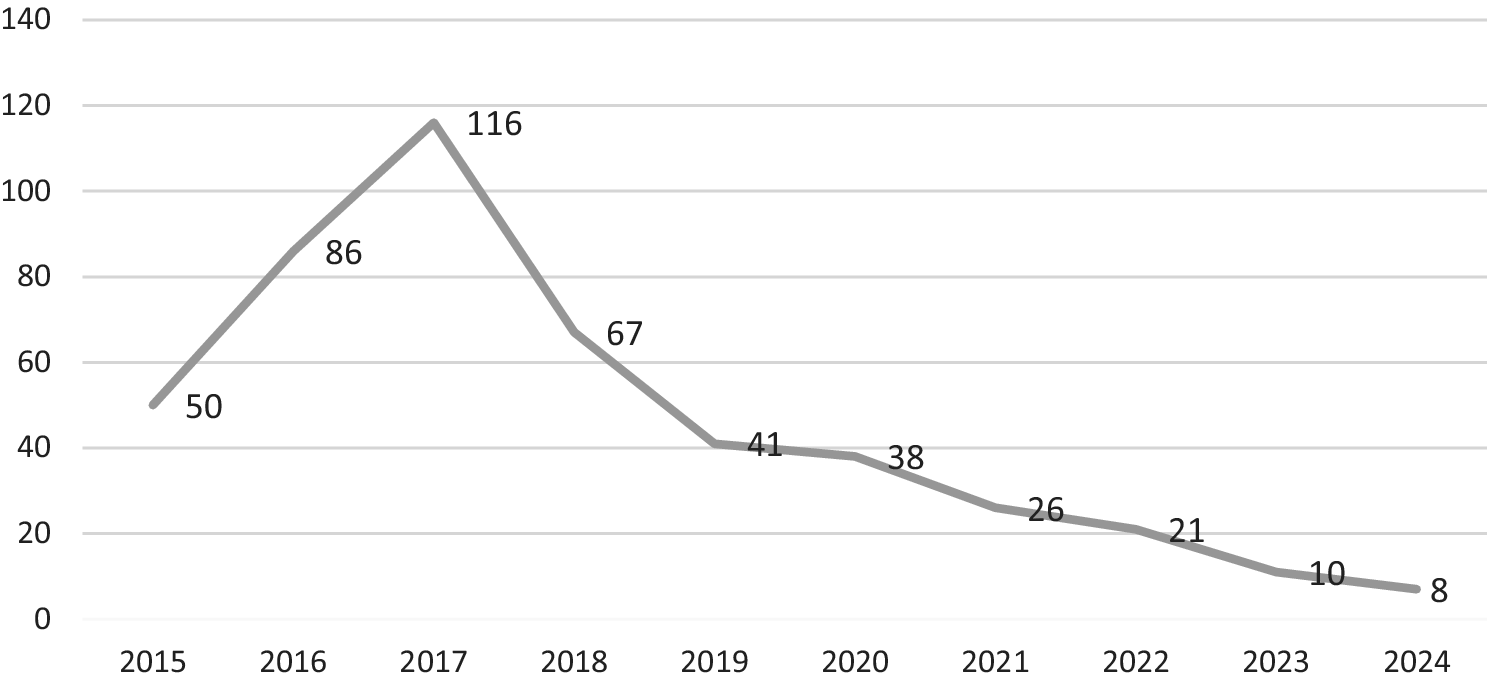
Drawing on 463 gender-related fundraising projects from 2015 to 2024, this section outlines how increasing political scrutiny and the platformization of philanthropy simultaneously expanded and stratified the fundraising space for grassroots gender NGOs. For grassroots gender NGOs that had long been marginalized in state-sanctioned funding channels, 99 Charity Day has created unprecedented access to mainstream visibility and public support. These projects performed remarkably well in aggregate: over 107.08 million yuan was raised by 463 projects from 4,663,914 donors, averaging 231,280 yuan and 10,095 donors per campaign (see Table 2). However, these fundraising opportunities were contingent on the political climate and unevenly accessible. The number of newly launched gender-related projects on 99 Charity Day steadily increased until peaking at 116 in 2017 (Figure 1), followed by a subsequent decline. This turning point coincided with the 2017 Overseas NGO Law, which substantially constrained the operating environment for grassroots gender NGOs in China.
Performance of grassroots gender NGOs on 99 Charity Day (2015–2024)

Table 2. Long description
The table consists of two columns: Statistic and Value.
* Mean of donations: 231,279.56 yuan.
* Median of donations: 31,413.85 yuan.
* Maximum of donations: 10,177,956.50 yuan.
* Minimum (nonzero) of donations: 7.42 yuan.
* Average number of donors: 10,095 persons.
* Maximum number of donors: 817,856 persons.
* Minimum (nonzero) number of donors: Six persons.
* Average percentage of target achieved: 37.31%.
Gender projects on 99 Charity Day from 2015 to 2024.

Alongside the 2017 policy shift, platform governance tightened in several ways. Foreign NGOs were excluded from 99 Charity Day participation, while all fundraising projects were mandated to undergo preapproval and registration through state-authorized public foundations on the National Charity Information Platform. Concurrently, a stricter cost-control rule limited non-public fundraising organizations’ operational expenditures to no more than 10% of the total project budget, further constraining organizational flexibility (Jian, Reference Jian2017). These requirements filtered out many organizations working on politically sensitive issues or connected to international networks from fundraising on the platform. State regulation and platform governance became tightly coupled, jointly structuring which organizations and agendas could enter the fundraising arena.
These regulatory changes were mirrored in the shifting distribution of issues. Different themes showed varying degrees of responses to the regulatory changes. Projects aligned with state-endorsed development priorities, such as rural revitalization and urban–rural migration, were largely unaffected by the 2017 Overseas NGO Law. Anti-domestic violence projects likewise maintained stable visibility, reflecting their long-standing institutionalization through state–NGO collaboration, including joint advocacy that contributed to the enactment of the Anti-Domestic Violence Law (Jiang & Zhou, Reference Jiang and Zhou2022). By contrast, projects addressing more politically sensitive issues, particularly LGBTQ+ and HIV/AIDS, declined sharply after 2017 and were increasingly reframed in depoliticized terms such as community care, mental well-being, or public health education.
Interviews from our broader research project suggest that these tightening conditions were experienced directly by gender organizations. One respondent from a registered sexual minority organization recalled that, after their fundraising project was reported by a Weibo user, the issue quickly escalated to the Cyberspace Administration, Civil Affairs Bureaus, and even national security authorities. They convened a joint meeting and considered shutting the organization down. However, because the organization had “kept a low profile and did honest, compliant work,” it was ultimately not penalized.
This regulatory tightening coincided with the consolidation of platform governance and the deepening of market logic. Although digital philanthropy is often celebrated for its potential to equalize access to resources, prior research shows that GONGOs and state-backed foundations disproportionately capture platform visibility and matching funds (Han et al., Reference Han, Lee and Song2025). Excluding these actors, our data nonetheless reveal pronounced inequality among grassroots gender NGOs. Fundraising outcomes are highly concentrated, with the top 10 projects raising 53.93 million yuan, or over half of total funds. In contrast, 85.96% of projects fell below the average fundraising amount, and 57.67% raised less than 50,000 yuan. Only 36 projects met their fundraising goals, with an average completion rate of just 37.31%.
Geographical inequalities further compounded these outcome gaps. Gender-related projects were consistently concentrated in major metropolitan areas such as Beijing, Shanghai, Guangzhou, and Shenzhen. Although 99 Charity Day was explicitly designed to broaden participation, NGOs in metropolitan centers benefit from closer proximity to media industries, philanthropic foundations, corporate partners, and experienced volunteers, enabling them to convert offline networks into online attention more effectively. Lower-tier cities and less-developed regions were more active in the early years of the campaign, from 2015 to 2017, but their participation declined over time, indicating a widening digital capacity gap in platform-based fundraising.
To account for this concentration of fundraising success, we examined the 10 top-performing projects, all launched by five grassroots gender NGOs focused on sexual violence prevention, women’s and children’s welfare, and LGBT rights. Notably, these projects, mostly launched before 2020, were heavily concentrated in rural development, children’s welfare, and sex education. All five organizations referenced different forms of state support. For instance, one LGBT NGO collaborated with local Health Commissions to implement sex education courses in schools. We also documented cross-platform promotion, collaboration with mainstream media platforms such as Tencent Video, as well as the use of emotionally resonant storytelling to mobilize donations. The success of these projects is linked to recurring practices of issue framing through calibrated (in)visibility, alignment with state priorities, and attention-capturing strategies, which we discuss in the following sections.
Taken together, 99 Charity Day functions not as a neutral fundraising infrastructure but as a politically conditioned and market-mediated opportunity structure. After 2017, the contours of permissible participation became noticeably narrower, with increasing issue convergence, desensitization, and the selective continuation of projects aligned with development-oriented or state-sanctioned agendas. At the same time, fundraising outcomes became increasingly concentrated, with organizations possessing stronger digital capacity, especially those in metropolitan areas, appearing more likely to secure visibility and resources. Within this shifting landscape, grassroots gender NGOs increasingly recalibrate their online fundraising practices as they seek to balance survival, resource acquisition, and autonomy.
Strategic conformity with state agenda through issue reframing
Existing research shows that under conditions of uncertainty, organizations often respond to mimetic pressures by modeling themselves after more established and politically favored actors, producing patterns of institutional isomorphism (DiMaggio & Powell, Reference DiMaggio and Powell1983; Hasmath & Hsu, Reference Hasmath and Hsu2014). While existing literature primarily emphasizes isomorphism in organizational practices and resource allocation, our findings show that isomorphic dynamics also extend to issue selection and topic framing in digital philanthropy. Over time, grassroots gender NGOs increasingly converged on a narrow set of themes during the 99 Charity Day, most notably rural development and child-focused sex education, to enhance politically aligned public appeal.
These patterns point to strategic conformity, whereby grassroots gender NGOs tactically conform to state-endorsed agendas and platform market logics to ensure fundraising visibility, algorithmic advantage, and public appeal. This logic takes shape through two recurring and often overlapping practices: (1) discursive alignment, in which organizations appropriate state-approved narratives to legitimize their projects and (2) affective marketization, in which NGOs craft emotionally engaging stories that downplay political sensitivities to mobilize attention within close-knit networks.
Discursive alignment: Ruralizing gender and child-centered sexuality
A notable trend in our dataset is the “ruralization” of gender initiatives. As rural revitalization and poverty alleviation have become national priorities backed by substantial fiscal and political support, grassroots gender NGOs increasingly frame their work through rural development agendas. This shift is further reinforced by platform governance, as state-endorsed priorities shape digital fundraising incentives. For example, Tencent Charity has collaborated with public foundations to create rural-focused fundraising campaigns during 99 Charity Day, providing homepage exposure and technical support to enhance visibility (Tencent Charity, 2023).
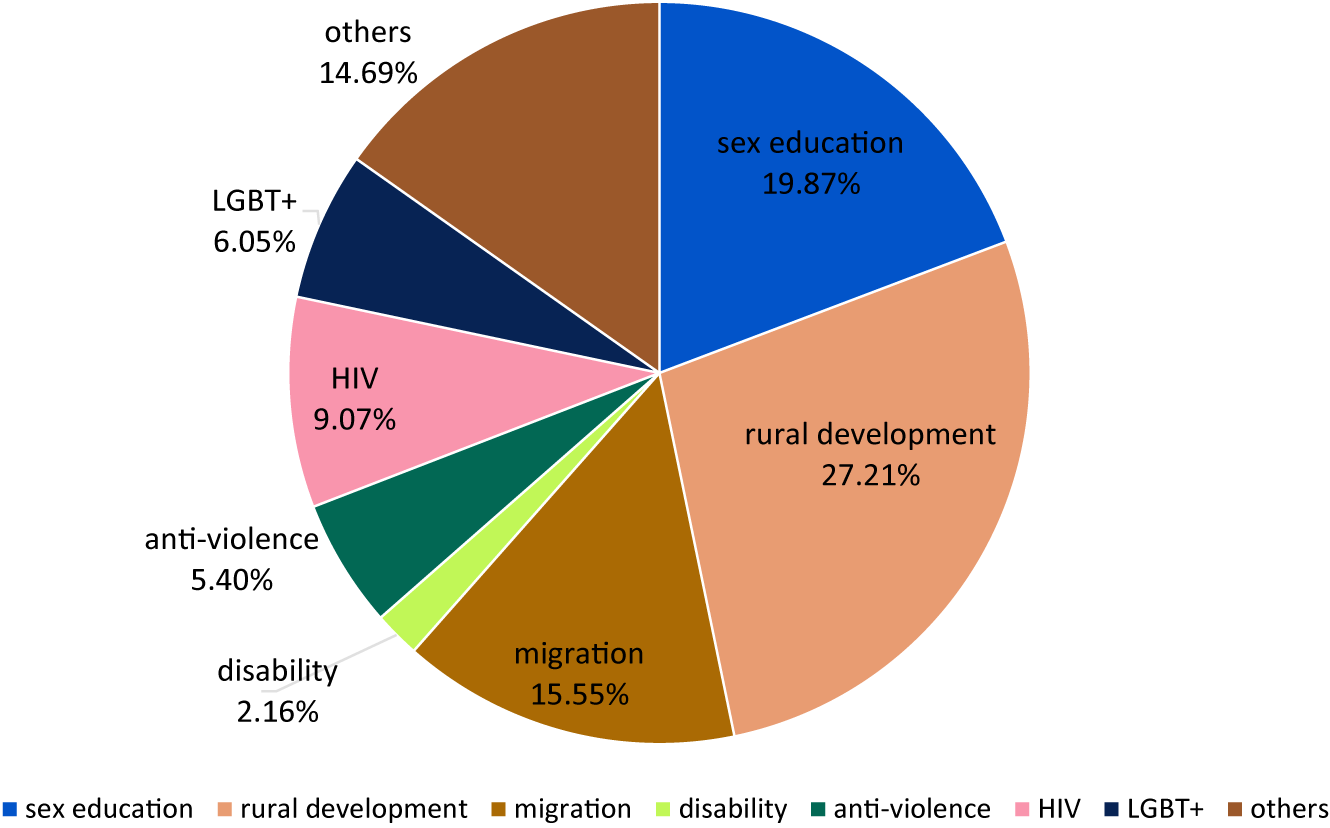
Gender NGO fundraising became increasingly concentrated on rural themes that aligned closely with state and platform priorities. Of the 463 gender-related projects launched during 99 Charity Day, 126 (27.21%) explicitly focused on rural development (see Figure 2). In most years—2015, 2017, 2020, 2021, and 2022—rural initiatives constituted the largest share of newly launched projects. Their fundraising performance was equally remarkable. Together, these projects raised 59.94 million yuan, accounting for 55.98% of total donations, the highest among all thematic categories. Extending this trend, we also identified 72 projects addressing rural–urban migration, which formed the most prominent thematic cluster in 2016.
Topic distribution of gender projects on 99 Charity Day.

These projects were initiated by 38 organizations, although only five consistently prioritized rural development as a core mission. The remaining organizations adopted rural framings primarily to align with politically safe agendas and to enhance their fundraising prospects. For instance, a Chengdu LGBT Center launched two rural development projects, including providing family portrait services and fundraising to establish libraries for rural children, while deliberately avoiding explicit references to LGBTQ+ issues. Similarly, a Guangzhou LGBT Center, originally focused on HIV prevention within LGBTQ+ communities, initiated rural library projects, companionship programs, and campaigns to promote educational access for rural children, while deliberately omitting any mention of sexual orientation or gender identity.
Beyond the active redesign of fundraising projects from gender toward rural development, many initiatives integrated rural development priorities into existing gender programs. Sex education projects illustrate this pattern of discursive alignment. Among the 92 sex education projects, the second-largest thematic category, 37 specifically targeted rural and migrant children, collectively raising 5.36 million yuan. Sex education initiatives are often linked to sexuality, a topic frequently framed as a “Western import” (Liu, Reference Liu2024). The perceived risks surrounding sexuality-related issues peaked with the arrest of the “Feminist Five” in 2015 for organizing an offline anti-sexual harassment campaign (Han & Lee, Reference Han and Lee2019). Subsequent feminist mobilizations, particularly those linked to the global movement, have come under even greater scrutiny due to their perceived alignment with international advocacy agendas.
Alongside rural alignment, NGOs strategically linked sexuality to child-related issues. Our analysis of 92 sex education projects shows that the vast majority, 83 projects, explicitly targeted children and adolescents. Issues involving children occupy a privileged moral and institutional position in China’s philanthropic landscape (Su, Reference Su2015). Anchored in familial ethics and collective moral expectations, child-centered initiatives hold strong cultural legitimacy, enabling NGOs to advance sensitive issues like sexuality education with reduced risk. Child-centered framing repeatedly appears as a strategy for enhancing moral legitimacy. By contrast, adult-focused projects were limited and mainly targeted “legitimate” groups such as sex education instructors, female migrant workers, and low-income women and their children.
Discursive alignment with state-endorsed development agendas both constrains and enables grassroots gender NGOs. While such alignment risks diluting their original gender-related missions, it also reflects organizational resilience within China’s volatile philanthropic opportunity structure. By strategically framing fundraising projects through state-aligned narratives of rural development and child protection, these NGOs distance themselves from the political risks associated with overtly feminist agendas while enhancing moral legitimacy and platform visibility. This alignment also appeared in organizations’ explicit wording choices. As one respondent from a women’s foundation explained, they deliberately used “equality between men and women” rather than “gender equality” in project descriptions because the former followed official policy language. This shows that discursive alignment operated not only through project themes but also through terminology, helping organizations maintain political legibility and reduce sensitivity. Through this strategic conformity, issues that are otherwise marginalized or politically sensitive become fundable and even eligible for algorithmic promotion. Discursive alignment thus operates not only as a form of compliance but also as a pragmatic means of sustaining issue visibility under tightening constraints.
Affective marketization: Sex education in the fundraising attention economy
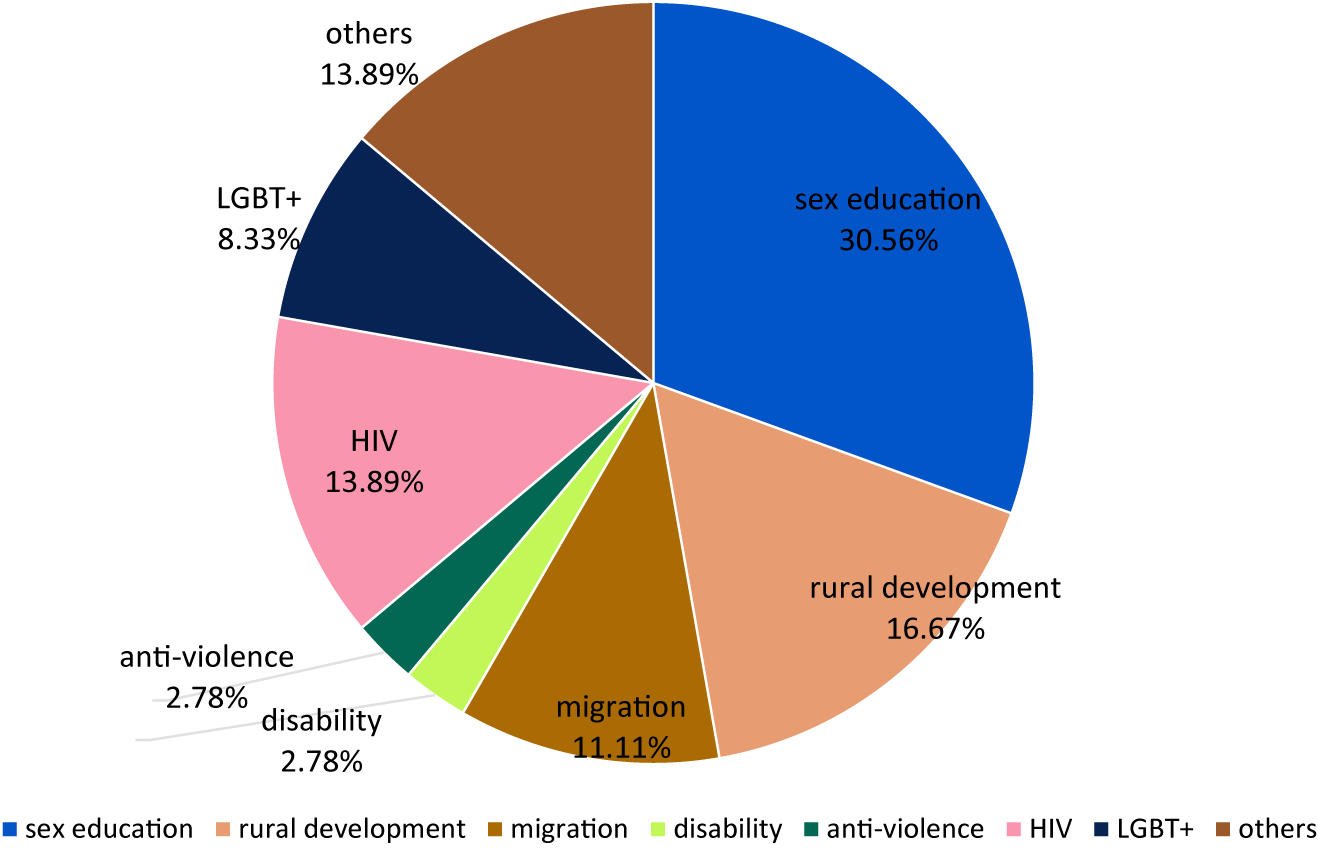
As discussed above, the rise of rural-themed fundraising among grassroots gender NGOs has coincided with a growing concentration of sex education initiatives, which accounted for 19.87% of all projects, second only to rural development (27.21%) (see Figure 2). Sex education projects span a broad range of sexual health and safety issues, including sexual knowledge dissemination, sexual violence prevention initiatives, and menstrual poverty alleviation. Notably, these projects were the most successful in fundraising: of the 36 projects that fully met their targets, sex education accounted for the largest share (11), surpassing even rural revitalization (6) (see Figure 3).
Topics of gender projects that met fundraising goals.

The sustained fundraising success of sex education projects is consistent with two aspects of strategic conformity: conformity to state-endorsed agendas and conformity to market logics of donor attraction. Although child-centered and rural framing reduced the political sensitivity of sexuality-related work, sex education projects rarely benefited from platform-promoted visibility. Unlike rural development campaigns, which often received homepage placement and algorithmic amplification through state–platform partnerships (China Charity Federation, 2023), sex education initiatives relied more heavily on community mobilization and affective attention. Specifically, grassroots gender NGOs enhance fundraising by mobilizing committed feminist publics, leveraging cross-platform dissemination, and circulating emotionally charged gender narratives within close friendship networks.
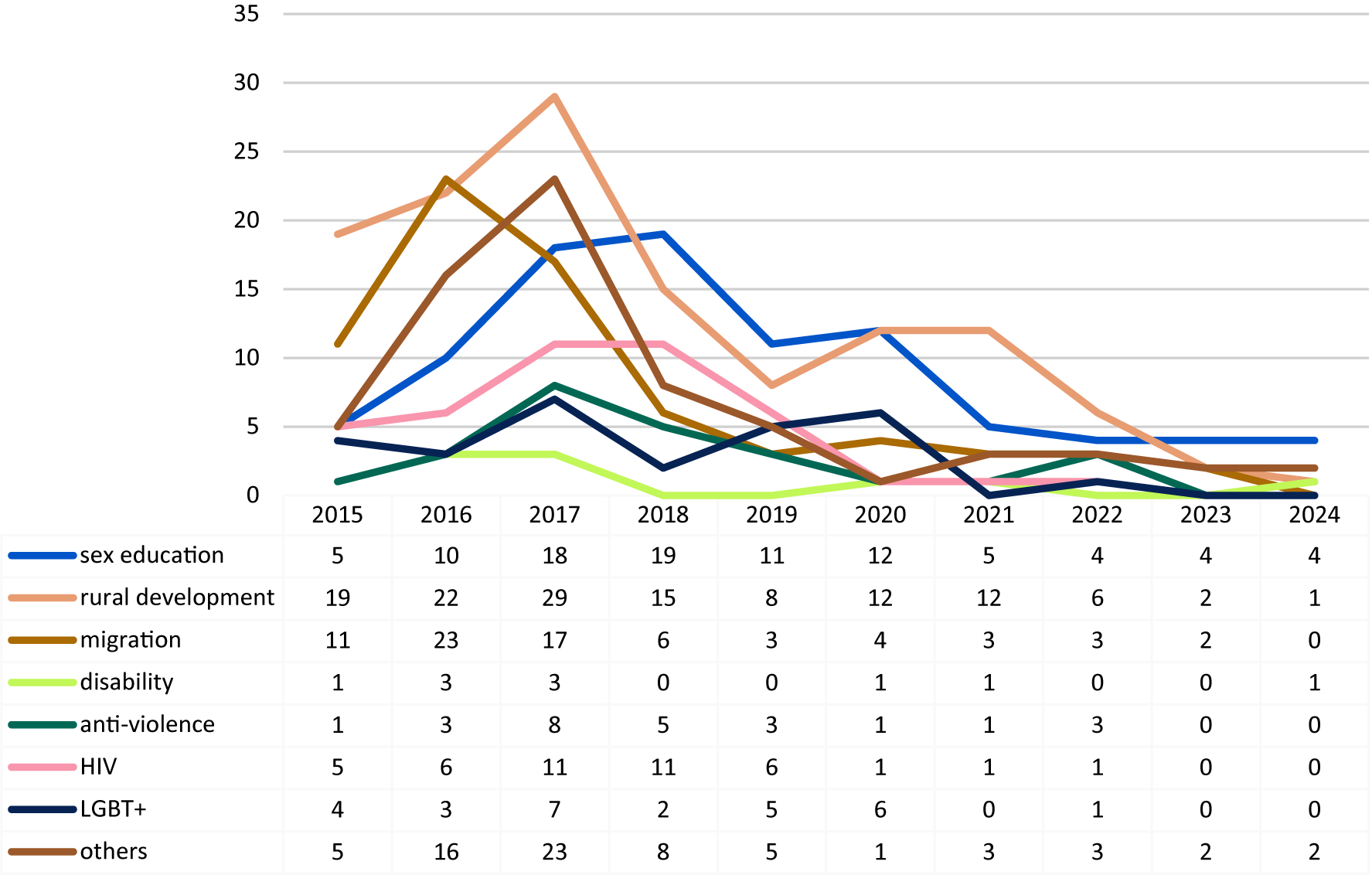
Gender NGOs’ reliance on community-based networks reflects a long-standing infrastructure of feminist mobilization. Existing research shows that sustained community-building is central to cultivating meaningful stakeholder engagement (Lovejoy & Saxton, Reference Lovejoy and Saxton2012), and that social media capital emerges through continued investment in preexisting networks rather than one-off campaigns (Saxton & Guo, Reference Saxton and Guo2020). Although nonprofit engagement in sex education dates back to the 1990s (Dong & Hu, Reference Dong and Hu2025), its recent visibility is closely linked to digital feminist activism. In China, the 2017 global MeToo movement and a high-profile sexual harassment case in 2018 catalyzed sustained online discourse on sexual violence, pushing gender-based harms to the forefront of digital feminist agendas (Zeng, Reference Zeng2020). Notably, 2017 and 2018 also marked the peak in newly launched sex education projects (see Figure 4). This pattern suggests an alternative logic of strategic conformity, in which gender initiatives rooted in feminist communities increasingly align their issue focus with evolving priorities within those networks.
Newly launched gender projects by issue (2015–2024).

Fig. 4. Long description
A line graph with a vertical y-axis ranging from 0 to 35 in increments of 5 and a horizontal x-axis representing years from 2015 to 2024. Below the x-axis is a data table with rows for eight categories: sex education, rural development, migration, disability, anti-violence, H I V, L G B T plus, and others.
Key trends include:
* Rural development (light orange) starts at 19, peaks at 29 in 2017, and declines to 1 by 2024.
* Sex education (blue) rises from 5 in 2015 to a peak of 19 in 2018, then drops to 4 by 2024.
* Migration (gold) and Others (brown) both show significant peaks in 2016 and 2017 respectively, with Migration reaching 23 and Others reaching 23, before both trend downward toward 0 or 2 by 2024.
* H I V (pink) and Anti-violence (dark green) both peak in 2017 at 11 and 8 respectively, then decline to 0 by 2023.
* L G B T plus (dark blue) fluctuates between 0 and 7, ending at 0 in 2024.
* Disability (light green) remains the lowest category throughout, never exceeding 3 and ending at 1 in 2024.
During fundraising periods, many organizations actively pursued multiplatform mobilization to navigate platform market logics. Our digital ethnography shows that feminist key opinion leaders (KOLs) played a central role by circulating sex education and sexual violence prevention projects across socially embedded platforms such as Weibo, Douban, Xiaohongshu, and feminist podcasts. These KOLs mobilized their audiences by encouraging donations, amplifying matching fund opportunities, and framing participation as a form of feminist solidarity. The bridging of cross-platform support underscores the necessity of grassroots digital labor to build alternative attention infrastructures, constituting an emergent form of networked feminist advocacy within restrictive digital ecologies.
Beyond cross-platform diffusion, these projects adopted stylized narrative strategies to elicit donor emotion, reflecting affective marketization as a form of strategic conformity to platform attention logics. Existing research shows that crowdfunding success depends on emotional expression, visual appeal, and message quality (Kim et al., Reference Kim, Kang and Engel2022), with empathy playing a central role in capturing attention and motivating donor action in online philanthropy (Huang, Reference Huang2022). Among the 92 sex education projects analyzed, 85 employed affective storytelling techniques that foregrounded the lived experiences of beneficiaries, often supplemented by visually rich images depicting their everyday environments and interactions with volunteers. Such narratives enabled donors to visualize beneficiaries, fostering emotional proximity, and moral urgency (Gao & Cai, Reference Gao and Cai2024). Yet this strategy also required substantial organizational investment in crafting compelling stories and producing emotionally evocative visuals, revealing how platform logics prioritize resonance and attention. Beyond storytelling, organizations must therefore demonstrate strong digital literacy to coordinate multiplatform engagement, capture fleeting attention, and perform affective labor by continually creating and sustaining emotional resonance through curated narratives.
Affective marketization enables grassroots gender NGOs to convert feminist resonance and solidarity into emotional capital that can be mobilized for fundraising. While this process reflects conformity to platform market logics of attention and affect, it also expands the public visibility of gender issues. Feminist affective publics generate alternative attention economies that partially offset platform biases and cultivate more durable constituencies for gender equality initiatives. This duality highlights the ambivalent nature of affective marketization, which operates simultaneously as adaptation to algorithmic logics and as reinforcement of feminist solidarity. As the next section shows, such community-based emotional capital also facilitates boundary expansion and new forms of gender mainstreaming collaboration.
Strategic stealth in intersectional boundary-spanning
The previous section demonstrated how grassroots gender NGOs navigate tightening state regulation and secure fundraising opportunities through strategic conformity, aligning their agendas with state-endorsed narratives and platform-driven attention logics. While this alignment has produced visible convergence around politically safe themes, it does not signal an abandonment of gender-focused missions or a withdrawal from contested gender issues. Rather, alongside conformity, many organizations deploy forms of strategic stealth to continue advancing gender equality under constraint.
The following section examines how grassroots gender NGOs maintain organizational autonomy and sustain feminist commitments through strategic stealth. We define strategic stealth as a deliberate and pragmatic practice of minimizing visibility within a surveillance-saturated environment (Pape, Reference Pape2024). This strategy operates through practices such as calibrated invisibility, boundary-spanning across seemingly apolitical issue areas, and the cultivation of cross-sector alliances that diffuse political risk while extending the reach of gender advocacy.
Calibrating (in)visibility through strategic stealth
Existing research highlights a paradox of visibility in queer politics under authoritarian regimes, where remaining marginal, under-resourced, and less visible can render mobilization politically insignificant while simultaneously making organizations appear less threatening and creating room for maneuver (Hildebrandt & Chua, Reference Hildebrandt and Chua2017). Operating within less politicized domains further helps organizations avoid co-optation and sustain community-based solidarity (Fugazzola, Reference Fugazzola2023). In the philanthropic arena, our findings similarly show that gender-focused organizations in China often deliberately remain small in scale to limit visibility and reduce political risk.
Strategic stealth increasingly shapes online fundraising under heightened platform scrutiny, as more contested gender projects remain active by continuously calibrating (in)visibility through both donation structures and the framing of gender-related issues. Although LGBTQ+ issues constitute one of the most restricted domains, a small number of explicitly rights-based initiatives, including transgender representation, antidiscrimination legal aid, and public education on homophobia, continue to operate on Tencent Charity in increasingly less visible ways. These projects typically maintain low public visibility while relying on a small base of committed donors who contribute relatively large sums. For instance, the project “Healthy Rainbow, Built Together” raised over 270,000 RMB from only 760 donors, while the “Gender Education Annual Conference” secured 150,000 RMB from just 234 contributors. This pattern indicates that resource mobilization in digital fundraising relies on more than platform attention alone. For organizations excluded from dominant agendas, mobilization relies more on sustained trust with supporters and a shared sense of responsibility toward marginalized communities.
In addition to donation structures, (in)visibility is dynamically calibrated through symbolic cues. As political scrutiny intensifies, the sustainability of this low-visibility, high-contention model has become increasingly fragile. Among the 16 LGBTQ+ projects established by 2018, 14 explicitly included keywords such as “sexual minorities,” “LGBT,” “homosexuality,” “transgender,” “tongzhi,” “homophobia,” and “sexual orientation.” More recent projects by similar organizations avoid rights-based language, reflecting not retreat but a shift toward strategic stealth, or “doing gender without naming gender.” For instance, projects providing social work and psychological support to sexual minority survivors of violence continue to operate but are embedded within the safer institutional framing of youth development. This shift is evident in a Central China LGBT Center’s 2020 and 2022 youth mental well-being projects, which avoided explicit LGBT language but signaled inclusion through subtle imagery, such as a tiny rainbow flag, and coded expressions like “special” or “not conforming to tradition.”
These coded messages draw on shared knowledge and tacit symbols within LGBTQ+ communities, making project meanings legible to insiders while remaining opaque to outsiders. Through strategic stealth, such initiatives create semi-clandestine communicative spaces within digital philanthropy, producing zones of interpretive ambiguity that allow advocacy to continue without direct confrontation. In this sense, invisibility is not absolute but calibrated: organizations remain selectively legible to intended publics while limiting the forms of visibility most likely to invite external scrutiny.
Expanding gender advocacy through intersectional boundary-spanning
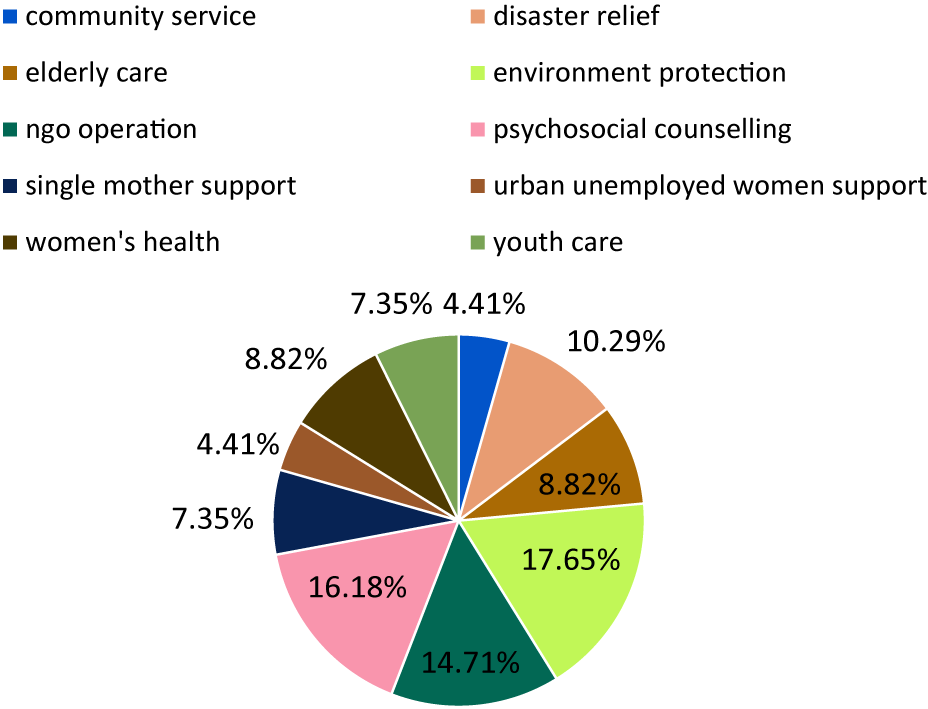
While strategic stealth fosters resilience under restrictive conditions, reliance on community-based signaling also constrains fundraising scale and broader public engagement. To address these limits, some organizations expand the boundaries of gender advocacy by embedding gender perspectives within traditionally apolitical or nongendered philanthropic domains. Our dataset includes 68 projects classified under the “other” category—ranking fourth in frequency after rural development, sex education, and migration—that integrated gender concerns into diverse issue areas such as disaster relief and environmental protection (see Figure 5). Collectively, these projects raised 7.19 million yuan and mobilized donations from as many as 191,260 contributors.
Topics in the “other” gender project category.

Fig. 5. Long description
A pie chart with ten segments, each labeled with a percentage. Starting from the top and moving clockwise:
* Community service (blue): 4.41 percent.
* Disaster relief (peach): 10.29 percent.
* Elderly care (gold): 8.82 percent.
* Environment protection (light green): 17.65 percent.
* N G O operation (dark teal): 14.71 percent.
* Psychosocial counselling (pink): 16.18 percent.
* Single mother support (dark navy): 7.35 percent.
* Urban unemployed women support (brown): 4.41 percent.
* Women's health (dark olive): 8.82 percent.
* Youth care (muted green): 7.35 percent.
The findings also showed that some mainstream philanthropic organizations, previously unconnected to gender advocacy, have begun launching gender-related projects. Since 2020, large-scale public events such as the Gender Mainstreaming Forum, organized by government-affiliated NGOs and corporate philanthropies, have encouraged collaboration with grassroots NGOs on gender equality. These efforts have since been institutionalized through new programmatic initiatives. For instance, a Chengdu-based mainstream NGO, long-focused on rural poverty revitalization and sustainable development, recently partnered with the government-affiliated Chengdu Social Organization Rural Revitalization Alliance to launch projects supporting rural single mothers. This case suggests that as gender perspectives are embedded within dominant policy frameworks such as rural revitalization, they feed back into mainstream philanthropy, gradually reshaping its priorities and discursive boundaries from within.
While some scholars critique gender mainstreaming as a form of co-optation, others emphasize its potential for intersectional praxis. Cho et al. (Reference Cho, Crenshaw and McCall2013) argue that intersectionality need not prioritize gender as the primary axis of analysis but should trace how power operates across multiple structures. Our findings show that grassroots gender NGOs in China do not merely conform to dominant agendas but actively reconfigure them from within through boundary-spanning collaborations, particularly with more gender-conscious actors working in mainstream philanthropic organizations. By tacitly embedding gender perspectives into state-sanctioned domains, they expand the scope of gender advocacy within a tightly constrained environment.
For example, an organization focused on rural women’s development applied a gender lens to its environmental protection and wastewater governance by promoting rural women’s participation in local ecological governance. These interventions strengthened women’s engagement in sustainability initiatives and expanded their discursive agency in community decision-making. In collaboration with local branches of the All-China Women’s Federation, the organization also supported rural women cadres’ participation in formal political representation, including the People’s Congress and the Chinese People’s Political Consultative Conference, advancing gender-inclusive governance at the grassroots level.
Similarly, in disability inclusion projects, an organization focused on women with disabilities foregrounded the intersectional vulnerabilities of women with disabilities. Its fundraising initiatives explicitly addressed the compounded marginalization these women face in domains such as family life, intimate relationships, labor markets, and access to education. By highlighting these gendered dimensions, the organization advocated for more nuanced, gender-sensitive approaches within the broader field of disability rights and service provision.
Interview evidence also suggests that boundary-spanning does not necessarily mean abandoning the gender mission. One respondent noted that although their project on depression prevention was not explicitly framed around gender, the organization still regarded itself as “the most gender-conscious group” in its city and developed each project with women’s participation and empowerment in mind. This illustrates how organizations can use publicly acceptable framings while maintaining gender commitments in practice.
Although both strategic conformity and strategic stealth link gender issues to mainstream philanthropic agendas, they operate through distinct logics. Strategic conformity secures legitimacy by framing politically sensitive issues within state-recognized categories. By contrast, strategic stealth works through intersectional boundary-spanning, inserting gender perspectives into ostensibly technical or apolitical domains. This enables a quiet expansion of stealth advocacy, embedding gender concerns within mainstream philanthropy while preserving space for gender equality work and extending its discursive reach under restrictive conditions.
Conclusion and discussion
This study examines how grassroots gender NGOs in China navigate platform-based fundraising under increasingly restrictive political and digital conditions. The findings show that digital philanthropy created important yet highly uneven opportunities for organizations long marginalized within state-sanctioned funding channels. While platform fundraising expanded access to broader publics, mainstream visibility, and new resource flows, such access remained selective. Projects that aligned more closely with state-recognized agendas and platform-compatible forms of public appeal were more likely to remain visible and fundable, whereas more openly contentious issues became increasingly difficult to sustain in publicly legible form.
The findings show that within this uneven environment, grassroots gender NGOs neither simply withdrew from advocacy nor straightforwardly submitted to dominant agendas. Instead, they developed two interrelated repertoires for pursuing resources and advocacy space under constraint: strategic conformity and strategic stealth. Rather than sequential, these strategies operate simultaneously and situationally. For example, some LGBT organizations launched rural children support projects while maintaining the provision of community-based queer services, and mainstream organizations also collaborated with gender NGOs on projects such as sex education despite tightening state regulation. Rather than signaling a shift from advocacy to uncritical conformity, these practices demonstrate how grassroots gender NGOs continually recalibrate organizational priorities through dynamic, relational negotiation rather than simple resistance.
While the analysis is limited to organizations able to enter and remain on the platform and therefore cannot capture the full spectrum of grassroots gender advocacy, we acknowledge that it identifies only recurring patterns rather than the full range of organizational responses. Even so, the findings complicate a tendency in the literature to treat more contentious organizations as the primary site of grassroots agency, while casting more publicly legible or compliant actors, those that are “neither withdrawal nor resistance” (O’Brien, Reference O’Brien2023), as less grassroots or less politically significant. We argue that such recalibrated positioning reflects not a lack of gender commitment, but the practical conditions required to continue serving marginalized communities within mainstream fundraising arenas. This is especially evident in sexuality-related projects, where organizations often have little access to openly recognizable advocacy space yet continue to experiment with safer institutional framings, coded language, and alternative issue linkages in order to remain publicly present. Practices that appear compliant with dominant agendas and those that preserve an organization’s original mission should therefore not be treated as a simple binary, but as intertwined dimensions of the ongoing negotiation of visibility, legitimacy, and organizational continuity.
This study contributes to several strands of scholarship. First, it extends ongoing discussions of NGOs’ “adaptive turn” by showing how the complexity takes shape within platform-based fundraising through a recurring set of organizational practices, a domain that increasingly structures nonprofit survival and action. Second, the study’s longitudinal empirical scope provides a more nuanced account of constrained agency by focusing less on whether organizations retain agency under pressure and more on how agency is continually recalibrated within a selective and unequal field. Third, the findings speak to broader contexts in which civic actors increasingly rely on platform infrastructures to reach publics while operating under capricious regulatory conditions. Our findings reveal that platform governance works less through outright exclusion than the selective shaping of what kinds of advocacy can remain visible, legible, and fundable. The study offers an empirically rich account of the adaptive, uneven, and constrained character of NGO action by showing how apparently compliant and publicly legible projects can also serve as important sites through which advocacy persists in hybrid regimes.
Acknowledgements
The research was supported by the Research Grants Council of Hong Kong Special Administrative Region, China (Early Career Scheme, RGC Ref. No. 24612423) and the Research Startup Fund from the Chinese University of Hong Kong. The authors thank the panel participants at 2024 ARNOVA-Asia and the 16th International ISTR Conference for their valuable feedback on an earlier version of the article.
Competing interests
No potential conflict of interest was reported by the authors.
Ethical standard
Ethics approval for the study was granted by the Chinese University of Hong Kong Survey and Behavioural Research Ethics Committee under the Reference No. SBRE-22-0274. This study relies primarily on publicly accessible data sources.
Ling Han is a specially appointed research fellow/professor in the School of Sociology at the Central China Normal University and an Adjunct Associate Professor in the Gender Studies Program at Chinese University of Hong Kong. She is a sociologist researching the intersection of gender philanthropy, digitalization, and nonprofit organizations.
Yidan Bi is a PhD student at the Gender Studies Program, The Chinese University of Hong Kong. Her research interests include gender and work, feminist political economy, NGOs, social movements, and digital platforms.


 Open access

