

There has always been something worrisome about the wise man who seeks to advise the king.
—James Smith Footnote 1Arich research tradition addresses the question of experts in democracy, civil society, and international governance.Footnote 2 Yet comparatively little attention has been paid to experts in contexts of contemporary authoritarianism, even though they proliferate today and autocrats eagerly seek them out, boldly inviting them from universities, think tanks, and consulting firms.Footnote 3 Saudi Arabia offers a provocative example: its Ministry of Planning is now dubbed locally in some circles as the “Ministry of McKinsey” due to the prominence of experts circulating there from the storied Western consultancy.Footnote 4 What are the implications of these evolving expert-ruler collaborations? What do they tell us about the inner workings of autocracies? Are they likely to improve or undermine the quality of governance?
Such questions are increasingly important to answer as authoritarian regimes persist and comparative politics moves beyond a democracy-centric paradigm. To be sure, growing recognition of the need to understand authoritarian politics on its own terms has translated into a thriving research agenda. But compared with authoritarian elections, political parties, and civil society, the role of experts in ruling circles has attracted less research attention, even though experts are potentially important actors.Footnote 5 Indeed, observers of authoritarian regimes, as well as citizens within such regimes, routinely call for more experts to advise rulers.Footnote 6 Even if democracy itself remains a distant hope, so the thinking goes, experts might improve the daily lives of citizens in fundamental ways. Such powerful intuitions, however, have rarely been tested.
To help fill this gap and contribute to larger efforts to open the black box of authoritarian governance, this article investigates expert advisers in the Arab Gulf monarchies, where expert teams, composed mainly of foreigners, are ubiquitous even as their role has remained largely opaque to researchers. I focus on two classic, yet much contested hypotheses: (1) experts rationalize governance and (2) they imbue it with greater legitimacy. Rationalization here refers to rational processes of governmental decision-making, while legitimacy is defined as public support for government and the political system. In short, do expert advisers bring knowledge, experience, and impartiality to bear in ways that encourage more rational decision-making on the part of authoritarian rulers, steering them away from impulse and whim? And does experts’ involvement increase the legitimacy of authoritarian states, building public support and thereby boosting voluntary compliance with reform efforts?
Answering these questions helps to build a more complete picture within comparative politics of how current autocracies work and provides practical and theoretical dividends, given that rationalization and legitimacy are both linked to good governance. To explore the rationalization hypothesis, I draw from qualitative evidence collected during nineteen months of fieldwork in the Gulf, focusing on more than sixty-five interviews with expert advisers as well as on palace-based ethnography involving observations of and interactions with ruling elites, including one ruling monarch. To examine the legitimacy hypothesis, I designed and conducted three experiments in Kuwait that tested the effects of expert involvement and the conditions under which experts are more or less likely to encourage popular buy-in for reform and development projects.
The evidence collectively suggests that experts—although they bring some important benefits—neither rationalize governance nor provide legitimacy in any consistent way for the monarchs who enlist them. On rationalization, I find that many expert advisers do bring added knowledge, data, and experience to bear in potentially rationalizing ways, especially in the early stages of a reform effort. But as time goes on, they also engage in the art of not speaking truth to power—they self-censor, exaggerate successes, and downplay their own misgivings in response to the incentive structures they face, a response in keeping with more critical perspectives on expert actors.Footnote 7 The story does not stop at the identification of perverse incentives, however. The findings also point to unintended consequences. Far from rationalizing, I find that experts can irrationalize governance, enabling a belief among ruling elites in what I term state-building shortcuts—the idea that rulers can accomplish more than is reasonably possible in a short period of time. The perplexing result is overconfidence and even a degree of magical thinking among authoritarian ruling elites about development and progress.
Yet, just as experts enable overconfidence at the top, their involvement appears to foster the opposite at the bottom. On the legitimacy hypothesis, the experiments suggest that expert advisers reduce rather than encourage popular buy-in for reforms, potentially eroding voluntary compliance. Although authoritarian ruling elites may gain a measure of international legitimacy by enlisting top global experts, the same does not appear to hold for domestic legitimacy. Strikingly, Kuwaiti subjects were less supportive of reforms in education and infrastructure—and even displayed less overall patriotism—when top international experts were involved. Moreover, these negative effects were mitigated in unexpected ways by factors like the experts’ nationality. For example, contrary to conventional wisdom, local experts did not consistently confer more legitimacy than foreign ones.
Despite failures of rationalization and legitimacy, rulers continue to hire expert advisers, especially Western ones, in a puzzlingly cyclical fashion. Why? The evidence suggests that ruling elites do not update their beliefs. Rather, they blame particular experts for setbacks—rather than the use of experts in general—or else they abandon reform efforts entirely, moving on to other projects as new ruling elites take their place in what one interviewee called a “revolving door” of rulers and experts tackling the same reform challenge time and again. A new team of experts is recruited, and the pattern of overconfidence repeats itself with weak traditions of institutional review and recordkeeping preventing the normal learning processes that might otherwise lead rulers to update their beliefs about the feasibility of their goals and how and why they use experts.
This article makes several contributions. First, it brings new and original data to bear on the classic question of experts in politics, a question that is increasingly pertinent given that the number of experts circulating around the world continues to grow just as populist and anti-expert trends are also growing.Footnote 8 In so doing, the article focuses on an authoritarian and under-researched empirical context, and uses a mixed-method approach, which is rare in this research tradition, leveraging both qualitative and experimental data. Second, through immersive fieldwork in palace and related contexts, the article sheds light on the dynamics of autocratic decision-making, particularly how perverse outcomes like overconfidence and a penchant for state-building shortcuts may emerge from cyclical and self-defeating collaborations between rulers and experts. Third, it experimentally examines factors that are believed to moderate the legitimacy hypothesis, suggesting ways that experts may legitimize as well as rationalize more effectively. Fourth, it makes theoretical contributions by probing the relationship between rationalization and legitimacy, highlighting important conflicts and trade-offs. For example, the evidence suggests that experts are best positioned to rationalize precisely when they are worst positioned to legitimize. Specifically, the qualitative evidence indicates that expert advisers rationalize most effectively when they first start working on a reform project—when they feel most free to speak truth to power and have not yet succumbed to local authoritarian incentive structures. Yet, based on the experimental results, this early stage also appears to be the time when experts and the reforms they assist are least likely to be seen as legitimate. Rationalization, then, may come at the cost of legitimacy, and vice versa, creating an acute dilemma for experts under authoritarianism.
These findings should be of broad interest and attract scholars of authoritarianism, expertise, and governance, as well as of the Middle East and Gulf monarchies. The research is also of significant practical value: universities and other institutions are increasingly being called upon to provide expertise to hybrid and authoritarian regimes but with little knowledge of the potential pitfalls. More broadly, as policy problems become more complex and globalized in nature, traditional state institutions are less able to solve them.Footnote 9 As a result, understanding how experts in differing contexts can affect governance in productive as opposed to irrationalizing or delegitimizing ways grows ever more urgent.
Hypotheses about Experts
An extensive literature across political science, sociology, and history, as well as more specialized fields like science and technology studies, addresses the role of experts in politics. Typical questions include how to define expert;Footnote 10 how experts obtain and consolidate authority;Footnote 11 and why, when, and how governments enlist expert advisers and how they in turn affect governmental decision-making.Footnote 12 Although experts from Plato and Seneca to contemporary consultants have long played a key role as advisers to autocrats, it is experts in the contexts of democracy and international governance who attract the majority of research attention, perhaps due to challenges of access or assumptions about the arbitrariness of autocratic rule.Footnote 13 As a result, I focus here on two classic, although much-contested, hypotheses about the role of expert advisers in general: rationalization and legitimacy.Footnote 14
Rationalization
For millennia, expert advisers have been seen as a good thing, particularly in historically prevalent monarchies with few checks on power. As Cardinal Richelieu, adviser to Louis XIII, wrote, “The worst government is that which has no other guiding force than the will of an incompetent and presumptuous king who ignores his council.”Footnote 15 In more contemporary times, the scholar Sheila Jasanoff observes, “What government today would embark on projects in education, health care, environmental protection, economic policy, crime prevention, or urban development without calling on advice from trained specialists?”Footnote 16 In short, the traditional view has been that experts are “good for policy-making” precisely because they are expected to help rationalize governance.Footnote 17
But what does it mean for experts to rationalize governance, and how might we assess their contributions? Given that policy-making rarely fits the abstract requirements of a fully rational model, I focus on procedural rationality, that is, rational processes of decision-making that are key to contemporary notions of good governance.Footnote 18 To what extent are top-level decisions, even if they do not represent optimal solutions, the “outcome of appropriate deliberation”?Footnote 19 Do they result from a reasonably clear definition of problems at hand, due diligence in investigating them, and a relatively unbiased identification and evaluation of a wide range of potential solutions?
Theoretically, experts are viewed as increasing procedural rationality in a variety of ways, and Herbert Simon’s basic model of rational decision-making provides a useful organizing framework.Footnote 20 That model suggests three main phases: intelligence, design, and choice. In the intelligence phase, experts can bring knowledge, data, and extensive experience to bear as they help leaders refine and investigate problems and identify potential solutions. In the design phase, experts can apply their knowledge to design, analyze, and evaluate alternative courses of actions, ideally with impartiality, or what Francis Bacon called a “drier and purer” light.Footnote 21 Finally, in the choice phase, experts can steer leaders away from impulsivity and other biases of thought and emotion, ensuring that decisions emerge from an appropriate deliberative process. Taken together, rationalization refers to experts bringing knowledge, data, experience, and a measure of impartiality to bear on decision-making processes so that rulers and their deputies are less likely to rule by whim, outdated thinking, or narrow interest—and are more likely to make informed, well-considered choices.
Although the rationalization hypothesis is no longer uncritically accepted, some important evidence aligns with it. For example, in the epistemic-communities literature in international relations, scholars emphasize how communities of experts may be seen as actors in their own right, rationalizing governance by “articulating the cause-and-effect relationships of complex problems” and assisting in the identification of appropriate solutions.Footnote 22 Haas and colleagues highlight numerous ways in which experts have rationalized specific areas of international governance, especially more technical areas where uncertainty would otherwise reign.Footnote 23
Similarly, in the technocracy literature associated with comparative politics, experts are viewed as bringing knowledge and impartiality to bear, thereby depoliticizing governance in salutary ways: the “technocrat’s task is to assure that the higher rationality of [the] whole is protected from the undue influence of particular interest.”Footnote 24 Eduardo Dargent, for instance, judges the rise of experts in Colombia in the 1960s and Peru in the 1990s as essentially rationalizing developments that restrained demands for patronage spending in favor of more rational allocations.Footnote 25 Particularly in the absence of fully professionalized bureaucracies, he argues, such expert advisers may function as a positive counterweight to politicians’ short-term electoral interests. Qualified successes in authoritarian regimes, such as SingaporeFootnote 26 and China,Footnote 27 as well as in “islands of efficiency” in Saudi Arabia,Footnote 28 have also been attributed in part to greater rationality of decision-making associated with local or foreign expert-assisted governance.
Legitimacy
Legitimacy, although a complex concept, is defined here in conventional terms of public support. Ted Gurr, for example, states that regimes are legitimate “to the extent that their citizens regard them as proper and deserving of support” and notes that “most definitions associate legitimacy with supportive attitudes.”Footnote 29 Legitimacy is also associated with notions of good governance in fundamental ways: it may be a result of good governance, and it may also facilitate good governance, thereby increasing the ability of authorities to govern effectively by encouraging voluntary compliance with needed reforms—that is, to acquiesce to the exercise of governmental power.Footnote 30 Moreover, in theories of expertise, technical knowledge is well established as a resource in modern societies that grants legitimacy to experts and the rulers they assist. Theorists contend that as scientific rationality came to replace other paradigms of knowledge and policy problems grew more complex, experts have increasingly been viewed as essential to governance: only they have the expertise needed to solve such problems.Footnote 31
As a result, expert involvement in governance should heighten its perceived legitimacy in terms of public support. Because such support typically falls along a continuum from specific to more diffuse,Footnote 32 it may include greater support for particular politicians and their reform efforts, confidence in their likelihood of success, and persistence of support in the wake of setbacks, as well as broader types of support for political systems as a whole, such as patriotism and nationalism. Beyond legitimacy per se, the use of experts may have additional potentially supportive effects, such as instilling greater confidence in the likelihood of progress more broadly and in the ability of humanity to solve major problems. Such confidence in progress and, especially, scientific achievements and breakthroughs, is a key dimension of what scholars have called the “technocratic mentality.”Footnote 33
Importantly, the legitimacy hypothesis is theoretically distinct from the rationalization hypothesis, although the two may be related. Certainly, when rulers and their policies are seen as more rational due to expert involvement (less driven by ignorance, special interest, and whim), then we might expect citizens to support them more readily. Indeed, Bo Rothstein has argued that legitimacy flows less from democracy per se than from high-quality governance, particularly the existence of impartial decision-making processes.Footnote 34 Yet the question of whether experts enhance the rationality of governmental decision-making is ultimately different from the question of whether experts enhance public support for the regimes and policies in which they are involved. For example, even when they fail to rationalize, experts may boost legitimacy because of popular deference to scholarly authority or through a conventional cue-giving mechanism associated with elites.
Considerable support for the legitimacy hypothesis exists. Research on education reform, for example, finds that when governments enlist international experts, citing “lessons from elsewhere” on what reforms have proven most successful in other contexts, then even very controversial reforms can gain popular acceptance and buy-in.Footnote 35 Likewise, Toby Jones finds “the leading members of the [Saudi] ruling family… relied on scientists, technologists, and their knowledge and craft to further buttress the family’s legitimacy,” given the existence of rival families vying for power.Footnote 36 Finally, decades of psychology research show that other factors being equal, audiences view experts as more credible than non-experts,Footnote 37 suggesting that expert-backed governance is more likely to inspire public confidence.
But both the rationalization and legitimacy hypotheses have met with powerful critiques in recent years. On rationalization, critics emphasize that experts may fail to rationalize if they do not understand and appreciate the diverse local contexts in which they seek to solve problems.Footnote 38 For example, experts who lack such local knowledge may not investigate problems diligently or canvass a wide array of possible solutions. They are thus prone to giving rulers poor advice, often of a one-size-fits-all variety that is rationalizing in only a very narrow and context-free sense. Another important critique points out that experts, far from being neutral sages, have their own political and economic incentives and agendas, including those arising in the context of principal-agent problems.Footnote 39 These may also counter their presumably rationalizing influence. Indeed, for some, expertise does not rationalize governance so much as empower certain actors over others, and it may simply be a guise for social control.Footnote 40
The legitimacy hypothesis is also highly contested. First, experts may be seen as intentionally usurping legitimate public authority, particularly if they are foreign and cast in an imperialist light or if they appear as faceless (and unelected) bureaucrats.Footnote 41 Such concerns have arisen particularly in the context of the European Union.Footnote 42 Likewise, in the Latin American context, Miguel Centeno asks, “Will application of the ‘administrative rationality’ promised by modernizing elites bring relief from domination by arbitrary and corrupt hierarchies, or will it impose an even more authoritarian style?”Footnote 43 Some prominent examples of experts comfortably ensconced in autocracies further bolster these critiques.Footnote 44 Second, experts may simply be seen as villainous, ignorant, partisan, or ill-qualified, thus reducing overall confidence in government. Rasputin’s much-maligned role as an adviser to the Romanovs in Tsarist Russia is illustrative.Footnote 45 In more contemporary times, South Korean President Park Geun-hye was driven out of office after thousands protested her secretive “shaman adviser.”Footnote 46 Some also point to a broad decline in the US public’s confidence in expert-led governance.Footnote 47
Even when experts are well-meaning and armed with considerable expertise, characteristics of the experts themselves may reduce perceived legitimacy. Following James Scott, for example, experts perceived as lacking local knowledge may garner far less legitimacy than those who have lived and worked in the country for a period of time.Footnote 48 Local experts who are citizens of the country may also be perceived as more knowledgeable about local contexts than foreigners, so citizens may perceive foreign experts as conferring little, if any, legitimacy despite their technical prowess.
Among these more critical perspectives, experts are commonly portrayed as hubristic actors, overconfident about their own wisdom in ways that threaten both their rationalizing and legitimizing potential. For example, according to Patricio Silva, the “Chicago Boys,” neoliberal economists involved in governance in 1970s Chile, presented themselves as the “bearers of an absolute knowledge of modern economic science, thereby dismissing the existence of economic alternatives.”Footnote 49 Centeno similarly describes Western economic advisers to Russia in the 1990s as “an elite vanguard” insisting “on the inevitability of its model” and displaying an “inflated sense of [its] own virtue.”Footnote 50 More recently, William Easterly has described experts involved in contemporary development efforts as falling prey to the “the hubris of conscious direction.”Footnote 51 In one of the most influential critiques of expertise and governance, Scott attributes the failure of large-scale state-planning efforts to the “supreme self-confidence” of both experts and rulers alike.Footnote 52 Such portrayals are a far cry from the traditional view with which I began this section.
Theory, therefore, makes conflicting predictions about the rationalizing and legitimizing role of experts. It is also possible that experts have more complex effects on governance than has typically been anticipated. For example, experts may rationalize without achieving legitimacy—a long-standing complaint among experts themselves—or they may grant legitimacy without rationalizing as rulers pursue their own ends regardless of experts’ advice. Overall, there is a need for broader comparative work—beyond the well-trodden contexts of democracy and global governance—that illuminates the conditions under which theoretical hypotheses surrounding rationalization and legitimacy hold. The following sections help fulfill that need.
Experts under Authoritarianism
Expert advisers from universities, think tanks, and other institutions, often Western ones, are pervasive in the authoritarian Gulf.Footnote 53 But despite the growing prominence of these advisers, they have received virtually no research attention. Do they rationalize and legitimize? If so, under what conditions? If not, why not? Theoretically, the answers are not straightforward. In principle, the Gulf authoritarian context may facilitate both rationalization and legitimacy, given the few other checks on autocrats’ potentially arbitrary exercise of power and the wide berths in which experts may operate. Early work suggests a natural affinity between experts and autocrats, proposing that experts rationalize more successfully when insulated from political demands.Footnote 54 In addition, where citizens lack participatory options, they might see experts as an alternative means of fostering accountability. Yet the authoritarian context may also undermine both rationalization and legitimacy for the same essentially political reasons. Experts may lack the freedom to speak truth to power and thus fail to rationalize. They may also fail to legitimize if citizens view them as lackeys or resent their influence as barriers to the citizens’ own participation.
Before exploring these questions empirically, it is useful to provide some background and context. Although they vary in important respects, the Gulf monarchies—Saudi Arabia, Kuwait, Bahrain, Qatar, the UAE, and Oman—are generally resource rich, with relatively small citizenries and large populations of expatriate workers.Footnote 55 Historically, foreign experts have played a major role, due not only to the discovery of oil attracting outside interest, but also to an initial dearth of local expertise in technical areas relevant to state-building needs. The flood of US experts accompanying the development of the Arabian-American Oil Company (Aramco) in Saudi Arabia is a prime example.Footnote 56
In recent years, demand for experts has grown dramatically as these regimes have sought to build more diversified knowledge societies in preparation for a post-petroleum era. According to Source Global Research, which tracks the global consulting industry, the consulting market in the Gulf monarchies grew 9.4 percent in 2015, topping $2.7 billion.Footnote 57 Saudi Arabia is the largest and fastest growing of the region’s consulting markets, with the decline in the price of oil having prompted what Source Global Research calls the “mother of all transformation projects,” as the kingdom struggles to reform itself with expert assistance. As the young and powerful crown prince, Mohammed bin Salman, noted cryptically when discussing Vision 2030, Saudi Arabia’s sweeping new reform plan for economic diversification and revitalization, “McKinsey participates with us in many studies.”Footnote 58
Who are the expert advisers? Systematic research on them is rare, but the long-term qualitative fieldwork I carried out in close proximity to experts and ruling elites, which is discussed in more detail below, provides important clues.Footnote 59 First, although originally hailing from the UK and other English-speaking countries due to long-standing British interest in the Gulf, the large class of experts circulating in the region today is quite multinational, typically invited, paid by contract, and comes from universities or consulting firms.Footnote 60 In my field research, experts originated not only in Western countries such as the UK, US, Australia, and New Zealand, but also in Lebanon, Egypt, Jordan, India, and Singapore, advising in areas such as education, infrastructure, resource management, and public relations. Most appear to come from middle-to upper-middle-class backgrounds, and while some have been living in the Gulf for decades, others are fresh off the boat, hired sight unseen after a phone interview. Some stay for a short time, while others, often on renewable contracts, stay longer, and live as expatriates.
Such experts are so numerous across so many areas of governance that it is appropriate to refer to a densely populated Gulf experts sector, particularly given the tendency for them to circulate around the region.
Their multinational character is also an important reminder that “the [Gulf Cooperation Council] is not a sealed bubble…. Rather, this regional space is constituted through the relations that exist between it and global capitalism as a whole.”Footnote 61 Experts are part of an increasingly competitive global market for expertise, one that includes consultants as well as professors and involves the rise of “academic capitalism,” with universities competing to develop, market, and sell research products at home and abroad.Footnote 62 Expert advice in the Gulf is therefore embedded within a larger neoliberal order that should not be taken as a given, but has instead evolved and intensified in recent years.
The Gulf experts sector is no undifferentiated mass, but comprises important hierarchies of power. Within it, there are those who occupy very powerful positions, close to the ear of a monarch; these experts are often associated with leading universities and consulting firms, such as McKinsey & Company, the London School of Economics, RAND, and Johns Hopkins University. RAND, for example, has been powerful in Qatar, while McKinsey has made more headway in Saudi Arabia and Tony Blair Associates was strong in Kuwait. Other experts occupy lower levels in the hierarchy, rarely interacting directly with monarchs, but instead with their deputies or lower-ranking ruling family members; they are typically involved less in high-level advising and more in implementation.
Why do Gulf ruling elites enlist so many experts in the first place? The short answer is that many believe that experts provide both rationalization and legitimacy, and they have the resources to hire the world’s best. My conversations with ruling elites highlight a widespread conviction that experts are needed to provide fresh thinking and to rationalize reform efforts—that is, to bring knowledge, data, experience, and an objective outlook to bear.Footnote 63 As a Qatari ruling elite at the Supreme Education Council noted, experts are needed to “take international models [in education] and draw the best from them.”Footnote 64 Existing state bureaucracies are viewed as holding outdated and overly politicized perspectives. Ruling elites believe experts can revitalize those bureaucracies, or they simply bypass them altogether by creating parallel units and institutions to facilitate expert involvement.Footnote 65
Boosting legitimacy is also a key goal, particularly in the wake of the Arab uprisings. As one of the seven ruling monarchs of the UAE explained, enlisting top global experts shows citizens that rulers are taking problems seriously and are actively working to improve the country with the best that money can buy.Footnote 66 The legitimizing role of experts is also not new. As Jones notes, the distribution of resource wealth buys some legitimacy, but it is rarely enough. Hence, given domestic challenges and the vagaries of the international oil market, the Saudi state has grown increasingly “dependent on [both foreign and Saudi engineers, scientists, and experts] for its political authority and credibility.”Footnote 67 Of course, experts may also provide international legitimacy and prestige, but whether they boost domestic legitimacy in the form of popular support is the focus of this article.
Rationalization
Observing the inner circles of decision-making in authoritarian regimes to explore the rationalization hypothesis is a challenge. To tackle it, I draw from nineteen months of combined fieldwork in the Gulf from 2009 to 2017 (which is discussed in more detail in the supplementary material), offering an unusual degree of access to ruling elites and their expert advisers. The fieldwork involved more than sixty-five interviews with experts, as well as ethnographic observations of them at palace events interacting with ruling elites, including one ruling monarch.Footnote 68 My central question was: Do experts bring data, knowledge, experience, and impartiality to bear in ways that lead to more informed, evidence-based decision-making by ruling elites? In other words, do they rationalize governance along the lines suggested by theory? Below I use Simon’s three phases of rational decision-making (discussed above) as an organizing framework.
Rich qualitative fieldwork in close proximity to ruling elites and their expert advisers over many months is well-suited to answering such questions because it sheds light on how decision-making processes actually occur.Footnote 69 Although it is not perfect, since experts may have an incentive to portray themselves as effective rationalizers, this approach has advantages over its alternatives. For example, comparing reform outcomes with and without expert involvement is attractive in principle but in practice problematic given that few reforms are identical in every respect but for the presence of experts. Immersive, long-term fieldwork is better suited to the questions at hand because it allows us to peer inside the black box of autocratic decision-making and because of its emphasis on gathering data directly from key actors as decision-making processes actively unfold.
My evidence is chiefly focused on experts with advanced degrees and/or high levels of experience advising rulers in the education reform sector—a major area of policy change in recent years as Gulf states seek to build post-petroleum knowledge societies. It also incorporates evidence from expert advisers working in urban planning, economic policy, and infrastructure. Although some were Gulf nationals, most of the experts were British, American, Australian, or Levantine Arab, and while often based in one country, they typically had experience on multiple reform efforts across the Gulf. Given their precarious position in these authoritarian contexts, most asked for anonymity, and all such requests have been respected.Footnote 70
Toward a Rationalizing Influence
With respect to the intelligence phase, a simple but important observation is that many experts clearly do bring valuable knowledge, data, and experience to bear in potentially rationalizing ways. In education across the region, experts are collecting and analyzing data, and ruling elites say this is often the first time such data have been assembled in systematic ways and presented to them for consideration in decision-making. Experts are successfully turning ruling elites’ attention toward important problems, such as corrupt or overstaffed bureaucracies, low teacher qualifications, overreliance on rote memorization, and limited participation in international testing to gauge progress.Footnote 71
As an education advisory chief with twenty years of consulting experience on international education reform and now serving as an adviser to both the ruling-family-led Qatar Foundation and the UAE prime minister put it, “I know that we have made [Gulf rulers] more evidence-focused. If you can show the evidence to prove your case—to show that what you are finding or suggesting has justification—then they are going to listen, and that’s a good thing.”Footnote 72 Likewise, in Kuwait the founder of an education consultancy and university administrator with experience advising rulers in Kuwait and the UAE explained, “There is an unrealistic vision [in ruling circles] that if you change the curriculum in schools, then it automatically means that students will learn better. But [rulers] now realize that this isn’t enough, and it’s not a realization that they came to on their own—the experts have pushed them to this, wearing them away, giving them studies, evidence, examples of that not being enough.”Footnote 73
Another expert, with experience advising on education for high-achieving youth in Saudi Arabia and Kuwait, emphasized how experts can offer knowledge about problems to ruling elites that they would not normally obtain, since the latter often fail to consult anyone beyond their own circles. In response to the question of whether experts, especially foreign ones such as himself, lack “local knowledge,”Footnote 74 he replied, “The question of knowing the local context is a complex one. What we often find is that the more we work on a project, the less it seems that [ruling elites] actually know [their own] local context. So we’ll be talking to them… but then we’ll hear a different reality from teachers, parents, and students on the ground.”Footnote 75 He concluded that experts are therefore “able to triangulate information that others don’t have access to” and bring it to the attention of rulers in rationalizing ways.
But when asked whether experts truly feel free to speak their minds in these authoritarian contexts, the experts with whom I conversed had complex reactions. What was very clear is that many believe that experts initially feel free to speak truth to power, particularly when it comes to the intelligence phase. Indeed, the education consultant in Kuwait noted a “scathing report” produced by Tony Blair Associates, which was commissioned by the emir. Another adviser and consultant, with many years of experience working in Bahrain, described an early McKinsey report on the education system as “quite thorough, revealing things that were very embarrassing.”Footnote 76 However, these experts also indicated that such truth-telling tendencies have a curious way of diminishing, and it is worth noting that both reports mentioned here quickly disappeared from public memory.
The Art of Not Speaking Truth to Power
Although it is obvious that many expert advisers do bring important data, knowledge, and experience to bear—and this is a force for rationalization—it is equally clear from the qualitative evidence that in the design stage, when they must evaluate various courses of action, they have a way of thwarting their own potentially rationalizing impact. Thus, although experts often do speak their minds at the outset, they soon find themselves engaging in the art of not speaking truth to power, an art that can take several forms more akin to exaggeration, acquiescence, vagueness, and omission than outright deceit. This is particularly the case for experts who stay longer term, who learn how to stay in the game, and who may also be asked to implement or to deliver on their recommendations.
Why do these experts eventually waver? The main reason is that they learn and adapt to the local incentive structures rooted in the authoritarian political context. First, despite initial assurances to the contrary, they realize they are easily fired with very little opportunity for redress. The situation is especially fraught for foreign experts, who can swiftly be deported (or politely asked to leave), while local ones can be demoted with virtually no explanation. For example, a curriculum expert in the UAE recalled asking her boss why her contract had been suddenly terminated, and he said vaguely that “someone” had asked to have her visa revoked; the official reason given was that it was “in the public interest.”Footnote 77
Intense fears about job security stem especially from the perception among experts that they are used by ruling elites as scapegoats for failures and setbacks. In Qatar, for instance, a top education expert at RAND met regularly over a ten-year period with Sheikha Mozah bint Nasser Al Missned, the powerful second wife of the former emir, during the RAND-assisted (yet now much-criticized)Footnote 78 K-12 education reforms. He emphasized, “We were always very clear that we were presenting options and the options were chosen by the leadership. We don’t make laws, they make laws. But as soon as things went awry, what we were doing was [dismissed as] the ‘RAND reform’ even though it was clearly the emir that chose it.”Footnote 79 A British curriculum expert in the UAE gave a similar example in which a new youth program had a lesson on saying no to drugs—a growing problem in the UAE and a culturally taboo one—to which an Emirati parent objected.Footnote 80 The lesson was immediately removed from the curriculum and the experts were scapegoated by the very ruling elites who had hired them.
Second, experts find not only that they are easily and arbitrarily dismissed, but also that they are competing in an atmosphere of extraordinarily intense rivalry and high turnover. In part, this situation arises from today’s unprecedented number of experts who are attracted to lucrative contracts. Some experts clearly do engage in upselling one-size-fits-all solutions in what one interviewee described as a “feeding frenzy,” with experts from far and wide and of varying quality drawn to the Gulf.Footnote 81 But the authoritarian political context also fosters rivalry as experts find themselves embedded in broader palace and governing-unit battles. Such rivalry is not unique to autocracy, but it is typical of authoritarianism in the Gulf, in which the roles and responsibilities of ruling elites may shift suddenly on monarchs’ whims and experts are left uneasy and uncertain about who’s in and who’s out of favor.Footnote 82 To illustrate, the Bahrain-based education adviser quoted above explained that “first it’s the prime minister, next it’s the crown prince, and then it’s the minister of education” competing in national education reform efforts with rival teams of experts.Footnote 83 In its most extreme form, a spectacle of experts being hired to advise on the performance of other experts can arise in what one interviewee described as “consultants watching consultants,” like Russian nesting dolls.Footnote 84
It is this environment of uncertainty and insecurity that leads many experts, especially those who stay long term or get involved in implementation, to seek to avoid rocking the boat and hence to cultivate the art of not speaking truth to power. Many say that over time they find that a smart survival strategy is not to lie, but rather to say little. An oil-sector consultant based in Saudi Arabia explained, “[Experts] say their opinion on day one, and then they are told, ‘No we want to do it this way,’ and then they will keep quiet and do what they are told. They know that someone else will come and take their place if they don’t.”Footnote 85 Another strategy is omitting or massaging data. A former consultant for a major company working in Abu Dhabi who was part of an in-house consulting team for the General Secretariat of the Executive Council mentioned that he once “made up some performance indicators.”Footnote 86
Even when experts make an effort to remain objective about alternative courses of action, they use strategies to reduce the potentially negative consequences of truth-telling for themselves, but these strategies have the cumulative effect of watering down key points and thereby undermining their own potentially rationalizing impact. Worrying trends, for example, may be mentioned but downplayed during an upbeat PowerPoint presentation on “challenges and opportunities.” Setbacks are softened and justified with self-effacing admissions of “similar problems in my country.” At other times, experts state a true view but then fail to stand by it, giving the impression it was not strongly felt. As a curriculum expert in the UAE explained, experts “briefly say what they think,” but then “they stop there.”Footnote 87 They don’t argue the point. While not all experts succumb to these understandable patterns of behavior, the overall consequences for the rationalization hypothesis are problematic at best.
Overconfidence and State-Building Shortcuts
What happens at the choice stage? Fieldwork evidence suggests that far from rationalizing governance, experts unwittingly facilitate an irrational belief in state-building shortcuts. With top experts at their side— and when some of those same experts fail to cut rulers’ ambitions down to size—ruling elites come to believe that almost anything is possible, and they choose accordingly.
The reasons are again rooted in the authoritarian political context with its emphasis on rule by decree and a lack of checks and balances. As an education policy expert in Abu Dhabi noted, “The ruler says, ‘Thou shalt have this reform or that reform.’ In the US, there would be a trickle-down effect—impact analysis, it would go through various review cycles, a task force to analyze it. But an infrastructure like this doesn’t exist here.”Footnote 88 As a result, when experts themselves fail in their job of tempering rulers’ expectations, the latter are left with excessive levels of optimism about the choices before them and the possibilities for change.
The experience of an Arab oil and economics consultant in Saudi Arabia reveals the pattern well:
So [ruling elites] are trying to find a miracle solution. They sit there and basically say how can we reduce [energy] consumption without raising prices [which would involve political costs]. And you’ll say again, “It can’t be done,” and then they say, “Well, what solution have you seen being applied in other countries,” and you say, “Raise prices,” and they say, “But we can’t,” and then this conversation can go on for an hour, and then His Excellency or whatever will say “You have to find me a solution, you’re a consultant, you’ve done this before.” But, I’m not a magician.Footnote 89
Yet many experts enable magical thinking by failing to hold their ground. The Saudi Arabia-based consultant continued:
The [expert adviser] could just close his bag and say, “Your Excellency, thanks for your time, I don’t want to deceive you, but the only way to implement this is to do a rational pricing policy,” and to their credit some do this. But the majority, even if good, will say “OK let’s talk about this,” then they develop some mathematical models, and they’ll rack up a few thousand hours of fees. His Excellency is very happy, but there’s no real plan there.Footnote 90
Ultimately, the pattern is cyclical because when some ruling elites are disappointed, they rarely update their beliefs about their use of experts in general. Instead, they blame the experts involved and recruit new ones, or they simply move on to other projects and other ruling elites, with little knowledge of past efforts, come in to tackle the problem once again. A new team of experts is hired, and ruling elites fall into the same patterns of overconfidence and magical thinking. Although one might expect elites to learn from the past, they are often thwarted from doing so in ways that are self-perpetuating—including weak institutionalization, in particular limited organizational memory and communication across reform efforts, and overconfidence about the next group of experts.
The consultant explained the pattern as follows:
His Excellency gets frustrated since after a year, the department has not implemented, maybe he’s out, and then another ruling elite gets a new group of experts, and then the same conversation happens over and over again.Footnote 91
Also on the cyclical point, the Bahrain-based expert quoted above noted that when PricewaterhouseCoopers was recently hired to assist with education reform, replacing McKinsey, its experts were making some of the same recommendations.Footnote 92 Likewise, a local urban-planning expert in Kuwait who had worked with the Kuwait Municipality noted that for each new crop of experts, “the terms of reference are copies of earlier terms of reference.”Footnote 93
Overconfidence therefore arises both from ruling elites’ unrealistic expectations about what experts can do and from those experts’ own hesitation to check such expectations in an atmosphere of otherwise limited institutional review. Experts do not cause so much as enable these outcomes. The RAND education adviser quoted above observed that with experts around, “there is this belief that change is possible without costs.”Footnote 94 In Kuwait, another education adviser explained, “Experts definitely feed into this notion of ‘We can do it!’ I think they do initially come with the hard evidence, but then they say ‘Well, okay, if you want to do it your way, we’ll do that.”Footnote 95 In Bahrain, an architecture and urban-planning expert noted that when talking with ruling elites, many experts are “just very positive about everything,” even when, he emphasized, having seen the number of abandoned construction projects littering the landscape, they know something isn’t going to work.Footnote 96 The way expert advisers enable an irrational belief in state-building shortcuts is especially striking in the frequent stories of bargaining over time frames. Expert advisers said they propose what they consider a rational timeline for a reform, rulers push back to shorten it, and the experts hesitate, but ultimately acquiesce. For instance, according to a top education adviser in the UAE, “The plan I’d written was to reform all the schools in seven years,” he recalled. But “by the time I got back [from vacation], [the minister of education] had reduced it to five years, and by the second day, Sheikh Mohammed bin Rashid had reduced the reform to three years.”Footnote 97 Ultimately, the education adviser went along with the revised schedule, despite private misgivings. Likewise, the RAND education adviser quoted above said, “I like to think that I, in my regular one-on-one with Her Highness, gave a realistic assessment to Her Highness of how things were going, trying to push back on timeline. But at some point you are employed by them. What do you do when they say, ‘No, no, I need it this summer’? We continually advised them to slow down, you can’t do this so fast, changing what teachers can teach is not the same as building a glitzy building. But we were pushed back.”Footnote 98
Although understandable, caving in to such pressures fuels ruling elites’ beliefs that they and their experts are capable of anything, no matter how rapid or unreasonable. Indeed, in the UAE, a curriculum expert recalled a PowerPoint presentation she gave in which she tried in a gentle way—typical of the art of not speaking truth to power—to bring ruling elites’ ambitions down to scale. In closing, she warned, “No other country has accomplished education reform without significant time investment and commitment.”Footnote 99 But the audience of ruling elites did not react as expected. In a telling demonstration of the way experts can fail to rationalize and instead enable overconfidence at the choice stage, she recalled the elites’ response: “Excellent! Then we will be the first.”
Summary
Overall, the evidence is mixed on rationalization, although it leans more toward disconfirmation than confirmation of the hypothesis, which is consistent with more critical perspectives on expert actors emphasizing conflicting incentives.Footnote 100 This is not to say that Gulf-based experts never rationalize, especially those who focus more on narrower, lower-level, and more clearly technical aspects of implementation, as opposed to those who interact directly with ruling elites in an advisory capacity. Rather, it is to emphasize that while such higher-level expert advisers do bring added knowledge, data, and experience to bear at the intelligence stage, they waver on impartiality, finding themselves caught up in local incentive structures surrounding job security within an authoritarian political context.
In addition, timing and process are key. Experts are not mindless yes-men, telling rulers exactly what they want to hear, but neither do they truly speak their minds after the initial phases of truth-telling pass. The cumulative result of this ruler-expert dance is a cyclical tendency toward overconfidence about the next group of experts recruited and the possibility of state-building shortcuts. Importantly, experts themselves are not the hubristic actors portrayed in various critical accounts; instead, overconfidence emerges from dysfunctional processes of interaction. Although the patterns of expert behavior described here may also emerge within democracies, the evidence suggests that common features of authoritarianism—notably the potential for arbitrary dismissal, a lack of checks and balances, and limited institutional review—render these perverse outcomes more likely.
Legitimacy
If experts do not necessarily enhance rationalization, do they nevertheless build legitimacy? A lack of rationalization does not automatically mean that experts provide no added legitimacy, and legitimacy can also be a boon for governance. In the Gulf, a striking lack of voluntary compliance has stymied reform in the past, making popular legitimacy an important goal for reformist ruling elites.Footnote 101 Even if experts do not improve governance by enhancing its rationality, if they succeed in boosting legitimacy they may improve governance by increasing its effectiveness—that is, the ability to carry out reform.
Ruling elites, as noted above, certainly appear to believe that their use of experts builds legitimacy, often saying that doing so shows they are taking problems seriously and working for the benefit of all. Indeed, as one of the UAE’s ruling monarchs explained, it is increasingly important for Gulf rulers to prove they are “not like Mubarak,” the former Egyptian president seen as criminally unresponsive to his people and ousted during the Arab Spring. The ruler likened his role to that of a chief executive officer who can be “thrown out if he doesn’t deliver.”Footnote 102 Saudi Arabia’s new crown prince has also sought to distinguish the kingdom from “evil” others, such as Iran and the Muslim Brotherhood, by emphasizing the leadership’s openness to learning and expertise: “What we are trying to do is to learn fast, to understand fast, to be surrounded by smart people.”Footnote 103 Experts, moreover, are keenly aware of their presumed legitimizing role. As one observed, “For the Saudis it was a feather in their cap to have people like us working for them. It helped them sell the program internally, knowing that there were these prestigious universities and consultancies working on behalf of the kingdom.”Footnote 104
Yet fieldwork evidence raises doubts about whether Gulf ruling elites are right to believe that experts buy them legitimacy, at least with their citizens. Foreign experts, in particular, have been criticized for absorbing public funds and discounting local input.Footnote 105 As the longtime expert working in Saudi Arabia quoted above asked, “Does a Lebanese kid from Harvard know more about the streets of Riyadh than I do?”Footnote 106
Hinting at such patterns of selective marginalization, an education consultant in Bahrain noted, “There is a tendency to bring in outside people, even if there are people here, even if they will tell them the same thing.”Footnote 107 She attributed this to ruling elites’ bias in favor of white Westerners, which may make reforms look imperialistic and inauthentic, thereby reducing legitimacy.Footnote 108 The local urban-planning expert in Kuwait quoted above said, “There is a syndrome here, where [ruling elites] think that the outsiders are the experts.”Footnote 109
Experimental Design and Measurement
To collect more systematic data about experts and legitimacy, I conducted three experiments in Kuwait. Experiments are difficult to carry out in the Arab Gulf because of its conservative and authoritarian character, yet they can add significant value. Indeed, while the rationalization hypothesis emphasizes processes of governance, making qualitative and ethnographic data collection an appropriate research strategy as those decision-making processes unfold, the legitimacy hypothesis deals with public support, an attitudinal outcome. The latter hypothesis is therefore well suited to a survey-experiment approach in which the involvement of experts in governance can be manipulated as an independent variable and attitudes subsequently assessed. Kuwait, moreover, is a particularly valuable research site for my purposes. It has seen an intensification of ruler-expert collaboration in recent years, replacing earlier “traditional” systems of governance.Footnote 110 In addition to advising in the oil sector, experts have been intimately involved in a variety of other policy areas, notably education, infrastructure, and urban planning.Footnote 111
To answer the question of whether these experts foster legitimacy, the first study examined the effect of experts on legitimacy in two reform areas, education and infrastructure, while the second and third studies considered potential moderating variables. All surveys used Kuwaiti student samples at two large universities in Kuwait City, on either the female or the male campus. (Higher education is gender-segregated by law.) Surveys instructed subjects to imagine that Kuwait’s leaders are launching a major reform and presented a mock newspaper article about the reform, asking subjects to “Please read the following news article about the plan carefully, answer the questions about the article, and then give us your perspective on the plan.” Full protocols for each experiment and all question wording and answer scales can be found in the supplementary material.Footnote 112
As Table 1 shows, legitimacy was operationalized, following convention, in terms of public support, which ranged from specific to more diffuse indicators. The most specific dependent variable assessing legitimacy was support for reform, which was measured in all three studies. It was tapped by combining responses to two questions that asked about the subject’s support for the reform and expectations about the extent to which the Kuwaiti population would support it. For example, in Study 1, the questions were:
—1. Do you support or oppose the plan proposed by politicians [and international experts]?
—2. What percentage of Kuwait’s population do you think will support the plan proposed by politicians [and international experts]?Footnote 113
Concepts and Dependent Variables
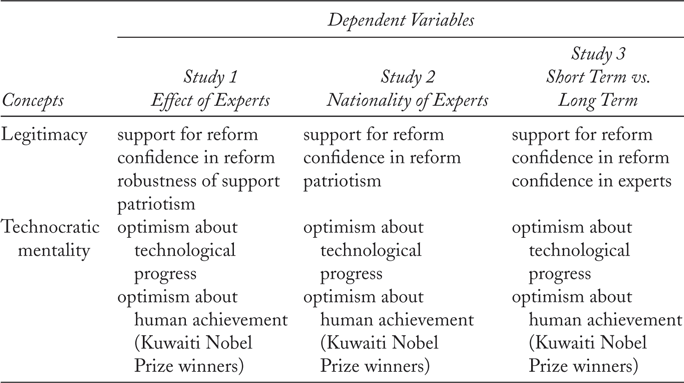
Additional indicators of legitimacy are shown in Table 1 and measured whenever possible. For example, in Study 1, to assess the robustness of public support for the reform, subjects read a second mock news story presenting bad news about a similar project in the UAE, noting that it had failed, and were then asked, “Now, to what extent do you support the plan?” The inclusion of a bad-news story allows us to assess the extent to which experts produce robust public support. In other words, if experts enhance legitimacy as theorists expect, how strong (or fragile) might this technocratic boost in legitimacy be? Can it withstand setbacks?
Public confidence is also frequently tapped to gauge legitimacy.Footnote 114 Hence, for public confidence in the reform, responses to two questions were combined. One item asked, “On average, what percentage of projects like this would you say succeed?” and the other asked how confident subjects were that the reform would succeed.Footnote 115 For a measure of confidence in the experts involved, responses to the following four items were averaged: “The experts will provide high quality advice,” “The experts will have a good understanding of education in Kuwait,” “These experts are probably out for themselves and the money” (reverse-scored), and “These experts will offer new and innovative ideas.”Footnote 116 In addition, for patriotism—a more diffuse indicator of legitimacy—a two-item Likert index drawing from Rick Kosterman and Seymour Feshbach was used:Footnote 117 “I love my country” and “I am proud to be a citizen of my country.”Footnote 118
To build a broader understanding of how experts influence citizen attitudes, all three studies also measured subjects’ more general levels of technocratic optimism with the two items shown in Table 1. Although not strictly indicators of legitimacy—that is, public attitudes of support for regimes, institutions, and policies—optimism about progress and the ability of humanity to solve problems, especially through scientific and technological breakthroughs like those achieved by Nobel Prize winners, are key dimensions of what has been called the “technocratic mentality.”Footnote 119 In other words, whether or not they produce popular legitimacy, do technocratic governments beget technocratic citizens?
Study 1: Effect of Experts on Legitimacy
The first experiment (N = 281; 100 percent female) examined how Kuwaiti subjects react to reforms and development projects that use expert assistance compared to those that do not. The experiment adopted a 2 × 2 design, varying (1) type of reform (education/infrastructure) and (2) whether experts were described as assisting with the project. Thus, in the two “education” groups, the mock news headlines read, “Political Leaders Propose Major Education Reform Plan” and “With Help from International Education Experts, Political Leaders Propose Major Education Reform Plan.” In all conditions, the cost, timeline, and expected benefits of the reform project were given in the context of the mock news article. The two “with experts” groups also included information about their credentials. The experts were described as international without specifying any nationalities, given that most high-level teams of experts in Kuwait are international, with both foreign and local experts in advisory roles.Footnote 120
Study 2: Nationality of Experts
The second experiment expanded on the first by exploring experts’ nationality as a potential moderating variable. Both theory and fieldwork evidence suggest reduced legitimacy in the case of foreign experts, for reasons discussed above. To test this hypothesis, the experiment adopted a three-group design (N = 200; 100 percent female) in which students were presented with the same infrastructure news story as that used in Study 1, which described a major traffic-reduction plan developed by political leaders with the assistance of a team of experts. But in each group, the nationality of the experts varied as follows: Kuwaiti, American, and Chinese. The mock news stories were otherwise identical. The nationalities were selected to allow a comparison of the legitimacy of local versus foreign experts, as well as a consideration of familiarity effects, given that American and Kuwaiti experts are more typical in Kuwait than Chinese ones (although this may change with China’s Silk Road-based Belt and Road initiative, which is projected to include Kuwait).Footnote 121
Study 3: Short Term versus Long Term
The third experiment considered another potential moderator suggested by theory and fieldwork evidence: the length of time experts spend in country. Fieldwork evidence suggests a particular frustration with “parachute” experts—those who drop in on countries briefly to advise them. As noted above, theory indicates that such short-term experts are less likely to have the local knowledge to advise effectively and also suggests that they should be seen as less legitimate.Footnote 122 To explore these possibilities, the study adopted a two-group design in which students (N = 167; 100 percent male) read a mock news story, slightly modified from that used in Study 1, describing a plan to reform education with the help of international experts. In one group, the experts were described as short-term, having “arrived yesterday to advise political leaders.” In the other group, the experts advising political leaders were described as long-term, having been “living and working in Kuwait for ten years.” Aside from the short-term/long-term difference, the news stories were identical.
Results and Discussion
Figure 1 shows the mean support for reform for the “no experts” and “experts” conditions broken down by reform type in Study 1.Footnote 123 Strikingly, subjects were significantly less supportive of reform and development projects when international experts with credentials and experience were involved than when they were not. Far from boosting popular buy-in for reform, this evidence suggests that rulers who enlist top experts undermine it. Moreover, support for reform showed a similar pattern for both reform types, with the delegitimizing effect of experts apparent across both education and infrastructure. The findings therefore offer no support for the hypothesis that expert advisers in more technical areas, such as infrastructure, can mitigate this delegitimizing effect, as has been suggested they might.Footnote 124
Support for Reform by Expert Involvement and Reform Type (Study 1)a
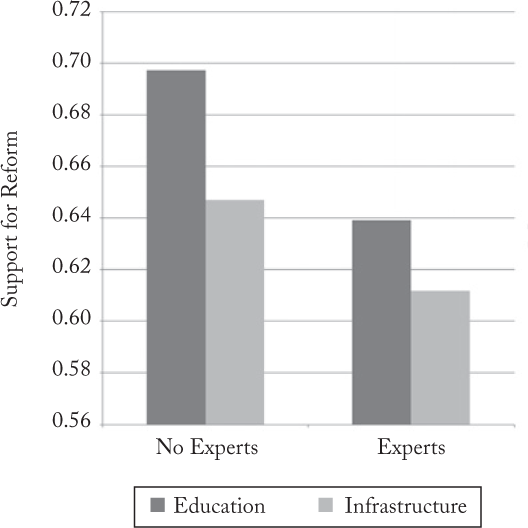
Table 2 reports the main effects of expert involvement on all dependent variables in Study 1.Footnote 125 While support for reform falls significantly in the experts condition (and is graphically depicted in Figure 1), no significant differences appeared for confidence in reform. But after subjects read bad news about a similar reform’s failure in a nearby country, they were again less supportive of expert-assisted reform, regardless of reform type. Negative reactions to expert-led reform persisted after doubts were raised. In an especially notable result, subjects were significantly less patriotic after reading about an expert-assisted reform regardless of reform type. This result further points to an experts-induced drop in legitimacy, even at the more diffuse level.
Main Effects of Expert Involvement in Reform (Study 1) a

*p ≤ 0.05, **p ≤ 0.01, ***p ≤ 0.001; NS = not significant
a Table 2 shows sample sizes, means, standard deviations, and regression results for effects of expert involvement. All dependent variables except Nobel Prize winners are converted to a 0—1 scale. Dependent variables are regressed on dichotomous indicators for expert involvement (1 = no experts, 2 = experts) and type of reform project (1 = education, 2 = infrastructure). The table shows coefficients, standard errors, and p-values for the main effects of experts only; the main effects for type of reform are available in the supplementary material (Jones Reference Jones2018b, Appendix D). Negative coefficients indicate a negative effect of expert involvement, controlling for reform type. Effect size estimates (Cohen’s d) are as follows: support for reform (0.29), patriotism (0.29), robustness of support (0.40), optimism about technological progress (0.42), and optimism about human achievement (Kuwaiti Nobel Prize winners) (0.29).
These legitimacy results are striking and suggest a marked backfire dynamic linked to experts in governance. Nevertheless, a potential silver lining appears in Table 2 when we turn to technocratic mentality. Those who read about expert-assisted reform reported significantly greater optimism about scientific and technological progress and the ability of humans to solve major problems, guessing that Kuwait would produce a higher number of Nobel Prize winners over the next ten years. Given that Kuwait has never produced any Nobel Prize winners, this result is especially noteworthy. Although these results may seem paradoxical, they suggest that ruling elites are not entirely off the mark: experts may not buy legitimacy for a particular reform per se, but they may foster some degree of optimism about progress more generally, which may be useful in building support for reform in the longer term.
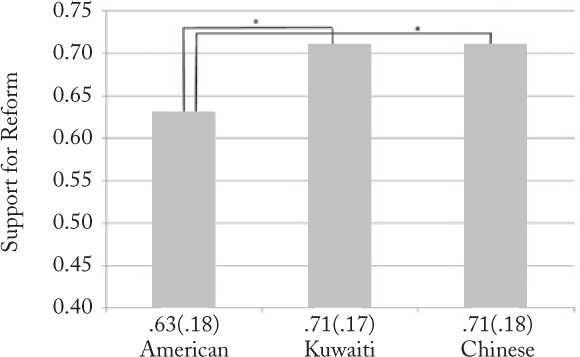
Does the nationality of the experts involved matter for legitimacy? The results from Study 2 illustrate that nationality does matter, yet not necessarily in the ways expected. Surprisingly, Figure 2 illustrates that Kuwaiti subjects were not most supportive of reform when local as opposed to foreign experts were involved.Footnote 126 Although they were significantly more supportive of reform in the case of Kuwaiti as opposed to American experts, this was not the case for Chinese experts: levels of support were the same across the Kuwaiti and Chinese expert conditions. Figure 3 shows that subjects were significantly more confident that the reform would succeed when Chinese experts were involved, relative to Kuwaiti experts, while confidence in American-assisted reform was between the two extremes. Hence, they viewed foreign experts (from China) as more capable than local ones. But for all nationalities, including Chinese, subjects were more supportive of reform than they were confident reform would succeed, again suggesting that experts may encourage citizens to recognize the broad need for reform while triggering doubts about the success of particular reform efforts.Footnote 127 Neither patriotism nor technocratic mentality measures were significantly different across the three groups.
Nationality of Experts, Support for Reform (Study 2)a
Nationality of Experts, Confidence in Reform (Study 2)a

Importantly, the results for Study 2 challenge common arguments that foreign experts—by virtue of their foreignness—are viewed as less legitimate than local ones. If that were the case, we would have expected Kuwaiti experts to be favored over both American and Chinese ones. Instead, the results align more with a story of familiarity and frustration with those experts from countries that typically supply experts to Kuwait. Citizens have probably observed the frustratingly cyclical patterns described in the qualitative section of this paper, with ruling elites enlisting one group of experts and then another, leading to a trail of failed or abandoned reform efforts headed by teams of Western experts. They are the devil you know, while Chinese experts—with whom citizens are less familiar—offer newer and less tainted prospects for success. Antipathy toward experts, then, may be less about foreign nationality and more about familiarity and frustration.Footnote 128
Study 3 sheds further light on questions of legitimacy. Consistent with both theory and fieldwork evidence, the results demonstrate that short-term experts are viewed as significantly less legitimate than long-term ones. Table 3 shows definitively that subjects are more supportive of reform, more confident that reform will succeed, and more generally optimistic about progress when long-term experts as opposed to short-term ones are involved. In addition, subjects are significantly more confident about the experts themselves when they were described as long-term.
Short Term versus Long Term (Study 3)a
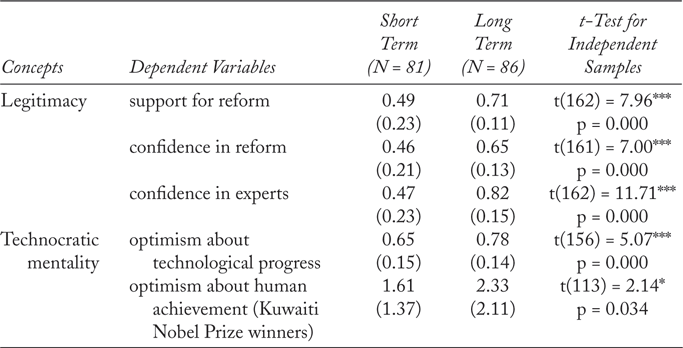
*p ≤ 0.05, **p ≤ 0.01, ***p ≤ 0.001; NS = not significant
a Table 3 shows t-tests for independent samples. All dependent variables (except Nobel Prize winners) are converted to a 0—1 scale. Effect size estimates (Cohen’s d) are: support for reform (1.23), confidence in reform (1.09), confidence in experts (1.82), optimism about technological progress (0.81), and optimism about human achievement (Kuwaiti Nobel Prize winners) (0.40).
Effect sizes for the three studies are not trivial, ranging from small to medium, and Cohen’s d-values are included in the figure and table notes. For example, expert involvement reduced support for reform by 5 percentage points in Study 1. In Study 2, support for reform fell by 8 percentage points when the experts in the scenario are described as American as opposed to either Chinese or Kuwaiti. Effect sizes are especially striking in Study 3, with the short-term treatment reducing support for reform by more than 20 percentage points, indicating a substantively and statistically significant legitimacy advantage for long-term experts.
Collectively, these results cast considerable doubt on the legitimacy hypothesis and align more with critical perspectives arguing that experts undermine legitimacy. They also offer new insights, showing how experts can induce broader technocratic optimism even as they delegitimize reform efforts and suggesting conditions under which experts are more or less likely to delegitimize. Student samples, of course, have their limitations, but there is reason to suspect that these results are not merely a youth response to expert-led governance. Broader fieldwork evidence is consistent with the results, pointing to widespread disillusionment across the Gulf monarchies with expert-assisted reform and thus bolstering external validity.Footnote 129 Extending this research to other dimensions of generalizability, such as context, timing, and conceptualization, as well as to nationally representative samples, is nevertheless an important goal.Footnote 130 Although nonstudent samples are a useful extension, student samples may be particularly relevant, given that college- educated citizens, many of whom enter government employment, are an important audience for rulers. Their perceptions of legitimacy may be especially influential to bolster acceptance of—and compliance with—reform efforts.
Conclusions and Broader Implications
In many ways, given globalization and the flourishing of higher education, technology, and research, we live in a golden age of expertise, and Gulf ruling elites appear to know that. As one of the seven ruling monarchs of the UAE observed when asked about the importance of institutions in promoting development and modernization, the trick today is not crafting institutions, but “finding the right people”—the right group of experts.Footnote 131 The idea is certainly understandable, even if it chafes a bit against political science’s broad faith in institutions. Perhaps more worrisome is that the ruler’s reasonable view, in the minds of some ruling elites, may also lend itself to state-building shortcuts. The findings here certainly suggest as much.
This article contributes to our knowledge of authoritarian decisionmaking by studying the role of experts in an authoritarian and underresearched empirical context in which experts flourish today—the Gulf monarchies. I investigate two hypotheses: that expert advisers rationalize governance and that they imbue it with greater legitimacy. Overall, the findings indicate that from both a rationalization and a legitimacy perspective, experts can have an undermining effect on authoritarian governance. On rationalization, the findings suggest that many experts do indeed bring knowledge, data, and experience to bear—advantages that rulers appreciate. Yet over time experts also engage in the art of not speaking truth to power as a result of the incentives they face in the context of authoritarian regimes. Neither cartoonish yes-men nor fearless truth tellers, they occupy a gray area between the extremes. In this delicate dance, they fail to check rulers’ unrealistic expectations for what is possible and instead enable cycles of overconfidence and magical thinking about the ability to fast track change. Despite recurrent failures, rulers do not update their beliefs and strategies of engagement with expertise, and they continue to put their faith in the next group of experts recruited amid an atmosphere of limited institutional review that thwarts a rational state learning process.
Although rulers seem so very enchanted by the power of expertise— to borrow Max Weber’s language on modernity as disenchantment with mysticism—the experimental evidence on legitimacy suggests that citizens are increasingly disenchanted by it. Kuwaiti subjects were decidedly less supportive of reforms, and even less patriotic, when top international experts were said to be involved, a finding that indicates a failure of the technocratic legitimacy formula and perhaps a lower likelihood of voluntary compliance with reform. Further evidence suggests that the reasons for this disenchantment are not necessarily the usual ones invoking nationalism and experts’ foreignness, but may instead be related to public frustration with the cyclical patterns described above. As one local Kuwaiti expert noted, referring to the repetitive and expensive use of experts with few observable achievements, “The new generation is getting fed up with this.”Footnote 132 Time was also found to be an important potential moderator. Subjects viewed long-term experts as significantly more legitimate than short-term ones, with the evidence suggesting that the former are viewed as having a better understanding of the local context and therefore as more capable, a perspective consistent with Scott’s emphasis on “local knowledge” as a prerequisite for effective expert-led development.Footnote 133
Are these outcomes in ruler-expert collaboration likely to emerge beyond the Gulf monarchies? In regard to rationalization, while experts hired by political leaders anywhere will probably face some of the incentives noted here, authoritarian political contexts like those in the Gulf add different pressures and render those incentives more acute due to common features of authoritarianism, notably the threat of arbitrary dismissal and even deportation. The cyclical tendency toward overconfidence and state-building shortcuts is also made more likely by weak institutionalization and a lack of checks and balances—both characteristic of many authoritarian regimes. Yet the wealth of the Gulf monarchies may serve as an important scope condition; because of very real resource constraints, ruling elites in poorer authoritarian regimes may be less likely to succumb to the magical thinking that experts can enable. The presence of stronger institutional review processes may also serve as an important scope condition. Thus, experts may rationalize more effectively in authoritarian regimes that have less wealth and greater institutional review as well as in those that can mitigate uncertainty in the experts sector and provide more credible job security.
Unfortunately for experts, given global trends in favor of populism, the legitimacy findings also seem likely to hold well beyond the Gulf monarchies.Footnote 134 Scope conditions are less straightforward, but the evidence I present suggests that failures of rationalization and legitimacy beget one another. In contexts where citizens have witnessed a litany of expert-assisted reform and development projects in which experts are seen as having failed to rationalize, as in much of the Gulf, then experts should also fail to legitimize. To the extent that such failures to rationalize are more common under authoritarianism, then we should also expect failures of legitimacy to arise more readily. Nevertheless, the experimental results suggest that it is not all bad news for experts on the legitimacy front. Surprisingly, they indicate that experts can foster a broader sense of technocratic optimism despite delegitimizing particular reform efforts, and they also provide clues about the conditions under which experts may legitimize more effectively.
Taken together, the findings also highlight important conflicts and trade-offs in rationalization and legitimacy and suggest promising areas for future work. Rulers and citizens may view experts very differently, with rulers inclined toward overconfidence about what experts can do—and thus toward state-building shortcuts—and citizens seemingly inclined toward skepticism and low confidence. Critical perspectives on expert actors tend to emphasize the former risk, yet the latter is perhaps an equally irrationalizing outcome when it comes to the larger task of state-building and development in a time of globalization and resulting complexity. The dangers of populism and too little confidence in expertise, certainly in the US context, would now seem to be well known.Footnote 135
Moreover, the qualitative findings suggest that experts under authoritarianism are best positioned to rationalize in a short-term capacity, particularly when they first start working on a project in its intelligence phase, primarily because they feel most free to speak truth to power and are not yet drawn into local incentive structures. Yet this is precisely the time when they may be viewed by the public as least legitimate, as shown by the experimental results pointing to a bias in favor of long-term experts. Paradoxically, those who possess the most in terms of local knowledge after years in country and who might otherwise be best suited to advise rulers may also be the most vulnerable to falling into practices of not quite telling the truth.
Further work should continue investigating such conflicts and tradeoffs. It should also examine why some expert-ruler collaborations are more successful than others by moving beyond the factors identified here, such as nationality and timing, to delve more deeply into local incentive structures. Additionally, a key goal should be to continue expanding our knowledge of experts in politics beyond the better-understood contexts of democracy and global governance. One of the main lessons of the Arab uprisings has been the failure of authoritarian states, such as Egypt and Syria, to meet the basic needs of citizens.Footnote 136 Experts may well help these mostly authoritarian states function and meet citizens’ needs more effectively, yet they may also encounter the same pitfalls identified here in the context of the Gulf monarchies. That possibility underscores the practical and theoretical need for a stronger knowledge base concerning how experts in differing political contexts can better fulfill their rationalizing and legitimizing potential.
Supplementary Material
Supplementary material for this article can be found at https://doi.org/10.1017/S0043887118000217.
Data
Replication files for this article can be found at https://doi:org/10.7910/DVN/RIRAGN.
Acknowledgements
I thank Ellen Lust, James Scott, Thad Dunning, Rogers Smith, Michael Herb, Marc Lynch, Sarah Croco, Margaret Pearson, Isabella Alcañiz, John McCauley, Ahsan Ishaq Butt, Geoff Martin, Hebah Kamel, Reem Ahmad, Abdullah Al Ali, Jacob Lewis, Rajan Menon, Nicholas Rush Smith, Bruce Cronin, Daniel DiSalvo, Martin Lestra, Natalie Koch, Neha Vora, Rehenuma Asmi, Farah Al-Nakib, Natasha Ridge, Samar Farah, Rania Turk, Ghadah al Khadri, Sahar El Asad, Patricia Wallace, Julian Jones, Eric Adler, Julian Calvert Adler, and Lili Katz-Jones for excellent logistical assistance, comments, and feedback. I am also grateful to colleagues at the University of Maryland, College Park, and CUNY-City College, as well as participants at the Georgetown Comparative Politics Workshop, the annual meeting of the American Political Science Association, and the Junior Scholars Book Development Workshop hosted by the Project on Middle East Political Science (pomeps) for valuable suggestions.
Funding
Yale University MacMillan Center; the Al Qasimi Foundation for Policy Research; the University of Maryland, College Park; and pomeps provided funding to support research in the Gulf.
Author
Calvert W. Jones is an assistant professor in the Department of Government and Politics at the University of Maryland, College Park. Her research focuses on social engineering, nationalism, and the making of citizens. She is the author of Bedouins into Bourgeois: Remaking Citizens for Globalization (2017). She can be reached at cwjones@umd.edu.



