

Introduction
In Australia, Aboriginal and Torres Strait Islander people (herein ‘Indigenous) are significantly underrepresented in higher education (HE) (Krakouer, Reference Krakouer2015), which both reflects and contributes to high levels of social and economic disadvantage and the continual privileging of the socially dominant group (Howard, Reference Howard1995). Indeed, ‘education is vital to the future empowerment, self-determination and advancement of Indigenous peoples and communities’ (Buckskin et al., Reference Buckskin, Tranthim-Fryer, Holt, Gili, Heath, Smith and Robertson2018). Widening HE participation for Aboriginal and Torres Strait Islander people forms part of the Australian governments’ strategy and targets to meet the country’s economic and societal needs in the new globalised and knowledge economy (Bradley, Noonan, Nugent, & Scales, Reference Bradley, Noonan, Nugent and Scales2008). Although, Indigenous enrolments in HE has more than doubled since 2008, the rate is still below population parity (3.1%). In the 20–24-year age group, Indigenous people are 4.4 % of the population but only 2.2% of undergraduate applicants (Universities Australia, 2021a). In addition to lower enrolment, First People have significantly lower degree completion rates at 47% compared to 74% for non-Indigenous students (Universities Australia, 2021a). The Indigenous student cohort tends to be older, however, with 24% over age 35, compared to 18% of non-Indigenous students older than 35 (Australian Institute of Health and Welfare, 2023). In addition to lower enrolment, Indigenous students have significantly lower degree completion rates at 47%, compared to 74% for non-Indigenous students (Universities Australia, 2021a). Therefore, understanding access, retention, and completion rates is important as is the educators’ perceptions of how these may be positively influenced through changes to curriculum to embed Indigenous knowledges.
The research questions addressed in this study are:
1. What are the differences in access, retention and completion rates between Indigenous and non-Indigenous students overall, and for those studying business? And
2. What are the perceptions of business educators about Indigenising the curriculum?
It is argued that through the inclusion of Indigenous knowledge and pedagogy, universities can provide a more inclusive learning and teaching environment and promote greater engagement as a result of better meeting the needs of Indigenous communities (Behrendt, Larkin, Griew, & Kelly, Reference Behrendt, Larkin, Griew and Kelly2012). Thus, this paper, will examine the process of developing a new Bachelor of Business (BBus) at a regional university in Queensland that was designed in an interdisciplinary values-driven way, with embedded First Peoples Knowledge. The paper will focus on educators’ perspectives of the implementation of this new BBus. The paper will also present up to date information from the Australian Department of Education, Skills, and Employment (DESE) comparing most recent outcomes between Indigenous and non-Indigenous students overall, and between those studying business and other disciplines. This is important as, in general, there is far less research on Indigenous business students, which may reflect the fact that fewer indigenous students are enrolling in HE business subjects in comparison to other study disciplines (Hunter et al., Reference Hunter, Radoll, Schwab, Crawford, Biddle and Gray2015). Therefore, first understanding access, retention, and completion rates is critically important for all stakeholders in HE, as is exploring the perceptions of potential change once Indigenous knowledge is embedded in core foundation commerce and business in an undergraduate degree.
Review of the literature
Indigenising the curriculum
Overall, there has been a global push to increase Indigenous voices in all aspects of society. HE is responding to this call and many universities around the world are taking active and practical steps to Indigenise their curricula (Giroux, Reference Giroux2017). For example, the University of Calgary has implemented its Indigenous strategy which has curriculum modernisation as its’ centrepiece (Hauser, Howlett, & Matthews, Reference Hauser, Howlett and Matthews2009). Likewise, in Australian HE, a series of reports and recommendations have been instrumental in steering Indigenous policy directions including the ‘National Best Practice of Indigenous Cultural Competency,’ (Universities Australia, 2011), ‘Indigenous Strategy,’ (Universities Australia, 2017), the 2012 ‘Review of Higher Education Access and Outcomes for Aboriginal and Torres Strait Islander People’ (Behrendt et al., Reference Behrendt, Larkin, Griew and Kelly2012). Nonetheless, despite Universities Australia (2017) affirming the commitment by stating that all students will encounter and engage with Aboriginal and Torres Strait Islander cultural content as integral parts of their course study, this has not yet been achieved in many institutions, and where it has been, it is often as elective study and in a siloed fashion (e.g., Bodle & Blue, Reference Bodle, Blue, Sammel, Whatman and Blue2020).
Challenges in Indigenising HE curriculum
It has long been recognised that Indigenous culture and knowledge have been side-lined in Western curricula and, when they are included, are often positioned as something to ‘learn about, rather than from’ (Prehn, Peacock, Guerzoni, & Walter, Reference Prehn, Peacock, Guerzoni and Walter2020). Howard (Reference Howard1995) observed that Indigenous people across the globe reject the ‘Euro-centric’ cultural views that are evidenced in the writing of a curriculum. He notes that Western perspectives dominate HE, and redesigning the curriculum requires a fundamental ‘shift in the way teachers think and behave’ (Howard, Reference Howard1995, p. 235). As posited by Settee (cited in Warick, Reference Warick2017, para. 2), ‘It’s not just add Indigenous and stir,’ indeed it takes time to learn and find ways to embed this knowledge respectfully, even for those who are Indigenous. In confronting the past and the present in relation to tackling colonialism and Indigenising programmes, Giroux (Reference Giroux2017, para. 29) said ‘If it feels good, if it feels easy, if it feels comfortable, we’re not doing it right.’ Indeed, introducing such knowledge needs to be done in a delicate manner, and it takes courage to approach it in such a way. Darlaston-Jones et al. (Reference Darlaston-Jones, Herbert, Ryan, Darlaston-Jones, Harris and Dudgeon2014) state that to some, Indigenising curriculum is simply asking for a layer of Indigenous content to be added by Indigenous scholars, preferably a layer that differs from that of the dominant perspective. They question if this is enough because those that dominate are not required to reflect on their role, privilege, power, and position in this context. In summary, these challenges point to the important role for educators in delivering newly developed Indigenous curriculum.
A monocultural approach does not benefit any of the stakeholders; what is required is the creation of a ‘third space’ (Dudgeon & Fielder, Reference Dudgeon and Fielder2006) where reconciliation might take place (Darlaston-Jones et al., Reference Darlaston-Jones, Herbert, Ryan, Darlaston-Jones, Harris and Dudgeon2014). By simply adding Indigenous content to the existing structures and frameworks it is at best …‘likely to trigger compassion based in benevolence rather than socially transformative change’ (Darlaston-Jones et al., Reference Darlaston-Jones, Herbert, Ryan, Darlaston-Jones, Harris and Dudgeon2014, p. 12). Despite this, adding this layer can be seen as the first step towards conscientisation which requires the analysis and integration of how to apply the curriculum more broadly to create change and a stronger society. As stated by Bodle and Blue (Reference Bodle, Blue, Sammel, Whatman and Blue2020, p.190) ‘As educators in HE we need to work collaboratively with our colleagues by embracing First Peoples culture and individuals, not from a deficit model of thinking, but by recognising First Peoples as resilient, innovative and entrepreneurial.’ When racist and inaccurate views are challenged and corrected by addressing the lack of Indigenous perspectives in HE, all students, Indigenous and non-Indigenous, benefit, as well as the broader community (Hollinsworth, Raciti, & Carter, Reference Hollinsworth, Raciti and Carter2020; Wilks & Wilson, Reference Wilks and Wilson2015). In the exploration of an Indigenous Australian cultural competence course, Fredericks and Bargallie (Reference Fredericks, Bargallie, Frawley, Russell and Sherwood2020) noted the range of emotions felt by participants; including, feeling they had seen the ‘truth,’ to feelings of sadness and guilt about the treatment of Indigenous people, and to feeling that they were being accused of past events. DiAngelo (Reference DiAngelo2021) posits that courses that deal with race and racism can bring up issues for both Indigenous and non-Indigenous participants.
While there is a general tide of agreement that Indigenisation is a good thing, there is a lack of research into how it should be implemented at a granular level. Nakata’s (Reference Nakata2007) work, however, does describe pedagogical approaches that can be used for curriculum design requiring staff to ‘move away from Western concepts, minds, and approaches’ (Collins-Gearing & Smith, Reference Collins-Gearing and Smith2016). The challenge is significant, as underscored by Christie and Asmar (Reference Christie, Asmar, Hunt and Chalmers2021, p. 264), ‘Indigenous Australian knowledge is performative rather than representational; conceptual rather than universal; owned rather than free; collective rather than individual; and renewable rather than objective.’
Works by scholars such as Smith (Reference Smith1999), Rigney (Reference Rigney2017), and Louie (Reference Louie2017)provide insight on two opposing processes in the inclusion of Indigenous content within HE, namely decolonisation versus Indigenisation. We adopt the latter definition:
a process of naturalizing Indigenous knowledge systems and making them evident to transform spaces, places, and hearts. In the context of post-secondary education, this involves bringing Indigenous knowledge and approaches together with Western knowledge systems. This benefits not only Indigenous students but all students, teachers, and community members involved or impacted by Indigenization. Indigenous knowledge systems are embedded in relationship to specific lands, culture, and community. Because they are diverse and complex, Indigenization will be a unique process for every post-secondary institution. (Castellano, Reference Castellano2014)
In the spirit of Reconciliation in Australia, and the values embedded within the University’s Mission, Indigenisation underscores the importance of historical awareness as a foundational aspect of both research and teaching endeavours when building business curriculum. Indeed, Indigenisation offers a nuanced approach to reshaping HE systems to better accommodate Indigenous perspectives and knowledge without necessitating the complete overhaul of existing Western structures. Instead of erasing Western disciplinary knowledge, it seeks to integrate Indigenous knowledge alongside it, fostering complementarity rather than replacement. This approach acknowledges the complexities of the university system while striving to make it more supportive of Indigenous communities and their ways of knowing. The process of Indigenisation involves thorough evaluation, collaboration among colleagues, and gradual implementation. It’s not about creating a singular, unified approach (Nakata, Reference Nakata2007; Martin et al., Reference Martin, Nakata, Nakata and Day2017) but rather presenting knowledge systems in parallel, allowing for the reception of and respect for each system on its own terms. By preparing business students to learn and gain knowledge developed using both Indigenous and Western knowledge systems, student graduate as agents of change.
The role of educators
Howard (Reference Howard1995) stresses the importance of ensuring non-Indigenous staff are well-trained so that the ‘burden’ of educating non-Indigenous students does not fall to the Indigenous staff alone. However, as new teachers, the ‘fear of getting it wrong or of offending someone’ (p.261) is also acknowledged by Christie and Asmar (Reference Christie, Asmar, Hunt and Chalmers2021). Non-Indigenous educators are encouraged by Christie and Asmar (Reference Christie, Asmar, Hunt and Chalmers2021) with consultation, support, and the participation of experts to ‘tackle’ almost any Indigenous topic. However, topics such as ceremony, men’s and women’s business, spirituality and sacred are best left to the Indigenous owners or keepers of that knowledge (Craven, D’Arbon, & Wilson-Miller, Reference Craven, D’Arbon, Wilson-Miller and Craven2011, p. 296). Co-teaching can assist in building a shared understanding of the knowledge. For those who are not Indigenous but will work with this knowledge, it is a ‘privilege and a responsibility’ (Christie & Asmar, Reference Christie, Asmar, Hunt and Chalmers2021, p. 261).
The design philosophy and process to indigenise the undergraduate business curriculum in this study
We now turn to discuss the development of a new Undergraduate Business Curriculum in a regional Queensland University, including the process of developing Indigenous content.
In discussing this we draw upon the four approaches of Martin (Reference Martin2014) to circularising Aboriginal knowledge, which she suggests move from transactional to interactional, to relational and ultimately transformational. This new curriculum work moves the earlier work of Bodle and Blue (Reference Bodle, Blue, Sammel, Whatman and Blue2020) from transactional to interactional where the embedding occurs across programmes, discipline knowledge is mediated by the curriculum, First Peoples knowledge is core and students’ learning is assessed. The ultimate step to achieving a transformational approach will be to further use pedagogies and knowledge as the central mechanism by which to make all decisions across the curriculum (Martin, Reference Martin2020).
The transactional approach is combined with the pedagogy of ‘Storytelling’ which encourages students to share their own stories and experiences, making a more comfortable environment and encouraging greater critical reflection. Sharing allows comparisons between Indigenous and non-Indigenous perspectives and issues leading to better student outcomes, such as student retention (Hearn & Funnell, Reference Hearn and Funnell2021) and improved understanding and empathy for Indigenous considerations and issues. Using a co-design with Indigenous staff allows the educators to integrate both Indigenous ‘Ways of Knowing, Doing and Being’ (Martin & Mirraboopa, Reference Martin and Mirraboopa2003) and First Peoples standpoint theory (Milne et al., Reference Milne, Creedy and West2016). These consider the disconnect between the dominant culture of HE, where typically university curricula do not consider Indigenous perspectives or see them as something to ‘learn about, rather than from’ (Prehn et al., Reference Prehn, Peacock, Guerzoni and Walter2020).
Educators adapt their teaching practices adopted from Martin’s (Reference Martin2014) four approaches to circularise Indigenous Australian Peoples’ knowledge into courses, across programmes, and other disciplines. Indigenous knowledge and pedagogy are placed at the core of curricula to align with ‘knowing, being, and doing’ (Universities Australia Indigenous Strategy, 2022). Together these form the coherent framework for teaching Indigenous content and cultural competency (Biggs, Reference Biggs2003) included supervising and coordinating staff in learning and teaching contexts, such as course coordination, programme convening and cultural competency. Like Bodle and Blue (Reference Bodle, Blue, Sammel, Whatman and Blue2020) this framework guides the move from transactional to interactional in the development of Foundation courses, across programmes and building assessments. The ultimate step to achieving a transformational approach is to further use pedagogies and knowledge as the central mechanism by which to make all decisions across the curriculum (Martin, Reference Martin2020).
Indigenising the business curriculum in foundation studies
The first step in the process was to create a learning module for staff to familiarise them with some core ideas in the approach utilised by the development team for this project. The development team was led by the Academic Director (Indigenous) for the Business school and included Indigenous academic staff from the School. The online learning module was designed by a team of Learning and Teaching Consultants (LTCs) and the Academic Director (Indigenous). The topics included: Who are Australia’s First Peoples? Storytelling; The Dreaming or Dreamtime; Connection to Country, Family and Kinship; Welcome to country versus Acknowledgement of Country; Policies and Practices in History; Racism and stereotypes; Body language and non-verbal communication; Reflective Practice; Teaching First Peoples Content in Curriculum. These aligned well with the Aboriginal and Torres Strait Islander Cultural Framework (CoA, 2015) of Knowing, Being, and Doing. Sixty-eight staff accessed the training; these were in both academic and professional roles and were Indigenous and non-Indigenous people. The content reflected the learning materials in the first year of Foundation courses, but as a more condensed overview. As Bodle and Blue (Reference Bodle, Blue, Sammel, Whatman and Blue2020) suggest, this module involved self-reflection as a tool to develop cultural understanding and embed Indigenous perspectives and was used as an introduction to the subject matter. The modules were not intended to replace in-depth cultural training or ongoing learning.
The next step in the development process involved full day intensive workshops that brought together the Academic Director (Indigenous), academics, professional staff (such as Library Services and careers), students including First Peoples students, industry, and student support staff to brainstorm a skeleton structure of what the new programme might look like with two sessions focused specifically on the six new foundation courses. The broader context was the de-coupling of the first-year courses from their disciplines, into a broader values-driven cross-disciplinary foundation programme.
The focus of the skeleton drafts was to find appropriate places across the courses to ensure the placement of Indigenous knowledge and pedagogy in the interdisciplinary curriculum; for example, the use of storytelling as a pedagogy or agreement making, the use of guest speakers (captured on video) and other resources. Once a draft of the six courses was achieved, students who had acted as co-creators and the Academic Director (Indigenous) presented the draft to be reviewed by the PVC (Indigenous), other Indigenous staff and the Elder in Residence at the Business School. The content was then designed and created with support from the LTCs and content building from the Academic Director (Indigenous) with students as co-creators. The content was also built into the programme learning objectives which meant that as well as being taught it would also be assessed, sharpening the importance for student learning.
Before the courses were delivered into the foundation programme, the Academic Director (Indigenous) held training sessions with teaching staff who were to deliver this content, noting that none identified as First Peoples. These training sessions were critical to giving staff confidence in the delivery of the new materials and ensuring that there was consistency of awareness and understanding. The Academic Director (Indigenous) also provided weekly support at times when the content was more utilising an Indigenous Australian practice of ‘yarning circles’ where educators could freely raise concerns, ask questions, and seek clarification on content.
Method
This study implemented a mixed methodology approach with both primary qualitative data and secondary data collected. This study utilises both quantitative and qualitative methods in order to meet the diverse research aims. Research that utilises both quantitative and qualitative approaches can broadly be considered as mixed methods (Bryman, Reference Bryman2012). Quantitative methods allow for quantification of access number and rates, retention number and rates, and completion number and rates of Australian indigenous students studying HE and Management & Commerce were gathered. The data were collected by direct request to the Australian DESE between December 2022 and February 2023. The data consist of Australian Indigenous students in all HE institutions including public and private universities, and other approved HE institutions. Descriptive analyses and manual graphical techniques were implemented to discover patterns and trends of access, retention and completion number rates of Indigenous students studying Management & Commerce in an HE education.
The qualitative methods help to explain the findings of the quantitative portion of the research. The qualitative inquiry of educators involved in the delivery of the curriculum, located in the interpretive paradigm focusing on the outcomes of the courses developed for this new programme.
After the conclusion of the teaching period, all educators involved in the delivery of the courses were invited to participate in focus groups (these received approval from the University’s ethics
committee). Three focus groups from a total of 28 participants were conducted online with small groups of 3–10. The participants’ ages ranged from 20 to 62 years, most were female (N = 21) and none identified as being Indigenous Australian. All were experienced educators (average of 9 years teaching experience; range 1–20 years). The open-ended questions centred on the educators’ perceptions of the recent changes to the Indigenisation of the undergraduate business programme curriculum. Sessions were recorded with permission and later transcribed. The data were reviewed using an inductive approach, which allowed for thematic content analysis using an open coding method.
Results
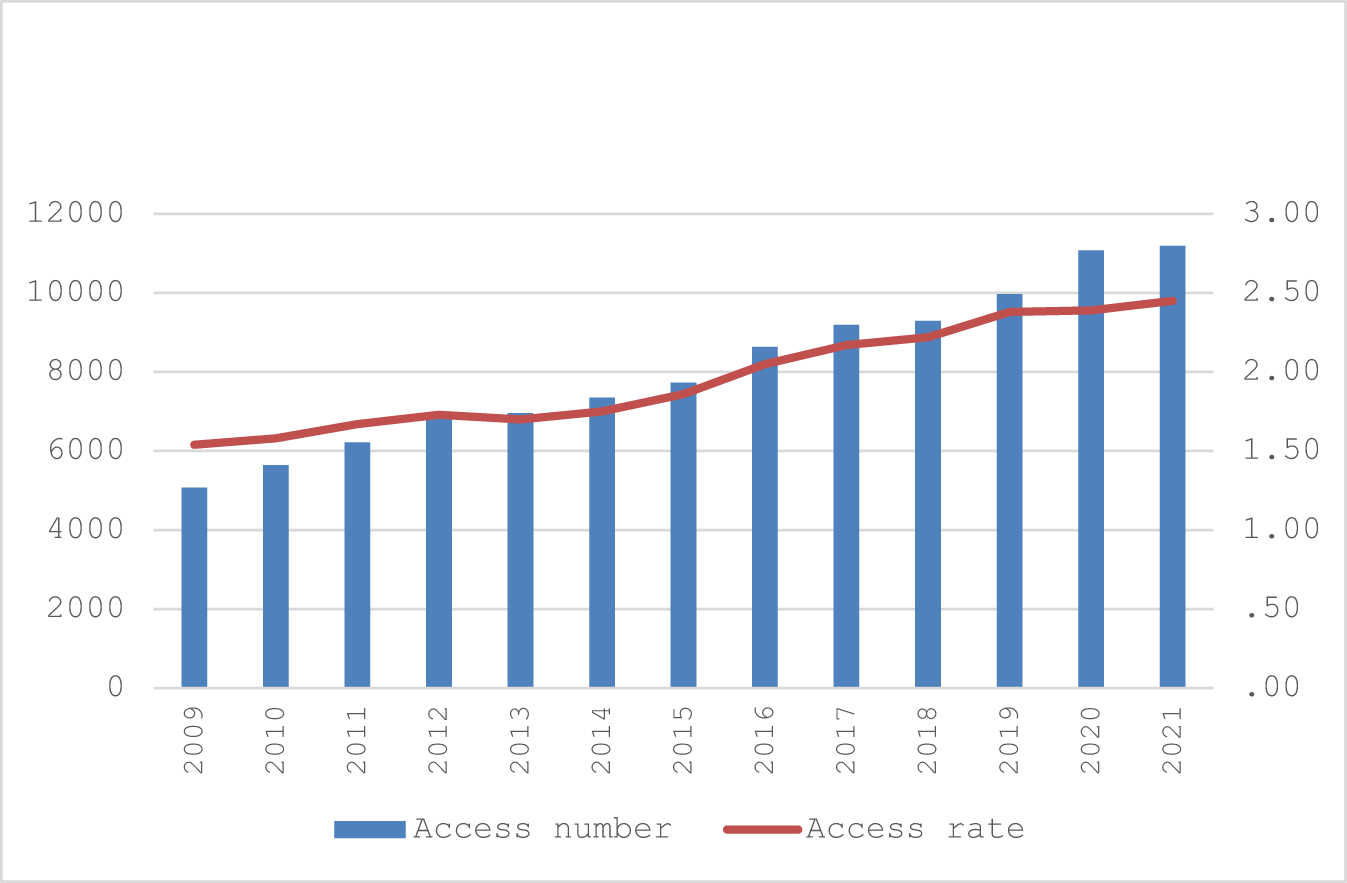
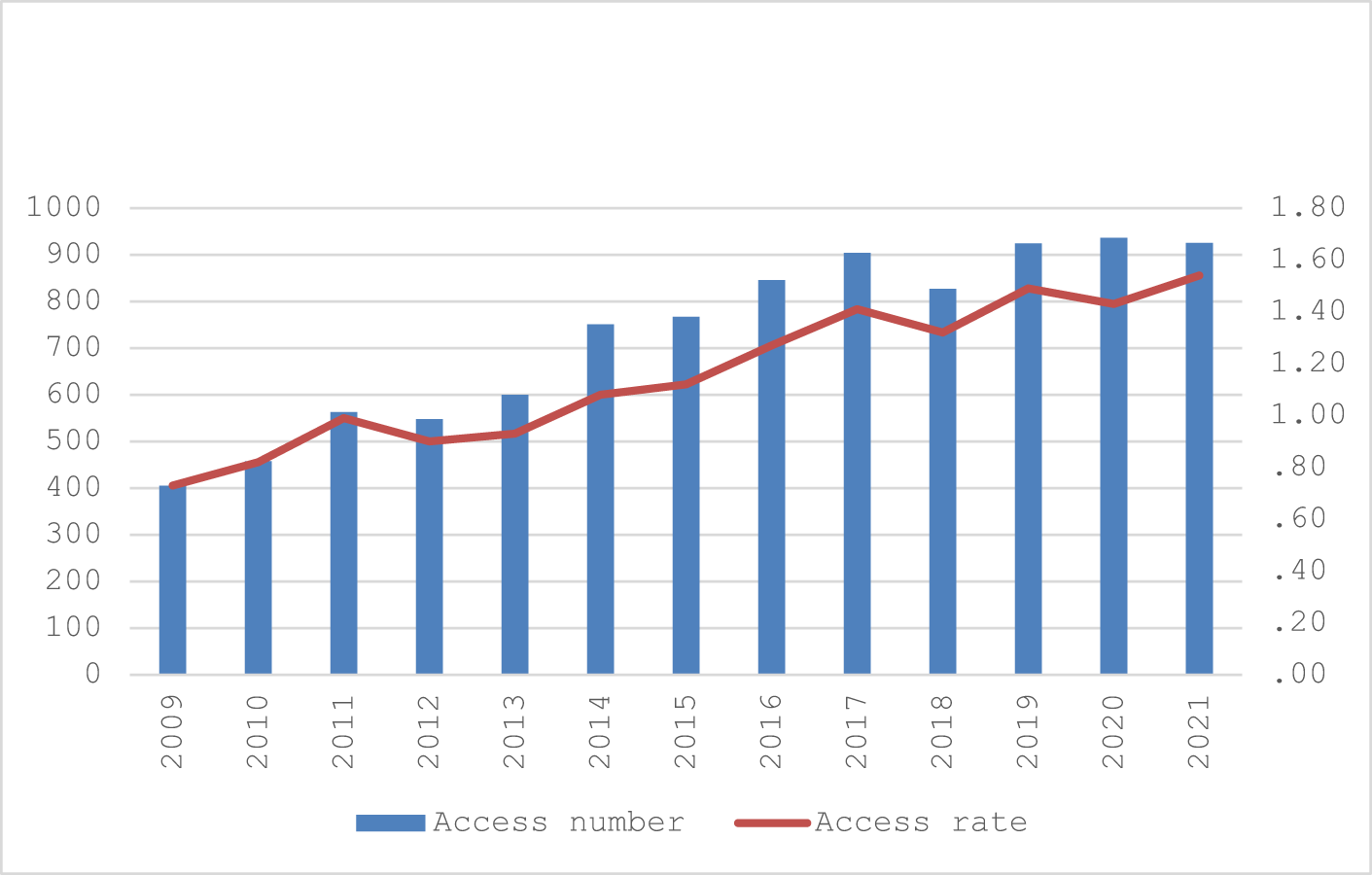
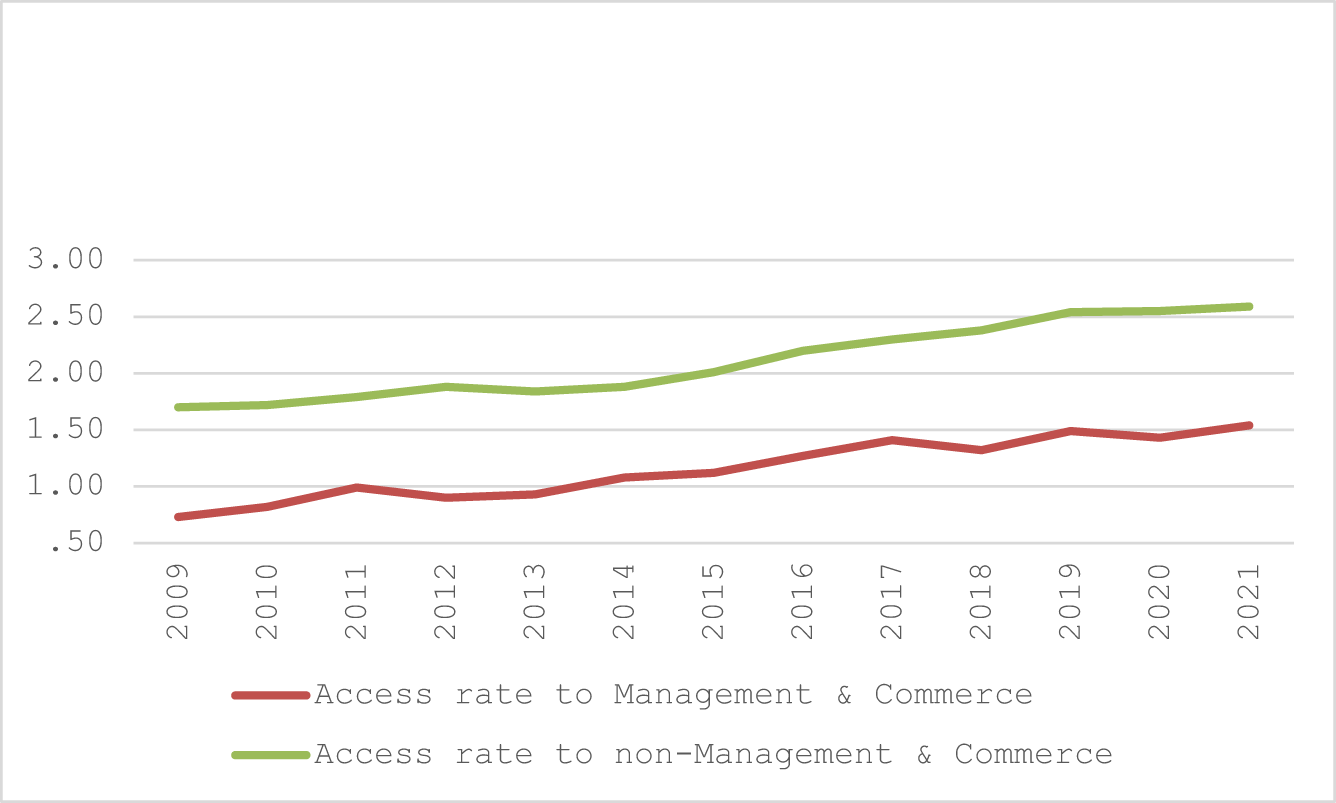
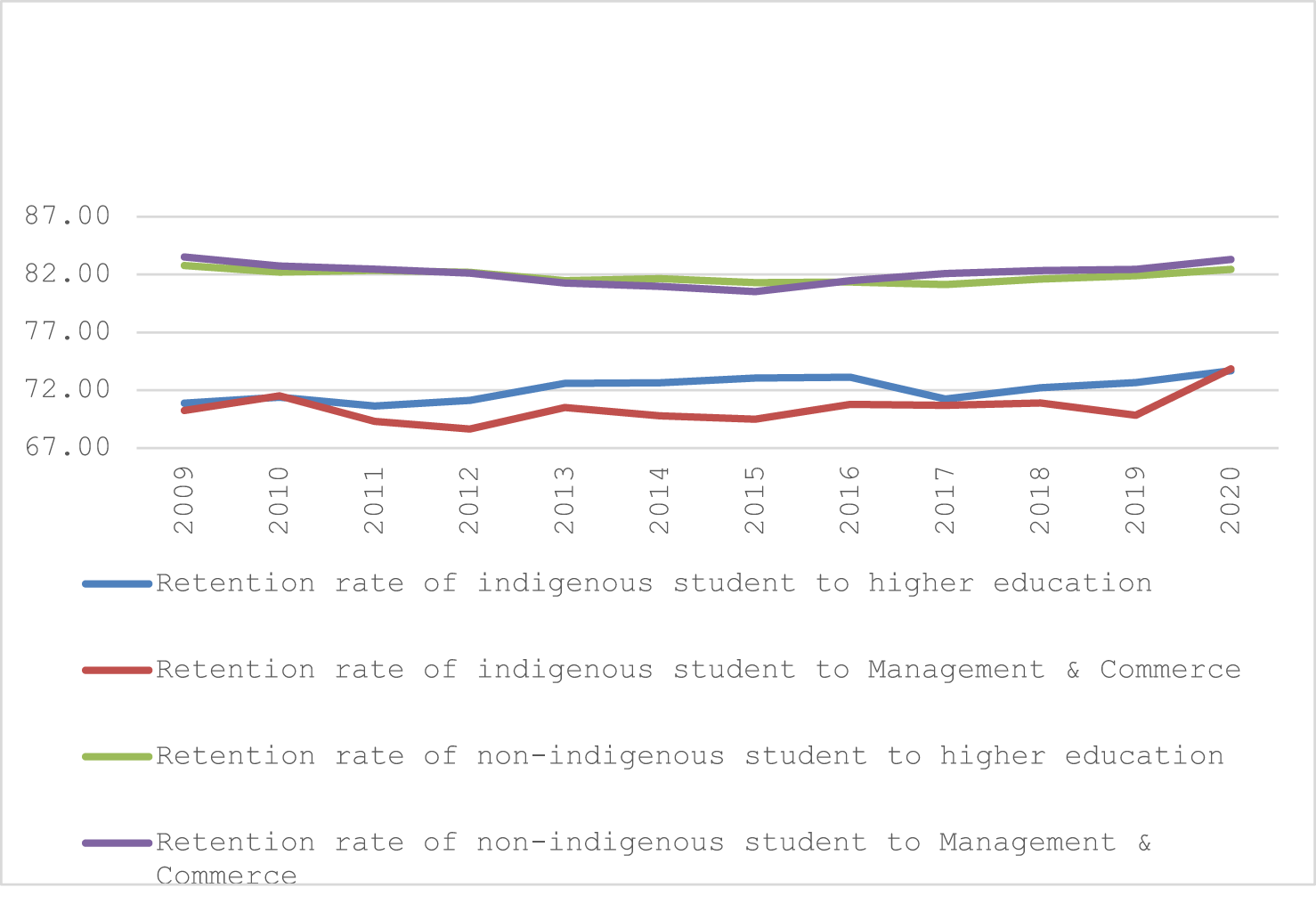
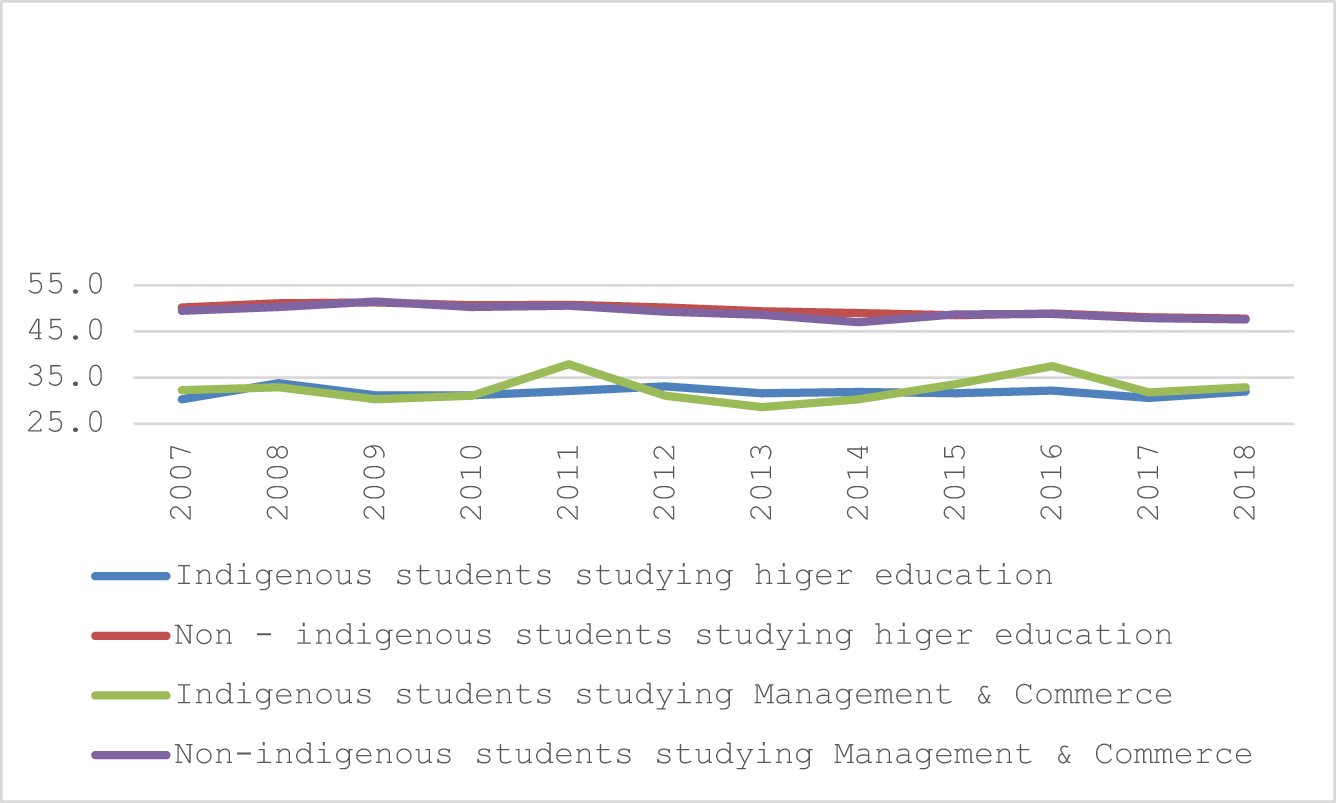
Firstly, data collected from DESE on Indigenous students’ access, participation, and completion of HE studies will be discussed. These are shown in the following figures: Indigenous students access number and rate to HE (Fig. 1) and for those enrolled in Management & Commerce (Fig. 2); access rates comparing Indigenous and non-Indigenous students studying Management & Commerce (Fig. 3); HE retention rates between Indigenous and non-Indigenous students and for those studying Management and Commerce (Fig. 4); and HE completion rates between Indigenous students and non-Indigenous and for those studying Management and Commerce courses (Fig. 5).
Access number and access rate to higher education by Australian Indigenous students (source DESE, 2023).
Access number and access rate to Management & Commerce by Australian Indigenous students
Access rate to Management & Commerce and non-Management & Commerce by Australian Indigenous students
Retention rate of Australian Indigenous and non-Indigenous students studying higher education and Management & Commerce
Completion rate for commencing students over a 4-year period after commencement by Australia Indigenous and non-Indigenous students studying higher education and Management & Commerce
Figures 1 and 2 show that the number and rates for Indigenous students attending HE in Management & Commerce have increased over the last one and a half decades.
Figure 3 shows a noticeable difference in access rates for Indigenous students studying Management & Commerce and those studying non-Management & Commerce, respectively. Generally, fewer Indigenous students enrolling in HE chooses business subjects in comparison to other disciplines (Hunter et al., Reference Hunter, Radoll, Schwab, Crawford, Biddle and Gray2015); where ‘the largest number of Aboriginal and Torres Strait Islander students’ study in the broad educational fields of society and culture, followed by health and education’ (Dang, Vitartas, Ambrose, & Millar, Reference Dang, Vitartas, Ambrose and Millar2016, p. 22).
Figure 4 shows the retention rates of Indigenous students studying Management & Commerce. These were approximately 10% lower than those of non-Indigenous students in Australia during the period 2009–2020. For instance, in 2020 the retention rate of Indigenous students studying Management & Commerce was 74%, while the retention rate of non-Indigenous students studying Management & Commerce was 83%.
Finally, Fig. 5 presents comparisons in the completion rates of Indigenous students and non-Indigenous students studying HE and Management & Commerce over a 4-year period after commencement. Of note are the overall, lower rate of completion for Management & Commerce students compared with all HE students. Compounding this, Indigenous business students’ completion rates are lower than non-Indigenous business students’ completion rates. For example, in 2018 the completion rates of Indigenous students studying Management and Commerce was 33%, while the completion rate of non-indigenous students studying Management & Commerce was 48%.
Data analyses of themes
The research team held focus groups and asked the educators what their experience was in teaching the newly developed First Peoples’ content. The responses were manually scribed and inspected where several themes were identified. The next section discusses each theme where the findings will be discussed in the subsequent section.
Awareness
Raising student awareness emerged as a key theme as educators acknowledged the role embedding Indigenous content played in understanding First Peoples knowledge and pedagogy played in doing this. Educators reported that there were many instances when this was the first-time students had discussed or had been made aware of Indigenous issues or history. Educators noted that many of the students had been unaware of these stories and watching them learn the content had been impactful for both the students and the Educator. For instance, one of the educators stated that:
The high school curriculum looks more historically at First People, but I think this content draws more attention to the present. (P 19)
Empathy
Empathy was the next theme that emerged, with more students being encouraged to think about Indigenous matters from a different perspective, how it relates to or is different from their own view and how they can empathise with the impact it could have on decision-making. One participant reported that:
There’s a lot of things we can learn from First People, so I always try to emphasize that during classes, so it’s not so much about just learning what you’re doing, but trying to apply some of their knowledge, what they’re doing and understand why they’re doing so. (P 24)
In one example, students discussed the impact of business decisions on First Peoples communities. Students were asked to position themselves in the role of the business decision maker and to consider the likely outcomes of certain decisions on First Peoples.
We discussed a few different types of decision-making (First People). We covered about how Indigenous people make decisions and we talked about the methods … and we talked about how Western society makes decisions. (P 21)
This is built on the work of Darlaston-Jones et al. (Reference Darlaston-Jones, Herbert, Ryan, Darlaston-Jones, Harris and Dudgeon2014) to challenge the dominant perspective and create the ‘third space’ or cultural interface (Nakata (Reference Nakata2007) where both ways of education (Ober & Bat, Reference Ober and Bat2007) can occur (Dudgeon & Fielder, Reference Dudgeon and Fielder2006). This exercise was effective in fostering empathy by allowing the students to reflect upon and discuss outcomes that could positively and negatively impact communities and businesses.
Curriculum
Emerging as the next theme was curriculum design and having the scope to modify it. In addressing issues raised by Prehn et al. (Reference Prehn, Peacock, Guerzoni and Walter2020), the course design was innovative in that First Peoples content is introduced across all the foundation courses so that Indigenous knowledge cannot be sidelined. Other issues experienced educators was that most said that this first time they had taught First Peoples content and particularly it was unusual to encounter First Peoples content in a foundation course. As noted by Howard (Reference Howard1995), this would require educators to shift their thinking and behaviour.
The course content was structured and supported by learning resources that were considered to be effective. Like Bodle and Blue (Reference Bodle, Blue, Sammel, Whatman and Blue2020) this method moves from transactional to interactional in the development of foundation courses, and enable the building of assessments. The ultimate step to achieving a transformational approach is to further use pedagogies and knowledge as the central mechanism by which to make all decisions across the curriculum (Martin, Reference Martin2020). The course was designed to allow educators to enhance the students’ learning experience by adding their own flavour and sharing examples from professional work or in some cases their own Indigenous (international) knowledge and perspectives.
The module gave me a good foundation to be able to teach and lead a discussion … there’s so much to learn…but I was able to bring in my own experience. (P 1)
The acknowledgement of the depth of the content emerged from the data, specifically in relation to the Indigenisation of the new Business courses and their focus on current First Peoples and contemporary thinking. This deliberate, present-day emphasis and holistic view (that is history is more than just 200 years old) have evolved from a long and often controversial and shameful treatment of Indigenous peoples since colonisation in Australia.
I think it will position the students in the right direction…that was the past, it doesn’t have to be the future. (P 1)
Concerns about accuracy
The next theme was expressed by educators where they had a strong desire to be accurate when representing First Peoples, this extended to being authentic, ensuring they were using the correct terminology and not wanting to unknowingly cause offence. One participant, who felt confident delivering First Peoples materials, said that previous training such as cultural safety training had been useful but:
… there’s always a concern, ‘Am I being culturally sensitive? (P 7)
These concerns were expressed when discussing delivering content and encouraging discussions. As was found in the work of Christie and Asmar (Reference Christie, Asmar, Hunt and Chalmers2021) some educators felt more comfortable in narrowing the discussion to ‘business’ matters to avoid situations where they might end up in the uncomfortable territory, such as the political or social aspects of First Peoples people. This reinforces the call for a ‘whole of Universities’ approach and a willingness to change in ways that can be observed and accessed (Hagan & Huijser, Reference Hagan and Huijser2008; University of Queensland, 2021b).
Confronting resistance, racism, and guilt
Clarification of role of educator and teaching material along with the university position when confronting resistance, racism and guilt emerged as a theme from the data. Some educators had experienced classes where students expressed different views or who were ‘argumentative’ when Indigenous issues were being discussed. Educators described a range of negative responses although these did not seem to be common or happening routinely.
Discussion of findings
The quantitative data clearly show the proportionally small number of an already limited Indigenous students to the population who undertake tertiary education to completion, and even lower rates of participation and completion for those studying Management and Commerce. Findings from educators focus groups demonstrate that positive impacts can be made through Universities and, in particular business schools, doing much more work to support and encourage Indigenous students to access and engage with HE. From our analyses and findings, we believe the first step is to change the curriculum and actively engage educators in the delivery of Indigenous material that has been developed to be inclusive and culturally safe. The perceptions of educators, discussed in this paper, provides useful data upon which further work can be built and provide direction where educators need more support.
The data in Figs. 1 and 2 reflect the intent of Australian federal governments’ long-term policies and goals to increase HE participation for Indigenous people. Some of these strategies included specialist enabling courses providing preparatory study pathways for Indigenous people to access HE (Wilson & Wilks, Reference Wilson and Wilks2015), and improve relationships with local high schools and Indigenous communities (Fitzgerald, Reference Fitzgerald2010). However, the access rates to HE and Management & Commerce by the Indigenous students still remains low at approximate 2.5% and 1.5% in 2021, respectively; and lower than the 4.4% of first nations peoples in Australian today (Universities Australia, 2021a).
From Fig. 3 the data suggest that Indigenous students choose university courses and training in other fields and disciplines that can assist their own communities. Indeed, Indigenous people of Australia are reported to place greater emphasis on community orientation, consensus decision-making, sharing of resources, and cooperation instead of competition (Galperin, Chavan, & Muhidin, Reference Galperin, Chavan, Muhidin, Spee, McMurray and McMillan2021). Although, fewer Indigenous students enrol in business courses, these are crucial areas of study, recognised as benefitting Indigenous people and their communities and an important way forward for the advancement and self-development of Australia’s First Nations peoples (Schaper, Reference Schaper2007).
The disparities in retention rates between non-Indigenous and Indigenous university students found in Fig. 4 are widely reported in existing research (Dang et al., Reference Dang, Vitartas, Ambrose and Millar2016; Gore et al., Reference Gore, Patfield, Fray, Holmes, Gruppetta, Lloyd and Heath2017; Hunter et al., Reference Hunter, Radoll, Schwab, Crawford, Biddle and Gray2015). These differences in retention rates reflect the major societal and economic disadvantages experienced by Indigenous people in Australia, who are ‘frequently marginalised in terms of power, wealth, and access to quality education’ (Willems, Reference Willems2012). Low university retention rates are reported in low socio-economic status families, and remote and rural communities (James et al., Reference James, Bexley, Anderson, Devlin, Garnett, Marginson and Maxwell2008). Additionally, many Indigenous students undertake their studies as the first person from their family to attend university, which can contribute to feelings of isolation and alienation and under-preparedness for university studies (Perry & Holt, Reference Perry and Holt2018). This data and information provide evidence for the importance for Indigenising the business curriculum in universities across Australia.
As in Fig. 3, the major differences in completion rates between non-Indigenous and Indigenous university business students in Fig. 5 are widely reported in the existing research (Dang et al., Reference Dang, Vitartas, Ambrose and Millar2016; Gore et al., Reference Gore, Patfield, Fray, Holmes, Gruppetta, Lloyd and Heath2017; Hunter et al., Reference Hunter, Radoll, Schwab, Crawford, Biddle and Gray2015); reflecting the major societal and economic disadvantages experienced by Indigenous people in Australia.
Overall, these results show the disparities in access, retention, and completion rates between Indigenous and non-Indigenous students studying at HE. Further, there are fewer Indigenous business students accessing, continuing, and completing their business studies. This outcome is critical in providing strong evidence to support Indigenous students HE business studies, which are identified as key study areas providing value and benefit to Indigenous people and communities as a means to move forward in the advancement of First Nations peoples (Schaper, Reference Schaper2007). Overall, this was found to be positive but not without its challenges and, with some further training, finds opportunities to explore the content more deeply. The next data to be analysed were the qualitative data on the themes that had emerged.
Awareness
Supporting the work of Giroux (Reference Giroux2017), educators commented that students were unaware of the extent of ongoing disadvantage experienced by First Peoples, in particular low rates of employment and education and poorer health outcomes. Despite these realities and historical facts, it was impressed upon students that the perspective here was not a ‘deficit model’ (Bodle & Blue, Reference Bodle, Blue, Sammel, Whatman and Blue2020) but also focused on the positive business outcomes of First Peoples and the importance and relevance of the knowledge to the present and future development of Australia and Australians. Lastly, there was an acknowledgement that even if students had encountered, or learnt about, First Peoples previously (for example at high school), the focus in this course was different and provided a more contemporary, forward-thinking approach.
Curriculum
One educator would start every session with Indigenous music, while another overseas educator was able to share his experiences of being a minority in the dominant culture and another was able to incorporate learnings from a previous course in cultural competence in a respectful and productive way (McConaghy, Reference McConaghy2000).
Educators also incorporated Indigenous learning into their classes, for example reviewing and discussing the ways First Peoples people look after the environment. Additional examples of applied Indigenous learning were found in decision-making, communication styles, and discussions on the importance of community were good examples of both ways of learning (Ober & Bat, Reference Ober and Bat2007).
Concerns about accuracy
While Indigenous history informs the design of the new Business courses, it is not the only focus in the current design. It should also be noted that Indigenous history is millions of years old and constitutes much more than post-colonial experience alone. One educator noted however that a deeper exploration of post-colonial Indigenous history would be helpful so the context of ‘how we got here, how we got to this point could be explicit which, in supporting the work of Howard (Reference Howard1995) rejects the dominant paradigm. In terms of the overall depth of materials, most educators agreed the level of material was pitched accurately to the student audience. Furthermore, there was also an acknowledgement that Educators could go ‘deeper’ with more training. This is supported by Christie and Asmar (Reference Christie, Asmar, Hunt and Chalmers2021) and Bodle and Blue (Reference Bodle, Blue, Sammel, Whatman and Blue2020) who reiterated the importance of support for and the training of educators.
Confronting resistance, racism, and guilt
This situation reveals a lack of sensitivity to groups with a history of oppression by the dominant culture and in particular, the specific culture of Australian Indigenous people and importantly, how easily educators despite the best of intentions, can fail in their duty of care to Indigenous students by spotlighting them and breaching their cultural safety. This reflects the concerns of Howard (Reference Howard1995) and McConaghy (Reference McConaghy2000) who warned against such actions and stressed the importance of establishing cultural safety for all. Instances of clear opposition to the content occurred through open verbal rejection, eye-rolling and a general sense of ‘hostility’ to what was being said. In the instances where more subtle forms of negativity were displayed, the educators were aware that there was a sense of resistance in a few and they were unsure of how to challenge these views, or even what their role should be in such situations.
They (the students) didn’t express anything, but you could just tell, it’s like, “why are we spending time on this?” (P 20)
If there were students who were argumentative. Where’s the point where we draw the line, do we stop the argument, or how do we manage that in an appropriate way? (P 7)
This may have emerged from the remaining structures and frameworks which, as Darlaston-Jones et al. (Reference Darlaston-Jones, Herbert, Ryan, Darlaston-Jones, Harris and Dudgeon2014) noted, can trigger compassion rather than transformative change. This study also supports the work of Fredericks and Bargallie (Reference Fredericks, Bargallie, Frawley, Russell and Sherwood2020) which found a wide range of emotions present in students undertaking an Indigenised curriculum.
One Educator mentioned that as a non-Indigenous person she did not feel comfortable navigating the complexity of issues in an authentic manner supporting the work of Christie and Asmar (Reference Christie, Asmar, Hunt and Chalmers2021) which bought highlighted non-Indigenous educators’ fears. This sentiment was expressed by other non-Indigenous educators who did not feel ‘confident’ representing First Peoples. Another imagined a scenario where you might have students with conflicting views and expressed a similar concern; that she would like to have greater role clarification and a stronger sense of the Universities’ position.
Something I found difficult is that I’m not a First Peoples, so I did feel sometimes like me delivering the content.… I didn’t have all the answers. (P 9)
Addressing the guilt felt by some students was also noted as being unfamiliar to educators as found in the work of Fredericks and Bargallie (Reference Fredericks, Bargallie, Frawley, Russell and Sherwood2020) that require additional educator support.
Limitations and future research
The limitations of this study include that the study took place within one University. Ideally, future research will include a study of what is occurring across business schools within Australia in the embedding of Australian First Peoples’ knowledge and pedagogies. Only educators’ perspectives were collected in this research and future research will extend to examine specifically the perceptions of students, Indigenous and non-Indigenous, who completed the courses to ascertain their perceptions and the correlation or divergence of views with that of their educators. In addition, the methodology of using focus groups may have limited the input from some educators, so future research may benefit from conducting one on one interviews to further explore or confirm the data gathered to date. Future research would also contribute to a boarder understanding of our progress to date by further exploring the local vs global perspectives possible in First Peoples curriculum and how this project used the role of students as partners in the co-creation of Indigenous knowing and knowledge. Finally, explicit examples of how the curriculum can be indigenised would benefit the Academy as a whole, as it looks for ways to culturally safely and appropriately present a more holistic, inclusive, locally accurate, and respectful curriculum.
Conclusion
This research focused on exploring the current state of access, engagement, and retention of Australian Aboriginal and Torres Strait Islander students in undergraduate business programmes. Current secondary data showed lower access, retention, and completion rates for Indigenous students in their HE studies and more specifically in those undertaking business subjects. We then presented the importance of Indigenising HE content as a strategy to addressing Closing the Gap polices to attract more Indigenous students to business degrees thus build capacity in employment and Indigenous business. It is argued that through the inclusion of Indigenous knowledge and pedagogy, universities can provide a more inclusive learning and teaching environment and promote greater engagement as a result of better meeting the needs of Indigenous communities (Behrendt et al., Reference Behrendt, Larkin, Griew and Kelly2012). This research explored educators’ perspectives of teaching the First People’s knowledge and pedagogies in the core first-year courses. We found that whilst implementing First People’s content into the new core foundation courses was at times challenging for educators, given its sensitive nature, teaching the course content to students was largely a positive experience and was an area of the curriculum that educators enjoyed delivering. We recommend that on implementation, training, and cultural competency workshops delivered by local elders and experts for non-Indigenous educators on First People’s content will lead to more opportunities to delve deeper into topics in the classroom. Educators would be better equipped and more confident in their ability to teach and deliver First People’s content going forward. Moreover, additional training and opportunities for exploring course content will not only help support the experience of educators but ultimately, the experience of students as well. What about recommending that the content will always require updating each year to ensure they address contemporary issues such as economic and sustainability solutions?
Conflicts of interest
All authors declare there were no competing interests relating to this research.


 Open access

