


Attention-deficit hyperactivity disorder (ADHD) is a heterogeneous constellation of complex neurodevelopmental problems rather than a single disorder (Reference Zwi, Ramchandani and JoughinZwi et al, 2000; Reference Rowland, Abramowitz and LesesneRowland et al, 2002). Studies have shown a higher prevalence of ADHD in children with learning disability (Reference Handen, McAuliffe and JanoskyHanden et al, 1994; Reference Dekker and KootDekker & Koot, 2003). There is growing evidence that ADHD can be successfully treated in children with learning disability (Reference Handen, Feldman and LurierHanden et al, 1999; Reference Barkley, Edwin and DulcanBarkley et al, 2002; Reference Pearson, Santos and RoachePearson et al, 2003) but it is very difficult to make a diagnosis in these children because of ‘ diagnostic overshadowing’ (Reference Reiss and SzyszkoReiss & Szyszko, 1983; Reference White, Nichols and CookWhite et al, 1995; Reference Jopp and KeysJopp & Keys, 2001; Reference Mason and SciorMason & Scior, 2004).
Although the prevalence of ADHD in adults is not known (Reference SchafferSchaffer, 1994) there is a growing consensus that ADHD continues into adulthood (Reference BarkleyBarkley, 1990; Reference Toone, Clarke and YoungToone et al, 1999; Reference FitzgeraldFitzgerald, 2001; Reference WilloughbyWilloughby, 2003). It seems logical that this disorder would present in adults with a learning disability, and possibly to a greater extent than in adults without such disability (Reference Fox and WadeFox & Wade, 1998), but there are diagnostic difficulties with the current classification system, particularly in making the diagnosis in adults and those with learning disability (Reference Murphy and BarkleyMurphy & Barkley, 1996; Reference Seager and O'BrienSeager & O’Brien, 2003).
The literature has shown that treatment of ADHD not only improves abnormal behaviour but also self-esteem, cognition, and social and family function, and that response can vary in different age-groups and with certain comorbid conditions (Reference WenderWender, 1995; Reference Findling, Schwartz and FlanneryFindling et al, 1996; Reference Wilens, Biederman and SpencerWilens et al, 1996). However, studies indicate that less than half of those with the disorder are receiving treatment (Reference Barkley, Edwin and DulcanBarkley et al, 2002; Reference Dekker and KootDekker & Koot, 2003).
This study was carried out to assess the practice of Irish psychiatrists in relation to the diagnosis of ADHD. We postulated that the diagnosis of ADHD is generally overlooked in adults and in patients with learning disabilities.
Method
Consultant psychiatrists were selected for this survey as we considered that their responses would reflect the current overall clinical practice in diagnosing and treating ADHD in Ireland.
An anonymous postal questionnaire was prepared specifically for this survey. An explanatory letter, a questionnaire relating to either children or adults and a prepaid envelope were sent to all 302 consultant psychiatrists listed in the Irish Medical Directory (Irish Medical Services, 2003). Of these, 250 worked with adults, 36 with children and adolescents, and 16 with patients with a learning disability. Four weeks later a reminder letter was sent with further copies of the same questionnaires.
The questionnaire was designed to establish whether consultant psychiatrists believe that ADHD exists, what assessment methods they use and what treatments they use when working with children and adults both with and without learning disability. The questionnaire also requested demographics and examined levels of confidence in making the diagnosis of ADHD using a visual analogue scale; respondents were asked to indicate the frequency with which they included symptoms taken from DSM-IV criteria (American Psychiatric Association, 1994) using the following options: ‘never’, ‘ sometimes’, ‘often’, ‘always’. They were also asked to rank these symptoms in the order they considered the most important for making a diagnosis of ADHD. The questionnaire also included general questions concerning the respondents’ understanding of ADHD and its assessment and treatment. Finally, participants were asked to add any other symptoms which they regarded as important for the diagnosis of ADHD.
The Statistical Package for the Social Sciences version 10.1 for Windows was used for data analysis.
Results
Although only 58 consultants responded initially (19%), 97 responses were received in total after the reminder (32%). In total, 25% (n=62) of the general adult and 64% (n=23) of the child and adolescent psychiatrists responded, and 67% (n=12) of those working with learning disability.
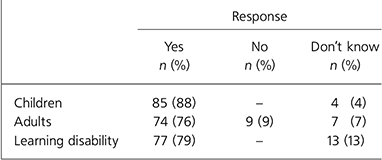
All respondents were asked whether ADHD ‘occurred’ in children, adults and in those with learning disability (Table 1).
Respondents’ views on the existence of attention-deficit hyperactivity disorder in children, adults and those with learning disability
| Response | |||
|---|---|---|---|
| Yes n (%) | No n (%) | Don’t know n (%) | |
| Children | 85 (88) | — | 4 (4) |
| Adults | 74 (76) | 9 (9) | 7 (7) |
| Learning disability | 77 (79) | — | 13 (13) |
Ranking and presentation
Ranking of symptoms of ADHD in children and adults both with and without learning disability was also examined using a Mann-Whitney analysis. Only one symptom ‘Often fidgets with hands or feet’ was ranked as significant only in patients without learning disability. Consultants in adult psychiatry considered fidgeting less important for a diagnosis in those without learning disability than consultants in child psychiatry.
χ2 analysis revealed that the following six symptoms were seen significantly more often by those working with children without learning disabilities than by consultants working with adults: ‘often fidgets with hands or feet’; ‘has difficulties engaging in leisure activities quietly’; ‘is often on the go or acts as if driven by a motor’; ‘blurts out answers before questions are completed’; ‘ often interrupts or intrudes on others’; ‘doesn’t seem to listen when spoken to directly’.
Confidence in making a diagnosis
A two-way analysis of variance (ANOVA) was used to assess consultants’ confidence in making a diagnosis of ADHD in adults and children with and without learning disability. The dependent variable was self-rated confidence (possible range 0–100). The independent variables were children/adults (non-repeated) and with/without intellectual disability (repeated). Groups were defined as adults and children and our population as with and without learning disability. No interaction was found between group and population. However, the main effect for group was significant (Fobs=18.732, d.f.=1, 57, P<0.05).
Examinaiton of the means suggested that consultants working with children were more confident at making a diagnosis in patients with and without learning disability than the consultants working with adults. The main effect for population was also significant (Fobs=32.661, d.f.=1, 57, P<0.05), with the mean scores suggesting that consultants were more confident about making a diagnosis of ADHD in patients without learning disability.
Methods of diagnosis
Respondents were asked in an open-ended question to specify which methods they used for diagnosing ADHD. The most common answers were:
-
• clinical interview using diagnostic criteria from DSM-IV or ICD-10
-
• mental state examination
-
• collateral history from a relative/carer/teacher
-
• classroom observation
-
• the Conners rating scales for parents and teachers
-
• specialised psychological assessment
-
• continuous performance test
-
• refer to a specialist
-
• occupational therapy assessment
-
• work history.
Treatments
The most frequently used medications were methylphenidate and dexamphetamine. Other medication included carbamezepine, mood stabilisers, clomipramine, venlafaxine, psychotropics, imipramine and zopiclone. Other treatments included psychoeducation, cognitive-behavioural therapy, social skills training and occupational therapy. A combination of stimulant medication and behaviour management and Parents Plus programmes was also reported to be effective.
Discussion
The aim of this study was to establish whether consultant psychiatrists believe that ADHD exists, and what assessment methods and treatments they use when working with children and adults both with and without learning disability. Most respondents reported observing symptoms of ADHD in both children and adults with a learning disability (n=77, 79%). However, certain symptoms were seen more often by consultants working with children without learning disability than those working with adults and significant differences were reported.
Consultants might be more confident about making a diagnosis of ADHD in patients without learning disability because of ‘diagnostic overshadowing’ in the latter group (Reference Reiss and SzyszkoReiss & Szyszko, 1983; Reference White, Nichols and CookWhite et al, 1995; Reference Jopp and KeysJopp & Keys, 2001; Reference Mason and SciorMason & Scior, 2004). This is a well-described problem in the diagnosis of psychiatric conditions in people with learning disabilities. It is of concern that despite indications that ADHD is more common in people with learning disabilities (Seagar & O’Brien, 2003) the diagnosis was not generally considered in this group by those we surveyed.
It is interesting that the child psychiatrists were significantly more confident in diagnosing ADHD in patients with and without learning disability than those working with adults; this may reflect the historical emphasis on this condition as being a diagnosis of childhood and suggests the need for training of general psychiatrists (Royal College of Psychiatrists, 1998, 2004).
A limitation of this study is the poor response rate from certain groups. Only 25% (n=80) of general adult psychiatrists completed the questionnaire compared with 64% (n=23) of child and adolescent psychiatrists and 75% (n=12) of consultants working with learning disability. The overall response rate was 32% (n=97). This study reflects only the practice of one discipline; the practices of other disciplines (e.g. psychology) were not examined. However, in Ireland the assessment and treatment of ADHD is usually carried out by multidisciplinary teams led by a consultant psychiatrist and we believe that our results are a fair representation of current practice in Ireland.
Conclusion
Our study shows that psychiatrists are less confident about making the diagnosis of ADHD in patients with learning disability, especially adults. Hence the diagnosis may go undetected with a resultant lack of appropriate treatment which may further compound existing impairments.
We believe that it would be useful to produce two consensus statements regarding the assessment and treatment of ADHD: one in relation to adults and one in relation to patients of all ages with learning disabilities. We will be recommending to the relevant faculties of our College that groups be established to produce such consensus statements.


 Open access


eLetters
No eLetters have been published for this article.