

My father, a practicing pediatric neurologist, was also a scientist. As a child, I remember my father peering at hundreds of micrographs of neuronal connections. Billions of these small connections form between neurons in the developing brain. Over the years he counted many, many synapses in post-mortem brain samples. A US immigrant who grew up in wartime Germany, he quietly shouldered his own childhood experiences. And he gained lasting fame – among neuroscientists and others – by discovering something fundamental. Brain synaptic connections increase dramatically during early human development, as anyone might expect. But Peter – Dad – Dr. Huttenlocher – discovered that, by the millions, these connections are also selectively removed as we learn and develop. This process, now referred to as synaptic pruning, is the process of refinement that mediates our skills, our abilities and our memories [Reference Sakai1].
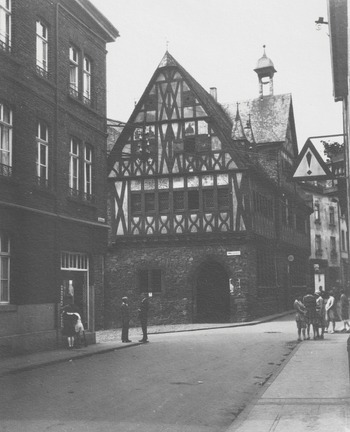
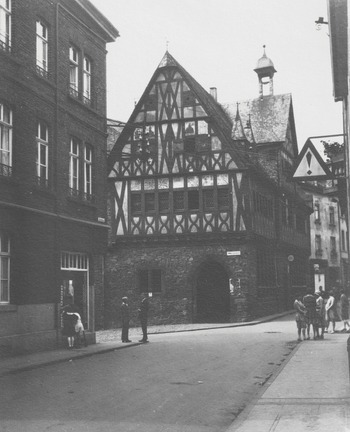
Peter was born in Oberlahnstein bei Koblenz, in Germany, in 1931 (Figure 1.1). He was the younger of two brothers born to Else, an opera singer, and Richard, a chemist. Peter remembered being the Dümmling (“simpleton”) in the family. He was often distracted and struggled in school as a young child. Peter adored his mother. He and his brother Dieter would run along cobbled streets to the train station to greet their mother when she returned from work singing in the Cologne opera. Peter had few other memories from his young childhood with his mother, before she fled Germany in 1936.
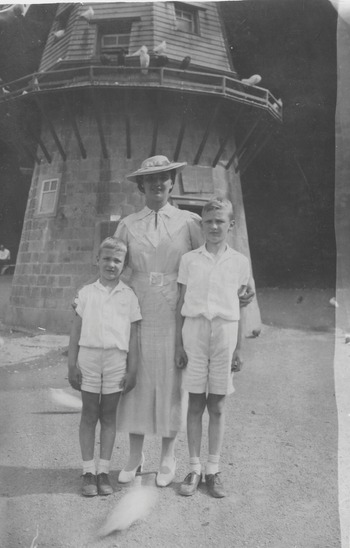
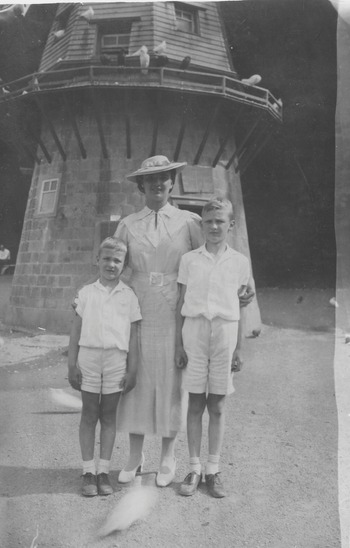
The details of what happened only emerged gradually. In a brief first telling, Else had visibility as a dramatic soprano in the Cologne Opera. But she refused to join the state-mandated music guild, the Reichmusikkammer, and this drew the attention of the authorities and endangered her family. Her legendarily strong and proud demeanor included elements of being stubborn and this included being stubbornly supportive of her artist/musician friends and colleagues who were Jewish. The months passed. The Nazi movement deepened its inroads into lives and communities. Else was banned from singing and her passport was confiscated. With little public notice, but nonetheless noticeably, “undesirable” persons were being taken from their homes. Else and Richard divorced. The Fürsorge (child welfare) authorities declared that Else was expressly unable to raise “Aryan children,” and Richard was given full custody of young Dieter and Peter. After Else shamed the authorities about honoring a prior commitment to sing at a Belgian opera house, her passport was temporarily returned and she was allowed passage by the Nazis, only for this single performance. She did not return. From Belgium, Else later received safe passage and sponsorship to travel to the United States. While Else lived in Belgium, and later France, Peter and Dieter traveled by train, with their father, to visit their mother. A photograph shows Peter, six years old, with his mother and Dieter in Spa, Belgium, near the train station (Figure 1.2). The visit was the final farewell, before her departure. Peter did not see his mother again until after the war, as a young man in the United States.
During our childhood, Peter rarely shared painful memories. I would hear fleeting mentions at most. But, in our late teens, he apparently believed my brothers and I were ready to hear. On our first trip to Germany, and then more so when I was a college student living in Germany, he talked about his childhood. In the dark corners of a Ratskeller (bar), or on the streets of small villages where he grew up, he would tell stories that distracted with humor and legend. He related how as a hungry post-war teen living in a small village he would swim in the local river – the Rhine. He would swim across the river to steal apples from the orchard, then hike back upstream for the return. Or he would hitch rides upriver on barges, from the water. Crazy adventure tales. The hunger – the lack of food – was only given a minor part.
As a teenager, Peter would swim near the Lorelei, a slate outcrop that towers over an S-curve in the Rhine, a site of many boating accidents over the centuries. The translation of Lorelei can be peaceful: a “murmuring rock”; or insidious: a “lurking rock.” Folklore has it that a siren, a singing beauty, laid in wait among those rocks and distracted the shipmen. My father relished this tale. The Lorelei tale infiltrated popular culture. Henry Heine wrote a poem about the siren that was included in musical compositions by Shostakovich and others. My father would recite the opening to us, to acquaintances, to dinner guests, first in German then English:
I now realize that, throughout my childhood, my mostly happy father showed glimpses of this melancholy – melancholy tempered with humor and kindness. Did this melancholy motivate him to understand the human brain? He had a lifelong interest in philosophy as well, and in understanding morality and human behavior. Pondering all the children who grow up through a war, as Peter did while witnessing Nazism, it is hard not to think about the impact of these experiences on the development of their brains. We now know from his work that synapses continue to be eliminated throughout childhood, at least through adolescence and likely beyond, refining the neuronal circuits that influence who we are.