





Background
Response rates for depression treatment remain modest, with treatment effects significantly diminishing over longer follow-up periods and relapse rates reaching up to 54% within 2 years (Cuijpers et al., Reference Cuijpers, Miguel, Ciharova, Harrer, Basic, Cristea and Karyotaki2024; Karyotaki et al., Reference Karyotaki, Smit, de Beurs, Henningsen, Robays, Huibers, Weitz and Cuijpers2016; Vittengl, Clark, Dunn, & Jarrett, Reference Vittengl, Clark, Dunn and Jarrett2007). Given that depressive disorders are among the leading causes of global disease burden, strategies to enhance and sustain treatment outcomes are urgently needed. One possible approach is to integrate the treatment of personality pathology into psychotherapy for depression, as personality pathology is a known predictor of long-term outcome in depression (Mulder et al., Reference Mulder, Frampton, Jordan, Luty, McIntosh and Carter2022; Tyrer, Tyrer, Johnson, & Yang, Reference Tyrer, Tyrer, Johnson and Yang2022; Van & Kool, Reference Van and Kool2020). Another strategy to enhance treatment outcomes is to increase psychotherapy dosage by raising session frequency, extending the total number of sessions, or lengthening treatment duration. While higher session frequency has been associated with better outcomes in depression (Cuijpers et al., Reference Cuijpers, Huibers, Daniel Ebert, Koole and Andersson2013), a recent meta-analysis found no such effect after adjusting for study characteristics (Ciharova et al., Reference Ciharova, Karyotaki, Miguel, Walsh, de Ponti, Amarnath and Cuijpers2024). However, this analysis focused on short-term treatments averaging 10.6 sessions, leaving it unclear whether the findings apply to higher-dosage therapies (Cuijpers et al., Reference Cuijpers, Miguel, Ciharova, Harrer, Basic, Cristea and Karyotaki2024). For patients with chronic distress or personality pathology, longer-term treatments of at least 50 sessions are more effective than short-term interventions (Leichsenring & Rabung, Reference Leichsenring and Rabung2011).
Direct comparisons of psychotherapy dosage were done in a randomized controlled trial (RCT) examining session frequency in depressed patients, in which twice-weekly sessions during the initial phase of cognitive behavioral therapy (CBT) and inter personal therapy (IPT) resulted in lower drop-out rates and faster, larger reductions in depressive symptoms at posttreatment compared to once-weekly sessions (Bruijniks et al., Reference Bruijniks, Lemmens, Hollon, Peeters, Cuijpers, Arntz and Huibers2020). However, no differences were found in therapy outcomes at 24 months (Bruijniks et al., Reference Bruijniks, Hollon, Lemmens, Peeters, Arntz, Cuijpers and Huibers2023). In a recent RCT with patients with depression and personality disorders (PD), a higher dosage of schema therapy (ST) or short-term psychodynamic supportive psychotherapy (SPSP) of 50 sessions (starting twice weekly) led to a greater reduction in depressive symptoms over time, as well as higher remission rates for both depression and PD, compared to 25 sessions (starting weekly) (Kool et al., Reference Kool, Van, Arntz, Bartak, Peen, Dil, de Boer and Dekker2024). Please note that in this study, both session frequency and the total number of sessions varied across dosage conditions, while the overall treatment duration remained fixed at 1 year. The long-term effects at 18 and 24 months are presented in the current paper.
We hypothesized that the superior results in the 50-session condition would be maintained at follow-up, resulting in fewer depressive symptoms at 18 and 24 months in the higher dosage group. Additionally, we anticipated higher remission rates for depression and PD at 18 and 24 months in the 50-session condition compared to the 25-session condition, as well as better levels of personality functioning. No differences in effectiveness between SPSP and ST were expected.
Methods
Trial design and participants
Data came from the psychotherapy dosage (PSYDOS) study, a pragmatic RCT with a 2 × 2 factorial design examining the effect of psychotherapy dosage in patients with both depression/dysthymia and PD. The results presented in this paper are based on this sample. Patients were randomly assigned to one of four conditions: 25 or 50 sessions and either ST or SPSP. After providing informed consent, 246 patients were randomized into the following groups: ST-25 (n = 64), SPSP-25 (n = 68), ST-50 (n = 60), SPSP-50 (n = 54). Details regarding the study design, participants, interventions, and outcomes up to 12 months have been fully described elsewhere and will only be briefly summarized here (Kool et al., Reference Kool, Van, Bartak, de Maat, Arntz, van den Eshof, Peen, Blankers, Bosmans and Dekker2018; Kool et al., Reference Kool, Van, Arntz, Bartak, Peen, Dil, de Boer and Dekker2024).
Participants were recruited from routine referrals to a specialized center for PD in Amsterdam, the Netherlands. Eligible participants were adult outpatients who met DSM-IV diagnostic criteria for depression or dysthymia, and at least one PD, including non-specified or other groups (PD-NOS; OSPD) according to DSM-IV or DSM-5, with a minimum of five personality disorder traits (DSM-5 was introduced in the Netherlands during the trial). Exclusion criteria included psychotic symptoms, bipolar disorder, insufficient mastery of the Dutch language, or an urgent need for hospitalization or intensive treatment, such as acute suicidality. Patients with a history of addiction were excluded in case of current alcohol- or substance dependence (including benzodiazepines). For those without a history of addiction, exclusion was applied if the intake clinician determined that current addiction required treatment before, or concurrently with, therapy for depression and PD. Additionally, the treatment center excluded patients whose primary PD diagnosis fell within Cluster A or was Antisocial PD (Kool et al., Reference Kool, Van, Arntz, Bartak, Peen, Dil, de Boer and Dekker2024).
The treatment protocols for SPSP and ST for chronic depression were followed, as outlined in the respective manuals and delivered in either 25 or 50 sessions (De Jonghe et al., Reference De Jonghe, De Maat, Hendriksen, Nooteboom, Dekker and Van2013; Renner, Arntz, Leeuw, & Huibers, Reference Renner, Arntz, Leeuw and Huibers2013). Patients in the 25-session condition attended 16 weekly sessions, followed by 9 biweekly sessions. Patients in the 50-session condition received 32 twice-weekly sessions, followed by 18 weekly sessions. Before randomization, patients and therapists were informed that therapy would be followed by one year without treatment. However, through shared decision making, referrals to another therapy within or outside the institute could be arranged in case both therapist and patient agreed that this was clinically necessary. Continuation with the same therapist was not permitted. Additionally, participants had the opportunity to seek treatment from other providers during the follow-up period independently.
Consistent with the pragmatic nature of the trial, the use of antidepressants was permitted, and changes in prescription were allowed during treatment and the follow-up period. Adherence to the treatment protocols for ST and SPSP was confirmed, and competence rates varied from adequate to excellent. At baseline, most patients had Cluster C personality disorders (avoidant: 44%, obsessive-compulsive: 29%), followed by borderline personality disorder (26%). Nearly 29% met criteria for multiple personality disorders. Compared to a sample in a depression-center, our participants had more Cluster B personality disorders and a greater number of personality disorders per individual, indicating greater personality disorder severity (Kool et al., Reference Kool, Lemmens and Hartog2021). Patients who received 50 sessions showed a significantly greater reduction in depressive symptoms during 12-month treatment compared to those who received 25 sessions (time × session dosage, p < .001). This resulted in an estimated mean difference of 5.6 BDI points in favor of the 50-session condition (effect size d = −0.53) at the end of treatment (12 months) and higher depression and PD remission rates (74% vs 58%, p = 0.025; 74% vs 56%, p = 0.010, respectively) (Kool et al., Reference Kool, Van, Arntz, Bartak, Peen, Dil, de Boer and Dekker2024).
The study was registered with the Netherlands Trial Register (now International Clinical Trials Registry Platform; registration number NTR5941). All procedures were approved by the Medical Ethical Committee of VU University Amsterdam (registration number NL55916.029.15).
Primary outcomes
Depressive symptoms were assessed using the Beck Depression Inventory (BDI-II), which was conducted online at 18 and 24 months (Beck, Steer, & Brown, Reference Beck, Steer and Brown1996).
Secondary outcomes
Remission of depression and PD was assessed at 24 months with the depression (A) and dysthymia (B) sections of the Mini International Neuropsychiatric Interview-plus (MINI-plus) and the SCID-II/SCID-5-PD, respectively (First, Gibbon, Spitzer, Williams, & Benjamin, Reference First, Gibbon, Spitzer, Williams and Benjamin1997; First, Williams, Benjamin, & Spitzer, Reference First, Williams, Benjamin and Spitzer2016; Sheehan et al., Reference Sheehan, Lecrubier, Harnett-Sheehan, Janavs, Weiller and Bonora2000). The assessments were conducted by independent raters who were blinded to condition. In addition, improvement was measured in terms of psychodynamic and ST constructs using the Severity Indices of Personality Problems (SIPP), the Developmental Profile Inventory (DPI), the Young Schema Questionnaire-short form (YSQ-sf), and the Schema Mode Inventory (SMI) at 18 months (SIPP) and 24 months (SIPP, YSQ-sf, SMI, DPI) (Polak, Van Riel, Ingenhoven, & Van, Reference Polak, Van Riel, Ingenhoven and Van2018; Verheul et al., Reference Verheul, Andrea, Berghout, Dolan, Busschbach, van der Kroft and Fonagy2008; Young et al., Reference Young, Arntz, Atkinson, Lobbestael, Weishaar and Vreeswijk2007; Young & Brown, Reference Young and Brown2005). The reduction of general psychological symptoms (using the Brief Symptom Inventory [BSI], the Outcome Questionnaire-subscale Symptomatic Distress [OQ-SD]), improvement in quality of life (EQ-5D) and happiness were measured at 18 months (EQ-5D, Happiness) and 24 months (EQ-5D, Happiness, OQ-SD, BSI) (Derogatis & Melisaratos, Reference Derogatis and Melisaratos1983; Lambert, Gregersen, & Burlingame, Reference Lambert, Gregersen, Burlingame and Maruish2004; Brooks, Rabin, & De Charro, Reference Brooks, Rabin and De Charro2013; Veenhoven, Reference Veenhoven2014). A detailed description of these instruments and their psychometric properties is available in the published protocol (Kool et al., Reference Kool, Van, Bartak, de Maat, Arntz, van den Eshof, Peen, Blankers, Bosmans and Dekker2018).
Mental health care consumption during and after treatment was examined by analyzing patient records for care received within the mental health institute, gathering information from patients during the 24-month follow-up assessment about additional treatment at other mental health care facilities, and collecting data through the TIC-P (Hakkaart-van Roijen, van Straten, Donker, & Tiemens, Reference Hakkaart-van Roijen, van Straten, Donker and Tiemens2002).
Data analysis
An outline of the analysis strategy was provided in the published protocol (Kool et al., Reference Kool, Van, Bartak, de Maat, Arntz, van den Eshof, Peen, Blankers, Bosmans and Dekker2018). Primary analyses were intention-to-treat. To investigate the effect of psychotherapy dosage on depression (BDI-II), multilevel regression analyses with restricted maximum likelihood estimation were conducted. The interventions were represented by two dichotomous variables: 25(0) versus 50(1) sessions and SPSP(0) versus ST(1). The initial basic model was a two-level linear model, with repeated measurements (level 1) nested within patients (level 2). Two two-way interactions were included to test the differences in the change of BDI-II scores over time (in days) by psychotherapy dosage (time × dosage) and treatment type (time × treatment). In a secondary analysis from which estimates for the four separate conditions were derived, these two interactions were replaced by a time-by-condition interaction. When available (BDI-II, SIPP, OQ-SD), inclusion measurements were included as covariates. To control this covariate for selective measurement dropout during follow-up, all inclusion measurement values were standardized by subtracting the mean inclusion value of the total inclusion sample (N = 246). As the measurement points up to 12 months were already analyzed in Kool et al. (Reference Kool, Van, Arntz, Bartak, Peen, Dil, de Boer and Dekker2024), the current analysis focused on the 18- and 24-month measurement points. For the DPI, SMI, BSI, and OQ-SD, only the 24-month measurement was available, so time interactions were not included in the models for these measures. Time in days was used as the time variable.
Estimated marginal means for the separate dosage conditions and the four dosage-by-treatment combinations were calculated from the linear mixed models for all continuous measures, and between-group effect sizes at 18 and 24 months were derived from these means. Additionally, linear mixed models were used to examine treatment effects on the BDI-II between the end of treatment (12 months) and 24 months for the separate dosage conditions and the four dosage-by-treatment combinations. Reliable change was defined as a decrease of at least 9 BDI-II points, based on Jacobson and Truax (Reference Jacobson and Truax1991). Two response definitions were used: (1) more than 50% symptom reduction on the BDI-II and (2) a BDI score below 10 or reliable change at 12 months and a score at the described measurement below 20. Absence of residual symptoms was defined as BDI-II < 10. Relapse was defined as the loss of more than 50% of the initial symptom improvement at follow-up and was evaluated in both (1) the total sample and (2) the subsample of patients who achieved response during treatment. Differences in response, absence of residual symptoms, and relapse at specific measurement points were analyzed with Chi2 tests. A first sensitivity analysis was performed with completers only (patients who attended >72% of sessions). In a second sensitivity analysis, the total number of additional therapy sessions received (calculated as the total number of sessions from 0 to 24 months minus the number of sessions within the allocated treatment) was added as a covariate in the multilevel regression analysis of the BDI-II. Additionally, the same analysis was conducted using the total number of sessions, including those provided within the allocated treatment. Finally, we also analyzed treatment effects between 12 and 24 months across four subgroups: 25- and 50-session conditions, each with and without additional therapy. Differences in additional therapy sessions received between 12 and 24 months, as well as total care consumption from baseline to 24 months, were tested using Mann–Whitney and Kruskal–Wallis tests. Chi2 tests were used to analyze differences in remission and relapse rates for depression/dysthymia (MINI-plus), remission from PD, adherence rates, dropout rates, advice for additional care, received additional care, and antidepressant use. Significance levels were set at p < 0.05. All statistical analyses were conducted using SPSS 29.0, and results are reported in accordance with CONSORT guidelines (Jainer & Onalaja, Reference Jainer and Onalaja2003).
Results
Study adherence
BDI-II data were missing for 89 patients (36.2%) at 18 months and 75 patients (30.5%) at 24 months. Among those who completed a post-treatment BDI (n = 171), 143 (84%) also provided data at 18 months, and 141 (82%) at 24 months. At 24 months, 167 MINI-plus interviews (67.9%) and 165 SCID-II / SCID-5-PD interviews (67.1%) were completed. Missing data primarily resulted from patients who either chose to discontinue participation or could not be contacted during the year following treatment termination. No significant differences in missing data proportions were observed between dosage or treatment conditions. However, patients with avoidant PD at baseline were less present in the group with missing data (p = 0.026).
Long-term effects of psychotherapy dosage on the primary outcomes
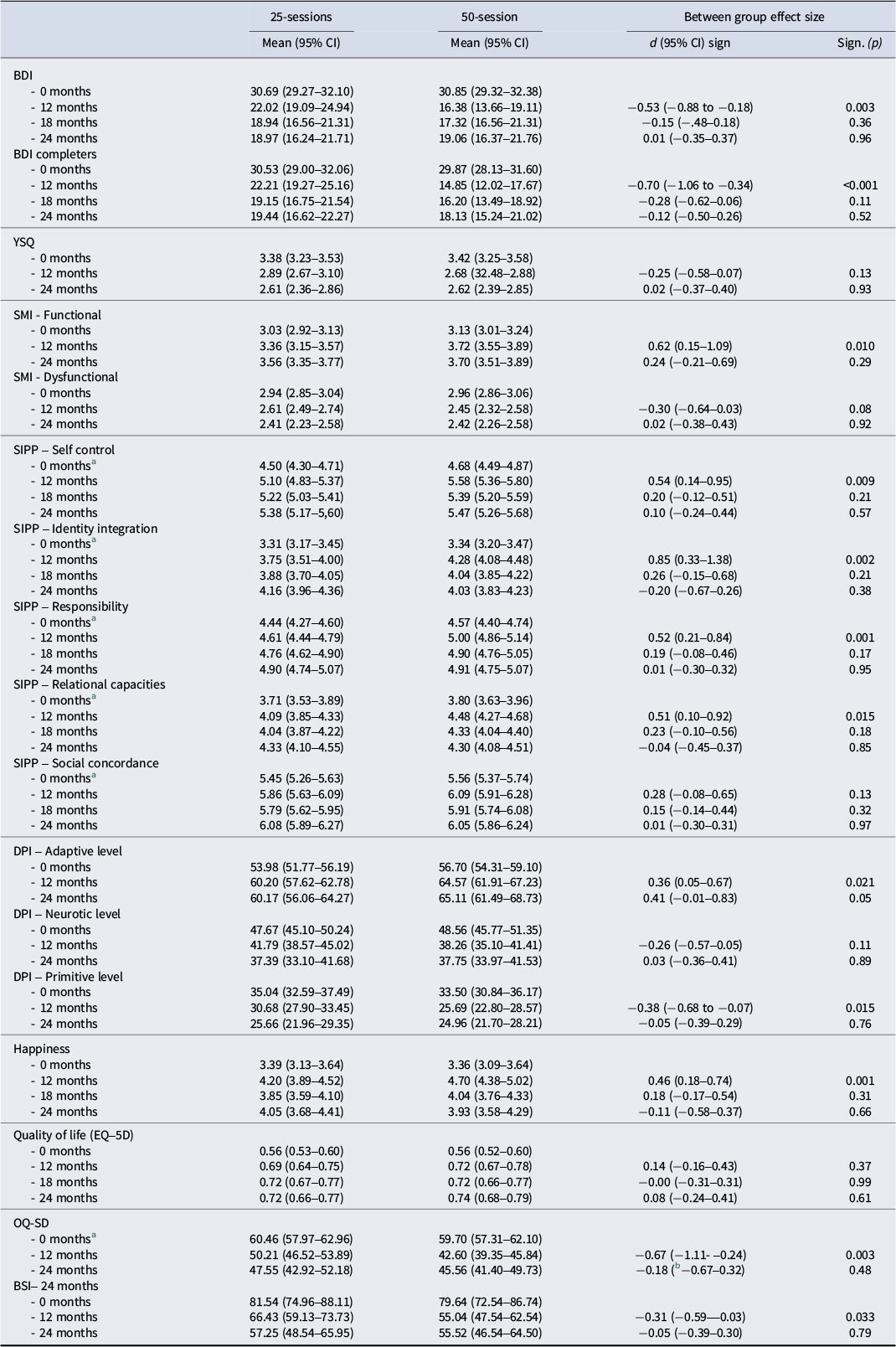
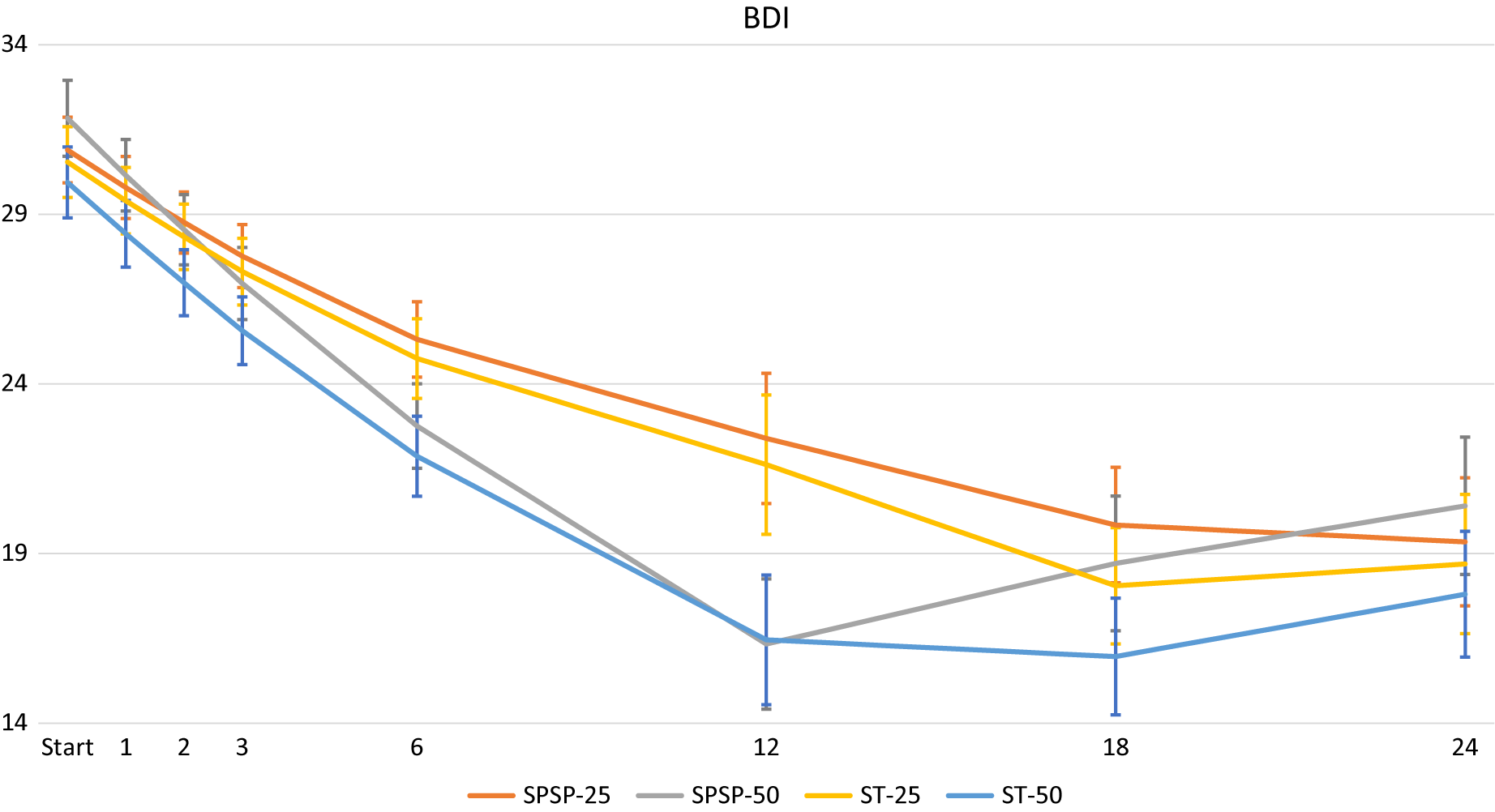
At both 18 and 24 months, the estimated mean BDI-II scores did not significantly differ between the dosage conditions. At 18 months, the mean difference between the 25-session and 50-session conditions was estimated at 1.6 BDI points (18.9 for the 25-session condition and 17.3 for the 50-session condition), with an effect size of d = −0.15 (95% CI = -0.48–0.18, p = 0.36). At 24 months, the mean difference was estimated at 0.1 BDI point (19.0 for the 25-session condition and 19.1 for the 50-session condition; d = −0.01; 95% CI = −0.35-0.37, p = 0.96) (see Table 1). Figure 1 and Supplement 1 show the estimated means for each condition by time point of planned BDI-II assessments (0–24 months), and the multilevel parameters can be found in Supplement 2. The slope of BDI-II scores from 18 to 24 months also did not differ significantly between the dosage conditions. Compared to the end of treatment at 12 months, patients in the lower-dosage group (25 sessions) showed significant improvement at 24 months, with a reduction of 2.55 BDI points (p = 0.031). Detailed information about the change in symptoms on the BDI-II between 12 and 24 months for the separate conditions can be found in Supplement 3.
Estimated means and between group effect sizes at 0, 12, 18, and 24 months (95% CI) for all primary and secondary outcomes

Note: Mean = estimated marginal means 95% CI = 95% confidence interval.
a Intake scores are used because SIPP and OQ-SD were not included in the assessment at treatment start.
b Main analysis, controlled for total care consumptions between 0 and 24 months.
Estimated means on the Beck Depression Inventory-II (BDI-II) per intervention condition and by time point.
The y-axis starts at a BDI-mean score of 14 for presentation purposes. The x-axis presents the moment at which assessments were planned: treatment start, 1, 2, 3, 6, 12, 18, and 24 months, while the analysis was based on the actual moment the assessment was done (in days). Error bars present the estimated standard error.

Long-term effects of psychotherapy dosage on the secondary outcomes
At 24 months, remission from depression/dysthymia (assessed with the MINI-plus) was achieved in 110 patients (65.9%), and remission from PD (assessed with the SCID-II/SCID-5-P) was observed in 125 patients (75.8%). Additionally, 90 patients (55.2%) achieved remission from both conditions. However, overall 70% (n = 161) reported at least mild depressive symptoms (BDI > 10) at 24 months. Unlike the results at 12 months, no significant differences were observed between the dosage conditions at 18 and 24 months on reliable change, response, residual symptoms, remission, or relapse (see Supplement 4).
Consistent with the primary outcomes, no significant differences were found between the dosage conditions for the secondary outcomes at 18 and 24 months (Table 1 presents the results for the dosage conditions, while Supplement 5 provides outcomes for the four individual conditions). Between 12 and 24 months, patients in the 25-session condition demonstrated significant improvement on dysfunctional schemas (YSQ-sf), functional and dysfunctional schema modes (SMI), neurotic and primitive levels of functioning (DPI), self-control, identity integration, responsibility and relational capacities (SIPP), general life happiness, and symptoms (OQ-SD and BSI). See Supplement 3 for detailed information on changes in the estimated means of the secondary outcome between 12 and 24 months for all separate conditions.
Mental health care consumption
Approximately one-third (31.0%) of patients who completed their assigned therapy received additional treatment during the year following treatment termination. Although therapists more frequently advised patients in the lower-dosage group to seek further treatment, this did not result in significantly higher rates of additional treatment during the following year compared to the higher-dosage group (34.0% in the 25-session condition vs 27.0% in the 50-session condition). Patients in the 50-session group were about equally likely to receive additional treatment within (14%) or outside (13%) our institute, whereas those in the 25-session group predominantly received further therapy within our institute (27% versus 7%, respectively). Additional care consumption, both during and after the assigned treatment, reduced the relative difference in psychotherapy dosage between the 25- and 50-session conditions. The intended 25 versus 50 sessions increased to 42 versus 63 sessions, exceeding the original dosage by 68% and 26%, respectively. Detailed information on care consumption per condition is available in Supplement 6, while patient flow for additional therapy is depicted in Supplement 7.
Use of antidepressants
Approximately one-third of the patients (33.1%, n = 50) were using antidepressants at the end of treatment. Among these, 39 patients (78.0%) continued their antidepressant use 1 year later. Conversely, 15% (n = 16) of patients who were not using antidepressants at the end of treatment initiated their use during the following year. No significant differences were observed between dosage or treatment conditions.
Sensitivity analyses
In line with the intention-to-treat analysis, the completers analysis (N = 185) revealed no significant differences between the 25- and 50-session conditions in estimated means at 18 and 24 months. At 18 months, the mean difference in depression severity between the dosage groups was 2.9 BDI points (BDI = 19.1 for the 25-session condition and BDI = 16.2 for the 50-session condition; p = 0.11). At 24 months, the mean difference was estimated at 1.3 BDI points (BDI = 19.4 for the 25-session condition and BDI = 18.1 for the 50-session condition; p = 0.52), with an effect size of d = −0.12 (95% CI: 0.26—0.50).
After controlling for the additional number of treatment sessions received beyond the allocated dosage, no significant differences were observed between the dosage conditions at 24 months on the BID-II (p = 0.23). Similarly, no significant differences were found on the BDI-II when the total number of sessions (including those within the allocated treatment) was included in the model (p = 0.27). However, patients who received additional therapy showed higher BDI-II scores between 18 and 24 months, and a greater number of additional sessions was associated with higher BDI-II scores during this period.
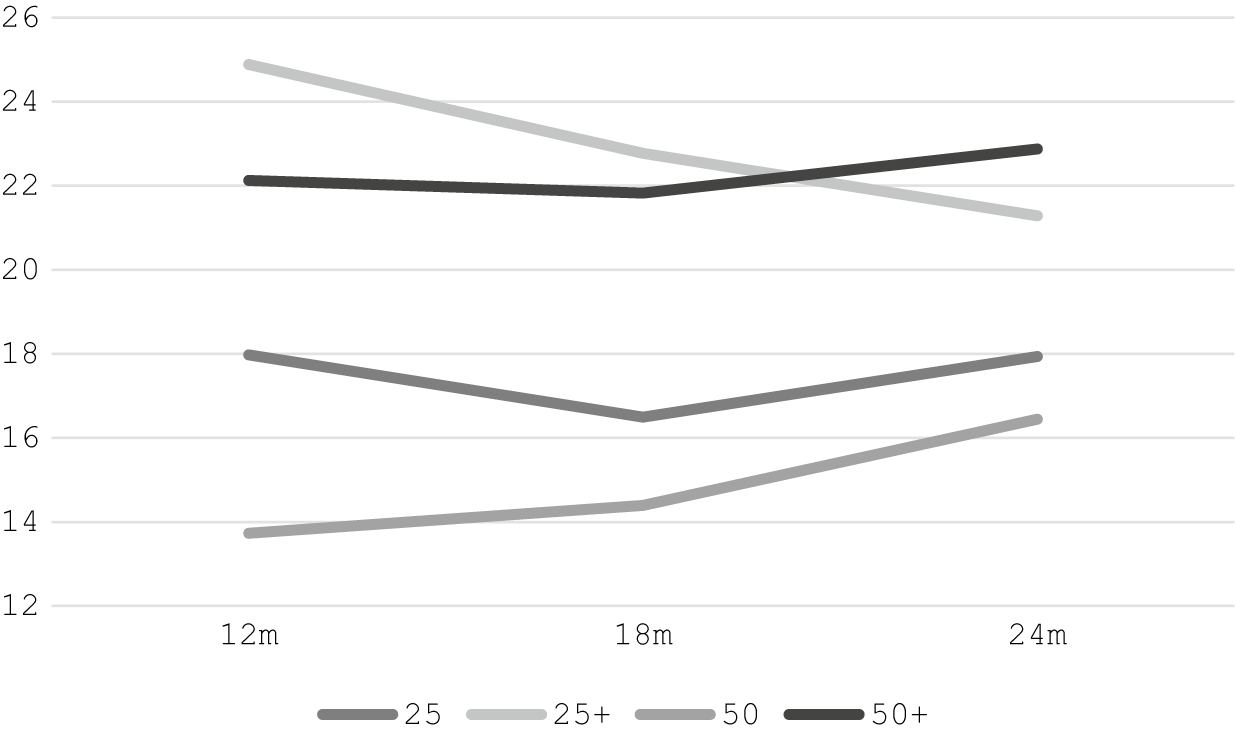
We then analyzed the treatment effects between 12 and 24 months across the four subgroups: 25 and 50 sessions, each with and without additional therapy (Figure 2). In the 25-session group, we observed a trend toward continued improvement in those who received additional treatment (−3.66 BDI points, p = 0.059), compared to no significant change in those who did not receive further care (−1.73 BDI points, p = 0.24). In the same comparison in the 50-session groups, we found that receiving additional therapy was not associated with a significant change in depressive symptoms (+1.72 BDI points, p = 0.44), while those who did not receive further treatment showed a trend toward deterioration in the follow-up year (+2.64 BDI points, p = 0.059).
Depression severity (BDI) in dosage groups with (+) and without additional treatment during follow-up.
Note: The y-axis begins at a BDI mean score of 12 for clarity of presentation. Additional treatment was defined as a minimum of five direct contacts with a mental health professional between 12 and 24 months post-treatment.

Conclusions
The superior effects of a psychotherapy dosage of 50 sessions within 1 year, found during the 12-month treatment period compared to 25 sessions in the same timeframe, were no longer evident at 18 and 24 months. However, the continued improvement observed in the lower-dosage group during the follow-up year may be at least partly attributed to an increased psychotherapy dosage received by a subgroup of patients in the 25-session condition. This subgroup, which showed poorer outcomes at the end of treatment than those who did not receive further help, may have reached a meaningful therapeutic effect through these additional sessions. Meanwhile, those without extra therapy had better end-of-treatment outcomes and remained stable over time (Figure 2). In contrast, within the 50-session group, treatment effects remained stable among those who received additional therapy, whereas a trend toward deterioration was observed in those who did not receive further treatment. While the absence of further improvement could suggest a ceiling effect, the observed decline does not support this interpretation, as a ceiling effect would typically result in stabilization rather than deterioration. Instead, it suggests that there’s a subgroup of patients within the 50-session group who experienced deterioration. Notably, 34% of patients in the 50-session condition received additional treatment during follow-up, after poorer post-treatment outcomes, suggesting that even 50 sessions were insufficient for a substantial part of this group. One possible explanation for the lack of improvement from further treatment in the 50-session group could lie in the nature of the additional treatment. Patients in the 50-session group were about equally likely to receive additional treatment within (14%) or outside (13%) our institute, whereas those in the 25-session group predominantly received further therapy within our institute (27% versus 7%, respectively). Due to intake procedures, waiting lists, or less specialized care, these external treatments may have been less effective or may have addressed issues outside the domains of depression and personality pathology. That said, it remains impossible to determine with certainty whether the provision of additional sessions played any causal role in the lack of further improvement – the deterioration could have been more severe without further treatment, or the sessions may have been a response to an already emerging relapse.
Our findings of initial dosage effects that diminished during follow-up are, though contrary to our expectations, in line with a recent study examining long-term effects of session frequency in patients with depression, although, unlike our study, that study varied session frequency while keeping the total number of sessions constant. This study found that twice-weekly sessions during the acute phase of treatment resulted in better outcomes than weekly sessions; however, this advantage diminished during follow-up (Bruijniks et al., Reference Bruijniks, Hollon, Lemmens, Peeters, Arntz, Cuijpers and Huibers2023).
The current study demonstrated that treatment effects both for depressive symptoms and PD are overall sustained during the year following therapy termination. We observed remission rates of 66% for depression and 76% for PD, with 55% of patients achieving remission from both conditions, based on semi-structured clinical interviews. In contrast, a meta-analysis by Karyotaki et al. (Reference Karyotaki, Smit, de Beurs, Henningsen, Robays, Huibers, Weitz and Cuijpers2016) found that the effects of depression-focused psychotherapies typically diminish over longer follow-up periods. The relatively positive long-term outcomes found in this study may be attributed to the higher-than-usual psychotherapy dosages for depression in both dosage conditions, combined with the use of integrated treatment approaches targeting both depression and PD. However, comparing our study with other depression trials is challenging due to differences in patient characteristics, psychotherapy modalities, psychotherapy dosages, and selected outcome measures. We are only aware of one other trial that assessed both depression and PD as long-term outcomes: In an RCT on the effectiveness of 50-session ST for PD Bamelis, Evers, Spinhoven, and Arntz (Reference Bamelis, Evers, Spinhoven and Arntz2014) found that two-thirds of patients who met the criteria for depression at baseline no longer met those criteria at 48 months, and 81% achieved remission of PD at the same time point. These results are comparable to our findings at 24 months. Despite these promising results, the substantial use of additional psychological care after the assigned treatment and the high number of patients with residual depressive symptoms could indicate that the therapy, especially in the 25-session format, but even in the 50-session format, may not have been sufficient for a significant number of patients. This is particularly concerning, as residual symptoms are a strong and robust predictor of relapse (Buckman et al., Reference Buckman, Underwood, Clarke, Saunders, Hollon, Fearon and Pilling2018; Tranter, O’Donovan, Chandarana, & Kennedy, Reference Tranter, O’Donovan, Chandarana and Kennedy2002). Additionally, the therapies provided had a relatively low dosage for effectively addressing PD, and there are indications that certain personality traits and disorders increase the risk of relapse or recurrence in depression (Altaweel et al., Reference Altaweel, Upthegrove, Surtees, Durdurak and Marwaha2023). Further research should focus on identifying patient characteristics that predict who benefits most from which psychotherapy dosage. For individuals with residual depressive symptoms or remaining personality pathology, it would be valuable to explore whether these issues can be effectively addressed through additional therapy, booster sessions, or a more gradual reduction in session frequency toward the end of treatment. Factors contributing to the initial superior effects of the 50-session dosage and the subsequent decline, including the role of the gradual transition in the 25-session group versus the abrupt shift in the 50-session group, will be explored in qualitative interviews.
Strengths of the current study include its pragmatic design, which enhances the generalizability of the results, and the availability of comprehensive data from both self-reports and observer-rated measures for depression and PD. Additionally, the detailed investigation of additional therapy received during the ostensibly ‘treatment-free’ follow-up year is another notable strength. However, the naturalistic follow-up period, during which further treatment was permitted, also represents a limitation. Unregulated additional treatment reduced the power to detect significant dosage effects and diminished the advantages of randomization, as many patients received additional sessions, in different settings and dosages, while others did not, complicating efforts to account for these variables. While originally intended as a low-dosage group, the 25-session condition ultimately averaged 43 sessions, raising the question of whether it still qualifies as low-dosage. A second limitation, albeit unavoidable, is the presence of missing data during the follow-up period. Patients with missing data did not differ from those with complete data in terms of depression or PD scores at the start or end of treatment, or on any other important baseline measures, except that patients with avoidant PD were less likely to miss a measurement. However, this did not differ between dosage and treatment conditions. Third, the study was not powered to detect a difference between the four treatment conditions separately or to demonstrate equivalence between SPSP and ST. Findings on these matters must be interpreted with caution. Fourth, due to ethical considerations, a waitlist condition was not included, making it impossible to distinguish the long-term effects of the treatments from the natural course of depression. Additionally, the absence of a control condition involving commonly used depression treatments, such as antidepressants, CBT, or IPT, leaves the added value of SPSP and ST as integrated psychotherapy approaches compared to depression-focused treatments uncertain. And finally, depression severity was assessed only at certain timepoints (18 and 24 months), leaving uncertainty about whether relapses occurred between these assessments. This approach was chosen to minimize the risk of collecting unreliable data, as we anticipated that patients would struggle to accurately recall their depressive symptoms over a specific period in the past. However, this method may have resulted in missed detection of short relapses that occurred between the measurement points.
In summary, the superior effect of 50 psychotherapy sessions compared to 25, observed during the 1-year treatment period in patients with depression and PD, was not sustained at 18 or 24 months. While 50 sessions led to quicker and initially better outcomes, it did not provide a long-term advantage in symptom reduction or personality improvement over 25 sessions. This may be partly due to further improvement in a subgroup of patients in the 25-session condition, who achieved additional improvement through further therapy during the follow-up period. Further research is needed to determine whether the faster symptom reduction in the 50-session condition during treatment justifies the costs of the additional 25 sessions, from both a patient and a societal perspective. Ethical considerations, such as the implication of long waiting lists, should also be factored into this discussion. The prevalence of residual depressive symptoms and the frequent use of additional psychological care in many patients highlights the need for studies exploring which dosage is most effective for whom. Our findings suggest that integrated approaches, such as ST and SPSP, are promising alternatives to depression-focused treatments for patients with depression and comorbid PD.
Supplementary material
The supplementary material for this article can be found at http://doi.org/10.1017/S0033291725101025.
Data availability statement
All data generated or analyzed during this study are included in this article and its supplementary material files and will be available upon reasonable request.
Acknowledgments
We acknowledge the contribution of participating patients, therapists and research assistants who participated in this trial at the NPI, specialist in personality disorders, part of Arkin GGZ in Amsterdam, the Netherlands.
Author contribution
M.K., H.V., and J.D. contributed to the design of the study. J.D., H.V., and A.A. supervised the study. H. vd E. was involved in recruitment of patients and data collection. M.K. coordinated recruitment of patients, therapists and data collection and wrote the manuscript. J.P. conducted the analyses in consultation with A.A. All authors were involved in the interpretation of the analyses. All authors read, contributed to and approved the final manuscript.
Funding statement
This research received no specific grant from any funding agency, commercial, or not-for-profit sectors.
Competing interests
H.V. is medical director of the NPI, resident program director at Arkin Amsterdam, and chief editor of the Dutch Journal of Psychiatry. A.A. has received grants from the Netherlands Organization for Health Research and Development and the Netherlands Foundation for Mental Health, and other grants not related to the submitted work from the Netherlands Organization for Scientific Research (NWO), Stichting Achmea Gezondheidszorg, CZ Fonds, Stichting Volksbond Rotterdam, and Stichting tot Steun VCVGZ.


 Open access

