

Tardive dyskinesia is a potentially irreversible syndrome of abnormal involuntary movements that may appear after prolonged treatment with antipsychotics. Extrapyramidal symptoms such as tardive dyskinesia may be less frequent with newer antipsychotic drugs, 1 which have been widely introduced in the UK since the 1990s. By the early 2000s, national guidelines were recommending their use in place of older, typical antipsychotics. 2,3 A generation of psychiatrists now practises without being restricted to typical antipsychotics and tardive dyskinesia no longer features so prominently in psychopharmacological literature.
In the 1980s, the estimated prevalence of tardive dyskinesia ranged from 15 to 20%, Reference Kane, Woerner and Lieberman4 and the annual incidence was estimated at 3-4%. Reference Kane, Woerner, Weinhold, Wegner, Kinon and Borenstein5 A systematic review of 11 studies by Correll et al Reference Correll, Leucht and Kane6 in 2004 concluded that atypical antipsychotics were associated with a lower risk of developing tardive dyskinesia compared with typical antipsychotics, but noted that the doses of haloperidol used in the comparator studies were relatively high. In 2008, Correll & Schenk Reference Correll and Schenk7 estimated the annualised tardive dyskinesia incidence as 3.9% for atypical antipsychotics and 5.5% for typical antipsychotics after reviewing 12 trials (total sample n = 28 051) published since the previous review in 2004. Although many studies indicated lower rates of tardive dyskinesia with atypical antipsychotics, a few studies that focused on patients with severe forms of psychotic illnesses failed to show much difference between typical and atypical antipsychotics. Ross et al Reference Ross, Thomas, Booth and Weinborn8 studied the prevalence of tardive dyskinesia among adult in-patients with treatment-resistant chronic mental illness (n = 162) and found tardive dyskinesia in 40% of those taking only typical antipsychotics, 39% of those taking only atypical antipsychotics and 47% of those taking both. Their study also revealed poor recognition of the syndrome, as 57% of cases had not been previously diagnosed. Another study of patients with a severe mental illness Reference De Leon9 found a prevalence of tardive dyskinesia at 19% after exposure only to atypical antipsychotics, 19% after exposure to typical antipsychotics for less than 5 years, and 42% after exposure to typical antipsychotics for more than 5 years. Tardive dyskinesia remains a common problem in psychiatric practice, despite the introduction of atypical antipsychotics, and not simply because many individuals are still treated with typical antipsychotics, including depot preparations.
Although antipsychotics are used in the treatment of psychotic illnesses, there are other indications, many of these unlicensed. Some patients prescribed antipsychotics in this way will eventually develop tardive dyskinesia. There have been several successful lawsuits in the USA because of tardive dyskinesia Reference Shriqui, Bradwejn and Jones10 and many US law firms specialise in this field. ‘Off-licence’ prescribing is one area where litigation might be more likely. Psychiatrists also seem reluctant to discuss tardive dyskinesia with their patients, Reference Chaplin and Potter11 and patients who are given insufficient information may seek to litigate, if they develop potentially irreversible side-effects.
Despite the widespread use of atypical antipsychotics, tardive dyskinesia is still sufficiently common for psychiatrists to require training in its diagnosis and management. Psychiatrists should also be familiar with good clinical practice, and ensure that patients are informed about the likelihood and consequences of developing tardive dyskinesia, and that adequate monitoring arrangements are in place. We hypothesised that significant numbers of psychiatrists were inadequately trained in the diagnosis and management of tardive dyskinesia and that their practice in imparting information to patients and in monitoring for abnormal movements was also inadequate. Finally, we sought the attitudes of practising psychiatrists to the risk of litigation in an area where training and practice might be suboptimal. The study had three aims: to establish the extent of psychiatric training (in diagnosis and management), to evaluate practice (giving information to patients and monitoring for abnormal movements) and to describe what psychiatrists thought of the risk of litigation.
Method
In the absence of a validated questionnaire covering the specific themes this study aimed to explore, a 20-item questionnaire was developed, after extensive discussions within a focus group (the questionnaire is included as an online supplement to this paper). The questionnaire sought responses in five areas:
-
• training in the diagnosis of tardive dyskinesia (A)
-
• training in the management of tardive dyskinesia (B)
-
• giving information to patients (C)
-
• monitoring for abnormal movements (D)
-
• general issues, including litigation, the nature of training, using specific rating scales and unlicensed prescribing (E).
The questionnaire had ten closed questions covering themes A and B, and ten statements using a Likert scale covering themes C, D and E. There was also space for additional comments.
The study population included all the psychiatrists working in the Northumberland, Tyne and Wear NHS Trust who had completed 3 years of basic specialist training in the UK - consultants, higher specialist trainees and specialty doctors. Junior trainees who were within the first 3 years of training in psychiatry were excluded from the study because it would not be possible to derive conclusions about the quality of training until it had been completed.
Following approval from the local research ethics committee and registration with the research and clinical effectiveness department of the Trust, questionnaires were sent by post to all eligible psychiatrists (n = 180), along with an addressed return envelope. Non-responders were sent a reminder after 3 weeks. The questionnaires had unique identification numbers to ensure that reminders were not sent to those who had already responded. The data sheet that matched the identification numbers and the participants was destroyed once the data collection phase was over and before data analysis began. This was done to ensure anonymity and was explained to the participants in the invitation letter which accompanied the questionnaire. Anonymised data from returned questionnaires were entered into an Excel spreadsheet by the principal author. Summary and comparative statistics were then generated using this software.
Results
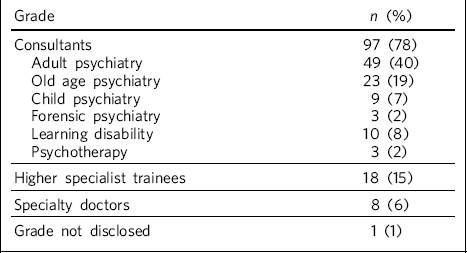
Of 180 psychiatrists surveyed, 127 returned the questionnaires (71%). Three were returned unanswered, bringing the total number of completed responses to 124 (69%) (Table 1). The mean experience in psychiatry was 15.9 years (range 3-40).
Responders to the questionnaire by grade (N = 124)
| Grade | n (%) |
|---|---|
| Consultants | 97 (78) |
| Adult psychiatry | 49 (40) |
| Old age psychiatry | 23 (19) |
| Child psychiatry | 9 (7) |
| Forensic psychiatry | 3 (2) |
| Learning disability | 10 (8) |
| Psychotherapy | 3 (2) |
| Higher specialist trainees | 18 (15) |
| Specialty doctors | 8 (6) |
| Grade not disclosed | 1 (1) |
Training in the diagnosis and management of tardive dyskinesia
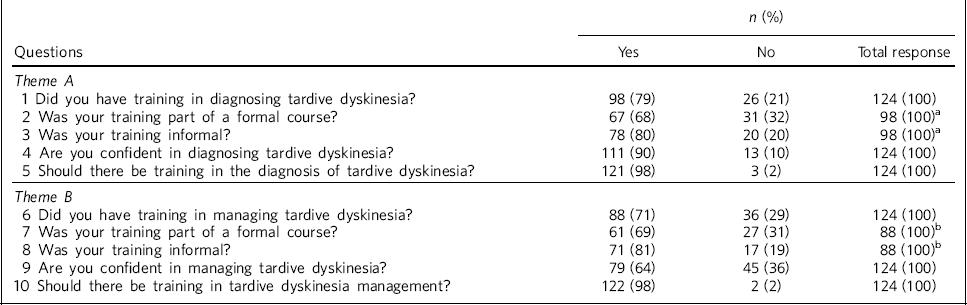
Questions 1-5 (theme A) focused on training experience in the diagnosis, and questions 6-10 (theme B) focused on training in the management of tardive dyskinesia (Table 2): 98 respondents (79%) had training in the diagnosis of tardive dyskinesia and 26 had not received any training (21%). Among those trained, 47 reported training in both a formal and informal setting (i.e. 48% of those trained and 38% of the total number of respondents). Similarly, 88 respondents (71%) had received training in the management of tardive dyskinesia and 36 had not (29%). Among those who received training, 44 had training in both formal and informal settings (i.e. 50% of those trained and 35% of the total number of respondents). Nearly all respondents thought that psychiatric trainees should have formal training in both the diagnosis and management of tardive dyskinesia.
Respondents’ experience in training and management of tardive dyskinesia
| n (%) | |||
|---|---|---|---|
| Questions | Yes | No | Total response |
| Theme A | |||
| 1 Did you have training in diagnosing tardive dyskinesia? | 98 (79) | 26 (21) | 124 (100) |
| 2 Was your training part of a formal course? | 67 (68) | 31 (32) | 98 (100)a |
| 3 Was your training informal? | 78 (80) | 20 (20) | 98 (100)a |
| 4 Are you confident in diagnosing tardive dyskinesia? | 111 (90) | 13 (10) | 124 (100) |
| 5 Should there be training in the diagnosis of tardive dyskinesia? | 121 (98) | 3 (2) | 124 (100) |
| Theme B | |||
| 6 Did you have training in managing tardive dyskinesia? | 88 (71) | 36 (29) | 124 (100) |
| 7 Was your training part of a formal course? | 61 (69) | 27 (31) | 88 (100)b |
| 8 Was your training informal? | 71 (81) | 17 (19) | 88 (100)b |
| 9 Are you confident in managing tardive dyskinesia? | 79 (64) | 45 (36) | 124 (100) |
| 10 Should there be training in tardive dyskinesia management? | 122 (98) | 2 (2) | 124 (100) |
Difference in confidence between those who received training and those who did not
Respondents who had training in the diagnosis of tardive dyskinesia (question 1) were significantly more confident (question 4) in their diagnostic skills than those who did not have training (χ2 = 5.56, P = 0.018). For those who had training in the management of tardive dyskinesia (question 6), there was an even greater difference in the confidence level (question 9) between those with and without training (χ2 = 16.7, P < 0.001).
Giving information on tardive dyskinesia, monitoring for abnormal movements and general issues
The responses to themes C and D clearly show disparity between what the psychiatrists believed they should do (questions 11 and 14) and what they reported they did in practice (questions 12, 13, 15 and 16) (Table 3). There was no consensus view on the likelihood of litigation arising out of the development of tardive dyskinesia (question 17), but the responses to question 20 suggest that the majority of psychiatrists are uncomfortable about prescribing antipsychotics for unlicensed indications in the long term without consent.
Psychiatrists’ beliefs and practice in informing about, monitoring and other issues relating to tardive dyskinesia (N = 124)

| n (%) | |||||
|---|---|---|---|---|---|
| Fully agree | Partially agree | Neither agree nor disagree | Partially disagree | Fully disagree | |
| Theme C | |||||
| 11 Psychiatrists should discuss the risk of tardive dyskinesia before prescribing antipsychotics | 76 (61) | 37 (30) | 6 (5) | 4 (3) | 1 (1) |
| 12 I routinely discuss the risk of tardive dyskinesia before prescribing antipsychotics | 36 (29) | 54 (44) | 13 (10) | 14 (11) | 7 (6) |
| 13 I routinely document the discussion of the risk of tardive dyskinesia | 41 (33) | 46 (37) | 13 (10) | 18 (15) | 6 (5) |
| Theme D | |||||
| 14 Psychiatrists should monitor for abnormal movements in patients on antipsychotics | 110 (89) | 11 (9) | 2 (1) | 1 (1) | 0 (0) |
| 15 I routinely monitor for abnormal involuntary movements | 82 (66) | 32 (26) | 7 (6) | 3 (2) | 0 (0) |
| 16 I routinely document the outcome of monitoring | 21 (17) | 42 (34) | 24 (19) | 26 (21) | 11 (9) |
| Theme E | |||||
| 17 Tardive dyskinesia is a cause for litigation | 28 (23) | 44 (35) | 28 (22) | 18 (15) | 6 (5) |
| 18 Training in assessing abnormal movements should be part of basic specialist training | 106 (85) | 15 (12) | 3 (3) | 0 (0) | 0 (0) |
| 19 I am competent in using at least one of the standard rating scales for tardive dyskinesia | 34 (27) | 32 (26) | 23 (18) | 18 (15) | 17 (14) |
| 20 Antipsychotics should not be prescribed long-term for unlicensed indications without the patient's consent | 55 (44) | 39 (31) | 6 (5) | 11 (9) | 13 (11) |
Comments made by the respondents
Thirty-four respondents (27%) made additional comments. Two prominent themes emerged - training experience in tardive dyskinesia and medico-legal implications.
Training in tardive dyskinesia
Only a small number (3 respondents) added their own comments on whether training should be formal or informal and there was no consensus. It was noted that training might be more effective if done informally during clinical placements; conversely, formal training could ensure uniformity and standardisation. Three respondents commented that tardive dyskinesia is a neglected area in training and continuing professional development. One psychiatrist expressed the view that training should target all professional groups, not just doctors.
Medico-legal implications of tardive dyskinesia
Interestingly, most of those who commented on medico-legal implications were working either in learning disability or old age psychiatry. The challenges in obtaining informed consent and in prescribing antipsychotics for unlicensed indications such as the management of anxiety, agitation, aggression and other challenging behaviours were high-lighted. One person observed: ‘Drug companies don't have enough incentives to get a license for the so-called unlicensed indications as the target population is too small to make it lucrative.’
Two respondents expressed surprise that the development of tardive dyskinesia might be a reason to litigate; one commented: ‘I would discuss tardive dyskinesia only if I am prescribing a typical antipsychotic.’
Discussion
A significant minority of experienced psychiatrists had no training in the diagnosis (21%) or management (29%) of tardive dyskinesia during their psychiatric training. Many reported lacking confidence in either the diagnosis (10%) or management (36%) of this condition. It is important to recognise that many respondents provide clinical and/or educational supervision to junior trainees and medical students. This study showed an important relationship between training and increased confidence in both diagnosis and management of tardive dyskinesia. Most respondents agreed that psychiatric trainees should have formal training as part of the basic specialist training, which would ensure that every trainee received training and that it was standardised. Although informal training by clinical supervisors is of great value, it is difficult to ensure standardisation. Respondents also drew attention to the training needs of other professional groups.
The results showed a trend towards incomplete application of known principles of diagnosis and management in day-to-day clinical practice (themes C and D). Self-rated performance was weakest when it came to documenting the discussion of risk and the outcome of monitoring in healthcare records. This might become a decisive factor in a medico-legal case, especially if there is a dispute over the content of the consultation. The study also reveals no consensus in acknowledging the risk of litigation. One psychiatrist held the view that atypical antipsychotics eliminated the risk of tardive dyskinesia, which is in contrast to the research evidence. Reference Correll and Schenk7-Reference De Leon9 A sizeable minority of respondents disagreed with the view that long-term ‘off-licence’ prescribing without consent should not occur. However, this is an area of clinical practice where litigation in the event of developing a movement disorder might be easiest to understand and justify.
Strengths and limitations
A new questionnaire had to be developed specifically for this survey. Although designed to be simple and practical to use, it was not a standardised tool and had not been previously validated. Many items in the questionnaire were reliant on the respondents’ memory and subjective evaluation of themselves, raising the possibility of a social desirability effect which could influence their responses. However, there is no reason to believe that anonymous respondents were being deliberately misleading and it is noteworthy that psychiatrists’ self-rating of their performance was lower than what they believed to be good practice. The survey response rate of 71% is high; however, the experience of the remaining 29% is clearly unknown. Non-responders did not differ significantly from responders in respect of any known descriptive measures (specialty or grade). As the study included all psychiatrists with at least 3 years’ training (rather than a sample), the risk of sampling bias is eliminated.
The study identified the need for greater awareness and training even for senior psychiatrists. Sufficient emphasis needs to be given to this area in the trainee curriculum. Giving information to patients regarding the adverse effects, obtaining informed consent for treatment and documenting it are important both clinically and medico-legally.
Provisions for the early detection of tardive dyskinesia should be put in place. Improving standards of practice in this area will help to enhance the quality of life of patients taking antipsychotics. When antipsychotics are prescribed ‘off licence’ and without informed consent, ongoing assessments of the risks and benefits of continuing treatment should be carried out and clearly documented.


 Open access


eLetters
No eLetters have been published for this article.