


The prevalence of psychiatric disorders in older people with acute physical illness is high, with depression known to be present in over 30% (Reference Sadavoy, Smith and ConnSadavoy et al, 1990; Reference EvansEvans, 1993) and dementia in over 14% (Reference Feldman, Mayou and HawtonFeldman et al, 1987; Reference Turrina, Siciliani and DeweyTurrina et al, 1992) of elderly in-patients.
Recognition of both depression and cognitive impairment is vital, having implications for treatment, social/carer support and prognosis. Most studies examining the recognition of depression have been confined to primary care settings, with some evidence that the detection of depression by general practitioners may be more adequate than both treatment and referral to specialist services (Reference MacdonaldMacDonald, 1987).
The possibility of either low mood or cognitive impairment may influence referrals to liaison psychiatry services, but the appropriateness of such referrals and accuracy of suspected diagnoses deserves further exploration.
The study
A prospective study was undertaken to determine the appropriateness and accuracy of referrals to an old age psychiatry liaison service. The study had two main aims: (1) to determine the positive predictive value of a diagnosis of depression or dementia made by referring doctors for people aged 60 and over on medical wards; and (2) to assess the degree to which the correct identification of depression influences treatment of this disorder in the same setting as (1).
Consecutive referrals to an old age psychiatry liaison service based at Guy's Hospital were assessed over an 18-month period (March 1998 to September 1999). All referrals made were for people aged 60 and over on medical wards and were seen by the same assessor (R.R.). Before each assessment age, sex and reason for referral were documented. Any record of antidepressant treatment initiated by the referring team, as well as coexisting physical/mental health problems, were recorded from medical notes. After each assessment the assessor made a primary psychiatric diagnosis according to DSM-IV (American Psychiatric Association, 1999). Primary diagnoses were made for disorders presenting greater subjective/objective clinical problem(s).
Findings
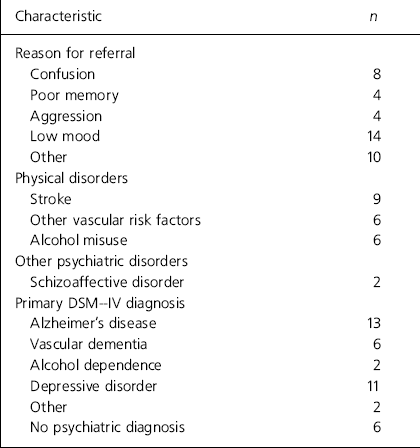
Forty patients were assessed (17 men; 23 women), with ages ranging from 62 to 96 (mean: 80, s.d. 8.4). A breakdown of broad categories for reason referred, coexisting physical/psychiatric disorders and DSM-IV diagnosis is detailed in Table 1. Memory problems, low mood and/or aggression accounted for 75% of referrals made. Other reasons for referral were other behavioural problems (n=4); poor motivation (n=1); assessment for long-term placement (n=2); hallucinatory experiences (n=1); failed discharge (n=1); and poor appetite (n=1). Twelve referrals were given a provisional diagnosis of dementia by the referrer, comprising those referred for confusion (n=8) or poor memory (n=4). Sixteen referrals were given a provisional diagnosis of depression by the referrer. Fourteen of these were referrals for low mood, one for poor appetite and one for poor motivation.
Characteristics of consecutive liaison psychiatry referrals (n=40)
| Characteristic | n |
|---|---|
| Reason for referral | |
| Confusion | 8 |
| Poor memory | 4 |
| Aggression | 4 |
| Low mood | 14 |
| Other | 10 |
| Physical disorders | |
| Stroke | 9 |
| Other vascular risk factors | 6 |
| Alcohol misuse | 6 |
| Other psychiatric disorders | |
| Schizoaffective disorder | 2 |
| Primary DSM-IV diagnosis | |
| Alzheimer's disease | 13 |
| Vascular dementia | 6 |
| Alcohol dependence | 2 |
| Depressive disorder | 11 |
| Other | 2 |
| No psychiatric diagnosis | 6 |
The commonest accompanying physical disorders were stroke (24%), other vascular risk factors (15%) and alcohol misuse (15%). Past psychiatric history was poorly documented, with a record of this in only two people (both referred with low mood and with a history of schizoaffective disorder).
For 47% of referrals, a primary diagnosis of dementia was made by the assessor; a primary diagnosis of depression was made in a further 28%. Six referrals were found to have no psychiatric diagnosis, but only two of these referrals were made as a result of particular concerns over mood state and/or cognitive impairment. The other four referrals were made on the basis of nonspecific symptoms (e.g. inability to cope). The percentage of people suspected of having a disorder in which this was confirmed by the assessor (positive predictive value) was 83% (10/12) for dementia and 81% (13/16) for depression. All three people referred with low mood but not given a primary diagnosis of depression were diagnosed as having dementia; none of these had comorbid depression.
Of the 11 people with depressive disorder, only one had been started on an antidepressant by the referring team; none had been recommended to receive other treatment(s) for depression prior to referral.
Discussion
Given that the two most common psychiatric disorders in older people are depression and dementia, the high proportion of people referred for problems related to either mood disturbance or cognitive impairment may not be surprising. The high positive predictive values in identifying depression and dementia is encouraging, however, the low rate of treatment in patients correctly identified as having depression is less so. The present study confirms the findings from other studies of a high concordance in the detection of depression (Reference Clarke, McKenzie and SmithClarke et al, 1995) and dementia (Reference Harwood, Hope and JacobyHarwood et al, 1997) in hospital settings.
The undertreatment of depression is a recognised phenomenon in both hospital (Reference Lustman and HarperLustman & Harper, 1988) and primary care settings (Reference MacdonaldMacDonald, 1987; Reference Crawford, Prince and MenezesCrawford et al, 1998). However, it would appear that the high positive predictive value of depression for people given this provisional diagnosis by referrers in this study indicates a sizeable rate of detection. It is to be commended that physicians are able to detect both depression and dementia with a high degree of accuracy and refer on appropriately. It is not possible to assess the negative predictive value for depression and dementia in the current study, as a suspected mental health problem was the reason for referral.
The study also emphasises the importance of both stroke and alcohol misuse accompanying psychiatric disorders in older people, which may be clinically relevant in some people. In this study one-quarter of people with a history of stroke had depressive disorder or dementia and one-fifth of people with alcohol misuse were depressed.
Implications for clinical practice and research
In view of the high rates of detection for depression in this study, one of the roles of liaison psychiatry services may be to encourage physicians to act upon their clinical judgement, particularly in the initiation of antidepressant treatment. This could be incorporated within a broader educational programme examining knowledge of, and attitudes towards, depression in older people.
Research may best be directed at interventional trials to assess the impact of such educational programmes on the detection and treatment of depression in secondary care settings. Given the finding that all those wrongly classified as depressed by the referrer in this study were found to have dementia, further studies examining this finding would be valuable.


 Open access


eLetters
No eLetters have been published for this article.