

The discipline has been paying more attention to the nature of biases in publication, hiring, and promotion; the article by Dion, Sumner, and Mitchell (hereafter DSM) is a needed addition to this. Given the abundant evidence for the leaky pipeline in political science, identifying patterns that can create biases in hiring, tenure, and promotion is instrumental in maximizing potential scholars and creating an equitable discipline (Mitchell and Hesli Reference Mitchell and Hesli2013). DSM’s design makes it clear that there are substantial disparities in the citations in several of the leading social science journals. Moreover, these patterns differ in predictable ways by discipline and by subfield within political science. Their findings of both a Matthew and a Matilda effect in the analyzed journals should serve to move the discussion of gender bias forward in important ways.
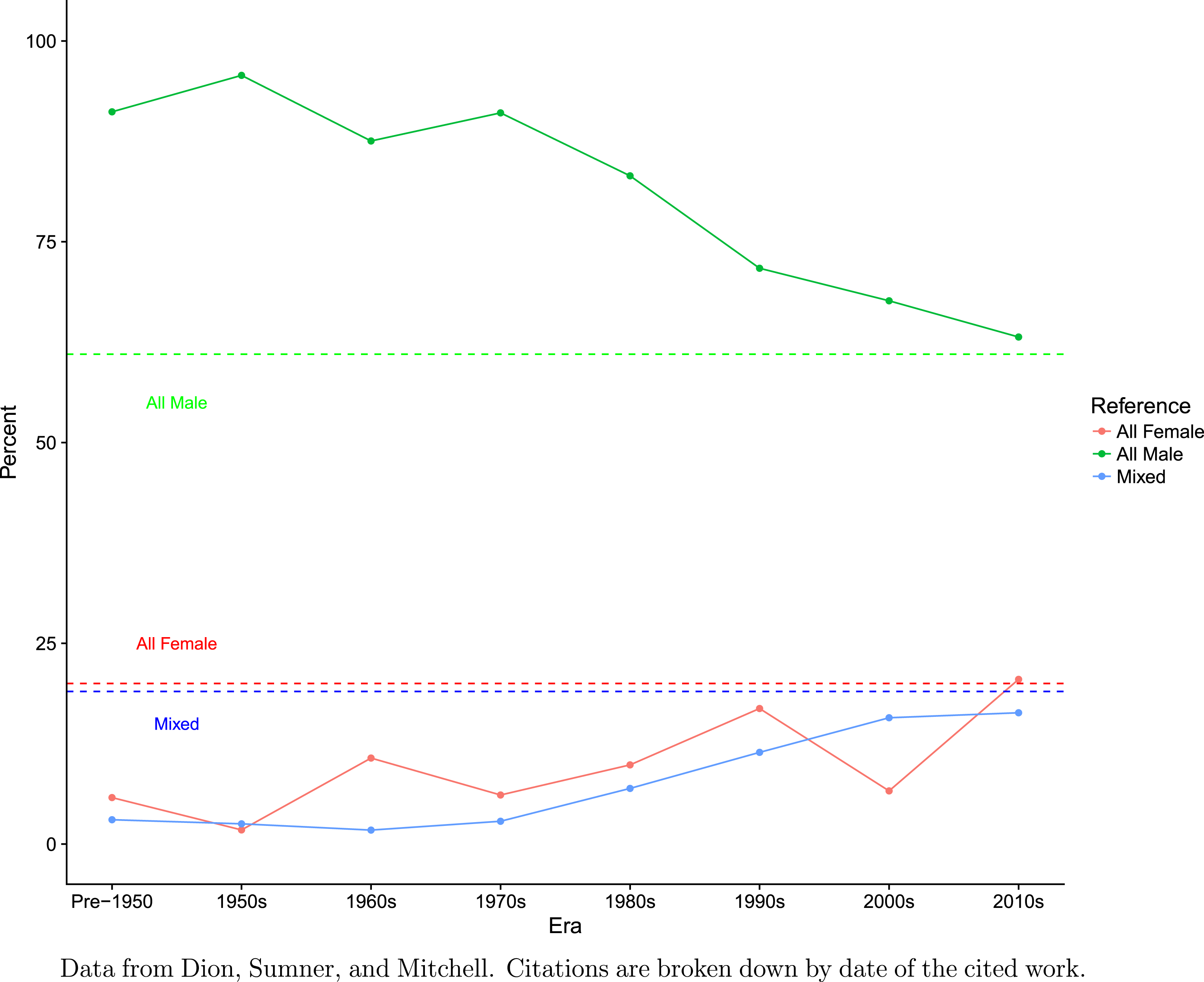
Percentage of citations to work written by all male, all female, and mixed gender teams (all journals).
In this letter, I take a slightly different approach to the problem, focusing on the connection between the long-term disparities in the gender of scholars in our discipline and the disparities in citations to works by male and female authors. I also approach this problem as the editor of Political Behavior (PB) and a scholar of American political behavior in particular. For context, PB is, like Political Analysis (PA) and Politics and Gender (P&G), affiliated with a section of the American Political Science Association (APSA). As editor, I have not conducted this type of analyses of the articles in PB, but my cursory read of the articles leads me to suspect that the citation patterns will be closer to those in American Political Science Review (APSR) than to the patterns in P&G. Part of the problem is the history of the discipline. Even if there were complete balance in contemporary political science in terms of the composition of the discipline, the articles being published, and the rate at which new articles were being cited (such that the average article a female author gets cited as frequently as a similar article with a male author), the legacy of gender disparities would still create imbalance in the citations. If an author wants to cite the foundational work in the study of American political behavior, he or she is likely to cite The American Voter, An Economic Theory of the Democracy, The Responsible Electorate, The Nature of Belief Systems in Mass Publics, or Voting Footnote 1 (Berelson, Lazarsfeld, and McPhee Reference Berelson, Lazarsfeld and McPhee1954; Downs Reference Downs1957; Campbell et al. Reference Campbell, Converse, Miller and Stokes1960; Converse Reference Converse and Apter1964; Key Reference Key1966). An author who wants a more recent “classic” can cite The Nature and Origins of Mass Opinions (Zaller Reference Zaller1992). Each of these has been cited thousands of times and continue to provide foundation for the field. And all of them are written by male authors.Footnote 2 Because of the substantial barriers female scholars faced in the 1950s and 1960s, the citations to these canonical sources will have a substantial gender disparity.Footnote 3
In my opinion, the question DSM asks is slightly off from the one that strikes me as most consequential. DSM tests whether there are differences in the citations within contemporary articles. A different question is whether there are differences in the citations of contemporary articles. That is, are there different rates of citation of new articles based on the gender of the author(s)? Testing this adequately would require the citation counts of all articles from selected journals in selected years and this is not the data that DSM collected. Their data, however, can be used to test a variant of this.Footnote 4 I treated each citation as an observation and broke the data down by the era of publication for each cite. The date is the date of the cited article, not the article doing the citing. I grouped all works published prior to 1950 into a single category and then simply combined the other citations by decade. Given the increased gender diversity of the discipline, the expectation would be that citations to female authors and mixed gender teams would increase over time.
Percentage of citations to work written by all male, all female, and mixed gender teams (APSR).
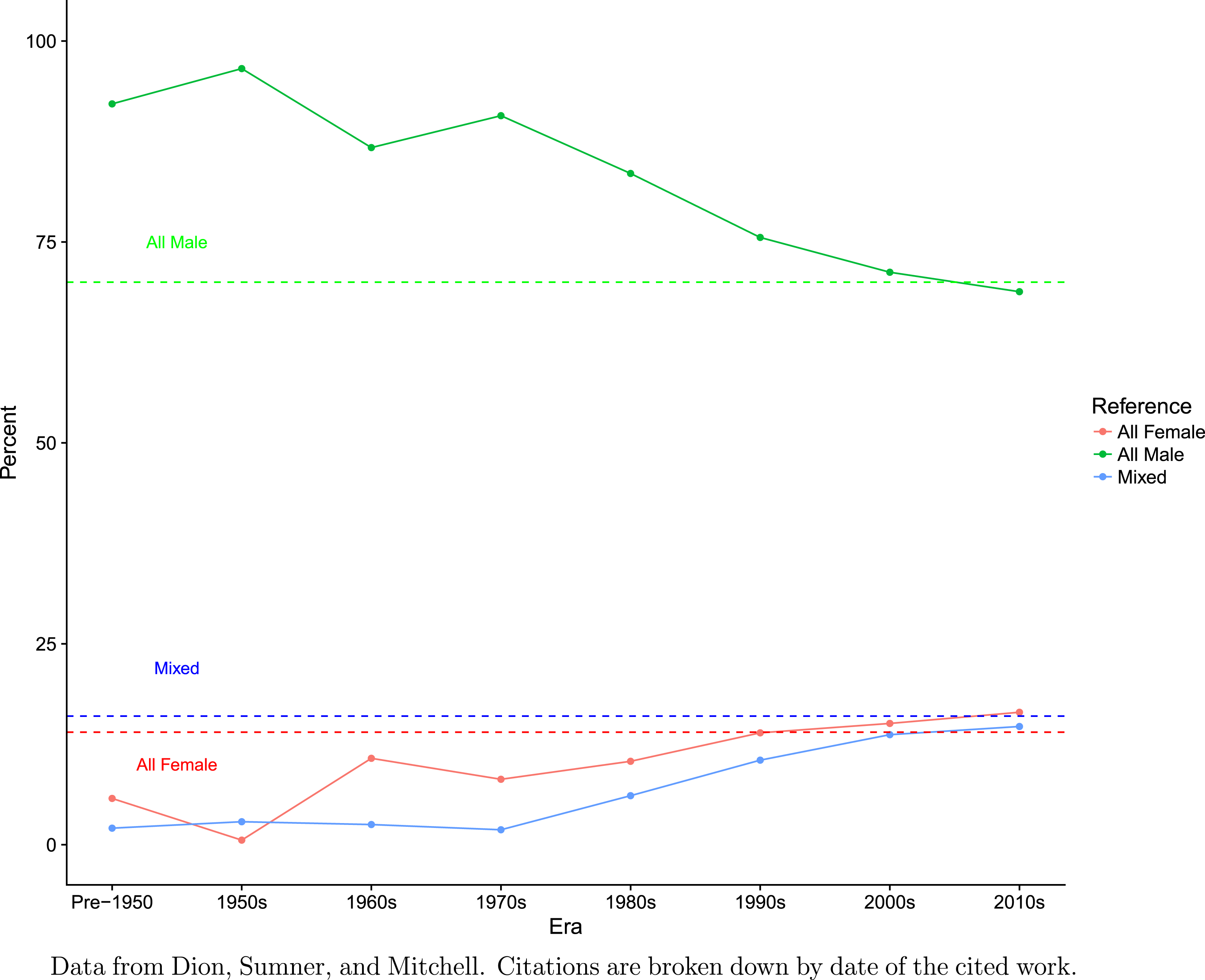
Figure 1 presents the proportion of citations to work from each decade that is to each of DSM’s categories. The horizontal lines indicate the percentage of articles in DSM’s data written by each category of authors. If the articles were cited in proportion to the percentage of articles by each category of authors, the solid line would converge to the horizontal line. References to work in the 1970s or earlier are extremely likely to be references to all male authors. For each of those eras, if an author makes a reference to a work from one of those eras, he or she is highly likely to cite a piece written exclusively by men. In each era, less than 15 percent of citations are to works written by female authors or mixed gender teams. Even citations to work in the 1980s are only slightly better; 83 percent of the citations to work in that decade are to pieces written exclusively by men. Citations to more recent work, however, are more likely to be citations that include female authors. Twenty percent of citations to work written since 2010 are citations of work written exclusively by female authors and another sixteen percent are by mixed gender teams. DSM’s Table 1 reports that, in their data, 61.4 percent of the articles were written exclusively by male authors; this is indicated by the green dashed line in the figure. Citations to works written in the 2010s only cite work by exclusively male teams 63.1 percent of the time. The implication is not that citation patterns are fixed. But it does seem as if they have gotten better.
Percentage of citations to work written by all male, all female, and mixed gender teams (PA).
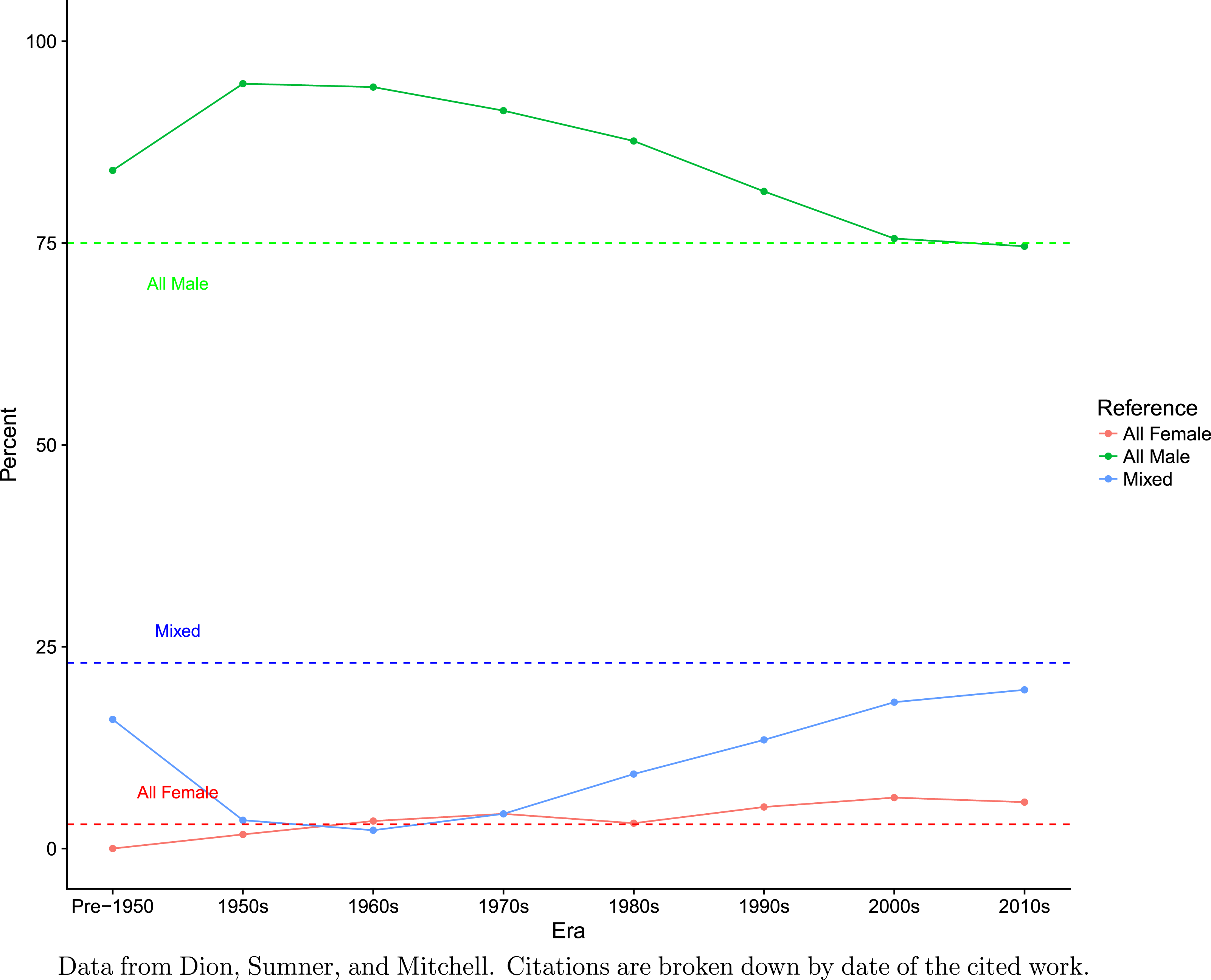
Figure 1 presents all of the journals. Figures 2–6 present the same patterns for each of the journals DSM analyzes, with the horizontal lines presenting the proportion of articles written by male-only authors in each of the journals. Every journal except P&G shows a similar pattern. Citations to work written prior to 1980 are almost universally to work written by male authors. Citations to work written since 1990 are to a more diverse set of authors. APSR and PA authors actually cite exclusively male authors at a rate slightly below the rate of authorship of male-only authors. P&G has a very different pattern. But even citations in P&G that are to works written prior to 1980 are more likely than not to male-only authors. The data presented in these figures imply that a reasonable proportion of the disparity in citations between work written by men and women is a vestige of the historical disparities in the composition of the field across all of the journals. Citations to more recent work are not balanced, but they have improved to approximately the same rates as the disparity in the publications.
A few caveats about these data are necessary. First, the baseline horizontal line is the proportion of articles from 2007–2016 written exclusively by male authors in each journal. This is an easy baseline to use, but is probably not the ideal one. In addition to the slightly different time frame (the horizontal line is for 2007–2016 and the final observation on the other lines is for 2010–2016), DSM chose their journals appropriately for their purposes, but these are not a representative sample of articles. The universe of relevant works that should be cited is much larger and potentially much more diverse. If these journals are outliers in the proportion of articles written by male authors, then their authorship rates are not the right comparison. If the relevant citations in an article are from Comparative Political Studies, for instance, the percentage of articles with female authors would be substantially higher (Teele and Thelen Reference Teele and Thelen2017). In this case, in the absence of gender disparity, there should be fewer citations to articles written by all male authors.
Percentage of citations to work written by all male, all female, and mixed gender teams (P&G).
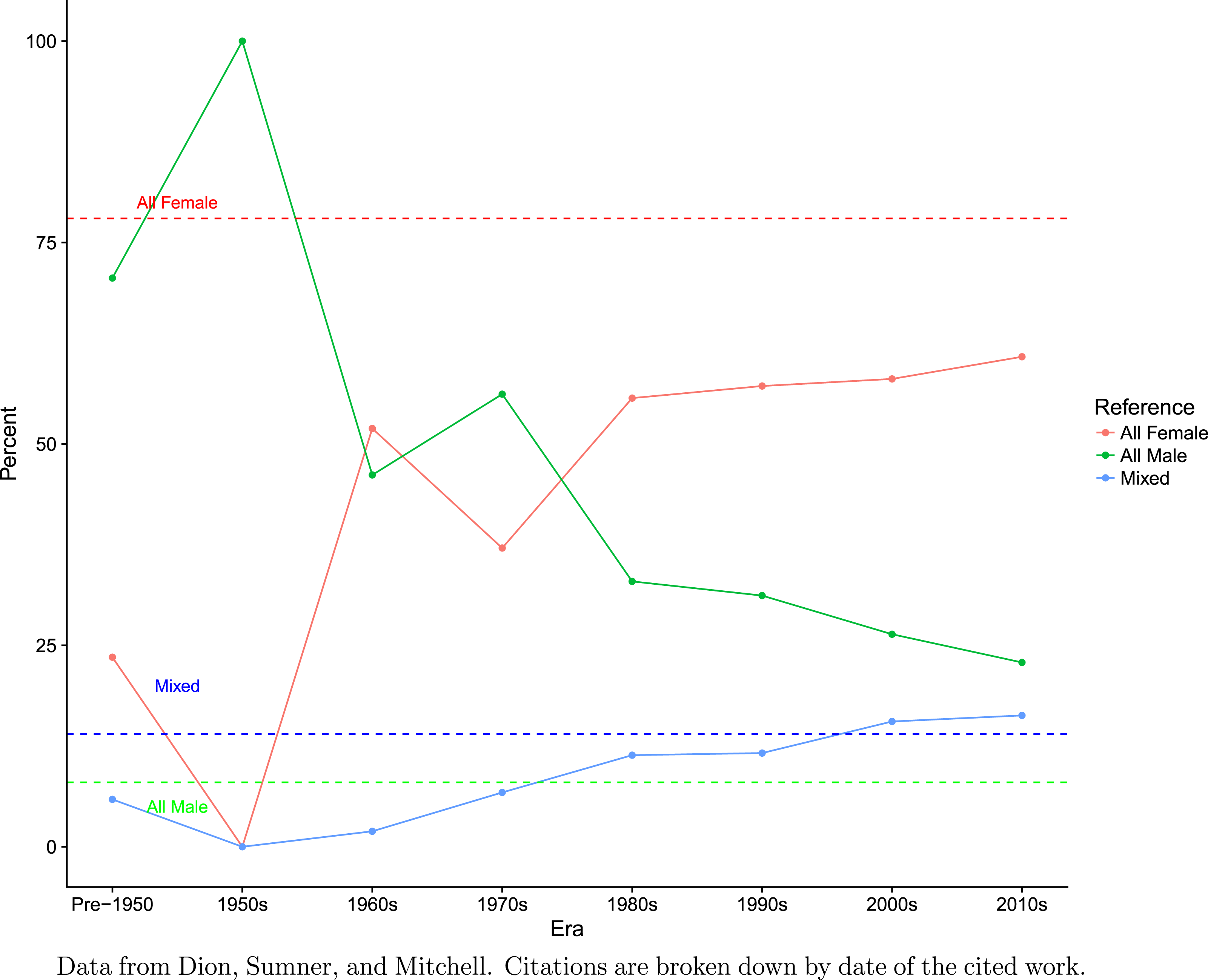
Percentage of citations to work written by all male, all female, and mixed gender teams (Econometrica).
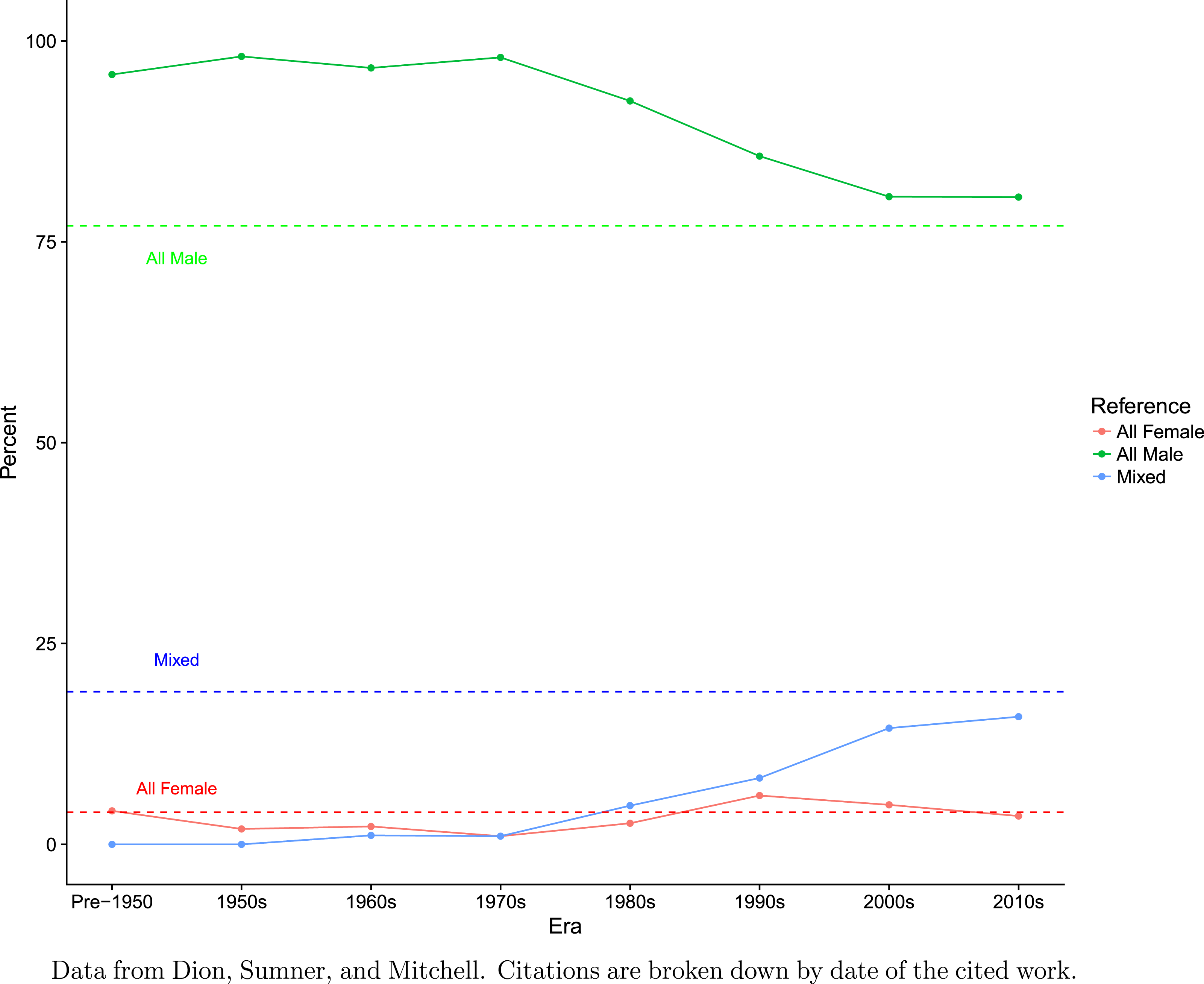
Second, these simple analyses only address part of the concern about gender differences in citations. It does not address the centrality of the academic network, the relationship between the gender of the author and the gendered pattern of citations, or the Matilda effect that DSM demonstrates. Additionally, if citations create an image of what the “field” is, then the massive disparity of citations to male authors from earlier eras can continue to perpetuate these images.
Percentage of citations to work written by all male, all female, and mixed gender teams (SMR).
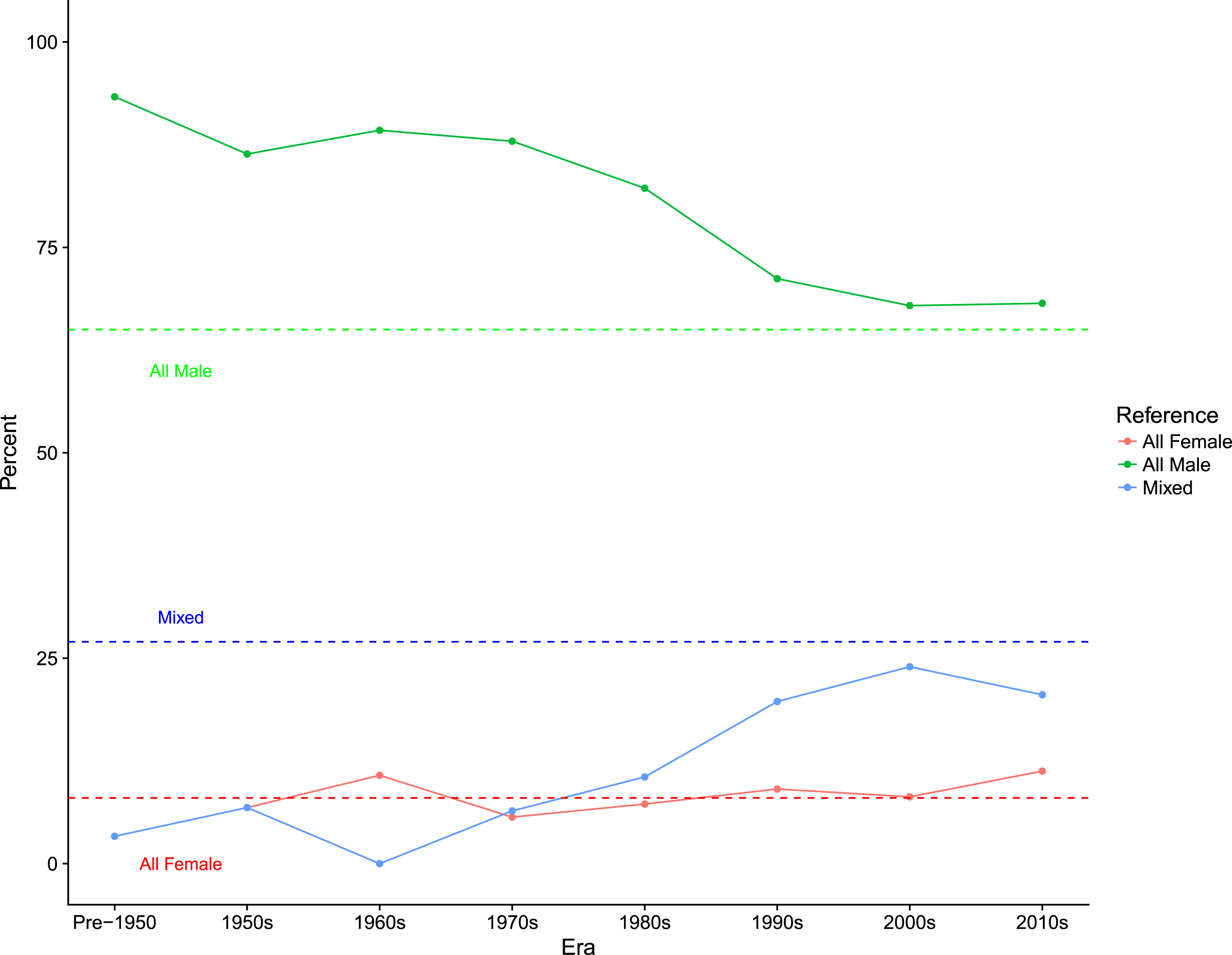
The disparities in publications from previous decades have implications for editorial policies as well. International Studies Quarterly, for instance, has implemented instructions to reviewers and authors to consider the citation gap and the gendered patterns of citations. This is a laudable practice, but the results here suggest that authors and reviewers should, potentially, be much critical of disparities in recent citations than in citations to work from previous decades. This is potentially also true for tools examining the gender balance in syllabi (Sumner Reference Sumner2018).
Finally, according to the implicit assumption in this short note and much of the work on gender in the publications, there are no significant differences in the quality of the work. This may not be the case. Hengel’s ongoing work in economics indicates that women are held to a higher standard by the peer-review process (Hengel Reference Hengel2018). If work published by women is systematically better than work published by men, we would expect to see more success in the peer-review process, not parity as found in recent audits by editors (Peterson Reference Peterson2018). The clear analogy is to the work on women running for office. While it is true that “when women run they win,” Fulton’s work makes it clear that women who run tend to be systematically better candidates than men who run for office (Fulton Reference Fulton2012). Parity in success, then, masks the underlying bias in electoral politics. This may also be the case in publication. The evidence of parity despite the differences in quality is actually evidence of bias.



