


Reducing unnecessary antibiotic use is an obvious target for public health intervention. Overuse and inappropriate use of antibiotics have been associated with antibiotic-resistant organisms, increased risk of Clostridium difficile infection, and other adverse drug reactions.Reference Daneman, Bronskill and Gruneir 1 – Reference Daneman, Gruneir and Bronskill 5 One common target for antimicrobial stewardship programs is the treatment of asymptomatic bacteriuria (ASB), defined as the presence of bacteria in the urine without clinical signs and symptoms of a urinary tract infection (UTI).Reference Smith, Bennett and Bradley 7 , Reference Nicolle, Bradley and Colgan 8 Asymptomatic bacteriuria is common among residents in long-term care facilities (LTCFs),Reference Nicolle 9 and antibiotics are often prescribed,Reference Flokas, Andreatos, Alevizakos, Kalbasi, Onur and Mylonakis 6 despite strong evidence demonstrating no clinical benefit to treating ASB with antibiotics and guidelines discouraging this practice.Reference Zalmanovici Trestioreanu, Lador, Sauerbrun-Cutler and Leibovici 10
A number of factors contribute to challenges in diagnosing UTIs in LTCF residents, including communication difficulties and the presence of concurrent illnesses with associated nonspecific symptoms.Reference Nace, Drinka and Crnich 11 – Reference Nicolle 13 Nonspecific symptoms are often attributed to a UTI and are used to guide treatment decisions,Reference Walker, McGeer, Simor, Armstrong-Evans and Loeb 14 despite recommendations to the contrary.Reference Smith, Bennett and Bradley 7 , Reference Nicolle, Bradley and Colgan 8 In addition, prescribing behaviors do not align with current evidence, and a number of complex factors contribute to the overtreatment of ASB. To support sustainable improvements in prescribing practices, antimicrobial stewardship programs should systematically address these complex factors contributing to the overtreatment of ASB. Although multipronged approaches are commonly employed to address ASB, the inclusion of multiple strategies does not necessarily mean better outcomes if the proposed strategies address similar determinants of behavior change or focus on a common barrier to practice change (eg, knowledge gaps). It is important to understand the mechanisms by which various strategies are intended to influence behavior change.
The theoretical domains framework (TDF), which was developed to examine the factors that influence healthcare professional behaviors when implementing evidence-based practice recommendations, is based on a synthesis of 33 behavior-change theories.Reference Michie, Johnston and Abraham 15 , Reference Cane, O’Connor and Michie 16 The TDF includes 14 domains: knowledge, skills, memory, attention and decision processes, behavioral regulation, social or professional role and identity, beliefs about capabilities, optimism, beliefs about consequences, intentions, goals, reinforcement, emotions, environmental context and resources, and social influences.Reference Cane, O’Connor and Michie 16 The TDF helps the user categorize known barriers and facilitators to practice change and select implementation strategies.
The Infection Prevention and Control Department at Public Health Ontario set out to develop a program using intervention mapping approaches to assist LTCFs to minimize antibiotic prescribing for asymptomatic bacteriuria, focusing on barriers and facilitators to practice change. This department at Public Health Ontario supports the dissemination and implementation of best practices in infection prevention and control and antimicrobial stewardship across healthcare settings in Ontario. This article describes the data sources and processes used to develop a program to reduce antibiotic overuse in long-term care.
Methods
A multidisciplinary team was established, composed of 2 physicians with specialization in infectious diseases, a pharmacist with specialization in antimicrobial stewardship, infection control specialists with backgrounds in nursing and medical laboratory sciences, and staff with expertise in evaluation, behavioral science, and implementation science.
An intervention mapping approach was used to develop the program drawing on methods that incorporate the TDF.Reference French, Green and O’Connor 17 This stepped approach to developing evidence and theory-informed programs provides a guide to selecting strategies to address known barriers and facilitators to practice change. Several applications of this stepped approach have been described in the literature, with a focus on improving the implementation of clinical practice recommendations.Reference Phillips, Marshall and Chaves 18 An integrated knowledge translation approach was also incorporated to involve LTCF stakeholders in the program development process.
Identification of barriers and facilitators
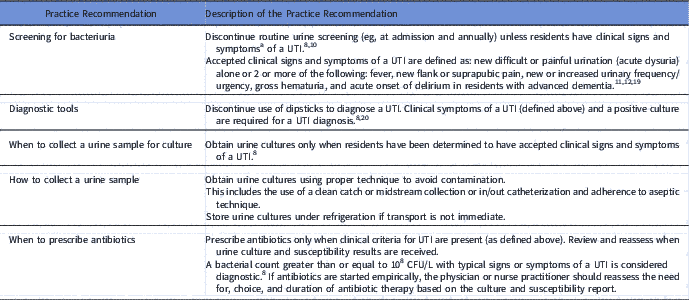
Following the selection of the key areas for practice improvement (Table 1), barriers and facilitators to aligning with the practice recommendations were identified from the literature,Reference Walker, McGeer, Simor, Armstrong-Evans and Loeb 14 , Reference Lohfeld, Loeb and Brazil 21 – Reference van Buul, van der Steen and Doncker 23 and through an online survey. The survey was distributed to 643 infection control practitioners in long-term care in 2014 using a stakeholder relationship management database maintained by Public Health Ontario. Recipients were encouraged to forward the invitation to anyone in their LTCF involved in the prevention, identification, diagnosis, and/or treatment of UTIs. The survey included structured questions about current practices around the assessment and management of UTIs in addition to open-ended questions to obtain additional information on issues and other contextual information that influenced assessment and prescribing practices. This article reports the analysis of excerpts from the open-ended questions related to barriers and facilitators to aligning with best practices to help the project team understand why antibiotics are overprescribed in this setting.
Targeted Evidence-Based Practice Recommendations to Minimize Treatment for Asymptomatic Bacteriuria
Note. UTI, urinary tract infection. CFU, colony-forming units.
a Accepted clinical signs and symptoms of a UTI were based on the Loeb 2005 criteriaReference Loeb, Brazil and Lohfeld 19 and additional considerations to reflect challenges in diagnosing residents who have advanced dementia.Reference Nace, Drinka and Crnich 11 , Reference D’Agata, Loeb and Mitchell 12
Analysis of barriers and facilitators
We used a descriptive coding process to summarize information from relevant excerpts in the online survey using descriptive codes and an open and inductive coding process. Three members of the team reviewed, discussed, and mapped each barrier or facilitator statement to the TDF.Reference Michie, Atkins and West 24 , Reference Moore, Mascarenhas and Marquez 25 Some of the barrier and facilitator statements were mapped to >1 domain. The team also indicated whether each barrier or facilitator statement was related to an organizational, healthcare provider, or resident/family level to better target the selection of strategies. The mapping process was reviewed by an external implementation scientist (J.M.) for additional validation.
Selection of program strategies
The Rx for Change database was used as a source of information on implementation strategies.Reference Weir, Ryan and Mayhew 26 This database, developed by the Canadian Agency for Drugs and Technologies in Health, summarizes evidence-based implementation strategies designed to improve drug prescribing practices and is based on the Cochrane Effective Practice and Organization of Care (EPOC) taxonomy of implementation strategies. 27 , 28 Strategies regarding the use of the Rx for Change database were reviewed in the context of relevance to the desired barriers/facilitators and the feasibility of implementation by LTCFs. Strategies were excluded if they could not be delivered by LTCFs, including financial or regulatory strategies, as well as those requiring external personnel (eg, educational outreach visits). Each implementation strategy was then mapped to relevant determinants from the TDF, with external review (conducted by J.M.) for validation.
Stakeholder consultation
An integrated knowledge translation approach informed 2 stages of program development: (1) validating and contributing additional information on barriers and facilitators and (2) assisting in further development of the program implementation strategies and resources. Staff from 2 LTCFs that had previously expressed interest in making improvements in the overuse of antibiotics participated in 3 separate meetings followed by a focus group. Staff from a large corporate LTCF included a nurse practitioner, the director of care, the infection control lead, a physician, and a registered practical nurse. Staff from a small privately owned LTCF included the director of care, 2 registered nurses, and a staff member responsible for the coordination of data reporting and quality improvement initiatives.
Field notes were used to document the discussions and were uploaded into NVivo 9, a qualitative data management and analysis software (QSR International, Melbourme, Australia). A descriptive coding process was used to summarize contextual information that could be used to better understand the challenges associated with aligning with current practice recommendations in addition to perspectives on the acceptability and implementability of the recommended strategies.
Results
Identification of barriers and facilitators
In total, 381 responses were captured from the online survey representing multiple different positions in the LTCF: administrators and directors or associate directors of care (50%); registered nurses and registered practical nurses (12.3%); nurse practitioners, physicians and medical directors (3.7%); infection control practitioners (15.2%) (although other roles included infection control responsibilities); and other (18.4%). Moreover, 64 unique excerpts referring specifically to barriers or facilitators to aligning with best practice for the management of UTIs were captured in open-text comments. The most predominant theme (41% of the excerpts) centered around the role of families in influencing decisions to prescribe antibiotics in the absence of clinical signs and symptoms of a UTI. For example, comments included remarks such as “doctors feel their hands are tied as families demand to have loved ones on antibiotics” and “in long-term care, families often push hard for testing and treatment.” Several comments also referred to specific knowledge gaps and the value of additional resources to guide the assessment and management of UTIs. In addition to gaps in awareness and resources, several comments also referred to practices that contribute to the contamination of urine specimens, including improper urine collection and storage.
An important observation made by stakeholders was how LTCFs may be receiving conflicting advice across external programs and services. One perception was that current best practice for assessing changes in cognition or behavior in residents involve ruling out a UTI, which prompts the collection of a urine specimen in the absence of urinary symptoms. Ongoing practices that reinforce the treatment of ASB were also highlighted, including the labeling of residents as having “recurrent UTIs” and conflicting practices of other health services. Another observation was that it is common for residents who are sent to the emergency department for assessment to return with a prescription for antibiotics for a UTI. As one respondent stated, “Everyone sent to emergency for whatever reason comes back with a recommendation for antibiotics.” The comments also captured staff concerns about not treating nonspecific symptoms, including fears that an infection will develop or be missed. For example, one respondent commented, “… the condition in elderly deteriorates really fast if treatment is delayed.” Other comments stressed the importance of focusing on establishing buy-in or acceptance among certain healthcare workers on current practice recommendations and of considering the need for culture change within facilities.
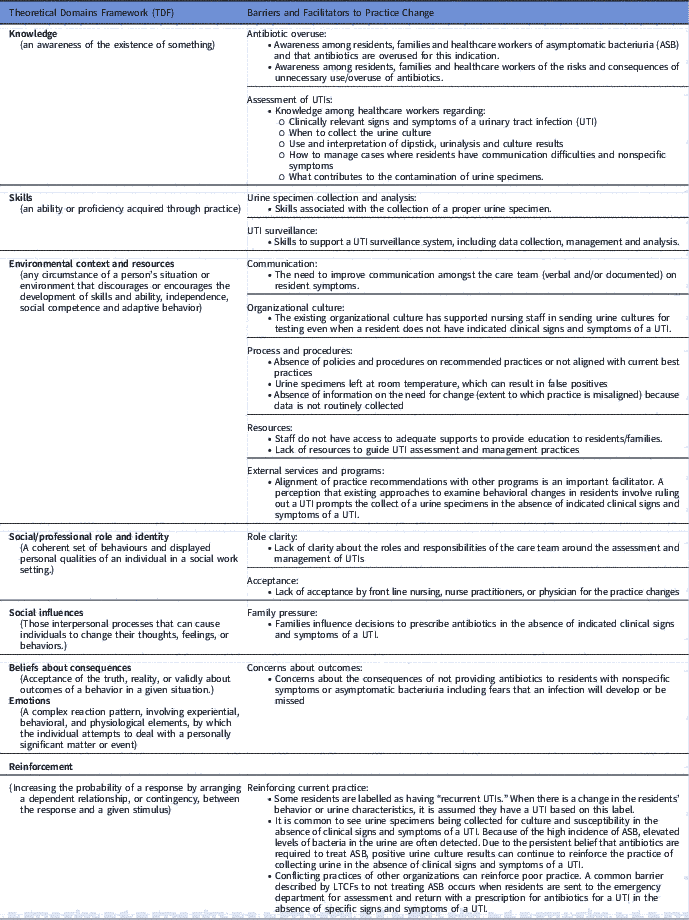
During the meetings with the 2 LTCF staff members, all barriers and facilitators listed were found to be relevant and additional insights were captured. For example, one physician noted that not only families but also healthcare staff influence physicians to prescribe antibiotics. A complete list of the identified barriers and facilitators to following best-practice recommendations to minimize treatment of ASB in LTCFs can be found in Table 2. Table 2 also includes results from the process of mapping each barrier or facilitator to the domains from the TDF. Of the 14 domains, the mapping process identified 8 factors relevant to practice change. This process demonstrated that strategies to support practice change should address the following domains: knowledge, skills, environmental context and resources, social or professional role or identity, social influences, beliefs about consequences, emotions, and reinforcement.
Results of Mapping of Barriers/Facilitators to the Theoretical Domains Framework
Selection of strategies
In total, 9 implementation strategies were selected to address the identified barriers and facilitators: 7 strategies were informed by the Rx for Change database and 2 additional implementation strategies, ‘coaching’ and ‘champions,’ were added to address outstanding barriers. Coaching was added for LTCFs to address challenges in reaching all staff when delivering formal education sessions to provide reassurance and support for more difficult cases (eg, residents with communication difficulties), and to monitor practice improvements. Champions were added to encourage LTCFs to select an individual dedicated to leading the overall implementation of the program and who could strengthen buy-in and overcome challenges as they emerge.
The LTCF staff that were consulted provided insight on how the strategies could be designed and delivered. For example, they emphasized that the program should allow for different formats for education, such as shorter sessions or huddles to accommodate time constraints, to reach more staff. The LTCF staff members felt that all proposed strategies would be appropriate and feasible to execute. The 2 LTCFs also provided feedback including proposed changes to resources developed to support each implementation strategy.
Table 3 summarizes the implementation strategies (with definitions) selected for the program, the target audience, the timing of delivery, and the applicable resources developed by Public Health Ontario to support the strategy. A program implementation guide was developed to support LTCFs in tailoring and implementing the program within their facility. 29
Description of Implementation Strategies for the UTI Program
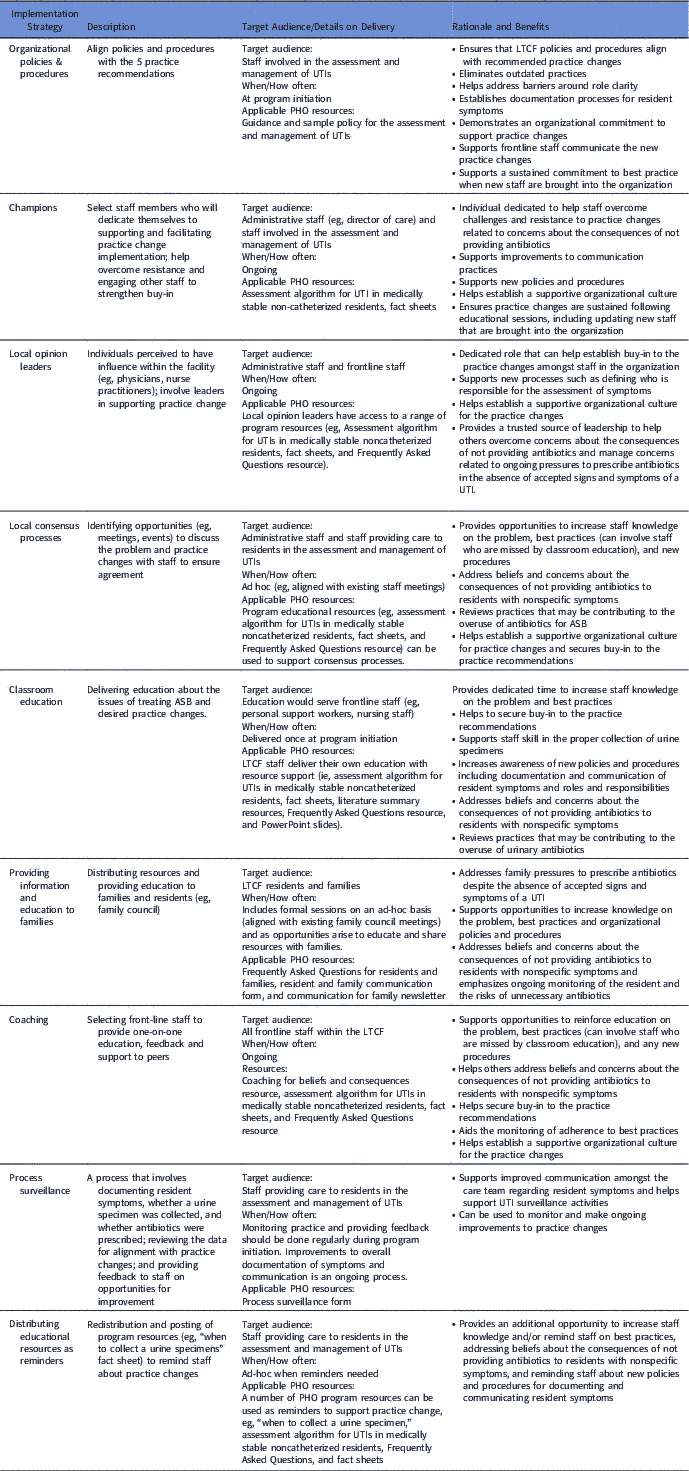
Note. LTCF, long-term care facility; PHO, physician hospital organization; ASB, asymptomatic bacteriuria; UTI, urinary tract infection.
Discussion
A systematic and stepped approach was used to develop a new provincial program to help LTCFs identify symptomatic UTIs and minimize the treatment of ASB. A description of the results from the first evaluation of this program demonstrate promising results in reducing antibiotic use in LTCFs.Reference Brown, Chambers, Quirk, Langford, Leung, MacFarlane, Bedkowski and Schartz 30 Programs are more likely to influence practice if they target underlying barriers to change.Reference Michie, Johnston, Francis, Hardeman and Ecceles 31 The intervention mapping approach described has practical implications for guiding implementation of the program because it produces a clear rationale for why each strategy is important (ie, what specific barriers are being addressed), which can help LTCFs decide how to prioritize the implementation of the recommended strategies.
The project team was able to consult with a specialist that delivers training on the use of knowledge translation approaches, including implementation process models and frameworks. However, most of the work was conducted by project team members without previous experience with these approaches. Several accessible resources were available to guide this work that could support other teams follow a similar process.Reference French, Green and O’Connor 17 , Reference Michie, Atkins and West 32
Existing reviews describing studies of interventions that aim to reduce antibiotic prescribing for ASB have documented evidence of practice changeReference Michie, Johnston, Francis, Hardeman and Ecceles 31 ; however, the average effect sizes are underwhelming considering the magnitude of inappropriate prescribing of antibiotics in long-term care.Reference Flokas, Andreatos, Alevizakos, Kalbasi, Onur and Mylonakis 6 Different approaches are needed to develop more impactful, sustainable antimicrobial stewardship programs. Programs have also targeted a narrow range of barriers and have placed a strong focus on addressing knowledge barriers.Reference Nicolle 33 However, studies that have explored barriers to practice change around antibiotic prescribing practices have demonstrated that the issue is complex and requires a multifaceted approach to address a broader range of behavioral constructs to support change (eg, beliefs, emotions, reinforcement, environmental context and resources).Reference Walker, McGeer, Simor, Armstrong-Evans and Loeb 14 , Reference Lohfeld, Loeb and Brazil 21 – Reference van Buul, van der Steen and Doncker 23 Providing education and resources alone is often insufficient to support sustainable practice change. This report of a cross-sectional survey plus focus groups contributes to the literature that has focused on understanding the root causes of overprescribing antibiotics in long-term care.
In reflecting on the steps used to develop this program and lessons learned, a few limitations should be considered during future pilot studies and iterations of the program. The program missed the opportunity to interact more directly with residents and families to inform a better understanding of their concerns around the management of UTIs and the types of support and resources they would have found valuable. A stakeholder survey was foundational for identifying several barriers and facilitators to practice change in this area; however, findings from this survey might not have been representative of challenges faced across all LTCFs interested in this program. A comprehensive evaluation plan that supports multiple iterations of this program can provide guidance on how it can be implemented in long-term care, what impact it can have, and how it can be improved to support LTCFs across the province that have identified a need to improve practice in this area.
In conclusion, a number of important barriers relate to the overtreatment of ASB in LTCFs: gaps in knowledge and skills, lack of resources to guide decision making, poor documentation and communication of symptoms, absence of clear policies and procedures, lack of acceptance of best practice recommendations, fears that an infection will be missed, and a number of common practices that are reinforcing ongoing treatment of ASB. An intervention mapping approach using the TDF can be useful to identify multimodal approaches tailored to the population to advance the design and impact of antimicrobial stewardship initiatives.
Acknowledgments
The authors would like to thank all the long-term care home stakeholders who provided valuable feedback on the design of this program.
Financial support
The program development process was funded through operational funds held by Public Health Ontario.
Conflicts of interest
The authors declare that they have no conflicts of interests related to this article.


 Open access

