





Impact Statement
Coastal communities worldwide face interconnected challenges: rising sea levels, growing coastal populations and declining marine ecosystems. Traditional engineered coastal structures, while effective for immediate protection, may disturb marine ecosystems and are projected to reach their limits as seas continue rising. Nature-based Solutions (NbS) like mangroves and coral reefs support biodiversity but require time to grow and substantial space – a critical aspect in space-restricted areas with growing populations. Research has increasingly embraced nature-based protection strategies, at the cost of terminological proliferation that hampers clear communication among experts and practitioners. This study addresses and learns from classification challenges in Nature- and Ecosystem-based Solutions when addressing a critical denomination gap for Hybrid Nature-based Solutions (HNbS) under recent developments in digital fabrication technologies. These developments include automated construction with living or responsive materials and thus enable structures that are simultaneously engineered and alive, manufactured yet growing and adaptive. These innovations blur traditional boundaries between artificial and natural systems. We synthesise these review perspectives to propose three distinct categories: Hybrid Nature-based Strategies (combining separate engineered and natural elements, usually along a coastal transect), Hybrid Nature-based Modules (integrating both components within individual structures) and Confluent Hybrid Nature-based Solutions (where engineering and natural systems merge at the form and material level through advanced manufacturing). We also show how Dynamic Adaptation Policy Pathways provide a strategic framework that allows emerging technologies – such as Confluent Hybrid Nature-based Solutions – to be tested and proven alongside established alternatives to gain faster market acceptance and implementation. By providing consistent terminology, this framework enables interdisciplinary research collaboration, targeted funding for hybrid coastal adaptation approaches and informed decision-making for practical implementation. By identifying current definitional challenges and their implications, this review improves academic discourse while enabling coastal experts, managers and decision-makers to select appropriate low-regret solutions that simultaneously address climate change and biodiversity conservation challenges.
Introduction
Coastal areas are becoming increasingly populated – projections indicate that by 2100, over one-third of the world’s population (projected at 11 billion) will live within 100 km of the coastline, driven by continued urbanisation trends that favour coastal over inland locations (Reimann et al., Reference Reimann, Vafeidis and Honsel2023; United Nations Department of Economic and Social Affairs, Population Division, 2024). Given the challenges and lessons learned from past and ongoing urbanisation (Elmqvist et al., Reference Elmqvist, Andersson, McPhearson, Bai, Bettencourt, Brondizio, Colding, Daily, Folke, Grimm, Haase, Ospina, Parnell, Polasky, Seto and Van Der Leeuw2021), a yet increasing coastal population intensifies the imperative for sustainable coastal planning (United Nations Department of Economic and Social Affairs, Population Division, 2021). Simultaneously, ongoing global heating leads to melting ice and thus accelerated sea-level rise (IPCC, Reference Pörtner, Roberts, Poloczanska, Mintenbeck, Tignor, Alegría, Craig, Langsdorf, Löschke, Möller and Okem2022). As sea levels rise, the oceans occupy further space on the coast, amplifying the challenges of populated coastal areas by claiming valuable land while putting lives and coastal assets at risk. These pressures are unprecedented because sea levels have been relatively stable since the last deglaciation and throughout large parts of human civilisation (about 3,000 years ago; see Lambeck et al., Reference Lambeck, Yokoyama and Purcell2002; Nicholls and Cazenave, Reference Nicholls and Cazenave2010). Coastal infrastructure, including coastal protection infrastructures, has safeguarded human activity in the coastal zone since the medieval ages (Charlier et al., Reference Charlier, Chaineux and Morcos2005), facilitating marine exploration, accommodating critical logistic nodes of the global trade system (harbours) and thus helping to fuel economic prosperity and economic growth. However, with rising contemporary sea levels, further options beyond protection must be considered. Especially in urban and highly developed areas, sea-level rise compresses the coastal zone between fixed infrastructure and the advancing shoreline (Duvat and Magnan, Reference Duvat and Magnan2019). As a consequence, the marine domain continuously consumes terrestrial coastal space, while marine hazards concentrate on an incessantly narrowing zone – a process called coastal squeeze (Pontee, Reference Pontee2011). At the same time, traditional engineering protection measures are expected to reach their technical limits beyond the year 2100 under high $ {\mathrm{CO}}_2 $
emission scenarios (IPCC, Reference Portner, Roberts, Masson-Delmotte, Zhai, Tignor, Poloczanska, Mintenbeck, Alegria, Nicolai, Okem, Petzold, Rama and Weyer2019). An exact point in time and the associated timing of expiring protection levels cannot be determined as sea-level projections come with deep uncertainty, especially since glacial loss and the associated sea-level rise depend on future (counter-) actions of humankind (Haasnoot et al., Reference Haasnoot, Kwadijk, van Alphen, Le Bars, van den Hurk, Diermanse, van der Spek, Essink, Delsman and Mens2020; Hermans et al., Reference Hermans, Víctor Malagón-Santos, Katsman, Jane, Rasmussen, Haasnoot, Garner, Kopp, Oppenheimer and Aimée2023). This makes robust future coastal planning and maintaining safety levels, as done under more stable sea levels, increasingly challenging.
$ {\mathrm{CO}}_2 $
emission scenarios (IPCC, Reference Portner, Roberts, Masson-Delmotte, Zhai, Tignor, Poloczanska, Mintenbeck, Alegria, Nicolai, Okem, Petzold, Rama and Weyer2019). An exact point in time and the associated timing of expiring protection levels cannot be determined as sea-level projections come with deep uncertainty, especially since glacial loss and the associated sea-level rise depend on future (counter-) actions of humankind (Haasnoot et al., Reference Haasnoot, Kwadijk, van Alphen, Le Bars, van den Hurk, Diermanse, van der Spek, Essink, Delsman and Mens2020; Hermans et al., Reference Hermans, Víctor Malagón-Santos, Katsman, Jane, Rasmussen, Haasnoot, Garner, Kopp, Oppenheimer and Aimée2023). This makes robust future coastal planning and maintaining safety levels, as done under more stable sea levels, increasingly challenging.
Another challenge is to prevent biodiversity loss in the design of coastal measures to rising sea levels. On the one hand, ecosystem services both improve the health of marine habitats and provide a livelihood for coastal dwellers (Duarte et al., Reference Duarte, Culbertson, Dennison, Fulweiler, Hughes, Kinney, Bordalba, Nixon, Peacock, Smith and Valiela2009). Moreover, the marine ecosystem sequesters large amounts of $ {\mathrm{CO}}_2 $
(Duarte et al., Reference Duarte, Middelburg and Caraco2005). On the other hand, marine ecosystems and thus the biodiversity, are especially threatened by increasing atmospheric
$ {\mathrm{CO}}_2 $
(Duarte et al., Reference Duarte, Middelburg and Caraco2005). On the other hand, marine ecosystems and thus the biodiversity, are especially threatened by increasing atmospheric $ {\mathrm{CO}}_2 $
concentrations, leading to both ocean acidification and higher water temperatures, which together threaten marine ecosystems (Duarte et al., Reference Duarte, Culbertson, Dennison, Fulweiler, Hughes, Kinney, Bordalba, Nixon, Peacock, Smith and Valiela2009). Thus, addressing biodiversity aspects for sea-level rise responses in urban coastal areas adds another dimension to sustainable coastal adaptation. Especially when considering that existing coastal protection structures, such as seawalls and groynes, act as physical barriers for the natural exchange and hamper ecological connectivity between marine and terrestrial habitats, required for healthy marine ecosystems (Bishop et al., Reference Bishop, Mayer-Pinto, Airoldi, Firth, Morris, Lynette, Hawkins, Naylor, Coleman, Chee and Dafforn2017). Hampered ecological connectivity can adversely influence the functioning of ecosystems (Jeltsch et al., Reference Jeltsch, Bonte, Pe’er, Reineking, Leimgruber, Balkenhol, Schröder, Buchmann, Mueller, Blaum, Zurell, Böhning-Gaese, Wiegand, Eccard, Hofer, Reeg, Eggers and Bauer2013), by altering and disrupting the exchange of genes, communication and population behaviour.
$ {\mathrm{CO}}_2 $
concentrations, leading to both ocean acidification and higher water temperatures, which together threaten marine ecosystems (Duarte et al., Reference Duarte, Culbertson, Dennison, Fulweiler, Hughes, Kinney, Bordalba, Nixon, Peacock, Smith and Valiela2009). Thus, addressing biodiversity aspects for sea-level rise responses in urban coastal areas adds another dimension to sustainable coastal adaptation. Especially when considering that existing coastal protection structures, such as seawalls and groynes, act as physical barriers for the natural exchange and hamper ecological connectivity between marine and terrestrial habitats, required for healthy marine ecosystems (Bishop et al., Reference Bishop, Mayer-Pinto, Airoldi, Firth, Morris, Lynette, Hawkins, Naylor, Coleman, Chee and Dafforn2017). Hampered ecological connectivity can adversely influence the functioning of ecosystems (Jeltsch et al., Reference Jeltsch, Bonte, Pe’er, Reineking, Leimgruber, Balkenhol, Schröder, Buchmann, Mueller, Blaum, Zurell, Böhning-Gaese, Wiegand, Eccard, Hofer, Reeg, Eggers and Bauer2013), by altering and disrupting the exchange of genes, communication and population behaviour.
The challenges of urbanisation, climate change and biodiversity call for a new understanding of the planning, design and construction of urban coastal infrastructure, accounting for the pressures of an increasing population while effectively mitigating the impacts of climate change on coastal regions. Against this background, recent research introduced a paradigm shift from building in nature to building with nature (Slobbe et al., Reference Slobbe, Vriend, Aarninkhof, Lulofs, de Vries and Dircke2012). This approach combines the subsystems “engineering,” “nature” and “society” (Rijn, Reference Rijn2011), understanding the interconnected functionality of an ecosystem across (sub) systems and thus creating new opportunities beyond the realm of protection (Vriend and Van Koningsveld, Reference Vriend and Van Koningsveld2012). Several concepts emerged since the wider recognition of NbS at the end of the 2000s decade (World Bank, Reference MacKinnon, Sobrevila and Hickey2008; IUCN, Reference Galland and Herr2009). While this review gives a comprehensive overview of these concepts and their distinctions, including Ecosystem-based Adaptation (EbA) and NbS, all of them share a common idea: They address a more sustainable handling of coastal protection and adaptation in the face of sea-level rise with the aim to mitigate physical, natural and societal impacts with nature-based measures. Yet, they also share a common shortcoming: their demand for space when implemented (Temmerman et al., Reference Temmerman, Meire, Bouma, Peter, Ysebaert and de Vriend2013; Morris et al., Reference Morris, Konlechner, Ghisalberti and Swearer2018), as well as their time to establish functionality, to recover and maintain their functionality. Spatial requirements are only one barrier of NbS implementation besides others such as lack of information on design and technical details, transferability of site-specific experience and uncertainty of their (positive) effects (Raška et al., Reference Raška, Bezak, Carla, Kalantari, Banasik, Bertola, Bourke, Cerdà, Davids, de Brito, Evans, Finger, Halbac-Cotoara-Zamfir, Housh, Hysa, Jakubínský, Kapović, Solomun, Kaufmann, Seifollahi-Aghmiuni, Schindelegger, Šraj, Stankunavicius, Stolte, Stričević, Szolgay, Zupanc, Slavíková and Hartmann2022), adversely affecting their perceived reliability as well as market acceptance. This lack of knowledge and experience hampers timely implementation into construction standards, the legal foundation of every infrastructure design (Cohen-Shacham et al., Reference Cohen-Shacham, Andrade, Dalton, Dudley, Jones, Kumar, Maginnis, Maynard, Nelson, Renaud, Welling and Walters2019). However, the compounding impacts of coastal population growth, global heating and biodiversity loss call for sustainable but reliable solutions of “low-regret” (coordinated measures within flexible and robust adaptation strategies; see David et al., Reference David, Schulz, Schlurmann, Renaud, Sudmeier-Rieux, Estrella and Nehren2016; David, Reference David2021). Considering the uncertainty of sea-level rise projections, tackling the challenges of this climate change effect in the complex domains of urban coastlines requires evolving from a dichotomy of single protection measures towards a curated and concerted portfolio of adaptation measures within dynamic adaptation pathway plans (Haasnoot et al., Reference Haasnoot, Kwakkel, Walker and ter Maat2013). Dynamic adaptation pathway planning acknowledges that there is usually not one optimal but several robust solutions, meeting the site-specific adaptation requirements (Marchau et al., Reference Marchau, Walker, Bloemen and Popper2019). Beyond the spatial and functional requirements, a robust strategy also considers that single measures expire, as they fail to provide their designated safety levels subjected to ongoing climate change (also known as “reaching a(n anthropogenic) tipping point”; Duvat and Magnan, Reference Duvat and Magnan2019). In this context, “low-regret” solutions are those helping to address current challenges and avoid a systemic maladaptation – or maldevelopment – of coastal zones (David et al., Reference David, Hennig, Beate, Roeber, Zahid and Schlurmann2021a), without impairing future actions to deal with the challenges of urbanisation, climate change and biodiversity after their service expires.
This work is a synthetic review, containing a systematic stock take of the evolution and current role of NbS in coastal climate change adaptation. The review analyses design principles and functional mechanisms of engineered and nature-based coastal defences, highlighting their strengths and limitations. It explores the convergence of NbS and engineered coastal protection as HNbS, particularly in the context of emerging digital fabrication technologies. Digital fabrication enables precise control of surface complexity and material composition, directly addressing these key design variables to enhance integration of HNbS into aquatic ecosystems. However, these advancements expose gaps in the existing HNbS taxonomy, challenging current classifications of combined nature-based and engineered measures, while simultaneously underscoring the potential for coastal adaptation strategies that are engineered to mitigate disaster risk and provide ecosystem-like services. Additionally, while hybrid approaches are progressing towards implementation, a new generation of digitally fabricated solutions with living or responsive materials is currently under discovery and development. As coastal adaptation needs become increasingly pressing, these innovation development timelines create a timing gap. Against this background, the aim of this review is to synthesise knowledge in sustainable, “low-regret” climate change adaptation and digital fabrication to establish a precise taxonomic classification for different forms of HNbS, preventing imprecise terminology and presenting opportunities enabling early-stage innovations to bridge common gaps in their acceptance and implementation.
Engineered coastal protection
In coastal areas, effective protection strategies are essential as the number of people living in high-risk low-lying areas and sea levels is rising (Firth et al., Reference Firth, Schofield, White, Skov and Hawkins2014). Grey infrastructure, predominantly made of artificial materials like concrete, steel, natural or artificial stones or wood, has remained a trusted solution at large, safeguarding these areas (U.S. Army Corps of Engineers, Coastal Engineering Research Center, 1984). These manmade structures are designed based on predefined functions like maintaining the shoreline via erosion mitigation techniques, protecting the hinterland from flooding or creating navigable conditions for waterborne traffic (Pilarczyk, Reference Pilarczyk2003). “Grey infrastructure,” a term derived from the materials commonly used in its construction, can be divided into onshore and foreshore structures (Schoonees et al., Reference Schoonees, Mancheño, Scheres, Bouma, Silva, Schlurmann and Schüttrumpf2019). Onshore structures, such as dikes (see Figure 1a), sea walls (see Figure 1b), floodgates and revetments, are built on the shoreline or landward (U.S. Army Corps of Engineers, 2002). In contrast, foreshore structures like groynes (see Figure 1c), breakwaters (see Figure 1d) and piers extend seaward into the water body. This distinction is crucial for understanding their placement and role as coastal defence (Schoonees et al., Reference Schoonees, Mancheño, Scheres, Bouma, Silva, Schlurmann and Schüttrumpf2019). This role is highlighted by deliberate planning and expert tailoring of coastal defence. Thus, a shift from the material aspect of manmade coastal infrastructure, commonly termed “grey,” is less favourable as referring to them as “engineered” structures.
Schematic representations of engineered coastal protection concepts. While sea dikes and seawalls (a and b) are onshore measures, groynes (c) and breakwaters (d) are foreshore measures (see also Schoonees et al., Reference Schoonees, Mancheño, Scheres, Bouma, Silva, Schlurmann and Schüttrumpf2019). The groyne and breakwater extend beyond the illustrations, thus depicting the cross-section of each structure, consisting of core and filter layers underneath the rubble mound protection cover. All renders are done with Blender version 4.3.1.

One of the key advantages of tailored, engineered infrastructure is its design precision. These structures are engineered to meet predefined safety levels against overtopping or failure, capable of withstanding specific marine and coastal hazards within a designated lifetime (U.S. Army Corps of Engineers, 2002; EAK, 2002; Schoonees et al., Reference Schoonees, Mancheño, Scheres, Bouma, Silva, Schlurmann and Schüttrumpf2019): Coastal structures are designed and tailored to withstand various forces based on stability analysis, experimental studies and numerical modeling. These structures are specifically shaped to resist hydrostatic and hydrodynamic loads, buoyancy forces and wave impacts in the coastal environment. Traditional coastal defences such as dikes have gained resilience through centuries of experience and consequent, research-assisted evolution (Pilarczyk, Reference Pilarczyk1998; Hofstede, Reference Hofstede2008; Schüttrumpf, Reference Schüttrumpf2008; Thorenz, Reference Thorenz2008). Such knowledge from numerical design, laboratory tests and practical implementation is the foundation of today’s design standards and guidelines (U.S. Army Corps of Engineers, 2002; CIRIA et al., 2007). These standards serve as a quality baseline and legal framework, aiding engineers in designing coastal protection structures with well-established materials and forms, ensuring both reliability and compliance. Another advantage is that engineered structures are readily operational and provide their full protection potential immediately after their construction is completed (Morris et al., Reference Morris, Bilkovic, Walles and Elisabeth2022). Furthermore, engineered structures are considered space efficient, as they can provide full defensive capabilities while occupying only a limited cross-shore width (Sutton-Grier et al., Reference Sutton-Grier, Wowk and Bamford2015). This aspect is particularly beneficial in space-constrained coastal areas, such as urban environments (Sutton-Grier et al., Reference Sutton-Grier, Wowk and Bamford2015; Pontee et al., Reference Pontee, Narayan, Beck and Hosking2016). Also, engineered structures, made from manufactured, mostly industrial, material, do not depend on environmental or seasonal aspects, other than natural or life material as used for nature- or ecosystem-based measures (see Nature-based Solutions and Hybrid (Nature-based).
While effective and precisely tailored, engineered structures often prioritise specific technical functions at the expense of adverse environmental impacts (Sutton-Grier et al., Reference Sutton-Grier, Wowk and Bamford2015; IPCC, Reference Portner, Roberts, Masson-Delmotte, Zhai, Tignor, Poloczanska, Mintenbeck, Alegria, Nicolai, Okem, Petzold, Rama and Weyer2019). Their construction often condones disturbing the natural ecosystem equilibrium and a high ecological footprint (Borsje et al., Reference Borsje, van Wesenbeeck, Dekker, Paalvast, Bouma, van Katwijk and de Vries2011; Anton et al., Reference Anton, Panaitescu, Panaitescu, Ghiţă, Balan, Bode, Croitoru, Dogeanu, Georgescu, Georgescu, Nastase and Sandu2019). Once completed, these structures permanently change the natural dynamics, influencing the hydrodynamic regime, including waves and currents (U.S. Army Corps of Engineers, 2002; Duvat and Magnan, Reference Duvat and Magnan2019; David et al., Reference David, Hennig, Beate, Roeber, Zahid and Schlurmann2021a). This human-driven modification can favour local onshore human action, but also push natural coastal systems past critical thresholds, causing irreversible changes and affecting coastal protection services (Duvat and Magnan, Reference Duvat and Magnan2019). Engineered structures often create path dependencies, especially in dynamic adaptation pathway planning (Nunn et al., Reference Nunn, Smith and Elrick-Barr2021), where once a decision is made for a technical solution to deal with present coastal challenges, future solutions must not only solve future challenges but also deal with past shortcomings of the former technical solution. These cascading complications can be rooted in various dimensions, such as high initial investments (economic dimension) or irreversible natural changes (natural dimension). These cascading obligations restrict future adaptation options, thereby compromising the flexibility which is essential for responding to the uncertainties of sea-level rise projections (Nunn et al., Reference Nunn, Smith and Elrick-Barr2021; Marchau et al., Reference Marchau, Walker, Bloemen and Popper2019).
Assessing the financial investment of engineered structures is as challenging as complex: Engineered coastal structures are costly to build and require continuous maintenance, as structural degradation over time leads to declining service and safety levels (Costa et al., Reference Costa, Tekken and Kropp2009; Dugan et al., Reference Dugan, Airoldi, Chapman, Walker, Schlacher, Wolanski and McLusky2011; IPCC, Reference Portner, Roberts, Masson-Delmotte, Zhai, Tignor, Poloczanska, Mintenbeck, Alegria, Nicolai, Okem, Petzold, Rama and Weyer2019). If service and safety levels cannot be maintained any longer, coastal infrastructure must be dismantled, recycled or integrated into a new structure, which is associated with further costs and can lead to cascading adverse impacts on the coastal ecosystem (Kench, Reference Kench2012; Duvat and Magnan, Reference Duvat and Magnan2019). In urban areas with high land values, these costs are justified by the financial losses from coastal hazards. However, as sea levels and associated disaster risks continue rising (Magnan and Duvat, Reference Magnan and Duvat2020), maintenance costs also escalate, potentially making such defences economically unsustainable before they reach their technical protection limits. In areas with lower property values, engineered coastal defences become increasingly uneconomical (Haasnoot et al., Reference Haasnoot, Brown, Scussolini, Jimenez, Vafeidis and Nicholls2019; Haasnoot et al., Reference Haasnoot, Lawrence and Magnan2021) as nature-based alternatives prove more effective in areas with adequate space for natural coastal processes.
Nature-based Solutions
Recognition of the fundamental role of ecosystems in supporting human well-being is rooted in indigenous peoples’ belief systems, predating “modern” scientific interest in ecosystem services which emerged in the 1970s (IUCN, Reference Cohen-Shacham, Janzen, Maginnis and Walters2016). Increasing (academic) understanding of ecosystem significance at the time emphasised the importance of systematic approaches to conserve, restore and sustainably manage ecosystems, ultimately leading to the development of the NbS concept. The term Nature-based Solutions in the context of climate change adaptation most likely gained wider recognition through the World Bank’s Reference MacKinnon, Sobrevila and Hickey2008 report (World Bank, Reference MacKinnon, Sobrevila and Hickey2008) and the International Union for Conservation of Nature (IUCN, Reference Galland and Herr2009), though neither document provided explicit definitions for NbS. Instead, the World Bank report compiled two decades of biodiversity, nature conservation, pollution mitigation and sustainable development projects under the subtitle “Nature-based Solutions from the World Bank Portfolio” (main title: “Biodiversity, Climate Change and Adaptation”). In contrast, the IUCN mission book outlined Ecosystem-based Adaptation (EbA) as a concept, establishing the conceptual framework that would later evolve into formal definitions and standards (namely the IUCN Global Standard for Nature-based Solutions; see IUCN, 2020). The success of NbS and EbA lies not in their definitions, but in the conceptual shift from humans as ecosystem beneficiaries to proactive agents, fostering and supporting ecosystem services (IUCN, Reference Cohen-Shacham, Janzen, Maginnis and Walters2016). At the same time, similar approaches developed under different terminologies, centred on the deliberate engineering of ecosystems to deliver targeted ecosystem services (Schoonees et al., Reference Schoonees, Mancheño, Scheres, Bouma, Silva, Schlurmann and Schüttrumpf2019 and Jordan and Fröhle, Reference Jordan and Fröhle2022 together provide a comprehensive list of different concepts related to NbS, like green-blue infrastructure, ecological engineering, ecosystem service approach, etc., used in coastal protection and adaptation to climate change effects). But as a leading advocate for sustainable, nature-inclusive practices, the IUCN’s definition of NbS has nowadays been widely recognised by practitioners, experts, scientists and decision-makers in both governments and non-governmental organisations alike (Kabisch et al., Reference Kabisch, Korn, Stadler, Bonn, Kabisch, Korn, Stadler and Bonn2017; IUCN, 2020). Although meanwhile, adaptations of the original NbS definition exist (Kabisch et al., Reference Kabisch, Korn, Stadler, Bonn, Kabisch, Korn, Stadler and Bonn2017), the core idea remains consistent: NbS address societal challenges, such as sustainable economic development or climate change adaptation, while preserving ecosystem health, valuing biodiversity and maintaining natural ecosystem functions (IUCN, Reference Galland and Herr2009; Kabisch et al., Reference Kabisch, Korn, Stadler, Bonn, Kabisch, Korn, Stadler and Bonn2017). The global standard by the IUCN further streamlines and consolidates this core idea behind NbS (IUCN, 2020) and is supported by a widespread implementation in policies and mainstreaming of NbS for decision-makers and practitioners, for example, by the European Union (European Commission, 2021; European Commission and Directorate-General for Research and Innovation, 2021; European Environment Agency et al., Reference Castellari, Zandersen, Davis, Veerkamp, Förster, Marttunen, Mysiak, Vandewalle, Medri and Picatoste2021).
Terminology in coastal climate change adaptation
Besides engineered coastal protection measures, NbS have emerged as viable alternatives in areas where time and space allow for their implementation. These solutions effectively address sea-level rise challenges, mitigate wave impacts and influence morphodynamic processes such as erosion and sedimentation. The evolution of coastal NbS from a concept (World Bank, Reference MacKinnon, Sobrevila and Hickey2008; IUCN, Reference Galland and Herr2009, Reference Cohen-Shacham, Janzen, Maginnis and Walters2016) to a recognised approach for addressing sea-level rise (see box 4.3. in IPCC, Reference Portner, Roberts, Masson-Delmotte, Zhai, Tignor, Poloczanska, Mintenbeck, Alegria, Nicolai, Okem, Petzold, Rama and Weyer2019) occurred alongside a scientific consolidation phase through ongoing scholarly and expert discourse.
The evolution of implementing natural elements and aspects into coastal protection measures has been shaped by two key frameworks: “Building with Nature” and “Working with Nature.” The “Building with Nature” initiative started as a research programme in 2007, presented at the 18th World Dredging Congress (WODCON) by the World Organization of Dredging Associations (WODA). This programme ultimately led to the formation of the Dutch EcoShape foundation (Raalte et al., Reference Raalte, Dirks, Minns, van Dalfsen, Erftemeijer, Aarninkhof and Otter2007), promoting the “Building with Nature” approach. EcoShape is a consortium comprised of private partners, government agencies and knowledge institutes, all working at the interface of nature, engineering and society (Slobbe et al., Reference Slobbe, Vriend, Aarninkhof, Lulofs, de Vries and Dircke2012; Vriend et al., Reference Vriend, van Koningsveld, Stefan, de Vries and Baptist2015). Meanwhile, “Working with Nature” was introduced in 2008 by the World Association for Waterborne Transport Infrastructure (PIANC) in a position paper (PIANC, 2008).
Considering the origin and semantics of “Building with Nature” and “Working with Nature”, both have strong ties to engineering and the dredging industry and, as such, consider the use of sediment-based protection as an appropriate natural mean within the scope of their frameworks. From this, a set of concepts in the coastal engineering community evolved, dealing with coastal ecosystems as NbS for coastal protection (a systematic etymological overview is given by Jordan and Fröhle, Reference Jordan and Fröhle2022).
In contrast, other frameworks emerged from the Disaster Risk Reduction (DRR) community (Thomalla et al., Reference Thomalla, Downing, Spanger-Siegfried, Han and Rockström2006), drawing on an “ecosystem approach” – a cornerstone of ecosystem-based management (Slocombe, Reference Slocombe1993). The ecosystem-based management framework was established alongside the growing scientific interest in ecosystem services in the 1970s (IUCN, Reference Cohen-Shacham, Janzen, Maginnis and Walters2016). It is “the process of managing and understanding the interaction of the biophysical and socioeconomic environments within a self-similar, self-maintaining regional or larger system,” focusing on the whole ecosystem, rather than smaller management units (Slocombe, Reference Slocombe1998). Almost half a century later, the DRR community developed an ‘ecosystem approach’ to disaster risk reduction, referred to as Ecosystem-based Disaster Risk Reduction (Eco-DRR), as a result of the 2004 Indian Ocean Tsunami and the Hyogo Framework for Action (HFA) 2005–2015 (Gupta and Nair, Reference Gupta and Nair2012; Estrella and Saalismaa, Reference Estrella, Saalismaa, Renaud, Sudmeier-Rieux and Estrella2013). This concept later informed the Sendai Framework for Disaster Risk Reduction (2015–2030). Eco-DRR is “the sustainable management, conservation and restoration of ecosystems to reduce disaster risk, to achieve sustainable and resilient development” (Estrella and Saalismaa, Reference Estrella, Saalismaa, Renaud, Sudmeier-Rieux and Estrella2013). Of particular importance is that Eco-DRR considers humans – and thus human action – as an integral part of ecosystems (in reference to the Millennium Ecosystem Assessment, 2005).
Besides “Building with Nature” and Eco-DRR, another concept is EbA, putting a bigger emphasis on “slow-onset” hazards (Sudmeier-Rieux et al., Reference Sudmeier-Rieux, Nehren, Sandholz and Doswald2019), such as sea-level rise. EbA was coined by the Convention on Biological Diversity (CBD) in 2009 (CBD, 2009), despite already circulating in the negotiations prior to the fourteenth session of the Conference of the Parties (COP 14) of the United Nations Framework Convention on Climate Change (UNFCCC) negotiations in 2008 (Lo, Reference Lo2016). Beyond the ecosystem services focus, EbA adopts a vulnerability perspective rather than emphasising hazards, exposure, and technical solutions. This reflects its grounding in climate change adaptation rather than disaster risk reduction, prioritising transformative resilience over reactive risk management. With an early focus on beneficial ecosystem services and a widespread involvement of local communities, private companies, non-government organisations as well as a diverse set of both regional governments and supra-regional countries (for example, the European Union or the United Nations regional group African Group), EbA became soon relevant for science, practitioners and decision-makers alike (Vignola et al., Reference Vignola, Locatelli, Martinez and Imbach2009). Meanwhile, EbA was recognised as one of six response options to sea-level rise in the Special Report on the Ocean and Cryosphere in a Changing Climate (SROCC) of the United Nations’ Intergovernmental Panel on Climate Change (IPCC). The others are no response, advance, retreat, accommodation and protection (IPCC, Reference Portner, Roberts, Masson-Delmotte, Zhai, Tignor, Poloczanska, Mintenbeck, Alegria, Nicolai, Okem, Petzold, Rama and Weyer2019). In fact, protection within the IPCC classification is again split up into three parts: (a) hard protection – the equivalent of engineered coastal protection here – (b) sediment-based protection, such as beach and shore nourishments which are also referred to as “soft” measures and (c) EbA to account for hybrid forms between engineered and NbS, although it constitutes a separate class in its own right. This overlapping classification elucidates the importance of establishing a clear and unambiguous taxonomy for climate change adaptation categories.
Scrutinising the differences between “Building with Nature,” Eco-DRR and EbA reveals a clear distinction between these concepts, despite all of them considering the inherent requirements of the coastal ecosystem while aiming to support and harness ecosystem services to mitigate risk from marine hazards and extreme events:
Evolving within different communities, more or less in the form of silos, led to an unnecessary and artificial divide between EbA and Eco-DRR (Doswald and Estrella, Reference Doswald and Estrella2015; Sudmeier-Rieux et al., Reference Sudmeier-Rieux, Nehren, Sandholz and Doswald2019). A considerable overlap exists in both concepts (Thomalla et al., Reference Thomalla, Downing, Spanger-Siegfried, Han and Rockström2006; CBD, 2009; Estrella and Saalismaa, Reference Estrella, Saalismaa, Renaud, Sudmeier-Rieux and Estrella2013; Doswald and Estrella, Reference Doswald and Estrella2015; Sudmeier-Rieux et al., Reference Sudmeier-Rieux, Nehren, Sandholz and Doswald2019), with EbA emerging as the more widely recognised terminology. This may be particularly facilitated through the integration of EbA in the IPCC’s SROCC (IPCC, Reference Portner, Roberts, Masson-Delmotte, Zhai, Tignor, Poloczanska, Mintenbeck, Alegria, Nicolai, Okem, Petzold, Rama and Weyer2019).
As NbS are increasingly being mainstreamed (as exemplified by the global standard for NbS; IUCN, 2020) and integrated into policy and decision-making (see, for instance, the EU Biodiversity Strategy for 2030, EU Strategy on Adaptation to Climate Change and report on NbS in Europe policy; European Commission, 2020, 2021; European Environment Agency et al., Reference Castellari, Zandersen, Davis, Veerkamp, Förster, Marttunen, Mysiak, Vandewalle, Medri and Picatoste2021), a precise understanding of “Building with Nature,” Eco-DRR and EbA is crucial. The difference between these frameworks becomes particularly evident when using them as epitomes for policy-driven and engineering-focused approaches, respectively. The distinction manifests most visibly in their contrasting positions on sediment-based or “soft” measures, such as sand or beach nourishment. While sand nourishments exploit “natural” abiotic drivers (waves and currents) to redistribute sediment (Schipper et al., Reference Schipper, Ludka, Raubenheimer, Luijendijk and Schlacher2020), they simultaneously constitute “disturbances of the environment” (Staudt et al., Reference Staudt, Gijsman, Ganal, Mielck, Johanna Wolbring, Goseberg, Schüttrumpf, Schlurmann and Schimmels2021) where ecological benefits are affected by multiple factors (Speybroeck et al., Reference Speybroeck, Bonte, Courtens, Gheskiere, Grootaert, Maelfait, Mathys, Provoost, Sabbe, Eric, Van Lancker, Vincx and Degraer2006; Staudt et al., Reference Staudt, Gijsman, Ganal, Mielck, Johanna Wolbring, Goseberg, Schüttrumpf, Schlurmann and Schimmels2021). Consequently, the IPCC-endorsed concept distinguishes between (a) soft, sediment-based measures – thereby acknowledging the engineering origin of sand nourishments – and (b) ecosystem-based measures. In contrast, “Building with Nature” embraces sediment-based interventions like sand nourishments as integral components, defining them as dynamic and sustainable engineering solutions, leveraging natural redistribution mechanisms for coastal management and protection (Slobbe et al., Reference Slobbe, Vriend, Aarninkhof, Lulofs, de Vries and Dircke2012).
A differentiated understanding facilitates skillful use and modification of these concepts for the appropriate framing of coastal actions and effective coastal management. Other prominent examples building on such an understanding are “ecosystem-based coastal defence” or “nature-based coastal defence” (see Temmerman et al., Reference Temmerman, Meire, Bouma, Peter, Ysebaert and de Vriend2013; Morris et al., Reference Morris, Bilkovic, Walles and Elisabeth2022; Duvat et al., Reference Duvat, Inès Hatton, Burban, Jacobée, Vendé-Leclerc and Stahl2025) focusing on natural habitats like mangroves, salt marshes, coral reefs and dunes as living infrastructure that provides coastal defence services while delivering additional ecological and economic benefits; “ecosystem engineers” as designation for plants like Spartina and Zostera that autogenically engineer coastal environments by structurally modifying water flow through their physical presence (Bouma et al., Reference Bouma, De Vries, Low, Peralta, Tánczos, van de Koppel and Herman2005); or “ecosystem design” describing restoration approaches, where rather than attempting to restore ecosystems to their historical states, this concept promotes deliberately constructing functioning ecosystems tailored to meet specific human needs and local requirements (Zimmer, Reference Zimmer, Makowski and Finkl2018).
Conversely, a basic or less informed approach to NbS can lead to criticism (Alva, Reference Alva2022) or adverse impacts on site – so-called maladaptation or in a broader sociopolitical context maldevelopment (Schipper, Reference Schipper2020; David et al., Reference David, Hennig, Beate, Roeber, Zahid and Schlurmann2021a). In this context, terms like “Natural-,” “Green-,” or “Green-Blue Infrastructure” (United Nations Office for Disaster Risk Reduction, 2017; Schoonees et al., Reference Schoonees, Mancheño, Scheres, Bouma, Silva, Schlurmann and Schüttrumpf2019; Monteiro et al., Reference Monteiro, Ferreira and Antunes2020) are pertinent but should be carefully considered in coastal settings. These terms encompass a wide range of ecosystem services, including air quality, temperature regulation, waste and wastewater treatment as well as urban benefits like recreation and aesthetics (Veerkamp et al., Reference Veerkamp, Schipper, Hedlund, Lazarova, Nordin and Hanson2021). The concept “Green-Blue Infrastructure” is employed to deliberately create a contrast between “grey” or “hard” infrastructure (United Nations Office for Disaster Risk Reduction, 2017). Despite their prominence in water and urban sciences, architecture and spatial planning (Lamond and Everett, Reference Lamond and Everett2019; Langeveld et al., Reference Langeveld, Cherqui, Tscheikner-Gratl, Muthanna, Juarez, Leitão, Roghani, Kerres, do Céu Almeida, Werey and Rulleau2022), the semantics of green-blue infrastructures in coastal climate change adaptation remains ambiguous when contrasted with the evolution and widespread support of previously outlined ecosystem and nature-based counterparts or their comprehensive derivatives.
Nature-based Solutions in coastal engineering
NbS in coastal engineering exploit natural ecosystems to protect the coastline from wave impacts, sedimentation and erosion and enhance biodiversity. Typical NbS are mangroves (see Figure 2a), coastal dunes (see Figure 2b), salt marshes, reefs (coral, shellfish, oyster) and seagrass meadows or other natural elements of ecosystems, creating habitats for various species while protecting coastal communities (David et al., Reference David, Schulz, Schlurmann, Renaud, Sudmeier-Rieux, Estrella and Nehren2016; Jordan and Fröhle, Reference Jordan and Fröhle2022; Hitzegrad et al., Reference Hitzegrad, Brohmann, Herding, Pfennings, Jonischkies, Scharnbeck, Mainka, Mai, Windt, Kloft, Wehrmann, Lowke and Goseberg2024). The increased biodiversity enhances the variability of flora and fauna – a benefit cascading down to coastal dwellers (IUCN, Reference Cohen-Shacham, Janzen, Maginnis and Walters2016), for example, via improved food provisioning and economic utilisation (Kuwae and Crooks, Reference Kuwae and Crooks2021). These co-benefits are commonly referred to as ecosystem services. The most important ecosystem service for coastal protection is wave attenuation and – where required – sediment accumulation (Narayan et al., Reference Narayan, Beck, Reguero, Losada, Van Wesenbeeck, Pontee, Sanchirico, Ingram, Lange and Burks-Copes2016). In addition to ecosystem services, natural elements have an intrinsic capacity to regulate and maintain themselves and (seasonal) nearshore dynamics (Kench, Reference Kench2012; Spalding et al., Reference Spalding, McIvor, Beck, Koch, Möller, Reed, Rubinoff, Spencer, Tolhurst, Wamsley, van Wesenbeeck, Wolanski and Woodroffe2013; David and Schlurmann, Reference David and Schlurmann2020; David, Reference David2021). Thus, NbS potentially requires lower maintenance, possessing self-repairing capabilities that enable recovery from moderate storm impacts (Morris et al., Reference Morris, Boxshall and Swearer2020; Waryszak et al., Reference Waryszak, Gavoille, Whitt, Kelvin and Macreadie2021).
Schematic representations of Nature-based Solutions (NbS) depicted as a collection of mangroves for wave attenuation (Temmerman et al., Reference Temmerman, Horstman, Krauss, Mullarney, Pelckmans and Schoutens2023) and a coastal dune (Mehrtens et al., Reference Mehrtens, Lojek, Kosmalla, Bölker and Goseberg2023; Dang et al., Reference Dang, Pham, Nguyen, Giang, Pham, Nghiem, Nguyen, Vu, Bui, Pham, Nguyen and Ngo2023). All renders are done with Blender version 4.3.1.

Coastal NbS provide another co-benefit: blue carbon sequestration and storage. Blue carbon sequestration and storage mitigates the main driver of global heating – carbon dioxide, or $ {\mathrm{CO}}_2 $
– because coastal ecosystems like mangroves, seagrass meadows and salt marshes capture atmospheric
$ {\mathrm{CO}}_2 $
– because coastal ecosystems like mangroves, seagrass meadows and salt marshes capture atmospheric $ {\mathrm{CO}}_2 $
through photosynthesis and store this carbon in plant biomass and sediments. Vegetated coastal habitats demonstrate substantial sequestration capacity despite covering only 0.2% of the ocean surface, yet contributing 45.7% of total oceanic carbon burial at rates 30–50 fold higher than terrestrial forest soils (Duarte et al., Reference Duarte, Middelburg and Caraco2005; Duarte et al., Reference Duarte, Losada, Hendriks, Mazarrasa and Marbà2013). These ecosystems maintain dual functionality through simultaneous carbon storage and vertical sediment accretion, with average rates that currently keep pace with contemporary – but probably not mid-century – global mean sea-level rise (estimated average accretion rates for coastal ecosystems are
$ {\mathrm{CO}}_2 $
through photosynthesis and store this carbon in plant biomass and sediments. Vegetated coastal habitats demonstrate substantial sequestration capacity despite covering only 0.2% of the ocean surface, yet contributing 45.7% of total oceanic carbon burial at rates 30–50 fold higher than terrestrial forest soils (Duarte et al., Reference Duarte, Middelburg and Caraco2005; Duarte et al., Reference Duarte, Losada, Hendriks, Mazarrasa and Marbà2013). These ecosystems maintain dual functionality through simultaneous carbon storage and vertical sediment accretion, with average rates that currently keep pace with contemporary – but probably not mid-century – global mean sea-level rise (estimated average accretion rates for coastal ecosystems are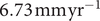 $ 6.73\;\mathrm{mm}\;{\mathrm{yr}}^{-1} $
for salt marshes,
$ 6.73\;\mathrm{mm}\;{\mathrm{yr}}^{-1} $
for salt marshes,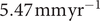 $ 5.47\;\mathrm{mm}\;{\mathrm{yr}}^{-1} $
for mangroves and
$ 5.47\;\mathrm{mm}\;{\mathrm{yr}}^{-1} $
for mangroves and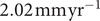 $ 2.02\;\mathrm{mm}\;{\mathrm{yr}}^{-1} $
for seagrasses, see Duarte et al., Reference Duarte, Losada, Hendriks, Mazarrasa and Marbà2013; current estimated sea-level rise rates are
$ 2.02\;\mathrm{mm}\;{\mathrm{yr}}^{-1} $
for seagrasses, see Duarte et al., Reference Duarte, Losada, Hendriks, Mazarrasa and Marbà2013; current estimated sea-level rise rates are $ 4.5\;\mathrm{mm}\;{\mathrm{yr}}^{-1} $
for today;
$ 4.5\;\mathrm{mm}\;{\mathrm{yr}}^{-1} $
for today; $ 6.5\pm 2.6\;\mathrm{mm}\;{\mathrm{yr}}^{-1} $
for 2050, according to Hamlington et al., Reference Hamlington, Bellas-Manley, Willis, Fournier, Vinogradova, Nerem, Piecuch, Thompson and Kopp2024). Globally, blue carbon ecosystems have a collective restoration potential to address
$ 6.5\pm 2.6\;\mathrm{mm}\;{\mathrm{yr}}^{-1} $
for 2050, according to Hamlington et al., Reference Hamlington, Bellas-Manley, Willis, Fournier, Vinogradova, Nerem, Piecuch, Thompson and Kopp2024). Globally, blue carbon ecosystems have a collective restoration potential to address $ \sim 3 $
% of global emissions by 2030 (Macreadie et al., Reference Macreadie, Micheli, Atwood, Friess, Kelleway, Kennedy, Lovelock, Serrano and Duarte2021).
$ \sim 3 $
% of global emissions by 2030 (Macreadie et al., Reference Macreadie, Micheli, Atwood, Friess, Kelleway, Kennedy, Lovelock, Serrano and Duarte2021).
However, a fundamental distinction exists between blue carbon projects and NbS for coastal management: Blue carbon projects prioritise the conservation, restoration and sustainable management of coastal ecosystems to maximise carbon sequestration and storage. NbS in coastal engineering primarily address risk mitigation from marine hazards while providing secondary carbon storage and sequestration benefits. Although both approaches offer complementary advantages, they represent distinct strategies with respective objectives and implementation methods.
NbS offer many benefits for coastal protection but face limitations in specific safety aspects, such as handling consistently rising water levels, space constraints, seasonality (died-off parts of plants or extensive flooding in storm surge seasons) and urgency (Morris et al., Reference Morris, Boxshall and Swearer2020). “Urgency” in this context refers to the need for immediate effectiveness, that is, to effectively safeguard coastal areas against marine hazards – such as strong sea states or storm surges – upon completion of construction (Narayan et al., Reference Narayan, Beck, Reguero, Losada, Van Wesenbeeck, Pontee, Sanchirico, Ingram, Lange and Burks-Copes2016; Pontee et al., Reference Pontee, Narayan, Beck and Hosking2016). In contrast to engineered structures, NbS often provide limited immediate ecosystem services, like wave attenuation, following their implementation, as they need time to develop naturally (Morris et al., Reference Morris, Boxshall and Swearer2020; Jordan and Fröhle, Reference Jordan and Fröhle2022). Growth is a fundamental aspect of their evolution and maturation, which is a negative aspect concerning immediate protection but comes with the ability of self-repair over time (Morris et al., Reference Morris, Boxshall and Swearer2020). In this context, it is important to understand that growth is an inherently gradual process (Pontee, Reference Pontee2023). It can take several years for NbS to achieve sufficient effectiveness, particularly in accumulating new sediment layers or protecting against wave impacts (Gómez Martín et al., Reference Martín, Eulalia and Máñez2020). Moreover, while NbS are effective in attenuating wave impacts, they are not designed to counter sea-level rise intentionally. Unlike engineered structures, NbS generally do not possess the structural properties needed to hold back rising sea levels (Hobbie and Grimm, Reference Hobbie and Grimm2020). Furthermore, NbS only attenuates wave impact effectively if sufficient space is available (Gómez Martín et al., Reference Martín, Eulalia and Máñez2020). This space allows the development of friction and turbulence, dissipating wave energy (Narayan et al., Reference Narayan, Beck, Reguero, Losada, Van Wesenbeeck, Pontee, Sanchirico, Ingram, Lange and Burks-Copes2016). However, the need for additional space – either land- or seaward – is a critical aspect to consider with NbS for natural dynamics to evolve or ecosystem services for coastal protection to unfold. Another big disadvantage of NbS in contrast to engineered solutions is that they are also susceptible to marine biological hazards (for example, disease outbreaks, invasive species, harmful algal blooms) on top of physical oceanographic hazards (for example waves, storms and storm surges, sea-level rise, coastal morphology changes).
Yet, the biggest contemporary issue for practical implementation of NbS is both legal and societal issues: NbS, being a relatively new approach, lacks long-term experience and is in early stages of technical guidelines (Schoonees et al., Reference Schoonees, Mancheño, Scheres, Bouma, Silva, Schlurmann and Schüttrumpf2019), despite the first standards emerged recently (e.g., the “IUCN Global Standard for Nature-based Solutions,” IUCN, 2020). Standards constitute a critical framework for engineering practice; compliance establishes legal defensibility against liability claims when structural failures arise from events beyond foreseeable design conditions. In storm-prone, densely populated areas, coastal communities may favour engineered coastal protection over NbS due to limited trust and lack of information as to secondary benefits (i.e., enhanced ecology; Frantzeskaki, Reference Frantzeskaki2019; Anderson et al., Reference Anderson, Renaud, Hanscomb and Gonzalez-Ollauri2022). Increasing implementation of NbS for flood protection requires overcoming critical barriers, including insufficient financial incentives and political will, inadequate institutional frameworks, challenges in land acquisition, uncertainties about their effectiveness and a lack of trust among stakeholders, which collectively form cascading obstacles amplified by disciplinary and regional disparities (Raška et al., Reference Raška, Bezak, Carla, Kalantari, Banasik, Bertola, Bourke, Cerdà, Davids, de Brito, Evans, Finger, Halbac-Cotoara-Zamfir, Housh, Hysa, Jakubínský, Kapović, Solomun, Kaufmann, Seifollahi-Aghmiuni, Schindelegger, Šraj, Stankunavicius, Stolte, Stričević, Szolgay, Zupanc, Slavíková and Hartmann2022).
Hybrid (Nature-based) Solutions
NbS address societal challenges, including coastal climate change adaptation, while preserving ecosystem health (Anderson et al., Reference Anderson, Renaud, Hanscomb and Gonzalez-Ollauri2022). However, their implementation faces constraints in space and timing, lacking a formalised and standardised level of safety against marine hazards. NbS’s need for space, time to grow and the lack of formal design guidelines render them less suitable for broader use in densely populated, space-restricted conditions, such as urban environments (Morris et al., Reference Morris, Boxshall and Swearer2020; Hobbie and Grimm, Reference Hobbie and Grimm2020). In contrast, engineered structures, based on standardised designs, are tailored to offer immediate protection against natural hazards and extreme events even in space-constrained situations, while providing a level of legal security in planning, construction and operation (Morris et al., Reference Morris, Boxshall and Swearer2020).
As the term implies, a “Hybrid Solution” combines different, dissimilar components to address a set of challenges. Hybrid solutions are characterised as an integrative amalgamation of engineered structures and NbS, aiming to offset their limitations and optimise benefits: Implementing NbS alongside engineered structures enables overcoming limitations in space, urgency and protection of natural approaches while providing predefined safety levels of engineering structures against climate-change-induced hazards (Sutton-Grier et al., Reference Sutton-Grier, Wowk and Bamford2015; Schoonees et al., Reference Schoonees, Mancheño, Scheres, Bouma, Silva, Schlurmann and Schüttrumpf2019; Morris et al., Reference Morris, Boxshall and Swearer2020; Morris et al., Reference Morris, Bilkovic, Walles and Elisabeth2022). Service levels over time differ substantially between NbS, engineered structures and hybrid solutions (see Figure 3): The service levels for engineered structures are highest after completion and then exhibit constant wear over time until the service level becomes unacceptable, at which point repairs are necessary (Hermans et al., Reference Hermans, Víctor Malagón-Santos, Katsman, Jane, Rasmussen, Haasnoot, Garner, Kopp, Oppenheimer and Aimée2023). The service level of natural components is low upon establishment and increases as biomass increases – here, biomass increase correlates with resistance and service levels (in Figure 3 depicted via the beta or sigmoid growth model for biomass over time without decay; see Mao et al., Reference Mao, Zhang, Sun, van der Werf, Evers, Zhao, Zhang, Song and Li2018). The hybrid solutions service level is the combined maximum service level over time from both components, with the engineered structure providing immediate service delivery, while the natural component develops its capacity over time. Ultimately, both components create an optimised hybrid system that dynamically leverages the strengths of each component over time according to their functional capacity and timely availability. These conceptual considerations are backed up by data on increased performance of HNbS for coastal climate adaptation and mitigation when compared to engineering approaches (Huynh et al., Reference Huynh, Su, Wang, Stringer, Switzer and Gasparatos2024).
Temporal evolution of service levels comparing three infrastructure approaches: engineered structures (solid black line), natural components (green line) and hybrid solutions (solid red line). While engineered structures show gradual deterioration over time, natural components exhibit sigmoid growth characteristics typical of biological systems (Mao et al., Reference Mao, Zhang, Sun, van der Werf, Evers, Zhao, Zhang, Song and Li2018). Hybrid solutions, combining both approaches, may maintain consistently higher service levels throughout the system lifecycle, potentially staying above tolerable thresholds within their “structural” lifetime. The figure is created with TikZ.

With NbS as integral part of hybrid solutions, they are further defined as HNbS. An example of HNbS are reef balls, a concrete precast structure for artificial reef restoration (David et al., Reference David, Schulz, Schlurmann, Renaud, Sudmeier-Rieux, Estrella and Nehren2016) or similar concrete structures used as flower pots for juvenile mangroves to withstand hydrodynamic forces in the seedling phase (see Figure 4a and further described by Morris et al., Reference Morris, Elisabeth, Konlechner, Fest, Kennedy, Arndt and Swearer2019; Morris et al., Reference Morris, Bilkovic, Walles and Elisabeth2022; Hsiung et al., Reference Hsiung, Ophelia, Teo, Friess, Todd, Swearer and Morris2024; Chan et al., Reference Chan, Hsiung, Swearer and Morris2025). The combination of concrete or rock fillets with mangroves is also known as “living shorelines.” Other approaches illustrate the integration of NbS and engineering solutions, such as floating aquaculture systems (Figure 4b) that combine food production with coastal protection functions (Zhu et al., Reference Zhu, Huguenard, Zou, Fredriksson and Xie2020; Bodycomb et al., Reference Bodycomb, Andrew and Morris2023). For both measures, wave attenuation happens through hydrodynamic drag and energy dissipation, disrupting wave propagation and thus providing coastal protection. For floating elements, this effectiveness persists across varying water levels, as the floating elements move with tides and storm surge levels.
Schematic representations of Hybrid Nature-based Solutions (HNbS) combining Nature-based Solutions (NbS) and engineered structures, here through a reef ball protecting a juvenile mangrove (see Hsiung et al., Reference Hsiung, Ophelia, Teo, Friess, Todd, Swearer and Morris2024, for further info) and floating aquaculture elements (Lorenz and Pusch, Reference Lorenz and Pusch2013; Wang et al., Reference Wang, Koopman, Frank, Posthuma, de Nijs, Rob and Hendriks2021). Floating structures, like depicted in (b), can primarily serve for food production or filtration (mitigating water pollution) but provide other ecosystem services, such as attenuating incident wave energy. All renders are done with Blender version 4.3.1.

Hybrid Nature-based Strategies
Hybrid Nature-based Strategies are characterised by measures configured in series, where engineered structures (such as breakwaters, sea walls and groynes) are sequentially arranged with NbS (including salt marshes, seagrass meadows, coral and oyster or shellfish reefs; Sutton-Grier et al., Reference Sutton-Grier, Wowk and Bamford2015; David et al., Reference David, Schulz, Schlurmann, Renaud, Sudmeier-Rieux, Estrella and Nehren2016). The aim is to enhance technical systems with ecosystem services including provisioning services (e.g., habitat and food provision) and regulating services, such as the improvement of water quality (Sutton-Grier et al., Reference Sutton-Grier, Wowk and Bamford2015). Consequently, HNbS strategies offer the opportunity for conserving and restoring biodiversity by including nature-based or natural features, aiming to reduce the adverse ecological impact of engineered structures (David et al., Reference David, Schulz, Schlurmann, Renaud, Sudmeier-Rieux, Estrella and Nehren2016; Pontee et al., Reference Pontee, Narayan, Beck and Hosking2016; Narayan et al., Reference Narayan, Beck, Reguero, Losada, Van Wesenbeeck, Pontee, Sanchirico, Ingram, Lange and Burks-Copes2016; Schoonees et al., Reference Schoonees, Mancheño, Scheres, Bouma, Silva, Schlurmann and Schüttrumpf2019; Morris et al., Reference Morris, Boxshall and Swearer2020). However, NbS-related shortcomings persist, such as the time-delayed unfolding of their effects due to growth time and development phases. Engineered structures can mitigate these challenges of NbS, as the engineered components of hybrid adaptation strategies offer their complete protection service immediately after implementation (see Figure 3). For example, artificially strengthened dunes can bridge the time needed for vegetation cover to develop, where an engineered dune core offers full safety levels in case of exceptional storm surges and associated erosion (Nordstrom, Reference Nordstrom2018; Mehrtens et al., Reference Mehrtens, Lojek, Kosmalla, Bölker and Goseberg2023; Mehrtens et al., Reference Mehrtens, Lojek, Ahrenbeck, Schweiger, Kosmalla, Schürenkamp and Goseberg2025a). Similarly, dike-salt marsh combinations demonstrate this principle, where the dike provides protection during storm surge events, while salt marshes accumulate sediment over time to mitigate adverse sea-level rise impacts (Kirwan et al., Reference Kirwan, Temmerman, Skeehan, Guntenspergen and Fagherazzi2016; Waryszak et al., Reference Waryszak, Gavoille, Whitt, Kelvin and Macreadie2021). Other vegetation growth support strategies employ artificial mimics like biodegradable seagrass structures or protective fences to facilitate marine restoration in hydrodynamically demanding conditions (Carus et al., Reference Carus, Arndt, Schröder, Thom, Villanueva and Paul2021; Kamperdicks et al., Reference Kamperdicks, Lattuada, Corcora, Schlurmann and Paul2025). Similarly, implementing (temporary) breakwater or floodgates to create specific growth conditions for mangroves and salt marshes reduces wave impact and controls inundation rates, creating protected areas supporting the vegetation’s growth phase (Sutton-Grier et al., Reference Sutton-Grier, Wowk and Bamford2015; Morris et al., Reference Morris, Boxshall and Swearer2020; Waryszak et al., Reference Waryszak, Gavoille, Whitt, Kelvin and Macreadie2021; Jordan and Fröhle, Reference Jordan and Fröhle2022). A (more) immediate unfolding of protection services not only compensates the temporal drawbacks of NbS but also increases the acceptance for NbS in high-risk areas by addressing key implementation barriers: providing immediate visual evidence of effectiveness, reducing uncertainty about performance and rapidly building the evidence base needed for decision-making. Thus, HNbS Strategies can lower the barriers, build confidence and strengthen the acceptance of NbS (for more information on implementation barriers and increasing acceptance, see Sutton-Grier et al., Reference Sutton-Grier, Wowk and Bamford2015; Anderson et al., Reference Anderson, Renaud, Hanscomb and Gonzalez-Ollauri2022). In addition to mitigating negative aspects, components of HNbS strategies can also have protective effects on each other. The wave attenuation by NbS reduces loads before these waves reach engineered structures and consequently lowers maintenance costs.
These examples demonstrate that engineering and natural methods offer distinct yet complementary temporal dynamics. Engineering structures, achieving peak safety immediately post-construction, experience gradual degradation. Conversely, natural features, such as dynamically growing vegetation, typically enhance resistance, durability and effectiveness over time. On the one hand, such a temporal complementarity increases the interest for biodegradable engineered measures, such as natural fibre geotextiles, which obviate maintenance and recycling needs as natural features progressively dominate structural integrity (David et al., Reference David, Schulz, Schlurmann, Renaud, Sudmeier-Rieux, Estrella and Nehren2016; Mehrtens et al., Reference Mehrtens, Lojek, Ahrenbeck, Schweiger, Kosmalla, Schürenkamp and Goseberg2025b). On the other hand, this synergy can also encounter practical challenges: Vegetation roots can compromise engineered structures, requiring specialised maintenance (Schüttrumpf and Scheres, Reference Schüttrumpf and Scheres2020). Similarly, floating debris and driftwood from nearby salt marshes may damage the protective grass cover of dikes, causing failure during storm surges. Acknowledging these interactions is crucial in designing hybrid coastal defence systems, where proactive planning can mitigate potential conflicts between natural growth and engineered stability.
Hybrid Nature-based Modules
The key distinction between hybrid strategies and Hybrid Nature-based Modules for coastal protection is that a strategy can consist of a series of engineered and nature-based structures. In contrast, Hybrid Nature-based Modules are structures composed of both natural and engineered features within the same structure (this becomes especially obvious in Figure 5, where Hybrid Nature-based Strategies on the left, Figure 5a, are depicted next to Hybrid Nature-based Modules in the centre, Figure 5b). Confined urban spaces often face tradeoffs between structural integrity and ecological impact (Charlier et al., Reference Charlier, Chaineux and Morcos2005; Spalding et al., Reference Spalding, McIvor, Beck, Koch, Möller, Reed, Rubinoff, Spencer, Tolhurst, Wamsley, van Wesenbeeck, Wolanski and Woodroffe2013). But Hybrid Nature-based Modules can improve the ecological quality of built environments, as they offer sheltering and provisioning services for ecosystems by design (Schoonees et al., Reference Schoonees, Mancheño, Scheres, Bouma, Silva, Schlurmann and Schüttrumpf2019). Various methods are used to enhance the ecological function of coastal structures: combining natural and engineered elements within a single structure, such as gabion breakwaters filled with oyster shells to foster reef development and shoreline protection (Safak et al., Reference Safak, Norby, Dix, Grizzle, Southwell, Veenstra, Acevedo, Cooper-Kolb, Massey, Sheremet and Angelini2020), and, more recently, installing hybrid mangrove shorelines with rock fillets to facilitate mangrove growth at eroding coasts, enhancing habitat structure and faunal abundance while modifying community composition (Chan et al., Reference Chan, Hsiung, Swearer and Morris2025). Together, these approaches epitomise a progression towards integrating ecological considerations in engineered solutions to actively design structures that restore and support marine habitats. By combining structural innovation, material adaptation and ecological facilitation, hybrid modules can address both the physical and biological needs of coastal environments as well as reducing risks of suffering from marine extreme events for coastal dwellers.
Illustration of Hybrid Nature-based Solutions (HNbS) across different scales. The top left panel (a) shows a Hybrid Nature-based Solutions Strategy, where engineering and NbS are combined in a coastal area. The top right panel (b) presents one Hybrid Nature-based Solutions Module, where the module consists of engineered and nature-based components. The bottom panel (c) shows a Confluent Hybrid Nature-based Solutions, where on the material level, biotic and abiotic materials amalgamate to a Hybrid Nature-based Solution, for example, through biomineralisation. Biomineralisation refers to the natural formation of minerals by living organisms through biological processes, where cyanobacteria facilitate the deposition of calcium carbonate minerals on surface structures (Reinhardt et al., Reference Reinhardt, Ihmann, Ahlhelm and Gelinsky2023). The biomineralised material appears green because it incorporates living cyanobacteria containing chlorophyll. The coral in subfigure (c) is a digitised Astraea (Orbicella) coronata, provided by the Smithsonian Institution’s 3D collection under the Creative Commons Zero (CC0) license. The scan is maintained by the National Museum of Natural History (NMNH) – Invertebrate Zoology Dept. and can be found by the record ID: nmnhinvertebratezoology_31148. The coral is produced by a mobile robotic additive manufacturing (AM) system, using an extrusion-based printing procedure (depicted by the grey printer next to the beach) to fabricate the coral with biomineralised material (for more information on AM using mobile robots, see Dörfler et al., Reference Dörfler, Dielemans, Lachmayer, Recker, Raatz, Lowke and Gerke2022). All renders are done with Blender version 4.3.1.

Surface modifications of engineered structures to enhance their ecological integration are an essential consideration, especially for digital fabrication methods (see Digital fabrication section). The deliberate and controlled design of surfaces and surface features has been demonstrated to significantly influence settlement patterns and promote colonisation by local organisms and species:
For surface designs, depending on the target species and body size, as well as other biotic and abiotic target parameters, several considerations arise: For smaller species, surface alterations at the millimetre scale primarily provide a substrate for settlement while hydrodynamically influencing surface roughness. Smaller surface adjustments have a lower impact on the flow conditions but can additionally provide exposure or shelter to light for small species (Perkol-Finkel and Sella, Reference Perkol-Finkel and Sella2015; Evans et al., Reference Evans, Lawrence, Natanzi, Moore, Davies, Crowe, McNally, Thompson, Dozier and Brooks2021). On a centimetre to decimetre scale, structural elements for water retention or shelter play a crucial role in offering protection against currents and maintaining favourable environmental conditions. Following the food chain in a habitat, the cultivation and colonisation of vegetation and species on smaller scales will attract larger species (Firth et al., Reference Firth, Schofield, White, Skov and Hawkins2014; Perkol-Finkel and Sella, Reference Perkol-Finkel and Sella2015; MacArthur et al., Reference MacArthur, Naylor, Hansom, Burrows, Lynette and Boyd2019). With increasing surface complexity and thus attracting diverse species with varying body sizes, the highest level of colonisation is achieved (Morris et al., Reference Morris, Chapman, Firth and Coleman2017; MacArthur et al., Reference MacArthur, Naylor, Hansom, Burrows, Lynette and Boyd2019). While surface and form complexity are primary design variables (next to material selection), ecological success depends less on complexity itself than on the resulting species variety, which drives greater abundance and richness (Loke et al., Reference Loke, Heery, Lai, Bouma and Todd2019).
Beyond passive surface modifications, active electrochemical approaches – as introduced by the BioRock technology (Goreau and Trench, Reference Goreau and Trench2012) or seacrete concept (Johra et al., Reference Johra, Margheritini, Antonov, Frandsen, Simonsen, Møldrup and Jensen2021) – offer a transformative pathway for coastal protection structures. Electrochemical methods apply low-voltage electrical currents to submerged metal frameworks, inducing the crystallisation of dissolved minerals from seawater into a robust white limestone coating (Hilbertz, Reference Hilbertz1979). This mineral accretion material, composed primarily of calcium carbonate and magnesium hydroxide, exhibits mechanical strength comparable to that of conventional concrete (Hilbertz, Reference Hilbertz1979; Johra et al., Reference Johra, Margheritini, Antonov, Frandsen, Simonsen, Møldrup and Jensen2021). Unlike traditional concrete, which is cast and static, the continuously electrochemically created material grows and strengthens continuously over time, possesses properties to repair damaged sections and provides a dynamic living foundation for rapid colonisation by corals, oysters and other marine organisms (Goreau, Reference Goreau2022). Thus, electrochemical mineral accretion processes achieve structural resilience and ecological enhancement on an organism or material scale.
Another relevant design factor for coastal structures is material selection. While engineered structures typically rely on synthetic construction materials, such as concrete and steel, adapting materials to incorporate natural components has demonstrated benefits for species colonisation and biodiversity (Ly et al., Reference Ly, Yoris-Nobile, Sebaibi, Blanco-Fernandez, Boutouil, Castro-Fresno, Hall, Roger, Deboucha, Reis, Franco, Borges, Sousa-Pinto, van der Linden and Stafford2021). Research into alternative substrates, such as limestone sand, grass, seashells and coral rubble, shows that these natural additives further promote colonisation (Ly et al., Reference Ly, Yoris-Nobile, Sebaibi, Blanco-Fernandez, Boutouil, Castro-Fresno, Hall, Roger, Deboucha, Reis, Franco, Borges, Sousa-Pinto, van der Linden and Stafford2021; Dodds et al., Reference Dodds, Schaefer, Bishop, Nakagawa, Brooks, Knights and Elisabeth2022). For species particularly sensitive to specific cultivation conditions, such as coral reefs, additional factors like the presence or abundance of marine algae and other benthic organisms are crucial for forming symbiotic relationships (Petersen et al., Reference Petersen, Laterveer and Schuhmacher2004).
Concrete will remain essential for urban coastal protection due to its strength, resistance against marine impacts and versatility in shaping (through precast or additive manufacturing). Additionally, as a composite material, concrete can be engineered to minimise its ecological impact, making it more attractive for marine species (Georges et al., Reference Georges, Bourguiba, Chateigner, Sebaibi and Boutouil2021; Natanzi et al., Reference Natanzi, Thompson, Brooks, Crowe and McNally2021). Research indicates that material composition influences the abundance, though not the diversity, of organisms colonising marine structures (Dodds et al., Reference Dodds, Schaefer, Bishop, Nakagawa, Brooks, Knights and Elisabeth2022). Thus, integrating complex surfaces in concrete marine structures can help reduce their ecological footprint. Australia’s living sea wall serves as an exemplary case (Bishop et al., Reference Bishop, Vozzo, Mayer-Pinto and Dafforn2022; Firth et al., Reference Firth, Bone, Bartholomew, Bishop, Bugnot, Bulleri, Chee, Claassens, Dafforn, Fairchild, Hall, Hanley, Komyakova, Lemasson, Lynette, Mayer-Pinto, Morris, Naylor, Perkins, Pioch, Porri, O’Shaughnessy, Schaefer, Strain, Toft, Waltham, Aguilera, Airoldi, Bauer, Brooks, Burt, Clubley, Cordell, Espinosa, Evans, Farrugia-Drakard, Froneman, Griffin, Hawkins, Heery and Knights2024): These hexagon seawall tiles feature nature-inspired designs, such as honeycomb or oyster surface structures and different-sized water-retaining rock pools, promoting biodiversity with various complex surface structures for settlements.
Digital fabrication
Digital fabrication integrates manufacturing processes and automation via digital, computer-based environments; it can be considered a full process chain starting from the earliest design considerations to the finishing steps of construction work on building sites (Craveiro et al., Reference Craveiro, Duarte, Bartolo and Bartolo2019). Computer-supported manufacturing techniques, like robotic systems (for example, automated, additive 3D printing or subtractive milling), facilitate precise and resource-efficient production and reduction of personnel resources (Ullah et al., Reference Ullah, Imran, Roy, Vimal, Rajak, Kumar, Mor and Assayed2024). In the context of NbS and coastal protection, digital fabrication facilitates new ways to address the two design variables for ecological enhancement outlined before: material selection and surface modification.
In terms of material selection, digital fabrication technologies allow for precise control of material composition (Lowke et al., Reference Lowke, Dini, Perrot, Weger, Gehlen and Dillenburger2018; Buswell et al., Reference Buswell, da Silva, Bos, Schipper, Lowke, Hack, Kloft, Mechtcherine, Wangler and Roussel2020; Kloft et al., Reference Kloft, Krauss, Hack, Herrmann, Neudecker, Varady and Lowke2020) and thus the integration of eco-friendly additives that can reduce the environmental impact of concrete-based structures. Traditional concrete composition of cement, water and aggregate is related to high pH values (potential or power of hydrogen, thus a measure for acidity or basicity) and is associated with the lower abundance of settlements and less biodiversity due to its physical and chemical properties (Lukens, Reference Lukens, Selberg, Ansley, Bailey, Bedford, Bell, Buchanan, Dauterive, Dodrill, Figley, Francesconi, Heath, Horn, Kasprzak, LaPorta, Malkoski, Martore, Meier, Mille, Satchwill, Shively, Steimle and Tinsman2004; Perkol-Finkel and Sella, Reference Perkol-Finkel and Sella2014).
Beyond material optimisation, digital fabrication enables the creation of complex surface geometries. This capability is exemplified by Hansmeyer and Dillenburger’s digitally fabricated installation “Digital Grotesque” (also known as “Grotto”), which features a virtual model with 260 million individual surfaces and 42 billion vortices, realised as a 3.2 m tall sculpture on a $ 6\;{\mathrm{m}}^2 $
base (Carpo, Reference Carpo2016; Lowke et al., Reference Lowke, Dini, Perrot, Weger, Gehlen and Dillenburger2018). While increased surface complexity can promote biodiversity, emerging fabrication techniques go beyond adding nature-based elements to existing structures, enabling engineered surfaces that better integrate with natural ecosystems and altering the entire design process of adaptation measures “towards a greener design” (Schoonees et al., Reference Schoonees, Mancheño, Scheres, Bouma, Silva, Schlurmann and Schüttrumpf2019). Complementing these surface innovations are advances in Computer-Aided Design (CAD) programs, enabling the parametric generation of organic, curved geometries that mimic natural forms and reduce environmental intrusion, whereas conventional design approaches are still constrained to orthogonal and linear forms. This is crucially supported by digital fabrication technologies – particularly robotic systems – that precisely manufacture these complex, non-linear designs that were previously prohibitively expensive or technically unfeasible (Wise et al., Reference Wise, Pawlyn and Braungart2013). Particularly through these advances in (surface) manufacturing and form finding, digitalisation and fabrication remove economic barriers to widespread implementation of HNbS.
$ 6\;{\mathrm{m}}^2 $
base (Carpo, Reference Carpo2016; Lowke et al., Reference Lowke, Dini, Perrot, Weger, Gehlen and Dillenburger2018). While increased surface complexity can promote biodiversity, emerging fabrication techniques go beyond adding nature-based elements to existing structures, enabling engineered surfaces that better integrate with natural ecosystems and altering the entire design process of adaptation measures “towards a greener design” (Schoonees et al., Reference Schoonees, Mancheño, Scheres, Bouma, Silva, Schlurmann and Schüttrumpf2019). Complementing these surface innovations are advances in Computer-Aided Design (CAD) programs, enabling the parametric generation of organic, curved geometries that mimic natural forms and reduce environmental intrusion, whereas conventional design approaches are still constrained to orthogonal and linear forms. This is crucially supported by digital fabrication technologies – particularly robotic systems – that precisely manufacture these complex, non-linear designs that were previously prohibitively expensive or technically unfeasible (Wise et al., Reference Wise, Pawlyn and Braungart2013). Particularly through these advances in (surface) manufacturing and form finding, digitalisation and fabrication remove economic barriers to widespread implementation of HNbS.
Building on this perspective, current developments in digital fabrication offer transformative potential for both engineering and NbS in coastal zones. By pursuing the conceptual progression of digital fabrication technologies – particularly their capacity for precise and efficient fabrication of complex surfaces coupled with novel material integration – down to a material or (micro-) organism scale, this section builds the foundation to understand the need for a new (sub-) category of Hybrid Nature-based Solutions (outlined in New perspectives for coastal protection).
Digitalisation and digitisation
The revolution in digital fabrication began in 1952 when engineers first coupled milling machines with numerical control units, creating computerised numerical control (CNC) technology resulting in the digitisation of the entire industrial sector (Gershenfeld, Reference Gershenfeld2012). In this domain, a distinction is made between two forms of transformations: digitalisation and digitisation. Digitisation refers to the conversion of data, signals, images, audio and other forms into a format readable by computers. Notable examples in the field of coastal engineering include numerical wave models (see, for example, Roeber and Cheung, Reference Roeber and Cheung2012; Crespo et al., Reference Crespo, Domínguez, Rogers, Gómez-Gesteira, Longshaw, Canelas, Vacondio, Barreiro and García-Feal2015; Bihs et al., Reference Bihs, Kamath, Chella, Aggarwal and Arntsen2016) and, in the realm of design, CAD programs. On the other hand, digitalisation considers the utilisation of digitised data, for example, in the post-processing of field campaigns or pre-processing of live data for numerical models or other computer programs (David et al., Reference David, Kohl, Casella, Rovere, Ballesteros and Schlurmann2021b; Carlow et al., Reference Carlow, Mumm, Neumann, Schneider, Schröder, Sedrez and Zeringue2022). Digital fabrication, succinctly defined as “turning things into data” (as digitising transfers analogue information into data) “and data into things,” (and using the digitised data to create new data or objects) underscores its transformative nature (Gershenfeld, Reference Gershenfeld2012).
In the construction sector, digital fabrication entails integrating various digitisation and digitalisation processes into an automated, digitised procedure (Gershenfeld, Reference Gershenfeld2012; Lowke et al., Reference Lowke, Dini, Perrot, Weger, Gehlen and Dillenburger2018; Buswell et al., Reference Buswell, da Silva, Bos, Schipper, Lowke, Hack, Kloft, Mechtcherine, Wangler and Roussel2020; Kloft et al., Reference Kloft, Krauss, Hack, Herrmann, Neudecker, Varady and Lowke2020; Lowke et al., Reference Lowke, Talke, Dressler, Weger, Gehlen, Ostertag and Rael2020; Dörfler et al., Reference Dörfler, Dielemans, Lachmayer, Recker, Raatz, Lowke and Gerke2022; Rennen et al., Reference Rennen, Gantner, Dielemans, Bleker, Christidi, Dörrie, Hojjat, Mai, Mawas, Lowke, D’Acunto, Dörfler, Hack and Popescu2023). Within automation, there is a distinction between software and industrial automation of processes. Software automation describes the utilisation of computational forces to execute processes. An example of software automation is the calculation of force flows in a structure using numerical programs. The procedure is known as topology optimisation, where a numerical model calculates the force flow resulting from a set of loads. This force flow is used to adjust and optimise a structure’s or component’s design (Zhu et al., Reference Zhu, Zhou, Wang, Zhou, Yuan and Zhang2021). Depending on loads from permanent and variable actions, an algorithm precisely determines where materials need to be applied to carry these loads, leading to less orthogonal and more adaptive, topology-optimised forms (Vantyghem et al., Reference Vantyghem, De Corte, Steeman and Boel2019). These models serve as a foundation for determining the impact and, consequently, the force flow within the structure to be manufactured. Parametrisation transits force flows into the design process by coupling numerical models and CAD programs.
Fabrication methods
The utilisation of various fabrication methods for the creation of a final product is referred to as manufacturing. In fabrication, three major methods exist: formative manufacturing, subtractive manufacturing and additive manufacturing (AM).
Formative manufacturing involves altering shape without material addition or removal, typically with constant volume. Examples include concrete molding or casting steel into premade molds (Mainka et al., Reference Mainka, Kloft, Baron, Hoffmeister and Dröder2016). This method often incurs high resource consumption due to the prefabrication of molds (Mainka et al., Reference Mainka, Kloft, Baron, Hoffmeister and Dröder2016).
A more flexible process than formative manufacturing is subtractive manufacturing, where objects are shaped through material removal (Francis, Reference Francis2016). Despite its precision and flexibility in shape, subtractive manufacturing is spatially constrained and entails relatively long process times and high costs (Delgado Camacho et al., Reference Camacho, Daniel, O’Brien, Ferron, Juenger, Salamone and Seepersad2017). New research on combining milling devices with robotic arms alleviates these restrictions and enhances spatial reach, degrees of freedom and flexibility in this method. Another drawback of subtractive material is the associated removal of material. This is more resource consuming than successively adding layers of materials, such as in AM (Sathish et al., Reference Sathish, Kumar, Magal, Selvaraj, Narasimharaj, Karthikeyan, Sabarinathan, Tiwari and Kassa2022).
AM, commonly labelled as 3D printing, is a fabrication method, where a specific volume of material is deposited or solidified layer by layer (Bos et al., Reference Bos, Wolfs, Ahmed and Salet2016). Modern, computer-aided extrusion techniques use nozzles with high fabrication speed for large structures (Buswell et al., Reference Buswell, de Silva, Jones and Dirrenberger2018; Mai et al., Reference Mai, Brohmann, Freund, Gantner, Kloft, Lowke and Hack2021). Another form of AM is particle bed printing (Ngo et al., Reference Ngo, Kashani, Imbalzano, Kate and Hui2018), where raw construction material is solidified by activating substances in thin, aggregating layers (Ngo et al., Reference Ngo, Kashani, Imbalzano, Kate and Hui2018; Siddika et al., Reference Siddika, Al Mamun, Ferdous, Saha and Alyousef2019). The remaining, inactivated particles are removed after finalising the printing processes (Lowke et al., Reference Lowke, Dini, Perrot, Weger, Gehlen and Dillenburger2018; Lowke et al., Reference Lowke, Talke, Dressler, Weger, Gehlen, Ostertag and Rael2020; Mai et al., Reference Mai, Brohmann, Freund, Gantner, Kloft, Lowke and Hack2021). While this method is relatively precise and has a good resolution of details, it comes with restrictions of free-form design compared to other approaches like extrusion or injection three-dimensional printing (3DP; Mai et al., Reference Mai, Brohmann, Freund, Gantner, Kloft, Lowke and Hack2021). The injection of concrete into a carrier liquid, referred to as injection 3D concrete printing (I3DCP), combines AM with formative manufacturing, introducing greater flexibility in shaping (Lowke et al., Reference Lowke, Vandenberg, Pierre, Thomas, Kloft and Hack2021). Current research is aiming towards 4D printing, where 3D printing structures perform mechanical work through material properties depending on external stimuli and internal material responses (for example, temperature or changing magnetic conditions, see Zastrow, Reference Zastrow2020).
AM is already applied to coastal structures like reef balls or artificial mussel and coral reefs (Levy et al., Reference Levy, Berman, Yuval, Loya, Treibitz, Tarazi and Levy2022; Yoris-Nobile et al., Reference Yoris-Nobile, Slebi-Acevedo, Lizasoain-Arteaga, Indacoechea-Vega, Blanco-Fernandez, Castro-Fresno, Alonso-Estebanez, Alonso-Cañon, Real-Gutierrez, Boukhelf, Boutouil, Sebaibi, Hall, Greenhill, Herbert, Stafford, Reis, van der Linden, Gómez, Meyer, Franco, Almada, Borges, Sousa-Pinto, Tuaty-Guerra and Lobo-Arteaga2023; Berman et al., Reference Berman, Weizman, Oren, Neri, Parnas, Shashar and Tarazi2023; Hitzegrad et al., Reference Hitzegrad, Brohmann, Herding, Pfennings, Jonischkies, Scharnbeck, Mainka, Mai, Windt, Kloft, Wehrmann, Lowke and Goseberg2024), with benefits in the form of automated production of individualised “free-form” shapes. In the past, manufacturing complex shapes with irregularly designed surfaces was more expensive than fabricating standardised structures in a traditional, geometric shape (Wise et al., Reference Wise, Pawlyn and Braungart2013). However, automatised processes reduce labour and thus cost-intensive individualisation of structures both in the purposive design and construction, so that today and in the future, more complex structures designed to attract and enhance biodiversity become readily available.
Living and responsive construction materials
Current advances in material research for AM feature, for example, biodegradable construction material (Contardi et al., Reference Contardi, Montano, Galli, Mazzon, Ayyoub, Seveso, Saliu, Maggioni, Athanassiou and Bayer2021) or calcium carbonate photo-initiated ink (Albalawi et al., Reference Albalawi, Khan, Valle-Pérez, Kahin, Hountondji, Alwazani, Schmidt-Roach, Bilalis, Aranda, Duarte and Charlotte2021). Calcium carbonate photo-initiated ink is a specialised 3D-printable material designed for ecological applications, particularly coral reef restoration (coming from medical applications “ink” in this sense is the printed material; Avila-Ramírez et al., Reference Avila-Ramírez, Valle-Pérez, Susapto, Pérez-Pedroza, Briola, Alrashoudi, Khan, Bilalis and Charlotte2024). Calcium carbonate photo-initiated ink combines three key components to create durable, coral-like structures. Calcium carbonate forms the rigid scaffold, mimicking the natural skeleton of corals. Photo-initiators activate under light to rapidly solidify the biopolymer matrix, which holds the structure together during printing. Afterward, seawater triggers additional hardening through ionic interactions with calcium ions, enhancing strength and stability. These structures provide immediate surfaces for coral larvae to settle and grow, reducing the energy corals need to build their skeletons. Made from natural materials, they degrade safely over time while replicating natural reef shapes, supporting marine biodiversity and ecosystem restoration (Albalawi et al., Reference Albalawi, Khan, Valle-Pérez, Kahin, Hountondji, Alwazani, Schmidt-Roach, Bilalis, Aranda, Duarte and Charlotte2021; Avila-Ramírez et al., Reference Avila-Ramírez, Valle-Pérez, Susapto, Pérez-Pedroza, Briola, Alrashoudi, Khan, Bilalis and Charlotte2024). Those skeletons are later deployed in the sea and coated with living coral cells, nonetheless, the skeleton is not living material.
Other advances in AM material research focus on biomineralisation. Biomineralisation builds on mineralising cyanobacteria integrated with hydrogel and sea sand, enabling persistent mineralisation and self-repair capacity (Reinhardt et al., Reference Reinhardt, Ihmann, Ahlhelm and Gelinsky2023). The hydrogel facilitates extrusion-based AM, embedding sand particles that provide structural nucleation sites. The cyanobacteria drive calcium carbonate precipitation via $ {\mathrm{CO}}_2 $
(carbon dioxide) absorption and these mineral bridges between sand particles to enhance structural stability while sequestering atmospheric carbon. The system demonstrates potential for marine applications, including adaptable artificial reefs that combine
$ {\mathrm{CO}}_2 $
(carbon dioxide) absorption and these mineral bridges between sand particles to enhance structural stability while sequestering atmospheric carbon. The system demonstrates potential for marine applications, including adaptable artificial reefs that combine $ {\mathrm{CO}}_2 $
capture with natural growth, adaptation and repair processes.
$ {\mathrm{CO}}_2 $
capture with natural growth, adaptation and repair processes.
Over the past decade, there has been significant advancement and increasing discourse concerning 4D printing as briefly mentioned before. In this context, the fourth dimension refers to time, where objects can evolve in response to various stimuli (Grira et al., Reference Grira, Khalifeh, Alkhedher and Ramadan2023). The primary external stimuli currently considered include thermal, photo, electrical, magnetic or exposure to water, which trigger reactions in the objects (Kuang et al., Reference Kuang, Roach, Wu, Hamel, Ding, Wang, Dunn and Qi2018). Thermal and photon stimuli, for instance, can initiate the folding and unfolding of materials, enabling them to replicate the natural behaviours observed in flowers (Mao et al., Reference Mao, Ding, Yuan, Ai, Isakov, Wu, Wang, Dunn and Qi2016; Yang et al., Reference Yang, Leow, Wang, Wang, Yu, He, Qi, Wan and Chen2017). Triggered by light, objects with floral patterns fold and unfold through photothermal actuation. Other material research shows that, on a small scale, smart reactive materials growing from genetically reprogrammed cells (internal stimuli) are created, developing in a predefined way over time (Caro-Astorga et al., Reference Caro-Astorga, Walker, Herrera, Lee and Ellis2021).
These advancements are not yet available for coastal structure scale AM technologies, but they open a new perspective for hybrid solutions in form and material, bridging the gap between engineered structures and NbS. Once upscaling of bioprinting towards structural scale becomes available, this creates objects, which are made of living cells mimicking behaviours found in nature and may resemble natural forms. As the integration of nature and natural processes over different spatial scales increases, the boundaries between nature and engineered construction increasingly blur.
New perspectives for coastal protection
New fabrication methods and advances for nature-supportive, nature-based and biogenic materials open up ways to more sustainable and efficient construction of coastal protection. Advances in digital fabrication technologies enable the precise creation of ecological structures, such as living sea walls. By incorporating specific organisms, such as mussels and phytoplankton, these structures can provide natural benefits, such as improved water filtration and increased oxygen production (see Figure 4b). The deliberate cultivation of these organisms on or before sea walls addresses critical marine challenges, including oxygen deficits, nutrient management and habitat restoration. As these structures mature, they foster a balanced marine ecosystem, contributing to overall environmental health and improved biodiversity. Amalgamating NbS with engineering approaches on a material or (micro-) organism scale – for example, through bioelectrochemical mineral accretion (Hilbertz, Reference Hilbertz1979) or biomineralisation through cyanobacteria (Reinhardt et al., Reference Reinhardt, Ihmann, Ahlhelm and Gelinsky2023) – follows the core idea of HNbS but is neither covered by HNbS Strategies or Modules. Therefore, future coastal structures made from “artificial” biomaterials require a new category of HNbS, which we define as Confluent Hybrid Nature-based Solutions (see Figure 5). The terminus Confluent Hybrid Nature-based Solutions is based on the concept of confluence: In mathematics, confluence refers to a property of relations where different paths of transformation lead to a common result. Similarly, in fluid dynamics, confluence describes the meeting point of two flows or rivers. As for HNbS, this confluence finds expression in the new perspective provided by the presented advances in digital fabrication: the capacity to design and precisely manufacture complex surface geometries with stimuli-responsive materials into structures with nature-like features. Unlike traditional hybrid approaches that combine separate engineered and natural elements, Confluent Hybrid Nature-based Solutions integrate engineering and natural systems at the material or (micro) organism scale, creating infrastructures that can grow, adapt and repair themselves. They are composed of living or responsive elements, yet distinctly designed to meet specific objectives – providing protection from marine hazards while simultaneously delivering additional ecosystem services. The results are structures that are simultaneously engineered and alive, manufactured and growing, artificial and natural. Considering the history of nature- and ecosystem-themed solutions to coastal climate change adaptation shows the necessity of being able to adequately describe such structures. Therefore, further differentiating HNbS into (a) Hybrid Nature-based Strategies, (b) Hybrid Nature-based Modules and (c) Confluent Hybrid Nature-based Solutions underlines the distinct specifications of each (sub-)category and allows for an indiscriminate designation of different HNbS types.
Several pilot and early commercial projects already demonstrate that Hybrid Nature-based Strategies – such as living shorelines combining engineered elements with biodegradable revetments like breakwaters in front of salt marshes or mangroves – have advanced beyond proof of concept and are now trialed in situ (Morris et al., Reference Morris, Boxshall and Swearer2020; Morris et al., Reference Morris, Bilkovic, Walles and Elisabeth2022; Huynh et al., Reference Huynh, Su, Wang, Stringer, Switzer and Gasparatos2024; Duvat et al., Reference Duvat, Inès Hatton, Burban, Jacobée, Vendé-Leclerc and Stahl2025). However, most Confluent Hybrid Nature-based Solutions are currently in or not even in the research phase. They require further development and validation before commercial deployment, leading to lengthy lead times from innovation to market-ready solutions. This is particularly important to consider in the construction industry, which is criticised for its conservative approach and slow innovation adoption due to a fragmented, project-based structure, obstructing efficient and fast innovation scaling, dissemination and implementation (Bygballe and Ingemansson, Reference Bygballe and Ingemansson2014; Orstavik et al., Reference Orstavik, Dainty and Abbott2014; Davis et al., Reference Davis, Gajendran, Vaughan and Owi2016; Papadonikolaki et al., Reference Papadonikolaki, Krystallis and Morgan2022). This persistent gap between innovation and widespread implementation of solutions often takes decades, a challenge known as the “valley of death” (Frank et al., Reference Frank, Sink, Mynatt, Rogers and Rappazzo1996; Wessner, Reference Wessner2005; Mcintyre, Reference Mcintyre2014). Larger construction firms and consortia can help accelerate innovation transfer through their capital and cross-project experience. However, the urgency for faster and more widespread implementation of innovative solutions increases with accelerating sea-level rise and the projected protection limits of existing defences under high emission scenarios (Hermans et al., Reference Hermans, Víctor Malagón-Santos, Katsman, Jane, Rasmussen, Haasnoot, Garner, Kopp, Oppenheimer and Aimée2023; IPCC, Reference Portner, Roberts, Masson-Delmotte, Zhai, Tignor, Poloczanska, Mintenbeck, Alegria, Nicolai, Okem, Petzold, Rama and Weyer2019).
Dynamic Adaptation Policy Pathways (DAPP) may offer a framework to manage these temporal challenges: Unlike static strategies focusing on separate solutions under single (worst-case) scenarios, adaptation pathways coordinate portfolios of concerted measures within a flexible strategy that acknowledges the deep uncertainty of climate change projections (Haasnoot et al., Reference Haasnoot, Kwakkel, Walker and ter Maat2013; Marchau et al., Reference Marchau, Walker, Bloemen and Popper2019). Key elements include tipping points, transfer nodes and planning lead times (Haasnoot et al., Reference Haasnoot, Kwakkel, Walker and ter Maat2013; Slangen et al., Reference Slangen, Haasnoot and Winter2022). In dynamic adaptation policy planning, tipping points, although subject to large uncertainties, define the end of the remaining operational lifespan of current measures. Reverse-engineering this remaining operational time creates an opportunity window in which promising research candidates need to overcome the “valley of death” to supersede current but expiring adaptation measures. Now consider a portfolio of innovations – in analogy to a portfolio of measures – and targeted innovation support as key policy to speed up reaching a required technical readiness in due time (Wessner, Reference Wessner2005). The heightened risks of suffering from climate change impacts may justify an increased (financial) support for early-stage and high-risk-high-reward innovations to become timely available (Mcintyre, Reference Mcintyre2014). This approach underlines that climate change adaptation requires transforming not only in the ways we provide and implement solutions, but also in the ways to approach adaptation research and commercialisation.
The market acceptance and implementation stage of innovation further benefits from dynamic adaptation pathway planning: the extended planning horizons of Dynamic Adaptation Policy Pathways demand constant monitoring for threshold detection and adaptation transitions (Haasnoot et al., Reference Haasnoot, Kwakkel, Walker and ter Maat2013; Hermans et al., Reference Hermans, Haasnoot, ter Maat and Kwakkel2017; Slangen et al., Reference Slangen, Haasnoot and Winter2022). This emphasis on monitoring and awareness for tipping points is based on an understanding of climate change as a continuous transient process (Pittock and Jones, Reference Pittock and Jones2000; Stafford Smith et al., Reference Smith, Mark, Harvey and Hamilton2011), shifting focus from mega-project investments towards incremental steps, acknowledging uncertainty in future marine hazards, social acceptance and innovation trajectories. The key idea of using Dynamic Adaptation Policy Pathway planning to improve innovation implementation is that it enables strategic prototype testing: Innovative measures can be incorporated into pathway plans using lower uncertainty bands for protection effectiveness, compensating for lower experience with their efficacy. Continuous monitoring reveals whether predicted performance aligns with actual outcomes or helps identify adaptation tipping points. This approach allows innovations to prove themselves under real-world testing conditions, while suitable next adaptation steps are already planned for. With this innovation-focused approach, emerging solutions such as Confluent Hybrid Nature-based Solutions can be more rapidly deployed without compromising safety levels. Such accelerated deployment facilitates faster knowledge acquisition and operational experience with these measures, leading to more widespread implementation and acceptance.
Conclusions
Coastal protection strategies can be approached through various methods, amongst others traditional engineered structures, NbS and HNbS. On the one hand, traditional coastal structures using concrete, steel or wood provide immediate protection but are relatively inflexible and degrade over time. On the other hand, NbS leverage natural processes and are inherently more flexible, as they can grow, self-repair and adapt to changing conditions. However, they require more time and space to develop their full protective and service potential. At its core, NbS for coastal protection are measures that are ecologically, socially and economically sustainable. These measures typically incorporate risk-mitigating aspects of natural processes to either support or even take over coastal protection. The term NbS gained broader recognition through the World Bank and IUCN (World Bank, Reference MacKinnon, Sobrevila and Hickey2008; IUCN, Reference Galland and Herr2009) and was later adopted into policies, including those by the European Commission (European Commission, Directorate-General for Research and Innovation, 2015). Since then, various comparable approaches and terms have emerged, all seeking to leverage ecosystem services to address human challenges on the coast. The diversity of concepts led to a disarray of terminology, which has been consolidated by a recent, more widespread promotion of NbS through experts, decision-makers and practitioners.
Given this background, hybrid solutions form the transition between engineered structures and NbS. Within the realm of coastal engineering, the term “Hybrid (Nature-based Solution)” indicates the transition between fully engineered solutions, made with “hard” artificial material and NbS, utilising ecosystem services for disaster risk reduction. Advanced fabrication technologies like additive manufacturing and living construction materials raise the potential for engineered structures to mimic natural systems. But as boundaries between engineered and natural or nature-based measures blur, clear definitions become essential to prevent the terminological confusion that characterised early NbS discourse before its consolidation.
With our synthetic review, we built the foundation for a clearer and more contextually associated definition of HNbS: HNbS are engineered designs that address ecological and societal challenges in coastal environments by combining traditional engineering methods and nature-based approaches. HNbS can be further divided into three categories: Hybrid Nature-based Strategies, Hybrid Nature-based Modules and Confluent Hybrid Nature-based Solutions. Hybrid Nature-based Strategies combine purposefully coordinated engineered structures and NbS in sequence. At a smaller structural scale, Hybrid Nature-based Modules incorporate traditionally engineered and nature-based components into one structure. Following this logical trajectory of downscaling while considering recent advancements in modern design and fabrication technologies allows engineered infrastructures to grow, adapt and repair themselves in response to external and internal stimuli. These Confluent Hybrid Nature-based Solutions represent a an emerging category: They are distinctly engineered – for example, to reduce disaster risk for coastal communities – while exhibiting characteristics of natural systems that enhance a sustainable integration into coastal ecosystems.
Advances in digital fabrication offer potential for more natural, yet engineered coastal climate adaptation measures that immediately deliver protection services upon completion within small footprints while limiting interference with or even supporting natural coastal environments. However, pressing challenges from global heating and biodiversity loss demand transformation in both the research of solutions and their pathways from innovation to implementation. Dynamic adaptation planning can guide the development of HNbS through tipping-point-oriented research funding and strategic prototype testing under real-world conditions without compromising structural safety standards.
Open peer review
To view the open peer review materials for this article, please visit http://doi.org/10.1017/cft.2025.10014.
Data availability statement
Data availability is not applicable to this article as no new data were created or analysed in this study.
Acknowledgements
The authors would like to thank our former colleagues Nera Babovic and Gabriela Kienbaum for their efforts in the group and as the topic of Hybrid Nature-based Solutions emerged. CGD would like to further thank the National Museum of Natural History for providing a selection of both low and high-resolution, 3D scanned corals under the Creative Commons Zero (CC0) license, which significantly helped create the render. CGD additionally thanks Prof. Beate Ratter for proofreading the final manuscript prior to submission.
Author contribution
CGD conceptualised and structured the manuscript, handled review and edits and wrote the manuscript with help from JK. CGD programmed Figure 3 in TikZ with help from JK. CGD did the remaining images (renders) with help from AM. NG helped in the finalisation of the manuscript with further input on NbS and engineering solutions. HK approved the final manuscript. All authors reviewed and endorsed the published version.
Financial support
This research was supported by grants from the Deutsche Forschungsgemeinschaft (DFG, German Research Foundation) under Germany’s Excellence Strategy – UP 8/1 for all members of the Junior Research Group “Future Urban Coastlines.” Gabriel and Nils further acknowledge funding from the Federal Ministry of Research, Technology and Space (BMFTR; project METAscales, FKZ 03F0955A, granted to CGD and NG) and the Northern German states within the scope of the German Marine Research Alliance (DAM) mission mareXtreme. Ashwini joined the Junior Research Group through the “Combined Study and Practice Stays for Engineers from Developing Countries (KOSPIE)” programme, funded by the German Academic Exchange Service (DAAD).
Competing interests
The authors declare no conflicts of interest, financial or otherwise, related to this work.
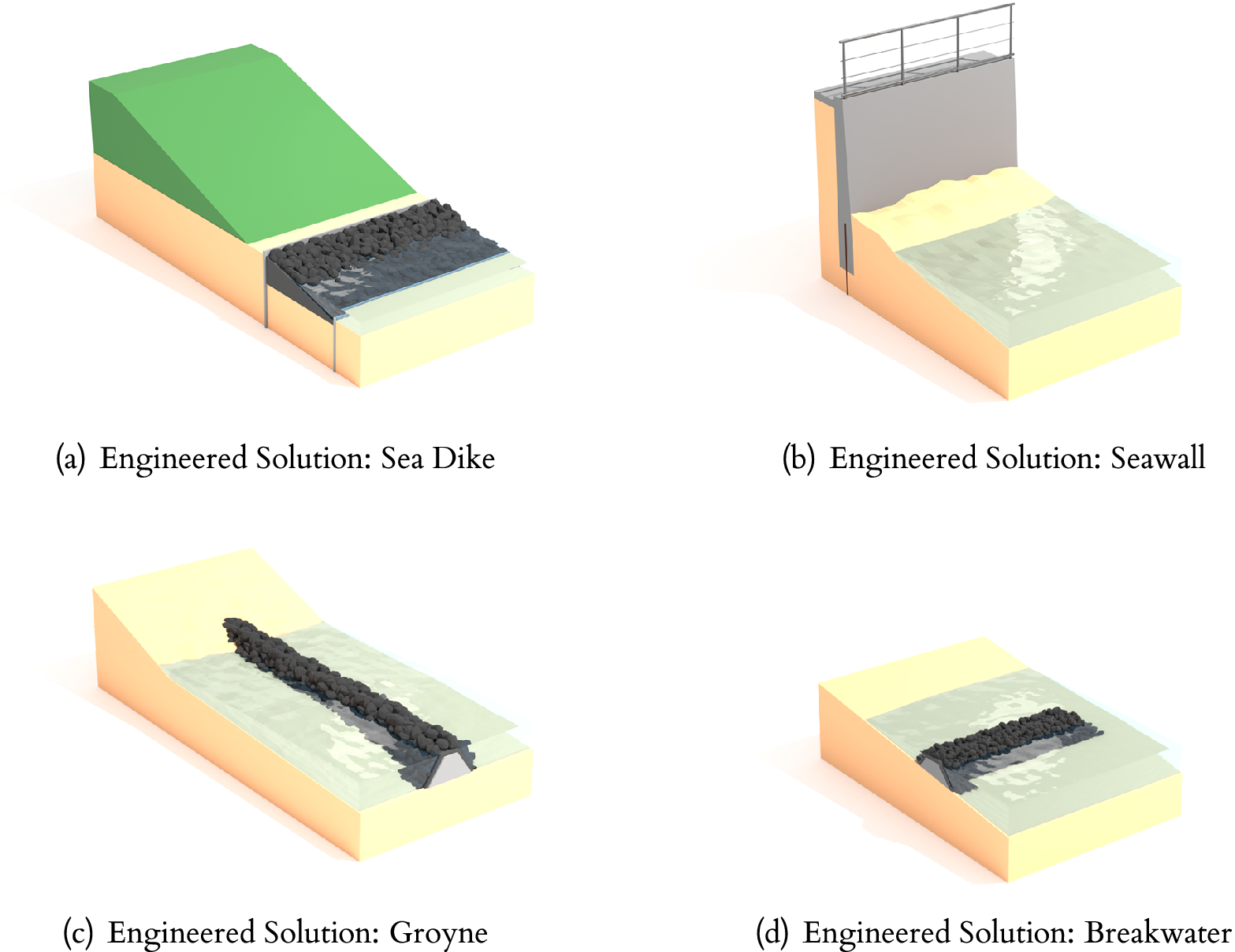
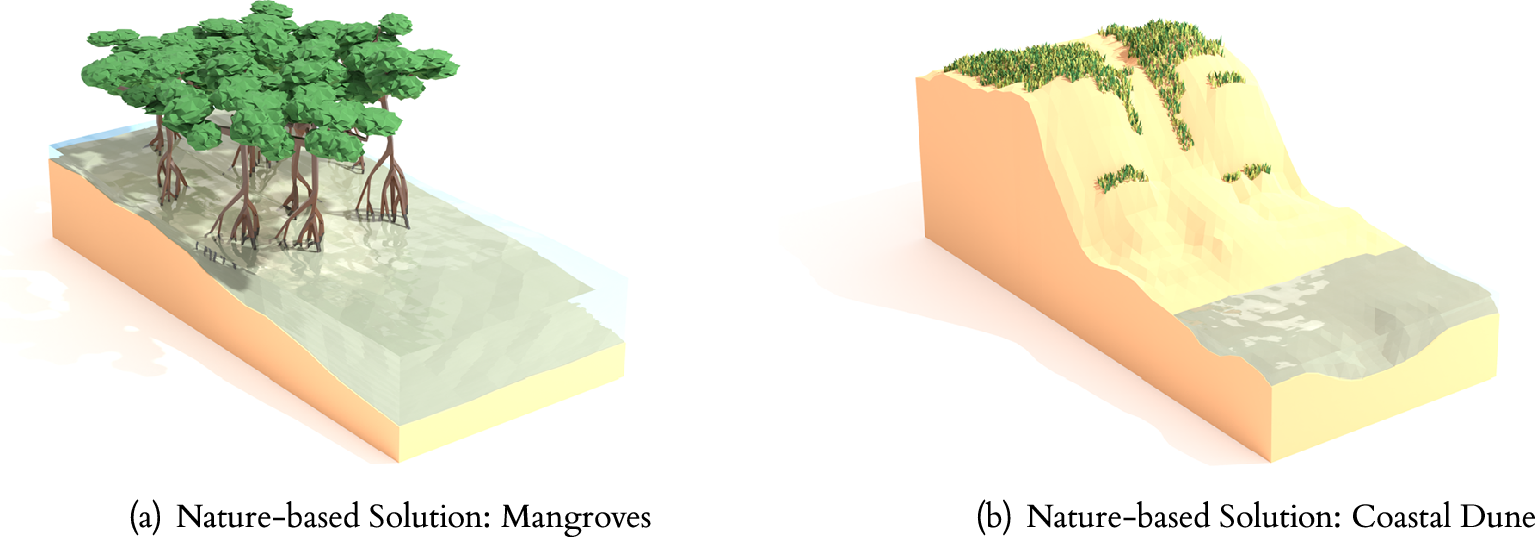
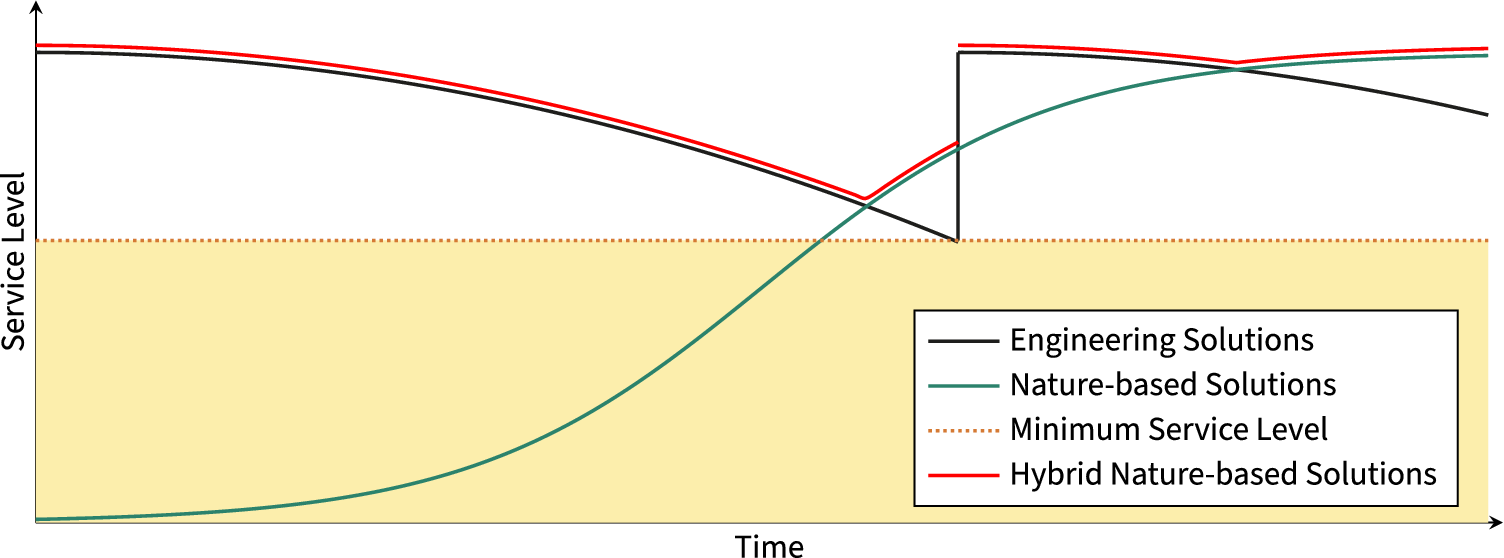
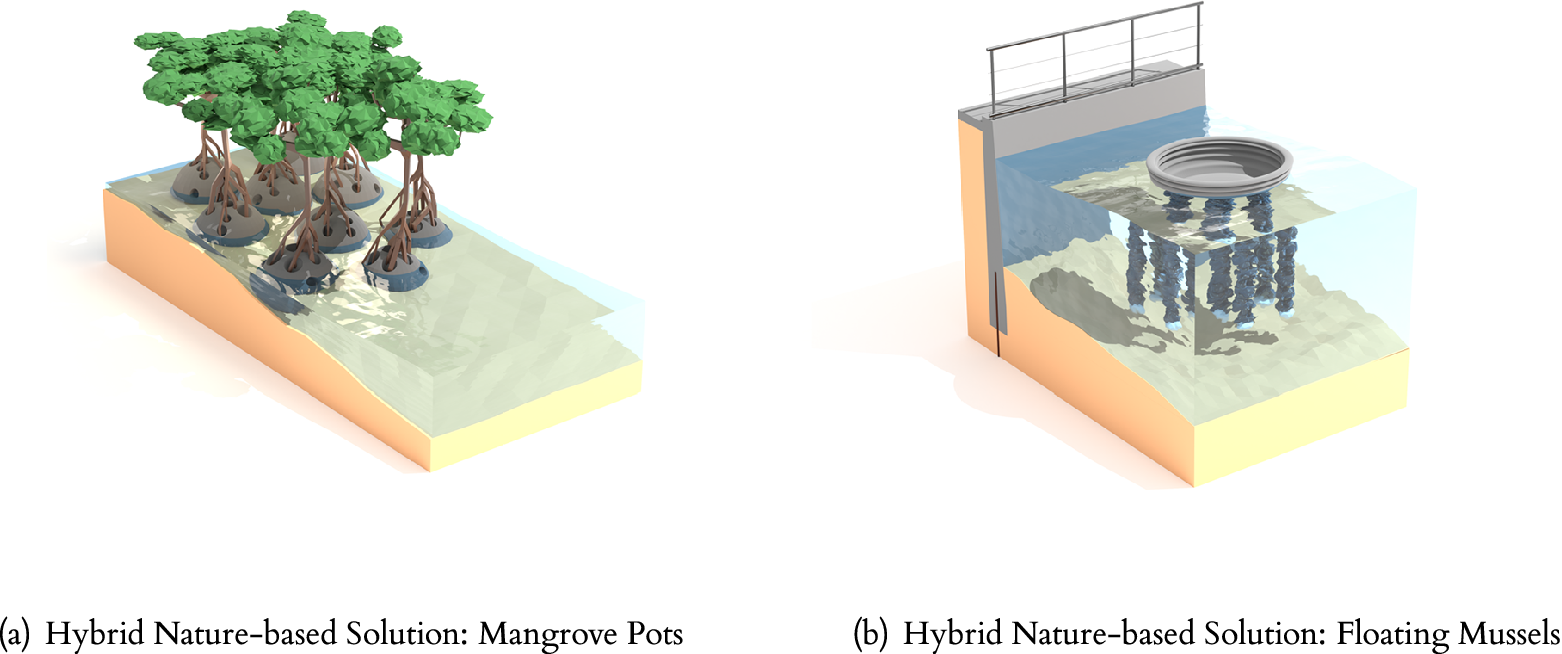
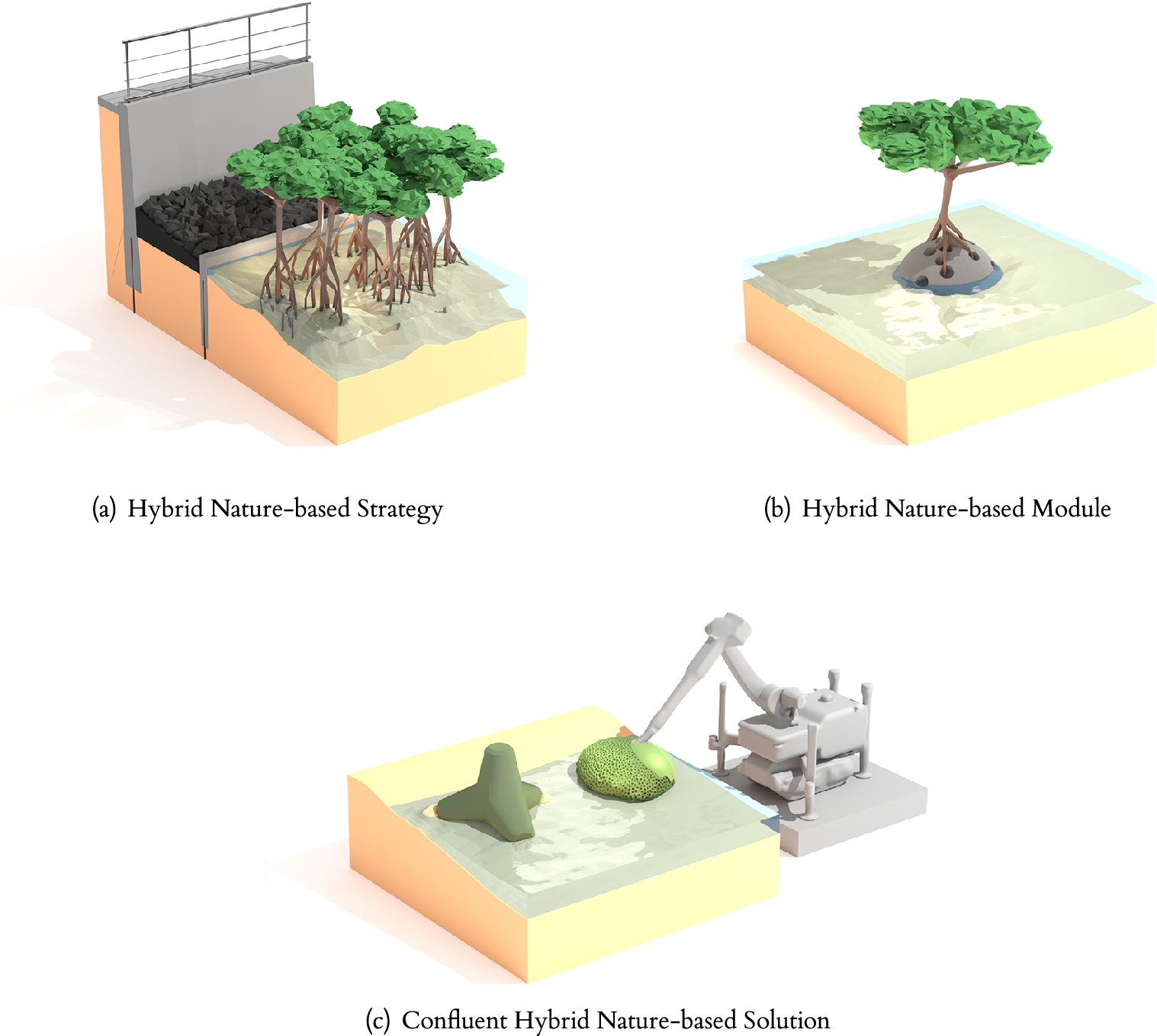

 Open access


Comments
Dear Chief Editor Tom Spencer and
dear respected editors of Cambridge Prisms: Coastal Futures,
we are pleased to submit our manuscript, “Digital Fabrication of Hybrid Nature-based Solutions as New Opportunity for Coastal Climate Change Adaptation,” for consideration in Cambridge Prisms: Coastal Futures. This work bridges knowledge gaps between coastal engineering and disaster risk management by identifying shortcomings in current Nature-based solution taxonomies. It advances the discourse on Nature-based Solutions by further looking into Hybrid forms of engineering and Nature-based coastal adaptation measures, integrating the latest developments of digital fabrication into this synthetic review. Digital fabrication, especially in form of additive manufacturing, has the potential to facilitate innovative forms, surfaces, and material uses in coastal protection of both the built and natural environment. With that, our manuscript aligns with emerging trends in coastal adaptation, shifting from building in nature to building with nature.
We were invited to submit a manuscript to the journal by Prof. Nassos Vafeidis after our Junior Research Group “Future Urban Coastlines” was established. We followed Prof. Vafeidis' recommendation, as we believe that Cambridge Prisms: Coastal Futures provides an ideal platform for this manuscript, as it emphasizes current state-of-the-art in coastal sciences and allows for perspectives on future developments.
We appreciate your consideration of our manuscript and look forward to contributing to the discourse on coastal climate change adaptation.
Sincerely,
Dr.-Ing. C. Gabriel David
Corresponding Author